
African Wildlife Conservation: Genomics, Genetics & Health
What is Conservation Genomics?
Conservation genomics is a relatively new field of study that
uses biotechnology for the conservation and restoration of
biodiversity. Within species, the level of genetic diversity is
directly proportional to a species' ability to adapt, survive and
thrive.
To date, one of the most detailed conservation genomics studies
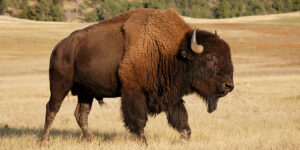
of any wildlife species focused on American bison. This species
experienced a well documented population decline between the years
1800 and 1900 that reduced its numbers by over 99%! The spectacular
recovery to over 700,000 animals present today is a testament to
their genetic constitution and is recognized as one of the most
significant accomplishments in modern conservation biology.
"We propose, using the bison studies as a model, to expand
the use of these genomic technologies for the benefit of African
wildlife species."
-Dr. James Derr, Professor
Texas A&M Veterinary Medicine & Biomedical Sciences
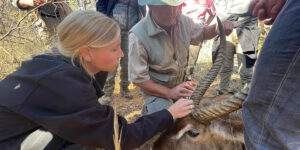
Jerad Dabney with a Darted Rhino in South Africa
Worldwide, the scientific community is realizing the value of
collecting and preserving genetic material. Repositories are now
being developed for humans, livestock, wildlife, insects, and
plants.
Our Wildlife Conservation Project
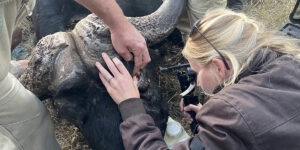
Our project utilizes groups of hunting professionals, outfitters
and veterinarians to collect genetic materials and health
information from captured or killed animals and to archive this
material with hunting organizations, museums, and universities.
This archive of genetic material and health information will then
form the foundation for a number of proposed genetic investigations
of specific species.
Our professional partners will be provided with collection kits
and training enabling them to properly gather and catalog DNA
samples and health information from captured or harvested
wildlife.