
Cold Weather and Your Pet
Many pet owners love spending time with their furry friend outside, but during the cold winter weather pet owners need to take special precautions to ensure that their pet stays warm and healthy when the temperature drops.
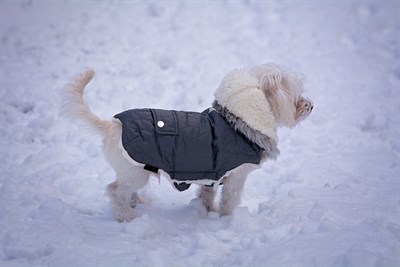
“The good thing is that for most areas of Texas, even the ‘winter months’ do not get cold enough to cause serious problems in our pets or even most large animals,” said Alison Diesel, lecturer at the Texas A&M University College of Veterinary Medicine & Biomedical Sciences. “The thick coats of most domestic animal species are sufficient to provide protection from the cold here in Texas, but on the rare occasion of a colder day some other things could be considered.”
One precaution pet owners must take is making sure dogs, cats, and other large animal species have an adequate defense from the cold weather when they are outside.
“Making sure blankets are available and dry can be extremely helpful for this purpose,” said Diesel. “Also, as with people, turning up the heat can help keep our pets warm as well.”
For smaller pets simply keeping them inside during the colder times can be the most beneficial. Nonetheless, short exposure to the outside cold can be fine and is usually not detrimental to the pet’s health.
“Dogs and cats shiver a lot like people. This action is used to help generate body heat in cold climates,” said Diesel. “If your pet shivers while outside, shorten the length of your trips together to help reduce this trembling. Providing extra bedding like blankets and towels will also keep your pets warm and cozy.”
For larger pets that cannot come inside from the cold weather, making sure they have an adequate outdoor shelter is important to their comfort and safety. Shelters such as dog houses and stables can be very helpful during cold winds, and should have extra bedding (blankets, towels, hay, etc.) added for additional warmth.
“An important thing to remember for outdoor pets is to make sure they always have a fresh supply of water,” said Diesel. “If it gets cold enough to freeze this should be checked regularly to make sure the water doesn’t freeze over. Moving water sources like fountains are less likely to do this.”
Conditions like frostbite and hypothermia, while not typical in warmer climates like Texas, are severe conditions that are common in colder climates.
“Dehydration is a possibility as well if your pet’s water source freezes over,” said Diesel.
Pet Talk is a service of the College of Veterinary Medicine & Biomedical Sciences, Texas A&M University. Stories can be viewed on the Web at vetmed.tamu.edu/news/pet-talk. Suggestions for future topics may be directed to editor@cvm.tamu.edu.

