
Horse Foaling
Newborns evoke a smile and the birth of a foal is no different. Horse owners greatly anticipate the birth of a foal and are wise to prepare the mare for the birth.
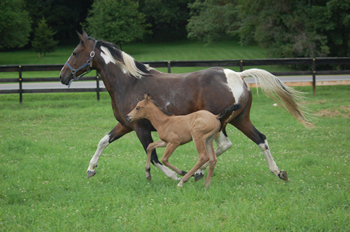
“On average, a mare is pregnant 340 days before giving birth,” notes Dr. Glennon Mays, clinical associate professor at the Texas A&M College of Veterinary Medicine & Biomedical Sciences. “But, mare pregnancies can range from 315 to 387 days.”
“Preparation for foaling should begin prior to the birth,” explains Mays. “Daily exercise will help the mare in foal tone body muscles and maintain a healthy heart and lungs which can benefit the mare and foal during birthing.”
During the first eight months of pregnancy your mare can maintain nutritional balance on good pasture, quality hay, feed and minerals supplements, but the last three months of pregnancy require dietary changes, notes Mays. The unborn foal doubles in size during the last 90 days. Consequently, there is a great need for more protein, minerals and vitamins to support the foal’s growth. Additionally, the mare needs more nutrients to prepare for lactation. Quality roughage should be the major portion of your mare’s diet.
“Grain should be reduced the week before foaling,” states Mays. “Oats and bran are good feed choices at this time since they will help decrease the likelihood of constipation. After foaling, grain can be increased gradually to resume full ration.”
Regular worming will ensure that the mare will not contaminate the pasture and foaling stall with worm larvae which the foal can ingest, explains Mays.
“Consult your veterinarian about recommended vaccinations for your pregnant mare. Generally, six weeks prior to the foaling date, the mare should receive a tetanus vaccination to boost the antibodies in her colotrum (first milk). A mare will only produce colostrum for the first 6-12 hours after birth, after that she will produce milk. The colostrum helps protect the foal against disease and aids in eliminating fecal material which can build up in its intestinal tract, says Mays.
“Mares prefer privacy when they are foaling and the majority of mares foal at night,” notes Mays. This could be a survival trait that ensured the mare and foal would be less susceptible to predators during the birthing process when horses were in the wild.”
Appropriate foaling facilities assure a safe and sanitary environment for the mare and her foal. This may be a grassy paddock or pasture small enough with sufficient lighting to allow visualization of the mare for monitoring the birth process. If a birthing stable be available, it should be at least 12 feet by 14 feet and prepared in advance of the foal’s arrival. The stall as well as water/feed buckets and manger should be cleaned and disinfected. Your veterinarian can suggest the best disinfecting supplies, says Mays. He can also recommend bedding.
Mares having difficulty with the delivery process may need assistance. Foals are born two front feet first and then their nose follows. Any deviation from this warrants a call to your veterinarian.
“The mare is in active labor for about 30 minutes and once the foal is born, both mare and foal may lie quiet for another 30 minutes,” notes Mays. “During this quiet time blood is being pumped through the umbilical cord from the mare to the foal. Normally, the umbilical cord breaks on its own below the foal’s abdomen; it should be treated with iodine to prevent infection. Some veterinarians recommend that the foal receive an enema to facilitate the initial evacuation of the rectum. A 30 cc volume of glycerin administered per rectum (use a conventional syringe without a needle) is often effective.”
“After giving birth, the mare will lick the foal and establish a bond with her offspring,” says Mays. “The licking also helps to clean and dry the foal.”
If the foal requires assistance to stand, remember the young bones are soft. Aggressive handling can compromise bone structure, especially at the rib cage. Don’t rush in to “help”. Give the foal and mare some time alone unless foal distress is obvious, notes Mays. Mother Nature has done quite well for a long time without human intervention. The foal should stand without assistance within an hour, start nursing within three hours and nurse at least once every hour.
Some veterinarians prefer to do complete blood count and chemistry on the foal after 12 hours to determine if it received enough colostrum (and therefore antibodies) to help keep it healthy. It is very important that the foal build immunity to fight exposure to bacteria in its new environment.
Keeping your mare healthy prior to and after foaling will greatly increase the chances of having a healthy foal that will grow to be a healthy horse.
Pet Talk is a service of the College of Veterinary Medicine & Biomedical Sciences, Texas A&M University. Stories can be viewed on the Web at vetmed.tamu.edu/news/pet-talk. Suggestions for future topics may be directed to editor@cvm.tamu.edu.

