
Hot Weather Calls for Cool Care of Your Horse
In the good old summertime ….. it’s just plain old hot! For equestrian riding enthusiasts this may necessitate paying extra attention to your horse’s physical needs and changing your riding habits to avoid heat stress.
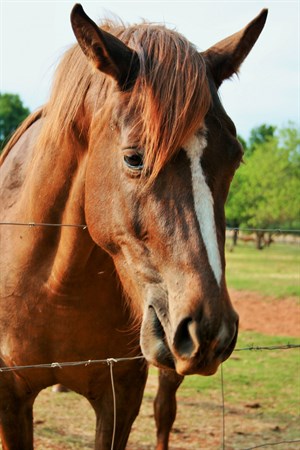
“Heat related illness such as heat stress can quickly become heat exhaustion if preventive measures are not taken,” notes Dr. Glennon Mays, clinical associate professor at the Texas A&M College of Veterinary Medicine & Biomedical Sciences.
Hot humid weather combined with over exertion and fluid loss can lead to heat stress. Signs of heat stress include dehydration, elevated body temperature, excessive sweating or no sweating, accelerated heart and respiratory rates, and sluggishness, says Mays.
“To check for dehydration, use your forefinger and thumb to pinch and pull the skin on the side of your horse’s neck; it should snap back in place when released. If the skin is slow to form to the neck again your horse is dehydrated,” explains Mays.
A horse’s normal body temperature range is 99 to 101 degrees F; body temperature above 103 F is cause for concern since 104 F and greater generally require medical attention. Additionally, you should be aware of your horse’s pulse and respiration rates. Normal equine resting pulse rate is 32-44 beats per minute and respiration rate is usually 8-16 breaths per minute, notes Mays.
In addition to checking vital signs, you can help your horse avoid heat stress this summer by providing clean fresh water, good ventilation and shade. Also, ride in the early morning or late evening when outdoor temperatures are cooler, suggests Mays.
“Adequate water intake is critical. An average size horse needs about 10 gallons of fresh water per day. In the summertime, a physically active adult horse may consume more than 20 gallons of water daily,” notes Mays. “Water loss from sweating also means that electrolytes (sodium, potassium, and calcium) are lost and these need to be replaced after exercising. Free access to minerals and salt will help your horse maintain its electrolyte balance. Your veterinarian can advise you with instructions on ways to mix electrolytes into your horse’s water or feed.”
Your horse’s stall should be well ventilated with good air circulation. Regular fans help circulate air inside the building. Be sure that fans and electrical cords are out of your horse’s reach and safely distanced from water sources, cautions Mays. For pastured horses, provide shade via trees or loafing sheds.
During and after physical activity, your horse moves warm interior blood through veins and into capillaries at the skin’s surface, explains Mays. When the skin of your horse is cooled this surface blood is cooled also and thus the body temperature of your horse decreases. A cool water bath will help your overheated horse dissipate excess heat faster. The water conducts the heat from the surface of the horse and water evaporation from the skin cools your horse’s body. Standing the horse in cool water also helps to dissipate heat through the hooves.
Heat related illness can be a very serious condition for your horse and should not be taken casually, cautions Mays. A well-informed horse owner is capable of preventing overheating from occurring when he/she knows the signs of heat stress and what care to provide.
In the good old summertime continue to ride your horse, but be aware of the signs of heat stress. Tailor you riding time to humidity and temperature conditions. Provide ample fresh clean water and additional sources of electrolytes. Set up fans to help circulate air around your horse. Also, remember the rider exposes him/herself to potential heat-related issues. Take appropriate precautions for yourself as well!
Pet Talk is a service of the College of Veterinary Medicine & Biomedical Sciences, Texas A&M University. Stories can be viewed on the Web at vetmed.tamu.edu/news/pet-talk. Suggestions for future topics may be directed to editor@cvm.tamu.edu.

