
Hydration Habits
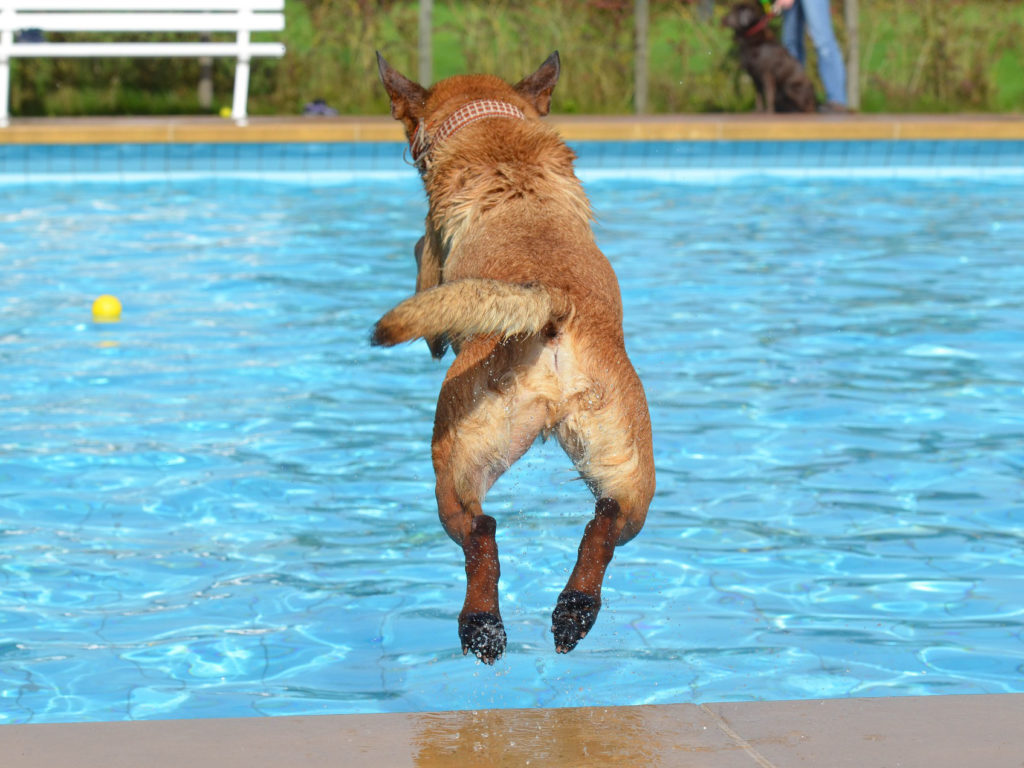
Summer is here and most people seem to flock toward water whether it be the swimming pool out back or the beach. These activities go hand and hand with the importance to stay hydrated with clean and fresh water. Our dogs however, don’t know the difference between a Dasani and a toilet bowl.
Many people like to include their dogs when swimming in the pool and as long as you keep an eye on them, this can be a joy for both you and your canine friend. But should you be worried about them drinking or ingesting the pool water?
“The concentration levels of the chlorine should not be high enough to cause any problems for your dog if he takes a few laps of pool water,” explains Dr. Mark Stickney clinical assistant professor at Texas A&M University College of Veterinary Medicine & Biomedical Sciences. “However, if you have a saline, or salt water, pool this would be very similar to ocean water which is bad for your dog’s kidneys.”
Make sure there is always fresh water available near your dog. Stickney recommends changing this water out twice a day and keeping it as cold as possible.
After the fun in the sun is over, most will want to clean up and cool off. If you have been at the beach or lake all day it would not be a bad idea to give Sparky a bath. Stickney advises not to give your dog a bath more than twice a week. Because dogs have natural oils in their skin, you want to be careful not to over bathe them which could result in them having dry skin and dandruff. Rinsing them off with a hose is usually deemed efficient.
You are freshening up in the powder room when suddenly you realize that your humming has an undertone of sloshing noises only to turn around to find your fluffy friend who was drenching you in kisses just moments before drinking out of the family toilet! Sound familiar?
“This is definitely not a healthy habit for a dog to have due to the risk of them consuming the chemicals used to clean toilets, not to mention all of the bacteria in there,” said Stickney.
In a dog’s eyes “water is water” and this includes standing water that can collect in miscellaneous areas around a property or street. When taking your dog for walks or letting him run around a property try to avoid letting them drink this water.
“Other animals can urinate or defecate near standing water which can cause a common parasite called Giardia to give your dog severe diarrhea if he drinks this water. There is also a bacterial disease spread through animal urine called Leptospirosis that can cause dogs to have liver and kidney failure,” explains Stickney.
Many people are very aware of the importance of having clean water as a part of their dog’s diet. Others might have a picky pooch that turns his or her nose up at the site of anything second rate. There are even vitamin water beverages now that can be purchased for Man’s best friend. This water can also contain an assortment of flavors such as beef, gutter water, liver, etc.
“As long as your dog is regularly on a well-balanced diet there will not be any vitamin deficiencies”, grinned Stickney in reference to this cute but unnecessary invention.
In most cases dogs will naturally regulate their water intake to meet their needs. However, if you suspect that your dog is dehydrated or you have a hyperactive dog that is running around a lot outside in the heat, you should encourage the dog to take a break and drink cool water.
“Dog owners can also try switching out dry dog food for canned wet food which contains more water, if they feel that the dog is having problems staying hydrated,” said Stickney.
On the opposite hand, very rarely will dogs binge drink, but if you observe this unusual behavior in your dog, hyponatremia can occur just as it would if humans consumed an excess of water.
“One medical cause for this behavior could be acute renal failure which can be detected in a blood test. One cause of this is a dog ingesting antifreeze that might have been on the floor in the owner’s garage. The antifreeze causes crystals to form in the dog’s kidney which disrupts proper fluid and electrolyte balance.”
Stickney continues, “Addison’s disease, caused by hypoadrenocorticisn in dogs, is also another possibility for binge drinking behavior. This disease is trickier to diagnose but it affects the dog’s ability to regulate electrolyte levels in their body.”
Most people do not think twice about how often we come into contact with water on a daily basis. Just remember that your dog does not always have the same common sense about what is healthy for them when it comes to water. Whether it is something they decide to drink or something they decide to jump into, help them make it a good clean splash!
Pet Talk is a service of the College of Veterinary Medicine & Biomedical Sciences, Texas A&M University. Stories can be viewed on the Web at vetmed.tamu.edu/news/pet-talk. Suggestions for future topics may be directed to editor@cvm.tamu.edu.

