
It’s Showtime!
For many FFA and 4-H youth and their animals, it’s showtime. Now is the time of year when many young adults are showing off such livestock as cattle, sheep, swine, and goats at fairs and competitions all over the country.
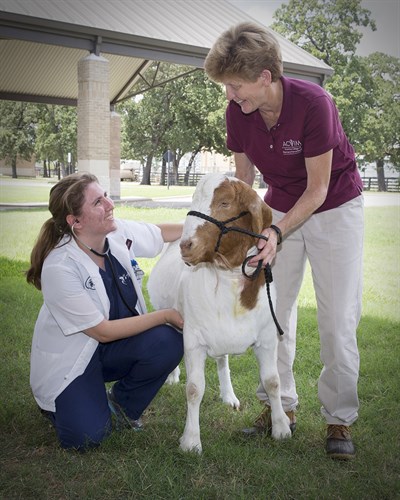
Dr. Floron Faries, professor and extension veterinarian, Texas AgriLife Extension Service, Texas A&M System, has some advice for youth to help ensure their livestock show season is a big hit.
“Plans begin about a year before the livestock show. In fact, the health program begins before you even get the animal,” states Faries.
Faries recommends purchasing healthy animals from places that have good management practices.
“As you travel and look for show livestock, ask the seller to immunize prior to purchase, allowing enough time for the immunity to become established,” Faries adds. “If vaccinations cannot be administered at the seller’s place, begin vaccinations on day of arrival. Do not wait.”
The day the show animal arrives home, perform a visual exam and repeat the exam several times throughout the season.
“Watch the animal every day and observe its behavior and attitude,” Faries stresses. “Watch for healthy and unhealthy signs.”
Faries adds, “The most common medical problems seen in show livestock are respiratory diseases or lung diseases. They can be viral, bacterial, or both.”
Respiratory diseases are common, because during the show season animals are mingling with other animals at fairs or other central locations for weighing. Therefore, every time your animal leaves home there is a risk of exposure and often an animal may return with a cough or fever.
Follow a preventive program of administering vaccinations to avoid respiratory diseases.
“Become educated as to what viruses and bacteria may cause respiratory problems and talk with your veterinarian,” says Faries.
The types of vaccines administered for each species vary, so become familiar with what is needed for your animal.
Be sure to read the label and know what vaccines must be repeated. “I find a common mistake is that the owner does not realize the shots need to be repeated because he or she didn’t look at the label,” says Faries.
Unless otherwise directed by your veterinarian, always follow labeling instructions to help ensure that the vaccination is most effective. The noninfectious vaccines, which are unable to multiply in the body, usually require two injections, Faries says. The second injection is given 3-6 weeks after the first.
“The key to a healthy animal is starting early with disease prevention and not waiting until you arrive at the show to begin treatment,” says Faries. “Practicing good health management such as close observations and proper vaccinations will help your chances in any competition.”
Pet Talk is a service of the College of Veterinary Medicine & Biomedical Sciences, Texas A&M University. Stories can be viewed on the Web at vetmed.tamu.edu/news/pet-talk. Suggestions for future topics may be directed to editor@cvm.tamu.edu.

