
Keeping Your Horse Cool in the Summer
Cool as a cucumber … but what if you are a horse! Summer heat and humidity can be a dangerous combination for active horses.
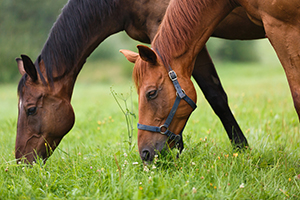
“Heat and humidity affect the horse, and with intense exercising, the excess heat has difficulty dissipating,” notes Dr. Glennon Mays, clinical associate professor at the Texas A&M College of Veterinary Medicine & Biomedical Sciences.
“Heat is a normal by-product of working muscles and increases during periods of increased exercise,” explains Mays. “Normally a horse cools itself by sweating which causes heat loss and thus its body cools as sweat evaporates from the skin’s surface.”
When humidity is high, less moisture can evaporate from the skin surface. Therefore the surface blood vessels will enlarge to help rid the horse’s body of excess heat.
“Overheating, or hyperthermia in the horse is due to a disturbance in the heat regulating mechanism of the horse’s body,” says Mays. “In addition to summer heat and humidity, poor stable ventilation, prolonged exposure to sun, extreme exercise, transportation/trailering stress, as well as excess weight and poor conditioning may contribute to overheating.”
“If your horse does become overheated, move the horse to a shady area or to a cool, well-ventilated barn. Then spray with cool water and place ice packs on the horse’s head and large blood vessels on the neck and the inside of its legs,” states Mays. “Be careful to not spray the horse’s face or get water in its ears; just sponge these areas gently.”
Horses naturally tend to “cool out” while walking rather than standing still, notes Mays. Therefore, application of ice packs can be challenging.
Allow the horse to have several swallows of cool, clean, fresh water every few minutes. There is a possibility of colic if your horse drinks large quantities of water in a short period of time.
“To help your horse beat the heat, provide plenty of fresh, cool water,” notes Mays. “Keep water bucket or trough clean to promote drinking. Average size work horses can consume over 25 gallons of water per day when the temperature is above 70 degrees.”
Limit strenuous riding to late evening or early morning when the temperature is lower. Use less tack in the hot summer by minimizing saddle pads and leg boots. Also clip your horse’s coat and keep its mane and tail trimmed.
Heat stroke can happen to horses whether they are working hard, standing in stifling stables, or traveling in unventilated trailers, notes Mays. Call a veterinarian and take immediate action if your horse has elevated respiration or pulse (in an inactive horse), body temperature above 103 degrees, or irregular heart beat.
“Do the skin pinch test to check your horse’s hydration,” says Mays. Test for dehydration by pinching the skin along the horse’s neck. The skin should snap back quickly. If the pinched area collapses slowly the horse is dehydrated.
Hot weather does require that you give your horse special care. But, you and your horse can lessen summer’s hot days when you practice these cool tips to beat the heat.
Pet Talk is a service of the College of Veterinary Medicine & Biomedical Sciences, Texas A&M University. Stories can be viewed on the Web at vetmed.tamu.edu/news/pet-talk. Suggestions for future topics may be directed to editor@cvm.tamu.edu.

