
Pet Burns
Accidents happen, and pets can get burned for one reason or another just like their owners can. When this happens, it is best to have a hands-off policy and leave your pet’s burn treatments to the professionals.
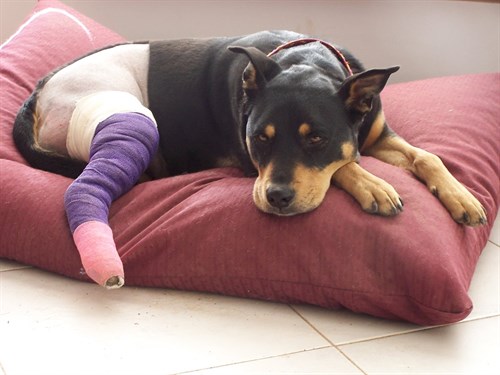
“The best thing an owner can do in the case of a burn is get the animal to a veterinarian as soon as possible; burns are considered to be emergencies in just about all situations, and the sooner they are brought in, the better,” says Dr. Alison Diesel, lecturer specializing in dermatology at the Texas A&M College of Veterinary Medicine and Biomedical Sciences.
Sometimes pet owners will not notice the burned area for days or even weeks after the burn has occurred. One thing to keep in mind with burns is that sometimes what is seen initially is only the tip of the iceberg.
“What may look like only a red spot of skin on a pet’s side following a burn incident can quickly become devitalized, dead tissue, which is not only painful but also more at risk for infections over the next couple of days,” explains Diesel.
Infection in the animal is a big concern when dealing with burns, especially if the burn goes deeper into the lower layers of the skin.
“If the skin barrier is not intact and normal, bacteria can quickly enter the wound causing not only local infection but also potentially it can get into the blood stream. This puts the animal at risk for serious illness and potentially death,” says Diesel.
Diesel explains that very serious burns require hospitalization and care for several days to weeks at a time to monitor and provide treatment for any side effects of the pet’s burn.
Cars are often one of the causes for accidents resulting in pet burns. On a hot day, the shade underneath a car or truck might seem very appealing to an animal outside. Even on a cold day, the heat of a car engine can be comforting for a kitty out in the cold. If the animal comes in contact with a hot muffler or catalytic converter even for a split second, a serious burn can occur.
There are many other scenarios as well that could be the cause of pet burns, such as: barbeque grills, space heaters, spilling hot liquids or food when cooking, objects laying in the yard that conduct heat such as hoses or tools, or puppies or cats chewing on plugged in electrical cords.
“Different types of burns require a bit different treatments,” explains Diesel.
“Chemical burns for example, might become much worse when water is applied to them, so the nature of the burn helps the veterinarian know how best to treat it.”
Sometimes owners do not witness the animal getting burned, so it is important to be able to try and distinguish if a mark that is found on a pet is actually a burn.
“Burns have a variable appearance based on the extent and severity on an animal,” says Diesel, “Initially, it may start as the skin itself just looks a little red or inflamed, while more severe burns can cause burning or singeing of the coat.”
Diesel explains that the pet’s hair may become dry, brittle, curled, or even lost completely.
“Severe burns may show up as large areas of exposed deeper skin; this would look like a scraped knee for example, which could be moist, oozing, and often very painful,” says Diesel.
Even what looks like only a mild burn can become much worse over time. This is particularly true for thermal burns, which may be caused by heat lamps, water blankets, or even hot water from a garden hose that was used for bathing.
“The skin may look red initially, but then may turn black, crusty, and become quite painful with these burns,” says Diesel.
It is natural for an owner who witnesses a pet getting burned to want to try to help the animal and ease their pain, but again, the best thing to do is to get the animal to a veterinarian for treatment as soon as possible.
“If it is not a chemical burn, removing some of the burning material can be helpful,” explains Diesel, “For example, if the owner trips over a dog or cat and ends up spilling a hot casserole on the pet, or spills candle wax on the pet, then removing the hot material would be good in that case.”
This is the extent to which an owner should try to help a pet with a burn. A veterinarian will be best able to provide and recommend pain control given the pet’s other medical conditions and extent of injuries.
Owners can sometimes unintentionally burn a pet when drying them off with a hair dryer after a bath. Hair dryers can be helpful for drying off a pet, however owners need to be careful so as the hair dryer does not get too hot.
“If the owner wants to use a hair dryer, it should be done on a cool setting ONLY,” says Diesel.
Less harmful ways of drying off a pet would include thorough towel drying or allowing the animal to dry outside in the sun when the weather is not too warm. Diesel recommends this as a good option to consider, especially during the milder seasons such as fall. Long hours in the sun however can be too much for some animals, particularly when it is still rather hot outside.
Sometimes more serious situations can occur such as house or barn fires. In this case, the owner should closely monitor the pet not only for burns but also for signs of smoke inhalation.
“Smoke inhalation can be a big problem for dogs and cats, especially if that animal already has any sort of respiratory condition such as asthma,” says Diesel.
Signs of smoke inhalation can include coughing, sneezing, or even turning blue, gasping for air, or losing consciousness.
“Smoke inhalation is often treated with oxygen and possibly fluid supportive care,” says Diesel, “Radiographs (x-rays) of the chest may also be helpful to evaluate the lungs.”
When it comes to pet burns, time becomes crucial. The best thing an owner can do for their pet is to get them to a veterinarian as soon as possible to be monitored and evaluated for burn treatment. This is the best way to ensure getting fluffy friends back to their playful and loving selves!
Pet Talk is a service of the College of Veterinary Medicine & Biomedical Sciences, Texas A&M University. Stories can be viewed on the Web at vetmed.tamu.edu/news/pet-talk. Suggestions for future topics may be directed to editor@cvm.tamu.edu.

