
Pets on Wheels
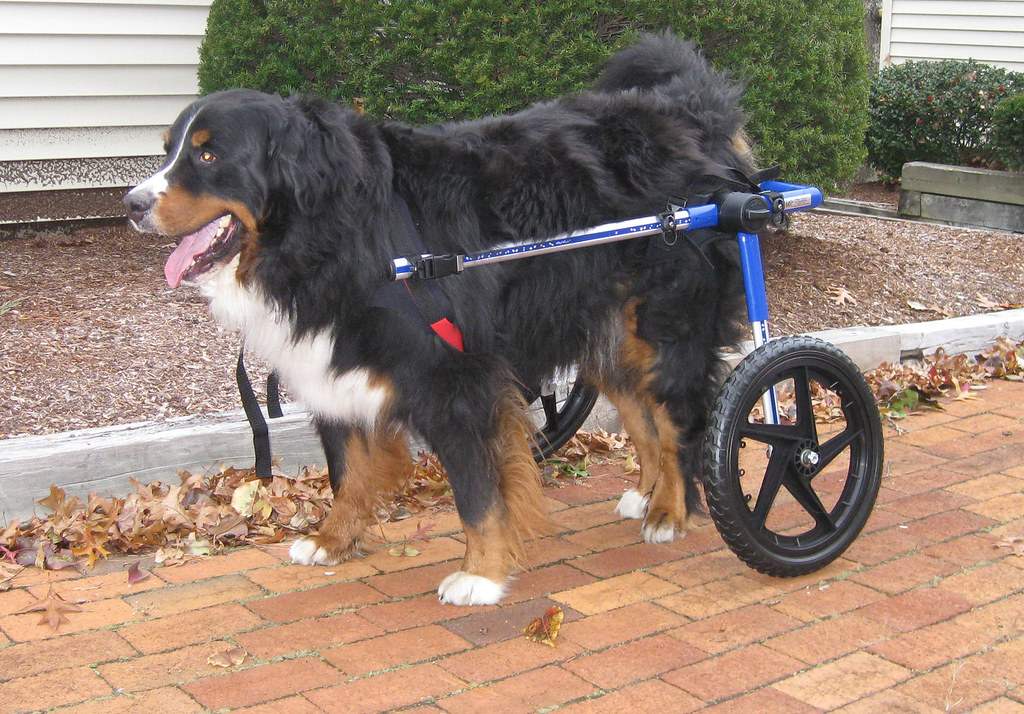
Some injures can lead to paralysis and drive our pets to a dead-end. Fortunately, there are now options for animals that can make their lives go on wheels again. Literally. For pets that have lost use of their legs because of paralysis or a disease, wheelchair devices are now available that can restore lost motion.
“A wide variety of devices are now on the market to help companion animals move around, and they work very much like a wheelchair,” said Dr. Alice Blue-McLendon, clinical assistant professor at the Texas A&M University College of Veterinary Medicine and Biomedical Sciences.
Blue-McLendon says a veterinarian can take measurements of the animal’s body to be fitted for the wheelchair devices, which are custom-made for that particular pet. The veterinarian can then contact one of several companies that make the wheelchairs, which usually consist of a harness-like device with straps and wheels. There are also several reliable companies on the internet that will work directly with the clients to make a custom wheelchair.
Dogs are the most frequent users of the devices, but they can also be made for cats, ferrets, goats, rabbits and other pets. Costs usually range from $200 to $400, depending on the size of the pet.
Blue-McLendon says that several medical conditions can cause a pet to need a wheelchair device. One is hind limb paralysis which can be due to injury, such as being struck by a car or a vertebral disk disease. Another cause is a degenerative condition in which the muscle or bone of the animal’s leg cannot function properly, causing the animal to drag its legs or not move at all.
Once the device is fitted to the pet it usually takes several days for the animal to get accustomed to the wheelchair, Blue-McLendon explains. “But animals are quick to adapt, and after a few days, they usually can get around very well with these devices,” she notes. She stresses that it takes a commitment from the pet owner before considering whether to purchase a wheelchair for a pet.
“It takes extra time on the owner’s part to take off the device at night because the animals must sleep without them,” Blue-McLendon says. “And many times if the animal is paralyzed it still needs assistance several times a day with urination. Also, since the animal can only use its front legs to get around it tends to get tired more quickly. So the owner needs to be aware of this, especially if taking the animal out for a long walk or other exercise.”
Blue-McLendon adds that once the animal is accustomed to the wheelchair, it can lead a relatively normal life.
“These wheelchair-type devices have become quite popular in the last 20 years or so,” she says.
“They give your pet an option that it might not have had otherwise – that of regaining much of the mobility it once had. If the owner is willing to make the commitment, they can be wonderful aids for disabled pets.”
Pet Talk is a service of the College of Veterinary Medicine & Biomedical Sciences, Texas A&M University. Stories can be viewed on the Web at vetmed.tamu.edu/news/pet-talk. Suggestions for future topics may be directed to editor@cvm.tamu.edu.

