
Reptilian Feeding Frenzy
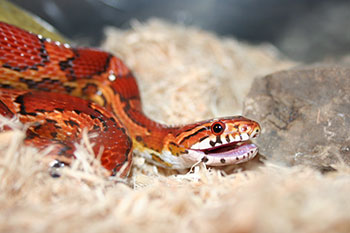
Having a reptile as a pet is quite different from owning a dog or a cat, since feeding is relatively simple in the canine and feline world. After adopting your first snake, lizard, or other reptilian pet, there is typically a controversy over what the correct method of feeding is for the animal. Many reptilian pet owners want their pet to be able to experience the thrill of the attack with their prey, in other words, they want their pet to feel like they are a wild animal in their domesticated habitat. But sometimes snakes and other reptiles are attacked by the live prey as they fight the predator animal, and your pet can become severely wounded or even die.
“There are times when the snake is not in the mood to eat” said Teresa Shisk-Saling RVT, veterinary technician at the Texas A&M College of Veterinary Medicine & Biomedical Sciences. “Such times are when a snake is getting ready to shed, or in breeding season when they are growing follicles or eggs. If the owner leaves the prey item alive and unattended, they can literally come back to a dead snake. Even if the snake does eat it, sometimes they can get a bad grab and the dying prey will bite, usually multiple times. If the wounds from the bites are not treated, the snake can develop a systemic infection and die.”
Many pet owners also fear that their snakes will not eat prey that is frozen and thawed.
“We have had several snakes come live with us who the previous owner swore the snake would not eat frozen and thawed prey” said Shisk-Saling. “As long as the item is warmed back to the original body temperature, 99 percent of snakes will eat.”
Each reptile and amphibian is unique in its nutritional needs, so pet owners must be aware of the specific needs that feeding each of these animals has.
“People typically think of turtles as carnivores, and will feed them only fish or turtle food. What many owners don’t realize is that turtles need calcium” said Shisk-Saling. “Be sure to feed your pet turtle lots of leafy vegetables so they are getting the appropriate amount of calcium that they need. Tortoises are sometimes referred to as ‘horses with a shell’ and are in need of a low protein diet, which consists of grass, hay and the ability to graze.”
Feeding is generally not a problem when it comes to some lizards, although if too many crickets are thrown in the cage with the reptile and it only eats two or three of them, the remaining crickets may begin to feed on your lizard!
“The big thing with both crickets and meal worms is that they must be gut-loaded before they are fed to the predator animal” said Shisk-Saling. “Without gut-loading, the insects are just empty calories and you can actually starve your pet while feeding it.”
Gut-loading is a very important aspect of feeding when it comes to providing the right nourishment for your predator. It involves feeding the prey a good source of calcium, vitamin A and protein, so that when the reptile eats the prey it is getting the proper nutrition it needs.
“Whatever the prey is eating, that’s what you’re feeding your predator” said Shisk-Sailing.
Pet Talk is a service of the College of Veterinary Medicine & Biomedical Sciences, Texas A&M University. Stories can be viewed on the Web at vetmed.tamu.edu/news/pet-talk. Suggestions for future topics may be directed to editor@cvm.tamu.edu.
Angela G. Clendenin
Director, Communications & Public Relations
Ofc – (979) 862-2675
Cell – (979) 739-5718

