
Kraemer Recipient of Prestigious Pioneer Award
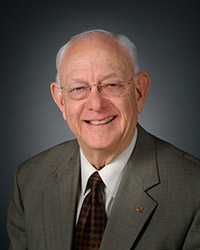 COLLEGE STATION, January 12, 2006 – Duane C. Kraemer, DVM, PhD, a professor in the Department of Veterinary Physiology and Pharmacology at Texas A&M University’s College of Veterinary Medicine & Biomedical Sciences, was presented the Pioneer Award at the International Embryo Transfer Society’s (IETS) 32nd Annual Conference in Orlando, Florida January 8-10, for his contributions to the development of embryo transfer technology.
The IETS Pioneer Award recognizes early contributors to the development of embryo transfer technology and the embryo transfer industry. Kraemer is a world leader in embryo transfer technology and reproduction and is an integral member of the research team at Texas A&M who has successfully cloned four different species – cattle, goats, a deer and a cat.
Kraemer has worked on various aspects of embryo transfer and related technologies since 1959. He worked for eight years at the Southwestern Foundation for Research and Education in San Antonio, Texas, on the development and testing of contraceptive agents and on embryo transfer in the baboon. In 1971, Kraemer performed the embryo transfers which resulted in the first purebred calves to be produced by a commercial embryo transfer company.
In addition, Kraemer, his colleagues and students have produced the first nonhuman primate to result from embryo transfer; produced the first embryo transfer foal in the United States; produced the first embryo transfer in dogs and cats; produced the first white-tailed deer by insemination with frozen epididymal semen; produced the first Addax antelope by insemination with frozen semen; and produced the first white-tailed deer and Suni antelope to be born following embryo transfer.
Kraemer established Project Noah’s Ark in 1991 which uses advanced technology and research methods to collect and preserve eggs, semen, embryos and DNA from endangered mammals, birds and reptiles. Genetic material collected by Project Noah’s Ark is maintaining genetic diversity or is saved for potential use in reintroducing the species. Several years later, Kraemer developed a first of its kind mobile reproduction laboratory making it possible for scientists to enter the habitat of wild animals and perform reproductive technologies which might help preserve numerous endangered species.
Kraemer received the MS (1960) and PhD (1966) in Physiology of Reproduction, a BS in Veterinary Science (1965), and the Doctor of Veterinary Medicine degree (1966) from Texas A&M. He is a professor in the Department of Veterinary Physiology and Pharmacology with appointments in the Texas Agricultural Experiment Station, the Department of Animal Science and the Faculties of Genetics and Reproductive Biology.
Established in 1916, the College of Veterinary Medicine & Biomedical Sciences is one of the world’s largest veterinary colleges and is an international leader in animal health care and research.
Contact Information:
Angela G. Clendenin
Director, Communications & Public Relations
Ofc – (979) 862-2675
Cell – (979) 739-5718

