
Veterinary Professor Participated in Johns Hopkins University Symposium
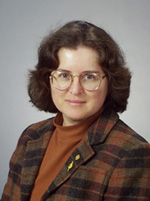 COLLEGE STATION, April 11, 2006 – Professor Evelyn Tiffany-Castiglioni, PhD, of Texas A&M University’s College of Veterinary Medicine & Biomedical Sciences, recently participated in a symposium sponsored by Johns Hopkins University that addressed alternatives to developmental neurotoxicity testing (DNT).
Organized by the University’s Center for Alternatives to Animal Testing (CAAT) with support from the National Institutes of Health (NIH), the United States Environmental Protection Agency and several private organizations, the workshop brought together leaders in the field of cell and molecular mechanisms to discuss future alternatives to developmental neurotoxicity testing (DNT). The conference’s TestSmart program was designed to look for new approaches to meet the demands for identifying neurotoxic agents with speed, reliability, reduced cost and respect for animal welfare.
CAAT introduced its first TestSmart program in 1999, and organizers today continue to focus on improved efficiency and cost in neurotoxicity testing while identifying opportunities for reducing or replacing the use of animals in DNT.
“The need for such testing is growing as scientists recognize that exposure of fetuses and children to certain chemicals in the environment may harm the development of the nervous system, causing life-long learning and behavioral deficits,” said Tiffany-Castiglioni. “There are 70,000 chemicals used commercially and only a very small fraction has been adequately assessed for neurotoxicity.”
DNT, which is a major issue in children’s health worldwide, has caused concerns among several organizations such as children’s health and environmental health advocacy groups and animal rights advocates. According to CAAT, “Current methods for DNT testing are complex and expensive in terms of scientific resources, time and animal use.” The goal of the organizations involved was to develop “scientifically rigorous and humane alternative approaches to DNT that utilize in silico, in vitro and alternative animal models.”
Tiffany-Castiglioni, head of the Department of Veterinary Integrative Biosciences at the college, presented a 45-minute plenary lecture that gave a broad overview of the use of in vitro systems, such as cell cultures, for the study of developmental neurotoxicity. Her presentation served as an introduction to several group discussions concerning model systems in vitro, endpoints for assessment of developmental neurotoxicity and high-throughput and “omic” approaches, the latter involving the screening of large panels of genes or proteins for toxic effects. Tiffany-Castiglioni is editor and co-author of a book released in 2004 by Humana Press entitled In Vitro Neurotoxicology: Principles and Challenges.
Contact Information:
Angela G. Clendenin
Director, Communications & Public Relations
Ofc – (979) 862-2675
Cell – (979) 739-5718

