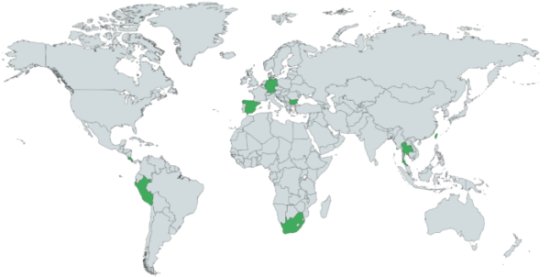
The following list covers programs led or co-led by VMBS faculty. We encourage students to explore the options offered by VMBS as well as those hosted by other colleges and independent programs. For a more comprehensive list of study abroad programs available to students, please visit the Texas A&M University Education Abroad Programs site.
This semester-long program offers required core courses in a tropical rain forest, key electives and a weekend at the beach, top-flight faculty and volcanoes. It’s an unbeatable combination for students working towards a degree in Biomedical Sciences — pre-meds, pre-vets, and others who want to have the semester of a lifetime while still advancing their degree plan.Read more about the Costa Rica Biomedical Science Semester.
Credit
A total of 13 credit hours are offered for this program + the option for Spanish credits:
VTPB 411: One Health and Ecology in the Tropics (3 credit hours)
This course is offered to DVM students who would like to learn about conservation medicine in South Africa. Students will learn how African species are managed at wildlife parks and game preserves. Students will become familiar with aspects of hoofstock medicine including common diseases and preventative medicine. Students will gain direct experience with chemical immobilization including skills needed, drugs and darting equipment.
Credit
A total of 4 credit hours are offered for this program:
VTPP 948: Conservation Medicine and Management for Veterinary Students (4 credit hours)
You will leave this experience with a newfound appreciation for the role of veterinarians in large landscape wildlife conservation medicine and return to the U.S. with newly developed skills to apply to wildlife health and sustainability issues across the State of Texas. Wildlife experts will guide participants through activities including animal restraint, administering drugs, field surgery and darting. Other experiential learning could include interaction with crocodiles, buffalo, and rhinos.Check out past cohort pages on Facebook for more info! TAMU African Wildlife Medicine Study Abroad 2019 African Wildlife Medicine 2017 African Wildlife Medicine 2016 African Wildlife Medicine
Credit
All students are required to take a total of 4 credit hours to participate:
VTPB 948: Didactic Elective: African Wildlife Medicine (4 credit hours)
VTPB 485: Directed Studies: South Africa (4 credit hours)
VTMI 689 Special Topics in African Wildlife Medicine (4 credit hours)
In this 4-week summer study abroad program in Thailand, you’ll work alongside U.S. veterinarians to help care for rescued elephants and companion animals. You’ll spend one week at an elephant sanctuary, one week in the city assisting at an animal shelter, one week doing conservation activities, and one week on a beautiful beach learning about marine conservation and learning to SCUBA dive! Other activities include zip-lining through a rainforest, exploring street markets, and taking a cooking class. All the while, you will earn course credits that can be applied to your degree.
Credit
A total of 6 hours of transfer credit are offered for this program.
This program provides students with the unique experience of learning about communicating in sensitive healthcare situations while experiencing Bulgarian culture and the rich history of this part of Eastern Europe. The location of this program will help students understand the differences and similarities between Eastern European and U.S. healthcare systems and cross-cultural communication. Providing a specific global perspective on health communication, this program aims to increase student awareness of cultural differences in healthcare settings while improving students’ skills in working with people from different cultural groups.
The objective of this program is to provide the students with an opportunity to improve their Spanish skills and help them acquire appropriate medical Spanish while getting clinical experience in Barcelona. Students start by taking a week-long public health course (1 credit hour) at the Universitat Pompeu Fabra and then have a 3-week clinical shadowing experience (approx. 120 hours) in human or veterinary medicine. This program requires that students have at least the equivalent of SPAN 202 or proof of proficiency at this level, and the application process includes an interview.
Credit
Students arrange credit with the academic advisor in their major in order to ensure that the credit counts toward their degree requirements.
Taiwan, historically known as Formosa (beautiful island), is a democratic island country situated in the Pacific. Taiwan is rich in both history and culture. The people of Taiwan are comprised of multiple native indigenous ethnic groups (2%) and those of Han Chinese descent. Over several hundred years, this tiny island has experienced Portuguese, Spanish, French, Japanese, and Chinese colonial ruling. Every ruling left its marks on this island that is now melted into the Taiwanese culture and cuisine.Because Taiwan is located between tropical and sub-tropical regions, the surrounding ocean is enriched with marine animals, including 27 species of cetaceans such as bottle-nosed dolphins, killer whales, sperm whales, and the rare hump back dolphin. During their trip, students will be immersed in marine mammal conservation of the Taiwanese style.
Credit
All students are required to take a total of 3 credit hours to participate on this program.

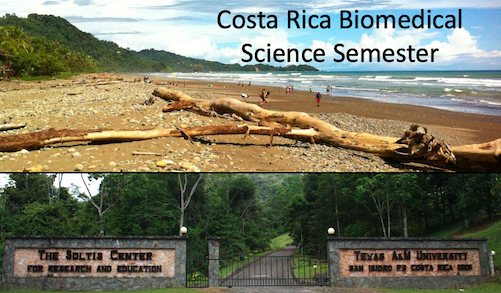 Read more about the Costa Rica Biomedical Science Semester.
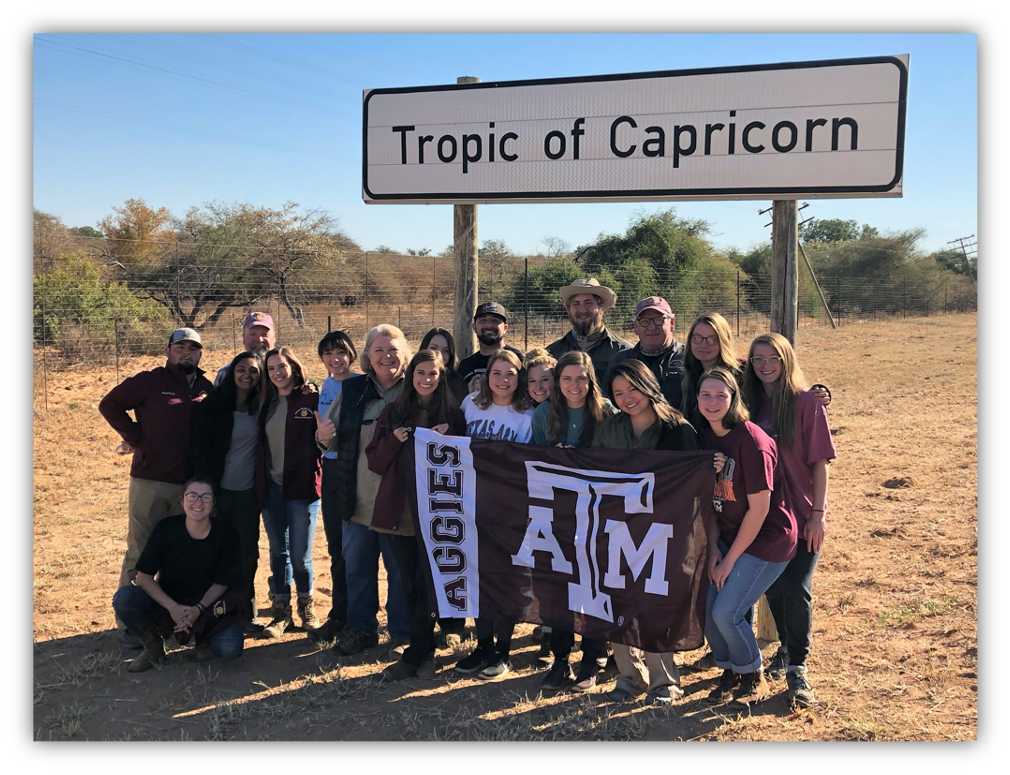 Check out past cohort pages on Facebook for more info!
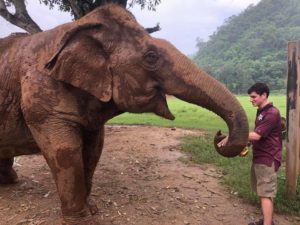 In this 4-week summer study abroad program in Thailand, you’ll work alongside U.S. veterinarians to help care for rescued elephants and companion animals. You’ll spend one week at an elephant sanctuary, one week in the city assisting at an animal shelter, one week doing conservation activities, and one week on a beautiful beach learning about marine conservation and learning to SCUBA dive! Other activities include zip-lining through a rainforest, exploring street markets, and taking a cooking class. All the while, you will earn course credits that can be applied to your degree.