
Dashing Through the Snow: Signs of Hypothermia
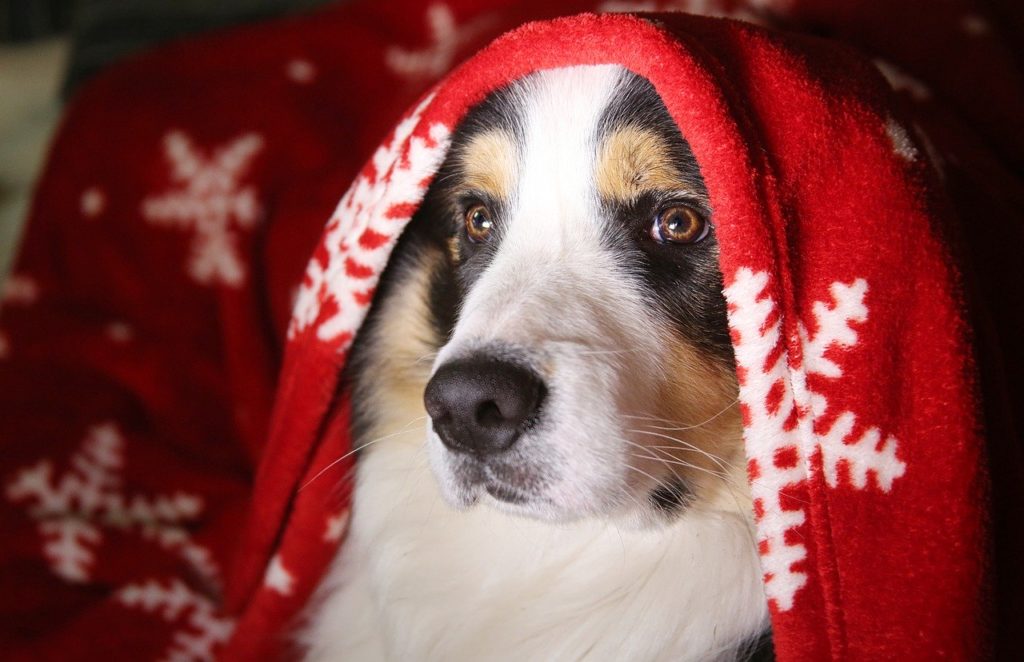
The weather in Texas is extremely unpredictable. One day it’s 60 degrees and raining, the next it’s 80 degrees with sunshine. Winters can be even worse with unexpected cold fronts. With extremely cold temperatures, hypothermia is a possibility for pets.
Hypothermia, occurring in both humans and pets, is a condition characterized by abnormally low body temperatures. There are three phases of hypothermia: mild, classified as a body temperature of 90-99 degrees Fahrenheit; moderate, classified as a body temperature of 82-90 degrees Fahrenheit; and severe, classified as a body temperature of less than 82 degrees Fahrenheit. With hypothermia, the dog is no longer able to control a normal body temperature resulting in an abnormal heartbeat and difficulties breathing.
Generally, hypothermia results from spending too much time outside in the cold. Although there is not a specific time limit for a given temperature a dog should be left outside, Dr. Stacy Eckman, lecturer at the Texas A&M College of Veterinary Medicine & Biomedical Sciences, said time spent outside in the cold should be restricted.
“The amount of time a pet should spend outside varies based on how acclimated the pet is to cooler temperatures,” Eckman said. “Typically, we do not recommend indoor pets to spend considerable amounts of time outdoors in cold temperatures without supervision.”
Hypothermia should be considered when taking any pet into the cold for long periods of time, but some are more susceptible to the illness than others. Smaller, younger dogs, for example, are likely to lose their body heat faster resulting in hypothermia, Eckman said.
“Geriatric patients may take medications that alter their ability to regulate their temperature and blood flow making them also more susceptible,” she said.
She added that Arctic breeds such as Huskies or Malamutes can be less prone to hypothermia than other breeds because of their thicker coats.
If a dog is left in the cold for an extended period of times, signs of hypothermia to look for are shivering, lethargy, weakness, and shallow breathing. The more severe the case of hypothermia, the worse the signs will appear.
“After a period of time, the shivering stops and they become more neurologically affected,” Eckman said. “Their heart rates may drop to dangerous levels, and it can be fatal.”
It is important to take the pet to the veterinarian or seek a veterinarian’s advice if hypothermia is suspected. Once there, the veterinarian can monitor the pet’s heartbeat, breathing, and temperature. If the temperature falls below 98 degrees Fahrenheit, Eckman said the veterinarian will start “active warming” on the pet. Active warming includes placing warm blankets or heating pads on the animal and feeding it warmed oats or rice. Eckman cautioned that owners should not perform these methods of treatment before consulting a veterinarian.
“Items such as heating pads should never be applied directly to pets as this can cause thermal burns,” she said.
For severe cases, the veterinarian may give warmed IV fluids or warm water enemas to the pet.
Another result from leaving a dog in the cold for long periods of time is frostbite. Frostbite occurs on areas least covered by fur such as ears and tails. Signs of frostbite include red, swollen areas or pale, white areas. As with hypothermia, it is important to consult a veterinarian if frostbite is suspected.
To prevent hypothermia and frostbite, it is recommended that pets, particularly smaller, younger or older pets, are not in the cold for extended periods of time. Eckman also recommended putting sweaters or booties on the pet to keep them warm.
“Dogs with coats and booties may look cute, but this ‘fashion statement’ may protect from hypothermia,” she said.
This winter, whether staying in Texas or traveling to Colorado, remember to monitor the temperature if your pet is spending extended periods of time in the cold.
Pet Talk is a service of the College of Veterinary Medicine & Biomedical Sciences, Texas A&M University. Stories can be viewed on the Web at vetmed.tamu.edu/news/pet-talk. Suggestions for future topics may be directed to editor@cvm.tamu.edu.

