
Equine First Aid and Emergencies
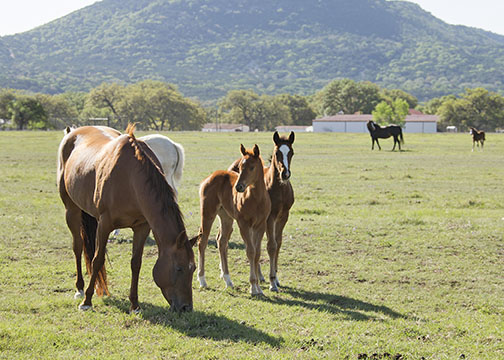
Although it is the most basic form of health care, horse owners should be aware that horses need first aid care just as much as people do, if not more. There are many situations that a horse owner might run into such as soft tissue injuries like lacerations and puncture wounds, ophthalmic injuries, strains, sprains, other acute lameness issues, colic, fever, depression, and dystocia or foaling difficulties.
Horse owners should be able to have the basic skills required to take care of a horse during an emergency situation until a veterinarian is available, such as dialing the phone to seek professional help when needed.
“Probably the minimum competency skill level is comfort with applying a bandage in case of a hemorrhaging lower extremity” said Dr. Glennon Mays, clinical associate professor at the Texas A&M College of Veterinary Medicine & Biomedical Sciences, “or understanding how to encourage a painful, recumbent horse to stop rolling and get up off the ground and walk around in a circle while waiting for the veterinarian’s arrival in the case of colic.”
Cooperativeness on the part of the animal to accomplish routine acts can actually be practiced under non-emergency situations in order to succeed in time of crisis.
“This cooperativeness is remindful of school children practicing a fire drill” said Mays. “If something is familiar, it is more easily performed in a crisis situation. If a horse is accustomed to having bandages applied to legs or being loaded in a trailer for no obvious reason, then it won’t seem quite so unusual a request during times of stress or pain.”
In case of emergency, there are a few things that horse owners should have on-hand; especially emergency phone numbers that are readily accessible.
“In a tense moment, the pre-determined numbers can be dialed in order of preference. In case the first choice is unavailable, secondary or tertiary selections have already been made” said Mays. “I also suggest having some bandage materials on hand. Beyond basic leg wrapping techniques, other first aid supplies can vary according to the qualifications of the owner of the horse and the client-patient relationship with the veterinarian.”
Of course, there will be times when it is absolutely necessary that the horse owner calls a veterinarian for assistance. A professional caregiver should be summoned when the horse’s caretaker feels uncomfortable or inadequate providing the type of care that is necessary, or whenever an animal insurance company is involved.
“Often professional care is provided more quickly when the patient is transported rather than waiting for a busy veterinarian to break away from a practice or hospital environment. However, many vets solely provide ambulatory service and don’t operate from a clinic or hospital facility” said Mays. “Some patients requiring emergency care cannot initially be transported, depending on the experience level of the owner and one’s ability to accurately interpret the situation of the animal in danger. Another factor to consider is the comparison of the facility where the horse located and the facility a veterinarian may provide.”
General anesthesia may be avoided by transporting a young horse with a laceration to a veterinarian’s facility, for example, when the owner’s facility is not equipped with an area for safe restraint. Safety for the animal as well as the people providing the care of the animal is of highest importance.
There are several emergencies that tend to happen frequently to horses. One of the most common involves soft tissue injuries. Since horses are “flight” rather than “fight” responders, punctured, lacerated or avulsed soft tissues are ordinary reasons for seeking emergency assistance.
“Another common emergency need is in response to engorgement due to inadvertent duplication at feeding time or inconsistency in feeding time. Introduction of new feed, hay or grazing sources can create a need for emergency help at times” said Mays. “Because horses are naturally inquisitive, eye injuries are another common need for immediate assistance. Tearing excessively, squinting the eyelids, unnatural desire to stay inside a shaded area when pasture mates are out grazing are all indications of a possible eye problem. When owners are examining their horse, it’s often a good practice to take a look at both sides of the animal no matter how normal one side appears.”
The inquisitive nature of horses can also create other emergency care opportunities. Horses become entrapped in cattle guards, tree forks, narrow chute spaces, and even empty trailers where the wind has assisted in closing the gates of the trailer.
“From a veterinarian’s point of view, it’s very frustrating to be invited to attend an animal situation that has already progressed several days because the owner’s decision to provide therapy has proven a mistake” said Mays. “Please don’t wait too long and always listen to your conscience.”
ABOUT PET TALK
Pet Talk is a service of the College of Veterinary Medicine & Biomedical Sciences, Texas A&M University. Stories can be viewed on the Web at vetmed.tamu.edu/news/pet-talk. Suggestions for future topics may be directed to editor@cvm.tamu.edu.


