
Jogging With Your Dog
Jogging with a friend can help keep you motivated and fit. So should your jogging buddy be short or tall, blonde or red-haired, two or four-legged?
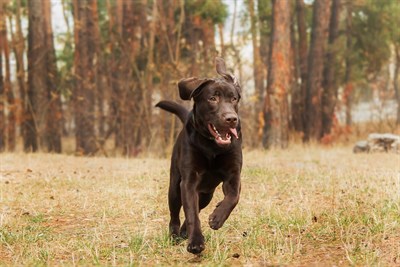
“Dogs need exercise just like people and jogging is a good way to do this,” notes J. David Sessum, RVT, veterinary technician at the College of Veterinary Medicine & Biomedical Sciences, Texas A&M University. “Dogs enjoy being outdoors and spending time with their caretakers.”
Prior to beginning a jogging routine, Sessum suggests a veterinary check-up to make sure that your dog is in good physical condition and can cope with the physical strain of running. Additionally, certain dog breeds may make better jogging buddies than others.
“Larger dogs do well with jogging,” explains Sessum. “Small dogs may have a more difficult time jogging due to their short legs. Short muzzled dogs should be evaluated to make sure their airway can handle strenuous activity such as jogging.”
Sessum recommends that an orthopedic exam be performed before beginning a jogging routine. During this exam, your veterinarian can evaluate your dog’s body condition score, weight, overall fitness and help you develop a gradual introduction to a jogging routine.
“Dogs of different sizes have growth plates that close at different times,” explains Sessum. “You should consult with your veterinarian for the best time to start strenuous activity with young dogs. Older dogs need to have a physical exam to make sure they are healthy enough for strenuous activity and don’t have any underlying conditions such as heart disease.”
Once your pet is given the go ahead to become a jogging buddy, there are additional considerations for your pet’s safety. Weather conditions, food and water consumption as well as obedience skills become important issues.
“If the weather is hot, jogging should take place during cooler parts of the day,” notes Sessum. “Most dogs have a thick coat of hair and extreme heat can cause their temperature to elevate quickly. Body temperature above 105 degrees Fahrenheit is dangerous for a dog. This is when heatstroke becomes a real possibility.”
Sessum says that signs of heat exhaustion include heavy panting (deep breathing), weakness, confusion and vomiting or diarrhea. As the condition worsens, there may be gum paleness, shallow breathing and eventually, slowed or absent breathing efforts, vomiting, diarrhea and finally seizures or coma, adds Sessum.
“Food should be avoided before immediate strenuous activity. A large meal followed by exercise can lead to Gastric Dilatation and Volvulus Syndrome (GDV), known as bloat, which usually requires surgical correction,” states Sessum. “Water can be given at any time, as long as the volume is limited to small amounts at each offering.”
“Heel is a great command so the dog stays next to you while running. Additionally, tripping or pulling the pet will not be a concern,” notes Sessum. “Also, consider jogging with your dog when vehicle and pedestrian traffic are minimal.”
Sessum notes that it is best to have your dog on a leash when you jog because a leash allows you to control your pet and keep them from hazardous situations. A standard collar works well, but if your pet pulls against a leash Sessum says a harness might be a better option since it allows you to control the pet’s body, not just its head and neck.
“The standard 6-foot leash allows dogs to move freely on a relaxed leash. A retractable leash is more difficult to hold while jogging and if the leash is totally released, the dog may get into a dangerous situation or you could trip on the excessive leash length,” notes Sessum.
When running with your canine jogging buddy take into consideration that you are wearing cushioned shoes, your dog is not. Be aware of the type and temperature of surface on which you are running.
“Your dog’s foot pads should be monitored for excessive wear,” notes Sessum. “Most dogs tolerate pavement and sidewalks well, but be cautious in extreme hot or cold conditions.”
Follow these simple safety tips so that your canine jogging buddy running by your side experiences an enjoyable activity that keeps both you and your dog fit.
Pet Talk is a service of the College of Veterinary Medicine & Biomedical Sciences, Texas A&M University. Stories can be viewed on the Web at vetmed.tamu.edu/news/pet-talk. Suggestions for future topics may be directed to editor@cvm.tamu.edu.


