
Planning for Equine Evacuations During Hurricanes
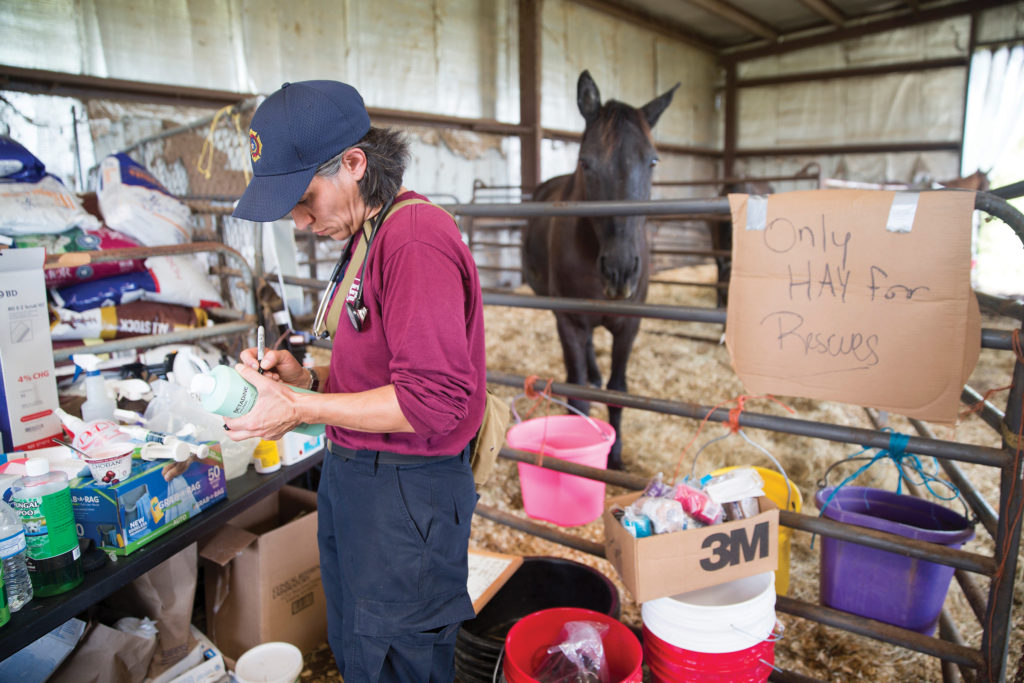
Evacuating when a hurricane hits the coast is a stressful and scary experience, especially when evacuating with horses. While tornadoes give little warning for evacuation, hurricanes can give enough lead time to actually move people and horses out of the storm’s expected path. But even with that time, preparing for equine evacuations can be crucial to the survival of horses.
Dr. William Moyer, professor and special assistant to the dean at Texas A&M College of Veterinary Medicine and Biomedical Sciences, offered a series of suggestions for evacuating with horses.
“Take the threat seriously. You need to make the decision to leave as soon as you can. If you wait until the last minute, you’re placing yourself and your horse in harm’s way. Over 100,000 animals were lost during Hurricane Ike,” Moyer said. He suggested that owners make sure their trailers are road-worthy before hurricane season begins or identify someone with reliable trucks and trailers who can transport horses for them.
Another important aspect of evacuating horses is ensuring that your horses are comfortable with loading. Working with your horses ahead of time is particularly important if a neighbor or friend will be transporting your horse because ill-behaved horses can waste valuable evacuation time or refusal of transport.
Evacuation traffic is often slow and crowded, creating a dangerous situation for trailered horses. “You are often forced to move quite slowly. Filling up on gas or diesel before entering traffic is imperative and can keep you out of situations where your animal might overheat or become dehydrated should you run out of fuel,” Moyer said.
Moyer advised identifying evacuation destinations.
“While moving inland during a hurricane is important, finding a specific place to go is best. During hurricane Ike we sheltered 166 horses through a cooperative agreement with a local livestock arena operation. The degree of planning for resources, personnel, and scheduling regular care can be daunting. The State of Texas recognizes that prior planning and implementation is live saving for both animals and people.”
He suggested creating an equine evacuation “kit” with a brief and well documented health history, a list of behavior peculiarities (if applicable), a first aid kit, cash, appropriate health documentation, enough food and adequate, safe water supplies for about four days, and any necessary medicine for chronic or preexisting illnesses.
Owners also need to ensure the appropriate health documentation accompanies the horse. An up-to-date Coggins test is necessary, particularly if crossing state lines. Moyer suggested making sure you have these papers organized before hurricane season.
In addition to required documentation, vaccinations are also suggested.
“Because evacuating can be a stressful time, vaccinations can help decrease the likelihood of several diseases,” said Moyer. “Mosquitos can be a huge problem during hurricane season, and moving them around coastal areas can expose them to new areas of infestation and diseases.”
Also, prepare current paper and electronic copies of pictures of your horse for reclaiming purposes, particularly if the horse isn’t tattooed or branded.
“Ideally, these would include a picture of the owner and the horse together to insure ownership,” Moyer said.
If you cannot evacuate your horse, or are forced to leave part of your herd behind, there are also some precautions that can help you reunite with your horse. Keeping photographs can help, but also attaching identification information to the horse’s body can be useful.
“Braiding information wrapped in plastic to horses manes and tails can help. Livestock paint works well to put identification information on the body, and it’s waterproof. Or even taking a pair of clippers and shaving your contact information into the animal’s hair can help you reunite with your horse when you return.”
In addition to preparing your horse for evacuation, Moyer also suggested preparing yourself.
“Have a personal evacuation plan, too. You have to take care of yourself first to be able to take care of your horse.”
ABOUT PET TALK
Pet Talk is a service of the College of Veterinary Medicine & Biomedical Sciences, Texas A&M University. Stories can be viewed on the Web at /pet-talk. Suggestions for future topics may be directed to cvmtoday@cvm.tamu.edu.


