
Raccoons
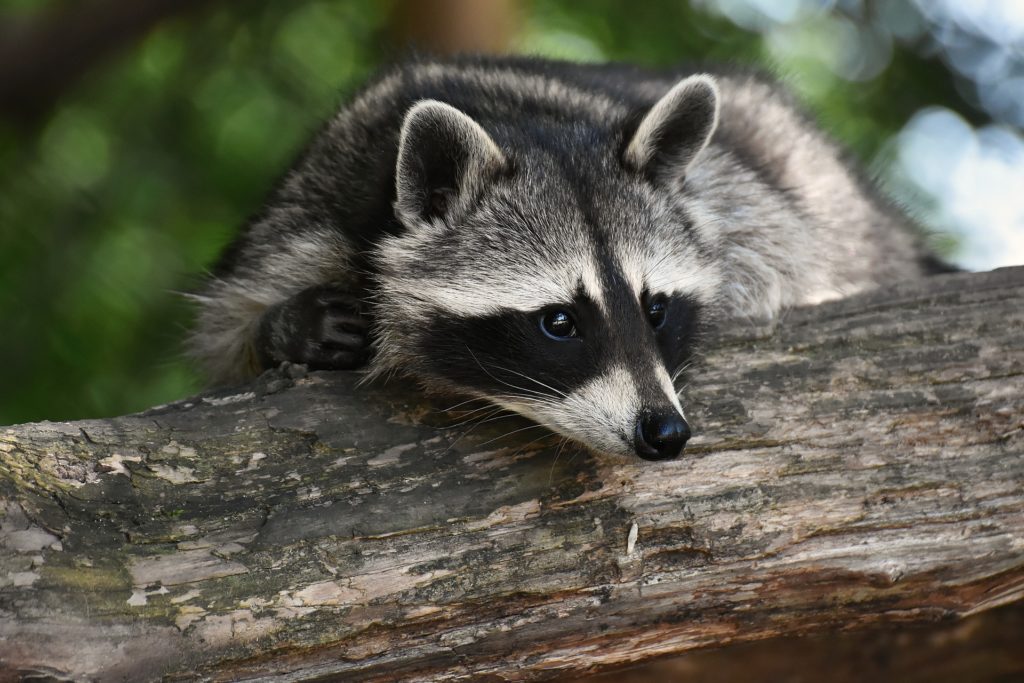
The late night ruckus coming from the back porch may not be a robber or even the friendly neighborhood cat. Raccoons love to filter through the trash and can frequently be seen doing so during the late hours of the night.
However fascinating this may be, experts advise people to stay away from cute little Rocky the Raccoon.
“Homeowners should use caution when they see raccoons in their neighborhood,” said Dr. Alice Blue-McLendon, a professor in the College of Veterinary Medicine & Biomedical Sciences at Texas A&M University.
“Although they are not inherently vicious, they can carry a number of diseases, including rabies, and can attack humans and pets if provoked,” explained Blue-McLendon.
Raccoons are one of the most recognizable creatures in the United States and are found in almost every major habitat. They have the unique ability to adapt to the changing environment and to navigate through storm sewers that lead to residential neighborhoods.
By surviving on a highly diverse diet ranging from acorns to fish, they often cause problems for fruit and vegetable gardeners.
Their characteristic “bandit” mask may be the least visible sign of their troublesome behavior. Raccoons living in neighborhoods have been known to rummage through trash cans, pillage gardens, and even enter households through pet doors. They have been seen taking up residence in barns, attics, chimneys, and the crawl spaces under buildings and homes, often leaving a mess and destruction behind.
“Aside from the property damage they cause, raccoons can carry rabies as well as an intestinal parasite that can cause serious brain damage and death if ingested,” said Blue-McLendon.
This zoonotic parasite called Baylisascaris procyonis or, “raccoon roundworm,” is contracted through feces. If ingested, larvae can hatch, migrate through tissue, and can invade the brain and eye area, causing serious injury.
Young children who still orally explore their surroundings, or those simply playing in areas where fecal matter may be accidentally ingested may be affected.
Blue-McLendon advises against keeping raccoons as pets due to the increasing prevalence of rabies.
“Aside from the risk of disease, it is incredibly hard to tame these animals; they have sharp teeth and claws that can inflict pain and injury,” explained Blue-McLendon.
For people who live in areas frequented by raccoons, making sure family members wash their hands regularly when playing or working outdoors is a good precaution to take. To protect a home and yard from the destruction left behind by raccoons, trash cans should be secured and if possible, kept in the garage or shed until the morning of removal.
Chicken wire can be used to close crawl spaces under homes and entries into attics. Locks can be placed on pet doors and caps can be installed on chimneys.
“The nuisance and damage caused by raccoons can be minimized when homeowners understand the behaviors of these animals,” said Blue-McLendon, “Like other urban wildlife species, raccoons are very mobile and will usually move on in a few weeks.”
However, if homeowners find their patience growing thin, neighborhood raccoons can be safely encouraged to relocate with the help of an animal control specialist.
ABOUT PET TALK
Pet Talk is a service of the College of Veterinary Medicine & Biomedical Sciences, Texas A&M University. Stories can be viewed on the Web at vetmed.tamu.edu/news/pet-talk. Suggestions for future topics may be directed to editor@cvm.tamu.edu.

