
A summer of research: The SVSRF program
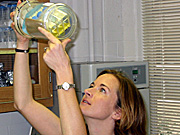
COLLEGE STATION, TX –This summer, 16 veterinary students at the Texas A&M University (TAMU) College of Veterinary Medicine & Biomedical Sciences (CVM) got a chance to explore an alternative career to clinical practice-veterinary medical research.
As participants of the Summer Veterinary Student Research Fellows (SVSRF) Program, the students each worked with a CVM faculty member for 12 weeks on a research project. The projects covered a wide range of research fields and included studies on companion animal health (e.g., equine breeding), infectious animal diseases (e.g., bovine babesiosis) and the development of transgenic animals and biomedical devices.
From preparing a research proposal to collecting and analyzing data to presenting study results in front of peers and mentors, the students got to experience the world of research and academia during the program. By giving students a feel for research work, the program, which has been held at Texas A&M since the 1980s, aims to encourage veterinary students to pursue careers in research.
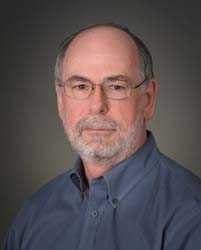
“A very small percentage of veterinary students go into research,” said Dr. Roger Smith, professor of pathobiology and program coordinator, explaining the basis for the SVSRF program. “The National Academy of Sciences published a report some years ago on the need for more veterinarians in biomedical research. It is important to get these students interested in research, especially since they bring a unique perspective to the research table.”
This unique perspective stems from the comparative nature of veterinary science (which involves studying and comparing the biology and pathology of various animal species).
“The veterinary curriculum gives students a broad understanding of health and disease that a strictly graduate curriculum lacks and that medical students, who are trained to consider only a single species, miss out on,” explained Smith.
This broad understanding of disease processes and disease spread both within and across species means that veterinary students are uniquely positioned to carry out not only research pertaining to animal health but also biomedical research in fields such as the treatment and control of emerging infectious diseases (e.g., novel H1N1 flu) and animal modeling of human diseases. The program hopes to encourage veterinary students to look beyond clinical practice and make them aware of these research opportunities.
For some students like John Brinkerhoff, the SVSRF program has been successful in achieving its goal: “I enjoyed the research program this summer. Working with, and learning from, my mentor and lab group was a privilege. Also, the field trips to research institutes helped me see how veterinarians successfully apply their knowledge in research areas, and the program provided an opportunity to practice reading and discussing scientific papers. Research is an option that remains open to me after veterinary school or after practicing for a few years.”
However, for others, long lab hours and the absence of patient interaction have convinced them to rule out a career in bench research. Although not the goal of the program, this may not necessarily be a negative response.
“I think it’s good that students are given the opportunity early in their career to decide if research is something in which they would be interested,” said program mentor and assistant professor Dr. Charles Long. “Even if the students decide not to be research scientists by training, I hope that the program will open the door for them to work with researchers and help them realize that a strong collaborative relationship between clinical and research science is beneficial for the development of the next generation of new drugs or therapies.”
The SVSRF Program is funded by the College of Veterinary Medicine and by awards from the Texas Veterinary Medical Foundation, the National Institutes of Health, the Merck-Merial Veterinary Scholars Program and the William & Dorothy Klemm Fellowship.
For information on the 2010 SVSRF program, please see vetmed.tamu.edu/vmsrfp.

