
First Cloned Horse in North America Born at Texas A&M
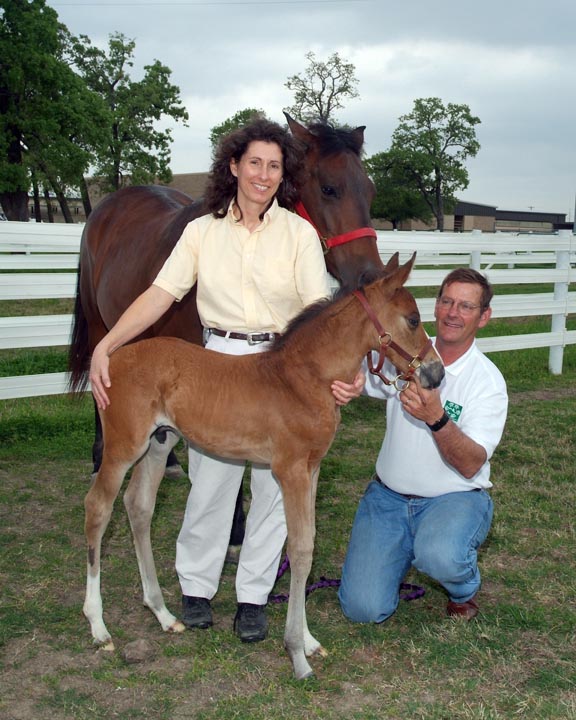
WHAT: In what is believed to be the first success of its kind in North America, researchers at the College of Veterinary Medicine and Biomedical Sciences at Texas A&M University have successfully cloned a horse. The privately owned colt named Paris Texas was cloned from the adult skin cells biopsied from its genetic donor by French collaborating partner Cryozootech, a company dedicated to preserving the genes of exceptional horses for their use in producing cloned offspring.
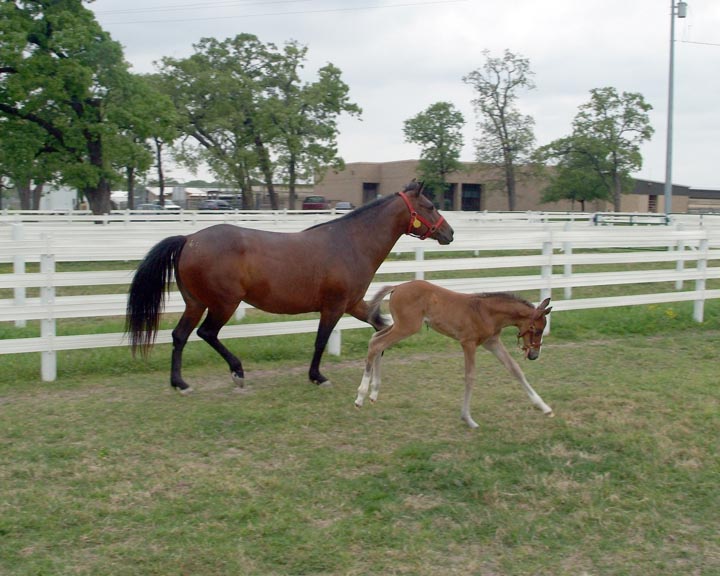 | 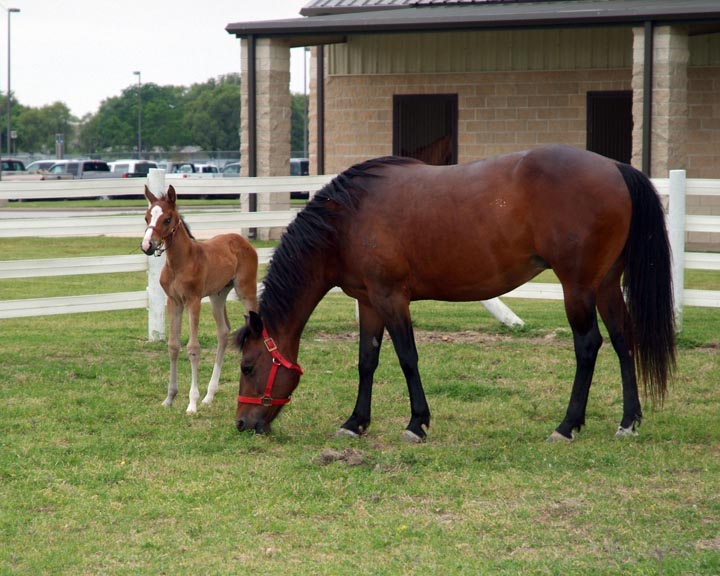 |  | 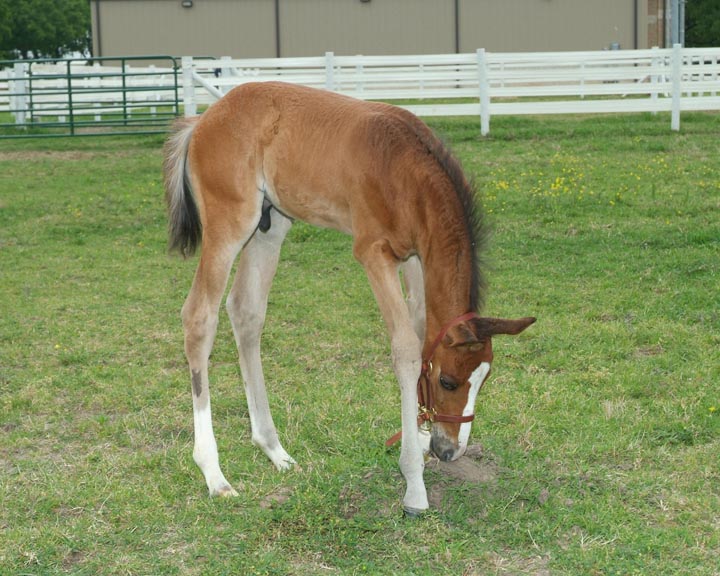 |
The bay colored-foal was born on March 13, making Texas A&M the first academic institution in the world to have cloned six different species.Previously, researchers at the College of Veterinary Medicine and Biomedical Sciences have cloned cattle, goats, pigs, a deer and a cat.
Paris Texas is the second cloned horse of Cryozootech’s horse champions cell collection, making this company the leader of horse cloning for genetic purposes.
WHO : Dr. Katrin Hinrichs, veterinarian and professor, and Dr. Young-Ho Choi, associate research scientist, Texas A&M University and Eric Palmer of Cryozootech.
HOW: To schedule interviews with Dr. Katrin Hinrichs, lead scientist on the project, contact Texas A&M University (979) 845-9102 or e-mail jburke@cvm.tamu.edu
To schedule interviews with Eric Palmer, chairman of Cryozootech, contact +33 1 34 84 43 13 or e-mail contact@cryozootech.com
Background Sheet
- In what is believed to be the first success of its kind in North America, researchers at the College of Veterinary Medicine and Biomedical Sciences at Texas A&M University , have successfully cloned a horse. The privately owned colt named Paris Texas was cloned from the adult skin cells biopsied from its genetic donor by French collaborating partner, Cryozootech, a company dedicated to preserving the genes of exceptional horses for their use in producing cloned offspring.
- The bay colored-foal was born on March 13, making Texas A&M the first academic institution in the world to have cloned six different species. Previously, researchers at the College of Veterinary Medicine and Biomedical Sciences have cloned cattle, goats, pigs, a deer and a cat.
- “The great thing is that Paris Texas is healthy; this is certainly the goal of our work,” said Dr. Katrin Hinrichs, lead scientist on the project. Hinrichs is a veterinarian and professor at the College, and heads Texas A&M’s Equine Embryo Laboratory. Hinrichs and Dr. Young Ho Choi, an associate research scientist in the Equine Embryo Lab, worked on this project with Eric Palmer, chairman of Cryozootech, a French reproductive sciences laboratory. Palmer collected the cells from a valuable performance horse in Europe , cultured the cells, froze them, and sent them to Hinrichs’ laboratory.
- At the Equine Embryo Laboratory, the cells were thawed and cultured. Horse oocytes (eggs) were matured in an incubator and then used for the nuclear transfer, or cloning, procedure. “To perform nuclear transfer, under a powerful microscope Dr. Choi takes the chromosomes, containing the DNA, out of the oocyte. Then he injects one donor cell into the cytoplasm of the oocyte. When we activate the oocyte to start cell division, it produces an embryo with the DNA from the donor animal.” Hinrichs explained. “We have developed methods for culture of horse embryos in the laboratory over the last few years, and so we can now use them with the cloned embryos. We culture them for about 7 days until they are at a stage that we can transfer them to the uterus of a recipient mare, just as we would for a standard embryo transfer.”
- The research was privately funded through an agreement between Texas A&M and Cryozootech. “It is hard to get funding from traditional sources for horse cloning work” said Hinrichs. “Horses are expensive, difficult to work with, and have 11-month gestations, so it is hard to justify them as a model for humans. Traditional horse research funding agencies are associated with the Thoroughbred industry, which does not even allow artificial insemination, and the American Quarter Horse Association, which at this time is not registering cloned foals. Thus, private funding has been very important in allowing us to do work in this area,” she continued. “Our laboratory focuses on the biology of the horse oocyte, and the factors that allow it to develop into a healthy embryo and foal. We look at oocyte maturation, fertilization, and embryo development as well as at nuclear transfer.”
- Greta, the recipient mare that gave birth to Paris Texas , is a Quarter-type mare that has been in Hinrichs’ breeding herd for 4 years. The pregnancy and birth were without complications, although the mare went more than a month overdue. “Mares sometimes do this if they feel the foal needs a little more time, and Paris Texas weighed only 60 pounds when he was born. He is a big guy now, though; at 6 weeks he weighs 179 pounds .
- Cryozootech’s client wishes the donor horse to remain anonymous at this time. The donor is a stallion, and it is hoped that Paris Texas will carry on his genetics through a breeding program. There are no plans to have Paris Texas compete at a horse show. “Cloning is not a way to produce competitors,” said Hinrichs. “There is just too much variability in the environment that a cloned foal experiences, both in the uterus and after birth. Just the fact that he spent his first 7 days in an incubator can affect Paris Texas ‘ growth rate after birth, and even his performance as an adult. However, as a sire, Paris Texas should produce the same quality of foals, with exactly the same genetics, as did the donor stallion.”
- The Equine Embryo Laboratory at the College of Veterinary Medicine and Biomedical Sciences at Texas A&M is one of fewer than 10 laboratories worldwide dedicated to equine fertilization research. Established in 1916, the College is one of the world’s leading institutions in animal health care and research.

