Workshop with Dr. Irene Pepperberg: A review and demonstration of the Model/Rival Technique

We are honored to host a workshop led by Dr. Irene Pepperberg, Adjunct Research Professor with Dept of Psychological and Brain Sciences, Boston University, internationally recognized for her pioneering research on avian cognition and animal behavior.

Following her seminar on Nov 19, we are happy to host a workshop, titled “A Review and Demonstration of the Model/Rival Technique.” Dr. Pepperberg will provide a detailed overview of the training methodology she developed and applied in her landmark studies with African Grey parrots. The session will explore the theoretical foundations of the Model/Rival approach and its practical applications for teaching parrots to label and identify various objects.

Date: Thursday, November 20th

Location: Schubot Aviary (AVIARY AVI 001)

Time: 1 to 3pm

Dr. Pepperberg and “Griffin”, one of the African Grey parrot that is part of her studies

When possible, the workshop will include a live demonstration with one or two tame African Grey parrots from the Schubot Aviary, assisted by volunteers from the audience. In the absence of birds, Dr. Pepperberg will illustrate the technique using a human “stand-in” to exemplify the interactive learning process central to the method.

This event offers a unique opportunity for the Schubot community to learn directly from one of the foremost authorities in animal cognition and behavior, whose work continues to shape our understanding of animal cognition and behavior.

Schubot Center Investigates Neonicotinoid Exposure in Wild Turkeys

In a new grant awarded by the National Wild Turkey Federation to Schubot members Sarah Hamer, Meredith Anderson and Gabriel Hamer, the team will investigate whether wild turkeys in Texas, Illinois, Iowa, Louisiana and Missouri are being exposed to neonicotinoid insecticides across their range. This work unites researchers in the College of Veterinary Medicine and Biomedical Sciences and the College of Agriculture and Life Sciences to collaborate with turkey biologists across several states.

The research is using donated blood and liver samples from licensed hunters, with the goal to assess the prevalence and geographic distribution of exposure, building on previous findings where nearly one‑third of apparently healthy Texas songbirds tested positive for neonicotinoids.

Neonicotinoids—widely used in agriculture and pest control— provide great benefits in the agricultural and veterinary industry. There research is addressing a need outlined by turkey managers to understand if turkeys may contact these chemicals which persist in the environment. If so, the team will begin to understand if there are any health consequences associated with those exposures.

Turkey are considered an indicator species for ecosystem health. By identifying patterns of potential exposure and hotspots, this study seeks to inform if future research on these compounds is warranted from a conservation perspective.


This research collaboration was featured in the “The Lifestyle Hub” conservation section of the National Wildlife Turkey Federation.

Schubot Center Role
This research builds on earlier work funded by the Los Alamos National Labs Collaborative Research Program, where Dr. Hamer and Dr. Meredith Anderson investigated neonicotinoid exposure in diverse wild bird communities. This research is also a collaboration with Dr. Gabriel Hamer and local biologists across Texas, Illinois, Iowa, Louisiana, and Missouri.

Dr. EV Voltura Selected for Prestigious NIH IRACDA Postdoctoral Training Grant

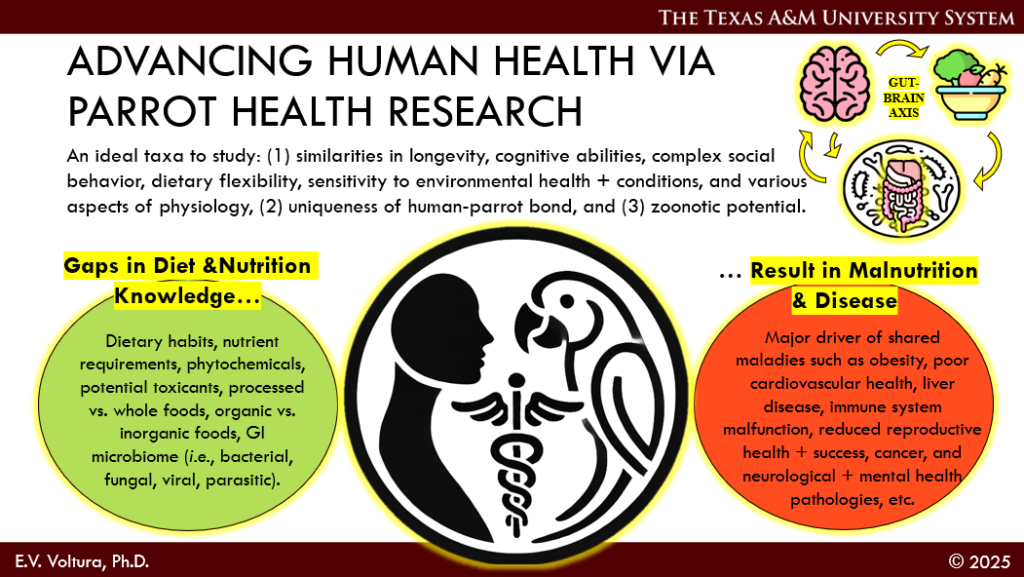
The Schubot Center for Avian Health is proud to announce that Dr. EV Voltura, postdoctoral associate with VTPB/Schubot Center, has been selected for a highly competitive NIH IRACDA postdoctoral training grant position. This prestigious opportunity, effective December 1, 2024, is led by Drs. Rajesh Miranda (College of Medicine), Christopher Quick (CVMBS), and Gloria Regisford (Prairie View A&M University; PVAMU).

Dr. Voltura is among the first cohort of three postdoctoral trainees for the program, which aims to develop scholars with strong mentorship skills while fostering collaboration between Texas A&M University and faculty at PVAMU. She will continue to be mentored by Dr. Sarah Hamer, Schubot Center director, as she expands her research using birds at the Schubot aviary as models to study key health parameters relevant to human health.

Graphic summary of Dr. Voltura’s research

We are excited to see Dr. Voltura’s contributions to both avian and human health research grow through this program. Congratulations, Dr. Voltura!

Schubot Center Celebrates the Holidays with Wassail, Cookies, and an Exclusive Film Screening

This year’s celebration was extra special as we hosted a private screening of Parrot Kindergarten, an upcoming avian documentary featuring the cognition research of Jen Cunha. Cunha was recently appointed as an adjunct assistant professor in the Department of Veterinary Pathobiology due to her collaborations with the Schubot Center. Thanks to a special agreement with TAMU, attendees had the rare opportunity to watch the film before its official release.

We appreciate everyone who joined us for this festive and insightful event. Thank you for being part of our Schubot community, and we look forward to another exciting year ahead

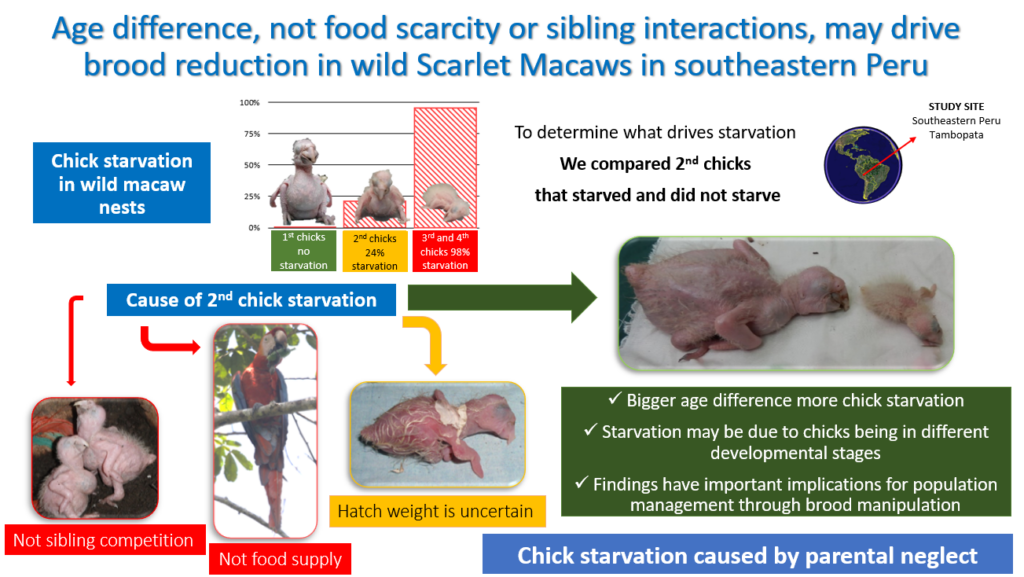
Dr. Vigo-Trauco and Dr. Brightsmith’s study featured in Forbes: Why do macaws neglect their youngest chicks?

Drs. Gaby Vigo-Trauco and Don Brightsmith, researchers at the Schubot Center, have conducted a groundbreaking study exploring why Scarlet Macaws often neglect their youngest chicks. Their research, recently featured in Forbes, reveals that while these macaws can lay up to four eggs per clutch, typically only one or two chicks survive to fledging. This phenomenon is primarily due to parental neglect of the later-hatched chicks.

The study delves into the factors influencing this behavior, providing valuable insights into the reproductive strategies of Scarlet Macaws. Understanding these dynamics is crucial for developing effective conservation efforts aimed at improving chick survival rates.

This study not only enhances our understanding of avian behavior but also underscores the importance of targeted conservation strategies to support the survival of these magnificent birds.

The Schubot Center is proud to support research that advances the health and conservation of parrots worldwide.

Schubot Seminar with Dr. Jen Smith on Microplastic Exposure in Birds

The Schubot Center was pleased to host Dr. Jen Smith, Assistant Professor at The Caesar Kleberg Wildlife Research Institute, Texas A&M-Kingsville, for a thought-provoking seminar titled “Understanding Species and Site-Specific Variation in Microplastic Exposure in Birds: Highlighting Issues of Environmental Justice”.

Held on Friday, November 8th, the seminar attracted a diverse audience, including trainees, faculty, and staff from the VMBS, ENTO, Toxicology program, EEB, and ECCB, as well as 60 members of the Zoo/Exotics/Wildlife Club who joined virtually.

The seminar also included insights into Dr. Smith’s interdisciplinary research approach, which combines avian ecology, human dimensions, and sustainable wildlife management strategies.

We thank Dr. Smith for her valuable contributions and all who joined us for this memorable seminar. Stay tuned for future events in the Schubot Seminar series!

Talk Abstract

Microplastic (MP) pollution, extensively studied in marine ecosystems, is relatively underexplored in terrestrial birds. Dr. Smith’s research focuses on understanding species-specific MP exposure in terrestrial birds, examining (1) traits associated with MP exposure, (2) potential exposure pathways, and (3) species that could serve as bioindicators of MP pollution. Through The Urban Bird Project, she investigates spatial variation in MP exposure in House Sparrows across diverse socioeconomic neighborhoods in San Antonio, Texas, with an emphasis on environmental justice.

Dr. Brightsmith Awarded Prestigious ProCiencia Grant to Advance Wild Macaw Research in Peru’s Amazon Rainforest

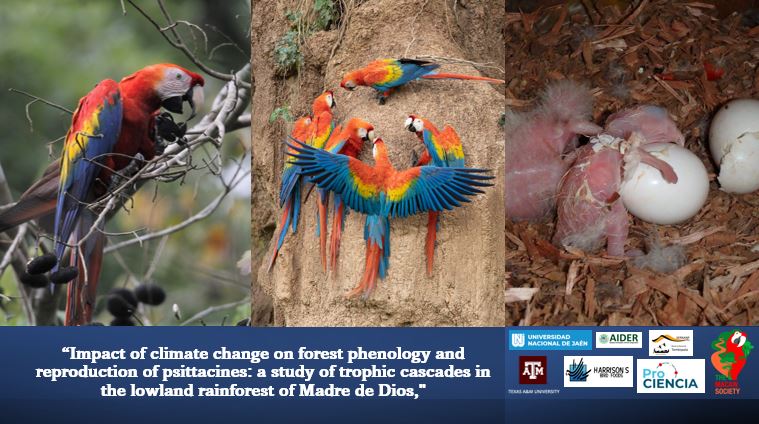
We’re thrilled to announce that Dr. Brightsmith’s team has been awarded a prestigious grant from ProCiencia PERU, a highly competitive program by the Peruvian government. Out of nearly 500 proposals, only 79 were funded this year, and his team was honored to be among them!

ProCiencia, the equivalent of the US National Science Foundation in Peru, is dedicated to advancing science, technology, and innovation to promote sustainable development and enhance Peru’s global competitiveness.

Their research project, titled “Impact of Climate Change on Forest Phenology and Psittacine Reproduction: A Study of Trophic Cascades in Madre de Dios’ Lowland Rainforest,” will explore how shifts in climate influence the flowering and fruiting cycles of tropical forests and their effects on parrots, specifically Psittaciformes, over the next three years. This project will be conducted in partnership with the peruvian university Universidad Nacional de Jaen and AIDER (Asociación para la Investigación y Desarrollo Integral), with crucial funding and support from Dr. Brightsmith’s team at the Schubot Center, which has led impactful parrot research in the lowland Amazon rainforest since 1999.

With ProCiencia’s support, Dr. Brightsmith’s team is excited to launch this next phase of research. We look forward to sharing their progress and findings as we deepen our understanding of climate change’s impact on tropical ecosystems and the magnificent parrots that inhabit them.

Congratulations to Dr. Brightsmith and the entire team for securing this significant grant! Your dedication to advancing parrot conservation and climate research continues to inspire us all.


Understanding the Impact of Climate Change on Rainforest Ecosystems

The Amazon rainforest, known for its unparalleled biodiversity, is increasingly vulnerable to climate change. Studies have shown that altered rainfall patterns, rising temperatures, and increased atmospheric CO2 levels have led to reduced tree growth and shifts in the timing and abundance of flowering and fruiting events (Corlett & Lafrankie 1998; Feeley et al. 2020). These disruptions can trigger cascading effects throughout the ecosystem, particularly impacting frugivores—species that rely on fruit as a primary food source.

Among these frugivores, parrots and macaws play essential roles, not only as seed predators but also as key seed dispersers. Their breeding season often coincides with peaks in fruit availability, which are narrowing due to climate-induced shifts in phenology. This research aims to document these changes and explore how parrots adapt, or struggle to adapt, to increasingly scarce food resources. The findings could be vital for predicting how other tropical frugivores may respond to ongoing climate shifts.

A Groundbreaking Approach to Climate and Biodiversity Research

This project represents one of the few studies specifically examining how climate impacts the phenology of tropical forests in the Neotropics and its effects on frugivorous bird populations. Through detailed tracking and analysis, we aim to monitor the changes in forest fruiting patterns and parrot reproduction cycles. Research like this is critical in understanding how tropical ecosystems function under environmental stressors and developing conservation strategies to mitigate these impacts.


Girl Scout Troop Engages in Parrot Care and Learning at Schubot Aviary

The Schubot Aviary welcomed a visit from College Station’s Girl Scout Troop 33002. This visit had been eagerly anticipated by the group due to their interest in birds, especially parrots.

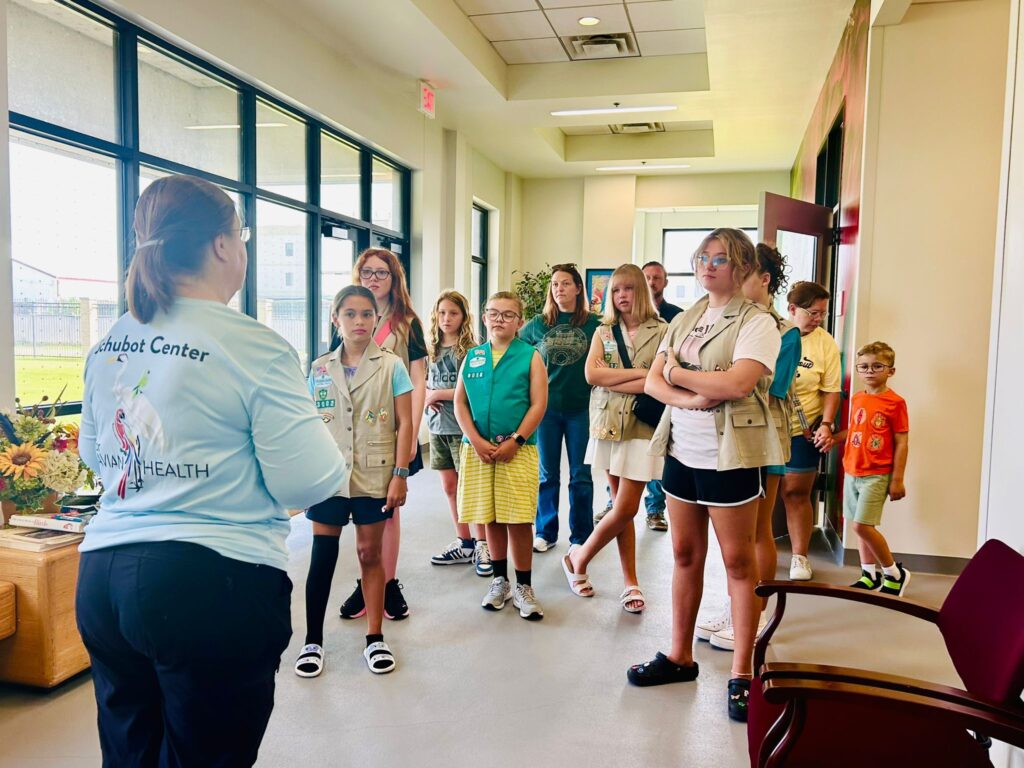
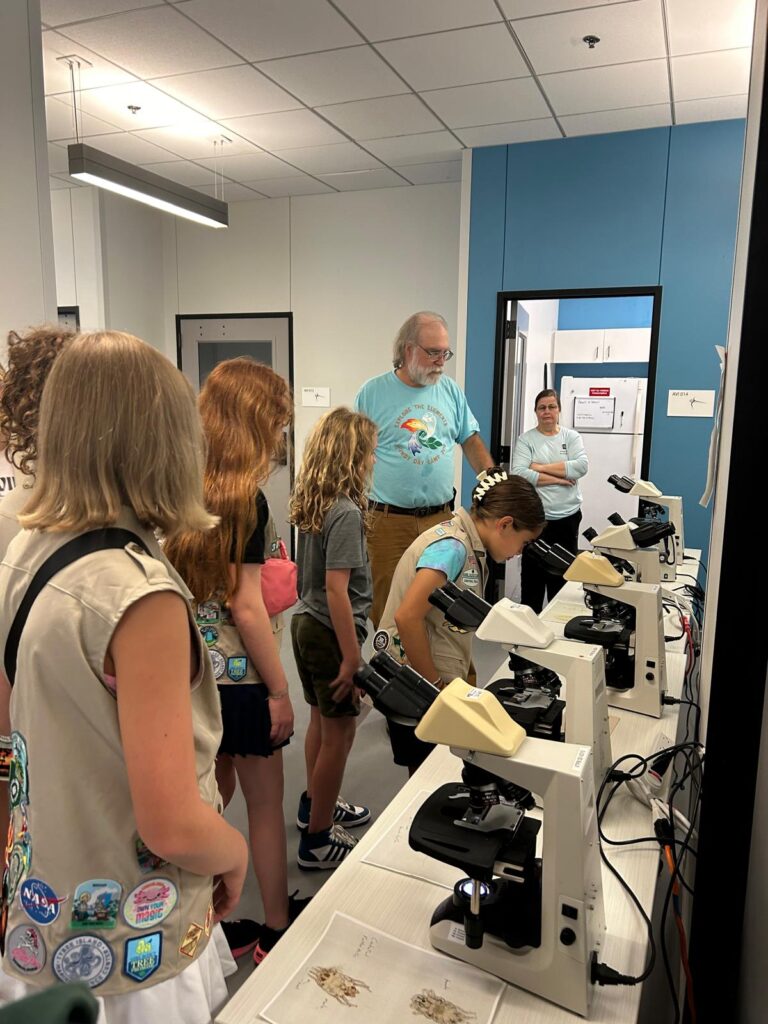
The Schubot team hosted a one-hour tour of the aviary facilities as part of its commitment to educating the local community on avian-related topics and inspiring younger generations to pursue careers in wild bird health and research. Aviary manager, Debra Turner, guided the girls through the different areas and laboratories, sharing information about the current studies conducted with the various psittacine collections housed at the aviary and in the wild. Dr. Kent Turner gave an engaging introduction to bird parasitology and showed a few common specimens under the microscope.

Girl Scouts from troop 33002 listening to Debra Turner, avian manager, explaining about the Schubot Aviary

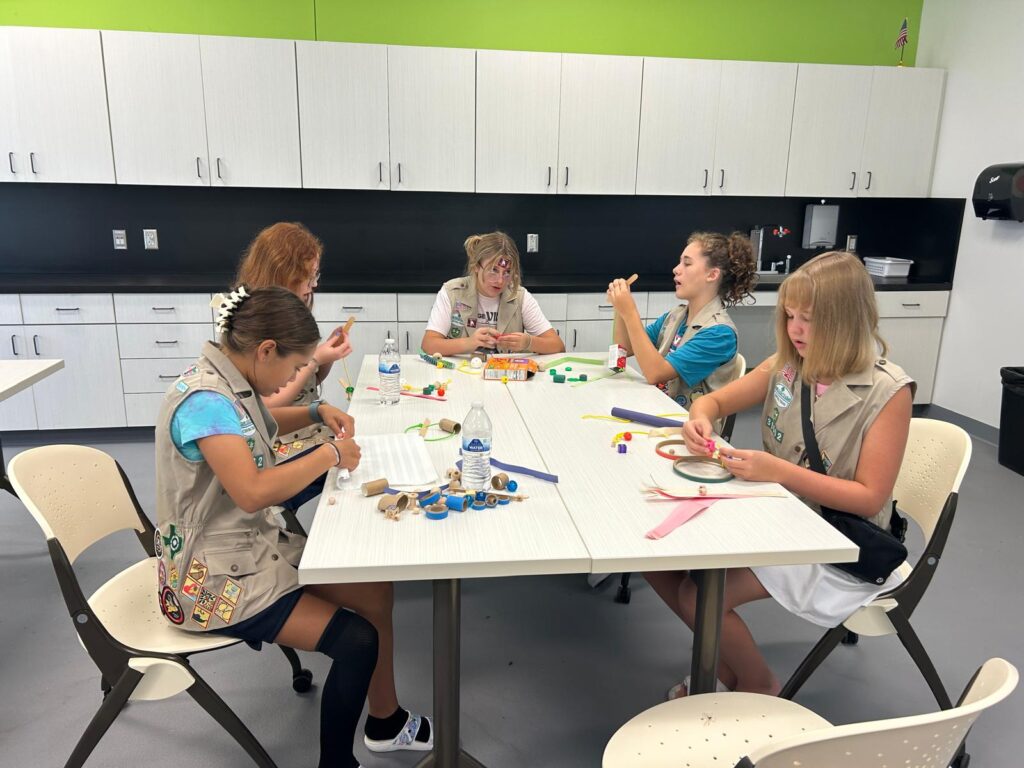
As part of the visit, the troop was responsible for making “parrot enrichment materials” (A.K.A. parrot toys) to place in the different parrot enclosures. These toys stimulate and entertain the birds, helping to prevent destructive behaviors such as screaming and feather plucking. Enrichment materials are crucial for the well-being of the birds, and the girls took their task very seriously. It was a fun and rewarding experience for everyone involved!

A big thank you to the Schubot Center for providing this wonderful opportunity to learn about birds!

Avian nutrition study underway thanks to Harrison’s Bird Foods

A small pandemonium of Schubot members has been busy working on an exciting parrot nutrition study led by postdoctoral research associate, Dr. EV Voltura

Nutrition is a vital component of every animal’s ability to achieve and maintain a healthy state of being. Parrots are no different. Unfortunately, many captive parrots are negatively affected by being fed inappropriate diets.  Research in this area is key to filling in gaps in our understanding of parrot dietary needs and nutrient requirements as they relate to health and thus our ability to improve their lives in captive settings.

We are monitoring Monk Parakeets being fed different diets in a controlled setting over time. Metrics of interest include feed intake, various health parameters (eg, physical exams, blood work, weight, body condition score, cloacal microbiota, fecal grams stains), digital images, and more.

In addition to advancing our understanding of how diet impacts parrot health, this project has been providing undergraduate, graduate, and veterinary students numerous opportunities to gain hands on research experience with parrots. 


We are grateful for support from Harrison’s Bird Foods for making this important project possible.


Dr. EV Voltura, Postdoctoral Research Associate, and Dr. Sharman Hoppes, DVM, DABVP (Avian Practice) conduct a thorough physical examination on a Monk Parakeet at the on-campus aviary.

LightsOut Symposium at Texas A&M University

The LightsOut Texas Program held an on-campus symposium at Texas A&M University on August 8th and 9th as part of its educational campaign to raise awareness and inspire action to turn off lights at night during the spring and fall migrations. This initiative is designed to protect the migratory birds that cross over Texas each year.

Several members of the Schubot Center have been actively involved in testing the LightsOut birds for pathogens that affect both bird and human health. These birds are also being added as study specimens to the Biodiversity Research and Teaching Collections (BRTC). Schubot center member, Heather Prestridge, curator of the BRTC team, played a key role in implementing the program on the Texas A&M campus.

The symposium offered an engaging mix of activities, designed to promote both learning and social interaction among participants.

Dr. Sarah Hamer, Director of the Schubot Center, gave a talk to symposium attendees that included active research on the pathogens discovered in birds collected as part of the project. Drs. Caitlin Mencio and EV Voltura as well as Debra Turner also helped host symposium attendees at the aviary.

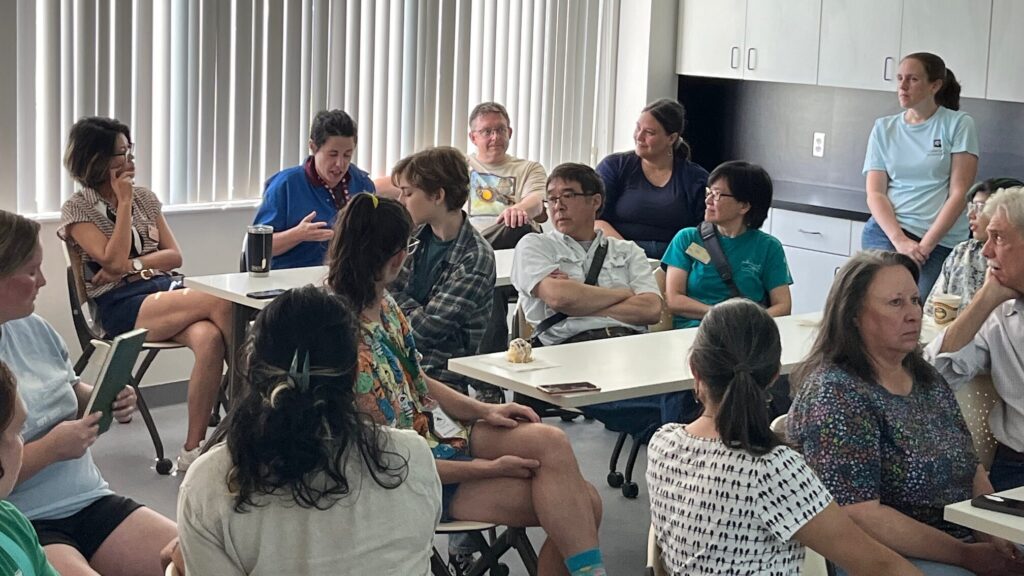
Dr. Sarah Hamer’s talk as part of the Lights Out Symposium drew a large audience and generated significant interest.

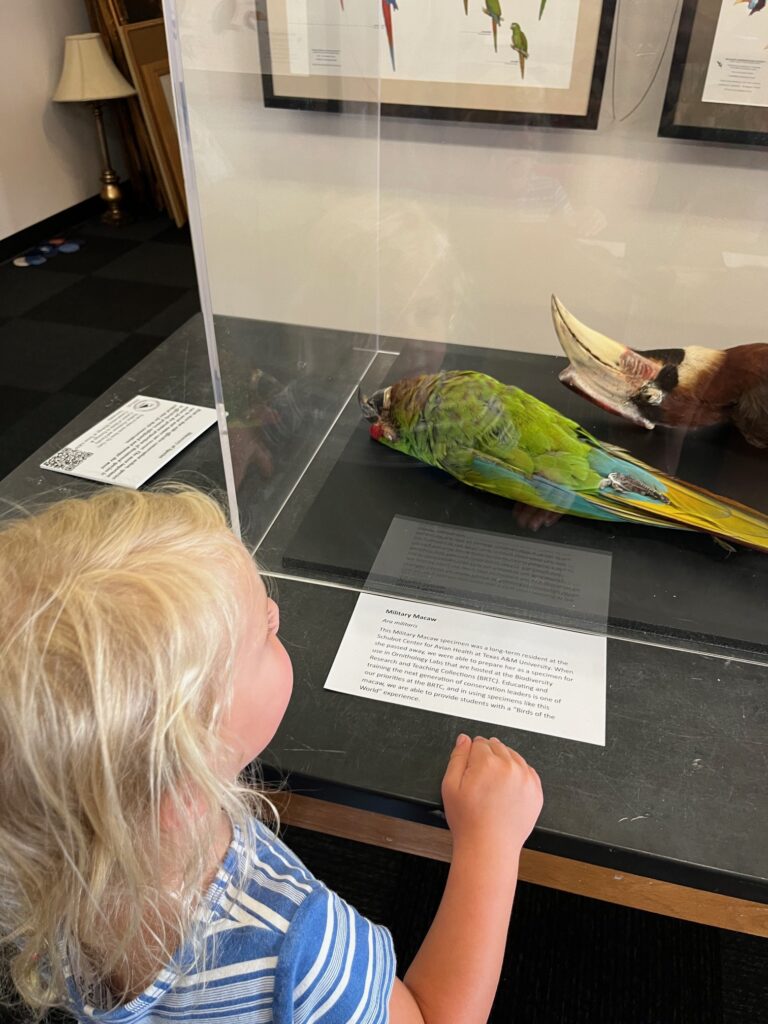
Attendees also enjoyed tours of the Schubot Aviary and the BRTC bird collection, which included demonstrations on specimen preparation and workshops on bird identification. In addition, the LightsOut Texas art exhibit opened at the Parker Astin Gallery in Bryan on August 8th, featuring “Rose,” a former long-term resident of the Schubot Aviary, as a museum specimen. Her tag proudly acknowledges the Schubot Center’s contributions to science. The exhibit will run through the rest of August.

Overall, the symposium was a great success, raising awareness for this important conservation effort.