Rabies is a deadly disease that can harm pets, wildlife, and people. Luckily, thanks to modern medicine, it is also easily preventable through vaccinations and responsible pet ownership.
Dr. Katie McCool, a clinical assistant professor at the Texas A&M College of Veterinary Medicine & Biomedical Sciences, discusses the most common signs of rabies and what to do if you or a pet is bitten by a rabid animal.
“Rabies is a virus that is spread through contact with the saliva of infected animals, most commonly through a bite from the infected animal,” McCool said. “In rare cases, rabies also can be spread when infected saliva gets into an open wound or the mucous membranes, such as the mouth or eyes.”
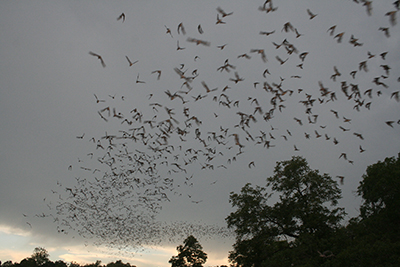
Rabies can spread to any mammals, including humans, but not to birds, fish, reptiles, or amphibians. The virus is diagnosed in cats more than any other domestic animal, but it is most commonly seen in wild animals like bats, raccoons, skunks, coyotes, and foxes.
Rabies is exhibited through both behavioral and physical changes in an animal, including fearfulness, aggression, excessive drooling, difficulty swallowing, difficulty walking, and seizures.
Wild animals that have contracted rabies often approach humans without fear and are seen wandering around in the daytime, even if they are normally nocturnal. Animals showing these behaviors should be avoided and reported to a local animal control department as soon as possible.
“We only rarely see rabies cases at the Texas A&M Small Animal Hospital, which is good news because rabies is a fatal disease once animals start to show signs of infection,” McCool said. “However, this disease is definitely present in our area; there are reports of rabies in our county every year, though these reports are primarily wildlife, such as skunks and bats.”
While there is no treatment for rabies, the disease is completely preventable with vaccines. Dogs, cats, ferrets, horses, and livestock can all be vaccinated against the rabies virus.
“Your veterinarian is an excellent source of information about keeping your pets safe from rabies,” McCool said.
“Owners can also decrease the risk of exposure to rabies by limiting your pets’ contact with unvaccinated animals,” she said. “Keep cats and ferrets indoors and do not let your dogs roam free.”
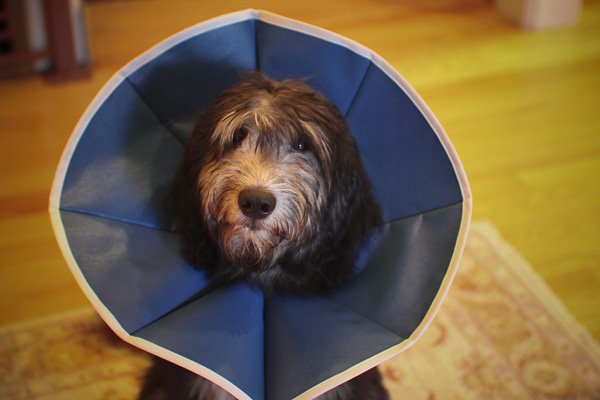
If a pet is bitten by a wild or unknown animal, contact both a veterinarian and local animal control authorities immediately. The pet will need to be revaccinated for rabies, kept under quarantine, and observed for a specific period of time, depending on state and city laws.
If you or another person is bitten by a suspected rabid animal, clean the wound with soap and a disinfectant for at least 15 minutes. Contact a doctor for medical advice and report the bite to the local health department.
McCool recommends visiting the AVMA website “Rabies and Your Pet” for more information.
Vaccinations are one of the easiest ways to protect a dog, cat, or other pet from rabies, while also reducing the transmission of a deadly disease that can harm wildlife and people as well. Vaccination is a key part of responsible pet ownership and can help ensure your animal lives a long and healthy life.
Pet Talk is a service of the College of Veterinary Medicine & Biomedical Sciences, Texas A&M University. Stories can be viewed on the web at vetmed.tamu.edu/news/pet-talk. Suggestions for future topics may be directed to editor@cvm.tamu.edu.
Texas A&M University’s College of Veterinary Medicine & Biomedical Sciences (CVM) Ph.D. student Hadil Al Muhisen and former student Dr. Ziad Naufal were instrumental in establishing the Arab Toxicologists Association (ATA) within the Society of Toxicology (SOT), the international professional toxicology organization, in spring 2019.
Founded in 1961, the SOT consists of scientists from academic institutions, government, and industry around the world and includes numerous groups, many of which are based on countries of origin.
ATA will build on the pharmacology’s and toxicology’s deep roots in the Arab scientific community that stretch back to the 9thcentury.
According to AramcoWorld, the information that circulated in Arabic alchemical manuals at that time was considered some of the best scientific work, and Arab alchemists were known for creating amalgamations and elixirs that used a variety of mineral, chemical, botanical, and animal substances.
However, Arab scientists’ leadership in pharmacology and toxicology has diminished in modern times—and Naufal believes that ATA can respark interest.
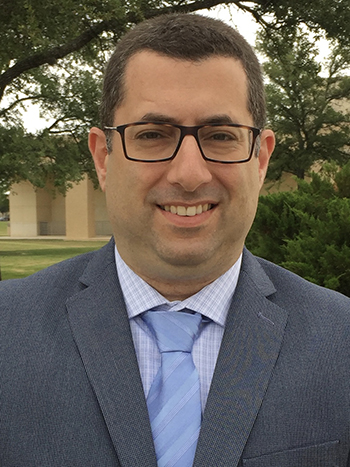
“I was always intrigued by the idea of connecting toxicologists of Arab and Middle Eastern origins together since the discipline, in all its aspects, currently is not as widely practiced in the Middle East/North Africa (MENA) region,” said Naufal, who is a board-certified toxicologist for Chevron’s Health, Environmental, and Safety Division in Houston and an officer of the Lone Star SOT Regional Chapter. “I think that creating ATA as a special interest group as part of SOT is a great opportunity for outreach to Arab toxicologists from all over the world.”
Dr. Ziad Naufal
ATA will create a network of scientists who can help identify chemicals in the environment that could harm nature and human health. To accomplish this goal, the association plans to develop communication channels, offer professional development opportunities, recognize scientists who have made an impact in toxicology, and provide financial awards to outstanding post-doctoral fellows and graduate students to support their research.
Naufal, who was recently appointed an adjunct faculty member in the CVM’s Department of Veterinary Integrative Biosciences (VIBS), credits Al Muhisen with providing the impetus to create Arab Toxicologists Association.
“I met Hadil last year as part of an engagement with the toxicology graduate students at Texas A&M,” he said. “We talked briefly, and Hadil expressed a very similar interest as mine in starting what became ATA, so I promised that I would support her if she can spearhead the effort. She did, and the rest is history. Bottom line is this wouldn’t have happened without Hadil’s outreach, high energy, and passion.”
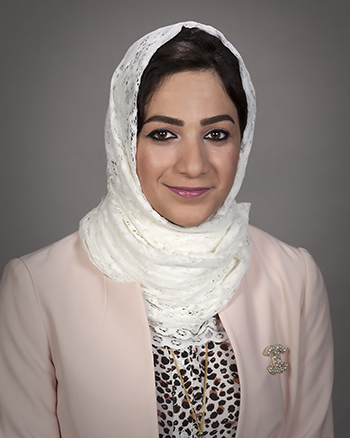
Al Muhisen, who is from Saudi Arabia, wants to mobilize Arab scientists to work with scientific colleagues, governmental agencies, and industry around the world to make the world a better place. She also believes ATA will expand opportunities for female scientists in the Arab world.
“If you want to make the world a better place, you need the majority of the world to work together,” she said. “This is one of the major aims of toxicologists—to make the world a better place and also share the ideas how we can help our countries.”
###
For more information about the Texas A&M College of Veterinary Medicine & Biomedical Sciences, please visit our website at vetmed.tamu.edu or join us on Facebook, Instagram, and Twitter.
Contact Information: Jennifer Gauntt, Interim Director of CVM Communications, Texas A&M College of Veterinary Medicine & Biomedical Science; jgauntt@cvm.tamu.edu; 979-862-4216
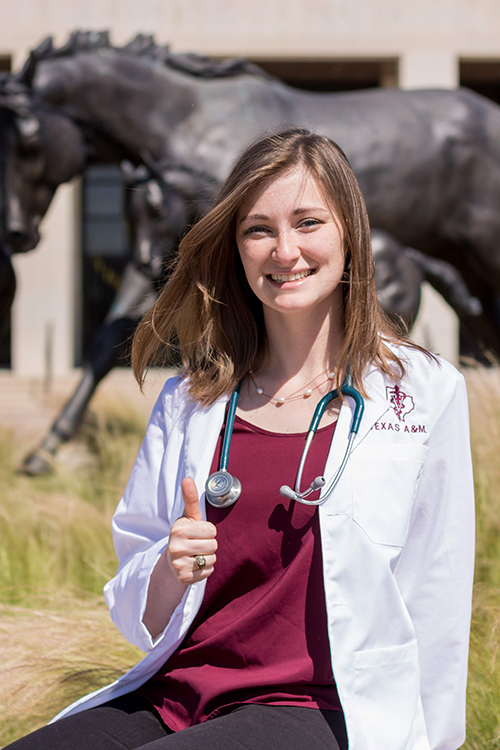
Her experience this summer working for four weeks as an extern at Quitman Animal Clinic, a rural mixed animal practice about an hour north of Tyler, has only strengthened her desire to spend her veterinary career in a rural area.
Chambers’ interest in rural medicine comes from her desire to serve the needs of rural American pet and livestock owners, especially because of the shortage of veterinarians in many rural parts of the country.
“A lot of people in rural communities don’t have access to veterinary care, so if you can join an established practice and provide that, you’re impacting a lot of people really substantially,” she said. “There’s definitely a need for veterinarians in rural communities to provide that service for people so they don’t have to drive 30 minutes or an hour to receive medical care.”
Living in an apartment above the clinic, Chambers was able to fully immerse herself in the role of a rural veterinarian while being constantly on call for any cases that came in.
“The doctors would take me in the room for the physical exams, and then I’d do my physical exam and share my findings with them,” Chambers said. “They’d confirm what I saw and add some things. It helped me realize what parts of my physical exam were lacking and what things I had skipped over, so it was good to work on those skills.
“They would also go through blood work with me and say, ‘All right, what are your thoughts?’ Or they’d grill me, ‘What are your top differentials (diagnoses) for this? What would you do?’” she said. “As I was there longer, they had me thinking up treatment plans for how I would treat (cases) and what dosages I would use.”
Along with physical exams and lab work, Chambers got experience in a variety of surgery types and emergency cases.
“I was able to stitch up several lacerations and assist with some surgeries,” Chambers said. “I also helped work and castrate a bunch of cattle, which is really cool because I hadn’t worked with cattle before very much.
“Overall, I got the full spectrum of all of the different things you can do as a mixed animal veterinarian,” she said. “I even helped with some reproductive work that they did there. It was a really good experience.”
Working in the clinic also allowed Chambers to build confidence in her abilities to diagnose problems, develop solutions, and interact with clients and patients.
“It pointed out things that I probably should go back and study more and things to focus on in the coming semester, but the clinic staff were all pretty impressed with my case-management skills,” she said. “When I had 10 different ongoing clients, I was able to keep track of who needed what medicine and say, ‘Oh, hey, we still need to do X-rays on this dog.’”
Growing up in Longview with cats and dogs, Chambers’ love for animals began at an early age. When her family moved to just outside of Nashville, she also worked on a horse ranch to get more experience with large animals.
She attended Berry College in Georgia to study animal science, with a pre-vet concentration, and to participate in their equestrian program, before coming to Texas A&M to pursue her dream of becoming a veterinarian.
“I love horses and I hadn’t realized how much I missed working with them until I worked at Quitman,” Chambers said. “My husband and I both like the more rural setting, being out in the country away from the noise and traffic of the city.”
After graduation, Chambers hopes to join an established rural mixed animal practice where she can collaborate with other veterinarians and have the opportunity to form mentor relationships. Her time at Quitman Animal Clinic gave her a good idea of the office culture she hopes to find in her future workplaces.
“The best part of the whole externship was the culture there,” Chambers said. “They were very intentional about the kind of behavior and communication that they set up there. The technicians and the doctors had a mutual respect for one another, and they both valued the skills and roles that each played.”
Chamber’s externship this summer not only solidified her plans for her future career, but also helped provide her with the experience and confidence necessary to get there and to serve the needs of the people and animals of rural America.
###
For more information about the Texas A&M College of Veterinary Medicine & Biomedical Sciences, please visit our website at vetmed.tamu.edu or join us on Facebook, Instagram, and Twitter.
Contact Information: Jennifer Gauntt, Interim Director of CVM Communications, Texas A&M College of Veterinary Medicine & Biomedical Science; jgauntt@cvm.tamu.edu; 979-862-4216
NIH F31 grants are unique in that they collectively recognize the quality of Lunde-Young’s research, the excellence of the research lab in which she works, the merits of her faculty mentor, and the exemplary institutional environment. These fellowships are highly competitive.
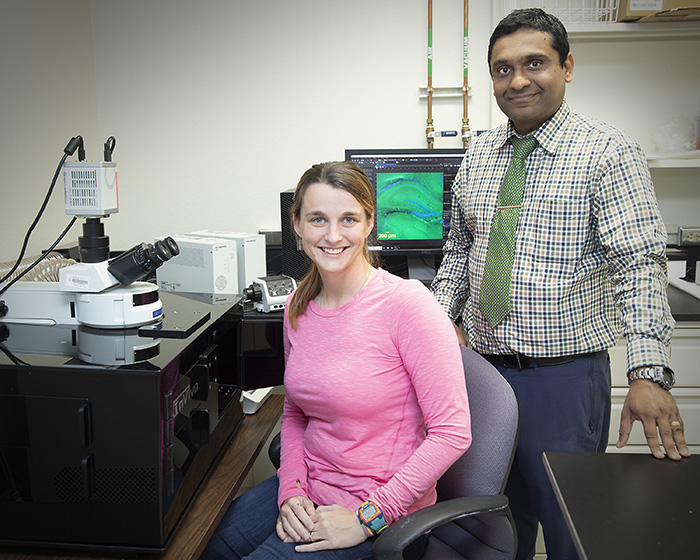
As Lunde-Young’s mentor, Dr. Jayanth (Jay) Ramadoss, the director of Perinatal Research Laboratory and an associate professor in CVM’s Physiology & Pharmacology Department (VTPP), supported her throughout the proposal writing process, from its inception to submission.
“I’m really grateful for Dr. Ramadoss’ support. An NIH F31 grant is a testament to your aptitude and potential as a researcher as well as your mentor’s and their lab’s capabilities to support your career growth,” Lunde-Young said. “It really helps get your toe in the door. It tells the scientific community that you can write a competitive grant early in your career.”
The NIH F31 fellowship grant is valued at more than $100,000 and subsidizes Lunde-Young’s tuition, fees, and stipendfor three years as she investigates Fetal Alcohol Spectrum Disorders (FASD) in Ramadoss’ research group.
“Raine is a very hardworking student who already has invested more than a decade in the field of fetal alcohol spectrum disorders,” Ramadoss said. “The NIH—and the Research Society in Alcoholism, last year, through one of their most prestigious awards—recognized Raine’s long-term commitment to this field. I believe she will do wonders as she moves on to a postdoctoral fellowship and will continue to be recognized for her contributions to the field.
“The F31 grant adds value to the career development of the graduate student as well as to the lab,” the CVM faculty member said. “Also, it’s about the message it sends. Having these grants in the lab means the lab is able to train scientists for a promising career.”
According to the National Organization on Fetal Alcohol Syndrome, an estimated 40,000 newborns—approximately 1 in 100 babies—are affected by FASD each year. FASD is more prevalent than Down syndrome, cerebral palsy, sudden infant death syndrome (SIDS), cystic fibrosis, and spina bifida combined. FASD can result in physical defects, damage to the brain and central nervous system, and social and behavioral issues.
While it’s common knowledge that alcohol consumption during pregnancy places children at risk, incidence has not decreased. In fact, a recent study indicated that1 in 10 report drinking alcohol during pregnancy.
Lunde-Young is working with Ramadoss to study how fetal brain damage from developmental alcohol exposure is happening.
“Despite more than 30 years of research, we still don’t know how alcohol causes many of these neuro-developmental problems,” Lunde-Young said. “Surprisingly, an area that is understudied is alcohol’s effects on the developing brain vasculature. The brain vasculature is important because during development, blood vessels deliver oxygen and nutrients to support healthy brain growth. Diminished blood vessel function could profoundly affect nutrient and oxygen delivery, which could lead to an array of developmental consequences involving the brain.”
Under this NIH F31 grant, Lunde-Young will use ultrahigh-frequency ultrasonography to noninvasively study regional blood flow distribution in the fetal brain. She also plans to assess blood vessel function by simulating in vivo-like conditions (i.e., temperature, pH, etc.) in an ex vivosetting outside the body, and will evaluate how these blood vessels respond to changes in pressure.
“She’s using state-of-the-art technology to image the fetal brain, to determine how fast blood is flowing in mainly small vessels supplying different brain regions,” Ramadoss said. “She will evaluate whether different parts of the brain are responding differently.”
“These vessels are less than a millimeter in diameter, so until recently, imaging was not really an option,” Lunde-Young said. “Now, with technological advances, we can really get a clear picture of how many hemodynamic parameters are being altered in response to alcohol.”
Lunde-Young’s overall goal for her work that will be supported by the F31 grant is “to lay a foundation for developing potential therapeutic or pharmacological intervention studies that can manipulate, improve, or ameliorate some of the effects of alcohol exposure on development,” she added.
“This research will give us an understanding so that we can move forward and think about treatment options,” she said
###
For more information about the Texas A&M College of Veterinary Medicine & Biomedical Sciences, please visit our website at vetmed.tamu.edu or join us on Facebook, Instagram, and Twitter.
Contact Information: Jennifer Gauntt, Interim Director of CVM Communications, Texas A&M College of Veterinary Medicine & Biomedical Science; jgauntt@cvm.tamu.edu; 979-862-4216
Many pet owners have found themselves in difficult situations in which they know something is wrong with a pet, but the veterinary clinic is closed. How do you know when it’s a true pet emergency and how do you know when it can wait until the clinic opens the next day?
To answer this question, Dr. Christine Rutter, a clinical assistant professor at the Texas A&M College of Veterinary Medicine & Biomedical Sciences, discusses some common situations that often cause pet owners concern.
If an animal is showing lameness, such as abnormal movements or the inability to use a limb, the severity will determine the degree of urgency. If lameness is severe, suddenly worse, associated with bleeding, or persists for more than 24 hours, it should be considered an emergency situation.
“Weight-bearing lameness, or limping, can typically be evaluated within one to two days by a primary care veterinarian, rather than on an emergency basis,” Rutter said.
Sources online may recommend giving non-steroidal, over-the-counter medications to pets for pain relief, but this can cause serious toxicity or drug interaction issues.
“If an owner feels that a pet needs pain medication, they should always contact their veterinarian prior to administering medications,” Rutter said. “I don’t recommend any over-the-counter human pain medications for use in animals. We have veterinary medications that are much safer, more effective, and interfere less with our ability to diagnose and treat more complicated causes of lameness.”
Bleeding cuts and injuries are also considered emergencies when severe, especially if accompanied by lethargy or weakness. In addition, pale pink or white mucous membranes, including the gums and tissues inside of eyelids, can indicate severe or rapid blood loss.
“Any bleeding that is excessive or doesn’t stop within 10 to 15 minutes should be evaluated by a veterinarian,” Rutter said. “Any wound that is ‘full-thickness,’ which means it goes all the way through the skin so that you can see underlying muscles and tissues, should be evaluated. This especially applies to bite wounds; all bite wounds are an emergency.”
Bite wounds not only cause physical damage, but can also lead to infection and spread diseases between animals, so they should be treated by a veterinarian as soon as possible.
If a dog or cat swallows a foreign object or plant, the best option is to immediately call the ASPCA poison control hotline (888-426-4435) to determine if the ingested substance is toxic.
“The ASPCA hotline does cost money, but it could either save you a trip to the ER if the intoxication isn’t serious, or it can provide your ER veterinarian with important initial and follow-up information through the case number you receive during the consultation,” Rutter said.
Another common cause of concern for pet owners is when a dog or cat becomes lethargic or refuses to eat or drink.
The urgency in this situation often depends on the pet’s normal behavior. For example, if a dog that normally eats all its food in a minute suddenly refuses to eat, it should probably be seen by a veterinarian sooner rather than later.
“In general, a dog or cat that doesn’t eat or is lethargic for more than 24 hours should be evaluated,” Rutter said. “Cats are especially sensitive to prolonged anorexia, and they can have secondary illness solely from not eating. Vomiting or diarrhea that does not resolve within 12 to 24 hours should also be evaluated.”
When it comes to seizures, the pet’s medical history will determine whether a trip to the emergency room is necessary.
“A single, short seizure that is ‘typical’ for a known epileptic pet is probably not an emergency,” Rutter said. “Seizures than last more than three to four minutes, violent seizures, new seizures, more than one seizure in 24 hours, or severe after-effects of a seizure are emergencies.”
Overall, if you think a situation may be an emergency, take the animal to a veterinarian as soon as possible. It is better to over-react and have to pay for an emergency room visit than to do nothing and lose a pet.
“I don’t recommend scouring the internet for information about how to treat your pet,” Rutter said. “Also, veterinarians and veterinary technicians cannot evaluate, diagnose, and treat patients over the phone—it’s illegal and can cost us our license.”
By knowing how to recognize a true emergency, pet owners can quickly make the best decisions for their animals and increase the likelihood of positive outcomes. Being prepared for emergencies can save money, time, and possibly even a pet’s life.
Pet Talk is a service of the College of Veterinary Medicine & Biomedical Sciences, Texas A&M University. Stories can be viewed on the web at vetmed.tamu.edu/news/pet-talk. Suggestions for future topics may be directed to editor@cvm.tamu.edu.
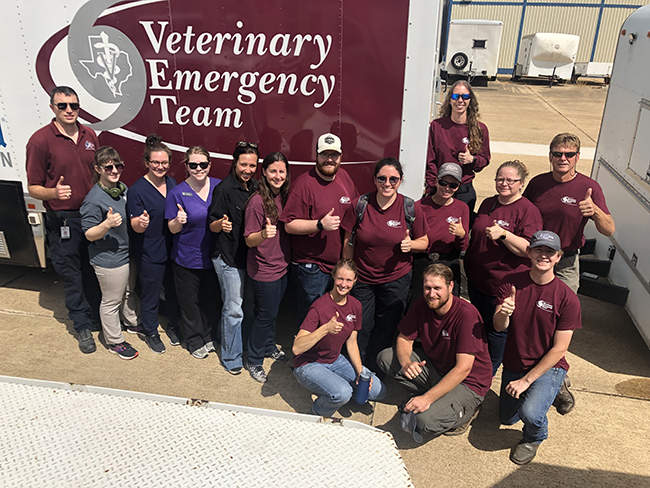
The group of VET team members prepare to depart from College Station on Thursday morning.
More than 270 animals seized in South Texas’s Cameron County will be cared for by the Texas A&M Veterinary Emergency Team (VET), which was activated Wednesday night through a request by the Texas Division of Emergency Management (TDEM).
Animal responders from the Texas A&M University System—including 12 VET members, six fourth-year students on the Community Connections clinical rotation, and members of the Texas Veterinary Medical Reserve Corps (TVMRC)—departed College Station Thursday (Sept. 12) for the Rio Grande Valley, where the VET will provide veterinary medical evaluations and stabilization for any issues related to the case.
The 270 dogs and a single cat were found in a warehouse in Los Fresnos after a Cameron County Public Health (CCPH) animal control officer and a Cameron County Sheriff Deputy responded to complaints of loud barking, according to news reports.
During what is anticipated to be a seven-day deployment, VET members will support county officials at the Cameron County Animal Shelter in managing the volume of animals, as well as providing veterinary medical care for malnutrition and in treating other issues related to the conditions in which the animals were being kept.
“Cameron County is doing an incredible job of getting the resources in that they need to get these animals to a healthy state, and their goal is to adopt them into the community, so our team will be working to ensure all of the dogs are happy and healthy and ready to join a new family,” said Dr. Wesley Bissett, associate professor and VET director.
“It’s a neat thing to be a part of. The Texas A&M Veterinary Emergency Team, Texas Division of Emergency Management, and the College of Veterinary Medicine & Biomedical Sciences are committed to serving the needs of Texas,” said Dr. Wesley Bissett, associate professor and VET director. “While each deployment is unique in its own way, this request demonstrates how the VET has built the capacity to respond to disasters from the Texas Panhandle to the Rio Grande Valley and from El Paso to the Gulf Coast.”
###
For more information about the Texas A&M College of Veterinary Medicine & Biomedical Sciences, please visit our website at vetmed.tamu.edu or join us on Facebook, Instagram, and Twitter.
Contact Information: Jennifer Gauntt, Interim Director of CVM Communications, Texas A&M College of Veterinary Medicine & Biomedical Science; jgauntt@cvm.tamu.edu; 979-862-4216
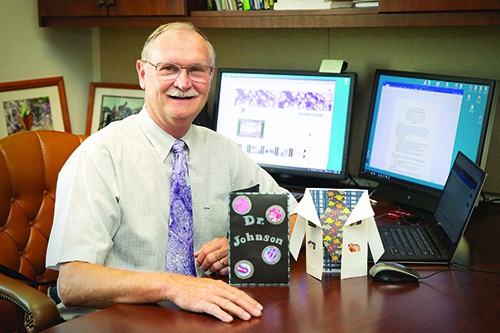
Dr. Larry Johnson in his office with thank you notes from students.
With interactive lessons, exciting guest speakers, and relevant topics, PEER brings the joys of science into classrooms that would not normally have access to high-quality teaching materials. The program operates under the philosophy that by increasing the quality of science education that young students receive, there is a greater chance that they will pursue higher education and STEM careers in the future.
In July 1999, PEER began with a grant from the National Institutes of Health (NIH) with a title that inspired the program’s name, “Environmental and Rural Health Education Partnership,” and kicked off a series of other grants and supplements that would eventually raise more than $8.5 million in extramural federal funds over 20 years.
“Larry and I discovered that we both had a passion about K-12 public education, particularly in improving science teaching in rural schools,” Klemm said. “We both were active in research and wanted to be able to share some of that excitement with young people and were encouraged during PEER’s early development by then CVM dean Dr. John Shadduck, who saw the value of science promotion among youth in the pipeline of general and veterinary education.”
Even before PEER began, Johnson did “scientist visits” to his son’s classes, which created a passion for teaching science to younger generations.
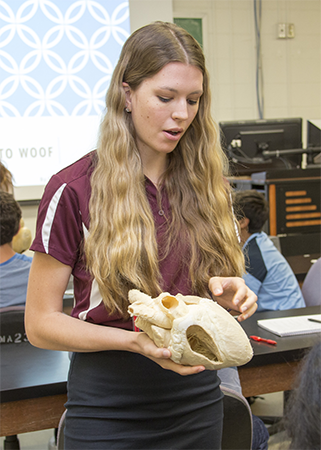
He said that because most kids are interested in animals, it’s easy to turn a lesson on animals into a lesson on human, veterinary, or even environmental science. Plus, the realistic, colorful anatomical specimens he takes to classrooms help grab kids’ interests, as well.
A PEER student fellow teaches in a classroom with a plastinated heart.
Today, PEER supports STEM education in middle and high schools in all 50 states. By providing hundreds of free teaching resources online, sending scientists and student fellows to schools across Texas, and hosting teacher workshops, PEER has even managed to reach students all over the world.
The success of PEER has resulted from efforts of a large team that includes Texas A&M research, teaching, and clinical faculty, public school teachers on PEER staff, PEER website and general staff, undergraduate, graduate, and veterinary students, veterinary technicians, and schools and teachers throughout the US.
Information on the website alone, peer.tamu.edu, is downloaded by 2,000 teachers each year, impacting 250,000 K-12 students.
After PEER received the first grant, which funded K-12 programs in environmental health science, Johnson applied for and received a second, seven-year grant from the NIH, which required PEER to also include math, English, and social studies in its curriculum.
“We hired a teacher to make sure we addressed teaching standards required to be taught in schools and a professional child story author who wrote stories about how middle school kids traveled in time,” Johnson said. “In the story, they traveled back to the building of King Tut’s tomb but someone got sick, so they had to investigate the routes of exposure—is it ingestion, inhalation, injection, or skin contact? Then, they would come up with a solution using math and science and express it using English skills in a social studies setting.”
This story, “Tut’s Revenge,” was joined by five other time travel adventure stories that incorporated all of those themes and more in the school subject integrated curriculum.
Soon after, PEER received two National Science Foundation (NSF) grants that funded public school presentations by Texas A&M graduate students. By working with other colleges at Texas A&M, Johnson and Klemm recruited students from all STEM areas who were interested in sharing their enthusiasm and interests in math and science with K-12 students.
“We had students from all over the university—engineering, math, physics, agriculture, the CVM, and more,” Klemm said. “The grad students made weekly visits and presentations in their assigned schools in the Brazos Valley, served as content consultants to teachers, and developed lesson plans, many of which are still available on our website.”
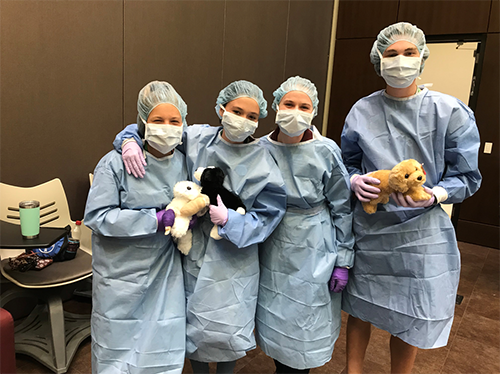
PEER veterinary student fellows teach “stuffed animal surgery” at a Veterinary Youth Adventure Program (YAP) Camp.
Over the past 20 years, PEER has also held teacher professional-development workshops across Texas to help middle school teachers stay current on scientific advancements and aware of PEER resources; PEER has offered workshops in locations ranging from El Paso to Mount Pleasant and from Amarillo to McAllen.
“Teachers use these to gain continuing education credits and upgrade their content knowledge,” Klemm said. “In Texas, middle-school science teachers are not required to have been a science major in college. We think that many of them need our help, so we do what we can.”
Part of the money supporting these workshops comes from PEER’s most recent NIH grant, awarded in 2018 to support the development of an app for teachers and students to use for accessing PEER teaching materials related to one health that also cover knowledge standards teachers must transmit to their students.
It also supports additional teacher workshops, which present a great opportunity for PEER to gather input for developing the app and to show teachers how the app can best be used in their classrooms once it’s fully-functional.
“As we present the latest models (of the app), we get feedback from the teachers to improve them,” Johnson said. “The teachers are required to teach specific topics, such as how to use equipment or rationalize a problem. We present our ‘one health’ learning materials in a way that enables the teacher to address those standards.”
The app’s student-centered format empowers students to select their own learning activities and move at their own pace, creating a new motivation for learning, according to Klemm.
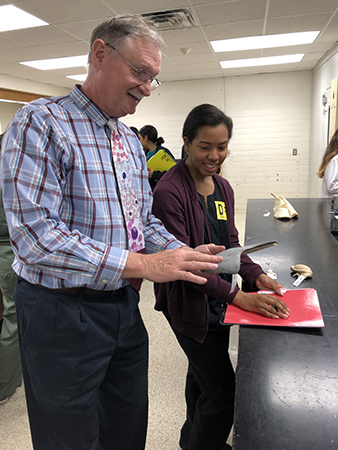
Dr. Larry Johnson teaches a student using anatomical specimens during a PEER-hosted FFA event.
“We are excited by this novel initiative and our just-completed first teacher workshop indicates that teachers are going to like this new student-centered approach,” he said.
In his 20 years with PEER, Johnson has spoken to 35,000 kids in their schools and has been awarded two Texas A&M Association of Former Students (AFS) Distinguished Achievement Awards for teaching and outreach and the Texas A&M Bush Excellence Award for faculty in public service.
Johnson plans to move into retirement within the next couple of years but still finds time to teach students all over Texas about the joys of science and to use veterinary medicine to encourage them to learn about their own health.
Given that the PEER program just began the second year of a five-year $1.25 million SEPA project funded by the National Institute of General Medical Sciences within the NIH, Johnson will leave PEER with two years of funds after his retirement.
He has no doubt that PEER will continue as a strong source of outreach for the CVM after he leaves, especially because of the many other CVM faculty members involved in PEER, including Dr. Christine Budke, professor and VIBS associate department head.
“PEER is a wonderful program and I hope that it will continue to have a positive impact on future generations,” Budke said. “I enjoy working with a group of people who are dedicated to encouraging future generations to pursue careers in STEM fields. While creating curricula for adult learners is rewarding, there is something special about introducing middle school students to the joys of science.”
###
For more information about the Texas A&M College of Veterinary Medicine & Biomedical Sciences, please visit our website at vetmed.tamu.edu or join us on Facebook, Instagram, and Twitter.
Contact Information: Jennifer Gauntt, Interim Director of CVM Communications, Texas A&M College of Veterinary Medicine & Biomedical Science; jgauntt@cvm.tamu.edu; 979-862-4216
The sweeping vistas of West Texas offer many opportunities to practice veterinary medicine–and Hannah Johnson wanted to explore her options firsthand.
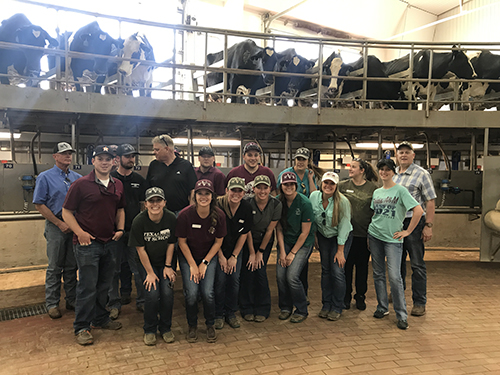
Hannah Johnson, in black shirt in center, and other students visit rural veterinary clinics during the VERO Food Animal Production & Rural Practice Tour.
To do so, the third-year Texas A&M University veterinary student decided to devote part of her summer participating in the Veterinary Education, Research and Outreach (VERO) Food Production Tour.
The six-day tour, offered through an innovative partnership between Texas A&M’s College of Veterinary Medicine & Biomedical Sciences (CVM) and West Texas A&M University (WTAMU) in Canyon, takes students to different sites involved with the food animal production industry, as well as to rural veterinary clinics.
“For me, the tour was a chance to see more of the medicine I want to practice in West Texas and to meet new people connected to the field,” Johnson said.
Living in rural West Texas and working with animals has always appealed to the Idalou resident, who is entering her third year as a veterinary student; she sees practicing in a city like Idalou—with its population of about 2,300 people—as an opportunity to serve where veterinary services are needed most.
“I grew up in small town, Texas, and fell in love with West Texas when my family moved to Idalou before my junior year of high school,” said Johnson, who earned her bachelor’s degree in animal science from Texas Tech University in 2017.
“I can’t say there was ever a defining moment were I decided to become a vet. I was one of those kids who just always wanted to be one,” she said. “I love working with animals and I love the medicine aspect of it, as well. Working as a technician through undergrad just cemented my desire to pursue vet school.”
Hannah Johnson, fourth from left in front row, and other students visited numerous production facilities during the VERO tour.
The Food Animal Production & Rural Practice Tour, which first started in 2008, is based at WTAMU, which is situated near a significant percentage of the beef industry. Approximately 30 percent of the nation’s beef cattle are fed within 200 miles of Canyon.
Students visited clinics in Muleshoe, Panhandle, Dimmit, and Dalhart, where they saw a wide range of veterinary practices that serve the needs of their rural communities. They offer traditional veterinary services for their food animal producers but offer veterinary care, including acupuncture, for their companion animals and equine clients.
They also saw how these practices interacted with the beef cattle, dairy, and swine industries. The students also learned more about the animal production industry through visiting a Holstein feed yard, a packing plant, WTAMU’s meat science facility, and Texas Cattle Feeders Association’s diagnostic lab.
Johnson, who was among 13 Aggies who participated in the 2019 Food Animal Production & Rural Practice Tour , found the trip deepened her knowledge and sparked her interest.
“I learned so much about practicing medicine in the food animal industries,” Johnson said. “It is very different from small animal medicine where each individual patient is brought in, versus with food animals, where the herd is the focus.”
Ultimately, the tour is designed to provide insights into potential career paths that students might not otherwise consider.
“When they go to the dairies and feedlots, they see how these animals are actually cared for and the important leadership role that the veterinarian plays,” said Dr. Dan Posey, VERO academic coordinator. “It’s all about taking care of animals.”
###
For more information about the Texas A&M College of Veterinary Medicine & Biomedical Sciences, please visit our website at vetmed.tamu.edu or join us on Facebook, Instagram, and Twitter.
Contact Information: Jennifer Gauntt, Interim Director of CVM Communications, Texas A&M College of Veterinary Medicine & Biomedical Science; jgauntt@cvm.tamu.edu; 979-862-4216
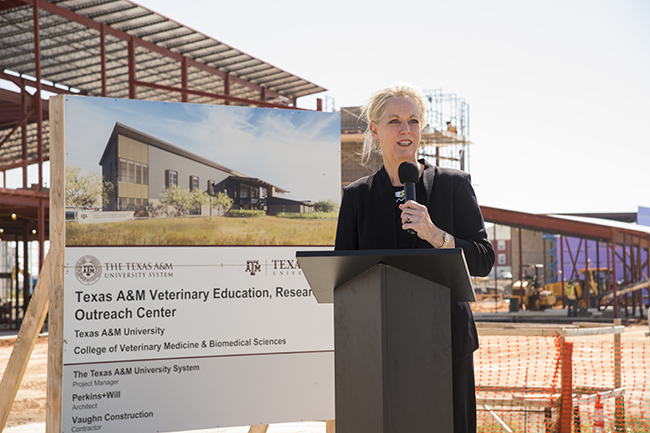
Below is the full text of the speech Dr. Eleanor M. Green, the Carl B. King Dean of Veterinary Medicine at Texas A&M, gave during the 2+2 DVM program announcement press conference on Thursday, Sept. 5, at West Texas A&M University in Canyon.
Dean Eleanor M. Green talks about the importance of the new fourth-year clinical rotations and 2+2 program that will be offered through VERO at West Texas A&M during the Sept. 5 press conference. Photo courtesy of West Texas A&M University
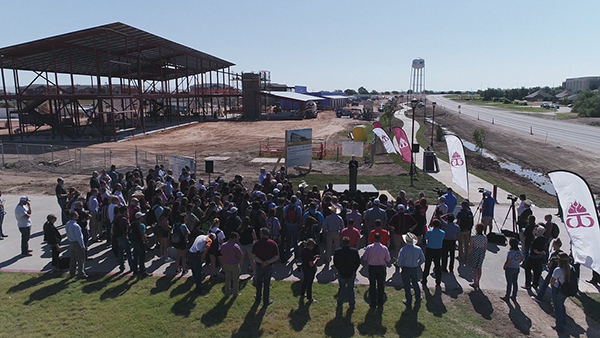
What a special occasion! We stand here today in front of the emerging Texas A&M University Veterinary Education Research & Outreach Facility (VERO) on the West Texas A&M University campus to share with you the next big milestone for the Texas A&M University College of Veterinary Medicine & Biomedical Sciences (CVM) and West Texas A&M University through the VERO initiative to support veterinary education and healthcare in the livestock epicenter of our nation here in the Texas Panhandle.
Imagine a 2+2 DVM program in which you, as a pre-veterinary student, or your son or daughter, or your grandchild, or your friend’s student will be able to stay right here in the Texas Panhandle, right here in Canyon, Texas on the WTAMU campus to complete the first two years of veterinary school at one of the top-ranked veterinary schools in the nation and the world.
Imagine these students, along with other Texas A&M veterinary students with an interest in food animal or rural veterinary medicine, returning to the Texas Panhandle in the fourth year of the DVM curriculum for new, immersive clinical rotations in which they will work side‐by‐side with both outstanding veterinary practitioners and Texas A&M veterinary faculty members who work here in the Texas Panhandle. They will work with veterinary icons like Drs. Joe and Carol Hillhouse, Dr. Gregg Veneklasen, Dr. Steve Lewis, and others.
Imagine the experience students will gain as these clinical rotations include experiences in the most important aspects of the livestock industry in the Texas Panhandle—including feedlots, dairies, and cow/calf, swine, and other livestock operations.
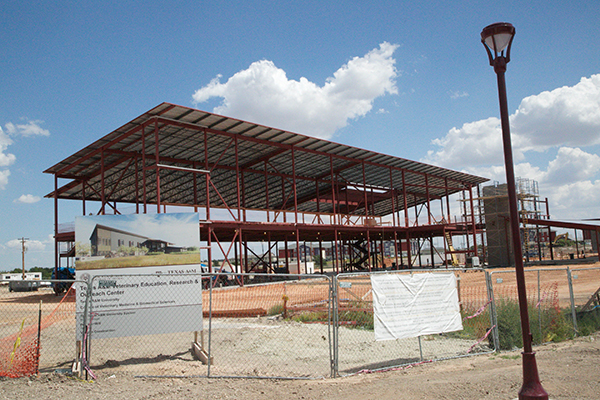
The rapidly emerging VERO building we stand before today will house the 2+2 DVM program curriculum. It will also serve as a learning space to supplement the existing DVM externship programs and the new clinical rotations in the Texas Panhandle. It will be a regional veterinary teaching center that will facilitate collaborative, multidisciplinary research among scientists from across the region. It will attract students and veterinarians from across the nation.
VERO is both a symbol and culmination of the hard work of many, many people whose efforts have directly impacted our ability to bring this initiative to fruition. Texas A&M University is fully behind this exciting initiative and we are grateful to President Michael Young and Provost Carol Fierke for being so supportive and for identifying recurring funds. We especially thank President Walter Wendler, Provost Wade Shaffer, Dean Kevin Pond, and the entire West Texas A&M team. They have proven they are the kind of partners one would get into the harness with—and that says it all.
I must highlight the faculty, because people make programs. I have never seen faculty more dedicated to and enthusiastic about a cause, including West Texas A&M faculty, led by Lance Kieth, and Texas A&M veterinary faculty in both Canyon and College Station, led by Dr. Susan Eades. This includes our VERO faculty team of Drs. Dee Griffin, Dan Posey, Paul Morley, and Sarah Capik. Thanks also to our VERO Advisory Council members, including president and CEO of the Texas Cattle Feeders Association, Ross Wilson, and Director of the Texas Veterinary Medical Diagnostic Laboratory, Dr. Guyman Helman.
We also thank Chancellor John Sharp and the Texas A&M University System for their $90 million investment in this effort to support the Texas Panhandle and its livestock industries. Finally, we must thank the Texas legislature for investing in this program. Because of this broad support, VERO is bound to be the best of its kind, as it advances the livestock industries, veterinary medicine, career opportunities for young people, and the local economy. How often does one have the opportunity to be the best in the nation or to invest in or be a part of the best of its kind.
It seems like only yesterday when planning for VERO launched in 2009. The first meeting was in the administrative offices of West Texas A&M University and included representatives from both universities, local veterinarians, and livestock industry representatives. We asked what we could do to better serve the Texas Panhandle and the livestock industries.
We are proud of the strides we have made in addressing the critical need for food animal and rural veterinarians in Texas, both in College Station and through our VERO initiative here in the Texas Panhandle. The targeted pipeline program has already doubled the number of Texas Panhandle and West Texas‐area students entering Texas A&M’s veterinary college. The summer internship program we had on paper since 2009 was finally able to be launched when we put Texas A&M faculty here. Through VERO’s summer internship program, a total of 15 Aggie veterinary students have spent the past three summers in the Texas Panhandle, working in beef feedlots, and dairy and swine facilities, as well as in rural practices—with an additional 10 participants anticipated next year.
In addition, the CVM’s longstanding Food Animal Production Tour recently reached a milestone of introducing its 100th student to these industries through an activity that showcases all of what the Texas Panhandle has to offer. These activities have had a huge influence on the students who participate, and we attribute the work of the VERO team to the success our veterinary college has seen in recruiting additional students from the Texas Panhandle who are interested in returning to these communities to work.
We firmly believe that the immediate implementation of the new, immersive fourth‐year clinical rotations in the Texas Panhandle, beginning next summer—you heard me correctly, I said the summer of 2020—will have a huge impact on DVM students intending to serve the region as practicing veterinarians.
In our next steps, the completion of the $22‐million, 22,000‐square-foot VERO facility behind us will only further the progress we’ve made.
As we seek Texas Higher Education Coordinating Board and AVMA Council on Education final approvals for our 2+2 DVM program, we are even more excited about the potential of bringing Texas A&M and the largest, most affordable, and 4th‐ranked DVM program in the nation to students from the Texas Panhandle and rural Texas in the Texas Panhandle. We have students starving for this type of experience which no other veterinary school in the nation will be able. to provide as we combine the power of Texas A&M University, West Texas A&M University, and the Texas Panhandle.
The CVM is dedicated to meeting the needs of the state and our students in the most innovative, high‐quality, effective, and cost‐efficient manner possible.
As well‐known actor Christopher Reeve once said, “So many of our dreams at first seem impossible, then, they seem improbable, and then, when we summon the will, they soon become inevitable.”
Once again, thanks to all for making our dreams an inevitable reality through a Texas powerhouse investment and building incredible synergy here in Canyon, to make a difference in the Texas Panhandle and the State of Texas. I am honored and privileged to be part of this exciting journey.
I would like to close with one more “imagine.” Imagine a few years from now when we all look back to reflect on what these two great universities, their faculty staff, students, and graduate veterinarians, the livestock industries, the Texas legislature, and the Texas Panhandle communities have done—together.
Fourth-year veterinary students will begin clinical rotations in the Texas Panhandle in 2020, new students will begin enrolling in veterinary classes at VERO facility to start their first year of veterinary school in 2021.
To read the full text of Green’s speech, click here.
At a press conference Thursday morning, WTAMU President Walter Wendler, Texas A&M President Michael Young, and CVM Dean Eleanor M. Green discussed fourth-year clinical rotations and a new 2+2 program that will place veterinary students at the VERO facility, at WTAMU in Canyon, to learn. Photos courtesy of WTAMU
CANYON, Texas—Students from the Texas Panhandle won’t have to travel far from home to become Aggie veterinarians thanks to a new 2+2 program announced Thursday morning by West Texas A&M (WTAMU) and Texas A&M universities. Once all the necessary approvals have been obtained, veterinary students will be able to spend the first two years of their veterinary curriculum in Canyon on the WTAMU campus in the Veterinary Education, Research & Outreach (VERO) facility.
During a press conference at the construction site of the $22-million VERO facility being built on the WTAMU campus, WTAMU President Walter Wendler, Texas A&M President Michael Young, and the Carl B. King Dean of Veterinary Medicine at Texas A&M Eleanor M. Green discussed the decade-long plan to bring Texas A&M’s top 4-ranked Doctor of Veterinary Medicine (DVM) program to WTAMU through the VERO initiative.
Beginning May 2020, veterinary students wanting to work in food animal or mixed animal medicine will have the option of completing a number of new clinical rotations at the VERO facility in the Texas Panhandle, as part of their yearlong fourth-year clinical rotations.
“Texas A&M University has been committed to extending its nationally-ranked College of Veterinary Medicine & Biomedical Sciences to more effectively reach citizens across the expanse of Texas. An example of this is the VERO facility, funded through our Permanent University Fund,” Young said.
“The 2+2 program extends the reach of both Texas A&M and West Texas A&M, which is especially critical in an area that is home to the largest food animal production region in the nation,” he said. “Bringing excellent faculty here enhances the effectiveness of the college and opens new opportunities for students in the Texas Panhandle to become Aggie veterinarians.”
Dean Eleanor M. Green talks about the importance of the new fourth-year clinical rotations and 2+2 program that will be offered through VERO at West Texas A&M.
The Texas A&M College of Veterinary Medicine & Biomedical Sciences (CVM) is in the process of seeking approval for the 2+2 program, with a plan to open the application process in the fall of 2020 and begin offering DVM classes at WTAMU for an initial cohort of 20 first- and second-year DVM students beginning in the fall of 2021.
Through the 2+2 program, veterinary students will be able to take the classes during their first two years of veterinary school through the VERO program, a partnership between WTAMU and the CVM, and then travel to College Station for their final two years.
Those students won’t be gone for long, however; in their fourth year, those students will have the ability to return home for a number ofclinical rotations.
“The new clinical rotations in the Texas Panhandle will offer immediate engagement and additional unique and readily applicable experiences for DVM students who want to pursue food animal and production medicine as a career path,” Green said.
“These clinical rotations will provide students the opportunity to spend time in rural-practice settings with both private practitioners and Texas A&M faculty members,” she said. “Rotations will offer a chance to gain experience in the most important aspects of the industry in West Texas—including rotations through feedlots, dairies, and cow/calf, swine, and other livestock operations. Beginning in the spring 2021 semester, food animal students will also have the opportunity to spend clinical rotations in the Texas Veterinary Medical Diagnostic Laboratory (TVMDL), located in Canyon, where they will learn about diagnostic laboratory medicine, which is of critical importance to production animal health.”
In preparation to begin offering classes at WTAMU, the two universities have begun putting to use funds appropriated by the Texas Legislature during its 86th session by announcing the hiring of additional faculty members to teach in the program at the VERO facility.
“Over the next two years, at nearly $2 million a year, eight to 10 faculty will be hired through the legislative appropriations process to support new graduate student assistantships in the 2+2 program at West Texas A&M University,” Wendler said. “These students will seamlessly dovetail into the DVM program at Texas A&M University, which is one of the best in the nation.
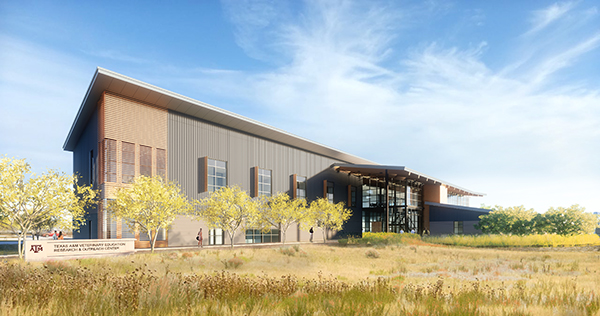
Currently under construction on the WTAMU campus, the $22 million, 22,000-square foot Veterinary Education, Research, & Outreach (VERO) facility is part of almost $90 million in commitments the Texas A&M University System has made to Texas’ agriculture industry.
“This program is twofold,” he continued. “It will prepare graduates for the food animal industry in one of the most concentrated meat and dairy production areas of the world, and it will train veterinary students to serve rural communities in support of WTAMU’s generational plan, WT 125: From the Panhandle to the World. Currently, our pre-vet program has more than 50 students.”
These faculty and graduate student additions to the CVM’s DVM program are just two of many rural and food animal-oriented programs the CVM has initiated over the past 10 years.
The Texas A&M University System has committed $90 million to the state agriculture industry on the WTAMU campus, including funds for the 22,000-square-foot VERO facility, which will house the 2+2 DVM curriculum, serve as a learning space to supplement the existing DVM externship programs and the new clinical rotations in the Texas Panhandle, as well as a regional veterinary teaching center that will facilitate collaborative, multidisciplinary research among scientists from across the region.
“We are grateful to the Texas legislators for investing in this program bound to be the best of its kind, as it advances the livestock industries, veterinary medicine, career opportunities for young people, and local economy,” Green said. “Our VERO team, which includes renowned food animal faculty members who are embedded at WTAMU, have strengthened our ‘Serving Every Texan Every Day’ initiative by facilitating the recruitment of veterinary school applicants with a mixed animal and large animal interest, doing impactful research, providing education, and serving the food animal industry.”
Team VERO and the Serving Every Texan Every Day memoranda of agreement with WTAMU has resulted in 23 DVM students in the CVM’s entering classes of ’21 and ’22 having been recruited from rural communities, many of whom came from the Texas Panhandle and West Texas A&M University.
In addition, Texas A&M graduates the highest number and percent of rural and mixed animal veterinarians in the nation, with 33 percent of the class of 2017 and 40 percent of the class of 2018 working in food animal and mixed animal practices in rural communities.
“We also are excited about the new DVM fourth-year clinical rotations and the new 2+2 program that will be offered in the Texas Panhandle and what these programs will bring to veterinary students in all four years of their curriculum; they will have exceptional opportunities to gain hands-on experience in rural and livestock veterinary medicine in the livestock epicenter of our nation,” Green said.
A rendering of the completed VERO facility
These new opportunities will dovetail nicely into existing livestock veterinary programs, like the long-standing Food Animal Production Tour, which recently reached a milestone of introducing its 100thstudent to these industries through an activity that showcases all of what the Texas Panhandle has to offer. In addition, the Food Animal & Rural Practice Summer Internship Program, initiated in 2017, has brought dozens of CVM students to the Panhandle to spend the summer gaining hands-on experience in the cattle, swine, and dairy industries, as well as in rural veterinary practices.
Finally, a $243,500 grant from the USDA’s National Institute of Food and Agriculture (USDA-NIFA) received by VERO director Dr. Dee Griffin in 2018 has allowed for the development, initiation, and support of seven veterinary-centered programs for veterinary students who travel to the Texas Panhandle for these opportunities.
For more information, contact the VERO program at 806-651-2292.
###
For more information about the Texas A&M College of Veterinary Medicine & Biomedical Sciences, please visit our website at vetmed.tamu.edu or join us on Facebook, Instagram, and Twitter.
Contact Information: Jennifer Gauntt, Interim Director of CVM Communications, Texas A&M College of Veterinary Medicine & Biomedical Science; jgauntt@cvm.tamu.edu; 979-862-4216