
Has Your Dog Eaten A Bottle Of Pills? New Services At The Texas A&M Small Animal Teaching Hospital Can Help
Story by Courtney Price, VMBS Marketing & Communications
Texas A&M’s veterinary hospital is now home to two innovative, life-saving veterinary treatments that clean toxins from blood.
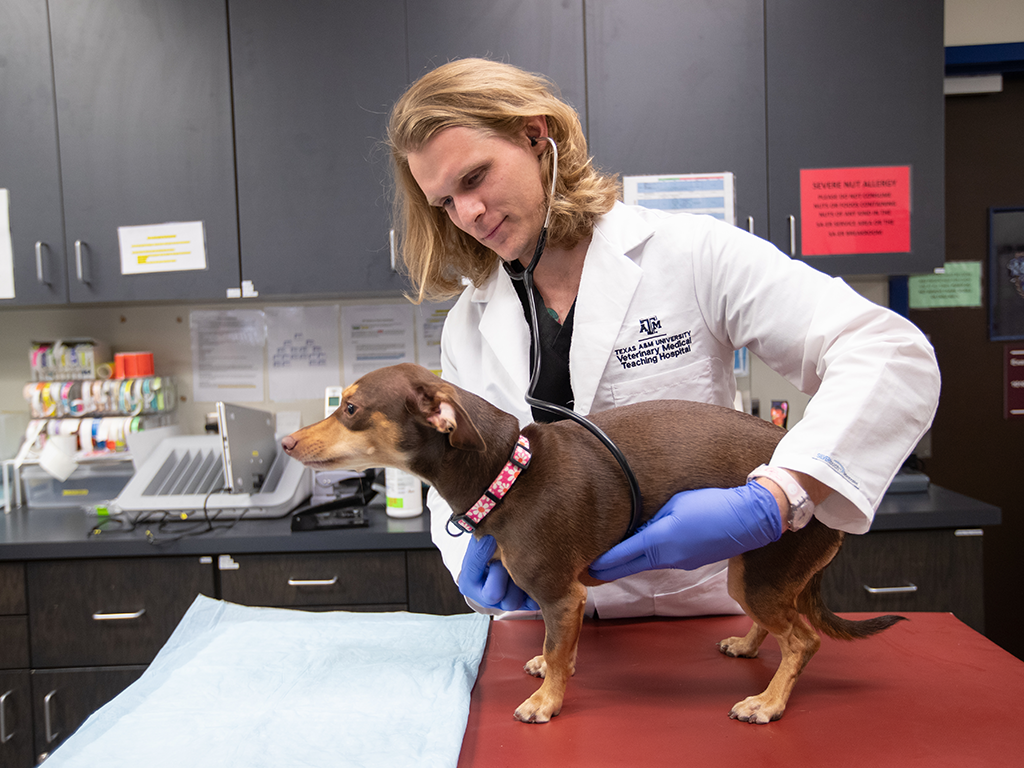
When a dog accidentally ingests pills — usually from getting into their owners’ medications or their own flavored prescriptions — it can cause acute intoxication, a medical emergency that requires quick action and immediate veterinary attention.
For dog owners living in or within an eight-hour driving distance from College Station, there is a new treatment option available — extracorporeal blood purification at the Texas A&M Small Animal Teaching Hospital (SATH).
Using two cutting-edge treatments — hemoperfusion and therapeutic plasma exchange (TPE) — the Small Animal Emergency & Critical Care team at the SATH can clean toxins from an animal’s blood even after they have been absorbed by the bloodstream.
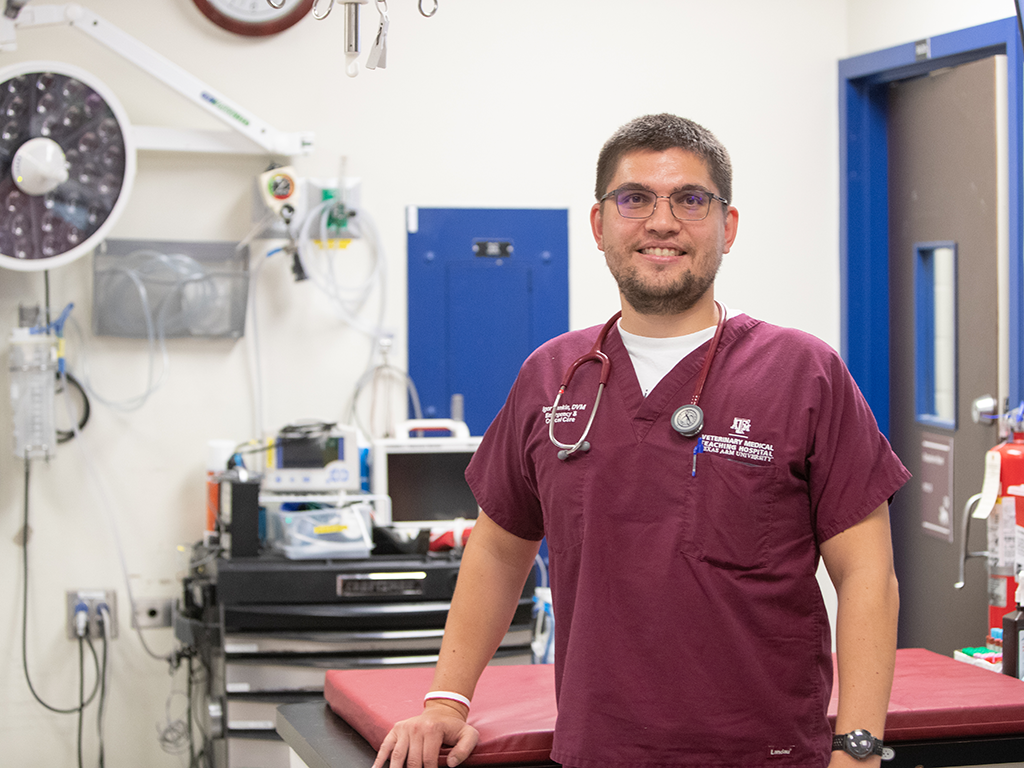
“An overdose from eating a bottle of medication can be a death sentence for a dog,” said Dr. Lance Wheeler, a clinical assistant professor and board-certified small animal emergency and critical care specialist at the SATH. “Hemoperfusion and TPE have been shown to be highly effective in treating intoxications from overdoses when patients receive therapy soon after ingesting the pills.”
Two recent studies evaluating the use of TPE for dogs with acute ingestion or overdose of non-steroidal anti-inflammatory drugs (NSAIDs) — one of the most common life-threatening intoxications in dogs and cats — demonstrated that TPE is safe, effective, and associated with an overall survival rate of 98–99%.
The SATH is one of only a few practices in the southern United States to offer these life-saving treatments, which can also be used to treat complex conditions like immune mediated hemolytic anemia (IMHA), an autoimmune disorder in which a dog’s immune system destroys its own blood cells.
Helping Dogs Overcome Accidental Overdoses
When a dog accidentally eats something toxic, their veterinarian may be able to induce vomiting to rid their body of the harmful substance — but this only works if the animal receives help before the substance is absorbed into the bloodstream, typically within six hours of ingestion.
After that window — and without extracorporeal blood purification — the options for treatment become much more narrow.
“Using specialized equipment, we’re able to separate out the parts of blood that bind to the toxin and either filter it with hemoperfusion or remove it and replace it with TPE,” Wheeler said.
“The key requirements for offering these procedures to dogs and cats around the clock are trained personnel, equipment appropriately sized for small animal patients, and a well-stocked blood bank — all of which are now in place at the SATH,” he said. “These three components are critical to sustaining 24/7 availability, and we are working diligently to ensure the infrastructure is fully established to provide these life-saving treatments to the surrounding community.”
Receiving Treatment
If you suspect that your pet has accidentally eaten your medication, call the ASPCA Poison Control Hotline at 888-426-4435 or the SATH’s 24/7 emergency service at 979-845-2351. Patients can also be referred through their primary veterinarian.
###
For more information about the Texas A&M College of Veterinary Medicine & Biomedical Sciences, please visit our website at vetmed.tamu.edu or join us on Facebook, Instagram, and Twitter.
Contact Information: Jennifer Gauntt, Director of VMBS Communications, Texas A&M College of Veterinary Medicine & Biomedical Sciences, jgauntt@cvm.tamu.edu, 979-862-4216
You May Also Like

VMBS Advances Environmental Health Research With Three NIEHS Grants

Texas A&M Researcher Combats Colic Complications

McAllen BIMS Student Pursues Specialized Nursing Career

Texas A&M Researchers Revolutionize Nebulized Therapies

Texas A&M Veterinarians Restore Persian Cat’s Ability To Eat


