
Two researchers in a lab coat reviewing data on a computer screen in a laboratory.

Veterinary Physiology & Pharmacology

The Department of Veterinary Physiology & Pharmacology (VTPP) in the College of Veterinary Medicine & Biomedical Sciences (VMBS) is multidisciplinary and recognized internationally for research in toxicology, reproductive and developmental biology, cardiovascular biology, bone biology, and regenerative medicine.
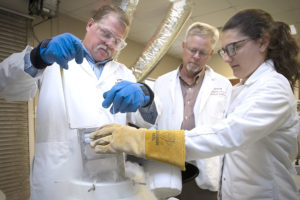
Dr. Stephen Safe holds a beaker with coffee in it, as part of his research on how coffee affects the body.

From cardiovascular health to environmental toxicology, reproductive sciences to regenerative medicine, VTPP is home to a distinguished and multidisciplinary faculty who take pride in excellent teaching, research, and service.

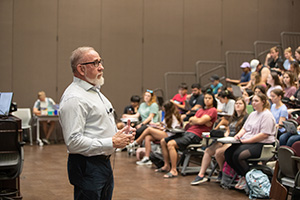
Dr. Amanda Davis' BIMS class spring 2024 semester meets in ILCB.

From Biomedical Sciences undergraduates and graduate trainees to Doctor of Veterinary Medicine (DVM) professional students, VTPP is a force for good in preparing the next generation of scientists and practitioners.

Dr. Walt Cook and Dr. Alice Blue-McLendon at the Winnie Carter Wildlife Center.

From the Winnie Carter Wildlife Center to the Aggie Collaborate program, VTPP is a force for good in providing signature programs and high-impact opportunities for all Aggie students and trainees.

Giving to VTPP

Gifts to VTPP ensure that our faculty, staff, trainees, and students have the necessary support to participate in cutting-edge educational, research, and service opportunities — doing science that matters!

Give to VTPP »
Drs. Kirby Sherman, Weston Porter, Lindsay Dawson, Larry Suva, and Dana Gaddy in a research laboratory.

Research Areas

Researcher in protective gear collecting samples at a muddy field site.

Investigating both environmental and reproductive toxicology, faculty and trainees participate in the Interdisciplinary Program of Toxicology, the Superfund Research Center, and the Center for Environmental Health Research.

Microscopic view of a glowing green cell during a laboratory procedure.

Endocrinology, toxicology, perinatal and sperm biology, spermatogenesis, and maternal-fetal vasculature are areas of interest where research is focused on understanding metabolic and physiological outcomes.

Fluorescent microscope image of a cell with highlighted internal structures.

Using a comparative approach, focusing on understanding epigenetic mechanisms, chromatin structure, and how exposures and heritable changes can influence the placenta and cause birth defects.

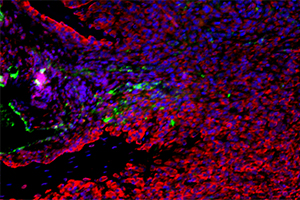
Microscopic cross-section of animal tissue stained for laboratory analysis.

Studies range from basic science to pre-clinical translational models. Successful regeneration occurs when developmental processes are activated during the healing of traumatic wounds, such as amputation.

Exercise & the Cardiovascular System

Identifying mechanisms driving exercise-induced improvements in blood flow into ischemic myocardium, which subsequently promote enhanced cardiac function, through in vitro and in vivo approaches.

Veterinary student performing a pharmacology procedure on a cat in a clinic.

Pharmacology

Studying drugs, their properties, and their interactions for the prevention, diagnosis, and treatment of disease, focusing on optimizing safe medication use across companion and food-production animals of all species.

Dr. Ivan Rusyn and Dr. Weihsueh Chiu with a graduate trainee reviewing cell imaging data on a laboratory computer.

Faculty Research Spotlight

Dr. Ivan Rusyn investigates the mechanisms of action of environmental toxicants and the genetic determinants of the susceptibility to toxicantinduced injury. He is the director of the Texas A&M Superfund Research Center, a member of the Interdisciplinary Faculty of Toxicology, and a member the Center for Environmental Health Research collaborating on translational research with other investigators from across the university.

About Dr. Rusyn