PEER to Peer: Inspiring Children through Veterinary Medicine

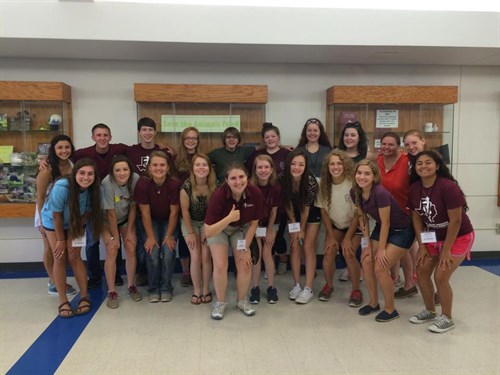
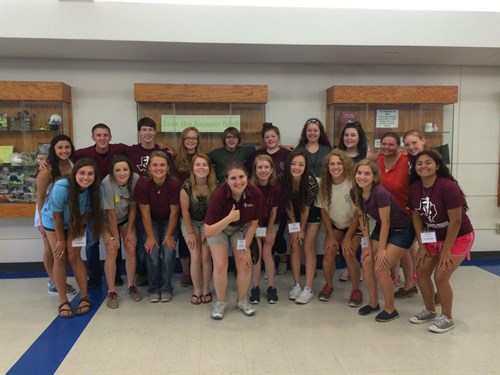
At the College of Veterinary Medicine & Biomedical Sciences (CVM), education goes beyond just teaching students how to be veterinarians. Through the Partnership for Environmental Education and Rural Health (PEER) program, veterinary students, undergraduate biomedical science students, faculty, and staff work together to educate and inspire a love of science in K–12 students.
PEER050317a


Clarissa Root, a third-year veterinary student, at Vet Camp

PEER uses demonstrations and lessons from the field of veterinary medicine to introduce children, mainly middle school-aged, to a variety of scientific concepts. “Kids love animals, so we use the information about animals to stimulate their interest. For example, we have a presentation on a physical exam,” said Dr. Larry Johnson, professor at the CVM who runs PEER. “They can learn the vital signs, such as heart rate and respiratory rate, of their favorite animal. You know they’re going to memorize those, and they’re going to discover they’ve got vital signs too.”

Tori Whitaker, a content specialist with PEER, echoed this and said, “It’s not easy to talk about obesity with middle school students, which is why we try to relate issues such as diabetes and obesity to pets. Our work really fits nicely into the One Health Initiative, the link between human and animal health and the environment, and that’s a lot of fun.”

Many of the presentations, videos, and lesson plans are generated by students, veterinarians, faculty, and staff at Texas A&M. “We have brilliant students who want to come up with something to share,” Johnson said. “We try to make the presentations about whatever they like—for example, if they like cows, we try to get them to do a lesson on cows—because the students are more passionate about what they like. Some students have said that they get a chance to refresh their memory about the things they’ve learned and see it in a different context.”

In the summer, veterinary students travel to various schools and other sites to present lessons to middle school children. Not only do the children learn about science, but the veterinary students also learn how to teach and interact with children. “Our veterinary students have a vast scope of knowledge, but not all of them have had the opportunity to be in a classroom or interact with the community in this way, so I may go out with the first couple of students and give them hints and pointers,” Whitaker said.

Clarissa Root, a third-year veterinary student involved in PEER said, “I have really enjoyed teaching and getting to help mentor students. When I saw that PEER had opportunities available for veterinary students to do that sort of work, I was excited about it.”

In addition to veterinary students, undergraduates throughout Texas A&M work and create learning materials at PEER. Students from a variety of majors each contribute their unique knowledge and perspectives that develop into a wealth of lesson plans and presentations. “The undergraduates work with the middle school students and interact with the other groups that want to be involved in developing presentations,” Johnson said. “Again, we give them an opportunity to do something they enjoy, and they do something that advances our program too.”
PEER050317b


peer050317b_400x533
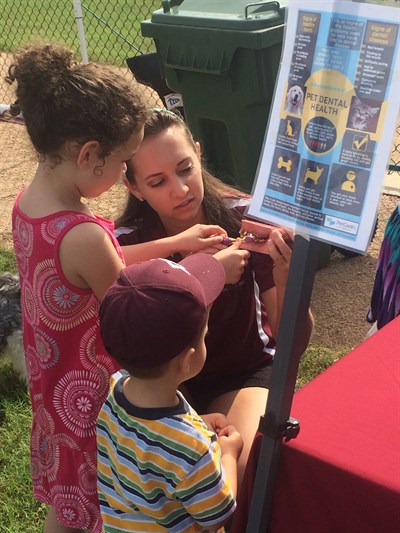
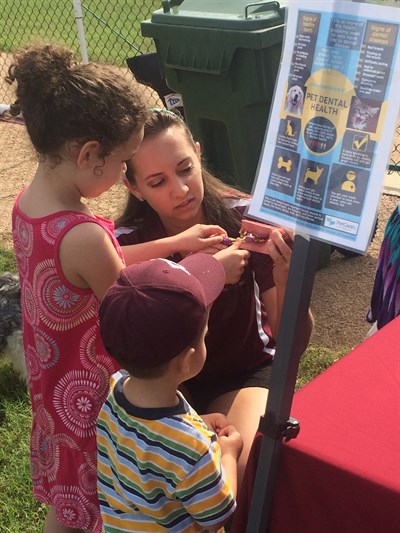
Nikki Lejeune, a fourth-year veterinary student, at Bryan Animal Shelter’s Pawpalooza

Each lesson plan is carefully aligned with the state’s educational standards, and the students who develop these presentations are guided through the PEER program. “Our students develop curriculum for teachers,” Whitaker said. “Teachers can write in to our website and request a lesson on pretty much anything. Then, the students can develop the lesson. I help the students make sure that the lesson they’re creating is applicable to the Texas State standards, the education standards, which are the TEKS, the Texas Essential Knowledge and Skills. We make sure that we don’t give a teacher a lesson that isn’t usable.”

Presentations can take a variety of forms, and one example is panel presentations. PEER has hosted a panel of veterinary students who discussed their journey to veterinary school. “The panel went through different personal histories of how they were admitted into veterinary school,” Johnson said. “For example, one veterinary student said that her dog had an infection and the veterinarian was using one antibiotic. The dog wasn’t getting better, and so she read there was another antibiotic that might work in that case. She asked the veterinarian about it, and they started using it and cured the infection. It was then that the student realized that she really enjoyed the problem solving involved in veterinary medicine.”

PEER also develops a number of videos available to students, veterinarians, and educators year round. “The nice thing about having videos and a website is that anyone can have access to them throughout the year, even when veterinary students aren’t available to give presentations in person,” Root said.

The impact of PEER’s work is mutual between the audience they serve and those who work for PEER. “I love the outreach,” Whitaker said. “I love getting out with the students either in a classroom or at the museums or libraries and just seeing how excited they get about the application of science.”

“I definitely enjoy getting to work with the students and seeing them grasp new concepts and have those ‘light bulb’ moments of understanding concepts. I also like seeing them feel empowered to become veterinarians and to hear their questions,” Root said. “It’s always gratifying if I run into one of them again, after our initial contact, and they’re still on the pathway to veterinary school. They might remember a presentation I gave or remember asking me questions. I enjoy making a difference in helping them pursue their dreams.”

Looking ahead, PEER is developing a program that partners teachers and scientists and will allow teachers to shadow and train with scientists from the CVM for several weeks. The teachers can then take that knowledge back to their students. “We are going to put in a proposal that pairs scientists and veterinarians with teachers to come up with an experiment that they would use whenever they describe the scientific method to their kids,” Johnson said.

PEER is also investigating other cutting-edge learning methods, including flipped classrooms that focus on student-centered learning and making their content accessible on mobile devices. But, no matter where the future takes PEER, the group plans to continue to enrich the lives of students, teachers, and many others.

Renowned Pathobiologist Discusses Vaccinology, Malaria at CVM

Dr. Manuel Elkin Patarroyo with Dr. Garry Adams and  Dr. Manuel Alfonso Patarroyo
Dr. Manuel Elkin Patarroyo, with Dr. Garry Adams and son Dr. Manuel Alfonso Patarroyo

When Dr. Manuel Elkin Patarroyo was a child, his family moved from a small village in Colombia to a city of more than 80,000. No longer able to run “wild” as he did in his village, Patarroyo was given a comic book on Louis Pasteur—the renowned French microbiologist and chemist known for his discoveries of the principles of vaccination and pasteurization—by his father to keep him occupied.

“Being only 10 years old, it took me some time read it; I read it slowly. I kept it like a treasure, really,” Patarroyo said. “My father saw me very much interested in that and got a new one about Robert Koch, the one who discovered the tuberculosis bacilli. He was excited; he bought me another one, about Armauer Hansen, the leprosy discoverer, and later, yet another about Ronald Ross, who discovered that malaria was transmitted by a mosquito (Anopheles) bite, and so on. He kept giving me comics, comics, comics, and I was very much interested. I said, ‘I want to be like this.’”

And like that, indeed, he became. Today, a distinguished physician-scientist, Patarroyo is recognized as the creator of the first chemically synthesized vaccine against malaria; he also still has his comic books.

He visited Texas A&M University and the College of Veterinary Medicine & Biomedical Sciences (CVM) on April 27-28 to lead discussions on developmental vaccinology, the rules and principles for vaccine development, and evaluating human vaccines for world-wide application. The dual seminars were part of the CVM Department of Veterinary Pathobiology (VTPB) Seminar Series, sponsored by Drs. Garry Adams, senior professor of veterinary pathobiology; Bob Burghardt, CVM associate dean; and Ramesh Vemulapalli, professor and head of veterinary pathobiology.

An internationally recognized immunologist, Patarroyo is a professor of molecular pathology at Colombian National University and director of the Colombian Institute of Immunology.

Patarroyo Lectures

While earning his Medical Doctorate, with a concentration in virology, at the Universidad Nacional de Colombia in the late 1960s, Patarroyo worked in the laboratory of Adams, from whom he learned about immunology. Patarroyo began borrowing reagents from Adams’s laboratory, and when Adams returned to the United States, he left his equipment for Patarroyo. Later, Patarroyo traveled to the U.S. to conduct post-doctoral studies at Yale University and Rockefeller University, where he completed his studies. It was at Rockefeller that he began to incorporate chemistry into his microbiology, which is what led to the creation of the synthetic malaria vaccine, by determining its chemical and three-dimensional structure.

“Once you know the 3-D structure of the molecule, you can guess, you can determine which rules to follow—how distant are the atoms, (where they are located on the molecule), and which is polar charged or not charged,” he said.  “Since you can determine these measures, you can determine what the characteristics are and then you can get the pattern. With that pattern you can say, ‘OK, if you follow this distance, this charge, this orientation, you will be able to develop a vaccine,’ not only against malaria, but tuberculosis and the different vaccines that people are working here.

“And once you know the structure, you can determine the rules, and you can create it again; it is very easy,” he said. “You can say, ‘OK, this amino acid has to come with this angle deviation or this little one has to come with angle deviation.’ It is and follows mathematical rules. It is very simple.”

In 1976, Patarroyo founded the Instituto de Inmunología at the San Juan de Dios Hospital, devoted to the development of chemically synthesized vaccines, among them the antimalarial vaccine, SPf66, which was published in 1987, followed by a large series of clinical and field trials in different parts of the world. SPf66 was the first vaccine against a parasite and the first to be produced in a third-world country. Patarroyo donated the SPf66 patent to the World Health Organization (WHO) in 1995 to ensure a cheap and accessible cure for people in developing countries.

Since then, Patarroyo has been an invited speaker at more than a thousand international and national symposia and congresses and has authored 378 articles published in high-impact scientific international journals such as Nature, Lancet, Chemical Reviews, Vaccine, and Accounts of Chemical Research, among others, and has accrued more than 5,000 citations. He has been recognized as one of the world’s seven outstanding young men by Jaycees (JC) International, as well as with a number of international orders and awards, including 28 honoris causa doctorates from universities in North, Central, and South America, as well as in Europe.

Patarroyo is currently the Director of Fundacion Instituto de Inmunologia de Colombia (FIDIC), certified by the WHO as a world reference laboratory in peptide synthesis for vaccine and immunodiagnostic purposes. FIDIC provides an example of scientific excellence accompanied by social conscience, despite its being subjected to constant budget limitations typical of a research centre in a third-world country.

During his time on the CVM campus, he also met with graduate and post-doctoral students and was guest of honor at a dinner at Veritas, where he was recognized for his tremendous contributions to the chemical basis of the new frontier of synthetic vaccinations, according to Adams. Fourteen scientists from the CVM and Texas A&M’s Colleges of Medicine and Agriculture & Life Sciences also attended. Patarroyo traveled and works with his son, Dr. Manuel Alfonso Patarroyo, who currently is a professor at the Universidad del Rosario School of Medicine in Bogotá, Colombia, and an adjunct professor at the National University of Colombia School of Medicine with 174 high-impact scientific articles.

Patarroyo said he was very impressed by the “extremely high level of scientific development” at Texas A&M and is excited about the prospect of collaborating with CVM scientists to create solutions to other vaccines, in hopes of ultimately benefiting all of human, and animal, kind.

“Talking to Garry (Adams), the different animal diseases can be also helped with the vaccines with the methodology, and that was what he envisioned, using our method for animal care. For that reason, we are collaborating, just to try to help the people to solve these problems,” Patarroyo said. “People may think, ‘who cares about deer? Who cares about horses?’ But, yes, they have to be taken care of. If we can protect the animals, particularly on diseases transmitted from animals to people and vice versa, there might be a day when it’s no longer transmitted to people; it’s a very simple concept, but not everyone understands it.

“In essence, the basic knowledge and science has to be developed for humankind benefit,” he said. “One of the things that our parents taught us was, ‘Care for other people. Care for us, because sooner or later that is going to happen to you, too, and sooner or later you might need help, too.’”

Three Faculty Members Recognized with University-Level Distinguished Achievement Awards

CookAward
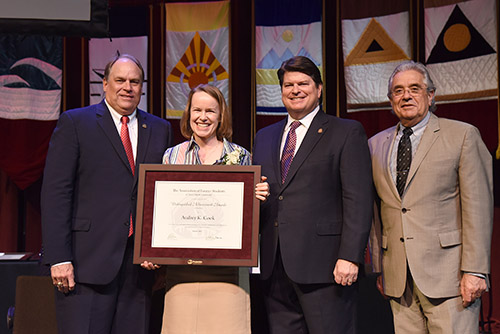
Dr. Audrey K. Cook

The Texas A&M Association of Former Students (AFS) honored three members of the Texas A&M College of Veterinary Medicine & Biomedical Sciences (CVM) faculty with university-level Distinguished Achievement Awards, which are among the highest honors presented by the AFS.


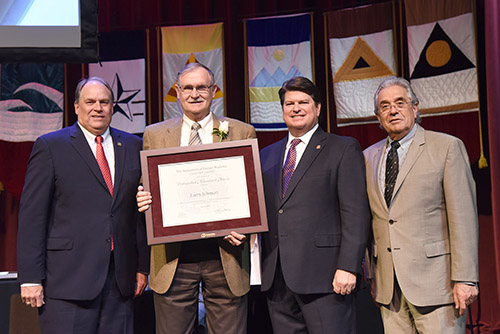
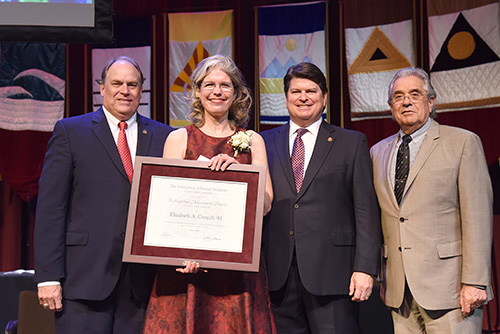
This year’s honorees from the CVM are Dr. Audrey K. Cook, associate professor in the Department of Veterinary Small Animal Clinical Sciences; Larry Johnson, Ph.D., professor in the Department of Veterinary Integrative Biosciences; and Elizabeth Crouch ’91, Ph.D., assistant dean for undergraduate education in the biomedical sciences program.

The three faculty members were recognized for their commitment, performance, and positive impact on Aggie students, Texas citizens, and the world around them. Specifically, Cook and Johnson were recognized for their teaching skills, while Crouch was recognized for excellent student relations.

Cook was selected for her reputation as an outstanding educator within Texas A&M University. Her “flipped classroom” approach to teaching has earned her approval ratings from her students. In fact, Cook’s teaching excellence previously was recognized with an AFS Teaching Award in 2015.

JohnsonAward
Dr. Larry Johnson

“Dr. Cook is truly an innovative educator who excels at teaching professional students, post-graduate trainees, and veterinarians in clinical practice,” said Dr. Jonathan Levine, department head, professor, and Helen McWhorter Chair in Small Animal Clinical Sciences.


Johnson also is recognized for his teaching skills by both students and the public. According to Evelyn Tiffany-Castiglioni, associate dean for undergraduate education, professor and department head of veterinary integrative biomedical sciences, Johnson is “a unique, tireless, and inspiring teacher,” but his teaching is not limited to the classroom. Johnson also teaches science outreach programs for middle school students, teachers, and the public.

Johnson was nominated by his students for his ability to truly make a positive impact in education.

“The students nominated him for this award, which underscores how much they value and appreciate his commitment to high quality teaching and student success,” Castiglioni said. “I believe Dr. Johnson’s excellence and effectiveness as a teacher spring from his abiding commitment to awakening and nurturing a love of science in young people.”

Nominated for her unflagging, selfless support of undergraduate students, Crouch makes each student feel important by ensuring every interaction she has with students is impactful. Crouch also was selected for her commitment to each student’s wellbeing and the personalized guidance she offers in meeting students’ goals.


Castiglioni said Crouch’s extensive store of knowledge, empathy, and interpersonal skills make her a great mentor for students.

CrouchAward
Dr. Elizabeth Crouch ’91

“Dr. Crouch gives students sustained, individualized, compassionate help-whether the student is seeking academic guidance or facing personal challenges,” Castiglioni said. “She is the best, and we are lucky to have her for our students.”

Dr. Eleanor Green, the Carl B. King dean of veterinary medicine, said it is an honor to work with such impactful CVM faculty.

“These honorees are not only making a positive difference for our students, they are impacting Texas communities and the world,” Dean Green said. “The CVM is proud to house such distinguished faculty who work hard every day to improve education and student relations within the field of veterinary medicine.”

Each honoree will receive a cash gift, an engraved watch, and a commemorative plaque for their achievements. The awards were presented on Monday, April 24, during ceremonies in Rudder Theatre on the A&M campus.

Texas A&M University Hosts Meeting to Discuss Veterinary Biobanking

COLLEGE STATION, TX-The Texas A&M College of Veterinary Medicine & Biomedical Sciences (CVM) hosted a workshop on April 9-11 to address the future of veterinary biobanking. The participants convened at the new Texas A&M Veterinary & Biomedical Education Complex (VBEC) to discuss lessons learned from building human and veterinary biobanks.

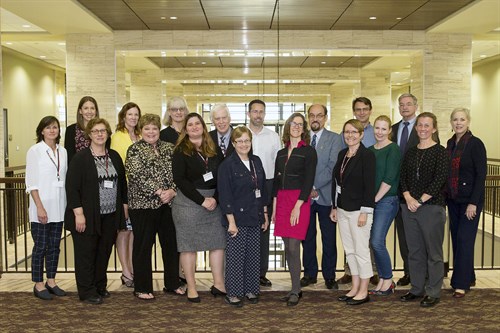
Attendees participating in the Biobanking discussions

“When Dr. Patty Olson called to inquire about our interest in hosting a biobanking workshop at the CVM, we were elated and our response was a resounding yes,” said Dr. Eleanor M. Green, the Carl B. King Dean of Veterinary Medicine.”Biobanking has evolved from a novel idea to an essential resource in medical and veterinary research and offers seemingly unlimited potential in personalized medicine. Biobanks of varying size and complexity are being created widely across the globe and early criteria for accredited biobanks have been established; nonetheless, maximizing the benefits of biobanks relies on common standards and consistency in everything from sample collection to sample access.

“Selected leaders in veterinary and human biobanking were brought together to share expertise and experiences with the ultimate goal of creating consistency,” Green said. “The contributions of each and every workshop participant were superb. This group will certainly remain active and connected, as ideas are shared freely within the scientific community.

“We are especially grateful to the sponsors-the AKC Canine Health Foundation, Mars Veterinary, Morris Animal Foundation, Sidney E. Frank Foundation, and Westie Foundation,” Green said. “I would also like to thank Dr. Bob Burghardt, the CVM associate dean for Research and Graduate Studies, and his team for organizing the workshop.”

The biobanking team also discussed the challenges that are unique to veterinary biobanking in relation to the best practices for repositories, as developed by the International Society for Biological and Environmental Repositories.  The procurement of high-quality biospecimens will be critical for future academic research, through which animal and human health might be further advanced.  Such samples also will be important to the many industries developing new therapies or diets to treat and/or prevent disease.

The participants included:

Dr. Holly Borghese, The Ohio State University
Dr. Marta Castelhano, Cornell University
Dr. Kate Creevy, Texas A&M; University
Dr. Urs Giger, University of Pennsylvania
Dr. Sue Lana, Colorado State University
Dr. Jonathan Levine, Texas A&M; University
Ms. Christina Mazcko, National Institutes of Health
Ms. Piper Mullin, Pan-Smithsonian Cryo-Initiative
Dr. Bill Murphy, Texas A&M; University
Dr. Stephen O’Brien, St. Petersburg State University
Dr. Patricia Olson
Dr. Kristy Richards, Weill Cornell Medicine
Dr. Jan Suchodolski, Texas A&M; University
Dr. Doris Taylor, Texas Heart Institute
Dr. Canaan Whitfield-Cargile, Texas A&M; University
Dr. Heather Wilson-Robles, Texas A&M; University
Dr. Vilma Yuzbasiyan-Gurkan, Michigan State University

The results and impacts of this workshop will be shared within the veterinary profession, academic community, research community, and constituent groups in a variety of ways.

If you would like to receive periodic updates on the outcomes from this workshop, please subscribe to the veterinary biobanking listserv.  To subscribe, please send an email to listserv@listserv.tamu.edu with the following information in the body of the message (replacing “firstname” with your first name and “lastname” with your last name): SUBSCRIBE veterinarybiobankinginformation firstname lastname.

Finding a Fur-ever Home

two pets staring

Approximately 6.5 million companion animals enter U.S. animal shelters nationwide every year, but only about 3.2 million are adopted in the same period, according to the ASPCA. To bridge the gap between intake and finding a permanent home, families can give pets love, care, and attention by fostering a homeless animal.

Kit Darling, the infection control coordinator at the Texas A&M College of Veterinary Medicine & Biomedical Sciences, said fostering provides a home-like atmosphere that animal shelters cannot provide.

“A shelter or rescue group might ask for a pet to be fostered because there is not enough physical space in the shelter to accommodate all pets, a puppy or kitten is too young to be adopted and needs a safe place to stay until it reaches the appropriate age or weight for adoption, or because some pets need more socialization to increase their chance for adoption,” Darling said.

Injured or sick pets also may need to be fostered to ensure they are healthy enough for adoption. Some animals, such as those that were abused or neglected or are showing signs of stress in the shelter, also may benefit from fostering.

No matter the situation, fostering one animal also will benefit other animals in the shelter.

“When you foster a pet, you are saving that pet’s life and creating space at a shelter for another pet,” Darling said.

Additionally, fostering pets can be rewarding. By helping a pet learn more social skills, overcome issues from neglect or abuse, or develop better house manners, they are more likely to find their forever home. Fostering also gives animal-lovers an opportunity to determine if they are ready for their first pet or an additional pet.

It can be hard to say goodbye to a foster animal when a permanent home is found, but Darling said fostering animals is worth it.

“Some people may be reluctant to foster because it is hard to give the animals up,” Darling said. “While this is sometimes true, the experience is still rewarding, knowing you helped a pet find a forever home. Saying goodbye is an opportunity for the adopter to say hello. Also, it can give you the opportunity to help another homeless pet.”

Though fostering is a great way to help a local animal shelter and homeless pets, the experience may not be fitting for everyone. Before volunteering to foster, Darling said to consider your time commitment.

“Fostering may be a great option for you if your schedule does not allow for a long-term commitment or you are unsure about a lifetime commitment for a pet,” Darling said. “The time commitment for fostering could be a few days, weeks, or months, depending on the need.”

If you think you are able to provide a pet tender loving care, training to develop house manners, or any other need, fostering may be for you.

“If you are interested in fostering a pet, contact your local shelter or rescue groups,” Darling said. “They will let you know their requirements and will be excited to have another foster parent to help save a life.”

Pet Talk is a service of the College of Veterinary Medicine & Biomedical Sciences, Texas A&M University. Stories can be viewed on the Web at vetmed.tamu.edu/pet-talk. Suggestions for future topics may be directed to editor@cvm.tamu.edu .

Ramadoss Featured In ‘Pedagogy Project’ for Teaching Practices

Dr. Jay Ramadoss
Dr. Jay Ramadoss

In his classroom, Dr. Jay Ramadoss, assistant professor in the Texas A&M College of Veterinary Medicine and Biomedical Sciences’ (CVM) Veterinary Physiology and Pharmacology department (VTPP), employs a number of strategies to keep his students engaged.

“Students learn to apply concepts in real-life scenarios,” Ramadoss said. “We use a balance between instructional and active learning, and for every two lectures, which themselves involve a lot of active-learning components, we follow that up with what we call APPL—active physiology principles learning.

“Each week the students assume a role; for example, they could be an astronaut, researcher, physician, or a scientist, and then the class solves a real-life problem, which is an application of what they’ve learned in the previous two lessons.”

Because of Ramadoss’s commitment to teaching, he was selected by the Texas A&M University’s Office of the Provost for Undergraduate Studies as a featured instructor in the office’s Pedagogy Project, which aims to improve student success and retention through the implementation of motivating and engaging classroom instruction.

Through the Pedagogy Project, four professors from across campus whose teachings align with the university’s undergraduate learning outcomes are interviewed on video to create two, three-minute featurettes on the best teaching practices. The pieces include an interview filmed in question-and-answer style in the KAMU studio by assistant provost for undergraduate studies Dr. Tim Scott and another filmed in the classroom.

Ramadoss was selected for the Pedagogy Project because of his Physiology for Bioengineers 1 and 2 classes, for sophomore engineering students. He has been teaching the courses since 2015.

“The biomedical engineering students are amazing and highly motivated, and we’ve done a lot of transformation in the teaching practices of this course,” he said. “Some of the basic concepts we kept, but a lot of it we transformed to have a good mix, to not lose the good things from the traditional aspects, while also taking advantage of the best practices in teaching offered by the Pedagogical Project.”

That transformation has included creating 12-minute video summaries of each lecture he gives and allowing students to voluntarily give half-minute overviews of the topics they learn at the beginning of classes, as well as gaming such as “Physiology Millionaire.”

“It’s a large class, but we still get to do a lot of active learning; we do case-based learning, role play, critical thinking, debate-based learning, problem solving, and traditional things as well,” he said. “I want to be able to take a very complex concept and put it in a way that everyone will get it and also be able to apply it. When the students are involved in the process, it’s a very good thing.”

Ramadoss attributes his success in the classroom to a variety of factors, including his ability to learn from and be motivated by the experience of his VTPP colleagues, including Drs. James Herman, a pioneer in undergraduate education; Randolph Stewart, a veterinary physiology educator; Charles Long, in graduate education; and Katrin Hinrichs, who offered strategies for conducting the course, as well to seminars by the Center for Teaching Excellence,  and especially his past mentor Dr. Tim Cudd.

“I would like to thank Dean (Eleanor) Green for her continuous support for my endeavors,” he said. “I have received a lot of encouragement from both VTPP and BMEN department heads Drs. Larry Suva and Anthony Guiseppi-Elie and VTPP business administrator Ms. Yvonne Kovar to achieve excellence in this course.”

He said he finds inspiration in his research for his lectures, which then, in turn, inspire his labs by making him feel enthusiastic and happy about his productivity, and the recently opened, state-of-the-art technology in the Veterinary & Biomedical Education Complex also has greatly impacted his ability to reach his students; technology such as the abundance of microphones in his classroom facilitate the active-learning component of his class by making his lessons more accessible for students.

Everything he does, from his well-researched syllabus to the creation of the resources and activities—all designed considering the attention span of his students—is time consuming, but Ramadoss believes it’s well worth it.

“My thing is, I am passionate about really wanting this course to be cause to have a positive experience for the students, something they can remember for the rest of their lives. It’s not really about me; it’s about what I want for the students and the course,” he said. “When they leave the class after every lecture, I want to ensure that they leave with a positive experience. That makes my day. I want to constantly further to improve the course.

“It’s a lot of effort, but in the long run, this effort is going to pay in terms of what we can do in undergraduate education. I just want to do something for the class,” he said.

The videos, in which Ramadoss discusses more about his teaching and methods, and offers advice to other faculty members who are considering changing the way they teach, will be available in the Pedagogy Project website of the Office of Associate Provost for Undergraduate Studies.

CVM Honors Faculty, Students at Annual Convocation

The Texas A&M College of Veterinary Medicine & Biomedical Sciences (CVM) recognized its faculty and students with 68 awards and more than $41,200 in prizes, not including in-kind awards of journal subscriptions and conference fees, on Friday, April 21.

Convocation

The CVM Honors and Awards Ceremony provides the college with an opportunity to reward and recognize excellence in teaching, research, and classroom performance.

Following a welcome by Bethany Weinheimer, president of the Texas A&M Student Chapter of the American Veterinary Medical Association, and a welcome by Dr. Eleanor Green, the Carl B. King Dean of Veterinary Medicine, awards were presented by executive associate dean Dr. Kenita Rogers and associate dean for professional programs Dr. Karen Cornell to students and professors in a packed VENI Building Lecture Hall 107A, as family, friends, and colleagues celebrated the achievements of those chosen for prizes, as well as the impact their work is making in the veterinary field.

“This is a day to recognize those who embody the excellence to which we all aspire,” Green said. “John Moorhouse, a famous cowboy and brother of photographer Bob Moorhouse, once said, ‘How prosperous you are depends upon where the wheel fell off of your great grandfather’s wagon.’ Today, your honors are not related to wheels falling off, or luck, or serendipity. Your honors are soundly based upon your hard work, your successful efforts, and your impact.”

The annual event is made possible through the donations of numerous donors who, in recognition of the efforts of the exceptional people who work and learn in the CVM, provide many of the awards and prizes given.

To see pictures from the CVM Honors and Awards Ceremony, click here.

The full list of CVM Honors and Awards winners includes:

  • American Academy of Veterinary Dermatology Award: Victoria Thiers
  • American Animal Hospital Association Award for Proficiency in Primary Care: Cameron Smart
  • American Association of Feline Practitioners Award: Erin Wilkens
  • American College of Veterinary Internal Medicine Large Animal Award: Marshall Guillory
  • American College of Veterinary Internal Medicine Small Animal Award: Taylor Gin & Cameron Smart
  • American College of Veterinary Ophthalmology Award: Brittany Schlesener
  • ACVP Award for Excellence in Veterinary Pathology: Juan Diaz
  • American College of Veterinary Radiology Award: Benjamin Colburn
  • American College of Veterinary Surgeons Large Animal Award: Josh Platt
  • American College of Veterinary Surgeons Small Animal Award: Mangala Krishnappa
  • Arden G. Kemler Award: Erin Richards
  • Award for Proficiency in Emergency & Critical Care: Cheri Honnas
  • Bridges Teaching & Service Awards: Claudia Barton, Stacy Eckman, & Virginia Fajt
  • Dechra Dermatology Achievement Award: Michael Walker
  • Elanco Dermatology Excellence Award: Chelsea Payne
  • Elanco Parasitology Excellence Award: Alec Wynne
  • Elanco Surgical Excellence Large Animal Award: Amy Jackson
  • Elanco Surgical Excellence Small Animal Award: Taylor Gin
  • Fred P. Jaggi Award: Erin Black
  • George T. Edds Awards: Alexandra Lacey & Kristal Rychlik
  • Gerald Bratton & Charles Hall Clinical Neurology Award: Lauren McAllister
  • Griffeth-Quick Cardiology Award: Amy Shelden
  • John H. Milliff Award for Teaching: Brian Porter
  • John Milliff Veterinary Student Award: Andres Rivera-Velez
  • John Paul Delaplane Award: Shakirat Adetunji
  • Juan Carlos Robles Emanuelli Teaching Awards: Beth Boudreau & Elizabeth Scallan
  • Kaytee Avian & Special Species Excellence Award: Michael McEntire
  • L.P. Jones Pathology Resident Award: Quinci Plumlee
  • Outstanding Graduate Student Mentor Award: Michael Criscitiello
  • Outstanding Masters Student Award: Amanda Blake
  • Outstanding Non-Thesis Masters Student Award: Daniel Hernandez
  • Outstanding PhD Student Award: Carolyn Hodo
  • Outstanding Postdoctoral Research Associate Award: Fabian Grimm
  • Outstanding Research Leader Award: Ivan Rusyn
  • Outstanding Scientific Achievement Awards: Sonya Gordon, Qinglei Li, Blanca Lupiani, & Sanjay Reddy
  • Outstanding Young Faculty Research Award: Beth Boudreau
  • Patton W. Burns Award: Hunter Pinney
  • Proficiency in Theriogenology Award: Rachael McPhail
  • Richard H. Davis Teaching Awards: Sarah Hamer & Michelle Pine
  • Simmons Educational Fund Business Aptitude Award: Ieva Jansky
  • Texas Veterinary Medical Association Research Award: Brian Saunders
  • Texas Veterinary Medical Association Teaching Award: Christine Budke
  • Texas Veterinary Medical Foundation Earl Waddell Large Animal Award: Karen Beste
  • Texas Veterinary Medical Foundation Earl Waddell Small Animal Award: Courtney Wilson
  • Texas Veterinary Medical Foundation Johnson Memorial Large Animal Award: Dustin Major
  • Texas Veterinary Medical Foundation Johnson Memorial Small Animal Award: Kayla Corriveau
  • TVMF Student Research Scholar Awards: Hannah Klein & Courtney Smith
  • Veterinary Cancer Society Award for Proficiency in Clinical Oncology: Christopher Dolan
  • VMTH Clinical Service Awards: Brad Bennett, Mary Nabity, & Catherine Ruoff
  • Veterinary Students One in Culture and Ethnicity Award: Karly Brightwell
  • Walter “Dub” Ruoff Memorial Award: Christopher Dolan
  • William F. Egan ’43 Memorial Award: Taylor Adams
  • Winnie Carter Wildlife & Exotic Animal Award: Michael McEntire
  • Zoetis Award for Veterinary Research Excellence: Guan Zhu
  • Zoetis Distinguished Veterinary Teacher Award: Canaan Whitfield

Veterinary Students Receive White Coats in Annual Ceremony

White Coat 2017

In the midst of family and friends, second-year veterinary students walked across the Rudder Auditorium stage on the Texas A&M University campus, where they were met by a mentor who was ready to arm each student with their white veterinarian’s coat, a symbol of reaching the halfway point of their educational careers.

The annual White Coat Ceremony on Friday, April 21, marked the transition from coursework in the classroom to applying their knowledge through clinical work for Texas A&M College of Veterinary Medicine & Biomedical Sciences (CVM) veterinary students.

The ceremony began with welcoming remarks from Dr. Eleanor M. Green, the Carl B. King of veterinary medicine, to the 132 students from the class of 2019, as well as to their family, friends, and professors who attended in support.

“The white coat represents professionalism—in actions and appearance. Putting on the white coat today is a reminder of the honor and the privilege you have been granted, and have worked for, to become part of the veterinary profession and part of the legacy of the Texas A&M University College of Veterinary Medicine & Biomedical Sciences,” she said. “With your new white coats, you will soon be a significant part of the health care team that battles diseases, unravels tricky diagnoses, reassures animal owners, and reflects on the humor, heartache, and inspiration in the life of a veterinarian.”

Dr. O.J. “Bubba” Woytek, assistant vice president of development & alumni relations at the CVM, gave a brief history of the White Coat Ceremony and the White Coat Endowment, which honors the legacy of Jeanne Fairweather, M.D.

Fondly known around the CVM as the “white coat doctor,” Fairweather lived a full life of service to others, and her spirit now lives on in an endowment that supports future veterinarians by providing scholarships and a professional coat to every student who has completed the first two years of veterinary school.

Dr. Karen Cornell, associate dean for professional programs, then presented each second-year veterinary student with their white coat, and the ceremony closed with remarks from Green and a reception in Rudder Exhibit Hall honoring the white coat recipients.

To view photos from the White Coat ceremony, visit the CVM’s Flickr page by clicking here.

Black Awarded for Commitment to Women’s Progress

Erin Black

Following her recognition as the Association of American Veterinary Medical Colleges’ (AAVMC) 2017 Patricia M. Lowrie Diversity Leader Scholarship recipient in March, Texas A&M veterinary student Erin Black has been honored with the Texas A&M University Women’s Resource Center’s 2017 Women’s Progress Student Award.

Black received the award during the Accountability, Climate and Equity (ACE) Awards ceremony on April 12 in the Bethancourt Ballroom, on the Texas A&M campus.

The Women’s Progress Award honors students, staff, faculty, and administrators who encourage and promote sensitivity to and awareness of issues that relate to women.

Student nominees must be currently enrolled and demonstrate commitment to an improved environment for female students and to women’s issues through volunteer work, elected position, advocacy, and/or other forms of leadership on or off campus. Award recipients receive a commemorative item and $250 monetary award.

Black, from McKinney, Texas, serves as president of the student chapter of the Women’s Veterinary Leadership Development Initiative.

She also works to promote diversity through the Texas A&M College of Veterinary Medicine & Biomedical Sciences (CVM) by mentoring minority students, serving as the liaison for the national Student American Veterinary Medical Association and the national organization of Veterinary Students as One in Culture and Ethnicity, and acting as a member of Project Diversity, which works to reach out to undergraduates at historically African American colleges and universities to encourage students to consider a career in veterinary medicine.

The ACE Awards recognize the appreciation of Texas A&M’s diversity, which involves an exploration of individual differences in a safe, positive, welcoming, and nurturing academic environment.

The ACE Awards acknowledge and honor students, faculty, and staff in honor of their demonstrated commitment to the Texas A&M core value of RESPECT by promoting respectful treatment of others, affirming and encouraging individuals to take pride in their social and cultural identities, and including all in their definition of the “Aggie Family.”

ACE Awards are sponsored by the Division of Student Affairs, Office for Diversity, Department of Multicultural Services, Department of Disability Services, Women’s Resource Center, Aggie Allies, the Consensual Language, Education, Awareness, and Relationships Office and the Student Government Association Diversity Commission.

Award categories include the Diversity Service Award, Gary Gray Memorial Student Recognition Award, Partners in Learning Award of Excellence, Aggie Allies Rainbow Award, Phyllis R. Frye Advocacy Award, Women’s Progress Award and Stand Up Award.

Hardegree Honored With LGBT+ Awareness Award

Austin Hardegree
Austin Hardegree

Austin Hardegree, a fourth-year veterinary student in the Texas A&M College of Veterinary Medicine & Biomedical Sciences (CVM), has been recognized for his contributions in supporting and ensuring inclusivity in academia with one of the Broad Spectrum Veterinary Student Association’s (BSVSA) 2017 LGBT+ Veterinary Awareness Awards.

Hardegree is among the six vet med students, faculty members, or industry partners from across the country selected for the second annual awards, which were presented in April to those who demonstrate commitment to Broad Spectrum’s mission by developing awareness of the LGBTQ+ community and its importance within the realm of veterinary education and practice.

Hardegree—who helped establish the CVM’s Broad Spectrum chapter by serving first as secretary and later as president for the national organization—was recognized by the BSVSA for “his amazing leadership as president of Broad Spectrum” and “his tireless work on TAMU Broad Spectrum and VOICE campus activities.”

“He stood up, led, and helped create an inclusive environment at TAMU which has rippled across North American colleges of veterinary medicine,” the national organization said in a press release. “Leadership does start in veterinary school too.”

“We are really proud of the work that Austin and our entire Broad Spectrum organization are accomplishing,” said Dr. Kenita Rogers, CVM executive associate dean. “There is nothing more important that creating a learning and working environment that is welcoming to everyone, regardless of how you identify, where you are from, what your goals are, and what makes you truly unique and valuable. We want everyone—students, staff, faculty, and guests—to feel like they are a part of this remarkable college team. Each and every person makes us better.”

The award also recognized Hardegree for his leadership during the 2017 Student American Veterinary Medical Association (SAVMA) Symposium, for which he served as the chair of diversity and wellness and organized several programs.

“It feels great to have been selected for this award,” Hardegree said. “It means that I’m doing something right, at least when it comes to diversity within veterinary medicine. As I move forward in my professional life, I can continue to lead by example and advocate for diversity in our field.”

Founded in 2011 at the SAVMA Symposium at the University of California, Davis, the national Broad Spectrum organization stemmed from the Lesbian and Gay Veterinary Medical Association (LGVMA), a similar club that focuses more on professional veterinary medicine.

“Veterinarians are seen as leaders,” Hardegree said. “I think that we, in all aspects of our lives, should strive to be the best we can be. Creating a positive environment is really what matters.”

Neither group could be successful without the support of CVM faculty and staff, and especially Drs. Karen Cornell and Rogers, two national advisers for the LGVMA and faculty advisers for the National Broad Spectrum.

“The CVM administration has done a good job of making sure that all students, no matter their background, feel welcome,” Hardegree said.

Read more about Austin Hardegree in the next edition of CVM Today.