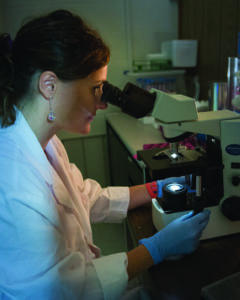
Lately, there’s been much talk about the new curriculum for veterinary students at the Texas A&M College of Veterinary Medicine & Biomedical Sciences (CVM). But, that’s not the only program being elevated. Improvements to the graduate program in Biomedical Sciences are also underway.
The CVM is uniquely poised to provide an unparalleled graduate research and educational experience in an environment where research expenditures exceeded $30 million dollars in 2015—the third highest among veterinary schools in the nation. The college recognizes the integral role that graduate students play in university’s research enterprise. The goal is to adapt the CVM’s graduate studies to take advantage of the many diverse biomedical science career paths in today’s world and to contribute to innovations in science that offer real benefits to a global society.
Over the past eight months a group of faculty formed a task force and worked with the Associate Dean for Research & Graduate Studies office to think about how to improve the training experience of CVM graduate students. The task force included faculty members who could provide unique insight into graduate education from perspectives derived from experiences at different universities and interdisciplinary programs.
This process has been driven by the mission of our graduate program, which is to “Provide a premier degree program for preparing innovative, globally competitive and career-ready biomedical scientists who are committed to the improvement of the health and welfare of animals, humans, and the environment, and who have skill sets necessary to pursue diverse career paths in academic, public, and private sectors.”
Periodic strategic evaluation of the graduate program is undertaken to enable adaptability to emerging opportunities in an evolving research environment.
In a desire to build a strong sense of community among our trainees—especially our incoming graduate students—the task force developed an intensive orientation week “boot camp” that provides training in biosafety and compliance, diversity and inclusion, intellectual property and patents, and Texas A&M regulations and requirements for graduation education. Additionally, the students attend an introduction to the science and scholarship of effective teaching. The experience results in increasing connections and building camaraderie among trainees while providing foundational information that will guide them through their graduate programs.
As a culmination and welcome into our community of scholars, an Inaugural Graduate Student Oath Ceremony was held on Thursday, Aug.,25 at Pebble Creek Country Club. The CVM Graduate Student Association developed the oath by integrating elements of Texas A&M University’s core values, the Aggie Code of Honor, and recommendations from a Science article, “An Ethical Affirmation for Scientists” by Craig, Cather, and Culberson, which contains an “Oath for Scientists.” This oath highlights expectations of graduate students to uphold the highest standards with respect to ethical behavior, integrity, and professionalism.
Each graduate student received a CVM embroidered laboratory coat that is symbolic of their official entry into training as a laboratory scientist, as well as an engraved nametag that will foster recognition of their unique identity and contributions to the CVM research enterprise. The students recited the oath as group at the evening banquet.
A noteworthy and recognized feature of the CVM Graduate Studies program is its extensive menu of professional development opportunities. These include workshops on grantsmanship, scientific writing, public speaking, effective writing strategies, effective multimedia communication, and career-readiness. The workshops complement existing college programs such as an internal student research grant program, competitive campus core facility utilization program, and high-impact research specialty training programs. All opportunities align with the Texas A&M graduate student learning outcomes.
The diversity in biomedical science career paths require more comprehensive and intensive advising to link students to available career opportunities and training that will help better prepare them for diverse careers. To this end, graduate academic advising has been centralized under the Associate Dean for Research & Graduate Studies office. Students have access to five graduate advisors with diverse experiences and backgrounds, including doctoral studies in higher education programs and leadership, doctoral studies in biomedical sciences, and professional expertise in the policies and procedures of the Texas A&M Office of Graduate and Professional Studies and Study Abroad programs.
The CVM prides itself on setting its graduates apart from those of other institutions. With positive changes underway, those who complete graduate degrees from the CVM will continue to make global impacts in biomedical sciences.
To view photos of the 2016 Graduate Oath Ceremony, visit the CVM’s Flickr page.
Dr. Ramesh Vemulapalli came to Texas A&M from Purdue University, where he served as a professor of Veterinary Immunology/Microbiology & the Department Head of Comparative Pathobiology. Vemulpalli’s expertise in veterinary science is evident in his countless published research articles, his many awards, including the Pfizer Award for Research Excellence and the Seeds of Success Award, and his involvement in leadership development and diversity programs.
Vemulpalli’s education includes a B.S. in veterinary science & animal husbandry from Andhra Pradesh Agricultural University, an M.A. in veterinary science (animal biochemistry) from Indian Veterinary Research Institute, and a Ph.D. in philosophy from the University of Maryland.
The CVM Staff Awards took place Tuesday, August 16. The awards program began at 7:30 a.m. with breakfast and musical entertainment by Dr. Johnathon Dodd. Greetings and opening remarks by Dr. Kenita Rogers, executive associate dean, began at 8 a.m. Staff awards included the W. Terry Stiles Service Award and the Pearl Enfield Staff Leadership Award. The closing remarks were made by Dr. Eleanor Green, the Carl B. King dean of veterinary medicine.
Award recipients included: Kord Kothman, Stephanie Wertman, Courtney Brake, Robin Williams-Callahan, Richard Colson, Dianne Cornett, Noell Vance, Caleb Coursey, Elaine Lippard, Jaci Christensen, Vicki Weir, and Kate Nelson.
Many staff members were also received longevity awards for their service to the CVM.
Approximately 30 Department of Plant Protection officials and other agricultural professionals from across Pakistan participated in a two-day training in late July. The training program was designed by the U.S. Department of Agriculture (USDA) to support the Government of Pakistan’s efforts to expand agricultural trade. This training served the dual purpose of helping expand the Pakistani export market while building closer ties between the United States government and its agricultural professionals.
The Texas A&M College of Veterinary Medicine & Biomedical Sciences (CVM) contributed to the conference by developing several online modules that conference attendees took prior to the conference. Additionally, all the materials to conduct the workshops, including facilitators’ guides, participant guides, and PowerPoint presentations, were created and designed by CVM staff. CVM faculty worked with USDA experts on specific sanitary and phytosanitary topics to write and design the curriculum suite.
“All participants completed and fulfilled the expectations of the program,” said Nicola Ritter, instructional assistant professor at the CVM. “Participants raved how useful this program was to their job. Pakistanis overwhelming stated that the workshop helped them in practical applications of import and export regulations.”
Agriculture is Pakistan’s second-largest sector and is the largest employer in the country. This training session was another step to enhance agricultural productivity in Pakistan and to support economic growth and food security.
In August 2016, a delegation of scientists from the Institute of Animal Health (IAH) in the Guangdong Academy of Agricultural Sciences in Guangdong, China visited the Texas A&M One Health Initiative team to explore future collaborative research and educational opportunities.
The IAH delegation has been funded by the Guangdong Province for three years to facilitate international research and education exchanges between China and the United States. The IAH delegation also has a long history studying transmission, diagnostics, and control of animal diseases.
The research focus of the colleagues who visited the CVM is swine and poultry diseases, including several zoonotic diseases. The aim of IAH’s first year of funding is to meet colleagues from different institutions and identify potential partners and collaborative areas. In the second year of funding, the IAH will propose potential projects with research teams who are ready to address One Health disease challenges and societal needs.
For more information on the Guangdong Academy of Agricultural Sciences, click here.
Photos: From left is Associate Professor Mingfei Sun (IAH), Professor Guan Zhu (TAMU VTPB, CVM) and TAMU collaborator, Professor Rosina (Tammi) Krecek (Interim Assistant Dean of One Health, and Visiting Professor VTPB), Professor and IAH Director Zhihong Xu, Professor Chunling Li (IAH) and Professor Jianfeng Zhang (IAH).
The summer is blazing hot, but PEER veterinary students are still hard at work inspiring students to pursue STEM careers. PEER veterinary students have presented to over 1,000 students since the last update at the end of June. Chanel Berns, Mikaela Stanislav, and Maddie Wiersig travelled to San Antonio on July 5 for a variety of presentations. Wiersig was already in San Antonio, and she kicked off the event by presenting to some pre-engineering students at a UTSA PREP course. Wiersig taught the students about entry into professional school and pathways to college. Only a few of the campers were interested in attending veterinary school, but they were all interested in attending college and many were considering advanced degrees. The students were very sharp and asked in-depth questions about what inspired Wiersig to apply for veterinary school and what veterinary school is like. Many of the students did not know that veterinary school admission is very competitive. These students were surprised to learn that Texas A&M University has the only veterinary school in the state of Texas!
After completion of the UTSA talk, Berns, Stanislav, and Wiersig travelled downtown to present to Girls Inc. This is an all-girls camp that encourages girls to grow up to be strong, independent-minded, and educated women. The age of the campers ranged from five to 13 years old. The theme of the week was animals, and PEER was requested to give a presentation on what veterinarians do, how to become a veterinarian, and different career paths within veterinary medicine. The PEER veterinary students finished the presentation with a few practice cases where campers pretended to be veterinarians in a practice case situation. The campers had the opportunity to decide what tests to run to lead to a final diagnosis of the “sick” stuffed animal patient. The campers really loved getting involved in the practice case. The practice cases also prompted the campers to ask more questions related to the cases such as “How do you get rid of fleas in the yard?”, “Can I get the same parasites as my dog?”, and “How do heartworms make a dog cough?” The PEER veterinary students gave several presentations over the next two days to campers of varying ages. The PEER veterinary students thoroughly enjoyed reaching out to so many students!
The San Antonio trip also included a visit to the Primate Research Facility at the Texas Biomedical Research Institute. The PEER veterinary students viewed the baboons and other primates that are held at this state of the art research facility. “It was so interesting to see how the Texas Biomedical Research Institute works with undomesticated species! For example, they used fruit-flavored cereal to guide monkeys to different enclosures,” Stanislav said, “Veterinary school emphasizes major domestic species, so seeing how veterinary medicine and husbandry applies to primates was a neat experience.” The PEER veterinary students also had the privilege of meeting with Dr. John Bernal, the associate director of veterinary resources and research support. PEER veterinary students asked what day-to-day life is like as a veterinarian at the Texas Biomedical Research Institute and how Bernal selected lab animal medicine as his field of work.
While Berns, Stanislav, and Wiersig were in San Antonio, Chelsea Gartman participated in Snake Day at the Clara B. Mounce Public Library in Bryan. PEER had a table set up just outside the entrance of a snake show called Snakes Alive. There were four shows total, and more than 300 people visited the table while they lined up for entrance into Snakes Alive. Gartman taught visitors about pet snake care, snake anatomy, and the threats venomous snakes in Texas can pose to household pets.
The PEER veterinary students also paid a visit to the Houston Zoo to see zoo interns that PEER veterinary students presented to earlier this summer as part of Collegiate Conservation. These interns were presenting their final projects for the program. Following the presentation, the PEER veterinary students were able to explore the Houston Zoo. Additionally, the PEER veterinary students visited a veterinary chiropractor, Dr. Robin Robinette, in Houston and talked to her about her work with rehabilitation and becoming a chiropractor. “It was really interesting to watch Dr. Robinette implement chiropractic adjustments and acupuncture to help her patients,” Gartman said. “All of the people bringing their animals in to see her were very happy with how much Eastern medicine has helped their elderly pets. Her staff also helps with treatments like laser therapy and water treadmill for small animals and even horses! I learned a lot and would love to explore this area of veterinary medicine further.”
The following week, the PEER veterinary students were very busy with Aggie STEM Summer Camp, presenting at the Brazos Valley Museum of Natural History, and attending several sessions of the Summer Parks Program 2016 in Bryan. As part of the Summer Parks Program, a few of the PEER veterinary students went to local parks and presented to campers about what it takes to be a veterinarian and what veterinarians do. Campers also worked through veterinary practice cases.
The week of 7/11 also marked the start of Youth Adventure Program (YAP) Camp. The first YAP Camp session was designed for middle school students who are seriously considering veterinary medicine as a career. YAP Camp proved to be an interactive, fun week for the campers and the counselors! All the PEER veterinary students who were not presenting elsewhere in the community worked as counselors for YAP Camp. While working for YAP, PEER veterinary students used their experiences from veterinary school to give the campers advice about how to get into veterinary school, to promote Texas A&M University, and most importantly, to teach them about veterinary medicine. The campers were gathered into smaller groups that were each given a fairly difficult case that was adapted from a real patient case at the Veterinary Medical Teaching Hospital. It was the job of the PEER counselors to guide the campers through these cases and help them reach the correct conclusions without giving away answers.
The PEER veterinary students helped the campers create presentations based on their cases. Each presentation included the diagnostic tests the campers ran on the patient, the test results, any abnormalities found, and finally the diagnosis and treatment. PEER veterinary students helped the campers find out more information about their specific cases using textbooks from the Medical Sciences Library. Another activity that PEER assisted YAP camp with was stuffed animal spays and laceration repair/broken bone repair. The campers loved suiting up in surgery gear and using real surgery tools to perform the surgeries and repairs on the stuffed animals.
During the week of 7/18, TAMU CVM hosted two camps: Veterinary Enrichment Camp and YAP Camp. Dr. Larry Johnson, who heads the PEER program, delivered a guest lecture called “Love Your Lungs” to Veterinary Enrichment Camp high school students. As part of the presentation, campers engaged in hands-on learning with anatomic specimens under the guidance of Johnson and their veterinary student counselors. The second week of YAP camp was for high school students who are serious about veterinary school, so the material was more advanced and in-depth than the material for the middle school students. Although there were fewer campers for the high school session, this allowed the PEER veterinary students to focus more on individual interests and questions that each camper had, allowing them to have a more in-depth, personal experience for the week.
During the week of 7/25, PEER attended the Brazos County 4-H program. Gartman and Clarissa Root presented to the students about pathways to veterinary school and discussed what veterinary school is like, veterinary school admission advice, and what careers are available with a Doctor of Veterinary Medicine degree. The following week, Berns, Root, and Stanislav completed PEER’s last trip of the summer. They traveled to Temple and Belton to present about pet care at the Temple Public Library and show anatomy models to 4-H Vet Science campers at the Bell County Expo Center.
PEER veterinary students wrapped up their summer by recording new educational videos that can be found at peer.tamu.eduand presenting to Summer Science Safari Camp and Aggieland Humane Society Camp.
If you are interested in working for PEER or learning more about PEER’s educational resources, please visit peer.tamu.edu or email Dr. Larry Johnson at ljohnson@cvm.tamu.edu.
First, CVM veterinary professionals and students enjoyed seminars and exhibits at the AVMA conference Aug. 5-9. Then, development and communications professionals attended the AVAP conference on Aug 9 and 10.
The CVM’s Dr. Eleanor M. Green, the Carl B. King dean of veterinary medicine, presented the keynote address, “A Century of Leadership,” at the AVAP conference. She addressed the ever-changing nature of the veterinary profession and how technology has caused these changes to occur at an exponential rate. She also emphasized the importance of professionals in development and communications in helping veterinary colleges move forward. Green also served on a panel of deans from veterinary colleges, which consisted of Dr. Michael Lairmore (University of California—Davis), Dr. Jim Lloyd (University of Florida), and Dr. Rustin M. Moore (The Ohio State University).
At the AVAP conference, the CVM Communications Team accepted the 2016 AAVMC Communications Excellence Award. The team also presented the various communication materials that they produce and the strategies they use.
Wesley Williams, DVM ’10, an associate veterinarian at Hillside Veterinary Clinic, won CVM gift basket at the AVMA reception and was also the first recipient of the Dorothy Hendricks Scholarship while pursuing his DVM. He assisted in making the scholarship the largest annual scholarship awarded at the CVM.
Pets can experience hearing loss just like humans. Hearing loss in pets may be the result of disease, old age, or the pet may even be born deaf. No matter the cause, pets with hearing loss can still be great companions.
Sometimes it may be difficult to determine if your pet is experiencing hearing loss. Because pets cannot verbally communicate how they are feeling, it is important for pet owners to pay attention to or record normal behavior in their pets in order to easily detect abnormal behavior. For instance, not responding to their name being called may be a sign of hearing loss in your pet. Other signs of hearing loss may include your pet being unresponsive to loud noises or food being poured into their food bowl.
One simple and effective way to see if your pet is experiencing hearing loss is to wait until your pet is asleep or not looking at you. Try to make loud noises without causing vibrations in the floor or allowing your pet to see your movement. If your pet is unresponsive to the noises you make, this could mean their hearing is not fully functional.
“When pets do not turn toward loud noises, this is a good marker they may be deaf,” said Dr. Stacy Eckman, clinical assistant professor. “If you clap or whistle, they should at least perk their ears up or turn toward the sound.”
Typically there is no cure for deafness or any way to slow the progression of hearing loss in pets. Since we cannot judge levels of hearing loss in pets like we can in people, pets can lose hearing ability before a hearing impairment is even detected. Hearing aids are typically not used in pets because they are expensive, may not be comfortable for the pet to wear, and they do not work in pets who have complete hearing loss. Although pet owners may think deafness bothers their pet, it may actually bother the owner more than the pet itself. For example, most dogs are not bothered by their deafness because hearing is not their main sense.
Despite their disability, pets with a hearing impairment can still learn commands via hand signals. As long as the hand signals are clear and consistent, a hearing-impaired pet can learn commands. In addition to teaching their pet hand signals, Eckman said some pet owners utilize vibrating collars to train and get their pet’s attention. These collars can be bought at most pet stores. No matter the method used, hearing-impaired pets are certainly trainable.
To keep your hearing-impaired pet safe, keep them in a fenced yard or in your home as you would with other pets. You may choose to add a bell to your pet’s collar so you always know where they are. In addition, it may be beneficial to add a tag on the pet’s collar to indicate they are deaf in case they ever get lost.
“If your aged pet becomes deaf, it can still be a wonderful companion,” Eckman said. “Teaching the pet commands based on hand signals and vibrations can further strengthen the bond with your pet. If you are adopting a deaf pet, they are still very trainable and great companions as well.”
Although some may think it can be challenging to care for a deaf pet, hearing-impaired pets are just as loveable as a pet with full hearing.
Pet Talk is a service of the College of Veterinary Medicine & Biomedical Sciences, Texas A&M University. Stories can be viewed on the web at vetmed.tamu.edu/pet-talk. Suggestions for future topics may be directed to editor@cvm.tamu.edu .
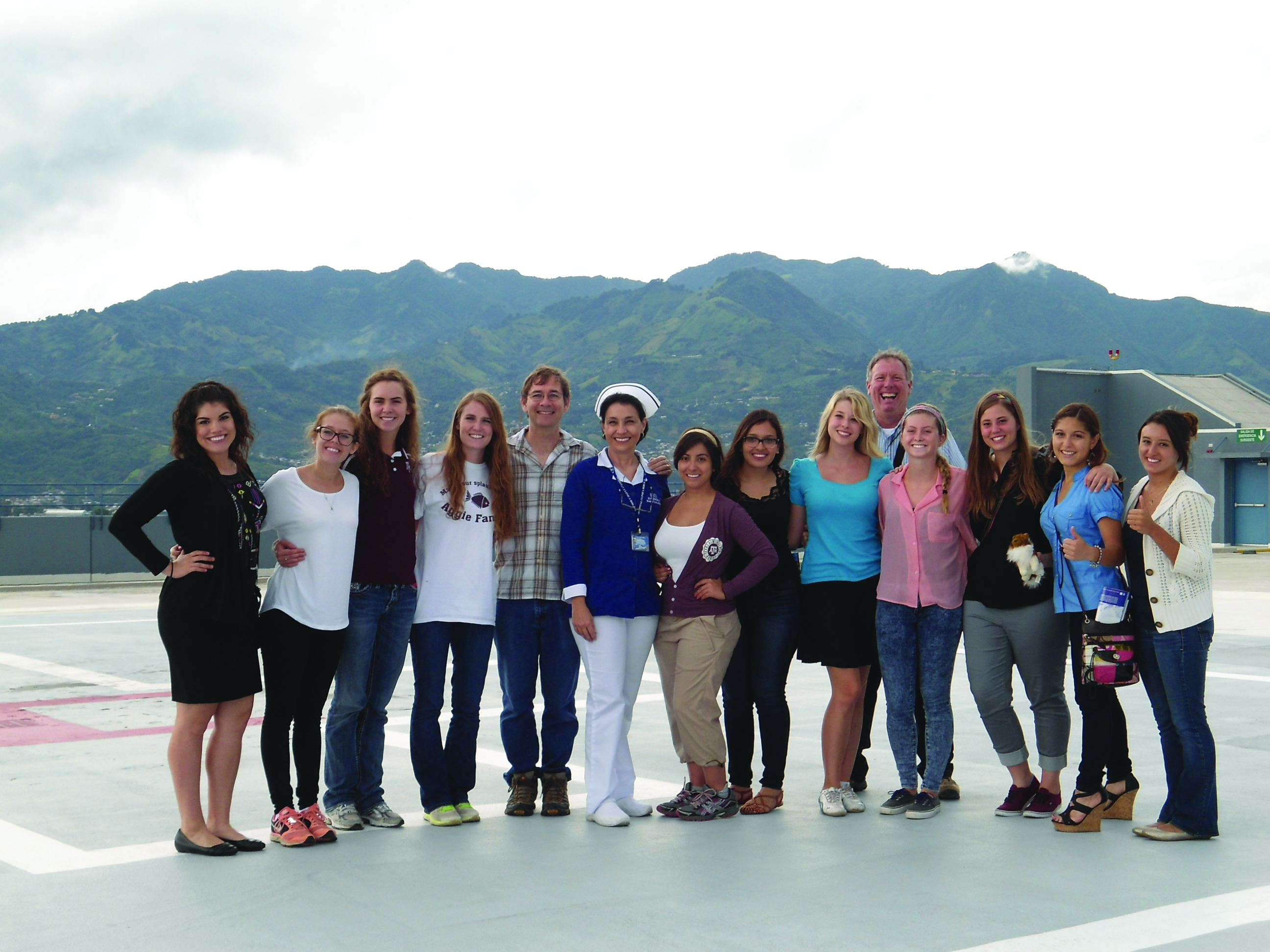
Students studying abroad in Costa Rica (Photo by Dr. Don Brightsmith)
Destiny Mullens’ favorite question to ask during her international experience in Europe was, “How many languages do you speak?” She discovered that most people with whom she talked spoke three languages, although one person spoke seven. Mullens, a senior biomedical sciences (BIMS) major, participated in a spring 2015 study abroad program in Germany, organized by the CVM’s International Programs office, where she had both an academic and cultural learning experience.
Mullens is just one of the many students whose trip was made possible by a stipend from the International Programs Advisory Committee (IPAC), housed in and composed of faculty from Texas A&M University’s College of Veterinary Medicine & Biomedical Sciences (CVM). Mullens’ experience is an example of how globalized the CVM is becoming. Her experience was possible in part due to the work of CVM’s International Programs, the mission of which is to help students and faculty to become global citizens by supporting a variety of activities including research collaborations and study abroad opportunities. Mullens’ experience was also supported by several scholarships, including the Dr. Anne Marie Emshoff ’90, DVM ’94 Scholarship from BIMS.
Over 80 percent of the $85,000 the IPAC provides annually for international opportunities goes to undergraduate, graduate, and professional students at the CVM as travel stipends. Students must apply for IPAC travel stipends to receive funding. They may use IPAC funding for two types of international experiences: faculty-led study abroad programs and independent study abroad programs the students can develop on their own with CVM approval.
However, IPAC’s efforts go beyond helping students study abroad. The committee also helps faculty develop study abroad programs and conduct international research. “It assists with providing funds if you want to establish international research partnerships or develop new study abroad opportunities,” said Dr. Christine Budke, IPAC member and associate professor in the Department of Veterinary Integrative Biosciences (VIBS).
International Learning Opportunities for Students
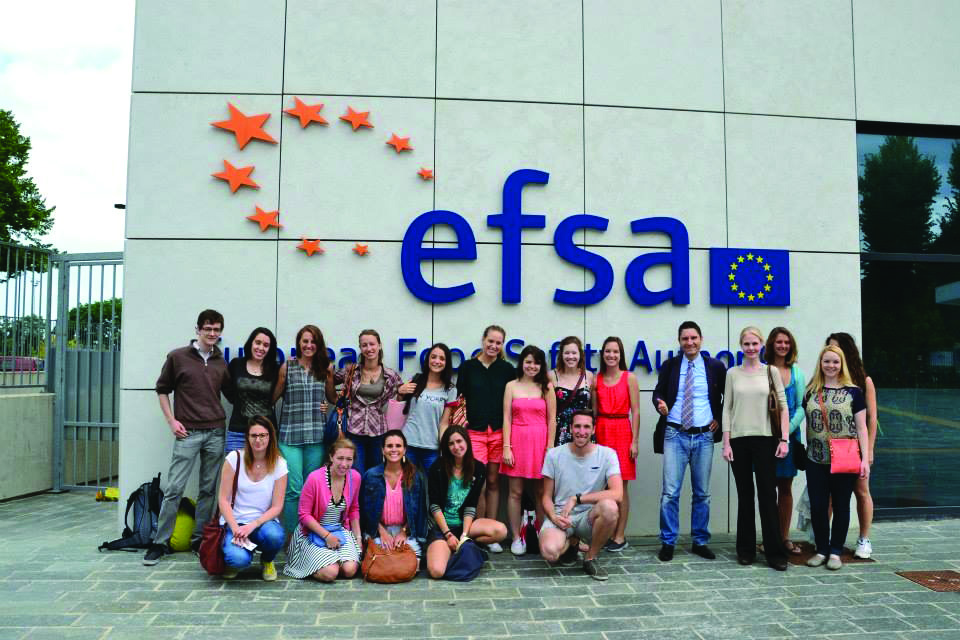
Students studying in the food safety course at the European Food Safety Authority in Parma, Italy (Photo by Anna Pennacchi)
The CVM faculty members promote international experiences for students because they understand the value of international work. “When students go abroad, they gain culture awareness,” said Dr. Maria “Loles” Esteve-Gassent, assistant professor in the Department of Veterinary Pathobiology (VTPB), who has organized exchange programs between the CVM and Spain. “The world is a big place, both a big and a small place. There is a personal change. Some of the barriers are gone. Students aren’t afraid of new things, of change.”
“Transformative” was the word Dr. Jeremy Wasser, associate professor in the Department of Veterinary Physiology and Pharmacology (VTPP), who leads study abroad trips to Germany, uses to describe students’ international experiences. He said his goal “is to bring these students back utterly changed for good, forever.” Wasser noted the 21st century is increasingly global and students need to be comfortable working with individuals from various cultures and countries.
Dr. Elizabeth Crouch, the assistant dean for undergraduate education at the CVM, said, international experiences add depth to students’ undergraduate careers. Employers want post-graduates that work in teams and function in a world culture.
Of the BIMS students surveyed upon graduation following the 2014–2015 academic year, almost a quarter said they had participated in an international experience. Crouch added, “Every student who comes back says they would do it again.”
Study Abroad Experiences
Students can participate in a variety of experiences through the Study Abroad Programs Office at Texas A&M, as well as several faculty-led study abroad international programs through the CVM.
In one international program through the CVM, students travel to Kruger National Park and surrounding areas in South Africa to learn about chemically immobilizing, capturing, and transporting wildlife species. They work with big game, as well as plains game animals, and have the opportunity to interact with many local experts. Dr. James Derr, professor in VTPB and director of this South Africa international experience, said, “Every single day, the students have their hands on animals. For 15 days, we are darting animals, capturing animals, transporting animals, treating animals, and observing animals.” Derr continued, “The students get exposed to African veterinary medicine practices, wildlife conservation, economics, and sometimes the politics of wildlife and wildlife management.”
Veterinary students interested in learning about food safety and public health can participate in a summer short course in Italy. According to Budke, who helps coordinate the course, “The students learn about the European Union’s food safety regulatory system, which allows them to compare and contrast it with the U.S. system.” The students also interact with peers from another country who have unique perspectives and backgrounds.
Similarly, undergraduate students have analogous experiences through an international experience in Costa Rica. During this semester-long experience, students live and study at the Soltis Center. As part of the experience, students live with a host family for three weeks. “They are learning something about Latino culture, learning something about the language, and learning how to communicate as a biomedical professional in Texas,” said Dr. Don Brightsmith, assistant professor in VTPB and the director of the Costa Rica study abroad trip.
Like many study abroad opportunities, the semester in Costa Rica leads students to step outside of their comfort zone. London Dority, a student from the 2014 fall experience, said she got off the plane in Costa Rica and felt “alien in a new place. Everyone spoke only Spanish.” While in Costa Rica, she “overcame a lot of fears.” Dority couldn’t pronounce her name, when translated to Spanish, on the first day at a restaurant, but stayed with a host family for the cultural immersion. The host family welcomed her as one of their own and helped her practice Spanish over cookies and coffee in the afternoons. “The hands-on learning really helped me learn the material,” Dority said.
Spanish is also an integral component to the program in Spain, where students enroll at a local university and transfer the credits back to Texas A&M;, which is coordinated by Esteve-Gassent. The program, which emphasizes public health, is targeted to students who are interested in careers in veterinary medicine, human medicine, and public health. Specifically, the program focuses on how to communicate about global health in a different language. “It’s an immersion program,” Esteve-Gassent said. “The students need to experience what it is like to be in a different country, so they can appreciate at a different level why public health happens differently in different places.” She continued, “Cultures are different, people are different.”
Chinma Onyewuenyi, who is a medical student, participated in Esteve-Gassent’s trip to Spain as an undergraduate student, learned Spanish, and studied public health. Like Dority, she lived with a host family and experienced a cultural immersion. The program pushed Onyewuenyi to become independent. She learned to interact with people despite the language barrier and explore new places. “Just go. Go with a plan, go without a plan,” Onyewuenyi said. She encourages other students to go on an international experience and said, “because in the end, it doesn’t matter where you go or how you get there, but that you went. That’s what will change you.”
Wasser has developed experiences for both veterinary and undergraduate students in Germany. The veterinary students in the first two years of school travel with Dr. Michelle Pine, clinical associate professor in VIBS, to Europe for four weeks in the summer to experience aspects of the veterinary world in Germany and the Netherlands. Wasser leads the semester-long undergraduate experience in Germany, which has predominately BIMS and biomedical engineering students. The undergraduate program is a culturally intensive experience, including a stay with a German host family.
Students receiving IPAC funding write reports about their experiences, which can be seen at the CVM International Programs website at tx.ag/studentreports.
Internationally Diverse Graduate Programs
Students from outside the United States are encouraged to travel to the CVM for educational, research, and cultural opportunities. “While it does not financially support international students, the IPAC helps to facilitate bringing international students to the CVM. It shouldn’t be a one-way street,” Budke said. “While at the CVM these students share their unique perspectives and experiences.” Esteve-Gassent brings veterinary students from Spain to Texas A&M; for clinical rotations and culturally immerses them in American culture, expanding their views.
Dr. Linda Logan, director of International Programs since 2010 and professor in VTPB, said she is interested in “diversifying our graduate program with international students.” As of the fall 2015 semester, there were 315 international students in the veterinary and graduate programs. These students represent 26 countries, including Colombia, Germany, Iraq, Nigeria, and Japan.
Esteve-Gassent encourages graduate students to research and collaborate at the CVM. She encourages students to determine what techniques they know. Then the students can identify techniques they want to learn in a collaborative experience. Currently, the Esteve-Gassent lab has an array of people from China, Egypt, India, and Brazil.
Faculty Engagement in International Research and Development
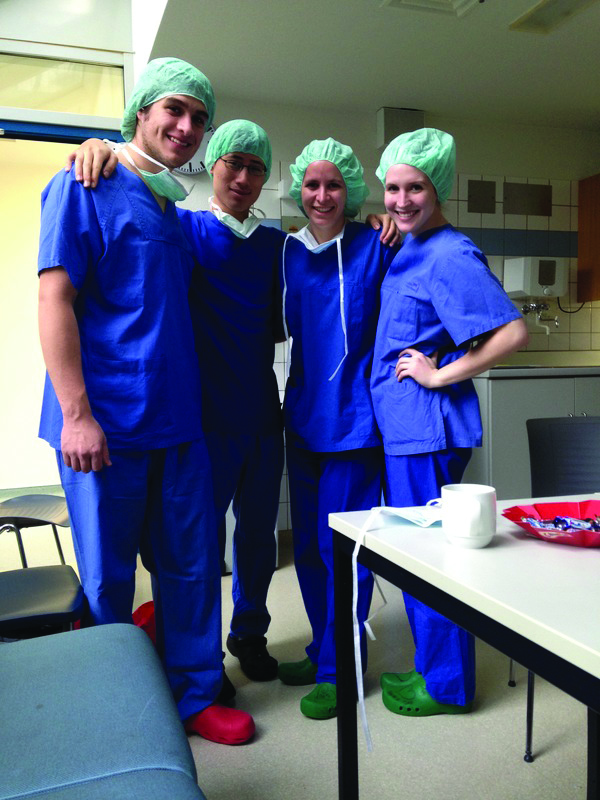
Biomedical Science students at the University Hospital Bonn in Bonn, Germany (Photo by Dr. Jeremy Wasser)
IPAC also supports faculty collaboration internationally. This includes research and development of new study abroad programs. International collaborative research at the CVM has centered on food security, global health, and the One Health Initiative, among others. Developing these collaborative research interests involves building international teams to obtain funding. For example, the CVM has successfully partnered with universities in Mexico to obtain Conacyt grants for collaborative research projects. The Conacyt program promotes inter-institutional research collaboration between Texas A&M and Mexican educational institutions. Conacyt projects that faculty members at the CVM are working on include studying the immune response of an endangered species of fish and improving immune responses to brucellosis.
According to Esteve-Gassent, international collaborations aren’t “something that you plan.” She explained they develop by going to meetings and talking with people. Budke said these collaborations provide unique perspectives and problem-solving approaches “that help us tackle research questions in ways that may not be evident from a single cultural viewpoint.”
Many faculty at the CVM have international collaborations. These faculty members can act as resources to consult about funding possibilities. They also provide guidance for building new collaborations and developing new study abroad opportunities. When new ideas for collaborative research or teaching opportunities arise, faculty are encouraged. Esteve-Gassent said that with new international experiences, teaching or research, “Yes you can do it, but we may not know how yet.”
Many students travel abroad for the chance to expand their knowledge and dive right into a new culture, language, and education system. Though all the Barcelona students agreed that these opportunities convinced them to study abroad at the Texas A&M; College of Veterinary Medicine & Biomedical Sciences (CVM), one of the biggest impacts on the students was something less deliberately planned: all-around personal growth.
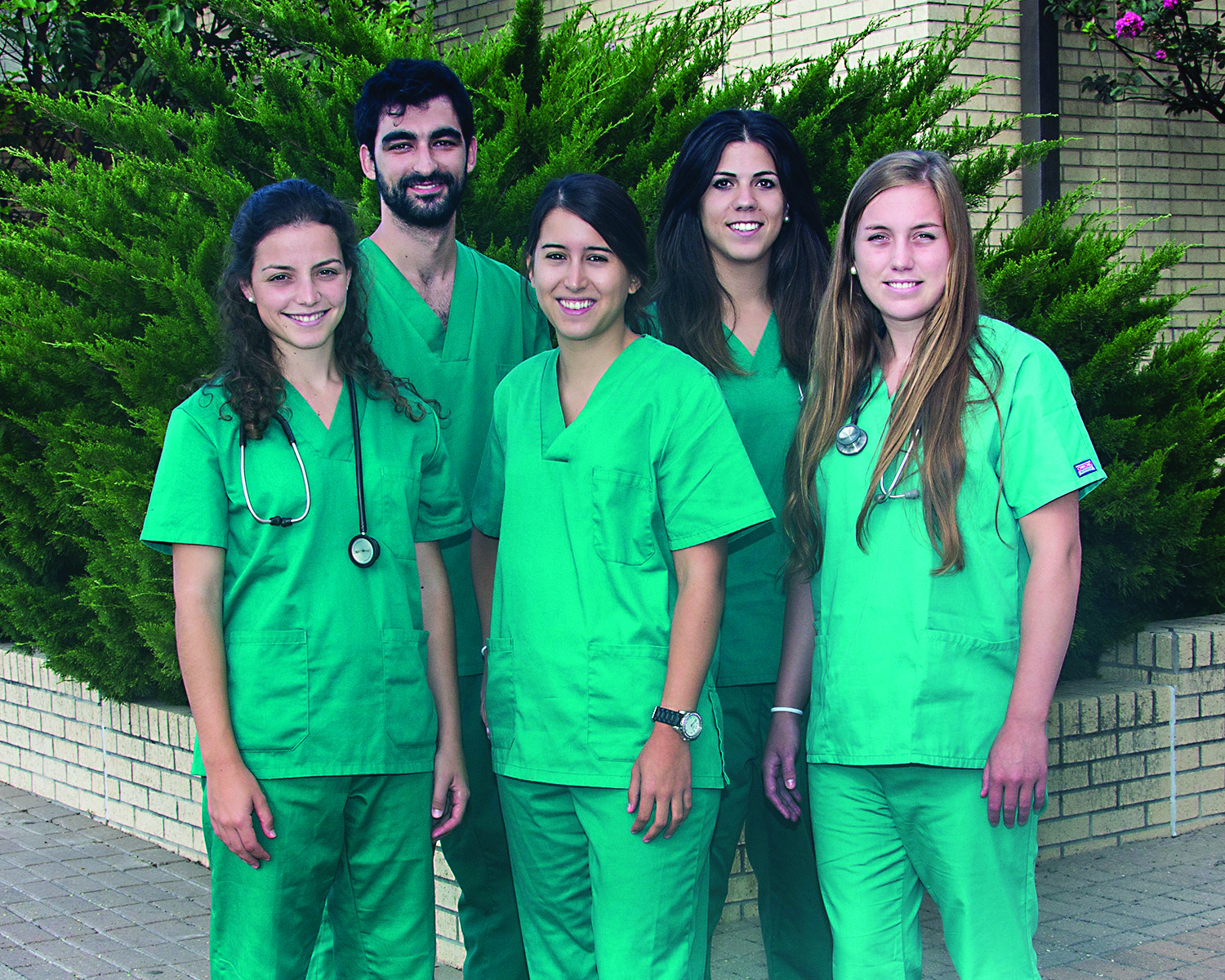
Back (from left): Roger Lauradó Pérez and Carla Carrera Gusart, Front (from left): Roser Serra Badía, Silvia Cros Roura, and María Simó Vesperinas
One of the biggest leaps a student can take is making the decision to study in a foreign country. Whether the trip lasts three weeks or three months, studying abroad never fails to make a lasting impact on participating students. After researching several universities that offer study abroad programs through their veterinary schools, students such as Carla Carrera Gusart decided on Texas A&M; University because of the veterinary school’s strong reputation for success. Other students, like Silvia Cros Roura, considered an education at Texas A&M; to be her gateway to developing a diverse background in veterinary medicine. Each of these students independently came to College Station to study abroad and were here for variable times-some for a few weeks and some a few months.
“I wanted to go outside my country and practice. I wanted to see how veterinary medicine is organized in different countries, as well as how it is different,” Roura explained. “At first I wanted to go to Europe, but then I saw the program in the United States and thought, ‘Why not?'”
Though it was many students’ first study-abroad trip, María Simó Vesperinas is adding Texas A&M; to her list as her second country visited. After such a positive experience as an exchange student in France, Vesperinas decided to explore another culture. “My home university, Universitat Autònoma de Barcelona, offered me this chance, and I thought it would be a good option for me to improve my English and see other ways of working. They also told me that in the United States, you have more stuff to do with the animals. There is more money and more opportunity.”
While the students were expecting to experience culture shock, the difference in education systems came as more of a surprise. Roger Llaurado Perez was fascinated by the difference in education systems but was especially impressed with the hands-on experiences offered to fourth-year veterinary students. “What fourth-year students do here in the hospital on their rotations is what interns do in Spain,” he said. “Once you finish your studies in Spain, you apply for an internship, and if you get it, that’s when you do the stuff that fourth-year students do here. I think students from Texas A&M; are more prepared than students from Barcelona or Spain.”
While Perez appreciates the time students take on their studies before they obtain a veterinary degree, Gusart admires the communication between the students and the clients. “I’ve learned how important it is to get information from the client about the patient. In the hospital, all the students know how to get this information because they know how important it is,” she explained. “They always follow a case in the same way, first meeting with the client and then examining the patient. The process is different, we don’t do it the same in Spain.”
Roura added, “Here the students act like doctors before they finish the degree. I think it’s important because they gain more confidence in themselves. In Spain, we go out and might not feel as comfortable exercising as a veterinary doctor. The structure and planning of education is very important, and I think it’s good here.”
In describing their experiences working in the veterinary hospital, the students explained how the relationships between clinical personnel and veterinary students impacted them. They said professors were highly attentive to their needs, investing time in them if they did not understand the lesson material. The visiting scholars also admitted their astonishment at the care given to the general student population and were happy to feel included. “We felt more comfortable when we were working with them because we were treated like other students, and the students were treated like veterinarians,” said Gusart.
Though completing the paperwork and housing details might have been exhausting for the interns, the experience at the CVM was well worth it. Students were able to submit their preferences for working with large or small animals, making their rotations in the hospital more individualized and focused. Many of them even came out of the internship with special interests, naming several classes that they would recommend to other students. “I recommend taking pathology,” said Vesperinas. “I had a good time in there, and I learned a lot.”
The students were also exposed to new hands-on practices that they may not have been able to experience back home. Perez explored equine medicine, a field of study he recently became interested in. In fact, he cites this experience in the program as the most influential on his future career. “My main aim for coming here was to decide whether I wanted to practice in the small or large animal field, because just last year I realized that I like horse medicine,” he said. “This is actually my first time working with horses, and I enjoy it. Horses are possibly what I want to work on.” He added that Texas has also introduced him to western cultural traditions. “I have discovered the world behind horses, cowboys, and how much people care about their horses here.”
Dr. Maria Esteve-Gassent
While each individual had a different journey during their time at the veterinary school, one transformation remains constant through each student: personal growth. Dr. Maria Esteve-Gassent, organizer of the exchange program and mentor of the visiting students, explained how each student faced and overcame challenges through the study abroad program. “I think what happens is your comfort zone expands,” she said. “When you’re used to a particular culture, or a particular language, you have this comfort zone. You think, ‘I have it under control.’ It’s predictable, everything is cool. As soon as you step out of that comfort zone, you’re afraid of things,” she continued. “You feel panic, and then all of a sudden, you feel like you’re comfortable there too. You’re not afraid of new things.
Besides organizing and coordinating the exchange program, Esteve-Gassent works to make sure each student feels comfortable in the new environment. Her counseling has helped the visiting scholars follow their passion in veterinary medicine and guide them through opportunities for individual development.
How did the exchange program between Texas A&M; and the faculty of Veterinary Medicine and Food Technology (a part of the Universitat Autònoma de Barcelona) start? Esteve-Gassent and other faculty began working to organize the program two years ago when pre-veterinary students from Texas A&M; became interested in studying abroad. Esteve-Gassent was able to make contact with the veterinary school in Barcelona through the pre-medical internship program in Spain that she also leads. “I just realized that this could be a great opportunity not only for the pre-veterinary students, but also for the veterinary students when they’re interested in studying abroad or some type of internship somewhere else,” she explained. “Very few people think about Spain, I guess because it’s farther away. It’s a relatively safe environment, and I thought it would be a great opportunity. Now I’m their point of contact.”
Esteve-Gassent’s inspiration to begin international programs came from her experiences as a graduate student in Spain. After studying for a year in Denmark, Esteve-Gassent developed an understanding of other cultures and was introduced to new perspectives. “You get this understanding of other cultures, and I like the fact that you can pick and choose. When you know about other cultures and how people do things in other places, you can say, ‘Hey, I like it better. Why shouldn’t I do it this way too?'” explained Esteve-Gassent. “There might be things in life that make you say, ‘I don’t like it, but I understand where it comes from.”
Esteve-Gassent’s experiences studying abroad impacted her so deeply she was moved to share this opportunity with her students at Texas A&M; years later. “Since I’m a Spaniard, I wanted to have Spanish students experience the same personal growth and international awareness I did,” she said. “That is what my goal is, even when I teach undergraduates.”
Now, after working hard to coordinate and organize the finest details, Esteve-Gassent is proud to announce that Texas A&M; will complete a full exchange with Barcelona in the near future, sending a maximum of five professional and undergraduate students per year to Spain. Each exchange student in Barcelona and Texas A&M; will visit the other campus for four to 12 weeks, with a goal of completing several full hospital rotations.
Although the Barcelona students all had different journeys during their time at Texas A&M;, they all shared a personal growth experience. While studying abroad can be invaluable, no one can truly estimate how positive international programs can be until they experience it for themselves. Though there is extensive planning and paperwork involved in studying abroad, faculty such as Esteve-Gassent work to communicate the importance of cultural understanding and awareness through international programs. “I hope to keep doing this for a long time, so we can impact more students’ lives,” she said.