
How to Ensure Proper Pet Dental Care

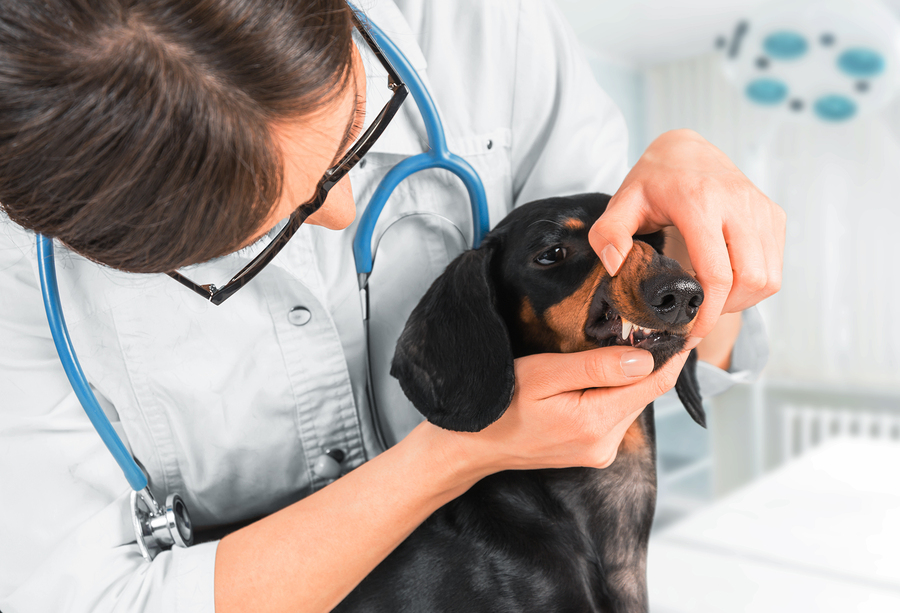
Woman veterinarian examines teeth of a dachshund dog

The American Dental Association recommends that people visit the dentist annually to prevent dental problems and even more serious medical problems. According to Dr. Johnathon Dodd, clinical associate professor at the Texas A&M College of Veterinary Medicine & Biomedical Sciences (CVM), who runs the small animal dental suite with Thomas Koenig, registered veterinary technician II at the CVM, pets should get yearly dental care as well.

“One of the most overlooked aspects in preventative maintenance is dental care,” explains Dodd. “Your pet’s teeth should be professionally cleaned at least once a year and more often if severe problems are present.”

The most common cause of dental problems is periodontal disease. Periodontal disease starts off as a bacterial growth on the surface of the tooth which leads to inflammation of the gums and can eventually channel to a fatal disease. According to Koenig, around 65-80 percent of dogs have periodontal disease before they are 3 to 4 years old. Periodontal disease can be easily avoided by investing a couple of minutes a day with your pet.

Other than annual teeth cleanings and checkups by a veterinarian, proper dental hygiene should be promoted on a daily basis at home.

“It is best to begin home care when your puppy or kitten is between 8 and 12 weeks old; however it is never too late to start,” notes Dodd. “The first step is to train your pet to accept brushing of the teeth and the best way to approach that is to establish a routine of brushing your pet’s teeth with gauze around your finger. It may be helpful to use beef or chicken broth with dogs or tuna water with cats to get them accustomed to the routine instead of using cleaning agents.”

Once your pet is familiar with the daily routine, you can switch out the gauze for a fingerbrush or a very soft toothbrush. Then you can incorporate using pet toothpaste. Do not use toothpaste intended for people because the ingredients can cause stomach issues in your pet if ingested.

“It is also important to remember not to give your pets bones to chew on,” explains Koenig. “In addition to the gastrointestinal issues bone chips can cause, bones cause real problems for the teeth. Bones are notorious for causing teeth to break which leads to additional visits to the veterinarian and further medical problems.”

Koenig recommends rawhides or softer chew bones to replace bones as chew toys for your pet.

Certain pet foods have enzymes that help with dental maintenance. There are also water additives available on the market that can help with teeth health. However, the most proactive and reliable dental care for your pet is to brush daily and to keep it on a routine basis so your pet is more receptive to the process.

“Good dental care is essential to extend your pet’s life span and assure a good quality of life,” expressed Dodd. “I really enjoy my profession because it is very rewarding as I can see firsthand how much healthier my patients are due to proper dental care.”

For more information on pet dental problems or dental care, please call the CVM Small Animal Hospital at 979-845-2351 or visit their website at https://vethospital.tamu.edu/small-animal/dentistry/.

Pet Talk is a service of the College of Veterinary Medicine & Biomedical Sciences, Texas A&M University. Stories can be viewed on the Web here. Suggestions for future topics may be directed to cvmtoday@cvm.tamu.edu.

Fire is Your Pet’s Worst Friend

It’s still tailgating time, Thanksgiving is here, and in a few weeks it will be Christmas time. Outdoor grills, fireplaces, and electrical appliances pose a risk to our pets that shouldn’t be overlooked. So don’t spoil the happiness of the season and take into account these pieces of advice for your pet and fire safety.

“Animals have an instinctive fear of fire and smoke; they will tend to stay away,” says Dr. Mark Stickney, director of general surgery services at the Small Animal Clinical Sciences the Texas A&M College of Veterinary Medicine & Biomedical Sciences (CVM). “Problems come literally when curiosity kills the cat. This time of the year people set up space heaters and an animal doesn’t know and knocks it over, and the fire can start that way. Another thing is when the holiday lights are going up and animals chew the electrical cord and they can electrocute themselves”.

Specifically now, near Christmas time, “when you receive a new puppy or kitten and they don’t now any better. They start playing with the lights and they can get themselves electrocuted or they can possibly start an electrical fire,” Stickney says.

Other species that are infamous for chewing include rabbits, the newly popular Guinea pigs, ferrets, and any pocket pets that have easy access to items underneath furniture and close to the floor.

What about pet reptiles and fire safety? “They are not as fast movers, so they are not going to knock over a space heater. The problem in this case is that they can burn themselves. It’s not so much a risk to the house but it’s a risk for them,” Stickney says.

It is especially important to be more careful this time of the year because of all the stir in the house with the incoming guests and all of the extra decorations in the house. You need to make sure that you are always around and that you never leave pets unattended with electrical appliances. If you are not home, please unplug them.

Secondly, make sure that you know where your pets are all the time. If you have a new puppy or the children have been playing with the Guinea pig, make sure that they haven’t lost interest in the pet and that it is accounted for especially when there are guests in the house.

A helpful tip for pet fire safety is to go to your local fire department and ask for a sticker that you can put on an outside window that will tell the fire department how many pets are in your house. “The sticker is a great way in case there’s an accident and your house is on fire for the firemen to know that there are animals in the house that need rescuing as well,” Stickney says.

According to Stickney, “the biggest thing to bear in mind if you have an outdoor pit, if you are setting up the grill or deep-frying your turkey over Thanksgiving, is you want to make sure there are no pets around where the deep-fryer is. If animals are not used to being around pits they can eventually run into them and burn themselves and potentially knock it over and start a fire in your yard,” says Stickney.”

“When it comes to fire safety, think of your pet as a 2 or 3 year old child who doesn’t know any better and who’s going to make the worst of any possible situation. Keep that in mind and that will keep you out of trouble,” states Stickney.

Pet Talk is a service of the College of Veterinary Medicine & Biomedical Sciences, Texas A&M University. Stories can be viewed on the Web at vetmed.tamu.edu/news/pet-talk. Suggestions for future topics may be directed to editor@cvm.tamu.edu.

“Superbug” Author to Speak Next Week at Texas A&M

COLLEGE STATION, Nov. 24, 2010 – Journalist Maryn McKenna, who wrote “Superbug: The Fatal Menace of MRSA” and “Beating Back the Devil,” will speak on public health Monday and Tuesday (Nov. 29-30) at Texas A&M University.

Maryn McKennaShe will present “Superbug: The Story and the Book” – an account of the global epidemic of methicillin-resistant Staphylococcus aureus, or drug-resistant staph – at 4 p.m. Monday in Room 101 of the Veterinary Teaching Hospital. The book presentation is hosted by the Texas A&M master’s degree program in science and technology journalism. For more information, contact Barbara Gastel at (979) 845-6887 or bgastel@cvm.tamu.edu.
On Tuesday, McKenna will present “Dateline Lookingglass: Public health, media competence and the H1N1 flu” from 4 to 5 p.m. in the Hawking Auditorium at the Mitchell Physics Building, with a reception to follow. It is hosted by the Texas A&M College of Veterinary Medicine & Biomedical Sciences, with support from the Western Regional Center of Excellence for Biodefense and Emerging Infectious Diseases Research.

McKenna is an award-winning journalist and author who writes about public health, medicine and food policy for national magazines and medical journals, and says she finds emerging diseases “strangely exciting.”

Contact: Angela Clendenin at AClendenin@cvm.tamu.edu or Kelli Levey, News & Information Services, at (979) 845-4645 or klevey@tamu.edu.

*Originally posted on Texas A&M News and Information Services

Holidays Hazards for Pets

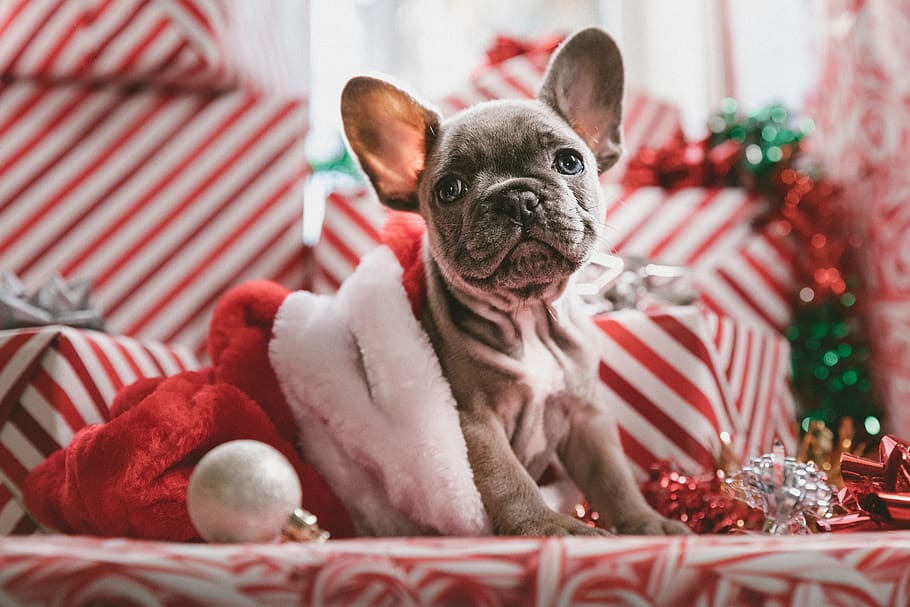
puppy sitting among wrapped Christmas presents

Holidays can be a wonderful time spent with loved ones and being grateful for everything we have received over the past year. However, there are some things to be aware of when holidays are in session. Our pets can become vulnerable to some holiday hazards and it is important to be knowledgeable and cautious about those risks so they can be avoided.

The smells of food fills the air and even though it might be tempting to give your pet a treat please remember that there are a lot of pet specific treats that are not harmful to your pet, but human treats can often be harmful for your pet.

“Chocolate is by far the most commonly ingested dangerous food around the holidays,” explains Dr. James Barr, clinical assistant professor in emergency and critical care at the Texas A&M College of Veterinary Medicine & Biomedical Sciences (CVM). “Chocolate and cocoas contain theobromine, a chemical highly toxic to dogs. Ingestion in small amounts can cause vomiting and diarrhea, but large amounts can cause seizures and heart arrhythmias, disorder of heart rate beating too fast or too slow.”

Barr says that alcohol toxicity is another frequent issue for pets around the holiday season. Affected animals can experience seizures, dangerous drops in blood sugar, blood pressure, and body temperature as well as respiratory failure.

“One should avoid foods containing grapes and raisins as they have been reported to cause kidney failure in dogs,” notes Barr. “Many sugarless gums and candies contain xylitol, which has a strange affect on dogs causing a massive insulin secretion and a dangerous, sometimes fatal, drop in blood sugar. One should also avoid fatty foods because this can cause severe inflammation of the pancreas known as pancreatitis, which can lead to abdominal pain, vomiting, and can occasionally result in death.”

It is also important to be careful when exposing plants to your pet. Some plants can be toxic to your pet, so make sure that all plants are out of their reach.

“Poinsettias have classically been thought of as toxic, but if ingested they only cause mild problems such as vomiting or diarrhea,” explains Barr. “The same is true for holly berries or mistletoe, although they are slightly more dangerous if large quantities are ingested. More concerning plants are any flower in the Lilly family because they can cause severe kidney failure in cats.”

Holidays would not be the same without decorations. So keep your pet in mind when choosing decorations, especially your Christmas tree.

“Both real and artificial trees pose hazards for pets,” says Barr. “The preservative for the water in the Christmas tree can contain ingredients such as bleach and vinegar which are caustic and can cause some gastrointestinal irritations. It is very important to keep pets away from drinking tree water.”

It may be best to a keep a Christmas tree in a stand where the water can be covered so pets don’t have the option to drink the water. Also, it is important to secure the tree with a fishing line string to a hook on the ceiling or wall to avoid it from falling over. Tree lights should not be plugged in when they are not being used so that your pet does not get tangled up in them. Pick up all tinsel, ribbon, ornaments, and hooks off of the floor so a pet does not mistake them for chew toys. Decorate the bottom of the Christmas tree with wood or plastic ornaments that won’t break in case a pet likes to get close to the tree. Keep all of the gifts that contain human food off the floor so pets are not tempted by the smells. Burn candles in places that are inaccessible to your pets. Barr points out that liquid potpourri can cause chemical burns to the mouth and esophagus which can be very painful and dangerous for any pet if ingested.

Lastly, please avoid giving pets as presents without consulting the receiver of the gift first. Animal shelters see an increase of donations directly after the holidays from short lived pet owners.

“While pets as presents may make for a popular parent, it is a well-known fact that shelter populations increase after the holidays as there are a lot of those pets that are surrendered because a family is unprepared for them,” explains Barr. “If you are considering a pet as a gift, use the opportunity to visit a shelter and adopt a deserving pet from there. It can be a wonderful opportunity where the giver and the receiver will gain a lot more from the experience.”

If you believe that your pet has ingested a toxic substance, please call: Pet Poison Helpline at 1-800-213-6680 or the ASPCA Animal Poison Control Center at 1-888-426-4435. As always, the Texas A&M University Small and Large Animal Hospitals are always open for animal emergencies 24 hours a day, 365 days a year.

Pet Talk is a service of the College of Veterinary Medicine & Biomedical Sciences, Texas A&M University. Stories can be viewed on the Web at vetmed.tamu.edu/news/pet-talk. Suggestions for future topics may be directed to editor@cvm.tamu.edu.

Prosthetic Limbs for Dogs

a dog having amputated limb

Prosthetic intervention has been used for many years in human rehabilitation to achieve mechanical and rehabilitative goals, that is, to stand up and walk again. The use of these prosthetic limbs for dogs and other pets has been limited in veterinary medicine although published case reports have existed for over 40 years.

“The use of prosthetic devices in veterinary medicine is in its infancy,” says Dr. Jacqueline Davidson, clinical professor at the Texas A&M University College of Veterinary Medicine & Biomedical Sciences. “Usually, most dogs and cats do really well with three legs and so, in the past, veterinarians just amputated the affected leg.”

For most of these injuries, even those that require the amputation of more than one leg, there are other devices, such as wheeled carts that can do the job. “In the last ten years people started to do more prosthetics,” Davidson says. “Lately we are seeing more small animals with prosthetics.”

This surgery is not a cheap one, and normally it is the owner who requests it.

“There are different types of surgeries that involve prosthetic limbs. One surgery involves fitting a prosthesis over the skin on the stump of the leg and the other one is more involved as the prosthesis is implanted into the bone,” Davidson says.

According to Davidson, this kind of surgery, though promising, will still need some time to be more cost-effective. “Right now, you have to work with a prosthetist and you have to order the materials specifically for each animal. It can be very expensive.”

Just like humans do, pets that undergo this kind of surgery and get a prosthetic limb implanted need to go through a rehabilitation process. “Sometimes, getting the pet to adapt depends on the personality of the animal, on the circumstances, or their age. But after some time they start to adjust and live a fairly normal life,” Davidson says.

It’s important to remember that, after a successful prosthetic limb implant, dogs are not the only ones who recover several degrees of freedom. Their owners feel a sense of freedom because they are able to sit on the porch or sofa again and watch their cats and dogs run around the house.

ABOUT PET TALK

Pet Talk is a service of the College of Veterinary Medicine & Biomedical Sciences, Texas A&M University. Stories can be viewed on the Web at vetmed.tamu.edu/news/pet-talk. Suggestions for future topics may be directed to editor@cvm.tamu.edu.

Cosmetic Procedures

Whether it is for appearance purposes or for more ease in function and motion, cosmetic surgeries are not uncommon these days. From teeth whitening to liposuction people will sometimes elect to have these procedures even when there is no medical need present. Now, some people are applying these same principles when it comes to their pets.

Cosmetic procedures for pets might include wrinkle removal, tail docking, ear trimming, declawing in felines, debarking in canines, and hair dying. Although many of these surgeries are unnecessary, that is not to say that their value is purely aesthetic.

“I look at declawing cats, front paws only, as a life saving procedure,” said Dr. Phil Hobson, recently retired professor of the Texas A&M College of Veterinary Medicine & Biomedical Sciences. “Cats can be very difficult when it comes to clawing furniture and even children.”

Hobson recommends only removing the front claws this way the cat can still climb a tree to get away from a dog.  Another option, and one that does not involve surgery, is material that can be adhered to the claws which can be very beneficial, but it often comes off after a short period of time and may have to be replaced frequently.

As with any surgery there are risks. One being if the removal is incomplete, the claw can then regrow a deformed nail.

“Also, too radical of an excision may result in poor healing and cause more pain for the cat,” said Hobson.

Wrinkle removal is used as the last option for dogs with skin infections. According to Hobson, sometimes facial folds are removed, particularly in short-nosed breeds of dogs, because they tend to get infected at their creases.

Pet owners are not exactly lining up for this surgery, though.

“It is not generally a surgery that the client would request to improve the animal’s appearance but rather for health reasons. In fact, sometimes owners do not want the surgery done because it detracts from the traditional look of the dog,” said Hobson.

When discussing pet cosmetic surgery, it’s important to remember that, though some of the procedures are novel, this is not a new field in veterinary medicine.

“Classic examples of cosmetic surgery include ear trims and tail docks, which have proven to be quite controversial. Repairing congenital defects or implantation may also fall into this category,” said Hobson.

Surgery to correct congenital defects may improve the quality of life for certain animals and should be carefully considered. Pets with conditions such as luxating patellas (chronic dislocating kneecaps), and cleft palates would be candidates for this type of surgery.

Veterinarians specializing in ophthalmology may be able to surgically implant eye replacements for dogs that have lost their sight, as with glaucoma.

Hobson notes, “In this case, the inside of the eye is removed and a ball is inserted in its place. This is purely for the owner’s benefit because some owners find it difficult to look at their pet and see an eye missing.”

Cosmetic surgeries are usually considered less risky than necessary surgeries.

“Though there is always an element of danger when working under anesthesia, most of the time these animals go into surgery healthy so they have fewer complications,” said Hobson.

Also, many cosmetic surgeries, like those for congenital defects, are done in young animals which will have a better prospect for recovery than older animals.

Debarking or the removal of vocal folds in a dog is another surgery that owners have opted for in the past, usually after all other techniques have failed to help control their barking habits.

“It is usually a rather harmless and relatively simple procedure, although we rarely have to do the procedure with a dog for persistent or loud barking because there are the other techniques that can be used by animal behaviorists,” Hobson continues “However, we do a fair number of vocal fold removals (debarking) for usually older dogs with laryngeal paralysis to provide a better airway.”

Hobson explains that this surgery is usually adequate and thus doesn’t require more involved surgery which may predispose the pet to other problems, more specifically aspiration pneumonia.

Besides surgery there are other, less risky, things that owners might subject their pets to for appearance purposes. Some people find personal preference in dying the hair of their animals, such as bleaching a horse’s tail or a turning a puppy pink.

With horses remember that if you apply something unnatural or alter something, it is important that you help them maintain this. For example, some people like to braid their horse’s manes. This can be very pretty, but if you turn your horse out in a pasture the hair can become tangled and knotted, especially if rubber bands are used, resulting in the chore of having to pick out debris and sometimes even having to cut the hair if the knots are too tangled.

Horse-shoes are another example; if you do shoe your horse it is important to keep up with this. If the shoe becomes loose it can irritate the foot, and when it eventually falls off if there is an uneven number of shoes the horse will start to favor one foot over the other creating unbalanced muscle tone or potential injury. Even if your horse does not have shoes, their hoofs need to be trimmed on a regular basis.

Whether a cosmetic procedure for your pet is for appearance purposes or to help them maintain an easier lifestyle, it is ultimately the owner’s personal preference.  Some surgeries are more complicated and painful than others and the pros and cons should be weighed before opting for any surgery.

ABOUT PET TALK

Pet Talk is a service of the College of Veterinary Medicine & Biomedical Sciences, Texas A&M University. Stories can be viewed on the Web at vetmed.tamu.edu/news/pet-talk. Suggestions for future topics may be directed to editor@cvm.tamu.edu.

CVM Distinguished Professor Receives Grant from Department of Defense

Dr. Stephen Safe, distinguished professor of toxicology at the Texas A&M College of Veterinary Medicine & Biomedical Sciences (CVM) and the Institute for Biotechnology (IBT) at the Texas A&M Health Sciences Center along with Dr. Mandip Sachdeva, professor of pharmaceutical sciences with the Florida A&M University College of Pharmacy, recently received a grant from the Department of Defense (DOD) – Army Breast Cancer Research Program (BCRP) for their project entitled “The Role of Novel Substituted Diindolylmethane Analogues in the Treatment of Triple – Negative and ErbB2 – Positive Breast Cancer” which will be funded $1.4 million over four years.

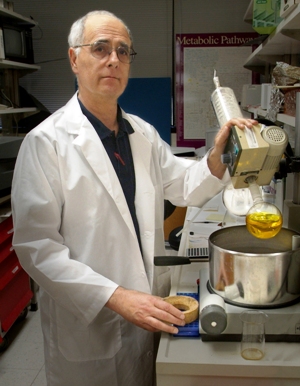
Dr. Stephen Safe in LabThe BCRP was initiated to promote research focused on eliminating breast cancer and to challenge the scientific community to develop innovative approaches that will foster new directions and growth toward the battle against breast cancer.
According to the BCRP application, “The BCRP focuses its funding on innovative projects that have the potential to make a significant impact on breast cancer, particularly those involving multidisciplinary and/or multi-institutional collaborations and alliances. Under investigated avenues of research and novel applications of existing technologies are strongly encouraged.”

Under this grant Texas A&M University will serve as a mentoring institution to Florida A&M University because Florida A&M University is a predominantly black university and the BCPR is listed under the agreement with the DOD and the Historically Black Colleges and Universities/Minority Institutions (HBCU/MI) Partnership Training Award. This award will help build new collaborations with members of the chemistry department from Florida A&M University and the CVM as well as enhance current relationships. Dr. Robert Burghardt, professor at the CVM, and Dr. Weston Porter, associate professor at the CVM, are also part of the Texas A&M faculty mentoring team.

Safe currently has four grants which he utilizes for his research on development of novel mechanism-based drugs for treatment of breast cancer, colon cancer, lung cancer, and pancreatic cancer. Safe’s cancer research focuses on treatment for late stage cancers which are highly aggressive and can undergo metastasis where the cancer cells spread from their original location to other parts of the body. Through this research his research group has made promising strides in the fight against invasive and metastatic cancer due to the novel drugs that have been developed in his laboratory.

“I am very excited about this particular grant because it will allow us to expand on our current research on breast cancer, and this will involve training independent researchers at Florida A&M to collaborate in this research and to promote future independent research efforts on their own,” explains Safe. “This grant is also very beneficial because of the involvement of scientists with expertise in chemistry, pharmaceuticals, molecular and cell biology and this will facilitate development of clinically useful anticancer drugs.”

CVM Accepts Major Gift from Mrs. Doris Simmons

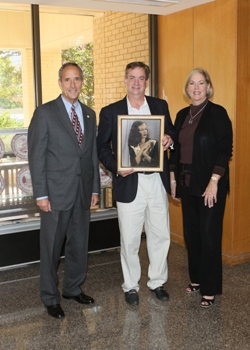
Dr. Eleanor Green, Carl B. King dean of veterinary medicine, and Dr. Guy Sheppard, director of development, recently accepted a gift worth $325,000 from the estate of Mrs. Doris Simmons on behalf of the Texas A&M College of Veterinary Medicine & Biomedical Sciences (CVM). The executor of the estate, Dr. Alan Garrett, presented the gift to the CVM which will be used to help the college in areas deemed necessary by Green and the executive council.

dr.Dr. Sheppard, Dr. Garrett and Dean Green._garrett_and_dean_green

Mr. and Mrs. Simmons were world travelers who eventually resided in Corpus Christi, Texas. They had an admiration for all animals especially their own. They had miniature horses, a variety of birds, and Chinese Tufted dogs.

Dr. Oscar Woytek, assistant vice president for development, remembered their initial visit when they brought their miniature horses into the large animal hospital. He recalls they were very impressed as the CVM took such interest in their horses and provided excellent care for them, leading to a lifelong friendship. The Simmons were very supportive of the college and advocates of its mission.

“We are thrilled to receive such a valuable gift from such a wonderful advocate not only for the college but for animals as well,” expressed Green. “These funds will be allocated appropriately to help build the college through education, teaching, and research efforts. Our donors help to make this college a top tier establishment and we are truly appreciative of that.”

Garrett, a CVM alumnus, was the Simmons’ veterinarian for about fifteen years. He catered to all of their animals and he knew them very well.

“The Simmons were the gold standard of what good people should be,” explained Garrett. “They lived a colorful life and they loved their pets dearly. I am honored to be the executor of the estate for Mrs. Simmons, and I know that Dr. Green and the executive council will use her gift with the college’s best interest in mind.”

Trick or Treat, Give Me Something Good to Eat!

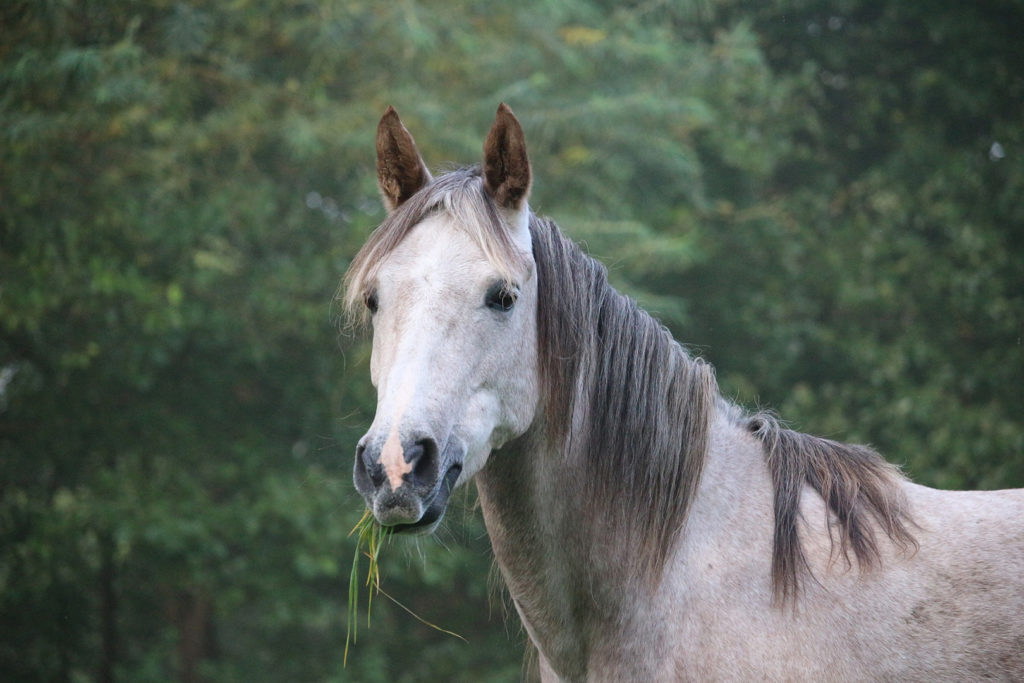
Grey horse with grass sticking out of its mouth in front of forest

Trick or Treat, give me something good to eat!  There are a number of healthy treats that your horse can enjoy.  These treats can provide pleasure and add beneficial nutrients to your horse’s diet.  However, they can also precipitate into behavioral problems.

“Some fruits and vegetables make healthy horse treats,” notes Dr. Glennon Mays, clinical associate professor at the Texas A&M College of Veterinary Medicine & Biomedical Sciences.  “However, feeding your horse foods other than their usual grain and forage can result in some unwanted results.”

“Many horses enjoy apples and an apple cut into pieces makes a wonderful treat,” states Mays.  “Apples should be cut into pieces since a whole apple may cause your horse to choke.  Whole apples are the perfect size to become lodged in the horse’s esophagus.”

“Nutritionally, apples provide your horse with potassium which is important for proper muscle contraction and nerve function.  Also, potassium is an electrolyte which is important for cellular metabolism,” explains Mays.  “Additionally, apples provide calcium and phosphorus.  Calcium is important for bone growth, muscle and heart function, and milk production.  Phosphorus is required for bone structure and energy metabolism.  Apples also provide all important fiber to the equine diet,” notes Mays.

From healthy fruit to nutritional vegetable, the carrot makes a welcomed treat for your horse.  Mays notes to also be careful to avoid choking when feeding carrots.  Cutting the carrots into thin slices will prevent a large chunk from becoming lodged in your horse’s esophagus.

“Carrots contain vitamin A which is needed for healthy eyes, mucus membranes, skin and hair,” states Mays.  “Fortunately, fresh pastures and quality hay provide horses with most of their needed vitamin A.  However, lack of green grass in the winter may be reason to provide your horse with additional amounts of vitamin A during those months.”

As in all treats, moderation is the key.  Over indulgence can mean future trouble, warns Mays.  Digestive problems are one aspect of too many apples or carrots, but behavioral problems can be much more difficult to contend with.

“When a horse anticipates and expects a treat as routine, and does not get the treat, unacceptable behavior may occur.  Your horse is a large animal and may become abusive when not given more treats,” states Mays.

As long as the treat remains an infrequent, unexpected reward, apple or carrot pieces can be a true treat for your horse, notes Mays.  However, it should be noted that giving your horse treats too frequently may result in your horse acquiring obnoxious behaviors.

“Giving your horse treats can become problematic because horses can become spoiled to the idea and therefore demand the treat so it is no longer a treat but becomes part of a routine,” explains Mays.

When considering whether to give treats to your horse or not, you should determine their intended purpose and role in your horse’s overall health and well being, notes Mays.  If your horse seems to be satisfied with the treat of a gentle pat on the neck, or vocal praise, then a food treat may not be necessary.

Give your horse something good to eat.  For a horse, something good to eat is a well balanced diet of grain and forage with some mineral supplements and maybe … just an occasional treat of chopped apple or carrot.

Pet Talk is a service of the College of Veterinary Medicine & Biomedical Sciences, Texas A&M University. Stories can be viewed on the Web at vetmed.tamu.edu/news/pet-talk. Suggestions for future topics may be directed to editor@cvm.tamu.edu.

Pets on Wheels

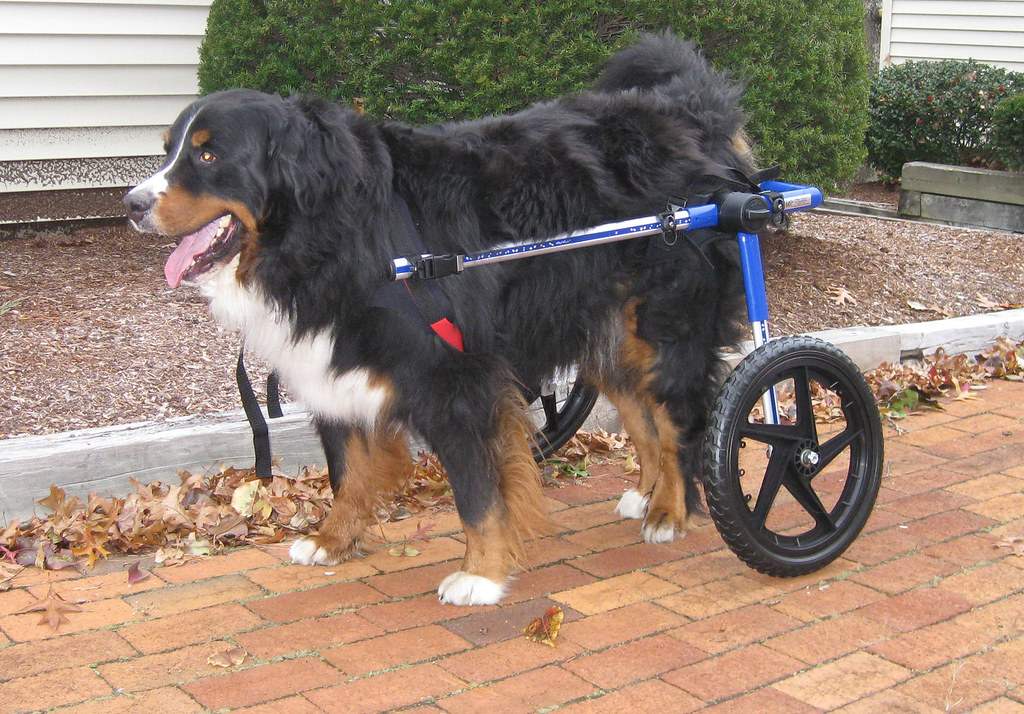
a dog with a wheelchair

Some injures can lead to paralysis and drive our pets to a dead-end. Fortunately, there are now options for animals that can make their lives go on wheels again. Literally. For pets that have lost use of their legs because of paralysis or a disease, wheelchair devices are now available that can restore lost motion.

“A wide variety of devices are now on the market to help companion animals move around, and they work very much like a wheelchair,” said Dr. Alice Blue-McLendon, clinical assistant professor at the Texas A&M University College of Veterinary Medicine and Biomedical Sciences.

Blue-McLendon says a veterinarian can take measurements of the animal’s body to be fitted for the wheelchair devices, which are custom-made for that particular pet. The veterinarian can then contact one of several companies that make the wheelchairs, which usually consist of a harness-like device with straps and wheels. There are also several reliable companies on the internet that will work directly with the clients to make a custom wheelchair.

Dogs are the most frequent users of the devices, but they can also be made for cats, ferrets, goats, rabbits and other pets.  Costs usually range from $200 to $400, depending on the size of the pet.

Blue-McLendon says that several medical conditions can cause a pet to need a wheelchair device. One is hind limb paralysis which can be due to injury, such as being struck by a car or a vertebral disk disease. Another cause is a degenerative condition in which the muscle or bone of the animal’s leg cannot function properly, causing the animal to drag its legs or not move at all.

Once the device is fitted to the pet it usually takes several days for the animal to get accustomed to the wheelchair, Blue-McLendon explains. “But animals are quick to adapt, and after a few days, they usually can get around very well with these devices,” she notes. She stresses that it takes a commitment from the pet owner before considering whether to purchase a wheelchair for a pet.

“It takes extra time on the owner’s part to take off the device at night because the animals must sleep without them,” Blue-McLendon says. “And many times if the animal is paralyzed it still needs assistance several times a day with urination. Also, since the animal can only use its front legs to get around it tends to get tired more quickly.  So the owner needs to be aware of this, especially if taking the animal out for a long walk or other exercise.”

Blue-McLendon adds that once the animal is accustomed to the wheelchair, it can lead a relatively normal life.

“These wheelchair-type devices have become quite popular in the last 20 years or so,” she says.

“They give your pet an option that it might not have had otherwise – that of regaining much of the mobility it once had.  If the owner is willing to make the commitment, they can be wonderful aids for disabled pets.”

Pet Talk is a service of the College of Veterinary Medicine & Biomedical Sciences, Texas A&M University. Stories can be viewed on the Web at vetmed.tamu.edu/news/pet-talk. Suggestions for future topics may be directed to editor@cvm.tamu.edu.