
Joint Health

Dog

As the winter season settles in, the chill of the cold air often make us more aware of our joint health problems- the same goes for your pet. Though commonly bothersome in the winter, joint discomfort can be a year round-pain that affects your pet’s quality of life.

“Joints are areas where bones come together,” explains Dr. Sharon Kerwin, an associate professor at the Texas A&M University College of Veterinary Medicine & Biomedical Sciences. “They are a combination of bone, ligaments, cartilage, and the joint capsule and fluid. If anything damages the cartilage or another structure in the joint then arthritis or deterioration results.”

Unfortunately, at this point in time, there is no cure for arthritis. Symptoms can be treated but arthritis is often progressive and gets worse with time.

Though no cure has been found yet, there are ways to prevent or postpone the onset of your pet’s joint problems.

“While genetics do play a role in the development of some joint issues, weight control and proper diet are essential in both prevention and treatment,” notes Kerwin. “Keeping a young dog, particularly large breeds, on a diet that does not have too much energy from carbohydrates and fat is essential to keeping them from growing too quickly. This is important because if they grow too quickly it can result in both excessive fat and the formation of a “mismatch” between bone growth and muscle development, which can lead to excessive stress on cartilage.”

The specific ingredients in your pet’s food, and the amounts of each ingredient can have astounding affects on your pet’s joint growth and health.

“One of the main ways diet can be a contributing factor for joint health issue is if there is an imbalance in the ratio of calcium to phosphorous,” explains Dr. Dan Bauer, a professor of animal nutrition at the Texas A&M College of Veterinary Medicine & Biomedical Science. “For growing animals an imbalance in this ratio can result in metabolic bone diseases which greatly affect joint health.”

Making sure your pet is getting a complete and balanced diet can help to prevent joint problems in younger pets or ease joint health problems for older animals.

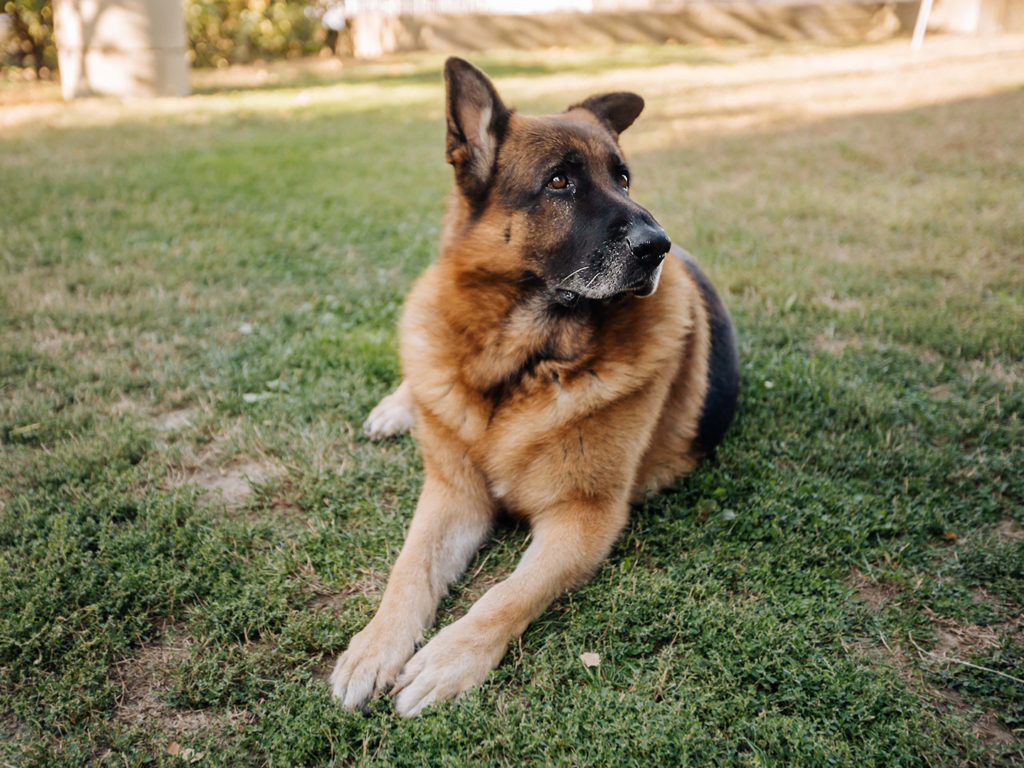
Large dog breeds such as German Shepherd’s, Golden Retrievers, Labrador Retrievers and Irish setters are especially susceptible to joint health problems, such as hip dysplasia. Getting your pet the proper nutrition at an early age can potentially help avoid such problems.

Dietary supplements such as glucosamine and Omega 3 fatty acids can also help ease your pet’s joint pain.

“Recent research has shown that the dietary supplement glucosamine, which is an important dietary adjunct that supports joint health, increases mobility and decreases pain,” adds Bauer. “It is not a cure, and more research needs to be done, but many people believe it might be able to slow down progression of joint health problems. “

Omega 3 fatty acids can also help ease joint pain by reducing inflammation.

“When joints rub together it creates inflammation, the Omega 3 fatty acids potentially can alleviate some of that,” notes Bauer. “Human grades of these dietary supplements can be used on animals and are worth a try if your pet is in pain, however, it is important to first talk to your veterinarian about dosages and specifics regarding your animal.”

If joint health problems are plaguing your pet, Dr. Kerwin suggests keeping your pet slim and trim as good body condition is important in maintaining your pet’s health. Muscle mass should be promoted by moderate, low -impact exercise like swimming and walking.

If your pet has more severe joint problems and more drastic medical attention is needed there are a variety of treatment options available.

“Specific problems, such as cruciate ligament (ACL) tears in the stifle (knee) joint can be treated by stabilizing the joint to decrease the wear and tear on the cartilage,” explains Kerwin. “Arthritic hip joints can be replaced surgically as is done in humans, and medical management of joint problems can include pain management with medications such as nonsteroidal inflammatory drugs, joint supplements, and physical rehabilitation.

If your pet is at risk for or suffers from joint health problems, talk with your veterinarian to make sure they are receiving the proper nutrition and medications if needed.

Pet Talk is a service of the College of Veterinary Medicine & Biomedical Sciences, Texas A&M University. Stories can be viewed on the Web at vetmed.tamu.edu/news/pet-talk. Suggestions for future topics may be directed to editor@cvm.tamu.edu.

Angela G. Clendenin
Director, Communications & Public Relations
Ofc – (979) 862-2675
Cell – (979) 739-5718

Dog Dementia

As we age, we notice our bodies and minds may not be as quick as they once were. Luckily for humans, we are able to voice problems and pains and seek the medical attention we need; our dogs are not so lucky.

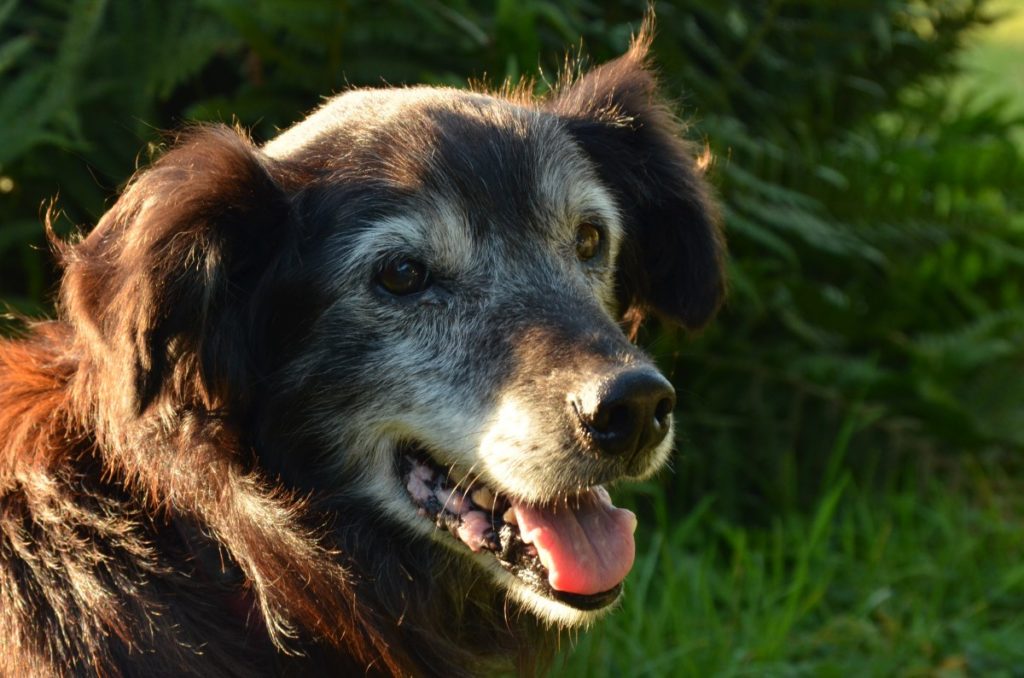
old dog

While “Doggie Dementia” or canine cognitive disease does exist, Dr. Daniel Hicks, a veterinary neurologist and clinical associate professor at the Texas A&M College of Veterinary Medicine & Biomedical Sciences, says the changes in your dogs behavior may be explained by other medical conditions.

“Many times what is thought to be dementia is actually connected to a larger scale problem such as a tumor, infection, or stroke,” explains Hicks. Hicks states that subtle signs such as the loss of potty training, deviation from normal behavioral patterns, and changes in food preferences, appetite, or sleep patterns might be the result of an underlying neurological disorder.

“An example of behavioral pattern changes in dogs could be that you have let your dog out the back door for the past 10 years, and all the sudden they are going to the front door instead,” explains Hicks. “Changes in food preferences and signs that they are eating and sleeping much more or less can potentially be caused by a problem in their nervous system.”

These subtle signs may be early indicators of illnesses that can be difficult to recognize for pet owners. “Often dogs are brought to us after displaying obvious signs such as seizures, “circling,” a term that refers to when animals pace in circles, vision deficits such as running into walls, and “head pressing” which is when an animal presses their head against a wall or an object for no apparent reason,” notes Hicks.

It is important to remember that not all dogs will display all the signs, but if you notice your pet behaving oddly take them to your veterinarian for an evaluation. They can look for common disorders that might help explain what is going on with your pet.

“Preliminary evaluations and routine testing, can often find obvious problems,” states Hicks. “Routine testing can include a physical examination, blood work, and urine samples, and help to diagnose diseases such as diabetes, thyroid problems, arthritis, some forms of cancer, or infections.”

If initial test results do not explain the cause for your pet’s abnormal behavior, or if the results suggest additional information is required, the next step may be to see a specialist. Your veterinarian can refer you to a veterinary neurologist who can help determine what the problem is.

“A focused neurological examination begins with another hands-on assessment,” explains Hicks. “If there is concern that the problem stems from the brain we can sample spinal fluid, test for various diseases, and get a MRI scan to get a better look at the problem.”

Magnetic Resonance Images, commonly known as MRI’s, allow veterinary neurologist to classify various diseases of the brain including cancer, strokes, and hydrocpehalus.

“The most important thing to remember when dealing with a pet’s problem is to be aware of options,” advises Hicks. “Knowing that advanced diagnostic tests and treatments are available helps guide people regarding the most appropriate level of care for their pet.”

Depending on the test results and ultimately, the diagnosis, there can be many different treatment options. The symptoms can be the same for a large number of diseases. Hicks suggests that pursuing a diagnosis early on in the course of illness usually aids in more successful treatment outcomes.

“Some diseases once thought to be untreatable may now be very treatable,” notes Hicks. “This includes, some forms of cancer, strokes, and head trauma.. For instance, cancer therapy has evolved to include sophisticated chemotherapy, radiation, and surgery, which has lead to higher survival rates.”

While some behavioral changes will be explained by the various tests performed, not all illnesses, including dog dementia, have a specific reliable test.

“Currently, since there is no single test for ‘Doggie Dementia’ we must rule out other diseases. In other words, the diagnosis comes by way of excluding other possibilities,” states Hicks.

Whether your pet is suffering from a known illness or a case of “Doggie Dementia”, it is important to have them evaluated so appropriate therapy may be instituted.

Pet Talk is a service of the College of Veterinary Medicine & Biomedical Sciences, Texas A&M University. Stories can be viewed on the Web at vetmed.tamu.edu/news/pet-talk. Suggestions for future topics may be directed to editor@cvm.tamu.edu.

Angela G. Clendenin
Director, Communications & Public Relations
Ofc – (979) 862-2675
Cell – (979) 739-5718
A Resolution Fit for You and Your Best Friend

As 2009 opens a year of promise, we all start pondering our New Year’s resolutions. For many people the top of that list includes weight loss and exercise. While most people could benefit from this resolution, so could most pets.

Black dog looking up at falling confetti

Obesity occurs in up to 40 percent in our pet dogs and cats and it has many causes, but inactivity is a major contributor.

“Animals require exercise to maintain a healthy weight just as people do,” states J. David Sessum, registered veterinary technician at the College of Veterinary Medicine & Biomedical Sciences at Texas A&M University. “The difference between animals and people is that for the most part it is easier for pets to lose weight because the owner is the one who regulates their diet.”

Pets that have a recommended diet from a veterinary professional usually maintain a healthy weight because they are fed the correct amount of kilocalories in their diet that is suited for their level of activity.

“I do believe that owners play a huge role in helping their pet lose and maintain a healthy weight,” notes Sessum. “How easy would it be for humans to lose weight if we were only given two cups of a reduced calorie diet twice daily?”

Just as owners regulate their pet’s food intake, another resolution can be to make sure their animals get enough exercise.

“Animals that exercise on a regular basis maintain a healthy body weight due to the fact that they metabolize their food during exercise,” says Sessum. “A sedentary or inactive lifestyle helps promote an unhealthy weight, just as it does in people.”

As our pet’s inactivity increases, their weight increases. Recent research in human and animals have shown that adipose tissue (fat cells) actually functions more as an endocrine organ, like your pancreas. Adipose tissue actually releases inflammatory mediators that can make diseases like osteoarthritis much worse for obese patients.

“In the clinic, you can see dogs that may have orthopedic diseases such as hip dysplasia (a joint malformation) but are only diagnosed as incidental findings on radiographs. Because the dog is a healthy weight and remains active, the owner never even noticed a change in the dog’s level of activity,” explains Sessum. “As far as osteoarthritis and existing orthopedic conditions are concerned, an obese patient places extra strain on joints that are already unhealthy and weight loss or management can help reduce the load placed on diseased, painful joints.”

Exercise is important for all pets, but if you aren’t sure what level of exercise your pet requires when making your New Year’s resolution, a veterinarian or veterinary professional can assess your animal’s weight status by using a body condition score.

“Once a pet’s body condition is scored, it is a helpful tool in developing an exercise program for pets,” notes Sessum. “A pet with a healthy body condition score can maintain their normal daily activity and amount of food they currently receive.”

As a pet ages, its body condition score can be assessed and the amount of exercise and amount of food can be regulated to help ensure a healthy body weight.

“Exercises to maintain a healthy weight for dogs can include regular leash walks and normal activity such as fetching or swimming,” states Sessum. “All of these activities can be done with the owner so helping your pet get exercise can also help you.”

For dogs that are obese, exercise is usually not tolerated very well due to their previous level of inactivity. These patients must be monitored at all times during exercise for signs of fatigue or distress, especially during summer months when extreme temperatures are encountered.

“Other exercises that owners can do with their pets include anything that will help with strengthening and improving cardiovascular fitness,” explains Sessum. “Walks up hills or inclines, stepping over obstacles or walking through tall grass to increase range of motion in joints will all help to reduce obesity and maintain a healthy weight in both pets and humans.”

It is important to remember that rest and recovery is as important sometimes as the exercise themselves to help prevent soreness and excess fatigue.

“It is also necessary to avoid the “weekend warrior” mentality. Pets that have a sedentary lifestyle will not respond to exercise well if they are suddenly introduced into a strenuous workout program,” concludes Sessum. “Just like people, if we lie around on the couch all week, and then try to run a marathon, it could lead to serious health problems. Our pets’ exercise regimen should be introduced in the same manner we would approach a new exercise program, including a visit to the doctor!”

By following these guidelines and sticking to these resolutions both you and your pet can have a healthy and prosperous new year.

Pet Talk is a service of the College of Veterinary Medicine & Biomedical Sciences, Texas A&M University. Stories can be viewed on the Web at vetmed.tamu.edu/news/pet-talk. Suggestions for future topics may be directed to editor@cvm.tamu.edu.

Angela G. Clendenin
Director, Communications & Public Relations
Ofc – (979) 862-2675
Cell – (979) 739-5718

Longtime Faculty Member Dr. Joe Templeton Passes

On January 6, 2009, the Texas A&M University College of Veterinary Medicine & Biomedical Sciences lost one of our own with the passing of Dr. Joe Templeton.

A native of Dublin, Texas, Dr. Templeton dedicated the last 33 years of his life to the CVM. During his tenure at Texas A&M, Dr. Templeton worked in the veterinary pathobiology department with a research focus on immunogenetics in cattle, dogs, and bison, and also served as head of the comparative medicine division. He collaborated with most of the CVM faculty and contributed to all kinds of research projects. Dr. Templeton also served as a faculty senator, as a school board member for the College Station Independent School District, and as a governor-appointed commissioner to the Texas Animal Health Commission.

He began his college education by earning a bachelor’s degree from Abilene Christian University. After completing a PhD at Oregon State, Dr. Templeton landed his first job with the University of Oregon Medical School. From Oregon, Dr. Templeton moved to Texas for a position at the Baylor College of Medicine in Houston before arriving at the CVM.

Dr. Templeton is survived by his wife of 50 years, Jamie, and two children, Rachael and John. We will miss him greatly.

Professor Joe Templeton’s funeral will be held at 10:30am, Friday, January 9, 2009 at the A&M Church of Christ, 2475 Earl Rudder FWY S., College Station, TX 77845, or contact info@amchurch.net for more details and a map.

Please send memorials for Dr. Joe W. Templeton to the “John Templeton fund/A&M Church of Christ”, c/o A&M Church of Christ, 2475 Earl Rudder Fwy. S., College Station, TX 77845, or to the charity of your choice. Memorials for his son, John, are requested in lieu of flowers.

Cards & condolences may be sent to Mrs. Joe Templeton, 8400 Spring Creek, College Station, TX 77845-4607.

Gift Ideas

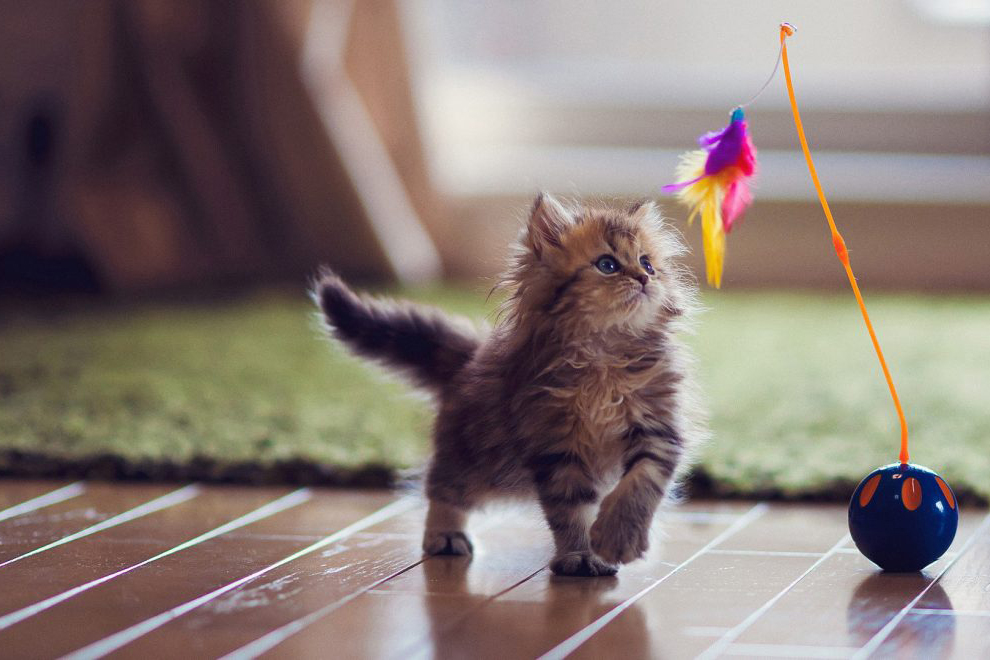
Kitten playing with a feather toy

Sure Santa Claus is coming to town with gifts for little Sammy and Sue, but what about your pet? If your pet has been good this year it is time to reward them with a holiday gift.

“Pet stores sell all kinds of holiday presents for our animals,” states Dr. Mark Stickney, clinical assistant professor and director of general surgery Services at the Texas A&M College of Veterinary Medicine & Biomedical Sciences. “However, not all those presents are good choices for your pet.”

Added holiday pounds are not just a worry for us; our pets can be at risk as well. Dr. Stickney recommends keeping a few things in mind if you are planning on purchasing edible presents for your animals.

“Too many sweets can make pets sick,” notes Stickney. “It is also important to factor in the added calories from the treats so overfeeding can be avoided.”

If you are planning on buying your pet an edible chew toy, Stickney recommends getting them one that will soften as they chew it such as rawhide. Things such as pig’s feet and horse hoofs do not soften, and can crack a dog’s teeth.

In terms of toys, Stickney has a few suggestions when it comes to what to get your pet.

“For dogs, don’t get them a toy that resembles anything they are not allowed to chew on. A toy shoe or newspaper could be confusing and give the animal the wrong idea about what is or is not ok for them to chew on,” explains Stickney.

Also, make sure the toy you get the dog is sturdy.

“Don’t get your pet anything they could shred or destroy, they might eat part of it which can potentially cause gastrointestinal obstructions,” comments Stickney. “Make sure to get a toy that is appropriate for the breed and age of your dog. There is a great rubber dog toy called a Kong. These rubber toys have a hole in the center that can be filled with a treat which the dog works to get, which is both fun and stimulating for the animal. Kong’s are a great toy idea for any dog because they are virtually indestructible, come in various sizes, and provide hours of entertainment for your pet.”

Stickney also recommends avoiding toys that encourage tug of war games. Never encourage your dog to resist giving you things they have in their mouths.

“When it comes to buying gifts for cats, they will like anything that crinkles or moves unexpectedly,” states Stickney. “Beware of things that have strings they can swallow or bells they might choke on.”

If you give your pet a toy that requires interaction on your part, such as cat “fishing” poles that have long strings, in which your cat can become entangled, make sure the toy is put away when you are not playing with your pet.

“Birds and Ferrets like anything new and novel,” comments Stickney. “Just know that birds will ultimately destroy anything that is put in their cages, and ferrets often swallow things so make sure what you give them is strong enough to resist being pulled apart or chewed up.”

If your pet is of the scaly nature, they may not appreciate their present.

“Snakes and lizards won’t really notice if they get a present,” notes Stickney. “These animals like stability in their environments, so adding something new may not excite them as it would other pets.”

No matter what kind of pets you have on your list make sure you get them safe and appropriate gifts this holiday season.

Pet Talk is a service of the College of Veterinary Medicine & Biomedical Sciences, Texas A&M University. Stories can be viewed on the Web at vetmed.tamu.edu/news/pet-talk. Suggestions for future topics may be directed to editor@cvm.tamu.edu.

Angela G. Clendenin
Director, Communications & Public Relations
Ofc – (979) 862-2675
Cell – (979) 739-5718

Green Approved as Vet Medicine Dean

Dr. Eleanor M. GreenDuring a telephonic meeting Thursday, The Texas A&M University System Board of Regents approved the appointment of Dr. Eleanor M. Green recommended by Texas A&M University President Elsa Murano with concurrence from A&M System Chancellor Michael D. McKinney, following an extensive national search. Green was named dean of the College of Veterinary Medicine and Biomedical Sciences, effective March 1.
“We are obviously pleased with the appointment,” noted Dr. Murano. “I am confident that Dr. Green will effectively build on her college’s strengths, providing the leadership that will further enhance its respective reputations for excellence in teaching, research and service at the state, national and international levels.”

Green’s appointment follows a search that attracted applicants and nominations from many leading institutions in the United States. She will succeed Dr. H. Richard Adams, who is returning to the faculty of the Department of Veterinary Physiology and Pharmacology. Green will be the first woman to serve as dean of the college.

As dean, Green will serve as the principal academic leader and chief executive officer of the College of Veterinary Medicine and Biomedical Sciences. The College is one of 31 colleges of veterinary medicine in the United States and Canada, enrolling nearly 500 students in its doctor of veterinary medicine program, as well as more than 2,250 students in its undergraduate biomedical science program and more than 150 graduate students in a variety of research programs. Green will also be responsible for the management of six academic departments and the Veterinary Medical Teaching Hospital.

Green currently serves as professor and chair of the Department of Large Animal Clinical Sciences in the College of Veterinary Medicine at the University of Florida-Gainesville. She also serves as chief of staff for the Large Animal Hospital at the University of Florida Veterinary Medical Center. She holds a bachelor’s degree from the University of Florida-Gainesville and a doctor of veterinary medicine degree from Auburn University, Auburn, Alabama. She is a Diplomate of the American College of Veterinary Internal Medicine, Specialty Internal Medicine, and a Diplomate of the American Board of Veterinary Practitioners, Certified in Equine Practice.

Texas A&M Provost and Executive Vice President for Academics Jeffrey S. Vitter applauded the Regents’ decision, citing Green’s impressive credentials.

“Dr. Green’s leadership of two different colleges of veterinary medicine, as well as her recognized ability to bring together faculty, staff, and students to advance a shared vision, equip her well for her responsibilities leading the Texas A&M College of Veterinary Medicine and Biomedical Sciences. I am looking forward to working with her as we develop the Academic Master Plan and set the course for reaching the goals of Vision 2020.”

Before joining the faculty at the University of Florida, Green was professor and head of the Department of Large Animal Clinical Sciences and director of the Large Animal Veterinary Medical Teaching Hospital at the University of Tennessee in Knoxville. She has also served on the faculties of the University of Missouri College of Veterinary Medicine and the Mississippi State University College of Veterinary Medicine.

Cancer and Your Pets: What You Need to Know

Almost everyone has known a friend or loved one who has been affected by cancer. While cancer in humans is definitely prevalent, our pets are also afflicted with this disease.

According to Dr. Heather Wilson, assistant professor of oncology at the Texas A&M University College of Veterinary Medicine and Biomedical Sciences, 50 percent of all dogs and 30 percent of all cats over the age of 10 will be diagnosed with some form of cancer.

Types of cancers most common in dogs include: lymphoma (tumor of the lymph nodes), mast cell tumors (skin tumors), and osteosarcoma (tumor of the bones). Some common types of cancer in cats are: lymphoma, squamous cell carcinoma (which affects the head, neck and mouth), and vaccine associated sarcomas.

“Cats are not nearly as prone to cancer as dogs, but one of the most common cancers in cats comes from vaccine injection sites,” notes Wilson. “While you can pick and choose some vaccinations, rabies vaccinations are required by law. However, there is a non-adjuvanted rabies vaccine for cats that is less irritating, thus less likely to cause cancer and is available at most veterinary clinics.”

The type of cancer your pet has can also be closely associated with its breed. In dogs, lymphoma is most common in Golden Retrievers, Boxers, and Labs. Mast cell tumors are common in dogs with short noses such as boxers, pugs, and bulldogs. Large breed dogs such as Rottweilers and Great Danes are more prone to osteosarcoma.

“There is very little distinction across breeds when it comes to cancer in cats,” states Wilson. “However, cancer most commonly affects the Siamese breed of cats.”

Once your veterinarian has diagnosed your pet with cancer you will then want to find a veterinary oncologist in your area that specializes in your pet’s specific cancer.

“There are veterinary oncologists that specialize in medical oncology and radiation oncology. There are also surgeons that specialize in surgical oncology,” explains Wilson. “The best way to find a medical oncologist in your area is to go to the American College of Veterinary Internal Medicine (ACVIM) website at www.acvim.org.”

Treatment options range from chemotherapy, surgery, radiation therapy, and immunotherapy and are administered depending on the type and severity of the cancer.

“Chemotherapy is the number one treatment option for animals with lymphoma,” says Wilson.”While cure rates in dogs vary greatly with the type of cancer, overall response rates for dogs with lymphoma treated with the CHOP chemotherapy protocol (a multidrug protocol given weekly over 19 weeks) is greater than 80 percent.”

Response rates for dogs with mast cell tumors varies depending on the grade, but with complete surgical excision plus radiation for low grade tumors the control rates is often greater than 80 percent at three years.

“Unfortunately, the majority of dogs with osteosarcoma and metastatic disease do not achieve a cure,” states Wilson. “Also, most cancers in cats are also very hard to cure. When we do achieve remission in cats with vaccine associated sarcomas, they often live 18-24 months before they have a recurrence.”

Cost is another important thing to consider when deciding on the treatment of an animal for cancer. While costs range widely, the average cost for a surgery is $2,000-$3000; Chemotherapy regimen is $1,200-$3,000, and radiation averages $3,000.

“As cost is prohibitive to some families, a good option may be to enter your pet into a clinical trial if possible,” notes Wilson. “Many of these trials have a financial incentive such as a free treatment regimen, and they also help with future research for both veterinary and human oncology.”

For more information on clinical trials at Texas A&M University’s College of Veterinary Medicine, go to vetmed.tamu.edu/clinical-trials.

While cancer in pets can be extremely stressful for owners, the good news is that with the amount of resources and specialists that are now available to treat cancer in pets, owners now have the power to make informed and responsible decisions to get their beloved pets through this illness.

Pet Talk is a service of the College of Veterinary Medicine & Biomedical Sciences, Texas A&M University. Stories can be viewed on the Web at vetmed.tamu.edu/news/pet-talk. Suggestions for future topics may be directed to editor@cvm.tamu.edu.

Angela G. Clendenin
Director, Communications & Public Relations
Ofc – (979) 862-2675
Cell – (979) 739-5718

Cat Food for Thought

Anyone who owns a dog or a cat knows that they will typically eat anything they can get their paws on. While it is not harmful for a dog to eat a cat’s food, it can be potentially hazardous for a cat to eat a dog’s food. In moderation, a cat eating a dog’s food is probably safe, but if the cat is only eating Fido’s dinner, they are probably not getting the nutrients that are essential to their specific health needs.

“Cats’ nutrition requirements are different than dogs’, they have unique needs,” explains Dr. John Bauer, a professor of animal nutrition at the Texas A&M College of Veterinary Medicine &Biomedical Science. “Your cat is not going to get ill from eating the occasional pieces of dog food, but if they are only eating dog food, then they are not getting nutrients they need for a healthy life.”

If you have a cat that prefers to feast on their canine pal’s dinner, it is important to know that there are five main nutrients, essential to feline health, that are not balanced properly for proper feline nutrition. “First, cats require a higher protein to calorie ratio than dogs,” notes Bauer. “Cats eat less than dogs. Therefore, they need to be getting the protein needed from a smaller amount of food. By contrast, dogs will eat a larger amount of food, thus getting the proper balance of protein to calories.

Also, cats are not able to make their own Vitamin A, which has to be added to their food and is essential to their health. “Dogs are able to make Vitamin A from beta-carotene,” explains Bauer. “Since their bodies can create this vitamin, it is not necessary for it to be in their food per se. . A dog could live with only small amounts of vitamin A added into their food as long as they are also getting beta-carotene, a cat cannot.”

Thirdly, Bauer explains that cats are not able to make the amino acid, Taurine. According to the Iam’s website, Taurine is important to maintain proper feline heart function, vision, and reproduction. It is also needed to form bile that helps with digestion.

A lack of Taurine can lead to the weakening of the heart muscles, which in turn can cause heart failure. In addition to maintaining cardiac health, this amino acid is also necessary for the proper development and function of the retina cells in cat’s eyes. A taurine deficiency can lead to the cells dying which can cause impaired vision and blindness. Taurine also effects reproduction. To ensure proper structural development of a kitten, both the mother and the baby must maintain proper levels of taurine.

“Dogs are able to make taurine, meaning it does not have to be a specific ingredient in their food,” notes Bauer. “Cats eating lots of dog food will not be getting the necessary amount of taurine they need to maintain their health. Bauer also states that dog food does not need to have arachidonic acid, a fatty acid essential to feline nutrition.

According to the article “Special Nutrition Needs of Cats,” found on peteducation.com, arachidonic acid is necessary to produce an inflammatory response that helps the body protect itself. It is necessary for proper blood clotting, aids in regulating skin growth, and is necessary for the functioning of reproductive and gastrointestinal systems.

“Again, arachidonic acid is something that unlike dogs, cats are not able to manufacture. Therefore, it is found in food for cats but is not necessary in dog foods,” adds Bauer.

Bauer says the fifth nutrient cat’s need is Niacin, a B vitamin. As stated by peteducation.com, Niacin deficiencies can cause loss of appetite, inflamed gums, weight loss, and hemorrhagic diarrhea. “Cat’s can’t make Niacin, they need to ingest this nutrient from their food,” comments Bauer.

Cats and dogs require different levels and sources for nutrients they need to maintain their health. If they are not getting proper amounts, it can lead to health problems. “If your cat sneaks dog food once in a while, it is not going to compromise its health,” notes Bauer, “but if they are only eating dog food then they are not going to be getting nutrients needed to maintain their health. It is important your animal is eating food designed for its specific nutritional needs.”

Likewise, a dog that eats cat food won’t be in danger of a lack of needed nutrients, but that doesn’t mean it is healthy. “Animal foods are made specifically for that species,” states Bauer. “It’s all about ratios; cats eat smaller amounts of food, so their food contains higher amounts of nutrients per piece. Even if dog food had the proper nutrients for felines, the cat would have to eat larger amounts of the dog food to get the same nutrients they would receive from a serving of cat food.”

Pet Talk is a service of the College of Veterinary Medicine & Biomedical Sciences, Texas A&M University. Stories can be viewed on the Web at vetmed.tamu.edu/news/pet-talk. Suggestions for future topics may be directed to editor@cvm.tamu.edu.

Angela G. Clendenin
Director, Communications & Public Relations
Ofc – (979) 862-2675
Cell – (979) 739-5718

Bidding Opens for Texas A&M CVM’s First Ever Legends Premier Stallion Season Auction

COLLEGE STATION, TX – The Texas A&M College of Veterinary Medicine & Biomedical Sciences has announced that bidder registration is now open for the first ever Legends Premier Stallion Season Auction at the Legends Auction website.

This online auction of stallion seasons will directly benefit the continued research into improving the reproductive performance of the breeding stallion, and features some of the top names in breeding stallions from the racing Thoroughbred, racing Quarter Horse, and western performance horse industries.

Giant’s Causeway, Smarty
Jones
, Mineshaft,
Giacomo, and E.
Dubai
highlight a list of top Throughbred sires. Western performance sires include Boonlight
Dancer
, Cat Ichi,
CD Olena, Custom
Crome
, Dual Pep,
Dual Rey, He’s A
Peptospoonful
, High Brow
Cat
, High Brow CD,
Hydrive Cat, Invitation
Only
, Mecom Blue,
Nu Chex To Cash,
Peptoboonsmal,
Playgun, One Time
Pepto
, Royal Fletch,
Smart Chic Olena, Shining
Spark
, Smart Lil Scoot,
Smooth As A Cat, Spooks Gotta
Gun
, TR Dual Rey,
Top Sail Whiz, and Wimpys
Little Step
. In their first year at stud, high performers in the racing Quarter Horse industry, One
Famous Eagle
, No Secrets
Here
, Carters Cartel, and
Rock Solid Jess are represented.

“We are extremely excited about the level of participation in our auction,” said Dr. Dickson Varner, Professor and Pin Oak Stud Chair of Stallion Reproductive Studies. “We have been able to secure seasons from some of the nation’s top sires. This auction is quite unique because monies generated from this auction will be used exclusively for stallion reproductive research. We are ever so grateful to the farms and ranches who have committed their support for our program. We have over $1 million worth of stallion seasons offered at this auction.”

Bidders must register in order to bid and may do so by going to the auction website. Bidding begins at noon CST on Dec. 1 and will continue through noon CST on Dec. 19th. All proceeds from the auction will be directed to Texas A&M’s Stallion Reproductive Studies Program to further research aimed at enhancing the reproductive performance of breeding stallions.

Over the past two decades, the Texas Veterinary Medical Center at Texas A&M University has established the most internationally recognized academic program in stallion reproduction. The program’s closely integrated focus on both clinical application and scientific research creates unique opportunities to identify important clinical reproductive problems and use novel methods for investigating causes of reproductive failure.

As a premier center for all activities related to stallion reproduction, our program has established an international reputation for excellence in areas ranging from the diagnosis and treatment of reduced fertility in stallions to preservation of semen to development of assisted reproductive technologies for maximizing reproductive performance. The resulting developments and discoveries have had a phenomenal impact on the equine breeding industry.

For information about the Stallion Reproductive Studies program, or about the Legends Premier Stallion Season Auction, visit our website, or contact at 979-845-1700.

Communication is Key in Picking the Right Veterinarian

As our pets become more and more an extension of our human families, their healthcare and who is providing it is increasingly important.

woman and veterinarian doctor with stethoscope checking up dachshund dog

Dr. Dan Posey, Clinical Assistant Professor at the Texas A&M College of Veterinary Medicine & Biomedical Sciences, explains that picking the right veterinarian is a serious decision and numerous factors should be considered.

“The first would be if the veterinarian is a good communicator,” states Posey. “I believe this varies with the client’s needs, large animal vs. food animal vs. small animal, but all clients desire, regardless of species or business relation, a veterinarian that strives to have good client rapport.”

Although most pet owners may not know much about the actual medical procedures performed, it is usually apparent if the veterinarian is compelled to serve and fulfill their client’s needs and if this is a person that loves being a veterinarian.

“The veterinarian should be both passionate about their profession and empathetic and compassionate towards their clients as seen through their professional service,” says Posey.

While there should not be many differences in competency between a large animal veterinarian and a small animal veterinarian, most do have specific interests.

“Competency is hard to assess even by the most discerning clients. Desire is not,” notes Posey. “Asking questions about their interest should help one learn about the mission and vision of the practices or veterinarians that they are trying to select.”

Exotic pet owners also have to make sure that their small animal practitioner can handle these less-common animals. Most private practices clearly state available services in exotic care.

“Some, but not all, small animal practices have veterinarians that are passionate about exotics and can easily handle routine needs of the pocket pet, reptile, and bird. You will find other practices that have veterinarians that can go well beyond routine exotic care because of their desire and training,” says Posey. “If your veterinarian does not offer or specialize in these services, all private practices have the ability to offer referral services for the care of their patients and clients.”

Although their communications skills and interests play a vital role in picking the right veterinarian, what makes them a medical expert is their training and education.

While all private veterinary practitioners have to earn a Doctor of Veterinary Medicine, pass a national licensing exam, and receive a license through their state board, veterinarians are life-long learners and are continually advancing their knowledge base, through self study, continuing education experiences, and colleague interaction.

“They also can advance their professional development and education through a variety of specialty training. This could be internships, certification programs, residencies, and different specialty board certifications,” states Posey. “These are very important aspects of veterinary training and could be important depending of the needs of the patient.”

When choosing a veterinarian, reputation is important as well. Start by inquiring with family, friends and co-workers about their veterinarians. Ask them if they have heard any complaints or recommendations regarding local practitioners.

“I wouldn’t take one opinion but a variety so that you can make a decision. I then would set up an initial visit so that you can express your expectations, and you can meet the staff and see the facility and make an informed decision,” advises Posey.

Problems and complaints occur in all practices. They derive from a variety of situations,from not meeting a desired outcome or expectation to the rare negligence case, but it is important that clients understand the basis of the complaint.

“If you are concerned about complains you have heard regarding a local veterinarian, contact the state licensing board to confirm the accuracy of the complaints,” adds Posey.

While there are so many things to consider when making this important decision, the key to picking the right veterinarian is to communicate with them and make sure that they are committed to serving both their patients and clients well.

Pet Talk is a service of the College of Veterinary Medicine & Biomedical Sciences, Texas A&M University. Stories can be viewed on the Web at vetmed.tamu.edu/news/pet-talk. Suggestions for future topics may be directed to editor@cvm.tamu.edu.

Angela G. Clendenin
Director, Communications & Public Relations
Ofc – (979) 862-2675
Cell – (979) 739-5718