

Adopting a Pet

A man holding a dog's paw

His pudgy nose, tiny paws and sloppy, wet kisses melted your heart in an instant. But after giving in to desire and surprising the family with a new furry friend, you found that caring for a new puppy was not exactly what you expected. Adopting a pet can be rewarding, but certain steps must be made before both you and your pet can be ready for the transition.

“It’s important to avoid impulse adopting,” emphasizes Dr. Snowden, an associate professor at the Texas A&M College of Veterinary Medicine & Biomedical Sciences. “Pets are a life-long commitment. Dogs and cats can live ten to fifteen years, while parrots and turtles will live much longer.”

So, how do you know if you are ready to adopt a pet? Snowden believes the first step of the process is to evaluate your needs and lifestyle.

“Before adopting a pet, a potential owner needs to consider the amount of space in the home available to accommodate the pet,” says Snowden. “Evaluating the amount of time and care that can be spent with the animal, as well as the activity level of both owner and pet, is important, too. Fish are not as demanding as a dog that needs jogging everyday and therefore may be a more suitable choice for a relatively inactive or time-pressed individual.”

Once you have decided which type of pet to adopt, it is time to choose where to search for your affectionate friend.

“Some great places to find a dog or cat are the local shelters, or breeders,” notes Snowden. “There are fewer sources for reptiles and birds, however many can be found at local breeders or rescue groups, as well as at local pet stores.”

But just finding the number for the local shelter in the yellow pages is not enough. When searching for a new pet, you must research and ask questions.

“When looking for a new dog or cat, it’s important to find out how much socialization the animal has been exposed to. The more social interaction the animal has had, the more likely it will be happy and exhibit good behavior,” adds Snowden. “If you decide to purchase a pet from a pet store, it’s a good idea to find out where the animal came from and ask questions, such as ‘Do the stores breed and raise the animals themselves?’ or ‘Are the pets coming from a variety of sources?’ Asking questions can give you an idea of how much socialization the animal has experienced.”

If after asking the appropriate questions you decide to adopt from a local shelter, there are several services that you can expect to be provided.

“Texas state law requires all animals in shelters to be vaccinated for rabies and be either spayed or neutered,” states Snowden. “Most shelter animals have been de-wormed and given a flea treatment or prevention medication. In addition to these services, most shelters and veterinarians offer microchipping at a reasonable cost, an invaluable resource in the event that your adopted pet goes missing. Overall, shelters hope to provide owners with healthy, social pets with little initial expense.”

Even though some may choose to adopt a pet from a shelter, many often refuse. Common misconceptions about shelters can unfortunately prevent affectionate pets from finding new homes.

“There is a widespread assumption that shelter animals are unhealthy muts,” explains Snowden. “This mistaken belief is not representative of many shelter populations. In fact, about one- fourth to one-third of dogs in shelters across the country are an easily identifiable breed.”

Once you have chosen what type of pet suits you best and where to find your loving companion, the next step is to prepare your home for your new pet.

“Dogs need adequate food, water, appropriate dishes, a collar and leash, a plan for where he or she will spend most of their time and bedding or a crate for the animal to adopt as his or her ‘safe’ or ‘resting’ place,” notes Snowden. “Cats require similar items and you will need to decide whether or not the animal will be staying primarily indoors or outdoors. If you decide to keep the cat indoors, find a place for the litter box with daily sanitation in mind.”

After preparing your home for your new arrival, it is finally time to bring home your new friend. However, challenges often arise as your pet strives to figure out his strange new home.

“When you bring home your pet, it is necessary to begin a routine,” urges Snowden. “Establish when he or she will have time for play and exercise. Implement a regular feeding schedule that coincides with your daily agenda. With a consistent routine in place, your pet will rapidly adapt to his or her new environment.”

Adopting a pet can be a rewarding experience. With proper research and appropriate care, you and your new friend could develop a happy, life-long relationship.

Pet Talk is a service of the College of Veterinary Medicine & Biomedical Sciences, Texas A&M University. Stories can be viewed on the Web at vetmed.tamu.edu/news/pet-talk. Suggestions for future topics may be directed to editor@cvm.tamu.edu.

Angela G. Clendenin
Director, Communications & Public Relations
Ofc – (979) 862-2675
Cell – (979) 739-5718

Springtime Yard Hazards for Pets

welsh corgi Dog runs fast

Springtime is garden time. Spring is when we plant new plants and get our yards ready to shine. While you are preparing your outdoor areas for your family to enjoy just make sure you take the steps to ensure that it is safe for your pets to enjoy as well and free of yard hazards.

“When planting your garden it is important to note that there are numerous house and garden plants which can be toxic to animals,” warns Dr. Murl Bailey, professor of toxicology at the Texas A&M University College of Veterinary Medicine & Biomedical Sciences. “Several that come to mind initially are brunfelsia, lilies, cycads, kolanchoe, and oleander.”

Brunfelsia, more commonly known as the yesterday, today & tomorrow plant, causes convulsive seizures in dogs that resemble strychnine poisoning.

“We haven’t seen any problems in cats from brunfelsia, as of this date,” notes Bailey. “While this plant is mostly a house plant, it could be in sheltered gardens in the southern part of Texas.”

Cycads, low growing palm trees which are used both indoors and outdoors, are another type of plant that is toxic to dogs as they tend to chew on the roots. The cycad has a toxin in the root and stems that is toxic to the liver.

“When the liver is affected, the dog’s body stops producing the normal, endogenous clotting factors and the dogs start bleeding excessively–to the extent that they can bleed to death,” explains Bailey.

While brunfelsia and cycads may not be known to cause problems in cats, lilies are especially harmful to them. Once cats ingest lilies, they develop nausea and vomiting. Then they get depressed, and stop eating.

“Why cats like to eat them I don’t know, probably boredom, but once they do these cats must be treated by a veterinarian, preferably within 24 hours and not later than 48 hours,” states Bailey. “We do not know which toxin(s) are present in the lilies, but they are very toxic to the kidneys.”

Kolanchoe is a type of house plant that is known to be toxic. This plant contains a chemical which is similar to the human heart medication, digoxin.

“The garden plant oleander also contains digoxin-like compounds. Both kolanchoe and oleander can be toxic to all animals, including dogs and cats, if ingested,” says Bailey.

While spring is a time to plant beautiful flowers in your yard, it also brings pesky insects out in numbers. Because of this, another potential yard hazard to pets this time of year is pesticides.

“All pesticides can cause problems in dogs and cats if the chemicals are stored incorrectly and misused,” warns Bailey.

Bailey stresses that labels on all chemicals should be read very carefully and followed, especially when used around pets. He notes that animals do not have to eat the toxin; they can also become exposed through the skin and in the case of volatile agents, can be exposed just by breathing the contaminated air.

“If a pesticide is not specifically labeled to be used on dogs and/or cats, the pesticide can cause toxicities,” Bailey states. “Some insecticides are labeled specifically for dogs and not for cats so it is important to read the labels thoroughly.”

While there are more and more products out there that claim to be environmentally safe or “green,” Bailey is not entirely convinced of their worth.

“Many alternative and “so-called” environmentally safe compounds are usually not very effective in controlling fleas, flies and ticks. The best thing for an animal owner to do is follow the labeled instructions,” he adds.

Spring is a great time to enhance and enjoy the outdoors. Taking the time to make sure that everything you put in and on your yard is safe for your furry friends will ensure this time is special for the entire family.

Pet Talk is a service of the College of Veterinary Medicine & Biomedical Sciences, Texas A&M University. Stories can be viewed on the Web at vetmed.tamu.edu/news/pet-talk. Suggestions for future topics may be directed to editor@cvm.tamu.edu.

Angela G. Clendenin
Director, Communications & Public Relations
Ofc – (979) 862-2675
Cell – (979) 739-5718
First Aid Tips for Pet Owners

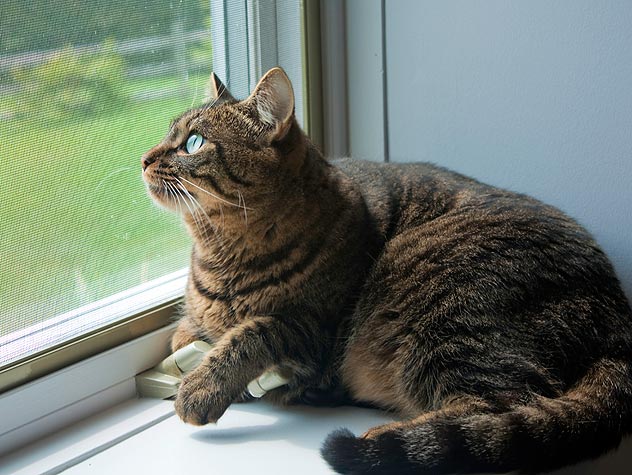
A brown tabby cat looking out the window

It’s the middle of the night and your phone rings. Your dog has gotten out and was hit by a car. What do you do? When our kids or our significant other gets sick or hurt we have a pretty good idea of how to take care of them. Unfortunately, most people are not prepared to handle these occurrences in our pets. To help pet owners deal with emergency situations, April has been designated as National Pet First Aid Awareness Month.

Dr. Mark Stickney, Director of General Surgery Services at the Texas A&M University College of Veterinary Medicine and Biomedical Sciences says that one of the most important things that you can do for your pet’s safety is to have a relationship with your veterinarian.

“It is absolutely necessary to know if your veterinarian has an after hour emergency service and if not, who they recommend calling in case of an emergency,” explains Stickney. “It’s also imperative that you can call your veterinarian for advice on what to do to help your pet until you can get it to the clinic.”

The two most common emergency situations that a pet owner should be prepared for are poisoning and trauma.

“If you suspect that your pet has eaten something toxic, contact your veterinarian. They may tell you to make it vomit by feeding it hydrogen peroxide,” states Stickney. “While hydrogen peroxide is generally harmless there are some poisons that will actually make things worse if the pet vomits so it is important that you contact your veterinarian first.”

As spring and summer approach more and more pets will need first aid for snake bites. Dogs are especially curious and tend to get bitten the most on their noses, faces and front legs. “The area where the pet was bitten will swell up very quickly,” states Stickney “Just because there is no visible puncture wound does not mean that your pet did not get bitten.”

If you think your pet was bitten by a snake, stay calm and take it to the vet immediately. Do not put a tourniquet on the pet as this will limit the blood flow too much and cause more harm than good. “If you are able to kill the snake take it to the veterinarian with you. If they can identify the snake they will have a better idea of how harmful the bite is,” recommends Stickney.

It’s not uncommon that a dog or cat will suffer a traumatic event such as getting hit by a car, bike, or other vehicle. While the animal might look ok it is good to have it checked out by the veterinarian anyway. “Trauma can be very deceiving. Most of the time it looks better than it actually is and there is usually a lot of damaged tissue on the inside,” explains Stickney.

The first thing to do if your pet has been injured and is bleeding is to put pressure on the area to slow the blood flow. Hurt dogs tend to bite so it is a good idea to have a muzzle on hand to use in this type of situation.

“Your pet might be your best friend, but when dogs are hurt they may not remember that,” notes Stickney. “If you have a big dog, I would also recommend that you have a dog stretcher. They make it much easier to move large injured animals.” Less severe incidences such as minor cuts and scrapes are fairly common and can be handled much like you would treat yourself.

“Make sure that the cut is as clean as possible,” states Stickney. “I would not recommend putting antibiotic cream anywhere your pet can lick it off. This just causes more germs to get in the wound. If the cut is on an area they can’t lick than something like Neosporin will be fine.”

While there are a lot of ways that you can help your pet with simple first aid techniques, you will probably never have to use CPR. “The reality is that the chance that CPR will help your pet is very low,” says Stickney. “The good news is that this means there is very little reason you would have to put your dogs face in your mouth.”

Pet Talk is a service of the College of Veterinary Medicine & Biomedical Sciences, Texas A&M University. Stories can be viewed on the Web at vetmed.tamu.edu/news/pet-talk. Suggestions for future topics may be directed to editor@cvm.tamu.edu.

Angela G. Clendenin
Director, Communications & Public Relations
Ofc – (979) 862-2675
Cell – (979) 739-5718
So You Want a Pet Bird?

Now more than ever, Americans are constantly on the go. Long days at the office coupled with the demanding extra-curricular activities for kids leaves little time spent at home. So before adding another member to the family, it is important to consider the responsibilities of caring for and choosing your pet bird.

“There are several factors to consider before purchasing a pet bird,” explains Dr. Sharman Hoppes, an avian specialist at the Texas A&M College of Veterinary Medicine & Biomedical Sciences. “Space, cost, time, family, and life longevity must be taken into consideration.”

Before introducing a pet bird into your family, the size of your home must be evaluated.

“The cage can take up a considerable amount of space, especially for large birds. In addition to having a cage, all pet birds should have a play gym to encourage exercise,” says Dr. Hoppes.

Because of their eating habits, birds regularly require their owners to clean up around the cage. Owners must also be able to handle their noisy demeanor.

“Pet birds tend to be very messy. They pick at food and leave crumbs everywhere, often spewing their messes outside of their cage,” comments Hoppes. “Birds can also be loud, so take neighbors into consideration, especially if living in an apartment or duplex.”

Purchasing a bird can often be an impulse buy; however, it is important to think about all of the annual costs before obtaining a new feathered friend.

“A large cage, toys, and the appropriate food can become costly, especially for large birds. Veterinary costs should also be considered, as it is especially important to check for hidden illnesses,” notes Hoppes. “For example, parrots are prey animals and hide signs of illness or disease. Chlamydophila, a zoonotic disease transferred not only from bird to bird, but bird to person, can be found in some birds and makes it absolutely necessary for pet birds to be initially examined by a veterinarian.”

In addition to space and cost, it is essential that the amount of time the bird will spend alone in the house be considered.

“Birds are flock animals and need a lot of socialization, so sitting alone all day in a cage can be very stressful,” continues Hoppes. “Birds are also very intelligent and need plenty of mental stimulation. They should receive lots of interaction with humans, preferably outside of their cage for a minimum of a couple of hours each day.”

Considering the rest of the family is also important before purchasing a pet bird.

“Be careful if you have small children. Birds can bite, and large birds can bite even harder. A small child must be monitored very closely around pet birds,” comments Hoppes.

It is also important to note that some birds live much longer than a dog or cat and owners must be prepared for a life-long friend.

“A cockatiel can live for up to 25 years, and a macaw or cockatoo can live for 60 years. People have to be prepared for a very long-lived pet,” states Hoppes.

If after considering all of the above a family decides to obtain a pet bird, it is time to determine which type of bird best suits their needs.

“Budgerigars (budgies or parakeets) and cockatiels are the most common types of pet birds. They are reasonably priced, fairly quiet, and do not require a large cage. They can also be quite entertaining if hand-raised and interacted with frequently,” says Hoppes. “When it comes to larger birds, the African gray parrot and the yellow-naped or yellow-headed Amazon are very popular because of their unique talking abilities. The large macaws talk some, but not as well as the Amazon or African gray; however, their large size and beauty make them popular with many.”

Routine care and veterinary visits are necessary for the health of a pet bird.

“Birds need to be seen by a veterinarian yearly or more frequently if they have health issues. Their wings and nails need to be trimmed two to three times a year,” notes Hoppes. “Their water and papers should be changed daily and a pelleted bird diet mixed with healthy fruits and vegetables should be maintained.”

Even though caring for a pet bird may seem overwhelming at first, birds can be fun, entertaining additions to the family.

“Parrots are amazing, wonderful pets, but people need to realize that they are loud, messy, and expensive to appropriately maintain. I have seven and wouldn’t give them up for anything!” Hoppes lovingly concludes.

With appropriate consideration and proper care, pet birds make excellent companions and can become life-long friends.

Pet Talk is a service of the College of Veterinary Medicine & Biomedical Sciences, Texas A&M University. Stories can be viewed on the Web at vetmed.tamu.edu/news/pet-talk. Suggestions for future topics may be directed to editor@cvm.tamu.edu.

Angela G. Clendenin
Director, Communications & Public Relations
Ofc – (979) 862-2675
Cell – (979) 739-5718
Best Pets for People with Allergies

The Asthma and Allergy Foundation of America estimates that one in five Americans suffers from all types of allergies, and of these between 15 and 30 percent have allergic reactions to cats and dogs. With so many people affected by allergies, it has become a growing trend to market pets as hypo-allergenic or suitable for people with allergies.

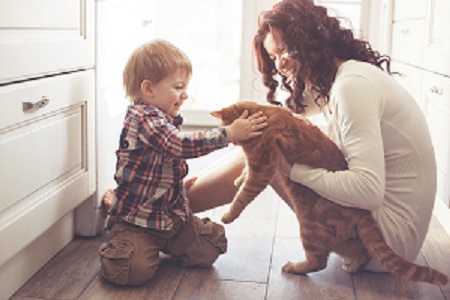
Mother with her baby playing with pet

Dr. Mark Stickney, Director of General Surgery Services at the Texas A&M University College of Veterinary Medicine & Biomedical Sciences, discusses the causes of these allergies and how to keep them at bay while enjoying the companionship of a cherished pet.

“While there are dogs and cats that are marketed as hypoallergenic, there is really no such thing,” notes Stickney. “People can be allergic to anything and it varies by person.”

The most common causes of pet allergies from dogs are flaking skin, called dander, and seasonal allergies can be caused by pollen spores that have attached to a dogs fur and brought into a house.

The kinds of dogs that are probably less likely to cause allergies are those with short hair and those that are less-likely to shed. These include terriers such as Yorkies and Westies, Poodles, and Schnauzers.

“There are really no breeds of cats that are better for people with cat allergies because these allergies are usually caused by the cat’s saliva,” states Stickney. “When a cat grooms itself, the saliva dries on its fur and is then transferred to the pet owner.”

There are some breeds of pets, such as the Chinese Crested dog and Sphinx cat, that are mostly or completely hairless. These pets may be less likely to cause allergies as the fur will not hold onto allergens.

“While hairless pets may be an option for people with allergies, these types of animals come with their own problems,” warns Stickney. “Hairless dogs have to be washed very often as they tend to have very oily skin and other skin problems.”

There also alternative pet options for people with allergies if they are willing to be a little adventurous. Reptiles, birds, rats, guinea pigs and fish are among the possibilities.

“It may take some experimentation to find the right pet as different people are allergic to different kinds of animals, but reptiles and fish should be safe for just about anybody,” says Stickney.

However, if one has their heart set on owning a dog or cat there are a few steps that they can take to alleviate some of the allergy risks.

“Bathing your pet once a week and vacuuming your house often are two precautions you can take to cut down on the allergens attached to your pets and floating around your house,” notes Stickney. “If possible, grooming should be left to someone who is not allergic as to minimize your contact with the pet’s fur and dander.”

Owning a pet is a fulfilling experience and something that many of us could not bear to live without. While allergies may dictate the breed or type of animal one can live with, everyone should be able to find a pet that they can love and that doesn’t make them sneeze.

Pet Talk is a service of the College of Veterinary Medicine & Biomedical Sciences, Texas A&M University. Stories can be viewed on the Web at vetmed.tamu.edu/news/pet-talk. Suggestions for future topics may be directed to editor@cvm.tamu.edu.

Angela G. Clendenin
Director, Communications & Public Relations
Ofc – (979) 862-2675
Cell – (979) 739-5718

Texas Higher Education Coordinating Board Reports on the Future Needs of Veterinary Medical Education in Texas

COLLEGE STATION, TX – In a recent landmark report, the Texas Higher Education Coordinating Board (THECB) made significant recommendations to the state legislature which address the shortage of food and fiber (large animal) veterinarians, as well as the need to address recruitment of students from underrepresented groups – a nationwide problem.

The THECB conducted a comparative study of veterinary medical education utilizing data from multiple veterinary medical organizations and consultants from veterinary medical academia around the country. The conclusions for the most efficient way to address the future of the veterinary medical education in the State of Texas were 1) that at this time no new veterinary medical school was needed, 2) the Texas A&M College of Veterinary Medicine & Biomedical Sciences (CVM) should be offered the resources necessary to continue and expand their efforts to promote food and fiber animal practice, 3) recruiting students from underrepresented groups should be a top priority, and 4) formula funding should be restored to THECB recommendations..

“We have worked very diligently to educate and graduate the very best entry level veterinarian possible through a four-year program,” said Dr. H. Richard Adams, Carl B. King Dean of veterinary medicine. “In addition, we have implemented programs and strategies that have enabled us to be responsive to and proactive in addressing the future needs of the profession. The need for increased diversity and the shortage of rural practitioners are two pressing concerns for our profession, and we hope that the THECB report will serve to highlight those needs to our legislature.”

The THECB report noted that the CVM had initiated mentoring programs to support veterinary medical students interested in rural practice and large animal medicine, as well that the college had been able to keep tuition rates low when compared to the top 10 most populous states.

The report from the THECB is sent to the legislature, who will ultimately decide how best to implement the recommendations stated in the report.

“Should the legislature agree to follow through on the conclusions from this report with funding, the CVM would be able to reinvest in our infrastructure which would make a significant impact on our college and its contribution to the profession,” added Adams. “We appreciate the thoroughness of the THECB report and the opportunities it presents for solving the growing demands of the veterinary medical profession by its recommendations for support for veterinary medical education in Texas.

Dental Care for Your Four Legged Friend

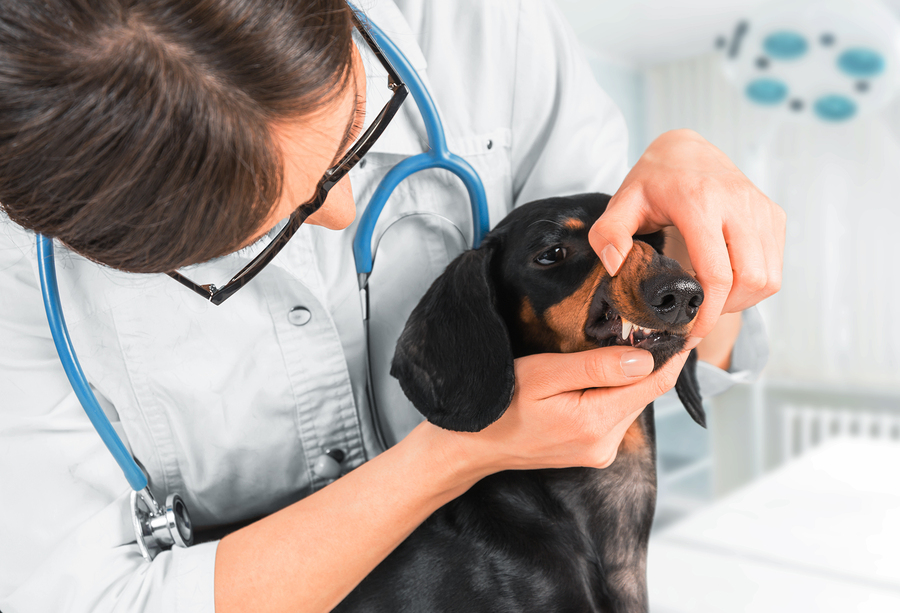
Woman veterinarian examines teeth of a dachshund dog

The American Dental Association recommends that we brush our teeth twice a day, floss daily, and visit our dentist regularly to have teeth cleanings and oral exams. Keeping our teeth clean is vital to our oral health and well being, why should our pets be any different.

When was the last time you brushed your pet’s teeth or had them professionally cleaned? For many people the answer could be never. This seemingly slight overlook of your pet’s dental care could be causing serious problems in your pooch’s mouth.

According to the Veterinary Oral Health Council website, periodontal disease (gum disease) is the most common disease occurring in pets and dogs. Gum disease is an infection resulting from the build-up of soft dental plaque on the surfaces of the teeth around the gums. The bacteria in dental plaque irritate the gum tissue if allowed to accumulate, which can often lead to infection in the bone surrounding the teeth.

After plaque has formed, hard dental tartar, which consists of calcium salts from saliva that has been deposited on plaque, begins to grow. If the surface of the tooth does not stay clean, tartar begins to form within a few days. The un-brushed tooth provides a surface that boosts further plaque accumulation. If allowed to accumulate, tartar is difficult to remove without dental instruments.

For our pets, gum disease means bad breath, painful irritated gums that can lead to bleeding and loss of appetite, and the loss of teeth if the roots have been affected. There is also the possibility that the bacteria surrounding the root of the tooth gains access to the bloodstream, which can lead to microscopic damage of the heart, liver, and kidney. As the severity of the gum disease increases, so does the damage.

The best way to ward off periodontal disease in your pet is prevention. Keeping your pets teeth clean can help prevent oral health problems.

“Ideally, you should brush your pet’s teeth daily,” states Dr. Johnathon Dodd, a clinical associate professor at the Texas A&M College of Veterinary Medicine & Biomedical Sciences. “Make sure you are using special toothpaste that is made for pets and is safe for them to swallow. They cannot spit or rinse like we do, therefore, our pets need specific kinds of toothpaste that is not harmful if ingested.”

Your veterinarian and local pet retail stores should carry toothbrushes and toothpaste for your pets. Different flavors of toothpastes are available for dog and cats.

In addition to brushing your pet’s teeth daily, it is also important for pets to have their teeth cleaned and examined by a professional.

“Your pet needs to get their teeth cleaned yearly,” notes Dodd. “Most veterinary clinics should offer dental cleaning services, but if they do not they can refer you to someone who does.”

To help ward off gum diseases and keep bad breath at bay, there are products you can feed your pet that help improve and promote oral health.

“There are certain dog treats that help promote good dental health,” explains Dodd. “The right kind of treat should crumble, be easily crushed, and contain chlorhexadine or a hydrogen peroxide-type additive that can help with the bacteria count in the animal’s mouth. Balancing this bacteria count can help prevent and get rid of bad breath.”

A helpful guide to go by when considering your pets’ oral health is the Veterinary Oral Health Council website. They have compiled a list of products that are intended to help reduce the buildup of plaque and tartar on the teeth of animals and created the VOHC seal of approval. Pet products approved by the Veterinary Oral Health Council can be recognized by the VOHC seal on the packaging. To see the full list of VOHC approved products visit www.vohc.org.

Brushing your pet’s teeth, taking them for a yearly visit to the dentist, and giving them VOHC approved products are all ways that you can help make sure your pet has a clean and healthy mouth.

Pet Talk is a service of the College of Veterinary Medicine & Biomedical Sciences, Texas A&M University. Stories can be viewed on the Web at vetmed.tamu.edu/news/pet-talk. Suggestions for future topics may be directed to editor@cvm.tamu.edu.

Angela G. Clendenin
Director, Communications & Public Relations
Ofc – (979) 862-2675
Cell – (979) 739-5718

Texas A&M Veterinarians Celebrate Westminster Victory of Former Patient

COLLEGE STATION, TX – With viewers around the nation watching on live television, a humble Sussex spaniel called “Stump” took the honor of “Top Dog” at the annual Westminster Kennel Club dog show. Of course, some of his biggest fans are from the Texas A&M University College of Veterinary Medicine   Biomedical Sciences, and they cheer him on for a very different reason.

StumpWestminster Dog Show Champion Stump and handler Scott Sommers (right) pose for pictures with Dr. Katherine Snyder (center) and veterinary technician D’Lisa Ryland during Stump’s visit to the Texas A&M Veterinary Medical Center on Tuesday, February 24, 2009.


Stump’s story begins with a very sick dog. After being seen by Dr. Matthew Dikeman at Brittmoore Animal Hospital, Stump was referred to the clinicians at Texas A&M University’s Small Animal Hospital. At the SAH, Stump was able to be seen by veterinary specialists utilizing the latest in medical treatments. Stump stayed at the SAH for 13 days, 12 of which were spent in the Intensive Care Unit.

“Stump arrived in January 2006 with a body-wide infection, infection on his heart valves, fluid in his lungs, and a blood coagulation disorder called DIC,” recalls Dr. Katherine Snyder, medical resident in charge of Stump’s case. “He was very sick. We treated him with antibiotic therapy, heart medications, oxygen, and some anticoagulant medications. He really pulled through like a champion.”

Conditions like the one that Stump presented with are uncommon, according to Snyder, but they are the result of different types of bacteria circulating in the body. It’s not breed specific and can affect all kinds of dogs. The diagnosis is a difficult one, often with no way to prove where it started or why it developed. The prognosis for dogs that experience these infections is usually guarded to poor – with an uphill battle for survival. Fortunately, given the right medications and enough time, dogs can completely recover from this serious illness.

“It’s not easy to diagnose, but there are signs that dog owners should watch for,” added Snyder.

“Fever, lethargy, poor appetite, a heart murmur, difficulty breathing, or coughing can all be signs that something is not right with the dog. Owners should take their dogs to the veterinarian as quickly as possible after noticing these symptoms so that appropriate treatment measures can be started in a timely fashion.”

Stump’s story is about survival, and while the world will recognize him as Best in Show from Westminster, the Texas A&M College of Veterinary Medicine will recognize him as the champion of their hearts.

How Cold is Too Cold

pet dog in the snow

Heaters are on and blankets seem to have taken over our homes as we bundle up to wait out the winter season. Luckily, we are able to add more layers or turn up the thermostat if we start to feel uncomfortably cold. Our outdoor pets and livestock are not so fortunate, so it is our responsibility to make sure they have adequate shelter from the harsh winter weather and temperatures.

“Animals should be able to get out of the elements,” notes Dr. M.A. Crist, a clinical assistant professor at the Texas A&M University College of Veterinary Medicine & Biomedical Sciences.

“Determining what temperature is too cold for your pet can depend on many different factors, from fur thickness and length to body mass. This makes it hard to determine an exact temperature that could be dangerous to your pet’s health,” explains Crist. “However, it is clinically accepted that indoor pets that are not acclimated to cold weather should not be left outside when the average daily temperature is below 45 degrees Fahrenheit. Cats, even if acclimated to outdoor temperatures should always have access to warm shelters. Kittens, cats advanced in age, or sick should never be kept outdoors when the temperature is below 45 degrees Fahrenheit.”

If pets are kept outdoors during winter weather Dr. Crist recommends making sure the animal has a well insulated structure that is large enough to allow the animal to curl up and maintain its body heat.

“The dog house or structure should contain a wind-block to protect it from northern winter blasts,” advises Crist. “Outdoor pets in colder climates should have an outdoor rated heating pad. Also, adding blankets or dry straw in the structure can give the animal a place to bed down and keep warm. Just make sure the bedding stays clean and dry and remember to change it out frequently.”

Along with a well insulated structure, animals kept outside need plenty of fresh unfrozen water. Heated water buckets are available to make sure your animals stay hydrated.

“During the winter months outdoor pets need a significant number of calories to help keep them warm,” adds Crist. “This increase in caloric intake needs to be maintained throughout the season. Food is the fuel our animals need to maintain their body heat.”

Sweaters can also help to keep pets warm; however there are a few guidelines that need to be followed to ensure your animals safety.

“It is important to make sure the article of clothing fits the animal correctly,” notes Crist. “The sweater should not be large enough to hang loosely or produce gaps that can prevent the animal from keeping warm. On the other hand, you do not want a sweater that is too tight and can cause circulation problems or irritation to the animal’s skin.”

If you choose to provide your pet with clothing it is important to remember to never leave the animal unattended.

“Pet’s clothing can get caught on numerous things outside and that can injure the animal,” explains Crist. “Another worry is that the pet might catch the sweater on something and pull it off, which means the animal will again be unprotected against the cold.”

Crist also suggests a few other guidelines that can help protect your pet from harm this winter:

  • Before getting into and starting your vehicle, thump the hood of the car with your hand to make sure a cat seeking refuge from the cold has not crawled up into the engine.
  • If you are using antifreeze be careful to clean up any spills. Pets like the taste of antifreeze and it is deadly if ingested, even in very small amounts.
  • Products used to help ice melt can be very irritating to the skin and mouth. These products can cause your pet to drool and vomit.
  • The use of poison increases in the winter because rats, mice, and other small creatures are often trying to invade our homes to seek shelter during the winter. If you are using poisons around the house make sure they are inaccessible to your pet.

If your pet ingests any type of poison and you need assistance, or you are unsure if a product is safe for use around your animal, talk with your veterinarian. Helpful information can also be found in the pet care section of The American Society for the Prevention of Cruelty to Animals website, www.aspca.org.

With the temperature dropping and an abundance of hazardous materials in use, winter weather means it’s time to take extra precautions to ensure the safety of you, your family, and your pets.

Pet Talk is a service of the College of Veterinary Medicine & Biomedical Sciences, Texas A&M University. Stories can be viewed on the Web at vetmed.tamu.edu/news/pet-talk. Suggestions for future topics may be directed to editor@cvm.tamu.edu.

Angela G. Clendenin
Director, Communications & Public Relations
Ofc – (979) 862-2675
Cell – (979) 739-5718

Joint Health

As the winter season settles in, the chill of the cold air often make us more aware of our joint health problems- the same goes for your pet. Though commonly bothersome in the winter, joint discomfort can be a year round-pain that affects your pet’s quality of life.

“Joints are areas where bones come together,” explains Dr. Sharon Kerwin, an associate professor at the Texas A&M University College of Veterinary Medicine & Biomedical Sciences. “They are a combination of bone, ligaments, cartilage, and the joint capsule and fluid. If anything damages the cartilage or another structure in the joint then arthritis or deterioration results.”

Unfortunately, at this point in time, there is no cure for arthritis. Symptoms can be treated but arthritis is often progressive and gets worse with time.

Though no cure has been found yet, there are ways to prevent or postpone the onset of your pet’s joint problems.

“While genetics do play a role in the development of some joint issues, weight control and proper diet are essential in both prevention and treatment,” notes Kerwin. “Keeping a young dog, particularly large breeds, on a diet that does not have too much energy from carbohydrates and fat is essential to keeping them from growing too quickly. This is important because if they grow too quickly it can result in both excessive fat and the formation of a “mismatch” between bone growth and muscle development, which can lead to excessive stress on cartilage.”

The specific ingredients in your pet’s food, and the amounts of each ingredient can have astounding affects on your pet’s joint growth and health.

“One of the main ways diet can be a contributing factor for joint health issue is if there is an imbalance in the ratio of calcium to phosphorous,” explains Dr. Dan Bauer, a professor of animal nutrition at the Texas A&M College of Veterinary Medicine & Biomedical Science. “For growing animals an imbalance in this ratio can result in metabolic bone diseases which greatly affect joint health.”

Making sure your pet is getting a complete and balanced diet can help to prevent joint problems in younger pets or ease joint health problems for older animals.

Large dog breeds such as German Shepherd’s, Golden Retrievers, Labrador Retrievers and Irish setters are especially susceptible to joint health problems, such as hip dysplasia. Getting your pet the proper nutrition at an early age can potentially help avoid such problems.

Dietary supplements such as glucosamine and Omega 3 fatty acids can also help ease your pet’s joint pain.

“Recent research has shown that the dietary supplement glucosamine, which is an important dietary adjunct that supports joint health, increases mobility and decreases pain,” adds Bauer. “It is not a cure, and more research needs to be done, but many people believe it might be able to slow down progression of joint health problems. “

Omega 3 fatty acids can also help ease joint pain by reducing inflammation.

“When joints rub together it creates inflammation, the Omega 3 fatty acids potentially can alleviate some of that,” notes Bauer. “Human grades of these dietary supplements can be used on animals and are worth a try if your pet is in pain, however, it is important to first talk to your veterinarian about dosages and specifics regarding your animal.”

If joint health problems are plaguing your pet, Dr. Kerwin suggests keeping your pet slim and trim as good body condition is important in maintaining your pet’s health. Muscle mass should be promoted by moderate, low -impact exercise like swimming and walking.

If your pet has more severe joint problems and more drastic medical attention is needed there are a variety of treatment options available.

“Specific problems, such as cruciate ligament (ACL) tears in the stifle (knee) joint can be treated by stabilizing the joint to decrease the wear and tear on the cartilage,” explains Kerwin. “Arthritic hip joints can be replaced surgically as is done in humans, and medical management of joint problems can include pain management with medications such as nonsteroidal inflammatory drugs, joint supplements, and physical rehabilitation.

If your pet is at risk for or suffers from joint health problems, talk with your veterinarian to make sure they are receiving the proper nutrition and medications if needed.

Pet Talk is a service of the College of Veterinary Medicine & Biomedical Sciences, Texas A&M University. Stories can be viewed on the Web at vetmed.tamu.edu/news/pet-talk. Suggestions for future topics may be directed to editor@cvm.tamu.edu.

Angela G. Clendenin
Director, Communications & Public Relations
Ofc – (979) 862-2675
Cell – (979) 739-5718