Pet Transportation Safety

Small dog maltese sitting safe in the car on the back seat

The holiday season has ended, meaning most families are returning from their travels. For some people, pets are a part of the celebration and are included in travel plans. While some pets are easy travel companions, others are better left at home in the care of a trusted friend or neighbor. Even if visiting your veterinarian is the most you travel with your pet, every owner should understand pet transportation safety.

When making travel decisions, it is important to consider your pet’s behavior, health, and daily needs. For example, if your destination will not allow you to spend time with Fido and include his daily exercise, then it is best he stay at home. As a general rule, most cats are more comfortable in their home environment and should probably stay home during family trips.

Taking your pet to the veterinarian for a quick check up will also help you decide if your pet is healthy enough for travel, especially if your pet will be traveling by airline. Your pet’s behavior is also a deciding factor in allowing them to travel. For instance, a playful and energetic puppy may not appreciate riding in a kennel for several hours.

Traveling by car is the most common way to transport pets, but many owners do not know the safest way to allow furry friends to ride in the car. Dr. James Barr, clinical assistant professor at the College of Veterinary Medicine & Biomedical Sciences, explained the best way to transport your pet by car. “The best way to transport pets in a car is to restrain them in some way,” he said. “If you have a small dog or cat, then they should be placed in a pet carrier. They will be safer and less likely to climb in your lap and interfere with driving. Although this may not be feasible in larger dogs, there are a number of seat belt devices that can be used for dogs to limit their mobility in the car.”

In addition, it is also recommended to keep pets in the back seat to prevent them from being a distraction from the road. You may also consider inviting a friend or family member along to help watch the pets. On long road trips, this will allow you the opportunity to buy snacks or refuel while your pets are under the supervision of your friend.

It is common for pet owners to allow their dog to put their head out the window, but the reality is that this can be dangerous. Although Fido may enjoy the fresh air, he can potentially be injured by debris. “There are a couple of problems that arise when a dog has his head outside of a moving car window,” Barr said. “The first is the possibility that something could hit them at high speed, such as bugs, sticks, or other debris. This is especially problematic for the dog’s eyes. The next problem is with the possibility that the pet could jump out of the window and severely injure themselves.”

In addition to these travel safety tips, it is also important to never leave your pet unattended in the car. Having a friend with you to help watch the pets while traveling will solve most dangers associated with leaving pets alone.

Although some veterinarians may not recommend allowing your pet to travel by airline, it is not impossible. “The most important thing when it comes to airline transport is to ensure your pet is healthy enough to make the trip,” said Barr. “Airlines generally require that you have a veterinarian sign a health certificate to prove your pet is healthy enough for travel. If the pet is to ride in the cabin, then it will need to be calm enough to be carried through security. In the baggage area, your pet may get hot or cold, so the health of the pet needs to be good to enable them to withstand that.”

No matter the occasion, knowing the basics of pet transportation safety is a must. Whether you’re traveling by car or airline, it is important to first consider the health and safety of your pet.

Pet Talk is a service of the Texas A&M College of Veterinary Medicine & Biomedical Sciences. Suggestions for future topics may be directed to editor@cvm.tamu.edu.

Inflammatory Bowel Disease in Dogs

sad looking dogue de bordeaux puppy laying down

Like humans, it is normal for dogs to experience the occasional upset stomach, or episode of diarrhea, but experiencing severe symptoms, such as bloody stools, may be a sign of something more serious.

Inflammatory Bowel Disease (IBD) refers to a group of gastrointestinal diseases that result in the inflammation of the intestines. The exact cause of Inflammatory Bowel Disease in dogs is unknown, but bacteria and nutrients normally found in the intestine are thought to be the cause of the abnormal immune response that causes inflammation.

Dr. Jonathan Lidbury, assistant professor at the Texas A&M College of Veterinary Medicine & Biomedical Sciences, explained IBD’s potential causes. “IBD is a syndrome that is characterized by chronic intestinal inflammation in dogs,” Lidbury said. “The cause of IBD in dogs is not fully known, but recent research has provided some important clues. Basically, there is a loss of tolerance in the dog’s intestinal immune system to the nutrients or bacteria that are normally found in the bowel. This leads to inflammation of the intestines.”

Common signs of IBD in dogs include excessive diarrhea, vomiting, loss of appetite, and weight loss. Dog owners may also notice rumbling sounds in the abdominal cavity, flatulence, and even bloody stools in dogs with IBD.

To diagnose the disease, your veterinarian may ask for a detailed history of your dog’s symptoms. “IBD in dogs is diagnosed by a combination of ruling out other causes of intestinal inflammation, such as infections or parasites,” Lidbury said. “They will also try to rule out metabolic disease, dietary intolerance or allergies, and an intestinal bacterial imbalance by treating with certain antibiotics. It is also important to document intestinal inflammation by performing an intestinal biopsy.”

If your veterinarian diagnoses your dog with Inflammatory Bowel Disease, it is important to note that the disease can be managed, but not cured. Through careful treatment, your dog’s IBD symptoms can be managed with anti-inflammatory drugs or steroids, such as prednisone. Providing appropriate nutrition will also help stabilize your dog’s body weight and prevent dehydration. Following your veterinarian’s suggested dietary plan and drug treatment and being patient with the results often leads to stabilized patients; however, check-ups with a veterinarian are necessary even in IBD patients whose symptoms are successfully managed.

Pet Talk is a service of the College of Veterinary Medicine & Biomedical Sciences, Texas A&M University. Stories can be viewed on the Web at vetmed.tamu.edu/pet-talk. Suggestions for future topics may be directed to editor@cvm.tamu.edu .

SCAAEP Hosts Wet Lab

The Texas A&M Student Chapter of the American Association of Equine Practitioners (SCAAEP) held its annual Wet Lab on Jan. 16, 2016. Approximately 250 students from 20 veterinary schools nationwide participated in various hands-on activities through the wet lab.

Offering more than 20 different labs for students, such as Emergency Critical Care, Advanced Lameness, and Mare Reproduction, the Texas A&M SCAAEP Wet Lab is the student chapter’s biggest event of the year.

Following the participants’ choice of four wet labs, Dr. Dickson Varner, professor and Pin Oak Chair of Stallion Reproductive Studies at the CVM, spoke while lunch was served. A job fair was held later that afternoon for participants to expand their professional network.

Disaster City Training Held Jan. 22 and 23

Members of the Texas A&M Veterinary Emergency Team (VET) worked with urban search and rescue teams and their canine partners on Jan. 22 and 23 at Disaster City, a disaster training area arranged by the Texas A&M Engineering Extension Service (TEEX). As a part of the 2016 Federal Emergency Management Agency Disaster Canine Workshop, trainers from Texas Task Force 1 hosted approximately 60 teams from all over the United States.

The unique disaster training program gave Texas A&M veterinary students hands-on experience caring for animals in future catastrophic events, such as tornados, hurricanes, and even radiation disasters. In addition to treating pets, veterinary students were able to help train and care for search dogs.

“Our role at Disaster City was to provide veterinary support in the case of an emergency, answer questions about canine health important to search dogs, and perform physical exams on each search dog after they completed their work to be sure they did not get overheated or have an undetected injury,” said Dr. Debra Zoran, professor and operations supervisor of the VET. “The most common injuries found in search dogs were feet and pad injuries, cuts or scrapes, lacerations and gastrointestinal distress from travel and work away from home.”

For many students, the Disaster City training program was their first opportunity to work with search dogs.

“Veterinary students participating in the training program had the opportunity to learn about working with search dogs, which was a completely new discipline for most students. They also got the opportunity to participate in the search dog training activities, such as hiding in the rubble so the dogs could practice finding victims of the disaster.”

AgLead XII Participants Meet at the CVM

On Jan. 19 members of the Texas Farm Bureau’s AgLead XII program, which is designed to empower young farmers and ranchers promote a promising future for Texas agriculture, met at the CVM. The meeting discussed how the CVM’s efforts help rural communities in Texas.

At the meeting Dr. Dan Posey presented “Rural Practice Needs in Texas,” informing the visitors of the CVM’s role in meeting the needs of rural Texas. Posey also led the visitors on a tour of the CVM.

Dr. Deb Zoran and Dr. Brandon Dominguez presented on the Veterinary Emergency Team’s (VET) disaster preparedness work and how that work benefits rural communities in Texas. “Serving Texans and Texas agriculture is what the VET and CVM strives to do,” Dominguez said. “Sharing these ideas with leaders of agriculture in the state gave us insight to their concerns, shared what we can do, and offered up ideas to further our relationship with the farmers and ranchers of Texas.”

According to the Texas Farm Bureau, the AgLead XII program includes 12 farmers and ranchers from ages 25 to 40 who come from all over Texas. The program is a two-year curriculum with five Texas sessions, three out-of-state sessions, and an international trip. To learn more about AgLead XII, visit the Texas Farm Bureau’s website.

Dexter the Dachshund Inducted into TVMA Texas Animal Hall of Fame

Dexter Darling, a 14-year-old long-haired dachshund, was inducted into the Texas Veterinary Medical Association’s (TVMA) 2015 Texas Animal Hall of Fame in the companion animal category at a gathering on Jan. 11. The event was held in the Academic Mall outside of the Critical Care Café and celebrated Dexter’s long-time work as a therapy animal. At the gathering, Dexter received a medal and a plaque to honor his service.

Dexter was one of the first animals to join Aggieland Pets with a Purpose (APWAP), a local non-profit that provides animal-assisted therapy for rehabilitation centers, nursing homes, elementary schools, and other organizations. Until Dexter’s retirement in 2015, the dachshund was an active and beloved member of the organization for 13 years, providing comfort to many through services, such as weekly visits to the College Station Medical Center.

“It’s been a pleasure to work with Dexter,” said owner Kit Darling, the infection prevention coordinator at the CVM. “I appreciate everyone’s support of Dexter and his work.”

Darling, who is also the president of APWAP, fostered children in the early 2000s. It was then that she recognized Dexter’s special skills and his ability to comfort the children as they transitioned into the new environment.

According to TVMA, the Texas Animal Hall of Fame was created by the Texas Veterinary Medical Foundation in 1984 to “share the joy of the human-animal bond by recognizing exceptional animals.”

Ear Infections in Dogs

Golden retriever dog scratching himself in the garden

Many dog owners have witnessed their pet excessively scratching their ears or rubbing their head on a hard surface. Some owners may even notice redness, swelling, or odor in their dog’s ear canal. Although we may do everything we can to keep our dogs clean, these common signs could be a result of a canine ear infection.

According to Dr. Alison Diesel, clinical assistant professor at the Texas A&M College of Veterinary Medicine & Biomedical Sciences, canine ear infections are common and can be caused by multiple factors. “There are several contributing factors associated with the development of ear infections in dogs,” she said. “Some factors, such as excess hair in the ear canals, excess wax production, and increased moisture, can contribute to the development of ear infections; however, they do not solely cause the infection. There is generally an underlying cause, such as parasites, allergies, or foreign bodies. Other causes include hormone imbalances, benign or cancerous growths in the ear canal, or physical trauma.”

If you think your dog may have an ear infection, it is important to consult your veterinarian. Treatment for canine ear infections depends on the underlying cause of the infection as well as the specific type of infection involved. Ear cleaners or topical medications, such as ear drops or lotion, are common in soothing canine ear infections. Sometimes, additional medications may be necessary to decrease swelling in the ear canals or treat infections that have migrated into the deeper structures of the ear, such as the middle or even inner ear.

Although it may seem as simple as thoroughly cleaning your dog’s ears to relieve them of irritation, Diesel recommended avoiding home remedies for an ear infection. “Some medications can be harmful or painful when used in certain infections,” she explained. “For example, the use of a medication containing antibiotics may contribute to the development of bacterial resistance if used improperly. It is best to consult your pet’s veterinarian prior to treating the ear infection at home. If you have a cleaner your veterinarian has prescribed for ear infections in the past, this may be tried initially; however, a follow up examination should be pursued if clinical signs persist.”

You may bathe Fido regularly, but this does not protect him from developing an ear infection. To effectively prevent canine ear irritation, be sure to check your dog’s ears weekly for debris and wax build up. If your dog swims a lot or has a history of ear infections, you should talk with your dog’s veterinarian about using an ear cleaner periodically as maintenance.

“In some cases, long-term maintenance ear care, such as periodic ear cleaning, may be helpful to help prevent infections,” Diesel said. “To address this most effectively, it is important to have a conversation with your pet’s veterinarian to help develop a long-term plan. Discussing particular activities your pet likes and or concerns you have will help your veterinarian formulate a righteous preventative care plan. For example, if you frequently plan on taking your dog swimming, your veterinarian may recommend an ear cleaner that has some drying properties for use after swimming. A veterinary dermatologist can also be an additional helpful resource for long-term ear care in your dog.”

To prevent your dog from developing an ear infection, remember to clean their ears regularly. Ear infections are one of the most common health problems in dogs, but it is not a condition that should be treated at home without the guidance of a veterinarian. Be sure to seek professional help in treating your dog’s ear infection.

Pet Talk is a service of the College of Veterinary Medicine & Biomedical Sciences, Texas A&M University. Stories can be viewed on the Web at vetmed.tamu.edu/pet-talk. Suggestions for future topics may be directed to editor@cvm.tamu.edu .

Socializing your Puppy

A mother and her two young children are playing with a small puppy.

Many dog owners have heard that socializing their puppy is important, but many do not know where to begin. It is important to show your puppy that not all people and animals pose a threat. Exposing your puppy to the world through proper socialization will help them develop into a social, obedient, and confident dog.

The most critical socialization time for your puppy is between two and 12 weeks of age. During this time, it is important to expose your puppy to a variety of people, animals, and situations. Allowing your pet to experience these things early in life will prevent fear and aggression in the future. It will also promote your puppy’s obedience in critical scenarios. A puppy who trusts their owner that there is nothing to fear will more likely obey their owner without hesitation.

Dr. Stacy Eckman, clinical assistant professor at the Texas A&M College of Veterinary Medicine & Biomedical Sciences, explained why it is important to socialize your puppy. “Socializing your puppy is important because it will enable them to be more at ease and focus on commands from you without distractions,” she said. “Socializing with a variety of people and animals also helps puppies develop socially without fear. It is also very important to socialize puppies with kittens and vice versa.”

Although socialization can continue throughout puppyhood, it is important to start the process early. Puppies begin to develop fear at about eight to 10 weeks of age, so early reinforcement of positive behavior around other people and animals is critical for social development. Puppies who are not properly exposed to animals and people may find them frightening when they encounter them for the first time at an older age. This may lead to aggressive behavior, such as growling, barking, or biting. However, puppies that are properly socialized are less likely to exhibit these violent behaviors.

Socializing your puppy isn’t as simple as allowing any animal or person to interact with your pet. Before allowing your puppy to be exposed to new people or animals, you should consider if each person or animal will leave your puppy with a positive experience. For example, if a child is unable to hold your puppy correctly, then it is best not to let them do so. If an adult may play too hard with your puppy, then it is best to avoid letting your puppy play with them. Negative experiences during this critical learning period in your puppy’s life may lead to a fearful adulthood.

In addition, you should also consider the safety and health of your puppy during socialization. Since puppies do not receive full vaccinations for diseases until about 15 weeks of age, it is important to choose wisely when socializing your puppy with other animals. Older dogs and cats that have been vaccinated are safest for your puppy to interact with. Inviting healthy pets to your home instead of venturing into parks can also help prevent your vulnerable puppy from contracting illnesses, such as parvovirus.

“One of the best ways to prevent your puppy from contracting a disease is to invite people with vaccinated animals into your home,” Eckman said. “While these pets can still carry some diseases, vaccination makes them much less likely to shed and spread the diseases. There are also several trainers who offer classes for socializing puppies in fairly controlled environments.”

Socialization can occur throughout puppyhood, but it is important to begin socializing your puppy early. Exposing your puppy to a variety of animals and people will help them see the world as non-threating and grow into an outgoing, friendly, and well-behaved dog.

Pet Talk is a service of the College of Veterinary Medicine & Biomedical Sciences, Texas A&M University. Stories can be viewed on the Web at vetmed.tamu.edu/pet-talk. Suggestions for future topics may be directed to editor@cvm.tamu.edu .

Texas A&M-led Research Shows How Hybridization Shaped Feline Evolution

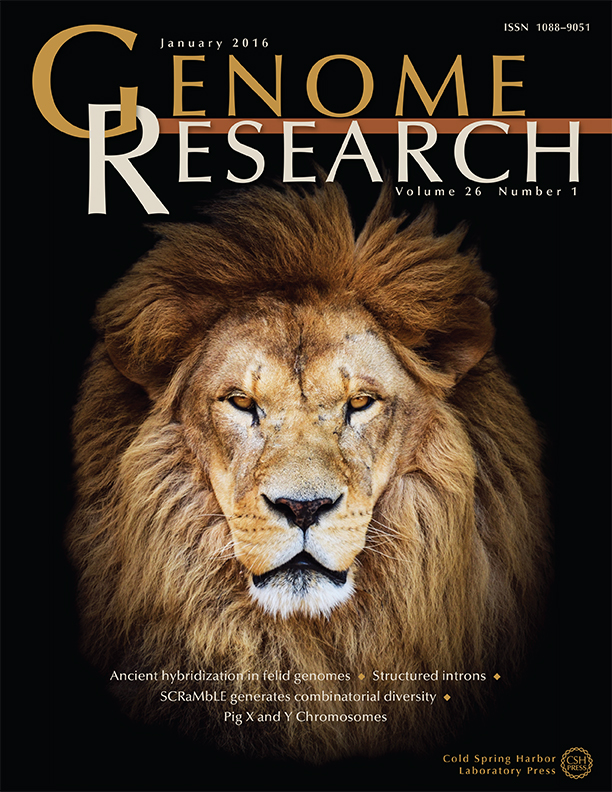
COLLEGE STATION, Texas – Research scientists at Texas A&M University and Pontifícia Universidade Católica do Rio Grande do Sul in Brazil have moved a step closer to understanding the rich evolutionary history of the cat family. In a paper, featured on the cover of Genome Research, the researchers constructed extensive family trees of the 38 cat species, which illustrated maternal, paternal, and biparental lineages within the cat family. However, they found that lineages are not completely linear. Instead, this study revealed that feline ancestry has been shaped throughout its evolutionary history by hybridization.

Genome Research
Cover of Genome Research

For this study, researchers used genome-wide Single Nucleotide Polymorphism (SNP) data-which identifies differences in individual base pairs-with genes from both the X and Y chromosomes and autosomal, or non-sex chromosomes, in addition to sequencing complete mitochondrial genomes, which indicate maternal lineage. This data was complemented by new whole genome sequencing data from the closest species to the domestic cat, as well analysis of the tiger, snow leopard, and lion genomes.

“Our results finally resolve much of the discrepancies in the literature over the past two decades as to how cats are related and the cause for many of the conflicts between different scientific publications, ” said Dr. William Murphy, professor in the Department of Veterinary Integrative Biosciences (VIBS) at the Texas A&M College of Veterinary Medicine & Biomedical Sciences and an author of the study.

“The results also highlight an emerging trend in the literature that hybridization between different species is common and may actually be adaptive. One novelty of our study is the illustration as to how common this process is across a broader phylogenetic scale-within an entire family of mammals-than previously has been shown in isolated pairs of species.”

“Dr. Murphy is an extremely meticulous investigator whose prior work helped create the field of phylogenomics, which uses genome analysis to establish evolutionary relationships of species,” said Dr. Evelyn Tiffany-Castiglioni, department head of VIBS. “This new work will contribute greatly to our understanding of hybridization as a force that has shaped and is shaping speciation in cats.”

The researchers found that there were nine differences between the maternal and biparental trees. For example, the maternal tree indicated that the puma lineage was more closely related to the lynx/bay cat group, whereas the biparental tree showed the puma lineage as more closely related to the Asian leopard cat/domestic cat group. Researchers concluded that the most likely cause of this, and other discrepancies between family trees based on different modes of inheritance, is due to ancient hybridizations. Hybrids may have then mated with non-hybrids, introducing variations back into the species.

Additional factors influencing feline evolution include the fact than male hybrids are more often sterile than female hybrids and the males are often more geographically dispersed than females.

“We identified traces of hybridization within the genomes of more than half of the eight cat lineages, where stretches of DNA sequences are far more closely related between pairs of non-sister species than would be expected by random processes,” Murphy said. “In several of these cases, the evidence for hybridization in the nuclear genome, which is inherited from both parents, is matched by similar patterns in the mitochondrial DNA, which is only inherited from the mother.”

Ancient hybridization may have led to the discrepancies between the biparental and maternal lineages of the snow leopard. Specifically, genes on the X chromosomes of lions and snow leopards were shown to have diverged at a more recent date than did genes on autosomal chromosomes. Additionally, snow leopards retained a mitochondrial genome that is more similar to the lions’ mitochondrial DNA, when compared to other parts of its genome. The study suggested that these results are likely due to early hybridization between the ancestors of the two species.

“We know that ancient hybridization in the wild is consistent with extensive evidence for hybridization that has occurred between many distantly related cat species in captivity, such as the liger-a male lion crossed with a female tiger,” Murphy said. “One of the world’s most popular cat breeds, the Bengal, is a hybrid between the domestic cat and the Asian leopard cat, and several other increasingly common cat breeds are of hybrid origin.”

The researchers also note that, while hybridization is a natural part of evolution, factors such as poaching, loss of habitat, and climate change have the capacity to affect future feline evolution, particularly in endangered species. They also emphasize the importance of understanding natural versus human-caused hybridization.

Texas A&M Scientist Leads Study to Unlock Genetic Secrets of the Dun Coat in Horses

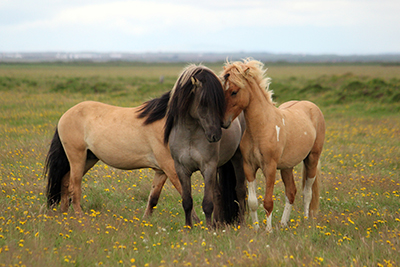
COLLEGE STATION, Texas – Today, horses come in a variety of coat colors, but most lack the camouflaging coat of their ancestors. However, a trace of that legacy remains in horses with the dun pattern, which characterized by pale hair covering most of the body, a dark stripe along the back, and zebra-like stripes on the legs. A recent study, published in Nature Genetics, reveals a new mechanism that explains the genetic roots of the dun pattern and uncovers why the pattern does not appear in most domesticated horses.

Three Dun Stallions
Three Dun stallions. From left: Bay dun, blue dun, and red dun. (Photo credit: Freyja Imsland)

The study is the work of an international team of scientists, led by Texas A&M University Institute for Advanced Study (TIAS) scholar Dr. Leif Andersson and is the result of a collaboration between groups at Texas A&M University, Uppsala University in Uppsala, Sweden, and the HudsonAlpha Institute of Biotechnology in Huntsville, Alabama.

The dun pattern camouflaged ancient wild horses, protecting them from predators. However, domestic horses, like other domestic animals, have been selected over many generations to appear different from their wild counterparts. As a result of selective breeding, most domestic horses today are not dun and have coat colors that are more intensely pigmentation and uniformly distributed across the body.

“Dun is clearly one of the most interesting coat color variants in domestic animals because it does not just change the color but the color pattern,” Andersson stated. “We were really curious to understand the underlying molecular mechanism of why the dun pigment dilution does not affect all parts of the body.”

“Unlike the hair of most well-studied mammals, the dilute-colored hairs from dun horses are not evenly pigmented,” explained Freyja Imsland, a Ph.D. student in Andersson’s group. “They have a section of intense pigmentation along the length of the hair, on the side that faces out from the body of the horse, whilst the rest of the hair has more or less no pigment. The hairs from the dark areas of dun horses are in contrast intensely pigmented all around each individual hair. In spite of scientists having studied hair pigmentation in detail for a very long time, this kind of pigmentation is novel to science and quite unlike that seen in rodents, primates, and carnivores.”

Genetic analysis and DNA sequencing revealed that the dun color is determined by a single gene, which codes for the T-box 3 (TBX3) transcription factor. “Previous studies in humans and laboratory mice show that TBX3 controls several critical processes in development that affect bones, breast tissue, and cardiac conduction,” explained Dr. Greg Barsh, whose group at HudsonAlpha led the tissue analysis. “We were surprised to find that TBX3 also plays a critical role in skin and hair development.”

Researchers measured TBX3 distribution in individual hairs relative to other molecules known to regulate pigmentation. The researchers suggest that the signals governing where TBX3 is expressed could help to explain zebra stripes. In horses that have lost their dun color, TBX3 mutations do not inactivate TBX3 protein function and instead only affect where, both on the individual hair and on the horse’s body, the gene is expressed.

“In growing hairs, TBX3 mirrors the distribution of melanocytes, the cells that produce pigment,” explained Kelly McGowan, a senior scientist in Barsh’s lab. “Our results suggest that TBX3 affects differentiation of specific cells in the hair, creating a microenvironment that inhibits melanocytes from living in the ‘inner’ half of the hair.”

The team also discovered that there are two forms of dark, non-dun color: non-dun1 and non-dun2, which are caused by different mutations. Non-dun1 horses differ from dun horses in that they have a darker coat and less contrast between the stripes and the rest of the body. On the other hand, non-dun2 horses show no stripes at all.

“Non-dun horses have much more vibrant color than dun horses. Non-dun1 horses tend to show primitive markings similar to dun horses, whereas non-dun2 horses generally don’t show primitive markings,” Imsland stated. “These primitive markings in non-dun1 horses can sometimes lead horse owners to think that their intensely pigmented non-dun1 horses are dun.”

The study indicates that the non-dun2 variant occurred recently-most likely after domestication. In contrast, the dun and non-dun1 variants predate domestication. Evidence of this conclusion can be found in the DNA of a horse that lived about 43,000 years ago, long before horses were domesticated, which carried both dun and non-dun1 variants.

“This demonstrates that horse domestication involved two different color morphs-dun and non-dun1-and future studies of ancient DNA will be able to reveal the geographic distribution and the abundance of the two morphs,” Andersson said.