Texas A&M Veterinarians Save Kitten’s Life With Rare Procedure

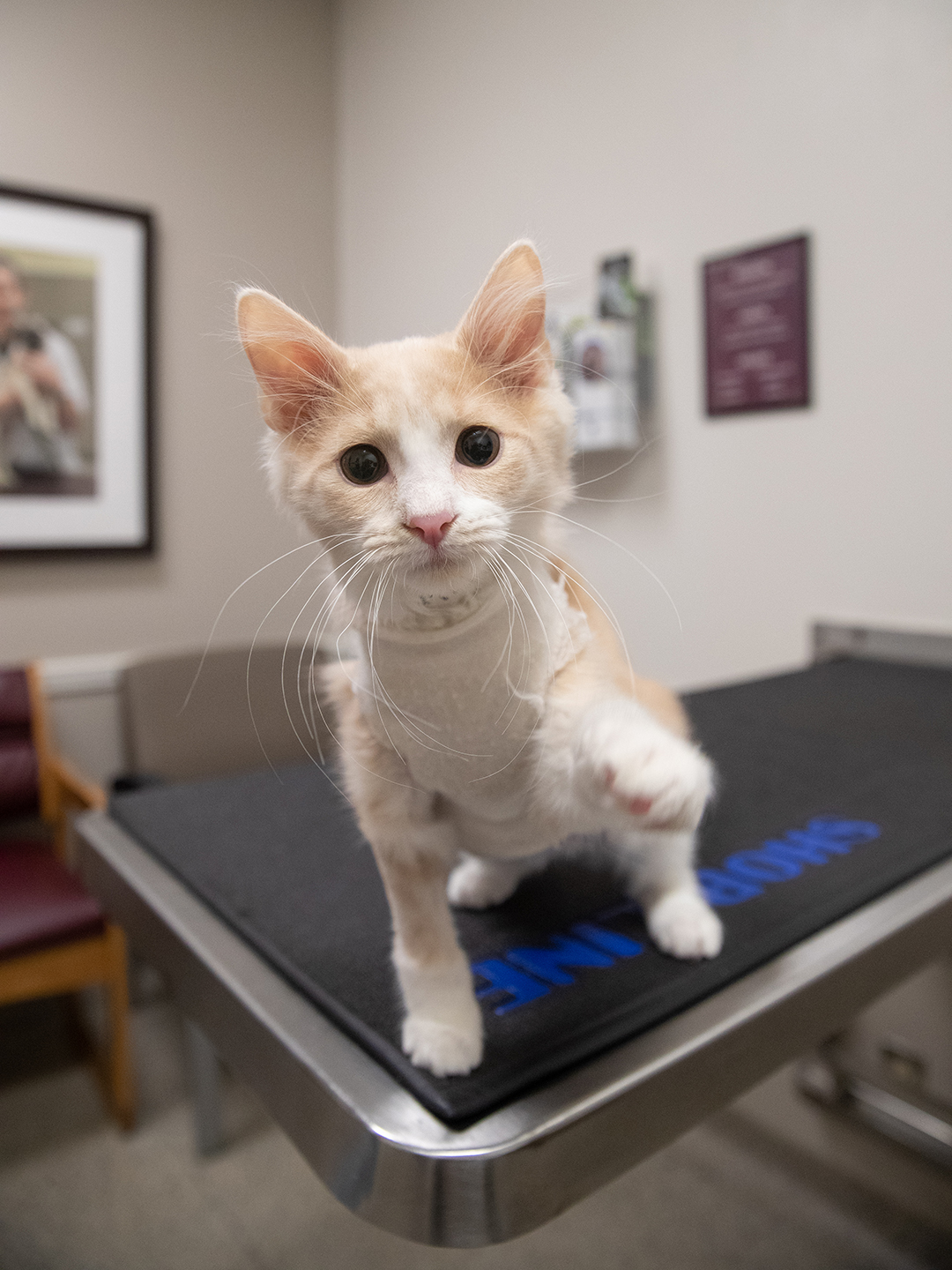
Pinky the kitten reaching a paw toward the camera
Pinky

Like most stories in veterinary medicine, Pinky’s starts with a trip to the veterinarian. The twist, however, is that the visit wasn’t even for him—the domestic longhair kitten just happened to tag along for his brother’s appointment when their veterinarian noticed he had a rare condition.

This chance observation was the first of several fortunate events that would end up saving Pinky’s life.

Pinky came to the Texas A&M Small Animal Teaching Hospital (SATH) at 3 months old with pectus excavatum, a condition that threatened his long-term survival and ability to function like a normal cat.

“Pectus excavatum is a congenital disorder in which the sternum doesn’t form properly,” said Dr. Chanel Berns, a first-year resident at the SATH. “Because the sternum is pointed inward toward the chest cavity, it can affect these patients’ hearts and their ability to expand their lungs.”

Fortunately, because of the many individuals who came together to support his care—from cat rescuers and fosters to a veterinary student and clinicians—Pinky is now on the path to a full, healthy life.

The Purrfect Match

It was a day like any other when Tammy Kidwell, founder of the Dallas-based rescue organization Cat Matchers, received a call that two stray 1-month-old kittens needed her help.

She took the nearly identical kittens—named “Pink” (which quickly developed into Pinky) and “Floyd,” in honor of the band—to a local foster, who cared for them for several weeks and coordinated their neuters.

The brothers were almost ready for adoption when Floyd began sneezing, leading their foster to schedule a check-up with a new veterinarian to make sure everything was OK. As luck would have it, Pinky decided to tag along and jumped in the kennel at the last minute.

“When the vet pulled him out of the carrier, the first thing she did was call me and ask if she could do an x-ray,” Kidwell said.

The new veterinarian had immediately noticed that Pinky’s chest did not feel like it should; she could feel his breastbone, or sternum, curving up toward his spine. Because of his tiny size and long hair, the abnormality was difficult to detect for those unfamiliar with the condition.

The treatment involved a rare procedure that no one in the Dallas area was willing to attempt, so Kidwell scheduled an appointment with Texas A&M and began searching for a medical foster in the College Station area, since Pinky would need weekly follow-ups at the SATH and Dallas is three-and-a-half hours away.

“All of my veterinarian friends reached out to their foster contacts but heard nothing,” Kidwell said. “On the day I drove him to A&M, I told a friend who heads a rescue group that I had nowhere for this cat to go when I picked him up later that week. She and three other rescue groups all reached out to their contacts in Central Texas that day and, finally, someone from A&M posted it on Facebook.”

It was there, on the Texas A&M School of Veterinary Medicine & Biomedical Sciences (VMBS) Class of 2025 Facebook group, that the post caught the eye of second-year veterinary student Molly Guyette, who was more than willing to give up some of her summer break to care for Pinky.

“It was an amazing way for all of the rescue groups to work together,” Kidwell said. “There were lots of moving parts that had to be put together and I was in awe when they all fell into place.

“Molly has been amazing, and she and her boyfriend have just been great with Pinky. She even set up a Google Drive just for me and his first foster where we can see his pictures every day,” Kidwell said. “I also told her, ‘You may not have been able to be in the surgery, but you are helping him recover from something rare and seeing it firsthand. As a vet, that’s going to come in handy.’”

A Pawsitive Outcome
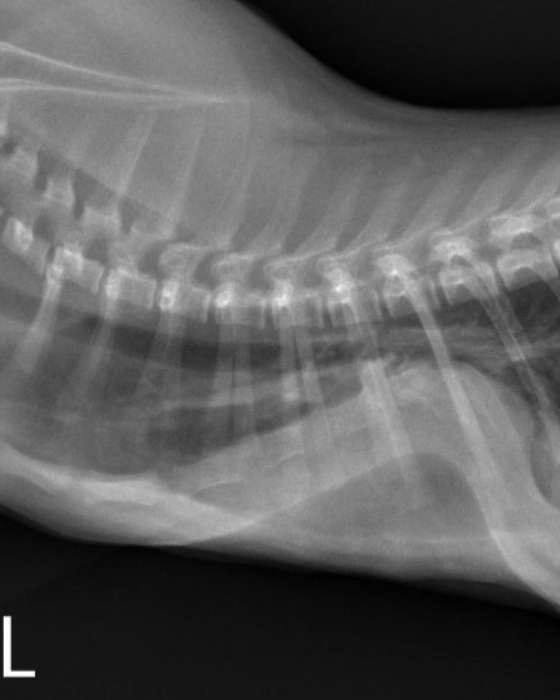
Radiograph showing Pinky's pectus excavatum
Radiograph taken before Pinky’s surgery showing the curved sternum

The treatment for pectus excavatum is performed about twice a year in the SATH’s Soft Tissue Surgery Service, making it a relatively rare procedure. Even so, Pinky’s care team—led by Berns, clinical professor Dr. Jacqueline Davidson, and third-year resident Dr. Catrina Silveira—was confident they could help him.

“Pectus excavatum really narrows the area where their heart is, and sometimes they can have trouble breathing from it,” Berns said. “What we do in these cases is essentially try to pull the sternum down, which puts his heart in a more normal position and gives him more ability to expand his lungs and live a healthier life.”

To move the sternum into the correct position, Pinky’s team placed an external splint on his chest that was connected to his sternum with a series of sutures. By tightening these sutures small amounts each week, they were able to gradually pull the sternum into place, similar to how braces straighten teeth.

This procedure needs to be done when the cat is no more than 3 months old for the bones to be able to move easily. Fortunately for Pinky, his condition was discovered just in time.

“With young cats like Pinky, their bones are still made up of a lot of cartilage, especially in that area, so the sternum is a lot more pliable,” Berns said. “Once cats get older, the cartilage in their sternum starts to get more mineralized, so the procedure doesn’t work as well and it’s harder to get an immediate improvement.”

That immediate improvement was especially evident in Pinky’s case, according to Berns.

“In Pinky’s first set of x-rays, before the splint was placed, he had a very small amount of his lungs functioning normally and his heart was very deviated to the side,” she said. “Then, in his immediate post-op images, you can see that the splint made a huge improvement right away. His lungs were able to expand and his heart was in the correct position.”

Along with internal improvements, Pinky’s behavior indicated that he began to feel better right away.

“Pinky has always been pretty happy and active but definitely much more so now,” Berns said. “Most of our cats and dogs that have had this procedure seem a lot more energetic after it. They had some exercise intolerance before surgery because they couldn’t expand their lungs properly, but afterwards, they just become like new animals.”

The splint was left in place and gradually tightened for four weeks, until the veterinarians felt that Pinky’s bones had mineralized enough that it could be removed and the sternum would stay in place.

Although there is still a chance Pinky will need surgery in the future, the splint ensured that he will be a happy, healthy kitten for the foreseeable future.

Feline Fine
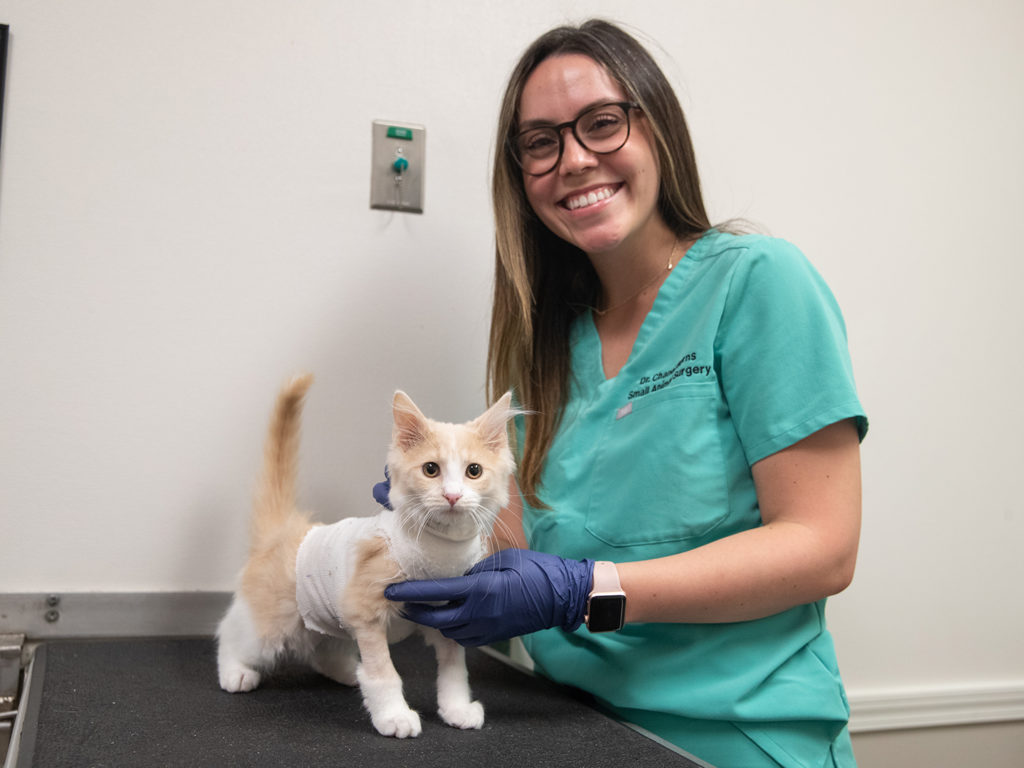
Pinky and Dr. Chanel Berns
Pinky with Dr. Chanel Berns

By the time Pinky finished his recovery, Guyette’s family had fallen in love and decided to adopt him. He and his brother had been separated long enough that they were no longer bonded, but Guyette’s roommate decided to adopt Floyd anyway so that the kittens could be closer together.

In addition to his case being full of lucky moments, one other thing everyone who has met Pinky can agree on is that he has a special talent for capturing hearts.

“The day I drove Pinky down to College Station, we left extra early and arrived an hour and a half before his appointment,” Kidwell said. “We were there so early that I decided to let him out of his carrier in the car. Cats usually want to explore and run around your car, and then you freak out thinking you’re never going to get them back in the carrier, but he immediately climbed into my lap and was perfectly content just lying there. He’s just the most laid-back, sweet cat.”

Even for those at the SATH, who see cats on a daily basis, Pinky’s case will be one to remember.

“He has got the most personality I’ve seen from a kitten in a while,” Berns said. “He had a lot of fans here, both on our surgery service and in the ICU. We had a lot of people who were kind of hopeful they would get to adopt him at the end of all of this.”

###

For more information about the Texas A&M College of Veterinary Medicine & Biomedical Sciences, please visit our website at vetmed.tamu.edu or join us on FacebookInstagram, and Twitter.

Contact Information: Jennifer Gauntt, Director of VMBS Communications, Texas A&M College of Veterinary Medicine & Biomedical Sciences, jgauntt@cvm.tamu.edu, 979-862-4216
VMBS Donors Establish Student Community Outreach Surgical Program

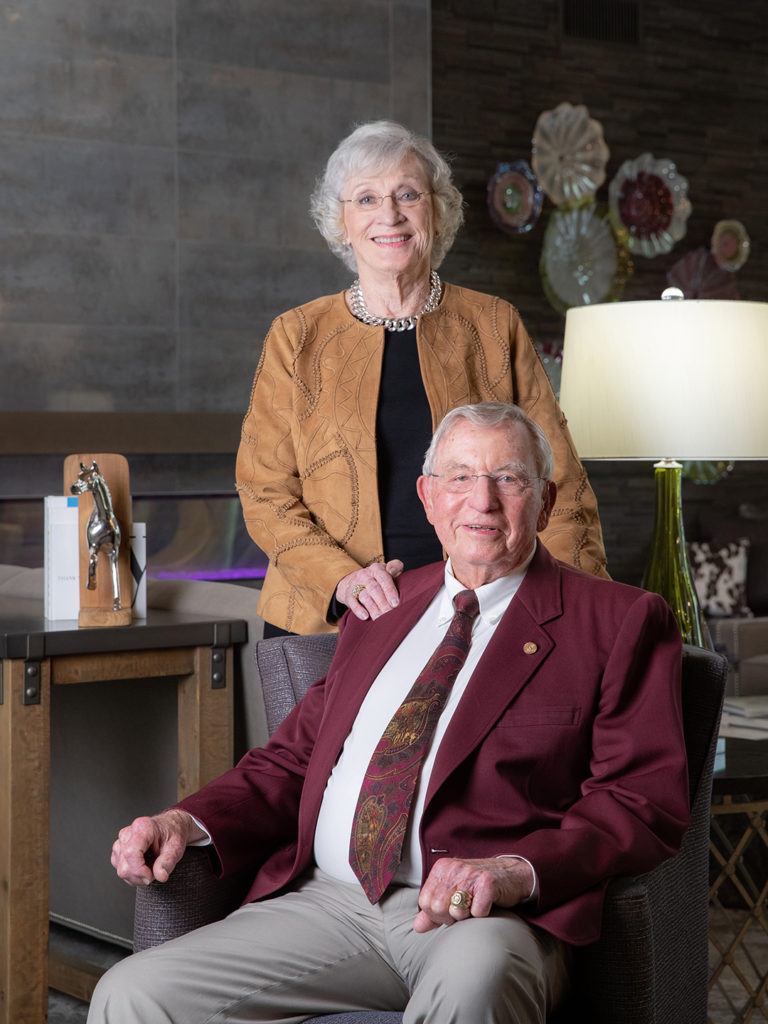
Dr. Bill and Joyce Roach in their home
Dr. Bill and Joyce Roach

Among the reasons Dr. Bill and Joyce Roach so dearly value education is because of the profound impact education has had on their lives.

“Graduating from veterinary school was a life-changing thing for me and my family,” said Bill, veterinary class of ’57. “Because of the education that I got here at Texas A&M, I was able to go out and practice, do what I wanted to do, and get paid for what I really wanted to do.”

Growing up in Andrews, Texas, in a family that didn’t have much, a professional education was a luxury Bill never thought he would have.

“My daddy was a carpenter and a painter, a really, really hard worker; we had a little place outside of town where we had milk cows, all kinds of chickens, big gardens, and an orchard,” Bill said. “We grew or raised nearly everything we ate.”

When the time came to make a decision about his education, Bill initially considered Texas Tech, which, at only 120 miles away, was considerably closer than College Station, but after visiting Texas A&M as a member of several high school agricultural teams, the choice was an easy one.

“I just thought Texas A&M was the premier university, and if you’re going to get an education, you go to a good one,” he said.

At Texas A&M, he was a member of the Corps of Cadets—an experience he said prepared him for veterinary school—and was originally an animal husbandry major, with plans to become a county extension agent.

“My second year, I was in class with pre-vet students, and I realized that if I became an agriculture agent, advancement would require moving from a county with a smaller population to a county with a bigger population,” Bill said. “Then I realized I wanted to try something that offered greater opportunities; since I was in classes with a bunch of pre-vet students, had good grades, and liked animals, I thought I would change my major to pre-vet and apply to veterinary school.”

As Bill entered the School of Veterinary Medicine & Biomedical Sciences (VMBS), he embarked on a path that would enable him to give back to Texas A&M in ways he never dreamed he would be able to.

Building A Home And A Practice

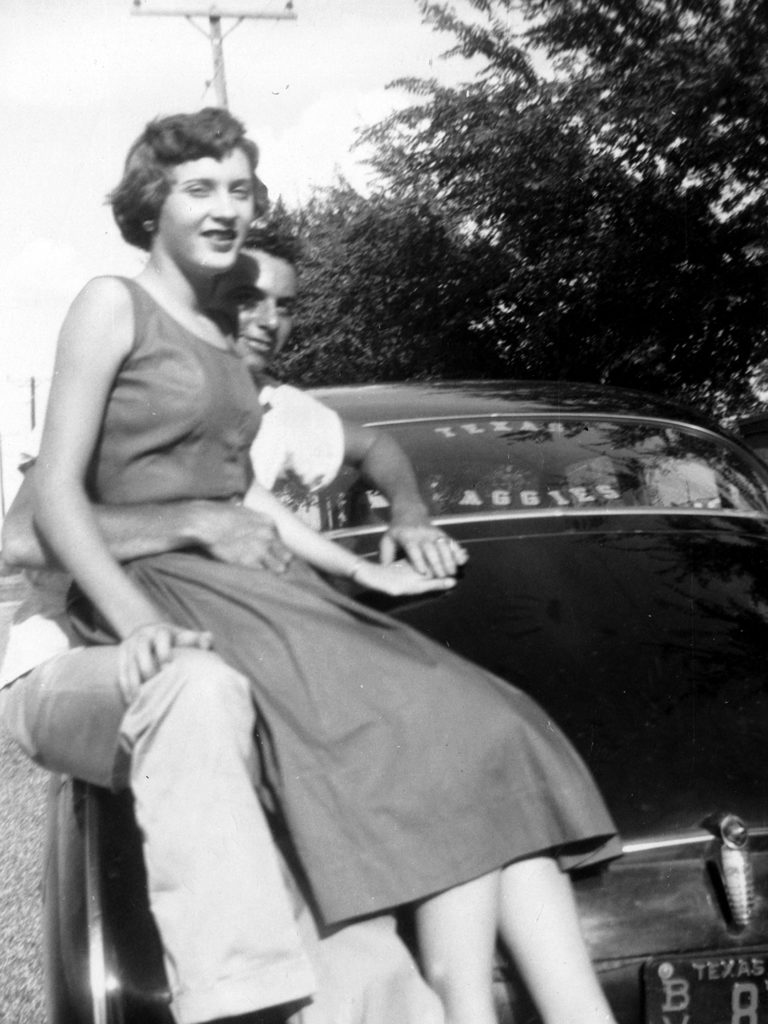
Young Joyce sitting on young Bill's lap on the hood of a car, black and white
Joyce and Dr. Bill Roach

As a veterinary student, Bill returned to West Texas in the summers and at Christmas holidays to work in the oil fields as a roustabout to earn enough money to continue paying for his six-year degree. It was there that he met Joyce, an Andrews transplant by way of California and Oklahoma.

“(We met because) I had a date with another boy, but I stood him up,” Joyce recalled. “When I asked my dad to tell him I wasn’t there, my dad said, ‘I am not going to lie for you.’ So, I had to get in my car and leave. I met Bill while I was ducking that boy.”

“That was just a lucky day, the day we met each other,” Bill said.

In 1956, between his junior and senior year in veterinary school, Bill and Joyce married, and that summer, Bill worked in a small animal hospital in San Angelo, not only applying the knowledge of medicine and surgery learned in the classroom but learning how to make a living as a business owner.

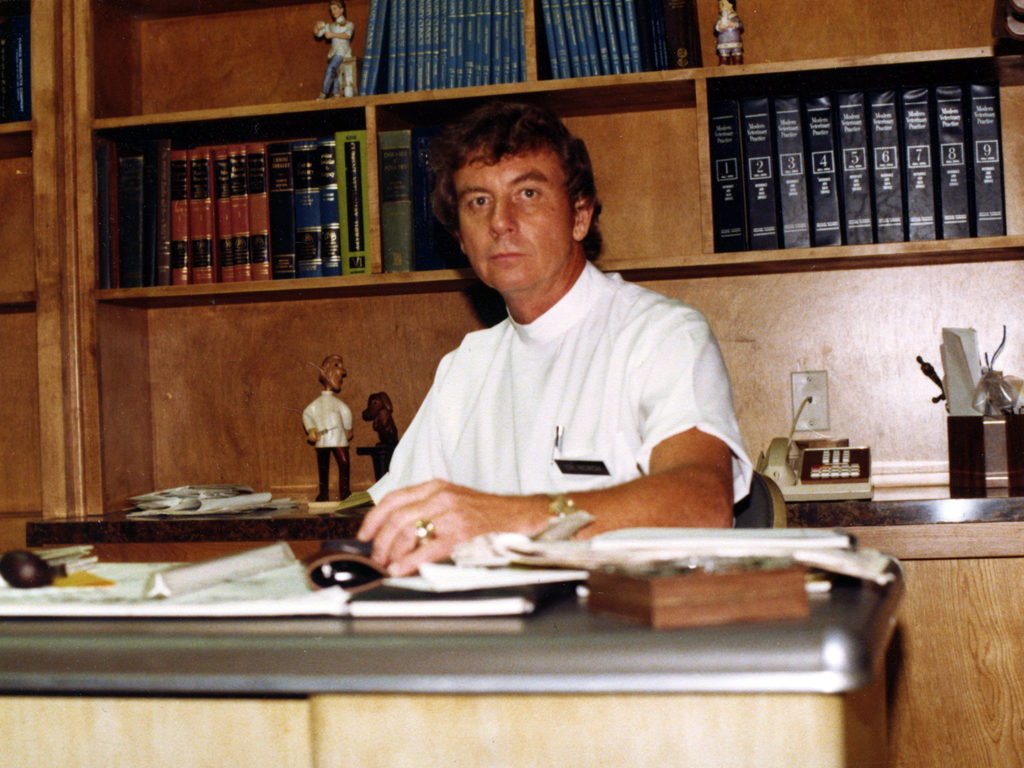
Following his graduation, Bill and Joyce moved to Killeen, where they raised their three children, owned Killeen Veterinary Clinic for 37 years, and lived “a good life.”

“Killeen was a really good place to grow up,” Bill said. “It was a very patriotic community, being right next to Fort Hood, the largest military base in the free world; probably half of my clients were either military or retired military.”

Among the encounters Bill had as a practitioner was caring for the dog of Gen. George S. Patton’s son, who was a two-star general at the time, and quarantining the dog that bit Elvis Presley when he was stationed at Fort Hood.

“He was trying to sneak through the backyard, so he wouldn’t come in contact with all of the teenagers who always drove up and down by his house,” Bill said, with Joyce adding that Presley had lived across the creek from them. “So, my claim to fame was being the veterinarian who quarantined the dog that bit Elvis Presley.”

But their proximity to Presley wasn’t as glamorous as one might think.

“At the time I didn’t even like him, because there were so many cars that went up and down the road,” Joyce said. “Those streets weren’t paved then and it was very dusty.”

A Commitment To Community

Young Bill Roach sitting at a desk in a veterinary office
Dr. Roach in his office

In 1958, the Roaches opened Killeen Veterinary Clinic with a lot of heart and a little know-how but very little money. 

“When I graduated from A&M, we had lived pretty poor for a time; we didn’t even have enough money to leave A&M when we moved to Killeen,” Bill said. “We borrowed $200 from the A&M Mothers’ Club, and they let me pay it back at, I think, $10 a month.

“It was pretty difficult, starting out on my own, with finding a place to set-up housekeeping and a decent car to drive; starting my own veterinary practice; and a daughter on the way,” he said.

While Bill had always had an affinity for surgery, he received most of his surgical experience as a veterinary student outside of the classroom, at the practice he worked at in San Angelo; in veterinary school at that time, the professors mostly performed the surgeries while the students watched.

“I had a great veterinary education, but I had to learn about how to make a living as an owner of a veterinary practice. I needed to learn about record keeping, real estate, taxes, and investments,” Bill said. “Education opens up so many opportunities, and I wanted the knowledge to participate in those opportunities.

“I never stopped being inspired by education and the life-changing opportunities it brings,” he said.

This is the resounding sentiment behind the Roaches’ decision to fund the Dr. William A. Roach ’55 Family Department Head Chair in Small Animal Clinical Sciences.

In early conversations the Roaches had with the VMBS Development team, including Dr. Bubba Woytek, and VMBS Small Animal Clinical Sciences Department (VSCS) head Dr. Jon Levine on how the funds would be used, Levine presented the idea to establish the Roach Family Student Community Outreach Surgical Program.

“When my family decided to endow this department chair in small animal surgery, I wanted it to do something meaningful for students, as surgery was the most interesting and rewarding part of veterinary practice for me,” Bill said. “I learned most of my surgical skills after graduation; I wanted today’s students to have more opportunities while in college to perform a greater number and variety of surgeries to build their skills and confidence while being taught by some really outstanding veterinary surgeons.

“Dr. Levine and his imaginative team expounded on my ideas and developed a program administered by students, with surgeries performed by students and monitored by surgeons on pets that risk being euthanized because of a lack of funds to pay for their surgery,” he said.

Because surgical procedures are being offered for Brazos Valley pets belonging to owners with limited financial means, who otherwise would not be able to receive the much-needed surgical care, the Roaches see the program as win-win.

In addition, students get experience in some of the business aspects of veterinary medicine, something Bill had to learn through mentorship and on his own.

And, as importantly, those living in the Bryan-College Station area, an area the Roaches love so much, get the benefit of more time with their animal companions. 

“Not only do we get to help the community, which is something Joyce and I have done all of our lives, but we get to help the community we are a part of,” Bill said.

The Roaches said they will forever be grateful to the A&M Mothers’ Club, which stepped in when they needed help the most, and in the spirit of Aggies helping Aggies, they are delighted that their generosity will impact two of the things Bill loves most—education and veterinary medicine.

“Everyone wins with these well-thought-out ideas,” Bill said. “Joyce and I are very pleased to be able to give back to Texas A&M and the School of Veterinary Medicine in return for all they have done for me and my family of Aggies.”

###

Note: This story originally appeared in the Summer 2022 edition of VMBS Today.

For more information about the Texas A&M College of Veterinary Medicine & Biomedical Sciences, please visit our website at vetmed.tamu.edu or join us on FacebookInstagram, and Twitter.

Contact Information: Jennifer Gauntt, Director of VMBS Communications, Texas A&M College of Veterinary Medicine & Biomedical Sciences; jgauntt@cvm.tamu.edu; 979-862-4216

VERO Research Director Named McIntosh Endowed Chair At Texas A&M

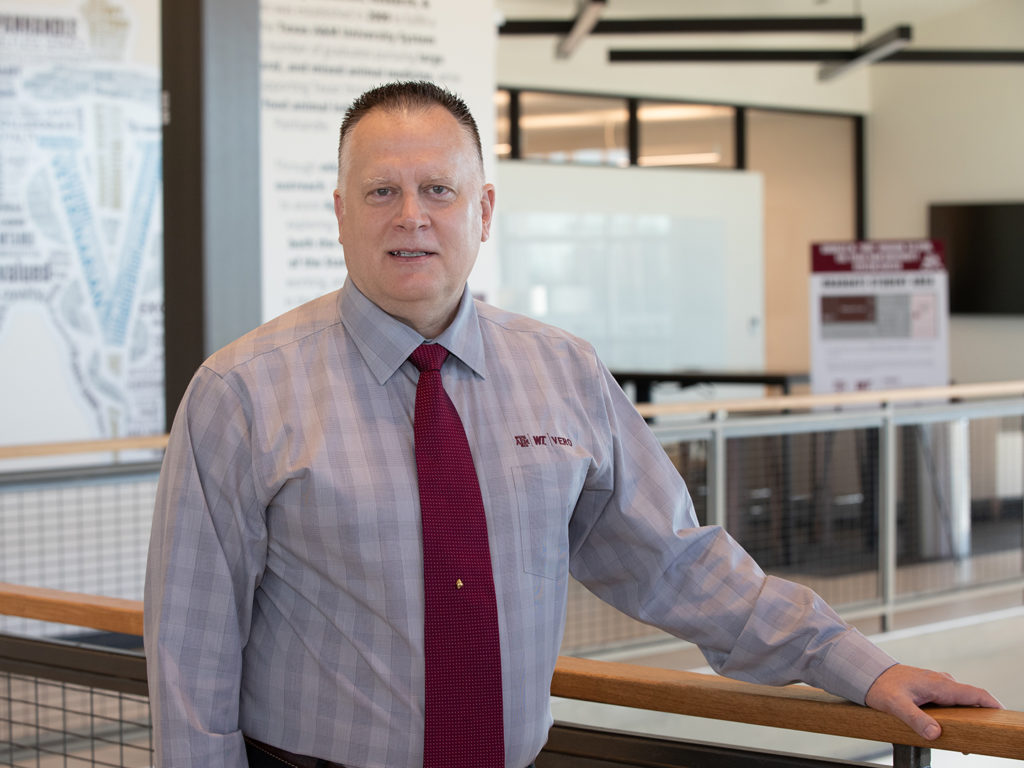
Dr. Paul Morley
Dr. Paul Morley

Dr. Paul Morley, a professor at the Texas A&M School of Veterinary Medicine & Biomedical Sciences (VMBS) and director of research for the Veterinary Education, Research, & Outreach (VERO) program, has been selected as the holder of the newly established Sally Rau McIntosh Endowed Chair for Veterinary Strategic Initiatives.

The chair was created by Sally Rau McIntosh in December 2021 to support the teaching, research, service, and professional development activities of its holder. Morley began his four-year term as the Sally Rau McIntosh Endowed Chair in September 2022.

As director of research, Morley supports the growth of research programs for all VERO faculty, supervises and provides oversight for research staff and laboratories, and promotes research exposure programs for veterinary and undergraduate students.

He is a productive researcher in his own right, having published more than 210 scientific journal articles in his career, 32 of these since the beginning of 2019. His primary research interests include antibiotic resistance, infectious diseases in food animals, and improving infection control and biosecurity to manage health risks that are important in veterinary medicine, agriculture, and public health.

During his career, Morley has received 124 awards totaling $16 million to support his research.

In addition to his administrative and research roles, Morley teaches courses on metagenomic sequencing, bioinformatics, and research techniques for graduate students at the VMBS and West Texas A&M University’s Paul Engler College of Agriculture and Natural Sciences.

Morley was recommended for the Sally Rau McIntosh Endowed Chair by a committee of four faculty members from within and beyond the VMBS.

“Dr. Morley has a proven track record of research funding and publication that has grown year over year,” said a representative from the committee. “This has borne out at Texas A&M, as Dr. Morley has led the VERO research faculty to acquire just under $5 million in research funding and have over 60 publications in print or accepted since 2019.

“Of equal importance to his own productivity is Dr. Morley’s track record of mentoring graduate students and young faculty in success,” the committee member continued. “Dr. Morley’s commitment to addressing issues of societal importance, including food safety and food production, is evident in his leadership of the VERO research program.”

Morley earned his Doctor of Veterinary Medicine (DVM) degree from Washington State University in 1989 and a Ph.D. from the University of Saskatchewan in 1995. In 1997, he became a diplomate of the American College of Veterinary Internal Medicine (Large Animal Internal Medicine).

Prior to joining Texas A&M in 2019, he held faculty positions at The Ohio State University, Colorado State University, and the Colorado School of Public Health.

Morley has won numerous awards throughout the years, including, most recently, the VMBS’ Outstanding Research Leader Award and the Texas Veterinary Medical Association Research Award in 2022.

###

For more information about the Texas A&M College of Veterinary Medicine & Biomedical Sciences, please visit our website at vetmed.tamu.edu or join us on FacebookInstagram, and Twitter.

Contact Information: Jennifer Gauntt, Director of VMBS Communications, Texas A&M College of Veterinary Medicine & Biomedical Sciences, jgauntt@cvm.tamu.edu, 979-862-4216
Texas A&M Veterinary Emergency Team Deployed By Governor Abbott To Assist Florida Hurricane Ian Response

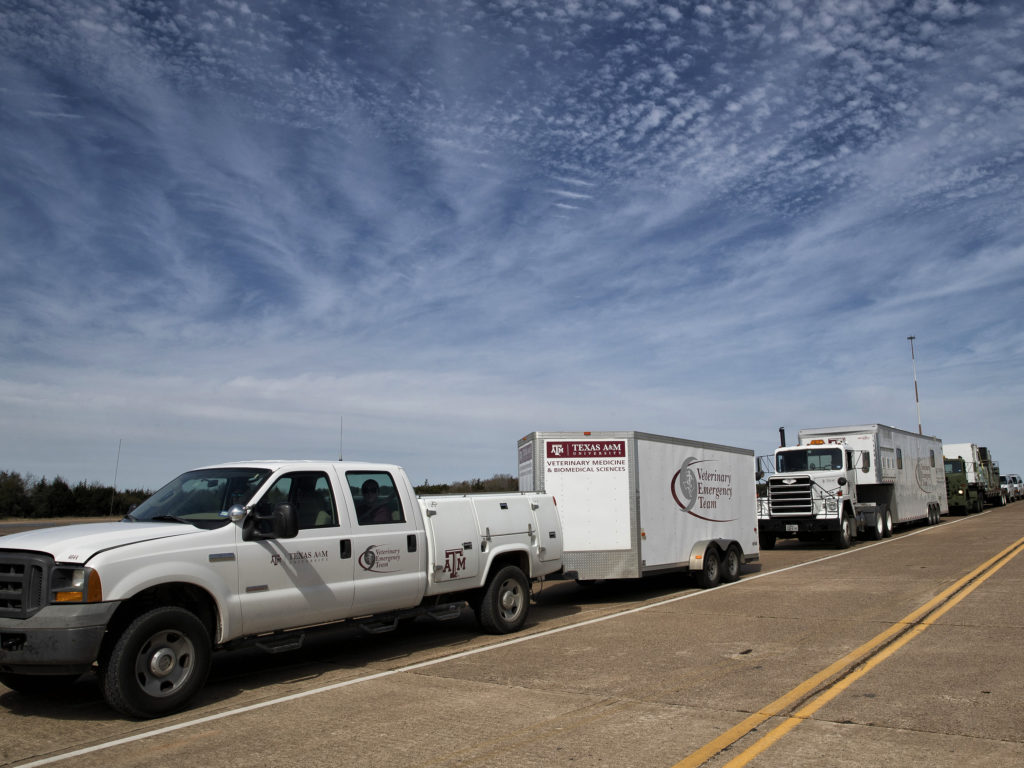
A caravan of Veterinary Emergency Team vehicles on the road

Thirteen members of the Texas A&M Veterinary Emergency Team (VET) and seven Texas A&M AgriLife Extension agents have been deployed to Florida by Texas Gov. Greg Abbott in response to Hurricane Ian, one of the deadliest storms to hit Florida in modern history.

The VET was activated on Oct. 4 at the request of Florida officials through the Emergency Management Assistance Compact.

The 13 VET members who deployed in the early hours of the morning will play a vital role in supporting the response and recovery efforts by offering veterinary support for more than 80 urban search and rescue (USAR) dogs, which represents one of the largest USAR deployments in history.

While the VET previously has deployed twice to California in support of wildfire relief efforts, this is the first deployment for the team to the East Coast.

Hurricanes are among the threats that the VET plans for frequently. While each hurricane presents unique challenges, VET director Dr. Wesley Bissett said there are some commonalities to how animals react in these situations.

“Virtually all disasters impact animals,” Bissett explained. “Traumatic injuries and other medical issues resulting from flood waters or storm surges are what we expect to see most with hurricanes. There also are always issues associated with the stress of what the animals will go through.”

Flood waters are very contaminated, which makes them particularly problematic for USAR dogs and resident animals alike. The VET developed a special decontamination unit to assist in removing the contaminants from the search-and-rescue dogs and other small animals brought to the VET base of operations.

Bissett said he and VET are thankful that the State of Texas is committed to a robust emergency response for animals.

“The State of Texas, under the guidance of the Texas Division of Emergency Management and Texas Animal Health Commission, has developed a robust emergency support system, as we all recognize that we must provide for the entire family, including pets, while also protecting the health and well-being of agricultural animals,” Bissett said.

In total, the Texas Division of Emergency Management (TDEM) has mobilized and deployed more than 100 personnel to support Florida’s response and recovery efforts, as directed by Abbott. Personnel deployed include:

  • Texas A&M College of Veterinary Medicine & Biomedical Sciences’ VET: consisting of seven veterinarians, six veterinary technicians, three small animal mobile medical platforms, and two mobile veterinary trucks – to provide veterinary support for more than 80 search and rescue dogs. 
  • Texas A&M AgriLife Extension Service’s Disaster Assessment and Recovery (DAR) Unit: consisting of seven DAR agents – to provide logistical and administrative support for the Texas A&M Veterinary Emergency Team.
  • Texas Telecommunicator Emergency Response Taskforce (TERT):  Deploying two 9-1-1 dispatchers – one from the Midlothian Police Department and one from the Hood County Sheriff’s Office – to assist impacted Florida counties with their post-storm dispatching responsibilities.    
  • Texas A&M Forest Service:

Additional resources may be deployed as requested.

Follow the VET’s actions on deployment on the VET Facebook page.

###

For more information about the Texas A&M College of Veterinary Medicine & Biomedical Sciences, please visit our website at vetmed.tamu.edu or join us on FacebookInstagram, and Twitter.

Contact Information: Jennifer Gauntt, Director of VMBS Communications, Texas A&M College of Veterinary Medicine & Biomedical Sciences, jgauntt@cvm.tamu.edu, 979-862-4216
VMTH’s Professional Counselor Supports Hospital Clients, Staff

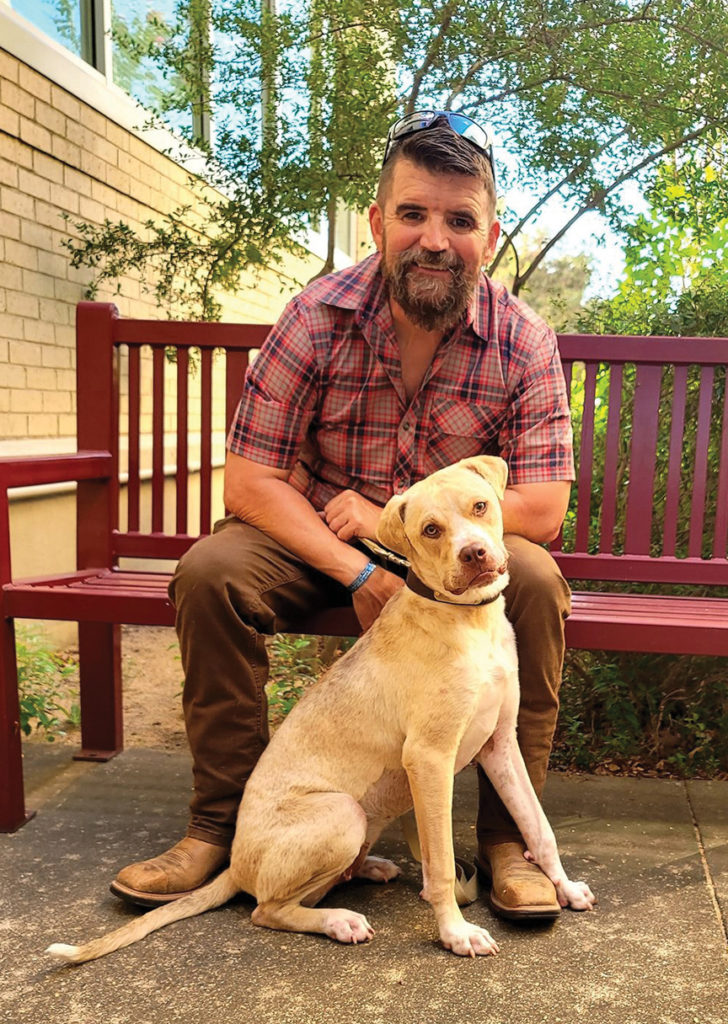
Michael Hawkins sitting on a bench outside with his dog
Michael Hawkins

Texas A&M University was there at a critical time in Michael Hawkins’ life.

“I’ve always had a severe learning disability, and academics were always extremely challenging for me,” he said. “But during my time at Texas A&M, I had professors and counselors who really helped me get through it, who helped me academically. Every time I went to a professor and said, ‘I’m struggling with this. Can you help me out?’ they would work with me.”

Now, as the Texas A&M School of Veterinary Medicine & Biomedical Sciences (VMBS) Veterinary Medical Teaching Hospital’s (VMTH) first full-time counselor, he’s hoping to return the favor.

“When I found this job, I saw it as an opportunity to help students, staff, and clients and just be there for their critical moments, too, just like people were there for me,” he said. “That was one of the really exciting things for me.”

Hawkins joined the VMTH at a time when more and more attention is being paid to the mental health side of the veterinary industry. He says it’s a dream opportunity to come back and make an impact at a place that had such an impact on him.

His challenges go back to childhood, when he learned that he had a severe type of dyslexia, which not only caused him to switch information around as he processed it, but also when he tried to recall it later.

“If I had to learn 123, my brain might process it as 321 or 312,” he said. “Then, as I recalled the information, my brain would scramble it again. It might be 132 at that point. I attended a school for children with dyslexia called The Winston School until the sixth grade. At that point in my life, graduating from high school would have been a huge accomplishment.”

Hawkins wasn’t satisfied with that outlook, though. He moved to a college prep high school, where things were even tougher; he studied at least three hours per night just to pass. When he was tested again, he was told that his disability was still severe and even if he graduated high school, it was even more unlikely he would be able to graduate from college.

However, he embraced that challenge also.

“My five years at Texas A&M were the most challenging I had ever faced,” he said. “I had to study harder than I ever had before. If I had a test, I would start studying weeks in advance, for hours and hours, to get a ‘C.’

“It was a constant battle for me to keep trying and to stay motivated, but I would often go to my professors for help, and every professor I approached was not only helpful, but encouraging,” he said. “They spent extra time with me and were very supportive.”

He originally studied finance but switched to psychology because, at the time, he wanted to help dyslexic children and their families.

“Many people think that learning disabilities only affect one’s academic life,” he said. “The reality is that it can have an impact on every aspect of a person’s life. It affects a person emotionally, socially, and even physically.”

Hawkins graduated from Texas A&M in 1991 and went on to earn a master’s degree in social work from St. Edward’s University in Austin. It was at St. Edwards that he discovered a passion for law enforcement that would guide him to a new career path—working with the Houston Police Department’s Crisis Intervention Response Team.

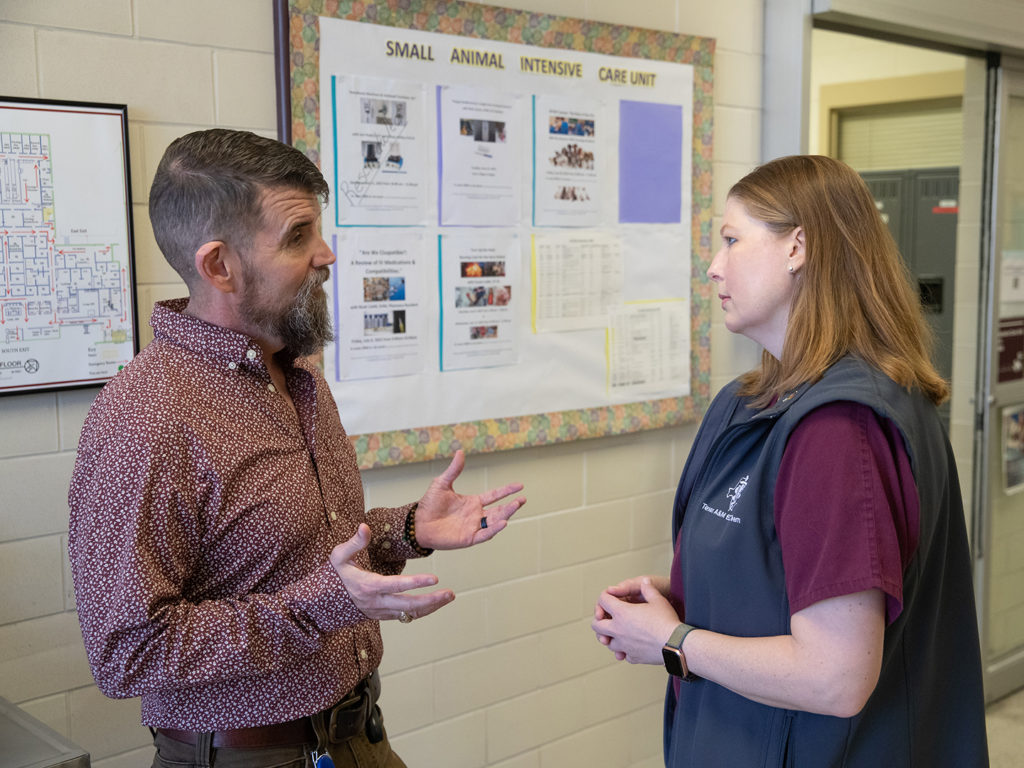
Hawkins talking to a VMTH clinician
Michael Hawkins counseling a VMTH clinician

Hawkins spent a decade in that role, during which he rode in a patrol car with an officer and responded to individuals in “severe crisis.”

“We responded to ‘the worst of the worst’ calls,” he said. “But one of the things I really liked about it—and I go back to my time at A&M—is that learning to overcome my disability actually helped me focus and problem solve quickly when I was on a call.

“I could go into these chaotic situations and the discipline that I had learned helped me,” he said. “In their most difficult times and challenges, I was able to connect with them, get them help, bring some kindness and compassion, and peacefully resolve the situation.”

Now, at the VMTH, Hawkins is using that experience as he works with the VMTH staff and clients who are facing difficult decisions and situations.

One of the challenges he has witnessed at the VMTH is that sometimes people don’t seek out the emotional support they need because of a perceived social stigma around having an emotional attachment to an animal.

“I’ve had people tell me that others have told them, ‘oh, it’s just a pet,’” he said. “But for a lot of people, pets are a part of their family, especially during COVID-19 when people can’t have the normal social interactions that they usually do. Animals provide that same comfort and companionship. So I have to tell people, ‘This animal is part of your family; it provided you support. Ignore anyone who’s saying otherwise.’”

Hawkins also uses his skills to support the hospital staff, something he said he’s looking forward to doing more of, especially because the mental health of those in the veterinary industry is something that was overlooked for too long, even as suicide rates rose in recent years in the profession. The VMTH is one of several veterinary hospitals that have added more support for the mental health of the staff.

“I see accomplishing that mission by helping the doctors and staff when they need to debrief, maybe taking on some of that emotional load,” he said. “Hopefully, by addressing the emotional side of things, they can also focus on the care of the animals.

“Veterinary medicine is more of an exact science, but I see the work that I do as more like an art,” he said. “Each situation is a little different and requires different skills, application, or interaction.”

Hawkins’ experience in dealing with chaotic situations also made him a perfect fit for the Veterinary Emergency Team (VET); Hawkins has deployed with the team once since joining VMTH.

“I was a part of a lot of crisis scenes in Houston and went into really active, very large, chaotic scenes,” he said. “I hope to be able to go into some of these scenes with the VET and provide support in that sense; do debriefings, if needed; and help make sure the team members are taking care of themselves.”

Even though the world of veterinary medicine is different from the types of scenes he responded to in Houston, he said there are universal aspects to the job.

“Grief is grief, and sadness is sadness,” Hawkins said. “When I was on patrol, I experienced people feeling profound grief, and here, the clients I’m speaking with at the hospital may be dealing with profound grief. Whether it is for an animal, a person, or something else, there are similarities.”

###

Note: This story originally appeared in the Summer 2022 edition of VMBS Today.

For more information about the Texas A&M College of Veterinary Medicine & Biomedical Sciences, please visit our website at vetmed.tamu.edu or join us on FacebookInstagram, and Twitter.

Contact Information: Jennifer Gauntt, Director of VMBS Communications, Texas A&M College of Veterinary Medicine & Biomedical Sciences; jgauntt@cvm.tamu.edu; 979-862-4216

‘Aggie Cow Vets’ Represent Texas A&M At Annual Bovine Practitioners Conference

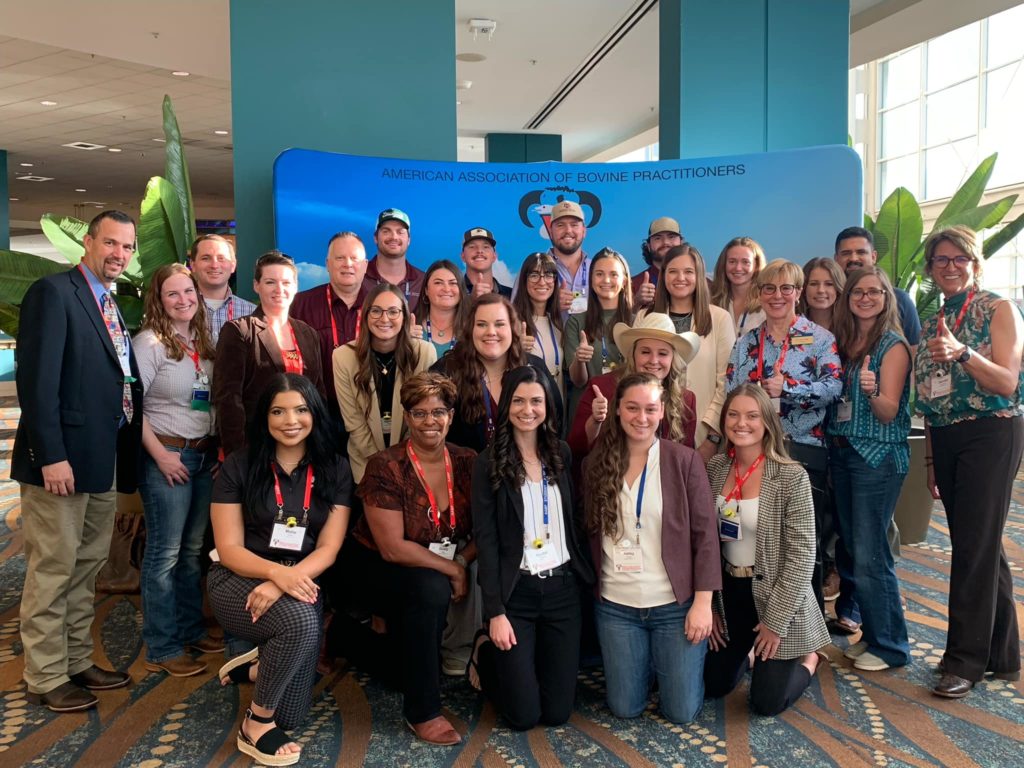
Texas A&M faculty and students in front of an AABP banner
Texas A&M students and faculty at the AABP conference

A group of faculty and students from the Texas A&M School of Veterinary Medicine & Biomedical Sciences (VBMS) recently brought home scholarships and awards from the 55th annual conference of the American Association of Bovine Practitioners (AABP) in Long Beach, California.

“AABP is the highlight of the year for many bovine practitioners,” said Dr. Jennifer Schleining, VMBS clinical professor and interim department head of Large Animal Clinical Sciences (VLCS). “It’s where we get to meet up with friends, share and learn new information relevant to the livestock industry, and have an opportunity for our students to network ahead of joining the bovine profession.”

During the conference, third-year veterinary student Tucker Roberts was awarded an AABP Amstutz Scholarship, the most prestigious award available to student members of the AABP. This scholarship supports superior students that demonstrate the character, knowledge, experience, motivation, and potential to become outstanding bovine veterinarians.

In the student case presentation competition, Aggie veterinary students made up four of the 10 students selected to participate. No other school was as well represented.

Texas A&M also brought home three awards from the competition; fourth-year veterinary student Rachel Henson received first place in the clinical case report competition and the best overall award for her presentation of a case of bilateral pneumothorax in a show steer, “Still Alive But Barely Breathing,” and third-year veterinary student Hailey Drerup received second place in the clinical case report competition for her presentation on a case of mycoplasma pneumonia, “So It’s Not The Throat…”

In total, sixteen students and nine faculty members attended the event to represent Texas A&M, participate in the AABP Quiz Bowl, and present research and case studies.

“We couldn’t be prouder of our students,” Schleining said. “Their preparation and hard work in the case presentation competition, the very competitive Quiz Bowl, and the scholarship application process showed, and I heard many comments in the crowd about how well represented Texas A&M was this year. We hope to keep the momentum up next year in Milwaukee!”

Faculty members who attended the conference to give presentations, moderate sessions, or serve in leadership positions included Drs. Sarah Capik, Virginia Fajt, Jenna Funk, Paul Morley, Dusty Nagy, BJ Newcomer, Matthew Scott, Lori Teller, and Robert Valeris-Chacin. Several of these faculty members teach 2+2 DVM Program students at the VMBS’ Veterinary Education, Research, & Outreach (VERO) campus in Canyon.

###

For more information about the Texas A&M College of Veterinary Medicine & Biomedical Sciences, please visit our website at vetmed.tamu.edu or join us on FacebookInstagram, and Twitter.

Contact Information: Jennifer Gauntt, Director of VMBS Communications, Texas A&M College of Veterinary Medicine & Biomedical Sciences, jgauntt@cvm.tamu.edu, 979-862-4216
Spotting Depression In Pets

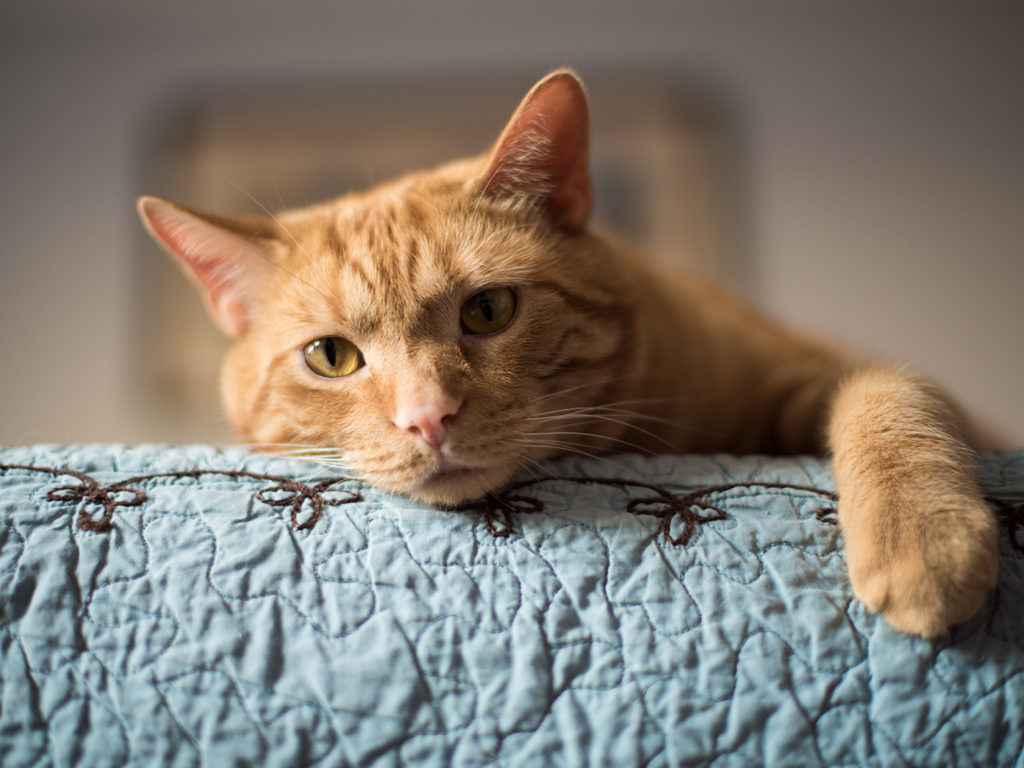
Orange tabby cat laying on the edge of a blue blanket

For pets accustomed to a certain routine or way of life, having to adjust to great or sudden changes can be extremely difficult. For some pets, these changes can even result in a depressive state. 

Dr. Ashley Navarrette, a clinical assistant professor at the Texas A&M School of Veterinary Medicine & Biomedical Sciences, says that depression in pets is usually associated with a major change or event.

“The most common event associated with depression in pets is the death of a family member—either a human or another pet,” Navarrette said. “However, it can also be caused by other events, such as a major change in routine; for example, a pet may have difficulty adjusting if a family member who was previously working from home has returned to work on-site.”

Pets that are depressed often act unlike themselves. Common symptoms of depression include hiding, acting reserved or unsociable, and experiencing a low appetite. Owners may also notice that pets no longer seem interested in activities they used to enjoy.

Navarrette emphasizes the importance of consulting a veterinarian if a pet displays these or any other unusual symptoms or behavioral changes, as owners should not immediately assume that depression is the cause; many medical conditions, such as chronic pain or disease, can result in a pet showing symptoms of depression. At a clinic, veterinarians will evaluate the pet for possible underlying issues.

“Depression is something that is difficult to diagnose,” Navarrette said. “Often, it is a diagnosis of exclusion, meaning you have to rule out all of the potential medical causes before assuming this is something behavioral.”

When it comes to treating depression in pets, the best route involves activity, engagement, and some tender, loving care.

“Generally, veterinarians don’t utilize medication for treatment of depression but, rather, encourage increased enrichment to keep a pet’s mind active,” Navarrette said. “We may also recommend spending more time with pets that may be dealing with depression.”

Seeing your pet acting sad, lethargic, or unlike itself for any reason is difficult. Getting an appointment with a licensed veterinarian is the best way to develop a treatment plan and ensure that there isn’t an underlying medical issue at play.

With plenty of care and lots of love, owners can help their pets bounce back from a difficult time as quickly as possible.

Pet Talk is a service of the College of Veterinary Medicine & Biomedical Sciences, Texas A&M University. Stories can be viewed on the web at vetmed.tamu.edu/news/pet-talk. Suggestions for future topics may be directed to vmbs-editor@tamu.edu.

Ferret Receives Lifesaving Pacemaker At Texas A&M SATH

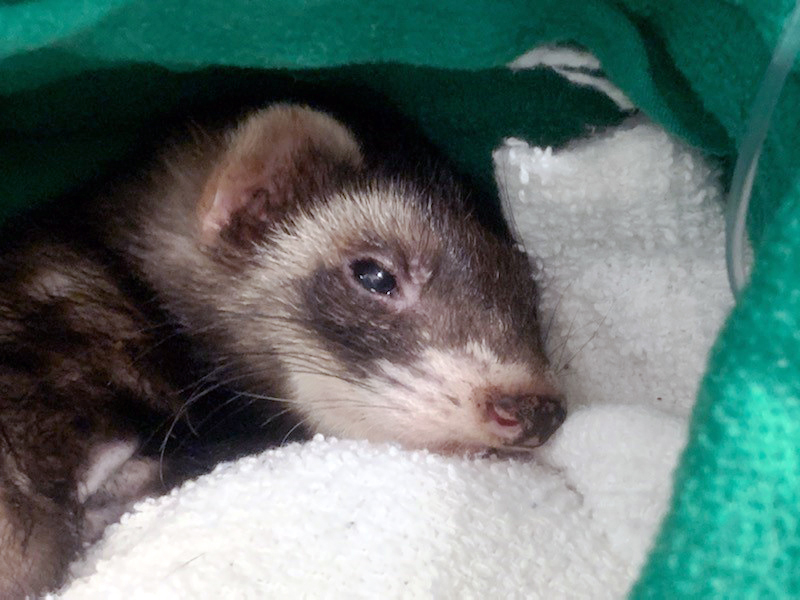
Close up of a ferret's head
Hypnos, the ferret

It’s not every day that veterinarians at the Texas A&M Small Animal Teaching Hospital (SATH) get to sew a pacemaker onto a beating heart roughly the size of a grape. In fact, until March 2021, the procedure had only been done twice at the hospital.

But when Hypnos, a 5-year-old ferret, arrived at the SATH with a very slow heart rate, a team of more than a dozen veterinary specialists, technicians, and students took on the challenge of helping the beloved pet return home healthy to his owner and ferret friends.

And a challenge it was, as this was the first ferret pacemaker procedure at the SATH in almost 10 years.

Hitting The Books

Hypnos’ experience began when owner Charles Teel took him to Gulf Coast Veterinary Specialists in Houston after noticing signs of lethargy and gastrointestinal issues. Their exotics specialist Dr. Becky Pacheco performed an electrocardiogram and discovered that Hypnos had a pathologic arrhythmia, or abnormal heart rhythm, called third-degree AV block.

“That’s when, essentially, the top chamber and the bottom chamber of the heart aren’t talking to one another and the signal cannot get from the top to the bottom of the heart to tell it to beat,” said SATH veterinary resident Dr. Blakeley Janacek, Hypnos’ primary cardiology doctor. “If the electrical bridge between the two is out, then the heart does not beat nearly as fast as it should.”

The best course of treatment for this condition, which is also seen in people and many other animals, is the surgical implantation of a pacemaker to manage the heartbeat with electrical impulses.

Pacheco suggested bringing Hypnos to Texas A&M, where veterinary cardiologists implant pacemakers on a regular basis. Because most of these patients are dogs, however, the Aggie veterinarians began doing research right away to learn as much as possible about other pacemaker cases in ferrets; they learned the first was reported in 2006.

“That was homework that we all enjoyed,”  Janacek said. “It was a fun adventure, with the benefit of getting to help a little guy.”

It Takes A Village

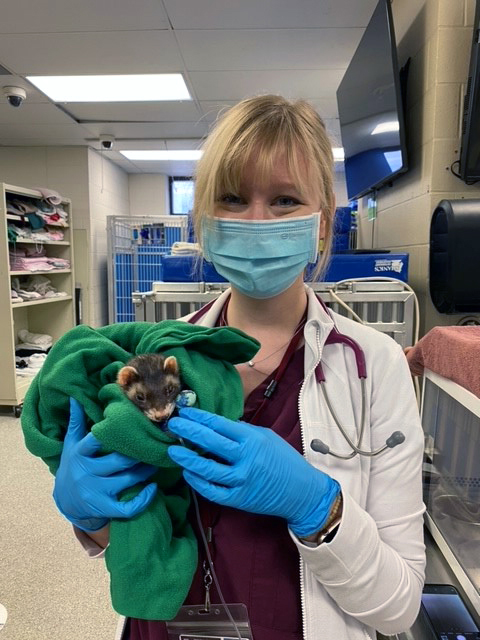
Janacek holding Hypnos wrapped up in a blanket
Dr. Blakeley Janacek and Hypnos

Once Hypnos arrived at the School of Veterinary Medicine & Biomedical Sciences (VMBS) for his operation, Janacek was joined by a large team of colleagues, including Dr. Ashley Saunders, a veterinary cardiologist and VMBS professor; Dr. Vanna Dickerson, a veterinary surgeon and VMBS assistant professor; Dr. Dalton Hindmarsh, an emergency & critical care veterinary resident; and Dr. Mauricio Lepiz, an anesthesiologist and VMBS clinical associate professor.

In addition, numerous other residents, technicians, and fourth-year veterinary students played a role in ensuring the success of Hypnos’ procedure.

“I was just a very small piece of the puzzle,” Janacek said. “It was really, really important that we had everybody in place and that we were able to work together. That’s one of the cool things about working here at Texas A&M.”

Although the SATH did not have an exotics specialist available for Hypnos’ case, Hindmarsh and Dr. Rachel Ellerd (a fourth-year veterinary student at the time) both had experience with ferrets and helped care for him before, during, and after the procedure.

“We wouldn’t have been able to bring him in if Dr. Hindmarsh was not so comfortable working with ferrets,” Janacek said. “Rachel was also a good resource for anyone who had general ferret husbandry questions. She was super comfortable handling him, so she was a big asset to the team.”

Ellerd, a recent graduate who is specializing in exotic pet medicine, felt that fate was on her side in that she happened to be doing her cardiology rotation when Hypnos arrived at the SATH, which typically does not see many exotic pets.

“I was able to use my background in exotics to help with his history-taking, physical exam, and treatment while he was here,” said Ellerd ‘21. “Being a part of the third ferret pacemaker surgery ever performed at Texas A&M and seeing so many specialists come together really made me excited for my future in exotic pet medicine.”

A Ticking Clock

Hypnos after his pacemaker was installed

As the surgery began, the veterinarians knew they would need to be extra careful while working on such a small animal, but they also needed to work quickly so Hypnos wasn’t under anesthesia for too long.

“The biggest concern was if the team could move fast enough, because once we start anesthesia, the heart rate can go down,” Janacek said. “It involves getting him anesthetized, positioned, prepped, and draped; a surgeon getting into his abdomen and then his chest to sew the pacemaker onto his heart; and plugging the battery in—all with the clock ticking.

“There were moments of stress, but everyone was so enthusiastic and willing to work to help save the patient that we just plowed ahead, doing our best to get him paced, awake, and home doing ferret-like things,” she said.

As time went on, the veterinary team showed the depth of their talents as they worked to get everything done in time.

“We have a tremendous anesthesia team that facilitates a lot of things in this hospital and helps a lot of different species. They’re fantastic—those are tiny little ferret vessels you’re talking about putting catheters in,” Janacek said. “And Dr. Dickerson was the surgeon who sewed the pacemaker onto a very, very tiny beating heart, which is a really tremendous feat.”

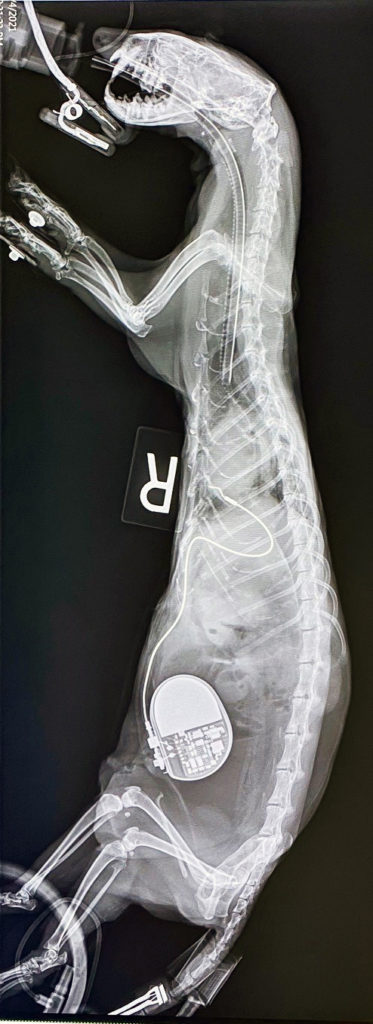
Once the pacemaker was attached to the outer walls of the heart, its lead was connected to a battery pack that was placed in Hypnos’ abdomen.

When preparing Hypnos for surgery, the veterinary team also discovered a tumor on his pancreas called an insulinoma that was causing low blood glucose. Luckily, this tumor was easily removed during the pacemaker procedure.

About two hours after the surgery began, Hypnos was stitched up and ready to begin his recovery.

Back To ‘Ferret-Like’ Things

Hypnos’ improvement was almost immediate. His blood glucose returned to normal levels within 48 hours of removing the tumor and he was already feeling playful the day after surgery.

Thanks to his new pacemaker, Hypnos’ heart will keep a steady rhythm at 120 beats per minute, allowing him to live the rest of his life without any danger from his heart condition.

Looking back, Janacek is proud of the team effort that went into ensuring Hypnos’ recovery, by both his veterinary team and devoted owner.

“He would not have had much of a life if we didn’t do the procedure,” Janacek said. “It was good that his owner was able and willing to pursue the surgery. Every ferret owner I’ve ever met has been extremely kind and cares a lot about their little ferrets, but Hypnos’ owner was uniquely dedicated.” 

###

Note: This story originally appeared in the Summer 2022 edition of VMBS Today.

For more information about the Texas A&M College of Veterinary Medicine & Biomedical Sciences, please visit our website at vetmed.tamu.edu or join us on FacebookInstagram, and Twitter.

Contact Information: Jennifer Gauntt, Director of VMBS Communications, Texas A&M College of Veterinary Medicine & Biomedical Sciences; jgauntt@cvm.tamu.edu; 979-862-4216

Aggie Parasitologists Represent Texas A&M At American Heartworm Society Symposium

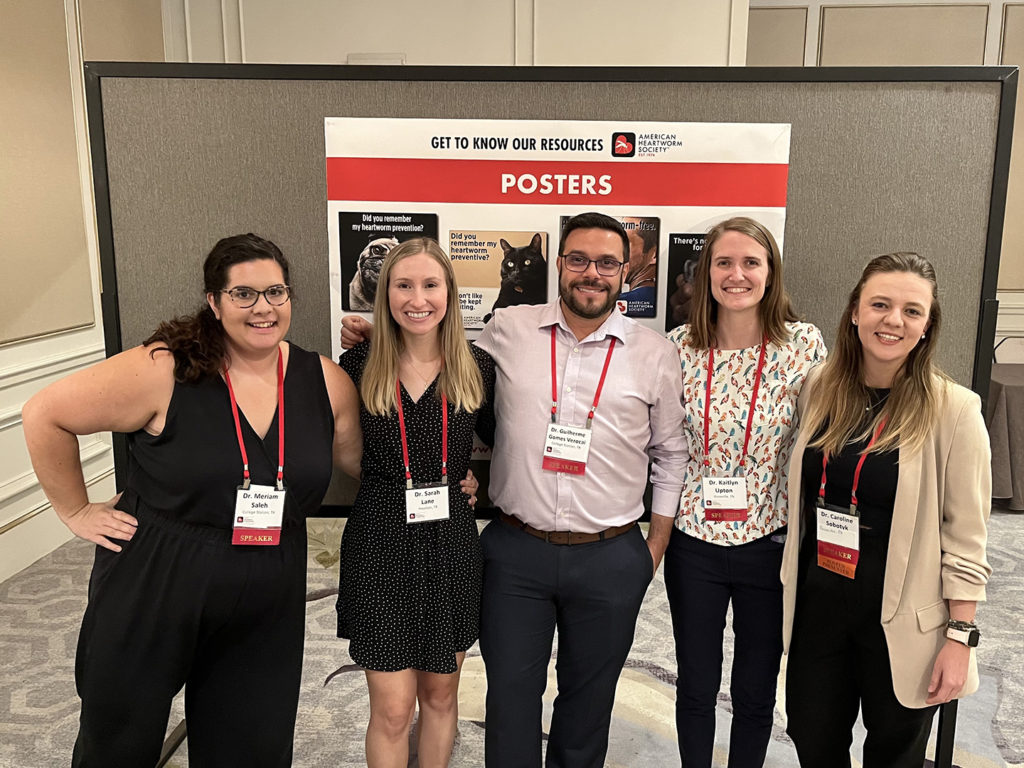
Parasitology group at the symposium
Drs. Meriam Saleh, Sarah Lane, Guilherme Verocai, Kaitlyn Upton, and Caroline Sobotyk

A group of veterinary parasitologists from the Texas A&M School of Veterinary Medicine & Biomedical Sciences (VMBS) gave presentations on their recent research at the American Heartworm Society’s (AHS) Triennial Symposium earlier this month.

The symposium—which is held every three years for presenting the latest research on heartworm (Dirofilaria immitis) disease, diagnosis, and prevention—took place from Sept. 8-11 in New Orleans. This year’s theme was “Today’s Discoveries, Tomorrow’s Practice” and highlighted the bridge between research and practice.

Those in attendance representing the VMBS were Drs. Meriam Saleh and Guilherme Verocai, clinical assistant professors in the Department of Veterinary Pathobiology (VTPB); Dr. Kaitlyn Upton ’22, a recent veterinary graduate now completing a large animal internship at the University of Tennessee; and Dr. Caroline Sobotyk, a faculty member at the University of Pennsylvania who recently completed her residency and postdoctoral research in Verocai’s lab.

“Being able to attend the American Heartworm Society Triennial Symposium as part of the A&M team was fantastic,” Saleh said. “The AHS symposium is unique in that it only happens every three years, it combines research findings with continuing education for practitioners, and it is well-attended by both scientists and veterinarians.”

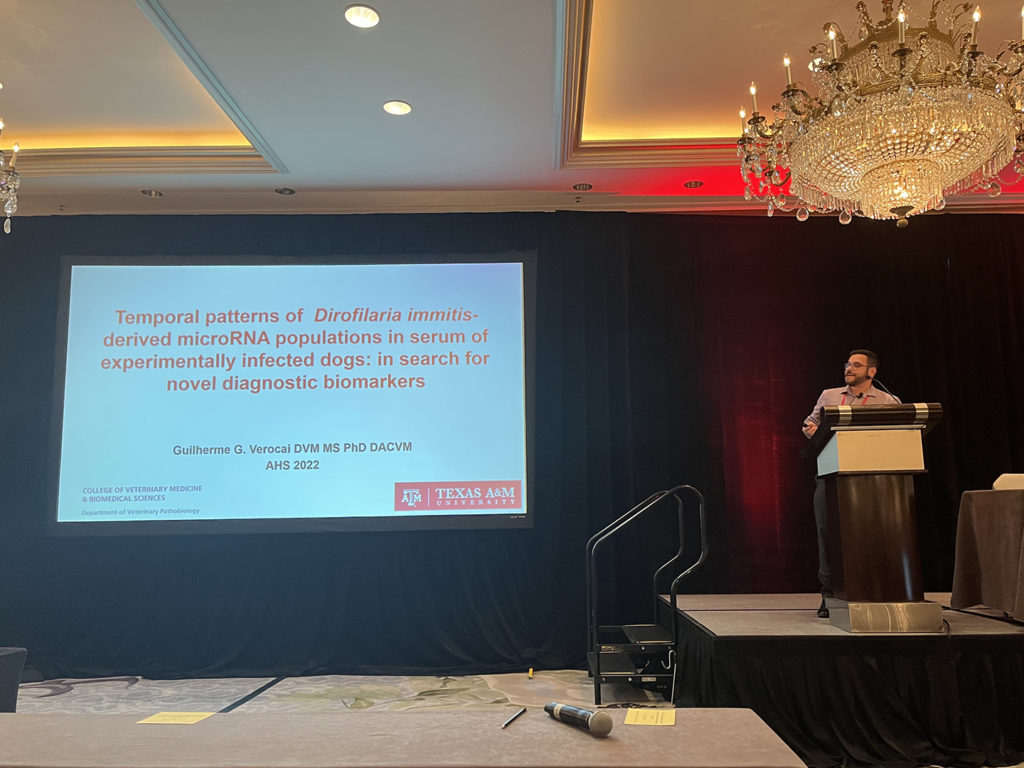
Verocai at a podium discussing reearch
Verocai presenting research at the symposium

The team gave presentations on several recent heartworm research projects conducted at the VMBS, with topics including heartworm detection, biomarkers, and prevalence.

“Some folks may think that heartworm is all figured out, but there is so much we don’t know, especially about heartworm in cats,” Saleh said. “While we have heartworm prevention for dogs and cats, not everyone uses it, and it really is a shame because heartworms cause a horrible multisystemic disease that can be fatal, but is preventable.

“You can’t detect heartworm infections until six to seven months after they happen, so earlier detection of infections is an area of research that Dr. Verocai’s lab works on quite a bit,” she continued. “It is because of things like this that conducting heartworm research is still important, and AHS is such a great avenue to share what we are working on, as most of the veterinarians who attend are very interested in heartworms and likely see a lot of cases in their clinics.”

The team’s presentations included:

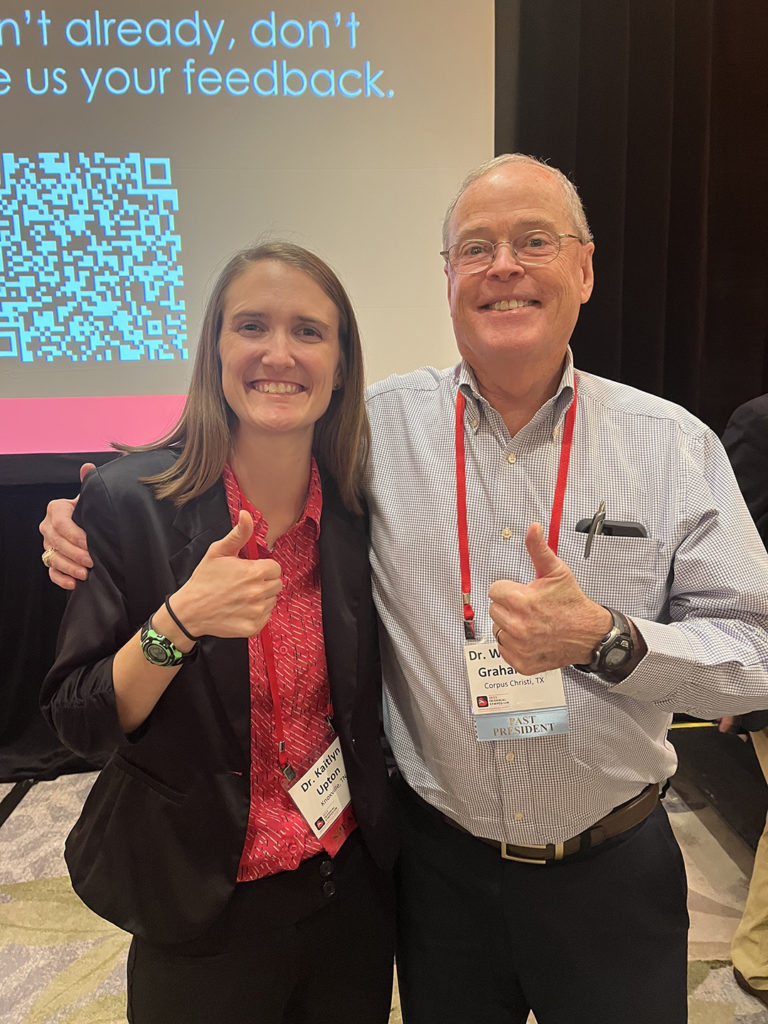
Upton and Graham doing gig 'ems
Drs. Kaitlyn Upton and Wallace Graham
  • Saleh: “Evaluation of urine for Dirofilaria immitis antigen detection in dogs”
  • Verocai: “Temporal patterns of Dirofilaria immitis–derived microRNA populations in serum of experimentally infected dogs in the search for novel diagnostic biomarkers” and “Probe-based qPCR as an alternative Knott’s test when screening dogs for heartworm infection in combination with antigen detection tests”
  • Upton: “Heartworm, Dirofilaria immitis, in carnivores kept in zoos located in Texas, USA: Risk perception, practices, and prevalence”
  • Sobotyk: “Detection of Dirofilaria immitis via integrated serological and molecular analyses in coyotes from Texas, USA” and “Assessing the field performance of a cell-phone based video-microscope for diagnosing heartworm infections in dogs”

The Verocai Lab team was excited to meet up with several fellow Aggies at the symposium, including Dr. Sarah Lane ’22, who previously served as the VMBS’ AHS student representative, and Dr. Wallace Graham ’75, a past-president of the AHS.

###

For more information about the Texas A&M College of Veterinary Medicine & Biomedical Sciences, please visit our website at vetmed.tamu.edu or join us on FacebookInstagram, and Twitter.

Contact Information: Jennifer Gauntt, Director of VMBS Communications, Texas A&M College of Veterinary Medicine & Biomedical Sciences, jgauntt@cvm.tamu.edu, 979-862-4216
Texas A&M SATH Clients Help Ensure Top-Notch Patient Care For Generations To Come

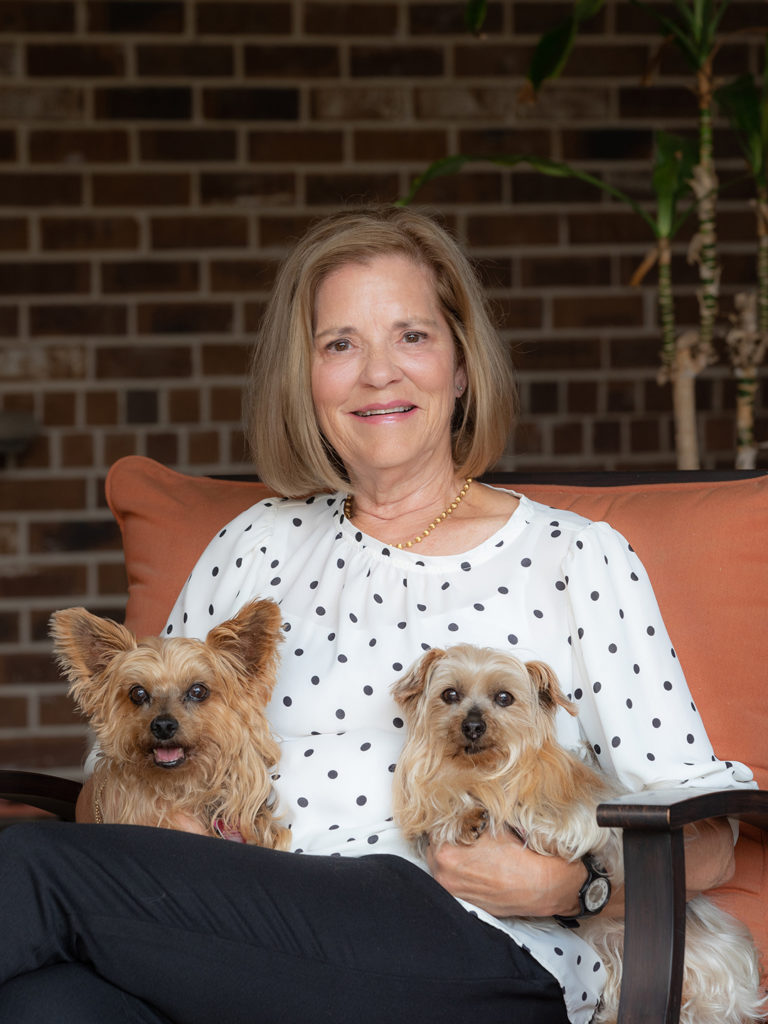
Bickie Coffee sitting holding her two small terrier dogs
Bickie Coffey, Baby, and JoJo

Bickie and Bill Coffey don’t just want the best for their own pets; they want the best for everyone’s pets.

That love of animals and the human-animal bond are why some clients at the Texas A&M School of Veterinary Medicine & Biomedical Sciences’ (VMBS) Small Animal Teaching Hospital (SATH) have found their bills mysteriously paid.

It’s why the Coffeys will do whatever it takes for their pets to get care at Texas A&M, whether that’s flying them from Wyoming to Texas for emergency care or braving the worst ice storm in a generation.

And it’s why the Coffeys have not only been strong vocal supporters of a new small animal teaching hospital at Texas A&M but strong philanthropic supporters as well.

“After all Texas A&M’s Small Animal Teaching Hospital has done for our family, this is the least we can do,” Bickie said. “I’m ready to see this thing get built.”

A Convoy In The Cold

The Coffeys’ passion for their pets and the trust they have in the SATH clinicians and support staff are demonstrated in an experience Bickie had during the statewide freeze in February of 2020.

During the freeze, the Coffeys’ small Yorkshire Terrier, JoJo, was having vomiting episodes and needed to be seen by a veterinarian. When Bickie called the College Station Police Department’s non-emergency number to check on the road conditions, the officer told her that they were encouraging everyone to stay off of the roads.

“She was the nicest officer; she had such sympathy for my fur baby,” Bickie said. “She asked me how I would get to A&M, and when I told her down Wellborn, she said they had officers all along Wellborn who would keep an eye on me.”

The SATH ended up needing to keep JoJo overnight, and as Bickie was walking back to her car, one of the electrical workers coming into town asked her where she was headed. Since they were going the same direction, they allowed her to join the convoy of electrical workers on their way through town.

For the Coffeys, this experience was an especially powerful reminder that while much of the city was stuck at home, there was a place they could rely on to help their pets in a critical time of need. At all hours of the day or night, in the midst of a global pandemic and a historic ice storm, there were people who would stop at nothing to provide that care.

“I felt silly going out in the bad weather, to be honest, but JoJo needed that care,” she said. “It meant the world to me that Texas A&M was open and that the doctors and technicians were ready to help.”

That wasn’t the Coffeys’ first dramatic trip to the SATH.

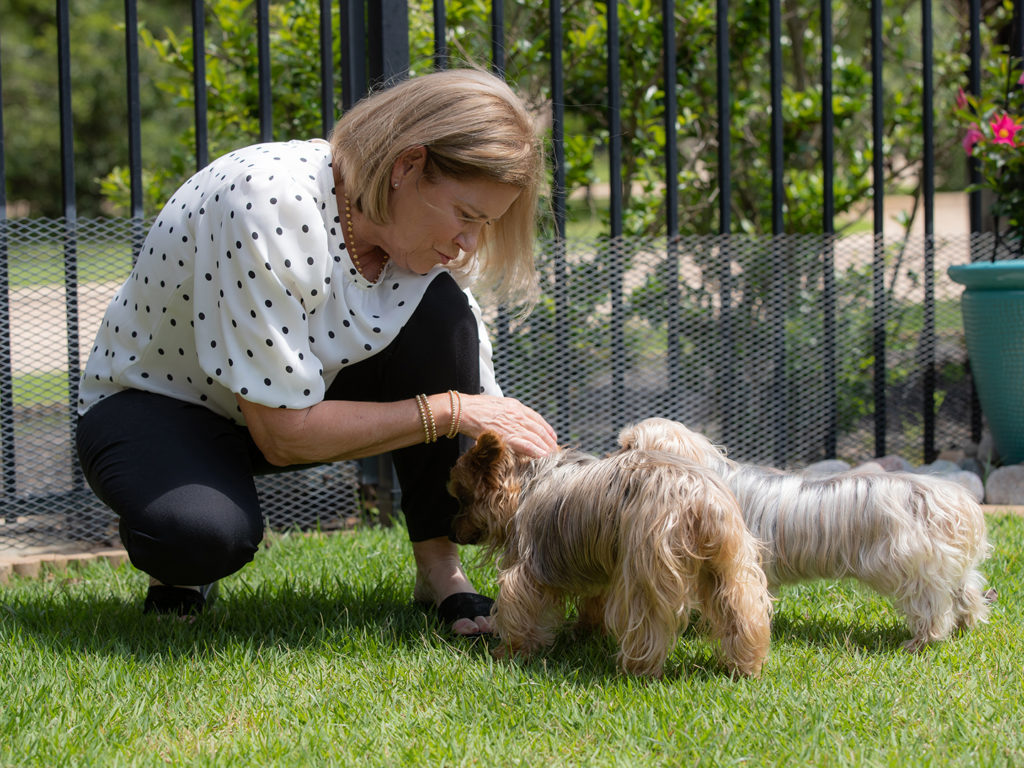
Bickie Coffey petting her small dogs in a yard

A few years ago, their daughter Leigh called from Jackson Hole, Wyoming, saying that her veterinarian had recommended taking her cat to an animal hospital in Colorado. Instead of going to Colorado, though, she got on a flight to College Station and brought Gracie all the way to the SATH, where she received chemotherapy and surgery to remove a cancerous kidney.

“It was like she was a new cat,” Bickie said. “We were thinking she had 12 or 14 more months to live, but it’s been three years and this cat is still doing wonderfully. We take her in every three months and she’s still at the level she was when they removed the kidney.”

A Love For Others

The Coffeys have been bringing their animals to the SATH for more than a decade now, and in that time, they’ve seen their share of other clients going through the emotions of bringing in an injured or sick pet for help.

“I was there one time when these two girls whose dog had been hit by a car were sitting there calculating in their head how they were going to pay for treatment and what they were going to do,” Bickie said.

So, not for the first time, Bickie quietly told the billing department that she would cover whatever the two couldn’t pay that day.

“If you can, how could you not do that?” she said.

It’s that same love that has led them to become so passionate about building a new teaching hospital.

Having been inside the SATH, they’ve seen the need for more space as demand for services has increased over the years, and they know that with new facilities, the already high quality of care all animals receive will only improve.  

“We’ve seen what they can do, and they’re incredible,” Bickie said. “But it’s how much they care that’s the difference.

“We’ve come in and the students have remembered us. They must see all kinds of clients, but they don’t just treat you and move on; they remember you and your animals, and they’re just so kind,” she said. “I love that place—they just care.” 

###

Note: This story originally appeared in the Summer 2022 edition of VMBS Today.

For more information about the Texas A&M College of Veterinary Medicine & Biomedical Sciences, please visit our website at vetmed.tamu.edu or join us on FacebookInstagram, and Twitter.

Contact Information: Jennifer Gauntt, Director of VMBS Communications, Texas A&M College of Veterinary Medicine & Biomedical Sciences; jgauntt@cvm.tamu.edu; 979-862-4216