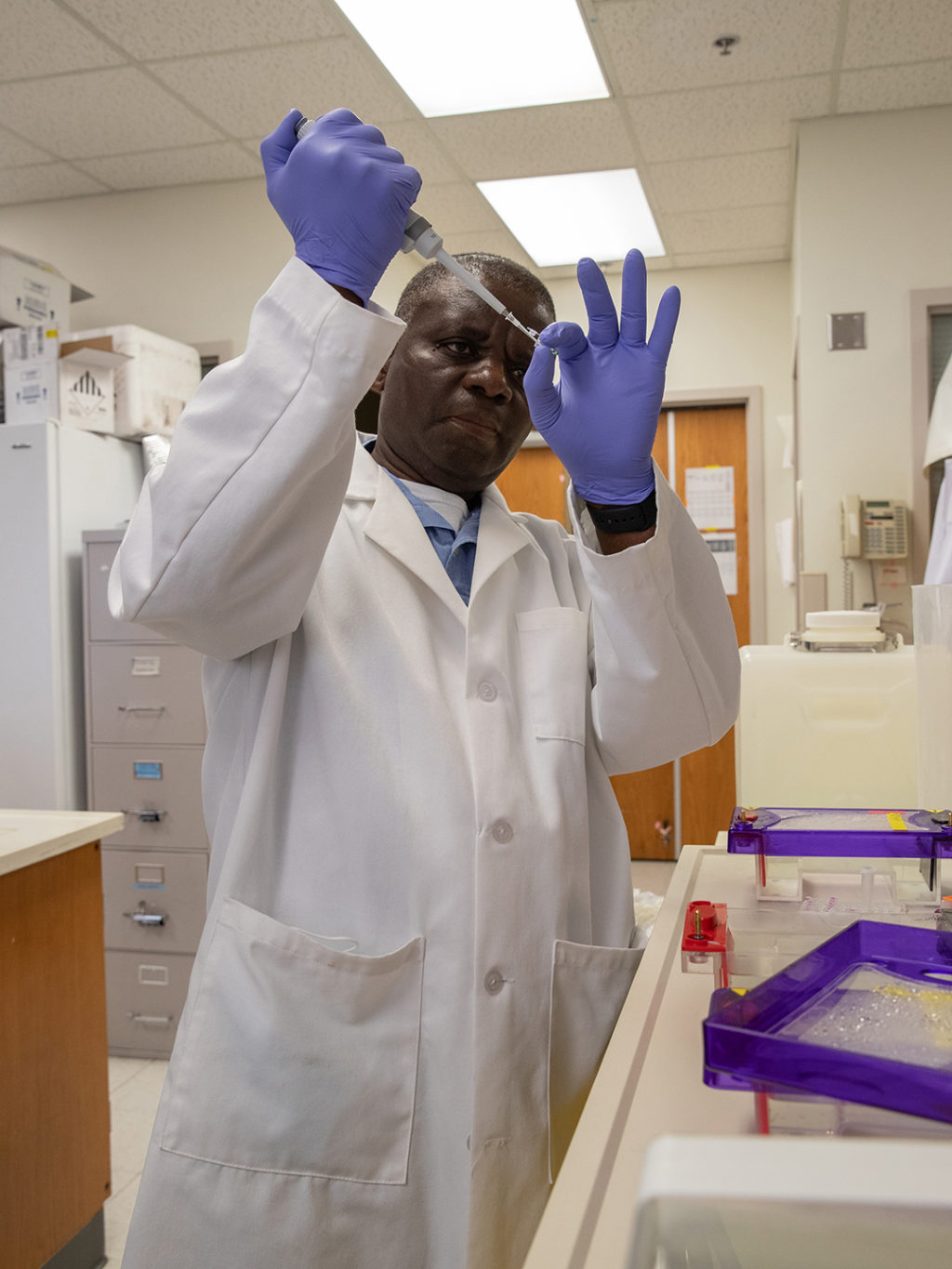
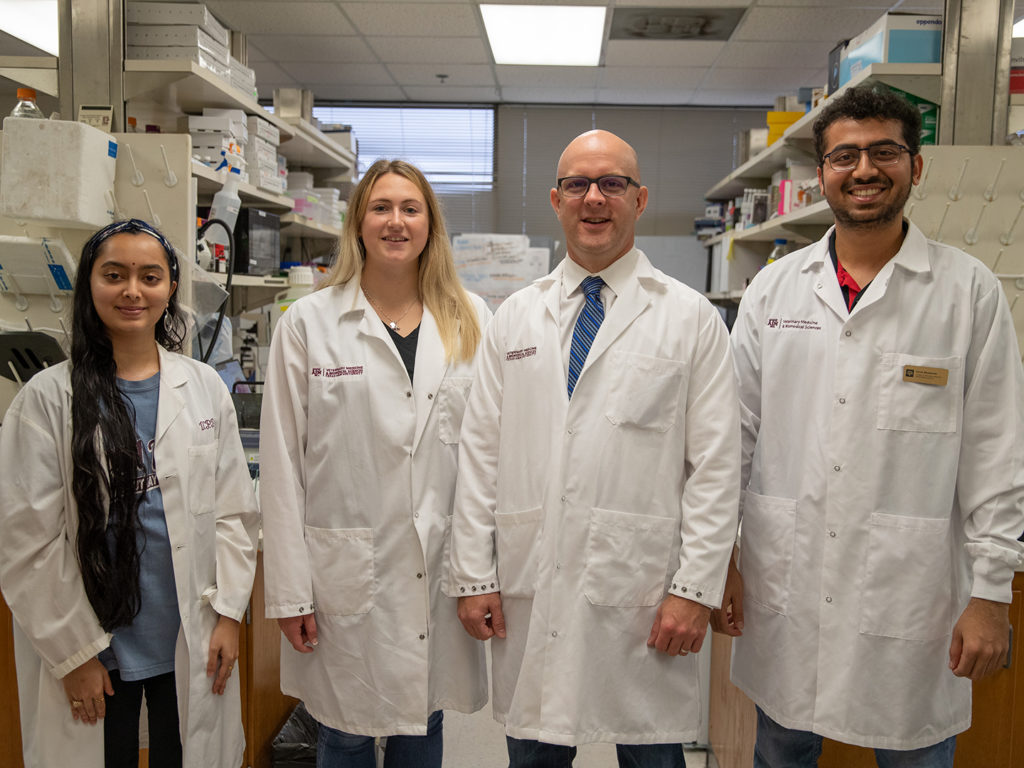
Dr. Ramesh Vemulapalli has been selected as the new executive associate dean of the Texas A&M University School of Veterinary Medicine & Biomedical Sciences (VMBS), effective Oct. 1.
In this new role, Vemulapalli will hold the second-highest administrative position at the school and will be responsible for developing and implementing best practices that promote the career success of VMBS faculty, in close collaboration with VMBS department heads.
“I am honored and excited to serve the VMBS community as executive associate dean, and I am thrilled about the opportunity to help move our academic programs forward on the exciting path to preeminence,” Vemulapalli said.
“One of my priorities in this role is to lead efforts to promote faculty excellence,” he said. “We have incredibly productive, world-class faculty and we should provide them with opportunities to do their personal best at the VMBS.”
Vemulapalli earned a Bachelor of Veterinary Science & Animal Husbandry from Andhra Pradesh Agricultural University in 1986, followed by a Master of Veterinary Science from the Indian Veterinary Research Institute in 1989.
He moved to the United States in 1991 to pursue a Ph.D. in microbiology and immunology from the University of Maryland, which he completed in 1996, followed by four years of postdoctoral research at the Virginia-Maryland Regional College of Veterinary Medicine.
He held faculty and administrative positions at Purdue University before joining Texas A&M in 2016.
His courses at the VMBS have included Veterinary Immunology, Infectious Diseases, Biomedical Microbiology, and Great Diseases Of The World.
Vemulapalli has also dedicated much of his career to research, with his top interests being the development of vaccines and diagnostic assays for infectious diseases.
Many of his research projects have involved brucellosis, a bacterial zoonotic disease that threatens livestock industries and human health, especially in developing countries. His research program has been funded by the National Institutes of Health and the United States Department of Agriculture.
On the international level, his activities have included advising the Government of India’s Department of Biotechnology on their Network Project on Brucellosis; providing hands-on molecular diagnostics workshops to veterinarians in Kabul, Afghanistan; and serving as an expert consultant to the Animal Health Division of the International Atomic Energy Agency on irradiated brucellosis vaccines.
Dr. Albert Mulenga, VTPB professor and associate head for the department’s research and graduate studies, will serve as interim VTPB department head for one year, with the option for a second year, if needed, based on input from the VTPB faculty to the Office of the Dean.
###
For more information about the Texas A&M College of Veterinary Medicine & Biomedical Sciences, please visit our website at vetmed.tamu.edu or join us on Facebook, Instagram, and Twitter.
Contact Information: Jennifer Gauntt, Director of VMBS Communications, Texas A&M College of Veterinary Medicine & Biomedical Sciences, jgauntt@cvm.tamu.edu,979-862-4216
A diagnosis of chronic pain may sound scary to anyone. Fortunately, many treatment options are available to ease and improve the symptoms of chronic pain in pets.
Dr. Daniel Eckman, a staff veterinarian at the Texas A&M School of Veterinary Medicine & Biomedical Sciences’ Veterinary Medical Teaching Hospital, says that because every pet is unique, finding the right treatment can be a process.
“Chronic pain can have major impacts on pets, both physically and psychologically, and it should be addressed aggressively with frequent rechecks and modifications,” Eckman said.
The best approach to managing symptoms is multimodal treatment, also called combination therapy, which allows for customized treatment; as part of this holistic treatment system, veterinarians may incorporate a combination of pain medications based on the severity of a pet’s pain.
Multimodal treatment for chronic pain also typically involves working with a practitioner who is versed in rehabilitation techniques. These specialists might make use of techniques such as photobiomodulation (also known as laser therapy), extracorporeal shockwave therapy (in which a high-intensity sound wave is directed at an area of the body), acupuncture, massage, chiropractic care, joint injections, and radiation therapy.
Because chronic pain can also be taxing on a pet’s emotional well-being, psychological treatments also may need to be incorporated.
“There is a large anxiety component when it comes to how we perceive pain,” Eckman said. “If a cat or dog is going to the veterinary clinic and is very anxious, then its response to a painful stimulus can become increased. This could lead to further anxiety, so that when a pet is even touched at home, it could be perceived that pain is going to happen.”
For these pets, veterinarians may choose to integrate antidepression or anti-anxiety medication into treatment plans. Some pets also may benefit from seeing a behavioral specialist, according to Eckman.
In addition to medical interventions, there are plenty of accommodations that owners can make to ease pets’ pain as much as possible.
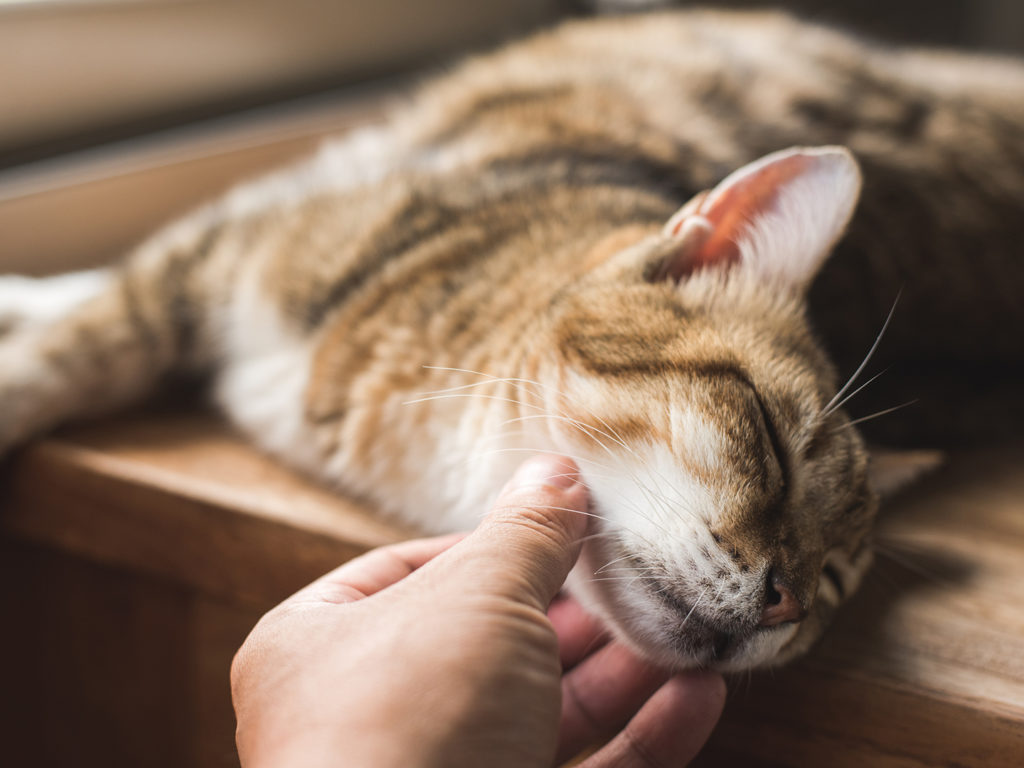
“At-home modifications are important,” Eckman said. “Some of these include using ramps instead of stairs, not allowing pets to jump up and down from high places, bringing food and water to a level that the pet has mobility for, and providing soft bedding for pets to lay on.”
Exercise also must be tailored to a level that the pet can handle.
“Exercise for patients with chronic pain usually needs to be altered to be lower-impact,” Eckman said. “This would include not taking long walks or runs on hard surfaces such as concrete or asphalt and not doing uncontrolled ball play across the backyard. At Texas A&M, we would use our water treadmill to aid in mobility with a lower impact.”
Additionally, owners should closely monitor pets to ensure that the pain is not worsening.
“I recommend keeping activity logs and filling out pain or activity surveys on a regular basis if the patient is diagnosed with chronic pain,” Eckman said.
Finding the best treatment plan for a pet is an ongoing process and involves continuous conversation between owners and veterinarians. By maintaining a positive, encouraging environment during treatment, owners can help alleviate both the physical and psychological effects of pets’ chronic pain––one step at a time.
Pet Talk is a service of the College of Veterinary Medicine & Biomedical Sciences, Texas A&M University. Stories can be viewed on the web at vetmed.tamu.edu/news/pet-talk. Suggestions for future topics may be directed to vmbs-editor@tamu.edu.
The Texas A&M University Montague-CTE Scholar award is a distinguished honor in teaching excellence. Awards are given annually to one tenure-track faculty member from each school or college based on their early success as an educator and commitment to teaching undergraduate students.
Galloway-Peña said she is grateful for the positive feedback she has received from colleagues, students, and mentors and aspires to use this opportunity to have the biggest sphere of influence as possible in young people.
“I am absolutely thrilled to receive such a prestigious honor and to be among the most fantastic educators before me at such an early stage in my career,” she said. “It is an absolute privilege to have my teaching efforts supported by the Montague family.”
In 2006, Galloway-Peña earned her bachelor’s degree with honors in biology from Our Lady of the Lake University in San Antonio. She initially planned to teach science to high school students but ultimately decided to continue her own education and teach at the university level.
“I was getting my secondary teaching certification to become a high school biology and chemistry teacher when I did an undergraduate summer research experience at the University of Texas Medical School,” she said. “This solidified my interest in academic research, but I always kept my passion for teaching. Being a tenure-track faculty member includes all of my favorite things: research, teaching, writing, and advocacy.”
Galloway-Peña then earned her doctorate in microbiology and molecular genetics at the University of Texas Graduate School of Biomedical Sciences in 2013 and went on to conduct a postdoctoral fellowship at the University of Texas MD Anderson Cancer Center.
In the fall of 2020, she joined the VTPB faculty and has since taught VTPB 405, Biomedical Microbiology, to undergraduate students majoring in biomedical sciences. She has also directed studies for graduate students in GENE 608, Critical Analysis of Genetic Literature, as well as research-based courses for both graduate and undergraduate students.
In her classes, Galloway-Peña aims to simply provide an environment in which students can learn.
“I believe that science should be fun for everyone,” she said. “If a student makes an effort to take responsibility for their learning, I will always make a commitment to engage myself in their learning process. I maintain an open-door policy to discuss course material, advise students on their career choices, or mentor them in their personal lives. I believe an individual who is balanced in all facets of their life will flourish in their education.”
As part of her recognition as a CTE scholar, Galloway-Peña will receive a $6,500 grant to aid in her development of innovative teaching methods.
Galloway-Peña (right) supervises a student working in her lab.
“When it comes to science, I want students to learn to love the process, not the outcome,” she said. “Everyone wants resolution, but in science, there isn’t always one. The previous design of the lecture for the Biomedical Microbiology course generally required recall of knowledge.”
In order to develop her students’ higher-order thinking skills, Galloway-Peña introduced case-based learning (CBL) to the Biomedical Microbiology course, which she describes as an interactive, student-centered exploration of real-life scenarios. With this approach, students gather knowledge on symptomatology, patient history, and clinical laboratory results and then use this information to determine the causative agent of a patient’s illness, a diagnosis, and treatment options for a simulated case, much like a practicing physician or veterinarian.
“This type of learning was very well-received by students, with many positive comments in student course evaluations,” Galloway-Peña said. “The student feedback further motivated me to include more higher-level thinking tactics within my Biomedical Microbiology course. As such, I propose to continue my integration of CBL, as well as research-based learning (RBL) within my course. RBL provides a framework that helps prepare students to be lifelong inquirers and learners. The grant will be used to provide financial support for more research-based learning within the framework of Biomedical Microbiology.”
Ultimately, Galloway-Peña’s goal is to have a positive influence on as many potential young scientists and health professionals as possible.
“I view science and research as a vehicle to teach students to think critically and outside of the box,” she said. “As an educator, my hope is to cultivate the best atmosphere for my students to formulate their own ideas and be enthusiastic about science, as well as to provide a strong foundation for real-world application of their knowledge, critical thinking, and problem-solving skills. I want to make sure my students succeed, no matter what their goals may be. Their success is my success—in life and in their education and career. That’s what keeps me going.”
Galloway-Peña said she has felt the utmost support from VTPB’s department head Dr. Ramesh Vemulapalli and associate dean for Research & Graduate Studies Dr. Mike Criscitiello. She is also grateful to her husband for the continuous support he has provided so that she can achieve her career goals and be present for her students and trainees.
“I am very pleased that Dr. Galloway-Peña’s passion for undergraduate teaching and student success has been recognized with this prestigious award,” Vemulapalli said. “She is an inspiring teacher and mentor to students and a true representative of the caliber of educators we have at the VMBS.”
The Montague-CTE Scholars awards are named in honor of Kenneth Montague ’37, a distinguished alumnus and outstanding trustee of the Texas A&M Foundation.
###
For more information about the Texas A&M College of Veterinary Medicine & Biomedical Sciences, please visit our website at vetmed.tamu.edu or join us on Facebook, Instagram, and Twitter.
Contact Information: Jennifer Gauntt, Director of VMBS Communications, Texas A&M College of Veterinary Medicine & Biomedical Sciences, jgauntt@cvm.tamu.edu,979-862-4216
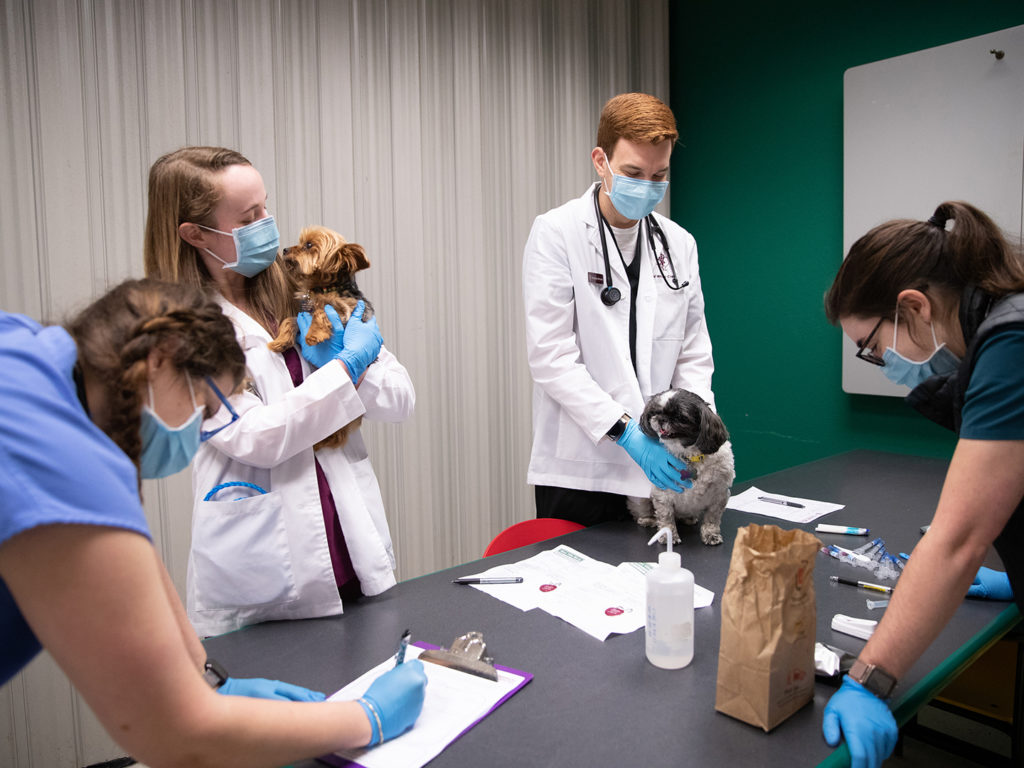
Veterinary students examine the dogs of an essential Aggie.
For as long as she can remember, recent biomedical sciences graduate Emma Bender ’22 has loved animals and desired to become a veterinarian. When she discovered a passion for community service as well, she decided to dedicate her career to serving both people and animals.
While volunteering at a service event for the Texas A&M student organization Ags REACH, she had an idea that would allow her to start achieving her goals while still a student.
Bender recalled that members of her local community had reduced access to veterinary care for their pets and came up with a way to make a difference.
“I was having a conversation about a health fair we were planning for our essential Aggies, when I started thinking it would be really cool if we could take care of their pets as well,” the Plano native said.
Her dream became a reality when the Texas A&M School of Veterinary Medicine & Biomedical Sciences (VMBS) and the REACH project of Bryan partnered to host the REACH Pet Health Fair for Texas A&M’s essential workers.
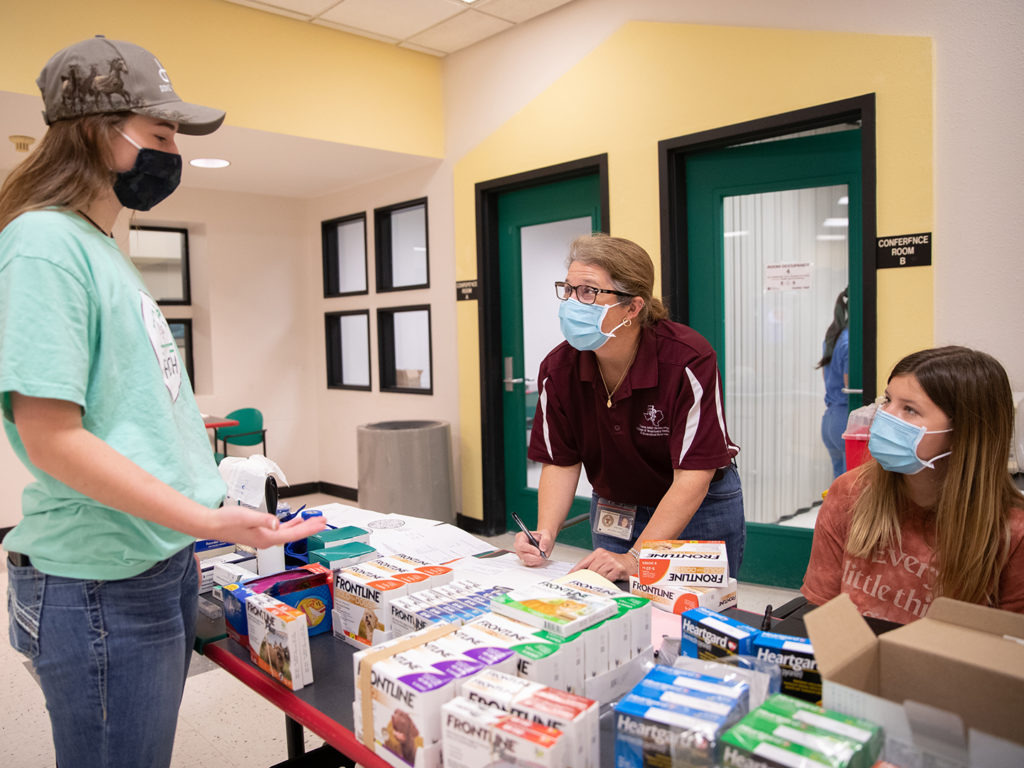
During the recurring event, service workers from the Texas A&M campus are invited to bring their pets to a free pet wellness clinic that offers physical examinations, heartworm and fecal tests, heartworm prevention, and vaccinations by VMBS veterinary students, under faculty supervision.
Serving People And Pets
The REACH (Respect Empowerment Aspiration Community Hope) Project is a nonprofit organization founded in 2017 by Texas A&M alumnus Max Gerall ’18 to support the university’s more than 3,000 contracted, third-party workers, including food service, custodial, grounds, and maintenance employees, many of whom face daily struggles.
REACH provides these community members with health, education, and housing resources, areas in which many of them feel gaps. The nonprofit regularly operates in partnership with Texas A&M-affiliated Ags REACH, which provides the manpower to help REACH achieve its goals.
Partnering with the VMBS, the REACH Pet Health Fair provides free services to the pets of essential workers who otherwise may not be able to access the same level of care.
One of the clients was Chanika Moses, a dietitian for Compass USA who works at Texas A&M, who brought her dog, Puppins, and cat, Noodles, for a checkup.
“It went very well and it was a great experience,” Moses said. “These pets are our support animals; my dog, especially, knows when we’re hurting, emotionally or physically, and she comes to snuggle with us. She tries to make us feel better in any way she can.
“They’re a very important part of our family and we try to take care of them as much as possible, but we want to do it at a low cost,” she said. “Going to the vet is very expensive, so this opportunity saved us a lot and we can redistribute that income toward things other than that dreaded vet bill.”
Moses plans to return for future pet health fairs and to other collaborations between REACH and the VMBS.
“It’s honestly amazing to see how many people we’re helping,” Bender said. “As I’ve been in contact with our essential Aggies, they are all just so grateful that we’re doing this for them. Seeing this unfold as something that I created is just incredible and, honestly, really hard to put into words.”
Finding Joy From Helping Others
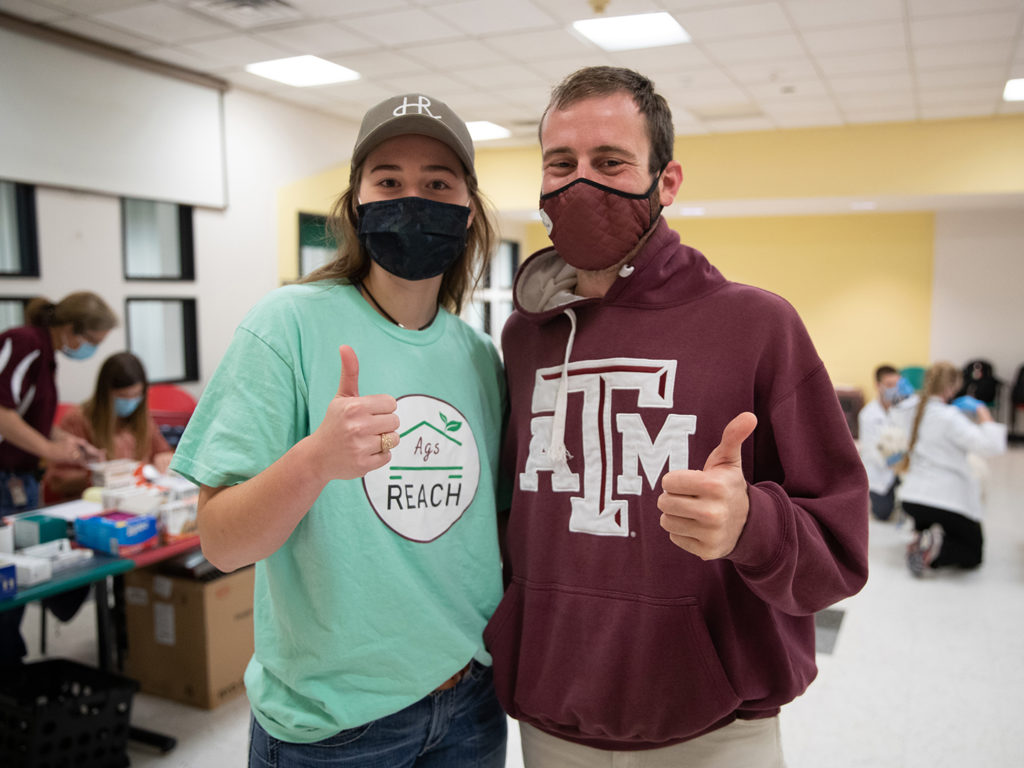
Emma Bender and Max Gerall
Finding fulfillment in community service was something Bender first experienced in high school while participating in summer mission trips for her church.
“We went to Crossville, Tennessee, every summer to serve the underprivileged and put on a Vacation Bible School-type event for the children,” she said. “Being able to interact with those kids and see how much they loved what we did for them was honestly more fulfilling than probably anything else I could ever do.”
Besides helping others, veterinary medicine is one of her other greatest passions in life.
“I’ve always wanted to be a vet. Literally since before I can remember, that’s all I’ve ever wanted to do,” she said. “Through high school, all of my opportunities shadowing veterinarians, and working at vet clinics, I have not changed my mind.”
While the world-renowned VMBS was Bender’s main motivation for attending Texas A&M, she was also attracted to the university’s focus on selfless service.
“It’s amazing because there are just so many opportunities for students to get involved in the community,” she said.
Bender is already planning for a future that combines her loves for veterinary medicine and community service. She envisions a career in which she can use her skills in small animal medicine to support local animal shelters and community members in need.
An Opportunity To Give Back
For the VMBS, the pet health fair not only provides a way to give back to the community, but it also gives veterinary students a chance to practice everyday skills like performing exams, giving vaccines, and running diagnostic tests, under faculty supervision.
“I chose to participate because I love meeting different pet owners and, through conversing with them, coming to appreciate their unique human-animal bond,” said fourth-year veterinary student Rachael Barton, who volunteered at the health fair as a third-year.
“While some aspects of preventative care may be intuitive for us vet students, we should never assume that owners know and understand what prevention their pet needs,” she said. “That’s an area where we, as veterinary students, can help. Through outreach events such as this one, we can make preventative care much more accessible for our community.”
During the event, second- and third-year veterinary students greet clients, take their pets’ histories, determine if any specific health issues needed to be addressed, and then bring the animals inside; they then worked with a fourth-year veterinary student to do a full physical exam and administer vaccines.
“The pet health fair was a great opportunity for me to practice both my soft communication skills and my clinical skills, such as drawing blood and giving vaccinations,” Barton said. “Some of the fourth-year veterinary students gave me some great physical exam tips.”
That students work together practicing peer-to-peer education across different classes was another of the unique educational aspects of the event.
“Our fourth-year students were educating our third- and second-year students about what they were doing (during the pets’ physical exams), so it was an opportunity not only for them to provide service to their community but also to learn from each other in the process, which is how veterinary medicine often works,” said Dr. Karen Cornell, VMBS associate dean for Professional Programs.
“Veterinarians are a huge part of any community they’re within—they’re respected members and leaders,” Cornell said. “It’s so important that we maintain that and really own that responsibility and accountability. We want to train our students that that is part of who you are as a veterinarian.”
A Worthy Cause
Emma Bender, Dr. Stacy Eckman, and Elizabeth Eckman
The idea for the REACH Project first began when Gerall, who went on to become REACH’s founder and executive director, met Melissa Martinez, an on-campus dining hall cashier, as a freshman.
“It all started because of a really close relationship with Mrs. Melissa, a front desk cashier at Sbisa Dining Hall. We got so close that she became my ‘on-campus mom,’” Gerall said. “She’s a beautiful person who really opened my eyes to the invisible yet essential part of our community that’s all around us here on the A&M campus.
“As I met with and talked to more and more of these employees, I came to realize that I now have friends who are living in parallel universes; that knowledge changed the trajectory of my life,” he said. “Among my newest invisible friends there were homeless employees, families living in cheap motels, sick employees without access to affordable healthcare, and hundreds more dependent on neighbors for transportation to work.”
After graduating with a bachelor’s degree in communication, he decided to dedicate his career to giving back to those workers who spend each day supporting the university. Since then, he has gone on to meet and develop relationships with the 700 essential Aggies REACH supports.
“Being a Land Grant Institution, Texas A&M has access to vast intellectual and physical resources so that when combined with an incredibly passionate student body, the sky truly is the limit,” Gerall said. “For the vet school and their students to come together and support some of the most vulnerable members of our campus community speaks volumes about who they are and what they stand for and we are honored to have this partnership.”
REACH and the VMBS plan to continue holding the Pet Health Fairs each semester.
“The REACH Project is such a great program, and we are constantly looking, as all Aggies are, for selfless service opportunities,” Cornell said. “This was just a logical connection for us to be able to provide veterinary care to those folks’ pets. It’s an amazing group of people that we’re serving, a very deserving group of people, and we want to make sure that we provide them with equivalent service to what they provide us with every day.”
For more information about the Texas A&M College of Veterinary Medicine & Biomedical Sciences, please visit our website at vetmed.tamu.edu or join us on Facebook, Instagram, and Twitter.
Contact Information: Jennifer Gauntt, Director of VMBS Communications, Texas A&M College of Veterinary Medicine & Biomedical Sciences; jgauntt@cvm.tamu.edu; 979-862-4216
Pets can develop chronic pain for a variety of reasons, but because they cannot verbally tell us when they’re hurting, overcoming the communication barrier can quickly become challenging for pet owners who want to alleviate any and all pain in their four-legged friends.
Dr. Daniel Eckman, a staff veterinarian at the Texas A&M School of Veterinary Medicine & Biomedical Sciences’ Veterinary Medical Teaching Hospital, discusses some of the most common causes and symptoms of chronic pain in pets.
Firstly, it is important to distinguish chronic pain from acute pain.
“Acute pain, also known as adaptive pain, serves a purpose,” Eckman said. “It tells us not to use or do something in the short-term. Acute pain usually goes away within minutes to days, weeks, or months.”
On the other hand, chronic pain is generally believed to last three months or longer and stops acting in direct response to an illness or injury.
“Chronic pain serves no purpose and creates changes within the body and nervous system that can lead to further pain states or psychological changes,” Eckman said.
A variety of medical conditions can lead to the development of chronic pain in pets.
“The most common cause of pain in pets is osteoarthritis, or degenerative joint disease,” Eckman said. “Other causes of chronic pain could include neurologic disease or injury, dental disease, cancer pain, and untreated or improperly treated acute pain.”
Because chronic pain can manifest differently in individual pets, there are a number of symptoms and behavioral changes that pet owners should watch out for.
“Signs of chronic pain might include lameness or limping, a decrease in activity levels, having trouble standing, a reluctance or inability to jump up on objects, a decreased appetite, overgrooming of an area, or being withdrawn from the family or other pets,” Eckman said.
As a pet owner, it is important to act quickly if you notice a pet showing symptoms of pain and seek treatment from a veterinarian. Untreated pain can worsen and lead to additional health complications.
“Chronic pain is usually prevented by treating the underlying disease state that causes acute pain,” Eckman said. “If pain is not recognized early enough, such as with a chronic arthritic dog, this can also lead to chronic pain that could have been prevented by treating it earlier.”
In the next part of this series on chronic pain, Eckman will discuss some of the common treatment methods that veterinarians and owners can employ to keep the symptoms of chronic pain at bay.
Pet Talk is a service of the College of Veterinary Medicine & Biomedical Sciences, Texas A&M University. Stories can be viewed on the web at vetmed.tamu.edu/news/pet-talk. Suggestions for future topics may be directed to vmbs-editor@tamu.edu.
Dr. Albert Mulenga, a professor in the Texas A&M School of Veterinary Medicine & Biomedical Sciences’ (VMBS) Department of Veterinary Pathobiology (VTPB), has found the research that makes him tick—ticks and tick-borne diseases.
Because these parasites pose a global threat to human, animal, and environmental health, Mulenga has taken a One Health approach to his research. As a result, his work has the potential to not only assist in the eradication of diseases that threaten human health—such as Lyme disease, Rocky Mountain Spotted Fever, and Tularemia—but also the ticks that pose a major risk to our nations’ food supply and economic stability through transmission of disease pathogens to livestock such as cattle.
Mulenga’s lab primarily focuses on understanding how ticks feed as a means through which anti-tick vaccine targets can be discovered, in hopes of ultimately developing a vaccine that prevents both the feeding and the transmission of disease agents by ticks.
This is possible because when a host is bitten by a tick, the tick injects multiple proteins and other molecules secreted through its saliva into the host. Those proteins numb the pain of puncture, which leaves the host unaware of the tick’s presence, prevents blood from clotting, suppresses host immune defenses, and allows transmitted tick-borne pathogens to colonize or establish in the host.
In collaboration with Dr. John Yates III, a chemist at the Scripps Research Institute, and Dr. Itabajara da Silva Vaz Jr., a professor at Brazil’s Federal University of Rio Grande do Sul, Mulenga’s lab has mapped secretion patterns of the proteins present in the saliva of blacklegged and lone star ticks, which transmit the majority of human tick-borne disease agents in the U.S.; cattle fever ticks, which are important to livestock production worldwide; and Asian longhorned ticks, a recent invasive species in the U.S.
“If we understand these molecules and how they facilitate tick feeding, we can block the functions of these proteases (an enzyme that breaks down proteins) and protease inhibitors (molecules that block the function of proteases) as targets for a vaccine,” he said. “If we immunize the host, when the tick tries to feed, it will not be able to.
“The beauty is that most tick-borne disease agents are not immediately transmitted when the tick starts to bite; it requires a little bit of time on the animal or human for the disease agent to be transmitted,” he said. “During that period when the tick is preparing to feed, the antibody taught to the body by the vaccine can actually work; if the immune system rejects the tick, it will not be able to transmit, and, as a consequence, we are protecting against infection.”
If ticks are unable to feed on a vaccinated population, they will eventually die off. Mulenga said their disappearance has no negative effect on the ecosystem, as they do not occupy any unique ecological function.
Catching The Science Bug
Born and raised in Zambia, Mulenga was driven to find explanations for the world around him and solve problems from an early age.
“When I was in about ninth grade, I wanted to be a mathematician,” he said. “Then in 12th grade, I had this very great chemistry teacher who changed my mind. I got excited by biology and chemistry and how we can use these two things to actually explain nature.”
After passing the university entrance exam, he was selected to attend the University of Zambia, where he studied physical sciences before transitioning into their veterinary program, which had been established only two years earlier.
In 1990, Mulenga graduated with his Bachelor of Veterinary Medicine degree and worked as an extension veterinarian. It was here that he first encountered ticks and tick-borne diseases and learned how both have major impacts on animal and human health, as well as on the food supply and economy, on a global scale.
“In Zambia, these are major hazards if you’re working in livestock production,” he said. “They’re critical. When I was working as an extension veterinarian, most of the cases we dealt with were ticks and tick-borne diseases.”
He returned to the University of Zambia as a staff development fellow, which launched an educational journey that would take him around the world, first to the University of Liverpool, England, where he earned a master’s degree in veterinary science, with a concentration in parasitology, and then to Japan’s Hokkaido University, where he earned his Ph.D. in disease control, with a focus in vaccine development.
At Hokkaido, his experiences converged when he was selected to lead a project on making vaccines against ticks.
“We were very successful. A substantial portion of my dissertation was patented in Japan,” he said. “From that, I got a postdoctoral fellowship from the Japanese Society for the Promotion of Science, which supported me for two years.”
In 2001, Mulenga headed stateside to the University of Maryland College of Medicine in Baltimore for another postdoctoral position, and then in 2005, he was recruited to join the entomology faculty at Texas A&M, where he researched tick feeding physiology for nine years.
In 2014, Mulenga relocated to the VMBS to continue his research.
An Ounce Of Prevention Is A Pound Of Cure
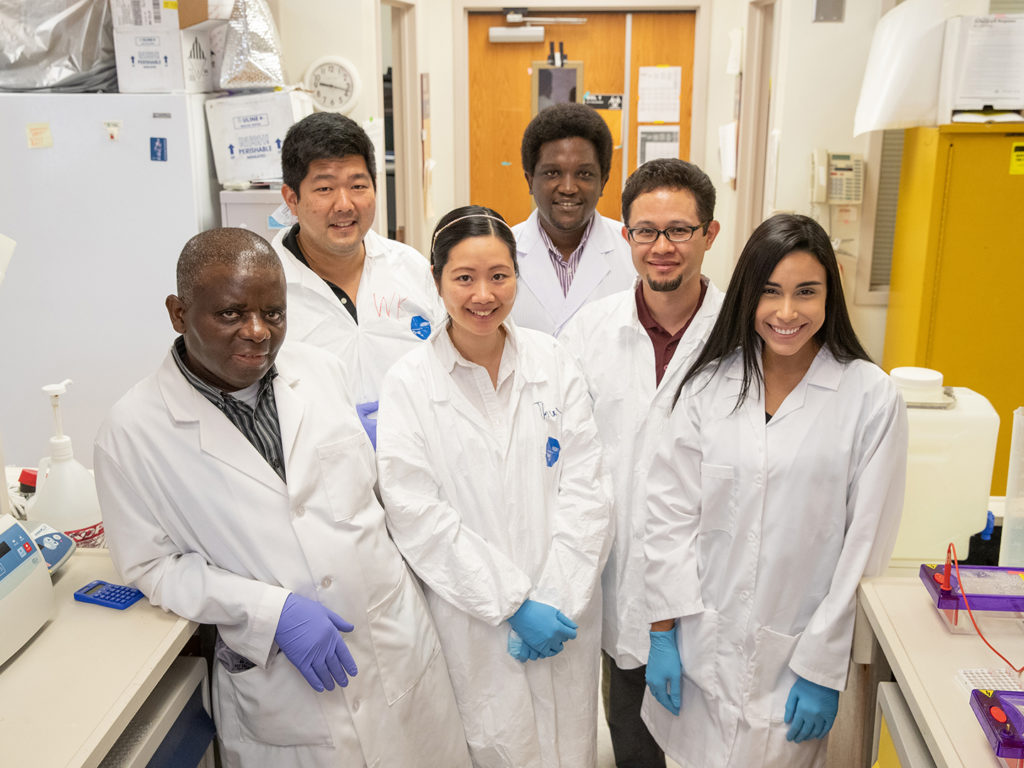
Mulenga, William Tae Heung Kim, Dr. Thu Thuy Nguyen, Dr. Alex Kiarie Gaithuma, Dr Hassan Hakimi, and Emily Bencosme Cuevas
Because ticks can infect a wide range of hosts, Mulenga is working toward a multi-species prevention effort to control their spread.
In one project, working with Dr. Tammi Johnson at the Texas A&M AgriLife Center at Uvalde, Mulenga is working on the immunization of whitetail deer. Because these deer pose a potential risk to human and animal health, the project is funded by the Centers for Disease Control and Prevention (CDC).
“We are going to test if immunization of whitetail deer actually will prevent ticks from feeding,” he said. “Whitetail deer are the principal blood meal source for Amblyomma americanum and for Ixodes scapularis. Ixodes scapularis, or the blacklegged tick, is a principal vector of Lyme disease.”
In another project, with the National Institutes of Health (NIH), Mulenga is investigating how Borrelia bacteria, the pathogens responsible for Lyme disease, influence the tick to promote disease agent transmission. His lab has identified a number of proteins that are secreted during feeding by an infected tick and is currently trying to narrow down their list of proteins to determine which are the most important during this process.
Once Mulenga has identified the most vital proteins associated with the feeding of Borrelia-infected ticks, he can begin to develop a vaccine that will train the body to recognize and attack these proteins.
In addition, for a Kleberg Foundation-funded project with colleagues at the University of Queretaro in Mexico, the University of San Antonio, and the United States Department of Agriculture (USDA), Mulenga is working to produce recombinant antigens to protect cattle against feeding of cattle fever ticks and transmission of cattle babesia parasites.
In a related project, Mulenga and Dr. Mwangi Waithaka, a professor at Kansas State University, have been funded by the USDA’s National Institute of Food and Agriculture (NIFA) to understand the immunological basis of immunity against tick feeding in repeatedly infected cattle. He hopes to use findings from this project to better formulate anti-tick vaccines.
“In the U.S., cattle fever ticks have been controlled for more than 50 years now, but the threat is still there because these ticks are very prevalent in Mexico. Due to the high trade volume between Mexico and the U.S., there is a risk of these ticks coming back through traded cattle,” he said. “That’s why even though cattle fever ticks are currently controlled on a domestic scale, we’re trying to see if we can find some targets that we can use to make a vaccine.”
For all of these scholarly endeavors, Mulenga was awarded the Texas A&M Presidential Impact Fellow award in 2018.
Biting Into Teaching
Although Mulenga now describes teaching and guiding young scientists as one of his favorite aspects of his position, he did not foresee a calling in teaching when he began his career.
“I can remember the morning of Oct. 2, 1984, when I left for the University of Zambia,” he said. “At that time, my grandma said, ‘Go on and become a great teacher.’ I never imagined that I was going to be a teacher; my interest was to go and become a practicing veterinarian. Being a teacher just came to me—I don’t know how, but my grandma predicted it.”
In the tightly woven global community of ticks and tick-borne disease researchers, Mulenga has not only been able to collaborate with scientists he’s known since graduate school, but he is also excited to work on a project with a former student who, now, as a colleague and faculty member at the University of South Alabama, will investigate an invasive tick species from Asia that has found its way to the U.S.
“I planted the seed when she was an undergrad here and she’s now a researcher,” he said. “When a student is very curious and they have a lot of energy, it is very exciting to see that my energy transformed somebody’s life.”
Mulenga’s career also has been one of transformation—in the students he teaches, in the therapeutics he develops, and in the One Health approach he encourages for tick management to protect the food chain and human health to make a safer world for us all.
For more information about the Texas A&M College of Veterinary Medicine & Biomedical Sciences, please visit our website at vetmed.tamu.edu or join us on Facebook, Instagram, and Twitter.
Contact Information: Jennifer Gauntt, Director of VMBS Communications, Texas A&M College of Veterinary Medicine & Biomedical Sciences; jgauntt@cvm.tamu.edu; 979-862-4216
The 2022 outbreak of monkeypox has caught the attention of healthcare professionals worldwide, especially after the World Health Organization’s declaration of monkeypox as a public health emergency of international concern in late July.
Additionally, the first confirmed case of monkeypox in a 4-year-old greyhound appears to confirm that the viral disease can also be transmitted from humans to dogs.
In light of this, Dr. Lori Teller, a clinical associate professor at the Texas A&M School of Veterinary Medicine & Biomedical Sciences, discusses some of the precautions owners should take to prevent the transmission of monkeypox to their pets, the symptoms to look out for, and how to continue providing care for a sick pet as safely as possible.
“Pets can become infected with monkeypox via close contact with an infected individual,” Teller said. “This can happen when a pet snuggles or sleeps in the same bed as someone who has monkeypox. The pet is at risk when exposed to the skin sores or respiratory droplets of the infected individual.”
As with many infectious diseases, the best way to prevent further spread is to minimize physical contact. For those infected with monkeypox, this includes minimizing contact with pets.
“If a human in the household contracts monkeypox and the pet has not been in contact with the person, it will be important to avoid contact for 21 days,” Teller said. “If they have been in contact, then the pet should be monitored for symptoms over the next several weeks.
“Whenever possible, a non-infected person in the household should care for the pet,” she said. “If an infected person is the only one who can care for the pet, they should use good hygiene by washing their hands before caring for the pet or handling food or bowls, and wear long sleeves, pants, and a mask while providing care for the pet. Also, make sure your pet cannot come into contact with contaminated clothes or linens that have been used by the infected person.”
Teller said that the symptoms of monkeypox in pets appear similar to those in people and can include skin lesions that look like blisters or pimples, fever, cough, inflamed eyes, swollen lymph nodes, and a runny nose.
However, Teller also highlighted that only one case of transmission from owner to dog is currently known and these symptoms are common to a variety of pet diseases.
“If your pet is exhibiting symptoms of monkeypox, the first thing to do is to contact your veterinarian,” she said. “Try to keep your pet away from other people and animals in the household, if possible, to minimize the potential for further spread.”
While this separation may be difficult to maintain, it is especially important if others in the household are immunocompromised, pregnant, younger than 8 years old, or have underlying health conditions.
Even during this stressful time, though, owners can still find ways to provide comfort and reassurance to a sick pet.
“Owners can wear protective gear when interacting with their pets, identify special toys or treats that can be easily cleaned to entertain their pets, and follow their veterinarian’s instructions to ensure the pet stays otherwise healthy,” Teller said.
As for contaminated items, Teller said things such as bedding, bowls, and toys should be washed thoroughly or replaced.
These precautions help to maximize the safety of everyone within a household, both people and pets.
In addition, the risk of a person catching monkeypox from an animal remains low, according to Teller.
“It is much more likely that a pet will catch monkeypox from a person rather than a person catching it from a pet,” she said.
Although monkeypox is an ongoing issue, healthcare professionals worldwide are working to better understand the disease and its spread. As always, following medical advice and hygienic practices will help to keep you and your furry friends as healthy and happy as possible.
Pet Talk is a service of the College of Veterinary Medicine & Biomedical Sciences, Texas A&M University. Stories can be viewed on the web at vetmed.tamu.edu/news/pet-talk. Suggestions for future topics may be directed to vmbs-editor@tamu.edu.
Baxter, a 12-year-old seal point Birman cat, tends to draw eyes wherever he goes.
“He is such a pretty cat,” said Baxter’s owner Erin Young. “He just prances around, looking beautiful and knowing that he’s so beautiful. He’s a joy for our family and he’s a very special cat, to say the least.”
Young and her husband, William, fell in love with the Birman breed when their first cat together, another seal point named Socks—who passed away in 2008—joined their family.
“We wanted to get another male seal point Birman because we loved Socks so much,” Young said. “We were moving to London later that year and decided to wait until we got there to look for a Birman. They were kind of hard to find but we finally found a breeder with a litter of five kittens—four of whom were female chocolate points—and one was the male seal point I’d been searching for for such a long time.”
Baxter quickly established his place as “the boss of the house,” which included the Youngs’ three children and two small terrier dogs.
The Youngs’ extreme love for Baxter and his important role in their family made it all the more frightening when he suddenly became severely ill in December 2020.
“We were at our vacation house at Lake Athens, when, one day, he started acting weird and foaming at the mouth,” Young said. “He looked terrible, so I rushed into the vet in Athens. They thought he had a urinary blockage, but he just kept getting worse and worse.”
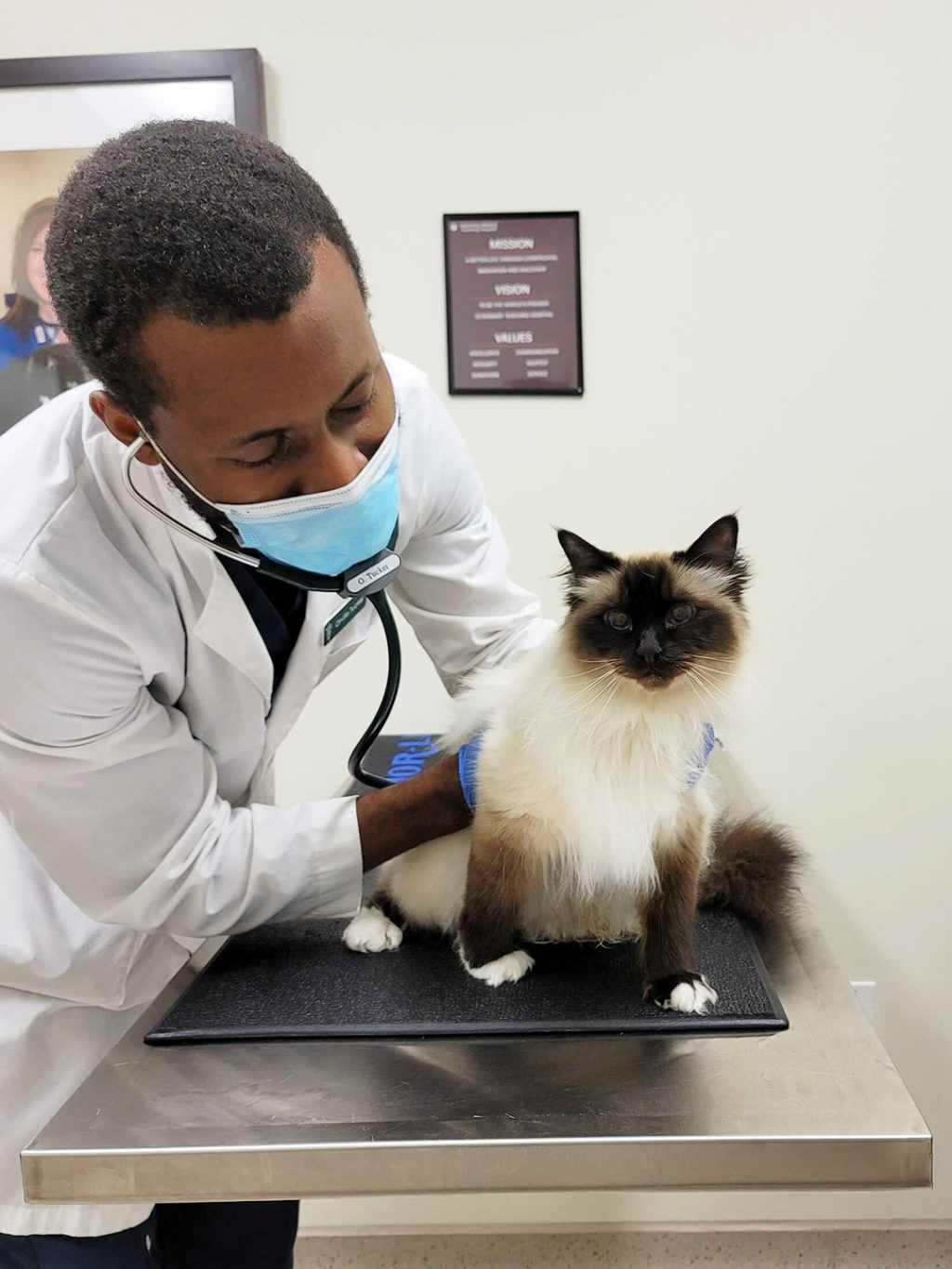
Upon arrival, Baxter was checked in to the Intensive Care Unit (ICU) and his veterinary team began running tests. His doctors found three major issues: asthma, inflammatory bowel disease (IBD), and pancreatitis.
Thankfully, the pancreatitis was resolved during Baxter’s stay at the SATH and his chronic issues of asthma and IBD could be managed at home with a specialized diet and some environmental changes.
But during one of Baxter’s rechecks with his veterinarian in Dallas, the pathologist running his blood test noticed something abnormal, which led to a surprising diagnosis when his blood test was rechecked at Texas A&M.
“The clinical pathologist looking at a blood smear from Baxter’s bloodwork found that his red blood cells were agglutinating (clumping together) at room temperature, but they did not agglutinate when at his normal, warmer body temperature,” said Dr. Leigh Ann Howard, a third-year internal medicine resident at the SATH and the primary veterinarian on Baxter’s case. “This is consistent with cold agglutinin disease (CAD), a rare autoimmune blood disorder.”
With CAD, antibodies that attack red blood cells have enhanced activity at temperatures of less than 99° F. Although the disease was first reported in cats in 1983, it has been very rarely diagnosed.
Generally, agglutination can cause serious anemia, leaving a patient without enough red blood cells to carry oxygen throughout the body. Because Baxter’s cells only clump together at temperatures cooler than his body temperature, which is normally between 100.5 and 102.5° F, he is unlikely to experience any consequences of CAD.
However, there is still a chance of danger if Baxter were exposed to cold temperatures for an extended period of time.
“Cold temperatures can cause agglutination in the small blood vessels in his extremities, including his ear tips, tail tip, and nose,” Howard said. “This can cause the skin of those areas to become necrotic and shed off.
“We hope that as long as Baxter remains indoors in a comfortable temperature and does not experience hypothermia, he should not have problems with his blood agglutinating,” she said.
Considering how devoted Baxter’s family is to him, his veterinarians are confident they will keep him warm and cozy for the rest of his life.
“Baxter is a very sweet and handsome guy. He is also the first CAD patient that I, or any of our medicine team, from what I gather, have ever seen,” Howard said. “It is a rare diagnosis, but because it does not cause clinical disease in most cases, it might fly under the radar, and healthy cats may have CAD that is never diagnosed.”
While the cause of Baxter’s CAD may never be known, Howard believes it could be related to genetics or an underlying condition.
“For now, we will monitor Baxter for signs of illness and perform periodic bloodwork to monitor for the development of anemia and/or severely elevated globulins, which are proteins that form the antibodies that are causing the agglutination in cold temperatures,” Howard said.
Baxter will be getting rechecks and bloodwork to monitor his CAD and other chronic conditions every three months, alternating between Texas A&M and his primary veterinarian, Dr. Stephanie Chritton ’87, at Hillside Veterinary Clinic.
“Dr. Chritton really goes above and beyond,” Young said. “She has been such a great advocate for Baxter and a great liaison between Hillside and Texas A&M. She’s a phenomenal vet.”
In the meantime, Baxter is now back to normal and living without any consequences of his CAD.
“We are very grateful that his veterinarians at Texas A&M figured it out,” Young said. “Texas A&M also saved one of our little dogs who had a very rare disease. He was so sick, even dying, but no one could figure it out. Then I took him to Texas A&M and they diagnosed him in a day.
“After that, I decided that if I ever have a very ill animal, the pet’s going straight to Texas A&M. I don’t know if Baxter’s outcome would’ve been the same if we had gone somewhere else.”
For more information about the Texas A&M College of Veterinary Medicine & Biomedical Sciences, please visit our website at vetmed.tamu.edu or join us on Facebook, Instagram, and Twitter.
Contact Information: Jennifer Gauntt, Director of VMBS Communications, Texas A&M College of Veterinary Medicine & Biomedical Sciences; jgauntt@cvm.tamu.edu; 979-862-4216
One of the scariest things a pet owner can witness is their beloved companion having a seizure, especially if it is the first time. Knowing what to do in this situation can not only help an owner stay calm and collected but can also help protect a seizing animal from injury.
Dr. Joseph Mankin, a clinical associate professor of neurology at the Texas A&M School of Veterinary Medicine & Biomedical Sciences, discusses the causes of seizures in companion animals and what an owner should do during and after a seizure takes place.
“Seizures are the most common neurologic disease we see in small animal medicine, happening more frequently in dogs than cats,” Mankin said.
In dogs, the most common cause of seizures is idiopathic epilepsy, a recurring seizure disorder that has no known underlying cause. The condition tends to be more common in purebred dogs, implying that genetics play a role in its development.
Cats can also have idiopathic epilepsy but are more likely to have seizures with an underlying cause, such as cancer, an interruption of the blood supply to the brain, or an infectious disease.
“Talking with your veterinarian is key to determining if your pet has an underlying disorder causing the seizures or if it is more likely idiopathic epilepsy,” Mankin said. “Also, your veterinarian will discuss with you the need for medications for the seizures, as pets may need daily medications if their seizures are frequent or severe.”
There are several things owners should keep in mind if they witness their pet having a seizure.
“A classic seizure is characterized by the pet becoming nonresponsive and they may often paddle, vocalize, and lose control of their bladder or bowels,” Mankin said. “Once they recover from this event, they may pace or act abnormal for several minutes.
“Seizures can be a scary and traumatic experience for an owner, so the most important thing is to remain calm and make sure the pet cannot hurt itself,” he said. “If the pet is on a couch, near stairs, or someplace they could fall, then you can move them to a safer area. The pet is unconscious during this time, and they may paddle, claw, or have chomping motions of their mouth as part of the seizure, so be careful when moving them.”
Owners should note how long the seizure lasts, what the pet was doing just before it began, and if the pet could have ingested a toxin. This information can help the pet’s veterinarian determine what caused the seizure and if treatment is needed.
“It’s a good idea to contact your veterinarian as soon as possibleif you think there is a chance your dog ingested a toxin that could have caused the seizure, if the seizure lasts more than three minutes, or if they have more than one seizure in a row,” Mankin said.
Even if a pet has only one seizure, or a seizure that lasts less than a minute, scheduling a veterinary appointment for the near future can help make sure everything is OK and put an owner’s mind at ease.
For owners of pets with idiopathic epilepsy, learning to deal with seizures may become a regular part of life and pet care. By keeping calm and paying attention to important details, owners can help make sure they are helping their veterinarian provide the best care for their canine and feline friends.
Pet Talk is a service of the College of Veterinary Medicine & Biomedical Sciences, Texas A&M University. Stories can be viewed on the web at vetmed.tamu.edu/news/pet-talk. Suggestions for future topics may be directed to vmbs-editor@tamu.edu.
Researchers found that the mother’s placenta is healthier if the father has limited or no alcohol consumption during conception.
Nimisha Srikanth, Alison Basel, Dr. Michael Golding, and Sanat Bhadsavle, MVSc
A father’s alcohol consumption may affect the mother’s placenta and, in turn, the unborn child, according to a new study from Texas A&M University’s School of Veterinary Medicine and Biomedical Sciences (VMBS).
This latest study analyzes the mother’s placenta, a transient organ that develops in the uterus during pregnancy to provide oxygen and nutrients to the unborn infant. The placenta also removes the child’s waste products through the umbilical cord. Once the pregnancy ends, the woman’s body expels the placenta.
The Texas A&M researchers’ analysis identified many abnormal epigenetic tags in the sperm of alcohol-exposed males as well as differences in the mother’s placenta.
“What we’ve shown is a nice correlation between abnormalities in the sperm and abnormalities in the placenta,” said Golding, an associate professor in the VMBS’ Department of Veterinary Physiology & Pharmacology (VTPP). “We can’t see differences in the embryo, but we can see them in the placenta. That suggests that what we’re studying here is being transmitted from the dad down into the placenta—and it has a very real effect on the placenta’s blood flow, hormone production, and functioning.”
The study found that the mother’s placenta is healthier if the father has limited or no alcohol consumption during conception—but there are significant consequences if the father drinks the equivalent of two to four glasses of wine or four bottles of beer a day.
“At the higher doses of alcohol, you see the histological destruction where the placenta’s tissue is just not formed correctly and there are a lot of abnormalities,” Golding said.
Ultimately, this study suggests that the male’s alcohol consumption should be discussed as part of the pregnancy journey.
“When a couple is considering getting pregnant, the focus is on what the woman should do—and there’s no consideration of the male’s health on any dimension,” Golding said. “There’s actually much more information coming from males than simply DNA. There’s a whole host of molecules and memories being imparted from the father that influence fetal health and pregnancy success. This is something that doctors need to start contemplating when they’re advising their patients.”
The study also was co-authored by Texas A&M students Kara Thomas, Katherine Zimmel, Alison Basel, Alexis Roach, Nicole Mehta, Kelly Thomas, Luke Dodson, and Yudhishtar Bedi.
###
For more information about the Texas A&M College of Veterinary Medicine & Biomedical Sciences, please visit our website at vetmed.tamu.edu or join us on Facebook, Instagram, and Twitter.
Contact Information: Jennifer Gauntt, Director of VMBS Communications, Texas A&M College of Veterinary Medicine & Biomedical Sciences, jgauntt@cvm.tamu.edu,979-862-4216