Creating A Brighter Future For Pets: Texas A&M Stevenson Center Supports Canine Longevity Research, Veterinary Education

Two veterinarians in maroon shirts smiling with a dog between them on an exam table.
Drs. Kate Creevy and Sam Miller with Zoey, the Stevenson Center’s resident dog enrolled in the Dog Aging Project. Photo by Jason Nitsch ’14, VMBS Marketing & Communications

The Texas A&M Stevenson Companion Animal Life-Care Center’s primary mission is to provide a life-long home for pets whose owners have become unable to care for them, but it also does much more to support the future of veterinary medicine and pet care.

As part of the College of Veterinary Medicine & Biomedical Sciences (VMBS), the Stevenson Center has a longstanding tradition of providing hands-on learning opportunities to the VMBS’ Doctor of Veterinary Medicine (DVM) students, four of whom live and work at the center each year. 

Now, the center will also support efforts to increase canine lifespan and healthspan — the period of life spent free from disease — through a collaborative relationship with the Dog Aging Project (DAP).

The DAP is a community scientist-driven, data-gathering research project that launched in 2019 as a joint effort between the University of Washington School of Medicine and Texas A&M, along with other collaborating institutions. 

It enrolls companion dogs from all backgrounds to study the effects of aging and gain a better understanding of what contributes to a long and healthy canine life.

“The Stevenson Companion Animal Life-Care Center and the Dog Aging Project are both trying to provide pets with the best quality of life for as long as we possibly can,” said Dr. Sam Miller, director of the Stevenson Center. 

“As the Dog Aging Project learns more about the aging process, we’ll be able to incorporate some of that knowledge into extending our resident pets’ lives and ensuring they have the best quality of life for as long as possible,” he said. “That’s what we’re focused on — giving pets a great life here.”

A Pawsitive Partnership

Supporting a healthy aging process in pets is especially important for the Stevenson Center because more than half of its resident pets are in their senior years when they arrive.

“As the donors who sign up with our program age, their pets age with them, so it’s just natural that we’re going to see older pets coming in,” Miller said.

Through a financial gift to the DAP, the Stevenson Center is helping ensure that researchers can continue to study canine aging and find new ways to help pets live long, healthy lives.

“When the Stevenson Center was approved by the Texas A&M University System Board of Regents in 1988, one of the caveats was that it was to be self-funding,” Miller said. “Now, with the large number of pets that have lived out their lives at center, our endowments have grown to the point that we can not only be self-funding, but we can also support other areas within the VMBS.”

When a pet is enrolled in the Stevenson Center, its owner endows funds to support that pet’s care for the rest of its life. The owner can also choose to direct the endowment once the pet passes — whether the endowment remans with the center, supports a specific area within the VMBS, or is reallocated based on the needs of the college.  

“In those situations, we work with the dean, other college leadership, and our advisory board to determine what areas of the college we’d like to support,” Miller said. “The Dog Aging Project was a great fit because it aligns very closely with our mission. We’re hoping that the research that comes from the Dog Aging Project can help us honor our commitment to donors to provide the best long-term quality of life that we can for their pets.”

As another part of the collaboration with the DAP, the Stevenson Center will enroll one dog to join the more than 50,000 dogs enrolled in the program. This process — which is limited to one dog per household — involves providing information about the dog’s health and lifestyle through questionnaires and the sharing of veterinary medical records. 

This information has supported research into how breed influences health, how owners choose their dog’s diet, how owners choose when to say goodbye, and more.

“The Dog Aging Project team at Texas A&M is deeply grateful for the Stevenson Center’s support for our work,” said Dr. Kate Creevy, DAP chief veterinary officer and a professor in the VMBS’ Department of Small Animal Clinical Sciences. “The Stevenson Center’s mission to provide long-term care for companion animals whose owners can no longer provide care for them reflects the tremendous devotion that owners feel for their pets. At the DAP, we aim to discover biological and lifestyle factors that can promote healthy aging and keep our cherished dogs living well into advanced age. Discovery of strategies to ensure longer, healthier lives for dogs will give owners more time to enjoy that special bond.”

Supporting The Next Generation Of Veterinarians

Three young women sitting on a couch smiling and holding dogs.
The Stevenson Center is also home to four veterinary students who help provide daily care for resident pets. Photo by Ryleigh Rejcek ’26, VMBS Marketing & Communications

The Stevenson Center also supports the future of veterinary medicine by providing a diverse caseload for fourth-year DVM students training at the Texas A&M Veterinary Medical Teaching Hospital.

“Our 43 resident pets provide a wide array of opportunities for the veterinary students to help care for different breeds, ages, and medical conditions,” Miller said. “Just like on the human side, the vast majority of medical ailments come in a pet’s senior years. We have a fair number of geriatric pets here that allow students to learn more about geriatric animal care — something they will be doing a lot of in general practice.”

The four veterinary students who live at the Stevenson Center receive additional hands-on learning by helping ensure that the center’s pets receive the same care and attention that their original family provided. In return, the students live within walking distance of their classes in a rent-free apartment and are paid for their work.

“As a former practitioner, I think the experience makes them better veterinarians because they can see things not only from the doctor’s point of view but also from the owner’s,” Miller said. “They’re going to be better able to stand across the table from a pet owner and discuss how to effectively administer treatment options in a way that the owner can follow through on when they get home.”

A Symbiotic Relationship

The relationship between the Stevenson Center and the VMBS is not only mutually beneficial but is also unique.

“The Stevenson Center is a one-of-a-kind program,” Miller said. “Our donors know that we are associated with one of the best veterinary colleges in the country, so their pets are going to be provided excellent care. We’re going to do whatever needs to be done to continue to provide the highest standard of care.”

Supporting the Stevenson Center

The success of the Stevenson Center is the result of the generosity, confidence, and passion donors have for the program, as well as the excellent medical care provided by the Texas A&M Veterinary Medical Teaching Hospital. To explore opportunities to support the mission of the Stevenson Center, visit https://vetmed.tamu.edu/stevenson-center/support/

To learn more about the Stevenson Companion Animal Life-Care Center, please visit https://vetmed.tamu.edu/stevenson-center/.

Learn More About The Dog Aging Project

The DAP continues to accept dogs of all breeds into the project. To date, more than 50,000 dogs have been enrolled.Many of their research projects have led to translational studies that inform not only dog health, but also human health. To enroll your dog, or learn more, visit dogagingproject.org.

###

For more information about the Texas A&M College of Veterinary Medicine & Biomedical Sciences, please visit our website at vetmed.tamu.edu or join us on FacebookInstagram, and X.

Contact Information: Jennifer Gauntt, Director of VMBS Communications, Texas A&M College of Veterinary Medicine & Biomedical Sciences, jgauntt@cvm.tamu.edu, 979-862-4216

Texas A&M, Vet Valor Fund Help Get ‘Lieutenant Dan’ Back On His Feet With Hip Surgery

Close up of a black three-legged dog in the grass with its tongue out.
Lieutenant Dan

Lieutenant Dan, a three-legged mixed breed dog, wears a tag that says, “Got no leg,” but his lack of a limb doesn’t slow him down.

Like his namesake from “Forrest Gump,” this Lieutenant Dan faced a life-altering challenge when he lost one of his hind legs; unlike the character Lt. Dan, however, the canine Lieutenant Dan then developed a related hip injury that threatened his ability to walk at all.  

But thanks to a specialized surgery at the Texas A&M Small Animal Teaching Hospital (SATH), the 2-and-a-half year old is now moving as though he has all four legs and has returned to his active and adventurous lifestyle.

In pure coincidence, while Lieutenant Dan was undergoing treatment at the SATH, he received financial support from the Veterinary Valor Fund, a compassionate care fund established by the actor who played the character Lt. Dan in the film.

A New Leash On Life 

Lieutenant Dan came into the lives of Dustina and Joshua Royek in November 2023, when the couple saw a Facebook post about a three-legged dog at a local shelter. 

“We saw him and brought him home to foster,” Dustina said. “I think he might’ve been my husband’s ‘soul dog’ because within 72 hours, we adopted him.”

Shortly after the adoption, the Royeks decided to name him Lieutenant Dan, after the legless Vietnam War veteran in “Forrest Gump.”

“My husband said, ‘We have to name him Lieutenant Dan,’” Dustina said. “Everybody was like, ‘He’s totally a Dan,’ and so he just became Lieutenant Dan.”

Lieutenant Dan was enjoying spending time with his new family, but by February, he began to show signs of pain and discomfort in his back leg. 

“We got a call from his dog daycare that he had snapped at another dog and by that evening, he was snapping at us,” Dustina said. “We knew there was something wrong with him and thought he must have pulled a muscle in his leg.”

Dustina and Joshua quickly took Lieutenant Dan to their local veterinarian, who diagnosed him with severe hip dysplasia, a condition in which the hip joint does not develop properly, leading to looseness, pain, and arthritis over time.

Lieutenant Dan received medications, but the pain in his hip progressively worsened until, eventually, he was unable to use his hind leg at all. 

“That’s when we were referred to specialist who did X-rays and changed his medications to help with his pain,” Dustina said. “The veterinarian ultimately referred us to Texas A&M because he didn’t feel comfortable doing hip replacement surgery on a three-legged dog.” 

One Step At A Time 

A man in backpacking gear and a black dog standing in a landscape of red rock.
Lieutenant Dan enjoys hiking with his owner, Joshua Royek.

When Lieutenant Dan arrived at the SATH in April, his veterinary team began determining the best way to address his severe hip dysplasia and his unique challenge of relying on a single back leg.

“We found the ball of the hip joint had separated significantly from the socket, leaving his remaining leg in a constant state of strain,” said Dr. Brian Saunders, an orthopedic surgeon and professor at the Texas A&M College of Veterinary Medicine & Biomedical Sciences. “In fact, due to the missing hind limb, Lieutenant Dan’s dysplastic symptoms were worsened, as the missing limb causes the remaining hip to be loaded abnormally in a manner that worsens the clinical signs and arthritis associated with hip dysplasia. Only having one back leg meant that the hip dysplasia progressed more rapidly and was far more debilitating for Lieutenant Dan than it would have been for other dogs.”

The veterinary team decided that a total hip replacement was the best option to restore his mobility and quality of life. 

“In hip replacement surgery, the damaged ball and socket of the hip joint are removed using special tools and then the replacement implants are put in place, allowing weight-bearing and fully restoring the hip’s form and function,” Saunders said. 

However, due to the complex nature of Lieutenant Dan’s case, the surgery required careful planning to ensure success. 

“Perfect positioning of his implants during surgery and keeping the implants stable after the operation were both very important because there was a high risk that the artificial ball could slip out of place or cause fractures in his thigh bone,” Saunders said. “We had to carefully handle the unique challenges of Lieutenant Dan’s body to make sure the implants could accommodate much more load/weight right after surgery due to his lack of a supporting leg.”

During the procedure, the team utilized a cementless and “augmented” implant that eliminated the need for bone cement, which has been considered, in the past, a standard part of hip replacement surgery. 

“Using bone cement in hip replacements can sometimes lead to complications over time, especially in young or highly active dogs like Lieutenant Dan,” Saunders said. “By using a cementless implant, we reduced the risk of future loosening or failure and gave him the best shot at a strong, long-term recovery.”

After several hours of anesthesia and surgery, Lieutenant Dan woke up with a restored joint. 

A Re-barkable Recovery

Now fully recovered, Lieutenant Dan is enjoying an active, adventure-filled lifestyle. He spends his days running, jumping, swimming, and leading the way on hiking trails. 

“You wouldn’t know that he was missing a leg if you didn’t see him from the side,” Dustina said. “He’s just doing great. He went from a rescue on the street to a full-time adventurer. I think he keeps us young.

“We went hiking for a whole week and he was climbing rocks in the canyon and on the trails, doing two miles pretty much every day and even one six-mile hike,” Dustina said. “You wouldn’t have ever known he had hip replacement surgery.”

Thanks to the Veterinary Valor Fund, the SATH was able to cover a portion of the Royeks’ bill for Lieutenant Dan’s care.

Established by the Gary Sinise Foundation, the Veterinary Valor Fund supports retired military working dogs and animals owned by emergency responders and veterans like Joshua, who served in the U.S. Navy and Dustina, who served in the U.S. Air Force.  

“It was both hilarious and such a coincidence that Lieutenant Dan got the grant,” Dustina said.

Dustina is incredibly grateful for the care and service she received at the SATH. 

“Without Texas A&M, we wouldn’t have the great dog we have today,” Dustina said. “The surgery and the grant from the Veterinary Valor Fund gave him the opportunity to live pain-free.”

###

For more information about the Texas A&M College of Veterinary Medicine & Biomedical Sciences, please visit our website at vetmed.tamu.edu or join us on FacebookInstagram, and X.

Contact Information: Jennifer Gauntt, Director of VMBS Communications, Texas A&M College of Veterinary Medicine & Biomedical Sciences, jgauntt@cvm.tamu.edu, 979-862-4216

All Paws On Deck: Independence Day Lake Safety For Pets

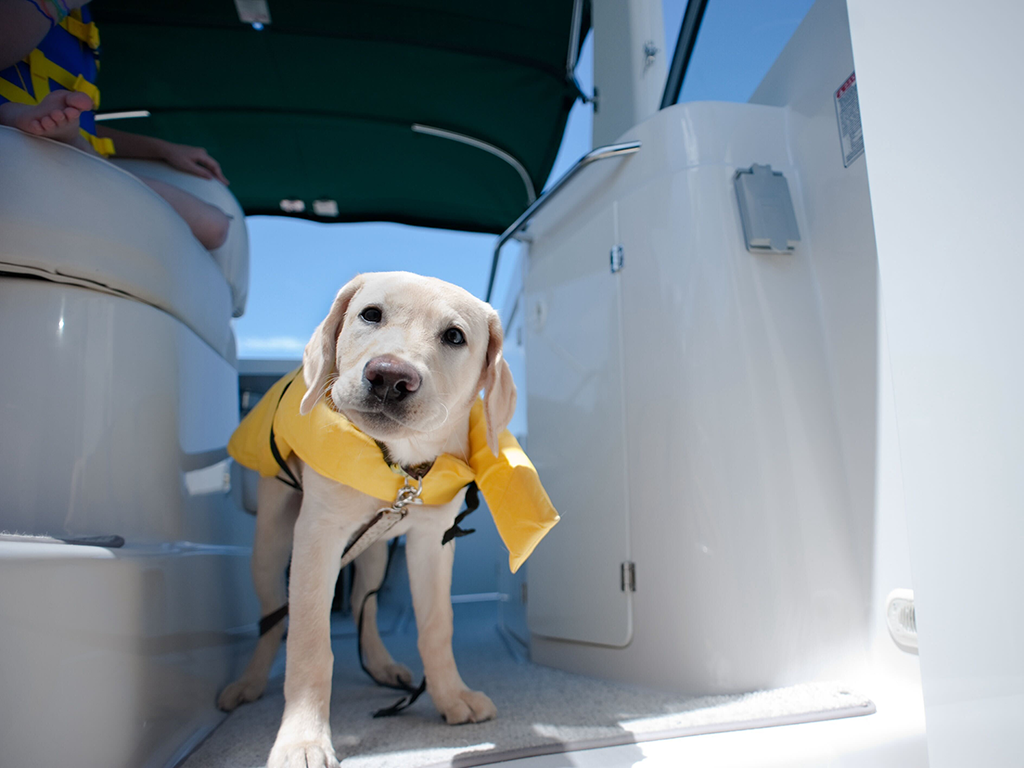
A dog on a boat wearing a yellow lifejacket.

Cruising on the lake while dressed in red, white, and blue makes for a nearly perfect Fourth of July — and having your furry friend by your side makes the day even more special. However, because lakes can be dangerous places for pets, owners should come prepared for the unexpected.

Dr. Erin Ray, a clinical assistant professor at the Texas A&M College of Veterinary Medicine & Biomedical Sciences, explains the precautions to take when celebrating Independence Day on the water with your pets.

Safe To Swim

Before allowing a pet access to a large body of water, owners should assess the water quality in case of accidental consumption.

“I would try to discourage pets from drinking lake water as much as possible, as parasites, trash, contaminants, and even certain algae can be in the water,” Ray said. “Researching the area, checking social media, or even calling the area officials to inquire about current conditions is always a good idea.

“Certain algae known as blue-green algae can be very dangerous and difficult to see with the naked eye,” Ray said. “Blue-green algae is a cyanobacteria that creates toxins that can affect the liver and neurological system. Dogs get infected by drinking or swimming in affected waters. When anchoring for a swim break (on a boat), it is best to avoid stagnant water and water with obvious algae “blooms” on the water surface.” 

In addition to checking the safety of the area, owners should also pack pet care essentials to keep pets safe during a boat adventure.

Items to bring for a day on the lake include:

  • Dog food
  • A water bowl and fresh water
  • Life jacket
  • Paw protection
  • Gentle shampoo for dogs (typically soap-free or oatmeal-based)
  • Kennel with comfort toys 
  • Chronic medications, if needed

Staying Alert

While spending the holiday at the lake, owners should remember that there are lurking threats to their pets both in and out of the water. Among the most common concerns is the risk of physical injury, which may include:

  • Burning paw pads on asphalt
  • Aggressive animals—domestic and wild—inside and outside of the water
  • Injuries from vehicles and boats

Having a pet accidentally fall off a boat and get pulled underwater is another concern that makes keeping a constant eye on your pet essential.

“If a dog is accustomed to a life jacket that is appropriately fitted, it’s probably best to have them wear one whenever on or near water to avoid drowning,” Ray said. “That being said, it’s best to have your dog get used to a life jacket prior to a trip to ensure comfortability and proper fit.”

Boat drivers must also stay cognizant of their precious cargo — avoiding quick turns and fast speeds is the best way to guarantee that pets don’t fall out of a boat while it’s moving.

Other Tails Of Caution

Fourth of July gatherings typically include hotdogs, chips, and beverages, but it is vital to keep these treats out of reach of your pets while in the confined quarters of a boat.

Ray recommends owners stay vigilant in preventing the consumption of potentially toxic items such as fireworks, human foods, trash, alcohol, and chocolate.

Other threats to pets can come from exposure to the environment, including extensive sun exposure, which poses a risk of overheating and dehydration.

“In the middle of summer it gets very hot, putting dogs at risk for heat stroke — especially brachycephalic breeds and dogs with thick/long coats — which is life-threatening and caused by not having access to ample clean, fresh water, shade, or air-conditioning to cool down in,” Ray said.

Symptoms that your pet may be overheating include:

  • Excessive panting
  • Drinking overly large volumes of water 
  • Seizures
  • Lethargy
  • Passing out
  • Gums or tongue turning blue

In addition, staying aware of high temperatures and planning to set off well before or after the day’s heat has died down are great ideas for keeping your pets safe when planning your Fourth of July celebrations.

“It is best to avoid letting your dog play excessively in the hottest parts of the day without shade and water to cool down,” Ray said.

Firework Awareness

Once the sun sets, the sky is set ablaze with fireworks far and wide — a potentially scary experience for your pet.

Without a house to retreat to, pets need owners to help ease their fears, especially at the lake, where hiding spaces are few and far between.

“Owners can try to calm down their pets physically with petting, calm voices, and a loving hold,” Ray said. “If firework anxiety is known prior to boat travel, it is best to consult with your regular veterinarian for potential aid with medications to help aid in stress level.

“It is a good idea to plan ahead if a fireworks schedule is known to ensure the pet is in a safe and quiet area leading up to, during, and after the shows,” Ray said. “Sometimes white noise or even reggae music can help calm them.”

Positioning the boat further away from the fireworks noises can also help reduce stress for onboard pets while still offering passengers the opportunity to watch the show.

Bringing pets to the lake to celebrate the Fourth of July can be a fun adventure, but it also comes with the immense responsibility of keeping them healthy and safe. By planning ahead, you can ensure your pet enjoys the special festivities as much as you do. 

Pet Talk is a service of the College of Veterinary Medicine & Biomedical Sciences, Texas A&M University. Stories can be viewed on the web at vetmed.tamu.edu/news/pet-talk. Suggestions for future topics may be directed to vmbs-editor@tamu.edu.

A Little Dog With A Lot Of Heart: Texas A&M Veterinarians Help Chihuahua Overcome Life-Threatening Heartworm Complication

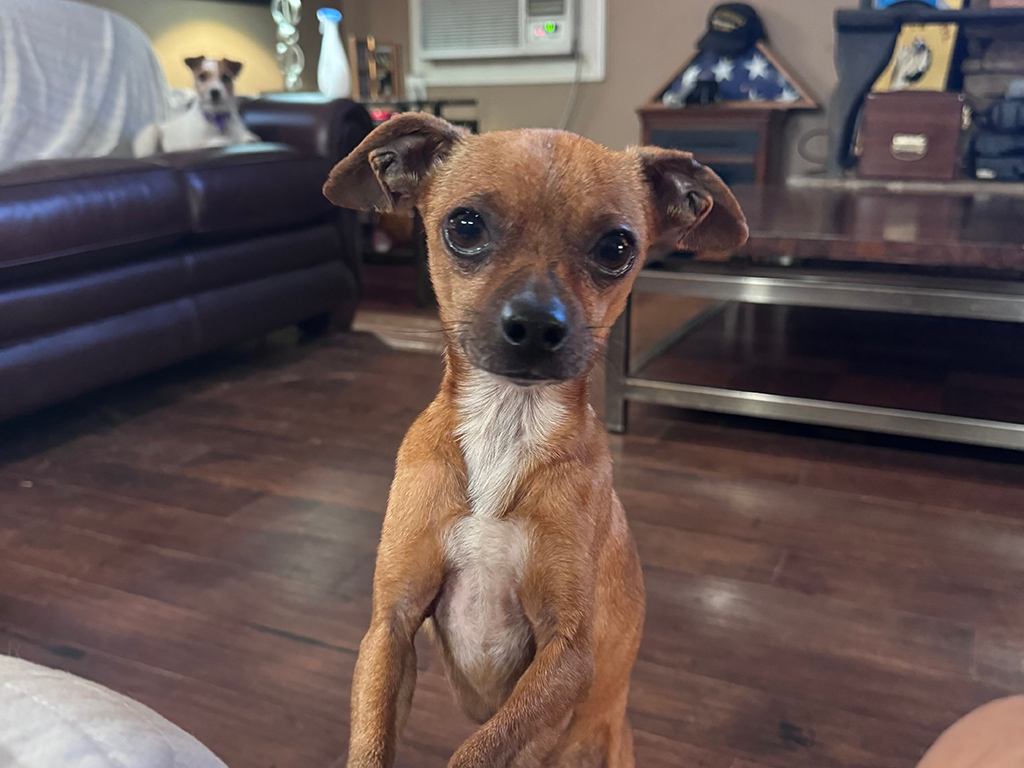
A brown Chihuahua looking at the camera.
Petey McPherson

An 8-pound Chihuahua named Petey McPherson holds a new record at the Texas A&M Small Animal Teaching Hospital (SATH) after having 58 heartworms surgically removed from his tiny heart.

This overwhelming number of heartworms would have been fatal for Petey if his loving owner, Don McPherson, had not rescued him as a stray and ensured he received veterinary care. 

Petey’s road to recovery was rough, but thanks to care from his primary veterinarian and a team of veterinary cardiologists at Texas A&M, he has proven that even the smallest of dogs can achieve great victories.

A Difficult Beginning

McPherson, who lives in Bullard, Texas, has always had a heart for saving animals. 

“I was born into a family that loved animals of all kinds,” he said. “I’m happy to help when I can. If not me, then who?”

So, when he came across a photo of a tiny stray dog in the nearby town of Troup, he didn’t hesitate before coming to its rescue.

“He was so emaciated and just looked pitiful,” McPherson said. “I had a feeling that he was going to have some medical problems since he had been out on the streets, but I didn’t want him to end up at an animal shelter.”

McPherson drove Petey straight from Troup to his primary veterinarian, Dr. Roy Wilmeth ’14 of Kingdom Veterinary Clinic in Flint. 

“He was heartworm-positive, had horrible hookworms and some other worms, and was anemic,” McPherson said. “I just told them to start treating.”

Wilmeth treated Petey’s hookworms, began treating the heartworms, and improved his iron levels enough that he could be neutered. But not long after surgery, blood in his urine indicated a bigger problem.

Wilmeth performed an echocardiogram and saw a “massive cluster of heartworms” in the right side of Petey’s heart, indicating a life-threating heartworm complication known as caval syndrome. 

Recognizing the urgency of the condition, he recommended that McPherson take Petey to Texas A&M for surgery, the only chance at saving the dog’s life. McPherson made the two-and-a-half-hour drive to College Station that same night.

A Whole Can Of Worms

Surgeons in blue gowns and masks lift up a heartworm they just removed from inside a dog.
Petey’s surgical team removed 58 heartworms from the inside of Petey’s heart.

Caval syndrome is the final and worst stage of heartworm disease in dogs. 

“Heartworms usually live in the pulmonary arteries (which carry blood from the heart to the lungs), but if there are enough, they sometimes start backing up into the heart and cause obstruction to blood flow,” said Dr. Sukjung Lim, a first-year veterinary resident at the SATH. “The worms also damage red blood cells, which can cause discolored urine and anemia.”

Caval syndrome is nearly always fatal if not treated with heartworm removal surgery, a minimally invasive but complex procedure only available at select veterinary hospitals with board-certified cardiologists like Dr. Sonya Wesselowski, an associate professor at the Texas A&M College of Veterinary Medicine & Biomedical Sciences.

Wesselowski and Lim, alongside the rest of the cardiology and anesthesia teams, prepared Petey for surgery the morning after his arrival. They anticipated no more than roughly ten or fifteen heartworms inside the tiny dog. Once they began the procedure, however, they were shocked by how many they had to remove. 

“We went in through the jugular vein, which is the large vein in the neck, and fed tiny equipment down into the right side of the heart so we could grab the worms and pull them out,” Wesselowski said. “We were pulling longer than we expected to because there were just so many worms in Petey. My previous record was 55 worms removed from a Labrador Retriever, so the fact that we got more than that out of this tiny little Chihuahua was really crazy.”

Continuing Care

After an hour and 12 minutes, Wesselowski and Lim had finally removed all of the heartworms from the inside of Petey’s heart. Some worms remained out of reach within the blood vessels of his lungs, however, so Petey is now undergoing the standard multi-month heartworm treatment process.

This includes a course of antibiotics, two months of heartworm prevention to kill larvae, and a series of three injections to kill adult heartworms. During this time, he’ll need to be on crate-rest to avoid developing any other complications.

“Dogs with heartworm disease are always at risk of having blood clots or fragments of worms dislodge and suddenly block an artery in the lungs, causing a pulmonary thromboembolism (PTE),” Wesselowski said. “Strenuous activity and exercise increase the risk of PTEs, and the highest risk is around the time they get their adulticide injections.”

As a consequence of the heartworms, Petey may have mild pulmonary hypertension — high blood pressure in the lungs — for the rest of his life.

“Heartworms live in the arteries inside the lungs, causing irritation and inflammation,” Wesselowski said. “That can damage the blood vessels and make them get stiffer over time, which causes high blood pressure.”

Fortunately, Petey’s hypertension is mild enough that it most likely won’t ever impact his quality of life or require medication for treatment.

A Lasting Legacy

Echocardiogram images showing the before and after of removing heartworms from a Chiahuahua's heart.
Echocardiograms from before and after Petey’s surgery showing the massive cluster of heartworms that was removed.

During his time at Texas A&M, Petey played an important role in helping teach fourth-year veterinary students about the symptoms and dangers of heartworms. 

“It was such a wonderful teaching case for our students because the heart murmur you hear with caval syndrome is very distinct,” Wesselowski said. “All the veterinary students on the rotation got to hear that murmur and see his case through from start to finish. He taught them a lot about heartworm disease.”

Petey’s story will also be used to remind dog, cat, and ferret owners about the importance of heartworm prevention.

“Heartworms are so easy to prevent,” Lim said. “You just need to give a pill once a month, and it’s really not expensive, especially compared to surgery or heartworm treatment.”

Heartworm preventatives are also available as topical and injectable medications, and some even include additional protection against intestinal worms, fleas, and ticks.

Petey’s case also will help educate pet owners by allowing them to visualize the impact of heartworms — all 58 will be preserved in a jar at Wilmeth’s clinic.

“Petey may be the luckiest dog I have ever met,” Wilmeth said. “He is such a sweetheart and one of our clinic favorites. He could not have found a better home; Mr. McPherson has always gone above and beyond for his animals, and it is a privilege to be his veterinarian. I am so thankful for the doctors at Texas A&M who were able to help save Petey’s life.”

A Bright Future

McPherson is looking forward to seeing Petey’s true personality continue to emerge once he finishes heartworm treatment. 

“He’s close to being as smart as my Jack Russell,” McPherson said. “You can watch his brain work and see him figure things out. I can’t wait to see him totally done with the heartworm treatment because he’s got so much energy.”

McPherson is also excited to see Petey play with his other dogs, who have quickly become his new best friends. 

Despite his challenging past, Texas A&M veterinarians agree that Petey has a bright future just around the corner.

“Petey just hit the jackpot on finding an owner who was willing to go the distance with him,” Wesselowski said. “It’s a big commitment to take on any dog, let alone a dog that comes with health problems. Petey’s owner was willing to see him through everything, including his big surgery and heartworm treatment. Petey’s going to have a great outlook on life, and not everybody would have given him that chance.”

###

For more information about the Texas A&M College of Veterinary Medicine & Biomedical Sciences, please visit our website at vetmed.tamu.edu or join us on FacebookInstagram, and X.

Contact Information: Jennifer Gauntt, Director of VMBS Communications, Texas A&M College of Veterinary Medicine & Biomedical Sciences, jgauntt@cvm.tamu.edu, 979-862-4216

Texas A&M Veterinary Emergency Team Receives $5M in State Funding To Support Disaster Relief Efforts

With the investment by the Texas Legislature and Gov. Greg Abbott through Senate Bill 1, the VET can build a new foundation for its teaching, outreach, and response programming.

Four young women in maroon shirts and blue gloves holding puppies.
Texas A&M fourth-year veterinary students learn about disaster preparedness through a clinical rotation where they participate in outreach efforts that support the development of emergency preparedness plans and can gain hands-on learning experiences through events like Operation Border Health.

As the first and largest team of its kind in the country, the Texas A&M Veterinary Emergency Team (VET) plays a critical role in supporting Texas A&M University’s disaster response efforts by ensuring animals impacted by disaster have a second chance at life and educating the next generation of veterinary responders.

Since the VET was formed in 2009, the team has provided life-saving veterinary care to search and rescue teams and residential animals across 28 deployments, working alongside federal and state emergency responders — often at the request of the Texas A&M Task Force — during disasters such as Hurricanes Harvey, Helene, and Ian, as well as the Butte County, California, and Texas Panhandle Smokehouse Creek wildfires.

In addition to emergency response, the VET’s missions include outreach efforts across the state and training future Aggie veterinarians in the Texas A&M College of Veterinary Medicine & Biomedical Sciences through an emergency preparedness and response clinical rotation, through which fourth-year veterinary students spend two weeks participating in hands-on, interactive learning experiences as they develop county-level emergency response plans.

Since 2012, the VET and fourth-year veterinary students have served more than 100 counties across Texas.

Recognizing the team’s impact on the state, the Texas Legislature has allocated $2.5 million a year to the VET to support its operations. Gov. Greg Abbott signed Senate Bill 1 on June 22. 

Two young women in maroon shirts examining a dog on a white table.

“From the caring for nearly 1,000 animals in South Texas every summer as part of Operation Border Health, to supporting communities across the state through disaster planning, to preparing our veterinary students to serve as leaders in their communities, the Veterinary Emergency Team plays a critical role in fulfilling Texas A&M’s land-grant mission of supporting the people — and animals — of Texas,” said Dr. John R. August, Carl B. King Dean of Veterinary Medicine at Texas A&M. “We are most appreciative of the Texas Legislature for providing the support needed to sustain the team’s important work.” 

“We are extremely excited and incredibly grateful to the Texas Legislature, Gov. Abbott, and Texas A&M University President Mark Welsh for their support of our team,” said Dr. Deb Zoran, director of the VET. “For the past 15 years, we’ve been living from deployment to deployment. With this new funding, we’ll have the ability to grow, replace old equipment, hire new people, and build a new home for our teaching and response program.”

Currently, the VET comprises one full-time and one part-time faculty member, two staff members, and 56 volunteers who support the team. 

The impacts of these funds will help advance the VET’s mission of serving Texas and the nation every day.

“With this money, we can build the foundation of people necessary to advance the program and make it stable for years to come,” Zoran said.

###

For more information about the Texas A&M College of Veterinary Medicine & Biomedical Sciences, please visit our website at vetmed.tamu.edu or join us on FacebookInstagram, and X.

Contact Information: Jennifer Gauntt, Director of VMBS Communications, Texas A&M College of Veterinary Medicine & Biomedical Sciences, jgauntt@cvm.tamu.edu, 979-862-4216

Your Smartwatch Might Know You’re Sick Before You Do — And It Might Help Stop Pandemics

A professor wearing a suit in his office.
Dr. Martial Ndeffo-Mbah, photo by Jason Nitsch ’14, VMBS Marketing & Communications

Smartwatch features that measure heart rates, oxygen levels, fitness levels, and sleep quality have been marketed as valuable tools for people who are eager to monitor their health.

But what if these features could do more than detect potential health issues — what if they could prevent potential health disasters such as pandemics?

Recent studies have demonstrated that smartwatches’ health apps and sensors provide enough information to accurately predict when a person has become infected with a disease like COVID-19 or the flu, even within as few as 12 hours after infection. 

In a study published this March in PNAS Nexus, researchers at Texas A&M University and Stanford University used a computational model to estimate how smartwatch-based detection could help control the spread of pandemics such as COVID-19 and pandemic influenza. Their findings suggest that smartwatch detection could lower pandemic transmission risk by nearly 50% by providing early warnings to people with potential infections, prompting them to isolate and greatly lowering their chances of spreading disease.  

“Even before a person starts showing symptoms of disease, there are physiological changes that happen to their body — like an increase in temperature or a change in sleeping pattern — that are usually too subtle for a person to notice but that can be detected by a smartwatch,” said Dr. Martial Ndeffo-Mbah, an assistant professor in the Texas A&M College of Veterinary Medicine & Biomedical Sciences’ (VMBS) Department of Veterinary Integrative Biosciences

As a result, if used at scale, smartwatches could effectively end pandemics before they begin by warning people to take precautions — including getting an official diagnosis through traditional testing — much earlier in the infection cycle than they would normally.

“Research on influenza from the Centers for Disease Control and Prevention indicates that most people initiate treatment quite late, many days after the onset of symptoms, when they should ideally begin treatment before symptoms begin,” Ndeffo said. “Even in the presymptomatic stage, infected individuals are often contagious; studies have shown that as much as 44% of COVID-19 infections were transmitted by presymptomatic individuals.”

Using smartwatches, then, could make the problem of disease transmission more personal and encourage more people to take practices like isolating and getting tested more seriously, increasing the overall efficacy of existing tools.

“The protocols for COVID-19 included steps like isolating even after being in contact with someone who is sick, but many people tend to ignore that advice if they don’t feel sick themselves,” Ndeffo said. “With a smartwatch, you could find out in real time — with a high degree of accuracy — if you are starting to get ill, which would hopefully give you a stronger motivation to follow protocols.

“Additionally, while we focused our recent publication on two respiratory diseases, there is a lot of potential to use smartwatches as a preventative tool for many other illnesses, including RSV,” he said. “Whenever the immune system responds to infection, there will be physiological changes that a smartwatch could help detect.”

Transforming Disease Diagnosis

Testing remains one of the most important tools for stopping the spread of disease because people are more likely to take precautions once they have a diagnosis. But even with high-quality tests easily available to most people, there is room for improvement.

“During the COVID-19 pandemic, at-home testing kits became very popular, which is a good thing because they’re a great public health tool,” Ndeffo said. “But there is a problem with how they are used — people might only use a test if they feel sick or are about to travel, and they probably only test themselves once. That’s not frequent enough to catch every infection, especially if you want to catch them early.” 

Early detection with smartwatches could be the key to catching more infections, and it can also prompt people to seek early treatment.

“If you can seek treatment early, you may be able to prevent the worst symptoms from occurring, which is particularly important for high-risk and immunocompromised individuals,” Ndeffo said.

Creating A Personal Stake In Prevention

One of the challenges of developing new public health tools is motivating large numbers of people to comply with disease-prevention protocols.

“If you wake up in the morning and feel a little tired, you’re probably not going to assume that you need to get tested for COVID-19 or the flu, especially when some of the tests involve nose swabbing and other hassles,” Ndeffo said. “So, we are considering how smartwatches may give people more information that will help them see the benefits of reducing contact and getting tested. We hope it will reach people who are not reached by traditional testing alone.”

While research teams are already making headway toward being able to use smartwatches on a large scale for disease prevention, there is still work to be done.

“Teams are working on the science and epidemiology side, and developers are working on the technology,” Ndeffo said. “Because there is so much potential good that this technology can do, we are working hard to make sure we get it right.”

###

For more information about the Texas A&M College of Veterinary Medicine & Biomedical Sciences, please visit our website at vetmed.tamu.edu or join us on FacebookInstagram, and X.

Contact Information: Jennifer Gauntt, Director of VMBS Communications, Texas A&M College of Veterinary Medicine & Biomedical Sciences, jgauntt@cvm.tamu.edu, 979-862-4216

Texas A&M VMBS, Royal Canin Establish Endowed Chair In Small Animal Clinical Nutrition

A woman in a blue shirt against a backdrop of trees.
Dr. Katie Tolbert

The Texas A&M College of Veterinary Medicine & Biomedical Sciences (VMBS) is home to a new endowed chair in small animal clinical nutrition thanks to a $500,000 endowment from Royal Canin, a global leader in pet health nutrition and one of the billion-dollar brands of Mars, Inc.

Dr. Katie Tolbert, an associate professor of small animal clinical nutrition who also leads the Texas A&M Small Animal Teaching Hospital’s (SATH) new Nutrition Service, has been selected as the inaugural recipient of the Royal Canin Small Animal Clinical Nutrition Endowed Chair.

The endowed chair serves as a large-scale investment into the future of veterinary medicine, benefiting the continuity and preservation of this faculty position within the VMBS’ Department of Small Animal Clinical Sciences and directly impacting veterinary coursework and clinical nutritional programming.

“Assuming the position of Royal Canin Small Animal Nutrition Endowed Chair represents a transformative opportunity to advance both the science and practical application of companion animal nutrition,” Tolbert said. “This distinguished chair will provide the resources and platform necessary to pursue cutting-edge research in areas critical to small animal health, from investigating novel nutritional interventions for gastrointestinal diseases to exploring the role of nutrition in preventive medicine, critical illness, and aging.

“The endowment will enable me to bridge the gap between research discoveries and clinical practice by building upon Royal Canin’s established legacy of translating complex nutritional science into actionable knowledge for veterinary professionals,” she said. “Through this position, I will expand and enhance these educational initiatives by developing innovative training modules, evidence-based clinical tools, and practical guidelines that empower veterinary health professionals at all levels to make informed nutritional recommendations with confidence.”

The Small Animal Clinical Nutrition Service, housed within the VMBS’ Gastrointestinal Laboratory (GI Lab), was launched in January 2025 to provide nutritional support for the GI Lab’s more than 130,000 patients, the veterinarians who utilize the lab’s services, and the SATH’s more than 21,000 patients each year. Additionally, the service provides clinical nutrition education to Texas A&M Doctor of Veterinary Medicine students and conducts important nutrition research.

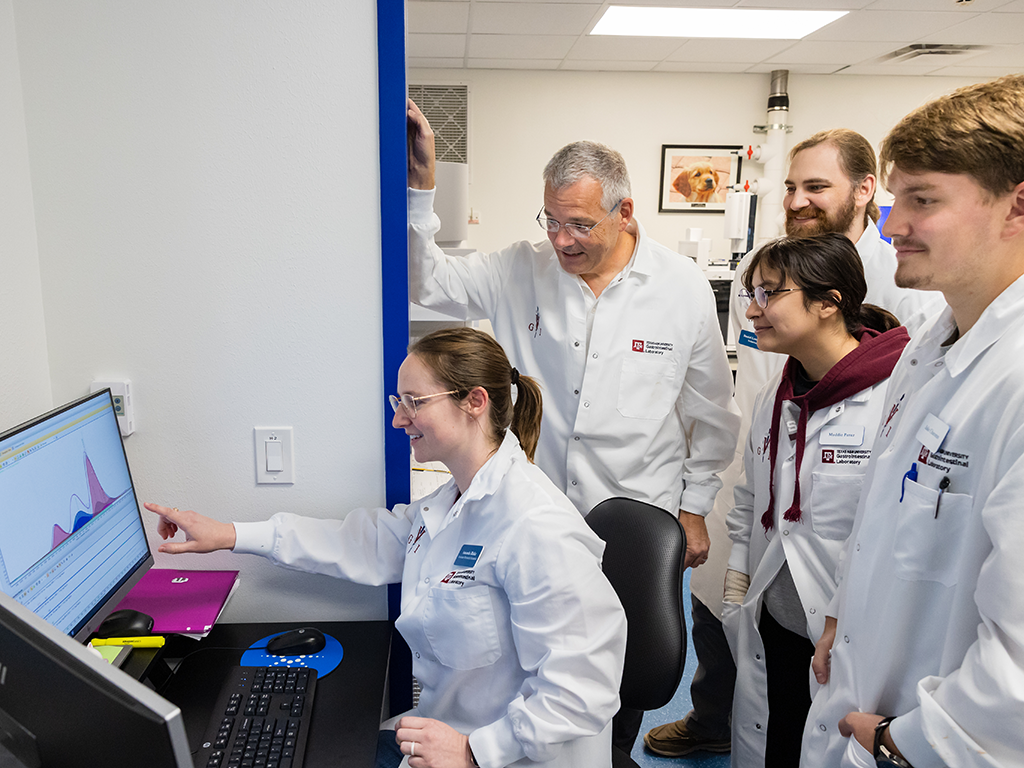
A group of veterinary researchers stand around a computer.
Dr. Jörg Steiner (center) discusses statistics with Dr. Amanda Blake (seated) and student researchers, photos by Jason Nitsch ’14, VMBS Marketing & Communications

“Clinical nutrition plays a crucial role in the management of gastrointestinal disorders in dogs and cats. The integration of small animal clinical nutrition into the Gastrointestinal Laboratory at Texas A&M University allows us to leverage a multidisciplinary approach to clinical research in dogs and cats with gastrointestinal disorders, giving us a tremendous head start in finding optimal solutions for our patients and their owners,” said Dr. Jörg Steiner, University Distinguished Professor and GI Lab director. “The endowment by Royal Canin is a tremendous investment into the long-term success of our clinical nutrition program.”

Royal Canin’s endowment — which equips the service to increase its curriculum development, nutrition consultation services, and clinical services — represents the company’s investment in the longevity of veterinary education and showcases its commitment to empowering future and current veterinarians.

“Royal Canin is proud to play a role in the future of small animal medicine at Texas A&M University,” said Dr. Todd East, director of veterinary affairs, Royal Canin North America. “Through the support of nutritional programming, students will have the opportunity to directly observe nutrition’s role in disease management. This endowment provides a tangible impact on the future of the profession and the patients that will benefit from this support.”

In addition to maintaining her clinical service and teaching roles, Tolbert will continue her current research into treatment of acute and chronic gastrointestinal diseases in dogs and cats, about which she has authored more than 100 peer-reviewed publications. She also serves on the gastrointestinal scientific advisory board for Royal Canin North America. 

###

For more information about the Texas A&M College of Veterinary Medicine & Biomedical Sciences, please visit our website at vetmed.tamu.edu or join us on FacebookInstagram, and X.

Contact Information: Jennifer Gauntt, Director of VMBS Communications, Texas A&M College of Veterinary Medicine & Biomedical Sciences, jgauntt@cvm.tamu.edu, 979-862-4216

TPLO Recovery: Setting Pets Up For Success

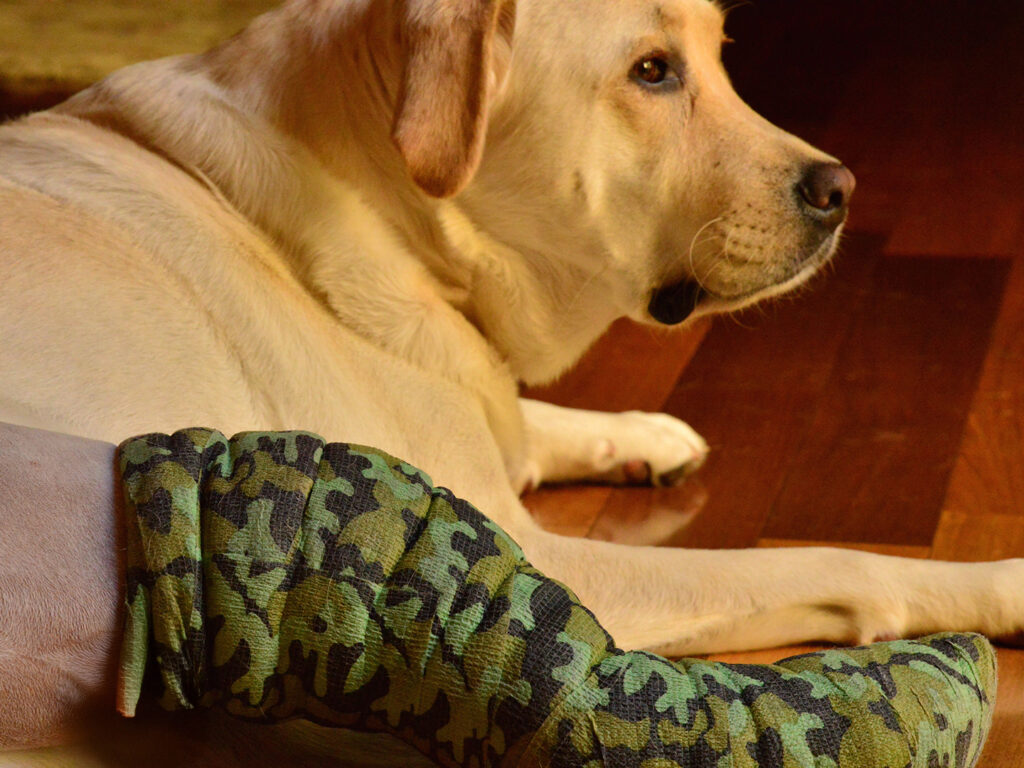
A yellow dog wearing an army pattern leg cast.

Tibial Plateau Leveling Osteotomy (TPLO) surgery is one of the most effective ways to restore a pet’s mobility after a cranial cruciate ligament (CCL) tear. With an experienced surgical team and careful at-home care, most pets make a full recovery — but the road to healing requires close attention to every step along the way.

As with any orthopedic surgery, complications can occur. Understanding how problems can arise — and how to prevent them — can make all the difference in helping pets return to their normal lives.

Dr. Katherine Barnes, a clinical associate professor at Texas A&M’s College of Veterinary Medicine & Biomedical Sciences, shares insight into the common causes of complications and offers guidance for ensuring a smooth recovery.

Laying The Groundwork For Recovery

While TPLO surgery can successfully stabilize the knee and restore mobility, its effectiveness depends on the choices made both before and after surgery.

Choosing an experienced surgeon helps set the stage for smooth healing, but surgery is only half the battle. Even the best surgery can fall short if recovery protocols aren’t strictly followed at home.

It’s important that owners ask plenty of questions before surgery so that they fully understand the precautions they need to take during the recovery period.

For the first eight weeks, healing must be closely monitored. Pets must be kept calm, confined when unsupervised, and restricted to short, leash-only walks.

The Importance Of A Watchful Eye

While most pets recover without major issues, complications can still develop.

Some degree of swelling and mild lameness is expected as part of the healing process, but sudden signs like an unusual increase in swelling, worsening lameness, or any drainage from the incision site could indicate a more significant problem, such as an infection or loosening of implants.

“If a pet is having increased lameness or swelling after surgery, they will likely need an orthopedic exam and X-rays to re-evaluate the bones and implants,” Barnes said.

Keeping Recovery On Track

Following all the care instructions after surgery is another important part of reducing the risk of complications.

“Post-operative instructions are always sent home with the patient and provide clear steps for minimizing the risk of complications,” Barnes said. “Key recommendations include restricting activity and using an e-collar to prevent the pet from licking or chewing at the incision site.”

If anything seems off during recovery, it’s always best to contact the surgical team immediately rather than waiting.

“Complications are easier to manage when caught early,” Barnes said. “Minor issues may be resolved with oral medications and continued rest, but evaluation and X-rays may still be needed.” 

Even once healing is complete, owners should continue to support their pet’s long-term joint health.

“Owners may need to manage clinical signs associated with any arthritis that may have developed from the CCL tear,” Barnes said. “Maintaining a pet’s lean body weight can help improve long-term mobility when arthritis is present. Adding in joint supplements, such as omega-3 fatty acids, glucosamine, and chondroitin, can also help with joint health long-term.”

Although TPLO surgery can be demanding, the reward is well worth the effort. With the right care, pets can return to doing all the things they love and enjoy a future full of pain-free adventures.Pet Talk is a service of the College of Veterinary Medicine & Biomedical Sciences, Texas A&M University. Stories can be viewed on the web at vetmed.tamu.edu/news/pet-talk. Suggestions for future topics may be directed to vmbs-editor@tamu.edu.

Helping Hammie Breathe Easy: Texas A&M Veterinarians Save Cat With Windpipe Obstruction

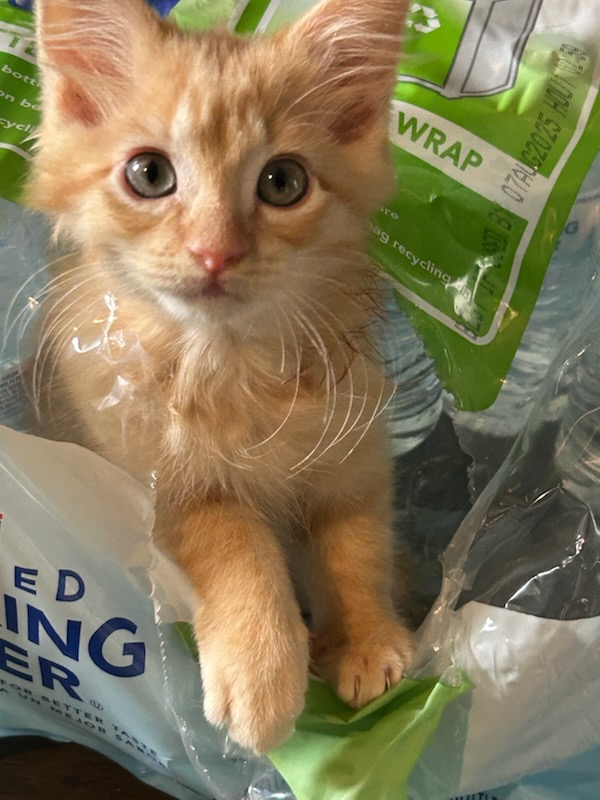
An orange kitten in a pile of plastic wrap.
Hammie as a kitten, photo courtesy of Cheryl Dobie

Hammie, an orange tabby, had a rough beginning — he started life as a feral kitten outside a prison in Huntsville, Texas, and even after being rescued by one of the prison’s nurses, his challenges weren’t over.

After Hammie developed an unusual cough, his veterinarian detected a foreign object in his windpipe that was obstructing his breathing, leading his owners to fear for the worst.

But thanks to the dedication of his owner, Cheryl Dobie, and Texas A&M veterinarians, Hammie has received the life-saving care he needed and has begun enjoying his new life with the Dobie family.

Finding A New Family

Hammie first met Dobie in April 2024, when her husband, Jay, was among the compassionate nurses who rescued the kitten and his littermates from outside the prison.

Although he was young, Hammie quickly adjusted to life at the Dobie home.

“He runs the house,” Dobie said. “We have three other cats, all girls, so he definitely has that boy mentality of always making sure we know he’s boss, but he is also the kindest cat I’ve ever known.”

Because of that, Dobie and Hammie have formed a deep bond.

“Most cats have one person they love most, and I’m that person for Hammie,” Dobie said. “I work from home, so he is with me 24/7 — he’s my everything.”

An Unforeseen Complication

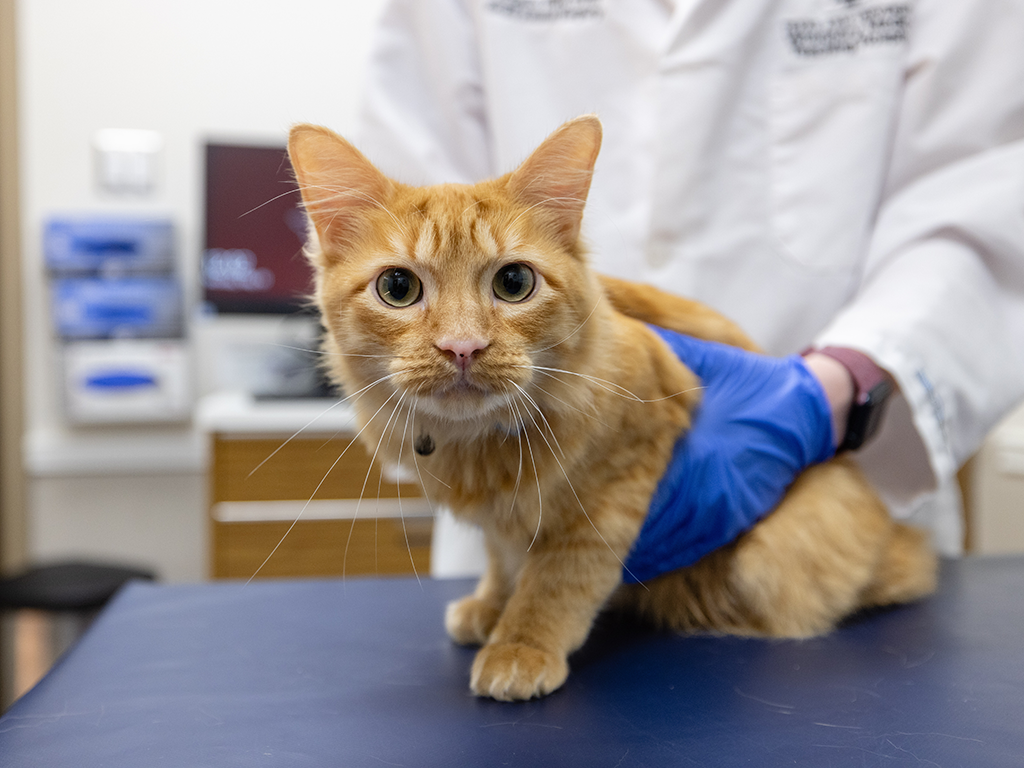
An orange cat being held by a veterinarian wearing blue gloves.
Hammie being held by Dr. Meghan Watt, photos by Jason Nitsch ’14, VMBS Marketing & Communications

In October 2024, Dobie noticed that Hammie had begun having unusual coughing fits. Always erring on the side of caution, she brought him to her local veterinarian, who assumed the cough was caused by a hairball.

However, as Hammie’s cough persisted, Dobie took matters into her own hands and began making conscious efforts around her home to cure his cough.

“I thought it could be asthma, so we changed cleaners, stopped burning candles, and did everything you could think of,” Dobie said. “Then, one day it came to the point where his cough made it difficult for him to breathe. I rushed him to an emergency clinic in Houston, where they did an X-ray and found a foreign object.”

After discovering the object, the veterinarian was not optimistic about Hammie’s chance of recovery. Dobie was devastated by the prognosis, but she wasn’t ready to quit fighting. 

“They had him in an oxygen tank, and when he saw us, he sat up and started pawing at the glass,” Dobie said. “I could tell he wanted us to take him home, so we did and I spent the next 12 hours researching and calling veterinarians to see if anyone could help him.”

While most of the veterinary clinics offered the same prognosis, Dobie was finally given some hope after a clinic referred her to the Texas A&M Small Animal Teaching Hospital (SATH).

“Within 30 minutes of calling Texas A&M, we were in the car heading to see them,” Dobie said.

A Renewed Sense Of Hope

A veterinarian holding an orange cat.
Watt holding Hammie

After arriving at the SATH, Hammie was brought to the Emergency & Critical Care Service, where he was stabilized before being transferred to the Soft Tissue Surgery Service.

“Hammie presented with a foreign object deep in his airway and a concurrent pyothorax, or an infection in the chest” said Dr. Meghan Watt, a second-year resident in orthopedics and soft tissue and minimally invasive surgery.

Aware of the foreign object, the soft tissue team performed a CT scan to determine where it was located and what problems they could potentially face in surgery.

“The foreign object was in the carina, an area at the end of the trachea right before it splits to supply the lung lobes,” Watt said. “The object was sharp and starting to protrude out of the airway, which was causing an infection in his chest.”

The Soft Tissue Surgery Service worked closely with the Interventional Radiology Service as they developed a plan for surgery. The teams were in the operating room together, collaborating as they completed Hammie’s procedure.

“At the start of surgery, interventional radiology was able to successfully remove the foreign object with a bronchoscope, allowing our team to then open his chest and flush everything to help control the infection,” Watt said. “We inspected Hammie’s lungs to make sure there were no punctures and also collected a culture swab of his chest to identify the bacteria, which would guide us when prescribing antibiotics.”

Although the foreign object was unidentifiable following surgery, Dobie had her suspicion of what it could have been.

“My daughters and I built miniature houses, and they have tiny metal pieces we cut,” Dobie said. “I am 95% sure that is what the object was when they showed me, but it was hard to tell for sure. We put those houses up and don’t work on them anymore.”

After surgery, Hammie remained at the SATH for four days and was monitored closely to make sure he was recovering successfully and responding to antibiotics.

A Second Chance

Throughout the duration of Hammie’s visit at the SATH, Dobie stayed in close connection with Watt and the rest of Hammie’s care team.

“Dr. Watt made sure that I understood what was happening every step of the way,” Dobie said. “She was patient and kind, even when I was emotional, and never made me feel unheard. I had peace with the situation and that they were going to do everything they could.”

Hammie has fully recovered from surgery and returned home, where he is back to running the house and keeping Dobie company while she works.

“When he came home from surgery, I could tell he was so happy and I was so grateful that I cried,” Dobie said. “I can tell Hammie is glad to be back home with us and feeling better.”

Dobie and her family are thankful for the compassionate care they received from the veterinarians and staff at the SATH.

“They’re fantastic people and I can’t even explain how appreciative we are,” Dobie said. “I know it’s just another day on the job for them, but for us it could mean 20 more years with him — that means everything to us.”

###

For more information about the Texas A&M College of Veterinary Medicine & Biomedical Sciences, please visit our website at vetmed.tamu.edu or join us on FacebookInstagram, and X.

Contact Information: Jennifer Gauntt, Director of VMBS Communications, Texas A&M College of Veterinary Medicine & Biomedical Sciences, jgauntt@cvm.tamu.edu, 979-862-4216

Veterinary Medicine Leader Appointed Dean Of Texas A&M College Of Veterinary Medicine And Biomedical Sciences

Dr. Bonnie R. Rush has been appointed dean of the College of Veterinary Medicine and Biomedical Sciences at Texas A&M University. She will begin her new role Aug. 1.

Texas A&M University has appointed nationally recognized veterinary medical leader Dr. Bonnie R. Rush as the next dean of the College of Veterinary Medicine and Biomedical Sciences (VMBS). She will begin her new role Aug. 1, 2025.

Rush currently serves as the Hodes Family Dean of the College of Veterinary Medicine at Kansas State University. Over more than 30 years at Kansas State, she has earned a national reputation for advancing veterinary education, student wellness, faculty development and community outreach, while championing research excellence and clinical service.

“Dr. Rush brings to Texas A&M an extraordinary record of academic leadership, clinical insight and institutional vision,” said Dr. Alan Sams, executive vice president and provost. “Her commitment to innovation, wellness and student success aligns perfectly with the mission of the university and the VMBS. I’m confident she will elevate the impact of our veterinary programs across Texas and beyond.”

Rush joined Kansas State’s faculty in 1993 as an associate professor of equine internal medicine and rose through the ranks to department head, then hospital director and, in 2017, to dean. She is a Diplomate of the American College of Veterinary Internal Medicine (Large Animal) and an internationally respected voice in veterinary internal medicine, medical education and student well-being.

During her tenure as dean, she led the creation of multiple Doctor of Veterinary Medicine (DVM) certificate programs and expanded clinical outreach through high-impact shelter medicine and community rotations. She also launched a donor-funded student wellness program — now a national model for veterinary schools — and oversaw major faculty and staff development initiatives, as well as the renovation of teaching and hospital facilities.

Her leadership helped secure federal funding from the National Institutes of Health to support a new biomedical research facility on the Kansas State campus.

Rush currently serves as president of the American Association of Veterinary Medical Colleges, a role that gives her a national platform to address the future of veterinary education and workforce development.

“I’m deeply honored to join Texas A&M and lead a college with such a distinguished legacy in veterinary medicine, biomedical sciences and One Health research,” Rush said. “The faculty, staff and students at VMBS are at the forefront of the profession, and I’m excited to partner with them to advance education, research and service in ways that truly matter to animals, people and communities.”

Rush earned her Doctor of Veterinary Medicine degree, summa cum laude, and a Master of Science in Veterinary Clinical Sciences from The Ohio State University. Her scholarship has focused on respiratory disease in horses, as well as evidence-based approaches to clinical teaching.

She succeeds Dr. John August, who has served as dean since 2020 and will remain in the role through July to ensure a smooth transition.

August, who has led VMBS since 2020, will continue supporting the college through the leadership transition. He is widely credited with strengthening clinical partnerships, expanding research programs and leading the college through the challenges of the COVID-19 pandemic with integrity and compassion.

###

For more information about the Texas A&M College of Veterinary Medicine & Biomedical Sciences, please visit our website at vetmed.tamu.edu or join us on FacebookInstagram, and X.

Contact Information: Jennifer Gauntt, Director of VMBS Communications, Texas A&M College of Veterinary Medicine & Biomedical Sciences, jgauntt@cvm.tamu.edu, 979-862-4216