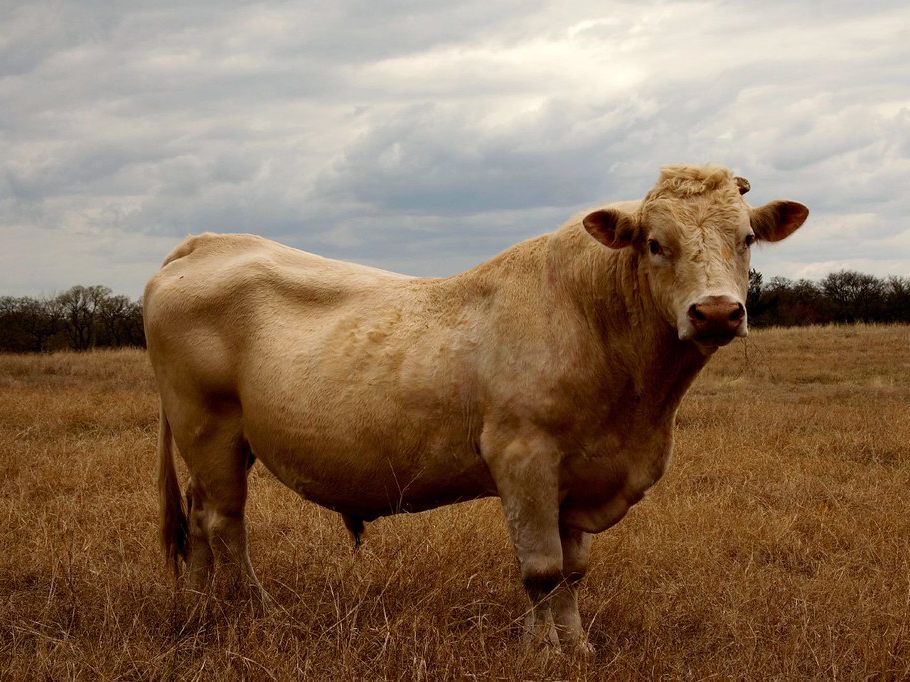
Cattle owners who are looking to expand their herd should consider a Breeding Soundness Examination (BSE), a quick and routine evaluation of a bull’s reproductive abilities done by a veterinarian prior to the breeding season.
A vital tool in supporting our nation’s food supply, this examination facilitates a bull’s ability to breed more effectively and safely and, for owners, in an economical and healthy manner.
Dr. Benjamin Newcomer, a clinical associate professor with the Texas A&M College of Veterinary Medicine & Biomedical Sciences’ (CVMBS) Veterinary Education, Research, & Outreach (VERO) program, says that a BSE evaluates and screens for bulls with fertility or physical issues that will reduce the number of cows bred in a season.
“Bulls that pass a BSE are expected to be able to successfully breed a full complement of cows or heifers,” Newcomer said.
A BSE consists of a physical exam and an assessment of semen quality. The physical exam is an overall evaluation of bull health, including an examination of the eyes, feet and legs, and assessment of body condition score. Semen quality is assessed for motility (ability to move) and morphology (correct structure), with minimum standards established in order to pass the BSE.
Breeding bulls should be examined for breeding soundness at least annually, preferably a few months before the start of their breeding season. This timeline allows for the problems of any bulls who don’t pass the BSE to be addressed or for the breeder to acquire new bulls before the breeding season begins.
“Failure of the BSE does not necessarily mean that a bull is unable to impregnate a cow. Rather than just identifying bulls that are infertile, a BSE helps identify bulls that are subfertile,” Newcomer said. “Subfertile bulls will not be able to cover as many cows as expected, and conception/pregnancy rates will be lower than expected and desired. “
In addition to receiving a standard BSE prior to breeding, Newcomer says owners should have their bulls tested for bovine trichomoniasis, commonly known as trich, a venereal disease reportable in Texas.
“Bulls infected with trich do not show clinical symptoms but are able to spread the disease to cattle, which results in infertility and early embryonic death,” Newcomer said. “Although not always included with a standard BSE, a trich test is strongly encouraged and is required by the State of Texas for any bull offered for sale, lease, exchange, or otherwise change of possession, with the exception of certified virgin bulls less than 24 months of age.”
Breeding bulls are a considerable investment, both financially and timewise. BSEs are an important tool to helping owners make the most of each breeding season.
Pet Talk is a service of the College of Veterinary Medicine & Biomedical Sciences, Texas A&M University. Stories can be viewed on the web at vetmed.tamu.edu/news/pet-talk. Suggestions for future topics may be directed to editor@cvm.tamu.edu.
Two members of the Texas A&M University College of Veterinary Medicine & Biomedical Sciences (CVMBS) have received Distinguished Achievement Awards from the Association of Former Students for their positive impact on Texas A&M.
The university-level awards are presented each year to faculty and staff who exhibit the highest standards of excellence.
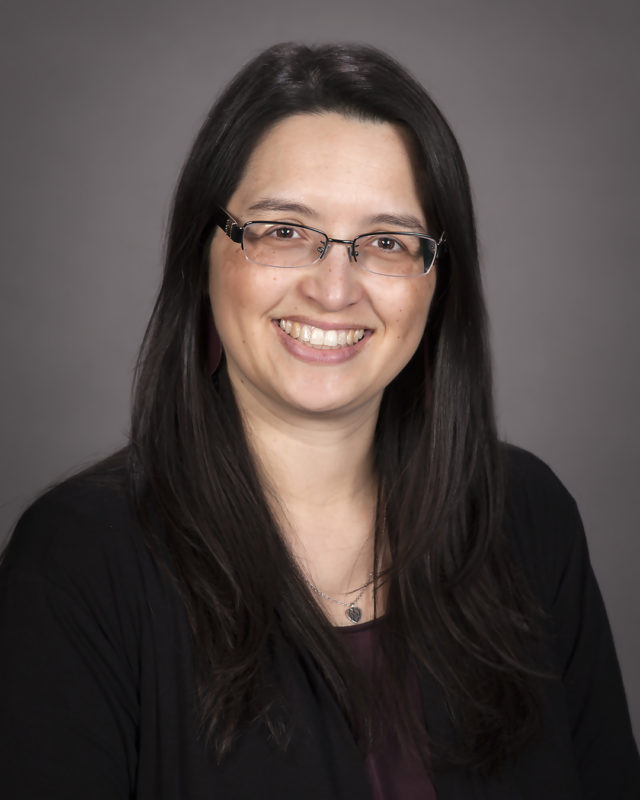
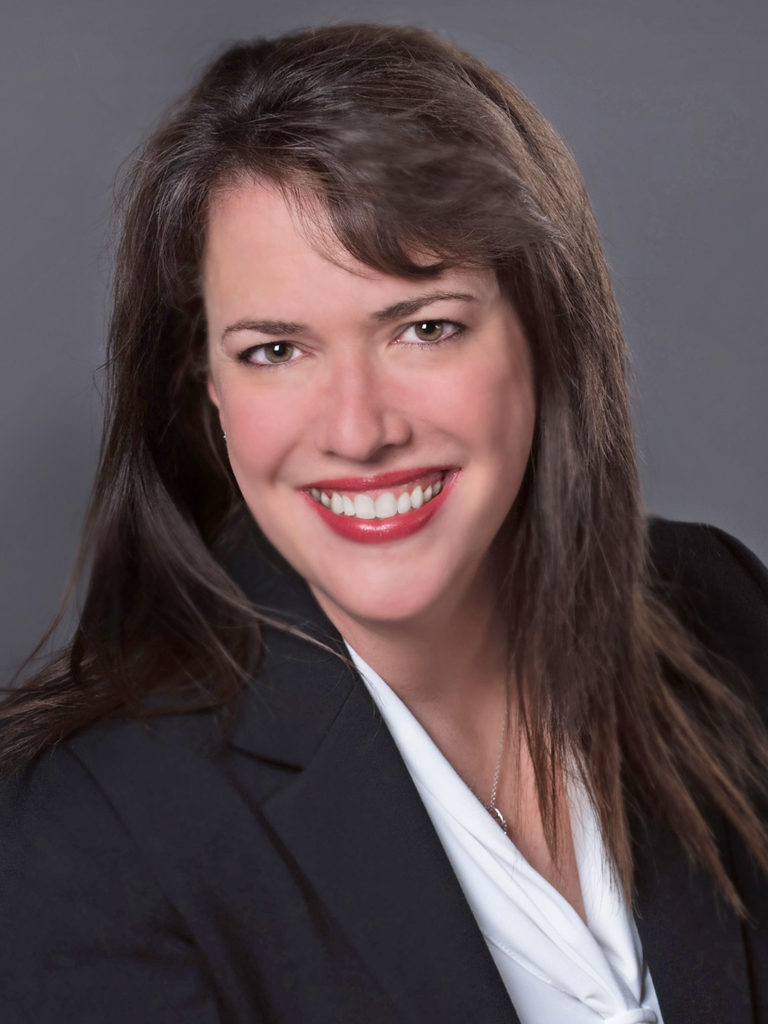
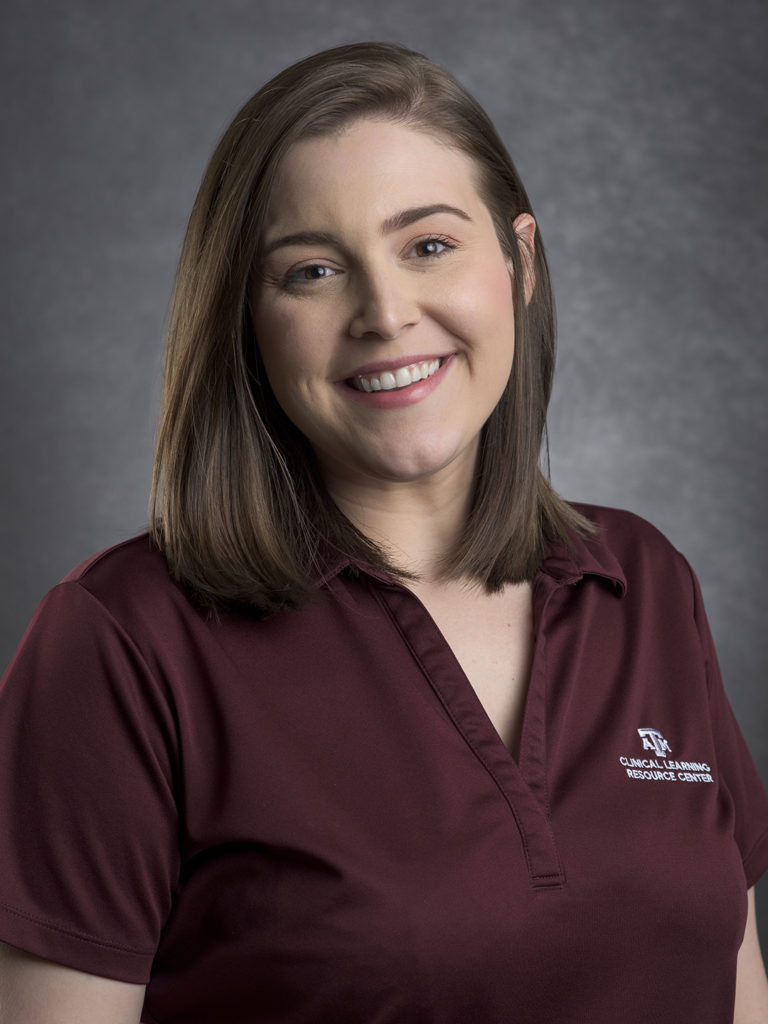
Dr. Laura Hammons ‘97
Dr. Laura Hammons
Hammons, CVMBS instructional technologist, was recognized in the staff category.
Hammons was an essential part of the college’s move to online learning last spring at the outset of the COVID-19 pandemic. In a support letter for her nomination for the award, CVMBS clinical associate professor Dr. Tracy Vemulapalli emphasized how crucial Hammons’ role was.
“Dr. Hammons saved our entire teaching program,” she wrote. “This is neither hyperbole nor an idle boast. This past spring, educators in our college were faced with a single week to switch from face-to-face to remote learning. As educators are already tasked with heavy teaching demands, this had the potential to significantly undermine our teaching effectiveness—to our students’ detriment. From that day on, Dr. Laura Hammons has led the charge to help us meet this challenge head-on.”
Hammons also was instrumental in moving the college’s job and externship fair online, which included more than 400 students and 160 veterinary practice representatives; she oversaw the college’s adoption of a secure exam platform ExamMonitor; and she helped move the Doctor of Veterinary Medicine (DVM) students’ communication curriculum online, coordinating students, professors, and actors through Zoom sessions to replicate the pre-COVID-19 experience as closely as possible.
Associate dean for Professional Programs Dr. Karen Cornell summed up Hammons’ contribution in her nomination letter.
“When I read the description of this award, I cannot imagine a candidate who has demonstrated more clearly a significant contribution to the welfare of Texas A&M University beyond the expectations of their position,” she wrote.
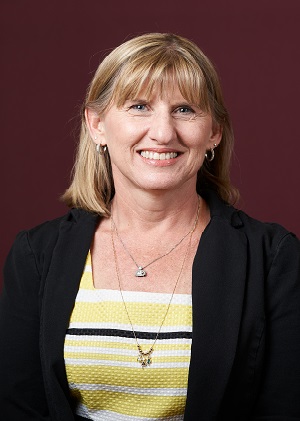
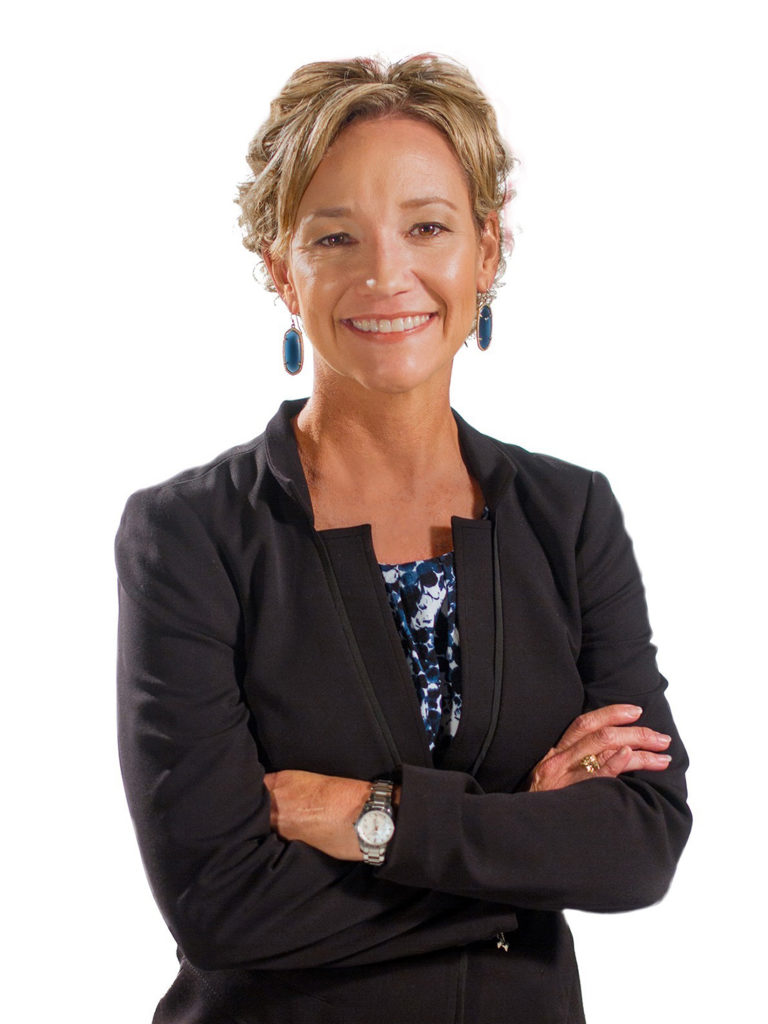
According to Dr. Susan Eades, associate dean for administration for the CVMBS’ Canyon campus and former VLCS department head, Voges is nationally known for developing curriculum to teach diagnostic ultrasound skills to veterinary students and graduate veterinarians.
“Dr. Voges has developed sequential laboratories that utilize low-fidelity and high-fidelity models that start with basic principles and sequentially add skills and concepts toward development of diagnostic imaging capability needed for the practice of veterinary medicine,” Eades wrote. “These learning experiences are well designed to align with clear objectives.
“This in-depth instruction at Texas A&M is superior to that of most veterinary schools and the diagnostic ultrasound skill of Texas A&M graduates is known nationally,” Eades continued. “Veterinarians employing our graduates and summer extern students have been very impressed by the skills of our graduates since implementation of the curriculum developed by Dr. Voges.”
Voges, who also received an Association college-level Outstanding Achievement in Teaching award, also trains and mentors veterinary residents and interns. As a result of her teaching methods and preparing residents for the American College of Veterinary Radiologists certification exam, the pass rate for Texas A&M residents is above the national average at more than 90%.
“In reviewing Dr. Voges’ dossier and reading the comments made by her students, it is quite apparent that she is making an enormous impact on the careers of young veterinarians,” Eades wrote. “She is certainly deserving of this prestigious award.”
###
For more information about the Texas A&M College of Veterinary Medicine & Biomedical Sciences, please visit our website at vetmed.tamu.edu or join us on Facebook, Instagram, and X.
Contact Information: Jennifer Gauntt, Director of VMBS Communications, Texas A&M College of Veterinary Medicine & Biomedical Sciences, jgauntt@cvm.tamu.edu,979-862-4216
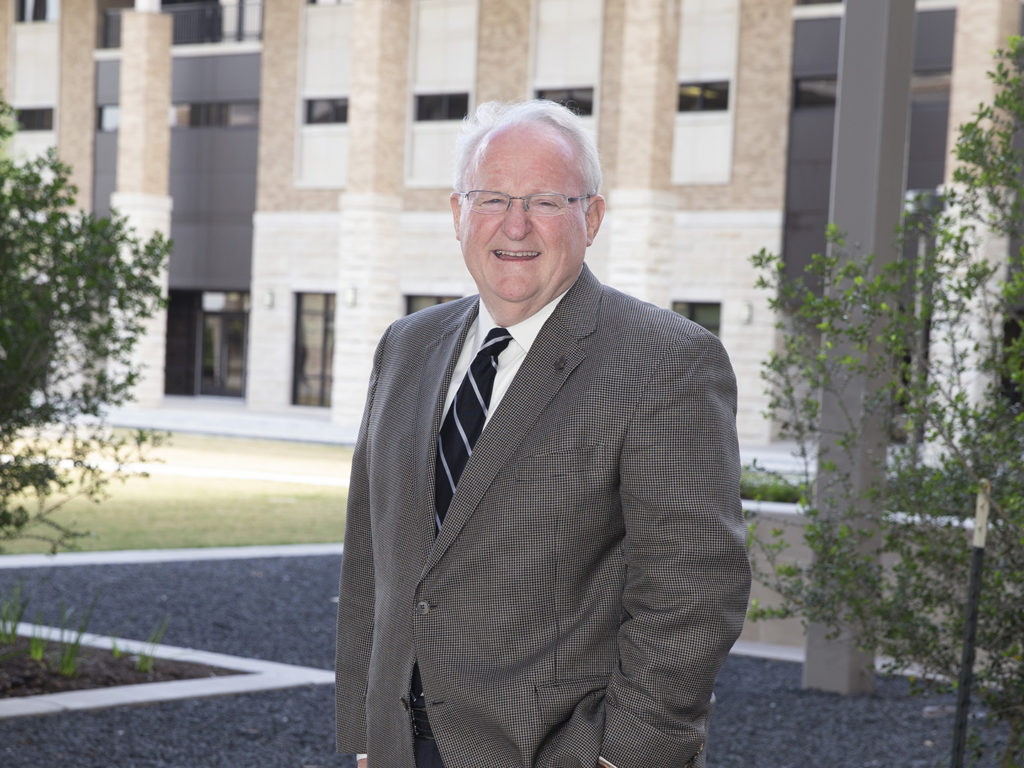
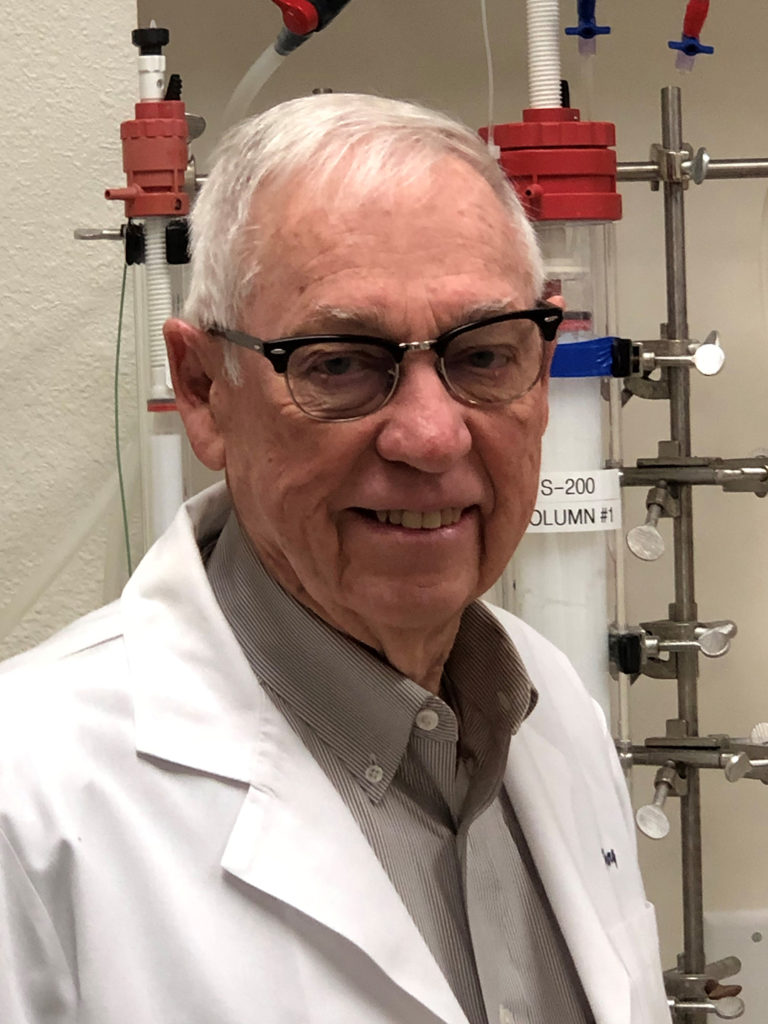
Dr. L. Garry Adams, a senior professor at the Texas A&M College of Veterinary Medicine & Biomedical Sciences (CVMBS), has been selected as the American College of Veterinary Microbiologists’ (ACVM) Distinguished Veterinary Microbiologist of 2021.
This award recognizes a veterinary microbiologist whose career has made important contributions to the field in the areas of research, teaching, and service.
“Being the American College of Veterinary Microbiologists’ 2021 Distinguished Veterinary Microbiologist is both unimaginable and humbling to me,” Adams said. “My life with the microbes is both intriguing and haunting as our journey with microbes will never end.”
“Dr. Adams has made a career of discovery and breaking new ground,” said CVMBS associate professor Dr. Sara Lawhon, who nominated Adams for the award. “His lasting legacy, though, is his impact on the lives of his students, colleagues, and friends and the relationships he continues to build.”
Research
Adams, a member of the CVMBS’ Department of Veterinary Pathobiology (VTPB), has “a long and distinguished career studying zoonotic organisms, host-pathogen interactions, and molecular pathogenesis of infectious disease,” according to the ACVM.
His work has led to more than 270 publications from his studies of infectious diseases in livestock and wildlife, particularly zoonotic diseases that also impact human health.
“He has substantively contributed to animal health and regulatory programs for brucellosis, salmonellosis, and mycobacterial infections,” said Dr. Tamara Gull, a colleague of Adams’ from the University of Missouri who also nominated him for the award.
Adams has also had an international impact from his role as a visiting professor in Germany and Canada and his collaborations with researchers in Kazakhstan, South Africa, Russia, Argentina, Mexico, Colombia, Egypt, and other countries.
As a previous associate dean for Research & Graduate Studies at the CVMBS, Adams has made great contributions to the college’s overall research missions as well.
Teaching
In the area of teaching, Adams has guided the work of 154 graduate students, hosted 11 visiting scientists, and mentored dozens of postdoctoral researchers during his 53 years as a CVMBS faculty member.
He currently gives lectures to undergraduate and graduate students on the concept of One Health (the interdependent health of humans, animals, and ecosystems) and the role of bacteria in health and disease.
“To his students, colleagues, and community, he continues to provide new knowledge about animal and human health and to provide an example of conscientious dedication to his craft and profession,” Lawhon said.
As an Aggie himself, having earned a bachelor’s degree in 1963, a Doctor of Veterinary Medicine in 1964, and a Ph.D. in 1968—all from Texas A&M—Adams continues to give back to future generations of Aggies through his role in the classroom.
Service
Because of his expertise in the areas of biodefense and the prevention of foreign animal diseases, Adams has served on numerous national and international committees and advisory boards.
He has contributed to the National Academy of Sciences’ (NAS) National Research Council Standing Committee on the U.S. Department of Defense’s (DoD) Programs to Counter Biological Threats, the DoD Committee on Biodefense, and the 2017 NAS’ “Revisiting Brucellosis in the Greater Yellowstone Area” report.
Adams was also invited by Dr. Anthony Fauci to serve as a member of the National Institute of Allergy and Infectious Diseases’ Blue Ribbon Panel on Bioterrorism and Its Implications for Biomedical Research.
His extensive and impactful roles in research, teaching, and service have also led Adams to be recognized with the 2012 American Veterinary Medical Association (AVMA) Lifetime Excellence in Research award, the 2015 American Association of Veterinary Medical College’s (AAVMC) Senator John Melcher, DVM Leadership in Public Policy award, and the 2017 AVMA Award.
###
For more information about the Texas A&M College of Veterinary Medicine & Biomedical Sciences, please visit our website at vetmed.tamu.edu or join us on Facebook, Instagram, and X.
Contact Information: Jennifer Gauntt, Director of VMBS Communications, Texas A&M College of Veterinary Medicine & Biomedical Sciences, jgauntt@cvm.tamu.edu,979-862-4216
While the bond between an animal and their human is important, considering the relationships between pets—in both interspecies and same species interactions—also is an important part of making sure your home is a happy and healthy environment.
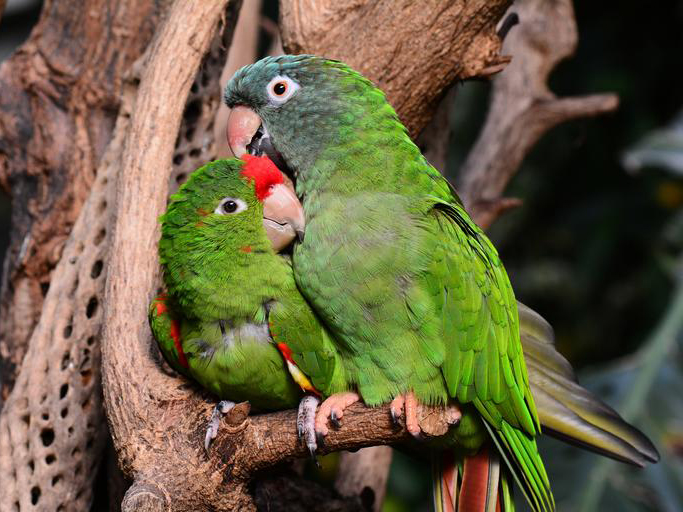
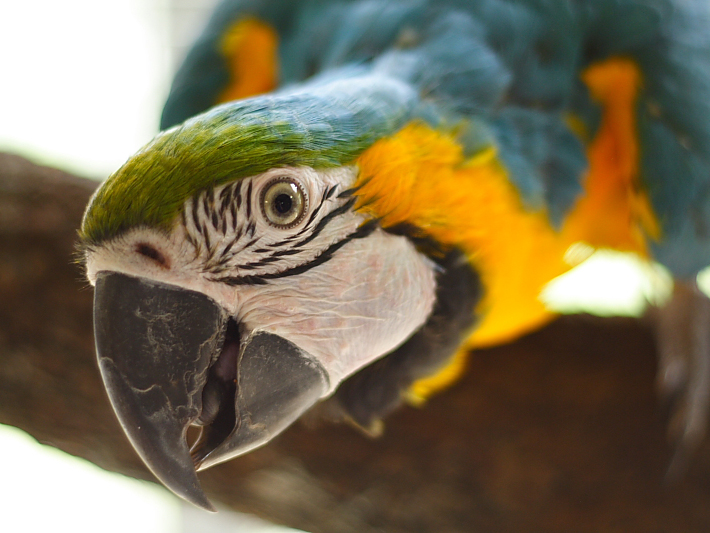
Some bird species, including parrots, chickens, canaries, and pigeons, are very flock oriented and are often adopted and kept in groups.
Dr. Sharman Hoppes, a professor emerita affiliated the Schubot Center for Avian Health at the Texas A&M College of Veterinary Medicine & Biomedical Sciences, said “birds are flock animals, and we need to recognize that when we adopt one. A bird in the wild would never be left alone, so being alone all day in a cage can be stressful.”
Debra Turner, aviary manager of the Schubot Center, says that when adopting multiple birds, owners should be mindful of the relationships between their birds to ensure a safe environment.
“Subtle signs of a not overly happy pair of birds might be each sitting on opposite ends of a perch or the dominant bird not letting the other bird perch at the same height,” Turner said. “The dominant bird may also not let the other bird approach the food dish and, in the worst-case scenario, outright physically attack the other bird.
“Some birds might not ever get along and two cages would be the best option for them,” she said. “They could come out for playtime, but each would have their own ‘home’ to return to.”
When introducing a second bird, the new bird should receive a health examination from a veterinarian before entering the house or room where your current bird resides. The veterinarian will test for diseases like Chlamydia, which also affects humans; Psittacine Beak and Feather; or Avian bornavirus.
“Once the new bird arrives, house the bird in a separate cage and adjust proximity to the current bird to start acclimation,” Turner said. “Over time, the pair will become used to each other and eventually may be housed together. The inside of a pet birdcage is a microenvironment that is very near and dear to a bird, who could display possessive nature toward their home space.
“When introducing two birds together, a new cage, or an old cage that has been thoroughly cleaned with perching and toys repositioned, would be helpful to reduce the possessive tendencies of one bird against the new bird entering the space,” she said.
An owner may choose to adopt only one bird, in which case it is important that the bird flying solo spends time in the presence of people and other pets (such as dogs and cats), which it may see as part of its flock.
It is also important to provide the bird with activities, such as toys, the opportunity to forage for food, and other forms of enrichment, to keep them busy when alone.
Although birds may form positive social relationships with the other animal members of their household, it is important to remember that birds are prey animals and should not be left alone when out of their cage around even the most well-meaning dog or cat. Mediating interactions between pets reduces the risk of either animal getting hurt.
Turner also says that owners should position their bird’s enclosure out of reach from exploring dogs and cats. This can help reduce stress for your bird and prevent an accidentally tipped cage.
“Birds are highly intelligent creatures who need stimulation and enrichment, as with any other pet, for their mental and physical well-being,” Turner said.
“In the right home, a bird can be your best friend and one of your longest relationships, but they a very high-maintenance pet to keep healthy and happy,” Hoppes said. “Before you get a bird, you should do research on the type of bird and their specific needs and have a relationship with a veterinarian comfortable caring for your bird.”
Pet Talk is a service of the College of Veterinary Medicine & Biomedical Sciences, Texas A&M University. Stories can be viewed on the web at vetmed.tamu.edu/news/pet-talk. Suggestions for future topics may be directed to editor@cvm.tamu.edu.
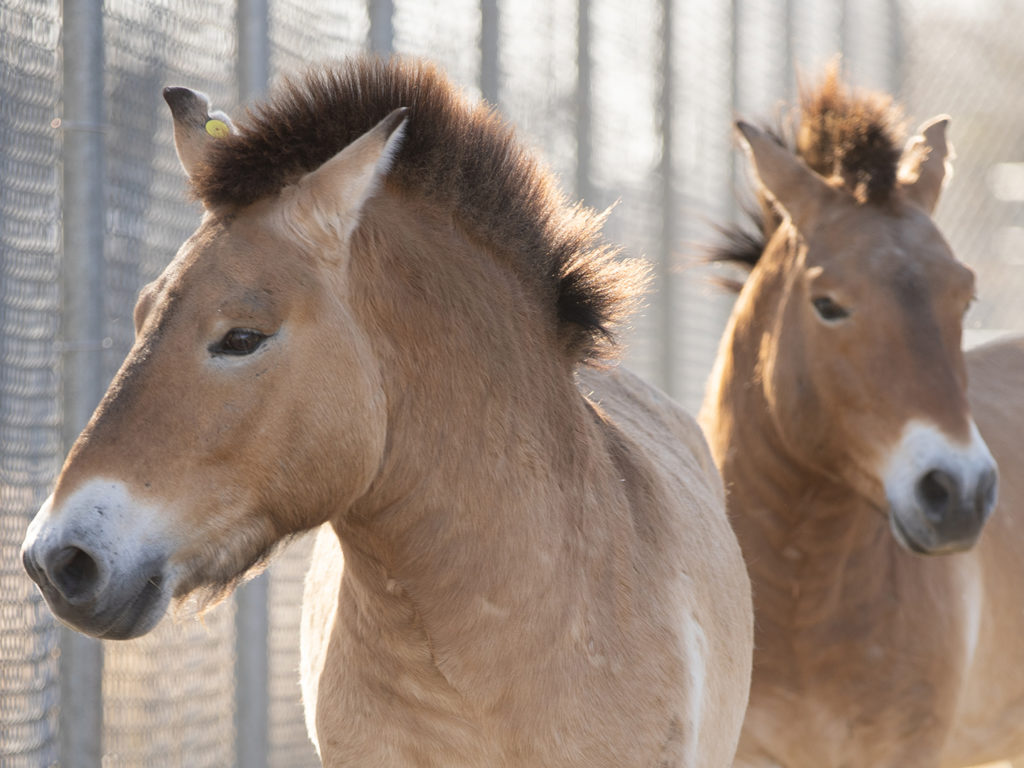
The Texas A&M College of Veterinary Medicine & Biomedical Sciences’ (CVMBS) Winnie Carter Wildlife Center (WCWC) is the new home for two Przewalski’s horses (P horses), a critically endangered species from Mongolia that is considered to be the last truly wild horse in existence.
At the WCWC, the P horses will help teach veterinary and undergraduate students about exotic animal care and the importance of species conservation.
Przewalski’s horses nearly became extinct in the wild in 1969, leading conservation scientists around the world to begin breeding programs of captive P horses in the hope of saving the species. The captive-bred individuals were reintroduced to the wild in the 1990s and, today, several healthy herds can be seen roaming the steppes of central Asia.
Captive breeding still continues, however, to maintain a diverse gene pool in the species, with the P horse’s Species Survival Plan—created by the Association of Zoos and Aquariums—determining which individuals remain in the breeding program. Those that don’t stay in the program go on to find homes at safari parks and wildlife centers across the United States.
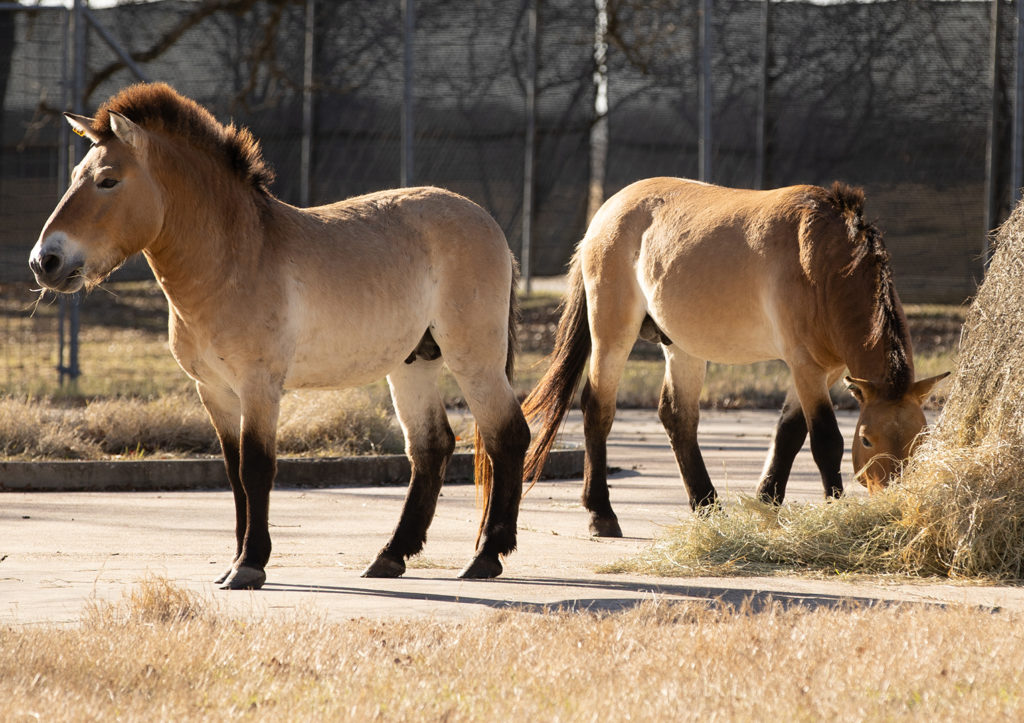
This is how the WCWC’s director Dr. Alice Blue-McLendon learned about the opportunity to bring a pair of P horses to Texas A&M; she was contacted in December 2020 about providing a home for two males, Dash and Tegus.
The 8- and 9-year-old P horses were born at San Diego Safari Park and, because their genetics were already well-represented in the park’s P horse population, they were sent to Fossil Rim Wildlife Center in Glen Rose, Texas.
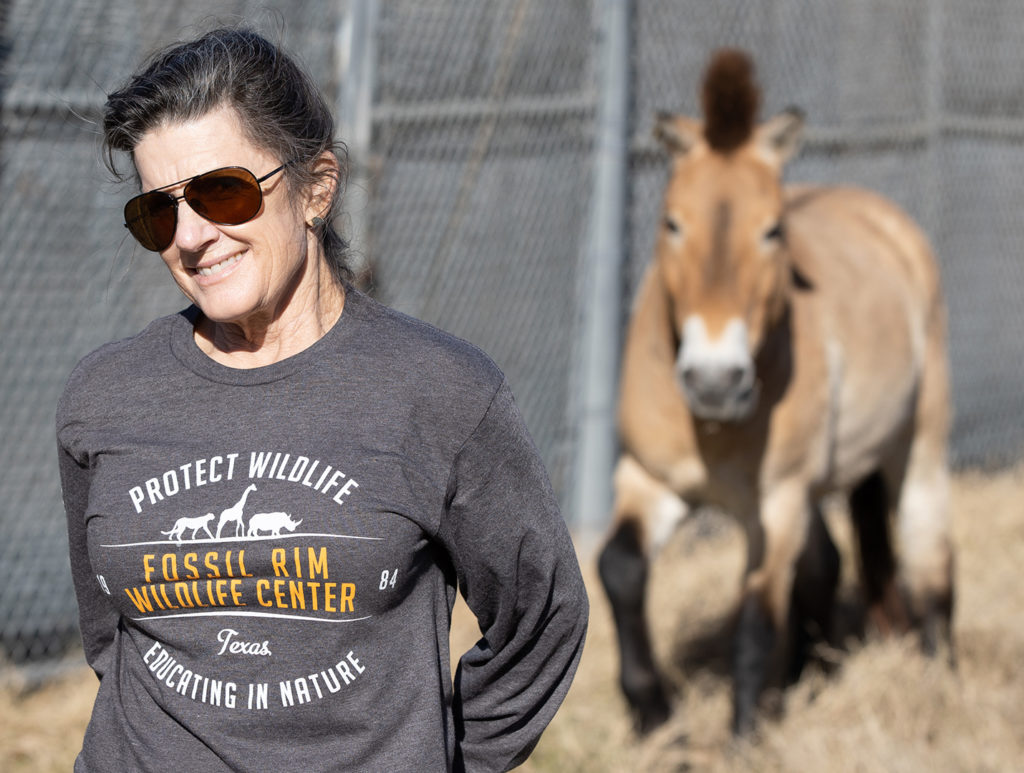
Dr. Alice Blue-McLendon
Fossil Rim’s director of animal care Adam Eyres knew the P horses would find the perfect home at Texas A&M, where they could live an easy life while providing a unique educational opportunity for students. He called his good friend Blue-McLendon, who was happy to take the P horses in.
“One of the big opportunities the P horses provide is helping students understand conservation and educating them about things like the Species Survival Plan and how that helps ensure that animals with very limited numbers maintain a good gene pool as they’re reintroduced to the wild,” Blue-McLendon said.
“It’s important to preserve species because the planet is a very diverse place with lots of different animals, plants, and insects,” she said. “As humans, we don’t always tread gently on this planet, and it’s important that we preserve the diversity of plant and animal life for future generations.”
In addition to providing a real-life example of the benefits of species conservation, the P horses will give students the opportunity to care for a wild equid species in captivity and learn the similarities and differences between them and domestic horses.
“The P horses’ care is very similar to a domesticated horse’s, but we’ll probably never be able to pet them,” Blue-McLendon said. “They’ll need to be routinely vaccinated and they’ll need hoof trims one to two times a year. We will probably work on training them to make it easier to perform veterinary procedures.”
Though the P horses were raised in captivity, they had little direct contact with humans and maintain the shy personality they share with their wild cousins.
Dash and Tegus
Dash and Tegus will live in a private, two-acre pasture until their quarantine period ends, after which they may move to a shared space with other herbivores. The WCWC is also home to a female zebra that provides similar learning opportunities for students, but these species will never be kept together because of the possibility of interbreeding.
“In general, these animals are going to provide additional experience for our undergraduate and veterinary students to be able to work with non-domesticated equids,” Blue McLendon said. “There are only seven different species in the equine family, one of which is the domestic horse, so having a zebra and these P horses provides additional teaching opportunities. For example, we’ve already planned to do a hoof trim in April on one of the P horses for our third-year veterinary student elective.”
As the P horses settle into their new home, Blue-McLendon and the others at the WCWC are looking forward to seeing their personalities emerge.
“Dash and Tegus are delightful and very entertaining to watch,” she said. “They’ve been together their whole lives and they are very bonded.
“We’ve been working with them very intensely and they’re already comfortable coming close to people to get their grain and treats,” she said. “Because of their daily interaction with lots of students and staff, they’re already becoming a little bit more approachable than I expected, which is fantastic.”
###
For more information about the Texas A&M College of Veterinary Medicine & Biomedical Sciences, please visit our website at vetmed.tamu.edu or join us on Facebook, Instagram, and X.
Contact Information: Jennifer Gauntt, Director of VMBS Communications, Texas A&M College of Veterinary Medicine & Biomedical Sciences, jgauntt@cvm.tamu.edu,979-862-4216
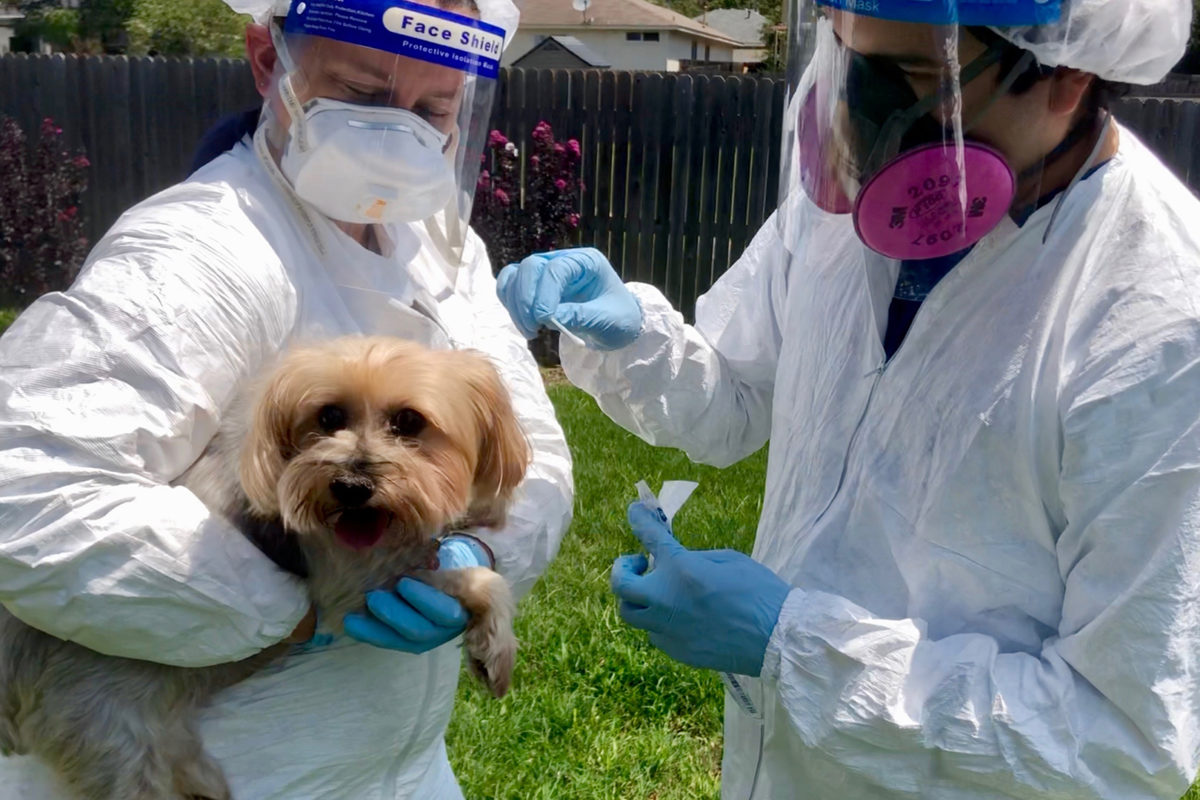
The research team travels to the homes of pets to collect samples including swabs from the nose, mouth, rectum, and fur, and a small blood sample. The whole process takes about 10 minutes with the animal in the comforts of their owner and home.
The United Kingdom variant (B.1.1.7) of SARS-CoV-2, the virus that causes COVID-19, has been detected for the first time in a dog and a cat from the same household in Brazos County, Texas, as part of a study led by researchers at Texas A&M University.
The first reported finding of the B.1.1.7 human variant virus in any animal worldwide, this detection of the UK variant in animals in a natural household setting reinforces the importance of having procedures in place to monitor the SARS-CoV-2 viral genome as it crosses species barriers, giving specialists both insight and time to study potential new variants before they spread through animal or human populations.
“Surveillance of SARS-CoV-2 in animals in and around households and genetic investigations of the virus from infected pets are critically important for understanding the transmission and evolution of the virus as well as predicting what may happen next,” said Dr. Sarah Hamer, a veterinarian and epidemiologist in the Texas A&M College of Veterinary Medicine & Biomedical Sciences (CVMBS) who serves as principal investigator for the COVID-19 & Pets study that uncovered the variant.
The B.1.1.7 variant was confirmed in both pets, a senior black lab-mix dog and a senior domestic shorthair cat, from the household where the owner was diagnosed with COVID-19 in mid-February.
Neither animal showed any overt sign of illness at the time of their positive tests.
Whole genome sequencing results from the respiratory swabs collected from the animals last month were completed March 12 at the U.S. Department of Agriculture’s (USDA) National Veterinary Services Laboratories (NVSL) and showed the dog and cat had identical sequences of the B.1.1.7 variant.
These companion animals were retested March 11, at which time the owner disclosed that the dog and cat had both been sneezing over the past weeks; the owner is now reporting that both are in good health.
The investigation into SARS-CoV-2 infections in people and pets in this household is ongoing.
Testing In Texas
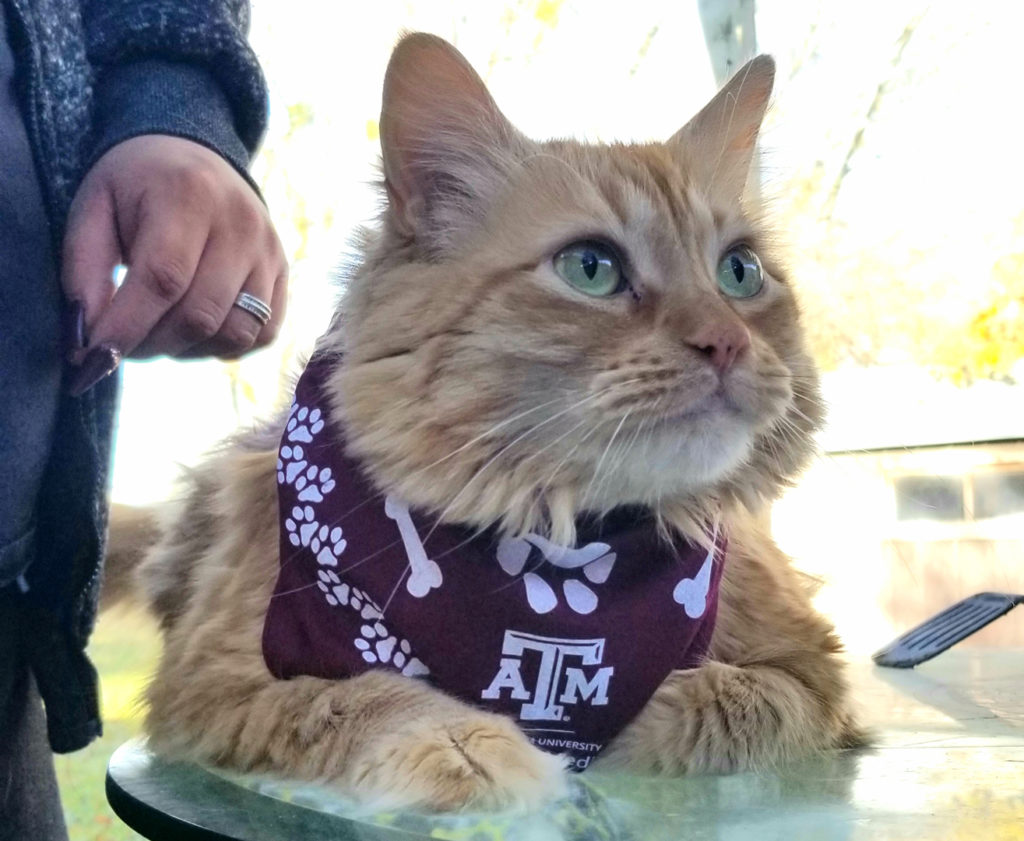
Hundreds of pets have participated in the TAMU COVID-19 & Pets Study to-date, including the photographed cat who tested positive for SARS-CoV-2 in summer 2020 and recovered uneventfully. Her infection and antibody titers have been tracked over time.
Texas has long led the charts in the number of SARS-CoV-2 animal infections, owing in large part to the Texas A&M COVID-19 & Pets study, in which researchers go to the homes of people recently diagnosed with COVID-19 to test their pets. The goals of the study are to learn more about transmission of SARS-CoV-2 between people and animals, the potential impact of the virus on animal health, and whether animals may be a reservoir for the virus (maintaining the virus in communities).
“We look forward to continuing our study as the level of human vaccination increases to learn if our pets—which are unvaccinated—may continue to be involved in the virus transmission cycles, including the emerging variants,” Hamer said.
More than 450 animals living in the Brazos County area have been tested in the Texas A&M study since June 2020, all of which lived in a household where at least one human family member tested positive for COVID-19.
Of the more than 60 animals confirmed with SARS-CoV-2 infection in the study to date, less than a quarter were reported to show signs of disease around the time of the owner’s diagnosis, most commonly including sneezing, coughing, diarrhea, or being less active than normal. To the research team’s knowledge, all symptomatic animals recovered without any need for veterinary care.
The viral genome sequences from the dog and cat infected with B.1.1.7 will be rapidly made available in a public database for use by the broader scientific community so that comparisons to other variants worldwide can be made.
What Pet Owners Should Know
“The work being done by Texas A&M University researchers highlights that pets can also get infected with variants of SARS-CoV-2. Because this virus can spread between people and animals, it is important for people with COVID-19 to stay away from pets and other animals, just like they do for other people, while a person is sick in order to prevent the spread of this virus to animals,” said Dr. Casey Barton Behravesh, director of the CDC’s One Health Office.
Based on the information available to date, the risk of pets spreading SARS-CoV-2 to people is considered to be low. SARS-CoV-2 spreads mainly from person to person through respiratory droplets from coughing, sneezing, and talking.
People with suspected or confirmed COVID-19 should avoid contact with pets and other animals to protect them from infection and illness. If contact cannot be avoided, people with COVID-19 should wear a mask around pets and wash their hands before and after interacting with them.
At this time, routine animal testing for COVID-19 is not recommended, according to the Texas Animal Health Commission (TAHC). If your pet is showing symptoms, consult with your veterinarian, who can assess your pet for common illnesses before looking into possible SARS-CoV-2 infection.
First detected in humans in the UK in December, B.1.1.7 spreads more easily and quickly than other variants and may be associated with an increased risk of death compared to other forms of SARS-CoV-2. Since its first detection in humans in the U.S. in December 2020, this variant has now been confirmed in close to 4,000 people in the U.S. across 50 jurisdictions and is predicted to become the dominant viral strain in the U.S. in the coming months.
The Texas A&M COVID-19 & Pets study is a collaboration among Texas A&M University, including Hamer and students from CVMBS, Dr. Gabriel Hamer and trainees from COALS, and Dr. Rebecca Fischer from the School of Public Health; the Brazos County Health Department; the Texas Department of State Health Services; the TAHC; the CDC; the Wisconsin Veterinary Diagnostic Laboratory; and the USDA NVSL.
The project is ongoing. Those who have recently tested positive in the Brazos Valley, Texas, region and would like to participate in the research by having their pets tested can learn more at tx.ag/BCSCovidResearch. Participation in the research includes allowing the research team to collect swabs and blood samples from companion animals.
More information on keeping pets and people healthy during the pandemic is available on CDC’s COVID-19 website.
###
For more information about the Texas A&M College of Veterinary Medicine & Biomedical Sciences, please visit our website at vetmed.tamu.edu or join us on Facebook, Instagram, and X.
Contact Information: Jennifer Gauntt, Director of VMBS Communications, Texas A&M College of Veterinary Medicine & Biomedical Sciences, jgauntt@cvm.tamu.edu,979-862-4216
Four alumni from the Texas A&M College of Veterinary Medicine & Biomedical Sciences (CVMBS) will receive 2021 awards during the Outstanding Alumni & Rising Star Awards virtual ceremony on April 16, 2021.
The 2021 Outstanding Alumni award recipients are Dr. Robert O. “Bob” Dittmar II ’79 (posthumous), Dr. Harold R. “Ray” Emerson ’65, and Dr. Karen Lass ’95. The Rising Star award recipient is Ms. Chelsea Knutson ’12.
Outstanding Alumni are selected each year to recognize those who have reached a level of success in their professional careers that brings credit to both the individual and the CVMBS . This award is the highest honor bestowed by the college and honorees may be graduates of the Doctor of Veterinary Medicine (DVM) professional program, graduate academic programs (M.S., Ph.D.), or Biomedical Sciences (BIMS) undergraduate program.
Established in 2013, the Rising Star Award seeks to recognize graduates of the CVMBS who have completed their education within the last 10 years. These outstanding former students have made significant professional accomplishments early in their careers including public service and volunteer activities that serve to positively reflect upon the college and Texas A&M.
Dr. Robert O. “Bob” Dittmar II ’79
Dr. Robert O. “Bob” Dittmar II ’79 (posthumous)
Dr. Bob Dittmar’s love for Texas wildlife was eclipsed only by his passion for serving his friends, family, and community.
Dittmar graduated with a bachelor’s degree in veterinary science in 1978 and a Doctor of Veterinary Medicine in 1979 and began a career as a mixed animal veterinarian, going on to own the Kerrville Veterinary Clinic for nearly 10 years.
In 2014, however, he began a new career path as the Texas Parks and Wildlife Department’s first state wildlife veterinarian. In this role, Dittmar worked with landowners, hunters, and biologists to help preserve native wildlife and respond to animal health concerns.
“Dr. Dittmar was especially gifted as a veterinarian,” one nominator said. “His gift was not only in his vast knowledge but in his ability to convey that knowledge in a way that others could understand. Although Dr. Dittmar was responsible for the well-being of all wildlife in Texas, he was never too busy to answer questions or explain something to students, lay persons, and wildlife professionals.”
Outside of his work, Dittmar spent much of his time volunteering with wildlife management associations, the Zion Lutheran Church in Kerrville, the Hill Country District Junior Livestock Show Association, the Texas Farm Bureau, and more.
He was passionate about passing on his knowledge of wildlife and responsible hunting to younger generations, as well as contributing to Texas A&M veterinary students’ education on wildlife diseases.
“Maybe the most important service he provided was to the young people of Texas,” another nominator said. “He gave numerous talks to youth groups about animals and wildlife and spent many hours in the field away from his family teaching young people about protecting wildlife and their habitat. I don’t know of anyone whose life better defines the Aggie Spirit of selfless service than Dr. Dittmar.”
To the sadness of family, friends, and colleagues across the state, Dittmar passed away during a helicopter crash in August 2020 while conducting an aerial survey of desert bighorn sheep in West Texas.
“His time on this earth, while prematurely shortened, will continue to affect many for years to come,” another nominator said. “His love for the wildlife of Texas will never be forgotten. Bob had a distinguished life and career and is truly an outstanding alumnus of the CVMBS.”
He is survived by wife Bernadine; children Trey Dittmar and Whitney Hild; and four grandchildren.
Dr. Harold R. “Ray” Emerson ’65
Dr. Harold R. “Ray” Emerson ’65
For Dr. Ray Emerson, having a positive impact on others is a fundamental aspect of both his personal life and career.
After earning an associate’s degree from Tarleton State College, Emerson joined the Aggie family and went on to earn a bachelor’s degree in 1962, a Doctor of Veterinary Medicine in 1965, and a master’s degree in 1968.
Soon after graduation, he established the Emerson Animal Hospital and Veterinary Services in Waco and spent 45 years there treating more than half a million large, small, and exotic animals.
“His career has spanned decades, but he still maintains the enthusiasm of young person just entering the profession,” one nominator said. “His wisdom and guidance have changed the lives of both the animals and people he has crossed paths with.”
Emerson was also one of the founders of the Waco Animal Emergency Clinic, an after-hours practice that serves pet owners in the McLennan County and surrounding region, extending as far north as the suburbs of Dallas/Fort Worth and as far south as Austin.
“He is a self-made businessman and provides leadership for Waco for community development and well-being, and he is a superb example of the American private enterprise system,” another nominator said.
Today, Emerson still practices at the same facility, now the Lake Air Animal Hospital, and primarily treats small animals and exotic pets.
Emerson has devoted many years to the advancement of the veterinary profession in Texas by serving on various Texas Veterinary Medical Association committees.
“He is a man of deep character, experience, and wisdom who has mentored scores of veterinarians to reach their potential across Texas,” another nominator said. “The true measure of Ray’s accomplishments is the high esteem with which his colleagues, staff, and clients hold for him, an esteem that is based on his commitment to excellence and the unselfish and unpretentious manner in which he works with people.”
Beyond his career, Emerson is highly active in his church and community. Over the decades, he has volunteered with a local health district, zoo, school board, Boy Scout troop, and Lions Club, in addition to serving on the Fellowship Bible Church’s greeting committee for more than 10 years.
“Dr. Emerson is a beacon for others to follow for years to come,” another nominator said. “He has touched thousands of people with his professional expertise, his courteous behavior, and his love for community.”
Emerson and his wife Theresa live in Waco; they have two children—Andrea and Erik, who followed in his father’s footsteps to attend Texas A&M.
Dr. Karen Lass ’95
Dr. Karen Lass ’95
Dr. Karen Lass has established herself as a leader in not only the national veterinary community but also as a cornerstone in her family, community, and the veterinary profession at large in Texas.
As a senior professional services veterinarian at Boehringer Ingelheim Animal Health (BIAH), Lass visits hundreds of veterinary hospitals annually, sharing successful practice protocols with clinics and training the next generation of sales representatives to ensure clinics around the nation are providing the most up-to-date care for their animal patients.
“Dr. Karen Lass is a supporter, a giver, a convener, and a contributor. One of her most notable traits is her constant and contagious positive attitude that never ceases to improve the world around her,” one nominator said. “Dr. Lass epitomizes what a CVMBS Outstanding Alumna is supposed to be.”
A passionate lifelong learner, Lass attended the American Animal Hospital Association- Colorado State University Veterinary Management Institute in 2018 to receive proactive management training. For her leadership skills, she has received a Certificate in Woman’s Leadership from the American Management Association and a Green Belt in Project Management and Leadership from the BIAH SPARK program.
Lass holds leadership positions on the Collin County Veterinary Medical Association Board and serves on the Collin College Tech School Advisory Board. She volunteers on Texas Veterinary Medical Association committees and the Southwest Veterinary Symposium Board and also coordinates Boehringer Ingelheim Animal Health support of the Texas Veterinary Medical Foundation and Texas A&M LEAP (Lending Economic Assistance for Pets) program.
More locally, Lass has had tremendous impact on the Texas A&M veterinary community. She petitioned BIAH to obtain funding for programs such as Aggies Invent: Veterinary Medicine and the Veterinary Innovation Summit. She also originated the idea of creating public-speaking training for house officers at the Veterinary Medical Teaching Hospital (VMTH) and then sponsored and coordinated the event. In addition, she developed a leadership and wellness professional development program, BIAH LeadU, that included attendees from Texas A&M and other national veterinary schools.
During COVID-19, Lass has worked to support VMTH doctors, staff, and students through stress-relief initiatives.
Beyond her career, Lass is a staunch supporter of her family, the local equine community, and her church.
“Dr. Karen Lass is a great promoter of the veterinary profession and an even greater defender,” said another nominator. “She has a clear vision of the veterinary profession and the courage to enhance it and protect it.”
She and her husband, Steven ‘91 and ’95, met in Aggieland in 1989. Their daughter Faith is an Aggie biomedical sciences major and son Joshua is a junior at Lovejoy High School.
Ms. Chelsea Knutson ’12
Ms. Chelsea Knutson ’12
2021 Rising Star Recipient
Since graduating from the Biomedical Sciences (BIMS) program and earning her nursing degree from Texas A&M, Chelsea Knutson has devoted her career to advocating for survivors of sexual assault and ensuring that the Texas healthcare system has the framework needed to support survivors of sexual assault trauma, violent crimes, child abuse, and neglect.
As the program manager for forensic outreach at the Center of Excellence in Forensic Nursing at Texas A&M Health, Knutson provides hands-on training and continuing education to nurses who want to become skilled and certified sexual assault nurse examiners (SANEs).
Knutson also works with the Texas Remote Assistance Center (Tex-TRAC), which is funded through a grant from the Office for Victims of Crime, Office of Justice Programs, and U.S. Department of Justice. This grant focuses on creating a SANE telehealth center at Texas A&M for rural and underserved areas of Texas.
Many rural healthcare facilities previously did not have the resources to support sexual assault survivors; however, through the Tex-TRAC team’s work, these patients are now able to receive the care they need through a specialized forensic nursing cart called the Tele-SANE cart that connects rural patients with a forensic nurse expert in real-time.
“When faced with situations of horrifying patient abuse and trauma, Chelsea understands that her patient’s needs come first and works long hours to ensure that her patients receive the best care possible,” one nominator said. “Even when her patient is done at the hospital, Chelsea’s work with them continues, as she can be called upon to provide mental health support for her patients or even testify in court for them as a medical expert.”
In addition to her work educating other nurses to become SANEs, Knutson works as a SANE for the Baylor Scott and White Hospital in the College Station region, and she volunteers with the Bryan/College Station Sexual Assault Resource Center (SARC) to provide trainings, speak as an expert panelist, and contribute to fundraising events.
“In the time that I have known Chelsea, I have seen her commitment to improving the lives of her patients, her students, and her co-workers,” the nominator said. “Chelsea is always the first to volunteer to help if she sees that someone is struggling with trauma in the exam room, to learn a new skill in the classroom, or to meet a deadline in the office.”
Knutson and husband Parker have two children—4-and-a-half-year-old Marshall and 10-month-old Genova.
###
For more information about the Texas A&M College of Veterinary Medicine & Biomedical Sciences, please visit our website at vetmed.tamu.edu or join us on Facebook, Instagram, and X.
Contact Information: Jennifer Gauntt, Director of VMBS Communications, Texas A&M College of Veterinary Medicine & Biomedical Sciences, jgauntt@cvm.tamu.edu,979-862-4216
The 2020 Outstanding Alumni and Rising Star award recipients from the Texas A&M College of Veterinary Medicine & Biomedical Sciences (CVMBS) will be honored during a virtual ceremony on April 16, 2021, following the 2020 ceremony’s cancellation.
In 2020, the Outstanding Alumni award recipients were Dr. Henry Carwile ’65, Dr. Erin Fleener ’97, Col. Steven T. Greiner ’96, Dr. Edward McGruder ’92, Dr. Glenn Rogers ’80, and Dr. Gordon Pirie ’71. The Rising Star award recipient was Dr. Clayton McCook ’09.
Established in 2013, the Rising Star Award seeks to recognize graduates of the CVMBS who have completed their education within the last 10 years. These outstanding former students have made significant professional accomplishments early in their careers including public service and volunteer activities that serve to positively reflect upon the college and Texas A&M.
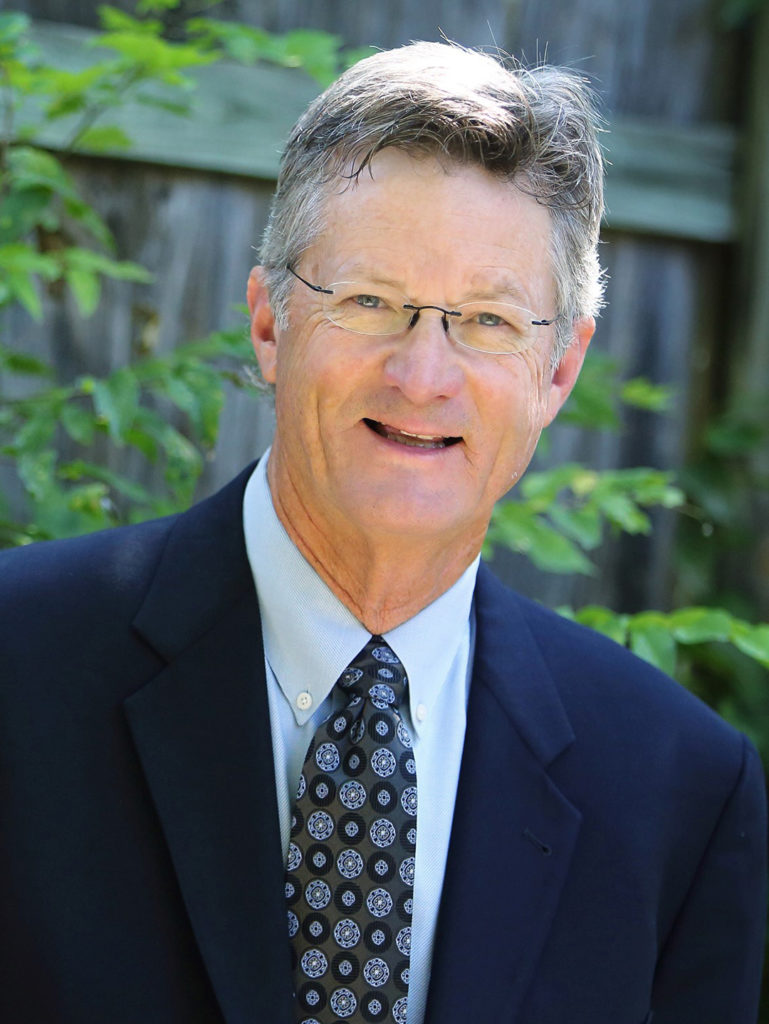
Dr. Henry Carwile ’65
Dr. Henry Carwile ’65
Dr. Henry Carwile’s early interest in the role of immunology in health and disease research has culminated in a career that merges his veterinary training, family farm, and emerging polyclonal antibody technology.
What began as a small endeavor in several converted dairy barns has grown to include 50,000 sq. ft. of space for animal housing and handling facilities, offices, and laboratories, with a 20,000 sq. ft. expansion under way.
This venture now known world-wide as Bethyl Laboratories, Inc., opened on his family farm in Montgomery, Texas, in 1972.
“Henry is a subtle, rare talent, and self-made entrepreneur who grew up in the small Texas town of Montgomery where he remains today, providing leadership for community development and well-being, a superb example of the American private enterprise system,” one nominator said.
Carwile began his education at Texas A&M University, where he received a Bachelor of Science degree in animal sciences in 1964 and his Doctor of Veterinary Medicine in 1965.
After leaving the CVMBS, Carwile married and enlisted in the U.S. Army. Following his military service, he continued his education at the University of Florida and Tulane University, receiving Master of Science degrees in pharmacology and immunology in 1971 and 1972, respectively.
“These two educational experiences, along with the exceptional education Henry received at Texas A&M, prepared him for the risky and arduous task he undertook when he returned to Montgomery and set about to generate custom-designed antibodies for scientific research,” one nominator said.
“Carwile’s curriculum vitae is not one of the usual academic accomplishments,” another nominator said. “Rather, his CV is one of an accomplished scientist-inventor-entrepreneur who facilitates, accelerates, and internationally impacts research and science for human and animal medicine.”
In addition to Carwile’s educational and professional achievements, he has been a devoted member of his community for many years as a 4-H leader, member of the Montgomery ISD school board, community economic and business developer, director of the Texas Farm Bureau, and founding member of the Montgomery County chapter of the Young Farmers of America, among others.
“Throughout his journey, Henry has remained the same soft-spoken, kind person I grew up with,” a nominator said. “He is a man of impeccable integrity. He is an outstanding graduate of the CVMBS and is certainly most deserving of this prestigious award.”
Carwile and his wife, Sally, have four children, two of whom are involved in the family business.
“Although growing their business was first and foremost in their minds and efforts,” a nominator said, “Henry made time to become involved in their children’s lives and in the lives of others in Montgomery County.”
Dr. Erin Fleener ’97
Dr. Erin Fleener ’97
Dr. Erin Fleener has remained close to Texas A&M University throughout her professional career as a medical oncologist and researcher, but her impact has benefitted the medical community on a much larger scale.
Graduating from the College of Veterinary Medicine & Biomedical Sciences in 1997 with a Bachelor of Science degree in biomedical sciences, Fleener went on to earn her Doctor of Medicine degree in 2001 from the University of Texas Health Science Center at San Antonio.
Since 2017, Fleener has been the chief of staff for CHI St. Joseph Health in Bryan, Texas, while also serving as a medical oncologist at The Cancer Clinic at St. Joseph’s since 2006. In 2017, Fleener was elected president of St. Joseph’s medical staff.
“Dr. Fleener truly exemplifies what a physician should be,” said one nominator. “Not only is she an excellent oncologist, but she is also someone who cares deeply about her patients. She has a deep empathy for them.”
Fleener also remains involved in academia, holding a position as associate clinical professor at Texas A&M Health Science Center since 2009. She is vigorously involved in research and has contributed to more than 27 medical studies, several of which are ongoing.
“It is hard to overstate the meaningful contributions that Dr. Fleener has made within the medical community,” one nominator said. “Her professional accolades help describe her hard work, tenacity, and determination when it comes to medical research and patient care.”
Those accolades include the Texas Monthly “Texas Super Doctor Rising Star” Award in 2012, 2013, and 2014, in addition to the Texas Monthly “Texas Super Doctor” Award in 2015, 2016, 2017, and 2018. Fleener was named “Best Oncologist” by the Best of Brazos committee in 2017 and 2018.
In addition to her professional work, Fleener remains involved in her community, sharing her knowledge with student organizations, such as the Texas A&M Premedical Society, and at conferences, such as the Surviving and Thriving Breast Cancer Conference, which boasts more than 800 attendees. In 2013, Fleener was awarded the Girl Scouts of Central Texas “Woman of Distinction” Award.
“It is rare to see such a compassionate and hard-working person with the leadership qualities that Dr. Fleener possesses,” said one nominator. “I have no doubt that Dr. Fleener will continue to positively influence Texas A&M University, the Brazos Valley community, and those battling cancer throughout the world.”
Fleener, her husband Greg Crisp, and their four children live in College Station.
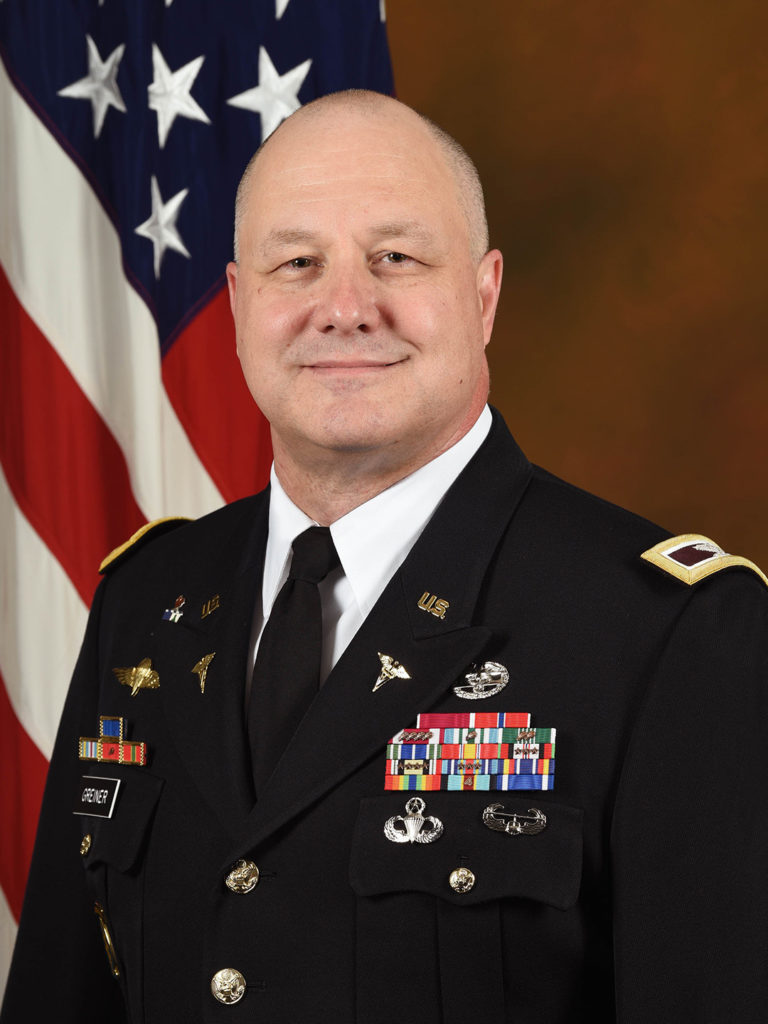
Col. Steven T. Greiner ’96
Col. Steven T. Greiner ’96 (awarded in absentia)
After a short stint in a private practice in his hometown of Cuero, Texas, Col. Steven T. Greiner answered the call of duty and, following a family history of service, has enjoyed a long and illustrious military career.
Greiner completed his Doctor of Veterinary Medicine degree in 1996 after earning two bachelor’s degrees, one in animal science in 1990 and another in veterinary medicine in 1993, and a Master of Veterinary Public Health, all from Texas A&M. His education did not end after graduation, however; in 2014, he received a Master of Strategic Studies from the U.S. Army War College.
Today, he serves as the 27th chief of the U.S. Army Veterinary Corps, which plays a vital role in maintaining and sustaining the health of animals, our service members, and their families in our nation’s defense. Officers under Greiner’s leadership play essential roles in food safety and security, animal care, and veterinary public health, as well as research and development for our armed forces.
“Col. Steven T. Greiner has brought great honor and national recognition to the CVMBS through his outstanding military career and distinguished service to our nation as a graduate Doctor of Veterinary Medicine from our college,” one nominator said.
Throughout his decades of service, Greiner has been stationed throughout the United States, in Germany as commander of Public Health Command Europe, and has been deployed to Iraq, Afghanistan, Kenya, Jordan, Yemen, and Kuwait.
“I have witnessed first-hand his untiring commitment to educating veterinary students with up-to-date information regarding scholarship and career opportunities in military veterinary medicine and public service,” one nominator said.
In his more than 20 years of service, Greiner has received numerous military awards and decorations, including the Legion of Merit, Bronze Star, and Meritorious Service medals.
“Through hard work, dedication, and commitment to excellence, Col. Greiner rose through the ranks and assumed increasing leadership roles and responsibilities during an era of the most intense combat deployments in the history of our Armed Forces,” another nominator said.
Greiner’s abilities as a leader and his skills as a veterinarian have provided many opportunities to advance his career and benefit others as he continues to concurrently serve as director of veterinary services for the U.S. Army Medical Command.
“Throughout his career, Dr. Greiner has reflected well on Texas A&M University and the College of Veterinary Medicine & Biomedical Sciences,” one nominator said. “He has maintained the highest degree of integrity and demonstrates the Aggie Core Values on a daily basis.”
Greiner and wife Deanna live in Bulverde, Texas; they have four children.
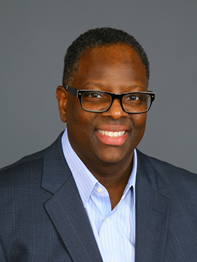
Dr. Edward McGruder ’92
Dr. Edward McGruder ’92
Dr. Edward McGruder has spent his career diving deeper and deeper into the world of animal health, working to better the lives of animals from a molecular level.
A lifelong Aggie, and a son and nephew of veterinarians, McGruder attended Texas A&M University for his Bachelor of Science degree in biomedical sciences, Doctor of Veterinary Medicine, and PhD in microbiology and immunology.
His education has culminated to a career in pharmaceutical research and innovation, including almost 23 collective years with Elanco Animal Health, during which he has focused on the development and commercialization of pharmaceutical, anti-infective, and vaccine products that serve both companion animals and livestock.
“Dr. McGruder is methodical in his research approach and does not cut corners,” said one nominator. “His work is thorough, and his production is robust and excellent.”
This mindset is reflected in the breadth of ventures McGruder has pursued. In addition to his previous positions as advisor and chief medical officer at Elanco, he currently serves as global head of research and development and innovation on the executive team at Argenta Limited, another animal health company.
“Edward brings energy, deep knowledge, and leadership to Argenta’s R&D business and our interactions with our customers,” said Ben Russell, CEO of Argenta. “His lifetime of experience in animal health, from following his father into veterinary science to leading people at Elanco and Argenta, brings value and perspective to our leadership team.”
McGruder has previously served as president at Prokaryon Technologies, an entrepreneurial portfolio company of Baylor College of Medicine, and at FMS Ventures, Inc. His involvement in the early development of these companies demonstrates his passion for discovering progressive solutions in the field of animal health.
“Each of these important positions has made an incredible impact on veterinary medicine and the animal health industry and have led to a number of global product approvals in the United States and abroad,” one nominator said. “Dr. McGruder has been integral to Elanco’s continued success in the animal health sector, making transformative moves and using innovation as a catalyst for change.”
In addition to his work as a leader in the animal health field, McGruder also gives his time generously to community organizations. He served as an elder at Abundant Grace Fellowship Church, chair of the Tocqueville Council for the United Way of Central Indiana, and chair of the Texas A&M Engineering Experiment Station (TEES) Advisory Board, among others.
McGruder encapsulates the Aggie spirit, demonstrating excellence in his leadership of the animal pharmaceutical field while practicing kindness and selfless service in his community. His forward-thinking approach to pharmaceutical research has greatly benefitted the veterinary industry and will continue to do so for years to come.
“Dr. McGruder distinguishes himself professionally and conveys great recognition to the CVMBS through his resolute dedication to the veterinary profession,” said one nominator. “He continues to make an impact on our college, our university, our state, our nation, and beyond.”
McGruder and his wife, Patricia, live in Dallas; they have two sons.
Dr. Glenn Rogers ’80
Dr. Glenn Rogers ’80
Dr. Glenn Rogers has worked tirelessly for more than 40 years to improve the veterinary profession from positions in private practice, academia, and industry.
After attending Texas A&M University for both his Bachelor of Science and Doctor of Veterinary Medicine degrees, Rogers began his career as the owner of a mixed animal practice in his home town of Graham. Later, he built another practice in Palo Pinto County.
In 1991, Rogers left private practice to pursue a master’s degree and residency in beef production medicine at Kansas State University. Upon graduation, he accepted a faculty position at the North Carolina State University College of Veterinary Medicine, quickly rising to the status of associate professor. He became a Diplomate in the American Board of Veterinary Practitioners (Beef Cattle Practice) in 1995.
“Dr. Rogers became recognized as one of the most knowledgeable beef cattle herd health veterinarians in the United States,” one nominator said.
After seven productive years in academia, Rogers transitioned to industry, most notably spending 12 years with Pfizer Animal Health and eventually becoming a senior manager of beef veterinary operations.
In this position, Rogers served as a major advocate for the Beef Partners in Extension Program, a collaboration between Pfizer and Texas A&M that was calculated by extension service economists to benefit the state of Texas $5.27 million a year.
Another significant product of Rogers’ time in industry was a web-based tool he developed called the Integrated Herd Health Planner, which improved how beef producers manage their herd vaccination records.
In 2013, Rogers left industry to return to Palo Pinto County to become a full-time rancher and operator of a beef heifer development business.
This career change has allowed him to increase his community involvement and organized veterinary medicine, including with the American Association of Bovine Practitioners (AABP), as district director from 2006-2012, chair of the AABP Foundation, and recipient of the 2015 AABP Distinguished Service Award. In 2016, Rogers was elected as vice president and served as AABP president in 2018-2019.
Rogers occasionally works as a veterinary consultant, with a clientele that includes the Superior Livestock Auctions, the nation’s largest cattle auction.
Rogers received the 2017 Texas Conservation Rancher of the Year Award and was named the 2018 Academy of Veterinary Consultants Consultant of the Year.
Recently, Rogers took his dedication to public service to the next level, winning election to the Texas House of Representatives to represent District 60.
“For four decades, Dr. Rogers has displayed the leadership, selfless service, discovery, and innovation that are hallmarks of a Distinguished Alumnus of Texas A&M’s College of Veterinary Medicine & Biomedical Sciences,” one nominator said. “Dr. Glenn Rogers has been a selfless leader and innovator serving the cattle industry and veterinary medicine across the United States.”
Rogers and his wife, Mandy Moody, DVM, live in Graford, Texas. The couple has four children and five grandchildren.
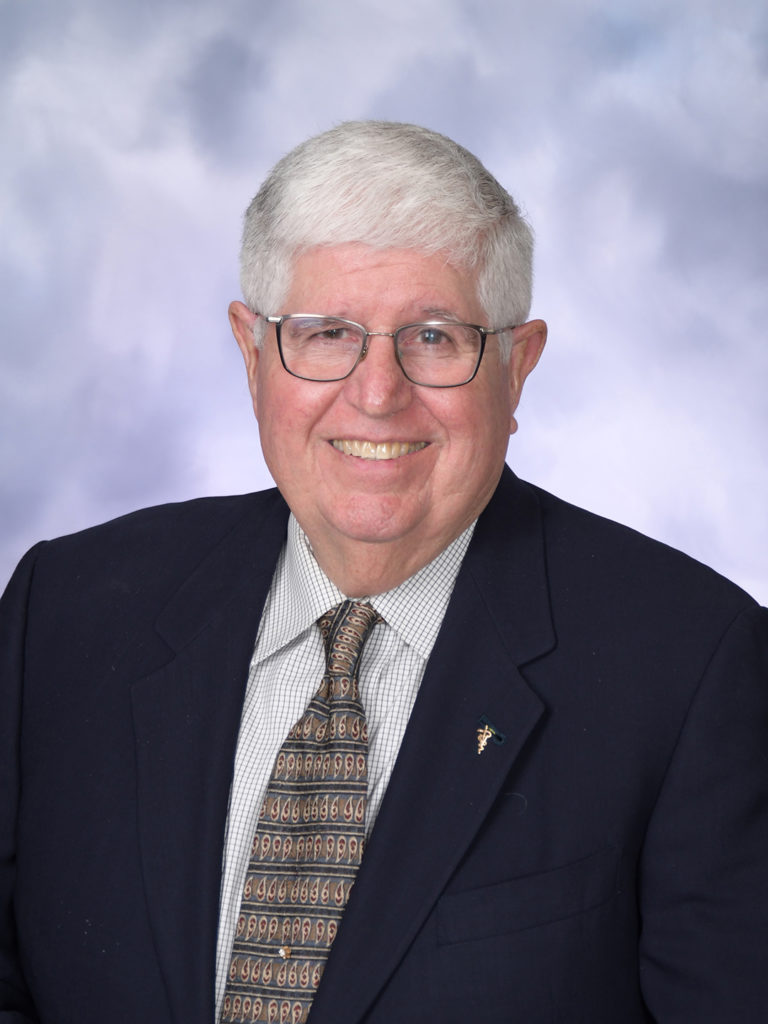
Dr. Gordon Pirie ’71
Dr. Gordon Pirie ’71
Dr. Gordon Pirie has cemented himself as a pillar of both his community and of the world of zoological medicine.
Graduating from Texas A&M with both his Bachelor of Science in veterinary science and Doctor of Veterinary Medicine degrees, Pirie went on to own Baker Animal Hospital, a domestic small animal and exotic pet veterinary service in the city of Baker, Louisiana, from 1972-2017.
Concurrently, Pirie became active in his service to the BREC Baton Rouge Zoo as a contract veterinarian. Through this work, paired with his position as an adjunct assistant professor at the Louisiana State University School of Veterinary Medicine, Pirie found a passion for teaching the next generation of veterinary students about exotic animal care. He recently retired from both LSU and the zoo.
“Dr. Gordon Pirie’s efforts and participation in the Zoological Medicine Program at the LSU School of Veterinary Medicine is and will always be a cornerstone to our success,” said one nominator. “He has truly made a difference in veterinary medicine, zoological medicine in particular, and in his community.”
Pirie also endeavors to improve the quality zoological animal care nationally through his work as an Association of Zoos and Aquariums accreditation inspector. Other areas in which Pirie has emerged as a leader include his former presidencies of the Baton Rouge Area Veterinary Medical Association, the Louisiana Veterinary Medical Association, the Walter J. Ernst Memorial Veterinary Foundation, and more.
His work as a scout master and century member in the Boy Scouts of America, advisory board member of Park Ridge Elementary School, and ruling elder of West Baton Rouge Presbyterian Church also reflect this selfless attitude.
“Dr. Gordon Pirie is a fine man of faith, a wonderful husband, father, and grandfather, as well as an honored practitioner by his local and state veterinary associations,” one nominator said. “He is not only diligent in his quest toward great health care for his patients but is also creative and inventive when faced with unique exotic zoo case challenges.”
For his service to pets, zoo animals, and the human members of his community, Pirie has been named the Louisiana Veterinarian of the Year in 1991 and the City of Baker Citizen of the Year in 2001, as well as having been awarded keys to the City of Baker, presented by the mayor and city council in 2017, among other honors.
“Dr. Gordon Pirie is one of the staunch supporters of providing high quality compassionate veterinary medicine,” said one nominator. “The veterinary profession has had considerable benefit from his many years of leadership and service through local, state, and national veterinary medical organizations.”
Pirie and his wife, Nanette, live in Baton Rouge; they have four children and seven grandchildren.
Dr. Clayton McCook ’09
Dr. Clayton McCook ’09
2020 Rising Star Award Recipient
Between his career, volunteer efforts, and personal interests, Dr. Clayton McCook has found many ways to help animals and people in Oklahoma, where he lives, and beyond.
McCook earned his Doctor of Veterinary Medicine degree from Texas A&M in 2009, after earning bachelor’s degrees in biology and Spanish literature and language (2004) from Texas Christian University and the University of Texas at Arlington, respectively, and a master’s degree in animal sciences (2005) at the University of Connecticut.
While McCook serves as an associate veterinarian in equine sports medicine and surgery at multiple racetracks in Oklahoma, his passion for emergency response also led him to create the nonprofit organization Oklahoma Large Animal First Responders (OLAFR) after witnessing the 2013 tornado outbreak in Oklahoma City.
As the current president of OLAFR, he helps provide urgent care, triage, and evacuation for large animals during both natural and manmade disasters, while also bridging the gap between private citizens and federal, state, and local agencies.
“There is nobody I know who has given more to a community and surrounding areas than Dr. McCook in his desire to help those in need,” one nominator said. “He is an amazing veterinarian, a leader, and a tireless volunteer in order to help others.”
McCook’s volunteer work with OLAFR extends beyond Oklahoma, as well; he deployed to help animals in Houston after Hurricane Harvey and has lectured on disaster preparedness at veterinary conferences across the country.
Finally, after his daughter was diagnosed with type 1 diabetes, McCook dedicated much of his remaining free time to advocating for those with the disease and the need for improved treatment options.
“Dr. McCook has become a tireless advocate for patients of this chronic disease, using his medical background and altruistic spirit to educate policy makers at all levels of government and on both sides of the aisle on the day-to-day realities of dealing with this medical reality,” another nominator said. “His indefatigable efforts to care for his daughter and those with similar life-threatening, non-communicable, lifelong illnesses have led him all the way to speak at hearings at the United Nations General Assembly.”
By working with organizations like the Juvenile Diabetes Research Foundation and the “Nightscout” Project, which developed Bluetooth-enabled insulin pump monitoring software, McCook is actively involved in keeping insulin accessible for all patients and improving type 1 diabetes management.
“Despite his being so active and in the forefront of so many fields, he remains a most humble and self-deprecating person, invariably attempting to pass on the source of some success to one of his peers or another team-member,” another nominator said. “I never cease to be impressed at how he finds time to help and educate others in so many different ways in addition to his veterinary practice activities.”
McCook currently lives in Edmond, Oklahoma, with his wife Cindy and his two daughters.
###
For more information about the Texas A&M College of Veterinary Medicine & Biomedical Sciences, please visit our website at vetmed.tamu.edu or join us on Facebook, Instagram, and X.
Contact Information: Jennifer Gauntt, Director of VMBS Communications, Texas A&M College of Veterinary Medicine & Biomedical Sciences, jgauntt@cvm.tamu.edu,979-862-4216
Pet owners often form close bonds with their animal companions. Owners of feathered friends might be pleased to learn that this relationship is reciprocal, as birds can form strong bonds with their owners and other non-human members of their household.
Debra Turner, aviary manager of the Schubot Center for Avian Health at the Texas A&M College of Veterinary Medicine & Biomedical Sciences, says that different species of birds exhibit different social behaviors.
“Parrots, chickens, canaries, and pigeons are all very flock oriented. Raptors, like hawks and owls, are not as social or flock oriented,” added Dr. Sharman Hoppes, a professor emerita affiliated with the Schubot Center.
Since most birds are prey animals, they tend to be more alert and nervous around new people and elements in their environment. However, Hoppes says that pet birds hand-raised by humans will often become imprinted on their owner and behave differently.
“Birds see their owners as part of the flock. This can lead to a very close bonding relationship that is fun and entertaining in our homes,” Hoppes said. “But in some cases, birds may see their owner as a mate; this stimulates abnormal reproductive behavior affecting nesting, chronic egg-laying, and territorial behaviors.
“In some cases, an unhealthy relationship with the owner can lead to health issues such as cloacal prolapse (a protrusion of the reproductive tract) and hypocalcemia (calcium deficiency) from laying too many eggs,” she said.
Another potential issue that may arise from the bond between bird and owner is that they may become protective of and bite individuals who get too close to their imprinted human. They may also become protective of their cage or become defensive if they feel threatened, also leading to biting.
Flock-oriented birds have evolved to live with other members of their species and form social relationships with their fellow feathered friends. If only one bird is adopted, being alone all day in a cage may become stressful.
“Luckily, our birds will often see people and other pets, such as dogs and cats, as part of their flock, so having other animals in the home and lots of activities for them to do (such as enrichment, toys, foraging for food, etc.) will help keep them busy when alone,” said Hoppes.
Although our feathered friends may seem very different from the furry pets most people are accustomed to, the relationships they form with their owners are strong and rewarding bonds that last a lifetime.
Pet Talk is a service of the College of Veterinary Medicine & Biomedical Sciences, Texas A&M University. Stories can be viewed on the web at vetmed.tamu.edu/news/pet-talk. Suggestions for future topics may be directed to editor@cvm.tamu.edu.
When the COVID-19 pandemic first began, scientists were faced with a serious challenge—how to educate the general public on a disease that they themselves knew so little about. During the past year, however, science has made great advances in its knowledge of the SARS-CoV-2 virus that causes COVID-19, even to the point of developing multiple vaccines.
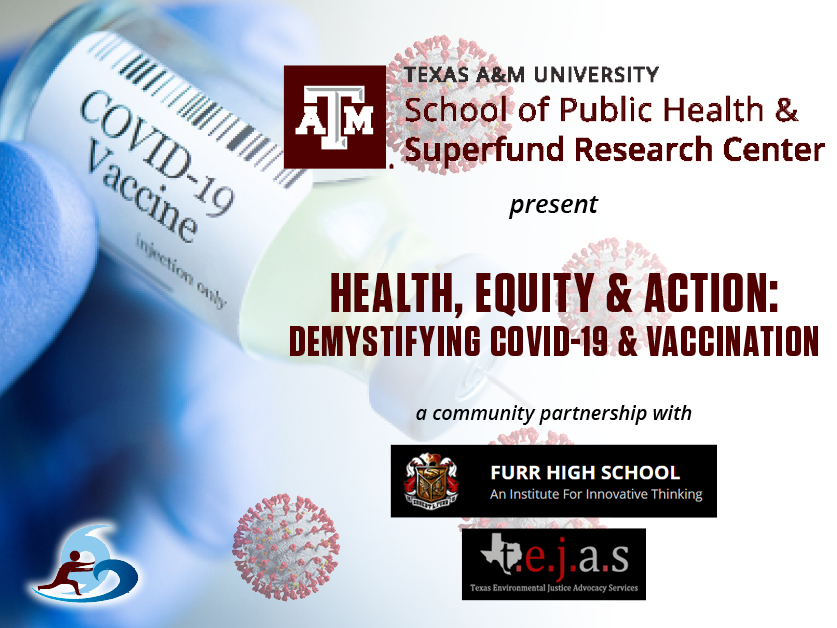
Unfortunately, misinformation has been a trend since even before the pandemic officially began. This is why the Texas A&M Superfund Research Center and Texas A&M University School of Public Health recently partnered to present a series of community webinars on COVID-19 and vaccinations, during which experts from multiple fields explained the science behind the virus and vaccines for those without a science background and for whom English might not be their first language.
Approximately 200 high school students and local community members attended each of the two “Health, Equity & Action: Demystifying COVID-19 & Vaccinations” webinars offered on March 9 and March 10, 2021.
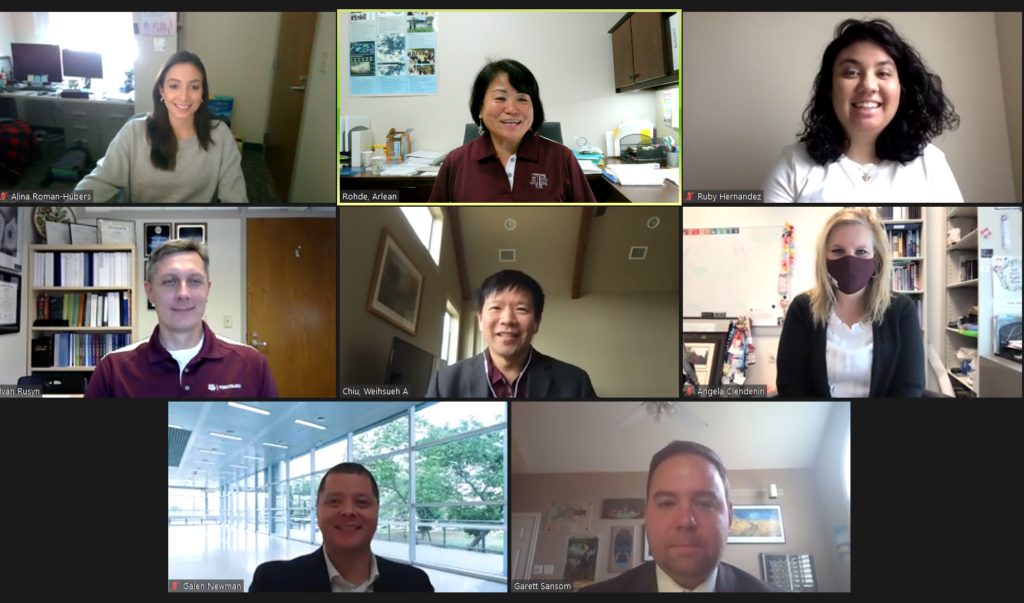
Speakers included research assistant professor Dr. Garett Sansom and instructional assistant professor Dr. Angela Clendenin from the School of Public Health; College of Veterinary Medicine & Biomedical Sciences (CVMBS) professor Dr. Weihsueh Chiu; professor of biology and Global Health Research Complex chief virologist Dr. Benjamin Neuman; and University professor Dr. Ivan Rusyn.
Throughout both webinars, graduate students Ruby Hernandez, from School of Public Health, and Alina Roman-Hubers, from the toxicology graduate program, served as live English-Spanish translators.
The first presentation focused on demystifying COVID-19 and covered a general overview of what we now know about the disease and the inequities the pandemic has revealed in our communities. This discussion was led by Clendenin on March 9 and Chiu on March 10.
“We have learned so much in one year thanks to many thousands of scientists and doctors around the world,” Chiu said. “Unfortunately, COVID-19 has also revealed and made worse many inequities in our country. People of color are more likely to get sick, and more likely to die from COVID-19.”
He stressed the important role vaccines will play in addressing these inequities and in the overall effort to overcome the virus.
Misconceptions about the COVID-19 vaccines are causing many people to avoid vaccination. To address these misconceptions and explain how the vaccines work, the second presentation focused on the SARS-CoV-2 variants and vaccines, led by Neuman on March 9 and Rusyn on March 10.
Learning about vaccines from expert scientists will be vital in increasing the general public’s trust in COVID-19 vaccination. For example, many of the webinar attendees expressed excitement about getting to learn about the virus and vaccines directly from Neuman, who has been involved in coronavirus research since 1996.
“Regardless of the type of vaccine that you may be able to get, please be assured that they all have been rigorously tested and are highly effective,” Rusyn said. “We should have as many people vaccinated as possible, quickly, to prevent severe disease and death and to stop the spread of the virus.”
This event was made possible by support from two of Texas A&M’s community partners, the Texas Environmental Justice Advocacy Services (t.e.j.a.s) and Furr High School, located in a largely Hispanic community in Houston.
The webinars began with a welcome from a Furr High School student and an introduction from Sansom, who played a key role in organizing the event using his connections to Houston community partners, and concluded with a Q&A session to answer student questions and closing remarks from Sansom and College of Architecture associate professor and Superfund Center Community Engagement leader Dr. Galen Newman.
Plans are being developed to hold similar webinars in the near future with other community partners in Houston. Future events open to the public will be announced on the Superfund Center’s Facebook and Twitter pages.
“Usually, when we share new knowledge, that new information actually leads to more questions, and I hope that is where we find ourselves today,” Clendenin said. “Become consumers of information, but be informed about where you get it. If I have done my job today, hopefully each of you will feel empowered to do the right thing, to be Texans helping Texans, to engage in behaviors that continue to protect our families, our friends, and our neighbors, so that each person lost to this pandemic will not have passed in vain.”
This event took place as part of the Superfund Center’s Community Engagement Core, which focuses on youth engagement to foster the development of the next generation of environmental health scientists and advocates. Newman serves as the principle investigator for this core and Sansom serves as a co-investigator.
For more information about the Texas A&M College of Veterinary Medicine & Biomedical Sciences, please visit our website at vetmed.tamu.edu or join us on Facebook, Instagram, and X.
Contact Information: Jennifer Gauntt, Director of VMBS Communications, Texas A&M College of Veterinary Medicine & Biomedical Sciences, jgauntt@cvm.tamu.edu,979-862-4216