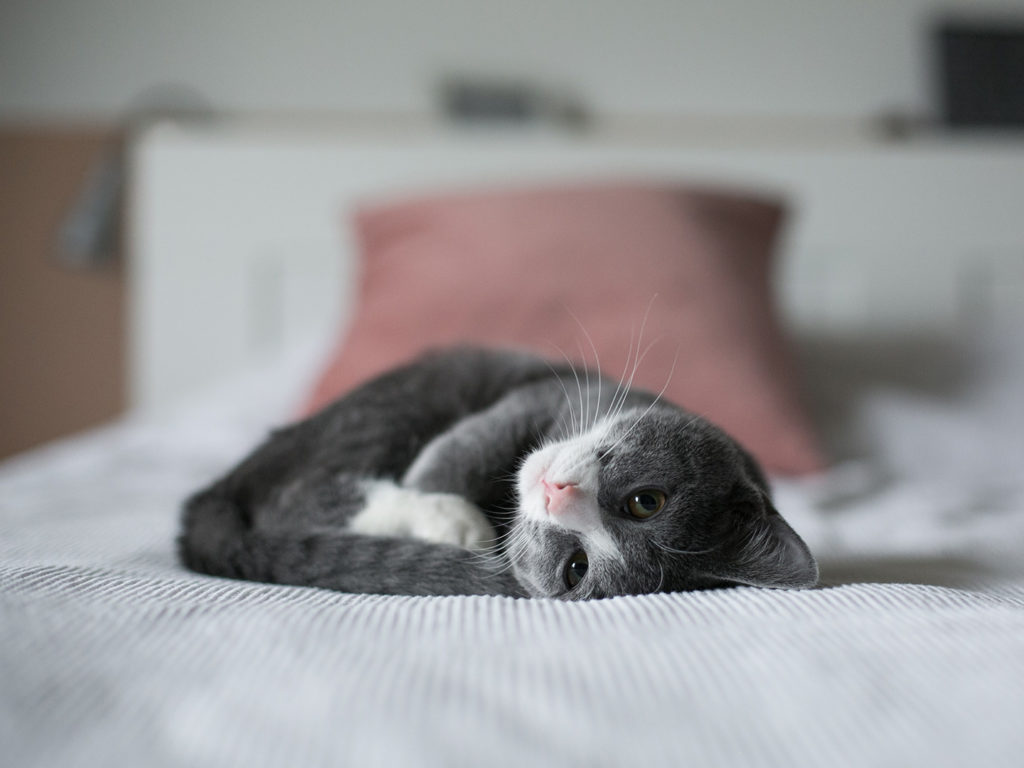
Diarrhea is a natural part of life—all pets (and pet owners) have had it at some point.
While diarrhea can be smelly, messy, and potentially embarrassing, Dr. Michael Hung, a small animal internal medicine resident at the Texas A&M College of Veterinary Medicine & Biomedical Sciences, offers the run down on what causes it and when a pet owner should be worried.
Diarrhea is defined as loose, watery, and more frequent bowel movements and simply indicates that something is irritating the GI tract, according to Hung.
“It occurs when something either impairs the intestine’s ability to absorb water or causes the intestine to secrete more water,” he said. “This can be from a problem originating within the intestines—such as parasites, inflammatory bowel disease, a sudden change in diet, or even stress.”
When diarrhea is caused by something obvious—such as a pet getting into the garbage or eating too many table scraps, intestinal worms, or stress from a recent move—and the episode passes quickly, it can be considered normal and self-resolving.
“However, diarrhea can also reflect a more serious issue elsewhere in the body,” Hung warns.
More sinister causes may include infectious diseases, the ingestion of poisonous substances, and a variety of illnesses, such as kidney disease or even cancer.
“While there are serious causes for diarrhea, the majority of diarrhea cases are uncomplicated and do not require hospitalization,” Hung said.
If a pet has a sudden bout of diarrhea, there are some at-home measures that pet owners can take to help their loved ones.
Hung says that pet owners can make sure that plenty of water is available to their pets, although they should never force feed the water.
A bland and low-fat diet can also be offered for a short period of time. Examples include shredded, non-seasoned, fully cooked chicken breast or cottage cheese mixed with cooked, plain white rice. Since this diet is not balanced, however, it should not be offered for more than a couple of days.
Pet owners also can try to prevent diarrhea by making sure their pets are on appropriate, thoroughly cooked, and balanced diets.
“Treats (including human food) should be kept to a minimum,” Hung said. “Any changes to diet should occur gradually over a couple of days. Pets should also be kept on a consistent parasite preventative regimen and vaccine schedule.”
Occasional diarrhea is unavoidable, and a pet may be able to overcome minor bouts on their own or with the help of their owners.
“Ultimately, the cure for diarrhea depends on its cause,” Hung said, adding that some pets may need to see a veterinarian for medical help.
“Any diarrhea that is profuse and watery, mostly bloody, or that lasts longer than seven to 14 days should be addressed by a veterinarian,” Hung advises. “Because diarrhea can be a warning sign of a systemic disease, if not addressed in a timely manner, these systemic diseases can progress and become harder to treat.”
Ongoing diarrhea can result in weight loss, nutrient deficiencies, and dehydration. Signs of dehydration, including lethargy, inappetence, unwillingness to drink, also indicate the need for veterinary attention.
“That said, if your pet has diarrhea but is eating and drinking and seems like themselves—don’t panic! Although a pet with diarrhea in the house can certainly be stressful, it is not necessarily an emergency,” he said. “You can schedule an appointment with your family veterinarian, and they can help you decide what is needed for your pet.”
Pet Talk is a service of the College of Veterinary Medicine & Biomedical Sciences, Texas A&M University. Stories can be viewed on the web at vetmed.tamu.edu/news/pet-talk. Suggestions for future topics may be directed to editor@cvm.tamu.edu.
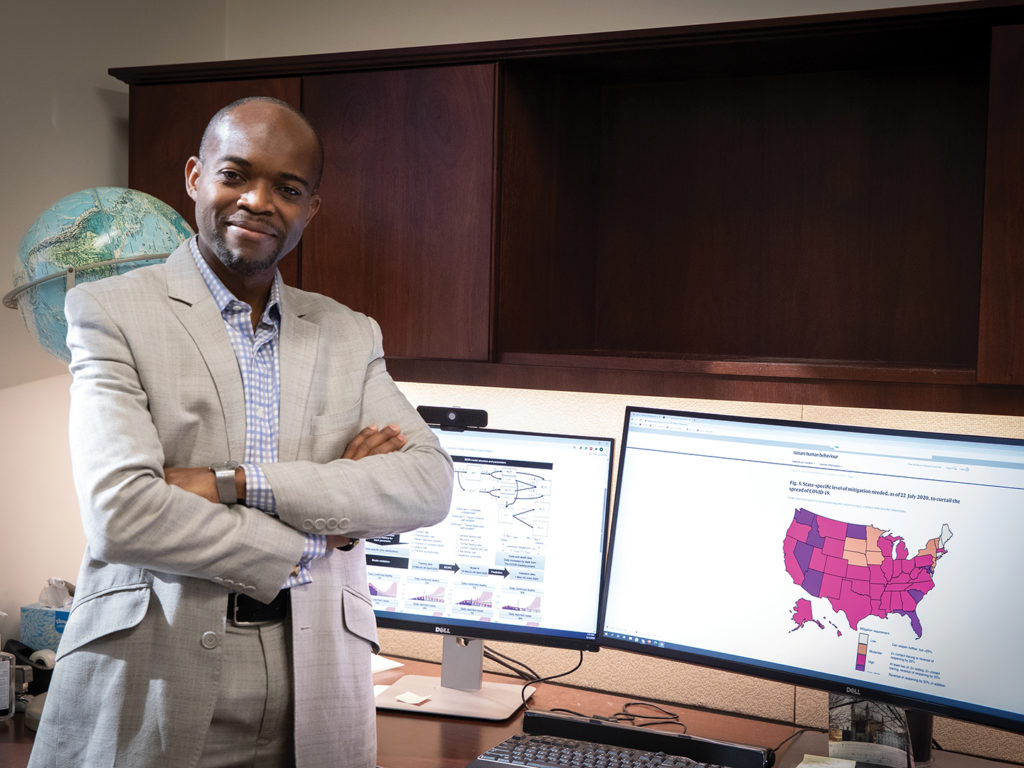
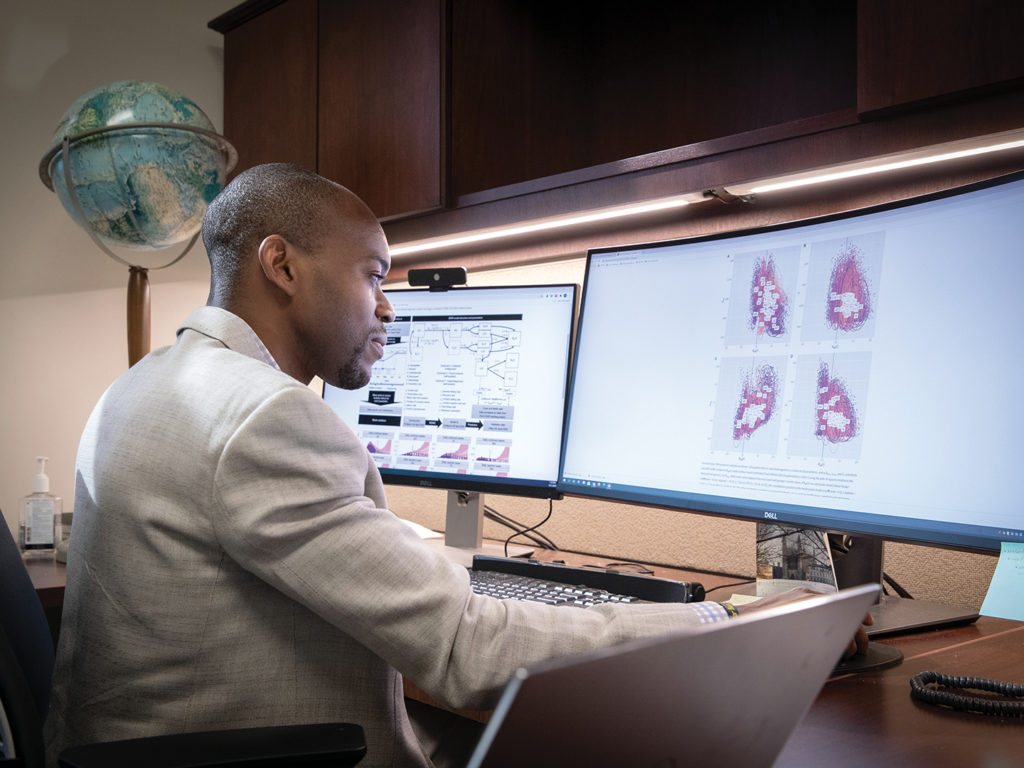
When an area is struck by disease, chaos can often consume the community as they try to organize in the midst of fear and confusion. Dr. Martial Ndeffo, an assistant professor in the Texas A&M College of Veterinary Medicine & Biomedical Sciences (CVMBS) Department of Veterinary Integrative Biosciences (VIBS), helps local officials make sense of these uncertain times by diving into the data that will help those officials identify the best responses to control or prevent disease outbreaks.
Ndeffo’s research uses transdisciplinary modelling approaches to identify and address challenges for a range of infectious diseases. Infectious disease modelling uses the mathematical analysis of data to develop quantitative representations of disease systems and their interacting variables, called a model. By developing data-driven models, Ndeffo helps characterize emerging diseases in uncertain situations, identify the best strategies for disease control and prevention, and analyze public health responses from a health and economic perspective to inform public policy.
This life-saving research has taken him around the world, from Ebola outbreaks in West and Central Africa, to studying Dengue, Chikungunya, and Zika outbreaks in the Americas, to domestic work addressing the HIV/AIDS epidemic and HPV in the United States.
“I have a sense of adapting to new situations,” Ndeffo said. “I think that also comes with training as a mathematician, always having a problem-solving type of mentality, which you apply to your daily living.”
A Life Of Numbers
Ndeffo knew he wanted to be a mathematician from an early age–his father and elder brother had degrees in mathematics and the interest was engrained in his family. Although mathematics was always a part of his life, Ndeffo initially was not drawn to the path of epidemiology.
“My motivation initially was really to focus more on financial mathematics, go into the stock market, and get a financial job in London,” he said. “But I had more interest in focusing on things that were close to home, meaning how could I really use my skills to address problems that affect my home country and continent. That’s why I started to look more into mathematical biology, especially mathematical epidemiology, looking into infectious diseases.
“I think a lot of people do math because of the challenge. For me, it was partially about liking the challenge and being willing to go at it, but it’s really the contribution, the impact you might have on people’s lives if you’re able to do decent work, if you’re able to communicate it and get engaged with clinicians, and public health practitioners.”
His education began in his home country of Cameroon, a largely Francophile country, but school took him to South Africa, an English-speaking nation, for his master’s degree in mathematics. Ndeffo says that his grasp on English at the time was difficult but that math was a universal language for him. He was able to learn both languages—English and math—simultaneously in South Africa.
Secure in both the language and his skill, Ndeffo earned a spot at the University of Cambridge for his second master’s degree in applied mathematics. He remained at Cambridge as the Gates Scholar, a prestigious scholarship funded by the Bill and Melinda Gates Foundation, as he completed his Ph.D. in mathematical biology.
Heading stateside, Ndeffo completed his postdoctoral work at Yale University, fully diving into the world of infectious disease modelling and becoming engrossed with both the work and the impact it can have.
“My motivation was really helping to address some of these problems practically,” he said. “As long as I see that there is a need, as long as I see that this might be helpful one way or another, I will try to make time to make my contribution, as small as that might be, to a specific situation.”
Stepping Into A Crisis
Modelling infectious diseases is a challenging endeavor–not only does it require the researcher to enter a chaotic and sometimes dangerous environment, but because emerging diseases are not yet entirely understood, it also requires the modeler to predict the future when the present isn’t entirely known.
Ndeffo explains this challenge as, “as uncertain as your inputs are so your output will be.”
The nature of this research requires investigators to be flexible and adapt to new situations, both in the collection of their data and in their physical environment. Ndeffo explains that when outbreaks happen in countries with fewer resources, the human element of this research can take on an important role.
“When the 2014 Ebola outbreak started in West Africa, especially in Liberia, I was part of a team at Yale University that started to think about how we could contribute to that crisis,” he said. “It was very much a dire situation; it was almost the worst disease in the world happening in the poorest countries in the world.”
A member of Ndeffo’s team had the idea of providing their Liberian field collaborators with laptops and mobile phones to be used for contact tracing efforts, after learning through the Liberian Ministry of Health that many members of their Ebola response teams had been collecting data using pen and paper and travelling long distances to deliver these data by hand to public health authorities for analysis.
“You have maybe a weeklong lag between when the data was collected and when public health authorities are able to look at them and make a decision. By the time the cases were identified, the situation was completely changed,” he said. “One thing that made a big difference was a very simple mobile phone application where you can observe something on the ground and just enter those observations. People in Monrovia, the capital, could access the data in real time, they could make a decision, and you could act in real time in the field.”
Ndeffo thinks this example illustrates the comprehensive view one must take in evaluating pandemic responses. Providing these devices was not directly connected to the team’s task of modelling, but this simple contribution had a considerable impact and saved lives.
Ndeffo says this is why it is important to bring local people into the conversation, take their concerns into account, and provide ownership of a situation when designing public health interventions.
“You really have the possibility of making an impact, and at the end of the day, that impact always saves lives,” Ndeffo said. “It’s really that end product of helping to reduce mortality and disease burden. That really drives me in doing what I do.”
Maximizing his positive impact on the world is central to Ndeffo’s career.
Recently, he has focused a lot of his energy on working on neglected tropical diseases. He says that because they are neglected, there is little existing research and he sees a window to make significant contributions where others may not think to look.
“Definitely there is an opportunity there, an opening to contribute and for your result to be directly considered by public health decisionmakers,” he said. “You can really bring a tangible impact to these situations, so that’s been the reason why I’ve put a bit more time into neglected tropical diseases.”
A Pandemic Comes Home
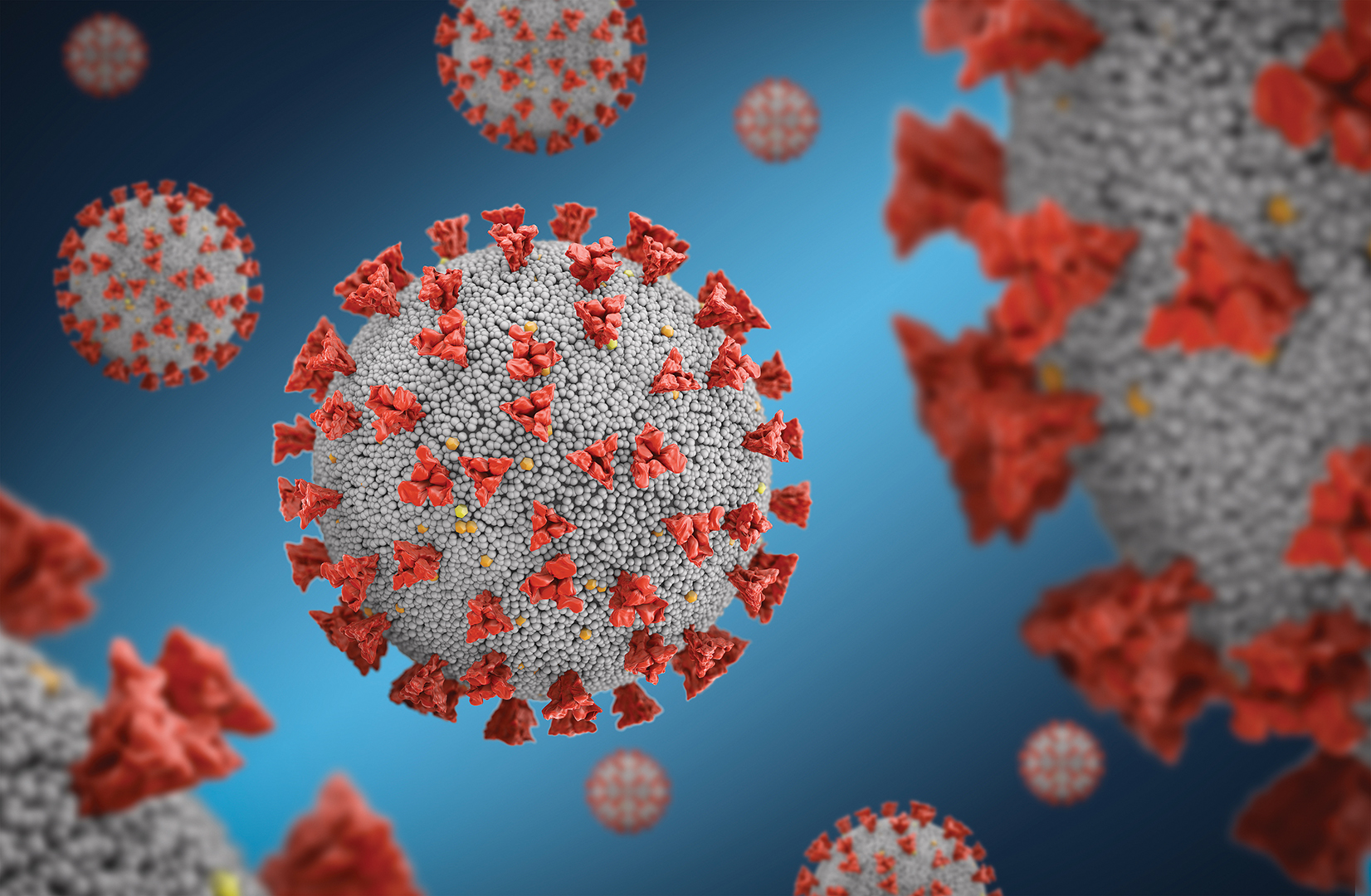
Recently, Ndeffo has diverted his research efforts into studying the development of the global COVID-19 pandemic. His work modelling COVID-19 is reminiscent of previous research he has done on emerging diseases, and his adaptive nature is a strength in navigating the challenges of studying a disease that is not yet fully characterized.
“Like any emerging disease, it is difficult to study because there are a lot of unknown factors,” he said. “Having the experience of working on Ebola in 2014, I’m a bit familiar with these types of developing situations, but there’s always a problem in that you will have a lot of things that you don’t know about the disease itself.”
Although the current situation presents many challenges, he is optimistic that this crisis will push our society to be more resilient in the face of infectious diseases; public interest in models of COVID-19 has driven more informed decisions on how we react to this pandemic.
“I think that whether we want to or not, we have to learn something. A lot of things will have to change,” he said. “For society really to come into that place, we need a more multi-disciplinary vision or analysis of what has happened and how to prepare for what might happen. It is very important for us not to do it in isolation but to really bring many disciplines together, because of the multifaceted approach of these situations.”
Although he is hopeful for the future, Ndeffo cautions that the effects of COVID-19 might be more far-reaching than we initially observe. The strain this virus has placed on our healthcare system can lead to overwhelmed health facilities, delayed care, decreased access, reduction in the utilization of essential services, and other effects for individuals who are suffering from non-COVID health conditions.
“When you think about these emerging diseases, we have to think about what I call the indirect impact. It becomes more and more clear that the indirect impact of COVID is very substantial and nobody knows—it might even be worse than the direct impact of COVID,” he said. “This brings us to that place where we design our intervention measures and our preparedness strategy; we really have to think beyond the direct impact of the disease. It has to be taken into account how we keep the right balance between addressing public health holistically rather than as a single problem that we are trying to solve.”
Ndeffo sees a need to continue studying COVID-19 as the pandemic develops and is eager to lend a hand where he can. He is also continuing his research with neglected tropical diseases, with the hope that his modelling will inform a strategy for elimination.
Disease outbreaks are scary and oftentimes confusing situations, as the global population has collectively experienced over the past year.
Luckily, epidemiological modelers like Ndeffo are able to assess data describing the present and provide insight into how we should best respond to uncertain situations to create a brighter future for us all.
For more information about the Texas A&M College of Veterinary Medicine & Biomedical Sciences, please visit our website at vetmed.tamu.edu or join us on Facebook, Instagram, and Twitter.
Contact Information: Jennifer Gauntt, Director of CVMBS Communications, Texas A&M College of Veterinary Medicine & Biomedical Sciences; jgauntt@cvm.tamu.edu; 979-862-4216
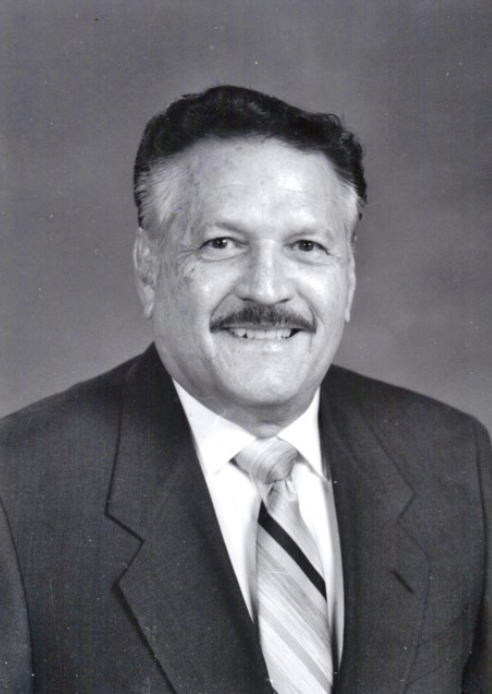
Aggie veterinarian Dr. Gilberto Treviño ’52 was a man who never stopped trying to improve the world around him in all facets of his life, described in his obituary as a “teacher, student, fisherman, fisher of men, hunter, rancher, farmer, doctor, writer/author, scientist, coach, singer, comedian, civic leader, world traveler, soldier, war hero, builder, artisan, and best friend.”
Treviño first attended Texas A&M University with the plan of majoring in chemical engineering. These plans were cut short when, as a 19-year-old junior, he was drafted for World War II.
Eight months after receiving his notice, Treviño joined the 9th Marines 3rd Marine Division in combat, serving as a private first class in the Pacific theater.
His unit earned a Presidential Citation for extraordinary heroism for its service during the battle of Iwo Jima, but the battle took a toll on Treviño. He was wounded on Iwo Jima when a mortar exploded and damaged his hearing, but he declined to report the injury so he could stay and support his unit.
By the end of his life, Treviño was completely deaf without hearing aids as a result of this injury.
In 1946, Treviño was discharged at the rank of private first class and soon returned to Texas A&M, changing his major to study veterinary medicine.
In May of 1952, while waiting in line at his graduation to receive his Doctor of Veterinary Medicine after six years of study, a messenger delivered another draft notice with orders to report to Corpus Christi Naval Base and support the United States’ efforts in the Korean War.
Although Treviño had previously served during WWII, his newly received DVM led to new responsibilities for his service in the Korean War. He served as a food inspector until his discharge in 1954, when he returned to El Paso to pursue his passion of veterinary medicine.
Overcoming Challenges Of The Time
Born on Jan. 11, 1925, in Laredo, Treviño grew up on the Texas-Mexico border in a Spanish-speaking community and faced his fair share of discrimination. In a 2007 interview with Dr. Maggie Rivas-Rodriguez, he said that the reduced racial tension he found in the Army made it a more welcoming place.
“Racial bigotry is slowly being erased from this country, [but] not entirely. There is still too much of it,” Treviño said. “I don’t use my ethnicity as a club. I use it as a means for showing other people that any Hispanic can accomplish the same things as any Anglo—maybe a little bit better.”
His drive to succeed led him to return to Texas A&M as an instructor at the Texas A&M College of Veterinary Medicine & Biomedical Sciences (CVMBS) and earn his Master of Science degree in Veterinary Medicine and Surgery, majoring in dermatology.
“He did great work and was recognized for what he had done because of the quality of his work, not because he of the color of his skin or because he came from a certain area,” Adams said. “There was, and I’m sure there still is, bigotry, but in spite of that, he was successful.”
Despite his success as a professor, Treviño volunteered for the Army in 1959, serving again during the Vietnam War.
After he left active duty, he kept busy by contributing his spirit of selfless service to the veterinary field.
Treviño was the first Army veterinarian selected to be trained as a pathologist. In 1963, he was sent to Michigan State University, where he earned a Ph.D. in pathology, and later became a Diplomate of the American College of Veterinary Pathologists.
He was also the first military liaison officer to Emergency Programs representing the Department of Defense. During his final assignment, he established the U.S. Army Forces Command (FORSCOM) Animal Disease Eradication Plan.
He retired from active duty as a colonel in 1976 after 27 years of service.
“He had an ability to speak with knowledge, with information, and to provide a compelling debate for moving a project, an idea, or a program forward. That was very inspirational to me, the ability to lead even when it’s a difficult project, to be prepared and ready, and to be compelling in providing information for making a decision.”
DR. GARRY ADAMS
Returning To His Roots
After his retirement, Treviño returned to Texas A&M, this time as director of the Institute of Tropical Veterinary Medicine and a graduate pathology professor at the CVMBS.
“What I saw in him was this organization of skill and the ability to speak and encourage engagement across the border, internationally and locally, because he was innately very bright,” Adams said. “He really wanted to move things forward in an organized way.”
In this position, Treviño inspired future veterinarians and advocated for animal health through a One Health approach to veterinary medicine.
“He had an ability to speak with knowledge, with information, and to provide a compelling debate for moving a project, an idea, or a program forward,” Adams said. “That was very inspirational to me, the ability to lead even when it’s a difficult project, to be prepared and ready, and to be compelling in providing information for making a decision.”
In 1981, Treviño retired from the CVMBS and became a professor emeritus. He returned to his hometown of Laredo, where he served as a relief veterinarian and raised cattle. During this time, Treviño also began a custom mesquite furniture business.
“That deep character carried him through the rest of his life,” Adams said. “He was crystallized in that crucible of survival and decided if he was ever to survive this situation, he was going to do something, and he did. He fell into his unique pathway to serve in his capacity, to lead in his capacity, to be an example and a model in veterinary medicine.”
Treviño passed away in March 2011 at the age of 86. He was survived by his wife, Christine, a daughter, and a son.
Treviño’s legacy serves as a reminder of the resilience of the Aggie spirit and the drive to improve the world around us, protect what we believe in, and dedicate our lives to a greater cause.
###
For more information about the Texas A&M College of Veterinary Medicine & Biomedical Sciences, please visit our website at vetmed.tamu.edu or join us on Facebook, Instagram, and X.
Contact Information: Jennifer Gauntt, Director of VMBS Communications, Texas A&M College of Veterinary Medicine & Biomedical Sciences, jgauntt@cvm.tamu.edu,979-862-4216
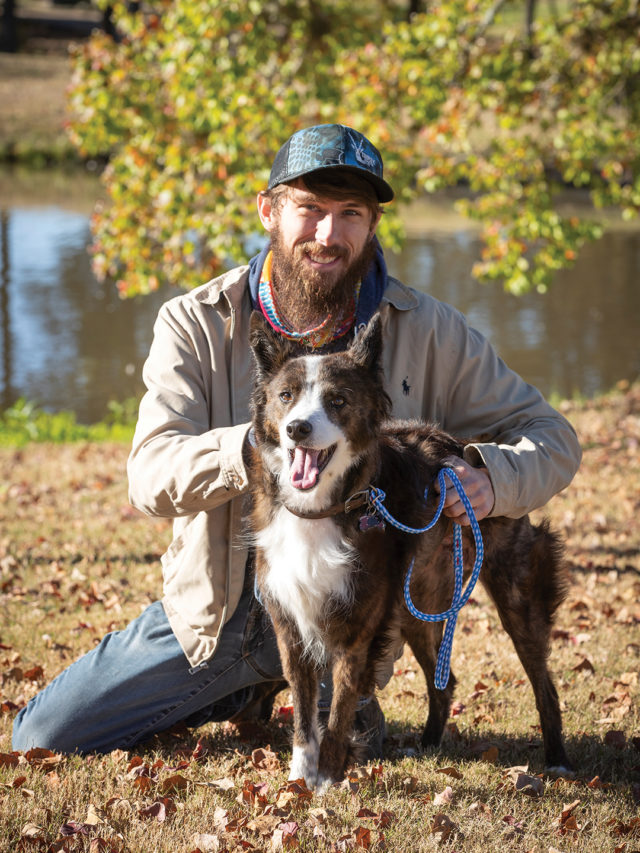
While dogs are collectively known as “man’s best friend,” this phrase rings especially true for Dalton Hanner and his dog Lucky.
The two have been inseparable since they found each other eight years ago, and Hanner credits Lucky as the source of support that got him through many difficult times in his life.
In the fall of 2020, it was Hanner’s turn to provide that support after Lucky ended up in the Texas A&M Small Animal Hospital’s (SAH) Critical Care service for more than two weeks after an accident nearly claimed his life.
The Perfect Match
Hanner first met Lucky while volunteering with a Houston adoption organization the summer before his freshman year of college. He felt a connection but ultimately decided to leave for college without bringing a pet.
Once he began his first semester at Texas A&M, however, Hanner was hit with a wave of depression that stemmed from not knowing anyone in a new city. He thought back to the dog he had met the previous summer and decided in October that if Lucky was still available, he would adopt him.
“As soon as I saw that Lucky was still there, I had to bring him home,” he said. “He was very young at that time, super skittish, and afraid of men, so I think that was what led a lot of people to look past him and not want to adopt him.
“He’s a Border Collie and Australian Cattle Dog mix, and those are two breeds I had growing up. I always wanted to know what it would be like if I happened to find a dog that was both of those breeds,” he said. “Chance or coincidence, it was just a perfect match.”
With love and patience, Hanner and Lucky worked through Lucky’s shyness toward men and developed a strong bond.
“He’s the most trainable dog I’ve ever had in my entire life,” Hanner said. “His combination of breeds, I think, makes him super smart and intuitive as to how people around him are feeling. With what I was going through at the time, it was perfect.
“For the entire time I lived in College Station, he was my rock,” he said. “He’s been with me all eight years and he’s the only one who’s been there the whole time.”
An Unlucky Accident
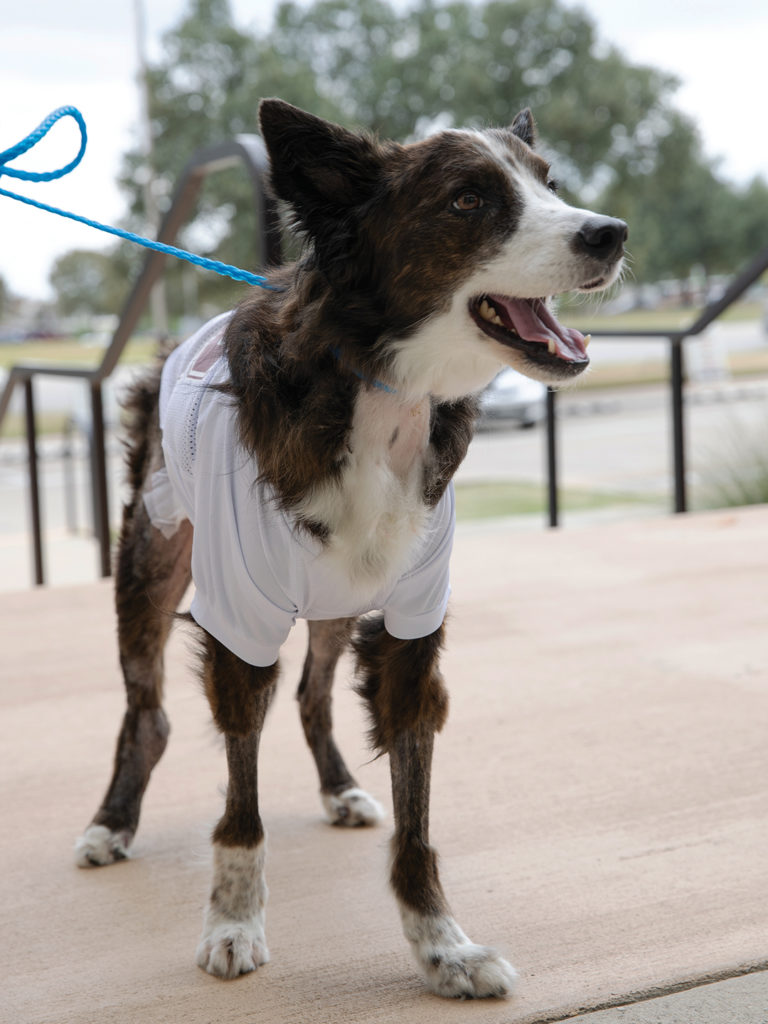
Lucky, on the day he was discharged from the Small Animal Hospital
After Hanner moved back to Houston, he and Lucky frequently made trips to the College Station area to visit friends and stay at a family friend’s ranch in Iola.
“For Lucky, being a Border Collie and Australian Cattle Dog mix, the land in Iola is his stomping grounds; that’s where he loves to be,” Hanner said. “He follows us everywhere and he’s always part of whatever we’re doing, whether it’s work or play.”
During a trip this past September, Hanner and his friend were doing some work on the ranch when a neighbor called to ask if they could jump start his truck. They got in his friend’s Ford F250 and left for what they thought would just be a short break from work.
While Lucky is trained to stay off of major roads, Hanner believes he had difficulty distinguishing the gravel county road from the smaller dirt roads that run through the property, which he is allowed to cross.
“He just got confused and ended up in front of the vehicle,” he said. “We felt a bump and immediately knew exactly what had happened.”
Hanner and his friend leapt out of the truck and found Lucky walking around, but he was obviously in a lot of pain. They tried to help him, but Lucky reacted aggressively because he was in shock.
“He bit me and latched on hard, and instinct for me was to try to pull my hand back, which ended up causing him to sink in deeper before he finally let go,” Hanner said. “Then I was panicking and freaking out and as I was checking on myself, the other guy also came to try to help Lucky and Lucky bit him on his hand too.”
Once Lucky calmed and it was safe to approach him, they immediately knew they all needed medical attention quickly.
“Lucky was trying to climb into the truck because the driver’s door was open and he was struggling. I got him onto the floorboard and he was about to crawl over the console, then I saw his internal organs coming out of his body,” Hanner said. “I’m not very squeamish, typically, but this is my baby; I was definitely in a heightened state of panic.”
As they sped toward Texas A&M, it seemed that fate was on their side; they hit every green light along University Drive, which made the typically 40-minute drive only 23 minutes.
After SAH staff took Lucky inside to begin urgent care, Hanner and his friend drove to an emergency room to get their own injuries treated.
For Hanner, all that was left to do was wait, but for the veterinarians and support staff at the SAH, the work to save Lucky’s life was only getting started.
It Takes A Village
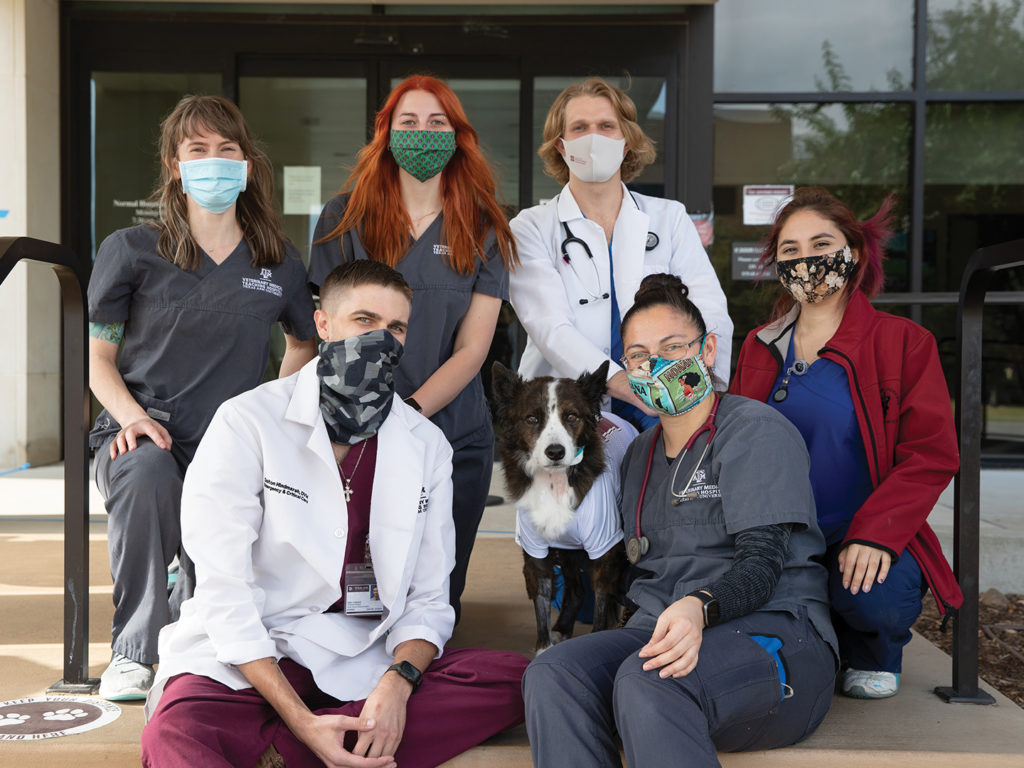
Saving the Border Collie-Australian Cattle Dog mix required a trio of veterinarians and many support staff from the Emergency & Critical Care service, including (top row) Melissa Espinoza, Lilly Nelson, and Dr. Lance Wheeler and (bottom row) Dr. Dalton Hindmarsh, Cassie Paz, and Erika Mendez.
Because Lucky was at the SAH for about two and a half weeks, his care was overseen by three different veterinarians in the Emergency & Critical Care (ECC) service—Drs. Ann-Mari Osgood, Dalton Hindmarsh, and Lance Wheeler.
“Initially, we told the owner that things looked very bad; there was definitely a guarded-to-grave prognosis that Lucky would ever leave the hospital,” said Wheeler, a first-year ECC veterinary resident. “It’s our job to quickly assess patient status so that we may present as much information as possible to the owner, allowing them to make decisions based on facts. Lucky was in a very bad way, and we painted this honest, gruesome picture so that the owner understood what he was getting himself into, but that definitely wasn’t slowing him down.”
Lucky was taken immediately into surgery to repair his abdominal contents and torn tendons, which required extra care since his intestines were exposed to the external environment, complicating the situation further with widespread bacterial infection.
“He needed more transfusions, of everything from blood to plasma to canine albumin (a protein made by the liver), than I’ve ever seen a dog get,” Wheeler said. “He had lost so much blood. He got pretty much everything we had.”
Once the initial surgery was done, the veterinarians began to address Lucky’s other injuries.
“We anticipated that there was going to be some wound management, but nothing to the extent he had,” Wheeler said. “When his skin wounds started to reveal their true extent, it became evident that none of his skin was really attached to him; it was just kind of there. It was almost like a burn patient, because they don’t have any skin to protect them from the environment.”
At that point, Lucky’s ECC team reached out to the SAH’s Soft Tissue Surgery service to begin daily assessments of his skin. They performed numerous procedures to remove portions of non-viable skin and used advanced tissue-healing techniques to nurture and heal the remaining viable portions of skin.
“There were many unknowns about how Lucky would respond to treatment,” Wheeler said. “We still didn’t know if he was going to walk. We didn’t know if he’d use the bathroom. Our focus was keeping him alive and comfortable, and we would turn our attention to other goals when medically appropriate.
“(But) everything just went in our favor; when we would challenge him by weaning him off medications or removing a certain tube, we had positive outcomes,” he said. “We were continually taking steps forward and very few steps back.”
As Lucky continued to improve, his care team became more and more optimistic that Lucky would not only get to go home, but would also see a nearly 100% recovery.
“It was exciting to see him improve so much and it’s pretty incredible how much went into getting him better,” Wheeler said. “Everybody was key and everybody involved had a big part to play.
“I was there when he walked out the front door of the hospital and it was something that I can’t even explain,” he said. “The joy that erupted from him when seeing his family waiting outside was something I had never witnessed. That moment in time was filled with so much joy and positive energy that it shook me to my core.”
Lucky’s Lasting Impacts
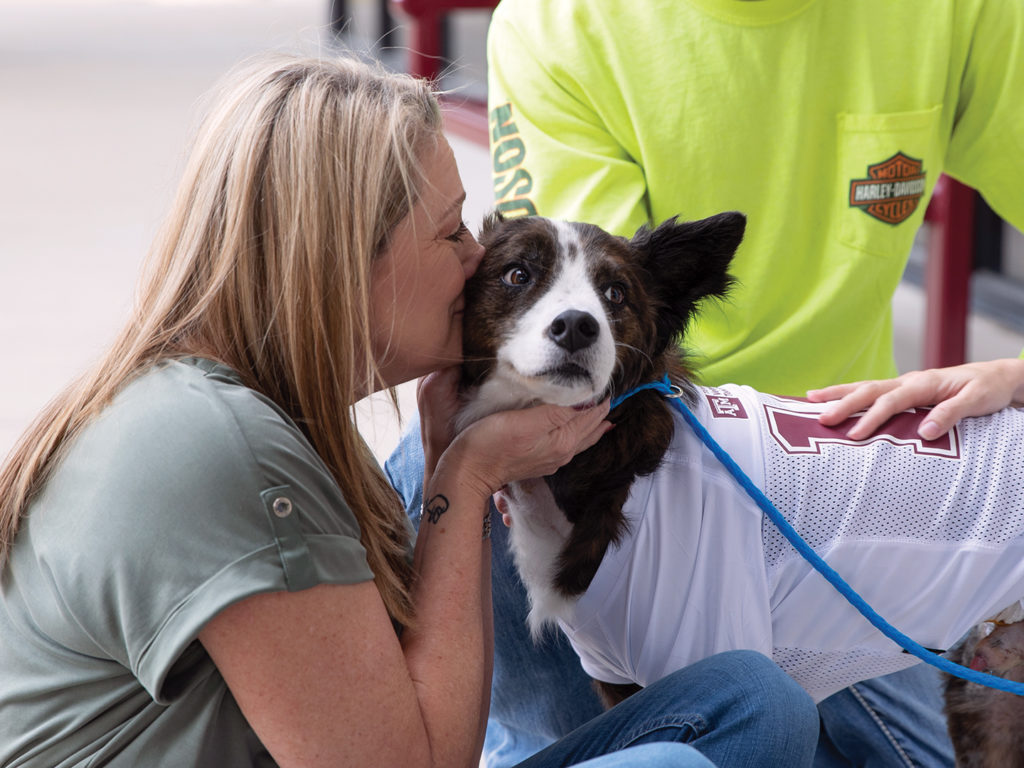
Lucky reunites with his family after being discharged from the Small Animal Hospital.
Once Lucky returned home, his recovery continued smoothly and with very few lasting effects of the trauma.
“I couldn’t be more thankful, because whatever issues we still have to deal with are worth it for me to have my best friend in the entire world,” Hanner said.
Hanner is also thankful for the generosity of friends and strangers who donated money to help cover Lucky’s medical bills, both through a GoFundMe page set up by his sister and the SAH’s Capper & Chris Save the Animals Fund, which provides financial assistance to pet owners who could not otherwise afford a lifesaving procedure for their animal.
Even after Lucky left the SAH, he continued to have a big impact on his care team.
“We’re all eternally grateful for everything the owner did and everything that Lucky taught us,” Wheeler said. “Lucky’s a perfect example of when something looks impossible to achieve, it’s not necessarily impossible, as long as you have the support staff, the owner who’s willing to keep going, and the patient that is willing to keep fighting.
“He touched so many doctors, nurses, and students during his fight for life,” he said. “Lucky pushed us to do things we felt were nearly impossible, providing for us amazing learning opportunities, and teaching us the importance of not giving up just because things feel impossible.”
To help other animals receive lifesaving treatments, please contact Larry Walker, Senior Director of Development for the CVMBS, at lwalker@txamfoundation.com or 979.845.9043.
For more information about the Texas A&M College of Veterinary Medicine & Biomedical Sciences, please visit our website at vetmed.tamu.edu or join us on Facebook, Instagram, and Twitter.
Contact Information: Jennifer Gauntt, Director of CVMBS Communications, Texas A&M College of Veterinary Medicine & Biomedical Sciences; jgauntt@cvm.tamu.edu; 979-862-4216
As summer approaches and the promise of widespread COVID-19 vaccination becomes more hopeful, those with cabin fever may be planning exciting vacations abroad after spending the past year in their homes.
If pet parents are considering a vacation overseas and intend to bring their animal, they should plan for their furry friend far in advance and do ample research, according to Dr. Christine Rutter, a clinical assistant professor at the Texas A&M College of Veterinary Medicine & Biomedical Sciences.
“Travel outside of the continental U.S. has specific rules, certifications, and, potentially, vaccination requirements,” Rutter said. “Some international travel requires preparation up to six months in advance and/or a quarantine period. Each country is different, so it will require some leg-work on the part of your certifying veterinarian to make sure you are in compliance.”
Most countries require that your pet be checked by a federally accredited veterinarian and that a United States Interstate and International Certificate for Health Examination for Small Animals (7001 USDA-APHIS Form) be issued by that veterinarian and endorsed by the USDA.
Before considering traveling with a pet, owners should consult their veterinary practice and see if any veterinarians there have experience providing documentation for international travel. It is also important to check with your local USDA Service Center to ensure that your veterinarian is USDA accredited. If they are not endorsed by the USDA, the paperwork they provide will not be valid.
The timetable for examination statements and certifications can be very tight, so owners should plan well in advance and ask questions of the relevant authorities to be sure all required paperwork is complete in time for your trip.
In addition to submitting required paperwork to the relevant agencies, owners may also want to keep paper copies of this documentation on-hand during their travel.
“Have a digital or hard copy of your pet’s vaccination history (including rabies certificate), microchip number, medications, and health records, such as if they have chronic illnesses or have had major surgeries,” Rutter said. “Ask your veterinarian what records she/he recommends you take with you in case your family vet’s office is closed (if they are needed while you’re abroad).”
You may also need to get your pet a rabies vaccine booster and/or have rabies antibody titers checked prior to traveling to a country considered to be high-risk for rabies. Although the U.S. recognizes three-year rabies vaccinations, some countries require annual rabies immunization.
Foreign nations may also require a quarantine period after your arrival. It’s best to check with the local government prior to your arrival to avoid any unwanted surprises.
For a long international flight, it’s also a good idea to have your veterinarian perform a check-up to confirm your pet is healthy enough to fly, and while there, you may consider asking about medication that may help your furry friend during the stress of travel.
“If your pet struggles with anxiety or motion sickness, ask your veterinarian how to best manage your pet’s needs during travel,” Rutter said. “This is probably a needed conversation if your pet has never traveled before or if your pet has fireworks phobia.”
Owners should also research the different facilities they will be stopping at on their journey to see what amenities are offered for pets, especially in terms of their bathroom needs.
“Most airports have a ‘pet relief’ area, and many have one in the air-side terminal. Do a little cyber-sleuthing or ask an airline representative where to find it. Nervous bladders may need to ‘go’ a bit more often, and a walk is good to settle the mind,” Rutter said. “Be sure your pet wears a collar or harness with a tag at all times while traveling in case of escapes. Outside of their normal environments, pets can become fearful or excited and bolt.”
Rutter also recommends having pet necessities on-hand for the duration of your international travel.
“Carry waste bags, water, time-sensitive medications, and at least a small portion of your pet’s food on hand,” she said. “I also carry a cheap set of medical exam gloves (purchased over the counter) in case things get messy.”
It is also important to ensure that the appropriate arrangements have been made to accommodate your pet. Confirm with your lodging that animals are allowed, research nearby veterinary care facilities you can contact in case your pet has an emergency while on your trip, and have a plan for either bringing needed pet supplies with you or confirming that nearby stores carry the essentials your pet needs.
“If you have activities planned during your trip, can your pet go with you or stay at your lodging location unattended? Many hotels and rentals will allow your pets to stay with you but do not allow pets to stay unattended while you are away,” Rutter said.
It may also be beneficial to research the local cultural attitudes surrounding pets. Some countries may be more lenient about allowing pets in public areas than others.
Taking a pet abroad is a considerable endeavor, and it’s important to do ample research and plan in advance to avoid unwanted surprises and ensure your animal’s well-being. With the help of an experienced veterinarian and the right preparations, owners can determine the best option for their pet as they embark on their next adventure.
Pet Talk is a service of the College of Veterinary Medicine & Biomedical Sciences, Texas A&M University. Stories can be viewed on the web at vetmed.tamu.edu/news/pet-talk. Suggestions for future topics may be directed to editor@cvm.tamu.edu.
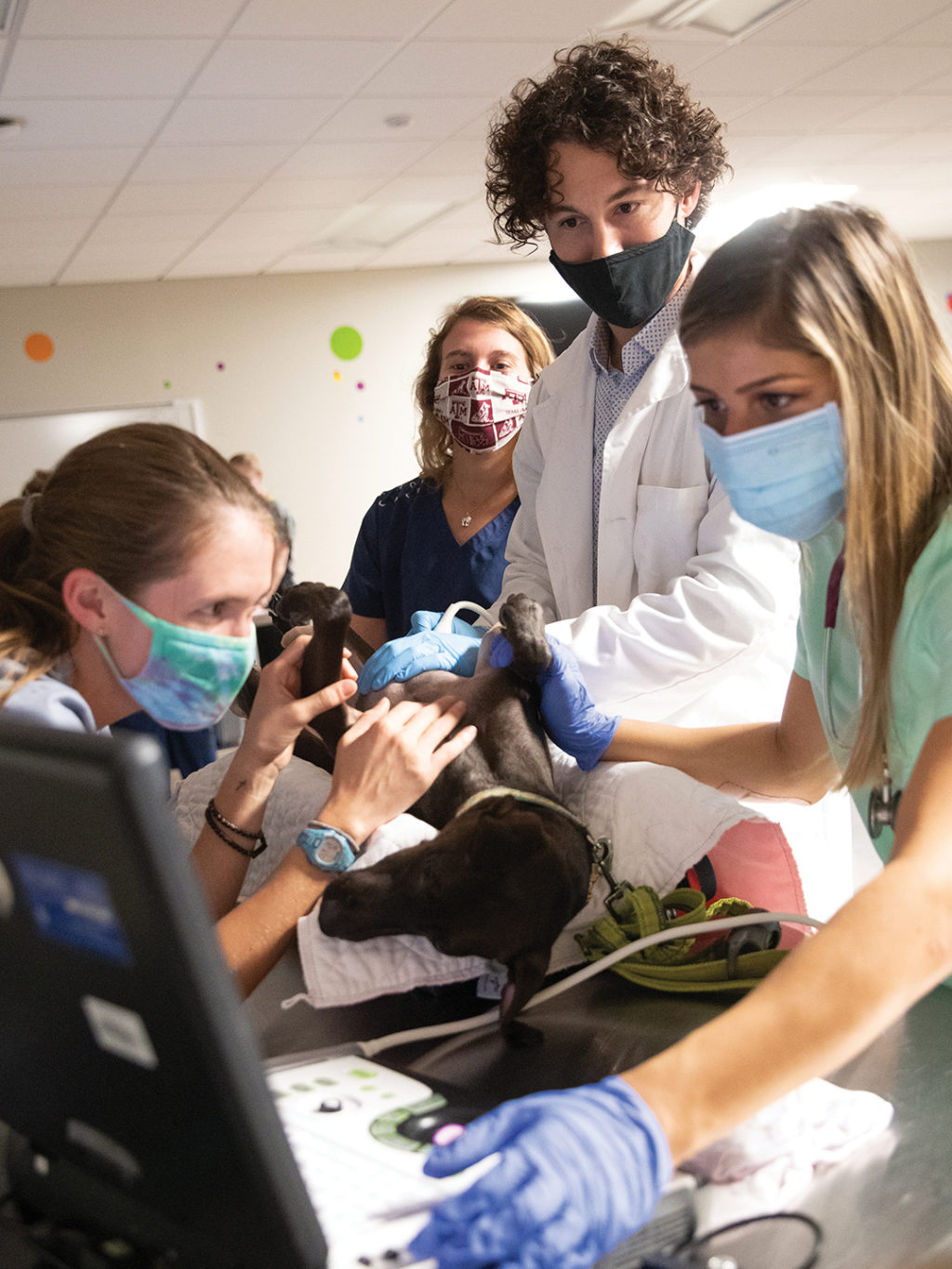
Eli Hernandez and fellow veterinary students in an ultrasound lab
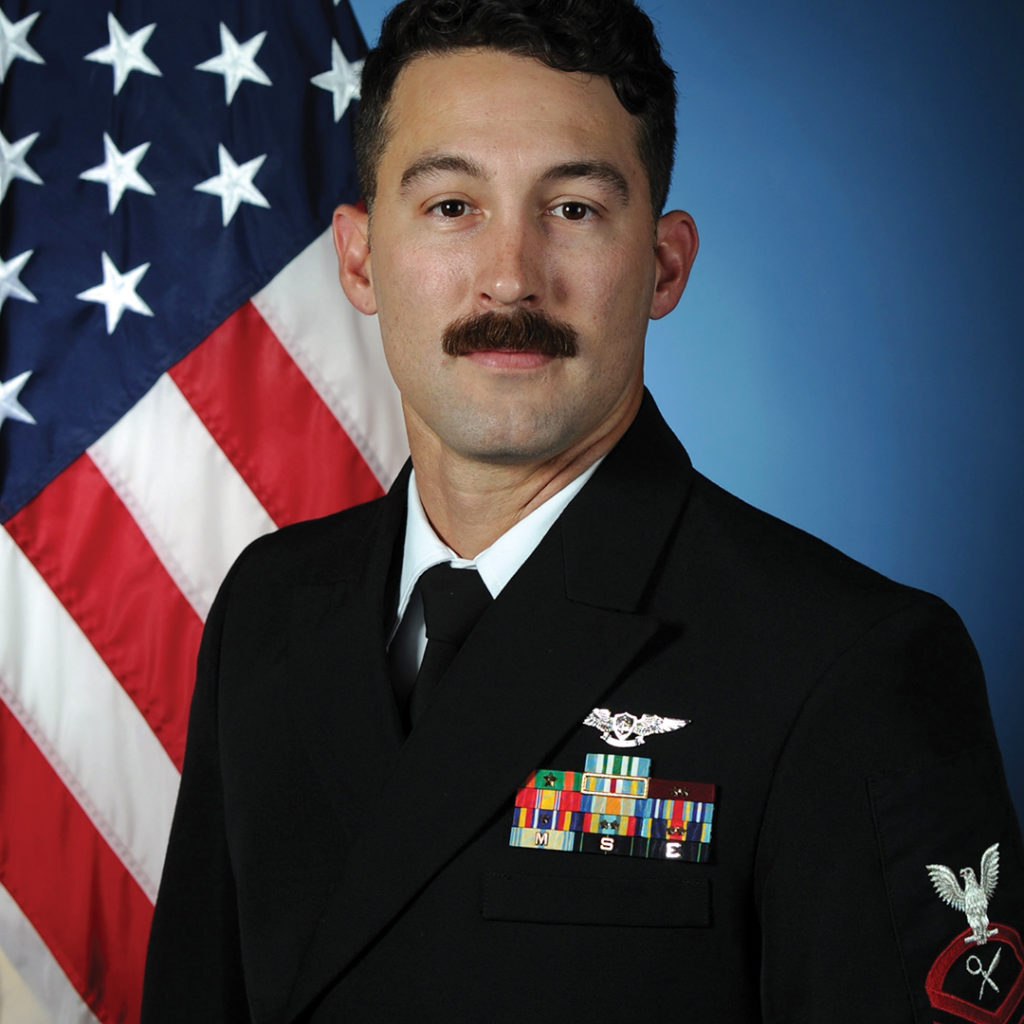
Eli Hernandez, a fourth-year veterinary student at the Texas A&M College of Veterinary Medicine & Biomedical Sciences (CVMBS), calls himself a “vet-squared.” The title is fitting, as he identifies as both a veteran and a soon-to-be veterinarian.
“After high school, I did six years on active duty,” the Lumberton native said. “I was in Japan for my first three years or so, and then I moved to Nevada for my second duty station. I was there for a little over two years before transitioning to the Navy Reserve.”
Following his active duty commitment, Hernandez returned to his home state of Texas with a strong interest in animal care.
“I really just wanted to be a rancher, honestly,” Hernandez said. “The more research I did, I realized that was unfeasible because the amount of money it would take. I settled on the second best thing, which was veterinary medicine. Being a veterinarian was kind of the back-up plan.”
He started working on his veterinary pre-requisites at Blinn, before transferring to Texas A&M. Graduating with the Fightin’ Texas Aggie Class of 2017, Hernandez was set to continue his education at the CVMBS when his plans were interrupted by a call to duty.
“It just so happened that I got picked up for a deployment right as I was finishing my undergrad,” Hernandez said. “I had been accepted to veterinary school with the class of 2021 but had to defer so I could go to Kuwait. There was no getting out of it.”
While he knew he would be returning to veterinary school eventually, Hernandez describes his second deployment as a break from the academic mindset.
“I wasn’t overly focused on veterinary school. I knew that I was coming back to do that, but I didn’t really know anything about how to prepare,” Hernandez said. “Dr. (Glennon) Mays (CVMBS director of recruiting and student services) let me borrow an anatomy book, which I brought with me over there, but I don’t remember ever looking at it.”
Though his deployment provided a break from the world of veterinary medicine, Hernandez continued to exercise his skills in analytic thinking.
“I was doing civilian casualties analysis,” Hernandez said. “They had me looking into allegations that people were submitting in Syria and Iraq. The United States takes all allegations of civilian casualties seriously, so we devoted a lot of human resources to investigating the allegations we were receiving, and I was honored to be a part of that team.”
Hernandez
“In that job, I was taking information, critically analyzing it, and piecing together a whole bunch of stuff to come up with a story that makes sense. Then, I would try to fill in any missing parts to determine if an allegation may have had credibility or not,” Hernandez said. “I feel like the critical thinking aspect has been really beneficial, especially in veterinary school. I hope that it will make me into a better veterinarian someday.”
Hernandez returned to Texas in May 2018 and was preparing to enter the CVMBS in the class of 2022, when in July, he discovered that he had been promoted to E-7, or Chief Petty Officer. While he was proud to have received an advancement achieved by few, the promotion also offered yet another conflict for veterinary school.
“I had to go through a two-month initiation process for E-7, and that was the hardest part about first year for sure,” Hernandez said. “There was a month of overlap where I was expected to be doing stuff every single day, every single night, every weekend for the Navy, and also expected to take care of my school responsibilities. That was really, really tough.”
Beginning his first semester of veterinary school while completing the E-7 initiation process tested Hernandez’s drive and discipline.
“It was almost impossible for me to study. I specifically remember one night, I was sitting in one of the study rooms with a group of people, trying to study for anatomy, but I couldn’t because my phone just kept going off the whole time; it was people that I was going through the initiation with,” Hernandez said.
On top of all of that, Hernandez, who had completed farrier school in 2016 using his GI Bill, also owns a farrier business and continues to service clients. During his second year of veterinary school, he also taught himself the traditional western art of rawhide braiding and started a business as well. Managing so many responsibilities simultaneously forced Hernandez to focus on the task at hand and exhibit persistence.
“It’s one of those things where it’s one foot in front of the next,” Hernandez said. “You can’t look too far out, otherwise you’ll get overwhelmed. You have to take it day by day and just say, ‘OK, make it past this thing and then tomorrow do the same thing over again.’”
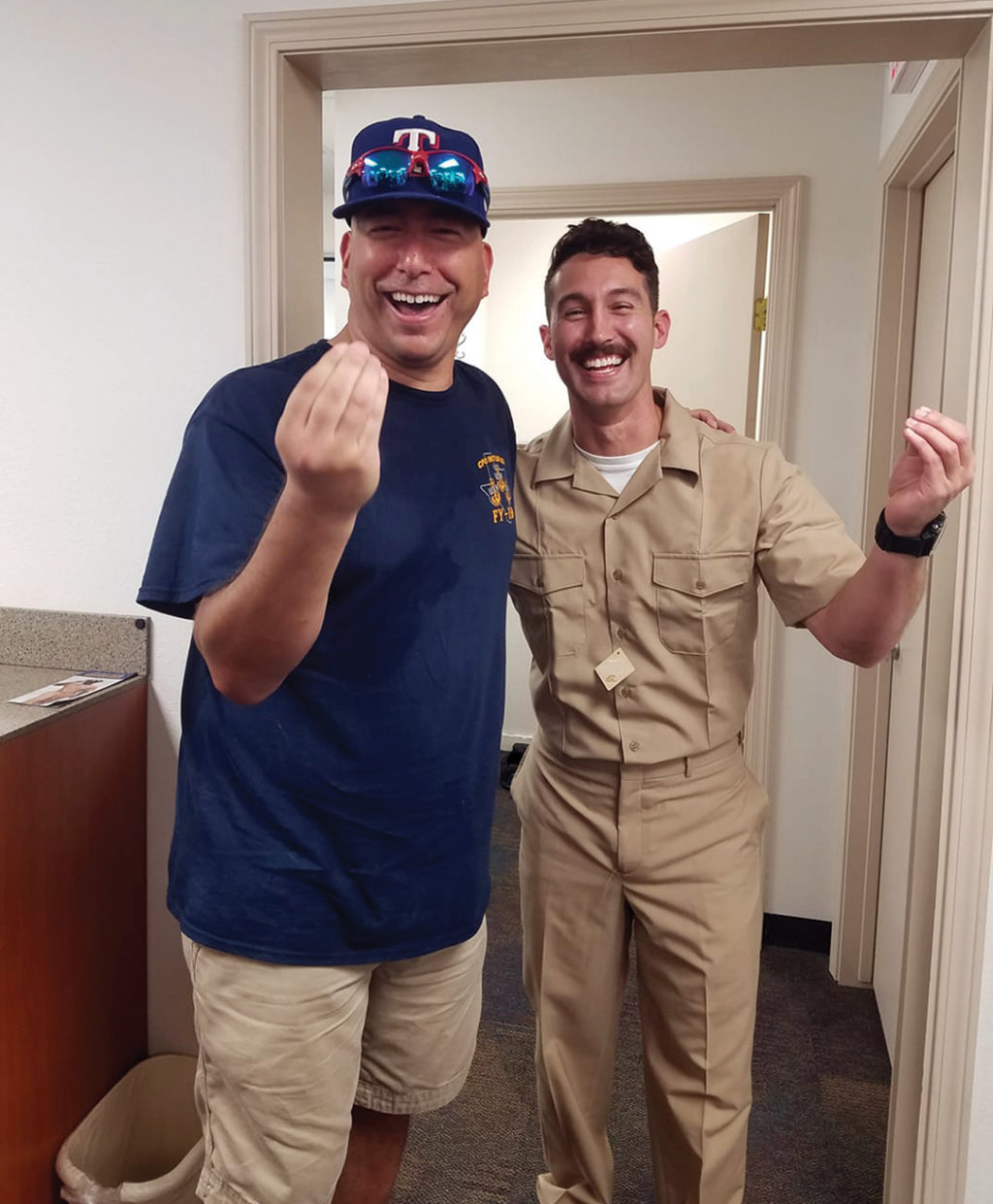
Hernandez and one of his mentors, Chief Steven Valderas, share a moment of levity during one of Hernandez’s chief initiation events.
And that’s exactly what he did. Despite his success, Hernandez recalls the pressure he felt from handling so many obligations at once.
“I think I struggled with stress last semester. I struggled with stress really bad, to the point where I developed medical issues and I had to take time off to go to medical appointments,” Hernandez said. “That’s not really an uncommon thing, but it was pretty uncommon for me.”
Though his first year at the CVMBS tested Hernandez’s resolve, he said his classmates have helped his transition from active duty to civilian life.
“I know one of the biggest struggles for veterans is the transition going from having that military camaraderie to not having it, so it’s kind of nice having that here (among his veterinary peers) because I feel like it’s made the transition pretty easy,” Hernandez said.
“This has become my close-knit group of friends, whether it’s just because we spend so much time together or because we actually enjoy each other’s company,” he said. “I think it’s a little bit of both.”
When he completes his Doctor of Veterinary Medicine degree, Hernandez plans to expand the care he provides horses beyond his work as a farrier.
“Ever since I went to farrier school, I have absolutely fallen in love with the equine foot. I hope that the AVMA (American Veterinary Medical Association) approves equine podiatry as a new board specialty,” Hernandez said. “I would absolutely love to be one of the first board certified equine podiatrists in the nation, so that’s my goal.”
Combining his tested experience as a farrier with the new skills and knowledge he has learned in veterinary school, Hernandez hopes to discover new insights into the equine foot.
“I would love to have my own clinic that’s set up to do inpatient care for horses that have really, really bad hoof issues, and I would use that opportunity to do more scientific studies on the foot,” Hernandez said. “I want to try to answer questions I have about the best ways to treat certain disease processes in the foot.”
Hernandez’s drive to achieve his goal recently earned him recognition as a 2018 Tillman Scholar, a prestigious award for military veterans and spouses. The Tillman Foundation provides recipients with scholarship funds and professional development opportunities.
Hernandez and Danielle Vaden-Anderson
“There’s still a very large part of me that has imposter syndrome. It’s like, how in the world did they select me as a Tillman Scholar, because it is such a competitive scholarship and the people who are within that organization are absolutely incredible,” Hernandez said. “Maybe there is something that I do have to contribute on a larger scale, and they just see it in me earlier than I see it in myself.”
Mays, on the other hand, has no doubts about Hernandez, whom Mays believes is capable of completing whatever task he sets his mind to.
“Eli is a life-experienced, mature person,” Mays said. “Considering his youth, military service and accomplishments, and scholastic performance, Eli must be not only committed but time-management conscious. Coordination of military career, academic rigor, and personal life suggests a depth of grit often present in people defined as successful by societal standards.”
While his nontraditional path to veterinary medicine has taken him around the world, Hernandez is glad to have landed back home in Texas.
“A&M has been really great about understanding my military duties and working with me around those, like with my deferment. I think anybody who applies for a deferment gets kind of anxious,” Hernandez said. “But I submitted my request for a deferment and had no issues. They said, ‘OK. Sounds good. See you next year.’
“I do appreciate how good A&M has been to people who are still in the military, or have reserve duties, or whatever,” he said. “It’s really nice.”
For more information about the Texas A&M College of Veterinary Medicine & Biomedical Sciences, please visit our website at vetmed.tamu.edu or join us on Facebook, Instagram, and Twitter.
Contact Information: Jennifer Gauntt, Director of CVMBS Communications, Texas A&M College of Veterinary Medicine & Biomedical Sciences; jgauntt@cvm.tamu.edu; 979-862-4216
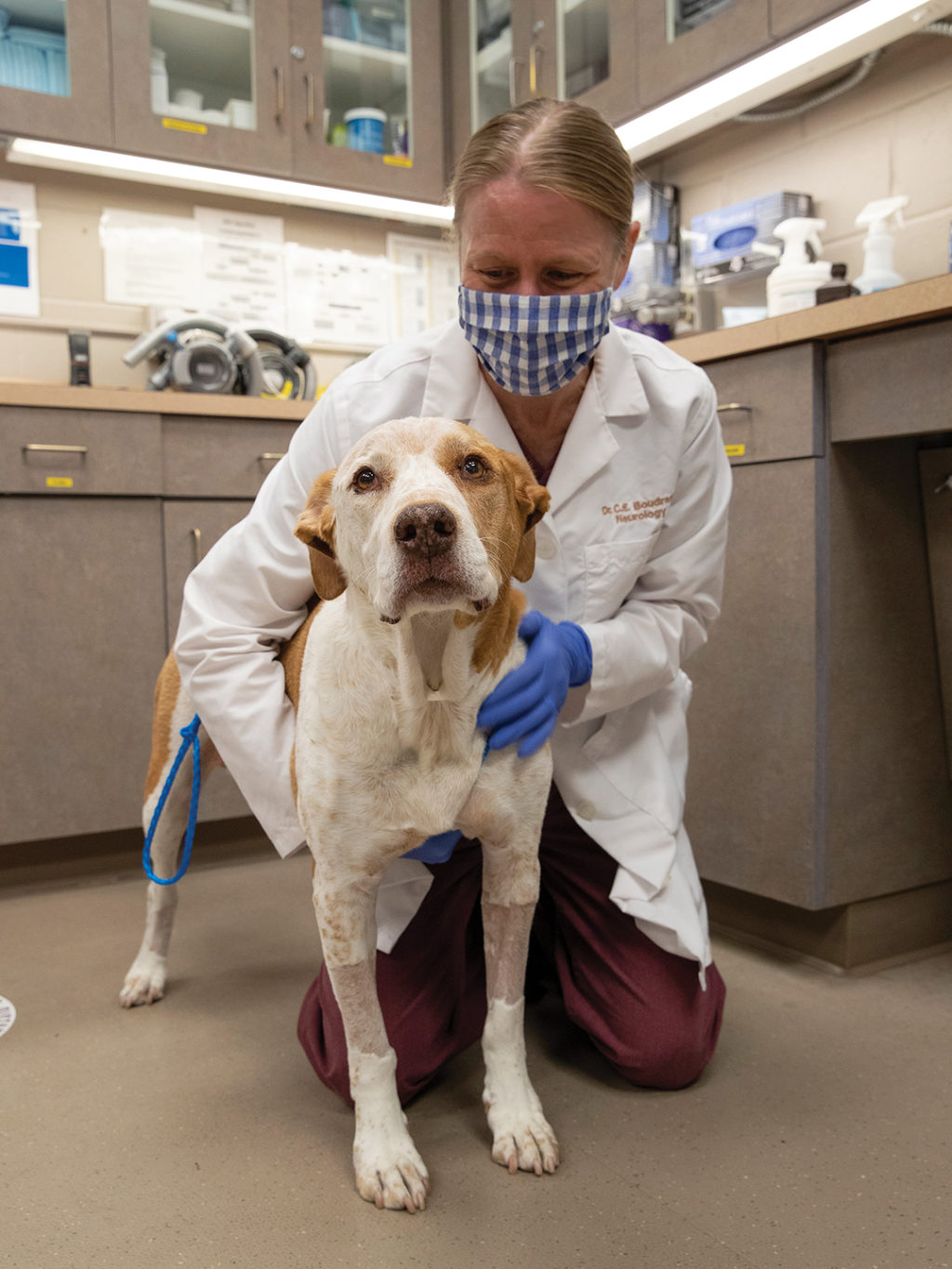
Dr. Beth Boudreau, an assistant professor of neurology, welcomes Patches’ family to the Texas A&M College of Veterinary Medicine & Biomedical Sciences’ (CVMBS) Small Animal Hospital (SAH).
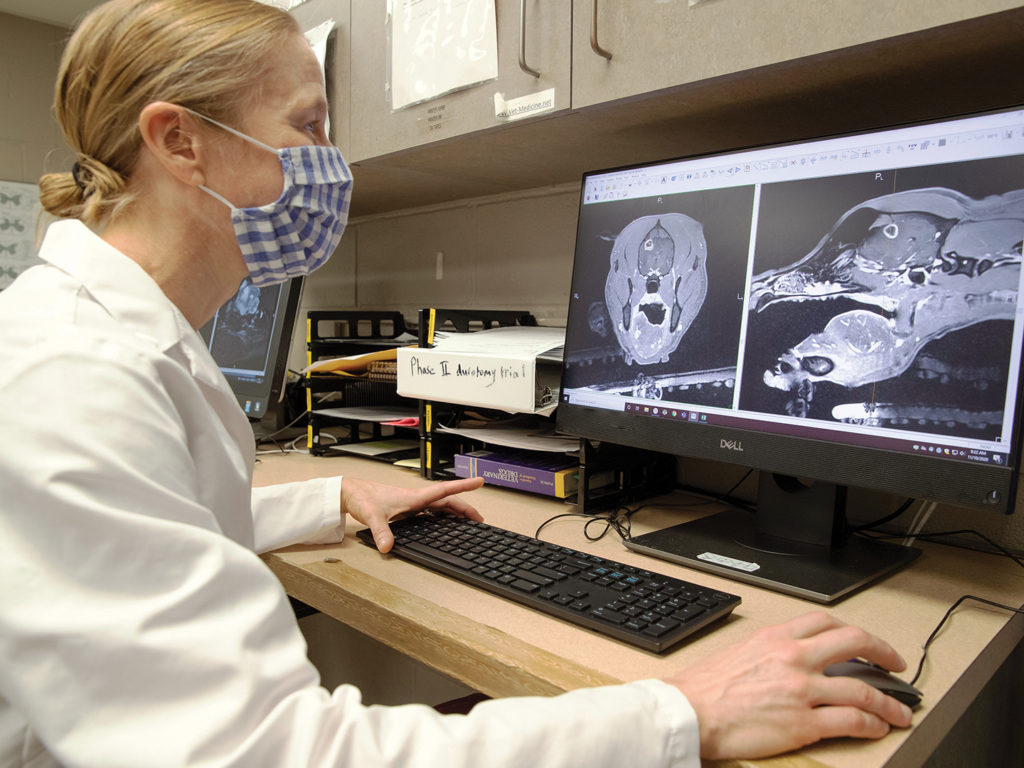
Patches, a sweet and playful dog, is visiting the SAH to be treated for a glioma, a form of cancer that grows in the brain and spinal cord. She is prepped, put under anesthesia, and sent for an MRI brain scan.
The veterinary team patiently waits for the images to load and for measurements to be taken, but the wait was worth it—Patches’ brain tumor appears smaller!
Not only is this good news for Patches and her family, but it’s also good news on a larger scale for Boudreau and her research team, who have been working for years to understand the tricky tumors.
This is important work because gliomas also occur in people and are the second-most common type of brain cancer in dogs.
Unfortunately, this type of cancer tends to have a poor prognosis—gliomas are difficult to surgically remove and traditional therapy comes with multiple side effects and a big bill. Even after a high-risk surgery to remove the tumor, plus weeks of radiation therapy and/or chemotherapy, dogs may only survive a few more months.
But Boudreau and her colleagues want to do better.
Time Is Precious
In addition to personal experiences with intracranial cancer, the research team is especially committed to finding a treatment for gliomas because of their distinctly poor prognoses.
“There are a lot of things about it—besides the short survival time and the fact that it tends to affect many younger individuals—that make it especially difficult,” Boudreau said. “Anyone who’s had a family member or a pet with a brain tumor has dealt with these same things to some degree—the fear, the uncertainty, the really wanting to try to do anything to get more good time.
“It might be that a quarter of their survival time is taken up with dealing with this very difficult treatment,” Boudreau said. “We don’t just want to extend the number of days; we want to extend the number of days that they get to spend together, having fun.”
“They were originally curious about this idea that dogs happen to share that tumor type with humans,” Boudreau said. “We still don’t know why these tumors arise.”
In people, researchers analyze environmental exposures, diet factors, and immune stimulations that “might predispose or protect” certain people with respect to this type of tumor.
“Dogs share our lives so intimately that if these factors are important for people, it’s not so surprising that our pets that share our lives would also get them,” Boudreau said.
To learn how these tumors work and how they relate to similar human tumors, researchers analyzed a massive canine genomic dataset collected from multiple glioma samples. They found that the tumors are, indeed, molecularly similar, suggesting that the two diseases have a similar mutational, cancer-causing process.
This means that treatments could be similar, as well.
Now, the team has developed a brand-new immunotherapy drug and are conducting clinical trials with dogs at the SAH.
A Targeted Therapy
“We don’t just want to extend the number of days; we want to extend the number of days that they get to spend together, having fun.“
DR. BETH BOUDREAU
When a dog is diagnosed with a glioma, Boudreau will meet with pet owners to discuss treatment options and her clinical trial. If the family agrees to try the experimental drug, the procedure is scheduled.
The dog gets MRI images taken that will guide the surgeons in administering the therapy before the patient is taken to an operating room, where the Brainsight system is set up to point a needle directly at the glial tumor. A small hole is drilled into the skull so the needle can pass and then the experimental drug is injected directly into the tumor.
If recovery goes well, the dog can go home the next day. In about a month, the dog comes for a repeat MRI to assess if the tumor has decreased in size.
“With this therapy, we’re trying to make tumors that do not, on their own, generate a lot of immune response and turn them into tumors that do by injecting them with this immunotherapy agent,” Boudreau said. “We also have the option to repeat the injection, because, as you know, with getting a vaccine, when you’re trying to stimulate the immune system, sometimes you get a better response if you do it more than once.”
These clinical trials are only the beginning.
“It’s really similar to what’s going on with the (COVID-19) vaccine development everyone is talking a lot about,” Boudreau said. “We need to establish that the drug is safe, and we need to establish that it is efficacious.”
After Boudreau’s data are published, her collaborators at MD Anderson can apply to test the therapy in a human clinical trial to attempt to establish the same results.
“Eventually, hopefully, we will be able to make it an approved treatment for people as well,” Boudreau said. “But it’s a long road.”
Breed Bias
While the team’s main focus is the clinical trial, Boudreau said the genetic analysis is an important piece of the project.
“Some breeds of dogs get gliomas a lot more than others. Boxers and Boston terriers are two big ones and then pit bulls,” she said. “What we’re trying to look at now is differences in the tumors from those breeds of dog, compared to the tumors from breeds of dog that just tend to get them sporadically.”
So far, six patients have had the experimental injection and two are still enrolled. The team hopes to have answers by the time they reach 21 trials.
Teamwork Makes The Dream Work
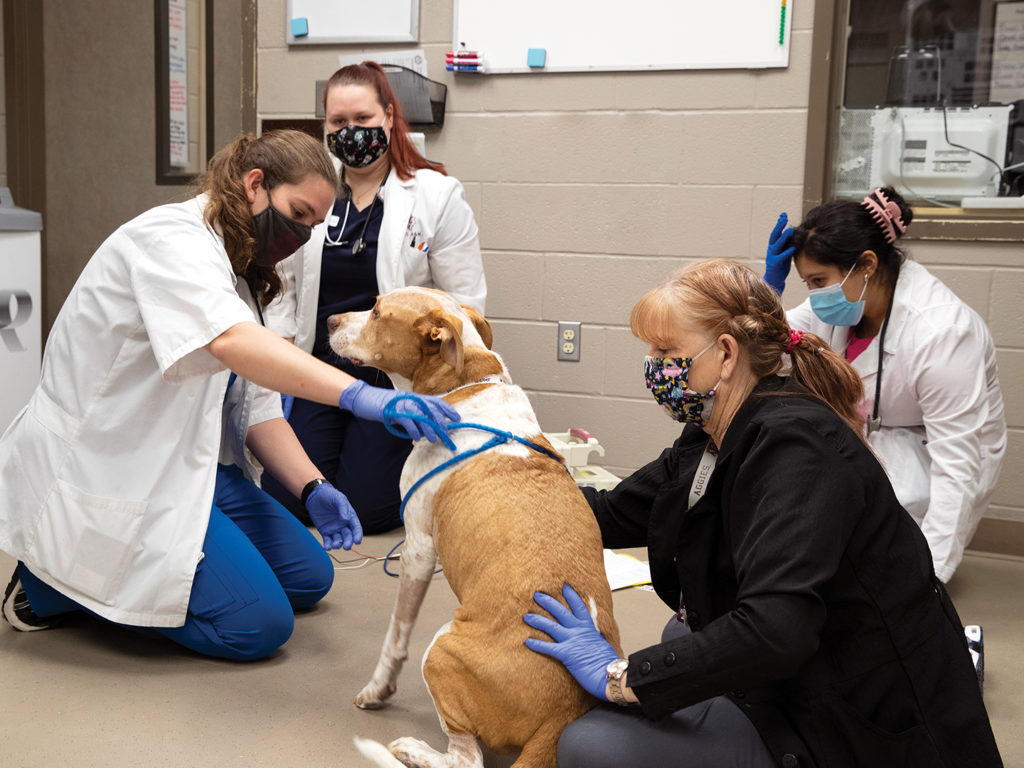
The Neurology team with Patches
To get to this point, the Jackson Laboratory helped analyze the genes and cell regulation of the tumors, and using this information, scientists at MD Anderson, like biochemist Dr. Mike Curran, created the test drug. The CVMBS is now doing clinical trials on the drug. If this works, researchers like MD Anderson’s Dr. Amy Heimberger can help make the drug ready for people.
“The benefit of collaboration is huge because none of us could do this alone,” Boudreau said. “My goal and Dr. Heimberger’s goals are actually probably different. I want a way to treat this tumor in dogs, and, of course, I’m sure she’d be happy about that because she loves dogs, but her patients are people. So, it’s great that we can work together.
“And then our genomic study has given us more confidence that these tumors are really very similar and will respond similarly,” she said. “But in the end, what I’m hoping for is that we have something better to offer the owners because right now, we’re so limited.”
While, so far, the outcomes have been promising, science takes time.
“I didn’t know how long these things could take and how many things can get in your way; there are so many variables,” she said. “It’s really a good thing that we have a lot of people working on this from different angles, because, otherwise, we would never be able to explore enough possibilities fast enough.”
Grateful Looking Back, Hopeful Looking Forward
“We could not do this without our patients—our trial enrollees—and their families,” Boudreau said. “I’m always surprised when they express gratitude to us, because I feel so grateful for them. When they say that in the midst of all of these other things that they’re dealing with on a personal level that they want to help other dogs, too, and they want to help fight this disease, I feel like I’m meeting my people.”
Because they still need at least 14 dogs to complete their trial, Boudreau said recruitment is key in this project.
“If you have a dog or know someone who has a dog, especially if it’s a Boston terrier or a Boxer who has signs of something going on in his or her brain, we’d like you to come see us,” she said. “Even if it’s not a glioma, there might be something we can help with.
“If it does happen to be a glioma, we would love to try to help out any way we can,” she said. “We have this trial, which is not widely available, and we hope that that’s going to be an avenue to help some pets that wouldn’t otherwise be able to get help.”
Boudreau is hopeful and optimistic, much like the families that enroll their dogs in her study.
“When owners enroll, what they’re looking for is something they can do, because it gives them a source of hope. When they can’t do any of the other treatments but find out they can try this for their pet, I have to explain to them that it might not actually be effective; there could be complications,” she said.
“But at the end of the day, the ones who sign up say they’re just happy to have something they can try that gives them hope for the next day. When we send the patients home after their injection, because they’re doing well enough to go home and we walk down that hallway to the front door, that makes it worth it. Every time.”
For more information about the Texas A&M College of Veterinary Medicine & Biomedical Sciences, please visit our website at vetmed.tamu.edu or join us on Facebook, Instagram, and Twitter.
Contact Information: Jennifer Gauntt, Director of CVMBS Communications, Texas A&M College of Veterinary Medicine & Biomedical Sciences; jgauntt@cvm.tamu.edu; 979-862-4216
Summer is a time for barbeques, picnics, and other outdoor fun with family, friends, and pets. But with summer comes high temperatures, making it more important for owners to know how to recognize the symptoms of heatstroke and heat exhaustion in pets.
Heat exhaustion is a general term for the lethargy, discomfort, and weakness caused by high heat, while heatstroke is an actual illness caused by increased body temperature.
Dr. Dalton Hindmarsh, an emergency and critical care resident at the Texas A&M College of Veterinary Medicine & Biomedical Sciences, says that while some pets are more susceptible to heatstroke, any pet can develop the illness under certain conditions.
“Heatstroke is most commonly caused when pets are left outdoors during the hot, humid summer without adequate access to shade and water or when pets are left in vehicles without ventilation at any time of the year,” Hindmarsh said. “Heatstroke can also develop any time of the year in pets with respiratory conditions or obese pets, especially when the weather changes abruptly and becomes more humid.”
Animals with prolonged seizure activity or full body tremors may also develop heatstroke because of the increased body temperature caused by muscular activity.
Heatstroke is extremely dangerous because it has the potential to harm the body in multiple ways and causes increasing damage as an animal’s body temperature rises.
“Body temperatures above 105 degrees Fahrenheit can result in life-threatening blood clotting problems, shock, severe dehydration, kidney and liver damage, and neurologic changes,” Hindmarsh said. “Literally every cell in the body is affected as the extreme temperature damages proteins.”
If the body temperature rises above 107 degrees Fahrenheit, the animal may also experience multi-organ dysfunction and even death.
For this reason, it is very important for pet owners to be aware of and watch for the signs of heatstroke whenever a pet is outside for an extended period of time. These signs include collapse; a sudden onset of vomiting and/or diarrhea; respiratory distress and nonstop panting; drooling; and bright red, purple, or blue gums.
If you notice that a pet has any of these signs, Hindmarsh suggests taking immediate action.
“Remove the pet from the environment, start the cooling process with a fan, and seek veterinary care as soon as possible,” he said. “I would caution owners against placing them in an ice bath or submerging them in water because it may drop their temperature too low.”
In addition to carefully monitoring pets, there are other steps owners can take to prevent heat exhaustion and heatstroke. Hindmarsh recommends making sure pets always have access to fresh water and shade when outdoors, avoiding exercise during the hottest and most humid times of the day, and never leaving a pet unattended in a vehicle.
“Owners should consult their family veterinarian and always start slow when reintroducing activity to a previously inactive pet, especially in the spring,” he said.
Your veterinarian can also provide further advice on keeping your pet safe from heatstroke and heat exhaustion.
Summer heat has the potential to be dangerous, but by carefully monitoring an animal’s condition and the environment, owners can enjoy this time of year with their beloved pets.
Pet Talk is a service of the College of Veterinary Medicine & Biomedical Sciences, Texas A&M University. Stories can be viewed on the web at vetmed.tamu.edu/news/pet-talk. Suggestions for future topics may be directed to editor@cvm.tamu.edu.
The Charles W. “Doc” Graham ’53 DVM, The Texas A&M University System Center grand opening will take place on June 3.
CANYON, Texas—The Texas A&M College of Veterinary Medicine & Biomedical Sciences (CVMBS), West Texas A&M University (WT), and the Texas A&M Veterinary Medical Diagnostic Laboratory (TVMDL) will celebrate on Thursday, June 3, the grand opening of two facilities that will further expand upon the Texas A&M University System’s (Texas A&M System) veterinary medical, education, and research missions in the Texas Panhandle.
Texas A&M System Chancellor John Sharp, Texas A&M President Dr. Kathy Banks, WT President Dr. Walter Wendler, CVMBS Dean Dr. John August, Texas A&M Vice Chancellor and College of Agriculture and Life Sciences Dean Dr. Patrick Stover, and TVMDL Director Dr. Bruce Akey will commemorate the opening of the Charles W. “Doc” Graham ’53 DVM, The Texas A&M University System Center during a ceremony beginning at 10 a.m. outside of the center.
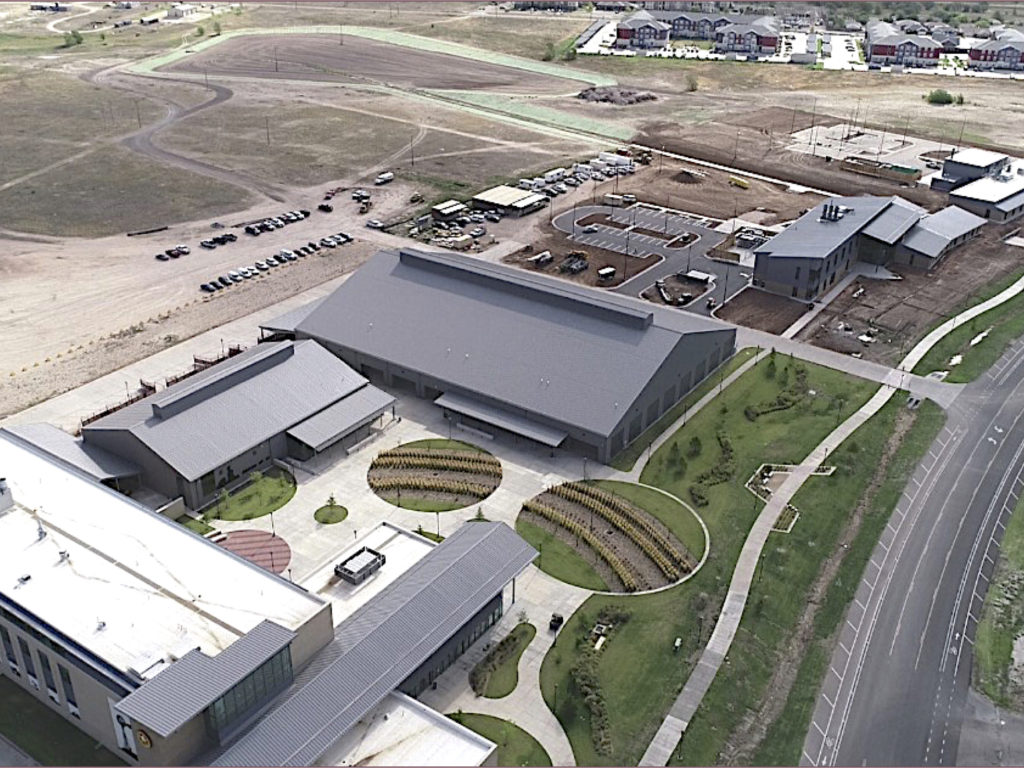
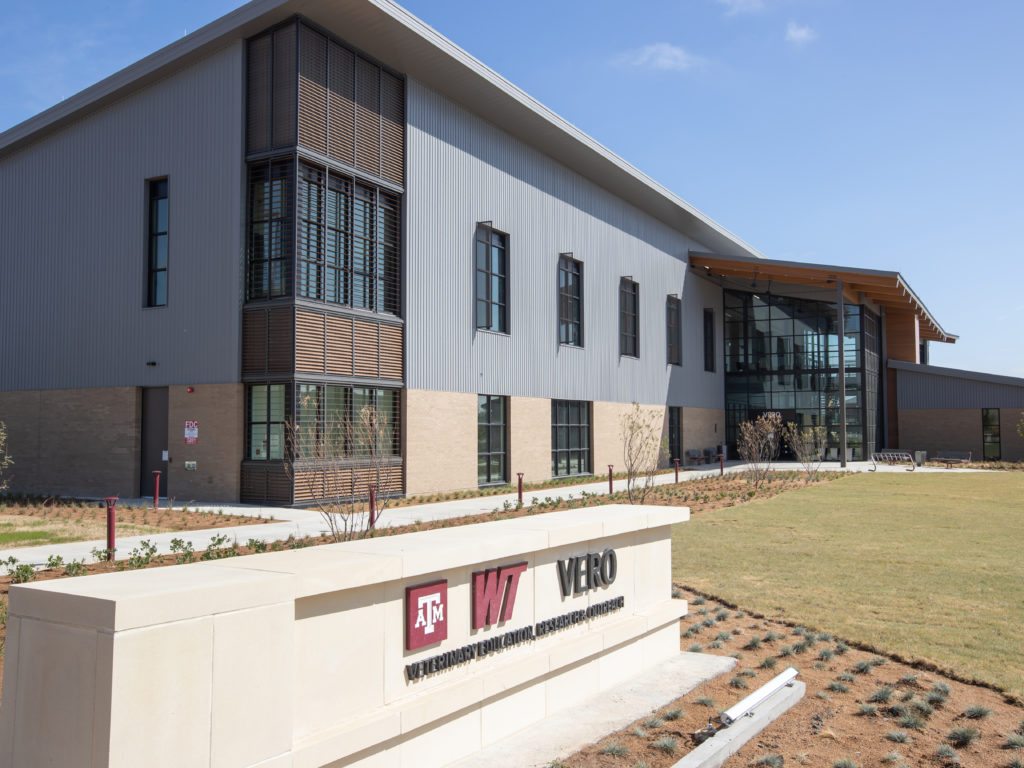
The center comprises the Veterinary Education, Research, & Outreach (VERO) Building and the Charles W. Graham, DVM TVMDL Building. Both facilities opened in September, signaling the culmination of the Texas A&M System’s investment in large animal health in the Texas Panhandle. The project is supported by $90 million in capital improvements and $5 million in faculty hires, for a total of $95 million in investment in the region. Ground was broken on both buildings in December 2018.
The Veterinary Education, Research, & Outreach (VERO) Building will serve as the home for the CVMBS’ 2+2 Doctor of Veterinary Medicine (DVM) program.
The VERO Building is a $22-million 36,000-square-foot facility that now serves as a regional veterinary teaching center that creates a gateway to the CVMBS for students interested in pursuing veterinary medicine from the Texas Panhandle and West Texas, while also facilitating collaborative, multidisciplinary research among scientists from across the region.
Not only are WT pre-veterinary students taught in the facility, but it will also serve as the home for the CVMBS’ 2+2 Doctor of Veterinary Medicine (DVM) program, which will enroll its first cohort of 18 first-year DVM students in the fall of 2021.
The VERO initiative offers other unique educational opportunities for current CVMBS veterinary students, including fourth-year clinical rotations, immersive externships, summer internships, and food animal production-focused tours that introduce them to the region and the livestock industries.
The building also houses on-site researchers who will continue to address Panhandle-specific issues and those with broad impact on the livestock industries.
The Texas A&M Veterinary Medical Diagnostic Laboratory (TVMDL) offers testing for almost every animal species.
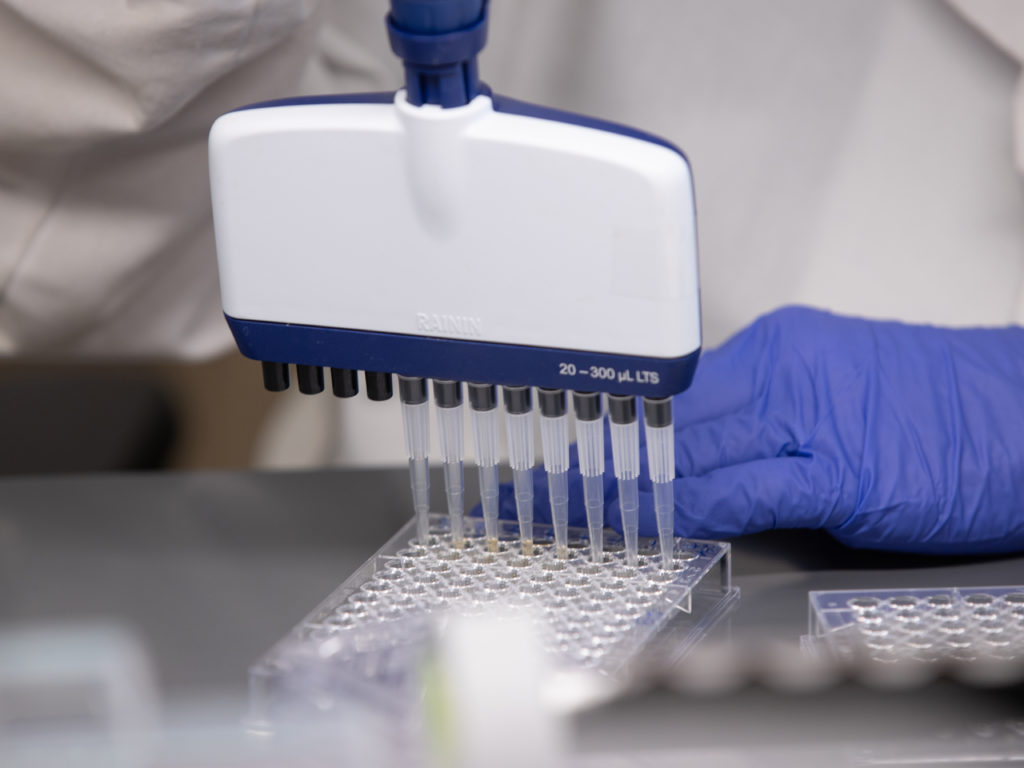
The TVMDL facility, named after a Texas A&M Distinguished Alumnus and one of Texas’ most renowned equine veterinarians, is a $17.6-million, 22,000-square-foot building that features the latest technology for diagnostic services in bacteriology, pathology, serology, and virology, as well as spaces for receiving and processing and necropsy and support.
The opening of the building in September signaled a relocation to Canyon from its previous location in Amarillo, which was opened in 1975 to specifically serve the Panhandle’s cattle feedlot industry as an extension of the College Station-based laboratory.
Almost 50 years later, TVMDL’s Panhandle laboratory has expanded its clientele beyond livestock producers, offering testing for almost every animal species for some of the largest animal agriculture companies in the world as well as the ever-important smaller independent producers.
The Canyon-based facility offers an open-flow laboratory environment for enhanced collaboration, including one of only two high-containment, biosafety level 3 (BSL-3) laboratories in Texas, specifically designed to test for animal diseases that pose a significant threat to the agriculture economy and public health.
Even as one of the largest and busiest diagnostic labs in the country, TVMDL makes education and training of colleagues a priority and will serve as a practical training ground for future veterinarians, while also actively providing training experiences for undergraduates, residents, newly minted DVMs, and postdoctoral students.
Both the VERO facility and TVMDL’s relocation to the WT campus will further strengthen the TAMUS’ focus on veterinary medicine in the Panhandle.
Dr. Charles W. “Doc” Graham ’53 was designated as a Texas A&M Distinguished Alumnus in 2016.
About Dr. Charles W. Graham
Dr. Charles W. “Doc” Graham ’53 is a Texas A&M Distinguished Alumnus and one of the world’s top equine veterinarians, a leader in Texas’ horse and cattle industries and a tireless volunteer, advocate, and youth mentor.
Graham is the only individual to serve as president for both the Texas Quarter Horse Association (TQHA) and the Texas Thoroughbred Association (TTA) and is the only person to be selected as Horseman of the Year by both associations. He has also been recognized by Texas A&M’s AgriLife, College of Agriculture & Life Sciences, and CVMBS, as well as having been inducted into multiple halls of fame.
His veterinary career included building, with Dr. W. H. Cardwell, the Elgin Veterinary Hospital in the early 1960s, which grew into one of the largest equine veterinary facilities in the nation. Graham is now owner of a number of other businesses, including the 1,300-acre Southwest Stallion Station in Elgin, which has bred some of the top stallions and broodmares in the quarter horse industry.
In 2018, it was announced that the new, Canyon-based Texas A&M Veterinary Medical Diagnostic Laboratory would bear Graham’s name. The naming of the center in his honor was approved during the Texas A&M System Board of Regents’ quarterly meeting in November 2020.
###
For more information about the Texas A&M College of Veterinary Medicine & Biomedical Sciences, please visit our website at vetmed.tamu.edu or join us on Facebook, Instagram, and X.
Contact Information: Jennifer Gauntt, Director of VMBS Communications, Texas A&M College of Veterinary Medicine & Biomedical Sciences, jgauntt@cvm.tamu.edu,979-862-4216
As the Texas A&M College of Veterinary Medicine & Biomedical Sciences’ (CVMBS) Veterinary Education, Research, & Outreach (VERO) program’s newest assistant professor of microbial ecology and infectious disease, Dr. Matthew Scott is on a mission to prevent infectious disease in cattle living in high-risk settings, such as feedlot facilities.
“I investigate host/infectious disease relationships regarding clinical bovine respiratory disease (BRD) with bioinformatic (a field including biology, computer science, information engineering, and mathematics) and molecular approaches,” Scott said. “Largely what I am wanting to do is develop pipelines that we can use to investigate and mitigate risk of infectious disease, specifically in terms of respiratory disease.”
BRD, the leading disease complex in cattle, can cause pneumonia in calves, which is often fatal.
In U.S. cattle alone, the U.S. Department of Agriculture estimates that this disease complex costs the feedlot industry around $1 billion annually. The devastating effects result from host, pathogen, and environmental interactions that are incompletely understood.
“One thing I’m interested in right now is identifying candidate biomarkers, candidate molecules, specifically expressed genes, and functional mechanisms of cattle related to BRD, especially in high-risk settings,” he said. “We can use that information to predict risk of disease before affected cattle ever show clinical signs of disease.”
Scott believes that because the VERO program is based in the Texas Panhandle, the nation’s leading region for beef production, it is the ideal place to investigate BRD and develop solutions to ensure the stability of our nation’s food supply, while also preventing disease-driven economic loss in the cattle industry.
“From a research perspective, my decision to join VERO comes down to geography, personnel, and industry,” he said. “The VERO team is putting together a long list of really impressive and well-known respiratory disease and livestock researchers. Dr. Paul Morley, Dr. Sarah Capik, and Dr. Dee Griffin have been involved in respiratory disease research for a while and are very good at it.”
Scott’s drive to promote bovine health began from an early age.
“I’m looking forward to talking to producers and practitioners alike and getting to implement some of the research I’ve been working on, especially in real-world settings. There are so many new ideas, so many new concepts, and so many new ways to approach these questions that the world is our oyster.”
DR. MATTHEW SCOTT
“I got into beef cattle production and started working in the dairy industry in North Florida during my junior year of high school,” he said. “I really just fell in love with it.”
He graduated from Louisiana State University in 2013 with a Bachelor of Science degree in animal sciences and continued his education at Mississippi State University, earning his Doctor of Veterinary Medicine (DVM) in 2018. He is currently wrapping up his Ph.D. in veterinary medical science – infectious diseases at Mississippi State University and will earn a minor in computational biology in addition to his doctorate.
Scott says he entered veterinary school with the intention of becoming a dairy cattle veterinarian but became enamored with the field of immunology while conducting research on catfish. His work with BRD combines these two passions and fills a much-needed niche in the veterinary profession.
“Immunology is a world we can’t really see,” Scott said. “What drew me in was that there’s so much we don’t understand; there’s so much about these organisms—whether they are bacterial, fungal, or viral—and their interactions with hosts that we just don’t have a firm grasp on like we do with humans, dogs, cats, and everything else.”
By combining his aptitude for data science and the geographic advantages of the VERO program, Scott looks forward to applying his research toward improving bovine health in the hands-on environment of cattle operations.
“The thing that brings me the most joy is the idea of utilizing some of these more basic science concepts and applying them to aspects of field diagnostics and field research with cattle,” Scott said. “I want to be the bridging scientist who uses the tools we apply in high-level computational approaches and asks, ‘how can we apply them down chute side on a feedlot?’”
The robust connection with local industry VERO has formed in its home base of Canyon will be vital to conducting groundbreaking research in areas pertaining to feedlot animal health.
“The VERO program has set itself up to stand out in that regard, with personnel and resources and by directly working with the industry itself,” he said. “That is a recipe for success in terms of researching a disease complex like BRD.”
Scott is also eager to instruct future students and share his passion for immunology and animal health.
BRD, the leading disease complex in cattle, can cause pneumonia in calves, which is often fatal.
“The opportunity to teach students is exciting, regardless of whether they’re veterinary, graduate, or undergraduate students,” he said. “I want to teach them to consider new ideas in a molecular way of thinking in livestock production.
“Where we’re headed with research helps to guide what we will teach within the next five to 10 years,” he said. “Implementing these newer ideas of thinking about disease and management really excites me as a future educator.”
He will join the VERO team on June 7 and plans to hit the ground running on his research endeavors, integration into the VERO team, and building relationships with the cattle industry.
“There are a lot of things to be excited about, including being in a new place, getting to join a new team and meeting new people, hearing new ideas, and collaborating with new scientists,” he said. “I’m looking forward to talking to producers and practitioners alike and getting to implement some of the research I’ve been working on, especially in real-world settings. There are so many new ideas, so many new concepts, and so many new ways to approach these questions that the world is our oyster.”
###
For more information about the Texas A&M College of Veterinary Medicine & Biomedical Sciences, please visit our website at vetmed.tamu.edu or join us on Facebook, Instagram, and X.
Contact Information: Jennifer Gauntt, Director of VMBS Communications, Texas A&M College of Veterinary Medicine & Biomedical Sciences, jgauntt@cvm.tamu.edu,979-862-4216