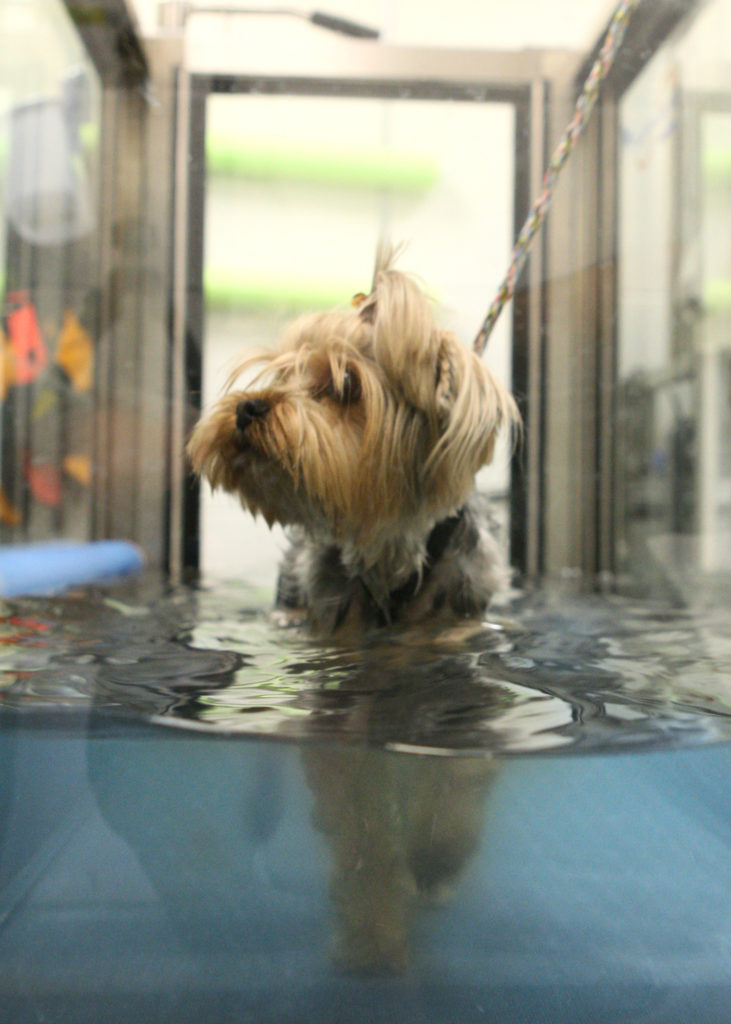
Aspen uses the water treadmill in the Texas A&M Small Animal Teaching Hospital’s Sports Medicine & Rehabilitation service.
Veterinarians are making strides in learning more and more about man’s best friend, thanks to recent discoveries in the field of canine health, but a lot of questions still exist when it comes to mobility issues in our four-pawed friends.
A dog’s mobility may be compromised because of age, injury, or birth defect, and animals suffering from these conditions may experience serious pain. As such, pet owners should know how to recognize when their canine companion is lacking a certain spring in their step.
Dr. Daniel Eckman, a staff veterinarian in rehabilitation at the Texas A&M College of Veterinary Medicine & Biomedical Sciences’ Veterinary Medical Teaching Hospital, weighed in on the problems that can come from mobility issues in dogs.
“Many of the common signs include reduced walking distances, persistent lameness, not being able to perform a sport that they previously could, and being painful when touched,” Eckman said. “Rehabilitation can be necessary at any point.”
Mobility issues can be breed-specific—some larger breeds, including Labradors, Golden Retrievers, and German Shepherds, tend to have joint problems, while Dachshunds tend to be more susceptible to back complications.
One of the most powerful tools owners can use in identifying these kinds of issues is observation, Eckman said.
When dog owners notice some of the key symptoms associated with mobility issues, the exact location and cause of the pain can be identified by consulting your veterinarian. To determine if there are any infections or imbalances that could be contributing to the immobility, your veterinarian may order radiographs or clinical blood tests, such as a complete blood count, urinalysis, and a biochemistry profile.
Another way to support pets during this process is working with a certified animal rehabilitation practitioner to develop rehabilitation plans and/or home exercises, according to Eckman.
“Physical exercises can be used to increase the range of motion of joints,” he said. “They also can increase strength and limb awareness. Other techniques like joint mobilizations may increase the range of motion and decrease the pain of joints. Massage can reduce muscle fatigue and restrictions. Therapeutic ultrasound, laser therapy, and extracorporeal shockwave also can reduce pain and treat various conditions.”
There are many exercises that can be done at home that offer a great workout for pets who need to be active while not adding insult to injury.
“Low-impact exercises may be walking on softer surfaces such as grass or dirt; you could also incorporate sand. Try to avoid concrete or asphalt when possible,” Eckman said. “Animal rehabilitation facilities may use a water treadmill to allow lower impact but increase resistance.”
As your dog ages, joint and cartilage problems can be difficult to treat; however, owners can work to ease or even delay the onset of these mobility diseases through diet.
In addition, supplements such as glucosamine, chondroitin, and green lipped mussel—which have been proven to reduce inflammation and pain, improve function, and slow progression of joint damage and arthritis in both humans and animals—and diets that are protein rich and include omega-3 fatty acids, such as those derived from fish, can also support increased mobility.
“Good, quality nutrition, keeping pets lean, and avoiding high-impact and or dangerous sports are some of the best preventions for arthritis and mobility issues,” Eckman said. “Finding and treating underlying conditions as soon as a problem is noted is also important, as is working with a veterinarian on best treatments and practices for their individual pet.”
Although a dog’s mobility naturally declines as they age, their quality of life doesn’t have to. Managing your dog’s weight and incorporating a flexible, low-impact exercise routine into a comprehensive support program can allow our furry friends to enjoy their golden years.
Pet Talk is a service of the College of Veterinary Medicine & Biomedical Sciences, Texas A&M University. Stories can be viewed on the web at vetmed.tamu.edu/news/pet-talk. Suggestions for future topics may be directed to vmbs-editor@tamu.edu.
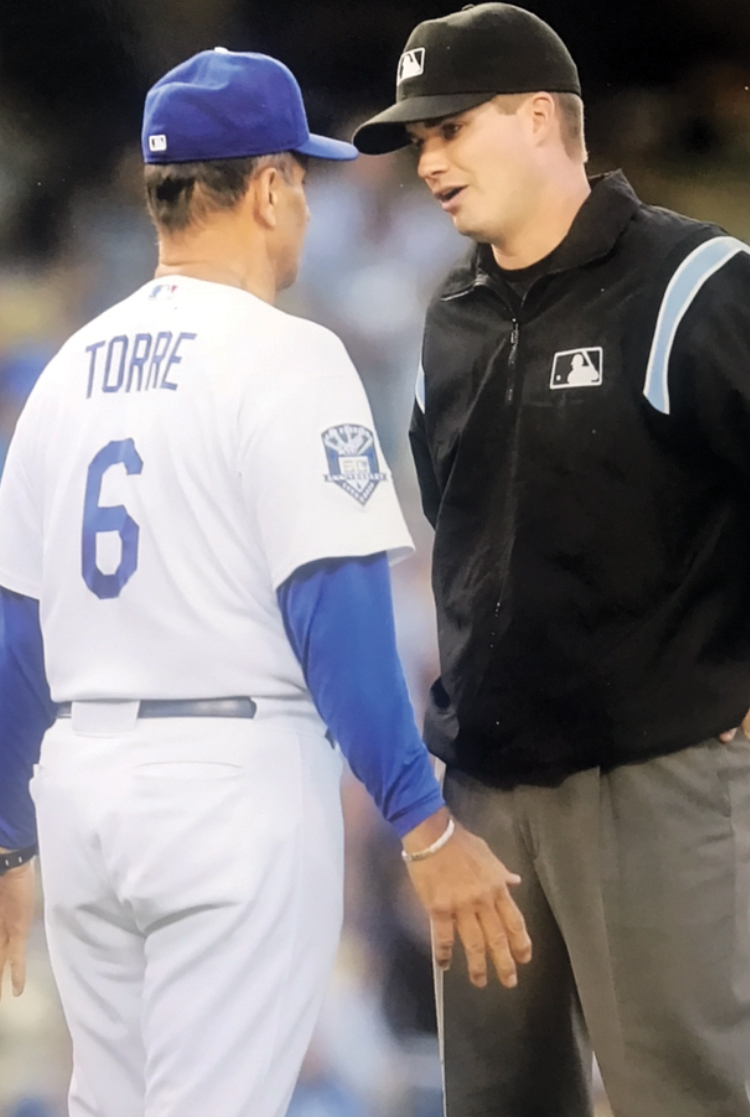
Chris Tiller and former Dodgers manager Joe Torre talk during the Giants vs. Dodgers game on July 29, 2008.
From umpire to business owner to veterinarian, Chris Tiller has pursued a diverse range of careers during his life, always taking advantage of new opportunities to follow his passions.
As a third-year veterinary student at the Texas A&M College of Veterinary Medicine & Biomedical Sciences (CVMBS), he is currently working toward one of his childhood dreams of becoming a veterinarian like his father.
His other dream, which he followed first, was to have a career in professional baseball.
“Baseball was my first passion,” Tiller said. “I played from a young age, at junior college, and at Southwest Texas State University (now Texas State University). I was a computer science major and decided two and a half years in that it wasn’t something I wanted to do anymore. I decided to try something else for a while and that’s why I went to umpire school—to figure out what I really wanted to do.”
He enrolled in the Jim Evans Umpire Academy in Coco Beach, Florida, and began a rigorous eight-week program to become a professional umpire.
“It was a lot of seeing what you’re made of and if you can handle the stress of somebody yelling at you all of the time,” he said. “It was about four hours a day of learning the rules and then in the afternoons we would go to the field and have field simulations.”
During his long days at school, Tiller discovered a passion and skill for umpiring and began his career after graduating in 2000.
He umpired his first game in Princeton, West Virginia, as part of the Appalachian League, a professional summer baseball league. He then moved into the professional minor leagues, first the Midwest League, followed by the Florida State League, Texas League, and Pacific Coast League.
“I enjoyed the goal-oriented nature of the profession,” Tiller said. “I knew on day one of my job in the minor leagues that making it to the major leagues was not guaranteed, and at minimum it would take six years to accomplish my goal. It took around 1,500 minor league games before I worked my first game in the major league.”
In 2007, he finally made the jump to Major League Baseball with his first game in Milwaukee, Wisconsin, where the Milwaukee Brewers played the Atlanta Braves.
“I had worked the night before in Albuquerque and I got a call at midnight saying I needed to be on the first flight out,” he said. “I called my dad, who also flew out from Texas the next morning to watch my first major league game.”
As much as he loved umpiring, Tiller began to notice the toll that his career’s schedule took on his family.
“I have a very supportive family and a very loving and understanding wife. Everything I do, I’m doing for my family.”
CHRIS TILLER
“It wasn’t a lifestyle that was conducive to being a family guy,” he said. “I went to work at 6 p.m. and got back to the hotel at 11. Then I went to bed at 6 a.m. and woke up at 2 p.m., so I was living the reverse of everybody else.”
“I finally stopped umpiring because I missed my second son being born while I was flying from Arlington to Miami for a game,” he said.
In the meantime, Tiller had started a trucking business with his brother in 2008 and when he decided to take full ownership five years later, he officially retired from his career in baseball.
He built his company up to a fleet of 60 trucks that traveled all over the country to serve the oil business; then, in 2016, he felt called to begin a new journey while visiting the mixed animal clinic in Waskom owned by his father, Dr. Robert Tiller ’76.
“I saw my second son working with my dad, and all of my childhood memories from the clinic snapped back,” Tiller said. “Being a veterinarian was a goal I had as a young kid and now the timing was finally right.
“I told my wife, ‘I think I want to go to veterinary school,’” he said. “She replied, ‘Well, it’s about time.’”
He chose to follow in his father’s footsteps by applying to Texas A&M, fulfilling another childhood dream.
Since being accepted, he has used his experiences from his past careers to help him manage the difficult and time-consuming nature of veterinary school
“I felt very blessed and fortunate to get in,” Tiller said. “I knew I’d have to work hard, but baseball taught me to take it one day at a time and set individual goals in order to achieve my long-term goal.”
Chris Tiller
Now in his third year at the CVMBS, Tiller feels reassured that he chose the correct time to pursue veterinary medicine.
“At 19 years old, I didn’t have the study habits that the young adults I’m in school with now have,” he said. “I had the drive, but my drive wasn’t for veterinary school.”
Through student organizations and a study group, Tiller has found many ways to connect with his classmates despite the age gap. He enjoys taking the opportunity to pass along the life lessons he has learned over the years to the students who have yet to begin their first careers.
“I’ve told a bunch of people here that the moment you realize you’re not happy doing something, move on,” he said. “Life’s too short to not do what makes you happy.”
After graduation, he plans to join his father’s clinic, eventually taking over once his dad retires.
“I don’t want such a great place that he’s built up to go away with him,” Tiller said. “The driving factor is that if my kids want the clinic, it will be there. I want my children to choose a life that makes them happy, and if veterinary medicine happens to be the choice they make, I’ll be holding down the fort for them.”
As he gets ready to begin what he plans to be his last career, Tiller is thankful for his family’s support, both now and since his days of umpiring.
“Every time I changed careers, my wife said, ‘You have to do what you want to do,’” he said. “I have a very supportive family and a very loving and understanding wife. It’s also been good for my kids to see me work hard and, hopefully, that will instill in them what it takes to succeed in life. Everything I do, I’m doing for my family.”
For more information about the Texas A&M College of Veterinary Medicine & Biomedical Sciences, please visit our website at vetmed.tamu.edu or join us on Facebook, Instagram, and Twitter.
Contact Information: Jennifer Gauntt, Director of CVMBS Communications, Texas A&M College of Veterinary Medicine & Biomedical Sciences; jgauntt@cvm.tamu.edu; 979-862-4216
Rescued animals often come from difficult backgrounds of abuse, neglect, or both and, as a result, sometimes exhibit erratic behaviors in their new homes. These behaviors can come as a surprise to pet owners and can leave the animal’s adopted family feeling ill-equipped and unprepared.
Dr. Lori Teller, a clinical associate professor at the Texas A&M College of Veterinary Medicine & Biomedical Sciences, says that when trying to rehabilitate an animal that has been abused, finding the right regimen can feel like a game of blind go-fetch.
“Many pets are adopted with no information about their past history,” Teller said. “Some of these pets may not have been physically abused but may have been inappropriately socialized as puppies or kittens. Others may have suffered from neglect, isolation, or physical abuse.”
In many cases, an animal’s behavioral problems can lead to excessive punishment in their new homes, which leads to a worsening of those behaviors and can create a vicious cycle.
“Some of these inappropriate behaviors may include inappropriate elimination (having accidents in the house or not using the litter box); inappropriate vocalizing (howling, crying, or non-stop barking); destruction of property; attacking or biting people, whether known or unknown to the pet; hiding when others are around; or shaking and trembling when approached by people,” Teller said.
Canine PTSD has yet to become an official term; however, research from Tufts University’s Cummings Behavior Clinic shows that dogs and humans have similar chemical and behavioral responses to trauma. Researchers have also found that dogs abandoned after the 2011 Japanese earthquake had higher levels of cortisol, a stress hormone, than abandoned dogs that had not lived through a similar kind of trauma.
“No one can correct past abuse, so we need to focus on ways to alleviate the animal’s anxiety or fear and find ways to help the pet enjoy life,” Teller said. “The long-term effects of abuse are not as well studied in animals, nor is there a way to know if an animal is suffering from traumatic brain injury. It can take a long time for a pet to recover from the effects of abuse, so patience and persistence are key.”
While animals that have been previously abused may be more of a challenge to care for because of problematic behaviors and increased anxiety, there are steps pet owners can take to ensure a happier and healthier pet.
“The most important thing that an owner can do is consult with their veterinarian about how to best help the new pet. The veterinarian can help customize an appropriate plan to manage the pet’s return to a happier quality of life,” Teller explained.
“One thing to consider is to take it slow while the animal gets used to people (and other pets) in the household. This may mean sitting in the same room without talking to or approaching the pet, although you could toss out some treats at strategic times,” she said. “Other things include providing proper nutrition and fresh water on a regular schedule; communicating in a confidently quiet voice; providing a safe place to relax; taking the dog on brief outings, such as a ride in the car or for a short walk in a quiet area; and providing environmental enrichment without overwhelming the pet.”
In addition, pharmacology-based treatments for anxiety and post-traumatic stress disorders for pets have become increasingly popular.
“Supplements or medications may be warranted to help alleviate anxiety or fear and to make it easier for the pet to learn new behaviors and build confidence,” Teller said. “A veterinarian can determine which supplements or medications would be best for each individual case. It will be important for a management plan to be in place, in addition to administering supplements or medications.”
Although it is impossible to rewrite a pet’s past, owners can improve the narrative of their four-legged friends by being understanding, consistent, and compassionate. With the right steps, it is very possible to create a much happier and brighter future for our pets.
Pet Talk is a service of the College of Veterinary Medicine & Biomedical Sciences, Texas A&M University. Stories can be viewed on the web at vetmed.tamu.edu/news/pet-talk. Suggestions for future topics may be directed to vmbs-editor@tamu.edu.
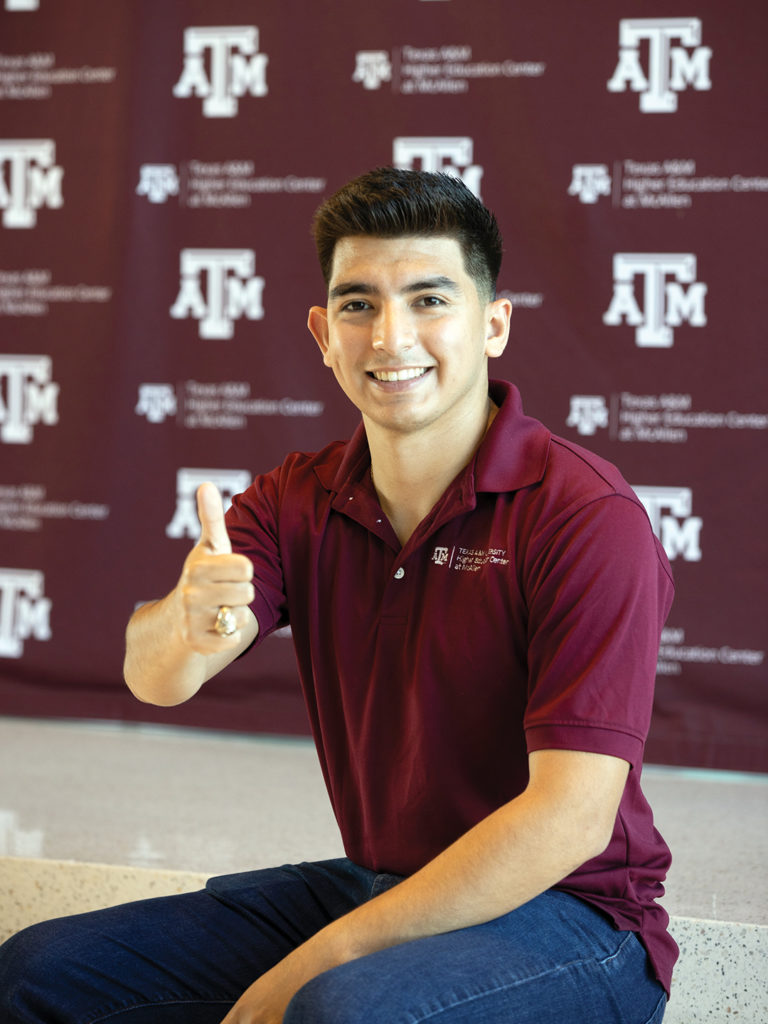
“Howdy” may be the official greeting of Texas A&M, but to biomedical sciences (BIMS) graduate Roberto Lopez, it’s more than just a simple greeting.
“You go to College Station and there’s not one person who doesn’t say ‘Howdy,’” he said. “It’s like you’re meeting a family, not just meeting an institution; just saying ‘Howdy’ enables you to open up.
“When you walk in and the first thing someone says is ‘Howdy,’ you’re getting recognized,” he said. “It feels good. It’s empowering. You’re not just a number. And that, to me, is a big, big tradition.”
Lopez, like all students in McAllen, is an Aggie. The center isn’t a system school; it’s an extension of Texas A&M University, where the students wear maroon, receive Aggie Rings and even have “Home of the 12th Man” banners outside of the building.
Leading The Way
As a member of McAllen’s first biomedical sciences graduating class, Lopez’s entire college experience has been one of firsts.
In 2017, he was among the first to attend Texas A&M classes in McAllen when the only major offered was engineering and the classes were held at a nearby junior college since the campus wasn’t completed until 2018. That year helped him decide that his future lay elsewhere, so he was one of the first McAllen students to change majors when biomedical sciences became an option in 2018.
“One year went by really fast, and now it’s been four years; I look back and think, ‘Wow, time has flown by,’” he said. “Hopefully my graduation is going to set an example for other students—that they are capable of completing a four-year degree here, that being able to come here is an option.”
Along with the academic firsts, he’s also had the opportunity to lay the groundwork for events that are already becoming traditions. As a student event planner, he’s helped organize a staff and student soccer day, an all-campus Thanksgiving celebration, and a student versus staff volleyball night.
For We Are The Aggies
Roberto Lopez
For Lopez, and the campus, helping raise awareness that the Higher Education Center at McAllen is part of Texas A&M is one of the biggest goals, because being an Aggie is the reason he chose the Center in the first place.
Lopez was accepted at the College Station campus, but when he looked at the cost of moving away from home, it just didn’t seem feasible.
“I read the newspaper, and that’s how I found out about the Higher Education Center,” he said. “It said that Texas A&M was going to do a program here, so I immediately called the admissions department here in McAllen and asked about it. They were only going to have engineering the first year, but I thought, ‘Why not?’
“I always wanted to be a part of the Aggie family, and I think it (the Center) was a perfect choice for me,” he said. “I get to stay at home and do this amazing degree from Texas A&M. It’s one of the universities I always wanted to go to, so my goal was to graduate from Texas A&M.”
Lopez’s story is not uncommon among the students in McAllen. According to academic adviser Josette Gonzalez ’11, leaving home to go off to college for four years is simply not possible for many students.
“A lot of the times, our students down here in the (Rio Grande) Valley wear multiple hats,” she said. “Not only are they first-generation college students attending a top-tier institution, but they’re also caregivers. We have students who live in multi-generational homes, so they may be helping take care of their younger siblings or older grandparents and parents.
“So, for Texas A&M University to choose McAllen to have an extension of Aggieland is opening up opportunities for generations to come,” she said. “Now, our students have the opportunity to get a top-tier education without having to leave their homes.”
Committed To Selfless Service
Lopez is hoping to go to medical school next.
Like many of his classmates, he’s seen the need for more medical professionals in the Rio Grande Valley (RGV). Dealing with COVID-19, which hit the RGV harder than most other parts of Texas, brought home that goal of wanting to get an education and work to better his community.
“It’s given me a new perspective on life. We have to value life more,” he said. “We knew how important life was before COVID, and we knew that we needed to graduate, but sometimes we lose track of where we come from.
“This pandemic has made me realize what’s important to me. And for me, what’s most important is family,” he said. “Being home during the pandemic made me realize that this is where I come from, this is my family, and I want to protect them.”
He’s not alone in his goal to use his education to help protect his family. One of the first student organizations established in McAllen was the Border Pre-Med Society, an organization for not only biomedical sciences students, but also students from the Texas A&M School of Public Health.
Where Excellence Can Grow
The need for more healthcare professionals combined with the fact that many students in the McAllen area can’t leave home is exactly why College of Veterinary Medicine & Biomedical Sciences associate dean of undergraduate education Dr. Elizabeth Crouch is excited about the college’s involvement at the campus.
McAllen Center
“I hope it will be a premiere place to look at One Health in the Rio Grande Valley in a way that is really impactful,” she said. “Having a footprint for biomedical sciences in South Texas is just really dynamite. I’m very, very excited about the future.
“I know that the McAllen campus is meant to grow,” Crouch said. “Right now, it’s one building but it will continue to grow. I think we’re going to see pretty significant growth there over the next 10 years or so.”
Gonzalez agrees that a bright future is ahead for the campus and is proud that she’s been part of it since the beginning.
“Had Texas A&M not chosen McAllen to put the Higher Education Center, our students would be missing out on something that’s essentially going to change their lives,” Gonzalez said. “All of the degrees brought to McAllen fulfill a need. In the Valley, right now, we have a shortage of health professionals, so degrees like public health or biomedical sciences are going to be filling that need. It’s going to be filled by the students who are from here, who want to stay here, work here, and give back to the community.
“Our students recognize that they can be founders and start a legacy for future Aggies to come,” she said. “And when they’re applying to their professional schools and whatnot, those schools will get to see that this student took initiative to start something that would last forever.”
For more information about the Texas A&M College of Veterinary Medicine & Biomedical Sciences, please visit our website at vetmed.tamu.edu or join us on Facebook, Instagram, and Twitter.
Contact Information: Jennifer Gauntt, Director of CVMBS Communications, Texas A&M College of Veterinary Medicine & Biomedical Sciences; jgauntt@cvm.tamu.edu; 979-862-4216
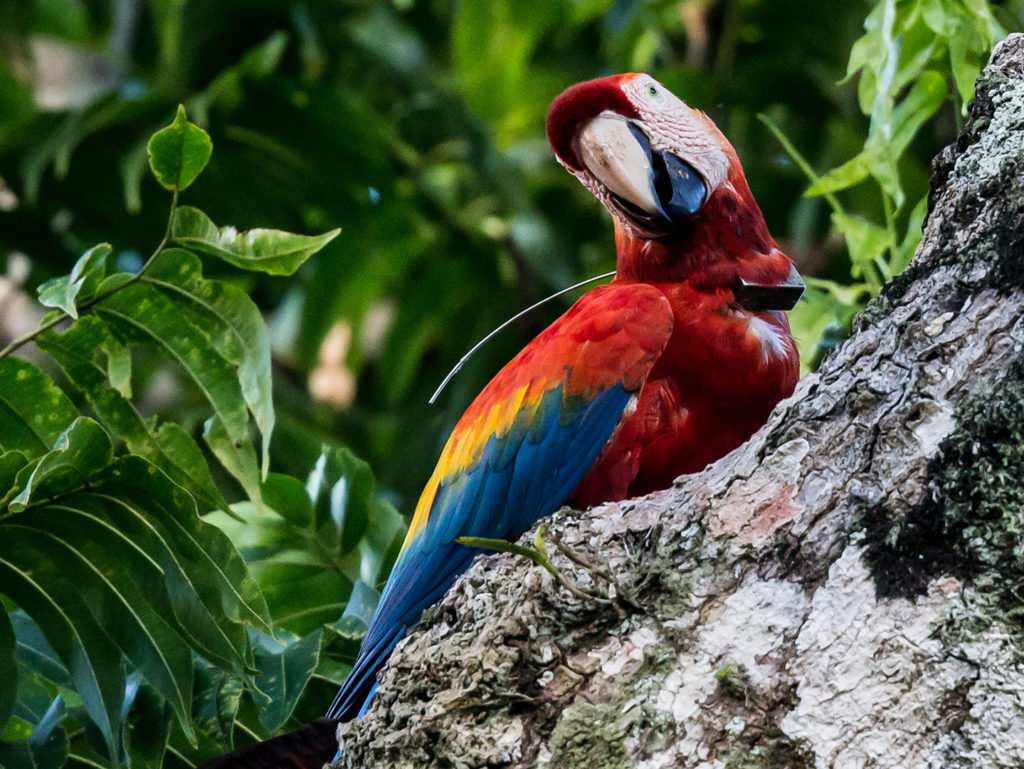
A scarlet macaw wearing an ARGOS satellite telemetry collar. Photo by Zoltan Szabo.
New data on macaw movements gathered by the Texas A&M College of Veterinary Medicine & Biomedical Sciences’ (CVMBS) The Macaw Society has the potential to greatly improve conservation strategies for the scarlet macaw, as well as similar species of large parrots.
While the overall conservation status of the scarlet macaw is listed as “least concern” by the International Union for Conservation of Nature, the species is declining across much of Central America and in other parts of its range in South America. The species also shares its habitat with numerous endangered species and influences the ecosystems in which it lives.
Historically, the migratory movements of large parrots and macaws have largely remained a mystery because of the difficulty of tracking them over the long distances they travel. The recent publication describing the discoveries made using satellite tracking of individual birds over large areas has shed some light on this mystery.
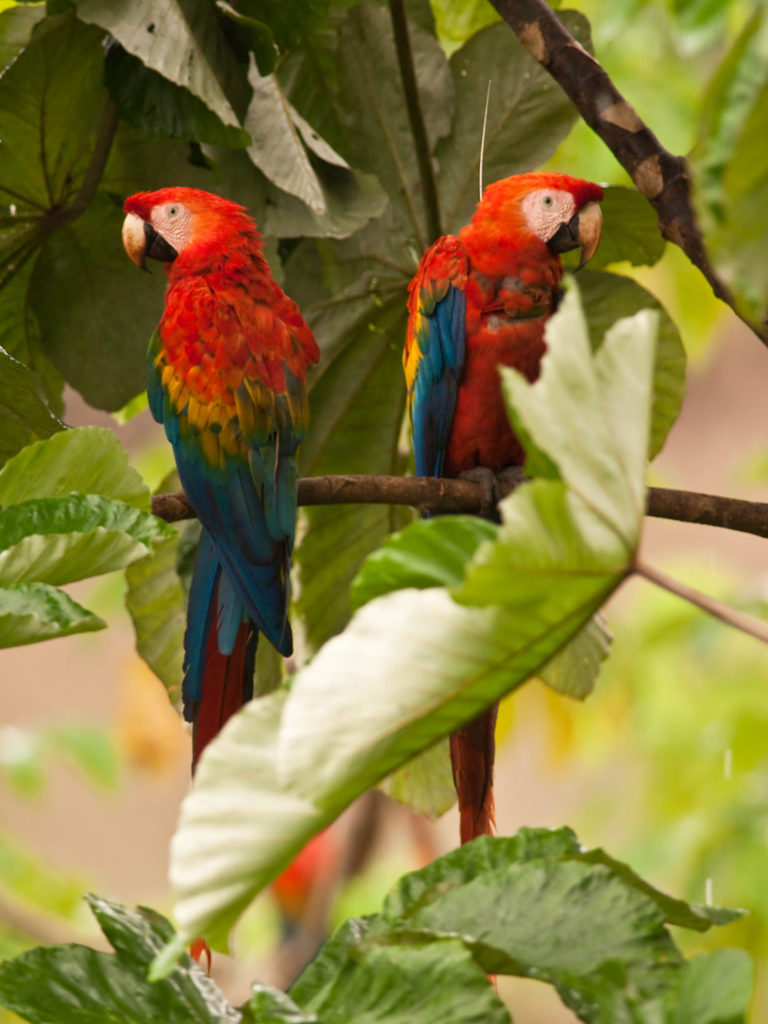
The research team—consisting of CVMBS associate professor Dr. Donald Brightsmith; CVMBS adjunct associate professor Dr. Janice Boyd; Dr. Elizabeth Hobson, from the University of Cincinnati; and Charles Randel, from the Southwestern Wildlife Survey in California—used ARGOS satellite telemetry (orbiting satellites that detect signals emitted from a transmitter attached to an animal) to track six scarlet macaws and four blue-and-yellow macaws over a period of eight years.
Scarlet macaws, with individual on right wearing an ARGOS satellite telemetry collar. Photo by Matt Cameron.
They found that both macaw species had very large home ranges, consisting of thousands of hectares (with 1 hectare equaling 2.471 acres), and often traveled 20 to 40 km (approximately 12 to 25 miles) per day. Individuals of both species moved up to 160 km (99 miles) during the periods of low food availability, likely searching for areas with dense patches of food trees.
“In Southeastern Peru, there are really large protected areas, a million hectares or so (approximately 2.47 million acres), but there’s always pressure to use land versus conserve it,” Brightsmith said. “So how do we, as conservationists and scientists, justify that we need to conserve such large areas? Why not just save 50 hectares and assume that everything will be able to survive?
“The reality is, that’s not the case,” he said. “In fact, we found that a lot of the birds left protected areas and flew beyond the one million hectares.”
The team also discovered that after the breeding season ended, nearly all of the macaws left the large national parks and protected reserves. This highlights the importance of protecting more than just their nesting location.
“There’s this whole other time of the year when they’re far away,” Brightsmith said. “We need to be thinking about what they need to survive in that part of the landscape, too.”
For this project, the team overcame another challenge researchers have faced when trying to track macaws—the birds are extremely intelligent, making it difficult to trap them and attach a transmitter that the birds couldn’t remove.
To solve this problem, the researchers used a variety of trapping methods and special ARGOS satellite telemetry collars developed in 2013 by Brightsmith and Boyd, in collaboration with the electronics company Telonics and other industry partners. The system they developed will greatly improve macaw and parrot conservation methods and is already in use in Belize, Costa Rica, Guatemala, and Bolivia.
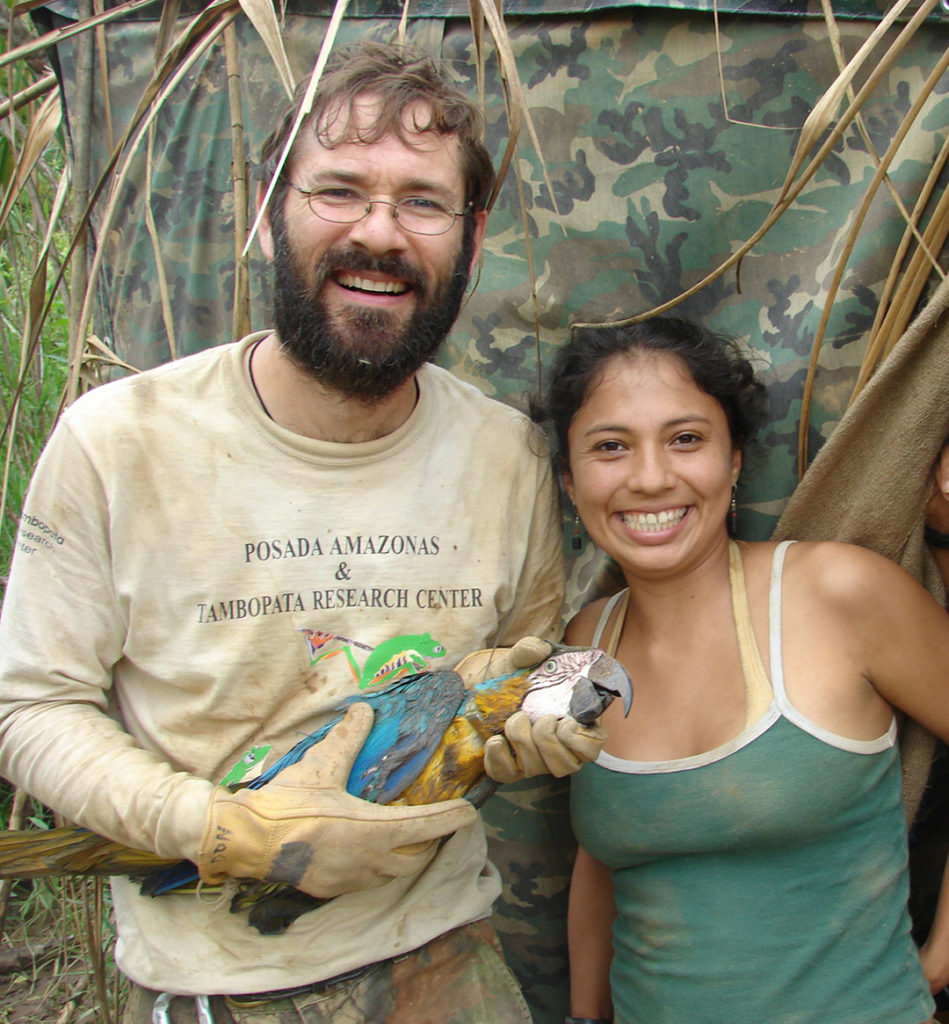
Dr. Donald Brightsmith and Dr. Gabriela Vigo-Trauco with a blue-and-yellow macaw wearing an ARGOS satellite telemetry collar. Photo by The Macaw Society.
“Our colleagues in Guatemala have found that a lot of macaws will pick up from their breeding grounds in Guatemala, fly long distances to nearby Mexico to spend the non-breeding season there, and then move back. Understanding the birds’ ability to move from one big chunk of land to another and that those two populations are actually linked is very important,” Brightsmith said. “It shows us what size area we have to be concerned about and where they are likely to be threatened by deforestation or hunting.”
The Macaw Society’s next major projects will involve sharing knowledge and best practices with other researchers and conservationists in South and Central America.
“A lot of what we’re doing now is advising organizations in Costa Rica, Brazil, Argentina, Mexico, Guatemala, and other countries,” Brightsmith said. “Researchers and conservationists working in ‘parrot range nations’ have really stepped up. The field is much more developed than it was when I got started, and that’s really wonderful.”
Brightsmith hopes that the results from this project will not only have a direct impact on the macaws in Peru, but also positively impact other macaws and large parrots, protect native habitats, and increase public interest in conservation throughout the Americas.
“Macaws are really attractive; when people see them, they are always super impressed, so macaws are a good way to connect with regular people and communicate major conservation issues,” said Dr. Gabriela Vigo-Trauco, CVMBS postdoctoral research associate and co-director of The Macaw Society. “If you can convince people that it’s important to conserve one species and that species moves so much and needs so much forest, you are in a good position to protect that entire space and everything else using it.”
Follow The Macaw Society on Facebook to learn more about their current projects and view livestreams of macaw nests in Costa Rica.
###
For more information about the Texas A&M College of Veterinary Medicine & Biomedical Sciences, please visit our website at vetmed.tamu.edu or join us on Facebook, Instagram, and X.
Contact Information: Jennifer Gauntt, Director of VMBS Communications, Texas A&M College of Veterinary Medicine & Biomedical Sciences, jgauntt@cvm.tamu.edu,979-862-4216
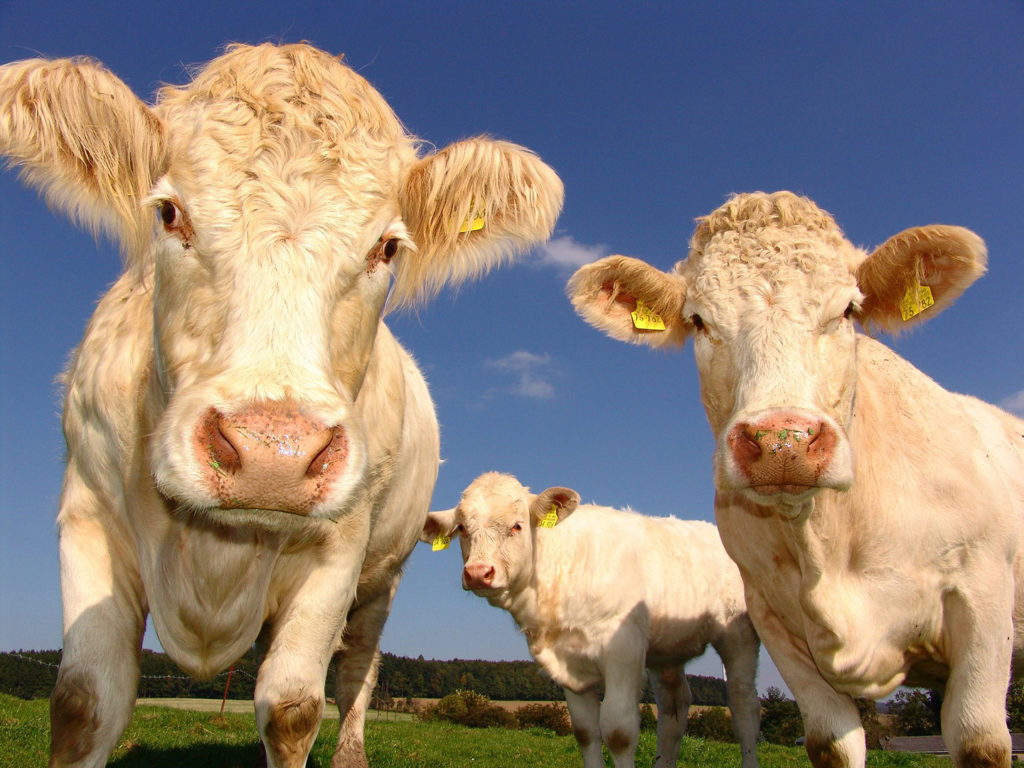
Rabies is usually associated with dogs or bats, but it also can develop insidiously in a variety of mammals. Rabies in livestock, such as cattle, may be rare, but its ability to spread through the herd still poses a serious risk.
Recently, rabies in cattle has been increasing in Texas; cases this year have already exceeded cases in 2020, during which twice as many cases were reported than in 2019. As a result, state authorities are recommending cattle owners take extra precautions when handling animals that appear ill.
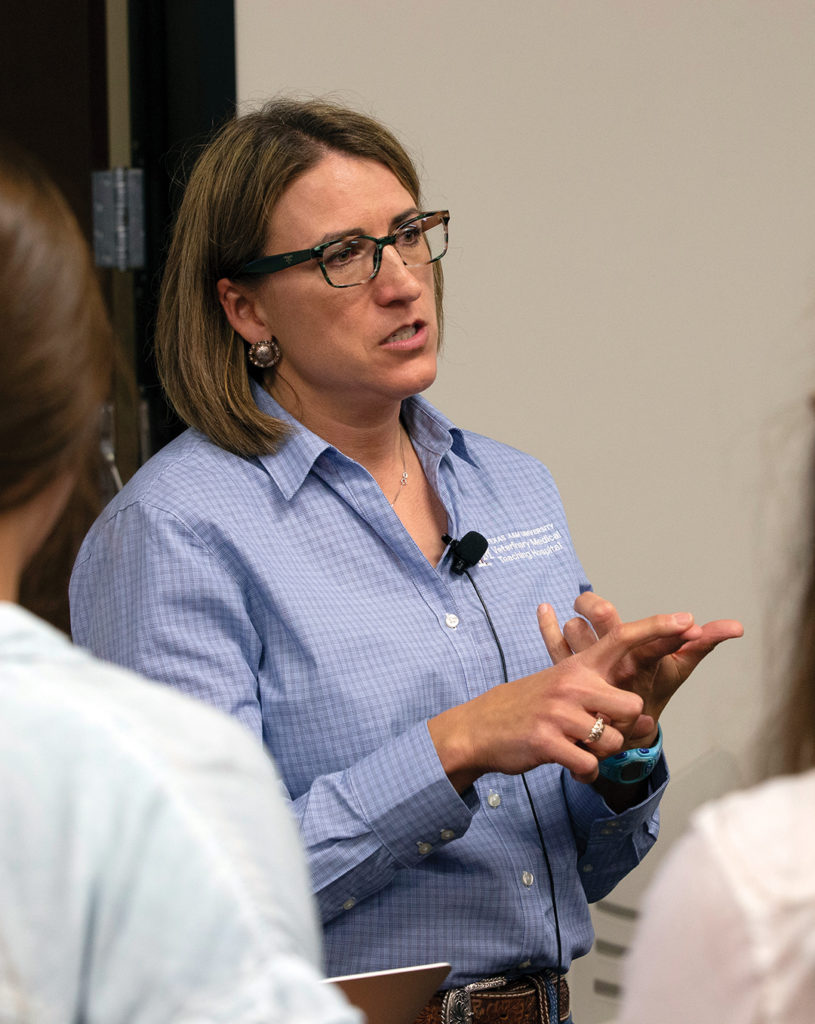
Pam Douglas, the infection control coordinator at the Texas A&M College of Veterinary Medicine & Biomedical Sciences, shares her insights on the rabies virus and its potential impact on cattle.
“Rabies can occur in all warm-blooded animals and is almost always fatal,” Douglas said. “Rabies is caused by a virus that affects the nervous system and is transmitted by the saliva of an infected animal, usually via a bite or by saliva coming in contact with mucous membranes (eyes, nose, or mouth) or an opening in the skin. Rabies is uncommon in cattle but there can be some instances when cases in nearby wildlife increase because there are more opportunities for exposure.”
Infected animals exhibit a few common behavioral patterns owners can watch out for in their herds.
“Anorexia, itching, impaired coordination, lameness, hypersalivation, the appearance of choking, and bellowing are some of the signs of rabies in cattle,” Douglas said.
Affected animals may also exhibit aggressive behavior, muscle spasms, convulsions, and anxiety.
Considering the serious nature of this disease and the difficulty of treating it, prevention should be the key focus for owners. Rabies vaccinations are strongly recommended for any animal or human at risk of contracting the disease, as rabies exposure transgresses to humans as well, almost always causing death once people begin showing symptoms.
If owners are exposed to the saliva of an infected animal, Douglas suggests washing the contaminated area with soap and water as soon as possible, especially if the saliva came in contact with an open wound and consult with your healthcare provider.
“People tend to be exposed because they try to assist an animal that appears to be choking because it cannot swallow,” Douglas said. “If saliva contacts your mucous membranes, flush with clean water and consult your healthcare provider.”
The consequences of rabies can be grim; however, the good news is that the disease is easily prevented with yearly vaccines.
If rabies is suspected in your livestock, working with your local veterinarian and state health authorities is imperative in containing the outbreak from further spreading.
With the right precautions, owners can reduce rabies and create a healthier reality for our animals.
Pet Talk is a service of the College of Veterinary Medicine & Biomedical Sciences, Texas A&M University. Stories can be viewed on the web at vetmed.tamu.edu/news/pet-talk. Suggestions for future topics may be directed to vmbs-editor@tamu.edu.
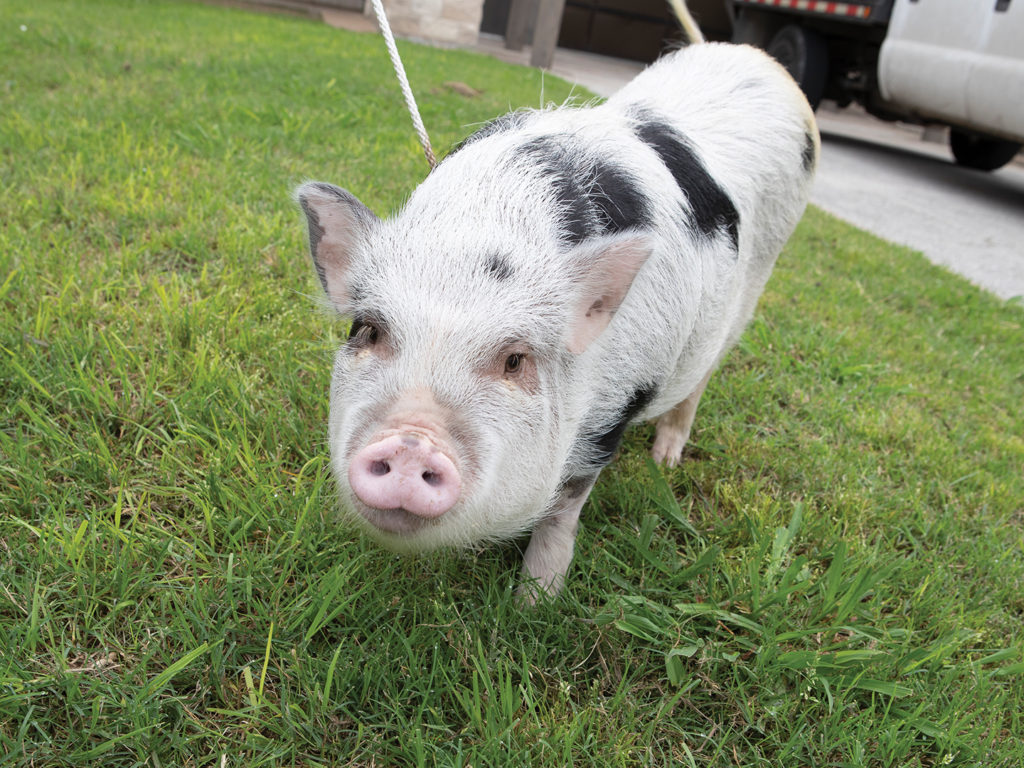
When Peggy, a pot-bellied pig, arrived at the Texas A&M Large Animal Hospital (LAH) showing signs of a gastrointestinal obstruction, her veterinarians employed a rare combination of equine and human surgical techniques to save her life.
The 9-month-old pig began showing signs of an obstruction, including lethargy and lack of appetite, in March 2020, leading her owner, Dan Deweese, to seek help from his local veterinarian at Alvarado Veterinary Clinic.
After they had no luck clearing the obstruction with IV fluids and medical management, Peggy was referred to the LAH.
When Peggy arrived, her veterinarians immediately began preparing a surgical plan.
“GI obstructions and obstipation (severe or complete constipation) are pretty common in pot-bellied pigs, just because their diets tend to not always be very consistent,” said clinical associate professor Dr. Jennifer Schleining, the lead veterinarian on Peggy’s case.
Joined by surgery resident Dr. Alyssa Doering and internal medicine resident Dr. Kari Bevevino, Schleining was ready to perform surgery the same day Peggy arrived, if deemed necessary. After viewing radiographs and Peggy’s diagnostic workup, they decided to proceed with an abdominal exploratory procedure.
Once the surgery began, however, they discovered that the obstruction was not caused by feed material or a foreign object inside the gastrointestinal tract, but rather by the intestine itself, a much less common occurrence.
“Her obstruction was caused by a kink in the small intestine that had been there for quite some time,” Schleining said. “It almost created a little ‘S’ from a couple of switchbacks in the intestine, so nothing could get through.”
This kink was held in place by small bands of tissue called adhesions that can make abdominal organs stick together, though the cause of Peggy’s adhesions is unknown.
“The upside to having Peggy come in and the uniqueness of her case is that she’s provided educational material that’s very relevant to the things that the students are learning in surgery classes.”
DR. JENNIFER SCHLEINING
Once the kink was relieved, the veterinarians faced their next challenge.
Because the obstruction had been present for a while, the circumference of the upper end of Peggy’s intestine was much larger than that of the lower end. Knowing that they would be unable to join these ends together directly using a normal approach, the surgeons employed a less common surgical technique sometimes used in horses and companion animals known as side-to-side anastomosis.
This technique involves overlapping the segments of intestine before creating a new hole to connect them. To do this, they chose to use a piece of human surgical equipment rarely used in large animal medicine.
“Because she’s a smaller pig, we were able to use a special stapling device called an ILA stapler to complete the anastomosis,” Schleining said. “It cuts down on the operative time considerably because we don’t have to hand sew everything.”
Since this equipment is designed for human bodies, it is only useful in veterinary medicine for animals with anatomy similar to a human’s. Luckily, Peggy’s intestines were the perfect size.
“It’s really fun to be able to get that instrument out and use it when we have a patient that’s the right case,” Schleining said. “We only get to use it maybe once or twice a year.”
Both the procedure and the equipment used made Peggy’s case a unique one for the LAH and a great educational opportunity for the residents involved, Schleining said. While veterinary students were not in the LAH at the time because of COVID-19-related restrictions, Schleining took extra measures to preserve the educational qualities of this case for them.
Schleining
“Knowing that the students couldn’t be there with us, we were very intentional about taking pictures of the procedure throughout and then creating a little case vignette,” she said. “It’s important to show them the steps in a real-life situation based on what they had practiced with their models during the course of the semester.
“The upside to having Peggy come in and the uniqueness of her case is that she’s provided educational material that’s very relevant to the things that the students are learning in surgery classes,” Schleining said. “Even though the students weren’t able to participate, Peggy still contributes to learning opportunities by being here.”
After surgery, Peggy surprised her veterinarians by bouncing back extremely quickly, going straight back to her food with none of the complications that can show up after abdominal surgery. To be safe, she was kept in the LAH’s intensive care unit for a week, allowing her caretakers to get to know her adorable and unmatched personality.
“Pigs are funny creatures and their personalities are really what I love most about them,” Schleining said. “You’ve got some that are just like little grumpy old leprechauns that say, ‘Leave me alone,’ and others that are super friendly and talk to you when you come in the barn and demand attention; they can be little prima donnas.
“Peggy was definitely a prima donna, always wanting attention,” Schleining said. “She loved if you scratched her back and ears with a plastic fork—she would lay there and roll on her back so you could get her belly too. She was a hoot!”
Though sad to say goodbye to their new piggy friend, Peggy’s veterinarians were glad when she could finally go home with Deweese on April 9, 2020.
“(Peggy was able to leave so quickly because) we have a really dedicated owner who is committed to her care and knows that diet is important,” Schleining said. “I think her future looks really bright, largely because of her owner.”
For more information about the Texas A&M College of Veterinary Medicine & Biomedical Sciences, please visit our website at vetmed.tamu.edu or join us on Facebook, Instagram, and Twitter.
Contact Information: Jennifer Gauntt, Director of CVMBS Communications, Texas A&M College of Veterinary Medicine & Biomedical Sciences; jgauntt@cvm.tamu.edu; 979-862-4216
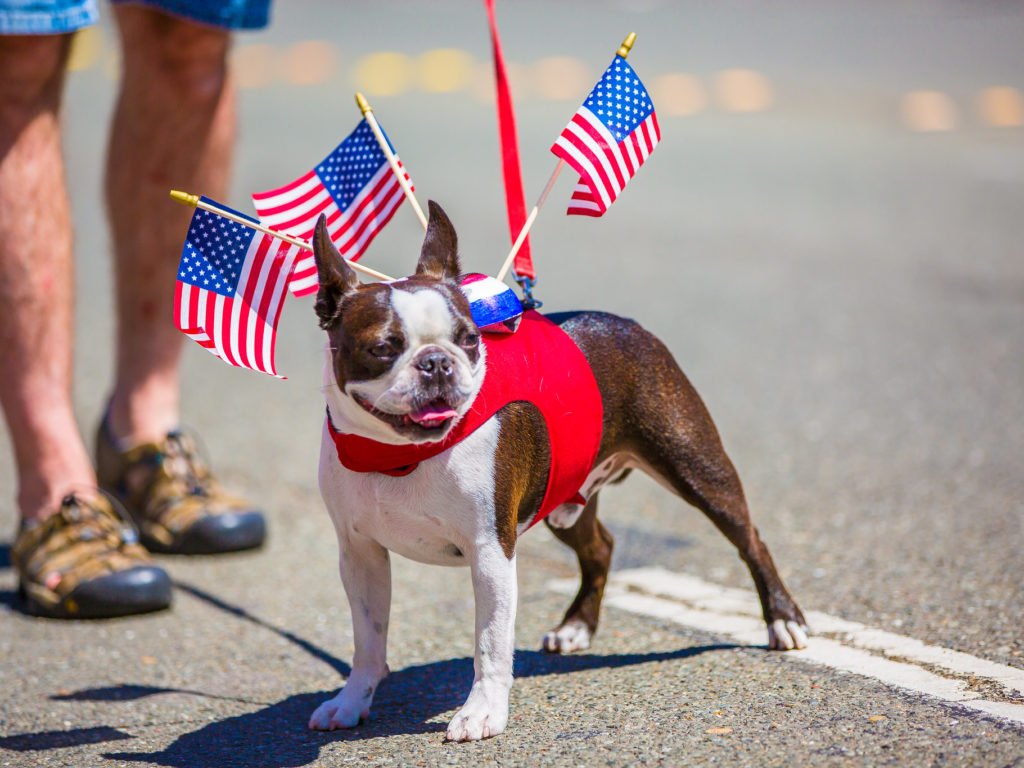
Independence Day is a lively, outdoor holiday that offers many opportunities to include your furry friend. Although these summer festivities can be enjoyable for both pet and person, owners should be wary of possible hazards associated with the celebration.
Kate Kimble, a fourth-year veterinary student at the Texas A&M College of Veterinary Medicine & Biomedical Sciences, advises owners on how they can keep their pets safe this Fourth of July.
“When attending a social event with your dog, make sure to keep them leashed and up to date on all their vaccines so they can interact safely with other people and pets,” Kimble said.
Pet owners also may want to consider providing guidelines to their friends and other partygoers on how they should interact with a pet. For example, an owner might ask that others refrain from slipping their pooch table scraps.
“During holidays we often have an abundance of decadent foods that we, as people, look forward to and love,” Kimble said. “Avoid feeding your pets scraps or bites of human foods, as they can often lead to an upset stomach, vomiting, and diarrhea.”
In severe cases, a gastrointestinal disorder may develop. Obstructions may also occur—especially if your pet gets their paws on a bone or corn on the cob. In addition, alcohol should never be given to pets because it can be fatal.
Your pet can also become ill from chowing down on non-food party items, like decorations or sparkly streamers, and develop a serious medical condition, such as a blockage, Kimble advised. Owners who suspect that their pet has ingested a toxic substance should contact the Animal Poison Control Center at (888) 426-4435 or their veterinarian.
Pet owners should also keep an eye out for their pet’s temperature. Especially in a Texas summer, preventing overheating is paramount. Owners should be aware of the dangers of heat stroke.
“During Fourth of July gatherings, make sure to keep your pet cool, with plenty of access to water, shade, and place to retreat from the hot summer air,” Kimble said.
Fireworks are a highlight of the holiday for many people, but our pets may not enjoy the loud explosions and flashing. Kimble warns that pet owners should be cautious of allowing their pets outdoors during fireworks shows, as the loud noises and lights might spook an animal and cause them to flee their yard if they feel unsafe.
“Some of our furry companions are not the biggest fans,” she said. “To ensure the safety of pets during a fireworks display, keep them inside or away from the fireworks, in an area in which they are shielded from the loud noises, bright lights, and sparks.”
If pet owners are concerned about how their furry friend handles disruptive events, they should reach out to their veterinarian to best determine how to keep their pet calm and happy. Kimble advises that there are tools to help your pet better manage stress, including veterinarian-prescribed medications and calming treats or chew toys.
“Another option to help pets through scary times, such as a fireworks display, is to dress them in a compressive vest or shirt that applies constant pressure, which mimics swaddling and promotes a calming sense in the animal,” she said.
Outdoor games and gatherings hosted on Independence Day can provide wonderful enrichment for your pet. Although pet owners should remain vigilant and keep an eye out for any dangers this holiday brings, it is a wonderful opportunity to celebrate our nation and freedoms with friends, family, and pets.
Pet Talk is a service of the College of Veterinary Medicine & Biomedical Sciences, Texas A&M University. Stories can be viewed on the web at vetmed.tamu.edu/news/pet-talk. Suggestions for future topics may be directed to editor@cvm.tamu.edu.
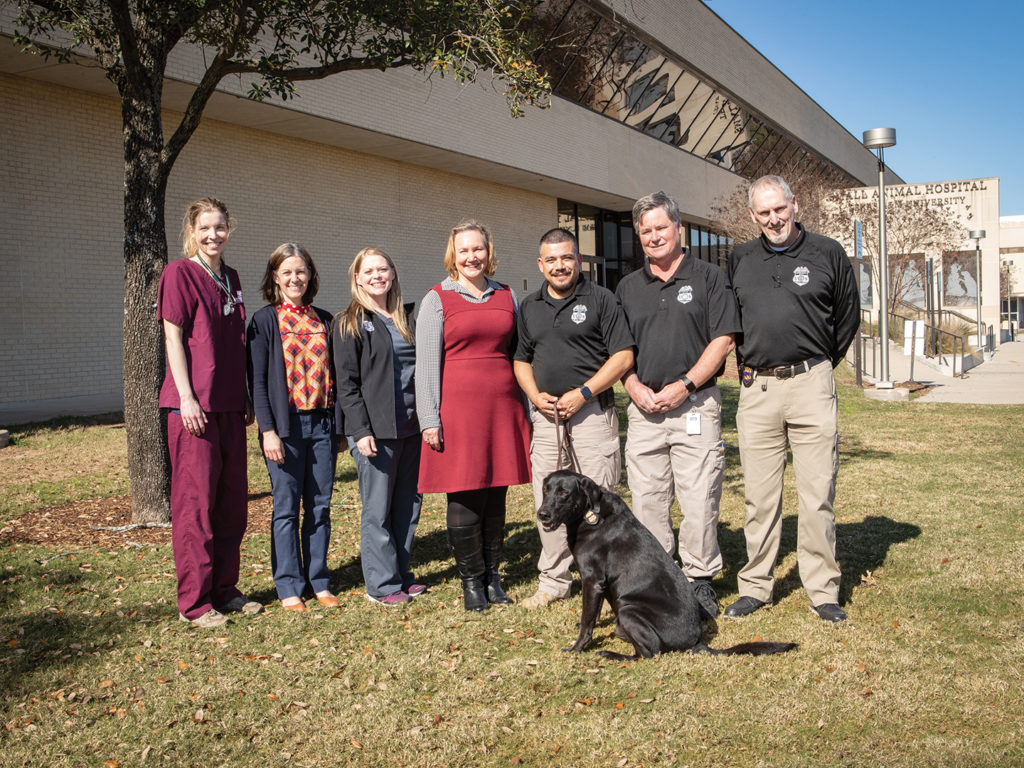
Before ATF canine detection dog Bo lost his battle with cancer earlier this year, Stacy LeBlanc (center), members of the VMTH team, and ATF agents came together to celebrate LeBlanc’s fund, which will allow working dogs like Bo to receive the specialty care they need.
Almost everybody has a cancer story—a story about how the disease has affected their life or the life of somebody they love.
For Stacy LeBlanc, cancer played a part in one of the earliest losses of her life; she was just 12 years old when her 47-year-old mother died of cancer.
But this isn’t a sad story; instead, it is a story of how, as fate would have it, the many challenges LeBlanc faced brought her to a place where she could combine a love for animals and medicine in unexpected ways and with unexpected results.
That journey ultimately led her to a career at The University of Texas MD Anderson Cancer Center in Houston, where, as operations manager and later department administrator in the Department of Veterinary Medicine and Surgery, she participated in the design of a state-of-the-art research animal facility and oversees 159 staff, all in support of laboratory animal care.
LeBlanc’s connection to cancer would also bring her to the Texas A&M College of Veterinary Medicine & Biomedical Sciences’ (CVMBS) Veterinary Medical Teaching Hospital (VMTH), where a chance encounter would lead to the establishment of a fund that now supports K-9 heroes as they battle illnesses like the ones her team at MD Anderson works every day to develop treatments for.
Turning Disappointments Into Opportunities
LeBlanc often returns to Texas A&M to talk to pre-veterinary students about having a “plan B” for their lives, in part because the idea of a “plan B” wasn’t something she had ever considered for herself as an Aggie undergraduate.
LeBlanc had been laser-focused on a career as a veterinarian since her childhood, and to achieve that goal, she “did it all”—she worked as a veterinary technician at a local clinic; earned her bachelor’s degree in biomedical sciences and her master’s degree in veterinary medical sciences, with a focus on animal behavior; gained experience in small, large, and exotic animal medicine; worked with research animals in the labs of Dr. Bonnie Beaver and Dr. Don Hulse; managed the Brazos County Animal Shelter on the weekends; and even served as the assistant dog catcher in Navasota.
“I knew what I was getting into. I knew what I wanted to do,” she said. “And then, I didn’t get into vet school.
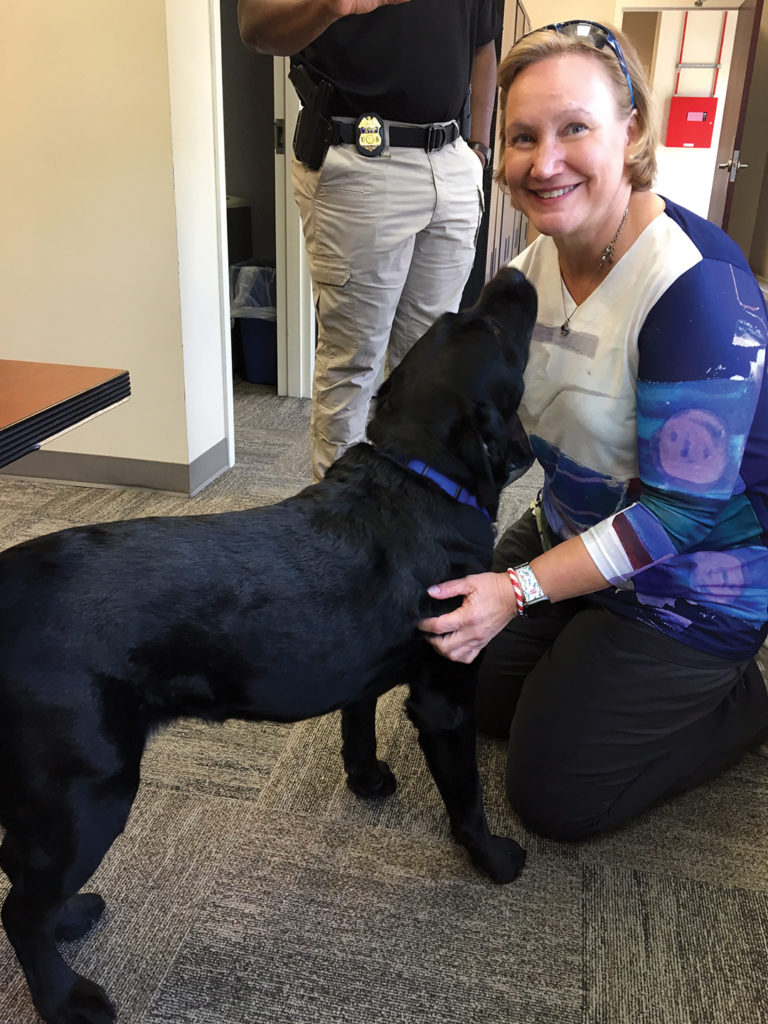
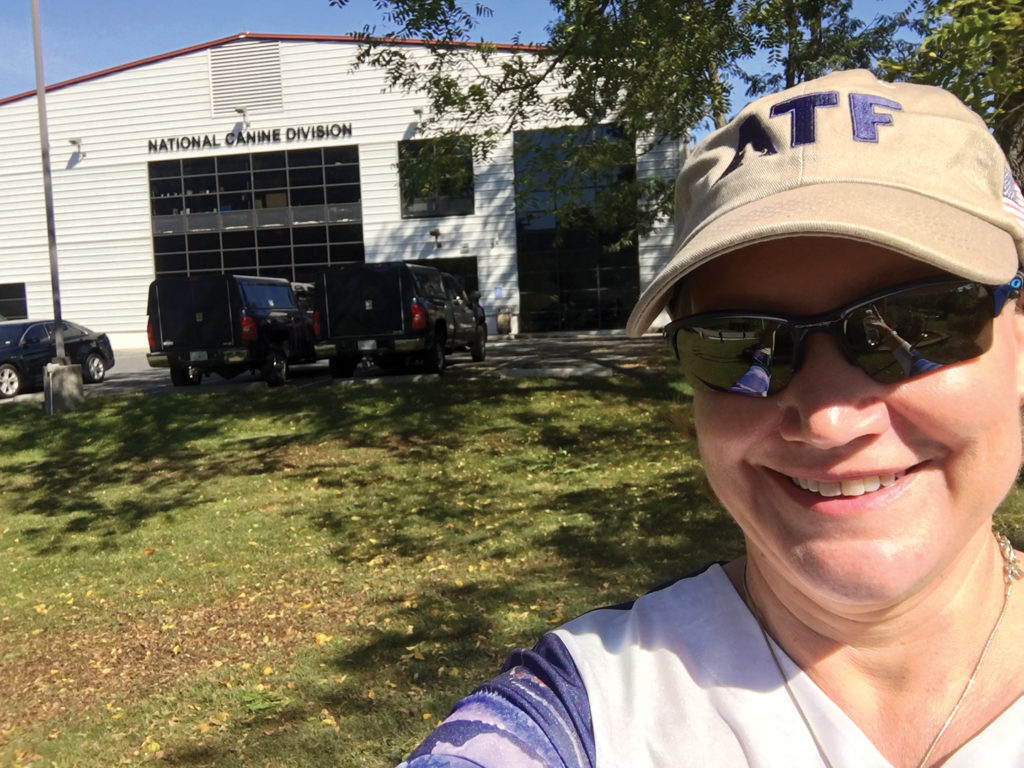
LeBlanc’s visit to the ATF National Canine Division
“I only ever had plan A. I could have gone to vet school somewhere else, but A&M is the only place I wanted to be,” she said. “I tried three times and then decided against a fourth. I got interviews every time. But my prerequisite grades weren’t good enough.”
Heartbroken, LeBlanc found herself back at the same veterinary clinic she had worked at since she was a high school sophomore.
But a chance encounter led her to a prayer breakfast, during which a veterinarian from MD Anderson spoke about working with animals for cancer research and introduced her to a new career field—laboratory animal medicine.
She initially turned down a job offer at MD Anderson but, later realizing her mistake, applied for and accepted a veterinary technician position at Baylor College of Medicine.
Her path from there took her on an upward trajectory through the field—from healthcare into animal husbandry and welfare—before an operations manager position allowed her to join MD Anderson, working for Dr. Kenneth Gray, the veterinarian from that prayer breakfast and a CVMBS Outstanding Alumnus.
Much like her veterinary experience, LeBlanc’s 26 years with MD Anderson have included a variety of opportunities, from operations to facility construction and design, facility maintenance and security, and department administration.
It’s been a fun, exciting, and fulfilling career, one that sometimes leaves LeBlanc in awe of all she’s been able to accomplish.
“I thank God every day that I had to go to plan B because I have had the most spectacular career I could ever dream of,” she said. “If somebody would have said 32 years ago that I would design an animal facility for the No. 1 cancer center in the world, I’d say you’re out of your mind. Construction? No! But I did that. I’d never have had that in private practice.”
Helping K-9 Heroes
In addition to the fortuitous encounter that led her into laboratory animal medicine, LeBlanc has had several other serendipitous encounters that have allowed her passions to converge.
In September 2019, she accompanied her friend Leticia McGuffey to the Texas A&M Small Animal Hospital, where McGuffey’s dog had been treated for cancer. While in the lobby, LeBlanc overheard McGuffey talking with development officer Monika Blackwell.
“I got drawn into their conversation, and we eventually started talking about A&M’s police department getting a K-9 a few years ago,” LeBlanc said. “I asked Monika if there were any mechanisms to donate to help cover costs of their care. At that time, there weren’t, but Monika worked with me to set up the Help For K-9 Heroes Fund.”
LeBlanc’s visit to the ATF National Canine Division
The Help for K-9 Heroes Endowment now supports the veterinary care of dogs from the law enforcement community—including police dogs, explosive-detection K-9s, and search-and-rescue dogs—that come through the SAH’s emergency service or any of the hospital’s specialty services.
LeBlanc’s affinity for working dogs was strengthened as part of her participation in the Bureau of Alcohol, Tobacco, Firearms, and Explosives (ATF) Citizens Academy, during which she toured the National Canine Training Center, where accelerant and explosives detection dogs are trained.
“I’ve always been a huge supporter of law enforcement. I have law enforcement in my family. But going through the citizens academies—I’ve done several now—when I saw these dogs and experienced canine work, I saw a whole different side of law enforcement that just really blew me away,” she said.
Because of her experiences, both through the academies and as a manager, she understands that even the most well-funded agencies have a finite amount of resources, so she sees her fund as a way to give back.
“In some small agencies, the canine program might not be funded at a level that could handle sending a dog to Texas A&M for any kind of specialty treatment,” LeBlanc said. “With this fund, if a small agency is trying to decide whether to retire a dog who otherwise could have more years of service and quality of life, this can help them make that decision to send the dog here and get the help it needs.
“I know it sounds cliché, but they do so much for us; this is a way of doing something for them,” she said.
Cancer And Canines
Throughout LeBlanc’s career at MD Anderson, she’s witnessed medical advances that have fundamentally changed how we look at cancer.
“When my mom died of breast cancer in 1976, cancer was a death sentence. If she were diagnosed today, she’d be a survivor,” she said. “My whole career has been dedicated to the care and welfare of laboratory animals in an effort to safely advance health care. Some of those treatments I’ve had a hand in developing, even remotely, have kept kids from losing their parents to cancers that used to be killers and also have saved dogs’ lives.
“When I was a young vet tech, I worked with researchers who were developing these things called stents, and nobody had ever heard of them. Now, practically everybody over 50 has one or two,” she continued. “So, I feel like what I do matters; it’s so gratifying.”
Likewise, LeBlanc knows that through her Help for K-9 Heroes Fund, she will impact untold numbers of dogs who will benefit from both the research conducted at MD Anderson and the care they’ll receive at the SAH.
“Because the fund is for specialized care and emergencies, I pray no dog would ever need it. But that someone is able to benefit from my gift,” she says, her voice breaking as she tears up, “and that I’m able to help somebody in some small way is very exciting. I’m just over the moon about that.”
The Help for K-9 Heroes Veterinary Valor Fund accepts donations online from other donors. For more information, please contact Larry Walker, Senior Director of Development for the College of Veterinary Medicine & Biomedical Sciences, at lwalker@txamfoundation.com or by phone at 979.845.9043. Give online at give.am/K-9HeroesEndowment.
For more information about the Texas A&M College of Veterinary Medicine & Biomedical Sciences, please visit our website at vetmed.tamu.edu or join us on Facebook, Instagram, and Twitter.
Contact Information: Jennifer Gauntt, Director of CVMBS Communications, Texas A&M College of Veterinary Medicine & Biomedical Sciences; jgauntt@cvm.tamu.edu; 979-862-4216
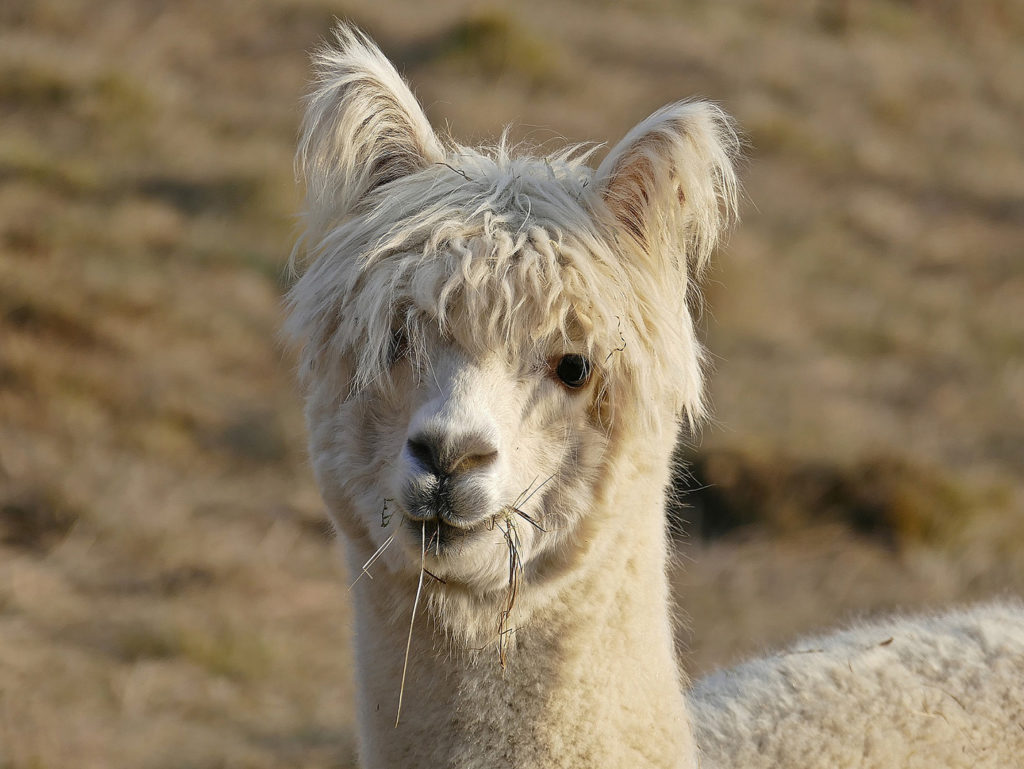
Horses, camels, llamas, and alpacas have more of a bone to pick with metabolic bone diseases—diseases associated with dietary deficiencies—than many owners realize. Fibrous osteodystrophy, in particular, can have serious consequences if not caught and treated early.
Dr. Evelyn MacKay, a clinical assistant professor at the Texas A&M College of Veterinary Medicine & Biomedical Sciences (CVMBS), explains the details of this bone disease and how owners can keep their animals safe.
Fibrous osteodystrophy in large animals is usually caused by an improper diet that creates nutritional deficiencies in calcium and vitamin D, often accompanied by an excess of phosphorus.
These nutritional deficiencies cause the affected animal’s body to reabsorb calcium from bones, which leads the bones to be replaced by fibrous connective tissue, or bundles of collagen fibers found in tendons and ligaments. Fibrous osteodystrophy can also be caused by tumors of the parathyroid gland and chronic kidney disease.
This weakening of the bones causes swelling of the upper and lower jaw, dental problems, lameness, difficulty standing, and, if severe enough, fractures of bones. Symptoms vary from animal to animal, but most affected animals also display a decreased appetite and lethargy due to discomfort.
“To diagnose this condition, we start with x-rays, which confirm that the bone is less dense than it should be. We also perform bloodwork to look at calcium and phosphorus concentrations in the blood, kidney function, and hormone concentrations,” MacKay said.
A far sneakier and invasive contributor to the bone ailment in camelid species, like alpacas, llamas, and camels, is parasites.
“Texas has serious issues with parasites,” MacKay said. “Gastrointestinal parasites probably contribute to animals’ inability to absorb nutrients appropriately, especially vitamin D.”
While the condition is, unfortunately, irreversible, treatment can help stop the worsening of swelling and improve the animal’s comfort level and quality of life.
”The most important treatment for this condition is to ensure that the animal is on a balanced and appropriate diet. Supplementation of vitamin D may be helpful in some cases, and additional medications exist for the treatment of horses with this disease,” MacKay said. “Although affected animals are calcium deficient, usually part of the problem is they have excessive phosphorus in their diet, which exacerbates the calcium issues.
“Owners should have a good relationship with their veterinarian, discuss what is the most appropriate diet for their animal, and make sure to choose feeds that are formulated for that species or something as close to that species as possible,” she said
If your large animal is diagnosed with fibrous osteodystrophy, taking appropriate, timely action to prevent the further exacerbation of the disease’s symptoms is the best way to help your animal recover and live a healthier, happier, and pain-free life.
Pet Talk is a service of the College of Veterinary Medicine & Biomedical Sciences, Texas A&M University. Stories can be viewed on the web at vetmed.tamu.edu/news/pet-talk. Suggestions for future topics may be directed to vmbs-editor@tamu.edu.