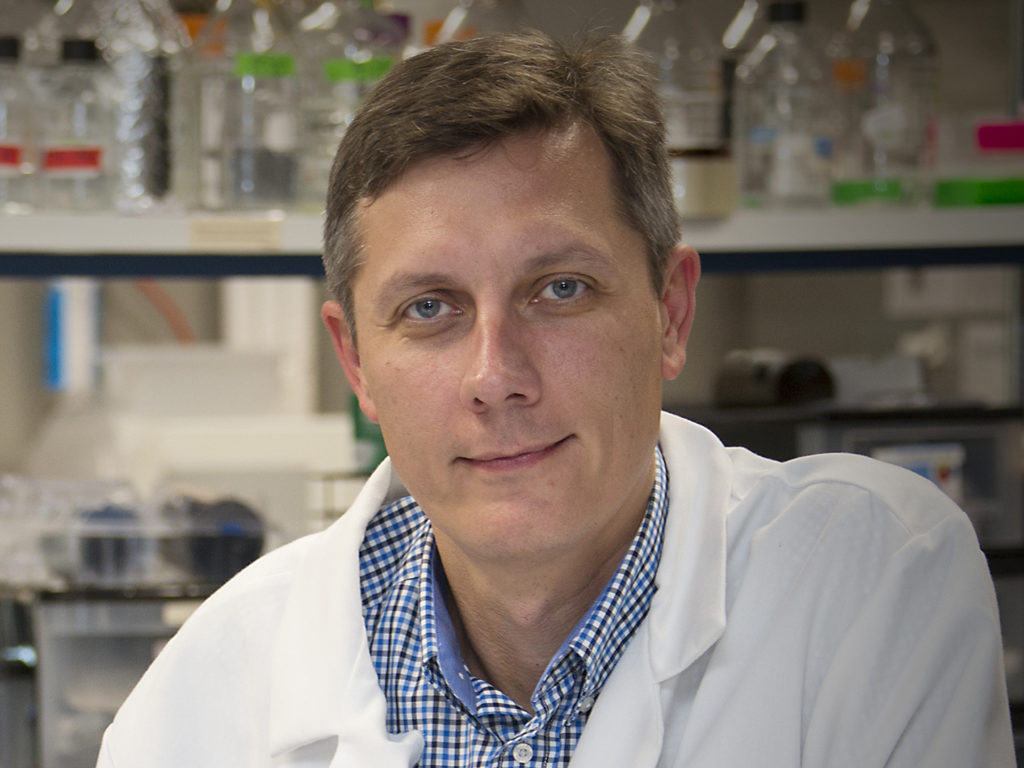
Bissett, who also serves as director of the Veterinary Emergency Team (VET), will hold his new position for one year, beginning March 1, with the option for a second year based on input from VLCS faculty.
“Dr. Bissett’s highly effective management of programs and people associated with the Veterinary Emergency Team, and his experience in working with many different constituencies, have prepared him well to assume the leadership role in VLCS,” said CVMBS dean Dr. John August. “I look forward to working with Dr. Bissett and the faculty and staff of the VLCS department in their continued pursuit of academic excellence in all of their programs.
“Since my return to our college, I have been impressed with the growth and quality of academic programs in Large Animal Clinical Sciences,” August said. “Under Dr. Bissett’s leadership, I fully expect the very positive trajectory to continue.”
While serving in the interim administrative position, Bissett will continue his roles as associate professor and VET director and will continue to deploy with the team upon approval by the Office of the Dean.
Bissett earned his Doctor of Veterinary Medicine in 1997 and a Ph.D. in veterinary microbiology in 2007, both from Texas A&M University. He has served as director of the VET since its inception in 2009.
“I have been involved in large animal veterinary medicine throughout my entire career and believe in its importance,” Bissett said. “We are at a time when our society is changing, not only in where people live but in what they do, and it has created unique challenges with veterinary medical delivery in more rural areas. I think this is an exceedingly important problem, given the importance of animal agriculture to our food supply and financial base and also the importance of the horse industry.
“A truly special bond between owner and animal exists in all aspects of the large animal realm, from the young person and their family’s horse to large industry-based agricultural operations,” he said. “This, combined with the historical importance of our college to Texas and the remarkable faculty in this department and our college, makes this an exciting challenge to tackle and I want to be part of it.”
###
For more information about the Texas A&M College of Veterinary Medicine & Biomedical Sciences, please visit our website at vetmed.tamu.edu or join us on Facebook, Instagram, and Twitter.
Contact Information: Jennifer Gauntt, Director of CVMBS Communications, Texas A&M College of Veterinary Medicine & Biomedical Sciences; jgauntt@cvm.tamu.edu; 979-862-4216
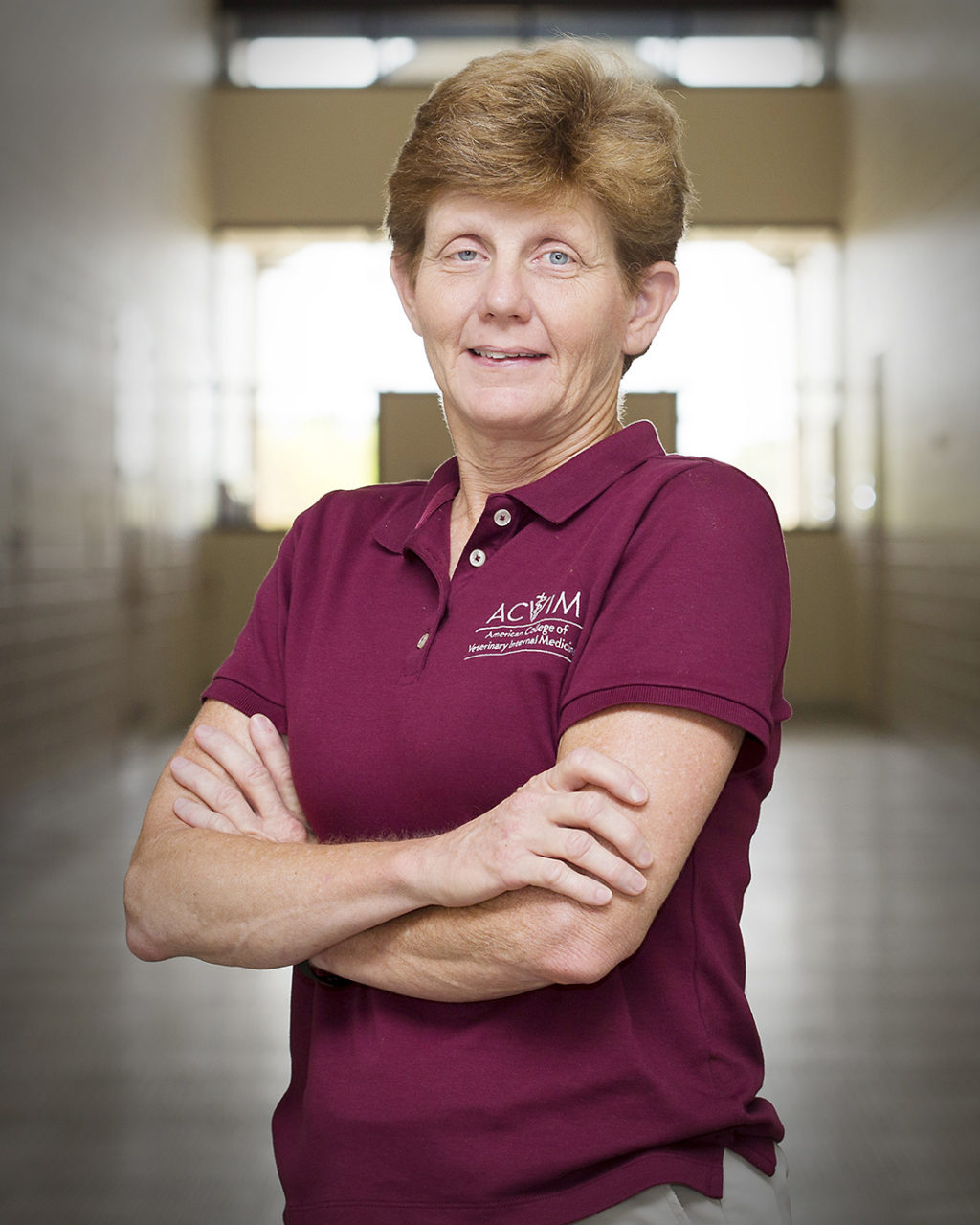
After almost four years serving as department head of the Texas A&M College of Veterinary Medicine & Biomedical Sciences’ (CVMBS) Large Animal Clinical Sciences Department (VLCS), Dr. Susan Eades has been appointed CVMBS associate dean for administration, Canyon campus.
“Dr. Eades has served with distinction in her administrative and faculty roles since joining our college in 2017 from Louisiana State University (LSU). She is deeply committed to our evolving role in the Texas Panhandle and to our ability to impact delivery of high-quality veterinary care to rural communities,” said Dr. John August, CVMBS dean. “Our educational, research, and outreach programs in Canyon are of critical importance to the production animal industries and people of the Panhandle and High Plains.
“Dr. Eades will join an existing group of outstanding faculty and staff in Canyon, and she will work closely with our department heads in College Station to support our faculty and staff who are located on that campus,” he said.
She said she became excited about the VERO program, which is housed at West Texas A&M University (WT), even before she came to Texas A&M.
“I am amazed at the work of the VERO faculty to recruit, teach, and mentor students and to lay the groundwork for a research program like no other. These faculty have already had a beneficial impact on the Panhandle region and have positioned the program for long-term success,” Eades said.
“I am excited to help with this effort and take full advantage of the opportunities to recruit students into rural and large animal veterinary practice from the West Texas region; to provide real-life experiences at feedlots, dairies, and rural veterinary practices; and to give veterinary graduates the skills needed for rural and production animal practice that are not available at most veterinary schools,” she said.
In her role, Eades also will oversee the final stages of preparation as the CVMBS enrolls the inaugural cohort of 18 students into its 2+2 Doctor of Veterinary Medicine (DVM) program at VERO this fall. Getting that program off the ground will be among Eades’ top priorities.
“I hope to help the faculty of the CVMBS, both at the VERO campus in Canyon and in College Station, successfully launch the 2+2 program,” she said. “We will create a cohort of students who work as a team to master the material and skills presented in the first- and second-year veterinary curriculum and then integrate them into the cohort of students in College Station for their third year of veterinary program.
“I am amazed at the work of the VERO faculty to recruit, teach, and mentor students and to lay the groundwork for a research program like no other.“
Dr. Susan Eades
“We will continue to increase the number of students in the fourth-year rotations (which began May 2020 and allow veterinary students on clinical rotations to gain experience at feedlots, producer operations, and with rural practices in the region),” Eades continued. “We also will expand the research program with additional faculty and graduate students.”
August said that Eades’ work at Texas A&M and in her former roles has well-equipped her as she works with faculty, staff, and students at VERO.
“Dr. Eades’ administrative experience will be invaluable in Canyon at a time of rapid expansion of our faculty on that campus in preparation for the start of our DVM 2+2 program in the fall, as well as for the continued development of partnerships with colleagues at West Texas A&M University and with food animal industry leaders in the region,” he said.
An Oklahoma native, Eades completed her DVM from LSU in 1982, an internal medicine residency at the University of Pennsylvania New Bolton Center in 1985, and her Ph.D. in veterinary physiology and pharmacology from the University of Georgia in 1988.
But she said that in some ways, moving to Canyon will be like returning home, because her family had settled in the Texas Panhandle and Southwest corner of Oklahoma in the late 1800s.
“I have been attracted to the wide-open spaces of the plains ever since my visits there in my youth,” she said. “I look forward to being part of the community there and contributing to the educational programs at West Texas A&M University and the CVMBS VERO program.”
She is also looking forward to leading the VERO team within its new $22-million, 22,000-square-foot facility, which opened last September.
“We are fortunate to have received support from Texas A&M for the program and the beautiful facility. This entire program is a tremendous opportunity; the skill and teamwork of the faculty that we have is a formula for success,” Eades said. “We have a very exciting future ahead of us. I just want to help the VERO faculty accomplish their objectives and be successful; this will make the entire program successful.”
For more information about the Texas A&M College of Veterinary Medicine & Biomedical Sciences, please visit our website at vetmed.tamu.edu or join us on Facebook, Instagram, and Twitter.
Contact Information: Jennifer Gauntt, Director of CVMBS Communications, Texas A&M College of Veterinary Medicine & Biomedical Sciences; jgauntt@cvm.tamu.edu; 979-862-4216
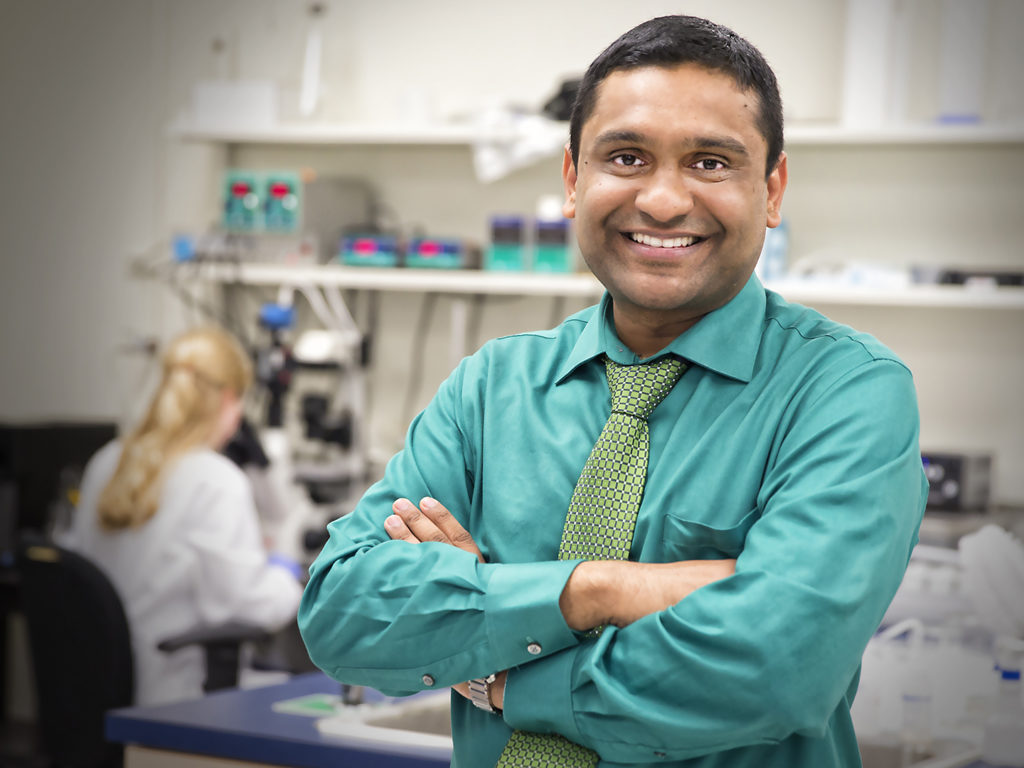
A novel testing method and a first-of-its-kind treatment are at the center of two new National Institutes of Health (NIH) Research Project Grants recently awarded to Dr. Jayanth Ramadoss, associate professor and director of the Perinatal Research Laboratory in the Texas A&M College of Veterinary Medicine & Biomedical Sciences’ (CVMBS) Department of Veterinary Physiology & Pharmacology (VTPP).
The grants total almost $4 million and will continue Ramadoss’ research efforts to improve the health of children.
“This kind of research is so important. For example, we’ve known about fetal alcohol spectrum disorder (FASD) since the 1970s and there are still no approved medicines specifically to treat it,” Ramadoss said. “These grants show that we have made good progress in these efforts.”
Searching for a treatment for FASD
The research funded by the first NIH grant focuses on identifying specific alcohol target pathways that cause FASD, which could provide critical insight for the development of treatments.
“We have observed a unique interaction of alcohol with a compound that shows it might have the possibility to prevent some of these effects from occurring in children,” he said.
According to Ramadoss, the main outcome of FASD, which is more common than autism, is impairments in behavioral and social interactions; while it carries a societal cost of an estimated $1.4 billion annually, that cost is mostly hidden.
“The stigma and fear of judgement is a major barrier to treat FASD,” he said. “As a society, it would be better to reduce the stigma while discussing FASD.”
While at least the neuroanatomic and behavioral consequences of fetal exposure to alcohol have been known for some time, treatment options remain largely in the form of medicines approved for some FASD symptoms.
“The estimated number of children with fetal alcohol spectrum disorders has, unfortunately, not declined in the U.S. for decades, with as many as 5% of school-going children believed to be affected,” he said.
Getting the full picture of vaping
In addition to alcohol, Ramadoss is also studying the possible risks of vaping during pregnancy.
One of the reasons that research is behind society’s use of e-cigarettes is that many laboratory testing methods aren’t good models for the actual vaping patterns. These methods can involve a drinkable liquid or injections of the vaping liquid. But Ramadoss said that a novel testing method developed in his lab could lead to answers.
“We’re using an atomizer, identical to the ones in e-cigarettes used worldwide, to create a custom engineered vaping system,” he said. “We are trying to mimic exactly what’s happening in human vaping.”
Compared to drinking, where the risks are known, very little is understood about the risks of vaping during pregnancy.
“People have a feeling that vaping is safer than smoking cigarettes, but we know these e-cigarettes also contain carcinogenic chemicals, maybe not as many, but they’re there.” Ramadoss said.
As little is known about vaping during pregnancy, basically nothing is known about the effects on children of being around someone who is vaping. Scientists call this e-cigarette version of second-hand smoking “environmental vaping” and Ramadoss hopes his research will shed some light on the issue.
“We know if you’re in a room with someone who’s vaping that you’re breathing in that same vapor,” he said. “Is that safe? We don’t know. Hopefully this study can help provide some of that information.”
A multiplying effect
Alcohol and nicotine are often comorbidities, so Ramadoss said it made sense to expand his research focus to include e-cigarettes.
“Both the U.S. Food & Drug Administration (FDA) and Centers for Disease Control and Prevention (CDC) are interested in finding answers to many questions related to e-cigarettes,” he said. “What are the thresholds? Is it safe? There are so many questions that we haven’t been able to answer yet, and I think our study is going to get some of the answers.”
His receiving these grants, even while budgets are tight because of the ongoing COVID-19 pandemic, show the importance of these research areas.
“These grants are very hard to get, especially during difficult times,” he said. “But that shows how important this is to the NIH.”
###
For more information about the Texas A&M College of Veterinary Medicine & Biomedical Sciences, please visit our website at vetmed.tamu.edu or join us on Facebook, Instagram, and Twitter.
Contact Information: Jennifer Gauntt, Director of CVMBS Communications, Texas A&M College of Veterinary Medicine & Biomedical Sciences; jgauntt@cvm.tamu.edu; 979-862-4216
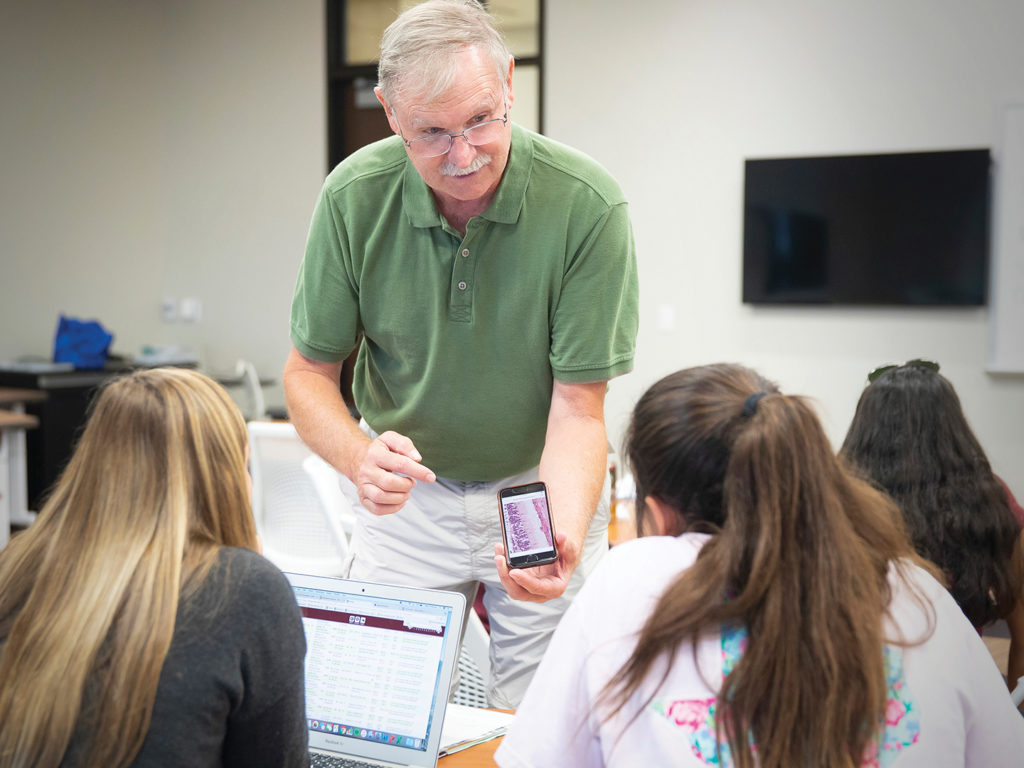
In Dr. Larry Johnson’s VIBS 243 course on histology at the Texas A&M College of Veterinary Medicine & Biomedical Sciences (CVMBS), teaching assistants (TAs) play an invaluable role in mentoring and teaching undergraduate biomedical sciences (BIMS) students. Over the past several years, these BIMS students have expressed great appreciation for the TAs’ efforts.
Each semester, 15 to 24 undergraduate students gain experiential learning in mentoring, teaching, communication, and organization by serving as TAs.
TAs coordinate, run, and take attendance for the course’s help desk three days a week; assist students with their clinical correlation video presentations; support histology course mastery and student development; provide instruction; and, most of all, extrude a love for histology and STEM learning. The pre-professional student TAs also serve as role models by creating a picture of what’s possible and making it easy for others to follow.
Many BIMS students have expressed their gratitude and appreciation for their undergraduate TAs during the VIBS 243 end of course evaluation. Students were able to type out personal responses in an anonymous course evaluation and the vast majority offered their praises.
Many students felt that the TAs helped them succeed in the course, saying they “appreciate the way TAs explain things on a more overarching/conceptual scale,” allowing them to “more easily see the inter-connectivity of everything.”
Students found it helpful that TAs “used real life examples and really emphasized important information,” as well as how they “would really break down topics and find ways to make connections between different systems,” making content “easier to understand and remember.”
Students also felt that the passion and dedication of the TAs was a large help to their success, with one students saying the TAs’ “dedication to our success in the class was so evident and made me enjoy the class so much more.”
They appreciated that the TAs “really cared if they understood the material” and showed “genuine interest in what was being taught” and how that translated into being “a more effective teacher.”
The TAs were also praised for their role of supporting students during such a troubling time, with one student commenting, “Going into this class, I felt very overwhelmed, but my TA made my learning experience so much easier to understand and I cannot thank the TA enough for that.”
Students also expressed that the TAs were invaluable for not only “supporting us in our studies but also our mental well-being,” and expressing their gratitude for the way the TAs were “truly invested in our success” and “always ready and eager to answer questions.”
While this information was pulled from more than 200 student course evaluations in the fall of 2020, VIBS 243 has been taught for 4 sections in fall and 2 sections in spring semesters for several years with similar comments about the TAs.
By encouraging, supporting, and helping students through complex topics and difficult times, the TAs of the VIBS 243 histology course were able to make a lasting impact on those around them while developing invaluable life skills. With far more words of praise and appreciation than can be mentioned, it is clear how effective these teaching assistants are at improving the learning experience and environment of VIBS 243 students.
Jubilation Brown is a second-year veterinary student and a BIMS graduate. She has served as a TA in VIBS 243 for 5 years, reorganized the course on eCampus, and has coordinated other TAs for 4 years. She has produced and posted videos for 12 quiz reviews as well as midterm and final reviews each semester and recently converted the course from eCampus to Canvas.
Dr. Larry Johnson is a professor in the Texas A&M College of Veterinary Medicine & Biomedical Sciences’ (CVMBS) Department of Veterinary Integrative Biosciences (VIBS) and serves as the director of the college’s PEER (Partnerships for Environmental Education and Rural Health) program.
###
For more information about the Texas A&M College of Veterinary Medicine & Biomedical Sciences, please visit our website at vetmed.tamu.edu or join us on Facebook, Instagram, and Twitter.
Contact Information: Jennifer Gauntt, Director of CVMBS Communications, Texas A&M College of Veterinary Medicine & Biomedical Sciences; jgauntt@cvm.tamu.edu; 979-862-4216
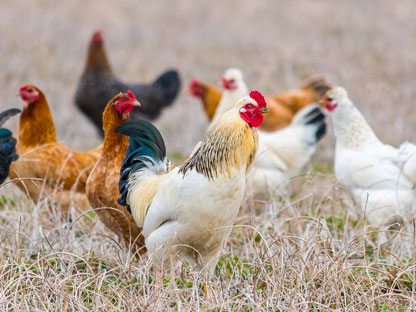
While the average pet owner may be familiar with the seemingly never-ending tufts of fur shed by their cat or dog, the hobby farmer may be more familiar with another loss of overcoat—hen molting.
Molting is the annual process through which hens cease to lay eggs and, instead, divert their energy toward replacing their feathers. Molting occurs in both backyard and commercial flocks, though commercial flocks generally molt by artificial stimulation.
“Hens molt to replace their feathers for the winter months coming,” said Dr. Ashley Navarrette, a clinical assistant professor at the Texas A&M College of Veterinary Medicine & Biomedical Sciences. “Discontinuing egg production at this time allows them to focus all nutrients on feather regrowth.”
Navarrette says that hens typically exhibit their first full molt around 18 months of age. After this first instance, they will continue to molt annually. This process generally begins in the fall months and can extend into the winter.
“Hens are stimulated by decreased day length more so than changes in temperature,” Navarrette said. “Location in relation to the equator can also affect the timing of molting. The rule of thumb is that most molting takes eight weeks from feather loss to replacement, but can range from one to three months based on variations between birds and environment.”
During molting, Navarrette advises that hens should be fed a diet high in protein to provide the nutrients necessary for feather regrowth. This high-protein diet is different from the diet of an actively laying bird, when calcium supplementation is the focus to support strong eggshells.
As a general suggestion, a 20% protein diet is usually adequate, but owners should consult their veterinarian to best determine the needs of their flock.
Owners of hens going through a molt should also take into account other aspects of their bird’s well-being beyond their diet, including handling practices, their behavior, and pecking habits.
“The replacement pin feathers are very fragile and can be easily damaged,” Navarrette said. “Owners should limit handling and use caution when handling molting chickens. It’s also important to limit stressors during molt. Chickens are notorious for pecking behavior so be on the lookout for any signs of this behavior between hens.”
It is expected for a hen to lose feathers and stop laying eggs during this time, but changes in a hen’s eating, drinking, or behavioral habits may be indicative of larger health concerns.
While remaining educated about their flock’s health is an important first step to ensure happy and healthy hens, owners should always consult their veterinarian with specific questions and concerns. Veterinarians can provide the best help and guide you through this annual flurry of feathers.
Pet Talk is a service of the College of Veterinary Medicine & Biomedical Sciences, Texas A&M University. Stories can be viewed on the web at vetmed.tamu.edu/news/pet-talk. Suggestions for future topics may be directed to editor@cvm.tamu.edu.
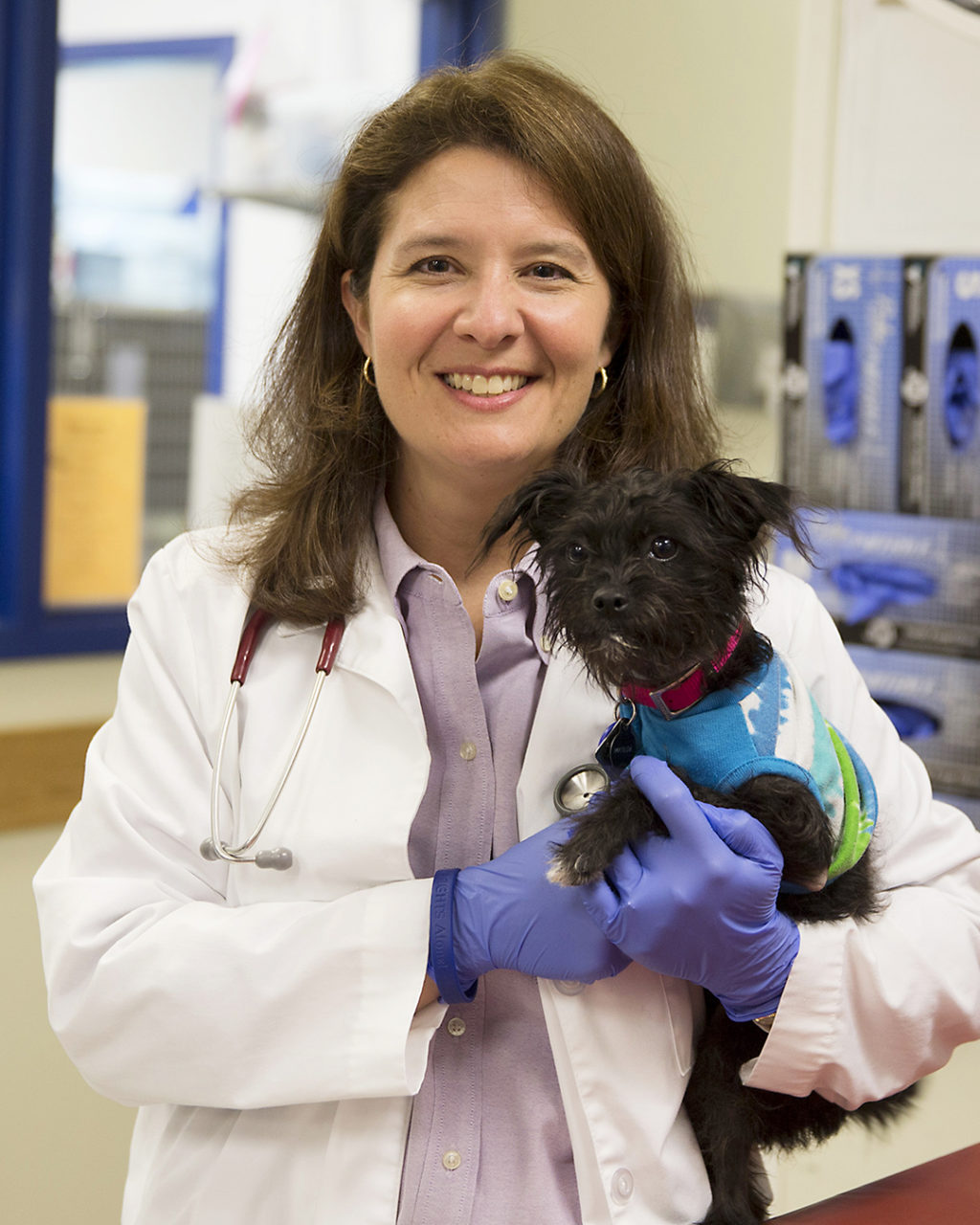
In this position, Eckman will work closely with VMTH faculty and staff to deliver state-of-the-art healthcare to veterinary patients; support the hospital’s clinical trials, telehealth, and One Health missions; and foster an environment that values teaching. She will also serve on the CVMBS Executive Committee and chair the VMTH Hospital Board.
“Humbled and honored do not even begin to express my feelings for this position,” Eckman said. “I did not come to the VMTH looking for this position, but over time and the longer I have been here, I see this as a place to make a huge impact. I have a deep commitment to patients, clients, teaching, and Texas A&M, and I look forward to continuing that commitment in my new role.
“Our main goal at the VMTH is to build on the tradition of excellence we already have regarding patient care and service to clients and referring veterinarians, as well as continuing to build on our reputation as innovative researchers,” she said. “As the only veterinary school in Texas with a teaching hospital, it is important that the VMTH continues to enhance and balance the clinical year for training fourth-year veterinary students preparing to enter the profession and specialty training for residents and interns.”
Eckman earned her Doctor of Veterinary Medicine (DVM) degree from Texas A&M in 2001 and, after eight years in small animal private practice, returned as a faculty member in 2009.
Since joining the VMTH, Eckman has cared for patients and taught fourth-year veterinary students, interns, and residents in the Primary Care and Emergency Medicine services. In addition, she has devoted many hours to teaching preclinical veterinary courses.
In 2017, Eckman was named the first chief medical officer of the Small Animal Hospital, a position created to help lead, encourage, and implement innovations and process improvements. This experience, in addition to her vast expertise in animal care and passion for teaching, will pave the way for success in her new position as associate dean.
Beyond the CVMBS, Eckman also serves as the chair of the Association of American Veterinary Medical Colleges’ (AAVMC) Primary Care Veterinary Educators group, which works to advance and inspire primary care education in veterinary teaching hospitals.
“Dr. Eckman’s leadership has been demonstrated on many fronts, including service on professional, departmental, college, and university committees,” said CVMBS dean Dr. John August. “Most recently, she has played an integral role in VMTH operations as the college has navigated teaching, patient care, research, and service activities during the pandemic. My very sincere thanks go to Dr. Eckman for accepting this important responsibility at a particularly challenging time.”
###
For more information about the Texas A&M College of Veterinary Medicine & Biomedical Sciences, please visit our website at vetmed.tamu.edu or join us on Facebook, Instagram, and Twitter.
Contact Information: Jennifer Gauntt, Director of CVMBS Communications, Texas A&M College of Veterinary Medicine & Biomedical Sciences; jgauntt@cvm.tamu.edu; 979-862-4216
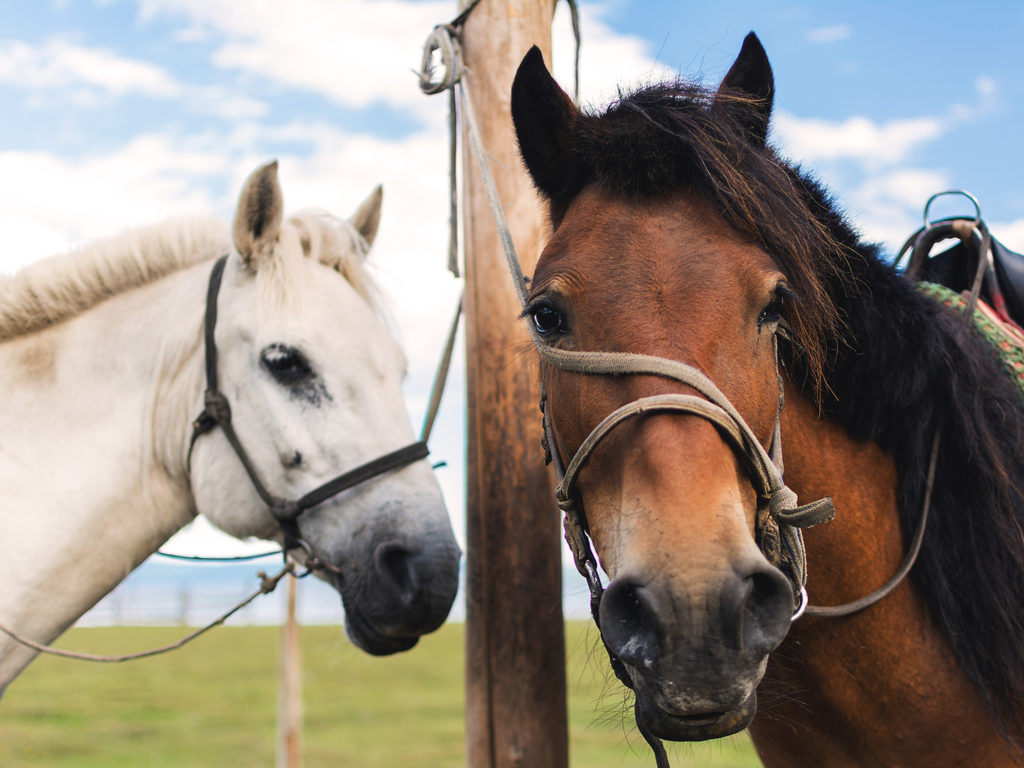
February is National Pet Dental Health month, a time when pet owners are reminded that routine oral care is an important aspect of their animal’s well-being. Just like their small animal counterparts, large animals such as horses also require veterinary attention to keep their mouths in top shape.
Dr. Leslie Easterwood, a clinical assistant professor at the Texas A&M College of Veterinary Medicine & Biomedical Sciences, says that there are not many preventative maintenance procedures owners can do at home with their horse’s teeth, so it is important that owners keep an eye out for signs of discomfort and contact their veterinarian if any concerns arise.
“Dropping grain, holding their head funny while chewing, odors, resistance to the bit, and performance issues are all signs that there could be dental issues,” Easterwood said.
Easterwood says that the most common dental issue seen in horses is due to normal wear. Sharp enamel points along the cheek side of the upper arcades and tongue side of the lower arcades occur because of the side-to-side grind of a horse’s mouth, which is normal.
However, these sharp edges cause ulcers along the horse’s cheeks and tongue, and smoothing the sharp edges allows the ulcerations to heal quickly.
“Dental floating is a procedure to smooth these sharp enamel points,” Easterwood said. “Floating is the common term for routine maintenance of a horse’s mouth. The term ‘floating’ comes from woodworking, in which boards are planed smooth.”
Horses that are going to be ridden should start having their teeth floated prior to introducing the bit. Most horses need their teeth floated annually, but missing teeth, unlevel arcades, or other dental problems may require more frequent maintenance.
Horses may also require dental attention for the removal of their wolf teeth, which are usually removed prior to introducing the bit.
“A horse can have zero to four wolf teeth, but usually have only two, on the upper arcades,” Easterwood said. “These teeth are small and are actually the first cheek teeth.”
Staying up to date on your horse’s oral health can help prevent unnecessary discomfort and larger health issues. Since most equine dental maintenance practices require the care of a veterinarian, it is important that owners establish a relationship with their veterinarian that includes discussion of oral health.
Although equine oral care may look very different from the dental care required for humans and smaller animals, regular maintenance and veterinary care can keep your horse happy, healthy, and champing at the bit.
Pet Talk is a service of the College of Veterinary Medicine & Biomedical Sciences, Texas A&M University. Stories can be viewed on the web at vetmed.tamu.edu/news/pet-talk. Suggestions for future topics may be directed to editor@cvm.tamu.edu.
Paula Plummer knows firsthand what having a pet with cancer looks like. For the last 14 years, Plummer has been a licensed veterinary technician in the Texas A&M College of Veterinary Medicine & Biomedical Sciences’ (CVMBS) Veterinary Medical Teaching Hospital (VMTH), and for three of those years, she has been a dedicated member of the Surgical Oncology team.
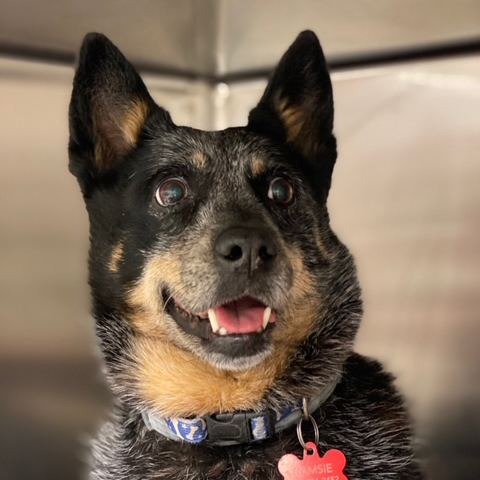
But in 2020, Plummer experienced pet cancer on a much more personal level when her dog Ramsie, an 11-year-old Australian cattle dog, woke her up on Christmas Eve morning with severe vomiting.
At first, Plummer didn’t have cancer on her list of possible causes. Instead, she worried that Ramsie had a neurologic issue or a bowel obstruction, and she rushed her beloved companion to the VMTH for emergency help.
“I was thinking of every possible scenario she could have been in,” Plummer said. “We took radiographs, but there was nothing we could see except that she was dehydrated and constipated.”
Plummer left Ramsie at the VMTH for more tests and received a call shortly thereafter that the clinicians had found a lytic lesion on her right femur.
“I knew instantly that it was cancer,” Plummer said.
From that point forward, Plummer’s “oncology family” rallied around her to get Ramsie the help she needed.
They concluded that the vomiting Ramsie had experienced was the result of such severe pain that she was too uncomfortable to go to the bathroom.
“It was pretty amazing to me that Dr. Emma Warry looked at all the pieces of information and was able to complete the puzzle,” Plummer said.
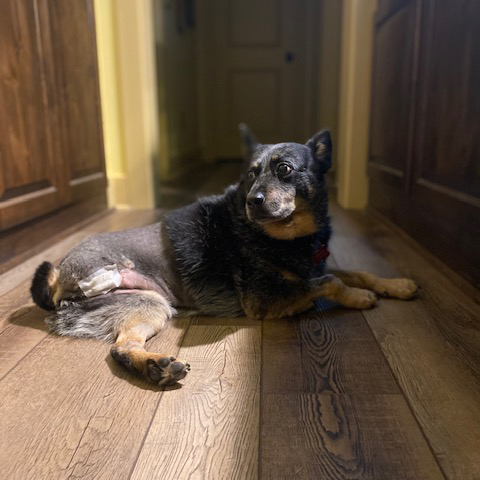
Once the clinicians determined that Ramsie had osteosarcoma (a tumor of the bone), they developed a treatment plan and helped eliminate some of Ramsie’s pain in the short-term. As a long-term plan, however, she would need to have her right hind limb amputated.
Ramsie, post-surgery
Plummer had planned to wait until Ramsie stabilized more to get her the surgery she needed, but on New Year’s Eve, Ramsie became profoundly lame in her hind limb, and Plummer realized her leg was broken.
“I called Dr. Heather Wilson-Robles (in Oncology) and told her what I was seeing, and she made arrangements to meet me at the clinic in a torrential downpour, where they confirmed the break,” Plummer said. “Because it was a holiday, most people were off, so all these teams had to be called in for emergency surgery, and they were able to amputate the limb.
“While I was waiting, Dr. Robles told me they were going to give me funds from the Petco Foundation and Blue Buffalo to help with everything,” Plummer said. “I knew that we had these amazing funds because I’ve seen so many clients get to benefit from them, but never in a million years did I think that they would offer funds to me.”
Plummer said the support from the Petco Foundation and its partner, Blue Buffalo, was an instant relief to her family.
“I was still processing everything that happened with Ramsie and also had to come to terms with the financial piece, so I just started to cry,” Plummer said. “It was such a huge relief knowing that my husband and I didn’t have to pay for the full surgery out of pocket.”
Three weeks after surgery, Ramsie is now back to living her best life.
Plummer said with a smile, “She’s completely healed and back to chasing the horses at the fence like she always has!”
For the Oncology team at the VMTH, the Petco Foundation funds continue to be a wonderful source of support to the clients about whom they so deeply care.
“Being able to have these funds to offer to so many clients is incredible,” Wilson-Robles said, “But it was extra special to be able to help one of our own Oncology family members through this very generous grant. Paula is always there for our clients as they navigate their own pet’s cancer treatments, and it was important to us to give her the support she so deserved when her own pet received this difficult diagnosis.”
###
For more information about the Texas A&M College of Veterinary Medicine & Biomedical Sciences, please visit our website at vetmed.tamu.edu or join us on Facebook, Instagram, and Twitter.
Contact Information: Jennifer Gauntt, Director of CVMBS Communications, Texas A&M College of Veterinary Medicine & Biomedical Sciences; jgauntt@cvm.tamu.edu; 979-862-4216
A team of researchers led by Dr. Ivan Rusyn, a University Professor in the Veterinary Integrative Biosciences (VIBS) department at the Texas A&M College of Veterinary Medicine & Biomedical Sciences (CVMBS), has found that some energy drinks have adverse effects on human cardiomyocyte-like cells, or the muscle cells of the heart.
In the study, published in Food and Chemical Toxicology, researchers observed that human induced pluripotent stem cell-derived cardiomyocytes (human heart cells grown in a laboratory) exposed to some energy drinks exhibited an increased beat rate and impaired ion channel function, which is critical to many aspects of cardiac function. These human induced pluripotent stem cell-derived cardiomyocytes allow researchers to observe the cardiac effects of energy drinks under controlled conditions outside of the human body.
When placed in the context of the human body, consumption of these beverages has been linked to ventricular and atrial arrhythmias (improper beating of the heart), cardiomyopathy (disease of the heart muscle which makes it difficult for the heart to pump blood), increased blood pressure, and other cardiovascular conditions.
With the global sales of energy drinks estimated at $53 billion in 2018 and rapidly growing, it is important to understand the potential unintended health consequences associated with these beverages, according to Rusyn.
“Because the consumption of these beverages is not regulated and they are widely accessible over the counter to all age groups, the potential for adverse health effects of these products is a subject of concern and needed research,” Rusyn said. “Indeed, the consumption of energy drinks has been associated with a wide range of adverse health effects in humans, many of them are concerning the effects on the heart.”
Researchers evaluated 17 widely available over-the-counter brands. They then treated cardiomyocytes with each drink and recorded data on beat rate, ion channel function, and cytotoxicity.
Researchers also studied the composition of the energy drinks using novel methods. By comparing the effects and differing ingredient concentrations in each drink, they were able to infer which ingredients may be contributing more to adverse effects on the treated cardiomyocytes. Using mathematical models, researchers determined that potential common ingredients responsible for these negative effects include theophylline, adenine, and azelate.
“Little is known about the ingredients that may contribute to the adverse effects of energy drinks on the heart,” Rusyn said. “Specifically, the evidence for cardiovascular effects from studies in humans remains inconclusive, as the controlled clinical trials were largely limited in the number of participants, tested only a limited number of energy drink types, and are difficult to compare directly, because they employed different methods to evaluate the function of the cardiovascular system.”
Further research is warranted on the ingredients identified in this study to ensure the safety of their consumption, especially by consumers with pre-existing health conditions.
“This study shows that some of the tested energy drinks may have effects on human cardiomyocytes; these data corroborate other studies in humans,” Rusyn said. “Therefore, we hope that the consumers will carefully weigh the purported ergogenic (performance-enhancing) benefits of these beverages versus the emerging data that suggests that they may have real adverse effects.
“We also hope that the Food and Drug Administration takes a closer look at whether these beverages may need to be carefully reviewed with respect to possible labeling of their adverse health effects and whether certain age groups and susceptible sub-populations should be advised against consumption of these beverages.”
###
For more information about the Texas A&M College of Veterinary Medicine & Biomedical Sciences, please visit our website at vetmed.tamu.edu or join us on Facebook, Instagram, and Twitter.
Contact Information: Jennifer Gauntt, Director of CVMBS Communications, Texas A&M College of Veterinary Medicine & Biomedical Sciences; jgauntt@cvm.tamu.edu; 979-862-4216
Celebrated every February, National Pet Dental Health month aims to bring awareness the importance of oral health care for pets.
In addition to bad breath, poor oral health can contribute to damage to the teeth and gums as well as periodontal disease, which can negatively impact the kidney, liver, and heart muscle.
One common type of periodontal disease, known as gingivitis, causes inflammation of the gums around the teeth and can act as a wake-up call for owners to pay attention to their pet’s pearly whites before more serious conditions develop.
Dr. Bert Dodd, a clinical professor at the Texas A&M College of Veterinary Medicine & Biomedical Sciences, says that gingivitis is very common, and every pet has it to some degree.
Until gingivitis reaches a more advanced stage, it can be difficult for pet owners to detect on their own and their animal may not exhibit any symptoms. As such, it’s important that pets are regularly checked for signs of gingivitis by their veterinarian.
Just like in humans, gingivitis is caused by plaque buildup on the tooth. This plaque is made of food, saliva, and bacteria. Through an interaction between these foreign bacteria and the body’s immune system, enzymes are released that break down the gum tissue, leading to inflammation.
At more advanced stages, this can lead to chronic pain and gum erosion.
“If left untreated, gingivitis leads to perodiontis, or inflammation and destruction of the hard tissues around the tooth,” said Dodd.
In addition to increasing the potential for heart, kidney, and liver disease, unchecked gingivitis may result in missing teeth and bone loss, in severe cases.
Luckily, gingivitis can be easily prevented through routine oral care habits. Dodd recommends brushing your pet’s teeth daily to remove harmful bacteria and prevent a buildup of plaque.
Although some pets may be resistant to having their teeth brushed at first, over time a regular routine will acclimate them to the practice, according to Dodd.
Special toothbrushes and toothpastes safe for pets can be purchased from most pet supply stores. When brushing a pet’s teeth, owners should never use human toothpaste, as this is toxic to pets.
Pet owners may wish to consult with their veterinarian for tips on brushing a pet’s teeth.
Dodd also recommends having your pet’s teeth professionally cleaned every year. Many clinics offer special deals on dental care for National Pet Dental Health month, so now is the perfect time to reach out to your veterinarian.
If a pet does develop gingivitis, it can be managed through teeth cleaning and debridement, or the surgical removal of damaged tissue, under anesthesia by a veterinarian.
Proper management of your pet’s oral health is very important for their well-being. With routine care, owners can prevent the development of serious oral health conditions and ensure the continued well-being of their furry friend.
Pet Talk is a service of the College of Veterinary Medicine & Biomedical Sciences, Texas A&M University. Stories can be viewed on the web at vetmed.tamu.edu/news/pet-talk. Suggestions for future topics may be directed to editor@cvm.tamu.edu.