Including Pets In Holiday Travel Plans

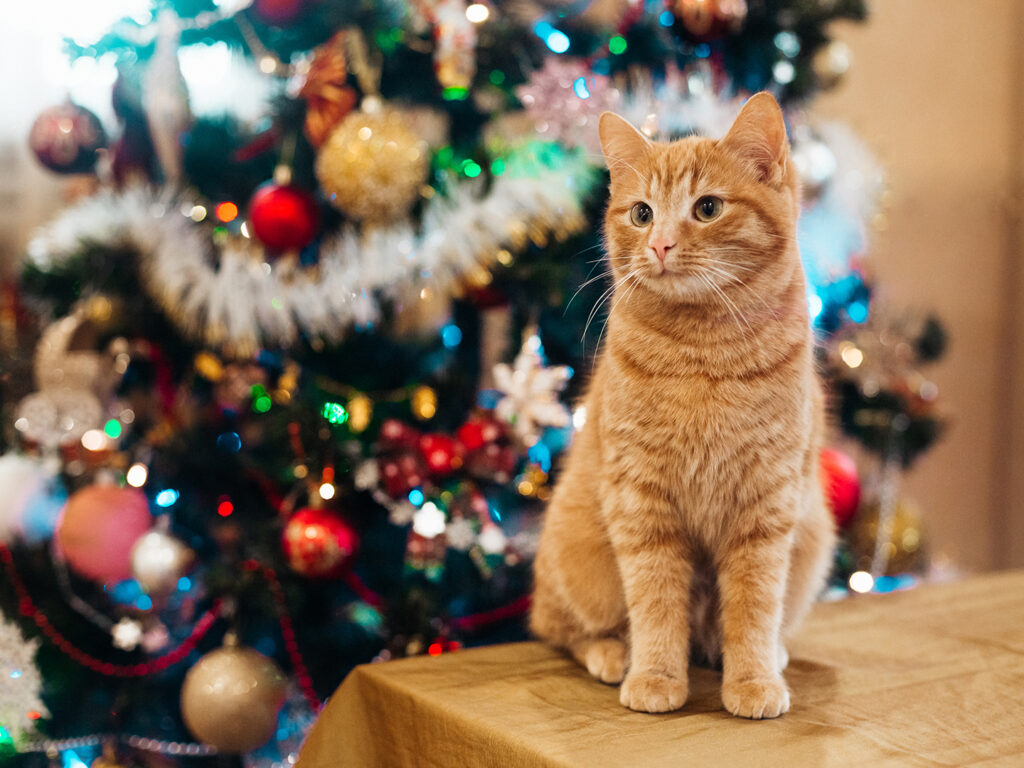
Orange tabby cat sitting in front of a Christmas tree

The holiday season brings joy, festivities, and the anticipation of spending quality time with loved ones. For pet owners, the prospect of holiday travel often prompts a crucial decision — whether to bring their beloved furry companions along or entrust them to the care of others.

Dr. Lori Teller, a clinical professor at the Texas A&M School of Veterinary Medicine & Biomedical Sciences, explores different options pet owners have when traveling and what factors they should consider when making a choice.

For Pets Tagging Along

When traveling with pets, regardless of the chosen transportation method, owners should communicate with hosts in advance to make sure their pet will be welcome and confirm their pet’s microchip has updated contact information in case their pets wander off in unfamiliar surroundings.

“However and wherever you are traveling with your pet, make sure they will be welcome where you stay, whether in a hotel or someone’s home,” Teller said. “Additionally, make sure your pet is microchipped and wears a collar with an ID tag. It is essential that contact information associated with the microchip is current and has backup contacts listed as well.”

Road trips with pets will require specific preparations to ensure pets are both safe and comfortable during the journey.

“If you are driving with your pet, make sure pets can be safely restrained in the vehicle, whether in a kennel or belted in with a pet harness,” Teller explained. “You should also take breaks to walk your dog so that they can stretch their legs and relieve themselves. For cats, you can get disposable travel litter boxes so they can relieve themselves as well.”

For those choosing to fly with pets, owners should pay special attention to airline regulations, as each airline may have different guidelines regarding pet carriers, travel restrictions, and documentation.

“You will need to secure a reservation for any pets flying with you and make sure you understand the airline’s rules for your pet to travel,” Teller said. “There are very specific requirements for the kennel that your pet must be kept in during a flight, and some airlines will not allow certain breeds on their planes. You may also need to have a health certificate and proof of rabies vaccination, and most airlines require the health certificate to have been obtained within 10 days of travel.”

For Pets Staying Behind

When traveling for the holidays without pets, pet care options can include a pet sitter staying in the home or visiting several times per day, pets staying in the sitter’s home, or pet boarding.

Opting for a pet sitter over traditional boarding facilities can offer a more personalized touch to pet care, particularly when owners require additional assistance with household tasks in their absence.

“A pet sitter may be able to pick up your mail and water your plants but because prices vary for services, you will need to factor pet care into your travel budget,” Teller said.

Pet sitters may even accommodate pets in their own home, but Teller suggests owners ask questions to ensure pets will be welcome and comfortable in another home.

“If your pet stays in someone else’s home, owners should ask whether other animals will be around your pet, if those pets will be separated if they don’t get along, and how the sitter will make sure that pets have their own space to sleep and eat,” Teller said. “Owners should also find out if they need to provide food for their pet and if pets will receive regular exercise.”

Another consideration owners should take into account is where pets will be the most comfortable based on their health and anxiety level.

“If your pet is on medications or has a chronic illness like diabetes or heart disease, you should ask the pet sitter or kennel if they can administer medications and monitor for changes in the pet’s condition,” Teller said. “You may want to inquire if your veterinarian offers medical boarding so you can feel secure that your pet is getting their medications and being monitored appropriately.

“For pets with anxiety, this is also a good time to determine with your veterinarian if supplements or medication can help alleviate the anxiety and keep your pet more comfortable while you are gone,” Teller continued. “Once you return home, it would be a good idea to discuss a long-term behavior modification plan to help your pet learn to manage its anxiety.”

If possible, Teller suggests owners have their pet spend time in the new or different place before the owner travels to help their pet feel more comfortable and secure. Nevertheless, providing familiar items can help alleviate the adjustment during their temporary stay away from home.

“Some places may allow you to bring your pet’s bed or toys so that they will have something familiar,” Teller said. “However, keep in mind that the holidays are particularly busy for boarding facilities, so it is possible that a bed or toy may be lost or misplaced, and you may not get it back.”

Amidst the hustle and bustle of the holiday season, pet owners should prioritize the well-being of their furry friends by including their pets in the family’s travel plans and preparations. Doing so not only contributes to a pet’s happiness but also gives pet owners peace of mind, allowing everyone to enjoy the holidays stress-free.

Pet Talk is a service of the College of Veterinary Medicine & Biomedical Sciences, Texas A&M University. Stories can be viewed on the web at vetmed.tamu.edu/news/pet-talk. Suggestions for future topics may be directed to vmbs-editor@tamu.edu.
Texas A&M Veterinarians Help Beloved Campus Police K-9 BTHO Mammary Cancer

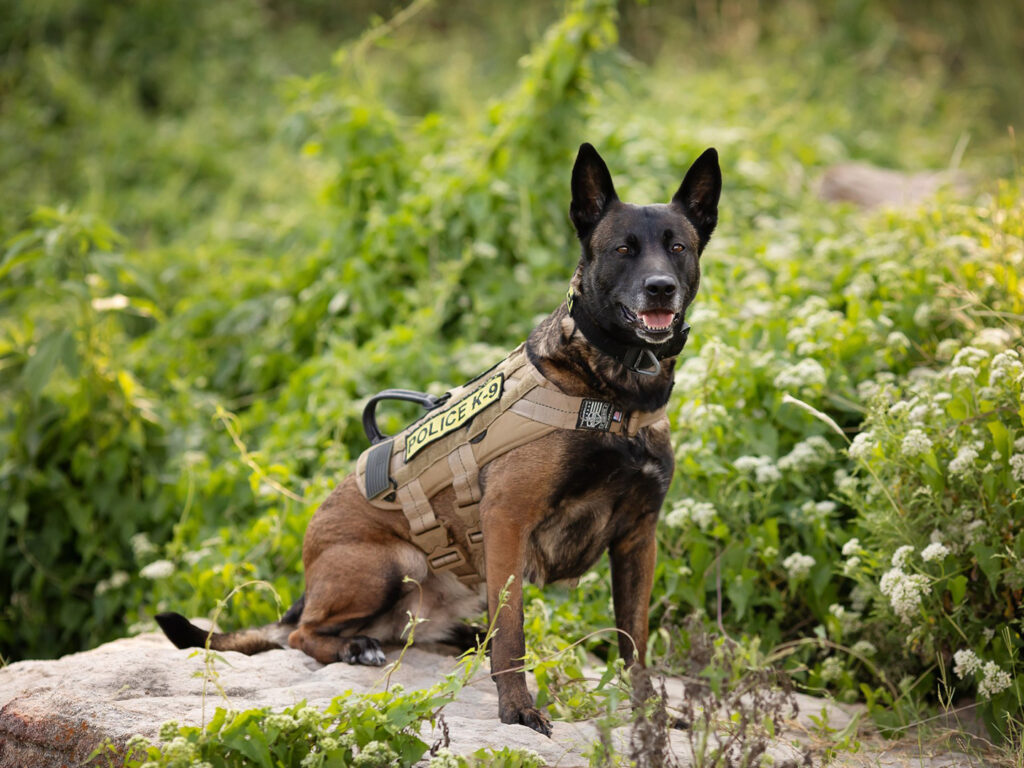
K-9 Jackie in a green field
K-9 Jackie
Photo courtesy of the Texas A&M University Police Department

When one of Texas A&M University’s police K-9s was diagnosed with cancer, veterinarians at the Texas A&M Veterinary Medical Teaching Hospital (VMTH) had the opportunity to serve an animal just as hardworking as they are.

Jackie is a 9-year-old Belgian Malinois who worked alongside the Texas A&M Police Department as an explosives detection K-9 until her retirement earlier this year.

“Jackie has an incredible work ethic,” said Officer John Browning, Jackie’s owner and former handler. “Numerous handlers, trainers, and judges have described her as a once-in-a-career dog. She absolutely loved to work and was very good at her job.”

In February, Jackie was diagnosed with mammary cancer — called breast cancer when it occurs in humans — and was taken to the Small Animal Teaching Hospital for surgery to remove the tumors.

Thanks to the efforts of her care team, Jackie’s cancer was detected in the early stages, leading to its complete removal.

A Surprise Diagnosis

All university K-9s receive medical care at the VMTH in order to make sure that they are healthy and able to do their jobs. It was during one of Jackie’s routine check-ups that her care team detected small nodules in her mammary glands, which can feel like small, hard beads under an animal’s fur.

“She had a couple of tumors on her left side that were each about two centimeters wide,” said Dr. Shelby Gasson, a third-year surgery resident. “She also had a few on the right side that were smaller, about one centimeter wide each.

Borwning doing gig 'em and Jackie on the Texas A&M campus
Officer John Browning and Jackie
Photo courtesy of the Texas A&M University Police Department

“Most of Jackie’s tumors ended up being benign, which is common for mammary tumors in dogs, but one of them was a low-grade adenocarcinoma, which means it was cancerous,” she said. “Thankfully, we were able to completely remove that tumor.”

While, in general, it’s important for female dogs to be spayed early in life to prevent them from developing mammary cancer later on, working dogs like K-9s often need to remain intact.

“Females that are not spayed before their first heat are several times more likely to develop mammary masses and cancers later in life,” Gasson said. “However, spaying working dogs is not always an option, since it can affect the animal’s behavior and muscle tone, which are important to its ability to perform its duties.

“For working dogs that are intact, it’s very important to take them to regular check-ups so veterinarians can keep a lookout for things like cancer, uterine infections, and some of the other health issues that non-spayed and non-neutered dogs can develop,” Gasson said.

Keeping Campus Safe

It takes a lot of people — and even a few animals — to keep a large campus like Texas A&M safe. More than 70,000 students attend the main campus in College Station, which is also home to more than 3,500 faculty and around 8,000 staff members.

“We currently have 160 authorized positions, including 78 state-certified police officers,” Browning said. “We also have three K-9s who help us with explosive detection and tracking.”

As a university police K-9, Jackie often helped with explosives detection at Texas A&M’s Kyle Field, something she was bred and trained to be very good at; it’s no simple matter to protect the tens of thousands of people — including fans, players, and staff — who are present on home game days.

“Jackie was donated to our department by an organization called K9s4Cops, and her initial training lasted about nine weeks,” Browning said. “She continued to get training throughout her career, both for formal certifications and to keep her skills sharp. I tried to do some kind of training with her every day.”

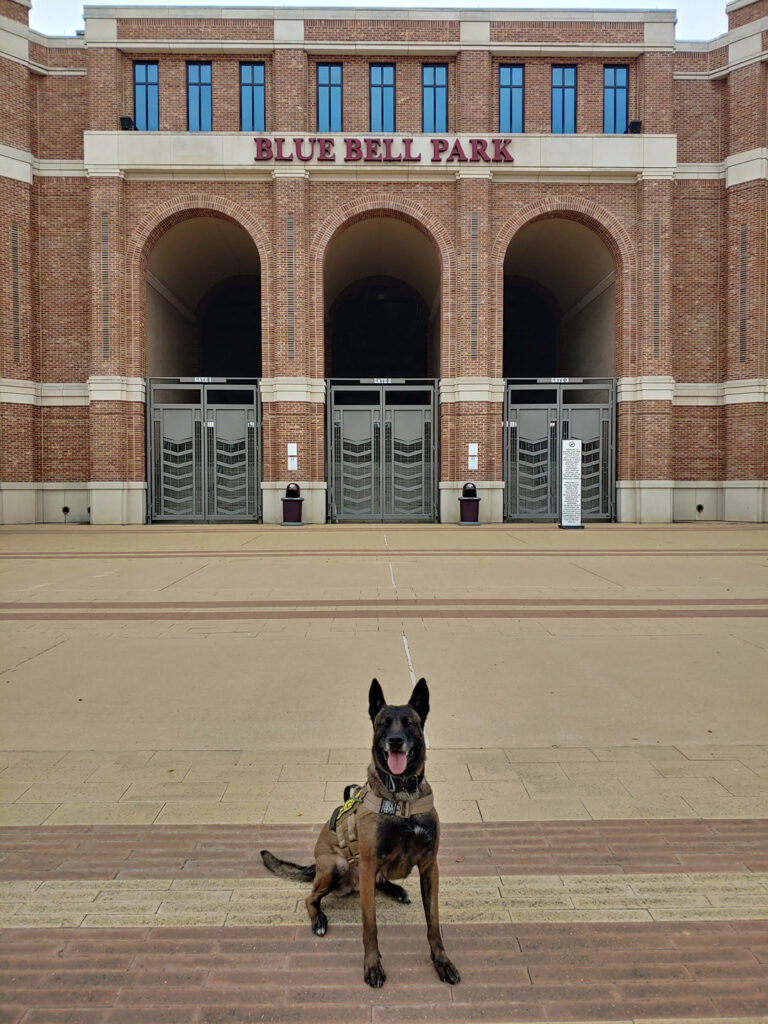
Jackie in front of Blue Bell Park
Jackie
Photo courtesy of the Texas A&M University Police Department

Even though K-9s are hard-working animals, Jackie was always a shining star amidst her peers.

“Jackie’s specialty was called ‘mobile odor detection,’ which means that she would track the scent through a crowd back to a specific person,” Browning said. “This is the opposite of static detection, where the target or device doesn’t move.”

Jackie’s nose is so effective that she once tracked down an off-duty police officer attending a baseball game just by the lingering smell of his handgun, which he did not have with him at the time.

Taking A Bow

Although Jackie’s surgery to remove the cancer was successful, she was close enough to retirement age that her care team recommended she end her service to the university early.

“She is enjoying retirement and does not appear to miss going to work at all,” Browning said. “The first time I returned to work with my new K-9, Taps, I fully expected Jackie to see my uniform and get excited about going to work. But she just walked right past me and hopped up on the bed to sleep without a care in the world.”

Browning also said he’s happy that he gets to continue spending lots of time with his good friend.

“I still give her ‘problems’ to solve at home to keep her mentally stimulated,” he said. “But she loves that she gets to be lazy and hang out with my wife and kids all day.”

###

For more information about the Texas A&M College of Veterinary Medicine & Biomedical Sciences, please visit our website at vetmed.tamu.edu or join us on FacebookInstagram, and Twitter.

Contact Information: Jennifer Gauntt, Director of VMBS Communications, Texas A&M College of Veterinary Medicine & Biomedical Sciences, jgauntt@cvm.tamu.edu, 979-862-4216

How To Successfully Introduce New Cats To Other Pets

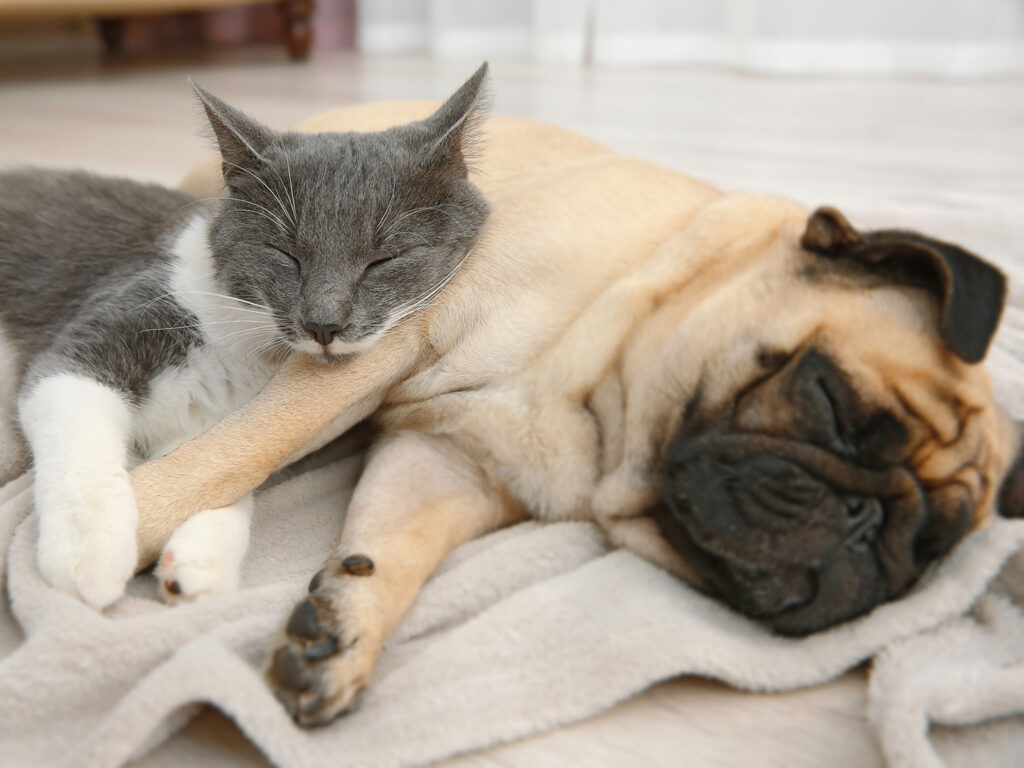
A grey cat and tan pug cuddling

Bringing home a new cat can be equally exciting and scary for both resident pets and the new feline family member, especially if friction arises between the animals. 

To carefully introduce new cats to the family in a way that encourages a peaceful coexistence, Paula Plummer, a veterinary technician at the Texas A&M School of Veterinary Medicine & Biomedical Sciences, offers owners step-by-step guidance that can help ensure all pets are comfortable every step of the way.

Creating A Safe Space With Privacy

There are generally three steps for introducing cats to pre-existing pets. The first step is to provide a space away from other animals that allows the new cat to become familiar with the new home and new people.

Owners should place their new cat in an isolated safe zone, such as a bedroom or office, where all of their necessities – food, water, litter box, toys, bed, etc. – are available only to them.

“Cats need their own private areas so that they can adjust to their new environment in their own time, but they should also have lots of positive interactions with anyone living in the home to know humans are safe,” Plummer explained. “How long it takes for a cat to adjust is dependent on each cat, and signs that a cat hasn’t adjusted to their safe zone because they are scared, anxious, or stressed include hiding, putting distance between what they are scared of and themselves, or trying to escape from their environment.”

Plummer encourages owners to stock the cat’s safe zone with hiding places, heights, toys, and items that provide warmth, such as new bedding or blankets.

“Cats naturally want to be elevated to watch over their area, which is why they love cat trees,” Plummer said. “If they are not able to do these things, it can be challenging for them to adjust. Additionally, cats can feel threatened by another animal’s scent, so their belongings should be brand new and not hand-me-downs or items that belonged to another pet.”

Introducing Housemates

Once cats have adjusted to their isolated environment, as evident by them resting, sleeping, and continuously interacting with humans, owners should share items between the new and existing animals.

“Allowing new cats to smell items of other animals – either a favorite toy, towel, or bed – gives them time to adjust to the scent of the other animal before meeting,” Plummer said. “For the same reason, owners will need to give their existing animals items belonging to the new cat.”

Cats who are relaxed around another animal’s belongings can transition into the second step —  supervised face-to-face meetings with other resident pets. Since most cats are not leash- or harness-trained, Plummer suggests placing cats in a carrier when introducing them to other animals.

“New cats should be in a carrier so that the cat is still in a safe, protected zone,” Plummer said. “People may want to hold the new animal in their arms but that can be dangerous if the introduction doesn’t go well; they could get scratched or bitten, or the cat may attack the other animal. If the interaction goes positively, owners should increase the amount of time the animals are around each other while keeping the cat in the carrier.”

Signs that the new cat is reacting negatively to existing pets include pressing themselves to the back of the carrier, trying to hunker down and hide, or avoiding eye contact with the other animal.

Transitioning To Cohabitation

When the animals seem comfortable with each other after multiple meetings, owners can begin the third step by letting pets loose together in an open environment during supervised visits. Plummer emphasizes that owners need to be cautious and focused during this stage of interaction to prevent pet injuries, especially in households that include dogs.

“Depending on the size of the dog, the dog can be much bigger than the cat and can cause harm or injury very quickly,” Plummer explained. “Cats can cause harm to other cats as well, so owners should be very cautious and attentive to what is going on in the introduction phase. If they have to step away to attend to something else, owners should separate the pets, revisiting introductory time later.”

After a new cat has left their isolated space and joined the rest of the household, it’s important to take note of the area they identify as their new safe zone so that their belongings can be moved there.

“Cats eventually choose their own private space,” Plummer said. “If owners put bedding in one place but always find their cat sleeping and resting somewhere else, then that’s where the cat has chosen their space to be instead. Just be sure that the same space hasn’t been chosen by another animal so that there is no competition over items, like a bed, litter box, or food bowl.”

Cats may also begin to explore and test boundaries as they become more comfortable in their new home and around other animals, which is why owners should consider additional precautions to keep their cat safe.

“When preparing their home for a cat, especially if this is their first cat, owners should look at their house plants, making sure that they’re cat-friendly and not toxic,” Plummer said. “It’s also important to ‘cat-proof’ your home by ensuring cabinet doors are not easy to open and keeping cleaning supplies out of reach because cats can figure out how to open cabinet doors.”

Every cat is unique, so how they adjust to a new home and the time they take to do so can vary. But by slowly introducing new cats to other pets, owners can ensure that their furry family members foster positive relationships with each other that will last for many years to come. 

###

For more information about the Texas A&M College of Veterinary Medicine & Biomedical Sciences, please visit our website at vetmed.tamu.edu or join us on FacebookInstagram, and Twitter.

Contact Information: Jennifer Gauntt, Director of VMBS Communications, Texas A&M College of Veterinary Medicine & Biomedical Sciences, jgauntt@cvm.tamu.edu, 979-862-4216

Two VMBS Faculty Members Recognized For Dedication To Teaching

Two Texas A&M School of Veterinary Medicine & Biomedical Sciences (VMBS) faculty members were recognized with The Association of Former Students College-Level Teaching Awards for their dedication to their students’ education.

The award, which honors teachers who maintain high expectations for their students and ensure academic rigor in the classroom, distinguishes educators who recognize their responsibility in motivating and contributing to the overall development of their students.

In 2023, Dr. Amanda Davis, a clinical assistant professor, and Dr. Michelle Pine, a clinical associate professor, were nominated and selected by their VMBS colleagues to receive the award.

“There is no shortage of teaching talent at the VMBS, and outstanding instructors like Drs. Davis and Pine exemplify that,” said Dr. John August, the Carl B. King Dean of Veterinary Medicine. “It’s an honor to have the opportunity to work with the Association of Former Students to recognize their distinguished abilities in the classroom and beyond as they continue to shape the future of veterinary medicine and biomedical sciences one student at a time.”

Dr. Amanda Davis

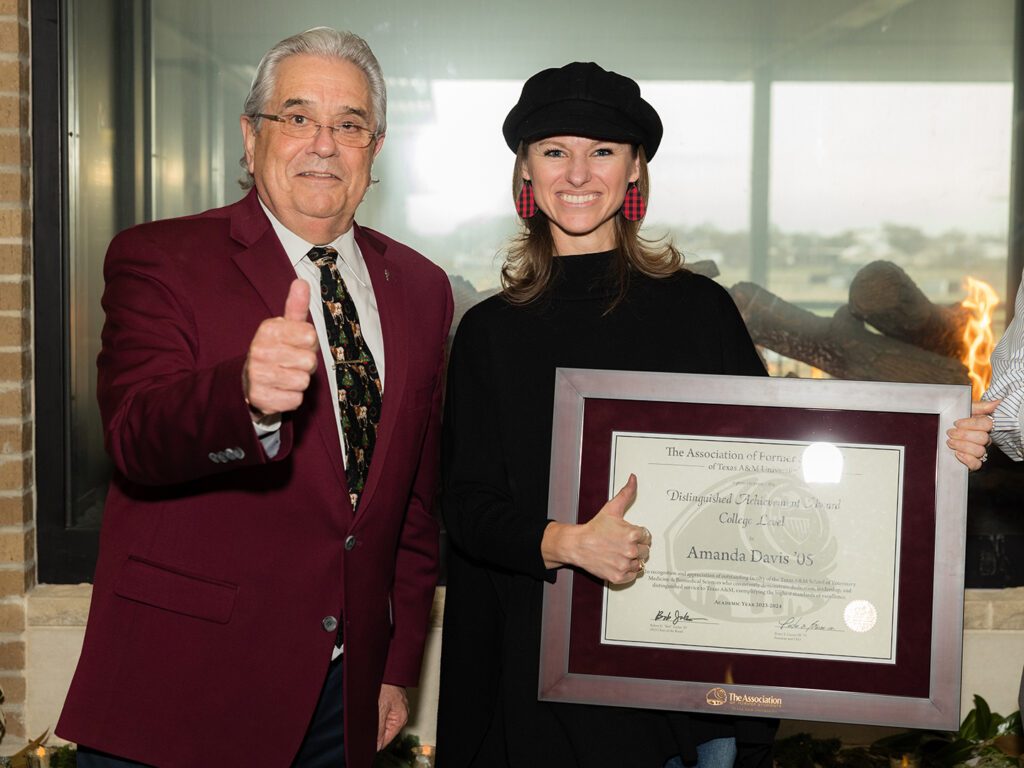
Dean August and Dr. Davis with her award
August and Davis

Davis teaches a wide range of courses on anatomy and physiology to both undergraduate and graduate students.

“As a professor, Dr. Davis is focused on engaging students not only in the classroom but also in the course,” a nominator said. “Possibly the greatest thing Dr. Davis provides for students is the opportunity to be involved in, and ultimately take charge of, their own learning. This is truly transformational teaching that is exceptionally well-received and supported by student evaluations and by the long line of students I see requesting mentoring and guidance with life questions.”

Her dedication to student learning outcomes begins long before the first day of class each semester.

“Dr. Davis is an innovator with her own courses who carefully reviews the teaching literature and uses best practices in teaching, with an unrivaled willingness to assess the changes and be measured by that success,” a nominator shared. “These approaches are transformative for students and apply at every educational level.”

Davis’ dedication to her craft is both well received and greatly appreciated by her students, who credit her teaching and mentorship with contributing to their overall academic and career success.

“Her class was, without question, one of the most difficult yet most impactful classes of my undergraduate career,” one of Davis’ former students said. “It was Dr. Davis’ teaching method, kindness, and overall support of my ongoing education that made the transition to vet school more manageable.”

In addition to teaching, Davis also conducts research on exercise physiology and the role exercise plays in fighting breast cancer, presents at conferences and workshops, and serves as an adviser and mentor to both students and young faculty members.

Dr. Michelle Pine

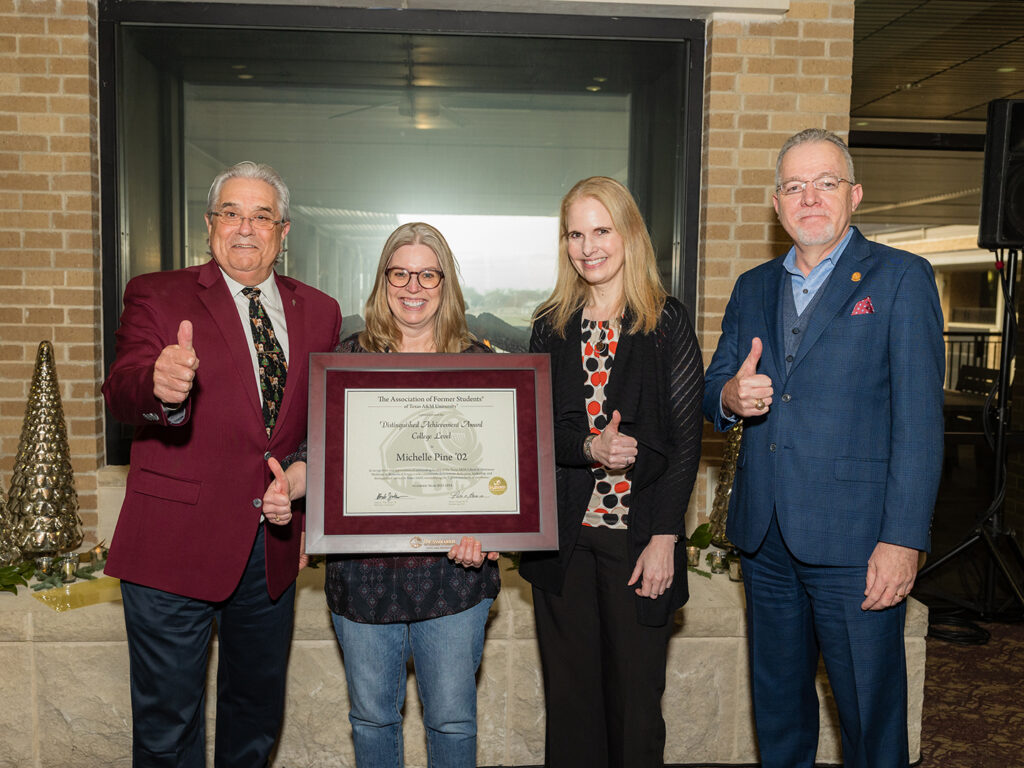
August, Pine with her award, Dr. Budke, and Walker
August, Pine, associate department head Dr. Christine Budke, and Scot O. Walker, vice president of the Texas A&M Association of Former Students

Pine teaches courses in biomedical anatomy, biomedical neuroendocrinology, and neurotoxicology to undergraduate, graduate, and veterinary students.

“Biomedical and veterinary anatomy are vital but very difficult subjects to teach,” a nominator said. “Dr. Pine excels at making the subject understandable and interesting for her students, as evidenced by how much she is respected and admired by her students, who made sure she was selected as a Fish Camp namesake in 2017.”

Pine consistently receives exemplary student evaluations as students recognize her contributions to their success.

“Dr. Pine carefully provides building blocks of information concerning functional anatomy that allow students to comprehend different aspects of the field of gross anatomy that are relevant to students in her classes who are preparing to pursue professional programs, such as veterinary medicine, dentistry, and medical school,” her nominator shared. “She helps train future veterinarians and mentors future professional anatomy instructors with most earning a graduate degree.”

Her dedication to her student’s learning at every level of their academic careers is appreciated by those who have the opportunity to take Pine’s classes.

“A great professor develops and mentors students not only to improve academically but to think critically, excel past their own expectations, develop internally, and ultimately become a better person,” one of Pine’s former students and nominators said. “Dr. Pine embodies every one of these traits making her uniquely deserving of this prestigious recognition.”

Additionally, Pine conducts collaborative research with colleagues across campus to further develop innovative teaching methods for STEM education, writes book chapters on anatomy, and presents at conferences.

###

For more information about the Texas A&M College of Veterinary Medicine & Biomedical Sciences, please visit our website at vetmed.tamu.edu or join us on FacebookInstagram, and Twitter.

Contact Information: Jennifer Gauntt, Director of VMBS Communications, Texas A&M College of Veterinary Medicine & Biomedical Sciences, jgauntt@cvm.tamu.edu, 979-862-4216

Texas A&M Research Suggests Fathers Abstain From Alcohol Use Prior To Conceiving Children

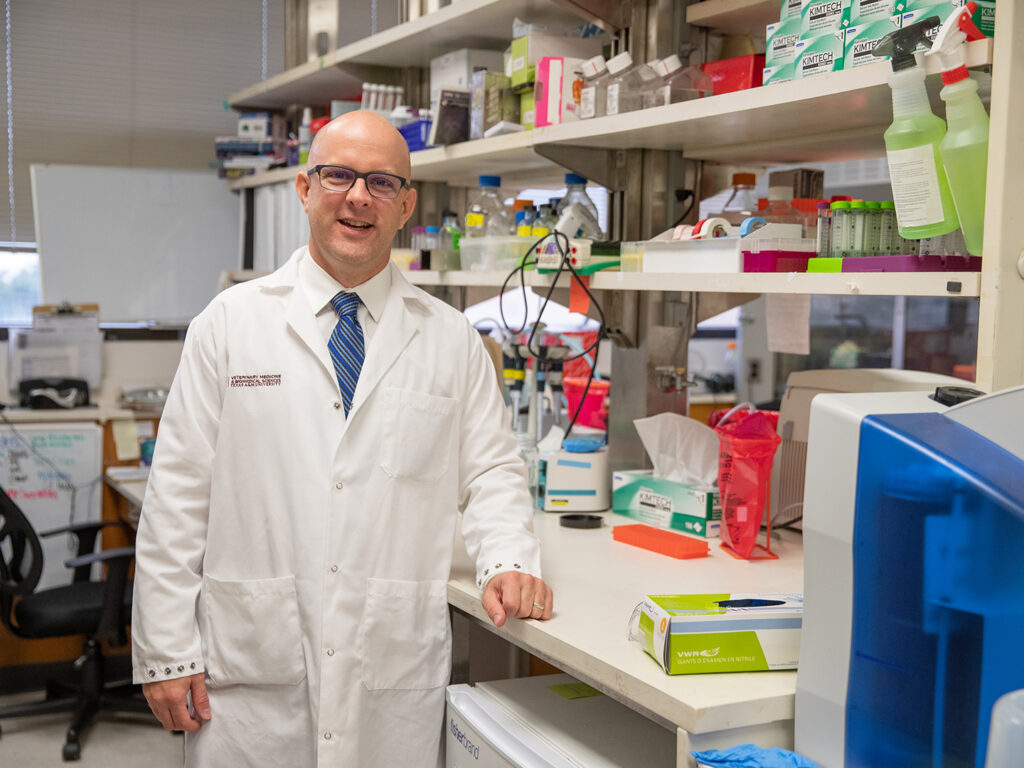
Golding in his lab
Dr. Michael Golding

In examining the effects of paternal alcohol consumption on fetal alcohol syndrome, the groundbreaking new study reveals that it can take over a month for negative alcohol effects to wear off.

Researchers at Texas A&M University have already shown that paternal drinking habits prior to conception can have a negative effect on fetal development — with semen from men who regularly consume alcohol impacting placenta development, fetal alcohol syndrome (FAS)-associated brain and facial defects, and even IVF outcomes.

In an article published this month in Andrology, the lab of Dr. Michael Golding has now demonstrated that it takes much longer than previously believed, longer than a month, for the effects of alcohol consumption to leave the father’s sperm.

“When someone is consuming alcohol on a regular basis and then stops, their body goes through withdrawal, where it has to learn how to operate without the chemical present,” said Golding, a professor in the School of Veterinary Medicine & Biomedical Sciences’ Department of Veterinary Physiology & Pharmacology. “What we discovered is that a father’s sperm are still negatively impacted by drinking even during the withdrawal process, meaning it takes much longer than we previously thought for the sperm to return to normal.”

The Dangers Of Paternal Drinking

One of the major risks associated with alcohol consumption before and during pregnancy is FAS, which causes abnormal facial features, low birth weight and/or height, attention and hyperactivity issues, and poor coordination.

Currently, doctors are required to confirm only that the mother has consumed alcohol — not the father — to diagnose a child with FAS.

“For years, there’s really been no consideration of male alcohol use whatsoever,” Golding said. “Within the last five to eight years, we’ve started to notice that there are certain conditions where there’s a very strong paternal influence when it comes to alcohol exposure and fetal development.

“With this project, we wanted to see how long it would take for the effects of alcohol on sperm to wear off,” he said. “We thought it would be a relatively quick change back to normal, but it wasn’t. The withdrawal process took over a month.”

When drinking alcohol, an individual’s liver experiences oxidative stress, leading the body to overproduce certain chemicals, which then interrupts normal cellular activity. Golding’s team discovered that withdrawal causes the same kind of oxidative stress, effectively lengthening the duration of alcohol’s effects on the body beyond what was previously thought.

“During withdrawal, the liver experiences perpetual oxidative stress and sends a signal throughout the male body,” Golding said. “The reproductive system interprets that signal and says, ‘Oh, we are living in an environment that has a really strong oxidative stressor in it. I need to program the offspring to be able to adapt to that kind of environment.’ But Golding suspects that the adaptations to the sperm aren’t beneficial — they lead to problems like FAS.”

He also noted that it doesn’t take excessive alcohol use for a person to experience withdrawal.

“In the models we’re using, even drinking three to four beers after work several days a week can induce withdrawal when the behavior ceases,” Golding said. “You may not feel inebriated, but your body is going through chemical changes.”

Changing The Narrative

Golding’s work is vital to improving pregnancy outcomes by changing the conversation about who is responsible for alcohol-related birth defects, since society has historically placed all blame on mothers, even when they do not consume alcohol during their pregnancy.

“There’s psychological trauma associated with the question, ‘Did you drink while you were pregnant?’ It’s also difficult for physicians to have that conversation,” he said. “But if they don’t, then FAS doesn’t get diagnosed right away and the child may not get the support that they need until later in life.”

Because of this, it’s crucial that couples planning on getting pregnant know how far in advance to stop drinking in order to prevent birth defects.

While Golding and his lab will continue to research the effects of paternal drinking to help doctors advise couples, he suggests that fathers abstain from alcohol at least three months prior to conceiving, given this groundbreaking discovery.

“There’s still a lot of work to be done to get a hard answer, but we know that sperm are made over the course of 60 days, and the withdrawal process takes at least one month,” he said. “So, my estimate would be to wait at least three months.”

###

For more information about the Texas A&M College of Veterinary Medicine & Biomedical Sciences, please visit our website at vetmed.tamu.edu or join us on FacebookInstagram, and Twitter.

Contact Information: Jennifer Gauntt, Director of VMBS Communications, Texas A&M College of Veterinary Medicine & Biomedical Sciences, jgauntt@cvm.tamu.edu, 979-862-4216

VMBS Faculty Member Awarded Scialog Fellowship To Develop New Diagnostic Tests For Brucellosis

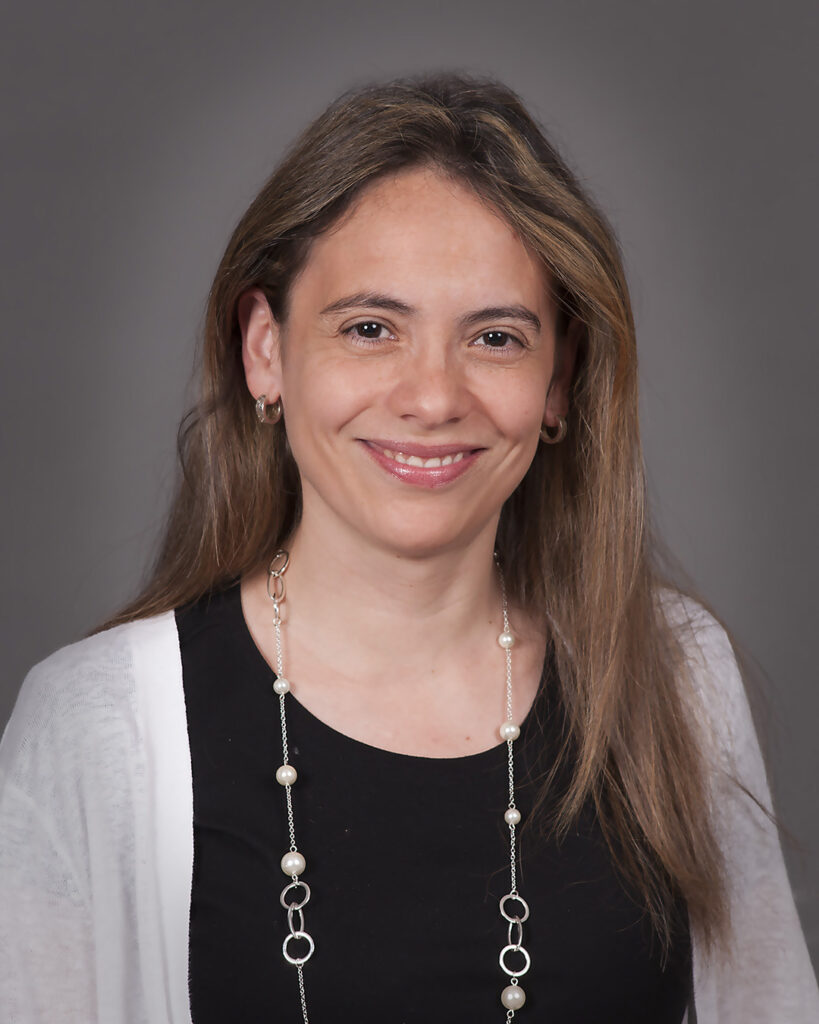
Photo of Dr. Angela Arenas.
Dr. Angela Arenas

Dr. Angela Arenas, a Texas A&M University associate professor in the School of Veterinary Medicine & Biomedical Sciences and the School of Medicine, was awarded one of 18 Scialog: Mitigating Zoonotic Threats fellowships to aid in her development of new and improved diagnostic tests for brucellosis, a bacterial disease that can affect humans, pets, and livestock.

Arenas will use the $50,000 award to develop and test highly innovative, and if successful, transformative methods for improving diagnostic testing solutions for the detection of infectious diseases of pets and livestock.

“I am passionate, committed, and very hopeful that our work will help animals all over the world,” Arenas said. “As a veterinarian and animal enthusiast, I am proud of what we are doing.”

Arenas’ laboratory at Texas A&M is committed to eliminating brucellosis, a bacterial disease that affects millions of people and animals globally, through research, education, and outreach. She said the Scialog fellowship will help further her lab’s efforts.

In addition to providing monetary support, Arenas said the Scialog: Mitigating Zoonotic Threats initiative has opened the door to collaborations and connections she wouldn’t have been able to make without the program.

Created in 2010, Scialog is short for “science + dialog” and aims to support research by stimulating intensive interdisciplinary conversation and community building around a scientific theme of global importance. Teams of two to three fellows who have not previously collaborated compete for seed funding for high-risk, high-reward projects based on the ideas they develop at an annual conference.

At the 2023 conference, participants developed research ideas to bridge their different expertise, methods and technologies in new ways to advance basic science in the detection and mitigation of existing and emerging zoonotic threats, such as brucellosis. On the final day of the conference, teams pitched their proposals for collaborative projects, and Arenas’ project was selected to receive support in the form of a Scialog fellowship.

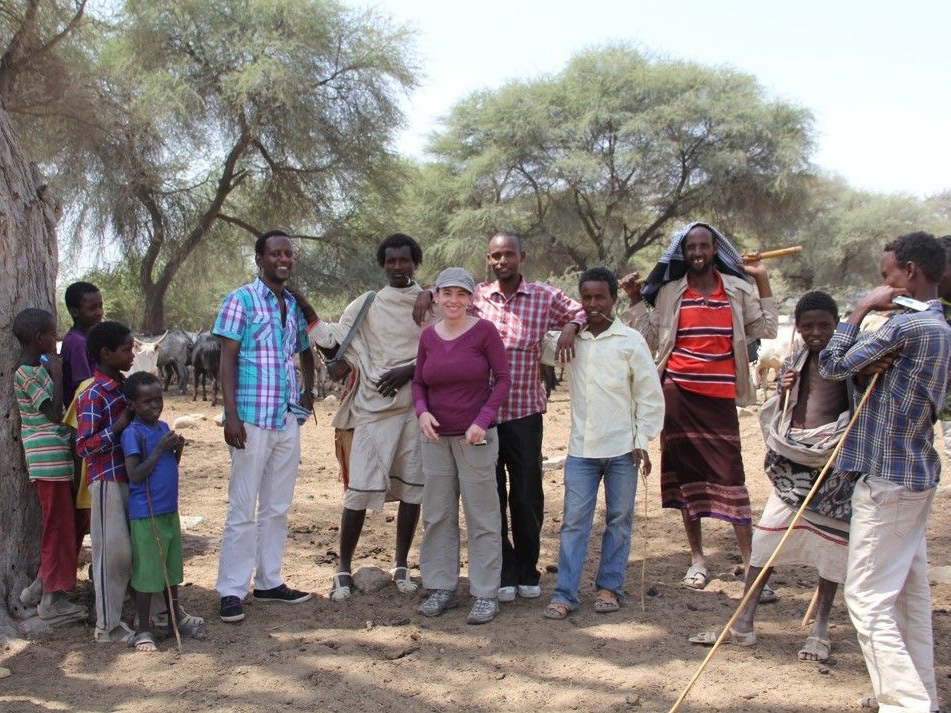
Dr. Arenas visits a village for her research on brucellosis.

“The program makes you talk to people you wouldn’t normally talk to,” Arenas said. “Together, you come up with solutions that might be crazy, but with the right expertise in the conversation, those solutions suddenly seem achievable. Having the opportunity to collaborate, exchange knowledge, and have an impact for animal health is huge.”

In her Scialog fellowship, Arenas will work with Dr. Nicholas Wu, from the University of Illinois at Urbana-Champaign, and Dr. Crystal Reid, with Center for Veterinary Biologics in the United States Department of Agriculture. Together, the team aims to improve diagnostic accuracy using protein engineering.

“Being a Scialog fellow is something that I will always be proud of. It is an honor,” Arenas said. “The award indicates that the program believes in our ideas and is willing to support us in moving them forward.”

The Scialog: Mitigating Zoonotic Threats fellowships are awarded by Research Corporation for Science Advancement and the U.S. Department of Agriculture with the goal of launching new research in the detection and mitigation of emerging animal-borne infectious diseases.

###

For more information about the Texas A&M College of Veterinary Medicine & Biomedical Sciences, please visit our website at vetmed.tamu.edu or join us on FacebookInstagram, and Twitter.

Contact Information: Jennifer Gauntt, Director of VMBS Communications, Texas A&M College of Veterinary Medicine & Biomedical Sciences, jgauntt@cvm.tamu.edu, 979-862-4216

Navigating The Mysteries of Gray Horse Melanoma

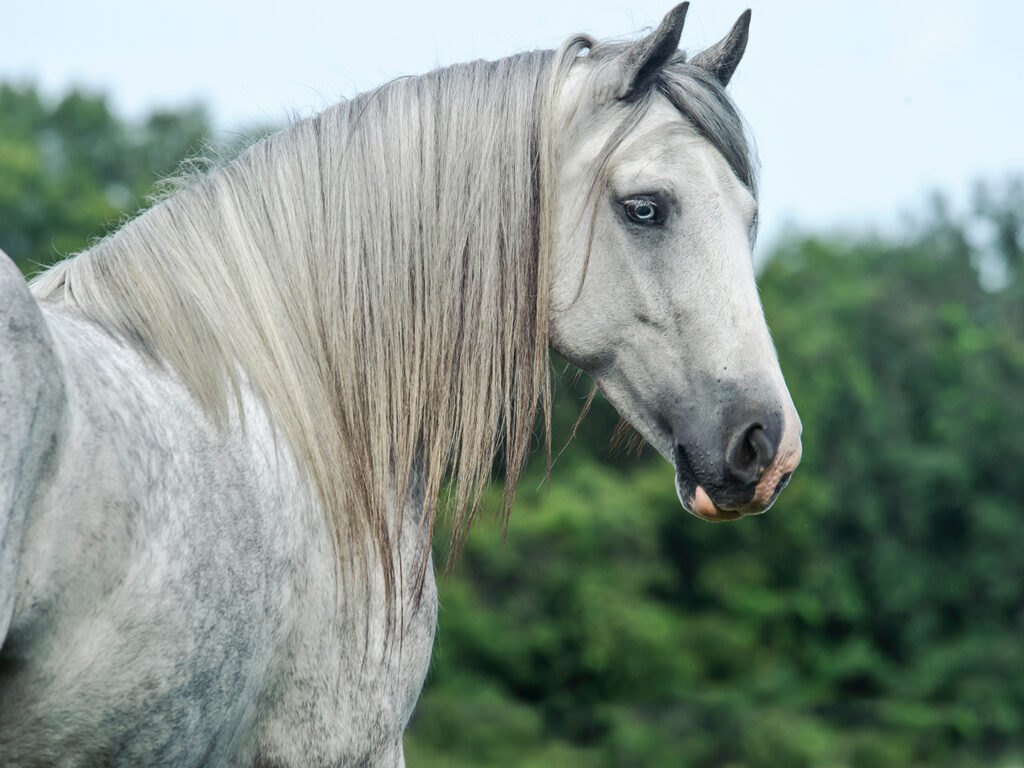
A grey horse

Horse ownership offers many joys, but as owners navigate the needs of their equine companions, they may find that each breed has its own unique requirements. What owners may not know is specific coat colors can signal distinct health challenges that they should attentively watch for and address.

In the spirit of National Day of the Horse this Dec. 13, Dr. Dustin Major, a clinical assistant professor in large animal surgery at the Texas A&M School of Veterinary Medicine & Biomedical Sciences, explores one of those distinct health challenges — that all gray horses are predisposed to melanoma — and how owners can manage this skin condition through early intervention. 

What Is Melanoma?

Melanoma, a form of skin cancer, develops when the cells that control skin pigmentation grow uncontrollably, causing a mole or age spot to grow and change size, shape, or color. While it is not fully understood why this happens, Major says that owners can reasonably expect for all gray horses to eventually develop melanomas to varying degrees.

“Melanoma is very common in gray horses that are middle-aged or older, but it is uncommon for horses of any other color,” Major said. “Some gray horses will only have one small melanoma spot, while others will have more expansive melanomas, particularly under the tail, around the anus, and in the corners of the mouth.”

Gray horse melanoma tends to start as small lesions, or parts of the skin that have an abnormal appearance and feel compared to the rest of the skin. They tend to display as round, firm, almost spherical masses that are clearly distinct from the surrounding tissue. While they are not typically fatal, melanomas can disrupt daily activities if left untreated. 

“It is rare for the melanomas to metastasize, or spread to distant organs such as the lungs or brain, but they can grow large enough to become locally invasive, meaning they prevent organs from working in the way that they should,” Major explained. “For example, if a horse has large melanomas around their anus, it can be difficult for them to defecate.”

Exploring Treatment Options

Because gray horse melanoma prevention is unlikely, early intervention is essential for maintaining the horse’s quality of life.

“Owners should keep an eye on the common areas where melanomas appear and record what they look like,” Major said. “They can then work with their veterinarian to monitor the melanomas and intervene before the lesions grow so big that they are harder to deal with. The earlier lesions are addressed, the better the outcome.”

Surgery is one option for removing melanoma lesions, but depending on a lesion’s size, the surgery can be difficult for both surgeons and animals.

“When melanoma lesions are small, they tend to be like little marbles and are very easy to remove surgically,” Major said. “Once they start to get bigger, like the size of a tennis ball, the surgery to remove them becomes more complicated, expensive, and traumatic for the patient.”

There is also a vaccine that offers a potential treatment for gray horse melanoma, though it’s less likely to fully remove melanomas present.

“A veterinary oncologist has to first prescribe the vaccine before a veterinarian injects the vaccine with a special device, and the vaccine is given every two weeks, for four treatments, which can become very expensive,” Major said. “There is no guarantee that all melanomas will go away even though the vaccine can possibly slow down the growth of melanomas, keep new melanomas from growing, and shrink the ones that are already there.” 

Because of the difficulties that come with surgery and vaccinations, Major strongly emphasizes that owners rely on early intervention as the best method to treat and manage melanomas in gray horses.

“The key thing to remember is to get all melanomas checked out early and then monitor them so that when it is time to intervene, the melanomas can be removed before it’s too late,” Major said.

Without the proper care and attention, gray horses can face challenges that compromise their well-being; by working to understand and meet the specific needs of these horses, owners can ensure that despite any melanoma that may appear, gray horses can lead fulfilling and healthy lives.

Pet Talk is a service of the College of Veterinary Medicine & Biomedical Sciences, Texas A&M University. Stories can be viewed on the web at vetmed.tamu.edu/news/pet-talk. Suggestions for future topics may be directed to vmbs-editor@tamu.edu.
Texas A&M Veterinary Medical Teaching Hospital Launches Initiative To Address Mental Health Crisis Among Technicians

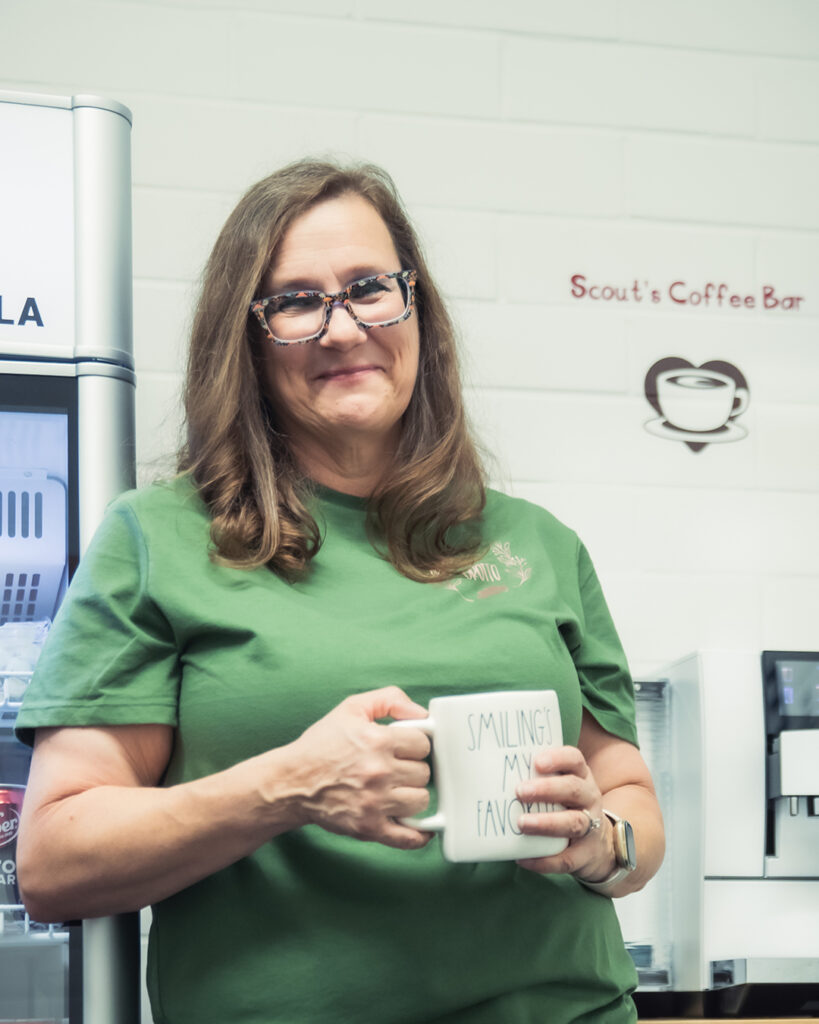
Sherri Jerzyk holding a cup of coffee
Sherri Jerzyk
Photo by Alyssa Moore ’27, Texas A&M College of Veterinary Medicine & Biomedical Sciences

The shortage of veterinarians in the United States has been well reported, but the industry is also facing a looming shortage of veterinary technicians.

Veterinary Practice News reports that by 2030, while the U.S. will need 40,000 veterinarians to meet the needs of the nation’s companion animals, 133,000 vet techs also will be needed.

This shortage is exacerbated by the same issues that affect veterinarians, including student debt, salary, burnout, and suicide rates; a study recently published by the Journal of the American Veterinary Medical Association indicated that 50% of technicians burn out of the profession in their first five years, and those in the field are up to five times more likely to die by suicide than the general population.

To support these critical professionals, the Texas A&M College of Veterinary Medicine & Biomedical Sciences’ (VMBS) Veterinary Medical Teaching Hospital (VMTH) has created a new space that will allow technicians to relax, recharge, and connect with their colleagues while on the job.

The Grotto was developed and designed by Sherri Jerzyk, a veterinary technician in the VMTH’s Sports Medicine & Rehabilitation Service as part of her veterinary social work certificate program, focusing her keystone project on improving veterinary technician mental health. The idea came after she lost three friends in the veterinary technician profession to suicide.

She worked closely with VMBS leadership to create a wellness initiative that offers mental health and stress relief in a space designed to meet the unique needs of veterinary technicians.

“Technicians are the backbone of the veterinary profession, but they are often overworked, underpaid, and undervalued. This can lead to burnout, stress, and even suicide,” Jerzyk said. “It is our hope that by addressing the mental health of veterinary technicians, we can make a positive impact on the entire veterinary profession.”

The new area, which opened Dec. 6, includes comfortable seating, a kitchenette, and a quiet area for reflection. The space is intentionally designed to provide sanctuary for stress relief and recovery from mental and physical exhaustion, as well as an area where technicians can seek counsel from the VMTH’s on-site professional counselor, Mike Hawkins.

A room with couches and a record player
One of the Grotto’s four rooms for stress relief and recovery
Photo by Alyssa Moore ’27, Texas A&M College of Veterinary Medicine & Biomedical Sciences

“It makes me feel really good to know that people associated with the hospital and clients of the hospital want to make sure that we have a place to go when we are feeling overwhelmed or just need a break,” said Hannah Langenkamp, a veterinary technician in the VMTH’s Emergency & Critical Care Service. “It’s amazing to know that there are so many people who care about the well-being of technicians.”

“The space is pretty incredible,” added Austin Weger, a veterinary technician in the VMTH’s Orthopedics Service. “It’s obvious that a lot of time and effort went into it. It’s unreal to me — the amount of time and effort that Sherri put in, as well as the donors and administrators who helped set this up.”

When Jerzyk began developing the idea for the Grotto, she sought to determine if a space like this existed and was unable to find any other veterinary teaching hospital or practice offers this kind of refuge for its support staff.

“Wellness and well-being are among the top priorities of the College of Veterinary Medicine & Biomedical Sciences,” said Dr. Stacy Eckman, VMBS associate dean for hospital operations and VMTH chief executive officer. “We believe the Grotto will make a real difference in the lives of our veterinary technicians, while creating a more supportive and compassionate work environment that will help to reduce stress and improve mental health. It is our hope that other practices follow our lead and create their own wellness space for their technicians.”

###

For more information about the Texas A&M College of Veterinary Medicine & Biomedical Sciences, please visit our website at vetmed.tamu.edu or join us on FacebookInstagram, and Twitter.

Contact Information: Jennifer Gauntt, Director of VMBS Communications, Texas A&M College of Veterinary Medicine & Biomedical Sciences, jgauntt@cvm.tamu.edu, 979-862-4216

Texas A&M Receives $1.8 Million NIH Grant To Support Bone Health In People With Down Syndrome

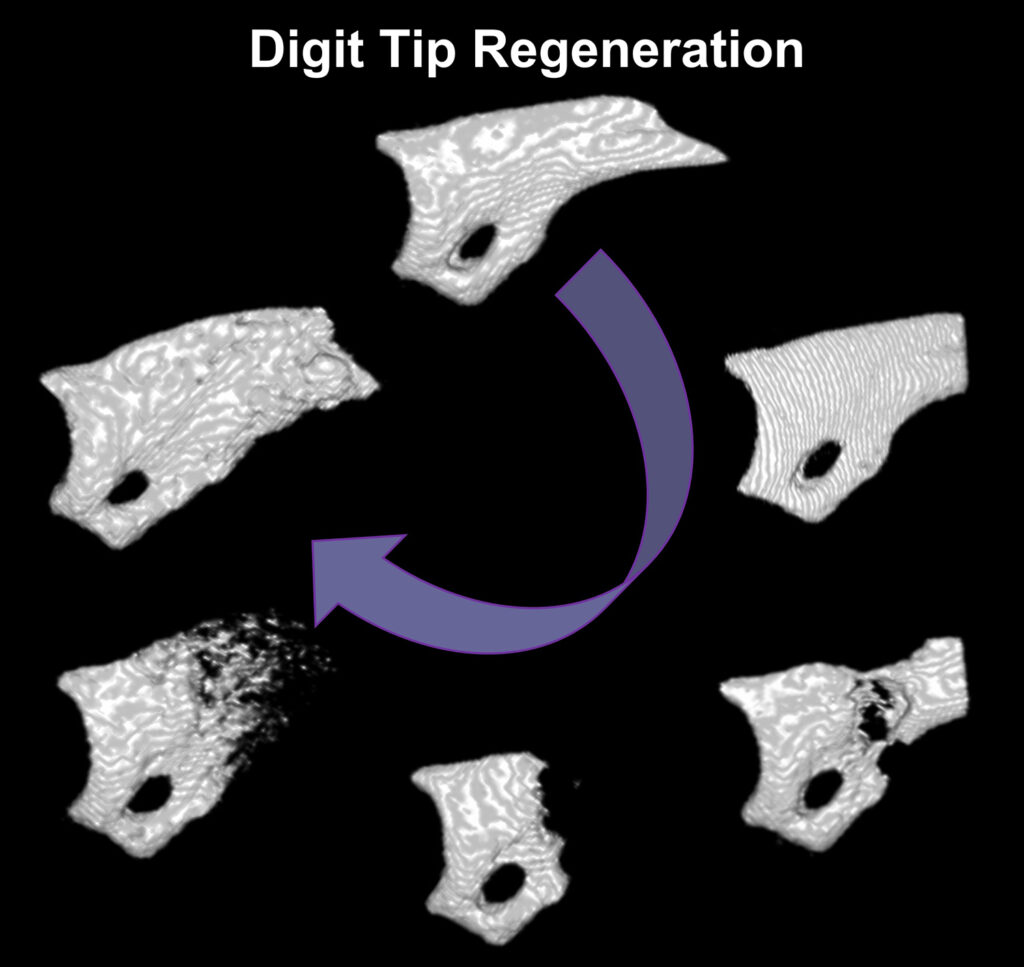
Graphic of finger digit bone regrowing
After an amputation, the body breaks down the injured fingertip and regenerates a new one.

Texas A&M University researchers have been awarded a $1.8 million grant from the National Institutes of Health (NIH) to study bone regeneration throughout the lifespan to ultimately benefit individuals with Down syndrome.

The new INvestigation of Co-occurring conditions across the Lifespan to Understand Down syndromE (INCLUDE) Project grant will help scientists understand whether bone regeneration holds the key to helping people with Down syndrome recover from fractures.

“Individuals with Down syndrome typically have poor bone health and are more prone to fractures,” said Dr. Lindsay Dawson, an assistant professor in the Department of Veterinary Physiology & Pharmacology (VTPP) and a specialist in regeneration biology at the School of Veterinary Medicine & Biomedical Sciences (VMBS), who is leading the collaboration.

“With this project, we hope to better understand the regenerative capabilities of the human body, and how we might use that information to improve bone health and fracture treatments for people with Down syndrome,” she said.

In addition to helping people with Down syndrome, findings from the new project will also aid treatment development for people with limb loss.

“Around 2.1 million people in the United States are living with limb loss, and that number is expected to double by the year 2050 because of the increase in vascular diseases like diabetes,” Dawson said. “Understanding how bone regeneration works is key to developing new treatments, including the possibility of regrowing entire limbs.”

The Dangers Of A Broken Bone

The new grant is especially important given that VMBS researchers recently discovered that bone fractures in people with Down syndrome are unlikely to heal.

“Down syndrome causes a problem called non-union, where inflammation and other factors prevent correct bone repair,” said doctoral candidate Kirby Sherman, who led that research project. “Unfortunately, fractures that fail to heal can be fatal. This makes fractures a major health concern for the Down syndrome community.”

Non-union is becoming an even bigger issue for the Down syndrome population now that people with this genetic condition are living longer. The Centers for Disease Control and Prevention reports that life expectancy for people with Down syndrome has grown from 10 years in 1960 to 47 years in 2007 thanks to medical advancements, giving more time and opportunities for fractures to happen.

“We’ve known that bone mass is lower in this population, and the increased life expectancy of this population has allowed researchers to better understand the long-term implications of their lower bone mass,” said Dr. Larry Suva, VTPP department head and Sherman’s lab supervisor. “Today, there are people with Down syndrome in their 20s and 30s who have bone mass and bone architecture consistent with someone in their 60s. They’re active members of the community and they’re playing sports. Obviously, that’s great, but if they’re at increased risk of bone fractures that won’t heal, it’s also a concern.”

Tipping The Scales

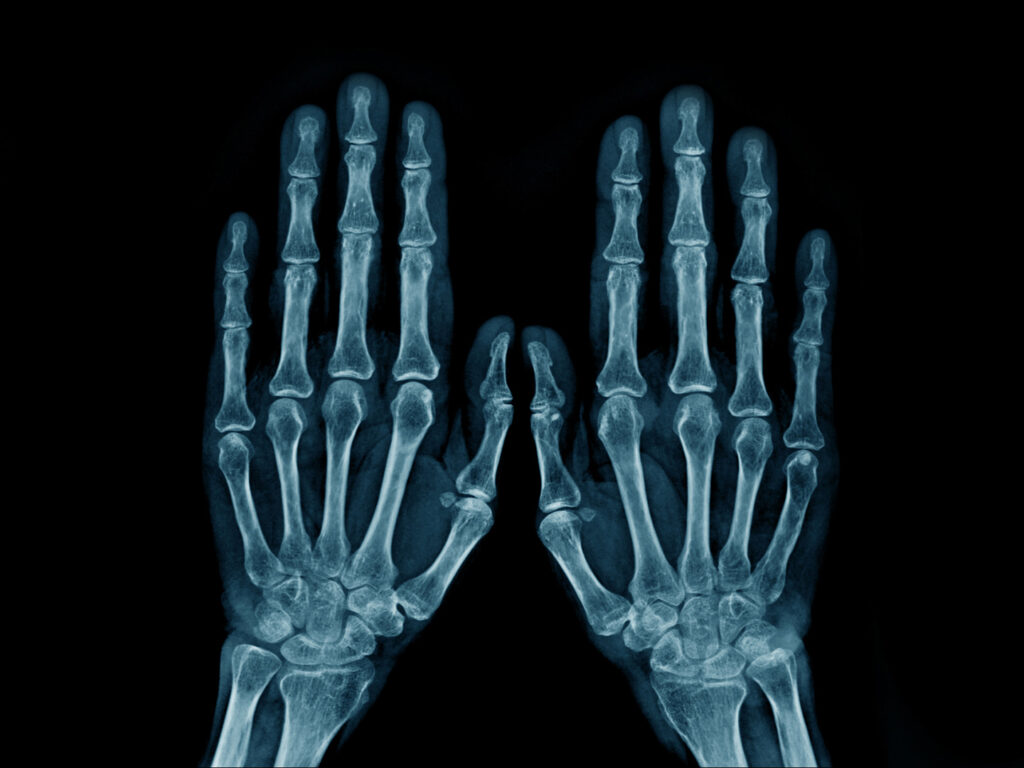
x-ray image hand and fingers
Understanding how bone regeneration works is key to developing new treatments for the approximately 2.1 million people in the U.S. living with limb loss.

The new project was made possible by discoveries that both humans and mice can regrow the ends of their fingertips.

“We don’t normally think of body part regeneration being common in mammals,” Dawson said. “It was actually discovered in humans completely by accident in the 1970s. A child lost the tip of her finger and was mistakenly sent home from the hospital without sutures to close the wound. Eleven weeks later, the child’s fingertip had grown back completely.”

Scientists have recently discovered that mice have the same regenerative capacity, making the idea of limb regeneration in mammals more promising.

“The more we understand about bone health and regeneration, the closer we get to replicating the process in humans,” Dawson said. “Because the fingertips are the one part of the human body that we know can regenerate after amputation, studying them may help researchers learn how to induce regeneration in the rest of the limb.”

The Bone Health Dream Team

By combining bone regeneration and Down syndrome-focused research, Dawson and her collaborators are hoping to find answers that will benefit many different groups of people.

“It’s been wonderful to work with so many people who have research interests that overlap with mine,” she said.

In addition to Dawson, Suva and Sherman, other members of the research project include Dr. Dana Gaddy, a professor in the Department of Veterinary Integrative Biosciences (VIBS); Dr. James Cai, a VIBS professor; Dr. Weston Porter, a VTPP professor; Dr. Ling Yu, a VTPP research associate professor; and Mingquan Yan, a senior research associate in Dawson’s lab.

It’s hard to say how long it will be before scientists figure out how to regrow human limbs, but researchers at the VMBS are working hard to make it happen. In the meantime, the findings from this project will go toward developing treatments, such as injectable bone regeneration agents, to help people with Down syndrome recover more easily from fractures.

###

For more information about the Texas A&M College of Veterinary Medicine & Biomedical Sciences, please visit our website at vetmed.tamu.edu or join us on FacebookInstagram, and Twitter.

Contact Information: Jennifer Gauntt, Director of VMBS Communications, Texas A&M College of Veterinary Medicine & Biomedical Sciences, jgauntt@cvm.tamu.edu, 979-862-4216

Texas A&M Researchers Develop New Method For Detecting Chronic GI Disease In Dogs

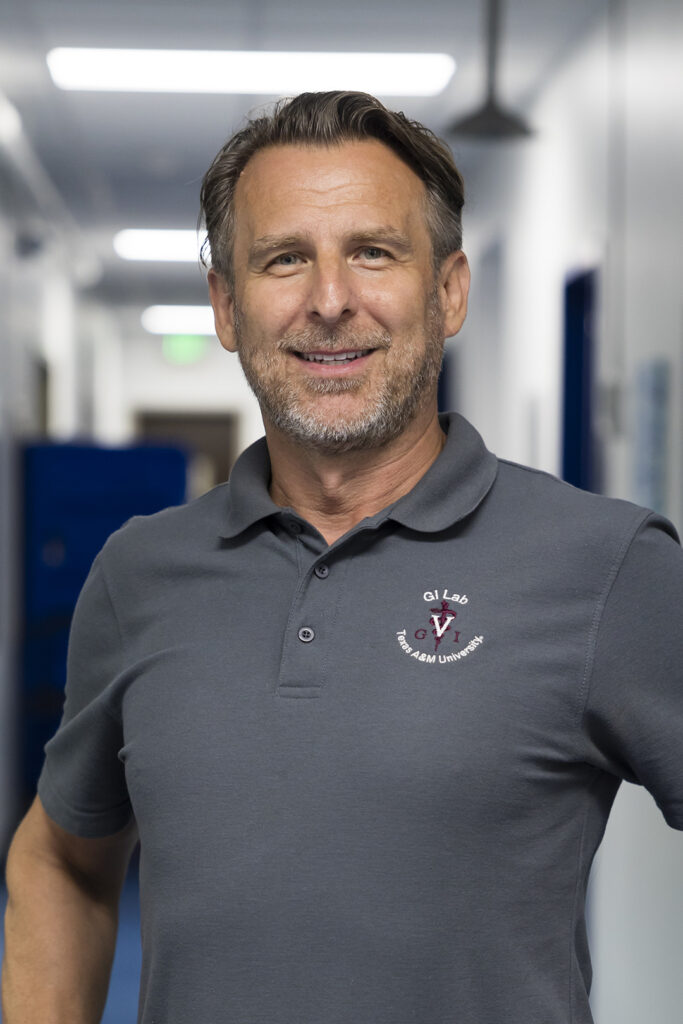
Suchodolski
Dr. Jan Suchodolski
Photo by Jason Nitsch ’14, Texas A&M University Division of Marketing and Communications

A research team led by the Texas A&M School of Veterinary Medicine & Biomedical Sciences’ (VMBS) Gastrointestinal Laboratory (GI Lab) has validated a new diagnostic index that will help veterinarians assess chronic GI dysfunction in dogs and may hold the key to diagnosing and treating GI disease in the future.

In a recently published article in the scientific journal Animals, GI Lab researchers tested their Dysbiosis Index (DI) using the microbiomes of 296 dogs to demonstrate that their index is a valid diagnostic tool for distinguishing between acute and chronic GI dysfunction and detecting non-GI disorders.

The DI has now been licensed through Texas A&M and IDEXX Laboratories and is being offered through the GI Lab and IDEXX.

“We are delighted to offer clinicians a fast, cost-effective and reliable test to evaluate the health of the intestinal microbiome in dogs,” said Dr. Chi-Hsuan Sung, first author on the article and a member of the GI Lab team.

The DI works by identifying dysbiosis — the loss of good, healthy bacteria in the gut microbiome — by tracking the levels of various bacteria over time.

“The Dysbiosis Index can accurately predict total shifts in the microbiome,” said Dr. Jan Suchodolski, associate director of research for the GI Lab. “Doing this helps us define what is normal and abnormal for gut microbiome health so we can see when a patient’s gut system has shifted away from normal.”

Because more than 10% of all new veterinary visits are related to GI disease in both dogs and cats, knowing when a patient’s microbiome has shifted away from normal will help veterinarians decide whether they have acute or chronic GI dysfunction, which require different management techniques.

Defining What’s Normal

“One of the biggest challenges in microbiome research is defining what’s normal and what’s abnormal,” Suchodolski said.

“Too often, researchers use techniques and technologies that are not reproducible, which means other researchers won’t be able to repeat their process,” he said. “For example, genome sequencing, which maps out the DNA of an organism, is a popular tool that scientists use to see what kinds of bacteria are part of the microbiome. But that’s more of a discovery tool. If two researchers use sequencing on the same set of samples, they may get different results. It’s not accurate enough to use as a diagnostic tool.”

Being able to tell the difference between normal and abnormal bacteria health can make a big difference when veterinarians are trying to decide whether a patient has acute or chronic GI dysfunction.

“You can imagine the microbiome sort of like a landscape that you might see when you look out your window,” Suchodolski said. “Acute GI dysfunction is like a storm that blows through and knocks over a few trees, but the landscape will recover. However, chronic GI dysfunction is much more destructive; it results in permanent changes.”

“Having this index will help experts better assess what kind of GI dysfunction a patient has so they can choose the right treatments and help set expectations for the patient’s caregivers.”

Dr. Jan Suchodolski

Chronic GI dysfunction, which affects approximately 2% of dogs, also requires a completely different clinical treatment approach.

“Once a patient develops chronic GI dysfunction, they experience permanent changes to their GI tract,” he said. “The disease is probably going to be around for many years or even be lifelong. Instead of curing it, we look at ways to manage the disease through diet and other tools.

“Having this index will help experts better assess what kind of GI dysfunction a patient has so they can choose the right treatments and help set expectations for the patient’s caregivers.”

The GI Lab was able to validate the DI in part thanks to the Purina PetCare Research Excellence Fund, a five-year partnership with Nestlé Purina PetCare Global Research designed to enhance diagnostic and interventional research on the gut microbiome.

“We’re grateful to Purina PetCare for working with us so that we can improve the lives of patients in new ways,” Suchodolski said. “It’s important to the GI Lab researchers to have research partners who share our values.”

Looking To The Future

Now that GI Lab researchers have validated their index, there are several directions for the lab to continue exploring, including using the DI as a way of screening donors for fecal microbiota transplant, a process in which fecal matter from a healthy patient is inserted into the gut of a patient with a GI disease to repopulate the good bacteria.

“Fecal transplants are a new type of procedure that are still in development for veterinary medicine. In the future, we’ll want to be sure that donors are in the normal microbiome health range, and the index may help with that,” Suchodolski said.

The team is also looking at developing similar indices that will further improve how veterinarians and gut specialists diagnose GI conditions.

“Long-term, we would like to develop tools to assist with early detection of GI disease,” Suchodolski said. “Right now, the index will help us separate chronic and acute disease, but, ultimately, we want to identify markers for early detection, too.”

Considering the prevalence of GI disorders in dogs, the researchers say this work will help carry veterinary medicine into the future.

###

For more information about the Texas A&M College of Veterinary Medicine & Biomedical Sciences, please visit our website at vetmed.tamu.edu or join us on FacebookInstagram, and Twitter.

Contact Information: Jennifer Gauntt, Director of VMBS Communications, Texas A&M College of Veterinary Medicine & Biomedical Sciences, jgauntt@cvm.tamu.edu, 979-862-4216