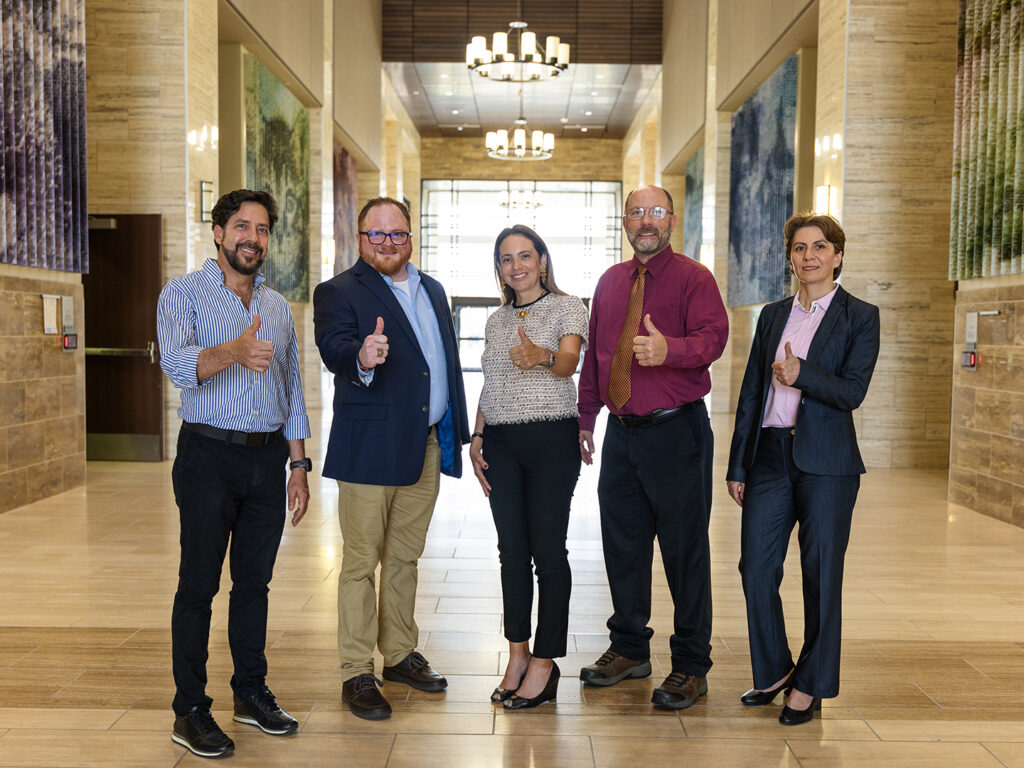
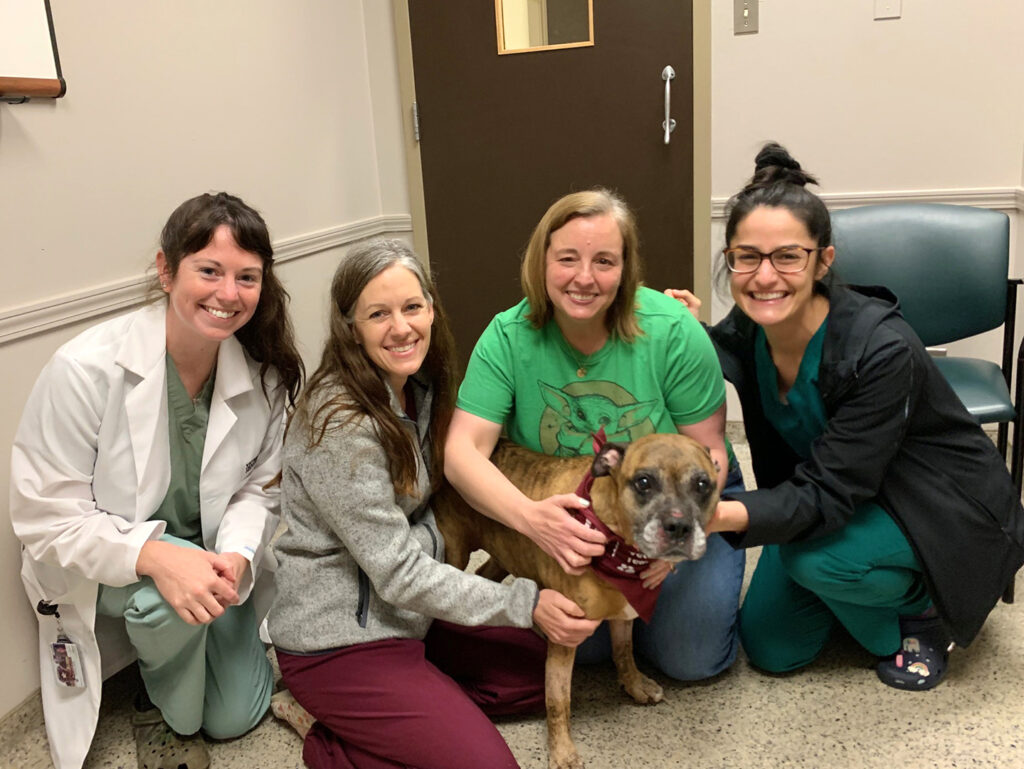
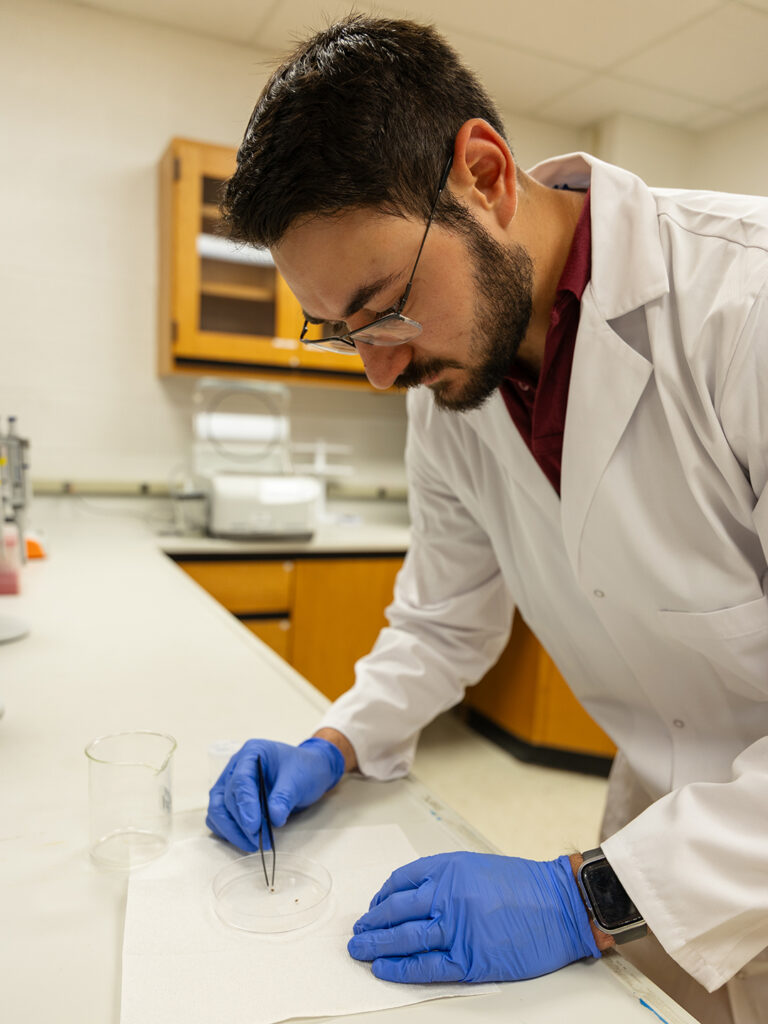
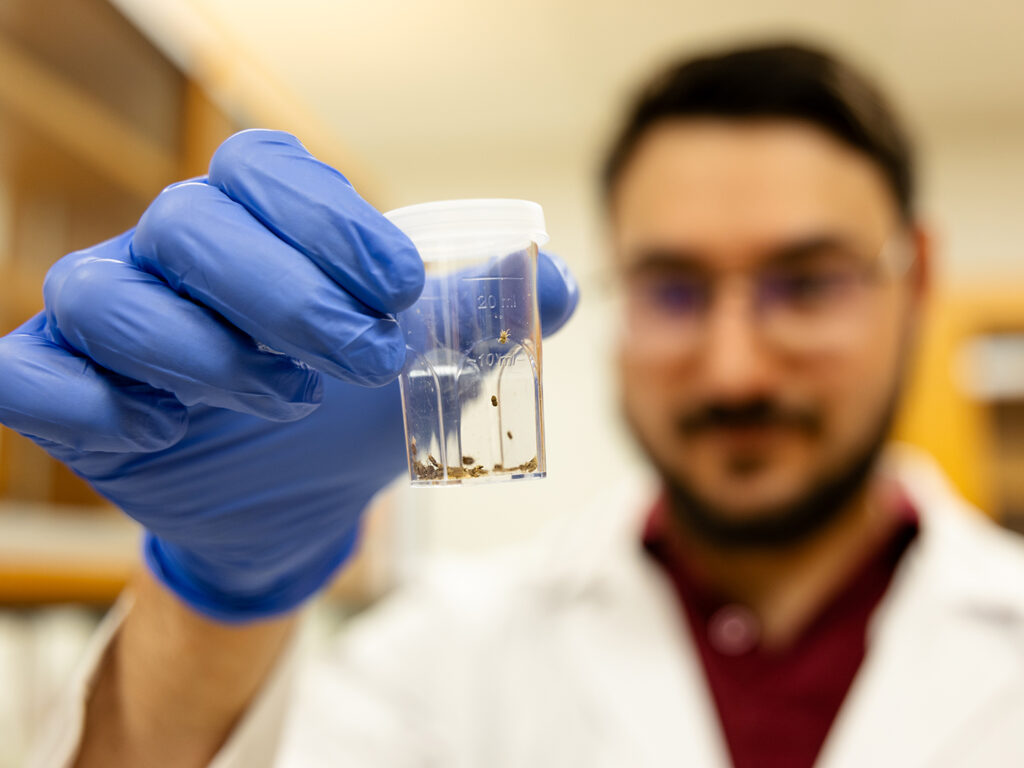
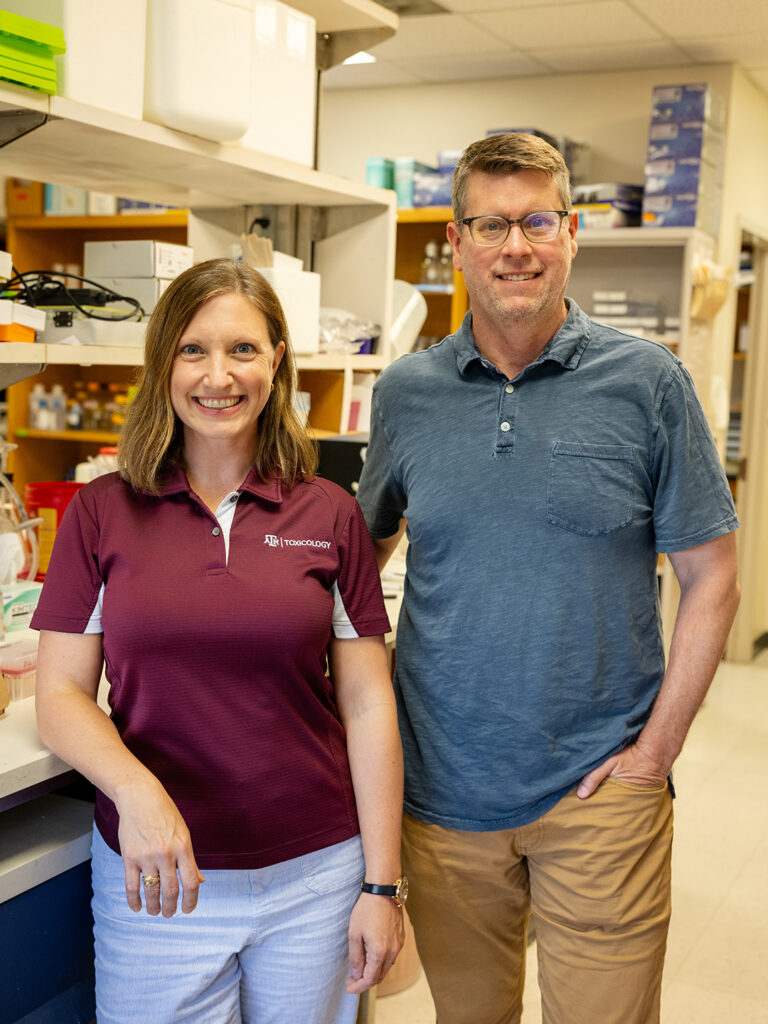
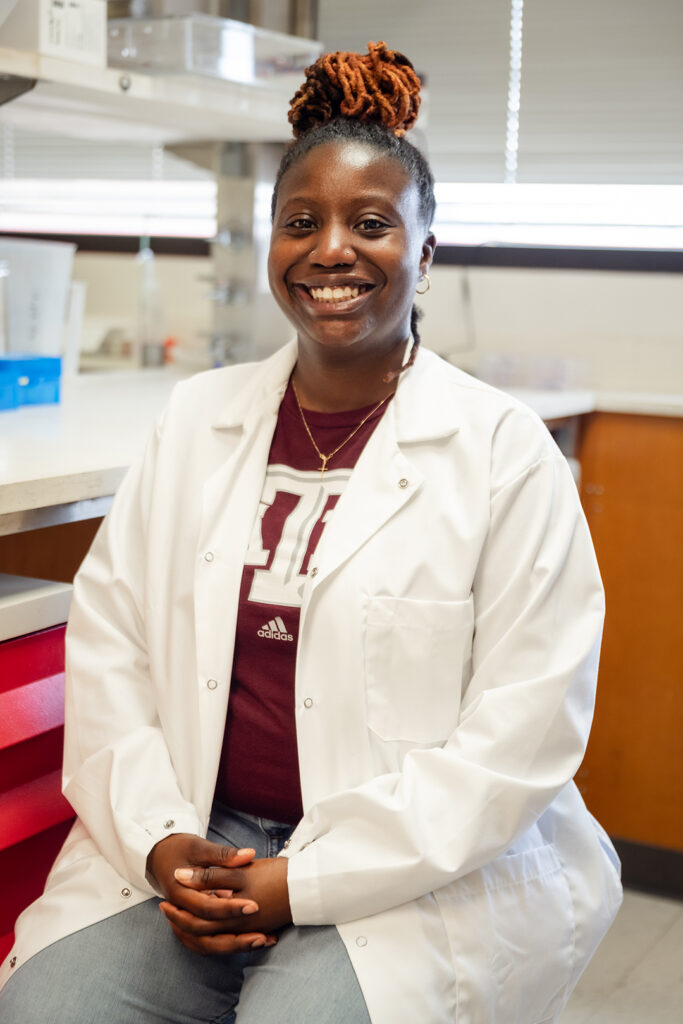
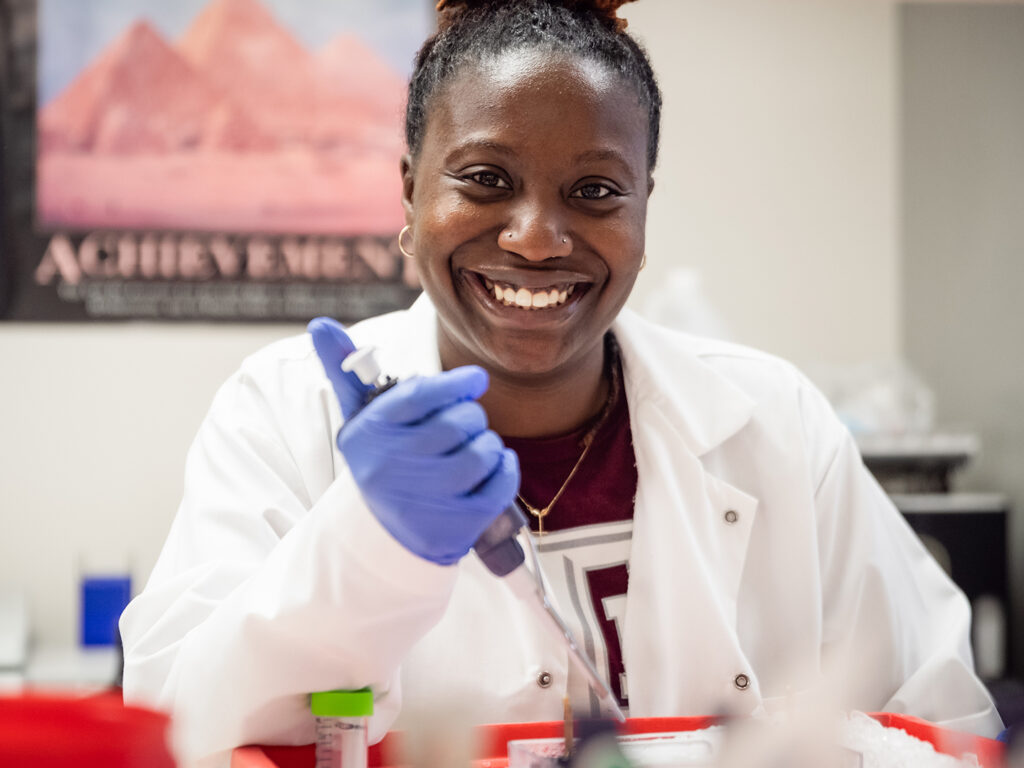
Senior research associate Daniel Garcia, assistant research scientist Dr. Christopher Laine, Dr. Angela Arenas, program coordinator Vince Hardy, and postdoctoral research associate Dr. Anna Yeristyan Photo by Karis Olson, Texas A&M School of Veterinary Medicine & Biomedical Sciences
A research team at the Texas A&M School of Veterinary Medicine & Biomedical Sciences (VMBS) has received a $5 million grant from the United States Department of Defense’s Defense Threat Reduction Agency to support the detection and prevention of brucellosis in Armenia.
Brucellosis, which is caused by several bacterial species of Brucella, is a zoonotic disease that can spread to humans from dogs and major livestock species, including cattle, pigs, sheep, and goats. It can have a major impact on a country’s public health and agricultural economy.
The team of Texas A&M researchers, led by VMBS associate professor Dr. Angela Arenas, will conduct a five-year study of brucellosis in Armenia to evaluate the presence and prevalence of each Brucella species in animals and dairy products; to improve local detection capabilities; and to provide education and training to Armenian scientists, policymakers, and community members.
Their work will be conducted in partnership with the Reference Laboratory for Especially Dangerous Pathogens (RLEDP), part of Armenia’s Republican Veterinary-sanitary and Phytosanitary Center of Laboratory Services.
“Brucellosis is one of the most common diseases transmitted from animals to humans in resource-limited settings,” Arenas said. “It poses a significant threat to humans due to the high risk of infection from the consumption of unpasteurized milk and its products.
“In Armenia, the nature and extent of the disease remain unknown,” she said. “This project will allow us to better understand the situation in order to develop appropriate countermeasures to stop the disease spread.”
Brucellosis: An International Threat
Brucellosis is currently widespread and underdiagnosed in many countries like Armenia, largely because of a lack of local disease awareness and diagnostic capacity.
Previous studies have shown that many infected Armenians had consumed unpasteurized dairy products and that the country’s veterinarians and physicians have a lack of awareness of the disease and its symptoms.
Although brucellosis can spread between animals and to people, it causes different symptoms in each; infected animals tend to have reproductive problems, while infected people can have broad symptoms ranging from lifelong infection to a serious acute illness similar to malaria.
According to the U.S. Centers for Disease Control and Prevention, brucellosis is included in the second-highest category of potential bioterrorism agents because of its moderate ease to disseminate; its moderate morbidity rates; and its special diagnostic needs.
“Brucella is considered a biological threat due to the low number of bacteria required to cause infection,” Arenas said. “In addition, disease manifestation is non-specific, meaning that it causes generic flu-like symptoms, and it is, therefore, usually misdiagnosed.
“The research generated here will have a significant positive impact for the country because, for the first time, we will know the disease status and the risks,” Arenas said. “This research will allow the Armenian government to develop a control plan to stop the spread of brucellosis.”
###
For more information about the Texas A&M College of Veterinary Medicine & Biomedical Sciences, please visit our website at vetmed.tamu.edu or join us on Facebook, Instagram, and X.
Contact Information: Jennifer Gauntt, Director of VMBS Communications, Texas A&M College of Veterinary Medicine & Biomedical Sciences, jgauntt@cvm.tamu.edu,979-862-4216
The mere mention of the word “ticks” may send shivers down the spines of all within earshot. These minuscule parasites have garnered an infamous reputation for latching onto the flesh of cherished pets and unsuspecting owners, alike, on their summer morning walks through grassy trails.
Despite their seemingly harmless size, ticks can carry various diseases with much larger consequences for animals and their owners.
Dr. Dana Kneese, a clinical assistant professor at the Texas A&M School of Veterinary Medicine & Biomedical Sciences, describes how pet owners can equip themselves to handle the unwanted presence of ticks and their potential disease transmission.
Identifying The Problem
Ticks are parasites in the arachnid family, which means they have eight legs; while the nymph stage brings bites that are often undetected due to their poppy-seed size, they are easily identifiable once they reach the adult stage and continue the search for an unsuspecting animal to latch onto for their next meal.
“They have an oval body that’s flat but can be distended if it’s engorged with blood from its host,” Kneese explained. “The capitulum, or head, contains extended mouthparts that embed and anchor the tick in its host to feed on a blood meal.”
Once an owner has discovered a tick feasting on their pet, identifying the tick species can help gauge the level of potential harm, as some that carry more risk of certain diseases over others.
To identify a specific type of tick, owners should consider several factors.
“The Brown Dog Tick is reddish brown in color, smaller but more elongated. The American Dog Tick is brown with white markings,” Kneese said. “The Black-Legged Tick, most commonly known as the deer tick, has a brown body with dark legs. Lone Star Ticks are named for the single white spot on the backs of adult females.”
Geography also has proven useful in identifying the severity of tick-related diseases. For instance, in recent years Massachusetts has seen an uptick in tick-borne Lyme disease, which is contracted by both animals and humans from black-legged (deer) ticks.
Other diseases carried by specific ticks include:
Babesiois — an infection of red blood cells leading to malaria-like symptoms — carried by black-legged (deer) ticks and castor bean ticks.
Ehrlichiosis — an infection leading to potentially fatal flu-like symptoms — carried by lone star ticks, and black legged (deer) ticks.
Rocky Mountain spotted fever — an infection leading to fever, loss of appetite, and rash — carried by American Dog tick, Rocky Mountain Wood tick, Lone Star tick, and Brown Dog tick.
Lyme disease — an infection leading to joint pain, lethargy, and fever — carried by black-legged (deer) ticks, and castor bean ticks.
Educated Resolutions
In addition to knowing the types of ticks and which diseases they carry, Kneese said it’s also important to understand the basics of how these diseases pass from ticks to pets.
“If the tick is carrying any disease, the longer the tick remains embedded in your furry friend, the higher the likelihood of transmitting diseases when taking a blood meal,” Kneese stated.
To ensure the safety of your pet, do not try to crush, burn, or use alcohol to remove a tick that has latched onto an animal. These commonly assumed resolutions can, in reality, act as a catalyst for a disease to be transmitted, according to Kneese.
“What you want to do is use tweezers and grasp the tick as close to the skin as possible. With steady and sustained motion, pull on the tick until it’s free from the skin,” Kneese said. ”Most of the time if the head stays in the pet after removal of the tick, the pet may have an inflammatory reaction in that area, so it’s important to monitor the site. If your pet develops any lethargy, abnormal behavior, or reaction at the site of the bite, call your veterinarian.”
Safeguarding Against Ticks
The best thing an owner can do to ensure their furry friends stay happy and healthy is to schedule a consultation with a veterinarian to discuss tick, flea, and heartworm preventatives. After all, it is the owner’s responsibility to stay vigilant of the possible bloodthirsty invaders lurking within the fur of our pets.
“It’s also important to check your pets for ticks, especially if they have been romping around in the woods, near wooded areas, or tall grass,” Kneese said.
Whether exploring new terrain on vacation, moving to a new area, or remaining in a familiar community, it is vital to stay aware of the prevalence of ticks and the potential diseases they carry that can harm the health of furry friends.
Pet Talk is a service of the College of Veterinary Medicine & Biomedical Sciences, Texas A&M University. Stories can be viewed on the web at vetmed.tamu.edu/news/pet-talk. Suggestions for future topics may be directed to vmbs-editor@tamu.edu.
You never know when the relationships you make in school will turn into lasting friendships…or when those friendships could end up saving a life.
For Dr. Kelley Thieman Mankin and Dr. Heather Hendrickson, a small animal veterinarian in St. Louis, Missouri, their friendship began during veterinary school at the University of Missouri.
“We were in the same anatomy group,” Thieman explained. “Her maiden name is Thomas and mine is Thieman. We were friends all throughout vet school.”
Now a small animal soft tissue surgeon at the Texas A&M Small Animal Teaching Hospital (SATH), Thieman recently began collaborating on a Canadian clinical trial that aims to develop new surgical techniques for treating pancreatic cancer in dogs.
What she didn’t know when that project began was that she would end up saving the life of her friend’s beloved family pet.
Meeting Coco
Hendrickson first met Coco as a patient at Webster Groves Animal Hospital in St. Louis, where Hendrickson works.
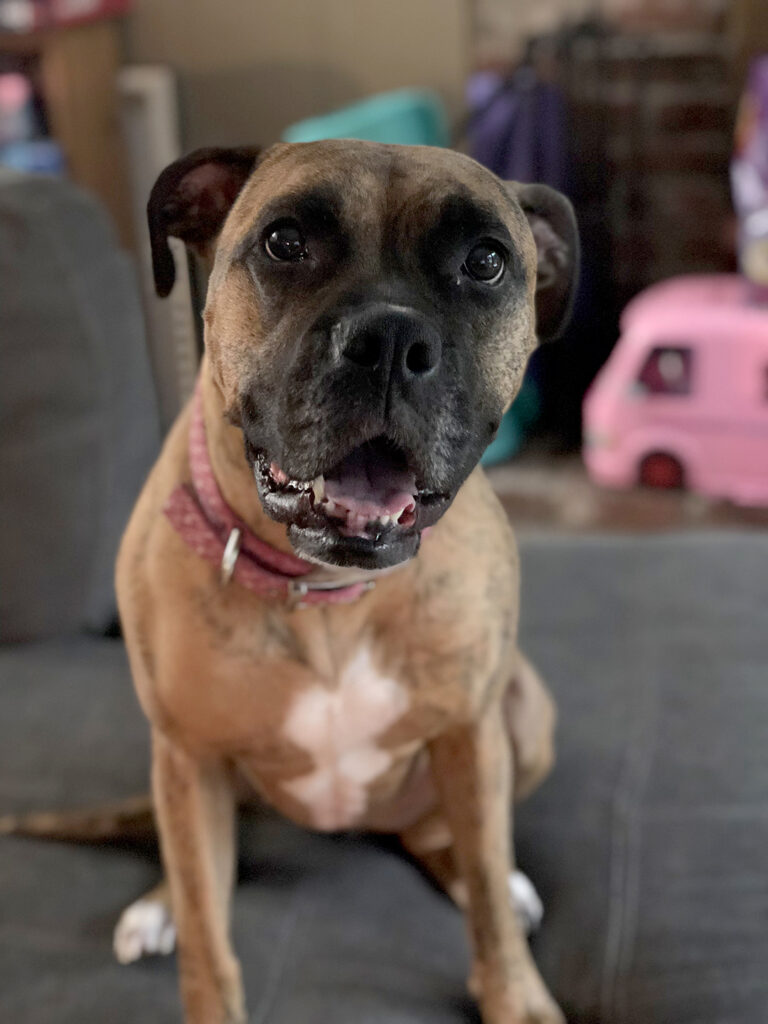
“She had been hit by a car,” Hendrickson said of the boxer mix. “Her leg was broken in multiple places, and she needed immediate help.”
Since Coco also needed a home, Hendrickson quickly decided to make the 9-month-old a part of the family.
While Hendrickson originally had some reservations about how the young dog would behave around her family, and especially her kids, Coco turned out to have the perfect temperament.
“She’s one of those dogs who’s so sweet, even with kids,” Hendrickson said. “Even having just had surgery, she let my kids pet her, and we knew we had to give her a chance. We’re very glad we did.”
Back in March, Hendrickson noticed that Coco was having episodes of weakness, which were then followed by several seizures. She started running tests on Coco, which revealed that the dog had extremely low blood sugar.
“That’s when we started to ask whether this could be an insulinoma,” Hendrickson said.
Insulinomas are tumors that form in the pancreas. They cause the body to produce too much insulin, which causes low blood sugar and, eventually, seizures. While low blood sugar and seizures are common symptoms of many different health conditions in dogs, insulinomas are rare.
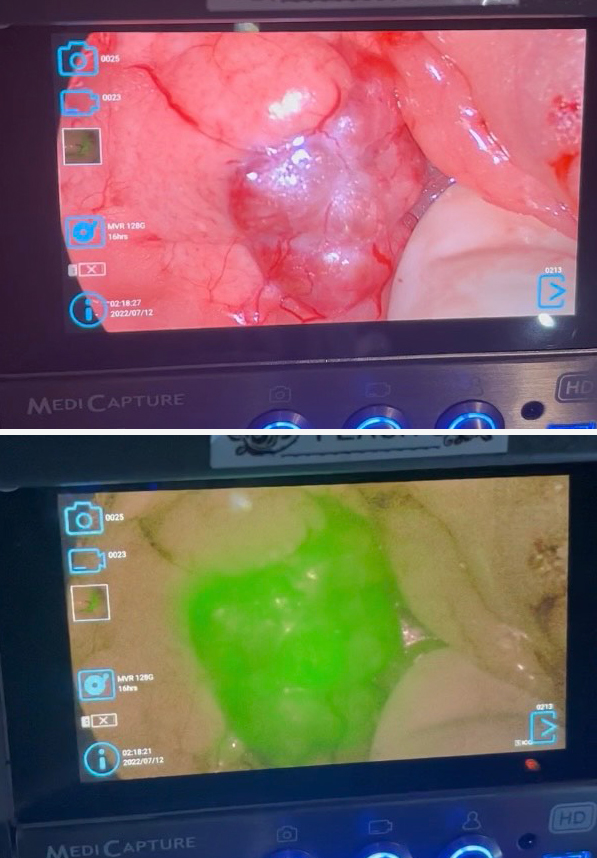
Top: Coco’s insulinoma on a surgical screen seen with normal light Bottom: The tumor seen with near-infrared light glowing due to the accumulation of Indocyanine Green (ICG) dye
Helping A Friend In Need
Knowing that Coco needed to see a specialist to remove the tumor, Hendrickson contacted Thieman.
“It was just serendipitous,” Thieman said. “She wanted me to do the surgery because we’re friends, and it just so happened that I was opening a clinical trial.”
So she suggested to Hendrickson that Coco become the first patient in her trial.
Thieman’s clinical trial is a partnership with the Ontario Veterinary College (OCV) at the University of Guelph in Canada. Texas A&M is one of a small number of sites participating in the trial.
“The goal of the trial is to help make insulinoma surgery easier,” Thieman said. “Currently, when we are performing procedures to remove insulinomas, we sometimes find that the tumors can be hard to see because they look like normal pancreas tissue. You get into surgery, and it can be difficult to find where the tumor is.”
To make the procedure easier and more accurate, Thieman and the other researchers in the trial are using a special dye called Indocyanine Green (ICG).
“We give the patients ICG before surgery,” Thieman explained. “The cancer cells soak up the dye but healthy pancreas cells don’t. Then, we use a special camera during surgery that makes the ICG glow.”
Using the dye also makes it easier to see exactly where the edges of the tumor are so the veterinarian can remove as much cancer as possible.
“Sometimes they’ll have more than one tumor,” Thieman said. “The dye helps us identify all of the abnormal sections.”
A Hopeful Outcome
After learning about the trial, Hendrickson and her family changed their spring break plans and headed to Texas with Coco. Initially, the family’s main concern was that Coco would have a seizure while on the road.
“I thought it was going to be a lot worse, because Coco had never traveled more than a couple of hours,” Hendrickson said. “But she was a trooper. I brought a ton of different medications in case she did have a seizure, but she did amazing. My kids kept her entertained, and we just sort of made a vacation of it.”
Once Coco arrived at the SATH, she was given a dose of the ICG dye. On the second day, surgery began.
Thankfully, the dye made Coco’s tumor very easy to see.
“As soon as we took out the tumor, Coco’s blood sugar began to look more normal,” Thieman said. “That was the exciting part for us.”
“Everyone at the hospital was wonderful,” Hendrickson said. “I’m not even a local veterinarian, but everyone was so great about keeping me in the loop. Everyone was so helpful.”
Within just a few days of the surgery, the now 10-year-old was doing well enough to head back home with her family.
“Coco is doing amazing,” Hendrickson said, “We actually had to keep her calm at first because she wanted to run around and play. We couldn’t be happier with the outcome.”
Dr. Eileen Donoghue, Thieman, Coco, Hendrickson, and Dr. Kelly Engler, who worked on Coco’s case as a fourth-year
veterinary student
The Trial Continues
Coco’s surgery is an important step toward improving health outcomes for dogs with pancreatic cancer. However, Thieman and her collaborators still need additional applicants for the trial, which is administered by the Office of Veterinary Clinical Investigation. If you are interested in applying, more information is available on the trial’s Study Pages site at tx.ag/PancreaticCancer.
Applicants can be dogs of any breed, age, or sex that have an insulinoma. The trial itself only takes two days, including an overnight stay at the hospital. In most cases, the patient will be discharged to go home on day three, though it’s possible some patients may need additional support care during recovery.
While benefits from participating in the trial aren’t guaranteed, it’s possible that the new technique will lead to a more thorough removal of the insulinoma. Owners also receive a $2,000 credit toward covering their expenses.
“Pancreatic cancer has a high mortality rate in dogs if patients don’t get treatment quickly,” Thieman said. “By removing the tumors that cause excess insulin, we’re hoping to give patients and their owners more time together.”
For more information about the Texas A&M College of Veterinary Medicine & Biomedical Sciences, please visit our website at vetmed.tamu.edu or join us on Facebook, Instagram, and Twitter.
Contact Information: Jennifer Gauntt, Director of VMBS Communications, Texas A&M College of Veterinary Medicine & Biomedical Sciences; jgauntt@cvm.tamu.edu; 979-862-4216
Researchers at the Texas A&M School of Veterinary Medicine & Biomedical Sciences (VMBS) have uncovered how natural selection “rewilds” domestic rabbits.
The study, recently published in Nature Ecology and Evolution, helps answer the question of how normally tame rabbits — which have many natural predators — can become a force of ecological destruction when purposefully or accidentally reintroduced to the wild.
Here Comes Peter Cottontail
Every gardener knows how much of a nuisance rabbits can be, but many people may not realize the magnitude of ecological destruction that rabbits are capable of.
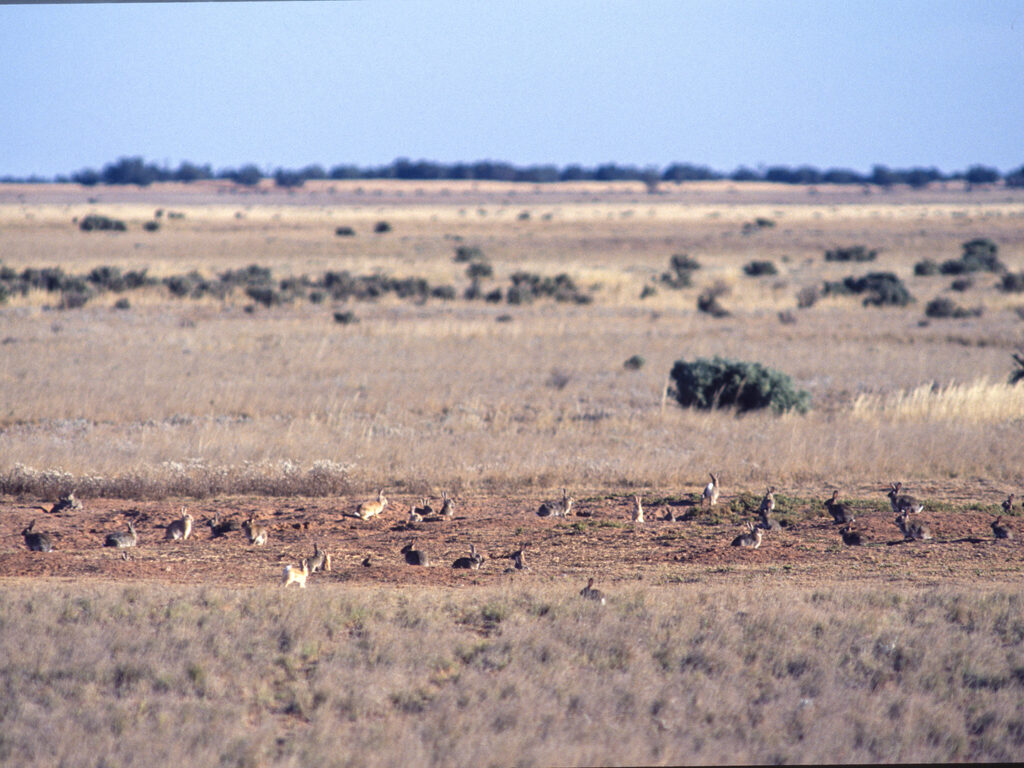
“The classic example is Australia, which was colonized by rabbits to the point that it caused one of the largest environmental disasters in history,” said Dr. Leif Andersson, a professor in the VMBS’ Department of Veterinary Integrative Biosciences and a professor at Uppsala University in Sweden. “In 1859, an Englishman named Thomas Austin released 24 European rabbits onto his estate as game animals, but the population of rabbits exploded, causing an infestation that continues to cause millions of dollars’ worth of crop damage each year.
“What is interesting is that rabbits had already been introduced to Australia in 1788. Why did Austin’s rabbit release cause such a population explosion and not the earlier release?” he said.
Thanks to the recent study, scientists now believe that they have the answer.
“After sequencing the genomes of nearly 300 rabbits from Europe, South America, and Oceania, we found that all of them had a mix of feral and domestic DNA,” Andersson said. “This was not what we had expected to find — we expected that feral rabbits were domestic rabbits that have somehow relearned how to live in the wild. But our findings show us that these rabbits already had a portion of wild DNA helping them survive in nature.”
Andersson’s discovery explains why the 24 rabbits introduced to the Australian landscape in 1859 were so quick to adapt to living in the wild — they already possessed the right genetic traits that would help them thrive.
Rewilding Domestic Rabbits
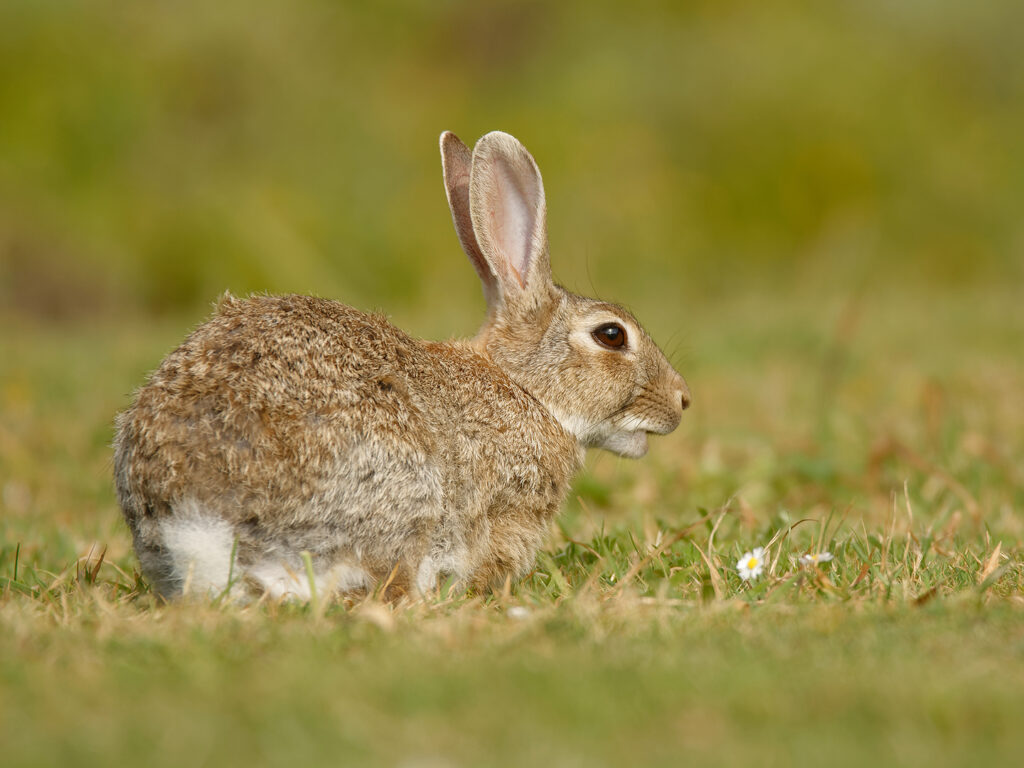
A wild European rabbit
But returning a species to the wild after centuries of domestication isn’t a simple process. For example, domestic rabbits have been bred by humans to be more docile and trusting than their wild counterparts. They are also often bred to have certain coat colors that humans find attractive — like all-black or all-white coats — that would make them easier for predators to spot in the wild.
“During the rewilding process, natural selection removes many of these domestic traits because they are maladaptive — or unhelpful for survival — in the wild,” Andersson explained. “But it’s not just coat colors that change. We also observed that many of the genetic variants removed during natural selection are related to behavior, like tameness. This brings back the wild flight instinct that is important for eluding predators.”
The entire process appears to depend on whether the rabbits already have wild genes in their DNA as a sort of foundation for the rewilding process.
“We hope that this study will help lawmakers understand the importance of preventing domestic animals from being released into the wild,” Andersson said. “This project has helped us understand not only how rabbits become feral but also how other species like pigs and cats can become feral nuisances.”
For more information about the Texas A&M College of Veterinary Medicine & Biomedical Sciences, please visit our website at vetmed.tamu.edu or join us on Facebook, Instagram, and X.
Contact Information: Jennifer Gauntt, Director of VMBS Communications, Texas A&M College of Veterinary Medicine & Biomedical Sciences, jgauntt@cvm.tamu.edu,979-862-4216
Isaac Neuman Photos by Karis Olson, Texas A&M School of Veterinary Medicine & Biomedical Sciences
As someone who grew up in Junction, Texas, a small town of less than 2,500 people, third-year veterinary student Isaac Neuman felt right at home at Texas A&M’s Veterinary Education, Research, & Outreach (VERO) campus in the Texas Panhandle when he entered the 2+2 Doctor of Veterinary Medicine (DVM) program in 2022.
Housed on the West Texas A&M University campus, the Texas A&M School of Veterinary Medicine & Biomedical Sciences’ (VMBS) VERO program offers each class of 18 Aggie veterinary students the opportunity to spend the first two years of their DVM education in the rural community of Canyon, Texas.
“The faculty and staff at VERO are just incredible at making you feel like you belong there,” Neuman said. “Being in that small, intimate class size really makes you feel like you’re part of a family.”
For Neuman, his time at VERO was also essential for developing the interests and goals that are shaping his career as a veterinarian.
Finding A Community
Neuman was always surrounded by animals growing up, but he didn’t develop a true interest in veterinary medicine until his freshman year of high school.
“I needed to get some community service hours for National Honor Society,” Neuman recalled. “My English teacher was married to the one vet in Junction and suggested I help him give free vaccines at Rock Springs. I really liked it, and it was a great way to give back to the community. I thought to myself, ‘I think I could do something like this for my career.’”
Having grown up watching Aggie football with his dad and uncle, Neuman knew that Texas A&M was where he wanted to complete his higher education. Texas A&M’s biomedical sciences (BIMS) program also seemed like a perfect fit because of its focus on preparing students for professional medical programs.
Moving to the much larger town of College Station was a bit of a culture shock for Neuman, but he soon found several smaller groups to connect with.
“It was really overwhelming going from a graduating class of 48 to a Monday chemistry class of 300 people,” he said. “Then I took a veterinary entomology course as a BIMS elective and got really interested in entomology, so I decided to double major. The entomology department was small and felt like just what I needed to help ground me and get me through undergrad.”
He also found support through student organizations, including the Pre-Veterinary Society, the Human Environmental Animal Team, and the Undergraduate Entomology Student Organization.
Neuman works with ticks for his project studying tick-borne relapsing fever.
One connection made during those years turned out to be vital in finding his future home at VERO.
“I worked part-time in the Texas A&M Veterinary Medical Teaching Hospital pharmacy, and I was talking to my boss, Dr. Amy Savarino, about my interests in vet med,” Neuman said. “She knew my struggles with huge class sizes and the competitiveness of it, so she told me about VERO. After hearing about the small class size and the focus toward rural mixed practice, I knew that was what I wanted to do.”
Back To Small-Town Living
Neuman graduated with his bachelor’s degree in December 2021, and after spending about half a year working full-time at the pharmacy, he packed his things and moved to the Texas Panhandle.
“It felt weird going from the hustle and bustle of College Station to Canyon, where there’s only 12,000 people and you can walk from one end of campus to the other in 10 minutes,” he said. “But it was honestly exactly what I wanted. I had really missed that small-town vibe.”
Although the campuses are more than 500 miles apart, the VMBS takes great care to ensure that the students at VERO receive the same outstanding education as their classmates in College Station.
“The faculty and staff worked really hard to give us opportunities,” Neuman said. “We even got a lot of opportunities that we wouldn’t have had in College Station, because there were only 18 students in each class, so everyone could participate in everything.”
The large animal focus at VERO led Neuman to discover a new interest within veterinary medicine.
“I enjoy working with all animals, but I have really gotten interested in cattle after being at VERO,” he said. “I worked at a dairy last summer for a couple of weeks and got to see how it operated, and I really enjoyed it. The cows were just so sweet, and I really liked working with them.”
As he got to know his classmates and professors, Neuman was more thankful to be back in a smaller town. As time went on, many of those connections began to feel like family.
“Cade Holden, a VERO student in the DVM class of 2025, and I did an internship together in Las Vegas,” Neuman said. “We were just acquaintances at the time, but when my fiancée came out so we could get married in Vegas, Cade became my best man and we got really close after that.”
When it came time to move to College Station in preparation for the third year of vet school, Neuman was both excited to see old friends again and sad to leave the VERO faculty members he had gotten to know so well.
“Dr. (Lisa) Lunn is the realest person I’ve ever met, and I felt like I could talk to her about anything,” he said. “I also really enjoyed speaking with Dr. (Yvonne) Wikander because she has a different way of thinking that I hadn’t been exposed to before. By the end of her class, I felt like I truly learned the material and didn’t even have to study for the final.
“Starting at VERO, with the small class size and all the opportunities we got there, made me feel really prepared to go into my third year in College Station,” he said.
Exploring New Opportunities
While Neuman has maintained the interest in rural mixed animal practice that he developed in high school, he has also enjoyed finding ways to explore his other interests in public health and vector-borne diseases.
This summer, he’s completing the VMBS’ Veterinary Medical Scientist Research Training Program (VMSRTP) while conducting research with Dr. Meriam Saleh, a veterinary parasitologist and clinical assistant professor at VERO, on how geographic differences may impact the prevalence of the bacteria that causes tick-borne relapsing fever.
“I’ve really enjoyed going out into the field to collect samples of the tick that spreads the bacteria and seeing how my data can have a real impact on public health,” Neuman said.
“My goal is still to do rural mixed practice, but eventually I want to transfer into the public health sector and work with the Centers for Disease Control and Prevention, World Health Organization, or Texas Animal Health Commission,” he said.
There are also many ways Neuman can contribute to public health as a rural practitioner.
“It’s important to be able to correctly explain to clients the best way to care for their animals to protect not only their animals but also themselves,” Neuman said. “For example, not everyone knows how important regular flea and tick preventatives are in reducing the rate of public health concerns like Lyme disease.
“There are so many diseases that are under-diagnosed, so keeping up with continuing education and current literature is also really important for veterinarians, especially rural health practitioners,” he said. “If there’s anything we learned from COVID, it’s that there will always be the potential for pandemics and epidemics, but we can try to mitigate it by staying current with public health knowledge.”
As Neuman prepares for his final two years of veterinary school, he looks forward to expanding his knowledge and continuing on to new experiences, with the goal of becoming even more prepared to serve the community he’ll call home as a veterinarian.
###
For more information about the Texas A&M College of Veterinary Medicine & Biomedical Sciences, please visit our website at vetmed.tamu.edu or join us on Facebook, Instagram, and X.
Contact Information: Jennifer Gauntt, Director of VMBS Communications, Texas A&M College of Veterinary Medicine & Biomedical Sciences, jgauntt@cvm.tamu.edu,979-862-4216
Drs. Natalie Johnson and Weston Porter Photo by Jason Nitsch ’14, Texas A&M School of Veterinary Medicine & Biomedical Sciences
The Texas A&M Center for Environmental Health (TiCER), a National Institute of Environmental Health Sciences (NIEHS) Environmental Health Sciences Core Center, will be returning to the Texas A&M School of Veterinary Medicine & Biomedical Sciences (VMBS) with a $7.6 million grant for the center’s new funding cycle.
Under the new leadership of Dr. Weston Porter, a VMBS professor in the Department of Veterinary Physiology & Pharmacology, the center will promote research in four areas of environmental health — climate change and health, environment and metabolism, environmental justice and policy, and environmental stressors and their responses.
The center also will offer several tiers of research funding to encourage scientists to engage with community organizations, while also making funding more accessible for junior faculty.
“On the basic science side, we’re looking at tissues to see how chemicals found in the environment impact the body on a cellular level,” said Dr. Natalie Johnson, TiCER associate director and an associate professor in the Texas A&M Department of Environmental and Occupational Health. “On the community side, we’re looking at how exposures impact people and how we can advise them to stay safe.”
Core Centers like TiCER exist to facilitate collaboration between researchers across different scientific disciplines, even those whose main focus may not be environmental health. TiCER is one of only 26 Core Centers in the United States, and funding renewals are highly competitive.
Funding from the new grant cycle will support research projects in the center’s four major themes of environmental health, including small research vouchers and larger pilot grants intended to support large sections of a project.
“In addition to continuing support for current members of the center, one of our goals is to bring new people into the NIEHS and encourage them to apply for grants,” Porter said. “This is especially true for early-career scientists who may have new ideas worth trying but need resources to make them happen.”
The return of TiCER will also make Texas A&M one of the only universities — and the VMBS the only veterinary school in the nation — to house all three of the top NIEHS environmental health programs. These include grants supporting the Texas A&M Superfund Research Center and the Ruth L. Kirschstein Institutional National Research Service Award.
Research That Serves Texans
At TiCER, scientists are teaming up with community organizations to both share important health information and learn from Texans where they need to direct their research next.
“Working with the community is an essential part of how TiCER operates,” Johnson said. “The established way that basic science often gets translated to public health is one-directional — from ‘bench to bedside,’ or, from the lab bench to the hospital. But we want to interrupt that pattern so that people don’t have to go to the hospital in the first place. For us, research is from bench to the community and back.
“For example, in my own research, I look at how air pollution impacts the developing fetus. I ask questions like, ‘What does it mean for an infant’s immune system development when the mom breathes in pollution during pregnancy?’” she said. “It’s great to understand the science, but then we need to get the message back to the community, so people know what precautions to take, and work with them to understand how they are impacted.”
Having TiCER at the VMBS is ideal because of Texas A&M’s location in College Station, which is right in the center of the Texas Urban Triangle, a region that connects Houston, Dallas-Fort Worth, and San Antonio and Austin.
“Because we’re a state institution, it’s really part of our mission as faculty and researchers to reach as many Texans as possible. Our location will allow us to have access to some of the most heavily populated areas of Texas as well as rural communities in between,” Johnson said.
Opening Doors For New Research
One major goal for TiCER’s new leadership is to make sure junior faculty and those who have not worked with the NIEHS before feel like they, too, can participate in environmental health research.
“Once you get one grant to fund part of your research, it’s easier to get others that will help you continue,” Porter said. “But for junior faculty, it can be difficult to get that first project stage started. We hope that TiCER will help generate grants and make it more possible for early career scientists to get started. These grants will also benefit researchers at any point in their careers who have new ideas they want to test before applying for larger amounts.”
TiCER has multiple levels of grants, including pilot project awards for up to $50,000, as well as smaller vouchers that can award $1,000, $5,000, or $10,000. The different amounts allow TiCER to fund a variety of projects in different stages, whether researchers need to kickstart a small study or fund a major part of a larger project.
“We also help scientists look at their work from an environmental and public health angle to help them with funding,” Porter said. “By helping researchers make connections between the work they do and the impact it has on people’s health, we can make it more likely that they will get the funding they need to continue.”
For more information about TiCER, visit tx.ag/TiCER.
###
For more information about the Texas A&M College of Veterinary Medicine & Biomedical Sciences, please visit our website at vetmed.tamu.edu or join us on Facebook, Instagram, and X.
Contact Information: Jennifer Gauntt, Director of VMBS Communications, Texas A&M College of Veterinary Medicine & Biomedical Sciences, jgauntt@cvm.tamu.edu,979-862-4216
The anticipated celebration of America’s Independence Day calls for an annual celebration full of fireworks, grilling, and cheers. Amid the fun-filled chaos, however, sometimes lies the overlooked care of pets that may have a contrasting and much more fear-filled perspective of the Fourth of July.
Dr. Christine Rutter, a clinical associate professor of emergency and critical care medicine at the Texas A&M School of Veterinary Medicine & Biomedical Sciences, helps owners prepare for the underlying pet hazards that are present during the noisy and food-abundant festivities of the upcoming holiday.
Keeping Your Hotdogs To Yourself
“Puppy-dog eyes” has been coined as a tool of persuasion by society for millennia, and for good reason — one look and your leftover dinner becomes your canine companion’s treat.
Despite the charm of a patiently wagging tail, Rutter implores guests attending Independence Day celebrations to resist the pull of offering party foods that could unintentionally put the animal’s health at risk.
“Corn cobs (which cause GI obstruction), grease (from the ground or in grill grease traps), and tasty bits from unsecured trash or handouts commonly cause problems,” Rutter said. “Dogs typically eat a pretty regular diet, so abrupt dietary changes can really throw them into havoc.”
Just because the grill-heavy day will end in a food coma for us does not mean our pets should experience the same fate. Rutter offers an alternative approach to turning away the really cute and cuddly stars of any family get-together.
“I provide carrot sticks, sugar snap peas, and melon, or other healthy treats, for people who want to give something to my dogs,” Rutter said. “It keeps the dogs from being handed a hotdog by well-meaning friends.”
Lost In The Lights
Sitting at home on a seemingly normal night and hearing the loud crack of a firework might raise a sense of confusion and alarm for anyone. Now, imagine these bursts of fireworks multiplied tenfold for pets that do not understand the celebratory purpose of these jarring sights and sounds.
“You can see how, from their perspective, the loud noises and flashes are quite triggering,” Rutter said. “Dogs can act out by hiding, house soiling, destroying things, becoming defensive, or running away.”
It is difficult for owners to imagine a more heart-wrenching experience than discovering that a pet has gone missing due to the disorientation of the Fourth. For this reason, it is vital to not minimize the intimidation factor that fireworks can bring to pets of any and all sizes, according to Rutter.
For extreme cases of firework anxiety, Rutter suggests that medication can offer relief but advises against giving human medications due to their different effects on animals’ systems.
“Medications should be given to a pet before the fireworks begin to help minimize the fear they experience,” Rutter said. “Waiting until they are already upset makes the fear more difficult to manage. Owners should ask their vet how early and how often to give medications; every medication is different.”
Reining In Their Freedom
Despite the reverence given to independence on this holiday, pet owners should strive to tighten the leash on their pet’s traversing.
“It’s best to keep pets indoors in an environment they are familiar with,” Rutter said. “Be sure the space is cleanable, has minimal furniture (or things that could be destroyed), and consider a white noise generator.”
Variables such as anxiety levels, disagreeable food access, firework discombobulation, and more all vary from pet to pet. In the unknown of what the zealous excitement that the Fourth of July brings as a form of stress to your beloved furry friend, it is always recommended to proceed with caution and prepare to pair your celebrations with their care.
“Be careful not to ‘fawn’ over fearful pets,” Rutter said. “You don’t want them to think you are also afraid based on your tone or actions. Provide stability and consistency for them to reassure them that they will be OK.”
Pet Talk is a service of the College of Veterinary Medicine & Biomedical Sciences, Texas A&M University. Stories can be viewed on the web at vetmed.tamu.edu/news/pet-talk. Suggestions for future topics may be directed to vmbs-editor@tamu.edu.
Hannah Carter Photos by Alyssa Moore, School of Veterinary Medicine & Biomedical Sciences
Hannah Carter, a graduate student at the Texas A&M School of Veterinary Medicine & Biomedical Sciences (VMBS), has received an $80,000 research grant from the Susan G. Komen Foundation to study sirtuins, a type of protein known to reduce signs of aging that may also play a role in breast cancer metastasis — the point at which cancer spreads to additional parts of the body.
The two-year grant, called A Supplement to Promote Inclusion for Research Excellence (ASPIRE), aims to increase the diversity of the breast cancer research workforce by providing funding to trainees from communities historically minoritized and marginalized in research. As supplemental funding, the award is given to trainees who work with established breast cancer scientists.
“This critical investment underscores Komen’s commitment to supporting cutting-edge research and innovative science that will lead to new treatment options for breast cancer, including metastatic breast cancer and other aggressive forms of the disease, and advance personalized breast cancer care, all with the goal of helping people live longer, better lives,” said Dr. Ann Partridge, MD, MPH, chief scientific adviser for Komen.
As one of 32 recipients from 27 prestigious institutions around the world to be selected for an ASPIRE grant, Carter, whose research mentor is Dr. Weston Porter, a professor in the VMBS’ Department of Veterinary Physiology & Pharmacology, hopes that her project will uncover the role that sirtuins have in regulating mitochondria — and, therefore, cancer metastasis — opening doors to new forms of cancer treatment.
“Sirtuins are more commonly studied in the field of aging and neurology,” Carter said. “Finding a connection between sirtuins and metastatic breast cancer would be good news for patients because we might be able to use existing anti-aging drugs as cancer treatments.”
“Susan G. Komen’s work is not complete until we can save all lives from breast cancer, and the research we’re funding today is helping people with breast cancer to live longer with better outcomes,” said Paula Schneider, president and CEO of Komen and a breast cancer survivor. “Komen’s grants will give promising scientists who are in pivotal stages of their careers the support they need to become the next generation of breast cancer leaders and advance research to save more lives.”
Studying Protein Relationships
Carter researches a specific sirtuin known as sirtuin 3 — or SIRT3 — that may play a role in certain changes to mitochondria that are associated with metastasis.
“In healthy cells, SIRT3 helps regulate mitochondrial function, but in unhealthy cells, I hypothesize that it can actually contribute to proliferating cancer cells,” she explained. “Everyone knows that the mitochondria is the powerhouse of the cell, but it does so much more than that. It governs a system of checks and balances that keep cells functioning normally.”
Another protein studied by Porter’s lab, SIM2, is usually present to regulate SIRT3 and to keep it in check, but that doesn’t happen in metastatic cancer cells.
“Loss of SIM2 is an important marker of metastatic cancer,” Carter said. “When it’s no longer present, cells and tumors become more reliant on SIRT3. In some of my previous work, I found that inhibiting SIRT3 actually causes cancerous cells to die. If I can figure out what that interaction is, then we may be able to work toward targeting sirtuins to treat metastatic breast cancer.”
Putting Passion To Work
For Carter, studying the inner workings of cancer metastasis isn’t just a passing interest — it’s part of a lifelong commitment to improving breast cancer research and patient outcomes.
“I want to focus on oncology, specifically breast cancer,” Carter said. “That’s why I joined Dr. Porter’s lab in the first place. I’ve also participated in several breast cancer awareness marches, and right now I’m even partnering with a program that raises awareness in minority communities about breast cancer screening.
“One reason that I’m so passionate about raising awareness for breast cancer screenings is that there’s a lack of information and overall lack of treatment in minority populations, specifically with Black women. Even though Black women are statistically the least likely to get it, they have the highest death rate from breast cancer,” she said.
But raising awareness and advancing cancer research is even more personal for Carter.
“The week of my recruitment interview for Dr. Porter’s lab, my grandmother died of breast cancer,” she said. “And the year before that, my god-mom died of breast cancer, too, so that’s why I’m here.”
As part of the project funded by the new grant, Carter will also work alongside a patient advocate — a breast cancer survivor who speaks for patient interests — as another reminder that her work is never just about science for the sake of new knowledge.
“Understanding the mechanisms at the cellular level is important, but I’ve learned to think about translating everything I do to the clinical setting, to ask myself, ‘How is this helping women?’” she said. “At the end of the day, that’s the most important thing about this project, because if I can prove that anti-aging drugs can be used to treat breast cancer, that will help women in the clinic.”
###
For more information about the Texas A&M College of Veterinary Medicine & Biomedical Sciences, please visit our website at vetmed.tamu.edu or join us on Facebook, Instagram, and X.
Contact Information: Jennifer Gauntt, Director of VMBS Communications, Texas A&M College of Veterinary Medicine & Biomedical Sciences, jgauntt@cvm.tamu.edu,979-862-4216
Two Texas A&M College of Veterinary Medicine & Biomedical Sciences (VMBS) faculty members were included in the top 100 Best Animal Science and Veterinary Scientists in the United States by Research.com, an academic platform that objectively ranks researchers based on scientific publications.
“Drs. Morley and Suchodolski are well-known in the scientific community for their highly impactful research, and it’s nice to see their expertise reflected in Research.com’s rankings,” said Dr. Michael Criscitiello, the associate dean for the VMBS’ Office of Research & Graduate Studies. “Our trainees are fortunate to get to learn from such accomplished scholars whose work greatly enhances our school’s research climate.”
The Research.com rankings are based on the D-index metric, or a researcher’s number of papers and citation values within a specific discipline. The 2024 Best Animal Science and Veterinary Scientists list includes 2,000 researchers from 69 countries.
Dr. Paul Morley
Dr. Paul Morley
In addition to his own research, Morley oversees a team of VERO faculty, staff, and student researchers studying some of the most important challenges in the food animal industry, including antimicrobial resistance and bovine respiratory disease.
Morley’s achievements include 228 peer-reviewed publications and receiving 12,494 citations of his work in other publications. He has also received more than $22 million in research support over his career.
He teaches courses on metagenomic sequencing, bioinformatics, and research techniques for graduate students at the VMBS and West Texas A&M University’s Paul Engler College of Agriculture and Natural Sciences.
Dr. Jan Suchodolski
Dr. Jan Suchodolski
Suchodolski’s research involves working to understand the microbiome and metabolome (the complete set of small-molecule chemicals produced during metabolism) of cats and dogs, including how they interact with antibiotics.
He has published more than 398 scientific journal articles and has been cited 11,775 times in other publications.
Suchodolski’s work has been funded by the American Kennel Club Canine Health Foundation, the United States Department of Agriculture, the U.S. Department of Defense, and more. He recently was also recognized with the American Veterinary Medical Association’s 2024 Career Achievement in Canine Research Award.
###
For more information about the Texas A&M College of Veterinary Medicine & Biomedical Sciences, please visit our website at vetmed.tamu.edu or join us on Facebook, Instagram, and X.
Contact Information: Jennifer Gauntt, Director of VMBS Communications, Texas A&M College of Veterinary Medicine & Biomedical Sciences, jgauntt@cvm.tamu.edu,979-862-4216
Cats are playful, loyal, and fiercely independent pets, which often means they require less maintenance and makes them great life-long companions. Caring for your feline friends can be rewarding, but it can also be challenging, especially when it comes to keeping them mentally and physically engaged.
Dr. Lori Teller, a clinical professor at the Texas A&M School of Veterinary Medicine & Biomedical Sciences, offers some tips for keeping cats stimulated and energized.
The Importance Of Enrichment
Providing enrichment for your cat not only improves their quality of life but also provides a way for them to act on their natural instincts of running, hunting, climbing, and playing.
“Cats need to be mentally and physically engaged for the same reason that we all do — it
is what allows them to live happier and healthier lives,” Teller said. “Physical activity also helps to keep your cat at a healthy weight.”
Aside from the health benefits, enrichment helps cats to be better household companions.
“By keeping cats engaged, they are less likely to become stressed or bored. Cats that are stressed or bored may exhibit inappropriate behaviors, such as not using the litter box or scratching on furniture.”
‘Feeline’ Fine
Feline enrichment comes in many forms, with a variety of cat toys your cat can enjoy on its own as well as activities you can do with your cat.
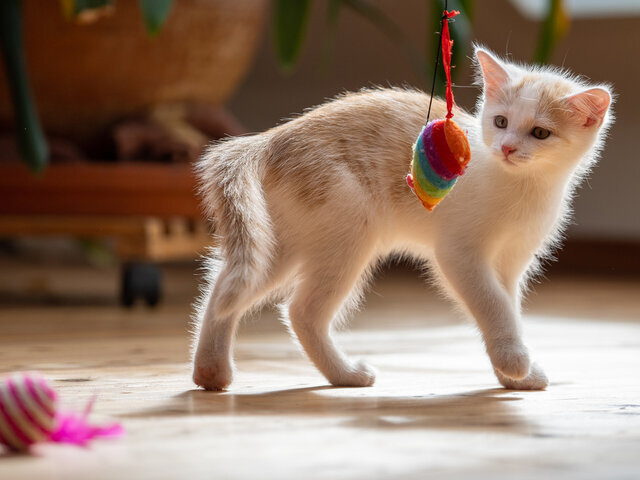
“Some cats enjoy laser pointers, fishing rod-type toys with feathers or ribbons hanging from them, and small balls such as ping-pong balls,” Teller said. “Chasing these things helps cats get some exercise and practice their predation skills.”
If your cat is food motivated, toys with treats are a good option for entertainment.
“Consider using balls or puzzle toys that dispense a cat’s food or some treats when the cat plays with it,” Teller said. “Some cats will truly feel like they ‘hunted’ and caught their dinner. Lots of cats enjoy catnip, and if your cat is one of those, get some catnip-filled toys.”
Providing enrichment can be as simple as saving household items for your cat to play with.
“Many cats love cardboard boxes and paper grocery bags,” Teller said. “You can leave those in strategic places for your cat to discover.”
If toys are not an ideal option, Teller recommends owners provide other forms of enrichment in the cat’s environment, such as placing scratching posts around the house so that the cat can appropriately exercise this normal behavior.
“Most cats also enjoy the opportunity to perch at higher levels,” Teller said. “Creating vertical climbing surfaces where a cat can observe its environment from different levels can be very enjoyable for them.
“Owners can have some perches where cats can see the outside environment and others where they can view household activity,” Teller said.
Creating A Safe Environment
While toys can be a fun way to keep your cat engaged, it is important to provide enrichment in a safe manner.
“Only use string or ribbon-based toys under supervision and put them away when not in use,” Teller said. “These can be dangerous if your cat swallows them.”
Owners also should be cautious when using laser pointers for their cat to chase.
“While laser pointers are lots of fun for both the owner and their cat, don’t let your cat stare directly at the light source, as this can damage their eyes,” Teller said.
Additionally, make sure your cat does not get too many treats from a food-filled puzzle toy, as this can lead to excessive weight gain.
“Overweight and obese cats are at a much higher risk for diabetes mellitus, which is more commonly known simply as diabetes,” Teller said.
Finally, Teller also notes that it is important to watch older cats that have arthritis, as they may change their preferences for where they perch if some locations are more challenging or painful to reach.
Providing enrichment for your feline friend can be challenging, but mentally and physically stimulating your cat can lead them to live longer and happier lives. By offering ways for your cat to feel enriched, you can allow your furry companion to act on natural instincts and express normal feline behavior.
Pet Talk is a service of the College of Veterinary Medicine & Biomedical Sciences, Texas A&M University. Stories can be viewed on the web at vetmed.tamu.edu/news/pet-talk. Suggestions for future topics may be directed to vmbs-editor@tamu.edu.