A Passion for Pets in Crisis

As head of the intensive care unit (ICU) of the Texas A&M College of Veterinary Medicine & Biomedical Sciences’ (CVM) Small Animal Hospital (SAH), Dr. Christine Rutter handles life-or-death situations every day, but finds that she thrives on the pressure.
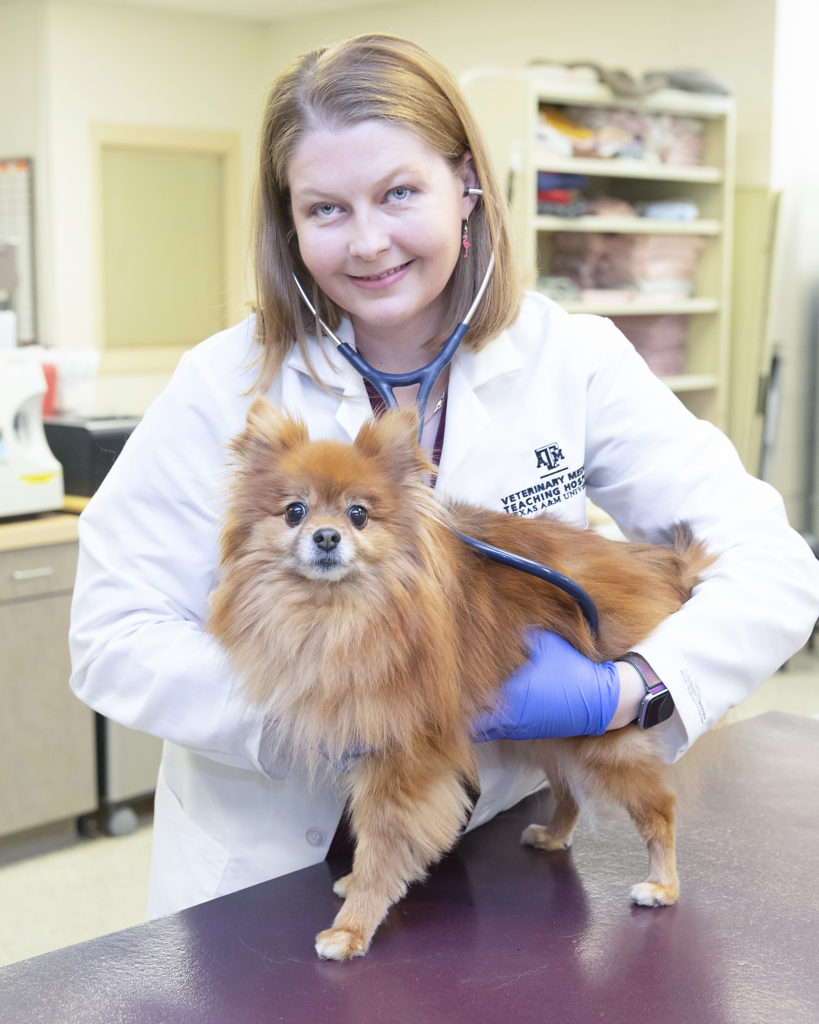
Dr. Christine Rutter and a dog
Dr. Christine Rutter

Sometimes, a patient’s situation is so dire that there’s not much choice regarding treatment. 

That’s when Dr. Christine Rutter comes in. 

As a clinical assistant professor and head of the intensive care unit (ICU) of the Texas A&M College of Veterinary Medicine & Biomedical Sciences’ (CVM) Small Animal Hospital (SAH), she decides what to do in life-or-death situations.

“You don’t have the time to ponder your options,” Rutter said. “You have to look at the information you have right now, decide what information you could get in the next 30 seconds, and then make a decision.”

The ICU is the heart of the SAH, probably its busiest division and certainly the one that has the most interaction with the other departments. The faculty members keep an eye on all of the patients in the critical care unit and get involved when needed, while also focusing on their own, most-critical patients.

“You can’t just rely on the stuff you learn in a book,” she said. “A lot of it is keeping cool and figuring out what to do when things don’t work out the way they are supposed to. Our job is to turn things around. It either goes great, or we have to be OK knowing there was nothing more we could have done.”

She sees her job as communicating “what we know, what we need to find out, and what options we have” in a way the client can understand.

“We want to make the best decision for the pet and that looks different to different people,” she said. “Five families with the same situation might have five different answers. You have to have a very open mind and be a good listener, as well as a good explainer. You give them all of the available options in a way that is patient centered.”

Making these decisions day after day can result in what she calls “emotional whiplash.” 

“Every day is different. One minute, we’re helping Mrs. Jones let go of her 13-year-old pet who reminds her of her late husband,” she said. “We take the time and make sure we 

communicate well with that person. And then we go into the next room and switch gears to deal with a coughing puppy and figure out that all she needs is some antibiotics and she’ll be fine.”

While others might dislike the pressure, she thrives on it.

“You have to have the type of personality that makes a go of it without getting burned out,” Rutter said. 

Focusing On Critical Care
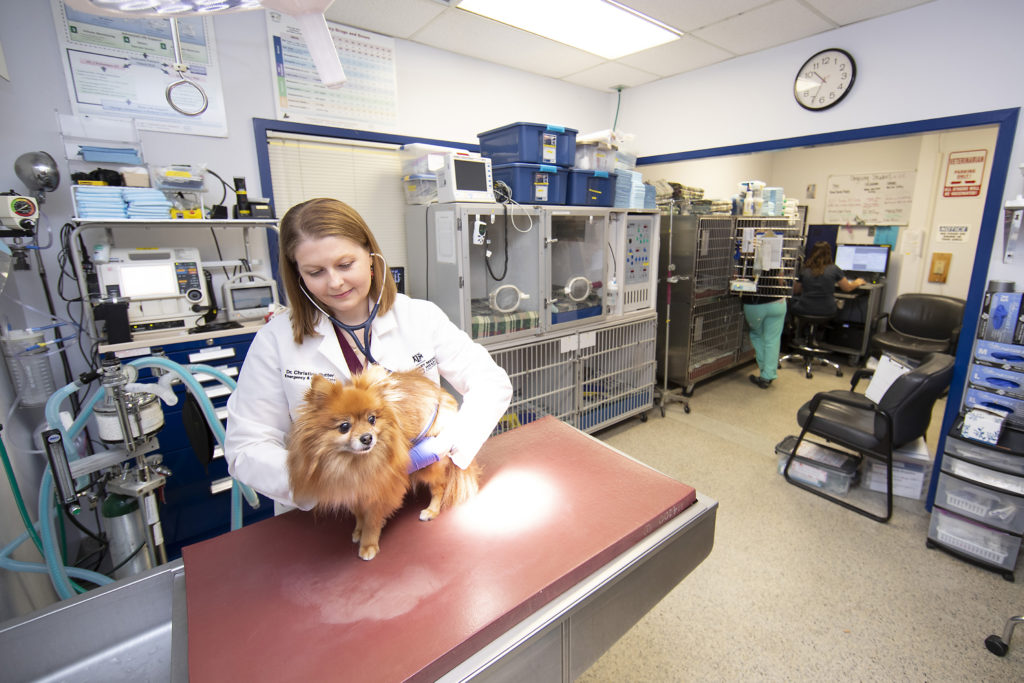
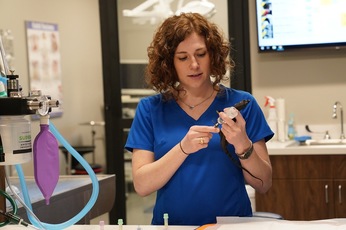
Dr. Christine Rutter working in the ICU
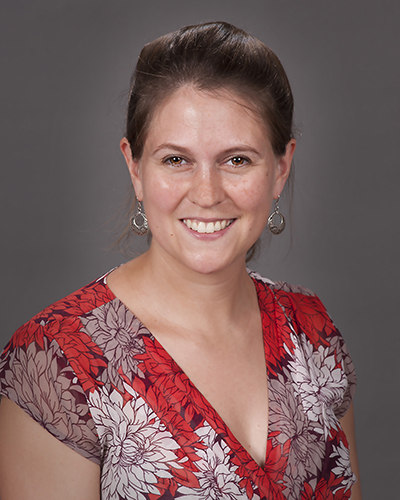
Dr. Christine Rutter

Rutter grew up in Biloxi, Mississippi, in a family with health care professionals and public servants. Her mother was a nursing professor for 30 years and her sister is a pediatrician.

“I like people well enough, but I like animals a lot more,” she said. “It’s true that they bite and scratch sometimes, but they come from a really pure place.”

After earning her Doctor of Veterinary Medicine (DVM) degree from Mississippi State University, she went into general practice in South Florida. Before long, she realized that her sickest patients were the ones she liked the most. 

“My passion was helping people and pets who were in crisis or needed more thorough information or a second opinion,” she said. “I remember to this day the time I had to do a pericardiocentesis on a Doberman Pinscher, where you take a needle and remove a fluid accumulation from around the heart. It was something I had done one time in school, by rare chance, so I had seen it before. 

“I diagnosed the dog with a pericardial effusion, even though it’s not typical for this breed,” Rutter said. “My boss walked in and said, ‘What are you doing?’ He had never done one before. But the patient went from being pale and dying to looking pretty good, even though he still had a serious disease.

“I realized then that this is what I love about medicine,” she said.

This realization prompted her to complete an internship in emergency and critical care in Louisville, Kentucky, after which, “by some miracle,” she was accepted into a residency program at Tufts University. 

She then took a job at a busy, multi-specialty hospital in Western Pennsylvania, but after six years, she decided she wanted to teach and come back to the South.

That led her to the CVM.

A Collegial Approach To Critical Care

Rutter wasn’t planning to take the job at Texas A&M at first, but that soon changed.

“I couldn’t believe how much I liked it,” she said. “I got on the plane after my interview wishing I had realized what it would be like sooner because I didn’t do as much preparation for the interview as I could have. My attitude was, I’ll go see what they have there, but I’m not going to take the job.”

She celebrated her third year at the CVM on March 1.

“We’ve worked really hard to integrate the Emergency and ICU services into the other services,” she said. 

What clients see when they bring their pets to the emergency room is an emergency room doctor and their team working to care for or save their animals. But behind the scenes, the doctor is getting opinions from specialists throughout the hospital who give their time and expertise.

“That’s something you don’t find everywhere,” she said. “We truly are collegial. The cardiologist, or the neurologist, is willing to come over, but in the more competitive hospitals, where everyone is competing for resources, or promotions are on the line, you don’t have that hand-in-hand service like you do here. At the CVM, we truly are 100 percent about patient care.”

That doesn’t mean that the specialists are always in agreement. But Rutter says the bottom line is always this: “If this were my pet, is that the decision I would make?”

Rutter spends about 10 to 12 hours a day at the CVM, starting at 7:30 a.m. She admits that it’s often tiring, and she sleeps when she can. She and her residents work 10- to 12-hour shifts, back to back.

“We’re often here over the weekend or after hours,” she said. “As the director of the ICU, I am often on the phone in the middle of the night with clinicians and specialists to help make the best decision for a pet.”

That’s another factor that makes the CVM special.

“I’ve never worked anywhere where I could call up so many people at 11 p.m. to talk about a case,” she said. “You just don’t find that at other places.”

A Jack Of All Trades And Master Of None? Not Quite!

Rutter thinks that within the veterinary community, those in emergency care have a reputation of being a “Jack of all trades and master of none.” That’s not true, she says.

“We are very good at rapidly identifying things that could be life limiting, determining if an intervention is needed, and preventing catastrophic problems,” Rutter said. “If your pet can’t breathe, or his blood pressure’s low, or he needs blood products, or is facing something life threatening right now, we’re here for you.”

###

This story originally appeared in the Fall 2019 edition of CVM Today.

For more information about the Texas A&M College of Veterinary Medicine & Biomedical Sciences, please visit our website at vetmed.tamu.edu or join us on FacebookInstagram, and Twitter.

Contact Information: Jennifer Gauntt, Director of CVMBS Communications, Texas A&M College of Veterinary Medicine & Biomedical Sciences; jgauntt@cvm.tamu.edu; 979-862-4216

A Passion for Pets in Crisis

Feeling the Heat

Dr. Deb Zoran uses her work with Texas A&M Task Force urban search and rescue dogs to study how different breeds have unique temperature ranges and how that impacts their ability to save lives.

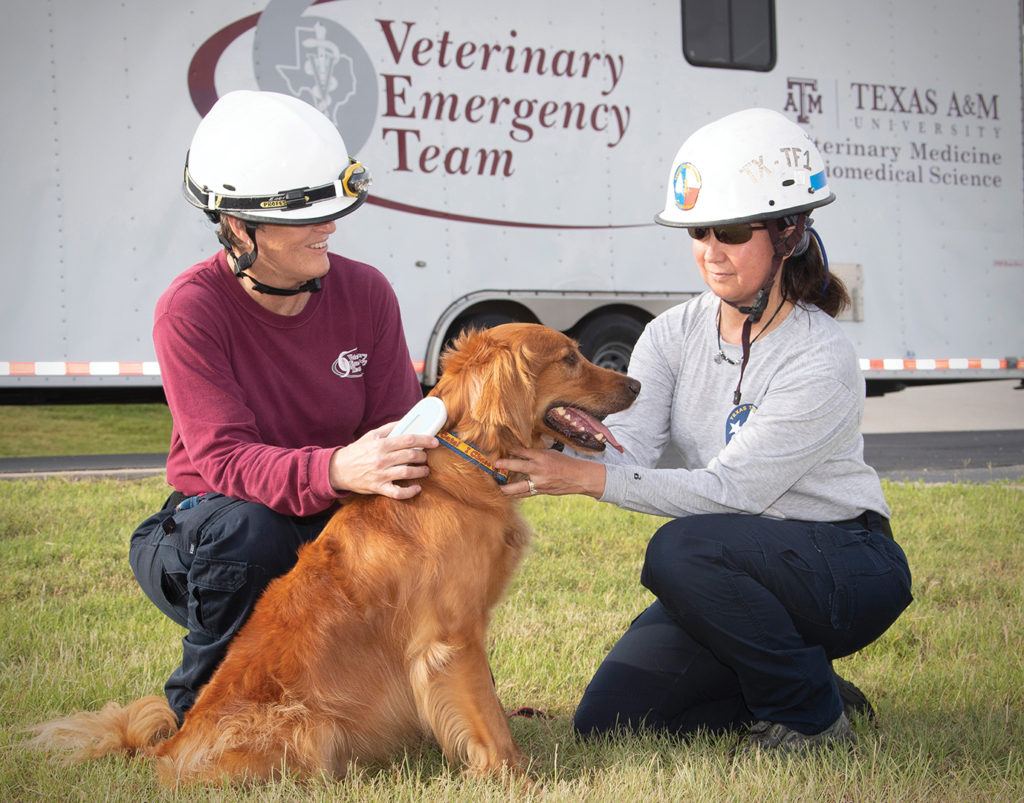
Dr. Deb Zoran scanning a dog's vital signs
Dr. Deb Zoran and search and rescue handler Denise Corliss check Taser’s temperature following an exercise.

They are, perhaps, among the unsung heroes of the rescue world.

The canine members of the Texas A&M Task Force (TX-TF) urban search and rescue (SAR) teams can do many things their human counterparts can’t: their athletic frames and fearlessness allow them to squeeze into tight spaces, their agility allows them to maneuver unstable surfaces, and their exquisitely sensitive, trained noses allow them to sniff out the missing (through microscopic molecules in your breath!) to a precision unthinkable for humans.  

The impact these dogs make cannot be denied. But the work is incredibly dangerous—the nature of the job requires them to work in all environments and around many hazards. 

“The most successful SAR dogs are very highly driven; they do not make good pets. They are the most intense creatures in the dog world,” said Dr. Deb Zoran, a professor of small animal medicine in the Texas A&M College of Veterinary Medicine & Biomedical Sciences’ (CVM) Small Animal Clinical Sciences department (VSCS).

“When they and their handlers get deployed into a disaster, the mission is to find, save, or recover missing people, and they often have to go to work on a moment’s notice,” she said. “The first 48 to 72 hours are crucial in a disaster—that’s the critical timeframe you have to work in—and you don’t get to pick the circumstances.”

Zoran pulls double duty as a member of the Texas A&M Veterinary Emergency Team (VET) and the team veterinarian for TX-TF 1 & 2. For the past 10 years, her primary objective when training or deploying with either team is to keep these dogs healthy, at peak performance, and mission ready. 

To her, the relationship between the SAR dogs, their handlers, and the veterinarian is of the utmost importance because while they’re working during a disaster—from wildfires to flooding responses and everything in between—SAR dogs depend on both their handler’s ability to recognize the tiniest differences in behavior or movement that may indicate injury and Zoran to support them before, during, and after a mission.

“When they are deployed in our Texas climate, they are at particular risk of hyperthermia, dehydration, and many injuries—muscle strains or trauma to their legs or foot pads—as well as for interactions with snakes/scorpions, fire ants, and other hazards that can happen in the process,” Zoran said.

“Despite these hazards, there are two recurring risks for the dogs as they work more or less year-round in the southern U.S., and those are overheating and dehydration,” Zoran said. “Both impact the dogs’ ability to complete the search, which then affects the team’s ability to find that missing human; both also have a profound impact on the canine nose’s scenting function, because dehydration, in particular, reduces the ability for noses to uptake odor, while overheating makes the nose’s internal membranes dry out, also reducing the ability to detect odor.”

Dr. Deb Zoran checking out a black dog
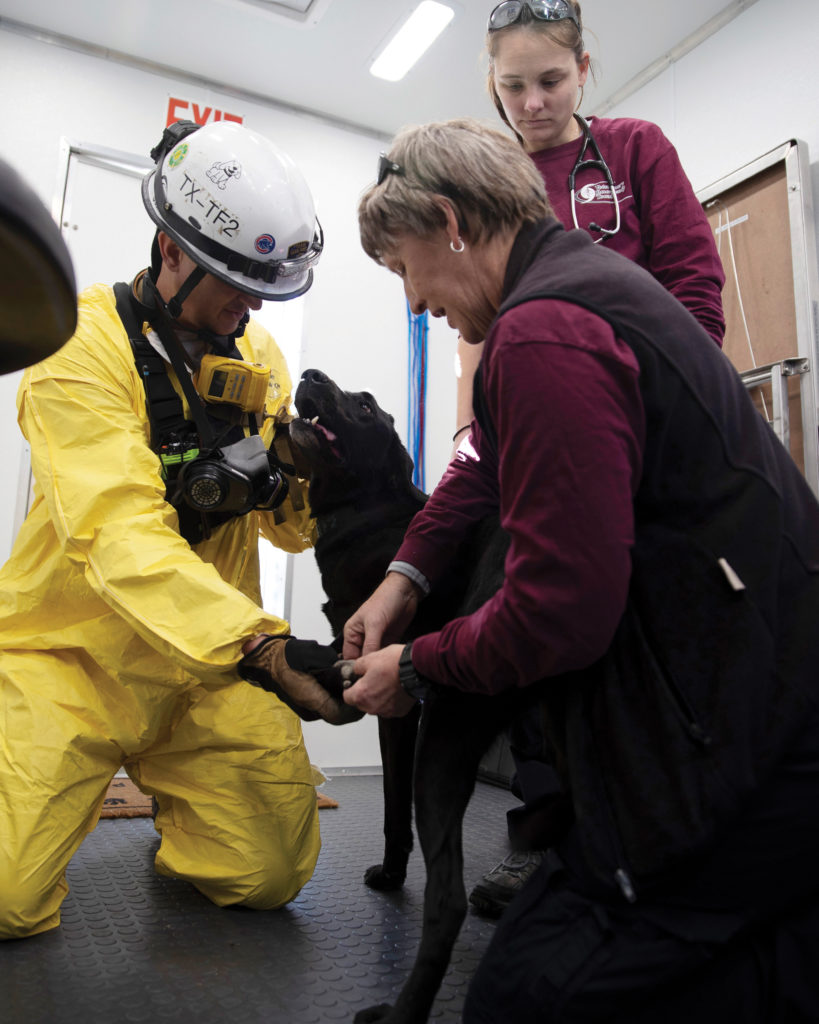
Zoran, Texas A&M Task Force 2 search and rescue (SAR) handler Derek Chalky, and Dr. James Bilof check out Scout during TX-TF’s operational readiness exercise in February.

A challenge each handler must face in the field is knowing how to spot when their dog may be getting too dehydrated or overheated, as SAR dogs work at an intensity that can be detrimental. Most handlers are not trained in animal care, and it is not possible for Zoran, or the VET, to be with each dog as it works in the field.

So when Zoran met Dr. Marta LaColla, the veterinary business manager of Allflex USA, and learned about their product SureSense, a microchip that had primarily been used for monitoring dairy cattle and cattle in feedlots, Zoran wondered if the product might be useful for SAR teams.

“When Marta approached me and said, ‘We have developed a temperature-sensing microchip; we’ve been looking at it in shelter animals for the past year and we’re ready now to put it out in the field,’ my answer was, ‘Absolutely,’” Zoran said. “They had not yet used the temperature microchip in many dogs, but the concept was immediately interesting.”

As Zoran saw it, a temperature-sensing microchip would solve a lot of problems. While she has taught handlers how to perform basic health checks on their dogs, taking a rectal temperature—the most common and accurate method to check temperature—in a working dog can be extremely challenging, if not impossible, in the field.

Finding new ways for handlers to monitor their SAR dogs’ body temperatures has been one of Zoran’s research interests over the past four years; she previously tried a thermistor capsule the dogs could swallow to measure temperature while they worked.

Allflex and Zoran worked out an arrangement to provide free microchips and specially designed microchip readers to the SAR teams, and, in return, Zoran developed a clinical trial protocol to collect temperature data, compare that data between different chip methods, and, over time, compare differences between work/rest cycles in training and deployments, as well as different environmental conditions. 

It was a win-win situation for everyone involved.

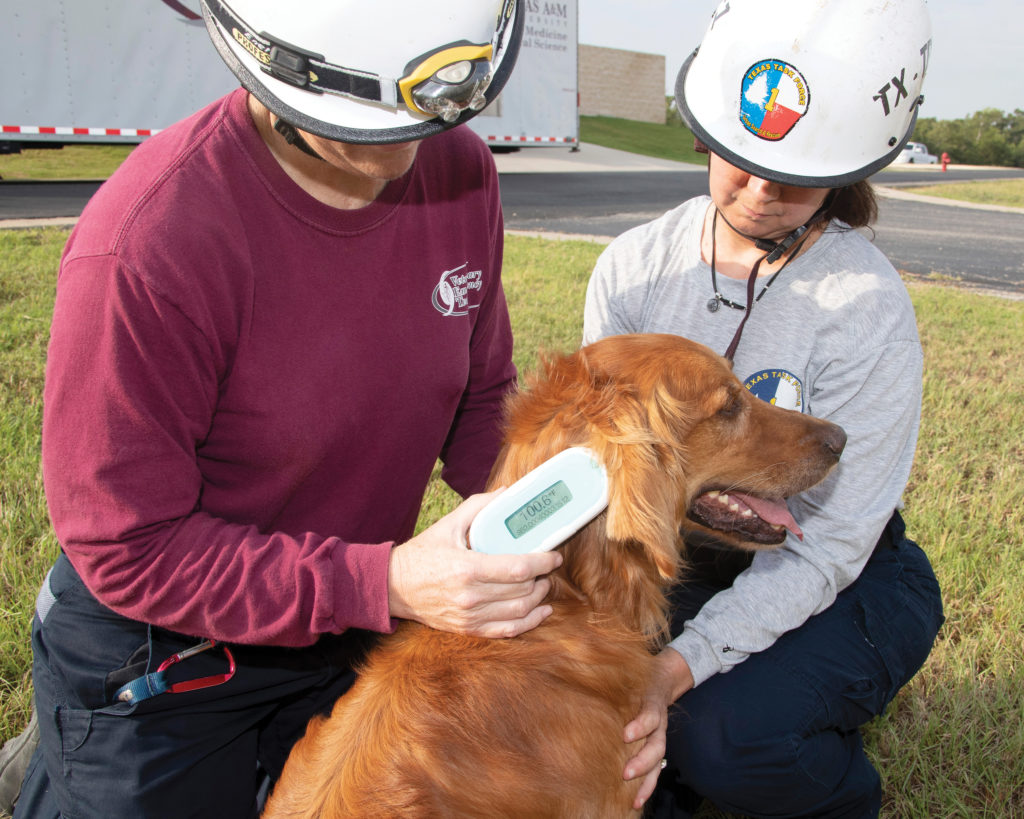
“The whole idea behind the temp-sensing microchip and why it was powerful and valuable was because temperature monitoring by handlers essentially did not happen in the field; it was too hard to do,” she said. “With a SureSense reader in their pocket, the handlers can easily scan the area where the microchip was inserted and keep track of their dog’s temperature in real time.”

For research purposes, the captured data can be viewed through an app, downloaded by the handler, or directly uploaded to the cloud, where it is sent to Zoran and the Allflex team. By tracking temperatures in everything the dogs do, Zoran and Allflex were able to start establishing baseline and working temperatures by breed, sex, coat type, and other key variables.

Over time and with experience, Zoran has learned that each dog’s temperature ranges are unique.

Dr. Deb Zoran holding a sensor up to a dog's head
With the SureSense sensor, search-and-rescue canine handlers can check their dog’s temperature through a special microchip.

“Some of these dogs have relatively narrow ranges of temperature excursion; others, like many of our Labradors, really have wide ranges of temperature excursion,” she said. “For example, at rest, some of the Labs will have a resting temperature of 100 degrees, but as soon as they start work, it will jump to 103 degrees, and on hot days, with as little as 20 or 25 minutes of intense search work, they will have a temperature approaching 106 degrees.

“Other dogs on the team, with similar fitness levels and body conditions, will top out at 104-105 degrees after that same amount of work and need to rest,” Zoran said. “What does that mean? Are there wide temperature excursions in Labradors because of genetics? Muscle mass? Diet?”

Understanding the breed differences in working dogs is, ultimately, both a safety issue and a mission-success issue and allows Zoran to give each SAR dog more individualized care to better fit their capabilities.

“These readers have become exceedingly valuable,” Zoran said. “The handlers and dogs can be out working during a deployment, but we are still in contact by radio, so they can tell me what’s going on with their dogs, and then we can adjust their work cycle based on this information.”

So far, data have been collected from more than 40 dogs through three summer seasons, and Zoran will be working to publish a paper on the project soon.

“There are things that we don’t understand about heat impacts on working dogs and this information could lead to the next generation of studies,” she said. “I see a lot of different opportunities to learn about these fascinating athletes in the future.

“The original goal of this project was to prove that the SureSense microchip enhances our ability to monitor these dogs closely and have a better work plan that still keeps them in the field, but allows us to intervene when we need to,” Zoran said. “That comes from just getting a lot of data from many different dogs in different working conditions.”

To advance that idea, the project is ongoing, and in addition to the TX-TF canines, Zoran has recruited SAR dogs from Texas Parks and Wildlife and the local Search Dog Network to be included in the project. 

“A certified SAR dog is one of the most valuable members on a search and rescue team for finding a missing person,” Zoran said, adding that whether they are searching to find a living person or working to give a family closure by finding a deceased person, their value cannot be underestimated. “These dogs are pretty amazing animals, and it is a true joy for me to work with both the handlers and dogs and to be a part of keeping these incredible teams on mission.”

###

This story originally appeared in the Fall 2019 edition of CVM Today.

For more information about the Texas A&M College of Veterinary Medicine & Biomedical Sciences, please visit our website at vetmed.tamu.edu or join us on FacebookInstagram, and Twitter.

Contact Information: Jennifer Gauntt, Director of CVMBS Communications, Texas A&M College of Veterinary Medicine & Biomedical Sciences; jgauntt@cvm.tamu.edu; 979-862-4216
Feeling the Heat

CET Hosts Workshop on Assessing Student Understanding Copy

The Center for Educational Technologies (CET) at the Texas A&M College of Veterinary Medicine & Biomedical Sciences (CVM) will host a Lunch & Learn Workshop on Oct. 15 to teach attendees how to create questions that can truly gauge what students are learning and where remediation is needed.

During the “Assessing Student Understanding: Aligning Assessment Questions to NGOs” workshop, the CET will provide an opportunity to learn more about aligning assessment questions to student NGOs. Participants will also learn how to tag NGOs to assessment questions within Moodle and Exam Soft to generate reports on student performance.

The workshop will be held in VIDI 223 from 12 to 1 p.m. Attendees should bring lunch, a laptop, and a copy of assessment questions from their course. The CET will provide beverages and dessert.

RSVP at https://tamu.qualtrics.com/jfe/form/SV_41Lr4DUijK6kHuB

Hamer Lab Researcher Receives Campus-Wide Mentoring Award

Alyssa Meyers, Ph.D., headshot
Alyssa Meyers, Ph.D.

Alyssa Meyers, Ph.D., a postdoctoral research associate in the Sarah A. Hamer Laboratory at the Texas A&M College of Veterinary Medicine & Biomedical Sciences (CVM), has been awarded the 2019 Ethel Ashworth-Tsutsui Memorial Award for Mentoring by the Texas A&M organization Women in Science and Engineering (WISE).

This annual award recognizes women on campus who encourage and support Texas A&M women graduate students. Meyers was nominated by Dr. Sarah Hamer, CVM associate professor and director of the Schubot Center for Avian Health, and past mentee Megan Ellis, a fourth-year veterinary student at the Colorado State College of Veterinary Medicine and Biomedical Sciences.

Hamer, who has worked with Meyers since 2015, noted Meyers’ long history of mentoring, including volunteering to teach science to rural high school students in Ethiopia and formally mentoring 10 students, nine of whom were female, at Texas A&M.

“The daily tasks of an undergrad in the lab may involve simple pipetting of DNA samples into new tubes, but Alyssa makes the undergrads feel appreciated and become passionate about the bigger research questions, and how their laboratory work was one small step in a bigger plan to improve human and animal health,” Hamer said.

“Alyssa worked long hours with several of her mentees to help them create abstracts to be accepted into an NIH-funded summer program, develop research proposals, analyze data, and develop both poster and oral presentations,” she said. “Some of her proudest moments are when her mentees were recognized for their research excellence.”

Meyers has also found a non-traditional way to provide mentorship through a panel she organizes to assist students planning to apply to the National Science Foundation (NSF) Graduate Research Fellowship Program. Having received this award herself, she uses her experience to educate and prepare others.

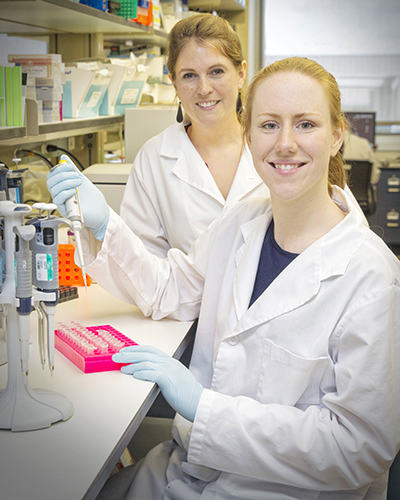
Alyssa Meyers, Ph.D., (back) and Megan Ellis pipetting in the lab
Alyssa Meyers, Ph.D., (back) and Megan Ellis

“In all aspects of her work, Alyssa took deliberate steps to seek out mentees and provide others with meaningful experiences and guidance, through both formal mentoring programs and informal initiatives she started,” Hamer said.

In addition, Hamer praises Meyers’ ability to serve as a role model while balancing her career and her family after the birth of her son in Jan. 2019.

“As a postdoctoral associate, Alyssa now balances her baby’s needs and her research obligations to maintain a high level of productivity, continuing to prioritize mentoring every step of the way,” Hamer said. “Balancing academic and family demands has further immersed Alyssa as a role model to the many undergraduates and veterinary students we mentor as the next generation of female scientists.”

Ellis worked under Meyers in the Hamer Lab during the summer of 2017 as part of the Veterinary Medical Student Research Training Program (VMSRTP) to study the epidemiology of Chagas Disease.

“I have had other mentors since and before then, but Alyssa’s mentorship has been the most unique and strong of any I have experienced thus far,” Ellis said. “She leads by example with her passion for research, skill in the field and in the lab, and ability as a strong communicator. She allows her mentees space to attempt and succeed at new skills, and in the event of a failure or an unexpected complication, she is always helpful and treats it as a learning experience, rather than a catastrophe.

“Whenever I have questions about my path, about any obstacles I have encountered, or about how to move forward, I have always felt that I could reach out to Alyssa for advice and help,” she said. “In my eyes, that is one of the most unique and compelling aspects of Alyssa’s mentorship: that she remains connected to and invested in the success of her mentees. She is a strong example of how one can use mentorship to truly empower and strengthen others.”

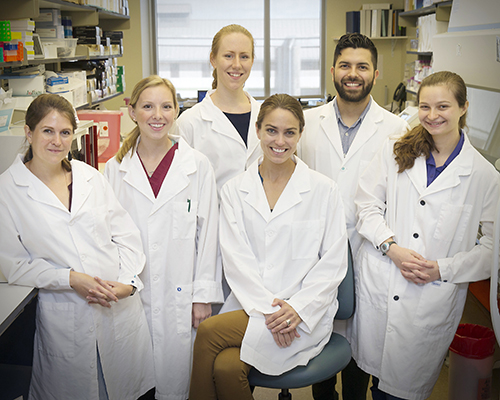
Summer 2017 Hamer Lab researchers
Summer 2017 Hamer Lab researchers, including Alyssa Meyers, Ph.D., (L) and Dr. Sarah Hamer (sitting, center).

In the Hamer Lab, Meyers has made great contributions to the study of Chagas Disease by determining the impact that this disease can have on the U.S. government’s working dogs in south Texas. Her seven published papers will be beneficial to the management of Chagas Disease in both veterinary and human medicine.

Meyers received $500, a certificate, and a plaque at the 2020 Ethel Ashworth-Tsutsui Memorial Lecture and Awards Ceremony on Jan. 17.

The Ethel Ashworth-Tsutsui Memorial Awards for Research and Mentoring honor Dr. Ethel Ashworth-Tsutsui, a longtime faculty member of Texas A&M’s Biochemistry Department who was a founding member of WISE and cared deeply about the retention and recognition of women in graduate programs.

WISE is an organization of graduate students, staff, and faculty from various science and engineering backgrounds created to address specific problems faced by women in non-traditional fields.

###

For more information about the Texas A&M College of Veterinary Medicine & Biomedical Sciences, please visit our website at vetmed.tamu.edu or join us on FacebookInstagram, and Twitter.

Contact Information: Jennifer Gauntt, Director of Communications, Texas A&M College of Veterinary Medicine & Biomedical Sciences; jgauntt@cvm.tamu.edu; 979-862-4216
Dean’s Corner | February 2020

Dean's Corner Newsletter header for February 2020

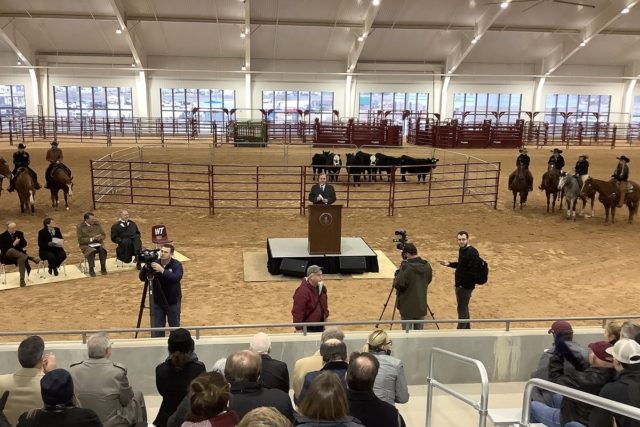
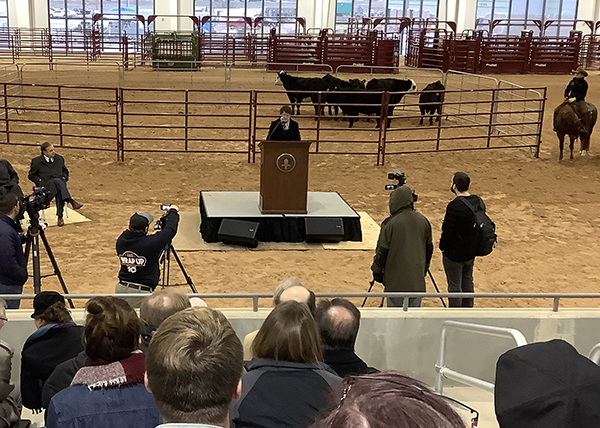
Press Conference in equine arena at West Texas A&M about VERO

Texas A&M System Partnership Announces
Update to Veterinary Program in Texas Panhandle

Officials from The Texas A&M University System announced on Jan. 28
a $5 million commitment to the developing 2+2 veterinary program through
the CVM’s Veterinary Education, Research & Outreach (VERO) program
on West Texas A&M University’s campus.

Read More

Dr. Gerald Parker Jr.

CVM Global One Health Expert
Discusses Coronavirus Outbreak

Dr. Gerald Parker, the associate dean for Global One Health at the Texas A&M
College of Veterinary Medicine & Biomedical Sciences discusses the novel coronavirus
and its implications for the Bryan/College Station and global communities.

Read More

Veterinary Student Rachel Ellerd and Dr. Sarah Lawhon

Lawhon Recognized with SAVMA’s
International Teaching Excellence Award

Dr. Sara Lawhon has been recognized with the Students of the American Veterinary
Medical Association’s (SAVMA) 2019-2020 Teaching Excellence Award for her dedication
to student success, both in and out of the classroom.

Read More

Dr. Lauren Thielen with an asian water monitor in an operating roomCVM Alumna Stars
in New Nat Geo WILD
Television Show

Read More

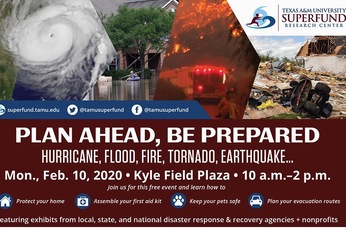
2020 Plan Ahead, Be Prepared event advertisementSuperfund Center
to Host ‘Plan Ahead,
Be Prepared’ Event

Read More

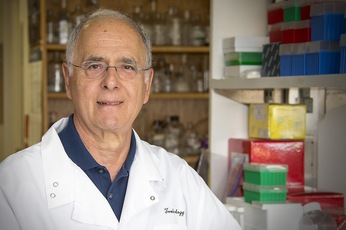
Stephen Safe in his labSafe Develops Potential
Treatment for Cancers,
Endometriosis

Read More


Other Stories


In The News


CVM Calendar of Events

Hurricanes, Fires, & Tornadoes: How to Protect Your Pets During an Emergency

When faced with an emergency, everyone needs to know how to protect their family, their home, and, let’s not forget, their pets. Our furry friends rely on us to protect them, especially during times of disaster.

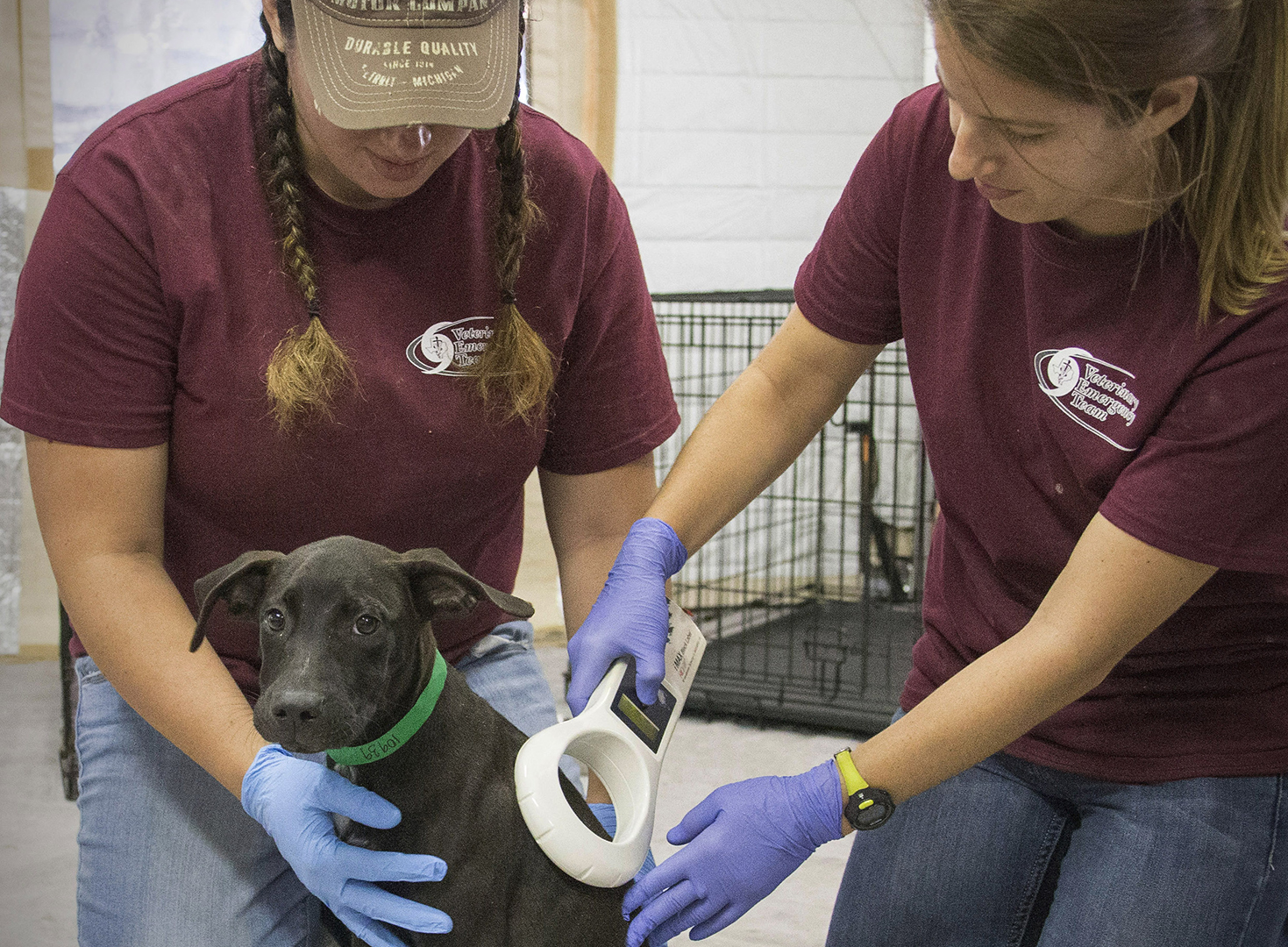
Two Veterinary Emergency Team members scan for a microchip in a black puppy.
Veterinary Emergency Team members scan a puppy to check for a microchip.

Dr. Wesley Bissett, an associate professor at the Texas A&M College of Veterinary Medicine & Biomedical Sciences and director of the Veterinary Emergency Team (VET), advises pet owners to prepare in advance for an emergency situation to provide the best possible outcome, not only for your family, but also for your pets.

During times of disaster—be it a hurricane, wildfire, or tornado—people experience physical, economic, and psychological devastation. The loss of a pet can significantly add to that devastation.

As pet owners prepare for large-scale emergencies, it is critical to include their pets, both large and small, in their family emergency plan and especially for the possibility of evacuation.

“Monitor news channels and public information from governmental entities when risk is heightened,” Bissett said. “Obey evacuation orders and if possible, evacuate early.”

Evacuation is a common occurrence for those in the midst of a natural disaster, so, to prepare for evacuation, pet owners should “have kennels available that are appropriate for travel and make sure your animals are trained to spend time in them,” Bissett said.

Bissett also recommends training pets to come on command and to have leashes and other equipment easily accessible. Pets trained to travel will be less stressed in the event of an emergency evacuation.

If you and your pet are separated, having them microchipped and the information appropriately registered can help ensure their safe return. The American Veterinary Medical Association (AVMA) says that microchipped pets are returned to their owners about 52 percent of the time, whereas pets without microchips are returned about 21 percent of the time.

“In addition to being microchipped, owners should make sure to complete the microchip registration process. There are so many animals that are chipped but not registered,” Bissett said. “Also make sure your animals are current on vaccinations.”

Not only should homeowners keep an emergency kit for themselves in the event that evacuation is necessary, but Bissett says pet owners should prepare a kit for their pets, too. He recommends the following items for your pet kit:

  • Five to seven days’ worth of food
  • Three to five days’ worth of water
  • Two-week supply of your pet’s medications
  • Kennel or crate
  • Favorite toy
  • Favorite bed
  • Coggins papers (for horses)
  • Health summary from your local veterinarian

Sudden changes in a pet’s environment can cause them to be anxious and exhibit changes in behavior. It may take some time for pets to adjust to the changes in their environment, but having a plan in place as well as familiar items can help in the transition.

“Recognize that your pets will be just as stressed as you are, so try and provide quiet, stress-free situations for them,” Bissett said. “Pets may react differently for a period of time, so take things slow and allow them to adjust to their new normal.”

Pet Talk is a service of the College of Veterinary Medicine & Biomedical Sciences, Texas A&M University. Stories can be viewed on the web at vetmed.tamu.edu/news/pet-talk. Suggestions for future topics may be directed to editor@cvm.tamu.edu.

Werner the Wonder Dog

Texas A&M University veterinarians collaborate to successfully operate on a “double doodle” with a rare tumor.

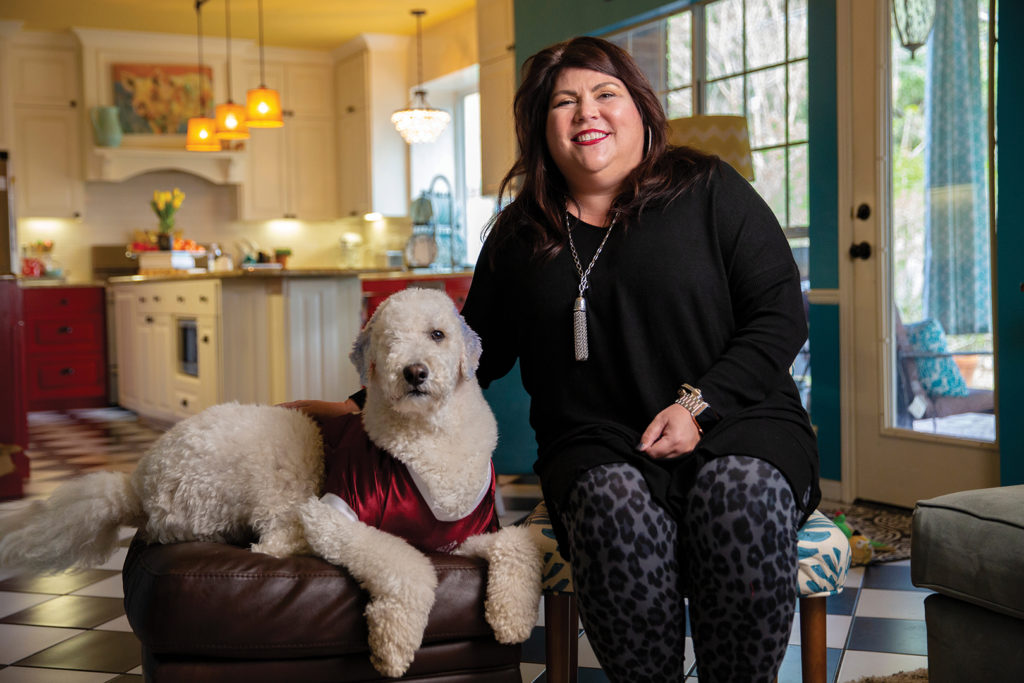
Werner and Streicher sitting on an ottoman
Andrea Streicher and Werner in their home (Photo by Case Rhome, Texas A&M Foundation)

When Andrea Streicher saw the photos of the curly-haired, golden puppies a friend had sent her, it was love at first sight. Her day had started off with a series of unfortunate events—including a flat tire—but there in front of her was the antidote to all her doldrums.

Werner, a “double doodle” with Goldendoodle and Labradoodle parents, immediately joined the Streicher household and proved himself to be a happy, social, and active dog.

He could often be found running around a dog park in their hometown of Austin, donning silly costumes or funky bandannas that matched his personality. Because of Werner’s excellent demeanor with children, Streicher aspired to train him as a therapy dog.

“We dyed his ears blue for his first birthday, and I noticed when his ears were blue that little kids were so drawn to him,” Streicher said. “We now keep his ears blue, so that when he goes to schools to help with readings and stuff, the kids will still be drawn to him.”

A Disheartening Diagnosis

At just around 2 years of age, Werner started becoming lethargic and depressed and began having seizures.

Concerned, Streicher took him in to her local veterinarian, where they found that Werner had a huge, rapidly growing skull tumor.

“When we first started having problems, the tumor was probably the size of my thumbnail. It was like a grape,” Streicher recalled. “Three weeks later, it was almost the size of an egg.”

Streicher met with several veterinarians who told her they had never seen such an aggressive tumor in such a young dog and they feared his tumor would be inoperable.

Of course, the diagnosis came as a shock for Streicher and her family.

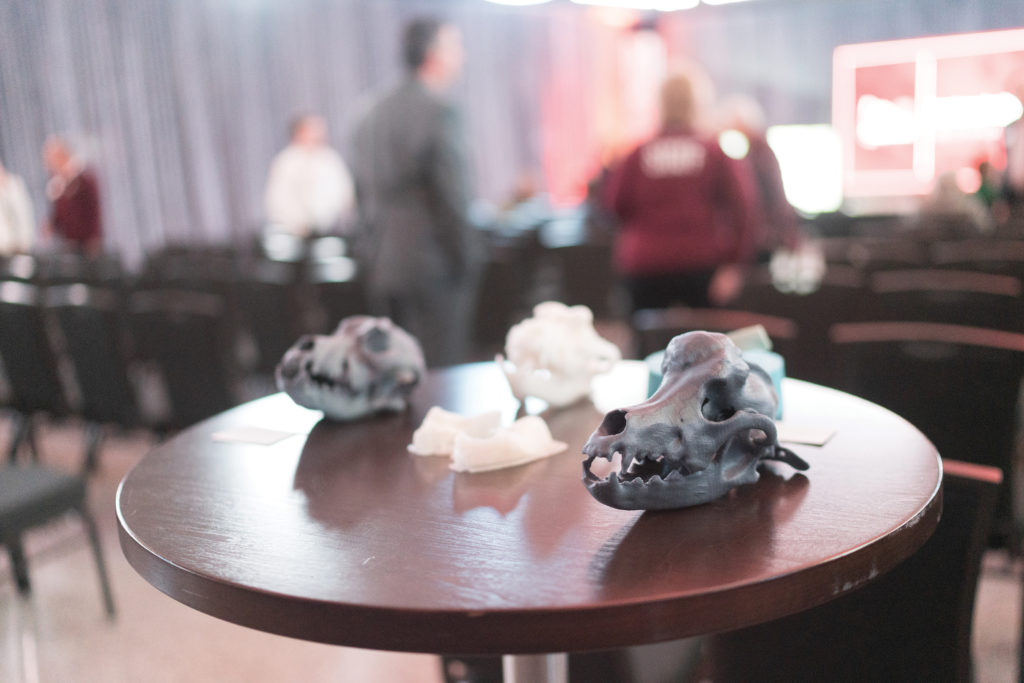
Three models of dog skulls sitting on a table
A 3D print of Werner’s skull and tumor before surgery was on display at Exploration Day. (Photo by Fidelis Creative)

“We waited 24 hours until I could talk with the neurologist, and she basically said that it was huge,” she said. “It was super invasive. She said our main objective should be to keep Werner comfortable.”

Despite the grim prognosis, Streicher wasn’t about to give up on Werner, so she decided to take him to Texas A&M’s Veterinary Medical Teaching Hospital (VMTH)

“I thought he wasn’t going to survive, and if I lost him, I wanted his body to go to the veterinary students at Texas A&M so that they could study him and learn from his disease,” Streicher recalled.

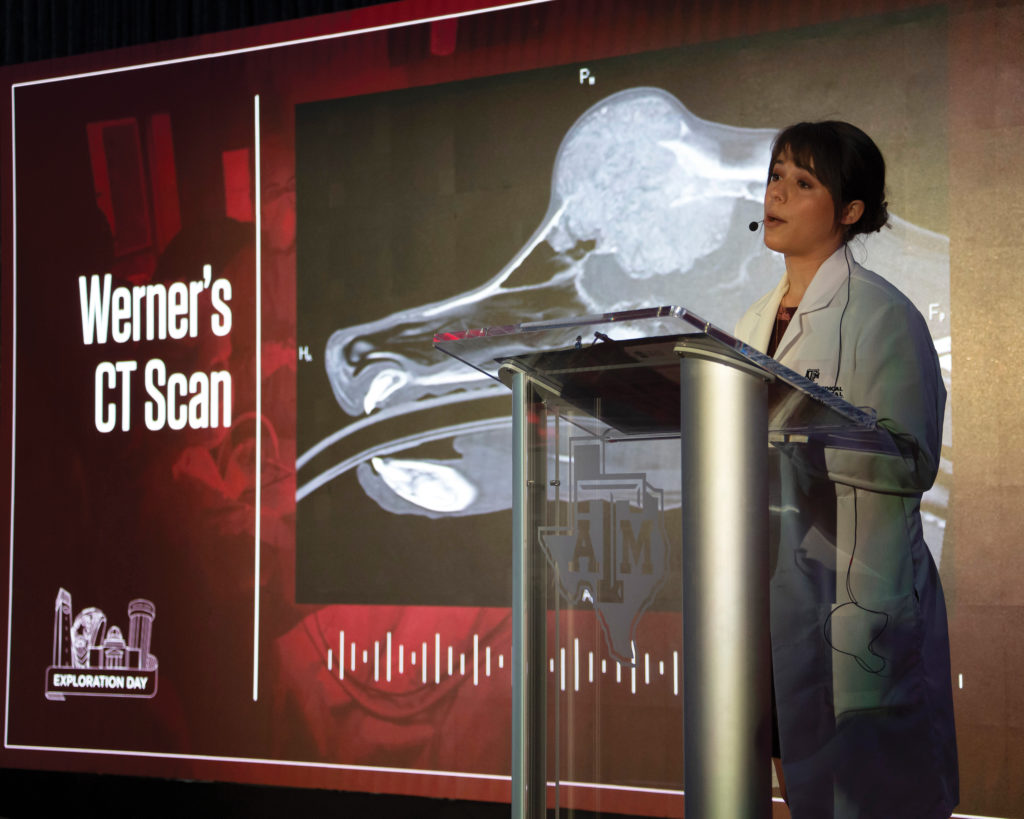
There, the VMTH team swiftly admitted Werner for a CT scan and confirmed the tumor took up a significant portion of his skull and was compressing his brain.

After the veterinary team spent some time analyzing Werner’s case, they gave Streicher some news she didn’t anticipate: They would be able to operate and attempt to remove the tumor. Werner would likely lose an eye and there was no guarantee of a successful surgery, but the doctors were confident they could give Werner’s case a shot. 

The next step before surgery was to perform a bone biopsy to confirm the specific type of cancer Werner was suspected to have. After about two weeks of waiting, the biopsy results returned and confirmed that Werner’s tumor was a multilobular tumor of bone.

Multilobular tumors are rare, and there are no known predispositions to this particular type of cancer. The tumors typically occur on flat bones, and in canines, the skull is the most common area they arise. Surgical removal of these tumors is tricky, and it is often impossible to remove the tumors from the skull with clean margins.

Collaborating To Cure

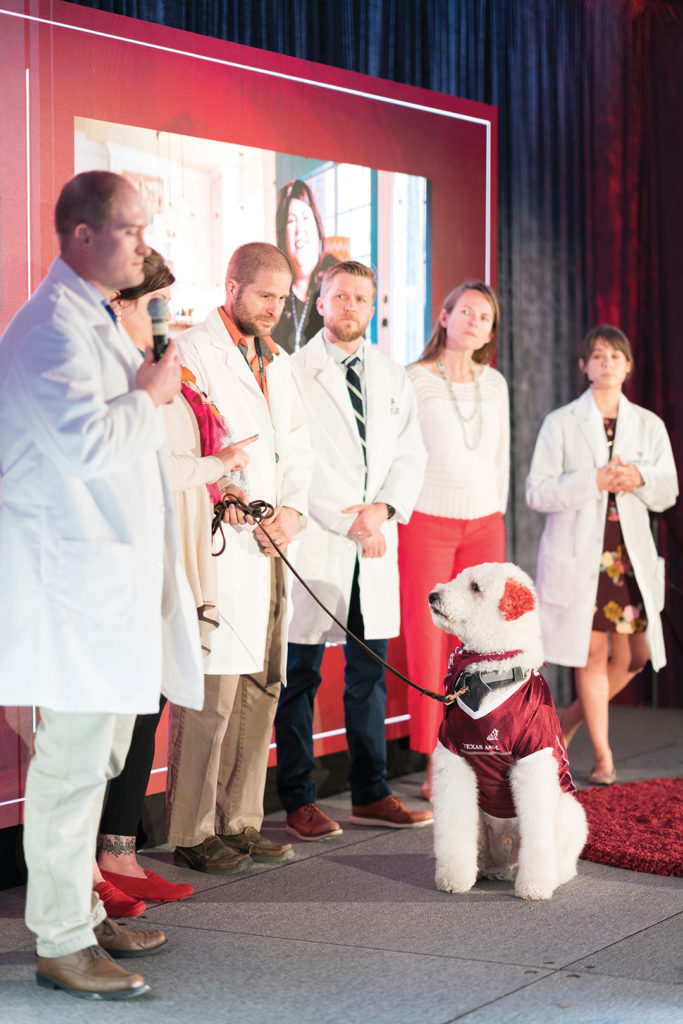
People standing one stage, next to Werner
Werner’s VMTH team discusses the case at Exploration Day.

On Oct. 10, 2018, when Werner checked in for his surgery, the VMTH neurology and oncology teams had come up with an innovative solution.

Because of the amount of skull Werner would lose in the operation, his clinicians would need to find a way to rebuild his skull from scratch.

Dr. Michael Deveau, a clinical assistant professor in the Texas A&M College of Veterinary Medicine & Biomedical Sciences (CVM) and holder of the Katherine and Rebecca Rochelle Chair in Oncology, reviewed CT scans of healthy dogs to generate a new skull piece that would replace the excised portion of bone. He collaborated with Dr. Elizabeth Scallan, in the Clinical Skills Laboratory, to make a 3D print of the skull replacement pieces and to engineer a mold that could be used in the operating room.

During surgery, Dr. Joseph Mankin, a clinical associate professor in the neurology service, and Dr. Maya Krasnow, a second-year resident in neurology, filled the mold with a material called poly methyl methacrylate (PMMA), a type of shatter-resistant plastic.

The PMMA hardened in minutes, and readily created Werner’s new skull. Beside them, Dr. Brandon Wustefeld-Janssens, one of the VMTH’s veterinary surgical oncologists, removed Werner’s right eye.

After his eight-hour surgery, Werner faced a long recovery. 

“The first night was rough,” Streicher remembered. “I’m not going to lie—I wondered if I did the right thing, if I kept him here for me or if I kept him here because it was the right thing to do.”

But after several nights of sleeping by Werner’s side at home, things started to look up. Werner’s original, playful attitude started to shine through again, so much so that he had to return to the VMTH mid-recovery to have more stitches placed around his incision areas for security.

“I literally had to hide all the toys, because we wouldn’t throw them to him, so he would throw the toys himself,” Streicher said with a laugh. 

Werner’s team is equally impressed with his recovery and credit collaboration for the success of his operation. 

“When a client comes to an academic institution like the Texas A&M Veterinary Medical Teaching Hospital, they’re typically coming because we offer strengths that other practices may not be able to provide,” Deveau said. “We should be able to do things that nobody else can do, and if there isn’t an easily apparent way to do something, then we can pool our resources, put our heads together, and have an outcome that may benefit patients like Werner.”

Woman speaking on stage in front of screen showing Werner's brain scan
Neurology resident Dr. Maya Krasnow at Exploration Day

Streicher hopes to have Werner certified as a therapy dog to help comfort children undergoing cancer treatment. 

“He is just amazing,” Streicher said. “The fact that he’s still here is just a miracle. He is Werner the Wonder Dog.” 

The Streicher family is extremely grateful for the efforts made by the VMTH team to save Werner’s life. Specifically, Streicher said she credits Texas A&M with “taking the chance.” For that, she says she will always recommend the VMTH for quality veterinary care.

“If you need any care that goes above and beyond, just go to Texas A&M. Just do it. You won’t be sorry,” she said.  

At the end of February, Streicher brought Werner back to College Station, but as a guest of honor instead of a patient. 

Werner’s story was showcased as one of four exhibits at the Texas A&M Foundation’s Exploration Day, which provided immersive experiences for top university donors from disciplines across campus.

Werner appeared on stage as the grand finale of the college’s exhibit and received a standing ovation. 

As a tribute to the team that saved his life, Werner wore a 12th Man jersey, while his famous blue ears were dyed maroon to honor the Aggies who never gave up on saving his life.

To support further innovations in veterinary medicine, please contact Chastity Carrigan, Assistant Vice President for Development for the CVM, at ccarrigan@txamfoundation.com or 979.845.9043.

###

Note: This story originally appeared in the Fall 2019 edition of CVMBS Today.

For more information about the Texas A&M College of Veterinary Medicine & Biomedical Sciences, please visit our website at vetmed.tamu.edu or join us on FacebookInstagram, and Twitter.

Contact Information: Jennifer Gauntt, Director of CVMBS Communications, Texas A&M College of Veterinary Medicine & Biomedical Sciences; jgauntt@cvm.tamu.edu; 979-862-4216
Texas A&M System Partnership Announces Update To Veterinary Program In Texas Panhandle

Additional funding will support the increased faculty needed for VERO’s 2+2 program

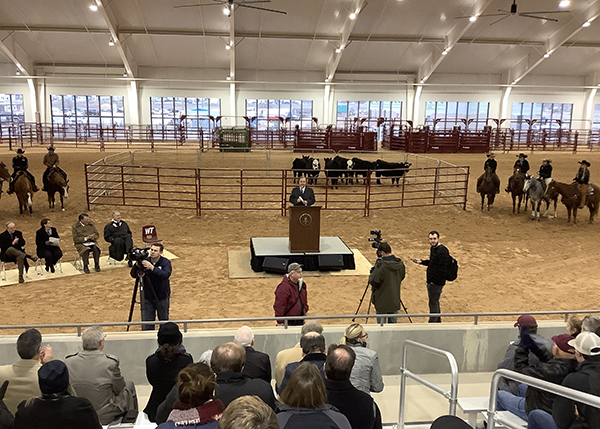
Texas A&M University System Chancellor John Sharp speaks in an area with cattle and horses
Texas A&M University System Chancellor John Sharp announces the $5 million commitment to VERO’s 2+2 program.

CANYON, Jan. 28, 2020—Officials from The Texas A&M University System (TAMUS) announced on Jan. 28 a $5 million commitment to the developing 2+2 veterinary program through the Texas A&M College of Veterinary Medicine & Biomedical Sciences’ (CVM) Veterinary Education, Research & Outreach (VERO) program on West Texas A&M University’s (WT) campus.

The additional funding from TAMUS will be used to increase faculty members from five to 23 for the VERO program. Current faculty members were secured with the support of a Legislative Appropriations Request by the Texas Education Agency.

The VERO 2+2 program is a continuation of initiatives led by the TAMUS to support the state agriculture industry and the young people of Texas. In 2019, the System committed $90 million to the establishment of a 22,000-square-foot VERO facility to house the Doctor of Veterinary Medicine (DVM) curriculum and externship programs for the new clinical rotations in the Texas Panhandle, as well as the 2+2 program. The 2+2 program will allow Texas A&M veterinary students to elect to spend their first two years in Canyon on WT’s campus for increased exposure to large animal needs in rural communities.

“Texas A&M’s 100-year-old veterinary program is an established, accredited route for students seeking their D.V.M degree,” Walter V. Wendler, president of WT, said. “Paired with WT’s prime location for the cattle industry with ample opportunities to work with large animals through extern- and internships is a recipe for a prosperous veterinary services industry in Texas. We are thrilled with the seamless collaboration between these two campuses and eager to be a part of educating Texas A&M veterinary students on WT’s campus.”

Dr. Karen Cornell speaks at WTAMU
Dr. Karen Cornell, associate dean for Professional Programs, visited West Texas A&M for Chancellor Sharp’s announcement.

The first cohort of fourth-year veterinary students will begin clinical rotations at the Agricultural Sciences Complex on WT’s campus starting Summer 2020.  The first cohort of up to 18 first-year veterinary students will begin their DVM education at the VERO in Fall 2021.

Every year after, there will be two cohorts at one time cycling through the Canyon location before their third year at the CVM in College Station, with the option of returning to Canyon a portion of their fourth-year clinical rotations.

“Through our VERO program, Texas A&M, the CVM, and WT are prioritizing the need for rural and food animal veterinarians, needs that affect citizens of the Texas Panhandle and citizens in rural communities across the state,” said Dr. Eleanor M. Green, the Carl B. King Dean of Veterinary Medicine at Texas A&M.

“Our VERO educational team, led by Dr. Dan Posey, is working to meet these needs by helping West Texas A&M gather and mentor regional students, to help them produce the best veterinary school application possible. In just three and a half years, under Dr. Posey’s leadership, the number of successful veterinary college applications from West Texas A&M has tripled,” Green said. “The next step is to bring them back home to serve their hometowns in the Texas Panhandle region, and the 2+2 program will be a key part of this critical next step.”

Combining the power of the two campuses’ resources will expose students to unique, diverse learning opportunities in a large state with some underserved regions. Faculty of the VERO program encourage incoming students to engage locally and consider working in communities that have a greater need for a large animal veterinarian.

“We are pleased to expand our veterinary medicine and biomedical sciences program to the campus of West Texas A&M University,” Texas A&M President Michael K. Young said.

“The increased funding will provide support and be of great benefit to all Texans. The 2+2 program will especially benefit large-animal care needs that are often isolated and will enhance the educational and medical care opportunities for rural Texans.”

Approval by the Texas Higher Education Coordinating Board, The Texas A&M University System Board of Regents and the Council of Education of the American Veterinary Medical Association to finalize the program is pending.

For more information about the VERO 2+2 program, contact Posey at dposey@wtamu.edu.

###

Media contacts: Jennifer Gauntt, Director, CVM Communications, College of Veterinary Medicine & Biomedical Sciences at Texas A&M, (979) 862-4216, jgauntt@cvm.tamu.edu; Brittany Castillo, West Texas A&M University, (806) 651-2682, bcastillo@wtamu.edu.

ImmersED

Faculty and staff at the Texas A&M Center for Educational Technologies work to enhance the Doctor of Veterinary Medicine curriculum through active-learning activities that draw from actual Small Animal Hospital cases.

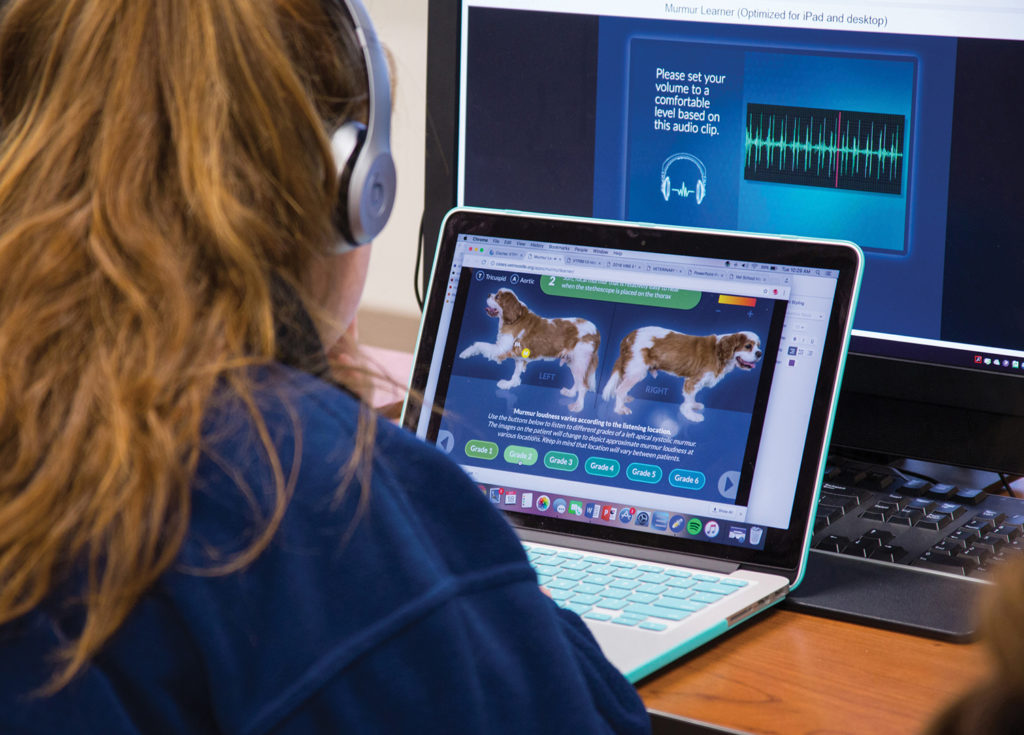
student looking at a computer showing two dogs
Students use CET-developed online learning modules to augment their veterinary education and to practice or observe skills before they practice those skills in a classroom setting.

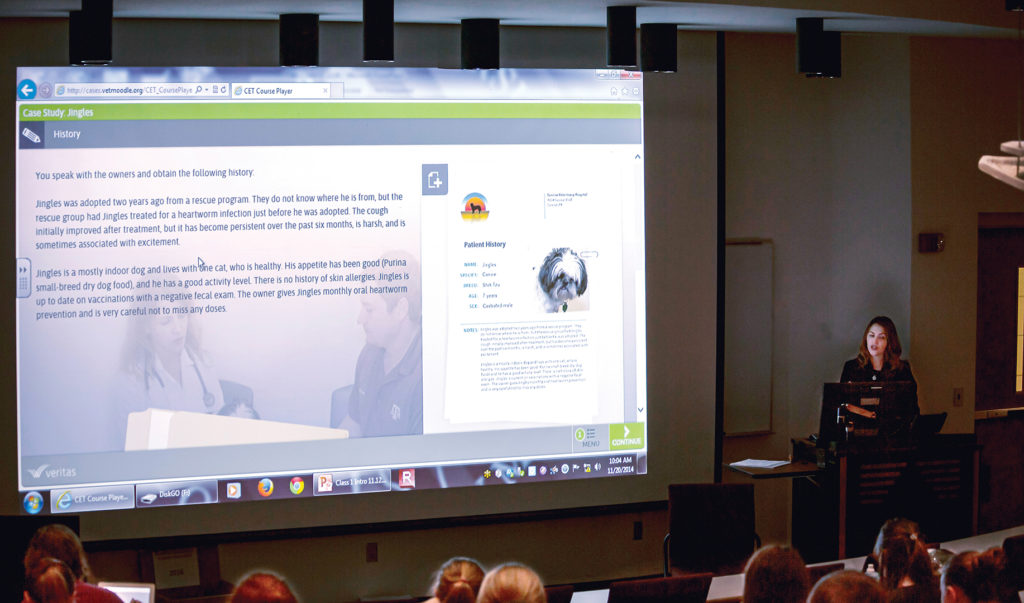
More than 140 Texas A&M College of Veterinary Medicine & Biomedical Sciences (CVM) Doctor of Veterinary Medicine (DVM) students sit in groups in a classroom as cardiology professor Dr. Ashley Saunders displays a case study on a large screen.

A dog comes into a clinic exhibiting coughing issues. After Saunders presents the dog’s history, students pull up on their individual screens laboratory tests that were run. 

What will they do next? 

As each team types in their thoughts, Saunders can pull up a live report on her own device and see how her teams are responding, in real time. 

“By seeing students’ line of thinking, Dr. Saunders can more easily respond to misconceptions or misunderstandings and see if there is a need for further discussion on a topic,” said Molly Gonzales, instructional assistant professor at the Center for Educational Technologies (CET). “If there are some groups that respond in an unexpected way, she can turn the conversation to discuss what was missed, what could be considered, or why that might not have been the best course of treatment. She’s actively walking through the clinical process with them.

“Through these clinical simulations, students can test their knowledge and understanding in a low-risk environment, where the only consequence for making a mistake is the opportunity to learn,” she said.

This kind of exercise is indicative of the way the CET harnesses technology and the diverse expertise of faculty in the Small Animal Hospital (SAH) to create learning experiences for students (both here and across the country) that enhance critical thinking, engage active learning, and strive to establish more confident veterinary graduates.

Housed within the CVM since 2011, the CET has been supporting the creation of e-learning materials and tools that offer an innovative way for rethinking how professors deliver content and how students acquire knowledge. 

saunders stands at the front of a classroom, in front of a screen showing CET website
Dr. Ashley Saunders introduces “Jingles,” a cardiology case study, to her classroom of DVM students as they prepare to work through Jingles’ case from his admission to discharge.

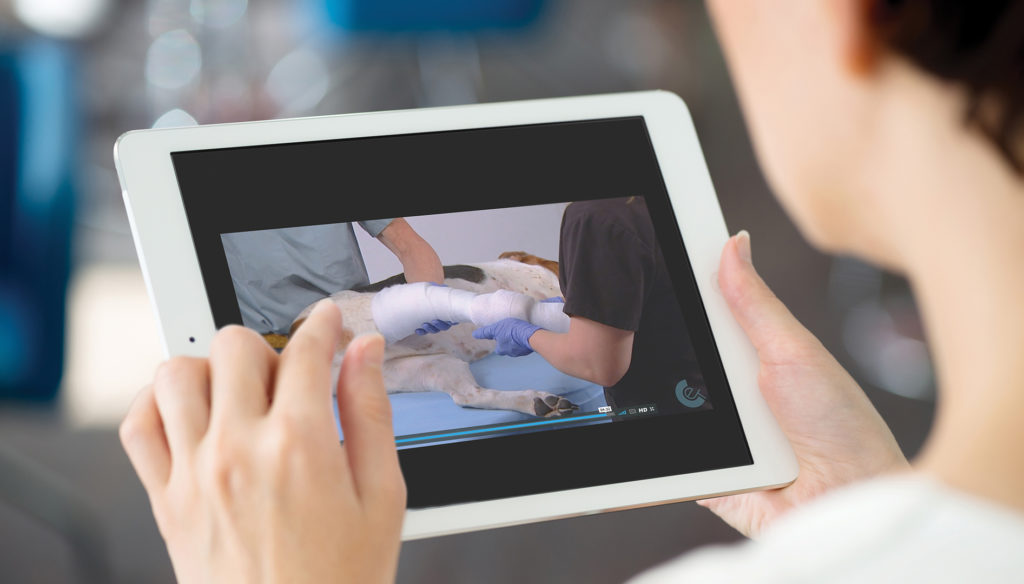
Other examples include the creation of videos that show students how to perform procedures on life-like models, using GoPro cameras to observe students as they perform procedures, and developing online activities that allow students to hone their knowledge of foundational veterinary skills, such as identifying teeth in a variety of species. 

“The CVM is home to hundreds of faculty and staff who dedicate their time to create an environment where a lifelong love of learning and passion for veterinary medicine are the norm,” Gonzales said. “With new research and technology constantly advancing the field of veterinary medicine, the college recognizes the importance of having a dynamic curriculum with immersive learning experiences that address the needs and challenges of the current veterinary landscape.” 

The CET-created resources offer many advantages for DVM students; in addition to stemming from real hospital cases, these resources integrate across the new DVM curriculum, which allows students to better apply materials learned in their first year into their second and third years, so that when they experience similar scenarios in their fourth-year clinical rotations, they can more readily associate what they’re seeing with what they learned in the classroom. 

Another advantage is that students can control the pace of their own education through individualized learning tools that can be accessed at any time.

“Modules are designed so the students can control their own education by getting involved and making decisions on their own,” said Dr. Jordan Tayce, CET instructional assistant professor. “For example, with our adaptive case studies, students go through a series of scenarios and their performance dictates the next case that is unlocked, so if a student needs more practice, they have the opportunity to do so, but if the student excels, then fantastic, they could move on to the next thing.”

These tools have become so valued at Texas A&M that faculty at more than half of the veterinary schools across the country also license them to augment their own curricula; in addition, the CET has made some of its 170 educational resources available for continuing education purposes through partnerships with VetFolio and Texas A&M’s Continuing & Professional Education (CPED) platform.

student holding ipad showing dog exam

“There are not a lot of other veterinary schools that have units like ours,” Tayce said. “Veterinarians are not trained to teach; they’re trained to be veterinarians. We offer that lens of the teaching perspective for faculty and for students. We offer students the opportunity to learn and think in ways that are different from the ‘traditional’ way of learning. What we’re doing is research based and it works in practice.” 

Importantly, these resources also align with the new Association of American Veterinary Medical Colleges (AAVMC) Competency-Based Veterinary Education (CBVE) Framework. The CBVE has challenged veterinary schools across the country to reassess whether their traditional teaching methods were preparing future generations to be practice-ready and if those methods truly equipped students with the necessary tools to deliver care across different clinical environments.

“This call to action from the association affirmed the need for the continued use and future development of immersive learning experiences that engage learners in critically thinking through a problem and making informed decisions that lead to the appropriate diagnosis and course of treatment for patients,” Gonzales said. “This call also challenged us to see how we can provide immersive learning experiences to our former students and practicing veterinarians.”

Luckily, for both practicing and budding veterinarians, the CET is here to answer that call.

To access the catalog of CPED courses, visit https://tx.ag/CETCPED and to learn more about the Center for Educational Technologies, visit http://www.tamucet.org.

AAVMC Names Dean Eleanor Green Recipient of 2020 Billy E. Hooper Award

Dr. Eleanor Green, the Carl B. King Dean of Veterinary Medicine

Washington, D.C., January 27, 2020  ­– The Association of American Veterinary Medical Colleges (AAVMC) has named Dr. Eleanor Green, the Carl B. King Dean of Veterinary Medicine at Texas A&M University (TAMU), as the recipient of the 2020 AAVMC Billy E Hooper Award for Distinguished Service. The award is sponsored this year by the Stanton Foundation.

The award is presented by the AAVMC to an individual whose leadership and vision has made a significant contribution to academic veterinary medicine and the veterinary profession. The Billy E Hooper Award for Distinguished Service will be presented during the AAVMC’s 2020 Annual Conference and Iverson Bell Symposium, March 6-8, 2020 at the Hyatt Regency Washington on Capitol Hill in Washington, D.C.

“Every day, educators and researchers at our member institutions make outstanding contributions to academic veterinary medicine that inspire others, contribute to medical breakthroughs and work to educate upcoming generations of veterinarians,” said AAVMC Chief Executive Officer Dr. Andrew T. Maccabe. “We are pleased to honor these extraordinary individuals through our awards program and look forward to recognizing their achievements during our 2020 annual conference.”

Dr. Green has a special interest in the future of veterinary medicine and the innovations that will help ensure a thriving profession. She was recently named a senior advisor and consultant for the Animal Policy Group in Washington, D.C. and will complete her tenure as dean in June 2020.

“I can attest to the fact that Dean Green’s administrative record at TAMU is one of sustained leadership and service that is perhaps unmatched in the more than 100-year history of the CVM in terms of both inclusiveness and effectiveness,” said Dr. Kenita Rogers, TAMU’s executive associate dean and director for diversity and inclusion. “She has brought about positive, enduring change to our college, university, and profession.”

Dr. Green became dean at TAMU in 2009 and oversaw many ambitious projects at the college, including construction of the Veterinary & Biomedical Education Complex, establishment of the Center for Educational Technologies, Office of Innovation and Entrepreneurship, Global One Health, and Equine Initiatives. She also developed inter-university partnerships designed to increase the number of DVM graduates and address issues facing food animal and rural practice veterinary medicine in Texas.

Her academic appointments have included: equine faculty member at University of Missouri; head of the Department of Large Animal Clinical Sciences and director of the large animal hospital at the University of Tennessee; chair of the Department of Large Animal Clinical Sciences and the Chief of Staff of the large animal hospital at the University of Florida.

She is a diplomate of the American College of Veterinary Internal Medicine (ACVIM), Large Animal, and the American Board of Veterinary Practitioners (ABVP), Certified in Equine Practice.

Dr. Green received her BS in Animal Science from the University of Florida and a Doctor of Veterinary Medicine (DVM) from Auburn University. She established a veterinary practice in Mississippi as partner/owner. She became a founding faculty member of the College of Veterinary Medicine at Mississippi State University.

She has served as president of four national organizations: the American Association of Equine Practitioners (AAEP), the American Board of Veterinary Practitioners (ABVP), the American Association of Veterinary Clinicians (AAVC), and the Association of American Veterinary Medical Colleges (AAVMC).

Her awards include: 2004 Award of Distinction from the University of Florida College of Agriculture and Life Sciences, 2011 Wilford S. Bailey Distinguished Alumni Award from Auburn University, 2012 Women‘s Progress Award for Administration, induction into the National Cowgirl Hall of Fame in 2013, 2015 Distinguished Achievement Award for Administration at Texas A&M University, and 2020 Bridge Club Veterinary Industry ICON.

The member institutions of the Association of American Veterinary Medical Colleges (AAVMC) promote and protect the health and wellbeing of people, animals and the environment by advancing the profession of veterinary medicine and preparing new generations of veterinarians to meet the evolving needs of a changing world. Founded in 1966, the AAVMC represents more than 40,000 faculty, staff and students across the global academic veterinary medical community. Our member institutions include 53 Council on Education (COE) accredited veterinary medical colleges and schools in the United States, Canada, Mexico, the Caribbean, Europe, Asia, Australia, and New Zealand; as well as 23 provisional and collaborating members, and departments of veterinary science and departments of comparative medicine in the U.S.

###

For more information about the Texas A&M College of Veterinary Medicine & Biomedical Sciences, please visit our website at vetmed.tamu.edu or join us on FacebookInstagram, and Twitter.

Contact Information: Jennifer Gauntt, Director of Communications, Texas A&M College of Veterinary Medicine & Biomedical Sciences; jgauntt@cvm.tamu.edu; 979-862-4216