Texas A&M CVM’s 2+2 Veterinary Program Receives AVMA Approval

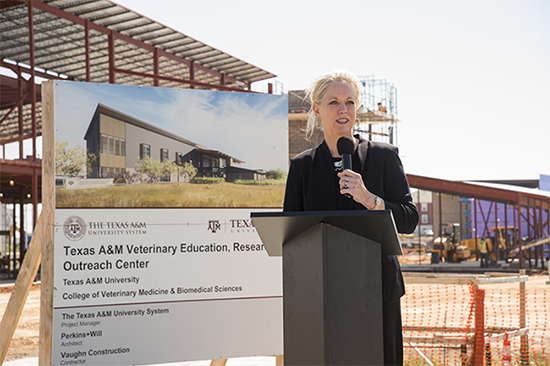
Dr. Eleanor M. Green speaks at a press conference at the VERO facility construction site
Dr. Eleanor M. Green at a press conference at the VERO facility construction site

The Texas A&M College of Veterinary Medicine & Biomedical Sciences (CVM) completed a pivotal step in the development of its 2+2 veterinary program on April 13, when the college received official program approval from the American Veterinary Medical Association (AVMA) Council on Education (COE).

With this approval, the CVM has permission to implement the 2+2 program through its Veterinary Education, Research & Outreach (VERO) program on West Texas A&M University’s (WT) campus. This means that additional veterinary students will be able to complete the first two years of their four-year veterinary curriculum in Canyon, Texas.

“The 2+2 program helps fulfill a 10-year goal to increase large animal veterinary medicine in the Texas Panhandle,” said Texas A&M University System Chancellor John Sharp. “It makes West Texas A&M the gateway to one of the best veterinary schools in the nation.”

“We are extremely excited that our 2+2 program has been approved by the AVMA COE,” said Dr. Eleanor M. Green, the Carl B. King Dean of Veterinary Medicine at Texas A&M. “This is a benchmark step that puts Texas A&M and WT one step closer to fulfilling a plan we have been working on for over a decade now.

“Through our VERO program, Texas A&M, the CVM, and WT are fulfilling a promise we made to the citizens of Texas to further address the need for rural and food animal veterinarians, needs that affect our food supply, the State of Texas economy, and citizens of the Texas Panhandle, as well as rural communities across the state,” she said.

“It also supports our Texas youth who have aspirations for careers in veterinary medicine. While the launch of the VERO program has already tripled the number applicants from WT being admitted to the CVM’s veterinary curriculum, this approval brings us one step closer to being able to admit even more students from WT and the Texas Panhandle region who can then, close to home, receive an education from one of the best veterinary schools in the nation,” Green said. “We anticipate that many of these veterinary graduates will choose to return home to serve their hometown communities.”

Through the 2+2 program, the first cohort of up to 18 Texas A&M first-year veterinary students will begin their Doctor of Veterinary Medicine (DVM) education at the VERO facility in fall 2021.

Those students will spend their first two years in Canyon on WT’s campus, where they will receive essentially the same basic DVM education provided in College Station but with convenient exposure to livestock and rural veterinary medicine, according to Green.

Every year after, there will be two cohorts at one time cycling through the Canyon location before their third year at the CVM in College Station, with the option of returning to Canyon for a portion of their fourth-year clinical rotations.
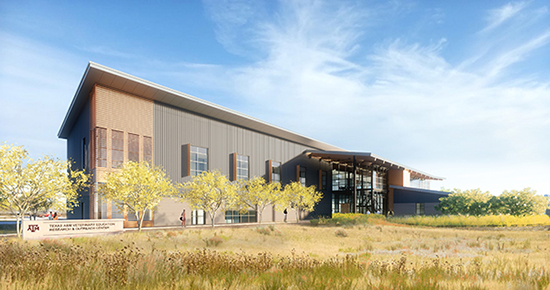
A rendering of the future VERO facility
A rendering of the VERO facility upon completion

The cohort will increase the total number of students enrolled in the CVM’s DVM program to 180, the largest in the nation.

“We are pleased that the American Veterinary Medical Association Council on Education sees the same potential in our 2+2 program that we do,” said Dr. Walter Wendler, WT president. “Bringing excellent veterinary faculty and resources to the Texas Panhandle area addresses critical needs and opens new opportunities for students in the Texas Panhandle to become Aggie veterinarians.”

The 2+2 program is one of many programs the CVM has implemented in the Texas Panhandle since 2009. Through the CVM’s VERO initiative, CVM faculty members live and work in the Texas Panhandle. They are housed at WTAMU, where they are actively recruiting and mentoring pre-veterinary students.

They also offer unique educational opportunities for current CVM veterinary students, including immersive externships, summer internships, and food animal production-focused tours that introduce them to the region and the livestock industries. An essential focus is working with veterinarians and livestock industry leaders in the region. The College Station campus and VERO are seamlessly connected, bringing the resources of College Station to the Texas Panhandle and vice versa.

All of these activities have been supported by more than $95 million in investments by the Texas A&M University System, including, most recently, a $5 million commitment to support additional faculty hires for the 2+2 program.

As part of the approval process, the AVMA COE will monitor the implementation of the 2+2 program through the CVM’s subsequent interim reports, which will update the AVMA COE on the implementation of the program, including additional clinical resources identified and additional faculty and staff hires. The next interim report will be due Dec. 15, 2020.

The approval will also require a focused site visit that will occur in the second semester of the second year of the initial 2+2 class, during which a site team will visit the VERO facilities at WT and will interview students and VERO faculty.

For more information on the 2+2 program and the CVM’s VERO initiative, visit https://vetmed.tamu.edu/vero/.

###

For more information about the Texas A&M College of Veterinary Medicine & Biomedical Sciences, please visit our website at vetmed.tamu.edu or join us on FacebookInstagram, and Twitter.

Contact Information: Jennifer Gauntt, Director of CVM Communications, Texas A&M College of Veterinary Medicine & Biomedical Science, jgauntt@cvm.tamu.edu, 979-862-4216; Chip Chandler, West Texas A&M University, 806-651-2124, cchandler@wtamu.edu
Ndeffo Discusses COVID-19 Virus With Produce Marketing Assn

In an April 14 interview with the experts, Dr. Martial Ndeffo explores the similarities and differences, in terms of epidemiology/mode of transmission, between the Ebola virus and SARS-CoV2. We also discuss how we can adapt Ebola virus learnings to stop the spread of COVID-19, especially as it relates to our industry. Lastly, we reviewed how we might modify the environments in our production facilities and in dorms where employees live to minimize the risk of person-to-person transmission.

Originally posted from the PMA’s COVID-19 blog

CVM Study Reveals Potential Health Benefits Of Coconut Oil

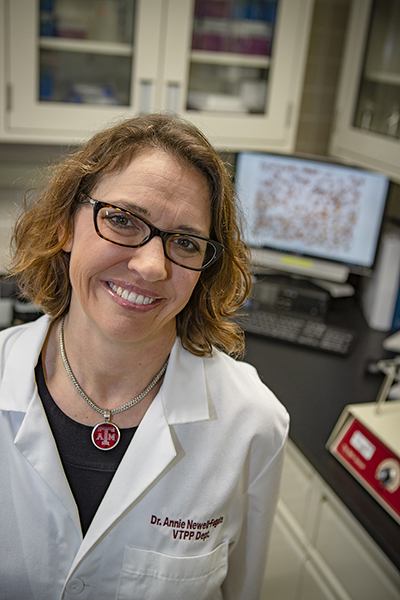
Dr. Annie Newell-Fugate

Many so-called “super-food” fads come and go before the scientific community has a chance to study them, but new research suggests that one recent trend—coconut oil—may mitigate the features of metabolic syndrome.

Dr. Annie Newell-Fugate, an assistant professor in the Texas A&M College of Veterinary Medicine & Biomedical Sciences’ (CVM) Department of Veterinary Physiology and Pharmacology (VTPP), recently presented research that offers insight into the potential benefits of dietary coconut oil.

Approximately 40 percent of American women are obese and are at risk for metabolic syndrome, which is characterized by increased blood pressure, high blood sugar, excess body fat around the waist, and abnormal cholesterol and triglyceride levels, all of which increase the risk of heart disease, stroke, and type 2 diabetes.

Newell-Fugate’s work focuses on improving the metabolic health of obese females struggling with metabolic syndrome, rather than focusing on weight loss alone.

“Most people in the nutrition and kinesiology fields are focused on weight loss to improve the health of obese patients,” Newell-Fugate said. “There are researchers looking at different types of diets—like the Mediterranean diet or Keto diet—and their effects on weight loss and overall health. However, the notion that you can potentially change the diet without causing weight loss yet still improve an individual’s health has not received much attention.”

In her study, Newell-Fugate and her team sought to determine whether a high-fat diet that incorporates coconut oil, a plant fat source, could improve the overall health and metabolism of obese females in comparison to the health of obese females fed a Western-style diet containing lard, an animal fat source.

Over an eight-month period, Newell-Fugate and her team fed two groups of female pigs high-fat diets consisting of 4,500 calories per pig per day. Both the Western-style diet and the coconut oil diet received 9 percent of their daily caloric intake from their respective fat sources. A third group was fed a low-calorie, lean diet as a control.

“We established each animal’s baseline before they went on their diet,” Newell-Fugate said. “Then, we assessed their blood glucose, cholesterol, and weight throughout the study; at the end, we were able to compare how much difference each of the diets had on these metabolic health parameters over time.”

The researchers found that the obese group, which received coconut oil had decreased features of metabolic syndrome, specifically with respect to cholesterol and blood glucose levels, in comparison to the obese group fed the lard-containing diet.

“Our research suggests that dietary coconut oil may be used in conjunction with lifestyle modifications and anti-diabetic drugs to treat metabolic syndrome, at least in women, with obesity,” Newell-Fugate said.

“The one thing I set out to understand with this particular project is determine whether coconut oil can modulate these metabolic parameters despite the fact that the females are still obese?” she said. “And the answer is yes.”

She recently presented her findings on the potential health benefits of coconut oil virtually at the annual Endocrine Society meeting, ENDO 2020.

###

For more information about the Texas A&M College of Veterinary Medicine & Biomedical Sciences, please visit our website at vetmed.tamu.edu or join us on FacebookInstagram, and Twitter.

Contact Information: Jennifer Gauntt, Director of CVM Communications, Texas A&M College of Veterinary Medicine & Biomedical Science; jgauntt@cvm.tamu.edu; 979-862-4216

Texas A&M CVM Pioneers Use Of Telemedicine To Prioritize Safety, First-Rate Care

The COVID-19 pandemic and associated social distancing measures have severely disrupted the way people are living on a global scale.

But as a leader in innovation and veterinary telemedicine, the Texas A&M College of Veterinary Medicine & Biomedical Sciences’ (CVM) Veterinary Medical Teaching Hospital (VMTH) is uniquely situated to continue providing unparalleled care to its clients and patients, despite current circumstances.

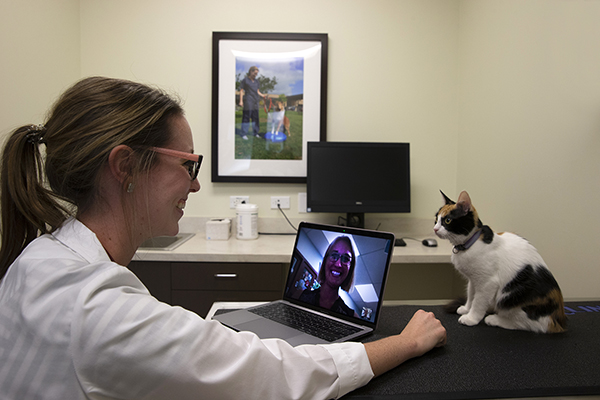
Two veterinarians use telemedicine to communicate through a computer on how to treat a cat
Telemedicine at the Texas A&M Veterinary Medical Teaching Hospital

“We have been blessed to have Dean (Eleanor M.) Green, who recognized the important role that telemedicine would play in the veterinary profession, especially as both private practice business models evolve and technology improves,” said Dr. Lori Teller, a CVM clinical associate professor and the first veterinarian hired in academia for the sole purpose of telemedicine. “Clients would much rather get reliable and trustworthy information from their veterinarian via telemedicine than through internet searches.”

Green’s prediction that veterinary telemedicine would play an important role in the future of the veterinary profession is allowing Texas A&M veterinarians to continue serving their clients and patients with little interruption in the current COVID-19 crisis.

“We’ve seen a tremendous increase in the engagement with and the use of telemedicine,” Teller said “With the orders from the government to discontinue elective procedures and only take on urgent and emergent cases, we still need to be able to help our clients and patients with problems before they do become urgent. Virtual care can fill this need.”

The VMTH is currently acting as a trailblazer in implementing this technology to such a large scale.

“To my knowledge, there are no other veterinary colleges that have integrated telemedicine as we have at Texas A&M,” Teller said. “A couple of other institutions have been using it for educational or research purposes but not for direct patient care or consults with our specialists.”

As the expected duration of social distancing measures remains in question, the U.S. Food and Drug Administration (FDA) has recognized the importance of telemedicine, changing their guidelines to allow veterinarians to prescribe certain medications over telehealth appointments.

The VMTH has also been expanding the limits of veterinary telemedicine by broadening the range of services offered through the CVM’s telehealth program, VirtualVet.

“The VirtualVet program has expanded from two services to 10 and now incorporates clinicians from the Small and Large Animal Hospitals so we can meet the needs of diverse types of animals. The number of cases that have been handled has grown exponentially,” Teller said. “This is just another way the VMTH can help provide excellent care to our clients, patients, and the veterinarians who need our assistance in caring for the animals of Texas.”

Pet owners seeking veterinary care through a telehealth appointment need only a reliable internet connection and a device with a camera and microphone. Teller said most smartphones work well for this use.

Currently, only existing clients of the VMTH are eligible for care through the college’s VirtualVet telemedicine program. Other veterinarians are also able to use VirtualVet to consult with one of the hospital’s many experts on cases for which a specialist may be needed.

“Since the VMTH has restricted in-person care to urgent and emergent cases, there are still many patients that need our help,” Teller said. “Some of these may be animals with chronic conditions that we need to maintain regular contact, so that their conditions don’t worsen. We can use a virtual visit to do rechecks, and if necessary, tweak treatment plans.

“Other times, clients may be unsure if the patient needs to come in, so the clinicians can do a virtual visit, assess the patient, and then be prepared for patients that do need to be seen physically,” she said.

Though telemedicine is an excellent tool for ensuring that animals get the care they need in times of disruption, Teller emphasizes that in-person appointments cannot be replaced entirely.

“Virtual care is just one part of veterinary care. There are lots of things we can do with telemedicine, but there are limitations. Sometimes we need to be able to put our hands on the patient, and we need to be able to listen to the heart and lungs, palpate joints and abdominal organs, obtain samples, or get imaging,” she said. “Virtual visits can be wonderful ways to provide care for some things, but not everything.”

If you think your pet requires emergency care, seek veterinary help immediately. Teller advises that pet owners seeking emergency care call their clinic ahead of time to let their veterinarian know they are coming and what the problem appears to be.

“Telemedicine is especially valuable during a pandemic because it can be used to help the veterinarian and the client determine if and when the patient needs to be seen in the hospital, or if the problem can be managed at home, at least for the short term,” Teller said.

“This allows for social distancing to limit exposure of both clients and veterinary staff to an infectious disease while maintaining adequate care for the patient. It also helps conserve PPE (personal protective equipment) and other resources for emergencies and for human health care facilities.”

Owners interested in learning more about telehealth services at the VMTH can visit the VirtualVet portal at https://vetmed.tamu.edu/virtualvet/.

###

For more information about the Texas A&M College of Veterinary Medicine & Biomedical Sciences, please visit our website at vetmed.tamu.edu or join us on FacebookInstagram, and Twitter.

Contact Information: Jennifer Gauntt, Director of CVM Communications, Texas A&M College of Veterinary Medicine & Biomedical Science; jgauntt@cvm.tamu.edu; 979-862-4216

VMTH Offers Little ‘Birdie’ Second Chance At A New Life

In the months following the death of Dr. Erin Wood’s beloved 16-year-old cat Lita, Wood found comfort in the song “Blackbird” by The Beatles.

“I love that song, and I felt so broken after Lita died; the song lyrics—especially the line ‘Take these broken wings and learn to fly’—had been running through my head,” said Wood, an assistant professor in the Texas A&M University Department of History.

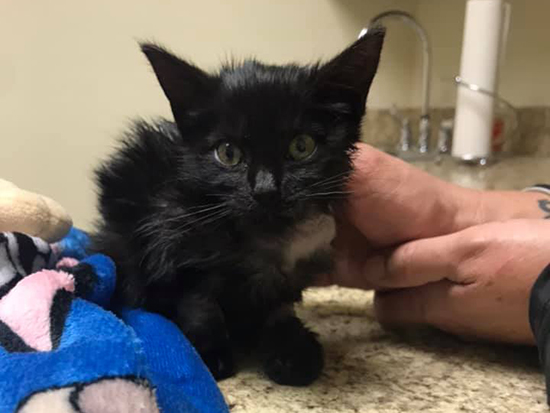
Birdie as a small black kitten
Xena/Birdie

“I love animals, and my animals are my babies; they’re my family here,” Wood said. “After Lita died, I really didn’t know when or if I’d be ready to adopt another cat, or another pet in general. I want to help them all, but I didn’t know if I could go through another loss when I already have three other babies, who I will most likely outlive.”

That changed, however, when she learned about a very sick black kitten, named Xena, that was taken to the Texas A&M College of Veterinary Medicine & Biomedical Sciences’ (CVM) Veterinary Medical Teaching Hospital (VMTH) in late 2019.

Xena was found very close to death, stuck to a rodent glue trap. She was first taken to an animal hospital in Conroe, but when it became clear that she was very sick and needed extensive care, Xena’s foster brought her to the VMTH, where Xena was found to have had severely decreased blood cell counts, hypoglycemia, hypothermia, internal parasites, and severe anemia, in addition to a several other ailments.

Courtney Bellew, founder and director of the New York-based rescue Special Needs Animal Rescue and Rehabilitation (SNARR), responded to a call for help in a Facebook post about the very sick kitten. Although the rescue is typically a dog rescue, she said, “I couldn’t scroll through and ignore the plea for help when I saw what terrible shape she was in.”

With the support of SNARR and the VMTH’s Casey’s Good Samaritan Feline Fund, Xena was able to get the life-saving treatment she desperately needed.

“In addition to supportive care, assorted diagnostics, and some medications and supplements, Xena needed a blood transfusion because she was lacking in red blood cells and had low blood volume,” said Wood, who became involved in Xena’s case after also learning about the kitten on social media.

A blood transfusion turned out to be a difficult process, as Texas A&M’s veterinarians discovered that Xena has a rare feline blood type, Type B.

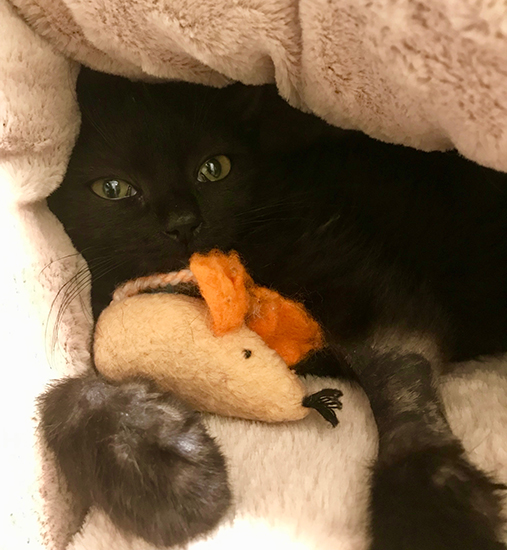
Birdie snuggled in a blanket

Since Type B feline blood is not commonly available, the veterinarians decided to give her a transfusion of Type B canine blood. This method comes with some risks, but Xena tolerated the transfusion and was able to receive a feline blood transfusion a few days later.

Shortly after Thanksgiving, Wood decided to foster Xena as a way of honoring her beloved Lita while Xena received treatment and continued on the road to recovery. It didn’t take long, though, for Wood to realize that she wanted to make Xena a permanent member of her family.

Because Wood was giving Xena a shot at a new life and a new home, Wood also wanted to give her a new name and knew exactly what that name should be—“Blackbird,” or “Birdie,” for short.

“When I first saw a picture of her, she looked so broken, and the way her limbs were laid out reminded me of wings,” Wood said. “She was such a fighter and so many people fought with her. The lyrics just seemed so fitting. She did have broken wings, but she is definitely flying now.”

Wood knew she would have to be careful during this time, since she already had a house full of pets still at home, including a 5-year-old dog named Turtle and two other cats, Miles and Trodaí.

When bringing a rescue into a new home, it’s important to integrate them slowly and get them acclimated before introducing them to other pets.

“To help with the adjustment for all of the animals and to allow Birdie to finish physically recovering, I took the integration really seriously,” Wood said.

Now, Birdie has made herself at home and is growing more and more comfortable as time goes on.

“It’s been amazing and beautiful to have seen her go from a sick, recovering little one to such a kitten,” Wood said. “She’s doing wonderfully now; she’s gained weight, has good energy, is physically and mentally active, and almost all of her fur has grown in.

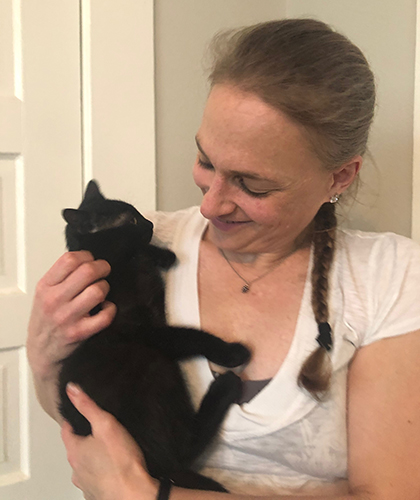
Dr. Erin Wood holding Birdie
Dr. Erin Wood and Birdie

“If you didn’t know her backstory, you’d have no idea that just a few months ago, she was critically ill and so close to death. She easily could not be alive if she wasn’t such a fighter and if so many people had not helped her in a multitude of ways.”

Wood said Birdie is sweet, funny, and curious.

“She loves climbing, running around the house, watching birds out the window, and cuddling up with us,” Wood said.

Birdie has even come around to befriending her canine siblings.

“She really enjoys her siblings,” Wood said. “She plays, or rather tries to play, with them all, including my roughly 55-pound dog. She is super curious and has no fear. She started becoming interested in them as soon as she started feeling better, gained energy, and got to be around them. She kind of forced them all to be her friend.”

While Birdie is not meant to replace Lita, Wood feels as though “she’s a beautiful part of Lita’s legacy.”

“She’s added a new piece of love to my broken heart,” Wood said. “She’s such a special little girl, and I’m so happy and lucky that I get to be the one to give her what I hope will be a wonderful life.”

Casey’s Good Samaritan Feline Fund supports injured or sick cats in dire need of care that are brought to the VMTH by good Samaritans for treatment. To contribute to this fund, click here.

###

For more information about the Texas A&M College of Veterinary Medicine & Biomedical Sciences, please visit our website at vetmed.tamu.edu or join us on FacebookInstagram, and Twitter.

Contact Information: Jennifer Gauntt, Director of CVM Communications, Texas A&M College of Veterinary Medicine & Biomedical Science; jgauntt@cvm.tamu.edu; 979-862-4216

Safety Tips For An Egg-cellent Easter

Though current circumstances might change the way we celebrate Easter this Sunday, many people are looking forward to the holiday and accompanying festivities as a break from the serious rhetoric of the COVID-19 pandemic.

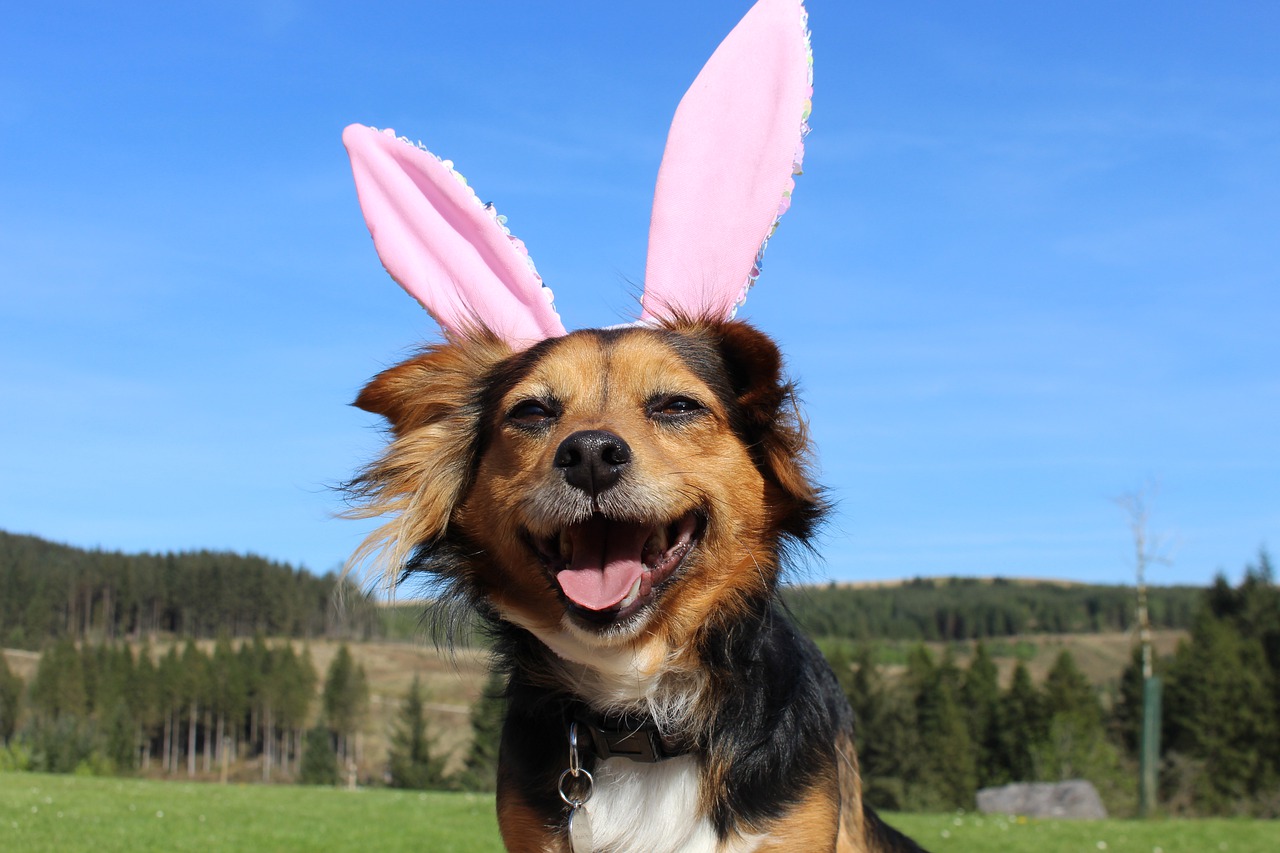
Dog wearing pink bunny ears

Dr. Murl Bailey, a professor at the Texas A&M College of Veterinary Medicine & Biomedical Sciences (CVM), advises pet owners to be cautious with some popular Easter decorations and treats in order to make the holiday as enjoyable for your furry friend as it is for you.

“For cats, the biggest problem will be the Easter lilies,” Bailey said. “Easter lilies affect the cat’s kidneys, and we don’t know what the toxic agent is. The clinical signs that we see in affected cats is they stop eating and act abnormally.”

Bailey adds that this abnormal behavior may include lethargy, vomiting, and dehydration. If the affected cat does not receive prompt veterinary care, these symptoms may progress to excessive urination or the inability to urinate, not drinking or excessive thirst, or other indicators of acute kidney failure.

“Cats who have eaten this plant must be brought the emergency room,” Bailey said. “They have to be given fluids for about 48 hours. If they don’t get treatment within 48 hours after the cat has ingested the plant, the results could be fatal.”

Bailey says dogs are more at risk for eating human foods that are toxic, like chocolate or snacks containing xylitol, an artificial sweetener.

“Xylitol causes the pancreas to secrete insulin,” Bailey said. “It drives the dog’s blood glucose, or the blood sugar, down to levels that are extremely dangerous.”

A dog with xylitol toxicity may display signs of vomiting, lethargy, or depression; a lack of coordination; tremors; or even seizures. They should be taken to a veterinarian immediately to stabilize their blood glucose.

“Chocolate is also toxic to dogs, and dogs are notorious for scarfing it down,” Bailey said. “It causes the dog to vomit. They’ll also develop diarrhea and convulsions that need to be controlled with veterinary intervention.”

It is specifically a component called theobromine in chocolate that is toxic to dogs. As such, the severity of a dog’s response to eating chocolate is dependent on not only their size and the amount of chocolate consumed, but also the type of chocolate consumed (dark chocolate, for example, contains more theobromine than milk chocolate).

If an owner suspects that their dog has ingested (amounts of?) chocolate and the animal begins to vomit, they should seek emergency veterinary care. Bailey recommends calling the clinic ahead of time to inform them about apparent issues and when you will arrive.

Because of current social distancing measures, many families may opt to host an egg hunt at home this year. Those planning to do so should take care that their pets are kept away from the eggs, as many candies contain toxic xylitol or chocolate.

Owners also should be cautious about which non-toxic human foods they feed their pets. Many human foods are too rich for pets and may cause digestive problems. Instead of slipping your pet a bite under the table, Bailey recommends feeding them a treat made for pets—but in moderation.

“Pets really should not be fed from the table at any time,” Bailey said. “It’s not good on their teeth and it’s not a balanced meal.”

Being mindful of what your pet eats is essential to avoiding a veterinary emergency during any holiday. Though pet owners should keep an eye on their furry friend during these special times, there is no reason why a pet can’t be included in your Easter festivities.

Pet Talk is a service of the College of Veterinary Medicine & Biomedical Sciences, Texas A&M University. Stories can be viewed on the web at vetmed.tamu.edu/news/pet-talk. Suggestions for future topics may be directed to editor@cvm.tamu.edu.

CVM Toxicology Alumna Selected For AFS Distinguished Graduate Student Award

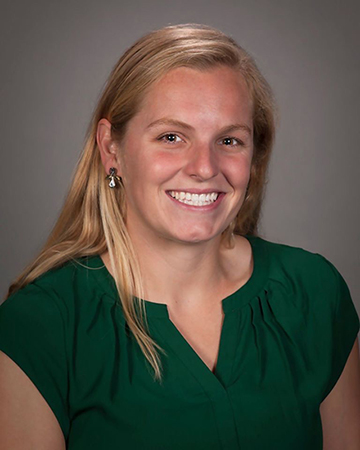
Lauren Lewis, Ph.D.
Lauren Lewis, Ph.D.

Lauren Lewis, Ph.D., a doctoral graduate from the Texas A&M College of Veterinary Medicine & Biomedical Sciences (CVM) and Interdisciplinary Faculty of Toxicology (IFT), was selected to receive the 2020 Texas A&M Association of Former Students’ (AFS) Distinguished Graduate Student Award in the category of Excellence in Research.

Every year, the AFS selects a group of 15 graduate students to receive an award in the category of research or teaching.

After double majoring in biomedical sciences (BIMS) and entomology, with a minor in French, Lewis went on to earn a doctorate in toxicology in 2019.

Her motivation for finishing her doctorate in toxicology was to become a research scientist in the pharmaceutical industry.

“Working in the pharmaceutical industry provides opportunities to make an impact on drug discovery and development with the ultimate goal of bringing life-saving therapies to as many patient populations as possible,” Lewis said.

Lewis is now working at the Cambridge, Massachusetts, site of Takeda, a global research and development pharmaceutical company based in Japan, conducting research projects and developing models to improve safety evaluations. She said that her time at the CVM helped develop her skills and passion, preparing her for her future career.

“The CVM provided numerous professional development opportunities for trainees,” Lewis said. “Through workshops and research symposia, I was able to practice effectively communicating my research findings to my peers as well as non-scientific audiences, which is a key skill that I use every day as a research scientist.

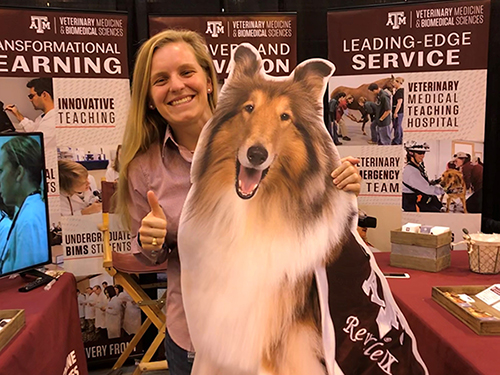
Lauren Lewis, Ph.D., and a Reveille cutout

“I am honored and truly humbled to be recognized among so many excellent graduate students at Texas A&M,” Lewis said. “I am very grateful for the opportunity to complete my Ph.D. in the Interdisciplinary Faculty of Toxicology program. I would like to thank my adviser, lab-mates, fellow TOX students, and CVM professors for all of their support.”

“Lauren has been an outstanding student, a passionate researcher who overcame considerable personal hardship in graduate school, and a true role model to other female students in our program, the College, and the larger profession of toxicology. She has tirelessly volunteered her time to many worthy academic, scientific and professional causes and is most deserving of this recognition,” said Dr. Ivan Rusyn professor in the CVM Department of Veterinary Integrative Biosciences (VIBS) who served as a primary adviser to Lewis.

The award ceremony honoring Lewis and the other students will be scheduled at a later date.

###

For more information about the Texas A&M College of Veterinary Medicine & Biomedical Sciences, please visit our website at vetmed.tamu.edu or join us on FacebookInstagram, and Twitter.

Contact Information: Jennifer Gauntt, Director of CVM Communications, Texas A&M College of Veterinary Medicine & Biomedical Science; jgauntt@cvm.tamu.edu; 979-862-4216

VMTH Veterinary Technician Receives State-Wide Award From TVMA

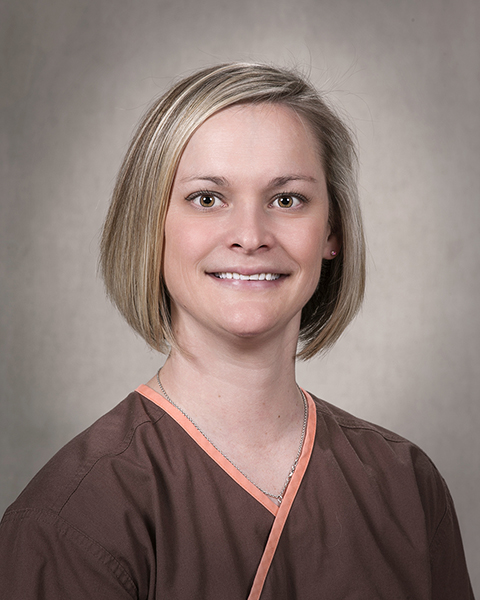
Hollye Felps
Hollye Felps

Hollye Felps, a veterinary radiology technician at the Texas A&M College of Veterinary Medicine & Biomedical Sciences’ (CVM) Veterinary Medical Teaching Hospital (VMTH), has been recognized with the 2020 Texas Veterinary Medical Association (TVMA) Licensed Veterinary Technician Award.

The award, granted at a state level, celebrates a veterinary technician whose service to the profession has made significant contributions to the veterinary field. Award winners are honored at the TVMA Annual Conference and are profiled in the Texas Veterinarian magazine.

“As a support service, sometimes our efforts get slightly overlooked, so I am incredibly grateful to be recognized,” Felps said. “Thank you to my radiology team for their support in my efforts to establish the veterinary technician specialty in diagnostic imaging that was just founded last year. This award is a prestigious recognition and I am very appreciative and gracious to be the recipient.”

Felps has more than 15 years of experience as a veterinary radiology technician and holds credentials as a Licensed Veterinary Technician of Texas and a Registered Technician in Magnetic Resonance. She also is a founding committee member of the most recently recognized technician specialty in diagnostic imaging (VTSDI) under the North American Veterinary Technician Association (NAVTA)

Her involvement with the creation of the NAVTA-VTSDI specialty required four years of work with nine other committee members shaping the requirements to officially establish the specialty. Her work has forged a path for future generations of veterinary technicians to receive the proper training and meet national regulations to become specialists in diagnostic imaging.

Felps is an active member of multiple veterinary associations, including the North American Veterinary Technician Association (NAVTA), the Texas Veterinary Medical Association (TVMA), and the American Society of Radiologic Technologists.

Closer to home, Felps volunteers her time with the Texas A&M Partnership for Environmental Education and Rural Health (PEER) program, through which she shares scientific knowledge with middle and high school students through free online resources and classroom visits. With PEER, Felps also has presented material to an online conference of more than 500 participants, in addition to presentations at other meetings.

Felps has made outstanding contributions to the veterinary field academically, as a published author on multiple manuscripts; a contributor of articles to trade magazines in the field of veterinary radiology; and the recipient of numerous acknowledgements in publications for her CT assistance.

“Hollye Felps has been a dominate leader of the imaging department for over a decade,” said Wade Friedeck, an assistant hospital administrator at the VMTH. “She has helped the VMTH launch the addition of the Diagnostic Imaging and Cancer Treatment Center by learning state-of-the-art imaging equipment. Her expertise in imaging is unparallel in the veterinary technician community.”

Felps’ dedication to her work at the VMTH, while also donating her time and effort to external causes, shows the strength of character associated with the Aggie spirit. Her commitment to animal wellness and improvement of the veterinary medicine field is well-acknowledged through this award.

###

For more information about the Texas A&M College of Veterinary Medicine & Biomedical Sciences, please visit our website at vetmed.tamu.edu or join us on FacebookInstagram, and Twitter.

Contact Information: Jennifer Gauntt, Director of Communications, Texas A&M College of Veterinary Medicine & Biomedical Sciences; jgauntt@cvm.tamu.edu; 979-862-4216

Texas A&M, NC State Researchers Develop Online Tool For COVID-19 Risk Assessment

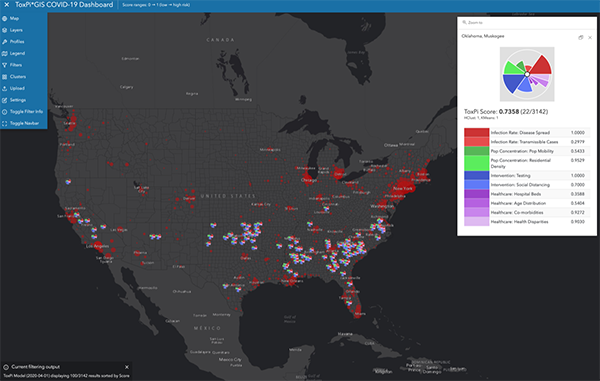
Screenshot of the new COVID-19 Pandemic Vulnerability Index
The COVID-19 Pandemic Vulnerability Index

COLLEGE STATION, April 2, 2020—The COVID-19 pandemic is a global crisis, and government and health care organizations around the world are generating vast amounts of data and models to help inform decisions. However, the majority of impactful decisions on how to handle the crisis are made at the local level, where consistent access and analysis of the data and models can be challenging.

To help solve this issue, a team of researchers from Texas A&M University and North Carolina State University have created an online dashboard, the COVID-19 Pandemic Vulnerability Index (PVI), located at https://toxpi.org/covid-19/map/, to assist local, state, and federal authorities in making decisions about “hot-spots” in COVID-19.

“The response from the scientific community to the COVID-19 pandemic has been enormous and the information that becomes available on different aspects of the disease spread are now available and useful,” said Dr. Ivan Rusyn, director of the Texas A&M Superfund Research Center (SRC) and a university professor in the College of Veterinary Medicine & Biomedical Sciences’ (CVM) Department of Veterinary Integrative Biosciences (VIBS).

Where the COVID-19 PVI Dashboard is different from other attempts to synthesize data for local leaders and the public is that it gives each county a concise “vulnerability scorecard,” which integrates multiple vulnerability indicators related to infection status, mitigation efforts, and pandemic-related vulnerabilities. The team adapted the web-based, decision-support dashboard ToxPi*GIS for the COVID-19 response.

Globally, there is a general road map for the steps in addressing the pandemic, and in the United States, everyone is still at the first step—trying to reduce the spread of the virus through social distancing. However, it can be difficult for localities to understand how such interventions are reducing their vulnerability to continued infections.

Additionally, the time will eventually come to start gradually easing restrictions. But deciding when and where to begin that process is going to be very difficult. State and local leaders will have to closely monitor for disease resurgence while considering the capacity of their local healthcare system.

“Our approach is to integrate these complex data and to communicate the results through easy to understand county-level scorecard,” Rusyn said.

For state leaders, the dashboard can help identify current and, more importantly, potential “hot spots,” which will assist in prioritizing resources.

“The main limitation of most of the online maps currently available is that they are looking in the rear-view mirror, especially due to the long incubation period of COVID-19,” said VIBS professor Weihsueh Chiu, another member of the team. “We aim to fill this gap by developing a vulnerability index to identify potential future hot spots and, thus, help decision-makers initiate, intensify, or relax interventions as appropriate.”

The team is seeking input from local officials and experts to continue to refine the dashboard and its functionality in order to best support decision-making.

“Moreover, all of our software and results are fully open source and transparent,” added Professor Chiu, “and we invite outside scrutiny to help us make rapid updates and improvements.”

The ToxPi*GIS COVID-19 dashboard was adapted from a recently released tool called HGBEnviroScreen—developed by Chiu, Drs. David Reif and Skylar Marvel, both from North Carolina State University in Raleigh, NC, as part of Texas A&M Superfund Research Center—to serve the Houston-Galveston-Brazoria (HGB) region in integrating and visualizing national and local data on environmental health to address regional concerns.

###

For more information about the Texas A&M College of Veterinary Medicine & Biomedical Sciences, please visit our website at vetmed.tamu.edu or join us on FacebookInstagram, and Twitter.

Contact Information: Jennifer Gauntt, Director of Communications, Texas A&M College of Veterinary Medicine & Biomedical Sciences; jgauntt@cvm.tamu.edu; 979-862-4216

Veterinary Telemedicine In The Age Of COVID-19

In light of COVID-19 and the associated restrictions on public activity, many people are looking for ways to safely go about their daily lives indoors and online. Luckily, veterinary telemedicine supports this goal and allows individuals to ensure their health and the health of their pets, digitally.

Dog laying its head on a keyboard

Dr. Lori Teller, a clinical associate professor at the Texas A&M College of Veterinary Medicine & Biomedical Sciences, speaks to pet owners about the basics of veterinary telemedicine and how this tool can be especially useful in the midst of a pandemic.

“Telemedicine is the exchange of medical information from one location to another using electronic communications to diagnose, treat, or improve a patient’s health status,” Teller said. “In most cases, all that an animal owner needs to connect is a smartphone with a working camera, microphone, and chat feature.”

A computer or tablet may also be used, provided that it is capable of two-way communication and has internet access. In many cases, a telemedicine appointment will be a real-time, live video and audio exchange.

“A veterinarian can evaluate many things via telemedicine,” Teller said. “The first thing will be to obtain a patient’s history and determine what the current problem is. If the problem is something that can be visualized, such as a skin lesion or limping, then pictures or videos will be helpful. Behavioral and nutritional problems can often be handled via telemedicine as well.”

Telemedicine appointments are most effective when there is an established veterinarian-client-patient relationship (VCPR), as the veterinarian may be able to more accurately make a diagnosis and create a treatment plan. If there is no established VCPR, a veterinarian will still be able to provide general advice. Rules on what the outcome of a telemedicine appointment can be, including the prescription of medications, vary by state.

“It is important to note that telemedicine does not replace a physical exam, so there will be times when the veterinarian will tell the client that the patient needs to be seen,” Teller said. “Telemedicine can play a huge role, especially in times of disaster, such as a pandemic or hurricane, in helping a client determine if a trip to the veterinarian is needed and, if so, when is it needed.”

If a pet has a life-threatening emergency, difficulty breathing, pale or bluish gums, has ingested a toxic substance or something large enough to cause an obstruction, is unable to urinate or to stand, has increased seizures, is non-responsive, is experiencing difficulty during labor, has vomiting and diarrhea and lethargy, or is experiencing other serious veterinary conditions, they should be brought to a veterinary clinic.

Teller recommends calling ahead of time to let the clinic know you’re coming and what the problem appears to be.

“Telemedicine is an extremely valuable tool to help provide care for a patient,” she said. “It is not a substitute for in-person veterinary care that requires a physical exam or diagnostic tests, such as blood work or imaging, but is a way to manage patients in-between visits to the hospital.”

During times of disruption, such as the current pandemic, veterinary telemedicine can be an excellent way to ensure that your furry friend continues to get the care they need while also following social distancing requirements and staying safely indoors.

“Telemedicine is especially valuable during a pandemic because it can be used to help the veterinarian and the client determine if and when the patient needs to be seen in the hospital or if the problem can be managed at home, at least for the short term,” Teller said. “It also helps conserve PPE (personal protective equipment) and other resources for emergencies and for human health care facilities.”

Pet Talk is a service of the College of Veterinary Medicine & Biomedical Sciences, Texas A&M University. Stories can be viewed on the web at vetmed.tamu.edu/news/pet-talk. Suggestions for future topics may be directed to editor@cvm.tamu.edu.