McAllen BIMS Student Pursues Specialized Nursing Career

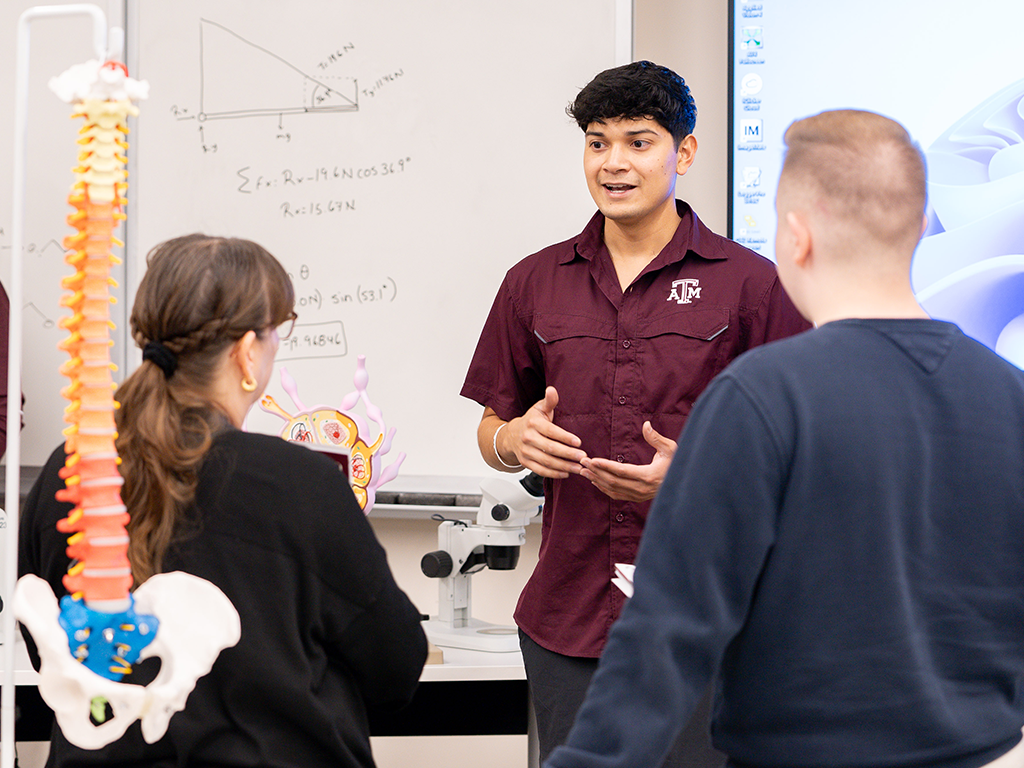
A college student in maroon gives a presentation.
Garza introduces visitors to biomedical sciences during an Open House at the Texas A&M Higher Education Center at McAllen.

Andres “Andy” Garza Jr., a junior biomedical sciences (BIMS) major with a minor in public health at Texas A&M University’s Higher Education Center at McAllen, has built his life around helping others — a commitment shaped by personal tragedy, strengthened through science, and rooted in community. 

Although Garza has never sought the spotlight, his passion for people and service make him an undeniable standout — especially on the McAllen campus, where close-knit support and hands-on opportunity have helped his goals take flight.

A Defining Moment

Growing up in Alamo, Texas, Garza had a natural inclination toward service, but it wasn’t until a life-altering moment that his path toward health care began to take shape.

When he was just 11 years old, a usual afternoon of barbequing with his grandmother turned into a day Garza would never forget. Just as she attempted to light the grill, a gust of wind knocked over an open can of lighter fluid, dousing her just as flames sparked.

“I was maybe 4 or 5 feet away when she was completely engulfed,” Garza said. “I never thought something like that would happen.”

Garza rushed to his grandmother without hesitation, helping her to the ground and pulling off the burning clothing. Looking out the window at just the right time, his father rushed outside to help, and together they wrapped her in towels and got her to the hospital. She was then airlifted to a burn unit in San Antonio, where she spent months recovering in intensive care.

“I didn’t care if anything happened to me,” Garza said. “I just knew I had to do anything I could to help her.”

His quick-thinking and bravery caught the attention of his local fire department, which awarded him a medal of heroism and invited him to join their junior firefighting program. At just 12 years old, Garza said yes, and before long, the station became a second home.

“I got to train alongside real firefighters and respond to real emergencies,” Garza said. “My second-ever call was a structure fire — I could feel the heat burning my face from 50 feet away.”

Rather than being defined by the trauma of his past, Garza found strength in facing it head-on.

“At the fire department, I was able to confront and overcome my fears,” Garza said. “It was really meaningful to show up for people in those overwhelming, chaotic moments — the kind of moments my family had lived through. It made everything I’d been through feel like it had purpose.”

Finding Purpose At McAllen

A boy and his grandmother.
Garza and his grandmother, Elisa Rivera

Although Garza originally hoped to attend Texas A&M University in College Station, financial challenges rerouted his plans. After speaking with a recruiter, he discovered the McAllen campus only minutes from his hometown and enrolled in the BIMS program — still unsure of his career plans but drawn to the program’s potential.

“All I knew was that I wanted to be a flight nurse or maybe a doctor,” Garza said. “When a recruiter told me about McAllen’s BIMS program, I thought it sounded awesome, but I still wasn’t sure what to expect. It’s turned out to be so much more than I thought.”

Part of the College of Veterinary Medicine & Biomedical Sciences (VMBS), the BIMS program is offered at both the McAllen and College Station campuses, giving students access to the same academic foundation in two distinct settings. For Garza, McAllen’s personalized, community-centered environment made all the difference.

He quickly came to appreciate the opportunities and close-knit community at the McAllen campus. Small class sizes, supportive professors, and hands-on experiences unique to this campus made an immediate impact.

“I started realizing that McAllen offered something really special,” Garza said. “My organic chemistry class had 10 students. Professors know every one of their students personally and are dedicated to helping us succeed.”

It wasn’t long before Garza began standing out — not just for his academic efforts but for his willingness to take initiative and interweave his passions.

Building A Bridge Between Science And Service

One of Garza’s most memorable projects came in an immunology course taught by Dr. Negin Mirhosseini, a VMBS  instructional associate professor. Inspired by his professor, Garza helped organize a STEM Day event to teach local fifth graders about the immune system through interactive activities and visual demonstrations.

“I used Play-Doh to explain how antibodies and antigens work,” Garza said. “At the end, they could actually explain what they’d learned — it was amazing.”

As Garza settled in, he continued to embrace the unique opportunities that McAllen provided, taking on larger projects across campus. He helped Dr. Charity Cavazos, a VMBS instructional assistant professor, pioneer a student-led course, BIMS 289, designed to educate students on the wide range of medical professions available.

“We’ve hosted doctors, nurses, and medical students, and we’re working on scheduling veterinarians, pharmacists, and speech pathologists,” Garza said. “The course gives students insight into different healthcare careers, and as a peer leader, you get to shape the course structure while developing invaluable communication and professional skills.”

Whether leading community events or expanding academic opportunities, Garza has continually found ways to connect his learning experiences with meaningful service. That same mindset guided his next big endeavor — an award-winning undergraduate research project exploring the increased risk of cancer among firefighters, a health concern he witnessed firsthand through his own service.

“It was deeply personal,” Garza said. “I talked about the risks of carcinogen exposure in the fire service and how stigma, lack of data, and limited awareness keep firefighters from seeking care.”

Despite initially feeling intimidated as a sophomore surrounded by upperclassmen on track for medical school, Garza’s research earned him first place in a campus competition and later took him all the way to Pittsburgh, where he presented at the Annual Biomedical Research Conference for Minority Students.

Determined to bring his research to life, Garza brought his full firefighter gear — helmet, air tank, and all — to demonstrate the everyday risks faced by first responders. 

“I wanted people to see that the danger doesn’t end with the flames,” Garza said. “Toxic residue stays on the gear, and without proper awareness or protocols on how to properly clean and maintain that gear, that exposure builds up. Firefighters deserve to know how that affects their health and how to protect themselves.”

Garza’s work didn’t stop there. He later presented his findings at his hometown city hall, inviting first responders, medical professionals, and community members to join the conversation and advocate for better health practices within the fire service.

Looking To The Skies

A young man in a black uniform gives a presentation to emergency responders.
Garza presents his research to the City of Alamo Fire Department.

Garza’s ultimate goal is to become a flight nurse — a specialization that provides critical care to patients during air transport, often in helicopters or airplanes traveling from emergency scenes or smaller hospitals to advanced medical centers. It’s an aspiration inspired years ago by the team that helped save his grandmother’s life.

These nurses operate in fast-paced, high-stakes environments, delivering hospital-level care while managing complex medical situations midair. The role perfectly merges Garza’s passion for emergency response with his academic foundation in biomedical sciences and public health. 

“I want to be that person providing care in those critical moments,” Garza said. “I love how flight nursing combines action, impact, and purpose — it’s like a hospital on wings.”

To reach this goal, Garza plans to earn his registered nurse license and then gain experience in the intensive care unit or emergency room — environments that will help him build the skills needed to provide care in the air.

Whether he was organizing STEM Day, building a student-led course, advocating for firefighter health, or working toward airborne care, Garza has never lost sight of his original mission — helping people.

“The McAllen campus gave me so many opportunities,” Garza said. “Everything I’ve done was possible because of the support and mentorship I found here — and now, I just want to use what I’ve learned to serve others and give back to the communities that helped me grow.”

###

For more information about the Texas A&M College of Veterinary Medicine & Biomedical Sciences, please visit our website at vetmed.tamu.edu or join us on FacebookInstagram, and X.

Contact Information: Jennifer Gauntt, Director of VMBS Communications, Texas A&M College of Veterinary Medicine & Biomedical Sciences, jgauntt@cvm.tamu.edu, 979-862-4216

Spider Monkeys Find Refuge At Texas A&M’s Winnie Carter Wildlife Center 

A baby spider monkey eating a leaf.

The Winnie Carter Wildlife Center at the Texas A&M College of Veterinary Medicine & Biomedical Sciences has become a permanent home for dozens of species of animals — from African servals and Eurasian lynx to deer, llamas, zebras, Przewalski’s horses, kangaroos, and a variety of birds and reptiles. 

At the center, these animals have access to around-the-clock care from a zoological veterinarian and support the education of Texas A&M undergraduate and Doctor of Veterinary Medicine students, who learn about animal handling, behavior, medical care, and management as part of their training to become the next generation of wildlife veterinarians, zookeepers, and more.     

While wildlife center residents now live happy, healthy lives, many find sanctuary at the center following less-than-ideal circumstances. 

Such is the case with six of the newest wildlife center residents — spider monkeys who were illegally purchased and then surrendered or were confiscated by federal authorities: 

Bodhi was purchased for $8,000 and was only two months old when his owner realized the challenges of owning a pet spider monkey and decided to surrender him in April 2023. 

In May 2024, Bick and another baby spider monkey were confiscated by federal authorities in a malnourished state. While Bick now resides at the wildlife center, his companion lived only 12 days after being rescued from smugglers who were not equipped to properly care for the trafficked animals. 

That August, Mark and David were transferred to the wildlife center from the Gladys Porter Zoo in Brownsville, Texas, after being seized at the United States-Mexico border crossing. 

Two months later, Cynthia came to the wildlife center weighing only 450 grams.

“Initially, she was not able to drink from a bottle; it was questionable whether she would even survive,” said Dr. Alice Blue-McLendon, a VMBS clinical associate professor and wildlife center director.  

Coffey, who also was illegally purchased, escaped from his owners in Long Island, New York, and was rescued when officials found him on the densely populated streets. The local SPCA and The Bronx Zoo were instrumental in placing him at Texas A&M. 

“The Winnie Carter Wildlife Center has a history of taking in animals from these backgrounds,” Blue-McLendon said. “We help get them the medical attention they need, sometimes through the VMBS’ Veterinary Medical Teaching Hospital; nurse them back to health; and ensure they live long, happy, and healthy lives.”

A Cinderella Story

A woman in blue scrubs holds a baby monkey.
Dr. Alice Blue-McLendon holds one of the Winnie Carter Wildlife Center’s spider monkey residents.

Now thriving in their new home, animals at the wildlife center support its educational mission by teaching students — and wildlife center visitors — about the importance of responsible wildlife ownership and conservation. 

Wildlife trafficking across the U.S. border is estimated to generate about $23 billion each year and is the fourth-largest funding source for transnational criminal organizations, according to U.S. Immigration and Customs Enforcement.  

“This activity also causes irreparable damage to wild and endangered animal populations,” Blue-McLendon said. “Spider monkeys are found in southern Mexico and all through Central America, but in another 10 years, if this keeps happening, there are not going to be any left in the wild, which is very sad.” 

Currently, 25 states do not allow private ownership of primates. Because animals confiscated in the illegal wildlife trade are rarely able to be released back into the wild, when possible, rescued animals are placed in zoos, wildlife centers, or aquariums to receive high-quality care for the rest of their lives, according to Blue-McLendon. 

Re-homing wildlife in this way supports what is called the species survival plan. 

“This is something done through zoos where they use genetic information collected from all the known members of certain endangered species to make breeding decisions,” Blue-McLendon said. “These animals that have come across illegally are being looked at as ‘founder populations’ that can create new genetic lineages into a closed zoo population.”

Finding Refuge In a New Home 

A baby spider monkey sits on a colorful jungle gym.

Today, at the VMBS, the six spider monkeys receive all the nutrition, shelter, enrichment, and veterinary care they need to thrive. 

“Watching them develop from these little, tiny spider monkeys who could barely even crawl to being able to hang by their tails has been fun and fascinating,” Blue-McLendon said. “A challenge in having spider monkeys long term is that you must provide them with enrichment, which is incredibly important for their overall well-being; you need to challenge them with problem-solving toys and change out those toys; you need to maybe hide their food in different areas so they can figure out how to get it. 

“We do that with some of our cats and we also do it with our sloths, just to make each day different for the animal,” she said. 

Reward enrichment has also looked like training the spider monkeys though things like word association.

“When their diapers needed to be changed, we use the term ‘diaper’ so they know that’s what’s going to be happening. When I move one of them from place to place, I try to tell them ‘move’ so they know what will happen. We also train them to present their tails and arms so that we can examine them,” Blue-McLendon said.  

Socialization is equally critical for happy, healthy spider monkeys, and that includes giving them plenty of space to hang out. 

“There are reasons why spider monkeys are inappropriate pets, including that most people who buy them don’t buy two; they just buy one,” Blue said. “This is problematic because they’re a very social species.

“Most people also are not prepared to provide them with a big enough habitat,” she said. “These monkeys will grow to be between 16 and 18 pounds.” 

To accommodate their growing troop, the wildlife center is working to build a 20- by 60-foot outdoor habitat, with an additional fully air conditioned and heated indoor space. 

With the cost of housing and ensuring these animals receive the proper nutrition, the support of donors like Bill and Bickie Coffey — who have generously contributed to the center’s efforts to build a safe, enriching habitat for the monkeys — and the WoodNext Foundation has been invaluable, Blue-McLendon said.  

In show of appreciation for donors like the Coffeys, Blue-McLendon has created a tradition of naming wildlife center animals after those who have made a significant impact on the center’s educational mission. 

Two of the spider monkeys are named after the Coffeys, and another was named to honor Cynthia Colbert, the wildlife center’s former veterinary technician.

“Mark is named for Mark Westhusin, a brilliant Texas A&M researcher who passed away in May 2024,” Blue-McLendon said. “David has two namesakes — David Goltz, who generously gave his time and talents to help build habitats for our animals and David Rath, the arborist who keeps the wildlife center’s trees healthy and beautiful.”To learn more about supporting the wildlife center’s education and animal refuge missions, visit https://vetmed.tamu.edu/wildlife.

###

For more information about the Texas A&M College of Veterinary Medicine & Biomedical Sciences, please visit our website at vetmed.tamu.edu or join us on FacebookInstagram, and X.

Contact Information: Jennifer Gauntt, Director of VMBS Communications, Texas A&M College of Veterinary Medicine & Biomedical Sciences, jgauntt@cvm.tamu.edu, 979-862-4216

Texas A&M Veterinary Team Uses Novel Treatment To Save Dog From Drug Overdose

A dog in a Texas A&M bandana high-fives his owner, wearing a Mizzou shirt.
Ruger with his owner, Dr. Keegan Crow ’25

A normal day can turn into a tragedy in only a matter of minutes. This was especially true for Dr. Keegan Crow ’25, whose dog, Ruger, managed to find and eat nearly an entire bottle of pills while home alone.

Fortunately, as a fourth-year veterinary student at the Texas A&M College of Veterinary Medicine & Biomedical Sciences (VMBS) at the time, Crow knew just where to go. He rushed Ruger to the Texas A&M Small Animal Teaching Hospital (SATH), where a talented team of veterinarians, staff, and students used a new blood purification treatment called therapeutic plasma exchange (TPE) to save Ruger’s life.

Only three days later, Ruger returned home happy and healthy, with no lasting consequences from the experience.

Ruger was the SATH’s first patient treated with TPE — a milestone that followed extensive preparation within the Emergency (ER) and Critical Care (CC) services to acquire the necessary equipment, training, and staff for the procedure. His case represents an important step toward making TPE available on a full-time basis for patients experiencing drug overdoses or other forms of intoxication.

From Treatment To Toxin

Ruger entered Crow’s life in 2018 as a tiny, 8-week-old mixed breed puppy. As he grew up with Crow, who was an undergraduate student at Oklahoma State University at the time, his personality began to shine.

“He’s really snuggly and very friendly with other people,” Crow said. “And then he’s hyper-focused anytime you’re working with him, whether that’s fetching a ball or learning new commands, and he’s always happy to train.”

The pair moved to College Station when Crow began veterinary school, and during Crow’s third year, he noticed that Ruger was experiencing neck pain and took him in for a checkup. Ruger was diagnosed with a herniated vertebral disc in his neck — not severe enough to need surgery for treatment but enough to cause intermittent flare-ups of pain.

Crow was prescribed a large bottle of Carprofen, a nonsteroidal anti-inflammatory drug (NSAID), and was told to give Ruger half a chewable, beef-flavored tablet whenever he had a flare-up. Although the medication was successful at treating the pain, Ruger’s next flare-up would inadvertently cause a bigger problem only months later.

“I gave him a dose one evening and then woke up the next morning and went to class, which was the Texas Department of Criminal Justice clinical rotation at the time. A neighbor came and let him out at noon,” Crow recalled. “I got back to the house probably at around 4 p.m. and there were just copious amounts of vomit all over the floor and the couch.”

During those four short hours in the afternoon, Ruger had managed to open a drawer, pull out and open the bottle of Carprofen, and eat all the remaining 179.5 tablets.

“He had vomited a lot of it up, luckily, but I made a pretty quick assessment that it was a severe intoxication if he had any remaining in him,” Crow said. “I put him in the car and went straight back to A&M, this time to the ER.”

Trying Something New

A dog relaxing on a bench outside
Ruger

Because it would be impossible to know exactly how much of the medication Ruger had vomited up, Dr. Gabriela Rivas, a clinical assistant professor in the ER Service, approached the case as though he still had the maximum possible amount of toxins in his system. 

“I was nearing the end of my veterinary training, so I was very well aware of all of the risks Ruger was facing from eating that much of that medication,” Crow said. “But my buddy from vet school, Joe Knue, happened to be on the critical care rotation at that time, so I knew Ruger was in good hands. I trust Joe a lot and that helped put me at ease.”

Having recently learned about TPE as a new treatment option for NSAID intoxications, Crow asked if it would be an option for Ruger.

“We originally discussed lipid emulsion therapy, which would be a good place to start because it interferes with the action of the Carprofen, but the downside is that it doesn’t actually eliminate the drug in the blood,” he said.

Rivas and Dr. Lance Wheeler, also a clinical assistant professor, decided that although TPE had never been done before at Texas A&M, it would be worth a try in Ruger’s case.

“Lipid emulsion therapy is beneficial, but it doesn’t come close to the level of benefit that you get from doing a therapeutic plasma exchange,” Wheeler said. “TPE is truly designed to decrease the concentrations of the toxin in the body, whereas the lipid treatment is designed to just trap the toxins and prevent them from causing harm while the body naturally eliminates them.”

The CC team began the careful, hands-on process to help remove the toxin from Ruger’s blood by taking out small portions of his blood plasma — the liquid part of blood that carries the toxin — and replacing it with clean, donated plasma. 

Although the SATH now has advanced equipment that can perform this process automatically, those supplies weren’t available at the time. Instead, the team performed a manual version of TPE, which involved removing safe amounts of Ruger’s blood — similar to the amount that would be removed during a blood donation — cleaning it, and then returning it to his body. 

After working for hours through the night, the team successfully filtered Ruger’s entire blood volume — twice over — by hand.

“It was very mentally and physically labor-intensive — I would compare it to surgery; you must remain laser focused while working constantly for six hours straight,” Wheeler said.

“Our pre- and post-treatment measurements showed that Ruger’s toxin levels dropped by 88% during therapy,” he said. “While an animal’s body can naturally clear some of the toxin over time, the reduction we achieved was significantly greater than what his body could have accomplished on its own.”

Making A Full Recovery

A dog wearing protective goggles relaxes in the grass with a frisbee in its mouth.
Ruger enjoys playing fetch outside in his special “doggles” that protect his eyes from sunlight and debris.

After three days in the hospital, Ruger was finally out of danger and able to go home. Other than needing extra rest and a few medications to prevent secondary effects from the NSAID toxicity — such as damage to gastrointestinal organs — he was back to his normal self.

“I’m really thankful for Dr. Wheeler and his expertise and, of course, for Joe and all the other students and residents who participated in Ruger’s care,” Crow said. 

Today, Crow is a small animal rotating intern at the University of Missouri College of Veterinary Medicine, where he frequently finds himself working in the emergency service.

“It’s given me a different perspective now, being an intern and seeing all the hospital workings from the doctor side,” Crow said. “It just makes me even more appreciative that everyone worked together and put Ruger’s care first.

“I have mentioned TPE at times as an option for patients, and although there is limited availability in where it can be done, I think it can be a really powerful tool in certain instances,” he said.

At Texas A&M, the ER and CC teams are embracing TPE and a similar treatment called hemoperfusion as new options for patients with drug overdoses or complex conditions like immune mediated hemolytic anemia, an autoimmune disorder in which a dog’s immune system destroys its own blood cells.

New, specialized equipment is making these treatments faster, easier, and more affordable, and Texas A&M is one of the few veterinary hospitals in the United States that can perform both procedures. 

“The key requirements for offering these procedures to dogs and cats around the clock are trained personnel, equipment appropriately sized for small animal patients, and a well-stocked blood bank — all of which are now in place at the SATH,” he said. “These three components are critical to sustaining 24/7 availability, and we are working diligently to ensure the infrastructure is fully established to provide these life-saving treatments to the surrounding community.”

###

For more information about the Texas A&M College of Veterinary Medicine & Biomedical Sciences, please visit our website at vetmed.tamu.edu or join us on FacebookInstagram, and X.

Contact Information: Jennifer Gauntt, Director of VMBS Communications, Texas A&M College of Veterinary Medicine & Biomedical Sciences, jgauntt@cvm.tamu.edu, 979-862-4216

Protecting Livestock From The New World Screwworm

Cows in a field

Livestock owners work hard to keep their animals healthy, but even small wounds or injuries can create opportunities for parasites to cause serious health problems.

One of these parasites is the New World screwworm, which has recently appeared in areas close to the United States, raising concerns for nearby livestock.

Dr. Jennifer Schleining, a clinical professor and head of the Department of Large Animal Clinical Sciences at the Texas A&M College of Veterinary Medicine & Biomedical Sciences and member of the AgriLife Research New World Screwworm Task Force, explains how livestock owners can identify and manage the parasite.

Digging Into The Details

New World screwworm is a type of fly whose larvae feed on living tissue, unlike most maggots, which feed on dead tissue. The flies lay eggs in open wounds and once the larvae hatch, they invade the tissue, causing pain, infection, and, if left untreated, death.

“The larvae basically eat the animal from the outside in,” Schleining said. “It can happen very fast if you don’t catch it early.”

While the screwworm was once a major concern for U.S. livestock, decades of control efforts have kept it largely out of the country. However, recent cases reported just south of the border serve as a warning for livestock owners to take preventive steps and act quickly if signs appear.

“For most of our generation, it’s something we’ve never had to deal with before,” Schleining said. “It’s a very bad parasite to have in livestock, and it can affect humans as well.”

Any warm-blooded animal can become infected, but livestock such as cattle, horses, goats, and sheep face the highest risk.

“Horses and livestock are more affected because they’re outside all the time,” Schleining said. “Feral hogs can also carry the parasite, and since we can’t treat wild populations, monitoring our own animals is even more important.”

Newborn calves are especially vulnerable, as flies can easily lay eggs in their umbilical area.

“In areas with hard freezes, like the Midwest, calving often happens before flies become active,” Schleining said. “But in Texas, where flies persist year-round, we can’t rely on that seasonal break. That makes our calving season a higher-risk period for screwworm infestations.”

Flying Under the Radar

Keeping a close eye on your animals is the best way to catch problems before they get serious.

“With New World screwworm, you don’t see the whole maggot — just little white dots inside a wound,” Schleining said. “That’s the key difference from normal maggots that feed on dead tissue.”

As larvae burrow deeper, animals may become restless, lose weight, or develop a foul odor from the wound.

“From the time the eggs hatch, it can be only one to two weeks before the animal is severely damaged or even dies,” Schleining said. “That’s why quick identification and action are critical.”

The best protection comes from daily observation, proper wound care, and fly control measures.

“Pour-ons, pyrethrins, and fly tags can help reduce fly populations,” Schleining said. “But nothing replaces daily checks and good wound care. An ounce of prevention is definitely worth a pound of cure here.”

Livestock owners can reduce risk by keeping injured animals in areas where they can be monitored closely and covering wounds to prevent flies from laying eggs.

“If you see a wound, after treating it, it is best to cover it to keep flies away,” Schleining said. “If possible, bring a cow closer to the barn so you can check it often.”

Maintaining clean pastures and removing carcasses or other attractants also helps prevent infestations.

Get Ahead Of The Swarm

Screwworm is a reportable disease, meaning any suspected case should be reported immediately to a veterinarian.

“Call your vet right away if you suspect screwworm,” Schleining said. “We are required to report it to the state veterinarian at the Texas Animal Health Commission. Quick reporting allows proper containment and treatment.”

Treatment typically involves cleaning wounds, removing and killing larvae, and applying insecticidal medications under veterinary supervision.

“Humans can be affected, too, so be careful when handling animals with wounds, especially if you have an open wound yourself” Schleining said. “If something seems wrong, don’t hesitate to contact your doctor.”

For the latest guidance and resources, livestock owners can visit screwwormtx.org.

Although New World screwworm is not currently established in the U.S., staying alert, monitoring animals closely, and following preventive measures will help owners respond quickly to any concerns and keep livestock healthy.

Pasture Talk is a service of the College of Veterinary Medicine & Biomedical Sciences, Texas A&M University. Stories can be viewed on the web at vetmed.tamu.edu/news/tag/pasture-talk/. Suggestions for future topics may be directed to vmbs-editor@tamu.edu.

Texas A&M Researchers Revolutionize Nebulized Therapies

A woman fits a nebulizer mask on a plastic dog head.
Legere uses a 3D-printed dog head to study how well nebulizer masks deliver medication.

In an ambitious project, Dr. Rebecca Legere, an assistant professor of equine internal medicine at the Texas A&M College of Veterinary Medicine & Biomedical Sciences (VMBS), and Dr. Dusty Nagy, a VMBS clinical professor of food animal medicine and surgery, are focusing on bringing science and much-needed clarity to nebulized therapies in animals.

Nebulizers — devices that turn liquid medicine into a breathable mist — are widely used in both human and veterinary medicine to treat respiratory issues like asthma, pneumonia, and smoke inhalation.

Unlike inhalers, which deliver a single puff of medication, nebulizers provide a continuous mist over several minutes, making them particularly useful for animals that cannot be instructed to inhale on command. They also offer a practical alternative to injections or oral medications, which can be risky for certain patients, like pregnant ruminants.

Despite the advantages and prevalence of nebulizer use — by both veterinarians and animal owners — there’s a significant lack of scientific research supporting their efficacy and safety in veterinary medicine, especially for large animals. Veterinary use has largely been based on the instructions provided by the companies that manufacture nebulizers, but these recommendations often lack information on ideal device settings, drug formulations, or proper dosages.

“In one nebulizing device alone, there are three power settings and two types of medication cups,” Legere said. “That means six different options for use, each delivering medication in a completely different way.”

Despite all these variables, very little published research exists to guide veterinarians on how to make the most effective choices, leading them to rely on guesswork and social media tips.

“Owners and veterinarians are doing the best they can with what they have. I’ve seen people combine multiple drugs, dilute them however they think best, and pick random power settings,” Legere said. “Even small changes in those choices can completely alter how — or if — the drug is delivered.”

Two women in a laboratory hold nebulizer equipment and look at a computer.
Nagy and Legere study a nebulizer’s effectiveness at delivering medication.

The lack of research that exists on nebulizers is making what has the potential to be a great treatment into something potentially ineffective or even harmful.

Legere is taking a much-needed step back to address this. Her approach is twofold — starting the conversation and building the science.

Step one is understanding how these devices are currently being used, including which drugs are being nebulized, how devices are cleaned, and where users learned their techniques.

“Dr. Nagy has been amazing at connecting me with people who have experience with nebulizing across different large animal species,” Legere said. “That helps make sure we’re not just doing theoretical research — we’re researching and helping understand real problems.”

In the lab, Legere’s team is working to understand every part of the nebulizing process — from the type and dilution of the drug to the design of the mask and the anatomy of the animal receiving treatment. Their goal is to identify which factors affect how effectively a nebulized drug reaches the lungs.

To do this, they’re using customizable breathing simulators for different species and a laser diffraction analyzer — one of the only such devices at any veterinary college in the world — to measure the size of mist particles produced by different device settings and determine how deep those particles travel into the lungs. They’ve also developed a 3D-printed horse head model to visualize how medication moves through the airways.

This research could be a game changer for both equine and livestock medicine. Respiratory disease is one of the top causes of death in food animals like cattle, goats, and pigs, and nebulizing antibiotics — if done properly — could offer a more targeted, cost-effective solution.

“However, we need to know where the antibiotic and other drug residues are going in their body,” Legere said. “We need to study if medications stay localized in the lungs, because if they don’t, they may show up in meat or milk, which is a food safety issue.”

Legere acknowledges that what she’s doing is a challenge — changing a widely accepted practice and developing evidence-based treatment practices takes time, especially when misinformation is already deeply rooted — but that’s why starting the conversation now is so important.

A New Era

A researcher and students in her lab making the gig 'em gesture.
Third-year veterinary student Reagan Stephens, Legere, second-year veterinary student Charles Lee, and junior animal science major Kaitlyn Wiggins

As VLCS enters a new era, faculty and leaders alike are excited by the potential to combine the LATH’s exceptional teaching and hands-on patient care with new, forward-thinking research.

“Texas A&M is known in Texas for equine programs — putting out really well-trained equine veterinarians and solving complex equine problems,” Schleining said. “This is where people come for complicated fracture repairs because we have the people, the equipment, the implants, and the knowledge to be able to take care of those complicated cases. 

“But there’s also an expectation that we contribute to advancing knowledge,” she said. “Now, we have a broad research presence to help our veterinary community find ways to provide better service and better treatment options. That then raises our visibility, which brings even more research collaborations.”

As the department continues its efforts to build up its clinical research endeavors, the hope is that Texas A&M will become even more widely known for its influence on large animal care.

“It has been really exciting to rebuild our clinical research program and address some real clinical needs for the industry and for horse owners as well as improving the lives of large animals,” Schleining said. “We’re just on the cusp of what is possible, and we’ve got a lot of really great new faculty members who also create an enthusiasm for research in the entire department and college.”

###

Note: This story originally appeared in the Summer 2025 issue of VMBS Today.

For more information about the Texas A&M College of Veterinary Medicine & Biomedical Sciences, please visit our website at vetmed.tamu.edu or join us on FacebookInstagram, and Twitter.

Contact Information: Jennifer Gauntt, Director of VMBS Communications, Texas A&M College of Veterinary Medicine & Biomedical Sciences, jgauntt@cvm.tamu.edu, 979-862-4216

Chemicals Might Be Hitching A Ride On Nanoplastics To Enter Your Skin

A professor and three students in a university lab
Dr. Wei Xu (left) and members of his lab; photos by Jason Nitsch ’14, VMBS Marketing & Communications

Plastic is ubiquitous in the modern world, and it’s notorious for taking a long time to completely break down in the environment — if it ever does.

But even without breaking down completely, plastic can shed tiny particles — called nanoplastics because of their extremely small size — that scientists are just now starting to consider in long-term health studies.

One of those scientists is Dr. Wei Xu, an associate professor in the Texas A&M College of Veterinary Medicine & Biomedical SciencesDepartment of Veterinary Physiology & Pharmacology. Xu’s current work is focused on what happens when nanoplastics interact with seawater, where they can pick up some curious hitchhikers in the form of chemicals and organic components.

“When particles are released into the environment, they can interact with a lot of different materials that modify their surfaces, possibly including proteins, chemicals, and toxins,” Xu said. “Most people are concerned with what happens when you accidentally ingest nanoplastics, but our work looks at how they might be getting into the body through the skin and what they might be bringing with them.”

As they demonstrated in a recent publication, Xu and his team have discovered that nanoplastics with environmental coatings can sneak past some of the skin’s defenses at the microscopic level.

“We found that particles with the environmental coating accumulated in certain areas inside the cell and seemed successful at avoiding its ‘garbage disposal’ system, which might try to kill or expel them,” Xu said. “It’s like they’re wearing camouflage that allows them to stay inside the cell longer.”

While the long-term health consequences of nanoplastics in the body are still being studied, Xu’s research highlights the importance of the skin as a target for nanoplastics and the ability of the environment to alter particles before they’re absorbed by the body.

“While the nanoplastics themselves are a health concern, we also want to better understand these environmental coatings and what those may do once inside the body,” Xu said.

Tiny Beads, Big Discoveries

A professor and a student look up at a test tube.

To understand how nanoplastics affected by the environment enter the skin, Xu and his team created their own nanoplastic beads augmented by ocean water.

“There are vendors that produce nanoplastic particles for scientific research, but these particles have never been out in the environment,” Xu said. “So, before we conducted the toxicity assessment, we used water collected from the ocean off the coast of Corpus Christi.”

After letting the particles interact with the seawater for one to two weeks, Xu and his team were able to analyze the particles’ environmental coatings to see what kind of changes occurred. Then, they tested how the particles make their way inside cultured skin cells.

“We had conducted previous research using plain nanoplastic beads that showed how they induce a reaction from skin cells,” Xu said. “It was significant seeing how the beads with environmental coatings were better able to avoid the attack by the immune system.”

Tackling A Complex Problem

Xu’s research on the skin and environmental effects of particles is helping scientists understand that some of the trickiest problems in toxicology are even more complex than they had previously realized.

“In our research, we had to focus on a specific type of environmental coating, so we looked at proteins,” Xu said. “But what about those from algal blooms or other toxins? What happens when there are floods and water mixes with other contaminants? We haven’t had the chance to explore how these things intersect yet.”

Even if researchers do find solutions to preventing absorption of nanoplastics with certain kinds of environmental coatings, there’s no guarantee that those will continue to work.

“What if the environment is totally changed in 10 or 20 years and there are different coatings on the particles? We may have to keep coming up with new strategies to control them,” Xu said.

The first step, according to Xu, is for there to be better standardization for research on nanoplastic particles, which he hopes his research will help drive forward.

“I’ve had students look at publications on the same particle and find different results because other researchers aren’t required to consider environmental coatings,” he said. “We need better consistency for the long term.”

Another step is to fully analyze all the coating types that Xu and his team found in their study of seawater.

“We’ve already had people ask us about other types of coatings besides proteins,” he said. “It will be a lot of work, but it’s critical if we’re to understand the full scope of the problem.”

###

For more information about the Texas A&M College of Veterinary Medicine & Biomedical Sciences, please visit our website at vetmed.tamu.edu or join us on FacebookInstagram, and X.

Contact Information: Jennifer Gauntt, Director of VMBS Communications, Texas A&M College of Veterinary Medicine & Biomedical Sciences, jgauntt@cvm.tamu.edu, 979-862-4216

Setting Your Home Up For Success: Small Animal Owner Fire Awareness

Cat in a fireman's helmet

Half a million pets are affected by home fires each year, with more than 40,000 of those animals losing their lives, according to the American Veterinary Medical Association.

Dr. Kyle Johnson, a clinical assistant professor and Veterinary Emergency Team member at the Texas A&M College of Veterinary Medicine & Biomedical Sciences, provides insight into how owners can protect their homes — and their pets — from fires and the procedures to enact in the event of a fire emergency.

Accidental Sparks

With a harmless swat of the paw, flick of the tail, or mix-up of a chew toy, your pets have the ability to mistakenly start a fire in your home. Approximately 750 home fires that occur annually are caused by pets or wildlife, according to the National Fire Protection Association.

In addition to having properly installed smoke and carbon monoxide detectors, one of the best ways to prevent fires is by staying aware of potential fire hazards: 

  • Lit candles should never be left unattended and should be extinguished before leaving home. 
  • Christmas lights and electrical cords can be both a fire hazard and a danger to pets’ health, so it’s best to unplug lights and cords when you leave the house and go to bed.
  • Use an approved protective barrier, screen or fence to prevent your pet from getting too close to the fireplace.
  • If possible, remove or cover the knobs on your stove when not in use.

“When pets are unattended, they are more at risk,” Johnson said. “If your pet has been known to chew on things, consider keeping them in a crate or another room when you’re away to reduce the risk of them starting a fire or being injured from chewing on something they shouldn’t.”

While stovetops are the top source of home fires caused by pets, heating equipment — particularly space heaters, fireplaces and wood-burning stoves — are the most common causes of home fires in the U.S., especially in winter months

These items should never be left unattended while in use because an excited pet or wagging tail could accidentally knock them over onto something flammable.

“It is also important to avoid using electric blankets with your pets,” Johnson said. “Not only could they be a fire source if a pet were to chew on them, but they can also lead to severe burns — especially with senior pets or pets with limited mobility.”

In Case Of Emergency

Despite our best efforts to prevent fires, accidents still happen. If there’s a fire in your home and you’re unable to extinguish it yourself, you should evacuate all family members, including pets, immediately. 

“There’s likely little time to grab an emergency kit in this situation,” Johnson said. “Instead, keep leashes and carriers near the door so they’re close at hand should you need to evacuate quickly.”

Making sure your pet has proper identification, including a microchip and collar with tags, can help you be reunited if you lose control of your pet during evacuation or if they escape on their own. Ensuring your pet’s microchip is both properly registered and up-to-date is essential to helping you be reunited with your pet following a disaster.

“In the event of a house fire, it’s important that pet owners do not attempt to go back inside their homes to rescue a pet,” Johnson said. “Instead, they should tell the firefighters or first responders on scene. There are many documented cases of pet owners not surviving after reentering a burning home to retrieve their pet. This may also put first responders in additional danger if they now need to rescue a person in addition to animals.”

Keeping pets in rooms or kennels near the home’s entrance can help firefighters locate the animal if the owner were to be away during a fire emergency.

“There are a variety of signs and placards that notify firefighters that there are pets in your home,” Johnson said. “Consider mounting one by the entrance or on windows that are easily seen by first responders.”

Post-Fire Pet Safety

Even after a pet has escaped or been evacuated from a fire, the danger is not yet out of sight — or rather, out of their system. 

“If your pet was involved in a house fire, they should be evaluated by a veterinarian right away,” Johnson said. “Although your pet may be free from burns, they could have inhaled smoke, which can be deadly. In fact, like people, smoke inhalation is the main cause of death for animals in house fires.”

Signs of damage to the respiratory system from smoke can include:

  • Labored breathing
  • Increased breathing rate
  • Coughing
  • Different-sounding barks or meows
  • Hoarseness
  • An altered mental state

The effects of smoke inhalation may not be evident right away and may take 12-24 hours for signs to appear. A veterinarian can help monitor pets for these signs and provide prompt treatment if necessary.

The loss of a pet or house to fire is a tragedy that many face, but with proper preparation, awareness and quick action, pet owners can help protect their home and furry friends from this simmering threat.

Pet Talk is a service of the College of Veterinary Medicine & Biomedical Sciences, Texas A&M University. Stories can be viewed on the web at vetmed.tamu.edu/news/pet-talk. Suggestions for future topics may be directed to vmbs-editor@tamu.edu.

Texas A&M Veterinarians Restore Persian Cat’s Ability To Eat

A woman holding a white cat standing with her son.
Allison Roy, her son, and Luna

Luna Roy, a Persian cat with a lively and curious spirit, faced seemingly insurmountable odds from the moment she was born because of a rare and dangerous congenital defect — a cleft palate.

This condition left a large hole in the roof of Luna’s mouth, creating a passage directly into her nasal cavity and posing a high risk of aspiration pneumonia — a potentially fatal condition Luna battled early on. As a result, Luna was unable to eat on her own, as food or liquids entering the lungs presented constant danger.

While most cats born with this condition struggle to survive past kittenhood, Luna — marked by perseverance and supported through innovation and life-saving care — took a remarkable turn thanks to her devoted owner, Allison Roy, and the expert team at Texas A&M’s Small Animal Teaching Hospital (SATH).

With cutting-edge treatment led by Dr. Adriana Regalado, a clinical assistant professor in the SATH’s Dentistry Service, Texas A&M’s veterinary team not only saved Luna’s life but enabled her to eat independently for the first time.

A Breeder’s Love And Determination

Most kittens with cleft palate go undiagnosed and are often mistaken for having fading kitten syndrome — a term for kittens who weaken during their first few weeks of life — a condition they rarely survive.

“Kittens with cleft palate often fail to thrive, meaning they don’t gain weight as they should,” Regalado said. “Without constant care, they usually succumb to malnutrition or respiratory infection early on.”

For Luna, however, there was hope. Her owner, a breeder with more than 20 years of experience caring for Persian cats, immediately recognized Luna’s abnormal symptoms — an inability to latch and sneezing while nursing.

After Luna developed aspiration pneumonia, veterinarians diagnosed her with both a hard and soft cleft palate. Unlike typical cases where one palate remains intact, Luna’s condition was more severe; she lacked even a partial barrier to separate her mouth and nasal cavity, making safe swallowing impossible and increasing her risk of complications.

Tube feeding became Luna’s lifeline, and Roy’s around-the-clock care — initially tube feeding her up to eight times a day — improved Luna’s health significantly.

“It was exhausting but worth every second,” Roy said. “By 12 weeks, when the other kittens were heading to their new families, Luna had grown just as big and healthy as the rest. She was always full of life and never let her condition stop her, but she deserved more than a life of tube feeding.”

Determined to find a permanent solution, Roy consulted specialists across Texas, but their recommendations — such as removing all of Luna’s teeth or permanently inserting a feeding tube in her neck — were unsatisfactory.

But everything changed when a conversation with an Aggie friend encouraged Roy to reach out to Texas A&M’s veterinary hospital.

“I hadn’t even thought of that,” Roy said. “I immediately started researching and found Dr. Regalado. Learning of her experience with flat-faced breeds like Persians made it clear I needed to reach out.”

Bridging The Gap

Close up of the inside of a cat's mouth
After surgery, the two halves of Luna’s palate, which used to have a gap between them, are now connected.

Cleft palate repairs are more commonly documented and performed in dogs, creating unique challenges when addressing feline cases because of anatomical differences, such as cats’ smaller size and heightened immune responses.

To navigate these complexities, Regalado adapted techniques and materials not typically used in feline cleft palate repairs.

“We used a horse-derived bone membrane to support the surrounding tissue, close the gap in Luna’s palate, and promote natural tissue and bone regeneration,” Regalado said. “This material undergoes mineral removal to transform the rigid bone into a flexible structure, making it suitable for delicate surgical procedures.”

Luna’s surgery marked the first instance of this material being used in a feline cleft palate case at Texas A&M; Regalado typically relies on a canine version of the membrane, but a manufacturing shortage necessitated the equine alternative — an adaptation that was unexpectedly beneficial.

“Interestingly, the equine version — with its additional strength and size — was advantageous in Luna’s case,” Regalado said. “Luna’s congenital defect affected more than 65% of the total surface of her hard palate, so the membrane needed to be large enough to span from one side of her mouth to the other.”

Over two hours, Regalado meticulously exposed Luna’s palate bone before suturing the custom-fit equine membrane to its thin edges. This demanded extreme precision to prevent damage to the turbinates — delicate, highly vascular bone structures within the nasal cavity. Once secured, the membrane was covered with the soft tissue from the palate, allowing the rich blood supply from the palatal mucosa to promote healing and help the membrane integrate seamlessly with the surrounding tissue.

“It was one of the most delicate and detail-oriented surgeries I’ve performed,” Regalado said. “Given the limited space and restricted visibility, we had to work fast — deliberate actions and a deep understanding of each step were essential to ensure success.”

To protect the reconstruction from potential disruption, like Luna’s curious tongue, a temporary silicone-like layer was applied over the repaired defect. This layer will either be easily removed or naturally fall off as the underlying tissue stabilizes and heals.

“This step was key to the success of Luna’s surgery,” Regalado said. “Achieving a successful outcome without complications in the repair of a large palate defect is rare.”

A Breakthrough For Feline Care

A veterinarian examines a white cat
Dr. Adriana Regalado examines Luna

Luna’s transformation was immediate. For the first time in her life, she could eat independently.

“I imagined they would wheel out my cat covered in feeding tubes, looking just miserable,” Roy said. “But the very next day, she came running out. I couldn’t believe it — was this really my cat?

“Watching her take her first bites of food on her own — it was beyond words,” Roy said. “I had spent 18 months tube feeding her, and suddenly, she was normal. I am beyond grateful.”

Luna’s recovery was remarkably smooth, and she quickly and easily adapted to her newfound freedom.

“Now, she’s always begging for food,” Roy said. “It’s like she’s making up for lost time.”

This case was more than just a successful surgery; it marked a breakthrough for Regalado, the Texas A&M veterinary team, and feline cleft palate research. Insights gained from Luna’s procedure will be documented and shared, ultimately helping other owners and animals facing similar challenges.

“This experience has opened doors for how we approach these cases,” Regalado said.

For Roy, the outcome has been life changing.

“Dr. Regalado and the Texas A&M team didn’t just save Luna’s life; they gave her the life she was meant to live,” Roy said. “I’m grateful that this journey will help educate and offer hope to more cats born with this condition.”

###

Note: This story originally appeared in the Summer 2025 issue of VMBS Today.

For more information about the Texas A&M College of Veterinary Medicine & Biomedical Sciences, please visit our website at vetmed.tamu.edu or join us on FacebookInstagram, and Twitter.

Contact Information: Jennifer Gauntt, Director of VMBS Communications, Texas A&M College of Veterinary Medicine & Biomedical Sciences, jgauntt@cvm.tamu.edu, 979-862-4216

Multidisciplinary Study Finds Estrogen Could Aid In Therapies For Progressive Multiple Sclerosis

Researchers studied the protective effects of estradiol and estriol on the myelin sheath.

Digital art of nerve cells
The study found that two types of estrogen may reduce damage to the myelin sheath—the protective nerve coating often compromised in multiple sclerosis.

About 100,000 of the estimated million people in the United States with multiple sclerosis (MS) have a progressive form of the disease, with symptoms that worsen continuously or after periods of remission.

“Progressive MS is profoundly challenging because it is relentless and treatment options are limited,” said Dr. Francisco P. Gomez, a neurologist who specializes in MS and neuroimmunology.

MS is believed to occur when the immune system attacks the myelin sheath—the protective coating of the nerve fibers that transmit electrical impulses throughout the body—and disrupt this communication. The disease occurs more often in women, older people and those in northern latitudes.

Symptoms include fatigue, numbness or tingling, bladder and bowel problems and cognitive issues, but difficulty walking and balancing are the most common symptoms—and these are more pronounced in the progressive form of the disease. In addition, the progressive form is more prevalent among Black patients.

Now, Gomez and colleagues with the Texas A&M University Health Science Center have identified two estrogens that show promise in reducing the symptoms of progressive MS: estradiol and estriol.

For their study, published in the Journal of Neuroimmunology, the team evaluated estriol and estradiol as possible treatment protocols through a study that used a virus to mimic progressive MS.

“Testing potential therapies by using virus models of the disease is important because we recently learned that the Epstein-Barr virus contributes to the formation and development of MS by triggering an autoimmune response in susceptible individuals,” said study author Dr. Jane Welsh, a neuroimmunologist with the Texas A&M College of Veterinary Medicine & Biomedical Sciences (VMBS) and the Texas A&M Naresh K. Vashist College of Medicine.

She added that while women are more likely than men to develop MS, once they have the disease and become pregnant, they tend to go into remission.

“That’s because during pregnancy — and especially in the third trimester — estradiol and estriol levels are elevated,” said study author Dr. Candice Brinkmeyer-Langford, a neurogenerative disease expert with the Texas A&M School of Public Health. “Even women with MS who are on oral contraceptives experience fewer symptoms and have fewer relapses, so we evaluated how these hormones affect the myelin sheath.”

Estrogen is a group of hormones that primarily affect sex drive and reproductive development, especially for women.

Estradiol is more potent than estriol and is used for hormone replacement therapy in postmenopausal women. Estriol, on the other hand, is used off-label for a variety of conditions and is FDA-approved only for treating urinary incontinence in dogs.

The researchers found that both types of estrogen decreased inflammation in the spinal cord, but only estradiol significantly decreased the damage to the myelin sheath, and believe this could aid in the development of therapeutic interventions for people with progressive MS.

Gomez, a graduate of the Vashisht College of Medicine, was with VMBS during the study period and is currently with the University of South Dakota Sanford School of Medicine. Others involved with the research were Colin R. Young, PhD, with VMBS; Farida Sohrabji, PhD, the Joseph Shelton Professor of Neuroscience at the Vashisht College of Medicine; and Shameena Bake, PhD, with the Vashisht College of Medicine. Welsh, Brinkmeyer-Langford and Sohrabji also are with the Texas A&M Institute for Neuroscience.

###

For more information about the Texas A&M College of Veterinary Medicine & Biomedical Sciences, please visit our website at vetmed.tamu.edu or join us on FacebookInstagram, and X.

Contact Information: Jennifer Gauntt, Director of VMBS Communications, Texas A&M College of Veterinary Medicine & Biomedical Sciences, jgauntt@cvm.tamu.edu, 979-862-4216

The Olive Branch: Researchers Harness Expertise To Study Granddaughter’s Rare Bone Condition

A pair of VMBS scientists have been working to bring hope to families everywhere by dedicating their efforts to understanding a rare genetic disorder.

As a toddler, Olive walked in a way that her grandmother, Dr. Dana Gaddy, described as an exaggerated “waddle.” 

But this wasn’t the “waddle” of an infant learning to walk — Olive’s “waddle” was the result of a bowing in her legs caused by a flare at the end of her bones, which “made her joints work a little bit differently,” said Gaddy, a professor in the Texas A&M College of Veterinary Medicine & Biomedical Sciences (VMBS).

When Olive’s parents realized something was wrong, they took her to specialists to determine the cause, to no avail. In the meantime, Olive’s issues persisted. One day, she was sitting at her grandparents’ house eating a grape when her tooth fell out, root and all.

“By the time she started having her secondary teeth come in, she was 8 years old, and she’d already lost all of her incisors, all of her canines, and two molars,” Gaddy said. “She was pretty snaggle-toothed for a long time.” 

One day, Gaddy and husband Dr. Larry Suva — both musculoskeletal researchers who were working at the University of Arkansas for Medical Sciences at the time — attended a conference session on hypophosphatasia (HPP), a rare genetic disorder in which the enzyme alkaline phosphatase is mutated. HPP is characterized by the abnormal development of bones and teeth caused by defective mineralization in the body. 

Three researchers in a sheep barn
Drs. Charles Long, Dana Gaddy, and Larry Suva; photo by Nadya Pichkasova, VMBS Marketing & Communications

“A really good friend of ours, who is one of the world’s clinician experts in the disease, showed a picture of a tooth from a child with hypophosphatasia; the tooth had come out, root and all,” Suva said. “It was only a month after our granddaughter lost her tooth while eating a grape at our house. We both thought, ‘That looks just like Olive’s tooth! Olive has that disease!’”

The couple called a clinical geneticist colleague, who sequenced Olive’s alkaline phosphatase gene; the results revealed that not only were her levels extremely low, but she also had two mutations in the same gene.

With a name to a problem, Gaddy and Suva began to investigate. They learned that HPP can be quite debilitating in humans, and it is also extremely rare, with severe forms affecting approximately 1 in 100,000 to 300,000 people and milder forms affecting as many as 1 in 6,300 adults, according to the Cleveland Clinic.

The pair decided to harness their knowledge and take matters into their own hands, starting a project that not only brought them to the VMBS but also held transformative potential for a disease about which very little is known.

Taking Research Personally

Two women sit on a bench outside an aquarium.
Olive and her grandmother, Dr. Dana Gaddy

To better understand HPP, Suva and Gaddy turned to the VMBS’ Dr. Charles Long and the late Dr. Mark Westhusin, genetic engineering experts, for a possible collaboration in developing a large animal model that would allow them to better understand HPP’s progression — a crucial step in developing treatments for any disease. 

After visiting Texas A&M, the two, instead, decided to join the VMBS faculty — Suva in the Department of Veterinary Physiology & Pharmacology and Gaddy in the Department of Veterinary Integrative Biosciences.

At Texas A&M, the pair used CRISPR-Cas9 technology to replicate the genetic mutations that cause HPP and create the exact same phenotype that affects their granddaughter in what they now call “The Olive Sheep.” These sheep, which exhibit identical HPP symptoms as their granddaughter, have allowed the duo to make tremendous progress in developing a more complete understanding of HPP in patients as they age. 

“We’ve been able to see what happens when they’re 2 or 3 years old and how that is impacting them when they’re 6 or 7,” Suva said.

Starting the project in late 2016, they quickly saw signs of success, publishing papers and even receiving federal funding from agencies like the National Institutes of Health’s (NIH) National Institute of Dental and Craniofacial Research and the Soft Bones Foundation to support their endeavors. 

More recently, Gaddy also received funding from the NIH’s National Heart, Lung, and Blood Institute to study the connections between HPP, lung function, and respiratory distress. 

This, too, has come from watching their granddaughter, now 15, as she grows and then comparing her experience against the experience of sheep born with HPP. 

“We noticed that the animals seemed to get tired quickly. So does Olive,” Suva said. “If there’s a cold going around school, Olive’s going to get it, and while everyone else feels better in three days, Olive’s going to take a week — or longer. It’s a fact now; that anecdotal thing Dana had noted in the sheep, we noted it in Olive.”

‘Community’ Science

A woman kneeling by a sheep
Gaddy with one of the “Olive Sheep”

Ever the true scientists, Gaddy and Suva recognize that as anecdotal evidence, Olive is a single example. But as the couple began comparing notes with their clinical counterparts and other researchers, that one has become many, many more.  

“We began asking our clinician colleagues; they’ve got 30 patients and 20 of them have the same problem. Suddenly, our sheep have become a predictor of what will happen to Olive — because she is still our primary interest; our Olive is the reason we do this,” Suva said. “We’ve learned that it’s not just Olive’s HPP; it’s everybody’s HPP — our Olive sheep have been way more constructive and predictive than I had imagined.” 

More recently, Gaddy and Suva have become active with the non-profit patient advocacy group Soft Bones, Inc., and regularly invite families affected by HPP to Texas A&M both to meet other HPP families in the region and to learn more about the work they’re doing — and the disease itself. 

At one meeting for HPP families from the south central region, the pair shared the effects of what’s become known as “the lazy phenotype” — a milder form of HPP that appears in early adolescents and is sometimes seen in individuals who carry a single variant (an allele) of the HPP gene; this can lead to a severe lack of endurance in affected individuals.  

“We shared that in families with more than one child, their other children may also have an HPP mutation, but perhaps only one allele is affected,” Gaddy said. “So that child may appear to not be affected by HPP, but they may carry ‘the lazy phenotype.’ This has helped those parents understand why that child won’t go for a walk or may start something but can’t finish it; it’s not because they don’t want to but because they physically don’t have the stamina to last through the whole event.”

Suva and Gaddy originally noticed the phenomenon in their sheep and then contacted their clinical colleagues to verify that this observation was also being observed in human patients. 

This kind of “symbiotic” relationship — between the researcher, the medical community, and the families affected by HPP — has led to increased interest in HPP, which, in turn, has led to a deeper understanding of the disease and the recognition that HPP is “way more” prevalent than people realize, according to Gaddy. 

“We’ve learned that women who carry only one allele will start losing their teeth at menopause,” she said. “These are women who have had great dental hygiene, no cavities. They’ve taken care of their teeth, and then, suddenly, their teeth loosen and these post-menopausal women start having periodontal disease.” 

In fact, today, more than 400 HPP mutations are recognized. These kinds of findings — along with their own — are part of what drive Gaddy and Suva in their mission to learn as much as possible about HPP and, hopefully, be a part of new treatment solutions.  

“All of this has come from the last 10 years of researching this disorder, and we’re going to fix it; we’re going to find a way,” Suva said. “Even if we don’t fix it for Olive, we’re going to fix it, because if she ever has children, HPP could be a problem for them, too.

“As researchers, we have always done things to try to improve people’s lives. This project got a bit closer to the bone.”

###

For more information about the Texas A&M College of Veterinary Medicine & Biomedical Sciences, please visit our website at vetmed.tamu.edu or join us on FacebookInstagram, and X.

Contact Information: Jennifer Gauntt, Director of VMBS Communications, Texas A&M College of Veterinary Medicine & Biomedical Sciences, jgauntt@cvm.tamu.edu, 979-862-4216