CVMBS Doctoral Student Receives University-Wide Fellowship Award

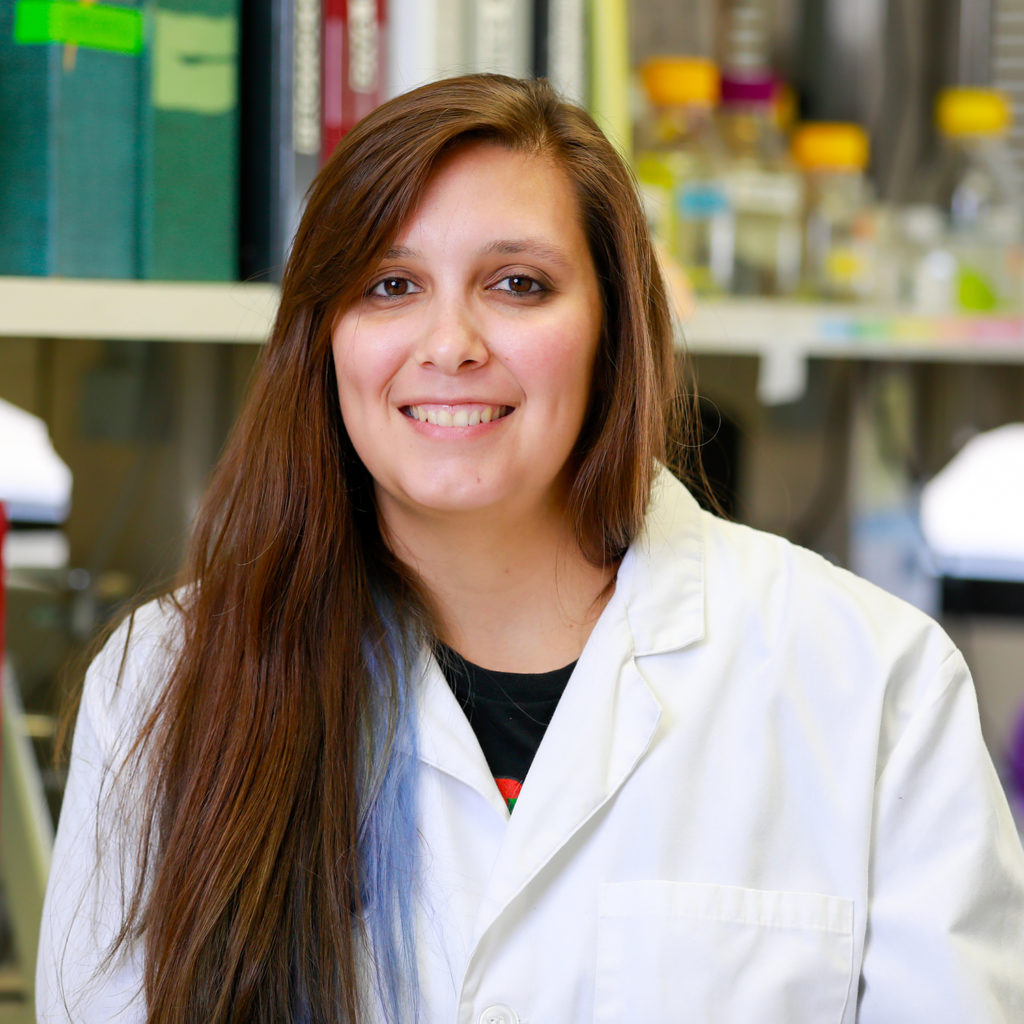
Caitlin Castaneda in a white coat sitting in a lab
Caitlin Castaneda

Caitlin Castaneda, a doctoral student in the Texas A&M College of Veterinary Medicine & Biomedical Sciences’ (CVMBS) Department of Veterinary Integrative Biosciences (VIBS), was recently awarded a U.S. Senator Phil Gramm Fellowship by the Texas A&M University Graduate and Professional School.

The awards are given annually to outstanding current doctoral students for excellence in both research and teaching.

In her nomination of Castaneda, director of the molecular cytogenetics lab Dr. Terje Raudsepp said Castaneda has been truly impressive since she joined the lab in 2015 as a technician.

“Her intellectual abilities, creative thinking, and technical skills were above those of most graduate students or even postdocs,” she said. “In addition, Caitlin had inspiring work ethic and excellent people skills.”

Dr. Gus Cothran, a professor emeritus who led the lab when Castaneda was hired, also nominated her.

“Clearly a natural scientist and scholar, I consider her one of the most outstanding graduate students that I have had the opportunity to work with,” he wrote.

Castaneda’s research primarily focuses on stallion fertility and the search for the genes that impact it. As part of that research, she’s been working on an assembly of the Y chromosome, something that Brian Davis, assistant professor in VIBS, said is unique.  

“Her work on the horse Y chromosome will continue to yield results no one else in the world is producing,” he said. “The careful and methodical nature required to construct a Y chromosome from scratch is so daunting that few labs will attempt it. Ms. Castaneda embraces it with eagerness.”

In 2012, the molecular cytogenetics lab discovered the first gene associated with stallion fertility, and as a result of Castaneda’s work, a diagnostic test for stallion subfertility was published this year. However, discovery of the actual causative mutation still remains a goal to achieve.

“We’re hoping to find more genes and then create more diagnostic tests so that when horses come through the clinic, we can have a molecular screening for fertility genetics in addition to the routine breeding soundness exam,” she said.

This has potentially huge implications in the equine industry, in which stallion fertility is of significant economic interest.

Down the road, Castaneda hopes to bring what she’s learned in animal medicine to research in human fertility, as well.

In addition to her proven skills as a researcher—having authored eight publications, including three as the first author—she has also impacted a number of students as a teacher and mentor.

Students like recent graduate Oriana Ramos who have worked with her in the lab describe her as having a tireless work ethic, while at the same time taking time to work with them individually.

“Clearly a natural scientist and scholar, I consider [Caitlin Castaneda] one of the most outstanding graduate students that I have had the opportunity to work with.”

Dr. Gus Cothran

“I always valued her patience and willingness to go above and beyond to teach me not only the immediate background of any projects assigned to me but any relevant information that she knew would prepare me for a successful career in genetics,” Ramos said. “Caitlin taught me to be hands-on with my learning and encouraged me to have confidence in my skills, even when venturing into territory I hadn’t experienced yet.”

Undergraduate student Ethan Wall described her patience while teaching him complex processes like extracting DNA and running polymerase chain reactions (PCRs).

“Caitlin has managed to be incredibly patient with me, a feat that I am sure is not easy,” he said. “After working under her this past year, I truly cannot fathom that there are many people out there who are as deserving of this prestigious award as she is. As someone who has experienced her work ethic firsthand, I have no doubt that she will take full advantage of this award.”

The U.S. Senator Phil Gramm Fellowships are given annually by the Texas A&M University Graduate and Professional School to outstanding current doctoral students whose excellence in both research and teaching exemplifies the meaning of scholarship and mentorship in the highest sense. The fellowship includes a $5,000 award to help the winners continue their studies.

Made possible by gifts from donors in honor of Gramm, these awards reflect Gramm’s appreciation of the vital role graduate students play in helping Texas A&M achieve its teaching and research mission, as well as honor his legacy of scholarship and public service.

Gramm received a Ph.D. in economics from the University of Georgia and served as an economics professor at Texas A&M for 12 years before turning to politics. Gramm first represented Texas’ 6th congressional district in the U.S. House of Representatives before being elected to the U.S. Senate, where he served for nearly two decades. He is currently the senior partner of Gramm Partners, a public policy firm in Washington, D.C., and is the senior advisor at U.S. Policy Metrics.

###

For more information about the Texas A&M College of Veterinary Medicine & Biomedical Sciences, please visit our website at vetmed.tamu.edu or join us on FacebookInstagram, and X.

Contact Information: Jennifer Gauntt, Director of VMBS Communications, Texas A&M College of Veterinary Medicine & Biomedical Sciences, jgauntt@cvm.tamu.edu, 979-862-4216
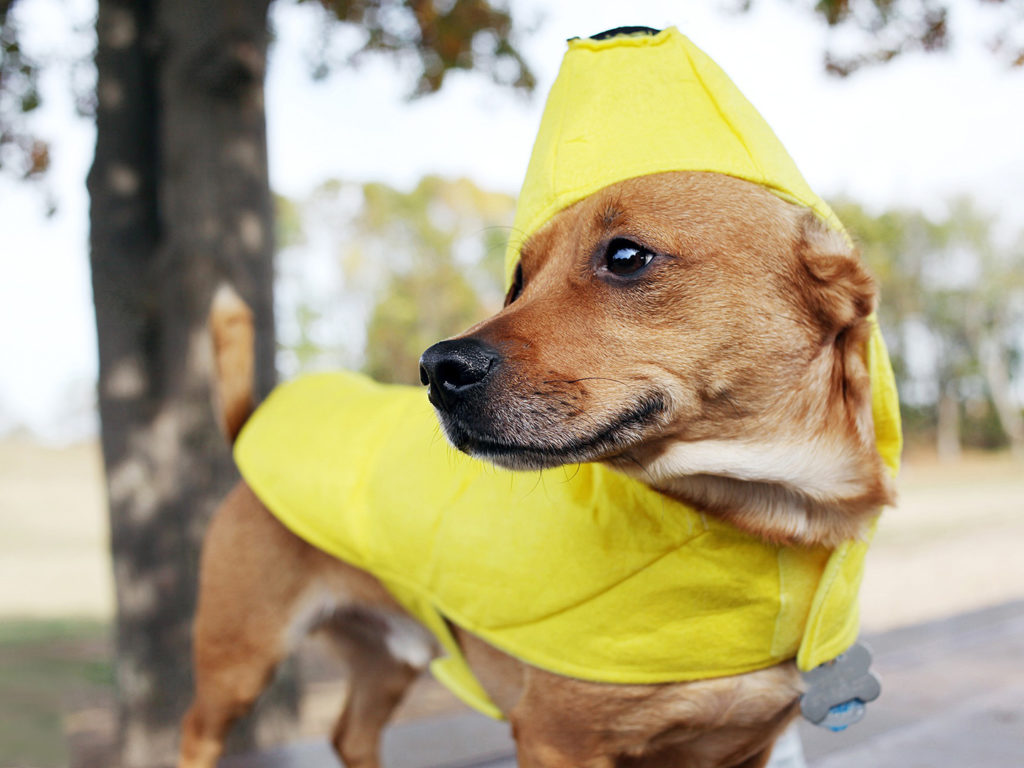
Finding the Purr-fect Pet Halloween Costume

A dog in a banana costume

With spooky season right around the corner, many pet owners have begun their hunt for their furry friend’s perfect Halloween costume. But finding a costume that is both festive and safe can be a challenge. 

Dr. Lori Teller, a clinical associate professor at the Texas A&M College of Veterinary Medicine & Biomedical Sciences, offers some guidance on what to look for to ensure that the holiday isn’t so tricky for your pet.  

While many pets are tolerant of costumes, a costume has the potential to bring about unneeded stress and anxiety. Knowing your animal’s level of comfort with a costume is important for their well-being and safety. 

“Some dogs and cats will just freeze and not be willing to move when put in a costume,” Teller said. “Others may whine, paw, or chew at various parts of the costume to try and get it off.” 

If your pet is noticeably uncomfortable in their costume, it is best to leave the costume at home, allowing them to enjoy the night.

For those that are costume-tolerant, the primary concern in dressing your pet is whether the costume limits their pet’s ability to see, hear, breathe, or move. If any of these abilities are restricted in the slightest way, the costume should be avoided. 

“Costumes that interfere with a pet’s ability to move or see increases the animal’s risk of falling, tripping, or getting loose,” Teller said.  

Owners should evaluate costumes for loose, hanging pieces, which can present fire hazards if the pet walks too close to Halloween décor involving lit candles. 

“If an animal chews at the costume, they also have the potential to choke and end up with a foreign body that could cause gastrointestinal obstruction,” Teller said. 

A pet’s ambient temperature should also be taken into account.

“If it is warm outside and your pet is in a thick costume, the animal may be at higher risk of heat stroke,” Teller said. “This could be exacerbated if your pet gets excited and overheated when trick-or-treating.”

Pet owners may also be interested in using dyes or paints to “DIY” a costume for their furry friend.

“In general, if these particular products are labeled as ‘pet-safe’ then your animal should be OK,” Teller advised. “With that being said, every animal is different, so if your animal has sensitive skin, it would be better to avoid these products.”

When applying pet-safe dyes or paints, avoid areas around and on the animal’s eyes, ears, nose, or mouth. 

“If the pet chews or licks itself frequently, this is a sign the dye may be irritating their skin, so it would be worthwhile to wash the dyes/paint off as soon as possible,” Teller said. 

Overall, your pet’s comfort and safety should be the top considerations when planning Halloween costumes. 

“If your pet is comfortable wearing clothing items, then go for it,” Teller said. “If your pet does not enjoy dressing up, then go with a Halloween-themed collar or bandana to celebrate the festivities instead.”

Having pets join in on festivities and traditions can make any holiday a memorable time. So, as you buy candy, decorate the house, and go trick-or-treating, do not forget to take some time to be sure your pets also have a happy and safe holiday. Happy Howl-oween!

Pet Talk is a service of the College of Veterinary Medicine & Biomedical Sciences, Texas A&M University. Stories can be viewed on the web at vetmed.tamu.edu/news/pet-talk. Suggestions for future topics may be directed to vmbs-editor@tamu.edu.

Retired CVMBS Professor Awarded Bovine Practitioners Association’s Highest Honor

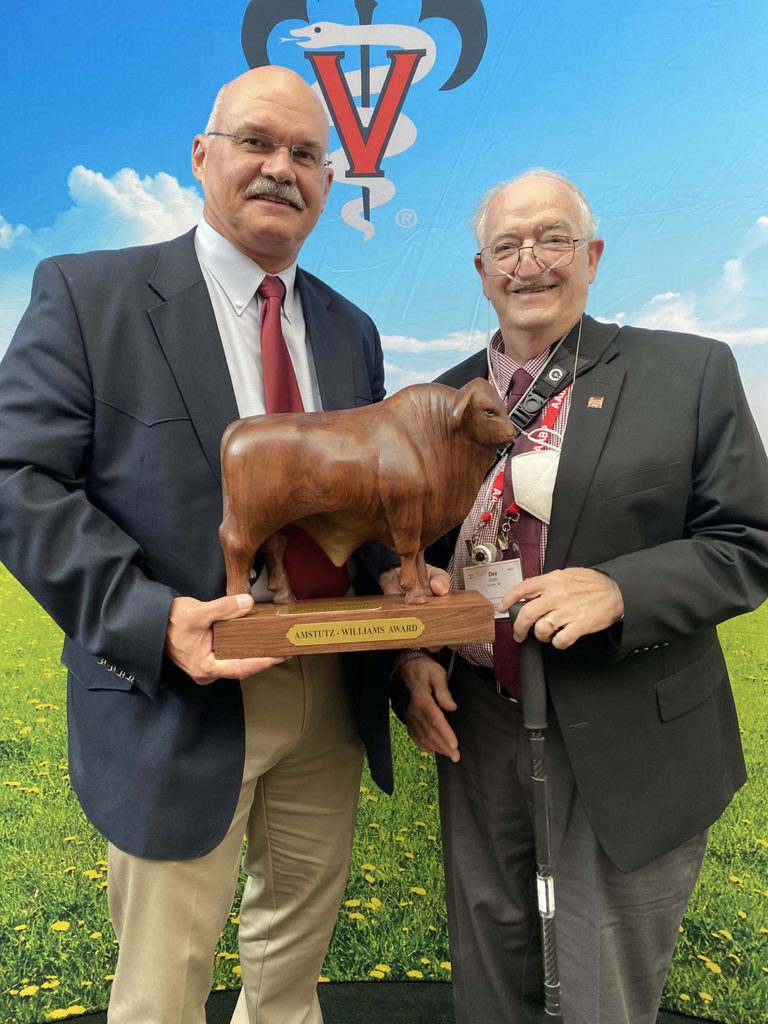
Sjeklocha abd Griffin holding a large award shaped like a bull
2022 AABP vice president candidate Dr. Dave Sjeklocha and Dr. Dee Griffin

Dr. Dee Griffin, a retired clinical professor at the Texas A&M College of Veterinary Medicine & Biomedical Sciences (CVMBS), has received the Amstutz-Williams Award, the highest honor bestowed by the American Association of Bovine Practitioners (AABP).

The award recognizes Griffin’s outstanding service to the profession throughout his 45-year career in veterinary medicine. It was presented at the 54th annual AABP Conference in Salt Lake City, Utah, on Oct. 9.

Griffin retired in July after a long career dedicated to veterinary education and bovine medicine.

Before his retirement, he served as director of the CVMBS’ Veterinary Education, Research, & Outreach (VERO) program, located on the West Texas A&M University campus in Canyon.

“Dr. Griffin’s commitment to students, animals, and sustainable agriculture is unsurpassed,” said Dr. Susan Eades, CVMBS professor and associate dean for administration at VERO. “He emphasizes veterinary skills, animal husbandry, production management, and teamwork. All team members are important to him. His passion is contagious to all around him, shaping the careers of many. His legacy will live on through the innumerable veterinary students, cattle producers, and veterinarians impacted by Dr. Griffin during his long and storied career.”

He continues to serve as an adviser for the VERO program after his retirement.

Griffin developed an interest in bovine veterinary medicine very early in life, having been raised on a cow-calf operation in Oklahoma. He earned his Doctor of Veterinary Medicine (DVM) degree in 1976 from Oklahoma State University, followed by a master’s degree in pathology and ruminant nutrition from Purdue University.

He spent several years practicing beef cattle medicine before joining the University of Nebraska’s Great Plains Veterinary Education Center as a faculty member in 1991. In 2016, he moved to Texas and joined the CVMBS as director of the Texas A&M Veterinary Medical Center, which later gave rise to the VERO program.

“I am a very lucky man and veterinarian to have Dr. Griffin in my life, and I was fortunate that I got to work with him for the past five years,” said Dr. Dan Posey, director of student recruitment and professional relationships and clinical professor at VERO. “When we arrived on the West Texas A&M University campus in 2016, there was a ton of work we needed to accomplish to start the VERO program and make it impactful and sustainable. Dr. Griffin’s vision for the program is now being fulfilled due to his ability to engage community and industry, guide our efforts, and share and spread the vision of the VERO program.

“This award signifies his impact on the beef cattle world and I can’t think of another veterinary educator who has had more impact than Dr. Griffin,” Posey said. “The depth of Dr. Griffin’s veterinary knowledge is legendary because he continued to be a great student. I am so very fortunate to call him my mentor, friend, colleague, and former boss.”

Griffin has also received the AABP’s national award for Excellence in Preventive Medicine in 1985 and Mentor of The Year award in 2017. He has received numerous other awards during his career, including being inducted into the Cattle Feeders Hall of Fame in 2017.

The Amstutz-Williams Award honors the long and distinguished service of the late Dr. Harold E. Amstutz, the AABP’s secretary-treasurer and executive vice president until 1993, and Dr. Eric I. Williams, the editor of the Bovine Practitioner and Proceedings Book from 1969 to 1998. The award has only been given to 11 individuals since it was established in 1986.

AABP is a membership-based, not-for-profit organization serving cattle veterinary medicine professionals across the United States, Canada, and other countries.

###

For more information about the Texas A&M College of Veterinary Medicine & Biomedical Sciences, please visit our website at vetmed.tamu.edu or join us on FacebookInstagram, and X.

Contact Information: Jennifer Gauntt, Director of VMBS Communications, Texas A&M College of Veterinary Medicine & Biomedical Sciences, jgauntt@cvm.tamu.edu, 979-862-4216
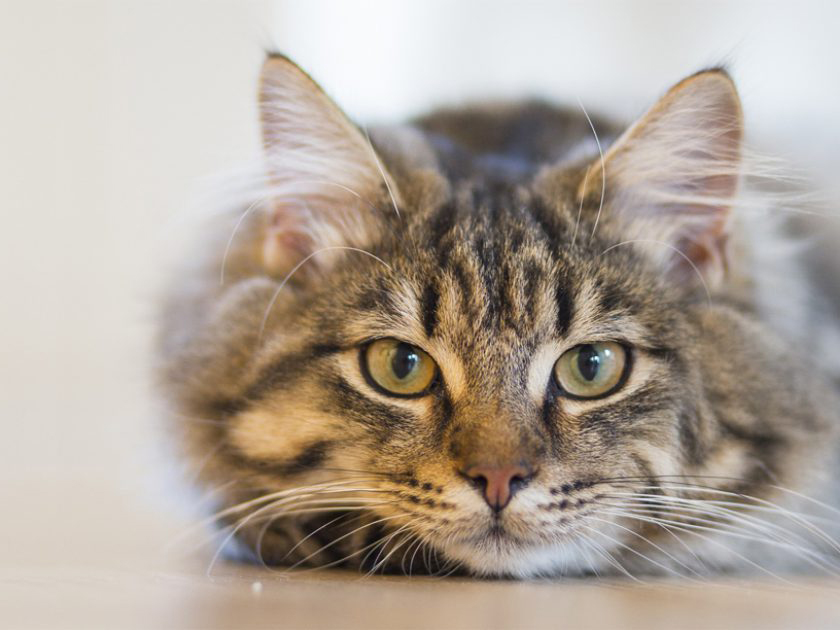
Preparing Your Cat For A Visit To The Veterinarian

brown fluffy tabby cat

As every cat owner knows, taking your feline friend to visit the veterinarian can be a challenge, but regular veterinary check-ups are one of the most important things you can do to keep your cat happy and healthy.

To help make this process less stressful for both you and your cat, Paula Plummer, a surgical oncology technician at the Texas A&M College of Veterinary Medicine and Biomedical Sciences’ Veterinary Medical Teaching Hospital, offers some tips on preparing for a visit to the veterinarian.

One of the first questions pet owners have is how often should they take their cat to their veterinarian.

 “As kittens, they will need checkups monthly as they go through their kitten vaccine series,” Plummer said. “As your cat matures, a visit may only be required yearly. Your veterinarian may change their recommendations depending on the needs of your cat, so it is best to follow their advice.”

Whether you are taking a new kitten to its first appointment or checking on an older cat’s health, it is helpful to create a list of questions ahead of time so nothing is forgotten during the appointment.

“If you’re seeking veterinary attention because you have adopted a new kitten, you should ask about nutrition, environmental enrichment, vaccines, flea/tick/heartworm/parasite prevention, and general care information,” Plummer said. “If you are seeking veterinary attention for a cat’s medical condition, ask about that condition, specifically; medications; treatment options; and any lifestyle changes that may occur.”

If you are taking your pet to a new veterinarian for the first time, it is important to provide the doctor with a complete record of your cat’s medical history. 

Past medical can either be brought with you or emailed to your veterinarian in advance. These records can include, but are not limited to, current medications, radiographs and other imaging, lab work, and test results. For newly adopted kittens, owners should bring along any paperwork they received from the adoption.

Having a good understanding of the brands of food your cat eats, along with how much, will also help your veterinarian get acquainted with your animal.

For cats, the hardest part of a visit to the veterinarian may not occur in the hospital at all but, rather, in the car ride there. For cats with little experience riding in vehicles, a long car ride has the potential to cause a great deal of stress. To help ease car ride anxieties, Plummer recommends carrier training as early as kitten stage.

“When choosing a cat carrier, please be thoughtful of the veterinary team and their ability to safely remove your beloved feline family member from it when at the hospital,” Plummer said. “The safest carrier for both your cat and the team is a hard sided carrier with a soft, cozy bed in it.”

To help your cat become familiar with the carrier, Plummer suggests “leaving the carrier out in the house to allow your pet to get used to it.”

Because cats are sensitive to smell, if there is still a hesitancy when approaching a carrier, owners may try incorporating comforting scents to help provide a sense of familiarity. This can include using old bedding or clothing covered in their owner’s scent inside the carrier or spraying a synthetic feline pheromone on and around the carrier.

Above all else, car owners should remember that a veterinarian who personally knows your animal will provide the best advice for dealing with travel-related anxieties.

Veterinarians and their support staff work to understand each and every cat’s individual needs through interpreting their body language and facial reactions,” Plummer said. “Being able to assess a cat’s anxiety levels allows staff members to help ease the stress of veterinary check up and make the experience enjoyable for both the owner and their cat.

Because of this “it is always best if you seek veterinary advice for specific r4ecommendations on easing anxieties for you and your beloved feline family member,” she said.

Learning to care for our feline friends starts with routine veterinary visits to ensure your cat’s individual health needs are being met. By being mindful of a cat’s anxiety levels and comfort zones, owners can help transform a potentially anxiety ridden check-up into a stress free adventure.

Pet Talk is a service of the College of Veterinary Medicine & Biomedical Sciences, Texas A&M University. Stories can be viewed on the web at vetmed.tamu.edu/news/pet-talk. Suggestions for future topics may be directed to vmbs-editor@tamu.edu.

Texas A&M CVMBS Recognized With Fifth Consecutive HEED Award For Diversity, Inclusion Efforts

HEED Higher Professions award 2021

For the fifth year in a row, the Texas A&M College of Veterinary Medicine & Biomedical Sciences (CVMBS) has been honored for its commitment to diversity and inclusion with a Health Professions Higher Education Excellence in Diversity (HEED) Award from INSIGHT Into Diversity magazine.

One of only two veterinary colleges in the United States to receive the recognition for five consecutive years, the CVMBS joins Texas A&M’s Irma Lerma Rangel College of Pharmacy and 48 other recipients of the 2021 HEED award, presented annually to health colleges and universities across the country that demonstrate an outstanding commitment to diversity and inclusion.

Recipients, announced on Oct. 14, will be featured in the December 2021 issue of INSIGHT Into Diversity magazine, the oldest and largest diversity-focused publication in higher education.

“During my time as dean of the College of Veterinary Medicine & Biomedical Sciences, I have witnessed the hard work and commitment of our faculty, staff, and students as they prioritize creating an environment that is welcoming, supportive, and safe for everyone who enters our doors,” said Dr. John R. August, CVMBS dean. “We are extraordinarily proud to have received the HEED award for five consecutive years, and we have no intent of resting our laurels.

“Veterinary medicine remains the least diversified of the health professions and our college recognizes the importance of a broad approach to fostering an inclusive environment of respect, understanding, appreciation, and opportunity,” he said.  

This broad approach reaches across the CVMBS community and has included an inclusive Doctor of Veterinary Medicine (DVM) curriculum, initiatives that make higher education accessible to students at all levels, and training opportunities for faculty and staff.

The CVMBS Office of Diversity & Inclusion, led by Dr. Kenita Rogers, and the Committee for Inclusion, Diversity, Equity, & Accountability (C-IDEA) have also hosted a number of new activities and developed a number of new initiatives designed to promote inclusion, diversity, and access.

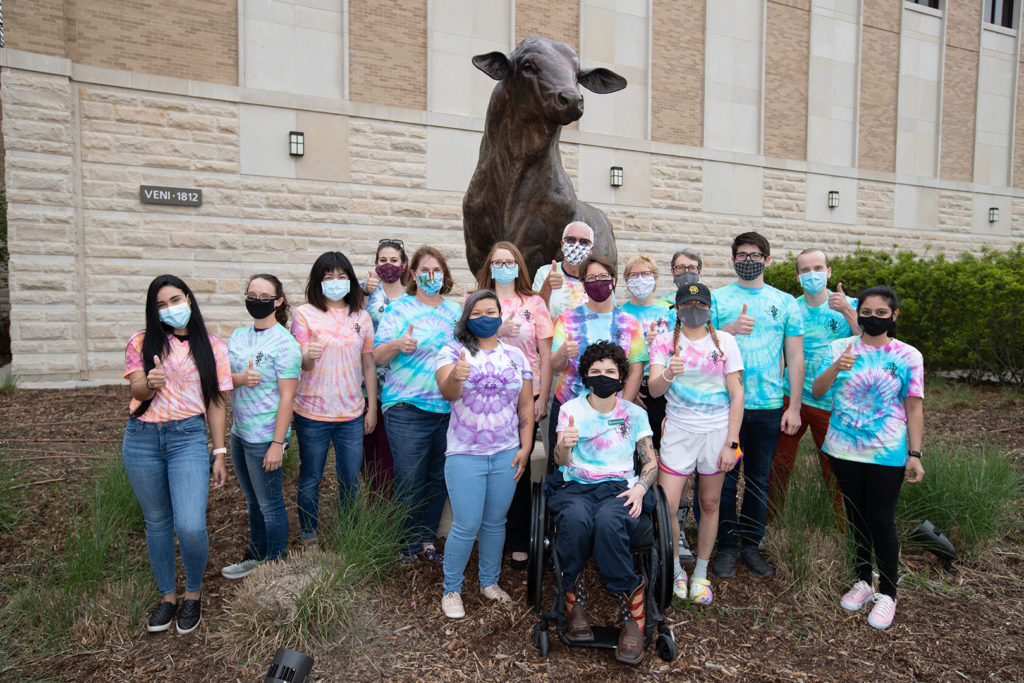
group of people in tye dye shirts in front of bull statue
Members of the Committee for Inclusion, Diversity, Equity, & Accountability (C-IDEA)

These include events designed to bring together members of the CVMBS community, such as “Spread the Love” in support of the CVMBS LGBTQ community, which included donating $1,850 in T-shirt sales to a fundraiser for The Trevor Project sponsored by the LGBTQIA+ and Allies, TAMU CVMBS Interns, Residents, and Graduate Students organization; a five-day Welcome Week that included activities ranging from an inclusivity and campus resources fair to a panel discussion on the power of the words we use and the dangers of stereotyping; and storytelling activities that encourage members of the CVMBS community to share stories from their lives with their friends, peers, professors, and others within the college.

In addition, a “Sticks and Stones—Words that Hurt” video, created to highlight the impacts of microaggressions, was produced and shared within the CVMBS community, with shortened versions being broadcast across campus digital signage; the “I Am CVM” video series, created to celebrate the uniqueness of and connections shared between more than 40 CVMBS faculty, staff, and students, was shared on social media and across the CVMBS; and a Leadership & Communication in Action video series was created to reinforce the importance of and model conflict management skillsets such as perspective taking.

Within the DVM program, a Professional Skills class had students participate in discussion groups related to podcast topics on diversity and inclusion efforts and the CVMBS’ Professional Programs Office facilitated meetings between students and corporate veterinary practices regarding LGBTQ practices.

In addition, DVM students supported Texas A&M’s REACH Project by offering free wellness check-ups and vaccinations to the pets of Texas A&M’s contracted service workers. Veterinary students also joined members of the CVMBS’ Veterinary Emergency Team (VET) to participate in Operation Lone Star, sponsored by the Texas Department of State Health Services, during which they provided wellness checks and vaccinations for 735 animals belonging to owners with reduced access to veterinary care.

These new initiatives expand upon the college’s strong student organizations that are dedicated to supporting a welcoming learning environment. These include the Graduate Student Association, which provides consistent multicultural programming; VOICE (Veterinarians as One Inclusive Community for Empowerment), a student-run organization that addresses socio-cultural awareness among veterinary students, faculty, and staff; TAMU Pride Student Veterinary Medical Community (PrideSVMC), which works to connect, support, and empower LGBTQ+ veterinary students and allies; and the CVMBS’ chapter of the Latinx Veterinary Medical Association (LVMA), a community of Latinx DVM students, veterinarians, veterinary professionals, pet parents, and allies.

In addition, veterinary student-led CVMBS White Coats are dedicated to maintaining a culture of universal acceptance and selfless leadership in order to preserve the ideals of inclusion and excellence within the CVMBS.

Finally, the monthly Diversity & Inclusion Digest shares information related to the CVMBS’ ongoing commitment to diversity and inclusion, resources to support a commitment to continuous learning, and diversity and inclusion events and reflections.

“The Health Professions HEED Award process consists of a comprehensive and rigorous application that includes questions relating to the recruitment and retention of students and employees—and best practices for both—continued leadership support for diversity, and other aspects of campus diversity and inclusion,” said Lenore Pearlstein, publisher of INSIGHT Into Diversity magazine. “We take a detailed approach to reviewing each application in deciding who will be named a Health Professions HEED Award recipient. Our standards are high, and we look for schools where diversity and inclusion are woven into the work being done every day across their campus.”

For more information about the 2021 Health Professions HEED Award, visit insightintodiversity.com, and for more information on the CVMBS’ diversity and inclusion efforts, visit vetmed.tamu.edu/diversity.

###

For more information about the Texas A&M College of Veterinary Medicine & Biomedical Sciences, please visit our website at vetmed.tamu.edu or join us on FacebookInstagram, and X.

Contact Information: Jennifer Gauntt, Director of VMBS Communications, Texas A&M College of Veterinary Medicine & Biomedical Sciences, jgauntt@cvm.tamu.edu, 979-862-4216
Weighing In On Feline Obesity

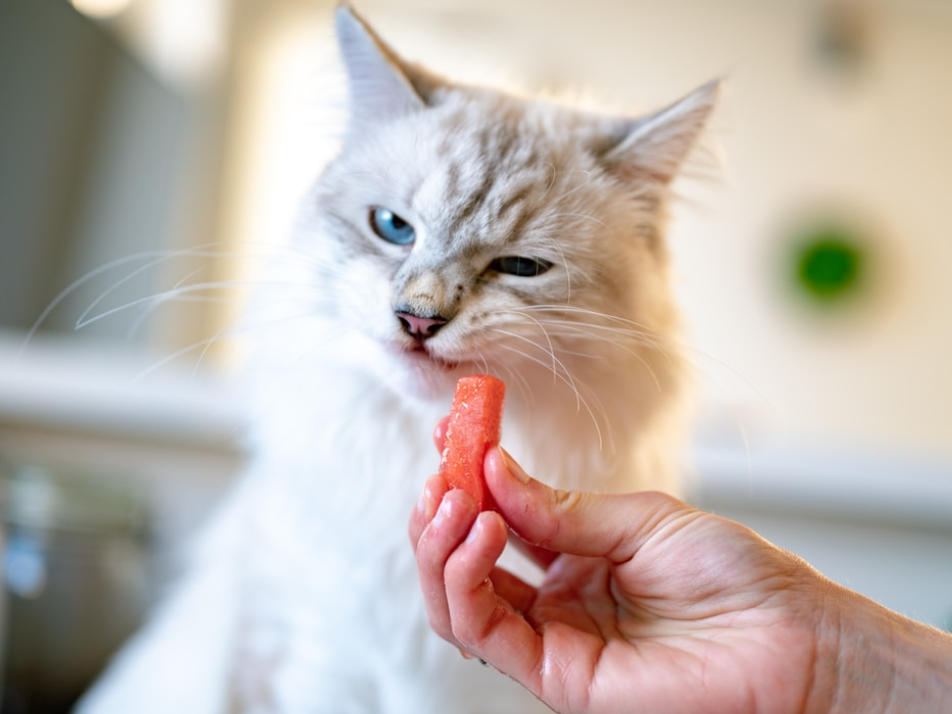
white cat making an "ew" face at a carrot

Through grocery store tabloids and TV commercials inundating us with new fad diets it seems that we, as humans, are constantly focusing on our weight.

But what about when it comes to where our feline friends fall on the scales?

Dr. Ashley Navarrette, a clinical assistant professor at the Texas A&M College of Veterinary Medicine & Biomedical Sciences, offers insight on how to manage your cat’s weight.

To determine a cat’s “healthy weight” veterinarians perform body condition scoring (BCS) as part of any physical examination.

“When evaluating body condition on a cat, veterinarians look and feel to determine the fat coverage on a patient and assign them a number on a scale –generally 1-9 –,” Navarrette said. “An ideal body condition ranges from a BCS 4-6 with a score of 5 being ideal. We start to get concerned when cats are a BCS 7 and above, which is where we start to label a patient as overweight and progressing toward obese (8 and 9).”

“Thankfully, most people can weigh their cats at home using the trick of weighing themselves first, weighing themselves and the cat, and then doing some simple math,” she said. “I recommend owners routinely check their cat’s weight at least once a month to catch any upward or downward trends early.”

Because patients typically only see their veterinarian one to two times a year, Navarrette says “it is heavily (no pun intended) the responsibility of the owner to keep their pet at an appropriate weight.”

Owners should begin working with their veterinarians on a healthy eating plan as early as kitten stage, as a healthy feline diet will vary depending on their age and health status. Their veterinarian can also help determine proper calorie requirements.

“Generally, we recommend a higher protein diet that is appropriately balanced and contains all necessary nutrients for an apparently healthy adult feline,” she said. “We also recommend decreasing calorie intake by 25-30% after spaying or neutering.”

Some owners may believe that a couple of extra pounds isn’t a big deal; however, Navarrette warns that that “fat and happy” does not exist.

“While your pet may seem content being overweight, their body systems are being affected by the excess fat tissue and even so much as a pound overweight can make a big difference to a cat,” she said. “Cats that are overweight and obese tend to be less social and less active. We also tend to see decreased grooming because they simply cannot reach due to their size.”

Being mindful of your pet’s weight also is important because obesity can quickly lead to a poor quality of life, such as a lack of motor skills for our feline friends. It can also lead to Type II Diabetes Mellitus, orthopedic issues such as osteoarthritis, and urinary issues such as an increased risk for feline lower urinary tract disease.

Fortunately, there are several things pet owners can do to help manage their cat’s weight, including scheduling mealtimes.

In some cases, your veterinarian may also suggest transitioning your cat to an over-the-counter or a prescription weight-loss diet; these foods are traditionally higher in protein and fiber than other cat foods.

However, transitioning from one food to another can be a more difficult task than it sounds.

“Cats like what they like and hate what they hate” Navarrette said. “Often cats become accustomed to a particular diet, and you may have to trial various diets before your cat accepts one.”

Switching foods also should be done slowly over the course of seven to ten days to help prevent possible gastrointestinal issues. If any issues arise during this process, Navarrette advises owners to contact a veterinarian to talk about their concerns.

Finally, when managing your cat’s weight, integrating exercise into their everyday life through indoor cat trees, interactive toys or cat perches can stimulate their metabolism.

“As with any weight loss journey, whether that be feline or other pets, this is a marathon and not a sprint. Weight loss will take time; patience and consistency are key to this process,” Navarrette said. “Check-ups may need to be as frequent as every six to eight weeks to monitor progress and make necessary modifications.”

Pet Talk is a service of the College of Veterinary Medicine & Biomedical Sciences, Texas A&M University. Stories can be viewed on the web at vetmed.tamu.edu/news/pet-talk. Suggestions for future topics may be directed to vmbs-editor@tamu.edu.

VERO, TVMDL Partnership Brings New Faculty To 2+2 Veterinary Program

The search to find the most qualified educators for the Texas A&M College of Veterinary Medicine & Biomedical Sciences’ (CVMBS) Veterinary Education, Research, and Outreach (VERO) program has led to a partnership with the Texas A&M Veterinary Medical Diagnostic Laboratory (TVMDL).

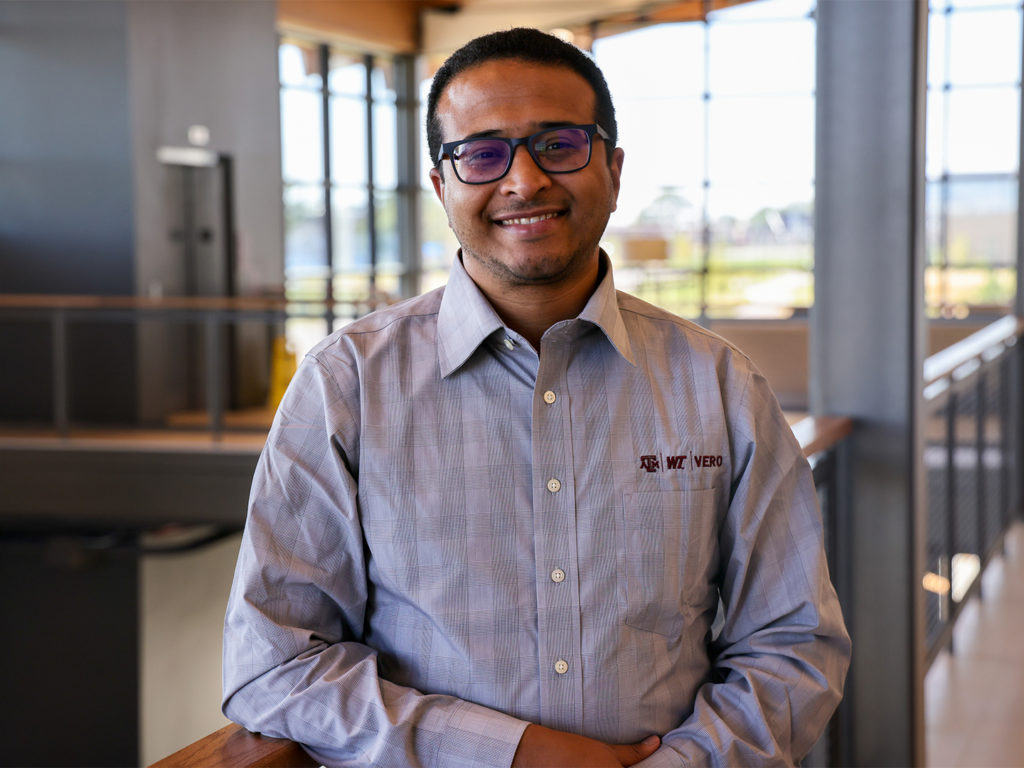
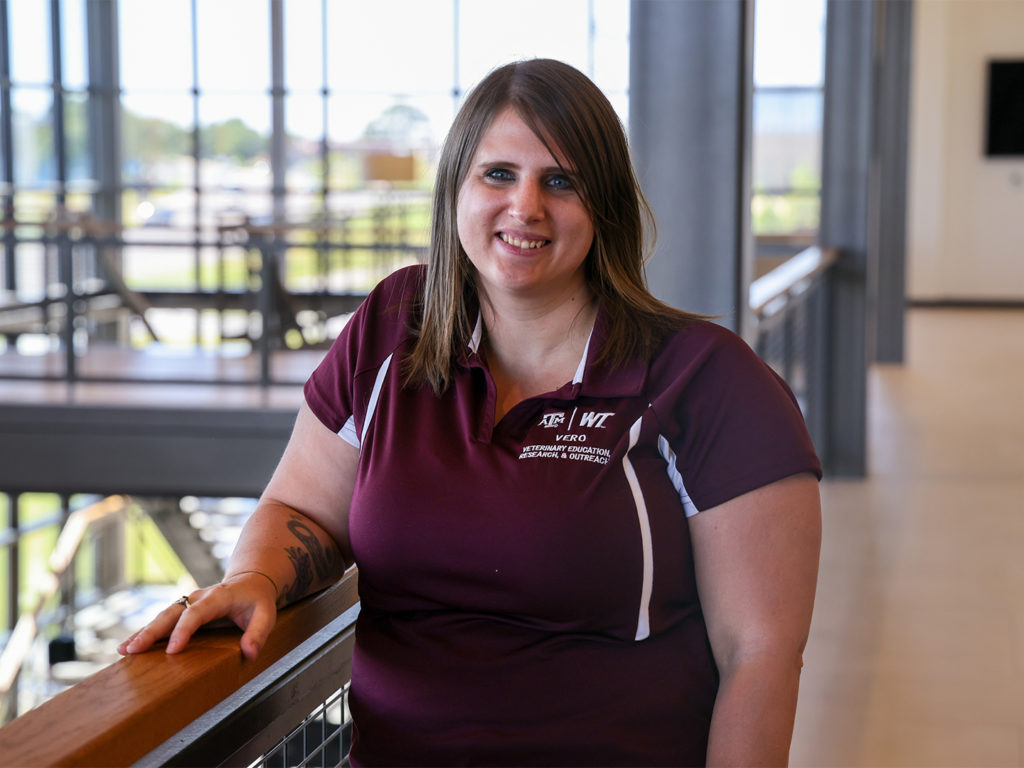
Two new hires in the CVMBS’ Department of Veterinary Pathobiology (VTPB), Dr. Hatem Kittana and Dr. Abigail Finley, not only have an academic appointment at VERO, located on the West Texas A&M University campus, but also serve as diagnosticians at the TVMDL’s Canyon Laboratory, located next door.

Through their joint appointments, Kittana and Finley will teach courses on infectious disease and pathology as part of the CVMBS’ new 2+2 Doctor of Veterinary Medicine (DVM) program at VERO, which enrolled its first class this fall, while also using their skills to benefit the Texas Panhandle region at the TVMDL, which focuses on animal health and identifying potential infectious diseases in the region’s various veterinary industries.

Dr. Hatem Kittana

Dr. Hatem Kittana in the VERO building
Dr. Hatem Kittana

Originally from Egypt, Kittana earned his doctorate in veterinary medicine at South Valley University in Qena, where he wrote a research proposal that would eventually lead to him doing research at the Iowa State University College of Veterinary Medicine. From there, he earned his Ph.D. studying bacterial pathogenesis at the University of Nebraska before completing a residency in veterinary microbiology at the University of Missouri.

Bacterial pathogenesis is the study of the process by which infectious agents actually infect and cause the disease in the host. For Kittana, the ability to stay in veterinary medicine, which was his passion as a student, but also bring in that expertise in bacterial pathogenesis made this an ideal position. 

“This position is really the center of the Venn diagram of what I was looking for,” he said. “It’s going to give me this teaching flavor that I really love because I used to teach back home in Egypt, and it’s going to give me the diagnostic experience that I’ve been doing during my time in Missouri. I’ll be working closely with veterinarians and other stakeholders helping farmers and producers out here, solving clinical problems that they face on a daily basis when it comes to infectious diseases.”

On the education side, Kittana will be teaching the two agents of disease courses and said he’ll be introducing veterinary students to topics like antimicrobial resistance that will impact their entire careers.

“I’m looking forward to working with our veterinarians and veterinary students here and helping them understand more about bacterial pathogenesis, the role of antimicrobials, and how to avoid the excess use of antimicrobials. That’s something that’s become very important to me as a microbiologist,” he said.

Dr. Abigail Finley

Dr. Abigail Finley in the VERO building
Dr. Abigail Finley

Finley, an anatomical pathologist, didn’t start her journey to Canyon quite as far away as Kittana.

After earning her DVM at Ontario Veterinary College in Canada, she did an internship in diagnostic medicine and pathology at Kansas State before completing an anatomic pathology residency at Midwestern University in Arizona. In September, she earned a board-certification from the American College of Veterinary Pathologists.

That experience at Midwestern is part of why she was drawn to the opening at VERO.

“I was their first resident, so I had an experience with starting a new program,” she said. “You get to build it and shape it into something you can be really proud of, and that’s the opportunity we have here.”

The small cohort of students is another thing that attracted her to the position, and being able to combine the educational component with the diagnostics made it a great fit.

Finley will be teaching the two anatomical pathology courses, which focus on diagnosing diseases by looking at tissues. Since performing those diagnostics will be her role at TVMDL, she said she hopes to be able to bring some cases she sees at TVMDL to the classroom.

“There are only 18 students, so I look forward to being a little more personable, a little more creative in the classroom, and really getting to know this small group,” she said. “I really wanted to get an academic job, I really enjoy teaching, but I still wanted to do diagnostics. This is the perfect marriage where I’m teaching, but I’m doing biopsies and necropsies, too. And what I take from diagnostics I can use for teaching.”

Both Kittana and Finley said they’re excited to be part of the VERO team and continue to be impressed with the level of support provided both in Canyon and by the CVMBS administration in College Station.

“It’s been great,” Kittana said. “The group here is a really nice group. We’re already working closely as a team. Everyone is helping you try to find your way here and learn the resources available.  Dr. Susan Eades (associate dean for administration) here at VERO is so supportive, always trying to helping us even on a personal level. And the group in College Station is very supportive and making sure that the students are doing well and making sure we’re doing well as well. It’s been a great ride so far honestly and I’m really thankful for all of them.”

Critical Partnership

According to Dr. Ramesh Vemulapalli, VTPB department head, these joint appointments with TVMDL were essential to making the two great faculty hires.

“Without this partnership, we would not have been successful in hiring these highly qualified faculty to VERO in Canyon,” he said. “These are disciplines where specialty certifications and expertise are required, and they need opportunities to practice their discipline.”

In College Station, they would provide diagnostic services at the Veterinary Medical Teaching Hospital (VMTH), but without a teaching hospital in Canyon, they reached out to TVMDL.

“We contacted TVMDL and realized that they had a need for this kind of expertise at their Canyon laboratory,” Vemulapalli said. “So they’re providing day-to-day diagnostic services at TVMDL as well as participating in educational and scholarly activities.”

###

For more information about the Texas A&M College of Veterinary Medicine & Biomedical Sciences, please visit our website at vetmed.tamu.edu or join us on FacebookInstagram, and X.

Contact Information: Jennifer Gauntt, Director of VMBS Communications, Texas A&M College of Veterinary Medicine & Biomedical Sciences, jgauntt@cvm.tamu.edu, 979-862-4216

Texas A&M PEER Program Receives NIH Grant Supplement To Counter COVID-19 Vaccine Hesitancy In Rural Texas

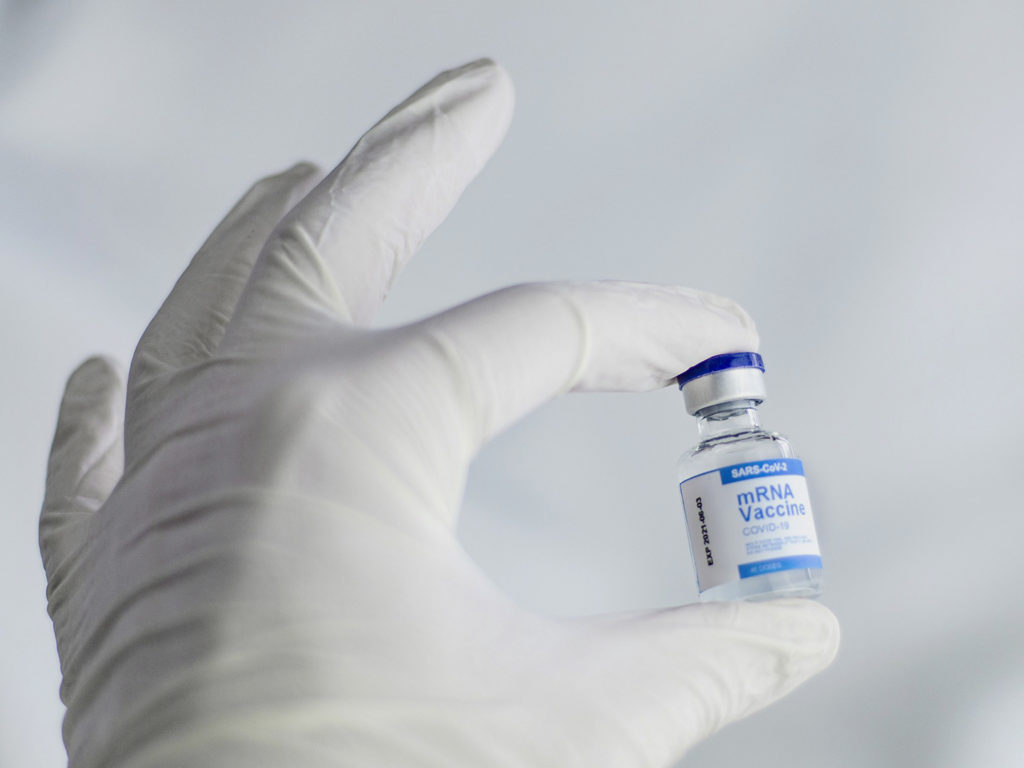
A hand in a white glove holding up a bottle of mRNA vaccine for SARS-CoV-2

A new vaccine hesitancy project led by the Texas A&M Partnership for Environmental Education & Rural Health (PEER) Program aims to improve COVID-19 vaccination rates among rural and medically underserved populations in Texas.

In support of this project, the PEER Program is one of 12 Science Education Partnership Award (SEPA) programs from across the country selected to receive a supplement of $50,000 to the current  SEPA grant from the National Institute of General Medical Sciences of the National Institutes of Health (NIH).

Dr. Larry Johnson, a professor at the Texas A&M College of Veterinary Medicine & Biomedical Sciences (CVMBS) and principal investigator for the PEER Program—a SEPA awardee since 2007—will serve as the project’s director and has assembled an interdisciplinary team of science, public health, education, and communication specialists from across the Texas A&M University System.

The project, “K-12 Educational Resources on Vaccine Biology and SARS-CoV-2 Vaccine Hesitancy,” will include creating and dispersing educational materials for middle school students that address vaccine hesitancy, the basics of immunology, and how vaccines work.

The educational materials will be included in PEER’s virtual summer camp for middle and high school students and SEPA’s teacher professional development workshop; the materials also will be available to teachers across the country though PEER’s teacher network that reaches all 50 states.

PEER undergraduate student fellows will also have the opportunity to present the materials to schools in their hometowns during breaks between semesters.

In addition to a variety of printed and online materials, this project will include a series of videos addressing vaccine hesitancy, with a Texas A&M student role-playing someone hesitant about being vaccinated and discussing their concerns with an expert in a relevant field.

“This project is an exercise in reassurance that there is a deep scientific understanding of how vaccines work,” said Dr. Ian Tizard, a CVMBS distinguished professor who will be leading the immunology portion of the project. “After all, vaccines have been available since the 1700s, and we’ve eliminated diseases like smallpox by the use of vaccines. People have also been working on RNA vaccines since the 1970s.”

Because many of the target areas have high Spanish-speaking populations, the project materials will be created in both English and Spanish.

“We’re working to reach out to populations that have limited access to university resources and experts like we have at Texas A&M and those who may also have a language barrier,” Johnson said. “The hope is that through education, we can help entire families to dismiss vaccine myths, understand the biology and importance of vaccinations, and get all eligible members of the family vaccinated.”

###

For more information about the Texas A&M College of Veterinary Medicine & Biomedical Sciences, please visit our website at vetmed.tamu.edu or join us on FacebookInstagram, and X.

Contact Information: Jennifer Gauntt, Director of VMBS Communications, Texas A&M College of Veterinary Medicine & Biomedical Sciences, jgauntt@cvm.tamu.edu, 979-862-4216
Taking A Raincheck On Equine Rain Rot

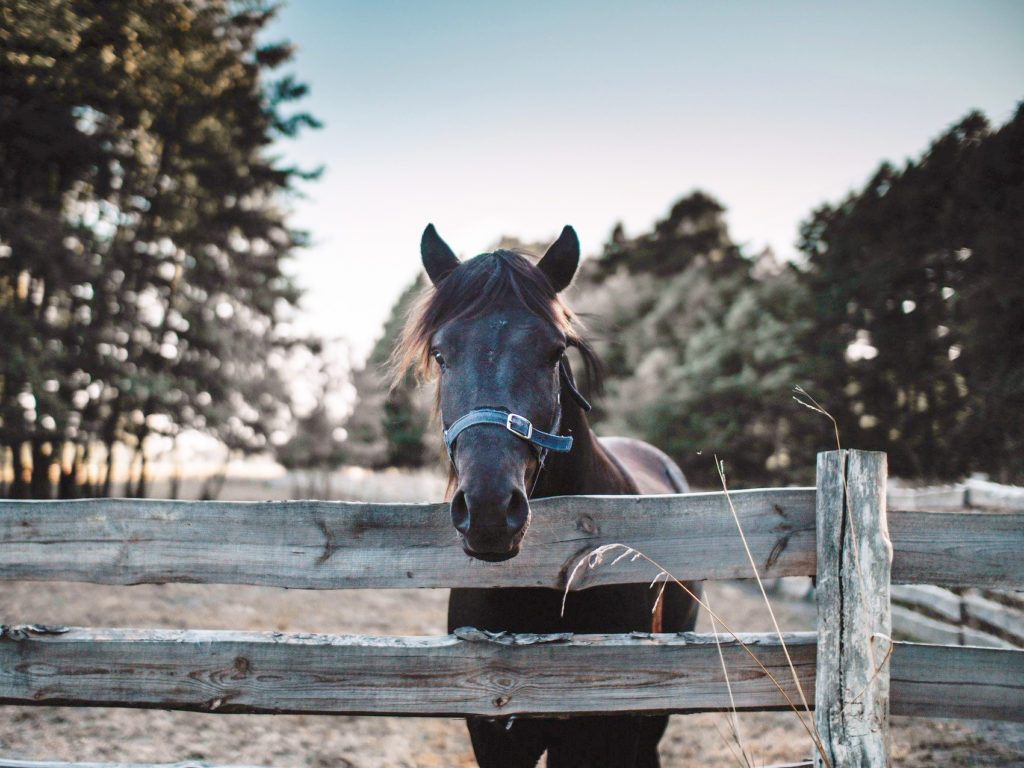
Black horse looking over a fence

While rain and drizzle can be good for crops and counting sheep at night, wet weather is also suitable for two less desirable things—fungi and bacteria. The spread of either type of organism can leave horses susceptible to developing rotten skin conditions, the most rotten and prevalent being rain rot. 

As in the calm before the storm, if rain rot symptoms are overlooked, bacteria can penetrate the horse’s skin layer and contaminate it, triggering additional, more painful problems, such as mud fever and even cellulitis. 

Fortunately, Dr. Leslie Easterwood, a clinical assistant professor in equine medicine at the Texas A&M College of Veterinary Medicine & Biomedical Sciences, says rain rot can be easily treated and prevented with the proper care.

“Rain rot is the common term for a crusting skin condition caused by the gram-positive bacterial organism Dermatophilus congolensis,” Easterwood explained. “This bacterial organism is a normal inhabitant of the skin but may invade the skin when the skin’s normal defenses are compromised.”

Under wet conditions, especially in rainy weather, the outermost layer of a horse’s skin can quickly break down, resulting in cuts and abrasions. Combined with humid conditions, the moisture accumulated by continuous rain and drizzle can foster mold and bacteria growth on a horse’s coat.

Even though the bacteria causing rain rot is primarily dormant under the right (or, in this case, wet) conditions, it can cause an inflammatory response that goes far beyond skin-deep. 

“A compromised immune system, pre-existing conditions, and chronic wet weather can predispose a horse to be affected by dermatophilus,” Easterwood said. 

Rain rot is usually found on horses’ backs but can manifest in many other areas of their bodies, including their rump, face, and legs. 

“Rain rot is characterized by thick crusts that cause a ‘bumpy’ feel to the skin. The hair will come off in clumps attached to the crusts, leaving patches of hair loss,” Easterwood said. 

Even though these symptoms sound grim, this bacterial disease is easily treatable, especially when caught early. According to Easterwood, most mild-to-moderate cases can be resolved in two to three weeks. 

“Mild cases can be resolved with topical medicated shampoos to kill the bacteria and help loosen the crusts,” she said. “Severe cases will respond to systemic doses of antibiotics, with penicillin being the antibiotic of choice.”

Under cold and wet conditions, precautions are especially imperative.

For instance, while blankets are of great warmth and comfort for your favorite equine companion, a blanket can also create a hot, cozy environment for D. congolensis to germinate, so owners should thoroughly clean and dry all of your horse’s bedding, along with all grooming tools.

Besides regular grooming and paying particular attention to blanketing, Easterwood explained that avoiding prolonged wetness of the skin and having a barn or protection from the weather can be additional help. 

Rain rot can be intimidating to deal with, but with proper preventative measures and regular grooming, owners can help their horses stay healthy and prancing, come rain or shine. 

Pet Talk is a service of the College of Veterinary Medicine & Biomedical Sciences, Texas A&M University. Stories can be viewed on the web at vetmed.tamu.edu/news/pet-talk. Suggestions for future topics may be directed to vmbs-editor@tamu.edu.

CVMBS Postdoc Receives ‘Best Flash Talk’ Award At University-Wide Research Symposium

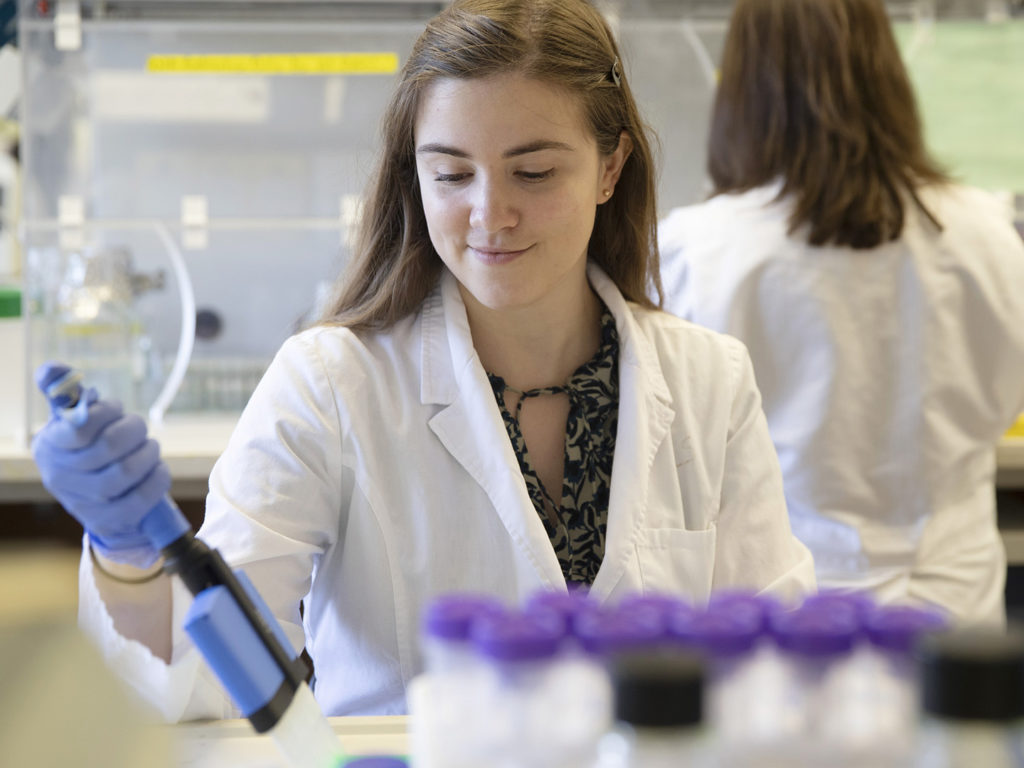
Woman working in the lab
Dr. Lauren Stranahan

Dr. Lauren Stranahan, a College of Veterinary Medicine & Biomedical Sciences (CVMBS) postdoctoral researcher (postdoc), was awarded the best flash talk during Texas A&M University’s fifth annual Postdoctoral Research Symposium on Sept. 22.

During the event, held in celebration of National Postdoc Appreciation Week, postdoctoral researchers from 28 departments across the university presented their research to fellow postdocs, faculty, and other participants from within the Texas A&M community.

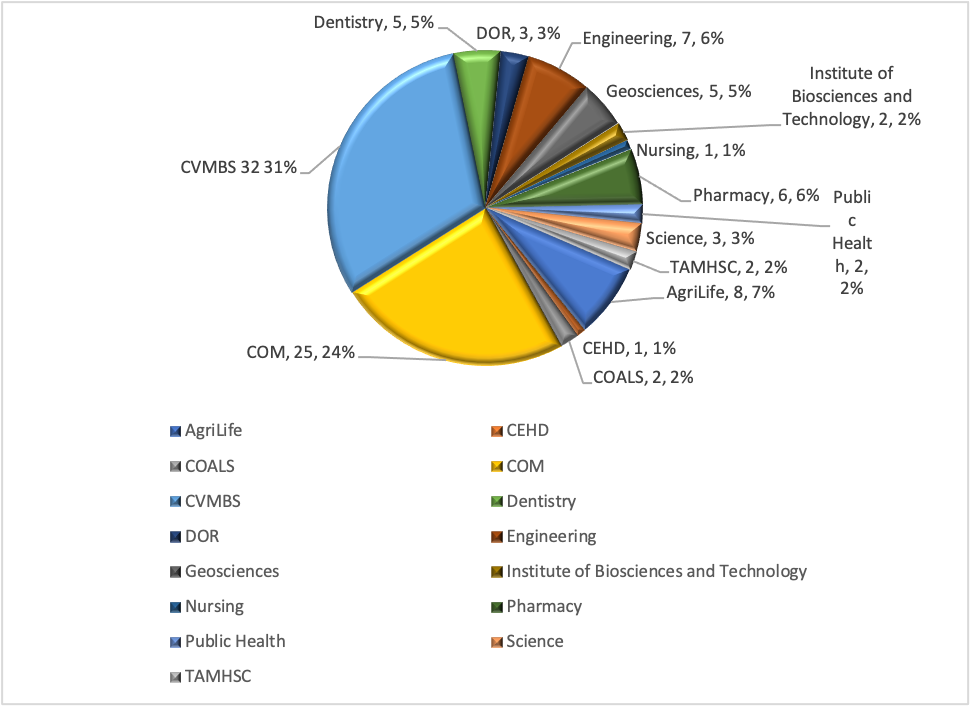
More than 20 postdocs shared their research findings during live flash talks, while another 16 discussed their findings in several virtual poster rooms. Approximately one-third of the participants and one-third of the faculty judging flash talks and posters were CVMBS members.

Stranahan, who supports the CVMBS’ Arenas-Gamboa Laboratory, was awarded the best flash talk for her presentation, “Rough Brucella canis is less inflammatory than its smooth counterparts following intratracheal inoculation in mice.”

Stranahan encourages other postdocs to share their work in future Postdoctoral Research Symposiums and similar events.

“Just share your excitement, especially if your time is short, like in a flash talk,” she said. “If you’re excited about your research, others will get excited too.”

According to the CVMBS’ Postdoctoral Association (CVMBS PDA) president Chi-Hsuan Sung, the entire CVMBS PDA is extremely proud of Stranahan and congratulate her for her “outstanding achievement of the flash talk award.”

A pie graph showing the colleges the postdocs came from
2021 Postdoctoral Research Symposium participation by college

“We are so proud of Dr. Stranahan’s first place performance in the flash talks,” said Dr. Michael Criscitiello, CVMBS associate dean for Research & Graduate Studies (RGS). “She conveyed the impact of her research project, the Arenas-Gamboa Lab, and our college most admirably within the confines of the format.”

The symposium also featured opening remarks from Dr. Jack Baldauf, Texas A&M’s interim vice president for research; Dr. Amy Waer, dean of the College of Medicine; and Criscitiello. Closing remarks on career options for people with Ph.D.s were provided by Melanie Sinche, author of “Next Gen PhD” and the University of Saint Joseph’s interim assistant dean for Academic Affairs and Career Development Center director.

The Texas A&M University Postdoctoral Association (TAMU PDA), the Texas A&M Health Sciences Center Postdoctoral Association (TAMHSC PDA), and the CVMBS PDA worked collaboratively to create the symposium’s virtual program.

The three postdoctoral associations could not have organized this symposium without the excellent leadership and support over the past several months from Dr. Andreea Trache, faculty adviser for the TAMU PDA;  Dr. Ashley GustafsonSeabury, CVMBS RGS program manager; Eleni Vonda, CVMBS RGS program assistant; Stacy DeLeon, administrator of postdoctoral affairs for the Health Sciences Center; Shannon Eyre, senior administrative coordinator for the Texas A&M Division of Research; Mona Somers, executive assistant for the Office of the Vice President of Research; and several volunteer members of the three PDAs.

The PDAs thank all for their continued efforts, including the former CVMBS PDA president, the “indefatigable” Dr. Floris Dröes, “whose creative ideas, coordination initiatives, dedication, and hard work made this time-sensitive event an overall success,” Vonda said.

###

For more information about the Texas A&M College of Veterinary Medicine & Biomedical Sciences, please visit our website at vetmed.tamu.edu or join us on FacebookInstagram, and X.

Contact Information: Jennifer Gauntt, Director of VMBS Communications, Texas A&M College of Veterinary Medicine & Biomedical Sciences, jgauntt@cvm.tamu.edu, 979-862-4216