Grains Or No Grains: Addressing Pet Owner Concerns

Pet parents want to feed their dogs the best diet possible to keep their furry friends happy and healthy, but there are so many options on the market: prepackaged or home-cooked, wet food or dry, and grain-free.
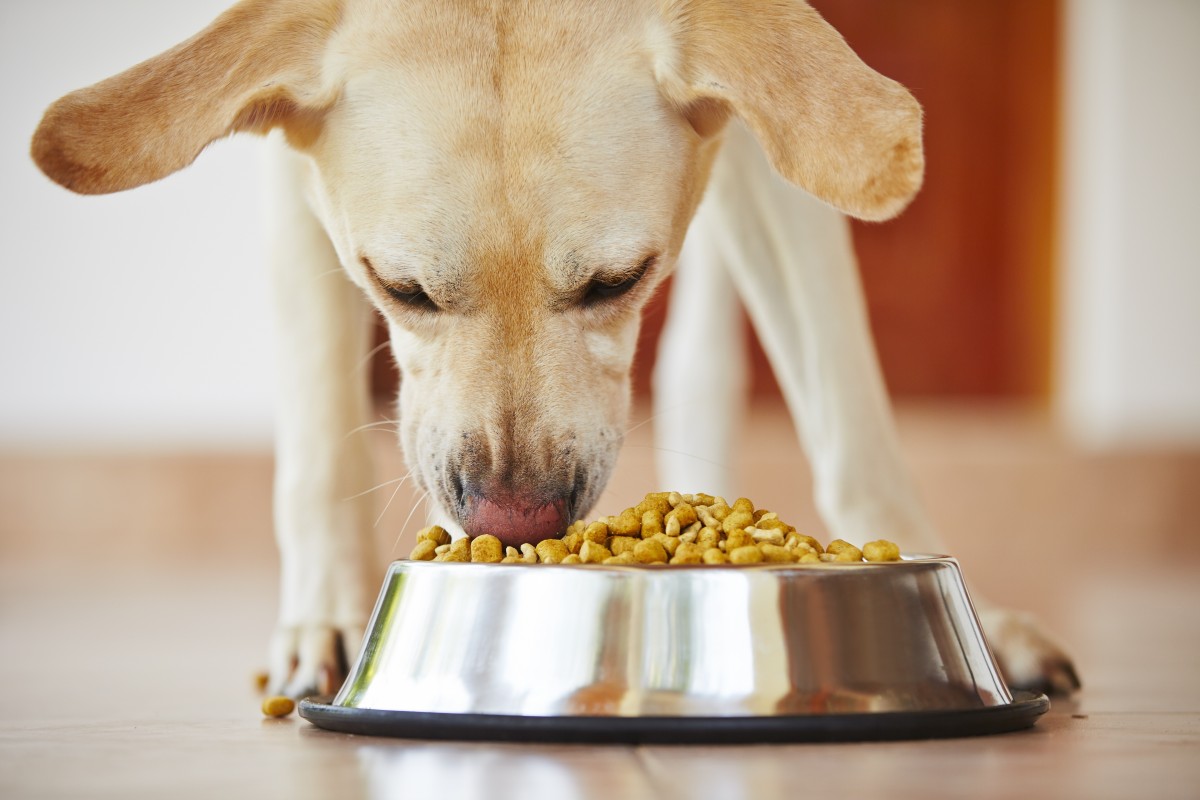
Yellow dog eating food out of a dog bowlRecently, interest has arisen surrounding grain-free diets and their impact on canine health.

When searching for the right food for their dogs, pet owners often focus on corn and wheat; however, many other grains are used in pet foods that have great nutritional value, including rice, barley, oats, and millet.

“Much of the initial push for ‘grain-free’ diets for dogs came from folks who were drawn into the marketing strategy that dogs are carnivores and grains were unnatural,” said Dr. Deb Zoran, a professor at the Texas A&M College of Veterinary Medicine & Biomedical Sciences (CVMBS).

“Dogs are, in fact, omnivores; they are actually programmed metabolically and nutritionally to use the building blocks from both plants (grains) and animals to meet their requirements for essential nutrients and energy,” she said. “This is illustrated by wild dogs and wolves eating the ingesta—contents of the digestive tract that are largely plant material or grain—of large animal species they kill.”

Pet owners choose what diet to feed their dog based on word-of-mouth, online, marketing of pet stores, or veterinary recommendations, but according to Zoran, many owners tend to choose their pet’s diet based on pet food company marketing.

“The pet food industry is a very competitive place and many of the smaller companies and boutique foods do a fantastic job of marketing their products,” Zoran said. “Unfortunately, those same companies do not all have the same resources for research and development and quality assurance testing.

“A recipe for good food is one thing, but if you don’t test the product once it is made, processed, and packaged, you can’t be sure the food still contains what you intended, and that is where potential problems start,” Zoran said.

It is important for dogs to have a balanced diet in order to thrive, and Zoran said dog owners should know that “there are nutrients present in grains that are essential for a complete and balanced diet.”

“If grains are removed from a diet, they must be replaced by another food source that has those nutrients in sufficient quantities to balance the diet,” she said.

Some dog owners have switched their pets to a grain-free diet because of concern about possible wheat gluten allergies or intolerance, but, according to Zoran, these conditions are relatively uncommon in dogs compared to other types of food-related conditions.

“Many people have been convinced that their dogs have a ‘grain allergy,’ much like celiac disease or gluten disease in humans,” Zoran said. “However, true dietary allergies in dogs are caused by the protein, or meat, sources in a diet. It doesn’t mean that your dog can’t have an intolerance to wheat gluten or another food ingredient, but it is not the same as an allergy.

“The bottom line is, your dog’s skin, hair coat, or gastrointestinal (GI) function may sometimes improve on a grain-free diet, but it may simply have been the diet change itself and not the lack of grains, per se,” she said.

Zoran recommends that pet owners choose diets that have rigorous standards for research and quality testing; a well-developed reputation for providing complete and balanced foods; and back up their label claims with nutritional quality control testing. Additionally, owners should always seek advice from their veterinarian before changing their dog’s diet.

“If your dog seems to do better with diets without wheat or corn, consult a veterinarian or veterinary nutritionist for information about the safest diet options available on the market,” Zoran said. “They can provide commercial and homemade options that can meet your dog’s specific nutritional needs.”

Pet Talk is a service of the College of Veterinary Medicine & Biomedical Sciences, Texas A&M University. Stories can be viewed on the web at vetmed.tamu.edu/news/pet-talk. Suggestions for future topics may be directed to editor@cvm.tamu.edu.

Finding Meaning In Mentorship

Dr. Dana Gaddy has been blessed with the support of many, so now she’s paying it forward by using the lessons she’s learned to build relationships with her own students.

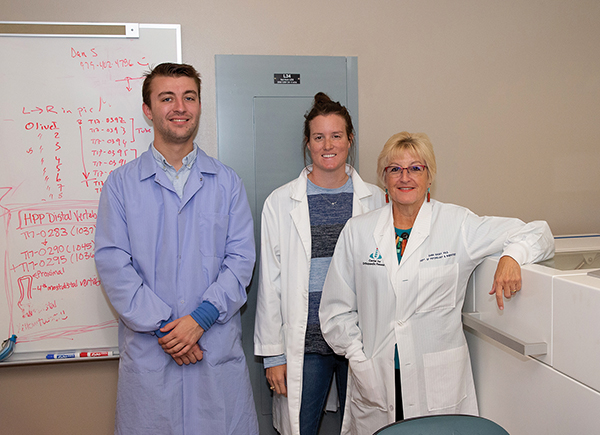
Joshua Bertles, Kirby Sherman, and Dr. Dana Gaddy in the lab
Joshua Bertles, Kirby Sherman, and Dr. Dana Gaddy

Dr. Dana Gaddy’s mentor Joanne Richards once told her, “People are like plants. You just need to give them a bit of water and let them grow.”

That philosophy is so deeply rooted into Gaddy that she tears up when she speaks of her relationship with Richards and what mentorship now means to her as a professor in Texas A&M College of Veterinary Medicine & Biomedical Sciences’ (CVM) Department of Veterinary Integrative Biosciences (VIBS).

“Every single person Jo mentored feels that she played a key role in their having a fulfilled life,” Gaddy said, catching herself as her voice softly begins to break. “Just because you have 50 graduate students and postdocs does not mean that you have 50 happy, fulfilled graduate students and postdocs. What was important to her was to build 50 relationships. That’s what it’s about.”

And, indeed, that has been what it’s about for Gaddy; mentorship, she believes, is for life.

Planting The Seeds

She’s been blessed with many mentors throughout her life, starting during her time as a Ph.D. student at Baylor College of Medicine, where Richards was her adviser.

“I was always mystified by her ability to take students who would come into her lab as postdoctoral fellows but really were not on the same wavelength as the rest of the folks and by working elbow-to-elbow with them and through regular conversations, she would figure out what made them tick,” Gaddy said. “Then, she would place opportunities in front of them—some of which were not academic—that would put them in the direction where they’re going to be happiest. She didn’t just mold them after herself.”

This was modeled by another set of influential mentors, Drs. Gideon and Sevgi Rodan.

“I met Gideon when I was a brand-new faculty member and was doing stuff that was really kind of heretical to the bone field at the time,” Gaddy said. (She focused on the importance of the reproductive hormone inhibin in menopause, when the scientific consensus placed the sole significance on estrogen.)

“He and his wife, Sevgi, were like the mom and pop,” she said. “They always did things for their mentees, even those who went off to other companies or would go back to academia. People who left would always come back, and the Rodans kept track of them.”

Her relationship with the Rodans made it particularly poignant when this fall Gaddy received the Gideon A. Rodan Award for Mentorship from the American Society for Bone and Mineral Research (ASBMR).

“He took lots of people under his wing, even those who didn’t have anything to do with Merck,” Gaddy said. “He would mentor everyone who seemed to want to listen to what he had to say, and his words of wisdom were usually spot on.

“That scientific progeny concept is one that I was steeped in as a young faculty member, as a young scientist, as a graduate student, and it stayed with me,” she said.

Joshua Bertles, Kirby Sherman, and Dr. Dana Gaddy in the lab
Joshua Bertles, Kirby Sherman, and Dr. Dana Gaddy

A Winning Combination

Gaddy sees herself as a “different kind of mentor,” in part because her mentee pool has been much smaller than previous Rodan Award winners—who have 10-20 trainees at any given time, compared to the three typically working in Gaddy’s lab—but also because she comprehensively evaluates her students and their potential, understanding that what is best for the student may not be best for her.

“Part of it is paying attention and trying to read people like my Ph.D. adviser did, to try to understand what it is that really is making them tick,” Gaddy said. “If I give them something to do and they hate it or they love something else, I see it as my responsibility to figure out how I can provide them more of that so that then they see the success, they feel the success, and they want to go do more in that direction.”

It’s also included helping students evaluate what their end-goals are earlier in their academic career and encouraging them to pay attention to what’s happening in all job sectors before they start a dissertation and it becomes too late to change their minds.

“Many graduate students coming into my lab initially think that they are going to do what I do, but that ends up not really being their path,” Gaddy said. “My job is to help them find whatever the path is and then help them find a way to get there.”

As a result, some of her graduate students have moved into other CVM faculty members’ labs; in other cases, she has “adopted” trainees working in colleagues’ labs.

She estimates that she is probably actively mentoring six former students, one current doctoral student, and a handful that are affiliated with other CVM laboratories; it is that idea of connecting people across areas, whether it’s for mentorships or just networking, that is important for Gaddy.

“I have done more of that for other people’s students than I have for my own, not even people at my institution,” she said. “I’ve been involved in the Endocrine Society and the Women in Endocrine Society, as well as the Bone Society and other groups, for which we’ve done professional development events about how to choose a mentor, how to set that mentoring conversation and relationship up, and then what to do if it doesn’t go well, or how to launch out of somebody’s lab to gain independence.”

While the connections she’s made, and the award she’s won, have been rewarding, the ultimate reward, in her eyes, is seeing her students succeed in advancing science in their own ways. Among her mentees, Joshua Bertles is her current Ph.D. student in the biomedical sciences graduate program; Kristy Nicks, Ph.D., is a program director at the National Institutes of Health’s National Institute of Arthritis and Musculoskeletal and Skin Diseases; Tristan Fowler, Ph.D., is a research scientist director at the biotech company Surrozen; and Daniel Perrien, Ph.D., is an associate professor at Emory University.

“That’s what I’m most proud of, because you never know what that student is going to want to do when they first walk in your door,” she said. “I try to spend time programmatically identifying or at least providing exposure to opportunities that will help them learn what it is that floats their boat. And when they find that, there’s no better reward.”

###

Note: This story originally appeared in the Spring 2020 edition of CVM Today.

For more information about the Texas A&M College of Veterinary Medicine & Biomedical Sciences, please visit our website at vetmed.tamu.edu or join us on FacebookInstagram, and Twitter.

Contact Information: Jennifer Gauntt, Director of Communications, Texas A&M College of Veterinary Medicine & Biomedical Sciences; jgauntt@cvm.tamu.edu; 979-862-4216

CVM Researcher Discovers Domestic Horse Breed Has Third-Lowest Genetic Diversity

Dr. Gus Cothran
Dr. Gus Cothran

A recent study by Dr. Gus Cothran, professor emeritus at the Texas A&M School of Veterinary Medicine & Biomedical Sciences (CVM), has found that the Cleveland Bay (CB) horse breed has the third-lowest genetic variation level of domestic horses, ranking above only the notoriously inbred Friesian and Clydesdale breeds. This lack of genetic diversity puts the breed at risk for a variety of health conditions.

Genetic variation refers to the differences between different individuals’ DNA codes. Populations where there is high genetic diversity will have a wider range of different traits and will be more stable, in part because disease traits will be more diluted. In populations with low genetic variation, many individuals will have the same traits and will be more vulnerable to disease.

The CB is the United Kingdom’s oldest established horse breed and the only native warm-blood horse in the region. Used for recreational riding, driving, and equestrian competition, the CB is considered a critically endangered breed by the Livestock Conservancy.

Because maintaining genetic diversity within the breed is important to securing the horses’ future, Cothran and his team worked to gain comprehensive genetic information about the breed to develop more effective conservation and breeding strategies.

In this study, published in Diversity, researchers genotyped hair from 90 different CB horses and analyzed their data for certain genetic markers. These samples were then compared to each other, as well as to samples from other horse breeds to establish the genetic diversity within the breed and between other breeds.

Both the heterozygosity and mean allele number for the breed were below average, indicating lower than average genetic diversity within the breed. This low genetic diversity should be seen as a red flag for possible health conditions.

“Low diversity is a marker for inbreeding, which can cause low fertility or any number of hereditary diseases or deformities,” Cothran said. “With overall population numbers for the breed being so small, such problems could rapidly lead to the extinction of the breed.”

The Cleveland Bay Horse Society of North America estimates that only around 900 CB purebreds exist globally. Such low population numbers mean the breed is considered to be critically rare.

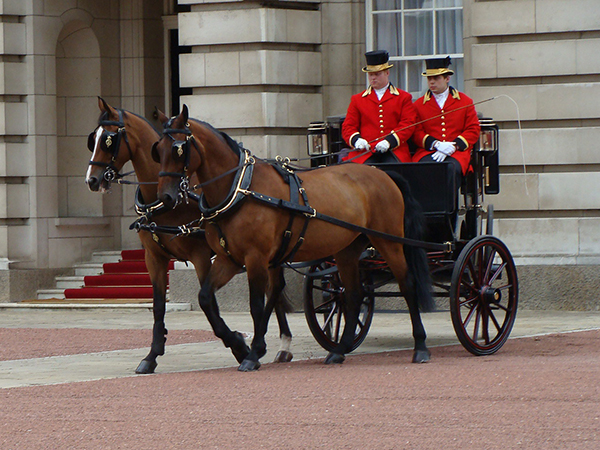
Cleveland Bay horses pulling a carriage
Cleveland Bay horses

This study also evaluated the diversity between the CB and other breeds using a majority-rule consensus tree, a type of analysis that shows an estimate of how different clades, or groups of organisms sharing a common ancestor, might fit together on their ancestral tree.

Cothran and his team’s analysis found that the CB did not show a strong relationship with any other breeds, including other breeds within the same clade. Though this could be a result of the low genetic diversity within the breed, these data suggest that the CB is genetically unique from other breeds. These findings place emphasis on the importance of CB horses as a genetic resource.

“The CB is an unusual horse in that it is a fairly large sized horse but it is built like a riding horse rather than a draft horse,” Cothran said, noting the uniqueness of the breed. “It frequently is bred to other breeds such as the Thoroughbred to create eventing or jumping horses, although this is a potential threat to maintaining diversity in the CB.”

Cothran hopes his research will help to inform conservation efforts supporting the longevity of the CB breed, as well as inform breeders on how they can more responsibly further their horses’ genetic lines.

“If any evidence of inbreeding is observed, breeders should report it to scientists for further analysis,” Cothran said. “Efforts should be made to keep the numbers of CB horses as high as possible and to monitor breeding practices to minimize inbreeding and loss of variability.”

“Domestic animals, including horses, are also at risk of declining populations, just like endangered species, but research can help determine which populations (breeds) are at risk and provide possible directions to help reduce risks or consequences,” he said.

Though CB horses are currently at risk, Cothran remains optimistic that careful monitoring and management of the breed can preserve them as a cultural and genetic resource for years to come.

###

For more information about the Texas A&M College of Veterinary Medicine & Biomedical Sciences, please visit our website at vetmed.tamu.edu or join us on FacebookInstagram, and Twitter.

Contact Information: Jennifer Gauntt, Director of CVM Communications, Texas A&M College of Veterinary Medicine & Biomedical Sciences; jgauntt@cvm.tamu.edu; 979-862-4216

Scratching Beneath The Surface

Dr. Dusty Nagy’s holistic approach to veterinary care was borne from her personal experiences with chiropractic and acupuncture treatments.

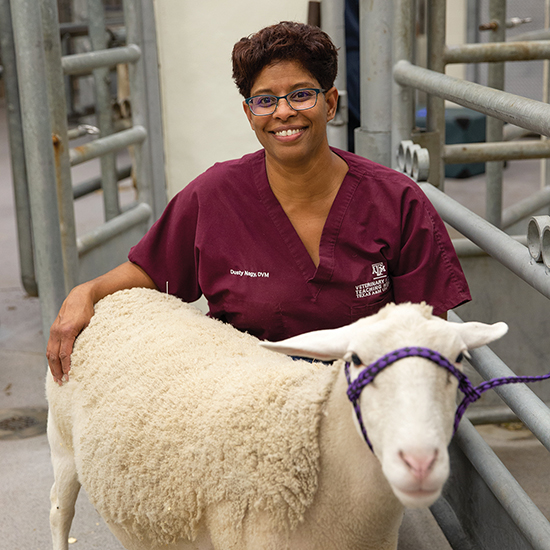
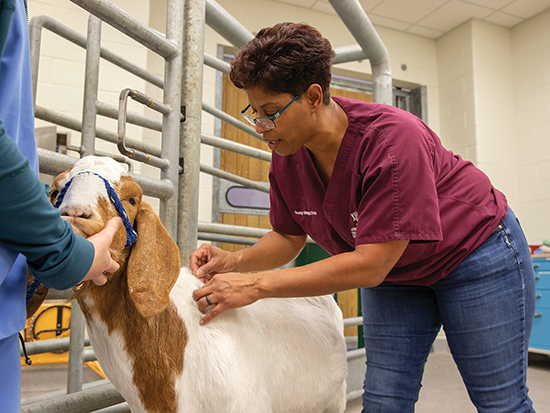
Dr. Dusty Nagy and a sheep
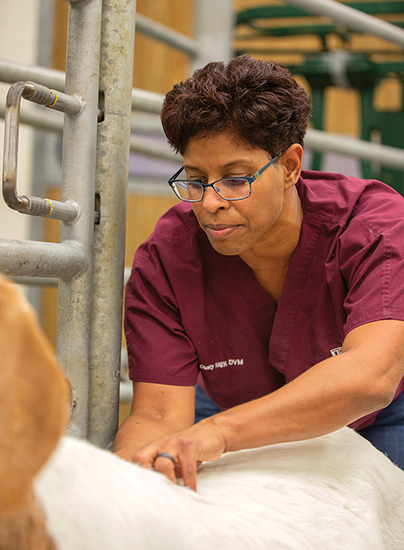
Dr. Dusty Nagy and Patrick

The familiar sound of a mooing cow echoes through the clinic. This time, the noise is not coming from a patient but from Dr. Dusty Nagy’s cellphone.

A bovine lover to her core, Nagy’s passion for her profession radiates from her everywhere she goes.

A clinical associate professor of large animal clinical sciences (VLCS) at the Texas A&M College of Veterinary Medicine & Biomedical Sciences (CVM), Nagy spends her time teaching future veterinarians and treating patients in the clinic, sometimes in uncommon ways.

As a new faculty member, Nagy’s unique work in animal chiropractic medicine and acupuncture makes her an integral part of the team.

Currently, Nagy is the only veterinarian on staff to offer chiropractic care to patients. However, she hasn’t always been a chiropractic “believer.”

In fact, she used to be skeptical of the practice in both humans and animals.

That was until a few years ago, when back pain had taken over Nagy’s work life; she said she had not slept through the night in years.

“My husband and I were trying to figure out how I could retire early because I just couldn’t work anymore,” Nagy said. “It was just too painful.”

One day, Nagy was examining a cow when she suddenly felt the all-too-familiar debilitating back pain.

“All I was doing was palpating a cow. I wasn’t even doing something stupid, by my standards,” Nagy said, with a laugh.

In agony, she fell to the floor, where she would stay for the next two hours.

To appease her technician, Nagy went to the hospital, only to be offered pain medication, a remedy she did not desire. Upon returning to work, the receptionist, who had been badgering Nagy for years to see her chiropractor, had already made Nagy an appointment.

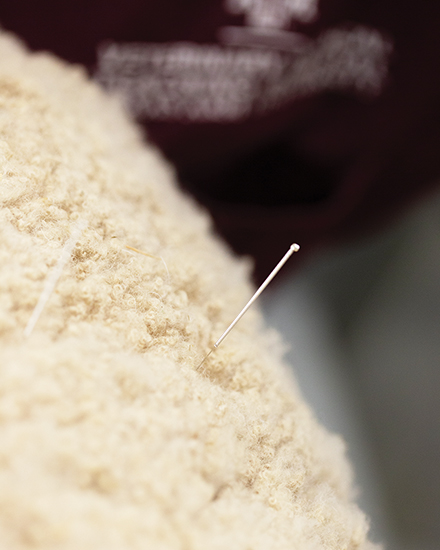
An acupuncture needle in a sheep
Acupuncture

“I looked her dead in the face, and I said, ‘I don’t even care if they kill me. I will go because I can’t do this anymore.’ And I went and I got the most thorough exam I had ever gotten from a doctor that I can remember,” Nagy said.

After her initial appointment, Nagy returned to the chiropractor a couple of days later for her first adjustment. For the first time in years, she slept through the night.

“It turned me into an absolute believer that when applied appropriately, chiropractic treatment can be useful. My experience and outcome made me go, ‘You know what? Maybe I should learn more about this,’” Nagy said. “I decided to learn acupuncture because with production animals, we do not have a lot of options for pain control, and I thought that this would be a good tool to add to my toolbox. What I realized in class is that acupuncture can be used in animals for a variety of conditions.”

Today, Nagy uses acupuncture and chiropractic treatments on many animals; she has seen how both can help improve the quality of life and longevity of her patients.

“Most often, I think people seek out acupuncture for animals in pain or those with behavioral problems,” she said. “I still use acupuncture primarily as an adjunctive treatment along-side western medicine, most often for pain control. When others ask me for an acupuncture consult on a case, it is often for patients that have failed to respond adequately to western medicine and we are attempting to exhaust all of our options.”

Finding Her Path

Nagy grew up in an environment that prepared her for the busy lifestyle of a food animal veterinarian working in an academic setting.

Nagy’s father encouraged her at a young age to remain busy; she was told to find a job—or he would find her one.

So, Nagy spent much of her free time working on farms on the outskirts of the Maryland town in which she lived. Caring for the animals sparked her interest in being a veterinarian.

Dr. Dusty Nagy with a goat
Dr. Dusty Nagy and Charlie

“I was one of those who decided I wanted to be a veterinarian when I was really small,” Nagy said. “And it stuck. I love what I do; I wouldn’t change it for the world.”

She completed her bachelor’s degree in three years, splitting her time between Colorado State University and the University of Maryland before going directly into Cornell University’s veterinary program. She says she found the first year of veterinary school to be an uphill climb.

“I’m not sure I was ready for that kind of commitment,” Nagy said, remembering how she struggled her first year. “As the years went on, vet school got a lot easier.”

During her last year in veterinary school, Nagy decided to pursue a post-graduate internship and was matched with the University of Missouri, which wasn’t her first choice, but would ultimately turn out to become home.

“It was the program I liked the most, but I didn’t want to go to Missouri,” Nagy said. “I had always thought of it as a fly over state.”

Nagy was only supposed to stay for a year, but toward the end of her internship, the University of Missouri asked her if she would be willing to stay for a residency.

She eventually decided to stay, and about a year and a half into her studies, the program hired a new section head.

“My entire life course changed from the second he walked into the building,” Nagy said. “He tried to convince me to roll my master’s into a Ph.D., and I told him no until the very end of my residency.”

Not only did Nagy go on to complete her Ph.D., but when her husband, who is also a veterinarian, was given the opportunity to complete a diagnostic imaging residency at the University of Illinois, Urbana-Champaign, Nagy’s section head allowed her to accept a faculty position there while completing her doctorate.

Dr. Dusty Nagy performing acupuncture
Dr. Dusty Nagy

Making The Move

After Nagy’s husband finished his residency, the couple contemplated their next step. Nagy interviewed at other places, but “Missouri just really still felt like home,” she said.

And so back to Missouri they went, and there, Nagy was happy, working with people she liked.
“By all accounts, I was going to be there until the end. That was my life plan to stay there. I never, ever thought about moving,” Nagy said.

Throughout her career at Mizzou, she occasionally received calls from colleagues at Texas A&M about job opportunities. During a 2018 call, Nagy was intrigued by the CVM’s new curriculum for veterinary students, but she was still not interested in moving.

That changed when Nagy finally decided she would visit the CVM. Although she viewed the trip more as a way to rid the recruitment phone calls than find a new job, it took only half a day to feel like she would be a fool not to pursue a position at the CVM.

So, what changed Nagy’s mind?

“It’s a great place. There’s so much opportunity here,” Nagy said. “The support is phenomenal. This is an opportunity to finish out the rest of my career in a place of resources.”

Now that she’s at the CVM, Nagy said she looks forward to building a new reputation with her students and clientele in the years to come.

“I was really well-loved by the students at Missouri, and sometimes you go, ’Well, here I am in a brand-new place, and can I actually recreate that? Do I actually do a good job or was it just an urban legend they all believed?’” Nagy said. “You know, it’s not a bad thing to have to prove yourself every now and then.”

###

Note: This story originally appeared in the Spring 2020 edition of CVM Today.

For more information about the Texas A&M College of Veterinary Medicine & Biomedical Sciences, please visit our website at vetmed.tamu.edu or join us on FacebookInstagram, and Twitter.

Contact Information: Jennifer Gauntt, Director of Communications, Texas A&M College of Veterinary Medicine & Biomedical Sciences; jgauntt@cvm.tamu.edu; 979-862-4216

The Facts Of Feline Lower Urinary Tract Disease

Feline lower urinary tract disease (FLUTD) is a common condition in cats, encompassing many disorders that affect the animal’s bladder or urethra. To avoid FLUTD, it is important that owners keep an eye on the bathroom habits of their furry friend to ensure that they are as happy and healthy as possible.

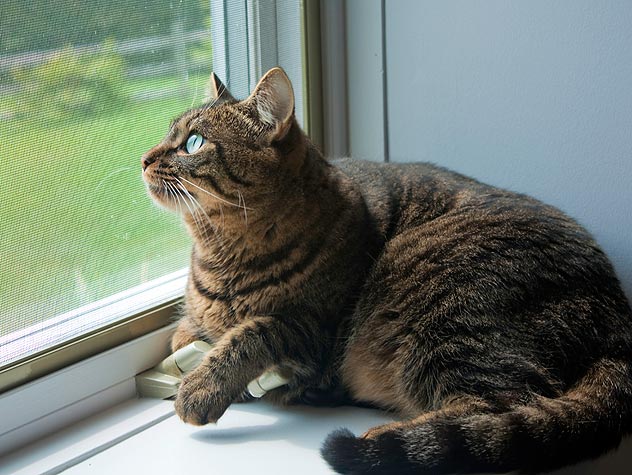
A brown tabby cat looking out the windowDr. Audrey Cook, a professor at the Texas A&M College of Veterinary Medicine & Biomedical Sciences, weighs in on the symptoms, causes, and treatments that owners should know about FLUTD.

FLUTD is a syndrome caused by a number of different underlying disorders; therefore, the range of symptoms is broad. Abnormal urination habits, including frequent urination, blood in urine, difficult or painful urination, and frequent “accidents” outside the litterbox may be indicative of a urinary tract disease.

These symptoms may arise from inflammation of the bladder or urethra, the presence of crystals or stones in the bladder, obstruction of the urethra, and more.

“Always seek veterinary care if your cat is straining to urinate but very little or no urine is passed,” Cook said, adding that your veterinarian will likely need to conduct an evaluation to determine the exact cause.

Owners concerned about their cat’s urination habits should consult their veterinarian as soon as possible, as FLUTD may cause more severe problems if left untreated.

“Although many cats with FLUTD will improve within a few days with symptomatic care, cats with this problem can become unable to urinate,” Cook said. “This is a medical emergency and must be addressed as soon as possible.”

Treatment will vary depending on the underlying cause but might involve medication, dietary changes, or surgical removal of stones.

Male cats are at a higher risk for urinary tract obstruction caused by FLUTD, such as bladder stones blocking their urinary tract, because their urethras are longer and narrower than those of female cats.

Additionally, this condition has a high rate of recurrence, as some cats are more prone to urinary disorders than others.

It is best practice for cat owners to ensure their pet’s litterbox is kept clean, that there are enough litterboxes for the number of cats in the household (at least one per cat, plus one additional litterbox), and that the cats always have access to fresh water.

Appropriate environmental enrichment may also help prevent FLUTD, since occurrence is higher in cats that are sedentary or obese.

Stress may also play a role in triggering a condition called idiopathic cystitis, a sterile inflammation of the bladder, which is one of the most common causes of abnormal urination in cats.

Although FLUTD may be a stressful experience for you and your cat, prompt and proper veterinary care can help keep your pet comfortable and happy.

Pet Talk is a service of the College of Veterinary Medicine & Biomedical Sciences, Texas A&M University. Stories can be viewed on the web at vetmed.tamu.edu/news/pet-talk. Suggestions for future topics may be directed to editor@cvm.tamu.edu.
Living A Life Of Selfless Service

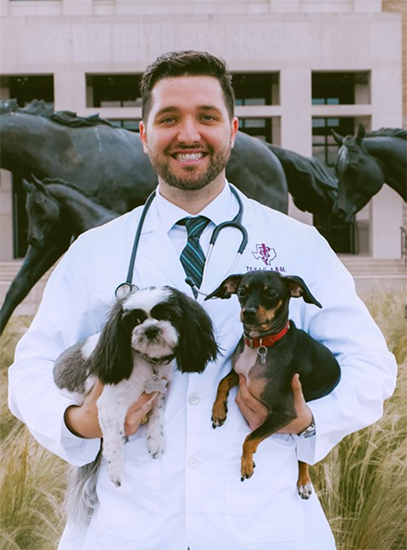
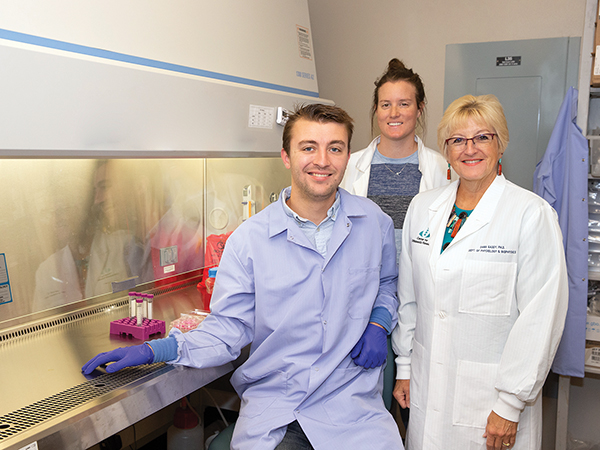
Daniel Anthony in a white coat holding two dogs
Daniel Anthony

At Texas A&M, selfless service is one of the six core values that unite every member of the Aggie Network. With volunteering opportunities ranging from Big Event to those driven by numerous student organizations, Aggies find many ways to give back to the local community and beyond.

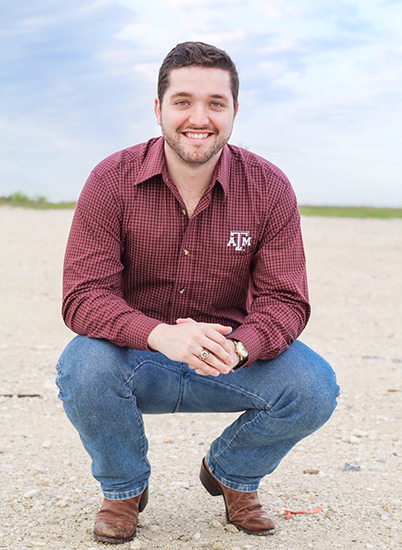
For Daniel Anthony, a fourth-year veterinary student at the College of Veterinary Medicine & Biomedical Sciences (CVM), selfless service is one of the most defining aspects of his life. In fact, it’s a family tradition.

Anthony’s family has been in the restaurant business since 1912. During the Great Depression, his great-grandfather opened a soup kitchen behind his café and gave away most of his income to feed hungry neighbors.

This practice of caring for the community continued in the 1960s with Anthony’s grandfather, who was the first restaurant-owner to desegregate his eatery in the family’s hometown of San Antonio.

“He started a movement across all of the big restaurant chains in Texas to desegregate,” Anthony said. “Although it was not the popular opinion or decision at the time, he thought it was the right thing to do.”

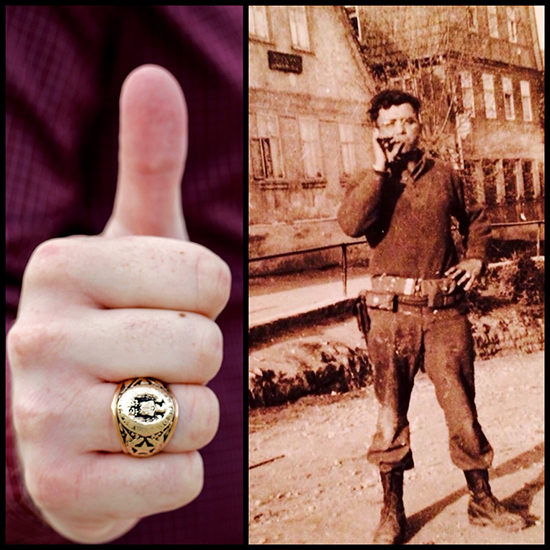
Today, Anthony sees his grandfather, who graduated from Texas A&M in 1943, as his main inspiration for pursuing a life of selfless service. He even wears his grandfather’s Aggie ring, which is so worn down that the iconic symbols aren’t recognizable.

“I wanted to be an Aggie because of those qualities that the school has, the pillars of excellence,” Anthony said. “I thought my grandfather perfectly utilized them in his life and I wanted to make my life very similar, or at least lead by his example in veterinary medicine.

“Service, to me, is the ultimate platform of my family values, to give back and serve the community,” he said. “While they do it by food, I want to do it through this profession.

“To me, there’s nothing more special than connection with people,” he said. “I think it’s a double bonus being a veterinarian because the human-animal bond is so strong—it’s even more of an impact being there for people.”

A worn down Aggie ring next to an aged photo of a man
Daniel Anthony wearing his grandfather’s Aggie ring; Anthony’s grandfather, wearing the same ring, during World War II

At the CVM, Anthony serves as president of the Doctor of Veterinary Medicine (DVM) Class of 2021, working with his officer team to organize events for the class and promote the needs of his fellow veterinary students.

“I really wanted to challenge myself and I knew that one day I wanted to own a practice and lead a community,” Anthony said. “I wanted to get the tools to learn how to lead and manage people and also be there to serve our class.”

With Anthony’s class being the first to experience a redesigned DVM curriculum, he was especially determined to make sure his classmates had the tools they needed to be successful.

“I knew that a positive culture and a growth mindset were going to be really important for that process,” he said.

In fall 2019, Anthony and his fellow officers decided to further that positive culture by supporting veterinary students outside of the CVM as well. When they heard about the passing of Samantha Lin, a fourth-year veterinary student at the North Carolina State College of Veterinary Medicine, they decided to create a large condolence card to be signed by CVM students, faculty, and staff.

“That was to bridge the veterinary school community together,” Anthony said. “Unfortunately, it’s over grief, but hopefully we can shed some positive light onto Samantha’s story and who she was. When I presented that to our class, I made sure people knew more about Samantha and let her legacy shine on through Texas.

“Anything to bind our veterinary community together is something I’m passionate about,” he said.

Anthony is also a member of the White Coats Program at the CVM, which works to foster a positive culture within the college.

This program, working with the Professional Programs Office, represents and promotes the CVM during admissions interviews, orientation for incoming veterinary students and other student-centered events, graduation, alumni events, and community outreach events.

Daniel Anthony at the beach
Daniel Anthony

As one of the inaugural White Coats, Anthony has helped shape the program into what it is today.

“What drew me to it was that it was all about giving back,” he said. “I feel like if you don’t go through life without helping those who helped you or helping someone else get to the position you’re at, then that, to me, is not success. Success is giving back and reaching up and helping a larger group of people get to where they need to go.”

After graduation, Anthony plans to open his own small animal clinic and connect with the larger veterinary community by getting involved in the Texas Veterinary Medical Association (TVMA).

“My vision is that when someone walks into my clinic, they have this amazing experience and their animal is able to get the services it needs, but they also come out feeling better than when they came in,” he said. “I’m really going to want to emphasize quality service and make sure that the medicine is the best it can be.”

He also looks forward to serving those in his future community by finding ways to pass on what he has learned about both veterinary medicine and selfless service.

“I want to carry on a lot of these things I’ve learned in veterinary school and get involved with the high schools,” he said. “I would love to go in and do some presentations to get kids interested in veterinary medicine and show them what this profession’s really about.

“I want to let people know that veterinarians aren’t just here for animals, we’re here for the community, as well.”

###

For more information about the Texas A&M College of Veterinary Medicine & Biomedical Sciences, please visit our website at vetmed.tamu.edu or join us on FacebookInstagram, and Twitter.

Contact Information: Jennifer Gauntt, Director of CVM Communications, Texas A&M College of Veterinary Medicine & Biomedical Sciences; jgauntt@cvm.tamu.edu; 979-862-4216

A K-9’s Courage

Search and recovery dog Remington is now enjoying retirement thanks to the care he received from the Small Animal Hospital’s Oncology Service.

Racheal Crivelli hugging Remington
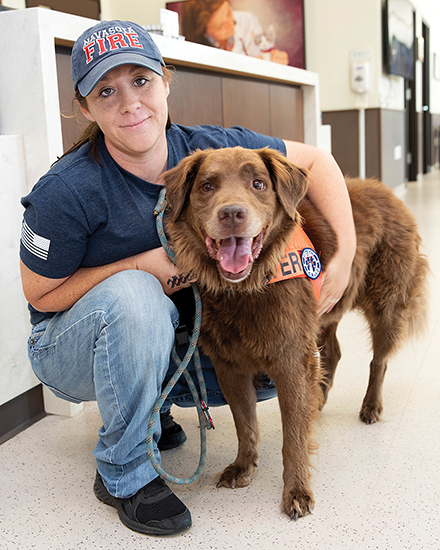
Rachael Crivelli and Remington

It was a training day like any other when Rachael Crivelli noticed that her dog Remington, a search and recovery canine for the Navasota Fire Department, developed a limp after slipping during an agility course obstacle.

Remington was still limping two days later, but Crivelli’s local veterinarian was unable to provide a diagnosis.

Soon after, Crivelli met Dr. Deb Zoran, a professor at the Texas A&M College of Veterinary Medicine & Biomedical Sciences (CVM), at an urban search and rescue (USAR) training event and was encouraged to take Remington to the Texas A&M Small Animal Hospital (SAH), where a team of specialists could work to discover the cause of the limp.

After several tests and visits with various SAH services, Remington was diagnosed with a malignant peripheral nerve sheath tumor, a common, but often misdiagnosed, form of cancer.

Crivelli, who had worked with the 8-year-old Labrador Retriever mix for nearly his entire life, was heartbroken by this diagnosis. But knowing how much Remington had done to serve others, she decided to do whatever it would take to get him back on his feet.

“They say a dog will let you know when it’s time to go,” Crivelli said. “Remington was letting me know he had a lot of life to live.”

A Life Of Service

Crivelli felt a call to serve and began her career as a firefighter following the Sept. 11 terrorist attacks.

She rescued Remington when he was only 4 weeks old and soon after began training him for an important role—locating human remains, whether it be a deceased body or the smallest drop of blood, following a crisis like 9/11.

Together, they have volunteered to search for human remains at crime scenes and disaster sites across the state, even contributing to a 30-year-old cold case in South Texas.

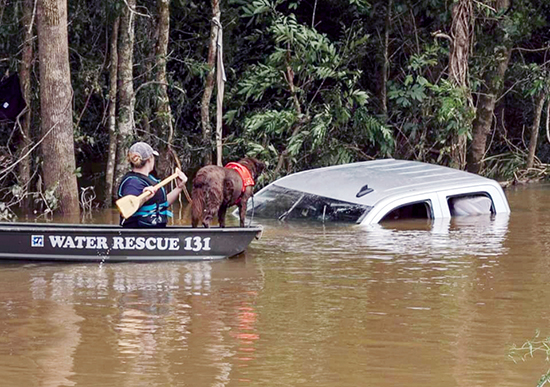
Crivelli and Remington in a water rescue boat approaching a flooded car
Remington at work

“We have searched a burnt house that somebody was suspected to have been murdered at and Remington assisted in locating the exact room where the person died,” Crivelli said.

“We deployed during Hurricane Harvey and searched in neighborhoods for anybody who could have been deceased,” she said. “Luckily, we didn’t have to locate anybody during Hurricane Harvey.”

In addition to this work, Remington also served as a mascot for New Caney Fire Department for several years and then for Navasota Fire Department until his cancer diagnosis and subsequent retirement.

“He would go to public relations events to greet members of the public,” Crivelli said. “Having a K-9 allowed firefighters to be more approachable; people or kids who might have too much anxiety to approach firefighters normally were always more comfortable with Remington around.

“He also was a great comfort after making tough calls,” she said. “We would come back from a CPR call or a fatality wreck and it was interesting to see Remington go up to all the firefighters and let them pet him. He knew when people needed loving from a big furry teddy bear. Even on searches, he would comfort the searchers, as well as the victim’s family.

“That’s what I miss most with him being retired,” Crivelli said. “He was a comfort dog more than a search dog at times.”

Fighting For Remington

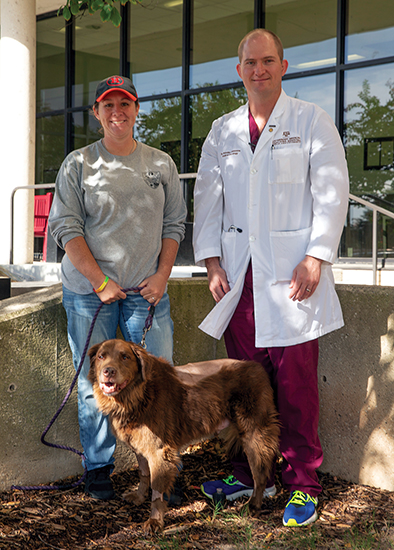
Rachael Crivelli, Dr. Brandan Wustefeld-Janssens, and Remington outside the Texas A&M Small Animal Hospital
Rachael Crivelli, Dr. Brandan Wustefeld-Janssens, and Remington

Remington’s tumor ran from the spinal canal to where the femoral nerve entered his right hind leg, causing him significant pain and requiring an intensive surgery of several hours for removal.

“This type of tumor is not very common but often misdiagnosed early on because initially, the signs are so gray,” said Dr. Brandan Wustefeld-Janssens, an assistant professor of surgical oncology. “It’s very common for these dogs to be lame for up to six months and have several rounds of X-rays, yet their veterinarians never find anything wrong. Eventually, when they come in here, they are very painful or the atrophy is so severe that it is now obvious.”

Crivelli, a cancer survivor herself, knew that Remington had more life in him and deserved the opportunity to beat his cancer.

“His job was to assist families and law enforcement with justice by helping provide answers,” she said. “He fought for those who couldn’t fight, so I had to give him a chance to fight for himself.”

Wustefeld-Janssens and a team of oncologists and neurologists removed the right side of Remington’s pelvis and his leg, opened the last three intervertebral spaces, and cut the femoral nerve as close to the spinal cord as possible.

“The cutting of the nerve is a really important step because, number one, we hope to remove the entire tumor, and, two, if there are no pain signals back to the spinal cord, these dogs feel much better,” Wustefeld-Janssens said.

After surgery, Remington recovered quickly and was soon cruising on three legs. As is typical for dogs who have undergone an amputation, he improved greatly once the source of his pain was gone.

“Dogs are incredible in that we can remove half of Remington’s pelvis and a big part of his back, and then two weeks later he’s running and jumping over small walls,” Wustefeld-Janssens said.

Supporting Our K-9 Heroes

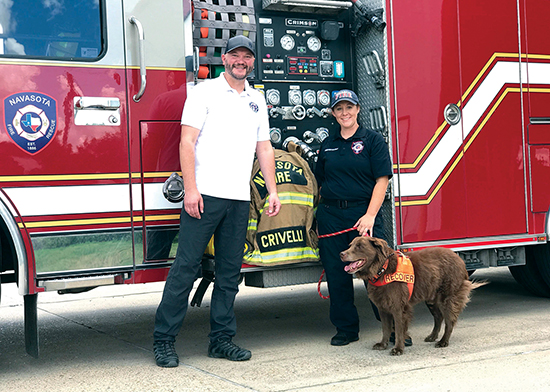
Jason Johnson, Rachael Crivelli, and Remington in front of a Navasota fire engine
Jason Johnson, Rachael Crivelli, and Remington

Luckily, Crivelli wasn’t alone in her support for Remington. After he was diagnosed, she reached out to Project K-9 Hero, a national nonprofit organization that helps fund medical care for retired police K-9s and military working dogs.

“I purchased a bag of Sport dog food and on the back of it was a story about Project K-9 Hero,” Crivelli said. “It’s for police and military dogs, but Remington’s a search and fire dog. I thought, ‘I’ll just try,’ so I filled out their application and two hours later I got a call from the founder, Jason Johnson, who said Remington was accepted to the program.”

Project K-9 Hero covered Remington’s full surgery cost with funds raised entirely through donations. As a K-9 Hero, Remington will also receive free food and medical care for the rest of his life.

“We felt that because of his age and because of how much life he had left in him, providing the surgery was going to allow him to live a high-quality life for the next couple years, hopefully,” Johnson said. “We’re honored to serve heroes like Remington, heroes who dedicated their careers to protecting our communities.”

Semi-retirement

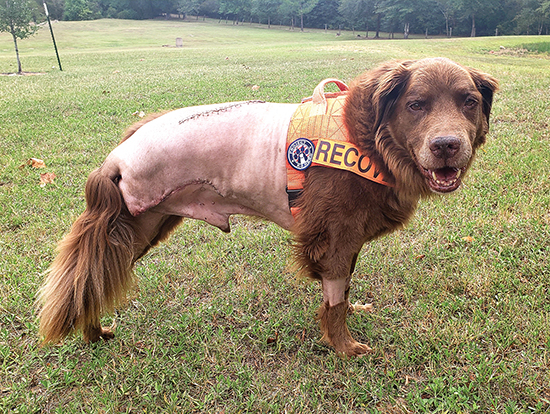
Remington shaved and with three legs
Remington after his surgery

With 34 deployments and six confirmed finds on his résumé, Remington has earned the right to a relaxing semi-retirement from his search and recovery career.

He now spends most of his time at home with Crivelli’s family, while continuing to greet citizens and help the Navasota Fire Department with public relations. He also is serving as a Project K-9 Hero representative to help other K-9s receive the same support he did.

“I’m grateful for Texas A&M surgeons, students, and technicians, and for Project K-9 Hero’s financial support,” Crivelli said. “I feel I made the right decision to have a very major surgery done. I don’t think he would’ve survived this surgery if we went anywhere else.

“Remington appears to be feeling better than he has in years,” Crivelli said. “He is playing ball, swimming, and just loving life.”

###

Note: This story originally appeared in the Spring 2020 edition of CVM Today.

For more information about the Texas A&M College of Veterinary Medicine & Biomedical Sciences, please visit our website at vetmed.tamu.edu or join us on FacebookInstagram, and Twitter.

Contact Information: Jennifer Gauntt, Director of Communications, Texas A&M College of Veterinary Medicine & Biomedical Sciences; jgauntt@cvm.tamu.edu; 979-862-4216

Texas A&M President Recognizes CVM Staff And VET With Service Awards

Two Texas A&M College of Veterinary Medicine & Biomedical Sciences (CVM) staff members and 14 members of the Veterinary Emergency Team (VET) have been recognized with 2020 Presidential Meritorious Service Awards by Texas A&M president Michael K. Young for their commendable service to Texas A&M University.

“Recipients of this highly prestigious award have demonstrated their commitment to the Aggie core values of excellence, integrity, leadership, loyalty, respect, and selfless service,” Young said. “To each of them, I extend my most sincere congratulations and deep appreciation for their tremendous efforts that make Texas A&M such a great place to live and work.”

All CVM recipients of the 2020 Presidential Meritorious Service Awards were nominated by Dr. Eleanor M. Green, the Carl B. King Dean of Veterinary Medicine at Texas A&M.

Dianne Cornett
Dianne Cornett

Dianne Cornett

As assistant to the dean for the past eight of her 17 years at Texas A&M, Cornett is directly responsible for providing high-level administrative support to the Office of the Dean and deftly serves as a personal assistant and liaison to the dean and the chief of staff.

She also plans and coordinates logistical and administrative support for meetings, events, specialized activities, projects, and long-term initiatives.

“Dianne is very talented at resolving complex, highly sensitive, and confidential administrative matters and is a true asset to our college,” Green said. “Having worked side-by-side with Dianne for many years now, I have had many opportunities to view her flawless work ethic and witness her rising to any occasion and challenge.

“Dianne truly has a servant’s heart that shows through, both professionally and personally. Her strong work ethic, positive attitude, and enthusiasm for her job inspire others around her as she works selflessly to advance the CVM,” Green said.

“I am always impressed at how well she manages the complexities of her role with the greatest of ease. She makes my professional life and the life of the college so much richer, productive, and rewarding. When she is in charge of anything, consider it done and consider it done well. She is the best administrative assistant I have encountered in my more than 40 years in academia.”

Belinda Hale
Belinda Hale

Belinda Hale

Hale has served as assistant dean for finance for the past eight years and has worked at Texas A&M for more than two decades.

In her role, she is essential in making absolutely certain that the CVM is always an example on campus for business practices, financing responsibilities, financial service orientation, human resources, and the highest ethical standards.  She provides policy and procedure interpretation on financial and administrative concerns and is the point person of the CVM’s annual budget.

In the 22 years that Belinda has worked for the CVM, she has demonstrated selfless service and loyalty through her impeccable work ethic and dedication. In her role, Belinda has consistently been looked upon by faculty and staff as a person to whom they can turn to for both routine and confidential matters.

“She has changed perceptions, implemented new processes, and built a transparent system of resource management that contributes new strength to our cooperative style of decision making,” Green said. “Belinda leads through personal example and her example has inspired others to expand their skills and education, and aspire to greater levels of performance and personal challenge. She works diligently and with a contagiously positive attitude that encourages everyone in the CVM family to make our college the best in the nation.”

The Texas A&M Veterinary Emergency Team
Texas A&M Veterinary Emergency Team

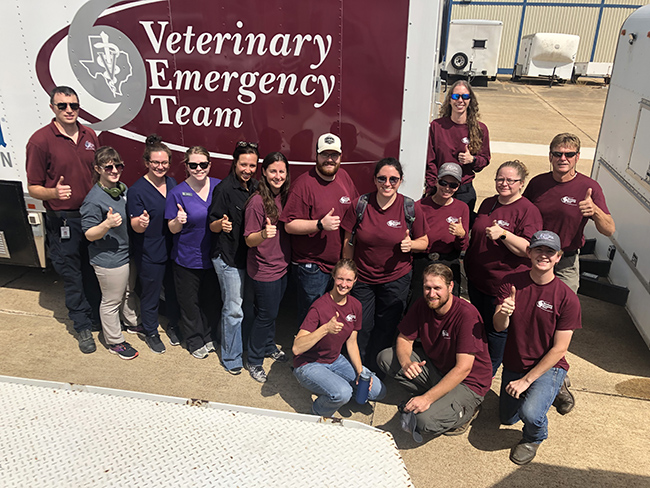
Veterinary Emergency Team

The VET—which includes CVM staff members Laura Beach, Elizabeth Bernardo, Garrett Carr, Brooklyn Cupps, Sandra Daniels, Norberto Espitia, Megan Hackman, D’Lisa Hidalgo, Warren Hohertz, Susan Lobit, Cynthia Schocke, Stuart Slattery, Jennifer Wier, and Jennifer Wilson—is the only state-level veterinary medical care provider in the State of Texas’ Emergency Response Plan.

When deployed, the team remains at the emergency site nights, weekends, and holidays until their critical assignment is complete, loading and driving heavy trailers; setting up a mobile hospital; connecting power sources; establishing communications; joining with other local and state emergency services; and ultimately, assisting the veterinarians, community, and injured animals during multiple types of disaster situations.

Just last year, many of them stepped up as leaders and deployed to the California Wildfires, leaving their families right before the holidays and not returning until mid-January.

“These are the people who run toward the flood, the fire, or other emergency,” Green said. “In preparation for Hurricane Harvey making landfall on the Texas coast, the VET left days in advance to set up for the disaster that awaited Texas. They then spent weeks serving Texas residents and animals, and are truly committed to ‘serving our state and nation every day.’ The VET is the epitome of Aggies demonstrating selfless service and loyalty.”

The 2020 Presidential Meritorious Service Award recipients will be honored at a ceremony on Monday, Aug. 10, at 10 a.m. in the Bethancourt Ballroom of the Memorial Student Center.

###

For more information about the Texas A&M College of Veterinary Medicine & Biomedical Sciences, please visit our website at vetmed.tamu.edu or join us on FacebookInstagram, and Twitter.

Contact Information: Jennifer Gauntt, Director of CVM Communications, Texas A&M College of Veterinary Medicine & Biomedical Sciences; jgauntt@cvm.tamu.edu; 979-862-4216

Texas A&M CVM Purchases Comprehensive Resource For All Students In Effort To Increase Education On Antimicrobial Stewardship

Report cover
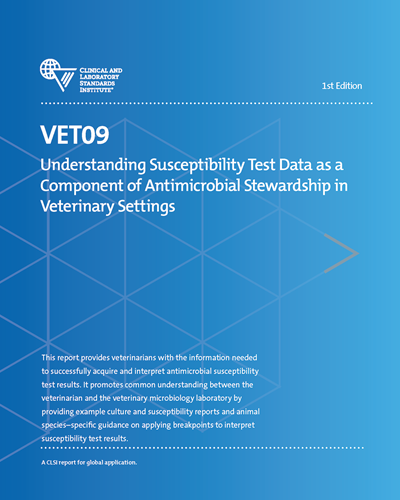
Cover of the report, “Understanding Susceptibility Test Data as a Component of Antimicrobial Stewardship in Veterinary Settings”

Antimicrobial resistance is an increasingly serious threat to global public health that affects humans, animals, and the environment; in fact, in recent years, the World Health Organization (WHO) has named it a top 10 public health threat for the world.

Texas A&M College of Veterinary Medicine & Biomedical Sciences (CVM) students learn about antimicrobial resistance throughout their veterinary curriculum, including in microbiology and pharmacology classes, as well as during their fourth-year clinical rotations in the CVM’s Veterinary Medical Teaching Hospital (VMTH).

But when Drs. Virginia Fajt and Sara Lawhon completed their work with a Clinical and Laboratory Standards Institute (CLSI) committee to produce the first comprehensive resource for understanding and interpreting antimicrobial susceptibility test results, they knew that the report would not only be of value to working veterinarians who tend to have a limited understanding of a very complex topic, but would also be of value to veterinary students who are introduced to the concepts during their curriculum.

The report, “Understanding Susceptibility Test Data as a Component of Antimicrobial Stewardship in Veterinary Settings,” has been years in the making. After continued discussions within committees at the CLSI and American Veterinary Medical Association (AVMA) on the importance of antimicrobial stewardship and on the necessity of this kind of document, Fajt and other experts put together a proposal to finally bring the project to fruition under the auspices of CLSI.

The end result—a product of a committee of professional microbiologists, pharmacologists, and veterinary clinicians, including Lawhon, and led by Fajt and program manager Lori Moon—addresses challenges veterinarians face every day in understanding how antimicrobial drugs work and how veterinarians can use laboratory data in their decision-making for antimicrobial stewardship.

“Antimicrobial stewardship means, in general, implementing management and prevention programs so that antimicrobials aren’t needed in the first place, so that animals don’t get bacterial diseases when that’s possible,” Fajt said. “It involves using good decision-making tools, having all of the necessary information, the high-quality evidence, to select an antimicrobial or decide whether an antimicrobial will make a difference; to choose an antimicrobial that will make a difference; and then monitor individual patients for response. But it also includes monitoring antimicrobial use in your practice setting in a way that allows you to quality-assess your own decision making.

Dr. Virginia Fajt
Dr. Virginia Fajt

“So, the goal of this document is to protect antimicrobials—that antimicrobial susceptibility, the ability for antibiotics to work—as a societal resource; all of this is something that we all have responsibility for,” Fajt said. “Our responsibility as the veterinary profession is to do the best we can to maintain the effectiveness of antibiotics, use the resource wisely, and make good decisions, as opposed to easy decisions.”

The report is unique for several reasons.

While textbooks generally provide information on antibiotics as drugs and focus on what they do and how they work, there has been relatively little information on how veterinarians should choose among the many antimicrobial drug options.

In addition, as the first comprehensive source of information on the topic and the first resource that targets practicing veterinarians, this resource works to guide practicing veterinarians’ decision-making, not necessarily in choosing a drug, but to understand the information (such as lab results) that will help them choose a drug, according to Fajt.

As the CLSI document was taking shape, Lawhon decided that it would be a huge resource for CVM students.

“For them to get the maximum benefit out in practice from it, having the opportunity to work with it in advance would be really helpful,” she said. “Right now, the information shared in classes on this topic is disparate, so this document helps unify that story in a way that hasn’t been done before.”

Lawhon and other professors who teach about antimicrobial resistance—including Fajt and Drs. Johanna Heseltine, Joanne Hardy, Jeffrey Musser, Mark Johnson—created a proposal for internal funds to provide a copy to all students and integrate the subject into the new curriculum as a progression, with students learning different aspects of antimicrobial stewardship during all four stages of their veterinary careers.

Dr. Sara Lawhon teaching
Dr. Sara Lawhon

“I really felt that this was a great opportunity for our students, to bring this in at each level of the process,” Lawhon said. “We had asked the VMTH to buy a copy for every service so that clinicians can use it when talking to fourth-year students about their decision-making processes in selecting an antibiotic for their patients.

“Then our students could carry this document and these lessons with them out into practice, to think through stewardship programs for their own antimicrobial decision-making processes and to start thinking about a stewardship program for their clinics,” she said.

The CVM’s Professional Programs Office (PPO) approved the proposal, and free copies were provided to all four veterinary classes, including the recently graduated Class of 2020, which will also have the opportunity to attend a webinar by Fajt and Lawhon to learn how to use the resource. The CVM is the first—and possibly the only—veterinary school in the country to share the resource with their students and integrate the content in this way.

“The PPO Office deserves credit for recognizing that antibiotic resistance is a huge issue in the profession,” Fajt said. “It’s certainly a conversation that we have across the profession, so making the commitment as a college to provide this kind of teaching tool—that in some ways is sort of narrowly defined, yet is so important to how veterinarians make decisions about antibiotics—really demonstrates a commitment to antimicrobial stewardship.”

###

For more information about the Texas A&M College of Veterinary Medicine & Biomedical Sciences, please visit our website at vetmed.tamu.edu or join us on FacebookInstagram, and Twitter.

Contact Information: Jennifer Gauntt, Director of CVM Communications, Texas A&M College of Veterinary Medicine & Biomedical Sciences; jgauntt@cvm.tamu.edu; 979-862-4216

Finding The Beat In Veterinary School

Emily Hoskins singing
Emily Hoskins performing her senior recital.

Emily Hoskins, a third-year veterinary student at the Texas A&M College of Veterinary Medicine & Biomedical Sciences (CVM), has plenty of experience in the spotlight as an opera singer. Now, she is learning to take center stage in a surgery theater, as well.

Hoskins’ love of opera singing began long before her interest in veterinary medicine. Ever since Hoskins was a young child, her mother and two older sisters reinforced a love of singing and opera that has been passed down from Hoskins’ grandfather.

“I remember waking up in the mornings when I was very little,” Hoskins said. “When it was time to get ready for school, my mom would have classical music playing. She would love to play ‘name that composer’ or ‘name that opera’ with me growing up.”

Pursuing this interest, Hoskins became involved with her junior high choir. As she progressed, she had the opportunity to perform with the Houston Grand Opera and was very involved with her high school’s theater and choir program. By graduation, Hoskins set off to pursue a college degree in vocal performance with the intent of becoming a professional opera singer.

However, while completing general education courses at Texas A&M Galveston, Hoskins’ plans shifted as she discovered a love for the sciences. With the help of academic advisers at the College Station campus, Hoskins decided to transfer to main campus and pursue two undergraduate degrees at Texas A&M—in animal science and in music and voice.

“I felt like I was getting to use both sides of my brain. When I was sick of studying for organic chemistry, I could go and memorize the German for the piece I had to sing for voice studio the next day,” Hoskins said.  “I really loved having both the science and the art side.”

Though Hoskins’ path of study worked well in providing variety to her education, there were moments when her two worlds mixed in humorous ways.

“My favorite story is when I was taking my meat science class for animal science; it was right before my theory class in music,” she said. “I had my knife scabbard from my meat science class and was running late, so I ran straight into my theory class with all my other music classmates.

“They asked, ‘What is that?’ And I said, ‘This is my knife scabbard. I just came from meat science class where we were learning how to butcher hogs,’” she recalled. “At first, there was this silence, but then they started asking questions, which was so cool because it was combining those two worlds, and I was able to answer some of them.”

Hoskins said she believes there is more interaction between the science and art worlds than people realize, with a mutual curiosity connecting the two. She also thinks that her involvement in both worlds has taught her how to communicate with people of many different mindsets, a skill essential to veterinary medicine.

After graduating from Texas A&M with dual degrees, Hoskins remained at the school to pursue a master’s degree in animal science and physiology of reproduction. She enjoyed delving deep into one corner of science, but left the program wanting to explore the “broader picture.” She applied to veterinary school at the CVM and was accepted on her first attempt.

[KGVID]https://vetmed.tamu.edu/news/wp-content/uploads/sites/9/2020/05/EHoskinsCut.mp4[/KGVID]

“I completely fell in love with physiology and the sciences. It made me really excited in a similar way that singing did,” she said. “I just knew that this was the right path for me, and I really wanted to explore this world more. I would always have music and singing, and I could always come back to it. I’m learning that I can do both.”

Indeed, at the CVM, Hoskins has found a group of other veterinary students with similar backgrounds who gather to destress and connect through music.

Hoskins also hopes to apply skills she learned in performance to her duties as a veterinarian.

“I try to pull from the breathing techniques and the things I would do to stay calm before singing before doing surgical procedures,” she said. “The difference is when it came to singing and performing, I got to prepare every little thing before I performed. With surgery and dealing with animals, unexpected things can happen and you do just have to think fast and jump in.”

She appreciates that many veterinary students come from unique backgrounds and that though the rigor of veterinary school may make it difficult to engage with other worlds, doing so can only enrich one’s experience.

“You should absolutely be proud of and emphasize anything that you have that gives you a unique story and is a different path than other people followed to get here,” she said. “That’s what makes you able to bring your own unique skills and your own unique background to veterinary medicine, which is awesome.”

Her continued involvement with music has enriched her life, and Hoskins asserts that staying connected with one’s hobbies is an important but conscious choice, especially in a program as rigorous as veterinary school.

“I would encourage anybody to find some outlet, even in first year. It might not be an every week thing, it might be a once a month thing,” she said. “If there’s a piece of yourself that you have before veterinary school, don’t shut that down.

“It’s what makes you you,” she said.

###

For more information about the Texas A&M College of Veterinary Medicine & Biomedical Sciences, please visit our website at vetmed.tamu.edu or join us on FacebookInstagram, and Twitter.

Contact Information: Jennifer Gauntt, Director of CVM Communications, Texas A&M College of Veterinary Medicine & Biomedical Sciences; jgauntt@cvm.tamu.edu; 979-862-4216