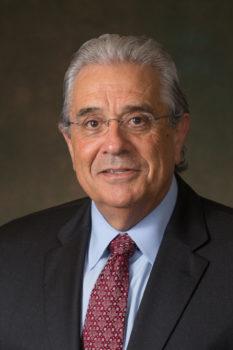
August will serve as special assistant to the provost through June, then will assume the interim dean position July 1 until the university finalizes the search for a permanent dean.
August joined Texas A&M as professor and head of the Department of Small Animal Medicine and Surgery in 1986. He recently served as interim dean of the School of Public Health and has served as dean of faculties and associate provost.
As dean of faculties and associate provost, August led faculty affairs and processes including faculty onboarding, tenure and promotion processes, and programming of the Center for Teaching Excellence and Instructional Technology Services. In addition, he oversaw services that assist career development and advance the teaching endeavors of Texas A&M faculty.
August earned a bachelor’s degree in veterinary medicine from the Royal Veterinary College at the University of London in England (equivalent to a DVM). He completed his internship and residency in small animal surgery and medicine at Auburn University, where he also earned his master of science degree from the College of Veterinary Medicine. He is a diplomate of the American College of Veterinary Internal Medicine.
Prior to his appointment as dean of faculties and associate provost, August served Texas A&M as interim associate dean for clinical and outreach programs, interim head of the Department of Veterinary Pathobiology, and deputy dean of the College of Veterinary Medicine & Biomedical Sciences. An internationally noted scholar, he was selected as the Evelyn Williams Endowed Visiting Professor at the University of Sydney in 2014.
As interim dean, August’s administrative experience will assist the College of Veterinary Medicine & Biomedical Sciences in supporting faculty, staff, and student success, as well as furthering the development of operational procedures, degree programs, research initiatives, and service efforts.
An ongoing search is underway to fill the dean’s position permanently. The search advisory committee is chaired by Valen Johnson, professor, and dean, College of Science.
###
For more information about the Texas A&M College of Veterinary Medicine & Biomedical Sciences, please visit our website at vetmed.tamu.edu or join us on Facebook, Instagram, and Twitter.
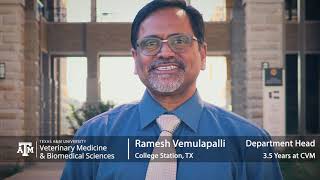
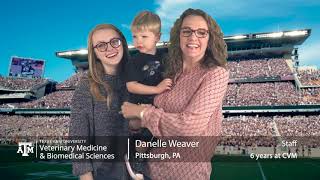
A new campaign by the Texas A&M College of Veterinary Medicine & Biomedical Sciences (CVM) is celebrating diversity with short video testimonials by faculty, staff, and students that highlight the uniqueness of each person and their connecting factor—that they are all CVM.
But what does it mean to “be CVM?”
According to Dr. Kenita Rogers, executive associate dean and director of the CVM’s Office for Diversity & Inclusion, every CVM employee and student “is” CVM because they contribute to the overall identity of the college. The CVM would not be the internationally recognized college it is without its people, including the factors that make each and every one of them unique.
“By broadly representing the college’s staff, faculty, and students at all levels, ‘I Am CVM’ aims to highlight and celebrate the unique narratives of our diverse identities and how these identities come together to form the human tapestry that defines the CVM,” Rogers said.
Recent events have only further highlighted the importance of celebrating diversity.
Because the COVID-19 pandemic has created change and uncertainty throughout the world, CVM leaders believe that it’s now more important than ever for members of the college to support one another.
In addition, many Americans, especially members of the African American community, are experiencing fear, anxiety, and grief over the recent murder of George Floyd. The resulting worldwide protests have brought racial equality to the forefront of current societal concerns.
Hate and racism are not Aggie values, nor are they tolerated at the CVM. The “I Am CVM” video series seeks to demonstrate the CVM’s commitment to creating and maintaining a climate of inclusion, according to Rogers.
For these reasons, the CVM Office for Diversity & Inclusion has partnered with CVM Communications to launch the series on multiple platforms this summer.
The videos, put together by the college’s Center for Educational Technologies (CET), each include a two- to three-sentence personal narrative, with topics ranging from birthplace, religion, family, hobbies, and career.
The college’s Facebook and Twitter accounts will be featuring one student, faculty, or staff member every Monday, Wednesday, and Friday throughout the summer.
The video playlist is featured on the Office for Diversity & Inclusion’s website and will also be used in additional ways in the future.
The “I Am CVM” series is not only a story of who the CVM is now but is a promise of the college’s goal to remain inclusive to all, even after the nation has healed from current events, Rogers said.
For all the unique individuals who call the CVM home, remember—you are CVM.
Enjoy this YouTube playlist celebrating the diversity that makes up the CVM.
###
Story by Megan Myers
For more information about the Texas A&M College of Veterinary Medicine & Biomedical Sciences, please visit our website at vetmed.tamu.edu or join us on Facebook, Instagram, and Twitter.
Contact Information: Jennifer Gauntt, Director of CVM Communications, Texas A&M College of Veterinary Medicine & Biomedical Sciences; jgauntt@cvm.tamu.edu; 979-862-4216
As Dean Eleanor M. Green prepares for her next big move, she reflects on what brought her to Texas A&M, bringing her vision for the college to life, and the things and people who have made her experience so special.
What were your thoughts when you were offered the dean’s position at Texas A&M?
I had gone back to the University of Florida 14 years previously with the intent of finishing my career in my home state at my alma mater. When Texas A&M called, I was reluctant to apply at first; however, I had visited former Dean John Shadduck at Texas A&M once before. He took us to a football game, where we stood for the entire game.
I decided to research Texas A&M further to help make my decision, and my explorations confirmed that Texas A&M was a large, comprehensive, tier-one research institution with immense capabilities. Its College of Veterinary Medicine & Biomedical Sciences (CVM) was clearly a crown jewel of campus, one that also boasted a strong undergraduate program. I was intrigued by the Texas A&M core values and its many traditions. The vastness of Texas, its large urban centers, the livestock industry, its historic ranches, the Texas A&M University system, and the proximity of the Texas Medical Center in Houston all contributed to a fertile environment for veterinary medicine and veterinary medical education. I simply could not pass up this invitation.
During my on-campus interview, it took very little time to recognize the uniqueness and appeal of Texas A&M and its CVM. Within half a day, I was committed. The formal offer came by phone when I was in Liverpool, England, attending the British Equine Veterinary Association meeting as president of the American Association of Equine Practitioners (AAEP). That was it; I was coming to Texas. My canine sidekick, Cohen, and I packed up and moved, leaving the horses behind until I could find accommodations for them.
Among your initial goals as dean were prioritizing research, assuring educational excellence at all levels, creating the veterinary medical teaching hospital of the future, and addressing the changing world of veterinary medicine. What strides do you think the college has made in those arenas under your tenure?
All strides were made with much help from others. Many within and beyond the CVM have contributed substantially to each and every accomplishment, as they continue to do. No progress could have been made without hardworking, dedicated, talented faculty, staff, and students, as well as external supporters. I would put the CVM faculty, staff, students, and supporters up against all others. People make programs.
Texas A&M, similar to every other university, has missions that include transformative teaching and learning, discovery and innovation, and outreach and engagement. For the CVM, world-class, compassionate patient care is foundational.
In the research arena, veterinary colleges are uniquely positioned to advance animal, human, and environmental health. This offers a breadth of research opportunities along a continuum, from basic discovery to translational research to commercialization. Research funding appropriately includes the National Institutes of Health (NIH) and other federal sources, foundations, industry, philanthropy, entrepreneurship, and other creative means.
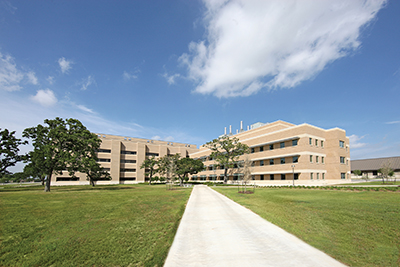
The Veterinary Research Building, completed in 2010
With the decided goal of advancing the CVM research agenda, my first action was to prioritize research by limiting my start-up requests to CVM research support. I was able to obtain campus funds to complete the Veterinary Research Building (VRB), which was under construction at the time, and to provide the money to finish out all of the laboratories, rather than require the principal investigators to use their own monies, as had been planned.
Since then, we have further bolstered research by taking advantage of opportunities as they arise, such as the President’s Senior Hires, the Chancellors Research Initiative (CRI), the Governor’s University Research Initiative (GURI), the Hagler Institute for Advanced Study, the Provost’s excellence initiatives, targeted hiring, start-up funds, adding designated research support staff, and much more. Dr. Bob Burghardt and his team have been highly successful in supporting research and graduate studies. The existing research signature programs were revisited, resulting in the identification of research focus areas and the development of tangible criteria for areas of research distinction, all under the umbrella of translational research.
Toxicology, oncology, and environmental health sciences fulfilled the criteria for distinction, with the Texas A&M Superfund Research Center reaching great heights. Graduate education support was completely revamped, consolidating degrees, aligning with research focus areas, centralizing admission, offering a rigorous week-long orientation and an oath ceremony, actively recruiting, creating a core facilities experiential learning program, and providing professional development opportunities.
Over the past decade, research expenditures have tripled, the CVM graduate program has been cited as a model on campus, research has incited great impacts, and the contributing faculty and graduate students have received many well-deserved awards and recognitions.
Dean Eleanor M. Green with students
The Doctor of Veterinary Medicine (DVM) program is an enormous success. With Dr. Kenita Rogers followed by Dr. Karen Cornell at the helm, the Professional Programs Office (PPO) has built a team of education specialists to foster educational technologies, advance pedagogy, and support faculty initiatives, ultimately for the benefit of our students. The DVM program received full accreditation in 2016 by the American Veterinary Medical Association (AVMA) Council on Education with no substantial compliance issues. The CVM has become known as a leader in veterinary education nationally and beyond.
This reputation has been bolstered by the award-winning Center for Educational Technologies (CET). This unique paragon has supported a myriad of initiatives, including innovative educational technologies, interactive learning experiences, web-based learning, curriculum development, collaborations with other veterinary colleges, and agricultural-capacity building in developing countries. Faculty opportunities are also found in the Bridges Teaching Academy, Teaching Showcase, and CET Lunch & Learn workshops.
The newly formed CVM White Coats program allows students to contribute to the CVM while developing professionally.
The DVM class size had not increased for many decades, despite the growing Texas population. To meet the state’s needs, it has increased from 132 to 162 students per class, soon to be 180. The DVM Curriculum Committee has met annually to review and modify the curriculum to keep pace with changing needs. With a recent yeoman’s effort by the PPO office and the faculty, a completely revised, integrated curriculum was implemented, with core competencies mapped.
Our faculty are tapped by the profession to advance veterinary education worldwide, such as the Association of American Veterinary Medical Colleges’ (AAVMC) competency-based education initiative and the AAVMC Leadership Academy.
Educational excellence at the CVM has progressed substantially, all while minimizing student debt. Texas A&M remains the best in North America for our student debt-to-income ratio.
The Biomedical Sciences (BIMS) undergraduate program has grown in size and excellence under the able direction of Dr. Elizabeth Crouch, along with talented educators and advisers, as elucidated in the recent Academic Program Review for the Southern Association of Colleges and Schools Commission on Colleges (SACSCOC).
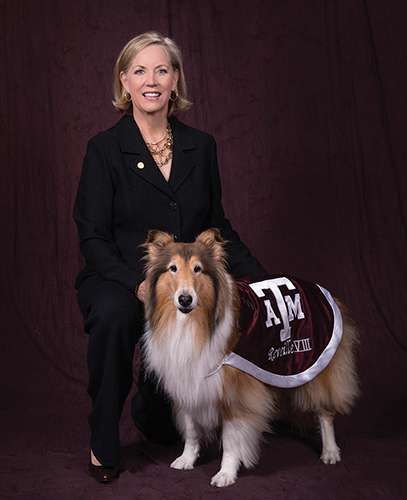
Dean Eleanor M. Green and Reveille VIII
The BIMS program was expanded to the Texas A&M University Higher Education Center at McAllen, with a record number of students. The overall BIMS enrollment is approaching 2,700, maintaining its status as the largest undergraduate degree-granting program on campus. BIMS also boasts strengths in underrepresented minorities and first-generation students. Its undergraduate research program is cited on campus for its rigor and excellence. BIMS graduates make up a large portion of Aggies who matriculate to Texas healthcare professions.
A BIMS Advisory Board was formed and has proven to provide enthusiastic support for BIMS. Scholarships have increased and a BIMS Outstanding Alumnus award was created.
The Veterinary Medical Teaching Hospital (VMTH) created a vision to be the premier veterinary teaching hospital in the world, with a mission of creating a better life through compassion, innovation, and discovery. Praise from clients and referring veterinarians confirms that these efforts are successful. The hospital’s caseload and income continue to climb, which allows the purchase of cutting-edge equipment and other hospital support. This equipment includes advanced technologies, like virtual reality, artificial intelligence, and support for a new telemedicine service. Both senior and new faculty are contributing to a rising level of excellence across many services.
It has been imperative to advance the culture in the VMTH of treating everyone the same, which is to say, royally. At the same time, it is important to know who each client is so that we can acknowledge them as indicated; for example, if a loyal supporter and donor brings in a patient, it is vital that we know enough about them to thank them appropriately. If Board of Regents members are clients, we should acknowledge them for all they are doing for Texas A&M and the CVM. Another cultural component in the VMTH is that people treat others as they are treated, underscoring the importance of treating our clinicians, staff, and students royally as well.
Out of all of your accomplishments as dean, what are those that stand out for you? And why?
It is hard to say, because I claim none as mine alone. With that in mind, I might say that the biggest accomplishment is gathering the team we have. We have the most amazing leadership team I’ve ever seen. The executive committee is comprised of leaders who are absolutely devoted, capable, talented, and who have made this college much better. Each of them has, in turn, assembled teams of excellence in their respective areas. The Dean’s Office staff, under the leadership of Misty Skaggs, is also the best I have ever experienced.
Dean Eleanor M. Green and Dr. Karen Cornell, the associate dean for professional programs
I’m really proud to have been a part of putting these teams together. Every single member of the executive committee and of the dean’s office staff has joined the leadership team within the last 10 years. They, individually, and their recruitment of other talented people have shaped this college through their collective efforts.
Culture starts at the top. I have tried hard to create a culture of excellence, integrity, mutual respect, transparency, engagement, compassion, kindness, and inclusion. We must model these traits and mentor our colleagues. The more we intentionally support and reward excellence, while addressing inadequate performance, the better and more fulfilled the whole team becomes.
We intend to give everyone the encouragement and opportunity to achieve excellence. Most choose excellence, but some do not, and that must be addressed. I have often said that our first choice is for people to be happy here, the second choice is for them to be happy somewhere else, and the last and only unacceptable choice is for them to be unhappy here.
There are really good people and really good jobs, but there are not always really good matches. We truly care about people and want to help them achieve all of their career aspirations in whatever position that might be; in fact, the one most rewarding thing about being dean of this college is being able to help others achieve their goals. When we collectively bring our goals together and I can help advance them in any way, it is enormously rewarding to see those initiatives come to fruition.
Creating and launching the Global One Health Program has been particularly rewarding. Because of efforts like these, the importance of the inextricable link among animal, human, and environmental health is finally being embraced by audiences beyond the veterinary profession. For the first time ever, in 2019, the President’s National Biodefense Strategy contained the elements of One Health. Dr. Gerald Parker and his collaborators have become noted resources in Washington, D.C., Austin, and on campus, especially during the recent COVID-19 pandemic. The partnership with the Bush School and other campus entities has proven successful, including the Annual Global Pandemic Summits. This effort opens unique opportunities for our students and faculty. It also positions Texas A&M and the CVM as valuable trusted resources.
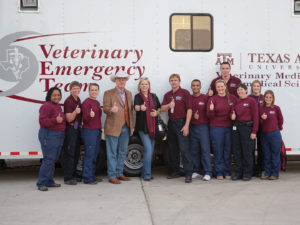
I am especially proud of the Veterinary Emergency Team (VET). In 2009, Dr. Wesley Bissett came to my office to ask for permission to form a VET with the goal of being prepared for the next hurricane. He added that he would do so on his own time. I immediately said yes but that this was a college program and should be developed on college time. He and his team have created the largest, most sophisticated veterinary emergency response team in the nation.
They have formed rich collaborations across the Texas A&M University System (TAMUS), Texas Task Forces, Texas Division of Emergency Management (TDEM), Texas Veterinary Medical Association (TVMA), Texas Animal Health Commission (TAHC), Texas State Guard, private sector veterinary professionals, Texas communities, Banfield, the AVMA, the United States Department of Agriculture (USDA), and other veterinary colleges. I cannot count the number of comments of praise and expressions of gratitude I receive for their good works and also for the involvement of students. We are the only CVM that has “Community Connections” rotations. This is “service above self” like no other. Students learn not only how to respond in emergencies and disasters, but they also gain experience managing teams.
Dean Eleanor M. Green with the VET, established in 2009
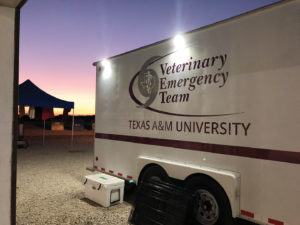
The VET’s truck-based medical unit, funded by a Banfield grant
The VET celebrates after their largest deployment during Hurricane Harvey
Diversity and inclusion are cornerstone values of the CVM. I feel strongly that people who cross our CVM threshold should immediately feel included, embraced, and accepted. This encompasses all people—whether they are faculty, staff, students, clients, colleagues, constituents, visitors, donors, or anyone else.
I remember asking Dr. Kenita Rogers if she would be willing to serve as the CVM director for diversity and inclusion. She stepped up, as she always does, and the program materialized. As the time demands of this program grew, we discussed the idea that one day we might need a separate diversity officer. Later, when I asked her if she were ready for someone else to step in, she declined emphatically, saying that she wanted to keep diversity, and she did.
I am gratified by all that has been accomplished. We are leaders on campus, within the profession, and across the healthcare professions. We have a Council on Diversity & Professionalism, multiple trainings, wellness initiatives, inclusive facilities, diversity scholarships, Veterinarians for One Inclusive Community for Empowerment (VOICE) Broad Spectrum, and much more. Nearly 200 CVM faculty and staff have completed mediation training. We have competed well for campus funds that reward success annually, and faculty and students have received awards.
The CVM celebrates winning its third consecutive HEED award
Now, we have received awards at both campus and national levels, including a third consecutive Health Professions Higher Education Excellence in Diversity (HEED) Award from INSIGHT Into Diversity magazine. I am aware that some have questioned these efforts, but make no mistake, diverse teams outperform non-diverse teams, enhancing excellence, ingenuity, workforce development, and even improving financial success.
I am also pleased with the CVM International Program, which encourages and facilitates our faculty and students to be world citizens in a global society. The program, under the leadership of Dr. Linda Logan, offers rich study abroad opportunities, student exchanges, internships, faculty visits and exchanges, international development, and capacity building. The International Program Advisory Committee ensures representation by CVM units in implementing and strengthening programs. Student experiences include summer courses in various countries, semester long experiences, and research programs.
With regard to the changing landscape of veterinary medicine, I have developed a passion for innovation and entrepreneurship. We live in an exponentially changing world, one in which even the rate of change is accelerating. If our profession, our college, and our university are to be successful in the future, we must respond to those changes, and, hopefully, lead in that effort, not just follow.
The CVM also has developed a reputation as a leader in innovation and entrepreneurship. We have done many things to earn that reputation, such as the annual Veterinary Innovation Summit (VIS), the Veterinary Entrepreneurship Academy (VEA), Aggies Invent, and the DVM elective in veterinary entrepreneurship. The VIS, in partnership with the North American Veterinary Community’s (NAVC) Veterinary Innovation Council (VIC), was the first of its kind, attracts leaders in the profession, and has been described by attendees as the best program ever attended.
The VEA has become national in scope, with participation by students from many other veterinary colleges. Aggies Invent is offered in partnership with the Texas A&M College of Engineering and some of our own faculty serve as mentors. Participating students experience firsthand the favorable consequences of working on diverse, multidisciplinary teams and of freely contributing their own ideas, rather than learning what others tell or show them. Students describe this experience as life changing.
The students are our future. It is our responsibility to prepare them well for the world they will enter and to give them the confidence to make a difference.
The partnerships between the CVM and four TAMUS universities have been described as especially innovative.
It has been satisfying to help create all of them, especially the Veterinary Education, Research, & Outreach program (VERO) on the West Texas A&M University (WT) campus in Canyon. My first visit to the Texas Panhandle in an official capacity as dean occurred only a few weeks after joining Texas A&M in 2009. That is where the partnership was born among the CVM, WT, practicing veterinarians, and livestock industries. That is when the first discussions were held about offering some of the DVM program in the Texas Panhandle.
The 2018 groundbreaking for the VERO building in Canyon, Texas
It took a while to knock down all of the barriers, but the partnership is strong and the program is well on its way. WT President Dr. Walter Wendler and his team have proven to be trusted partners. As we were discussing VERO and the proposed 2+2 program with Texas A&M’s president and provost, we underscored the unique nature of this program. How often is it that one has the chance, with a modest investment, to create a program that is the best of its kind, the top in the nation?
However, it’s not just about being No. 1; it’s about contributions. The CVM can help feed the growing world population, ensure the integrity of our food supply, protect and grow the Texas economy, assist the veterinary profession, and encourage our youth. That is entirely within our grasp when one considers mobilizing the resources in College Station and the Texas Panhandle, where over one-third of the nation’s beef is fed. At the 2020 veterinary deans’ meeting, a few deans asked if they could visit this program, as they would like to consider a similar model.
Particularly rewarding has been the improvement to the CVM facilities. Most notable is the $120 million Veterinary and Biomedical Education Complex (VBEC). During planning stages, a group of us visited other veterinary colleges; the University of California, Davis medical college; and Stanford University’s medical school and College of Business. We extracted ideas from all sites, especially from the new College of Business at Stanford.
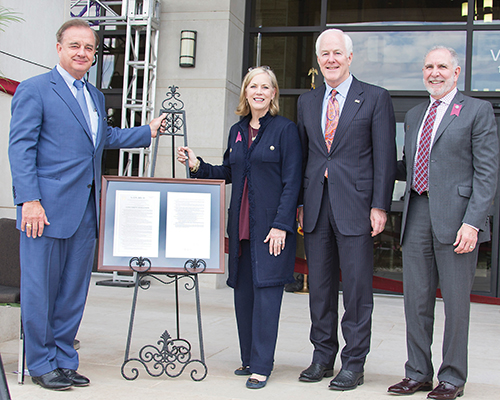
Chancellor John Sharp, Dean Eleanor M. Green, Sen. John Cornyn, and President Michael Young at the VBEC grand opening
I recall well walking down the street at Stanford with the Stantec architects, including Dan Caren, who ultimately were awarded the contract to design VBEC, when they asked me what we were trying to accomplish. I told them that when people saw VBEC, their immediate response should be that this must be the best veterinary college in the land. This look must include a front door to the CVM, lacking at the time, with the building set back off the road with a tree lined boulevard entrance. The building had to accommodate modern, innovative teaching methods and technologies as far into the future as possible and that included flexible learning spaces for large and small groups. The building had to be modern, yet it had to be Texas classy. It must be warm and inviting such that people wanted to come inside and once inside, they wanted to stay.
The first designers were creative and gifted, but they did not get Texas. After a number of attempts, they were replaced, and the next designers nailed it. Our friends in the College of Architecture had helped us with the program requirements at the beginning and, interestingly, their initial rough design was close to the final design.
I am enormously grateful to Chancellor John Sharp, who supported this project entirely with Permanent University Funds. The $120 million also supported the remodeling project for the Small Animal Hospital. The reception area is really nice, as are all areas remodeled. We desperately need a new Small Animal Hospital.
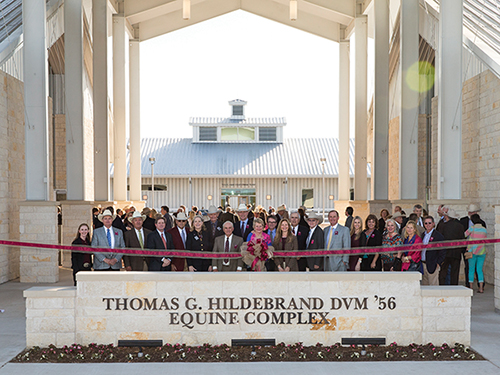
Grand Opening of $33 million Thomas G. Hildebrand, DVM ’56 Equine Complex
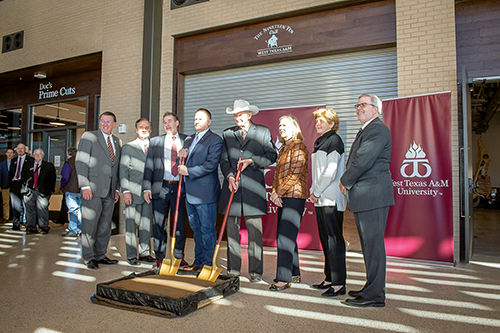
The $33 million Thomas G. Hildebrand, DVM ’56 Equine Complex was also most fulfilling. Large Animal Clinical Sciences (VLCS) executive director Dr. Jim Heird laid out every inch of the facility, including the equestrian team facilities and the cross-country course for Texas A&M Athletics. This facility has become a treasured resource on campus, hosting more than 250 events and attracting more than 30,000 visitors per year. The entire $33 million was from private donations. The grand opening of the Thomas G. Hildebrand, DVM ’56 Equine Complex was held on the same day as the VBEC ground breaking. That was a special day.
There are other facilities projects for which I am appreciative. The Diagnostic Imaging & Cancer Treatment facility is a state-of-the-art facility that has proven to be an enormous asset for the VMTH and the CVM. The Schubot Center for Avian Health is a one-of-a-kind academic center supporting teaching and research. The Multispecies Research Building provides much needed large animal space. The Global Health Research Complex, a collaborative campus space that was previously lacking, will substantively change our research capabilities in infectious disease. The Highway 47 Reproduction Research facility has been expanded, and Veterinary Medical Park has improved tremendously. The equine reproduction lab was expanded, as was the food animal reception area. The Texas A&M Institute for Preclinical Studies (TIPS) is an impressive research facility that is destined to become invaluable in supporting translational research and innovation in its next phase. I regret that I will not be dean for the VERO facility grand opening in Canyon. TAMUS Chancellor John Sharp once again devoted Permanent University Fund (PUF) monies for this special facility.
Likewise, outside of your accomplishments, what has been particularly rewarding about being dean?
I have said many times that the position of Dean at the Texas A&M CVM is the best position I have ever held in the best place I have ever been. Why is that still the case? It is the people. It is particularly rewarding to work with such highly successful, dedicated faculty. The CVM students are smart, devoted, and attract the praise of our own faculty and staff as well as outside constituents. The devoted staff make everything happen, as they are constantly attentive to success and the impression we make. The Texas A&M core values are alive and well at the CVM.
One of the most rewarding accomplishments was raising all of the salaries within the CVM. At the time, faculty salaries were in the lower-half to lower-quartile among veterinary colleges. We were able to raise all of the faculty salaries well above the mean.
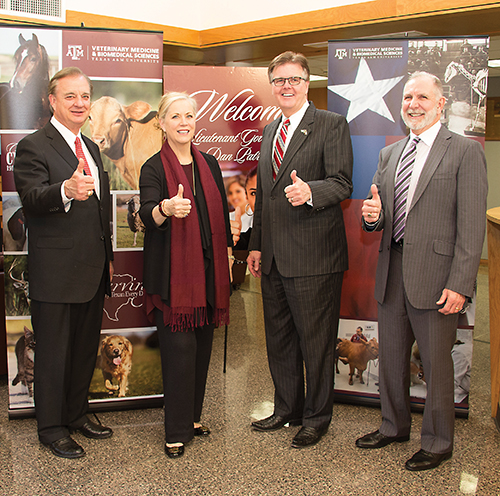
Chancellor John Sharp, Dean Eleanor M. Green, Lieutenant Governor Dan Patrick, and President Michael Young
I have also enjoyed working with many people across campus, such as other deans, provosts, vice presidents, presidents, chancellors, and the people who support them. Also included are those in the Texas A&M Foundation, Association of Former Students, and 12th Man Foundation. I have had the privilege of working with three provosts, four presidents, and three chancellors, if interims are counted. It has been a privilege to get to know them, represent the CVM to them, and help whenever needed to advance the greater mission of the university.
I have enjoyed preparing and delivering each and every presentation about the CVM to these groups to make sure they are aware of the excellence of our CVM, how we contribute to the university and system, how we influence the state of Texas, and what it will take to make the CVM even better. It is clear that we all share the goal of advancing Texas A&M.
I have thoroughly enjoyed the development aspects of the position, because development is basically friends-building. Working so closely with the CVM Development Council, the Equine Development Committee, the BIMS Advisory Board, and the Texas A&M Foundation has been a joy. These loyal friends of the college have given or helped raise millions of dollars of support for our people, programs, and facilities. I will forever be indebted to each one of them for their gifts and their love of Texas A&M that rivals ours. You will see the names of many throughout the college, on endowed chairs, in buildings and on scholarships. I have always said that it is gifts from our friends that help us achieve the level of excellence to which we aspire.
With the risk associated with calling out one of them, I share the story of the largest single gift we have received. Jim (Heird) and I had planned a long-awaited vacation, the first since we had been here, to attend a horse show circuit. The day before we were to leave, we received a call from Jeff Hildebrand saying he would like us to come to Houston to meet with him. Of course, we would make that happen. When we arrived he informed us of his intended gift of $25 million for the soon to be designated Thomas G. Hildebrand, DVM ’56 Equine Complex. He took our breath away and we were filled with a mix of emotions, mostly humility and gratitude. The rest, as they say, is history.
Later, Jeff told us how hard it is to give away money. He said that gifts represented desires of the entire family. He said he sought assurance that his wishes would be honored at the time and into the future. Very importantly, he had to have trust in the individual overseeing his gift. I have never forgotten those words, that day in Houston, or that gift.
Betsy Overholser offered a glimpse into the heart and motivation of our donors when she said, “I used to not care about making money, but now I want to make a lot of money so I can give it all to the CVM.” Those words reminded me that they are not our donors, rather we are their cause.
I also have found fulfillment in working with those outside of the CVM. The CVM and the TVMA built a mutually beneficial relationship and I was proud to be able to pay the membership fees for every CVM faculty member for several years. The Veterinary Job & Externship Fair has proven to be a valuable shared event.
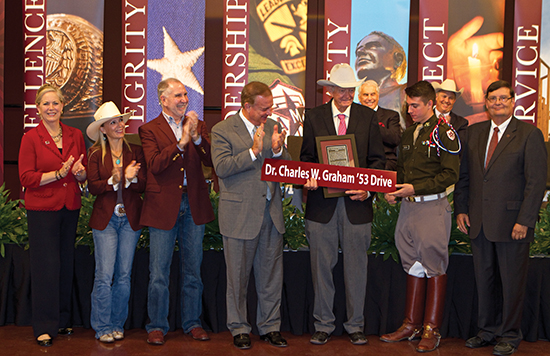
Dr. Charles W. Graham, longtime friend of the CVM, was recognized with a boulevard on campus named in his honor
Unfortunately, I did not make it to every local veterinary organization in Texas, but I did visit every one that extended an invitation. There are too many industry groups to name, but included are the Houston Livestock Show & Rodeo (HLSR), San Antonio Stock Show & Rodeo (SALE), Fort Worth Stock Show & Rodeo, and Rodeo Austin. There is nothing like Aggie night at the HLSR; these organizations donate millions of dollars every year to student scholarships across Texas and our students are beneficiaries. The Texas Cattle Feeders Association (TCFA) also has been exceptionally supportive of the CVM.
It has been a pleasure to work with all of the Texas livestock groups and to visit most of the historic ranches in Texas. I call out the 6666 and the Burnett Estates, LLC, because of their support for the CVM in gifts and educational opportunities for our students. The head of their equine division is Dr. Glenn Blodgett, one of our DVM graduates and a CVM Outstanding Alumnus. Another notable supporter is the historic King Ranch, including Helen Groves and James Clement. I have also had the opportunity to advocate for the CVM in the Texas Legislature and in D.C. Dr. Charles Graham has been a special friend of the college, giving his time, resources, and connections. He has advocated for the CVM constantly, making impacts behind the scenes that few realize.
How did your past roles in academia and as an equine veterinarian influence your time as dean?
In each of our lives, our collection of experiences makes us who we are and gives us the tools to contribute. My professional career in veterinary medicine started as a mixed animal practitioner and practice owner in a small rural community in Northeast Mississippi. I have both heartwarming and humorous tales to share.
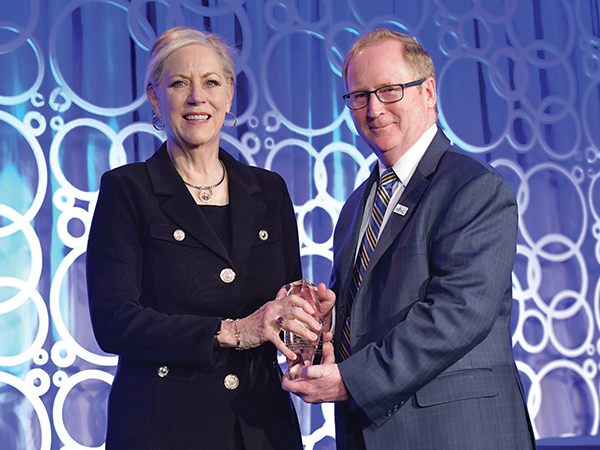
Dean Eleanor M. Green receives 2020 AAVMC Billy E. Hooper Award for Distinguished Service.
Having the perspective of a practicing veterinarian was foundational as I entered the academic setting. The opportunity to enter academia to build a new college of veterinary medicine from the ground up was life changing. We dived deeply into every aspect of a veterinary college, from obtaining approval and financial support from the legislature to planning the entire curriculum, which included developing a syllabus for every course, with learning objectives for every lecture. We designed and constructed a modern facility that was way ahead of its time. We created admissions procedures, developed position descriptions, and recruited faculty and staff.
I taught in all four years of the curriculum, sometimes lecturing six hours a day to several different classes, some of which were anatomy, physiology, normal and abnormal systems, various clinical skills laboratories, and even behavior. We launched a clinical service and built a loyal caseload and referral service. During this time, I was approved for an alternative residency training program by the American College of Veterinary Internal Medicine (ACVIM) and sought board certification with both the ACVIM and American Board of Veterinary Practitioners (ABVP).
At the University of Missouri, I finally was able to pursue research. I collaborated with Dr. Harold Garner and his team with a primary focus on endotoxemia and laminitis. When the opportunity presented itself to enter an administrative role, I was conflicted; however, I accepted the challenge with the goal of making a broader impact. I was a department head/chair and hospital director/chief of staff for a total of 19 years at two different universities.
It was always important to remain connected to the livestock industries, the horse industry, and to be involved in organized veterinary medicine. Most importantly, I’m an animal owner with a strong devotion to animal health and well-being. All of these experiences have afforded me a unique perspective as dean.
What has been the hardest part of your job (either professionally or personally)?
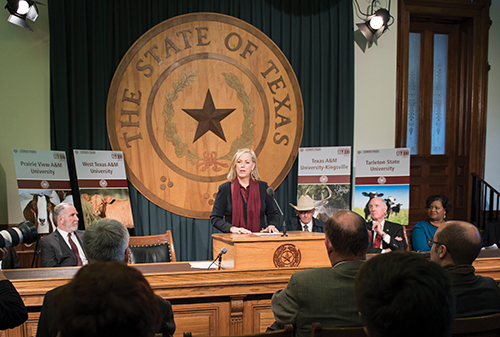
Dean Eleanor M. Green testifies at the Texas Legislature.
Once, someone asked me what I worry about every day. I try not to be a worrier; however, what I think about is the opportunity buffet. How do we make sure that we do not miss opportunities we will later regret passing up, yet how do we avoid taking on so much that we are not good at anything? And how much do we take on without creating undue burdens for others?
It is difficult not being able to accomplish all one wants to accomplish, especially when the value and significance are clear. Resources are certainly related and are also limited. It is hard to observe what faculty and students need for their programs and not be able to “write a check” every time. An enjoyable challenge is identifying and seeking different, perhaps creative, sources of funding for various needs.
A challenge in every administrative role is confidentiality. The administrator is often privy to personnel issues and to both sides of controversial issues; however, strict confidentiality must be maintained. It is especially difficult to hear the perceptions and, often, misperceptions about these issues knowing the facts and not being able to share them. Administrators often receive misplaced blame as well. That is just part of leadership roles.
Is there anything you might consider the highlight of your time as dean?
There are so many highlights they cannot be counted. I will certainly never forget the day the chancellor agreed to provide $120 million for VBEC or the day Jeff Hildebrand offered his $25 million gift. Then we had the groundbreaking for the Veterinary & Biomedical Education Complex on the same day that we had the grand opening of the Thomas G. Hildebrand, DVM ’56 Equine Complex.
Imagine major events for two notable facilities, each on the cutting edge, on the same day. That was a $150 million day. Later, the VBEC grand opening attracted the largest attendance of any grand opening in the history of Texas A&M, including national and state legislators. Of course, all of the ground breakings and grand openings were highlights.
The creation of the CET was the culmination of a long-standing aspiration. We are leaders in veterinary education, and the CET supports our faculty and helps them build on their great talents as educators. Few veterinary colleges have such a valuable resource.
I am really proud of how we’ve expanded communications in this college. We have made substantial progress in distributing our stories far and wide to help people in all walks of life understand who we are and how we contribute. Our photographers do more than take photos; they capture our essence and record our history. Our graphic artists are so creative they continue to earn accolades and awards.
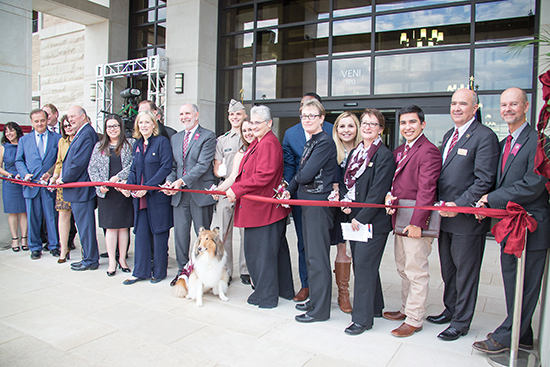
The grand opening of $120 million Veterinary & Biomedical Education Complex (VBEC)
Many outside of the CVM believe we outsource to a professional company; they are surprised and impressed when I tell them it is all done in-house because of the enormous talent we have. When we write stories in a CVM Today, people tell me that while they usually throw away most of these types of publications upon arrival, they keep ours, using them as coffee table books because of the quality of publication and content. Those things make me proud.
Another memorable moment was learning about the Texas Monthly survey that asked Texans, “When you think of Texas A&M, what do you think of?” They said the veterinary school No. 1 and football No. 2. Now there’s a moment.
Subsequently, I got a call from the Houston Chronicle’s chief editor, who said, “We have a retreat every year for our executive team at points of particular interest in Texas. May we have our editorial staff retreat at the College of Veterinary Medicine & Biomedical Sciences?” I replied, “Of course you may.” He said, “We want to come there because we know that the CVM is iconic in Texas and it’s one of the places that we would like to highlight.” That really does make me proud.
What were some of the “lighter moments” you’ve particularly enjoyed during your time here?
Dr. Kenita Rogers and Dean Eleanor M. Green
There are actually many lighter moments that go along with being dean. In my case, they started even before I arrived. During my on-campus interview, Dr. Kenita Rogers, then associate dean for professional programs, had been assigned to pick me up at the airport. Much to our dismay, my bags did not show up, leaving only one slightly used outfit for my entire interview. Dr. Rogers took me shopping at Target, where I procured a Texas A&M T-shirt and a pair of exercise pants. They served as pajamas and lounge wear, while I washed my only outfit in the hotel room sink. I still have that “Target outfit” and smile whenever I wear it.
Before I moved to Texas, a diehard Aggie and big Texas A&M supporter, Frank Mueller, called to ask if I had made living accommodations—I had not—and temporarily offered one of his patio homes in Chimney Hill. Over the phone, he gave me an address and a phone number with instructions to call Jerome as I was pulling into town. I found out later that Jerome was Jerome Rektorik, one of Frank’s classmates and the development officer at the Bush School.
He greeted me that night along with the entire theriogenology section, all of whom helped me unload my horse trailer. A few weeks later, Frank called to say I had to move before graduation because his family would be coming to stay. Soon afterwards, he called again to relay that I did not have to leave permanently; rather, I should move out just while his family was in town.
He gave me a new set of instructions to go to another address south of Navasota, where I would meet Dr. Nora Janjan. Carrying my suitcase and Cohen, I rang the doorbell of this perfect stranger to inform her I would be staying with her for a few days. She and her husband, Jack, were perfect hosts and even held a dinner party for “friends of the college.” Aggie hospitality is alive and well.
Dean Eleanor M. Green and Cohen at the DICTC grand opening
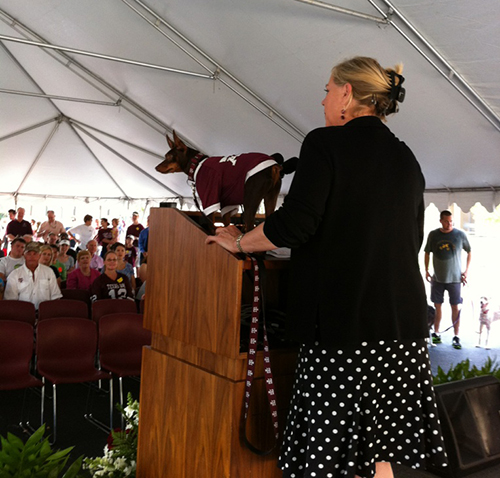
Another lighthearted moment was on the day of the grand opening of the Diagnostic Imaging and Cancer Treatment Center (DICTC). I had brought Cohen for the 5K walk/run fundraiser, Paws to the Pavement, that preceded the ceremonies and realized that I had not thought the day through well with Cohen, as I had no place to put him during the stage ceremonies. He was well behaved, so I decided to take him on stage with me, along with the invited dignitaries. That seemed reasonable as I watched others address the crowd, until I realized that I had to have a plan for him when I was speaking—I couldn’t just tie him to my chair or ask a Board of Regents member or the Texas A&M president to hold him for me. In a flash, I decided to take him to the podium with me. I placed him on the podium facing the crowd, where he stood like a statue attentively scanning the attendees during my entire presentation. Regent Jim Schwertner was so amused that he took a photo of Cohen on the podium. There are few times I have seen Regent Schwertner since that he has not mentioned Cohen on the podium that day, and he has sent me the photo periodically since. In the end, we are veterinarians and we love our animals. It is fitting for them to be a part of our lives and even our special events.
Dr. Kenita Rogers and I began to develop a very close relationship from day one. She has a remarkable sense of humor, and I love humor, so we both enjoy bantering. One particular day when we were deep into our humorous exchanges in a public forum, one of the faculty members asked someone else if we liked each other. The answer was a resounding yes.
William Arthur Ward sums it up by stating, “A well-developed sense of humor is the pole that adds balance to your steps as you walk the tightrope of life.” We all deal with daily pressures and I have always found humor stabilizing. The CVM is balanced by its executive committee that gets along very well, works hard, and laughs harder. It is a joy to work with a group of dedicated professionals who weave humor into their conversations. Erma Bombeck took it a step farther when she said, “Where humor goes, there goes civilization.” Our CVM is healthy.
As dean, you’ve continued to be active in the veterinary community. What motivated you to stay involved?
A university is never an island and certainly never should be. It’s extremely important that we have vital connections across our campus and beyond our walls. That’s one goal that I have worked very hard on—building and maintaining relationships. I encourage others to do the same.
Dean Eleanor M. Green
What do you look forward to in your next endeavor?
One thing I do not look forward to is leaving the Texas A&M College of Veterinary Medicine & Biomedical Sciences. That is going to be a very sad day for me. I truly have loved every minute of every day here.
What I will look forward to is utilizing all of my experiences to focus on areas of particular interest in veterinary medicine.
A few buckets include innovation and entrepreneurship affecting veterinary health care and education, leadership, executive coaching, and animal welfare. I have already been asked to serve on boards of one startup and one large international company. It will be fulfilling to work on issues of significance to the profession with Mark Cushing, founder and CEO of Animal Policy Group. I hope all will remember that I will help Texas A&M and the CVM whenever desired and I will be a phone call away.
Riding my horses, being on the ranch in Millsap, and spending more time with children and grandchildren are certainly draws to this new chapter.
What will you miss most about the students, faculty, and staff?
I will miss the people the most. The CVM is family. We have been through good times and challenges together.
What do you hope people will remember about your time as dean?
Just that I cared and worked hard for the benefit of others, the CVM, Texas A&M, and Texas.
What advice would you offer the next dean?
The main advice I would give is to love the CVM and trust and appreciate its people as much as I have. The college is well-positioned for ongoing success. The CVM executive committee can be counted on under any conditions. I would urge the new dean to be a steward of vital connections, both internal and external relationships.
Dean Eleanor M. Green and Dr. Jim Heird
How do you hope the CVM will build upon your legacy?
I hope the CVM will continue its constant attention to excellence and leadership in veterinary education. The students are our future; they’re why we’re here. We have to make sure that we do what’s right for them, that we give them all of the tools they need for a very successful career.
We need to constantly build on research efforts, from basic discovery to commercialization. Translational medicine must be leveraged. Value all research impacts. Build on those successes to-date and continue to be leaders in the research arena.
Define and build the VMTH of the future to support veterinary healthcare that is connected; integrated; continuous, rather than intermittent; proactive, rather than reactive; precise, rather than imprecise; and personalized, rather than generalized. These include business models, technologies, artificial intelligence, robotics, virtual reality, and even digital humans. But as the latest technologies are incorporated, carefully preserve the personal touch with the compassion.
Is there anything else you would want to add?
I have really enjoyed the bragging rights that come with being dean. It is hard to imagine how fulfilling and inspiring it is to talk about how great this college is and how great its people are.
One of the things I’ll remember most about our college is the way it comes together around those in need, whether it’s a student, a staff member, a faculty member, or friend beyond the CVM. Certainly, we’ve had some sorrows and some losses along the way, and in each and every case, this college has come together around those in need.
In the end, I can look back and say I’ve never worked as hard, I’ve never had as much fun working so hard, and I’ve never laughed as hard as I have here. I will miss you all.
For more information about the Texas A&M College of Veterinary Medicine & Biomedical Sciences, please visit our website at vetmed.tamu.edu or join us on Facebook, Instagram, and Twitter.
Contact Information: Jennifer Gauntt, Director of Communications, Texas A&M College of Veterinary Medicine & Biomedical Sciences; jgauntt@cvm.tamu.edu; 979-862-4216
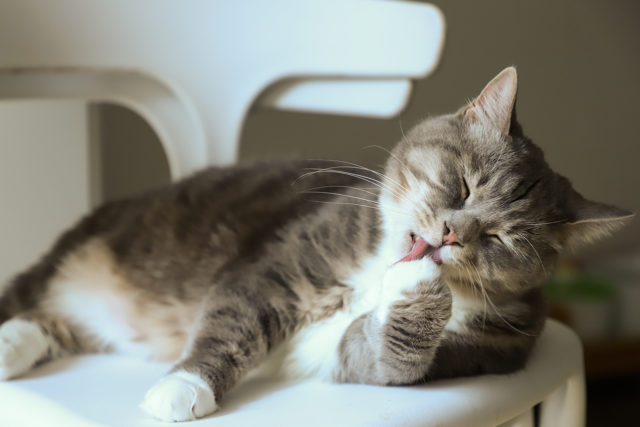
Dandruff may be a cosmetic inconvenience that many people dread, but cats can suffer from this condition as well.
Dr. Lori Teller, a clinical associate professor at the Texas A&M College of Veterinary Medicine & Biomedical Sciences, shares with pet owners the diverse causes of this condition and how to treat dandruff in a feline friend.
“The causes of dandruff in cats can range from relatively simple—such as obesity that limits a cat’s ability to groom, allergies, or the build-up of the undercoat—to more serious issues—such as fleas or a skin infection—to very serious issues—such as cancers like cutaneous lymphoma,” Teller said. “There is also a condition called ‘walking dandruff’ that is caused by the Cheyletiella mite. This mite is usually prevented by flea control products.”
Other potential causes of feline dandruff include other external parasites (such as ticks and demodectic mange), bacterial or fungal infections, malnutrition, or an interrupted ability to groom (caused by factors like kidney disease, diabetes mellitus, pancreatitis, or even discomfort from arthritis).
“If an owner notices dandruff, it is certainly worth having the cat checked to rule out an underlying problem, especially if the cat has other concurrent problems,” Teller said. “If the cat is itchy; losing hair; vomiting; has a change in appetite, water consumption, or litter box use; or if the owner notices skin lesions or parasites, it is worth a visit to the veterinarian.”
Teller also advises that cat owners who are allergic to their pet may be bothered by cat dander and that a veterinary visit may allow for treatment of the cat that can help alleviate allergy symptoms in their owner.
“The treatment for feline dandruff will depend on the cause,” Teller said. “Some parasites may be treated with good flea control. Infections may require topical or systemic antibiotics or antifungals. Certainly, any underlying systemic disease should be treated. If obesity or arthritis is part of the problem, weight loss or pain control may be recommended.”
If no underlying problems are determined, an owner might be advised to brush their cat daily to distribute their pet’s natural skin oils throughout the coat and remove existing dandruff. If a cat has long hair or a thick coat, the cat may need to be brushed several times a day.
Cat owners should consult their veterinarian to determine which grooming practices are best for their pet.
“If the dandruff is more than just a few flakes, if the cat is itchy or is not acting normally, or if anyone else in the family (human or animal) develops skin lesions, it is worth a trip to the veterinarian,” Teller said.
Although it is important for pet owners to practice their due diligence and check in with their veterinarian to rule out the more serious causes of feline dandruff, Teller says that in many cases, dandruff is a minor condition.
“Most of the time, dandruff is a benign problem for the cat,” she said. “Fortunately, other cats don’t judge them for flaky skin, so if your veterinarian gives your cat a clean bill of health, don’t get too bothered by the dandruff.”
Pet Talk is a service of the College of Veterinary Medicine & Biomedical Sciences, Texas A&M University. Stories can be viewed on the web at vetmed.tamu.edu/news/pet-talk. Suggestions for future topics may be directed to editor@cvm.tamu.edu.
Two postdoctoral research associates at the Texas A&M College of Veterinary Medicine & Biomedical Sciences (CVM) have been recognized with 2020 Distinguished Graduate Student Awards from the Association of Former Students (AFS).
He has coauthored 10 published manuscripts and presented his research, largely on the development of anticancer agents, at 11 local, regional, and national scientific meetings.
“Keshav’s Ph.D. research has been outstanding,” Safe said, “and his ongoing research projects, including development of an NR4A2 ligand for targeting PD-L1 (a protein that researchers believe may allow cancers to evade the host immune system) in glioblastomas, are also high impact studies.”
By helping develop a family of pharmaceutical compounds (C-DIMs) that bind and inactivate the NR4A1 and NR4A2 receptors, Karki’s research has been “instrumental in the recent licensing of this technology for future clinical development,” Safe said.
“Keshav has also been a role model for his colleagues in the laboratory in terms of his collaboration and mentorship and his willingness to help keep the laboratory functioning,” Safe said.
Once Karki completes his current research projects in the Safe Lab, he plans to transition into a position in the pharmaceutical industry.
Dr. Alyssa Meyers
Dr. Alyssa Meyers
Meyers, who earned her doctorate in biomedical sciences in 2019, has received numerous awards for her accomplishments as a researcher and mentor.
Working with Hamer, her faculty mentor, Meyers has contributed to eight peer-reviewed published papers and has presented her research at 23 different regional, state, and national venues.
Meyers’ research in the Hamer Lab has focused on exploring vector-host-parasite interactions in the Chagas disease system. By studying populations of working dogs owned by the U.S. government, she has made great contributions to determining the burden of disease and clinical outcomes of infection.
“Her research has built bridges with government veterinarians, extension entomologists, the Institute for Infectious Animal Diseases (IIAD), the Department of Homeland Security, the Texas Department of State Health Services, and the Centers for Disease Control and Prevention,” Hamer said. “She has been a true research leader.”
While working in South Texas, Meyers discovered widespread exposure to Trypanosoma cruzi, the parasite that causes Chagas disease, among working dogs. She then did further work to characterize the various cardiac abnormalities in infected dogs, providing useful information for veterinarians and dog owners.
“The positive culture in my lab and many of my team’s successes are directly attributed to Alyssa serving as a model student and setting a high level of productivity,” Hamer said.
Meyers plans to pursue a career in government service working on epidemiology research, outbreak investigations, and enacting public health practices based on science.
CVM alumna Dr. Lauren Lewis also received a 2020 Distinguished Graduate Student Award in the category of research. Lewis works at the Cambridge, Massachusetts, site of Takeda, a global research and development pharmaceutical company based in Japan, conducting research projects and developing models to improve safety evaluations.
The award recipients will each receive a framed certificate and custom gold watch from the AFS.
###
For more information about the Texas A&M College of Veterinary Medicine & Biomedical Sciences, please visit our website at vetmed.tamu.edu or join us on Facebook, Instagram, and Twitter.
Contact Information: Jennifer Gauntt, Director of CVM Communications, Texas A&M College of Veterinary Medicine & Biomedical Sciences; jgauntt@cvm.tamu.edu; 979-862-4216
Veterinary Educators Band Together to Support Students
In response to the COVID-19 pandemic, veterinary educators around the world
are sharing resources to ensure all veterinary students receive the best online
education possible. At the CVM, the Center for Educational Technologies
is offering many online teaching resources for free.
Texas A&M LAH Continues to Save Lives During Pandemic
Nadar, a 12-year-old Arabian gelding, came to the Large Animal Hospital with
abdominal pain caused by a small intestinal volvulus. Thanks to teamwork and
quick thinking, his surgery was successful and led to a quick and easy recovery.
Texas A&M VET in Texas Panhandle for First
Deployment Supporting Human Health
Dr. Wesley Bissett, director of the Veterinary Emergency Team, departed
College Station on May 4 bound for Lubbock to serve as the operations section chief
for the epidemiology unit working to trace how COVID-19 is circulating in the region.
Since the first vaccine was invented in 1796, the practice of immunization has transformed how we view infectious diseases, taking many pathogenic invaders from being deadly threats to easily preventable maladies. For humans and animals alike, vaccines are important healthcare tools.
Dr. Leslie Easterwood, a clinical assistant professor at the Texas A&M College of Veterinary Medicine & Biomedical Sciences, says the equine strangles vaccine is one that is of particular importance for horse owners in protecting their animal.
“Strangles is the common term for the bacterial respiratory disease caused by Streptococcus equi, subspecies equi,” Easterwood said. “Strangles infections most commonly present as an upper respiratory infection that primarily involves the lymph nodes in a horse’s jaw. Symptoms include high fevers, thick nasal discharge, depression, and a lack of appetite.”
The bacteria that causes strangles in horses may sound familiar to their human owners; a cousin of this bacteria, called Streptococcus pyogenes, causes strep throat in people. Though these bacteria are genetically similar and cause upper respiratory symptoms in both species, horses with strangles cannot infect humans, and humans with strep throat cannot infect horses.
“Strangles is spread via respiratory secretions from infected horses,” Easterwood said. “It is highly contagious from horse to horse and is pretty common.”
Since equine strangles is easily transmitted between horses, vaccination is an important tool for minimizing the spread of this disease.
“Although the disease rarely results in a fatality, it will make horses sick and can lead to loss of production, decreased performance, and quarantine, in some circumstances,” Easterwood said. “Vaccination does not provide complete protection, as with all vaccinations, but it can help to decrease the chance of contracting the disease in susceptible populations.”
Since horses are often kept in groups—grazing together at pasture, sharing pens, or neighbored in stalls—contagious diseases can quickly work their way through a herd. As such, vaccination remains an essential tool for both individual and herd health.
Ultimately, the decision of whether to vaccinate an animal comes down to the owner, Easterwood says, although there might be situations during which a third party takes interest in a horse’s vaccination records.
“There are no governmentally mandated vaccinations in horses,” Easterwood said. “Some boarding and breeding facilities will require vaccination to board at their location, but that is not a legal requirement.”
Even if no legal requirement enforces the vaccination of horses, owners should still consider consulting with their veterinarian to determine what care is best for maintaining the health of their animal.
Pet Talk is a service of the College of Veterinary Medicine & Biomedical Sciences, Texas A&M University. Stories can be viewed on the web at vetmed.tamu.edu/news/pet-talk. Suggestions for future topics may be directed to editor@cvm.tamu.edu.
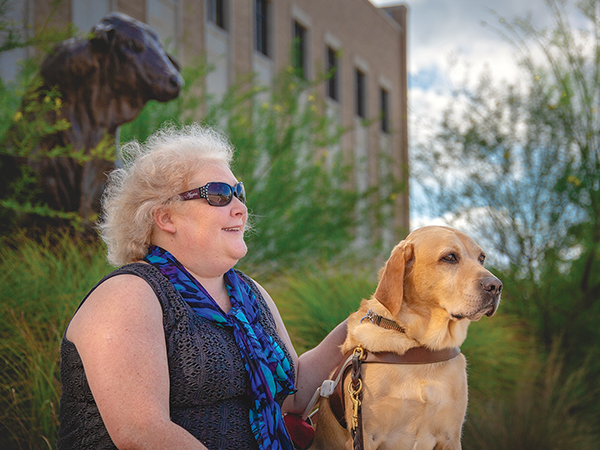
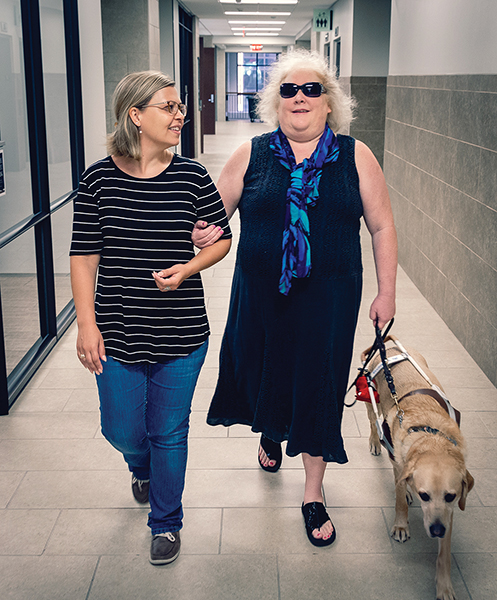
Laura Ann Grymes works with the Center for Educational Technologies (CET) to ensure that learners with visual disabilities, like herself, and other disabilities can more easily navigate the college’s abundant online learning materials.
Laura Ann Grymes with her dog Dyson (Photo by Vince Chihak)
Technology has become a crucial mechanism in veterinary medicine education.
As such, ensuring that all students—including those with visual, auditory, motor, or cognitive disabilities—can easily navigate required software, applications, and other online materials is equally as important.
This concept, known as digital accessibility, is an essential component of the overall higher education student experience because nearly every aspect of academic life now leverages digital or web-based tools and applications.
As part of a society that is constantly “plugged in,” colleges and universities recognize the vital need for incorporating technology that not only enhances student learning and campus life, but also is universally accessible to students, staff, faculty, and visitors.
The Center for Educational Technologies (CET), housed within the Texas A&M College of Veterinary Medicine & Biomedical Sciences (CVM), is recognized as a trailblazing advocate for ingraining accessibility within the framework of curriculum development.
While many of today’s current technology tools have the ability to check for accessibility (which can include tagging pictures loaded onto a website and even sentence length), they fail to offer the vital feedback the CET views as most important to true accessibility—the learner experience.
To gain a true glimpse into how all types of learners interact with the CVM’s online courses and materials, the CET sought a fresh perspective from a learner who relies on assistive technologies to navigate digital content.
In June 2017, Laura Ann Grymes, a member of the local community who is blind, joined the CET as a program aide to assist the team in ensuring materials produced by the center meet both Americans with Disabilities Act (ADA) standards and support the learner in gaining new knowledge.
CET program coordinator Michelle Wiederhold, Grymes, and Dyson (Photo by Vince Chihak)
“Laura Ann is an invaluable member of our team,” said Molly Gonzales, CET instructional assistant professor. “Watching her interact with the content we have created and listening to her share her experience is humbling and insightful. Our partnership with Laura Ann was the catalyst that changed our perspective on how we develop new digital learning tools and experiences.”
The CET and Grymes partnered to further enhance the center’s StepStone online authoring tool by transforming it into a fully ADA-compliant web-based platform. StepStone allows educators to produce interactive, media-enriched learning resources that can be accessed from any internet-enabled device.
“Addressing accessibility is an issue shared by all who rely on digital content,” said Tim Ponder, CET instructional technologist. “Beyond the legal considerations, digital accessibility is a component of good design and delivery, potentially enhancing all users’ educational experiences.”
Grymes collaborated with Ponder and Dan Shuta, CET multimedia developer and the brain behind StepStone, to discuss best practices in accessibility and share some of the most common challenges faced by learners with differing levels of abilities in an online environment.
“Working with the CET and the CVM has been a gratifying experience,” Grymes said. “It is rewarding to be part of a team passionate about making materials accessible for learning and who are actively working to remove challenges to help students grow and learn efficiently.”
As a result of Grymes’ collaboration with the CET, now both authors and end users can experience the benefits of a fully ADA-compliant authoring platform.
Content-building authors can incorporate ADA components directly within StepStone by placing alternative text and long descriptions on images, while end users have the ability to use keyboard shortcuts or spoken instructions via a screen reader to navigate the course.
Many CVM faculty members use StepStone to build online case studies in which students make decisions on how to proceed through a clinical case from the patient’s admission to discharge.
These case studies have provided future veterinarians with a safe space to practice their critical thinking skills using real-world scenarios based upon former Texas A&M Veterinary Medical Teaching Hospital (VMTH) patients.
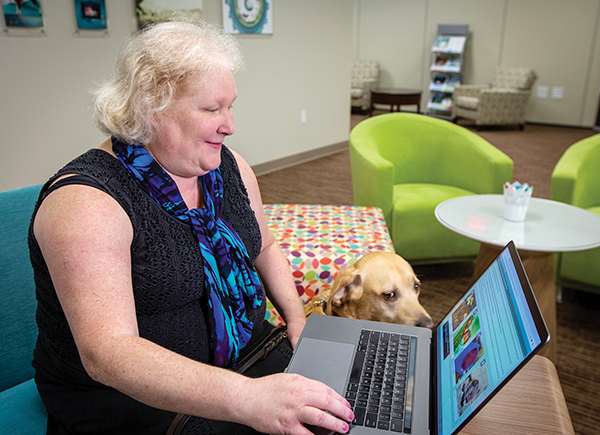
Grymes explores the CET’s digitally accessible content (Photo by Vince Chihak)
Grymes continues to play a pivotal role in ensuring that StepStone generates accessible content for all learners. She has performed quality assurance testing on several of the StepStone modules and often offers suggestions for how to improve the student learning experience.
“Laura Ann has taught us how to view online learning through a new lens, one that goes beyond the initial assurance that the content and resources are accessible to also consider the language and descriptions we use within our writing,” Gonzales said.
“Am I painting the appropriate picture with the words that I am using? Or is my lack of clarity a potential barrier to someone’s learning? She has really opened our eyes to give careful consideration to the details that really bring the whole picture together.”
Grymes is looking forward to continued work with the CET and increasing awareness of accessibility considerations in digital environments.
“True accessibility is way more than just checking off a box to say it’s accessible,” Grymes said. “I love that this team has high standards and makes teaching modules accessible for all learners.”
Through collaborations with partners like Grymes, the CET and CVM will continue to blaze the trail for integrating accessibility within academics and the campus culture.
For more information about the Texas A&M College of Veterinary Medicine & Biomedical Sciences, please visit our website at vetmed.tamu.edu or join us on Facebook, Instagram, and Twitter.
Contact Information: Jennifer Gauntt, Director of Communications, Texas A&M College of Veterinary Medicine & Biomedical Sciences; jgauntt@cvm.tamu.edu; 979-862-4216
Although Dr. Ashley Saunders regularly implants canine pacemakers, she found herself confronted by multiple challenges as she worked through the night to save Birdie’s life.
Dr. Ashley Saunders and Birdie, a canine pacemaker recipient
As a veterinary cardiologist and professor at the Texas A&M College of Veterinary Medicine & Biomedical Sciences (CVM), Saunders had seen Birdie’s symptoms many times.
Cases with arrhythmias, or slow, irregular heartbeats, come into the SAH on a weekly basis; if caught in time, the condition is typically fixed with a treatment that is routine to Saunders but often a surprise to the general public—by implanting a pacemaker.
These surgeries are usually minimally invasive with a quick recovery time, but in Birdie’s case, it would take a team of specialists an entire night to heal her heart.
A Miraculous Recovery
In May 2019, Birdie’s owner, Katherine McLeod, noticed that Birdie was acting sluggish and behaving abnormally.
“It was really odd. It was like she was just cranky,” McLeod said. “Over the next couple days, she got pretty lethargic and acted like she didn’t want to go outside or do anything. She was still eating and drinking, but she clearly didn’t feel well.”
McLeod’s local veterinarian in Waco discovered that Birdie had an abnormally slow heartbeat and recommended a medication for treatment. But the medicine only helped for a few days, so when the lethargy returned on a Saturday afternoon, McLeod knew that her best option was to bring Birdie to the SAH, where she entrusted Saunders with Birdie’s care.
“Birdie had a really low heart rate called third-degree AV (atrioventricular) block,” Saunders said. “The middle part of the heart stopped working, so the top and bottom couldn’t communicate well.”
This miscommunication contributed to Birdie’s slow heartbeat, lethargy, and overall unwell feeling.
“Typically, you want to put a pacemaker in through the jugular vein in the neck,” Saunders said. “That’s the ideal way to do it. So, we took her back to do that, but the pacemaker electrically would not capture her heart. This can happen in rare cases, and we have to quickly adapt.”
Saunders moved to the next option, which involved surgically screwing the pacemaker into Birdie’s heart through her chest. Thanks to help from Dr. Whitney Hinson, a small animal surgery resident, they finally got the pacemaker attached and working properly.
But because of the unexpected issues with the pacemaker, Birdie remained under anesthesia for longer than they initially planned and more complications began to arise.
“We were in surgery into the middle of the night at that point,” Saunders said. “Dr. (Bradley) Simon, the anesthesiologist, stayed with us the entire time, and we ended up having to spend even more time trying to get her to wake up after the surgical procedures because her lungs were slow to reinflate.”
Finally, Birdie improved. By the next day, the pacemaker had brought Birdie’s heart rate back to normal speed and she was able to go home to Waco with her family.
“Dr. Saunders called me that morning and said miracle of miracles, basically,” McLeod said. “She said, ‘You can come get her. She’s doing great.’ You could tell in her voice that she was excited.”
Giving Dogs A New Leash On Life
While Birdie’s case had several setbacks, canine pacemaker implants are typically much less complicated, according to Saunders. She sees canine pacemaker cases at least once a week, on average, for a variety of dog breeds and ages.
“Everybody is always stunned when I say I’m a veterinary cardiologist,” Saunders said. “People always say, ‘What? People put pacemakers in their dogs?’ Yes, we can do that, and we do it a lot. That always surprises people.
“It’s exciting with older dogs because people often think their dog is just getting older and they are cautious about spending the money to put a pacemaker in at that age,” Saunders said. “I tell them we’ve paced a lot of older dogs and people frequently tell us that their dog’s energy is way better; what they have attributed to aging was actually low heart rate. I think that encourages people to move forward and then it allows the dogs to have their activity back.”
For Saunders, being able to perform those life-changing procedures, and getting to work with a variety of other SAH services in the process, makes the high-stress career worth it.
“People don’t realize how high-stress it is to be a cardiologist because it feels like life and death all of the time,” Saunders said. “But in the moment, you have to keep thinking because you really have a patient’s life in your hands; you just have to keep problem solving until you get it.
“I think it helps the more experience you have, but you also have to be really level-headed,” she said. “You have to keep making decisions because when you look around, everybody’s looking to you to make them.”
Dr. Ashley Saunders and Birdie
At the SAH, Saunders finds relief from her stress in the daily student interactions and opportunities to pass on her knowledge to the next generation of veterinarians.
“As you go along in your career, you realize that you were once the one being helped and now you can help other people reach their goals,” Saunders said. “It is really rewarding. The students identify where they want to go and then you can help them along that path.”
Bonding Over Beagles
Tabone was excited to have the opportunity to scrub in for surgery and help care for Birdie post-operatively, especially because of her love for Beagles.
“I was the student on call the weekend Birdie came in,” Tabone said, “and I always joke that if I’m going to get called in, I hope it’s a Beagle, because I have an overwhelming attachment and love for this breed.”
Tabone, who has three of her own Beagles, fell in love with Birdie and was thankful to be involved in her case.
“I enjoyed getting up early every morning to care for Birdie,” Tabone said. “I can’t describe it, but I feel there are patients we’re fortunate to have a special connection with that we can’t predict, and I immediately felt that with Birdie.
“It was incredible to see the transition she made from being very gloomy to being excited and ready to go home with her family,” she said. “I was really lucky that I got called in for this case.”
Birdie’s case was also meaningful for Tabone because it was her first clinical experience and her first opportunity to be hands-on in a surgical setting; when Birdie arrived at the SAH, Tabone and her fellow fourth years had just begun their first week of clinical rotations.
“We had a really unique cardiology rotation, from a student perspective, because all of our residents were gone for their board exams, so it was just the students and Dr. Saunders,” Tabone said. “We got to be one-on-one with her for two weeks, which I found incredibly amazing because of the amount we learned from her and how hands-on we were with all of our cases.”
Tabone also interacted with McLeod and her family to keep them updated on Birdie’s progress. Even after Birdie returned home, Tabone made a habit of checking in with McLeod to make sure Birdie was still feeling well.
Birdie
“Birdie’s mom mailed a letter to the teaching hospital, and I’ll definitely keep it for my entire career,” Tabone said. “She had the most kind and sincere things to say about me and the work that Dr. Saunders did. I plan to have it framed in my office and when I’m having a not-so-great day, I can read it and think of my experience with Birdie and her family; it’ll forever be great motivation for my career.”
Likewise, McLeod was extremely grateful for Tabone’s genuine love for Birdie and the fact that she went above and beyond in caring for both client and patient.
“Amanda is going to be one heck of a veterinarian,” McLeod said. “Whatever she decides to do in whatever field, I would go to her in a heartbeat just for her bedside manner. She’s going to have a big-time career.”
Going Home An Aggie
Back in Waco with her new canine pacemaker, Birdie returned to her normal, active, friendly self within a week.
“Anytime you want to take her on a walk, she gets all fired up about that. She loves her treats and all the different food that she gets,” McLeod said. “She’s great with Skittle (McLeod’s other Beagle); they’re best buds and they’re very happy to be back hanging out together.
“I pray for my dogs every day and I’m so thankful that Birdie’s still here and that she’s healthy,” she said. “It’s just really incredible.”
As a huge Baylor fan, McLeod had no experience with Texas A&M before Birdie’s procedure at the SAH, besides rooting against the Aggies on gameday.
“It was funny. When we went to pick Birdie up, she had her maroon bandages on and what I like to call her ‘Aggie haircut,’ because they had to shave parts of her,” McLeod said. “I said, ‘What? Come on, man, no green and gold bandages?’ The hospital staff said, ‘Hey, you’re at A&M.’
“I said, ‘You know what? Forever we will root for the Aggies—unless they’re playing us, which is very unlikely these days,’” she said. “But it’s funny now—any time I watch football, I say, ‘I’m for A&M. Just for A&M.’”
For more information about the Texas A&M College of Veterinary Medicine & Biomedical Sciences, please visit our website at vetmed.tamu.edu or join us on Facebook, Instagram, and Twitter.
Contact Information: Jennifer Gauntt, Director of Communications, Texas A&M College of Veterinary Medicine & Biomedical Sciences; jgauntt@cvm.tamu.edu; 979-862-4216
Texas is known for hot summers that leave many residents ready for air conditioning and a cool drink. Because pets’ bodies expel heat less efficiently and generate more heat pound-for-pound than humans, our furry friends can be even more impacted by rising temperatures and heat stress.
Dr. Christine Rutter, a clinical assistant professor and emergency and critical care specialist at the Texas A&M College of Veterinary Medicine & Biomedical Sciences, discusses the dangers that summer heat may present to animals, including heat exhaustion and heat stroke.
“Heat exhaustion is the feeling of lethargy, discomfort, or weakness that is experienced when the body gets too hot,” Rutter said. “Heat stroke is an actual illness that occurs from increased body temperature. It can be life-threatening and cause permanent damage.”
Heat-related issues are prevented through a process called evaporative cooling, which is one of the most efficient ways for an animal to expel heat, Rutter explains. Humans accomplish this largely by sweating, but dogs and cats can only sweat through the bottoms of their feet, so they must expel heat by panting.
“Very young, geriatric, brachycephalic (short-nosed breeds), and pets with heart, respiratory, or endocrine disease are at higher risk for heat injury,” Rutter said. “Obesity and respiratory noises can also identify at-risk groups. While it’s harder to pin down, pets that aren’t acclimated to hot environments will heatstroke more easily.”
Humidity plays an important role in how efficiently an animal can expel heat. As humidity increases, water evaporation and the resulting heat exchange decreases. Once the humidity in the air reaches about 85 percent, evaporative cooling is almost totally inhibited. For pets, this can have serious consequences.
Pet owners should keep a keen eye on their animal when the weather is hot and when the humidity is high; even if you feel OK, your pet might be affected.
“Any dog that wants to take a break or is panting heavily should be given fresh, cool water and a shady spot to rest until their breathing normalizes and they want to return to activity,” Rutter said. “Motivated dogs will return to activity as soon as it is physically possible, which may not be the best plan. Owners have to make some dogs stop and cool off fully.
“As heat stress worsens, pets may have GI signs (vomiting and/or diarrhea), lethargy, weakness, red gums, and coagulation (blood clotting) changes that can cause small, red bruises to form (most commonly in the mouth, whites of the eyes, and the skin of the abdomen).”
Rutter says that cats tend to limit their activity and seek shade when heat becomes an issue, but they still should also always have access to fresh water and be in a familiar environment.
“To cool an animal, I recommend wetting the pet down with cool (not cold) water, turning a fan on high over them, and putting them in a shaded, air-conditioned environment,” she said. “If your pet is displaying signs of heat stress, you should wet them down, crank up the AC, and head directly to your veterinarian’s office. It is most definitely an emergency.”
When walking a pet in the heat, owners should also consider whether the pavement temperature is appropriate for their pet’s paws. Rutter recommends feeling the pavement with your hand; if the pavement is too hot for you to touch it, it’s too hot for your pet.
Vehicles parked with no air conditioning also can be a serious threat during warmer months.
The temperature in parked cars rises quickly even with the windows “cracked.” Rutter says that cars can become lethally hot in as little as 15 minutes, but that time is shorter for animals prone to heat injury.
“Always have your pet inside the vehicle with the air conditioning on if the temperature is 85 degrees or greater,” she said. “Even at temperatures below 85 degrees, never put your pet in the bed of a truck and never, ever leave your pet in a parked car.”
Rutter recommends that pet owners see their veterinarian with any concern for heat stress or heat stroke.
Heat injury becomes a serious condition very quickly; luckily, however, these precautions are usually effective at preventing heat stress, and a mindful pet owner should have few worries as they enjoy their summer with a furry friend by their side.
Pet Talk is a service of the College of Veterinary Medicine & Biomedical Sciences, Texas A&M University. Stories can be viewed on the web at vetmed.tamu.edu/news/pet-talk. Suggestions for future topics may be directed to editor@cvm.tamu.edu.