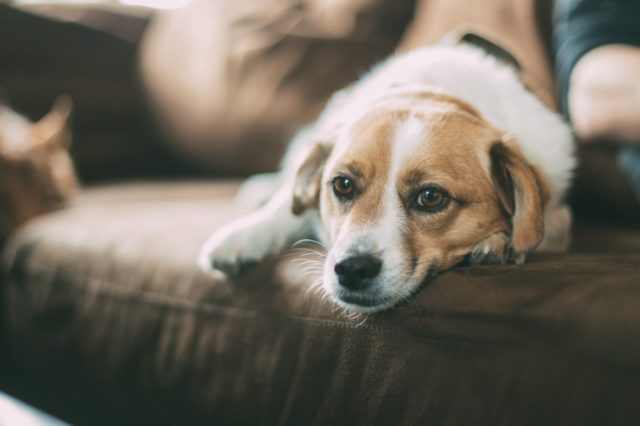
Just as our pets often help their owners through difficult times, animals that have suffered from traumatic events may need extra support.
Dr. Lori Teller, an associate professor in the Texas A&M College of Veterinary Medicine & Biomedical Sciences, says that because dogs can suffer from psychological conditions like their human counterparts, owners can benefit from having an awareness of possible causes, diagnosis, and how canine post-traumatic stress disorder may be managed to give your furry friend the best life possible following periods of stress and trauma.
Roughly 5 to 17% of dogs are affected with canine PTSD, but because the condition has only been recognized in dogs within the past 10 years, Teller says there is still much to learn.
“We don’t always know what may cause PTSD in dogs, but some potential causes are military or police work, being a bait or fighting dog, being raised in a puppy mill, severe abuse, living as a stray after being abandoned, trauma from a disaster (flood, fire, earthquake, tornado, explosion), or being attacked by other dogs or animals,” Teller said.
“The symptoms of PTSD in dogs are similar to those in humans and include chronic anxiety; hypervigilance; avoidance of certain people, places, or situations; sleep disturbances; fear of being alone; decreased interest in a favorite activity; or aggression,” Teller said.
Teller also says that these symptoms may not be apparent at the time of adoption because as a survival mechanism, some dogs will mask their symptoms until they gradually adapt to their new home, depending on the animal’s trigger.
Pet owners who suspect their furry friend may be suffering from this condition should ideally seek help from a veterinary behavioralist, who will develop an appropriate treatment plan. Pet owners seeking this care may wish to reference the American Veterinary Society of Animal Behavior’s directory.
If access to a veterinary behavioralist is not possible, your primary veterinarian will still be able to help your dog get the care they need.
“The best ways to manage PTSD in dogs will be a combination of behavioral therapy and medication,” Teller said. “Behavioral management might include desensitization therapy, in which a dog is exposed to low levels of stress, and then this level is gradually increased to build tolerance for that stimulus, playtime with a well-socialized dog, increased exercise, and mental stimulation. Medications prescribed could include anxiolytics, anti-depressants, or beta-blockers.”
Teller adds that time and patience are vital to the management of canine PTSD. Owners will need to actively work with their dog on a daily basis and be in regular communication with their veterinary team.
Although adopting a dog with a history of trauma requires a caring and dedicated owner, the bond that is formed between rescued dog and pet-parent can be an unbreakable gift that is well worth the time and effort.
Pet Talk is a service of the College of Veterinary Medicine & Biomedical Sciences, Texas A&M University. Stories can be viewed on the web at vetmed.tamu.edu/news/pet-talk. Suggestions for future topics may be directed to editor@cvm.tamu.edu.
Since graduating in 2013, Dr. Lauren Thielen has found herself—and her work with exotic animals—as the centerpiece of Nat Geo WILD’s “Dr. T., Lone Star Vet.”
From left: Veterinary student Rachel Ellerd, Veterinary Technician Tonya Green, and Dr. Lauren Thielen work on Sammie the Timneh African grey parrot. (Photo by Nick Willson, National Geographic)
Dr. Lauren Thielen, a 2013 graduate of the Texas A&M College of Veterinary Medicine & Biomedical Sciences (CVM), is no stranger to a camera.
After receiving her Doctor of Veterinary Medicine (DVM) degree, Thielen pursued an internship at the Broward Avian and Exotics Animal Hospital in Florida under Dr. Susan Kelleher. One month after beginning her position, Thielen learned that National Geographic would be producing a television show about the practice.
“I thought it was cool,” Thielen said. “I’m the type who likes these things. I thought it would be great to educate through an outlet so lovely as National Geographic.”
“Dr. K’s Exotic Animal ER” premiered in 2014 and is currently in its eighth season. The show follows the happenings of the animal hospital as Dr. Kelleher and her team treat everything from ferrets to foxes. Thielen appeared on the show from its beginning in 2014 until she left the practice in 2018.
Her claim to fame didn’t end there, though; she now headlines her own National Geographic program, “Dr. T, Lone Star Vet,” which premiered in October.
“Nobody thinks they’re going to be on TV. I went to school to be a doctor,” Thielen said. “I don’t think I ever expected something like this to happen, but I’m really glad it did.”
An Early Interest
Although appearing on television was an unexpected twist in her career, Thielen has always held a passion for exotic animals. Raised in Fort Worth, she recalls sharing a love of animals with her father; she was never far from an animal friend in her home growing up.
“I’ve had turtles, iguanas, parrots, different types of lizards, hamsters, gerbils, and rabbits. I’ve always had rabbits,” she said, adding that in veterinary school, she had a Dutch rabbit named Penelope. “I’ve had a very big variety of different animals over the years.”
When she began thinking about working with animals, she initially wanted to be an exotic veterinarian at a zoo, but at the CVM, she was exposed to the option of becoming an exotic animal pet veterinarian. She was especially drawn to the hands-on nature of working with pets, saying that bunnies were much cuddlier than zoo animals like tigers.
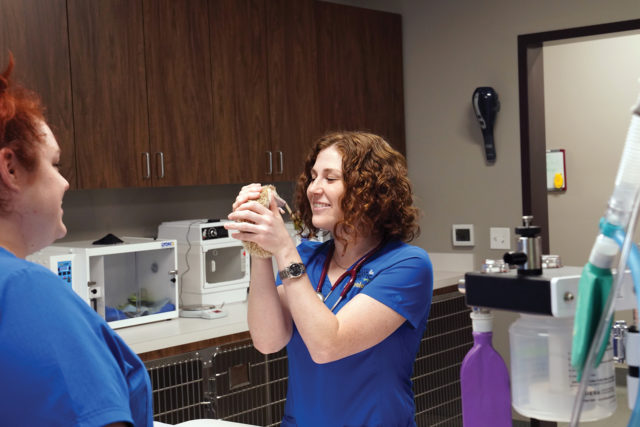
Dr. Lauren Thielen greets Nala the hedgehog. (Photo by Kenyon Henderson, National Geographic)
“I’ve wanted to be a veterinarian since I knew what a veterinarian was. I’ve really always just loved animals, and I’ve always loved exotic animals,” she said.
Thielen’s early exposure to and interest in a range of animals has benefited her career. She has gone on to help a diverse cast of animals, working with everything from emus and capybaras to turkeys and lizards.
At this point, there is little that could shock her.
“One guy wanted to bring me this red Indian flying tree squirrel that was the size of a cat. It was awesome,” she said. “I see crazy things all the time. On Tuesday, we saw a lynx.”
Among her favorite cases was a pot-bellied pig Thielen treated for water intoxication. The pig came into the clinic unable to move with its pupils fixed and dilated, which means its brain wasn’t functioning properly.
“I contacted like five different veterinarians and everyone told me it was completely hopeless and that the patient’s never going to be normal again,” she said.
Thielen didn’t give up, describing her approach to that case as meticulous. In the end, her effort paid off.
“The pig ended up great and is still doing well to this day,” she said. “I was a brand new veterinarian, and I still found confidence and was able to gather the right knowledge to be able to save this patient against all odds.”
A New Chapter
In 2018, Thielen made the decision to move home to Texas and pursue an opportunity with her former mentor Dr. Sharman Hoppes, a professor emeritus at the CVM.
The two had first connected over their mutual love of exotic animals when Thielen was a student assigned to the zoological medicine ward. Thielen eventually joined a group of students led by Hoppes that traveled to Tambopata, Peru, to work with macaws. Thielen said this experience is when she became more involved with Hoppes and her husband, Dr. Bruce Nixon DVM ’85.
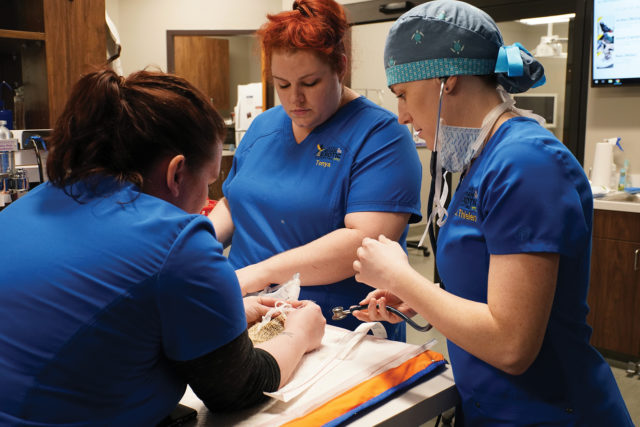
Dr. Lauren Thielen and vet staff with Nala the hedgehog. (Photo by Kenyon Henderson, National Geographic)
The two reconnected by chance when they ended up on the same flight to an exotic animal conference.
As Hoppes discussed the opening of her and her husband’s new practice, Thielen was particularly intrigued by their concept of providing specialized care to exotic animals within a complex that also offered specialized care in surgery, internal medicine, cardiology, dermatology, ophthalmology, critical care, and dentistry services. Thielen also noted that the clinic would be located near her childhood home.
Thielen now is copartner at Texas Avian & Exotic Hospital, which recently added another Aggie, Dr. Jordan Gentry, who completed his residency in zoological medicine at the CVM.
Thielen says she is proud to be an Aggie.
“I think my favorite part of being an Aggie is just the comradery that everyone has and the support of everybody for one another,” she said.
Hoppes is glad to work with her former student and mentee as a colleague.
“Lauren is funny, smart, and passionate. She is confident in her knowledge base and her skills,” Hoppes said. “And she is a really good person. She truly loves people and their animals and it shows.”
Thielen also brought with her to Texas Avian & Exotic Hospital her TV legacy; “Dr. T, Lone Star Vet,” filmed at this hospital, follows Thielen as she provides veterinary care to exotic animals.
“We were nervously excited about this show being filmed at our clinic,” Hoppes said. “We thought it was a great way to educate people, but we were nervous about cameras being there all the time.”
Thielen is glad to get back on camera. She said that the decision to resume her television career was easy.
“My producer and I always had a really good time filming the other show together, so we thought, ‘why not continue the fun?’” she said. “I’ve been on television literally since I graduated veterinary school, so to me, this is just normal.”
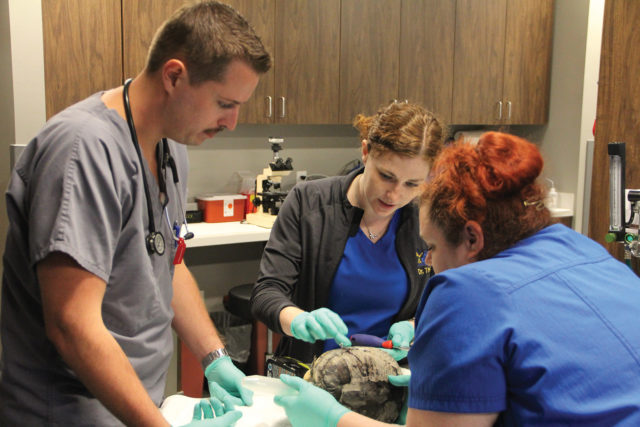
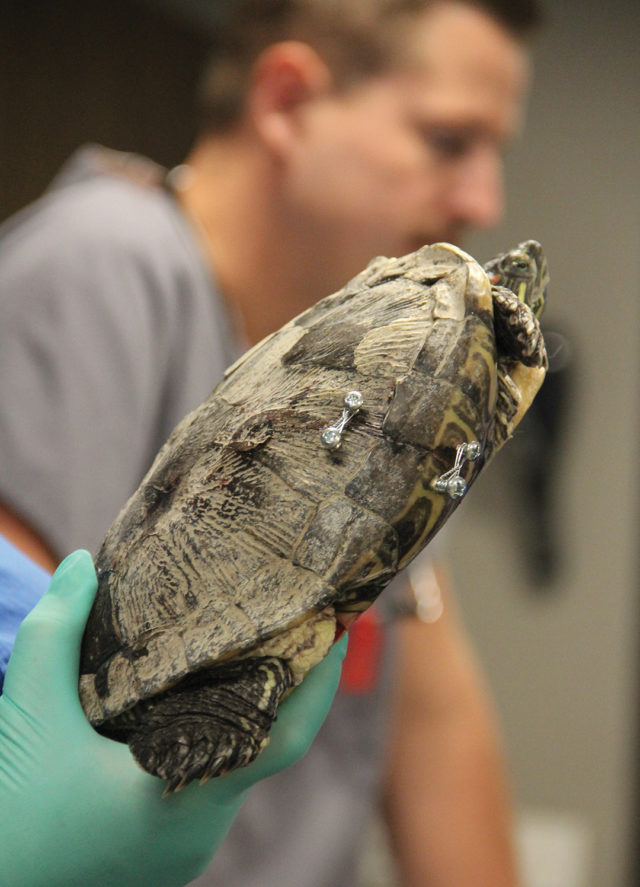
From left: Daniel Olson ’20, Dr. Lauren Thielen, and Vet Tech Tonya Green reattach Sam the red-eared slider’s fractured shell with screws. (Photo by Pablo Calzada, National Geographic)
Thielen’s comfort in front of the camera is clear. In the first episode of her show, she fearlessly corners a turkey that has been attacking its male owner. Thielen handles the situation with a mix of humor and educational flair, cracking a joke about the turkey’s sassy strut before diagnosing the animal with a testosterone imbalance.
A Veterinarian On A Mission
Thielen hopes that this program, the first season of which aired for eight weeks on Nat Geo WILD (and is now available on Disney+), provides a platform from which she and other veterinarians can educate the public on proper animal and veterinary care.
“One thing I want to accomplish with this show is to show people how veterinary medicine is supposed to be practiced,” she said. “Being able to show veterinary collaboration at its finest is important. I want to show people that your birds can go to cardiologists, too.”
Thielen hopes that by providing exposure to these options, owners might seek out more comprehensive care.
“We can fix a fracture in a parakeet’s leg. We can remove a tumor on a rabbit,” Thielen said. “By educating pet owners on not only how to take care of an animal, but also that there is real medicine for their pets, people will understand the possibility in what we do.”
Thielen said another benefit of her program has been the influence she has over inspiring the next generation of exotic animal veterinarians.
“Little girls and even students in veterinary school write me and visit the clinic. They’re like, ‘I want to be an exotic vet one day,’” she said. “I didn’t even know this job existed until I was already in veterinary school. For these people to already know what they want to do for the rest of their lives, I just think that’s so cool.”
Sam the red-eared slider’s fractured shell is reattached with screws. (Photo by Pablo Calzada, National Geographic)
Inspiring more students to pursue exotic veterinary medicine is important, Thielen notes, since not all owners have easy access to veterinarians properly trained to care for their exotic pets.
“Patients do travel to see us. There are some veterinarians who see exotics in the area, but we’re the only exotics-exclusive facility in all of Dallas-Fort Worth,” she said. “I do think that there are definitely other veterinarians who will see some exotics, but we’re kind of the only practice that’s going to see the lynx or the monkey.”
What Lies Ahead
In general, Thielen is enthusiastic about most animals that the average person would shy away from. She is particularly drawn to birds, speaking about the beaked animals as lovingly as most people would talk about puppies.
“Birds are the cuddliest,” she said. “They’re expressive. When you walk in a room, they get excited and they dance and they fly to you.
“I also get attached to lizards,” she said. “I would argue they’re all extremely personable, and most of them want to be held and want to be interacted with.”
This mindset suits Thielen well as an exotic animal veterinarian, and leaves a lot of doors open for her future work. In addition to filming “Dr. T, Lone Star Vet” and completing her regular clinic duties, Thielen recently became a board certified avian specialist.
When reflecting on the animals she has provided care for, Thielen does not recall ever feeling fearful of a patient.
“I have a healthy respect for all animals,” she said. “As far as a true phobia, I don’t have anything like that.”
Indeed, Thielen is ready for any patient the future brings through her clinic’s doors. She looks forward to continuing to provide comprehensive care to her patients and educating her audience through “Dr. T, Lone Star Vet.” She is optimistic that she can handle whatever is in store.
“I see pretty much everything now,” she said. “There’s a lot I haven’t seen, but I think I’m ready for almost anything.”
For more information about the Texas A&M College of Veterinary Medicine & Biomedical Sciences, please visit our website at vetmed.tamu.edu or join us on Facebook, Instagram, and Twitter.
Contact Information: Jennifer Gauntt, Director of Communications, Texas A&M College of Veterinary Medicine & Biomedical Sciences; jgauntt@cvm.tamu.edu; 979-862-4216
Vesicular stomatitis, or VSV, is a virus endemic to the warmer regions of North, Central, and South America. Texans with livestock and horses are likely familiar with the disease, as outbreaks of VSV typically occur in the state every few years.
The current national outbreak of VSV began on April 13, when the National Veterinary Services Laboratory reported VSV-positive premises in New Mexico. On April 23, the first in-state VSV finding of this outbreak was reported at an equine facility in Starr County, Texas.
Dr. Leslie Easterwood, a clinical assistant professor at the Texas A&M College of Veterinary Medicine & Biomedical Sciences, informs horse and livestock owners on what they should know about this virus and how they can keep their animals safe and healthy.
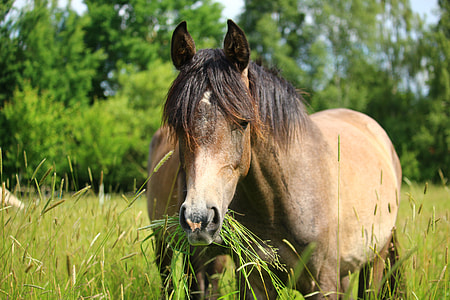
“Vesicular stomatitis is a viral disease that affects horses, donkeys, mules, cattle, and swine,” Easterwood said. “This virus is spread by insect vectors, including blackflies, sand flies, and members of the Culicoides species (usually ‘no-see-um gnats’).”
The current serotype, or “version” of VSV, causing this outbreak is known as the New Jersey serotype, which Easterwood characterizes as being very virulent and contagious.
The virus causes crusting, ulcerative, and vesicular (fluid-filled) lesions of the lips, tongue, coronary bands (where the hairline meets hoof), mammary glands, muzzle, and nostrils.
“These lesions are very inflamed, causing swelling, pain, and excess salivation,” she said. “Many affected animals are lame due to the inflammation of the coronary bands, and have a hard time chewing and swallowing their feed due to the lesions on their lips and tongue.”
Easterwood says that VSV is self-limiting, meaning the disease tends to go away on its own, but that anti-inflammatory medications may help to decrease pain and swelling caused by the lesions.
To protect animals from contracting VSV, Easterwood recommends practicing good fly control and limiting exposure to infected animals, as the virus can be spread directly from animal to animal or between shared spaces and equipment, such as water buckets.
In addition to causing harm to individual animals, VSV can also be more broadly dangerous to agricultural industries.
“This virus can be especially detrimental to our milk producing cows,” Easterwood said. “They can become lame and the lesions decrease their milk production.
“With horses, infected individuals are not allowed to travel to events where they could be comingled and transmit the virus. VSV could have economic impacts on our show horses, racehorses, commercial dairy cattle, and commercial swine operations.”
If an owner suspects that one of their animals is suffering from VSV or has been exposed to an infected animal, they should consult their veterinarian promptly due to the highly contagious nature of the condition.
“This viral disease is a reportable disease, which means that the Texas Animal Health Commission (TAHC) will be informed when an animal tests positive,” Easterwood said. “TAHC will then control how the animal’s movements are restricted until the symptoms resolve and the outbreak is over.”
Pet Talk is a service of the College of Veterinary Medicine & Biomedical Sciences, Texas A&M University. Stories can be viewed on the web at vetmed.tamu.edu/news/pet-talk. Suggestions for future topics may be directed to editor@cvm.tamu.edu.
When Tex Moncrief welcomed a rescued pug into his home, he opened the doors to a friendship with an Aggie veterinarian that he would come to cherish as much as his beloved pet.
Tex Moncrief and Lucky
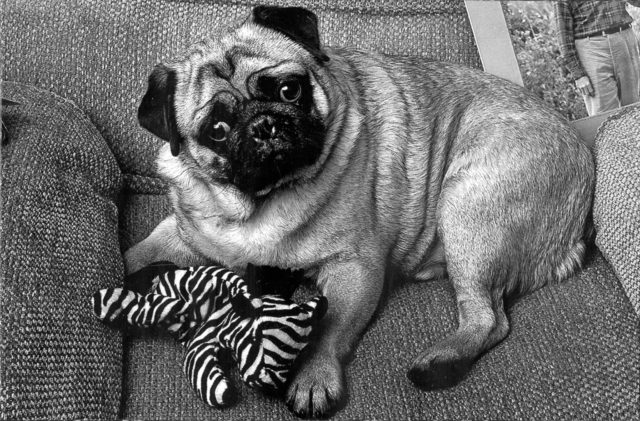
William “Tex” Moncrief has owned a lot of dogs in his 100 years, but none were as special to him as Lucky.
Lucky came to Tex and his wife Linda in 2007, when the pug was only around 3 or 4 months old.
“He was a cute little guy, all ruffled up,” Tex said. “His name was (originally) Zamboni, like the machine they drive on an ice rink. I said, ’I’m adopting you, but your name is not Zamboni anymore; from now on, you’re Lucky.’ We loved that dog.”
And Lucky, he was.
Over the years, Lucky came to mean a lot to the Moncriefs, and Tex, especially, meant a lot to the pug.
“If Lucky happened to be asleep, and I got up and walked away and didn’t wake him up, it didn’t make any difference where I went in this house—and it’s a pretty large house—he would find me,” Tex said. “It was the darnedest thing. I’d look down and pat him, and he’d lick my hand and wiggle his tail.
“I’ve had several pugs, but he was the most lovable fellow I ever had; he just had to be with me,” he said.
Lucky
Lucky even liked to sleep with his head on Tex’s shoe, which Linda interpreted as “making sure he wouldn’t get left behind.”
When, at one point, Tex was briefly hospitalized for a nosebleed, Lucky did get left behind, but the pug still did his best to “be” with Tex.
“I came back from the hospital and I couldn’t find Lucky where he normally stays, by the kitchen or the main entrance. I said, ‘What happened to Lucky?’” Linda recalled. “It was unusual, because when we were away, he would make sure he was the first to greet us.
“So, I went downstairs, and I found Lucky on his (Tex’s) shoes, the way he always slept when Tex was wearing his shoes,” she said. “I brought the shoes upstairs and I left part of his clothes in the chair Lucky rested in so that he would feel comforted. I thought that was very special.”
So special, in fact, that Linda ended up bringing Lucky to the hospital to see Tex.
“He was so happy,” Tex said. “He crawled right up on the bed, and I just rubbed and patted him.”
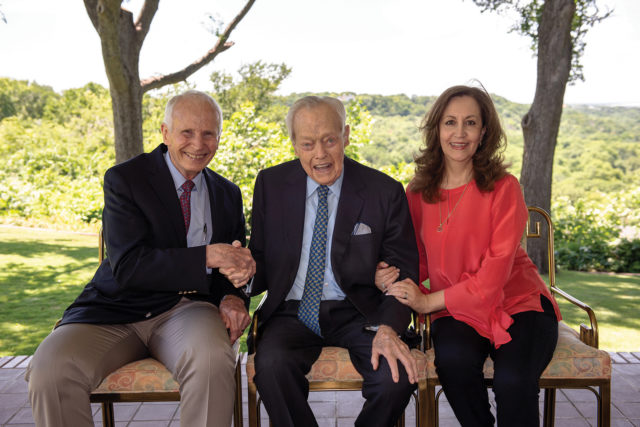
Dr. James Schroeder, Tex Moncrief, and Linda Moncrief
As Lucky aged, he developed Addison’s Disease and then leukemia, which eventually took his life at the age of 11. It was a hard loss for the Moncriefs.
“For weeks there, we could hardly stand it, missing that dog. I don’t think I’ve ever had a dog in all of my life that I missed that much. It was awful,” Tex said. “I didn’t think we were going to get over him.”
When Lucky passed, the veterinarian who had cared for him throughout it all—Dr. James Schroeder ’65—was there with the dog. Because of the routine nature of Lucky’s treatment, Schroeder had become a fixture in the Moncriefs’ lives.
“I met Dr. Schroeder when I took Lucky in for a checkup. I was impressed when I first met Jim,” Tex said. “Dr. Schroeder and Jill (who worked for Dr. Schroeder) would come to our house to care for Lucky, like he was a little child of their own, almost, and they were just gentle. It meant a lot to me for them to do that.
“Dr. Schroeder just made life easier for us, knowing we were going lose him,” he said. “From Jim, I understood how you can love a little dog.”
Knowing that Lucky’s passing was particularly hard on the Moncriefs, Schroeder wrote a letter to the couple to express his condolences. The framed letter now hangs in their home.
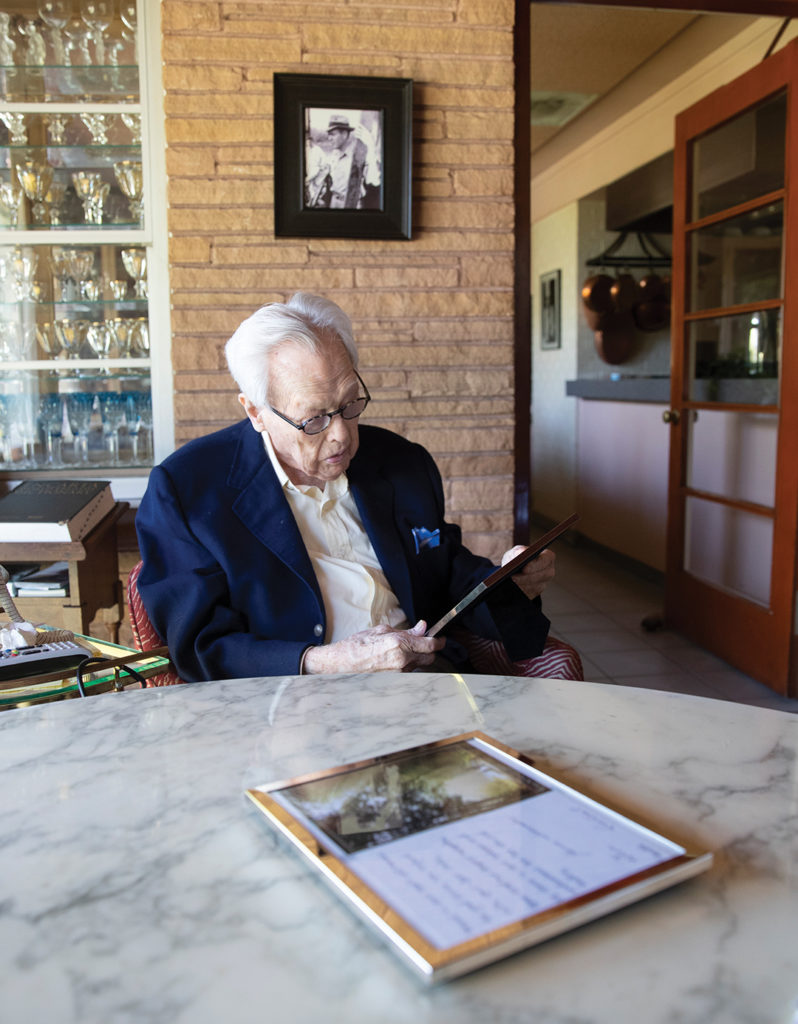
Tex Moncrief reads from the framed letter written to him and Linda from Dr. James Schroeder following Lucky’s passing.
“‘The past month was difficult to see Lucky lose his strength and energy but through all of that time, until the end, he remained very loyal and faithful to you,’” Tex says, reading the letter. “‘Though it is with humility that I understand that I am unable to cure or save all of my patients, I have long realized that I am just the hands that the Lord uses to assist in the ultimate purpose for these little creatures He gives us for a time to enjoy and care for. Believing that gives me some comfort as I try to help with the end of their lives.
“‘I will always remember as Lucky’s life was ending that you said a very…,’” Tex pauses as he reads, emotions welling up. “‘…dear prayer thanking God for giving those years with Lucky to enjoy his companionship. I have also seen the sweet adoration and love that you and Linda have shown for each other. That is a reflection of a kind and generous heart that I have seen and I thank you for your trust.’”
In recognition of that mutual love and respect, Tex and Linda decided to “give back” to Schroeder’s alma mater with a gift honoring their long-time veterinarian. The funds will honor Schroeder in perpetuity, with a room named after Schroeder at the Texas A&M College of Veterinary Medicine & Biomedical Sciences’ (CVM) Small Animal Hospital.
“Jim Schroeder is just one of the finest men I’ve ever met. He’s not only a good veterinarian, he’s just a fine gentleman,” Tex said.
Editors note: Dr. James Schroeder passed away Feb. 13, 2020. We send our condolences to the Schroeder family.
For more information about the Texas A&M College of Veterinary Medicine & Biomedical Sciences, please visit our website at vetmed.tamu.edu or join us on Facebook, Instagram, and Twitter.
Contact Information: Jennifer Gauntt, Director of Communications, Texas A&M College of Veterinary Medicine & Biomedical Sciences; jgauntt@cvm.tamu.edu; 979-862-4216
CVMBS Interim Dean Dr. John August Hosts Virtual Meet And Greet
Dr. John August introduced himself to the CVMBS during a virtual meet and greet on July 2.
August assumed the role of interim dean on July 1 and will work to support faculty,
staff, and student success until the dean’s position is filled permanently.
Texas A&M CVMBS Celebrates Diversity With New Video Campaign
The “I Am CVM” video campaign was created by the Office for Diversity & Inclusion and
the Center for Educational Technologies to celebrate the unique identities that make up
our college and represent the CVMBS’s goal of being welcoming to all.
Four years ago, Santana arrived at the Texas A&M Large Animal Hospital with injured tendons
in his front feet. Following a combination of stem cell perfusions and special shoeing, the
24-year-old Quarter Horse has gone from severely lame to minimal pain!
An early interest in cancer research set Mahsa Zarei on a path to investigate treatments for rare and genetically linked conditions.
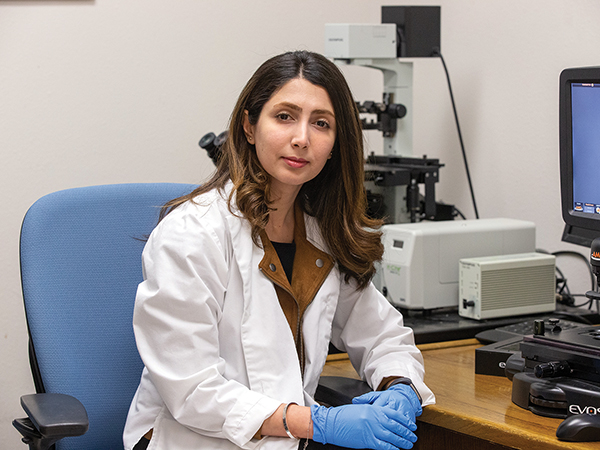
Dr. Mahsa Zarei
Ask most 12-year-old children what they want to be when they grow up and you are likely to get a variety of answers ranging from professional athlete to astronaut.
While doctor or scientist might be on that list as well, it is doubtful you would hear something as specific as cancer biologist.
When Zarei was 12 years old, she watched two of her close aunts fight cancer. One aunt benefited from early diagnosis and treatment; the second passed away.
Throughout this ordeal, Zarei’s mind raced with questions: How could she help her aunts? What kind of cancer did they have? What were the treatments?
As a result, she became an avid student of cancer, devouring cancer biology books.
“At 12, I wanted to know, what is cancer and what’s happening with the cancer?” Zarei recalls. “I learned most of the treatments for different types of cancer.”
Zarei’s interest in this career path never wavered.
She earned her undergraduate degree in medical bio-technology and her Ph.D. in cancer biology before accepting a postdoctoral research scientist position at the Sidney Kimmel Cancer Center in Philadelphia.
In 2016, she was the lead author on a study about pancreatic cancer and its ability to survive in the nutrient-poor conditions of the pancreas. The survivability of pancreatic cancer in such poor conditions has also seemed to translate to its resistance of current chemotherapy treatments.
“It’s like a cactus in a desert,” Zarei explains, “without any nutrients, but it’s still growing and aggressive.”
Zarei and her co-researchers found that one of the key proteins, HuR, allowed the cancer to survive in the nutrient-poor microenvironment of the pancreas. It also gave the cancer a resistance to chemotherapy drugs.
What Makes Cancer Tick
As the well-known Sun Tzu quote advises, “Know the enemy and know yourself, you need not fear the result of a hundred battles.”
Zarei has followed this advice in her research by knowing her enemy.
Cancer, in one of the broadest definitions of the term, refers to diseases that cause abnormal cells to divide without control and can invade nearby tissues, according to the National Cancer Institute.
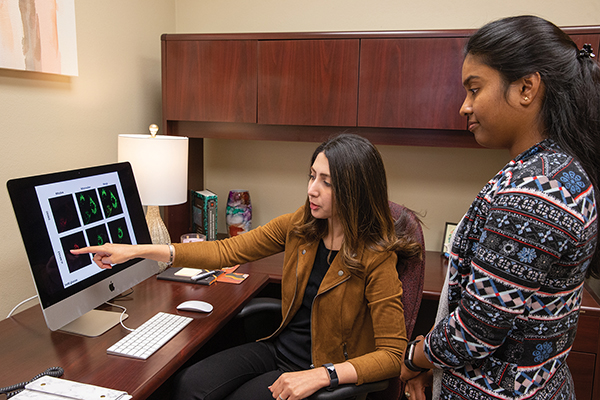
Dr. Mahsa Zarei and Sneha Harishchandra
Most know that there are many different types of cancer caused by any number of things or underlying conditions. Doctors and researchers have spent decades, even centuries, fighting cancer in all its forms.
Previous treatments, like chemotherapy, concentrated on killing the cancerous cells, but more recently, there has been a push to discover new ways of fighting it.
For the better part of her career, Zarei took the approach of figuring out how different types of cancer worked at a very basic level. By understanding the different pathways and processes that allow these cancers to live and grow, she can understand how better to fight them at that basic level.
After leaving the Sidney Kimmel Cancer Center, Zarei joined Harvard Medical School as a research scientist fellow. There, while working at the Brigham and Women’s Hospital, she learned about a pair of fraternal twins, one of whom had tumors in the kidney; no one could determine why these tumors were occurring.
“That’s why I worked so hard to try and understand her disease better and to come up with something,” she said.
After conducting genetic screening, Zarei’s lab found that the girl had a rare genetic disease that causes tumors that can affect the brain, kidneys, lungs, and heart. A mutation in a protein complex called tuberous sclerosis complex (TSC) is what causes the tumor growth.
In normal cells TSC1 and TSC2 help inhibit, or stop, another protein complex called mTORC1. The girl’s tumor cells lacked TSC2, so mTORC1 was hyper-activated. This caused the out-of-control division of cells and the growth of the tumor.
After finding the pathway involved in the rare genetic disease, Zarei and her co-researchers looked for ways to interrupt that pathway. They found a drug called THZ1 that was being used for different cancer types, including breast and ovarian cancer.
When tested on TSC-deficient cells and normal cells, THZ1 selectively targeted the TSC-deficient cells and caused them to die, but left healthy cells alone.
The established treatment for this disease is a drug called rapamycin. Rapamycin and drugs similar to it, commonly called rapalogs, reduce tumor size while the patient is taking the drug. However, as soon as the treatment ends, the tumors begin to grow again, which means that patients would have to remain on the drug indefinitely.
Zarei’s research found that THZ1 not only reduced tumor size, but it prevented re-growth of the tumors after stopping treatment. The U.S. Department of Defense now funds this study, and Cyrus Pharmaceutical Company has begun the first clinical trials of a derivative of THZ1.
“We are hoping that in the near future we can use this with a TSC patient,” Zarei said.
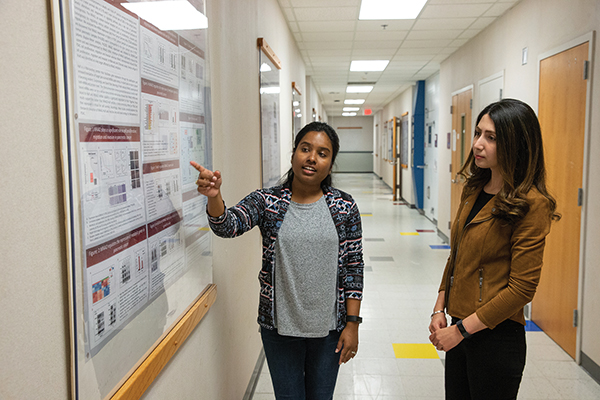
Sneha Harishchandra and Dr. Mahsa Zarei
Aggieland Bound
In 2018, Zarei moved to College Station with her husband, who had accepted a position in the Texas A&M University College of Engineering.
“The evaluation of her cancer research program by the faculty in our department identified Dr. Zarei as a rising star and drove our intense interest in getting her to Texas A&M,” said VTPP department head Dr. Larry Suva. “She is an asset to our department, college, and university.”
Suva describes Zarei as a “role model for the energy and focus needed for faculty to succeed in academia.”
She has also renewed her research in pancreatic cancer with renowned cancer researcher Dr. Stephen Safe, also in VTPP. Together, they hope to find a new treatment that will reduce pancreatic cancer’s tolerance of its harsh microenvironment and chemotherapy.
Zarei is hopeful they will be able to publish their findings soon.
“Dr. Zarei has been great to work with,” Safe said. “She will be a prime candidate for a full faculty position.”
Zarei has turned an adolescent passion into a thriving career. In the future, she wants to continue finding answers in the lab that translate to the patients’ beds.
While she has mentored and taught students in her lab, including undergraduate researchers like Rachel E. Yan, one of the co-authors on Zarei’s most recent journal publication, she also hopes to return to the classroom soon, to pass on what she has learned.
Zarei wants to teach undergraduate and graduate classes, and “maybe a cancer biology class, if that’s possible.”
“My future goal is to be a well-known scientist, working on rare diseases and pancreatic cancer,” Zarei said. “I’m really passionate about having students to work with.”
For more information about the Texas A&M College of Veterinary Medicine & Biomedical Sciences, please visit our website at vetmed.tamu.edu or join us on Facebook, Instagram, and Twitter.
Contact Information: Jennifer Gauntt, Director of Communications, Texas A&M College of Veterinary Medicine & Biomedical Sciences; jgauntt@cvm.tamu.edu; 979-862-4216
Many veterinarians and staff members at the Texas A&M Large Animal Hospital (LAH) recognize Santana Bening. The 24-year-old Quarter Horse has been a patient since 2015 and for several years now has been visiting every five weeks to receive specialty shoes and other treatments for injured tendons in his front feet.
Some also know Santana by his owner, Chloe Bening, a second-year veterinary student at the Texas A&M College of Veterinary Medicine & Biomedical Sciences (CVM).
Chloe got Santana when they were both 11 years old, and the two immediately became best friends. Together, they participated in American Quarter Horse Association (AQHA) all-around events and dressage, competed nationally, and took home the AQHA Year-End High Point in Youth first-level dressage award in 2013.
When Santana developed a severe lameness of his front right foot in August 2016, he was subsequently retired from his show career. Chloe and her parents brought him to the LAH, where he was seen by Dr. Sarah Sampson, a clinical assistant professor of equine sports medicine and imaging.
“Santana was so lame when we first saw him that the only way we could get him comfortable was to put his leg in a bandage cast so that he didn’t have any significant movement of that limb,” Sampson said.
Following an ultrasound and MRI, Sampson determined that Santana had severe deep flexor tendon injuries in both of his front feet, with the right foot being more painful at the time. This tendon damage was partially caused by a degenerative process commonly seen in his breed and repetitive strain over his long show career.
Even though the Benings knew they had a long, expensive road ahead of them to heal Santana, they were determined to do whatever was necessary to get him happy and pain-free.
Santana and Dr. Sarah Sampson
Starting With Stem Cells
After his diagnosis and a short period of rest, Santana began treatment with a series of stem cell perfusions in his front feet.
Stem cell perfusions work by injecting stem cells cultured from bone marrow, in this case taken from Santana’s sternum, into the affected limb. With their anti-inflammatory properties and their ability to signal to other cells in the body, stem cells improve the horse’s ability to self-heal.
According to Sampson, stem cells are a relatively common treatment at the LAH, especially in the sports medicine service.
“Between all of the services at the hospital, I think there’s usually a horse in one of the services receiving stem cell treatment,” Sampson said. “Because we have a lab of our own at Texas A&M, it’s pretty easy for us to get bone marrow and do the culturing.”
Stem cells are most frequently used to treat injured tendons and ligaments in horses but are also becoming a more common option for cartilage tears or fractures in joints. Equine veterinarians are hopeful that with time, even more possibilities will arise.
“There’s a lot of research that still needs to be done,” Sampson said. “The hope is that we will be able to say, ‘This is a lesion that we can definitely help with stem cells,’ and to be able to focus in on where we truly can be the most helpful.”
Chloe Bening and Santana
Slow And Steady
While receiving stem cell treatments, Santana also began visiting Jason Maki, the LAH’s in-house farrier, whom Santana has seen every five weeks since for shoe adjustments. He was first fitted with thick, protective shoes called clogs that kept his heels elevated to reduce the pain in his feet and allow the tendons to heal, before gradually transitioning to shoes with a large heel wedge.
To protect his tendons, the Benings no longer ride Santana but still keep him busy practicing showmanship, which involves leading a horse through a pattern of walking, trotting, backing up, and pivoting.
“He really loves to stay competition-ready. He likes to be all shaved and look like a show horse,” Chloe said. “Besides that, he gets hand grazed and turned out in a small turnout, so he can’t hurt himself but is big enough that he can walk, trot, lope, and mess around. He’s living the good retired life.”
In addition to the talented veterinarians and staff members who have contributed to Santana’s healing journey, Sampson largely credits the Benings for his success.
“The Benings are those clients who do everything we tell them to do better than we could probably do it ourselves,” Sampson said. “At one point, his feet needed to be iced 24 hours a day, and they were paying people to go to the barn where he was boarded and ice him through the night. That’s what helps us treat animals the best, when the owners do exactly what you say.”
Santana and Dr. Sarah Sampson
At Home In College Station
Luckily, Santana doesn’t mind the drive from Katy to College Station every five weeks, mainly because it gets him an extra visit with Chloe.
“As soon as mom pulls up the trailer at the barn and says, ‘You ready to go see Chloe?’ he will drag her to the trailer and jump right in,” Chloe said. “He loves to see all of the veterinary students, so he walks in there like he owns the place.”
Being a CVM student, Chloe has the extra benefit of being able to know the “behind-the-scenes” of Santana’s care and studying under the faculty members, like Sampson, who treat him.
“It feels like a group effort to take care of him at this point because everybody’s seen him for so long,” she said. “It’s awesome because I know that they’re taking care of him and I can trust them; I know that they’re always there watching him. It’s just so nice to know that they care so much for him.”
###
For more information about the Texas A&M College of Veterinary Medicine & Biomedical Sciences, please visit our website at vetmed.tamu.edu or join us on Facebook, Instagram, and Twitter.
Contact Information: Jennifer Gauntt, Director of CVM Communications, Texas A&M College of Veterinary Medicine & Biomedical Sciences; jgauntt@cvm.tamu.edu; 979-862-4216
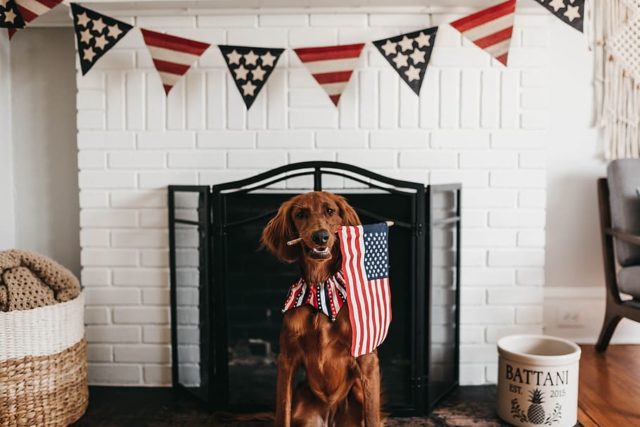
Independence Day is a lively, outdoor holiday that offers many opportunities to include your furry friend. Although these summer festivities can be enjoyable for both pet and person, owners should be wary of possible hazards associated with the celebration.
Kate Kimble, a third-year veterinary student and student ambassador at the Texas A&M College of Veterinary Medicine & Biomedical Sciences, advises pet owners on how they can keep their pets safe this Fourth of July.
“When attending a social event with your dog, make sure to keep them leashed and up to date on all their vaccines so they can interact safely with other people and pets,” Kimble said.
Pet owners also may want to consider providing guidelines to their friends and other partygoers on how they should interact with a pet. For example, an owner might ask that others refrain from slipping their pooch table scraps.
“During holidays we often have an abundance of decadent foods that we, as people, look forward to and love,” Kimble said. “Avoid feeding your pets scraps or bites of human foods, as they can often lead to an upset stomach, vomiting, and diarrhea.”
In severe cases, a gastrointestinal disorder may develop. Obstructions may also occur—especially if your pet gets their paws on a bone or corn on the cob. In addition, alcohol should never be given to pets because it can be fatal.
Your pet can also become ill from chowing down on non-food party items, like decorations or sparkly streamers, and develop a serious medical condition, such as a blockage, Kimble advised. Owners who suspect that their pet has ingested a toxic substance should contact the Animal Poison Control Center at (888) 426-4435 or their veterinarian.
Pet owners should also keep an eye out for their pet’s temperature. Especially in a Texas summer, preventing overheating is paramount to keeping pets safe this Independence Day. Owners should be aware of the dangers of heat stroke.
“During Fourth of July gatherings, make sure to keep your pet cool, with plenty of access to water, shade, and place to retreat from the hot summer air,” Kimble said.
Fireworks are a highlight of the holiday for many people, but our pets may not enjoy the loud explosions and flashing. Kimble warns that pet owners should be cautious of allowing their pets outdoors during fireworks shows, as the loud noises and lights might spook an animal and cause them to flee their yard if they feel unsafe.
“Some of our furry companions are not the biggest fans,” she said. “To ensure the safety of pets during a fireworks display, keep them inside or away from the fireworks, in an area in which they are shielded from the loud noises, bright lights, and sparks.”
If pet owners are concerned about how their furry friend handles disruptive events, they should reach out to their veterinarian to best determine how to keep their pet calm and happy. Kimble advises that there are tools to help your pet better manage stress, including veterinarian-prescribed medications and calming treats or chew toys.
“Another option to help pets through scary times, such as a fireworks display, is to dress them in a compressive vest or shirt that applies constant pressure, which mimics swaddling and promotes a calming sense in the animal,” she said.
Outdoor games and gatherings hosted on Independence Day can provide wonderful enrichment for your pet. Although pet owners should remain vigilant and keep an eye out for any dangers the Fourth of July brings, it is a wonderful opportunity to safely celebrate our nation and freedoms with friends and family, person, and pet.
Pet Talk is a service of the College of Veterinary Medicine & Biomedical Sciences, Texas A&M University. Stories can be viewed on the web at vetmed.tamu.edu/news/pet-talk. Suggestions for future topics may be directed to editor@cvm.tamu.edu.
The Petco Foundation Pet Cancer Treatment grant at Texas A&M’s Veterinary Medical Teaching Hospital (VMTH) provides financial assistance to pet owners like Cannon Lenfield who have modest means or whose pets have provided a service to others.
Cannon Lenfield and Liberty
Like most college students, Cannon Lenfield ‘20 didn’t have a lot of extra funds on hand when his 9-year-old dog, Liberty, was diagnosed with lymphoma in 2018. Yet the Texas A&M University student proved to be very resourceful in finding ways to pay for his dog’s treatment.
“At that point, I had just paid tuition and couldn’t afford to pay any more at the moment,” explained Lenfield, who didn’t have canine health insurance. “There was no way Liberty was going to be able to receive treatment any longer without help.”
“I definitely couldn’t buy a lot of stupid things anymore; I stopped eating out and stuff like that,” he said. “I knew that it was going to take a lot of money to pay for it so I doubled my hours.”
Lenfield was so committed to ensuring Liberty’s care that after being in a motorcycle accident, he reallocated an insurance payment to help pay the bill.
“My bike still worked so I didn’t need the money,” he said. “I was fine.”
The timing of receiving these funds was especially helpful in Liberty’s case.
A Friend For Life
Lenfield was a boy when his family adopted the mixed-breed puppy from a kill shelter. They decided to name the dog Liberty because she was scheduled to be euthanized on Sept. 11 but was rescued on Sept. 10.
The young boy and pup quickly formed a tight bond and grew even closer in the ensuing years. Lenfield opted to bring her to college with him so he could spend time with her between his classes and studies.
The Oncology team at Texas A&M University
“She was definitely my best friend,” he said.
When the dog reached the age of 9, she started displaying signs of ill health.
“While I was on vacation, the dog sitter noticed a lump on both sides of her neck, in her lymph nodes,” the public health graduate said. “I took her to the veterinarian the day that I got back and they told me that she probably had cancer.”
Lenfield immediately turned to the VMTH’s oncology staff—who confirmed the diagnosis—to oversee Liberty’s treatment.
“Obviously, they were going to be the best help that I could get,” he said. “Plus, there’s no one else in the area that offers treatment for lymphoma.”
The Best Treatment For A Best Friend
After deciding to pursue treatment at the VMTH, Lenfield found that that care wasn’t cheap.
“We use a lot of the human-level drugs and equipment, but we don’t have insurance to help support that,” said Dr. Heather Wilson-Robles, an associate professor and Dr. Fred A. and Vola N. Palmer Chair in Comparative Oncology. “We keep our prices as low as we can, but unfortunately, it’s still expensive.”
Liberty initially qualified for a study that helped cover a portion of the initial treatment cost.
“That helped pay for a portion of the costs and then after that, anything additional was on me,” Lenfield said. “I got the Petco funds later, but in between there and then it was all me.”
The VMTH’s staff was excited to be able to offer Lenfield the funds because they were so impressed by his commitment to Liberty.
Liberty
“He was trying so hard to do everything for this dog. We had sort of piecemealed treatments for him as much as we could—we put her on any studies we could and looked for anything we could do to help him pay for things,” said Wilson-Robles. “Finally, we got to a point where we didn’t have any studies she qualified for and he just wasn’t sure he could afford treatment, so we offered him the Petco funds. He just started sobbing because he was just so grateful because he didn’t have to stop. This dog was his family. He didn’t have any other family in town.”
“I didn’t think happy tears were real until I got the financial assistance to care for Liberty, Lenfield said.
Worth Every Penny
Sadly, despite her treatments, Liberty succumbed to her lymphoma in September 2019, but throughout it all, Lenfield had no doubt that the VMTH veterinary staff was focused on providing Liberty the best care possible.
“I can’t say enough how awesome these people are,” Lenfield said. “They truly are a wonderful group of people and there’s no one else in the world I would’ve rather treated my dog. They are some of the most caring, compassionate and knowledgeable people this world has to offer and will do everything in their power to take care of you and your animal.”
Lenfield said given the chance, he would take the same course of action all over again.
“If you have the money, you should definitely spend it. She was there for me for eight years and I only had to do it for one year. Up until then I only fed her,” he said. “I would never take any of the money back. I spent like $1,500 in the last week she was alive and even that week was worth $1,500.”
For more information about the Texas A&M College of Veterinary Medicine & Biomedical Sciences, please visit our website at vetmed.tamu.edu or join us on Facebook, Instagram, and Twitter.
Contact Information: Jennifer Gauntt, Director of Communications, Texas A&M College of Veterinary Medicine & Biomedical Sciences; jgauntt@cvm.tamu.edu; 979-862-4216
Snorts, yips, growls, and groans—pet dogs make a variety of sounds that can entertain or worry their owner, depending on the circumstance.
Though owners who have concerns about the health of their pet should always consult a veterinarian, Dr. Lori Teller, an associate professor in the Texas A&M College of Veterinary Medicine & Biomedical Sciences (CVM), weighs in one of the many unusual noises a pet dog can make: reverse sneezing.
Also known as inspiratory paroxysmal respiration, reverse sneezing is caused by a muscle spasm at the back of a dog’s mouth where it meets the throat. This spasm, which lasts around 30 seconds, causes a temporary narrowing of the opening of the trachea, making it difficult for the dog to inhale.
“A reverse sneeze is a sudden, involuntary respiratory reflex, but instead of forcefully expelling air out, like a regular sneeze, air is sucked into the nose with a series of rapid, forceful inhalations,” Teller said.
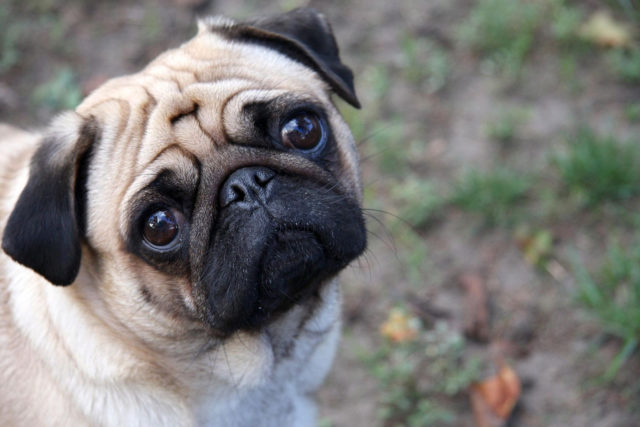
Episodes of reverse sneezing can occur in any breed of dog, but Teller said they seem to be more common in brachycephalic, “smushy-faced,” dog breeds like pugs, Shih Tzus, and Bulldogs.
“A reserve sneeze sounds like a combination of a loud snort, honk, and choking noise,” Teller said. “The dog may stand very still with their front legs and neck extended. The owner will notice their pet’s chest and abdomen rapidly moving in and out.”
While a reverse sneezing episode may be cause for concern for some pet owners, Teller wants owners to know that it is not painful or harmful for your pet.
“People are concerned that their dogs cannot get air and are suffocating or choking to death,” Teller said. “However, it is much scarier to the owner than to the dog,”
If pet owners find their dogs experiencing reverse sneezes, Teller says there are several techniques owners can use to calm their dog and get the episode to stop.
“During an episode, an owner can try speaking in a soothing voice while gently massaging the dog’s throat,” Teller said. “The owner can also gently blow in the dog face to make it swallow or gently open the dog’s mouth and press down on the tongue to alleviate the spasm.”
Occasional episodes of reverse sneezing are normal and are not of concern to the health of the dog, but always consult a veterinarian if your furry friend is experiencing respiratory symptoms that impact their ability to breathe or if reverse sneezing episodes are recurring.
“If your dog has chronic episodes or other respiratory issues, such as coughing, nasal discharge, or difficulty breathing, or just does not seem to feel well, then it’s important to seek veterinary attention to determine if there are other problems going on,” Teller said.
Pet Talk is a service of the College of Veterinary Medicine & Biomedical Sciences, Texas A&M University. Stories can be viewed on the web at vetmed.tamu.edu/news/pet-talk. Suggestions for future topics may be directed to editor@cvm.tamu.edu.

 Dr. Lori Teller, an associate professor in the Texas A&M College of Veterinary Medicine & Biomedical Sciences, says that because dogs can suffer from psychological conditions like their human counterparts, owners can benefit from having an awareness of possible causes, diagnosis, and how canine post-traumatic stress disorder may be managed to give your furry friend the best life possible following periods of stress and trauma.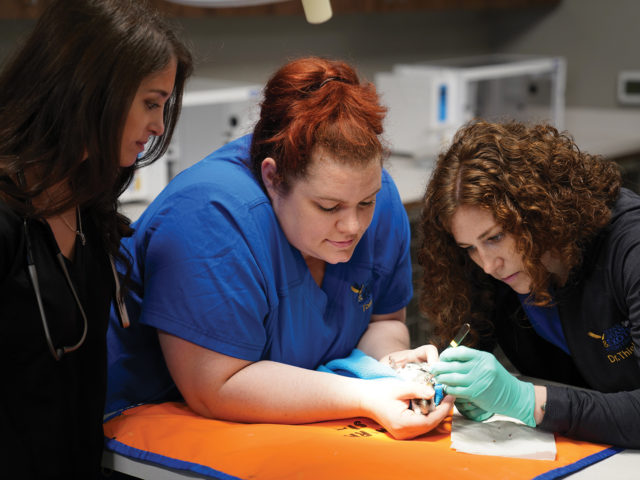
 The current national outbreak of VSV began on April 13, when the National Veterinary Services Laboratory reported VSV-positive premises in New Mexico. On April 23, the first in-state VSV finding of this outbreak was reported at an equine facility in Starr County, Texas.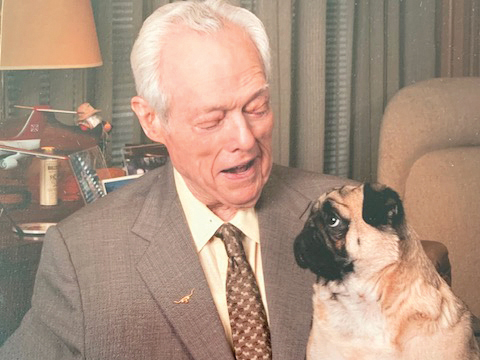


 Though owners who have concerns about the health of their pet should always consult a veterinarian,


