Setting The Pace

Although Dr. Ashley Saunders regularly implants canine pacemakers, she found herself confronted by multiple challenges as she worked through the night to save Birdie’s life.
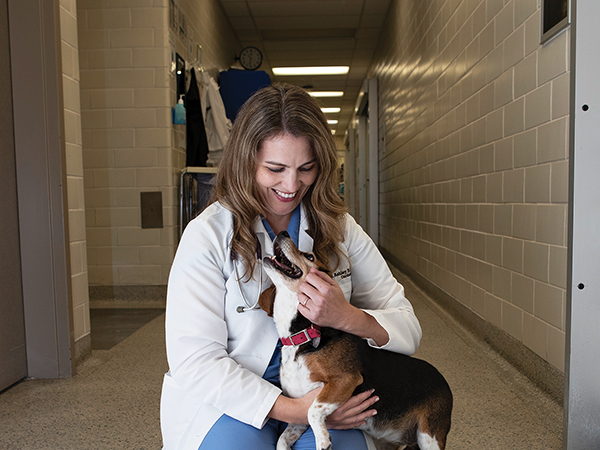
Dr. Ashley Saunders holding Birdie the dog
Dr. Ashley Saunders and Birdie, a canine pacemaker recipient

When Birdie arrived at the Texas A&M Small Animal Hospital (SAH) with an extremely low heart rate, Dr. Ashley Saunders knew that immediate action was necessary to save the 7-year-old Beagle’s life.

As a veterinary cardiologist and professor at the Texas A&M College of Veterinary Medicine & Biomedical Sciences (CVM), Saunders had seen Birdie’s symptoms many times.

Cases with arrhythmias, or slow, irregular heartbeats, come into the SAH on a weekly basis; if caught in time, the condition is typically fixed with a treatment that is routine to Saunders but often a surprise to the general public—by implanting a pacemaker.

These surgeries are usually minimally invasive with a quick recovery time, but in Birdie’s case, it would take a team of specialists an entire night to heal her heart.

A Miraculous Recovery

In May 2019, Birdie’s owner, Katherine McLeod, noticed that Birdie was acting sluggish and behaving abnormally.

“It was really odd. It was like she was just cranky,” McLeod said. “Over the next couple days, she got pretty lethargic and acted like she didn’t want to go outside or do anything. She was still eating and drinking, but she clearly didn’t feel well.”

McLeod’s local veterinarian in Waco discovered that Birdie had an abnormally slow heartbeat and recommended a medication for treatment. But the medicine only helped for a few days, so when the lethargy returned on a Saturday afternoon, McLeod knew that her best option was to bring Birdie to the SAH, where she entrusted Saunders with Birdie’s care.

“Birdie had a really low heart rate called third-degree AV (atrioventricular) block,” Saunders said. “The middle part of the heart stopped working, so the top and bottom couldn’t communicate well.”

This miscommunication contributed to Birdie’s slow heartbeat, lethargy, and overall unwell feeling.

Almost immediately after the diagnosis, Saunders, fourth-year veterinary student Amanda Tabone, and SAH staff began preparing to implant Birdie’s pacemaker.
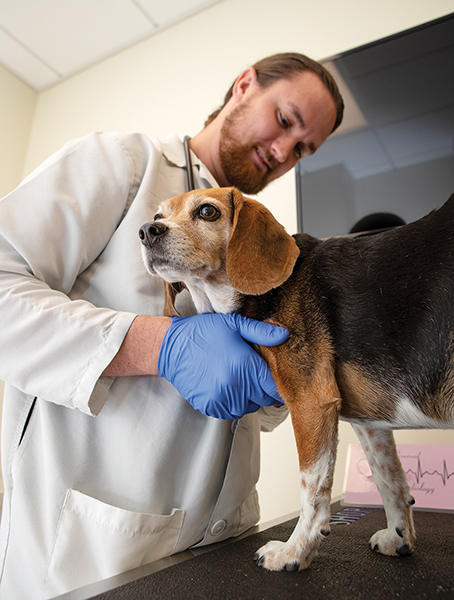
Fourth-year veterinary student Austin Floyd examines Birdie the dog
Fourth-year veterinary student Austin Floyd examines Birdie.

“Typically, you want to put a pacemaker in through the jugular vein in the neck,” Saunders said. “That’s the ideal way to do it. So, we took her back to do that, but the pacemaker electrically would not capture her heart. This can happen in rare cases, and we have to quickly adapt.”

Saunders moved to the next option, which involved surgically screwing the pacemaker into Birdie’s heart through her chest. Thanks to help from Dr. Whitney Hinson, a small animal surgery resident, they finally got the pacemaker attached and working properly.

But because of the unexpected issues with the pacemaker, Birdie remained under anesthesia for longer than they initially planned and more complications began to arise.

“We were in surgery into the middle of the night at that point,” Saunders said. “Dr. (Bradley) Simon, the anesthesiologist, stayed with us the entire time, and we ended up having to spend even more time trying to get her to wake up after the surgical procedures because her lungs were slow to reinflate.”

Finally, Birdie improved. By the next day, the pacemaker had brought Birdie’s heart rate back to normal speed and she was able to go home to Waco with her family.

“Dr. Saunders called me that morning and said miracle of miracles, basically,” McLeod said. “She said, ‘You can come get her. She’s doing great.’ You could tell in her voice that she was excited.”

Giving Dogs A New Leash On Life

While Birdie’s case had several setbacks, canine pacemaker implants are typically much less complicated, according to Saunders. She sees canine pacemaker cases at least once a week, on average, for a variety of dog breeds and ages.

“Everybody is always stunned when I say I’m a veterinary cardiologist,” Saunders said. “People always say, ‘What? People put pacemakers in their dogs?’ Yes, we can do that, and we do it a lot. That always surprises people.

“It’s exciting with older dogs because people often think their dog is just getting older and they are cautious about spending the money to put a pacemaker in at that age,” Saunders said. “I tell them we’ve paced a lot of older dogs and people frequently tell us that their dog’s energy is way better; what they have attributed to aging was actually low heart rate. I think that encourages people to move forward and then it allows the dogs to have their activity back.”

For Saunders, being able to perform those life-changing procedures, and getting to work with a variety of other SAH services in the process, makes the high-stress career worth it.

“People don’t realize how high-stress it is to be a cardiologist because it feels like life and death all of the time,” Saunders said. “But in the moment, you have to keep thinking because you really have a patient’s life in your hands; you just have to keep problem solving until you get it.

“I think it helps the more experience you have, but you also have to be really level-headed,” she said. “You have to keep making decisions because when you look around, everybody’s looking to you to make them.”
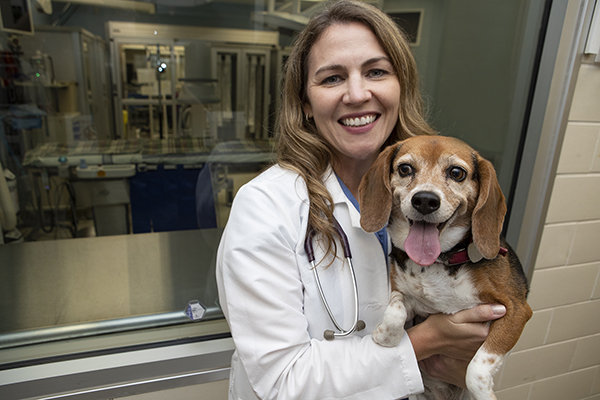
Dr. Ashley Saunders holding Birdie the dog
Dr. Ashley Saunders and Birdie

At the SAH, Saunders finds relief from her stress in the daily student interactions and opportunities to pass on her knowledge to the next generation of veterinarians.

“As you go along in your career, you realize that you were once the one being helped and now you can help other people reach their goals,” Saunders said. “It is really rewarding. The students identify where they want to go and then you can help them along that path.”

Bonding Over Beagles

Tabone was excited to have the opportunity to scrub in for surgery and help care for Birdie post-operatively, especially because of her love for Beagles.

“I was the student on call the weekend Birdie came in,” Tabone said, “and I always joke that if I’m going to get called in, I hope it’s a Beagle, because I have an overwhelming attachment and love for this breed.”

Tabone, who has three of her own Beagles, fell in love with Birdie and was thankful to be involved in her case.

“I enjoyed getting up early every morning to care for Birdie,” Tabone said. “I can’t describe it, but I feel there are patients we’re fortunate to have a special connection with that we can’t predict, and I immediately felt that with Birdie.

“It was incredible to see the transition she made from being very gloomy to being excited and ready to go home with her family,” she said. “I was really lucky that I got called in for this case.”

Birdie’s case was also meaningful for Tabone because it was her first clinical experience and her first opportunity to be hands-on in a surgical setting; when Birdie arrived at the SAH, Tabone and her fellow fourth years had just begun their first week of clinical rotations.

“We had a really unique cardiology rotation, from a student perspective, because all of our residents were gone for their board exams, so it was just the students and Dr. Saunders,” Tabone said. “We got to be one-on-one with her for two weeks, which I found incredibly amazing because of the amount we learned from her and how hands-on we were with all of our cases.”

Tabone also interacted with McLeod and her family to keep them updated on Birdie’s progress. Even after Birdie returned home, Tabone made a habit of checking in with McLeod to make sure Birdie was still feeling well.
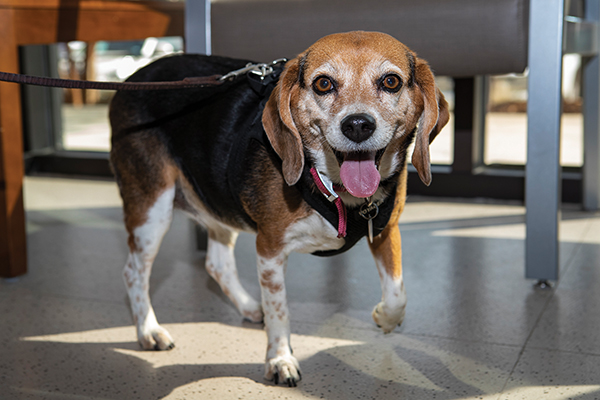
Birdie the dog in the SAH lobby
Birdie

“Birdie’s mom mailed a letter to the teaching hospital, and I’ll definitely keep it for my entire career,” Tabone said. “She had the most kind and sincere things to say about me and the work that Dr. Saunders did. I plan to have it framed in my office and when I’m having a not-so-great day, I can read it and think of my experience with Birdie and her family; it’ll forever be great motivation for my career.”

Likewise, McLeod was extremely grateful for Tabone’s genuine love for Birdie and the fact that she went above and beyond in caring for both client and patient.

“Amanda is going to be one heck of a veterinarian,” McLeod said. “Whatever she decides to do in whatever field, I would go to her in a heartbeat just for her bedside manner. She’s going to have a big-time career.”

Going Home An Aggie

Back in Waco with her new canine pacemaker, Birdie returned to her normal, active, friendly self within a week.

“Anytime you want to take her on a walk, she gets all fired up about that. She loves her treats and all the different food that she gets,” McLeod said. “She’s great with Skittle (McLeod’s other Beagle); they’re best buds and they’re very happy to be back hanging out together.

“I pray for my dogs every day and I’m so thankful that Birdie’s still here and that she’s healthy,” she said. “It’s just really incredible.”

As a huge Baylor fan, McLeod had no experience with Texas A&M before Birdie’s procedure at the SAH, besides rooting against the Aggies on gameday.

“It was funny. When we went to pick Birdie up, she had her maroon bandages on and what I like to call her ‘Aggie haircut,’ because they had to shave parts of her,” McLeod said. “I said, ‘What? Come on, man, no green and gold bandages?’ The hospital staff said, ‘Hey, you’re at A&M.’

“I said, ‘You know what? Forever we will root for the Aggies—unless they’re playing us, which is very unlikely these days,’” she said. “But it’s funny now—any time I watch football, I say, ‘I’m for A&M. Just for A&M.’”

###

Note: This story originally appeared in the Spring 2020 edition of CVM Today.

For more information about the Texas A&M College of Veterinary Medicine & Biomedical Sciences, please visit our website at vetmed.tamu.edu or join us on FacebookInstagram, and Twitter.

Contact Information: Jennifer Gauntt, Director of Communications, Texas A&M College of Veterinary Medicine & Biomedical Sciences; jgauntt@cvm.tamu.edu; 979-862-4216
Hot Topic: Keeping Your Pet Safe As Temperatures Rise

Texas is known for hot summers that leave many residents ready for air conditioning and a cool drink. Because pets’ bodies expel heat less efficiently and generate more heat pound-for-pound than humans, our furry friends can be even more impacted by rising temperatures and heat stress.

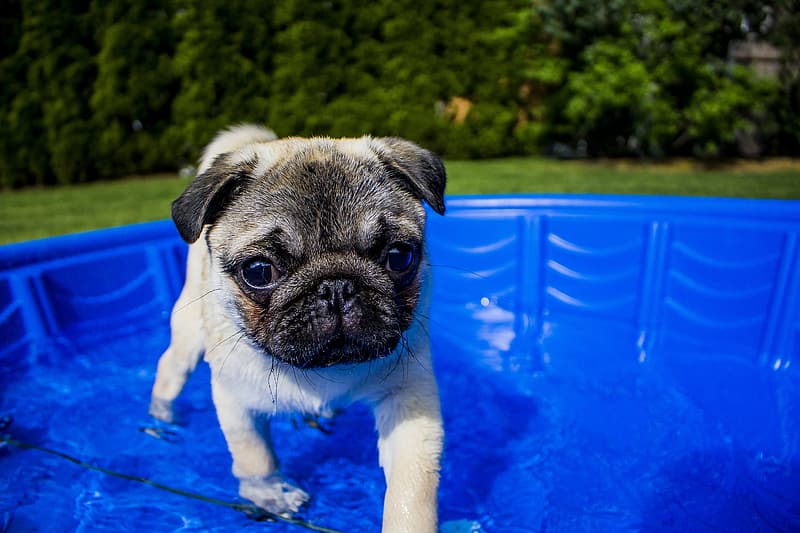
Pug playing in a kiddie pool

Dr. Christine Rutter, a clinical assistant professor and emergency and critical care specialist at the Texas A&M College of Veterinary Medicine & Biomedical Sciences, discusses the dangers that summer heat may present to animals, including heat exhaustion and heat stroke.

“Heat exhaustion is the feeling of lethargy, discomfort, or weakness that is experienced when the body gets too hot,” Rutter said. “Heat stroke is an actual illness that occurs from increased body temperature. It can be life-threatening and cause permanent damage.”

Heat-related issues are prevented through a process called evaporative cooling, which is one of the most efficient ways for an animal to expel heat, Rutter explains. Humans accomplish this largely by sweating, but dogs and cats can only sweat through the bottoms of their feet, so they must expel heat by panting.

“Very young, geriatric, brachycephalic (short-nosed breeds), and pets with heart, respiratory, or endocrine disease are at higher risk for heat injury,” Rutter said. “Obesity and respiratory noises can also identify at-risk groups. While it’s harder to pin down, pets that aren’t acclimated to hot environments will heatstroke more easily.”

Humidity plays an important role in how efficiently an animal can expel heat. As humidity increases, water evaporation and the resulting heat exchange decreases. Once the humidity in the air reaches about 85 percent, evaporative cooling is almost totally inhibited. For pets, this can have serious consequences.

Pet owners should keep a keen eye on their animal when the weather is hot and when the humidity is high; even if you feel OK, your pet might be affected.

“Any dog that wants to take a break or is panting heavily should be given fresh, cool water and a shady spot to rest until their breathing normalizes and they want to return to activity,” Rutter said. “Motivated dogs will return to activity as soon as it is physically possible, which may not be the best plan. Owners have to make some dogs stop and cool off fully.

“As heat stress worsens, pets may have GI signs (vomiting and/or diarrhea), lethargy, weakness, red gums, and coagulation (blood clotting) changes that can cause small, red bruises to form (most commonly in the mouth, whites of the eyes, and the skin of the abdomen).”

Rutter says that cats tend to limit their activity and seek shade when heat becomes an issue, but they still should also always have access to fresh water and be in a familiar environment.

“To cool an animal, I recommend wetting the pet down with cool (not cold) water, turning a fan on high over them, and putting them in a shaded, air-conditioned environment,” she said. “If your pet is displaying signs of heat stress, you should wet them down, crank up the AC, and head directly to your veterinarian’s office. It is most definitely an emergency.”

When walking a pet in the heat, owners should also consider whether the pavement temperature is appropriate for their pet’s paws. Rutter recommends feeling the pavement with your hand; if the pavement is too hot for you to touch it, it’s too hot for your pet.

Vehicles parked with no air conditioning also can be a serious threat during warmer months.

The temperature in parked cars rises quickly even with the windows “cracked.” Rutter says that cars can become lethally hot in as little as 15 minutes, but that time is shorter for animals prone to heat injury.

“Always have your pet inside the vehicle with the air conditioning on if the temperature is 85 degrees or greater,” she said. “Even at temperatures below 85 degrees, never put your pet in the bed of a truck and never, ever leave your pet in a parked car.”

Rutter recommends that pet owners see their veterinarian with any concern for heat stress or heat stroke.

Heat injury becomes a serious condition very quickly; luckily, however, these precautions are usually effective at preventing heat stress, and a mindful pet owner should have few worries as they enjoy their summer with a furry friend by their side.

Pet Talk is a service of the College of Veterinary Medicine & Biomedical Sciences, Texas A&M University. Stories can be viewed on the web at vetmed.tamu.edu/news/pet-talk. Suggestions for future topics may be directed to editor@cvm.tamu.edu.

Texas A&M CVM Focuses On Employee Well-being During Pandemic

Well-being involves the mind, body, and spirit, says Dr. Nance Algert, a member of the Texas A&M College of Veterinary Medicine & Biomedical Sciences’ (CVM) Office for Diversity & Inclusion.

Dr. Nance Algert
Dr. Nance Algert

“Well-being is staying connected to ourselves and knowing ourselves well enough to know what we need,” Algert said. “Well-being is also being mindful about being connected, understanding that we don’t have to do things alone and that to isolate and do things alone can be problematic.”

According to the Merck Animal Health Wellbeing Study, approximately one in 20 veterinarians in America experience serious psychological distress, including depression, burnout, and anxiety, and while half are seeking treatment, only 16% utilize well-being resources available through national or state veterinary organizations.

In an effort to improve well-being in the veterinary profession, the CVM has focused on providing resources for students, faculty, staff, and administrators for several years.

Most recently, maintaining well-being among employees has been a top priority during the COVID-19 pandemic.

Some employees began working from home in March and have been isolated since, while others at the Veterinary Medical Teaching Hospital (VMTH) have faced many new challenges as they continue to serve the people and animals of the community and state.

“It’s a complex time and none of us has done this before,” Algert said. “We’re in a marathon, not a sprint, so we’ve really got to take a little bit of time each day to ensure that we are taking care of ourselves.”

To help their colleagues find those daily moments of well-being, Algert, executive associate dean Dr. Kenita Rogers, and other members of the Office for Diversity & Inclusion are providing CVM faculty, staff, and administrators with many new resources for maintaining physical, mental, and emotional health.

Each week, Rogers updates an ever-growing list of well-being resources that covers a variety of subjects, from addressing fatigue to supporting children during COVID-19. The list, currently containing more than 100 individual resources, is being sent to employees in weekly emails and compiled on the CVM’s COVID-19 Well-being Resources webpage.

“The idea for the resources list was a team effort,” said Rogers, who also serves as director of the CVM’s Office for Diversity & Inclusion.

“At first, we were brainstorming what the Diversity & Inclusion Office could do to help the VMTH, as they were really on the frontlines in dealing with many new situations related to COVID-19—safety concerns, different client interactions, stressful working conditions, etc.,” she said. “We quickly realized that the changes were stressful for everyone in the college and wanted to share these resources with anyone who could use them.”

For those who wish to discuss specific concerns, either personal or professional, the CVM is also offering one-on-one and group facilitated dialogue opportunities. Algert is hosting these discussions to support her coworkers and help manage any conflicts that arise in the workplace from the added stress, anxiety, and fear the pandemic has created.

Amy Savarino, the VMTH chief pharmacist, is one of many employees who has participated in these facilitated dialogues.

“Being a supervisor, I wanted to make sure I had my head on straight and that I felt like I could tackle this issue,” Savarino said. “Life was changing and it went from normal to abnormal so fast. We all went through something and none of us knew how to handle it; none of us has ever handled it before, so even the best prepared person wasn’t prepared.

“It was really easy and just such a pleasant experience,” she said. “Nance was encouraging and uplifting. She just added a calmness and peace that I needed at that moment.”

Providing these well-being resources not only plays a role in keeping employees happy and healthy, it also helps them do the best job possible when teaching students and caring for VMTH patients.

“Taking care of ourselves is not just important but is also a responsibility,” Algert said. “We can only give to others what we can give to ourselves.”

Whether the CVM eventually returns to life as it was before the pandemic or continues to adjust to a “new normal,” the Office for Diversity & Inclusion hopes to keep well-being a priority for employees.

“I hope that there is a real sense of community at the CVM,” Rogers said. “Frankly, how we take care of each other and support each other, particularly during difficult times, defines who we really are. When we look back, I hope we can say that the CVM made it a priority to care for one another and that we were genuinely an inclusive community.”

###

For more information about the Texas A&M College of Veterinary Medicine & Biomedical Sciences, please visit our website at vetmed.tamu.edu or join us on FacebookInstagram, and Twitter.

Contact Information: Jennifer Gauntt, Director of CVM Communications, Texas A&M College of Veterinary Medicine & Biomedical Sciences; jgauntt@cvm.tamu.edu; 979-862-4216
Cracking Into Undergraduate Research

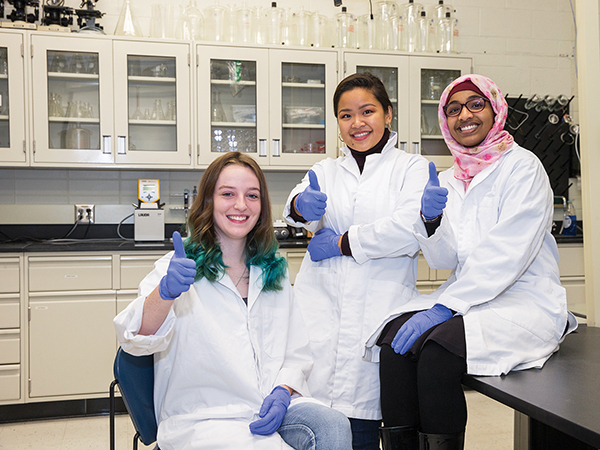
Erin O’Connor, Janisah Saripada, and Oula Eldow in the lab
From left: BIMS majors Erin O’Connor, Janisah Saripada, and Oula Eldow

Chickens’ eggs serve as the foundation for three innovative studies currently underway through the College of Veterinary Medicine & Biomedical Sciences’ groundbreaking initiatives, the Biomedical Research & Development Certificate and the Aggie Research Scholars Program. These programs are designed to help undergraduate students learn to do research.

Both are the brainchild of Dr. Christopher Quick, a professor in the Department of Veterinary Physiology & Pharmacology (VTPP). He started the programs in 2016, and they have grown to be the two largest undergraduate research programs at Texas A&M.

Although these two programs provided semester-long research opportunities to more than 800 undergraduates, they are not even close to meeting demand.

“Approximately one-quarter of undergraduates at Texas A&M get a chance to engage in research before graduating. The Aggie Research Program typically attracts three undergraduates for every research opportunity,” Quick said. “Last year, we could only support 50 percent of the undergraduates applying to the Biomedical Research Certificate Program. We recruit broadly, not to generate interest, but to make sure everyone has a fair shot at participating.”

“He showed up in the fall semester in one of my freshman seminar classes. You see this really eclectic professor come in shouting about this program,” said Janisah Saripada ’21, a biomedical sciences major who plans to attend medical school. “My friend and I said, ’Why don’t we try it out? It looks like a cool research opportunity.’”

Both programs, which serve students across Texas A&M University’s campus, use “research-intensive communities,” a model that involves teams of students coming together to work on research in groups instead of as individuals.

The model also encourages students to try a different research paradigm.

“Our research is more like, ‘See something, Test something and then get more questions from that test,’” Saripada said. “When you experiment and get more knowledge, your questions about the subject matter grow exponentially.”

Ultimately, this program prepares students for doing research in their careers, as well as graduate school.

“I think it’s a really good way to get hands-on experience because a lot of places want research, but it’s not being offered to undergraduates,” said animal science major Erin O’Connor ’21. “This is a good way for undergrads to get their foot in the door and get some actual real-world experience.”

Experiment 1: Radiation And Lymphatic Cells

BIMS major Oula Eldow ’21 and her team are using chicken eggs to study the effect of radiation on lymphatic vessels. The eggs, which are grown in flasks after being removed from their shells, allow students to easily witness changes.

“Being able to grow the eggs this way is very helpful because the blood vessels become really accessible,” Eldow said. “We can see how radiating these eggs will change the diameter of the lymphatic vessels. We also can see if these vessels grow differently when we radiate them versus if they weren’t radiated.”

The team believes this research will help them get a better understanding of radiation treatments used for cancer.

“When you radiate a tumor to stop its growth or kill its cells, the cells in the tumor get a very high dose of radiation, so they die or their growth is stopped,” said Eldow, who wants to become a pediatric primary care doctor with a goal of eventually working in a neonatal intensive care unit (NICU). “There is a side effect in the cells surrounding the tumor, such as lymphatic cells and blood cells. These cells get a smaller dose, so our experiment is on low-dose radiation. This low-dose radiation doesn’t kill these cells, but it does change the function. We want to see what these changes are.”

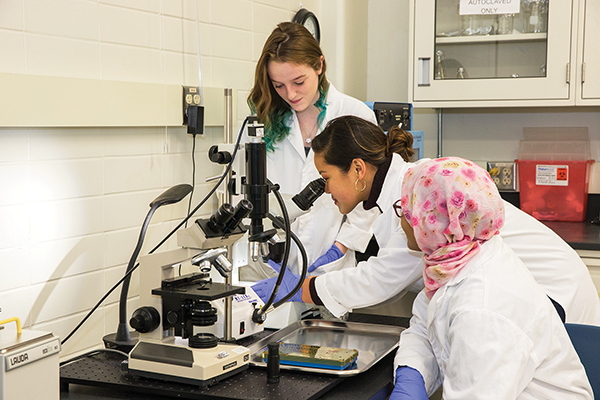
From left: BIMS majors Erin O’Connor, Janisah Saripada, and Oula Eldow using a microscope
From left: BIMS majors Erin O’Connor, Janisah Saripada, and Oula Eldow conduct research in the lab.

Experiment 2: Glucose And Diabetes

Saripada’s team developed their topic through meshing some initial research interests. Initially she was interested in researching how a ketogenic diet affects the body’s blood vessels. She met another student who was interested in looking at the effect of glucose in the body.

“I thought, ‘Oh, it would be a perfect idea to mesh these two projects together and look at one single disease, diabetes, because diabetes affects the levels of glucose and ketones in your body,’” the junior noted.

Using a chicken egg offers a useful way to study this problem.

“We add glucose, which is a type of sugar, and ketones, which are chemicals produced when your body doesn’t have enough insulin to convert sugar into energy,” Saripada said. “We’re basically trying to model diabetes, specifically gestational diabetes, using the Chick CAM model since it has many similarities to human embryonic development.”

Experiment 3: Sodium Fluoride And The Microvascular System

O’Connor and her team are using chicken eggs to try to detect changes in the microvascular structure through low doses of sodium fluoride.

“We chose this because we found other studies that showed that sodium fluoride affected embryo growth in frogs,” the Uvalde resident said. “We know that sodium fluoride can be in daily products, such as water and toothpaste, so we are trying to see what happens with low doses. Are they actually harmful or is it something that needs to be watched out for?”

The research may open doors for additional research on the microvascular system’s response to other teratogens.

“Teratogens are any agent or substance that affect the development of an embryo, such as malformations or birth defects,” O’Connor said. “This is important because we want to be able to identify any environmental factors that can pose a detrimental effect to a developing embryo or fetus.”

Growing Scholars And Leaders

These programs also give undergraduates the opportunities to develop skills that will serve them both inside and outside the research lab.

“The most valuable skills I’ve learned have been realizing how to work with team members and how to use everyone’s skills to really push the project in a positive direction in order to see results,” O’Connor said.

Eldow has enjoyed the opportunity to grow as both a researcher and a leader.

“This research is something that I’m very passionate about,” she said. “It’s helped me grow as a leader and grow as a student.”

###

Note: This story originally appeared in the Spring 2020 edition of CVM Today.

For more information about the Texas A&M College of Veterinary Medicine & Biomedical Sciences, please visit our website at vetmed.tamu.edu or join us on FacebookInstagram, and Twitter.

Contact Information: Jennifer Gauntt, Director of Communications, Texas A&M College of Veterinary Medicine & Biomedical Sciences; jgauntt@cvm.tamu.edu; 979-862-4216
A Message From The CVM: June 1, 2020

As part of the Texas A&M community, the faculty, staff, and students at the College of Veterinary Medicine & Biomedical Sciences (CVM) are committed to the university’s core values of Respect, Excellence, Loyalty, Leadership, Integrity, and Selfless Service. We strongly affirm our support for Texas A&M President Michael K. Young’s statement and the Association of American Veterinary Medical Colleges’ (AAVMC) Principles of Inclusion.

The COVID-19 outbreak has shone a light on the uncertainty and change we are facing together, and as we navigate our “new normal,” the CVM believes that now, more than ever, it is important to apply the core values that we espouse, share what they mean to us, and consider how we reflect those values in our words and actions. Importantly, our words and actions directly impact others and the sense of community and belonging that they feel within our college.

We fully recognize the disproportionate way that COVID-19 has affected communities of color, and we also recognize that many people are experiencing fear, anxiety, and grief that have been further exacerbated by the racially motivated violence that is at the forefront right now and is part of our collective history.

As we consider the long, troubling, and perpetuated history of events that have targeted minority communities, the CVM remains steadfast in our commitment to creating a climate of inclusion and equity, embracing the diversity that makes each of us unique and valued, celebrating our differences, and supporting one another.  We are committed to upholding the dignity of all people.

What can we, as individuals, do?

  1. Embrace antiracism.
  2. Be an ally.
  3. Engage and speak up when events exclude and discriminate against others.
  4. Have conversations and acknowledge the impact of current events on ourselves and many of our colleagues.
  5. Be curious and learn more about social justice issues.
  6. Be brave. Keep people safe when they feel threatened by hate speech. Do not be a silent bystander.
  7. When conflict arises, engage in civil, critical dialogues…in person, on-line, and on social media platforms.
  8. Be self-reflective about the impact of our words and actions on others.
  9. Know that what each of us models, creates the CVM climate and culture.
  10. Be kind.

Cornell, Chaney Recognized For Meritorious Service By AAVMC

Dr. Karen Cornell
Dr. Karen Cornell

Two members of the Texas A&M College of Veterinary Medicine & Biomedical Sciences’ (CVM) Professional Programs Office have been recognized for their dedication to veterinary education with the Association of American Veterinary Medical Colleges’ (AAVMC) Presidential Awards for Meritorious Service.

Dr. Karen Cornell, associate dean for Professional Programs and Earline & A.P. Wiley Endowed Veterinary Chair, and Dr. Kristin Chaney, director of curriculum development & outcomes assessment, received the awards for their special contributions to the AAVMC, distinguished service, and professional achievement.

Cornell, also a professor in the CVM’s Department of Small Animal Clinical Sciences (VSCS), has served as co-director of the AAVMC Leadership Academy since 2016. In this role, she helps fellow veterinary educators grow as leaders in the field of academic veterinary medicine.

The Leadership Academy supports the development of emerging leaders in veterinary academia and provides them with a forum for building lasting ties between faculty members at veterinary schools and departments around the world.

At the CVM, Cornell plays a key role in the administration of the Doctor of Veterinary Medicine (DVM) program and is a strong advocate for ensuring students learn the communication and leadership skills necessary for a career in veterinary medicine.

Chaney, who also teaches in the DVM program as a clinical assistant professor in the CVM’s Department of Veterinary Integrative Biosciences (VIBS), serves as a co-chair of the AAVMC’s Competency Based Veterinary Education (CBVE) Working Group.

Dr. Kristin Chaney
Dr. Kristin Chaney

“It has been an honor to serve on this 10-member international team since its inception in 2015,” Chaney said. “To have the accomplishments of this working group celebrated by the AAVMC’s Meritorious Service Award is recognition not only of the importance of this work, but also the dedication of this team and their home institutions for continuing to support this work.”

The CBVE Framework, Entrustable Professional Activities, and Milestones published by the CBVE Working Group provide the structure for veterinary educational programs to establish competency-based curricula. As guidelines, these resources support both national and international veterinary schools and colleges as they prepare graduates for professional careers in veterinary medicine.

For this work, continued publications in medical education literature, and other accomplishments the group has achieved, all members received an AAVMC Presidential Award for Meritorious Service in 2020.

As part of the CVM’s team that regularly reviews the DVM curriculum, Chaney was instrumental in the creation of the new DVM curriculum that was implemented in 2017 to help better prepare graduates for their careers in veterinary medicine.

Cornell and Chaney received their awards at the AAVMC 2020 Annual Conference on March 8, at which Dr. Eleanor M. Green, the Carl B. King Dean of Veterinary Medicine at Texas A&M, also received the 2020 AAVMC Billy E. Hooper Award for Distinguished Service.

###

For more information about the Texas A&M College of Veterinary Medicine & Biomedical Sciences, please visit our website at vetmed.tamu.edu or join us on FacebookInstagram, and Twitter.

Contact Information: Jennifer Gauntt, Director of CVM Communications, Texas A&M College of Veterinary Medicine & Biomedical Sciences; jgauntt@cvm.tamu.edu; 979-862-4216
Veterinary Educators Band Together To Support Students

The COVID-19 pandemic may have created a need for social distancing among individuals, but when it forced higher education to move online, veterinary educators saw an opportunity to share resources and bring veterinary colleges around the world closer together than ever before.

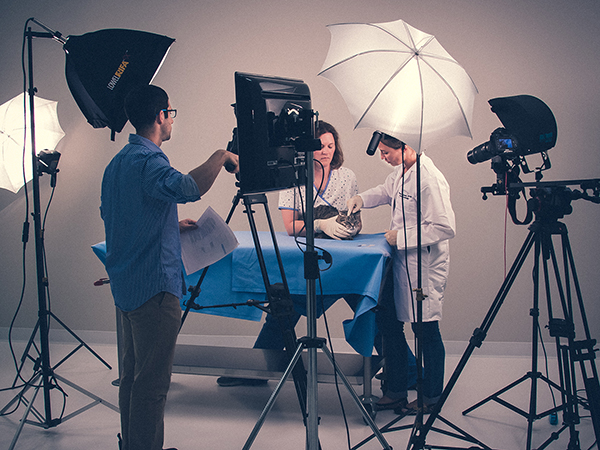
Two professors and a camera man work to film educational material with a cat
A behind-the-scenes look at the Texas A&M CET creating content. Photo by Vince Chihak, Center for Educational Technologies

At the Texas A&M College of Veterinary Medicine & Biomedical Sciences (CVM), faculty members have been at both the giving and receiving ends of that collaboration.

The CVM’s Center for Educational Technologies (CET) had already positioned the college as a leader in these endeavors by not only offering a variety of online veterinary education resources, but providing them for a fee on a platform designed for distributing to other institutions as well.

When the COVID-19 pandemic forced veterinary classes to move online, the CET offered their online learning modules, case studies, and videos to any instructor with a need for them; the free resources will remain available until July 1.

“We already had a mechanism to deliver these resources to other schools through our commercialization program,” said Dr. Nicola Ritter, CET director and instructional assistant professor. “We had about five schools using our resources before we began offering them at no cost, and since then, we’ve had about 33 more come on board.”

These resources are designed to help instructors teach a variety of veterinary topics, from creating a local anesthetic plan for dental work to the different types of surgical knots.

“We want to support our veterinary medical community and educators (by offering these resources for free during the pandemic),” Ritter said. “It’s a small community and they’re our colleagues, so we wanted to be able to help them when they needed to get an online course ready within a week or two after the pandemic hit.”

In addition to having helped instructors create online preclinical classes earlier this year, these resources are proving useful to the many fourth-year veterinary students across the country who are unable to complete clinical rotations in person this summer.

Rather than using materials the students have already seen in the classroom, instructors can use the CET’s resources during virtual rotations to introduce new case studies and reinforce practical skills.

While the CET was sharing resources with veterinary faculty across the United States, some CVM faculty members have also supplemented their online classes and rotations with resources created and shared by other veterinary colleges.

The University of Missouri’s clinical pathology team has offered their full digital slide archive to fellow veterinary educators across the country, including those at Texas A&M. These slide images, which show thin layers of tissue, blood, and other bodily fluids, can be easily accessed online to help students learn to diagnose and monitor diseases.

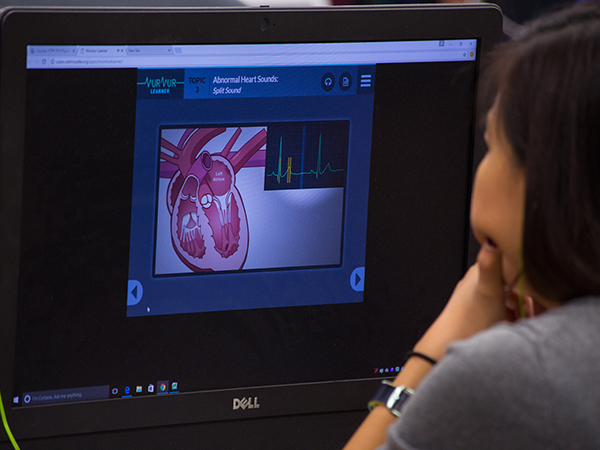
A female student view her computer screen, which shows a learning module about heart rhythms
A student learns from CET-created content. Photo by Vince Chihak, Center for Educational Technologies

“The University of Missouri’s team has displayed such generosity and collegiality in helping other institutions teach students during a time of uncertainty,” said Dr. Dana Kneese, a clinical assistant professor in the CVM’s Department of Veterinary Integrative Biosciences (VIBS). “We know how much work goes into generating a digital slide database, and sharing their hard work with us demonstrates their selflessness.”

Additionally, CVM anatomy professors have utilized a free veterinary anatomy website from the University of Minnesota College of Veterinary Medicine and an online image bank from the American Association of Veterinary Anatomists (AAVA) to supplement online anatomy courses and labs.

The AAVA has also connected instructors from different institutions to allow them to share ideas for teaching anatomy virtually.

Incorporating resources from other colleges can provide students with access to specialists and learning materials that are unique to certain institutions. Therefore, on top of allowing for smooth transitions to online classes, the sharing of education resources between veterinary colleges has increased the range of information students have to learn from.

“For example, dentistry and dermatology are specialties we have at the CVM that other schools may not,” Ritter said. “Also, even if another school has someone in that specialty, they may have a different context or different perspective, so it is taught differently.”

Many colleges, including Texas A&M, are preparing to have students back on campus next fall, but Ritter hopes the collaboration between veterinary schools will continue when classes are no longer online only.

“The CET’s model is that we develop curriculum using extramural grants, which means we seek out collaborators within our institution and with other institutions, because having multiple institutions coming together makes for a strong proposal,” she said. “I’m hoping that this experience will provide us more opportunities to collaborate through research grants to develop our materials.”

No matter what the future holds, veterinary educators can rest assured that their colleagues will be there to lend a helping hand whenever needed.

“The veterinary community has been just open-handed with willingness to do anything and everything they can,” Ritter said. “It’s been a bit overwhelming at times to see how much people are just willing to say, ‘Where can I help and how can I do it?’ It’s amazing to see the willingness of people wanting to do things to help.”

###

For more information about the Texas A&M College of Veterinary Medicine & Biomedical Sciences, please visit our website at vetmed.tamu.edu or join us on FacebookInstagram, and Twitter.

Contact Information: Jennifer Gauntt, Director of CVM Communications, Texas A&M College of Veterinary Medicine & Biomedical Sciences; jgauntt@cvm.tamu.edu; 979-862-4216
Grains Or No Grains: Addressing Pet Owner Concerns

Pet parents want to feed their dogs the best diet possible to keep their furry friends happy and healthy, but there are so many options on the market: prepackaged or home-cooked, wet food or dry, and grain-free.

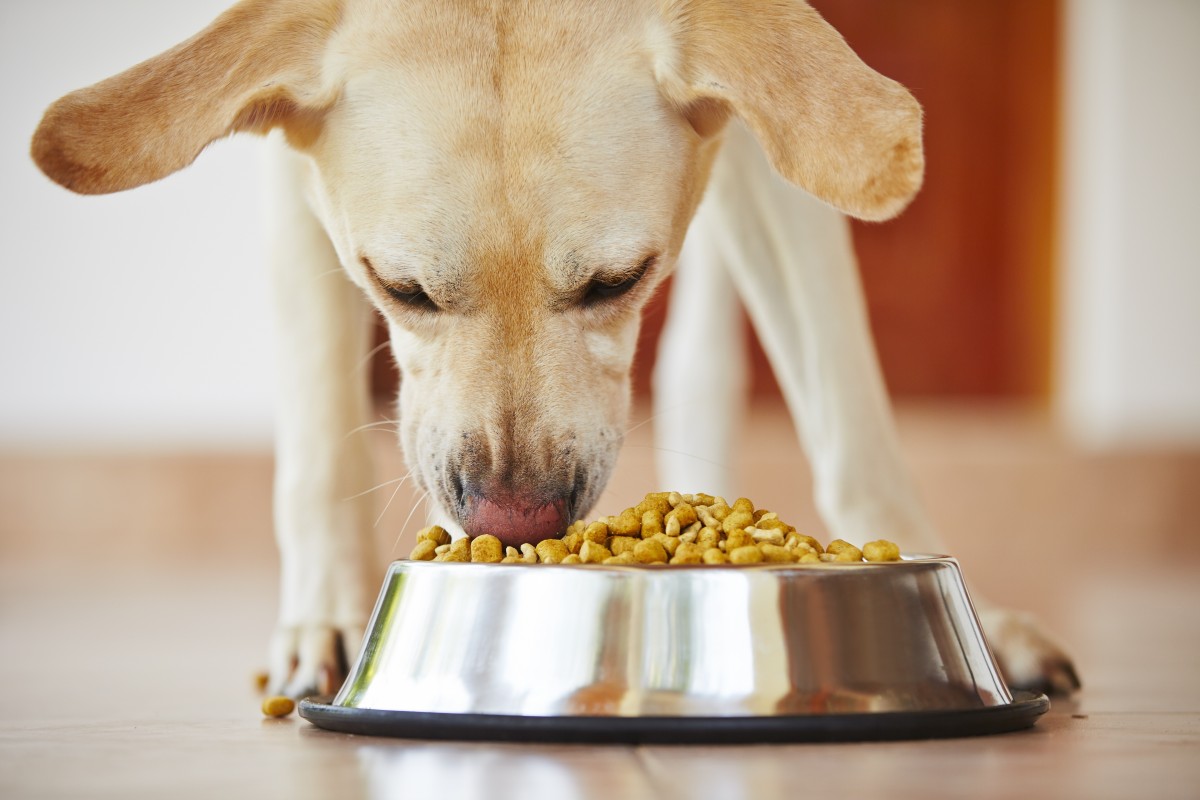
Yellow dog eating food out of a dog bowlRecently, interest has arisen surrounding grain-free diets and their impact on canine health.

When searching for the right food for their dogs, pet owners often focus on corn and wheat; however, many other grains are used in pet foods that have great nutritional value, including rice, barley, oats, and millet.

“Much of the initial push for ‘grain-free’ diets for dogs came from folks who were drawn into the marketing strategy that dogs are carnivores and grains were unnatural,” said Dr. Deb Zoran, a professor at the Texas A&M College of Veterinary Medicine & Biomedical Sciences (CVMBS).

“Dogs are, in fact, omnivores; they are actually programmed metabolically and nutritionally to use the building blocks from both plants (grains) and animals to meet their requirements for essential nutrients and energy,” she said. “This is illustrated by wild dogs and wolves eating the ingesta—contents of the digestive tract that are largely plant material or grain—of large animal species they kill.”

Pet owners choose what diet to feed their dog based on word-of-mouth, online, marketing of pet stores, or veterinary recommendations, but according to Zoran, many owners tend to choose their pet’s diet based on pet food company marketing.

“The pet food industry is a very competitive place and many of the smaller companies and boutique foods do a fantastic job of marketing their products,” Zoran said. “Unfortunately, those same companies do not all have the same resources for research and development and quality assurance testing.

“A recipe for good food is one thing, but if you don’t test the product once it is made, processed, and packaged, you can’t be sure the food still contains what you intended, and that is where potential problems start,” Zoran said.

It is important for dogs to have a balanced diet in order to thrive, and Zoran said dog owners should know that “there are nutrients present in grains that are essential for a complete and balanced diet.”

“If grains are removed from a diet, they must be replaced by another food source that has those nutrients in sufficient quantities to balance the diet,” she said.

Some dog owners have switched their pets to a grain-free diet because of concern about possible wheat gluten allergies or intolerance, but, according to Zoran, these conditions are relatively uncommon in dogs compared to other types of food-related conditions.

“Many people have been convinced that their dogs have a ‘grain allergy,’ much like celiac disease or gluten disease in humans,” Zoran said. “However, true dietary allergies in dogs are caused by the protein, or meat, sources in a diet. It doesn’t mean that your dog can’t have an intolerance to wheat gluten or another food ingredient, but it is not the same as an allergy.

“The bottom line is, your dog’s skin, hair coat, or gastrointestinal (GI) function may sometimes improve on a grain-free diet, but it may simply have been the diet change itself and not the lack of grains, per se,” she said.

Zoran recommends that pet owners choose diets that have rigorous standards for research and quality testing; a well-developed reputation for providing complete and balanced foods; and back up their label claims with nutritional quality control testing. Additionally, owners should always seek advice from their veterinarian before changing their dog’s diet.

“If your dog seems to do better with diets without wheat or corn, consult a veterinarian or veterinary nutritionist for information about the safest diet options available on the market,” Zoran said. “They can provide commercial and homemade options that can meet your dog’s specific nutritional needs.”

Pet Talk is a service of the College of Veterinary Medicine & Biomedical Sciences, Texas A&M University. Stories can be viewed on the web at vetmed.tamu.edu/news/pet-talk. Suggestions for future topics may be directed to editor@cvm.tamu.edu.

Finding Meaning In Mentorship

Dr. Dana Gaddy has been blessed with the support of many, so now she’s paying it forward by using the lessons she’s learned to build relationships with her own students.

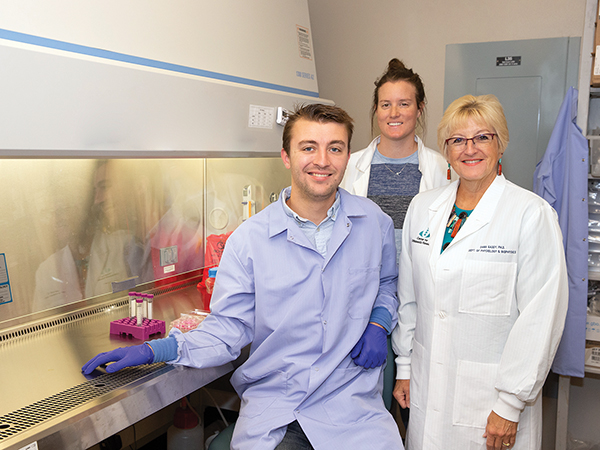
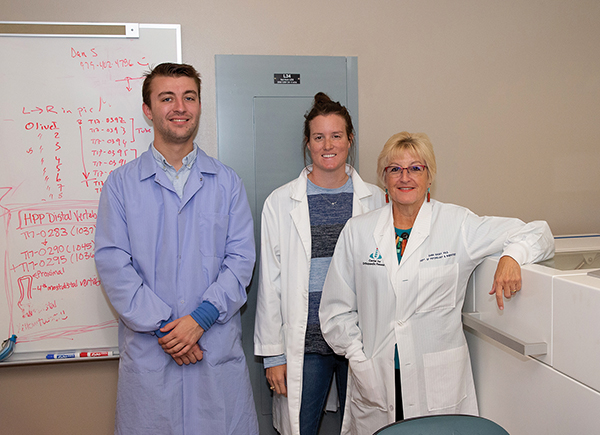
Joshua Bertles, Kirby Sherman, and Dr. Dana Gaddy in the lab
Joshua Bertles, Kirby Sherman, and Dr. Dana Gaddy

Dr. Dana Gaddy’s mentor Joanne Richards once told her, “People are like plants. You just need to give them a bit of water and let them grow.”

That philosophy is so deeply rooted into Gaddy that she tears up when she speaks of her relationship with Richards and what mentorship now means to her as a professor in Texas A&M College of Veterinary Medicine & Biomedical Sciences’ (CVM) Department of Veterinary Integrative Biosciences (VIBS).

“Every single person Jo mentored feels that she played a key role in their having a fulfilled life,” Gaddy said, catching herself as her voice softly begins to break. “Just because you have 50 graduate students and postdocs does not mean that you have 50 happy, fulfilled graduate students and postdocs. What was important to her was to build 50 relationships. That’s what it’s about.”

And, indeed, that has been what it’s about for Gaddy; mentorship, she believes, is for life.

Planting The Seeds

She’s been blessed with many mentors throughout her life, starting during her time as a Ph.D. student at Baylor College of Medicine, where Richards was her adviser.

“I was always mystified by her ability to take students who would come into her lab as postdoctoral fellows but really were not on the same wavelength as the rest of the folks and by working elbow-to-elbow with them and through regular conversations, she would figure out what made them tick,” Gaddy said. “Then, she would place opportunities in front of them—some of which were not academic—that would put them in the direction where they’re going to be happiest. She didn’t just mold them after herself.”

This was modeled by another set of influential mentors, Drs. Gideon and Sevgi Rodan.

“I met Gideon when I was a brand-new faculty member and was doing stuff that was really kind of heretical to the bone field at the time,” Gaddy said. (She focused on the importance of the reproductive hormone inhibin in menopause, when the scientific consensus placed the sole significance on estrogen.)

“He and his wife, Sevgi, were like the mom and pop,” she said. “They always did things for their mentees, even those who went off to other companies or would go back to academia. People who left would always come back, and the Rodans kept track of them.”

Her relationship with the Rodans made it particularly poignant when this fall Gaddy received the Gideon A. Rodan Award for Mentorship from the American Society for Bone and Mineral Research (ASBMR).

“He took lots of people under his wing, even those who didn’t have anything to do with Merck,” Gaddy said. “He would mentor everyone who seemed to want to listen to what he had to say, and his words of wisdom were usually spot on.

“That scientific progeny concept is one that I was steeped in as a young faculty member, as a young scientist, as a graduate student, and it stayed with me,” she said.

Joshua Bertles, Kirby Sherman, and Dr. Dana Gaddy in the lab
Joshua Bertles, Kirby Sherman, and Dr. Dana Gaddy

A Winning Combination

Gaddy sees herself as a “different kind of mentor,” in part because her mentee pool has been much smaller than previous Rodan Award winners—who have 10-20 trainees at any given time, compared to the three typically working in Gaddy’s lab—but also because she comprehensively evaluates her students and their potential, understanding that what is best for the student may not be best for her.

“Part of it is paying attention and trying to read people like my Ph.D. adviser did, to try to understand what it is that really is making them tick,” Gaddy said. “If I give them something to do and they hate it or they love something else, I see it as my responsibility to figure out how I can provide them more of that so that then they see the success, they feel the success, and they want to go do more in that direction.”

It’s also included helping students evaluate what their end-goals are earlier in their academic career and encouraging them to pay attention to what’s happening in all job sectors before they start a dissertation and it becomes too late to change their minds.

“Many graduate students coming into my lab initially think that they are going to do what I do, but that ends up not really being their path,” Gaddy said. “My job is to help them find whatever the path is and then help them find a way to get there.”

As a result, some of her graduate students have moved into other CVM faculty members’ labs; in other cases, she has “adopted” trainees working in colleagues’ labs.

She estimates that she is probably actively mentoring six former students, one current doctoral student, and a handful that are affiliated with other CVM laboratories; it is that idea of connecting people across areas, whether it’s for mentorships or just networking, that is important for Gaddy.

“I have done more of that for other people’s students than I have for my own, not even people at my institution,” she said. “I’ve been involved in the Endocrine Society and the Women in Endocrine Society, as well as the Bone Society and other groups, for which we’ve done professional development events about how to choose a mentor, how to set that mentoring conversation and relationship up, and then what to do if it doesn’t go well, or how to launch out of somebody’s lab to gain independence.”

While the connections she’s made, and the award she’s won, have been rewarding, the ultimate reward, in her eyes, is seeing her students succeed in advancing science in their own ways. Among her mentees, Joshua Bertles is her current Ph.D. student in the biomedical sciences graduate program; Kristy Nicks, Ph.D., is a program director at the National Institutes of Health’s National Institute of Arthritis and Musculoskeletal and Skin Diseases; Tristan Fowler, Ph.D., is a research scientist director at the biotech company Surrozen; and Daniel Perrien, Ph.D., is an associate professor at Emory University.

“That’s what I’m most proud of, because you never know what that student is going to want to do when they first walk in your door,” she said. “I try to spend time programmatically identifying or at least providing exposure to opportunities that will help them learn what it is that floats their boat. And when they find that, there’s no better reward.”

###

Note: This story originally appeared in the Spring 2020 edition of CVM Today.

For more information about the Texas A&M College of Veterinary Medicine & Biomedical Sciences, please visit our website at vetmed.tamu.edu or join us on FacebookInstagram, and Twitter.

Contact Information: Jennifer Gauntt, Director of Communications, Texas A&M College of Veterinary Medicine & Biomedical Sciences; jgauntt@cvm.tamu.edu; 979-862-4216
CVM Researcher Discovers Domestic Horse Breed Has Third-Lowest Genetic Diversity

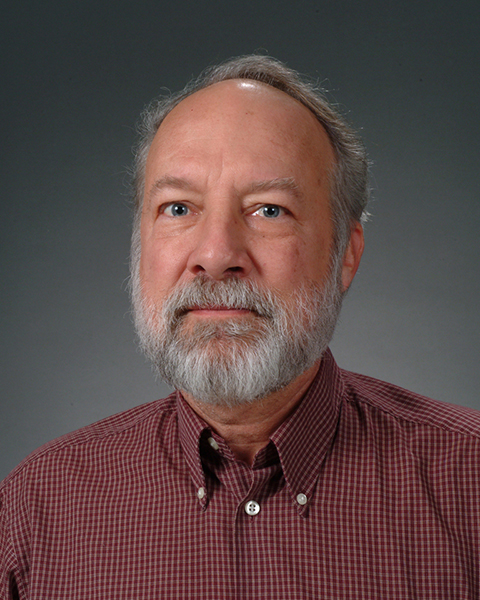
Dr. Gus Cothran
Dr. Gus Cothran

A recent study by Dr. Gus Cothran, professor emeritus at the Texas A&M School of Veterinary Medicine & Biomedical Sciences (CVM), has found that the Cleveland Bay (CB) horse breed has the third-lowest genetic variation level of domestic horses, ranking above only the notoriously inbred Friesian and Clydesdale breeds. This lack of genetic diversity puts the breed at risk for a variety of health conditions.

Genetic variation refers to the differences between different individuals’ DNA codes. Populations where there is high genetic diversity will have a wider range of different traits and will be more stable, in part because disease traits will be more diluted. In populations with low genetic variation, many individuals will have the same traits and will be more vulnerable to disease.

The CB is the United Kingdom’s oldest established horse breed and the only native warm-blood horse in the region. Used for recreational riding, driving, and equestrian competition, the CB is considered a critically endangered breed by the Livestock Conservancy.

Because maintaining genetic diversity within the breed is important to securing the horses’ future, Cothran and his team worked to gain comprehensive genetic information about the breed to develop more effective conservation and breeding strategies.

In this study, published in Diversity, researchers genotyped hair from 90 different CB horses and analyzed their data for certain genetic markers. These samples were then compared to each other, as well as to samples from other horse breeds to establish the genetic diversity within the breed and between other breeds.

Both the heterozygosity and mean allele number for the breed were below average, indicating lower than average genetic diversity within the breed. This low genetic diversity should be seen as a red flag for possible health conditions.

“Low diversity is a marker for inbreeding, which can cause low fertility or any number of hereditary diseases or deformities,” Cothran said. “With overall population numbers for the breed being so small, such problems could rapidly lead to the extinction of the breed.”

The Cleveland Bay Horse Society of North America estimates that only around 900 CB purebreds exist globally. Such low population numbers mean the breed is considered to be critically rare.

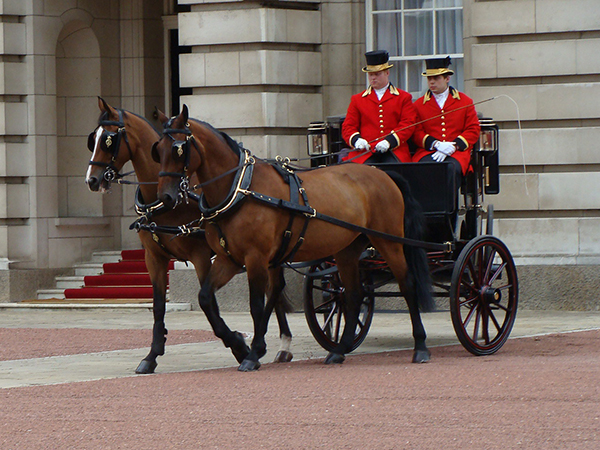
Cleveland Bay horses pulling a carriage
Cleveland Bay horses

This study also evaluated the diversity between the CB and other breeds using a majority-rule consensus tree, a type of analysis that shows an estimate of how different clades, or groups of organisms sharing a common ancestor, might fit together on their ancestral tree.

Cothran and his team’s analysis found that the CB did not show a strong relationship with any other breeds, including other breeds within the same clade. Though this could be a result of the low genetic diversity within the breed, these data suggest that the CB is genetically unique from other breeds. These findings place emphasis on the importance of CB horses as a genetic resource.

“The CB is an unusual horse in that it is a fairly large sized horse but it is built like a riding horse rather than a draft horse,” Cothran said, noting the uniqueness of the breed. “It frequently is bred to other breeds such as the Thoroughbred to create eventing or jumping horses, although this is a potential threat to maintaining diversity in the CB.”

Cothran hopes his research will help to inform conservation efforts supporting the longevity of the CB breed, as well as inform breeders on how they can more responsibly further their horses’ genetic lines.

“If any evidence of inbreeding is observed, breeders should report it to scientists for further analysis,” Cothran said. “Efforts should be made to keep the numbers of CB horses as high as possible and to monitor breeding practices to minimize inbreeding and loss of variability.”

“Domestic animals, including horses, are also at risk of declining populations, just like endangered species, but research can help determine which populations (breeds) are at risk and provide possible directions to help reduce risks or consequences,” he said.

Though CB horses are currently at risk, Cothran remains optimistic that careful monitoring and management of the breed can preserve them as a cultural and genetic resource for years to come.

###

For more information about the Texas A&M College of Veterinary Medicine & Biomedical Sciences, please visit our website at vetmed.tamu.edu or join us on FacebookInstagram, and Twitter.

Contact Information: Jennifer Gauntt, Director of CVM Communications, Texas A&M College of Veterinary Medicine & Biomedical Sciences; jgauntt@cvm.tamu.edu; 979-862-4216