Texas A&M Celebrates 30 Years Of Patient Care, Innovation At Large Animal Teaching Hospital Facility

The current LATH building partially constructed
Current Large Animal Teaching Hospital facilities under construction

In December 1888, a small, wood-frame barn was built at Texas A&M University to serve as a veterinary hospital. Ever since that original, 720-square-foot barn served the university’s first veterinary patients, the campus has been home to continuously improving veterinary facilities.

When the School of Veterinary Medicine & Biomedical Sciences (VMBS) was officially established in 1916, it took on the responsibility of running the Veterinary Medical Teaching Hospital facilities. Today, the VMBS is home to the state’s only veterinary teaching hospital consisting of the Large Animal Teaching Hospital (LATH) and the Small Animal Teaching Hospital (SATH).

The current LATH facility, which began serving patients in August 1993, plays an important role in treating horses, cattle, and all other hoofstock with its state-of-the-art design specially built to meet the unique needs of modern large animal veterinary medicine.

This year, the facility celebrates 30 years of housing the exceptional people who provide cutting-edge medicine to large animals throughout Texas and across the United States, as well as veterinary innovation, groundbreaking research, and outstanding education to future Aggie veterinarians.

Exceptional People

Dr. Jennifer Schleining, head of the VMBS’ Large Animal Clinical Sciences (VLCS) department, said that if the LATH’s walls could talk, they’d surely comment on the people who’ve passed through.

“These walls see the students, staff, and faculty who are committed to doing the best we can for every patient that walks in the door and to providing compassionate care at the expert level expected for our patients,” Schleining explained.

Dr. Stacy Eckman, associate dean for hospital operations, echoed Schleining’s enthusiasm for the bright and talented minds who’ve worked within the LATH’s walls.

Two mules pulling a plow break ground for the LATH building
Groundbreaking of the Large Animal Teaching Hospital facilities

“Our faculty foster a welcoming environment for all students, and I think that’s a really important part of what happens here,” Eckman said “They are willing to take on the toughest of the tough cases. They’re willing to be innovative. They’re willing to drive the next generation of veterinarians to push themselves to further expand the boundaries of what we can offer here.”

Some of the brightest veterinarians in the world have graced the LATH facilities. This list currently includes Drs. Jeffrey Watkins and Kati Glass, equine orthopedic specialists whose innovative surgeries not only prolong their patients’ lives but also improve their quality of life; Dr. Charles Love, a leading theriogenologist whose research is enhancing horse breeding and whose manuscripts, book chapters, and invited presentations receive international recognition; Dr. Kevin Washburn, a beloved teacher and leader in bovine respiratory disease; Dr. Joanne Hardy, a veterinarian dedicated at all hours of the day and night to providing emergency and critical care service who is also conducting interdisciplinary research; Dr. Jay Griffin, a national expert on imaging of the brain with translation of his research to human cancer patients; and Dr. Noah Cohen, an internationally renowned veterinarian, researcher, and leader in the field of equine health; and many more.

It’s hard to walk through the LATH without feeling a sense of awe, both because of the brilliant veterinarians who work there and because of the layout and design of the building. The building exudes a rare combination of spaciousness, ease, and warmth.

“I think the proximity with which we all interact within the space without being cramped and feeling like we don’t have to compete for resources is one of the special parts, but it is also the pride of being part of something as special as Texas A&M within the walls of this well-built hospital,” Schleining said. “That pride really connects people to want to do good things with each other here.”

Veterinary Innovation

The LATH hallway with high ceilings
The spacious, high-ceilinged corridor makes caring for large patients safer for the animals and those providing their care.

The LATH serves as a reminder of just how far veterinary medicine has come since the university began serving patients out of a small wooden barn 135 years ago.

“Our operating rooms are state-of-the-art, and our flooring system is specially designed and padded to help protect our hoofed patients coming out of surgery,” Eckman said. “Some of our rooms have extra room so that a partner horse can be by a patient’s side to provide support. These are just a few of the special needs our LATH so thoughtfully includes.

“The LATH also includes several design elements inspired by Temple Grandin, an internationally recognized animal behaviorist, to help minimize a patient’s feelings of anxiety or fear as they enter a new or unknown space,” she said.

The facility’s innovative design also encourages collaboration, Schleining shared.

“Even though we have a large space, we fill it with dedicated people who are always conversing and collaborating within the LATH halls, making magic happen,” Schleining said. “We are really blessed to have the space to be able to provide the most advanced compassionate care for large animals and to have a facility designed in a way that encourages people to gather and work through challenges together.

“A recent example of this is Dante, a longhorn steer who came to the Food Animal and Surgery Service in the LATH from the Austin Zoo with a fractured skull,” she continued. “His case started in radiology and ended with an innovative, first-of-its-kind surgery with input from food animal surgeons and medical internists, radiology, orthopedics, anesthesiology, and our equine farrier who was able to fabricate materials for us.”

This kind of collaboration is a daily occurrence at the LATH, which is why clients have traveled from 37 of the 50 United States seeking veterinary care at the facility.

Groundbreaking Research

With innovation comes research, and the LATH helps facilitate research aimed at improving large animal veterinary medicine.

“The world’s best hospitals — like the Mayo Clinic, Johns Hopkins, Mass General, etc. — are places where clinical research is actively advancing biomedical research to improve patient care,” said Cohen, who also serves as the VLCS’ associate department head for research and graduate studies. “The end goal of biomedical research is to improve the health of people and animals. This is ultimately manifested in applying new tests to better identify individuals with disease or at increased risk of disease, improved treatments for patients with disease, and preventatives like vaccines to stop disease from developing. The faculty and staff who work in the LATH conduct this work that enables us to provide cutting-edge care.”

The LATH facilities also add to an environment that promotes observational studies, or research in which patient outcomes are examined overtime.

“The records of our patients can be reviewed in observational studies to help us learn about which interventions work best for patient management, which findings predict better clinical outcomes, and which historical findings or tests best inform diagnosis,” he shared.

Cohen said the research that the LATH facilities help make possible also enhances the student experience and the overall quality of care provided.

“Our students can learn about the impact of translational research in advancing veterinary medicine,” he said. “The collective, team-based approach of the LATH enables us to provide the highest quality care for our patients, including the application of innovations from diagnostic tests, treatments, and preventatives developed at Texas A&M and beyond.”

Outstanding Education

Dr. Washburn teaches students how to examine a cow's eye
Dr. Kevin Washburn and students examine a heifer’s eye.

In addition to encouraging innovation and research, the LATH’s architectural design also enhances learning and teaching efforts that take place there by providing more room for visual and hands-on learning.

“In the vast majority of the clinical rotations here, (fourth-year) students get a lot of hands-on experience and are honing skills that they can take forward with them after they graduate,” Schleining explained. “The intentionality of this building helps make that possible.”

Eckman’s was among one of the early Doctor of Veterinary Medicine classes to learn in the current LATH and said it provides a much better learning environment than previous hospital buildings.

“The teaching and learning experiences really benefit from the larger exam rooms,” she said. “The older facilities were much more cramped, which made it harder to see what you were supposed to be learning. That’s certainly not the case now. We have multiple options for safely viewing and learning. For example, in our recovery stalls, when a patient is coming out of anesthesia, we can have students safely watching on the catwalk above.”

A Building Worth Celebrating

The LATH has played an important role in advancing human and animal health by enhancing the veterinary educational experience over the last 30 years. Eckman said she’s excited to celebrate this important milestone.

“Buildings wear down over time, but from a space standpoint and our ability to teach and care for patients in that building, it really hasn’t aged. We still offer state-of-the-art care and continue to offer new and improved treatments in the LATH,” she said. “It’s worth celebrating because this building has withstood the test of time.

“As we look forward to the next 30 years in the LATH, we will continue to have a sense of adventure when taking on challenging cases and thinking outside of the box on how we can improve the life of a patient, whether they are a working animal or a beloved pet.”

###

For more information about the Texas A&M College of Veterinary Medicine & Biomedical Sciences, please visit our website at vetmed.tamu.edu or join us on FacebookInstagram, and Twitter.

Contact Information: Jennifer Gauntt, Director of VMBS Communications, Texas A&M College of Veterinary Medicine & Biomedical Sciences, jgauntt@cvm.tamu.edu, 979-862-4216

Texas A&M Veterinary Emergency Team Sees Record Number Of Patients At Operation Border Health Preparedness

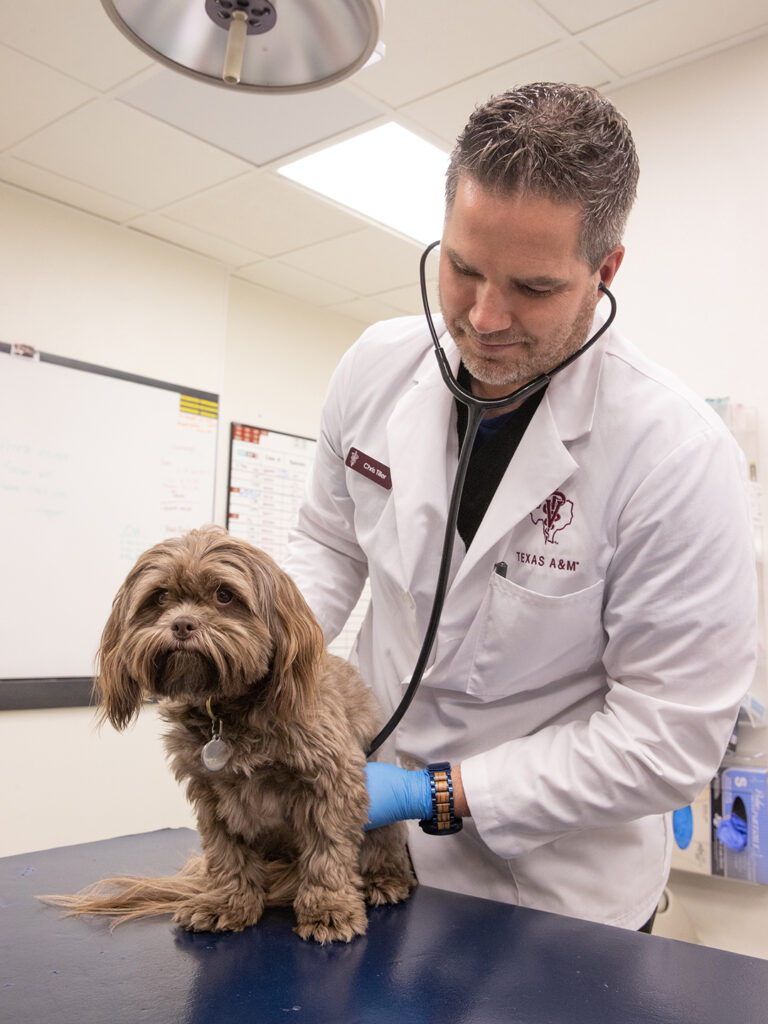
Two VET members give a dog a physical examination

In the early hours of July 22, long before the sun began its ascent over the Brazos Valley, cars began turning into The Texas A&M University System RELLIS campus.

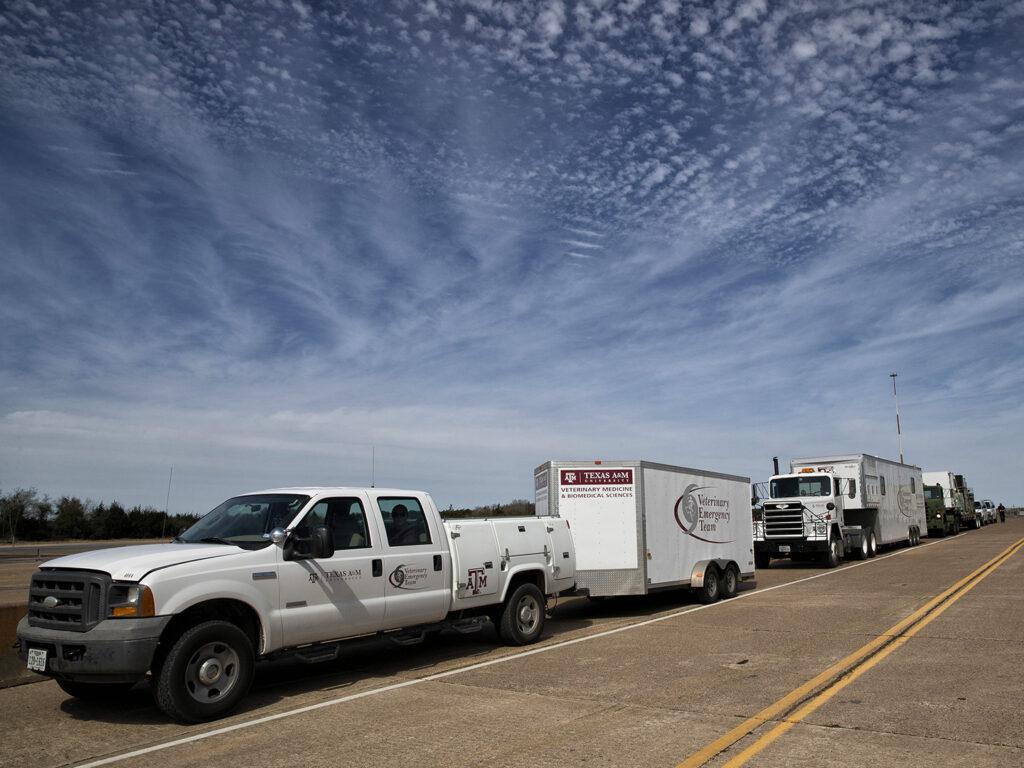
Early risers gathered to join the Texas A&M Veterinary Emergency Team (VET) on its journey to South Texas for Operation Border Health Preparedness (OBHP), an annual readiness exercise hosted by the Texas Department of State Health Services that provides emergency response teams the opportunity to test their readiness for the next major disaster while also providing annual medical and veterinary care to communities that would otherwise go without it.

The team worked throughout the weekend to establish a base of operations at Raymondville Early College High School with the Texas A&M AgriLife Extension Service Disaster Assessment and Recovery (DAR) team, which provides logistical and administrative support to the VET during deployments.

The group’s efforts in setting up tents, pet-proofing classrooms and practicing with the team’s medical records system were met Monday morning with enthusiastic Texans eager to receive veterinary care for their beloved cats and dogs.

By the end of day one, the VET had served 119 patients. By the end of the week, the team had completed a record 1,022 veterinary visits at its base of operations in Willacy County, which almost doubled the number of patients the team saw in 2022 and is significantly higher than their caseload in 2021, the team’s first year to participate.

“Willacy County is historically the poorest in Texas and the fifth poorest in the nation, with no veterinarian serving the community,”  said Dr. Wesley Bissett, VET director. “But the people here love their animals as much as any other Texan, and their animals deserve care. We’re honored to have the opportunity to provide that care at OBHP at no cost thanks, in part, to the generosity of organizations like the Banfield Foundation.”

Sixteen College of Veterinary Medicine & Biomedical Sciences Doctor of Veterinary Medicine students joined the VET at OBHP in 2023, giving them hands-on experience in providing veterinary medicine in a disaster exercise. Daniel Martinez, a fourth-year veterinary student originally from the Rio Grande Valley, was among the students who participated in OBHP.

“The Rio Grande Valley is a poverty-stricken area of Texas where citizens live in multi-person households, with median household incomes that look like the price tag of a modest used car, about $40,000 in Willacy County,” Martinez said. “Regardless, clients were bringing in their pets to us, sacrificing their resources to make the trip to Raymondville Early College High School where the VET and DAR provided a service deemed essential to the community.”

Dr. Deb Zoran, a professor of small animal medicine and founding member of the VET, teaches the two-week VET rotation course to fourth-year students when she’s not deployed with the VET or providing medical care as the veterinarian to the Texas A&M Task Force 1 urban search and rescue dogs.

The entire VET team at Operation Border Health Preparedness

“The VET rotation is built like every other two-week rotation in the school,” Zoran said. “We split the rotation into one week of preparedness and one week of response. As it turns out, OBHP happens to fall on a response week, so students on the VET rotation during OBHP don’t just practice in a virtually simulated deployment; they get to participate in a full-scale disaster response exercise with hands-on participation in establishing a base of operations and providing basic veterinary care.”

The experience is invaluable.

Martinez said he saw the best of humanity in his mentors, fellow students and clients at OBHP.

“I built relationships with my classmates, teachers and other personnel that demonstrate the core values of Texas A&M University,” Martinez said. “The VET and DAR working together was a workshop in teamwork. The veterinary profession cannot exist without teamwork. What happened in Raymondville is just a snapshot of what can happen when caring individuals come together. ​​

“This year’s Operation Border Health Preparedness added value to my professional veterinary medical education by underscoring the synergy of the veterinary profession and the demographic it serves,” he said.

One of the families that brought its pets to OBHP for basic veterinary care echoed Martinez’s admiration for the services provided by the VET and DAR. The Gonzalez family adopted two calico kittens at the beginning of the COVID-19 pandemic, naming them Snickers and KitKat.

“The initial thought was that they’d be animals who helped keep our kids sane during the early challenges of COVID, but they quickly became much more than that — they’re two additional members of the family,” said Roel Gonzalez, a math teacher at Raymondville Early College High School. “They really care about my kids, and my kids have so much affection for them. It’s nice to be able to bring them here for veterinary care so that we can take care of them the way they’ve been caring for us over the last few years.”

A VET member and a veterinary student give a cat a physical examination

The VET is able to focus on caring for family members like Snickers and KitKat on deployments rather than having to expend the team’s energy on some of the more logistical elements of a deployment, thanks to help from the DAR team.

“We deploy in cooperation with the VET to help with logistical support,” said Rachel Bauer, the liaison to Texas A&M AgriLife Extension at the state operations center in Austin who also works with the Texas Division of Emergency Management. “Our AgriLife Extension Disaster Assessment and Recovery agents free up the VET members to focus on providing the best veterinary care possible. We do this by working to keep the generators running, greeting the public and guiding them on where to go once they’ve entered the VET’s base of operations, and providing any other logistical support they may need.”

Dr. Monty Dozier, the program director for the DAR team, said OBHP is a meaningful experience because it builds connections with people and organizations across the state while furthering the connection between DAR and the VET.

“Our partnership with the Texas A&M VET is one that we value highly, and OBHP is an opportunity for us to work together to make things better for Texas,” he said. “We get to practice our techniques for training and working with volunteers, which is important because during a disaster response, we take in volunteers and train them on how to contribute to our efforts.”

Bissett and Zoran said the DAR agents who deploy with the team make their operations smoother while adding an element of comradery.

They also pointed out that the VET would not be able to provide the care and services it offers at OBHP without generous donors. Bissett estimated that the care the team provided at no-cost to South Texans during OBHP would have equated to $400,000 in out-of-pocket expenses at a traditional veterinary clinic.

“OBHP is not possible without the support we receive from our donors; they make it possible to provide veterinary care to this special community,” Zoran said. “We are beyond thankful to our donors for seeing the importance of making veterinary care more accessible and the value in investing in the VET to make that possible at OBHP.”

###

For more information about the Texas A&M College of Veterinary Medicine & Biomedical Sciences, please visit our website at vetmed.tamu.edu or join us on FacebookInstagram, and Twitter.

Contact Information: Jennifer Gauntt, Director of VMBS Communications, Texas A&M College of Veterinary Medicine & Biomedical Sciences, jgauntt@cvm.tamu.edu, 979-862-4216

Recognizing When Your Pig Has A Skin Condition

A pink piglet looking up at the camera

As the summer heat continues to simmer, the risk of painful sunburns continues to be a concern as well. This is true for humans but also for animals like pigs, whose skin not only closely resembles that of humans but is more sensitive to dermatological diseases.

Because of this, Dr. Jake Trautmann, a veterinary resident in large animal internal medicine at the Texas A&M School of Veterinary Medicine & Biomedical Sciences, says shade and veterinary care are important for protecting a pig’s skin from sunburns, skin cancer, and other skin conditions that pigs are prone to experience.

Sunburns And Skin Cancer

Sunburns occur when ultraviolet rays from the sun reach the skin and damage skin cells, causing inflammation and redness. Even though sunburns heal naturally, skin cells that remain damaged could become cancerous.

Pigs can experience sunburns and skin cancer when there is a greater chance of sun exposure for an extended period of time, yet Trautmann points out that sunburns are more recognizable in pigs because of similarities to sunburns in people. As a result, owners should swiftly treat the unwanted condition.

“The most common sign of a sunburn is a generalized reddening of the skin, but pigs can also display signs of a sunburn ‘attack,’ when the pain causes them to dip their back downward and squeal while walking, with some even dropping to their stomachs,” Trautmann said. “In some cases, the skin can flake and peel, particularly for pigs who are more sensitive to sunlight in lighter-skinned areas.”

Trautmann encourages owners to keep the sunburned pigs in a shaded area, allowing them time to heal and preventing them from causing excessive skin damage.

If a sunburn is not treated and is given time to worsen, it can cause skin cancer, which can be harder to recognize, unlike sunburns, and requires veterinary care in order to be resolved.

“Squamous cell carcinoma is a common cancer type in pigs and can manifest as raised masses or ulcerated areas (open sores) on the skin,” Trautmann explained. “A skin biopsy – a procedure performed by a veterinarian to remove skin cells for testing – is necessary to confirm a diagnosis of this type of cancer.”

Both sunburns and skin cancer can be prevented by providing pigs with easily accessible shade.

“Pigs that are provided plenty of shade will often use it but will avoid it if it is too much of a chore to get to it,” Trautmann said. “Sometimes they like to bask in the sun, which makes keeping pigs under shade extra difficult. In these cases, the pigs should be enticed to spend as much time in the shade as possible by providing items under the shade that pigs enjoy having around, including food, water bowls, hammocks or other structures they can lay down on, and toys that they play with.”

Other Common Skin Conditions

While preventing sunburns and skin cancer is especially important during sunny weather,

pigs are also at risk for other skin diseases. Trautmann emphasizes that veterinary visits are also required to resolve conditions that cause growths, ulcerated areas, areas that are persistently present for longer than a few days, and areas that grow in diameter from one day to the next.

The most common skin conditions for pigs that will require veterinary care, according to Trautmann, include:

  • Diamond skin disease: This bacterial infection can cause raised red or blue rhomboid plaques, or dry raised patches, and progress to peeling red diamond-shaped lesions.
  • Dermatitis: Ranging from superficial to deep, this skin condition typically involves organisms already present on the skin that have overpopulated. Greasy pig disease, a bacterial infection that causes brown areas to develop under the arms and in the groin area and spread to the face and head, falls under general dermatitis. Treatment for dermatitis can be as simple as bathing the pig periodically to treating the condition more aggressively with antibiotics and antifungal medications.
  • Ectoparasites: This includes hog lice, which are specific to pigs, and mange, which can spread to humans if left untreated. Signs of ectoparasites include rubbing, scratching, hair loss, and visualization of the parasite.
  • Ringworm: A fungal infection that causes crusting lesions to expand around the neck and behind the ears. The lesions can often look like those caused by mange, so veterinary intervention is necessary to diagnose and should be treated quickly, as ringworm can spread to humans.

By recognizing various skin conditions of pigs, owners can ensure an appropriate treatment plan is developed with their veterinarian sooner rather than later. Caring for your pig’s skin will keep your pig healthy and happy during the uncomfortably hot weather.

Pet Talk is a service of the College of Veterinary Medicine & Biomedical Sciences, Texas A&M University. Stories can be viewed on the web at vetmed.tamu.edu/news/pet-talk. Suggestions for future topics may be directed to vmbs-editor@tamu.edu.

Texas A&M Faculty Member, Former Student Team Up In Fight Against Cancer

Susan Fontaine kneeling in a yard next to her German Shepherd, Murphy
Susan Fontaine ‘77 and Murphy

Susan Fontaine’s life-long love affair with dogs grew by leaps and bounds when she and her husband, George Corolla, started competing and showing their dogs in the early 1990s. Since then, the couple competed with six different dogs, all with names that started with an “M.”

Yet, as is the case with all pets, the Fontaine-Corollas’ dogs have faced health challenges over the years.

One of their most recent dogs, Murphy, wasn’t feeling well in 2017, so Susan took him to the veterinarian. Noticing a large lump in his throat, the veterinarian directed Susan to the Texas A&M Small Animal Teaching Hospital (SATH), where the German shepherd was diagnosed with lymphoma.

Murphy benefitted from the compassionate care of SATH’s staff as well as regular chemotherapy, which not only prolonged his life for three more years but also sustained his energy levels. He was still competing until two months before his death.

While the Fontaine-Corollas previously made gifts to the School of Veterinary Medicine & Biomedical Sciences (VMBS), the quality of care Murphy received during the last part of his life prompted Susan ’77 to establish the Susan Fontaine Endowment for Veterinary Clinical Trials, which will support research aiming to better both animal and human lives.

“We don’t only aspire to have research that directly impacts veterinary medicine, but we’re also very interested in human and environmental health,” said Dr. Jon Levine, head of the VMBS’ Small Animal Clinical Sciences Department (VSCS). “We know that dogs and cats — but especially dogs — have a lot of diseases that are very similar to people, whether we’re talking about cancer, Alzheimer’s disease, or some heart diseases. Information we can find out genetically about how a dog’s cancer develops might be very relevant to human cancers.”

Showing Off

The couple’s entry into dog competitions began when they lived in Seattle and brought home Molly, a German shepherd, in the early 1990s.

“We signed up for obedience school and the obedience instructor said, ‘You ought to consider competing and showing the dog,’” Susan said. “I never had thought about what that life was like and it hadn’t occurred to me that there was even such a thing as obedience competitions.”

Susan and Molly’s first competition proved to be a learning opportunity.

“We went into the ring and then Molly left me — she was supposed to stay with me — and she went and sat in the middle of the ring and watched me perform to the judges’ commands,” she said, laughingly.

The experience, however, caused her competitive juices to kick in.

“I’m going to prove I can do this,” she said. “This dog and I are going to conquer this; that got me hooked on competing with dogs.”

A year later, the Fontaine-Corolla family got another German shepherd, Max, which George decided to show while Susan showed Molly.

A German Shepherd holding a toy in its mouth, with Susan Fontaine standing in the background

“It was a nice hobby we could do together,” Susan said. “We’d go to dog shows on the weekend and to class together. We’d do little workouts in our driveway in our neighborhood.”

Susan, who has also competed in rally and agility, believes dog competitions are a team sport.

“When the dog does well and you do well, there is no better feeling in the world. It is such a partnership with the dog; it’s like you’re in sync, so that’s the driving force of the competition,” she said. “Right now, with Mia, I’m doing nose work, which is scent detection that uses the dog’s natural ability to find a specific odor that’s hidden away. Mia has to communicate to me where it is and then I tell the judge. I’m right or wrong, based on what the dog has said to me.”

The couple was so committed to competing that, upon moving to College Station for retirement, they built a facility in their backyard so they could train locally instead of driving to Houston.

“I have a group of friends who come to do training together, but it’s not a business,” Susan said. “We support each other in our training efforts.”

Breaking Barriers

Susan’s ability to forge strong relationships was strengthened by her time as a student at Texas A&M. She came to campus right as women were being accepted into the Corps of Cadets and could live on-campus in dorms.

“There were four men to every woman, and there were around 18,000 students when I graduated,” she remembered. “It was very different than it is today.”

Her father was serving in the military and her family was stationed overseas when she enrolled at Texas A&M.

“I fit into the military culture; it was a family environment. I met really, really good friends with whom I’m still friends as we come up on our 45th class reunion,” she said. “I share my football tickets with my college roommate.”

After earning her degree, Susan stumbled into what turned into a 38-year career in the insurance industry, starting as an underwriting trainee at Aetna in Houston.

“It was a perfect fit for me. It’s very analytical and you get to learn a lot about a lot of different businesses,” she said. “It’s part psychologist, part detective, part actuary, and part fortuneteller—you try to predict who’s going to have a loss or a claim and what can you do to avoid that.”

Her work led to an introduction to her future husband and allowed the couple to live in Seattle and Wilmington, Delaware. As the couple neared retirement, they decided to look for a single-level home in a place with mild winters.

George, who wasn’t an Aggie, said, “What’s wrong with Bryan-College Station?” Noting that she was shocked that it was George’s idea, Susan explained about their decision to move to College Station in 2014, “I think he knew that I would be happy here. I’d brought him to a couple of reunions.”

Looking back over the years, Susan realizes that she entered both Texas A&M and the corporate world during a time of tremendous cultural change.

“It was the time period when women were coming to the workforce — and it was the same thing in my career,” she said. “I was the first commercial female manager for one of my insurance companies and the first female divisional president for another. I didn’t break the glass ceiling, but I knocked on it.”

Collaborative Partnership

Levine sitting at a desk with an MRI machine in the background
Dr. Jon Levine

Over the years, the couple lavished their attention on their dogs: Molly, Max, Missy, Moses, Murphy, and Mia. 

“It started happening with Molly and Max, so when we got the next one, their name had to start with an ‘M,’” Susan explained.

With no children, the couple started considering how they wanted to distribute their estate — and both Texas A&M’s former College of Liberal Arts (which joined the new College of Arts and Sciences on Sept. 1) and the VMBS made their initial list, leading to liberal arts scholarships and supporting VMBS’ facilities.

Yet, Murphy’s experience with the SATH had a significant influence on Susan’s future funding decisions.

“I’ve always loved dogs, but I had not connected with the vet school when I was in college,” she said. “After watching Murphy’s experience, I thought that the school would be a good investment in the future.”

After George died in 2021, Susan learned that she received an inheritance that allowed her to do more for Texas A&M. 

“I don’t have to live off of my income anymore,” she explained. “I realized that I had money to play with and to do good with that I didn’t have before — so what can I do?”

After reviewing options with the Texas A&M Foundation’s VMBS development team, Susan came up with a plan for her investment.

“The clinical trial idea jumped right out at me because I had been thinking all along, ‘What else can I do to help other dogs not go through what Murphy went through?’” she said.

Soon after, she read about Levine’s research on glioblastoma, a type of brain cancer that affects humans and dogs. Levine noted that other VMBS researchers are studying conditions that could have implications for human beings, including Chagas disease and cartilage replacement, as well as the dog aging process.

Levine is already putting Susan’s endowment to work. 

“Our immediate use for this is to help support a start-up package for a geneticist we are hiring,” he said, adding that this position, which also incorporates funding from the Office of the Provost, will be a joint hire between VSCS and the VMBS’ Department of Veterinary Pathobiology. “The idea behind this strategy is to amplify the collaborations we have. This geneticist will be a benchtop scientist who works with test tubes and looks at genetic data but also can connect with the faculty members who see cases in the trenches and identify new or current diseases that we don’t understand.”

Susan hopes that more donors will consider supporting these types of innovative efforts to improve the health of both dogs and human beings.

“I’m an ordinary person. I remember the days when I had to buy clothes on layaway and not buy groceries until I got my paycheck,” Susan said. “I think anybody can give — and anybody can plan to give in the future. You have to make it part of your values.”

###

Note: This story originally appeared in the Winter 2023 edition of VMBS Today.

For more information about the Texas A&M College of Veterinary Medicine & Biomedical Sciences, please visit our website at vetmed.tamu.edu or join us on FacebookInstagram, and Twitter.

Contact Information: Jennifer Gauntt, Director of VMBS Communications, Texas A&M College of Veterinary Medicine & Biomedical Sciences; jgauntt@cvm.tamu.edu; 979-862-4216
Keeping Dogs Cool For The Summer To Prevent Heatstrokes

A black, brown, and white dog running toward the water on a beach

Summer’s infamous heat has sent temperatures soaring to record highs this year, so it’s important to protect our furry friends from heat-related issues as the weather grows more uncomfortably hot. 

Dr. Gabriela Rivas, a veterinary resident in emergency and critical care at the Texas A&M School of Veterinary Medicine & Biomedical Sciences, says dogs can easily experience heatstrokes during warmer months because they do not have the same capacity to produce sweat like humans do. 

Sweating is a natural and efficient way to decrease body temperature and cool the skin by using excess body heat to convert sweat into vapor; because dogs are covered in fur and do not have sweat glands on most of their body, sweat on the skin cannot evaporate into vapor to cool them.

As a result, if dogs are unable to cool down through other means, heat exhaustion can turn into a heatstroke, a condition that requires veterinary intervention and ongoing monitoring.

“Dogs rely heavily on panting and drooling to get rid of excess heat, and heatstrokes occur when these cooling methods become less effective, especially in hot and humid environments or if a pet is left in an area with poor ventilation, such as inside a vehicle,” Rivas said. “There are also several factors – such as obesity; breed conformation, or a dog’s overall structure and appearance; and underlying diseases, such as seizures, advanced age, cardiovascular disease, and airway disease – that put them at risk of heatstrokes at any time of the year.”

While cats can also experience heat-related issues due to ineffective sweating, they are at less risk because they are not outside as often and typically exert less energy compared to dogs, keeping them cooler. Yet cats who are impacted by heat exhaustion and heatstrokes exhibit similar signs as dogs and can be treated the same.

Signs Of Heat Exhaustion And Heatstrokes

Dogs who experience heat exhaustion – or a body temperature roughly between 103 and 106 degrees Fahrenheit – may pant heavily, avoid playing or exercising, and lie in the shade outside or on a cool surface inside such as tile or hardwood. 

Yet signs of a heatstroke – or a body temperature greater than 106 degrees Fahrenheit – are more extensive, including collapse or weakness; drooling; excessive panting; respiratory distress, meaning fluid fills the lungs instead of oxygen; disorientation; seizures; or a sudden onset of vomiting or diarrhea. These symptoms can worsen, according to Rivas, if they are not treated by a veterinarian.

“Heatstroke is a medical emergency because as the body temperature rises, different organ systems may become severely injured by the excess in heat,” Rivas said. “Organ injury can lead to life-threatening complications such as shock, abnormal heart rhythms, clotting disorders, severe dehydration, systemic infection, or seizures. In some instances, a pet can experience multiple organ dysfunction or death.”

Cooling Methods And Prevention Tips

Dogs experiencing a heatstroke will require immediate intensive care and most likely require active cooling, fluid therapy, anti-nausea medications, and electrolyte supplementation to treat symptoms and possible organ injury. Because of this, Rivas emphasizes how important it is that dog owners recognize when their pet is mildly overheated or on the verge of a heatstroke in order to take appropriate action sooner rather than later.

“When a dog overheats, owners can start cooling methods by moving their pet to a cool and shaded area, wetting them with lukewarm water, and using a fan,” Rivas said. “But if at any point an owner is concerned about heatstroke in their pet, they should seek veterinary care immediately. In the meantime, owners can use their car’s air conditioning while they transport their pet to a veterinary clinic.”

Owners should also be careful when cooling their dog, as some methods can worsen their symptoms.

“Ice water and water submersion should be avoided, as these methods can lead to extreme drops in body temperature, potentially trapping heat in areas that can damage organs further and make it harder for a dog to dissipate the heat,” Rivas said. “Pets with heatstroke can also lose consciousness, which makes submerging them in water dangerous.”

Since extreme heat can be damaging to both a cat’s or dog’s health, Rivas emphasizes that prevention is key by providing plenty of access to drinking water and shade when outdoors; avoiding walks and strenuous exercise during hot and humid weather; and never leaving a pet unattended in a vehicle.

With several months of hot weather still ahead and temperatures even reaching into the triple digits in some areas, pet owners should ensure their furry friend is safe from potential heat-related illness so that they can be happy and cool for the summer.

Pet Talk is a service of the College of Veterinary Medicine & Biomedical Sciences, Texas A&M University. Stories can be viewed on the web at vetmed.tamu.edu/news/pet-talk. Suggestions for future topics may be directed to vmbs-editor@tamu.edu.

Bringing 100+ Years Of Veterinary Educational Excellence To The Texas Panhandle

A student uses an ultrasound training device while other students and a professor watch
Dr. Kelli Beavers teaches 2+2 program students how to conduct ultrasounds.

Canyon, Texas, is home to many great things — Palo Duro Canyon State Park, the epic drama TEXAS, the largest historical museum in the state, and Texas A&M’s Veterinary Education, Research, & Outreach (VERO) program, which brings more than 100 years of veterinary medical excellence to the Texas Panhandle Plains.

VERO was established in 2009 to address rural Texas’ continual need for well-trained veterinarians skilled in the care of both large and small animals.

One of the ways we address this need is with our 2+2 Doctor of Veterinary Medicine (DVM) program, which allows up to 18 Aggie veterinary students to spend the first two years of their veterinary education at VERO before heading to College Station for their third and fourth/clinical years.

Classes are taught by a team of 15 veterinary clinical educators who are dedicated to making sure students receive the highest quality veterinary education available in the state.

Our 2+2 students learn from the same curriculum that’s taught to their peers in College Station but with the benefit of smaller, more close-knit class sizes and lower student-to-teacher ratios, as well as greater proximity to rural Texas communities, dairies, and feedlots.

This allows the educational team to develop student-teacher relationships in which we understand each student’s career ambitions and goals so that we can start helping them work toward achieving those goals earlier.

The help we provide takes many forms.

Our faculty have helped students identify mentorship opportunities in the Panhandle community and find opportunities outside the curriculum that allow them to learn more about an industry they’re considering for their career. We even incorporate learning opportunities specific to rural veterinary medicine and the Texas Panhandle’s farming and ranching industries’ needs into the DVM curriculum.

We still have the same courses with the same learning outcomes and objectives as those in College Station, but, given that our group size is smaller, we often can add some unique hands-on models or incorporate extra stations into labs at VERO.

One of the hands-on experiences we offer is the opportunity to work on realistic animal teaching tools called SynDaver® models. In addition to looking realistic, these models have a “pulse” and are life-sized with correct anatomy. Our students work on both dog and horse SynDaver® models, which allows them to gain experience and confidence in a low-risk, but still realistic, practice setting.

Another advantage of the 2+2 program is the opportunity to live in the Panhandle Plains region long enough for it to feel like home. Our students get to experience the exceptionally friendly culture and welcoming community while learning about the importance of agriculture to the area. They quickly learn that it’s rare to run into someone who doesn’t have a direct or indirect tie to the farming and ranching industries.

VERO’s partnership with West Texas A&M University (WT) is instrumental in making the Panhandle feel like home and in the community’s support of our students. They’ve been kind enough to include us in their campus culture, which makes both students and faculty feel like part of both the WT family and the Aggie family.

In addition to fostering a sense of belonging, our 2+2 DVM program empowers us to complete our vision of serving every Texan every day by emphasizing the unique opportunities and strengths available in the Texas Panhandle while training highly qualified and motivated students in the skills needed to serve the region.

“Going to school in the communities you plan to serve is an excellent way to make connections with local veterinarians and industry leaders in the area prior to graduation,” said fellow VERO faculty member Dr. Yvonne Wikander. “It opens doors into opportunities students might not otherwise consider.”

We want to see everyone who comes through the VERO program succeed. We invest a lot into our students and their success, and I can honestly say we couldn’t be more proud of our VERO students and their hard work.  We look forward to following their continued successes in their veterinary careers.

For more information on VERO, visit vetmed.tamu.edu/vero, and for more information on the DVM program, visit futureaggievet.tamu.edu.

Texas A&M Veterinarians Help Horse Recover From Life-Threatening Botulism

Tesoro the horse and owner Syndey
Tesoro and owner Sydney Reed

Thanks to the quick thinking of veterinarians from the Texas A&M Large Animal Teaching Hospital (LATH), a horse named Tesoro is back on his feet after a frightening case of botulism, a disease not common in Texas.

Sydney Reed, a pre-veterinary animal science student at Texas A&M University, purchased Tesoro, a quarter horse gelding, as part of her side business training and selling young horses. However, Tesoro became the exception.

“He was supposed to be a 60-day project,” Reed said. “But I still have him five years later.”

The two have developed a special bond over the years.

“Anyone who’s met him will tell you he has a personality,” she said. “He’s very particular. When he eats a cookie, he needs your hand there the whole time because he wants to bite it into smaller chunks. And when we were training, he never bucked, kicked or bolted. He’s always been very caring.”

Signs Of Illness

Back in March, Reed got a call from her horse trainer that Tesoro was down and things were beginning to look bad for him.

The news came after a week of the horse showing signs of lameness. Tesoro received blood tests and X-rays, but the results left more questions than answers.

While his tests came back inconclusive, Tesoro continued to behave strangely, despite his local veterinarian administering steroids and other broad treatments used in similar situations.

The night Reed got the call from her trainer, she raced over to be with Tesoro.

“All night, 12 hours in the rain, I laid out there with him,” Reed said, adding that she stayed by Tesoro to take vitals and keep him warm.

When morning came, Tesoro’s veterinarian recommended that Reed take Tesoro to Texas A&M, where a team of veterinarians could work to uncover what was causing his symptoms.

“When he came to us, he was in a critical state,” said Dr. Alexis Jennings, the veterinary resident working on Tesoro’s case at the LATH. “He was unresponsive and showed signs of muscle loss.”

The team soon learned that Tesoro had previously shared a training facility with another Texas A&M patient, a horse who had signs of botulism.

“Botulism is caused by bacteria,” Jennings explained. “It’s not super common in this part of the country, but we do see cases here. Most of the time in adult horses, it’s caused by feed contamination.”

Rare Treatment

Sydney riding Tesoro

The bacteria that cause botulism can grow in hay and grain that hasn’t dried properly. When horses eat the contaminated grain, they ingest spores that release a paralyzing toxin.

“There’s a very narrow window of getting the treatment started,” Jennings said. “Horses are designed to be standing most of the time, so whenever they are down for an extended period, their muscles and nerves will become permanently damaged. Just being down can cause a lot of issues that are difficult to recover from.”

Since botulism targets the nerves that horses use to stand, it’s a serious condition.

“We don’t always have botulism on our list right away because the signs are non-specific,” Jennings said. “Plus, it takes a very small amount of the toxin to cause the clinical disease. By the time we suspect botulism, there’s usually already muscle paralysis, which is irreversible.”

But as soon as the veterinarians connected Tesoro to another suspected botulism case, they gave him special plasma from a horse that had been immunized against the bacteria.

Not every veterinary clinic carries this rare treatment.

“We were lucky to have some onsite that we could get to him quickly,” Jennings said.

After several months of the botulism treatment, Tesoro began to recover, eventually to the point where he was standing again.

Thanks to the quick response of the LATH veterinary team — which also included Drs. Amanda Trimble, Elizabeth Rumfola, Shannon Darby and Sally Alpini, as well as countless dedicated technicians and veterinary students — Tesoro continues to recover at Payne Equine, a rehabilitation facility owned by Dr. Corey Payne ’21.

“I’m sure the vets at Texas A&M can take care of absolutely anyone,” Reed said. “Tesoro wouldn’t be alive without them.”

###

For more information about the Texas A&M College of Veterinary Medicine & Biomedical Sciences, please visit our website at vetmed.tamu.edu or join us on FacebookInstagram, and Twitter.

Contact Information: Jennifer Gauntt, Director of VMBS Communications, Texas A&M College of Veterinary Medicine & Biomedical Sciences, jgauntt@cvm.tamu.edu, 979-862-4216

Parasitology Students Bring Home Conference Presentation Awards

Dr. Verocai and Hannah Danks with her research poster
Verocai and Danks

Three Texas A&M School of Veterinary Medicine & Biomedical Sciences (VMBS) students were recognized at the American Association of Veterinary Parasitologists’ (AAVP) annual conference for their outstanding research presentations.

Hannah Danks, a fourth-year veterinary student, won Second Place Best Poster Presentation by a Student for her research distinguishing types of Dictyocaulus lungworms in white-tailed deer.

Maureen Kelly, a graduate student, won Second Place Best Oral Presentation by a Student for her research on improving the detection of Dirofilaria immitis (a type of heartworm) in dogs at animal shelters.

Danks and Kelly are both students in the Verocai Parasitology Lab run by VMBS faculty member Dr. Guilherme Verocai. The lab specializes in studying helminth parasites, including roundworms and flatworms, two common types of parasites in vertebrates.

Maureen Kelly and Verocai with her award certificate
Kelly and Verocai

Cora Garcia, a third-year veterinary student, placed third in the Best Student Oral Presentation category for her research on Ornithodoros ticks and their role in spreading African swine fever virus (ASF).

Garcia conducted her research in partnership with Dr. Meriam Saleh’s lab, tracking tick populations that are known to carry ASF. There is no cure for ASF, making prevention the best strategy for protecting the United States’ swine populations.

“Being recognized at a major conference is a testament to the hard work these students have put in, as well as their ability to communicate scientific findings,” said Saleh, a clinical assistant professor in the VMBS Department of Veterinary Pathobiology. “Both graduate and veterinary students gain valuable research experience by competing for these awards. Plus, they’re contributing to the field of parasitology — that’s a huge component of veterinary medicine and public health.”

Cora Garcia with her award certificate and Dr. Saleh
Garcia and Saleh

During the scientific conference, held in Lexington, Kentucky, the group of Texas A&M students and faculty presented on and learned about the latest findings and updates on a variety of animal parasites and the diseases they cause.

The AAVP is a North American organization with approximately 450 members. While most members are from the U.S. and Canada, about 10% of members join the organization from countries outside of North America. This year’s international research presentations included discoveries from Brazil, New Zealand, South Africa, the United Kingdom, Germany and Switzerland.

###

For more information about the Texas A&M College of Veterinary Medicine & Biomedical Sciences, please visit our website at vetmed.tamu.edu or join us on FacebookInstagram, and Twitter.

Contact Information: Jennifer Gauntt, Director of VMBS Communications, Texas A&M College of Veterinary Medicine & Biomedical Sciences, jgauntt@cvm.tamu.edu, 979-862-4216

Texas A&M Students Selected For ‘One Health’-Focused Veterinary Research Fellowships

Dr. Robert Valeris-Chacin, Dr. Paul Morley, and student Ali Olsen-Gerlach wearing white coats in a research lab
Dr. Robert Valeris-Chacin, Ali Olsen-Gerlach, and Dr. Paul Morley

Two Texas A&M University veterinary students were among the 13 students from around the world to be selected for Veterinary Student Research Fellowships issued by the Foundation for Food & Agriculture Research (FFAR) and the American Association of Veterinary Medical Colleges (AAVMC).

Ali Olsen-Gerlach and Madison Rowe were among those selected for the 2023 FFAR Vet Fellows program, which was developed to address the global need for research that tackles how population growth, climate change, emerging infectious diseases, and antimicrobial resistance threaten sustainable livestock production. The awarding organizations seek to promote veterinary training that includes multi-species medicine, animal science, and public health.

Since funding opportunities for veterinary student research are rare, the three-month summer fellowship provides an experience not offered in many other places. Fellows receive access to mentorship and hands-on research experience as well as scientific communication and critical review of primary scientific literature through Texas A&M’s summer Veterinary Medical Scientist Research Training Program.

Olsen-Gerlach, a second-year veterinary student in the College of Veterinary Medicine & Biomedical Sciences (VMBS), is conducting research with Drs. Robert Valeris-Chacin and Paul Morley, faculty at the VMBS’ Veterinary Education, Research, & Outreach (VERO) program in Canyon.

Olsen-Gerlach studies Bovine Respiratory Disease (BRD), which is the most common illness in beef cattle and a major problem for the industry that requires treatment with antibiotics.

Her research evaluates how commonly used antibiotics impact bacteria in healthy cattle — beyond preventing BRD — to provide producers with new information that can increase their antibiotic stewardship efforts.

“Ali has been a great contributor in the VERO lab this summer, where she worked hard on her assigned research as well as helping with other projects being conducted by our team,” Morley said. “We are hoping that she is able to continue as part of our research team after this project is completed.”

Rowe, a second-year veterinary student, is conducting research with Dr. Juliana Rangel, associate professor of apiculture in the Texas A&M College of Agriculture and Life Sciences’ Department of Entomology, on infections in honey bees, which are often overlooked in veterinary agricultural research.

Rowe studies the behavioral and reproductive effects of a gastrointestinal fungus, Nosema ceranae, in honey bee queens and workers to determine the big-picture impacts of Nosema infection on colony health.

Rowe’s research will inform future treatments and supportive care for the disease caused by Nosema (known as “nosemosis”), as well as trace potential production and survivorship impacts that can often lead to colony collapse.

###

For more information about the Texas A&M College of Veterinary Medicine & Biomedical Sciences, please visit our website at vetmed.tamu.edu or join us on FacebookInstagram, and Twitter.

Contact Information: Jennifer Gauntt, Director of VMBS Communications, Texas A&M College of Veterinary Medicine & Biomedical Sciences, jgauntt@cvm.tamu.edu, 979-862-4216

Perry Family Turns To Texas A&M Veterinary Rehabilitation To Support Beloved Dog’s Quality Of Life

Scout the scruffy dog with his owners, Sydney, Rick, and Sydney's baby
Rick Perry holding his grandson, Scout, and Sydney Perry

Having gone from a hoarding situation in Tijuana to the governor’s mansion in Austin, Scout Perry has seen the lows and highs of life.

Most recently, despite being faced with a discouraging medical diagnosis, the 11-year-old mixed breed dog has fought valiantly and found both solace and friendship at the Texas A&M Small Animal Teaching Hospital (SATH).

In April 2022, Scout was diagnosed with degenerative myelopathy (DM), which is comparable to Lou Gehrig’s Disease in people. This rare condition has no cure but can be treated with physical rehabilitation.

DM progresses over time and affected dogs traditionally only survive about six months after diagnosis. However, with the unending support of one of the most recognizable families in Texas, Scout continues to run on Texas A&M’s underwater treadmill, spend time with his family, and love life almost a year and a half after his diagnosis.

Humble Beginnings

Scout has been a member of the Perry family for more than a decade. He was adopted by Sydney Perry, daughter of former Texas Gov. Rick Perry, and her husband in 2013.

“My husband was in the Navy and was stationed in San Diego,” Sydney said. “On Saturdays, a group called Baja Dog Rescue brought puppies up from Tijuana to Petco, and we were just going to go look. We walked up and there was the cutest dog you’ve ever seen with an ‘adopt me’ vest on.”

After falling in love with Scout at first sight, the couple learned that his life had already included great hardship.

“Scout had been severely abused. They found him tied up in an abandoned hotel where somebody was hoarding 200 dogs,” she said. “He was 5 months old and had been returned twice because he would urinate when scared and bark at strangers. My husband was the only person he didn’t bark at.”

Within hours of being adopted, Scout was bonded with his new family members and refused to leave their sides. He lived with them in San Diego until the couple returned home to Texas, where Scout was accepted into Rick and Anita Perry’s “dog pack” at the governor’s mansion.

As the years passed, Scout stayed with Rick and Anita as they moved out of the governor’s mansion and into a new home in Austin in 2015 while continuing to see Sydney and her husband regularly. As Scout aged, his owners began to notice symptoms of what appeared to be arthritis.

“He started dragging one back foot; we just thought he was old and had arthritis or a pinched nerve in his back,” Sydney said.

But when the tests came back and Scout received his diagnosis, the family was stunned to find out that Scout’s condition was much worse than they had anticipated.

Making The Diagnosis

Scout walking in the underwater treadmill, being held up by veterinary technician Sherri Jerzyk
Sherri Jerzyk and Scout

The Perrys have been SATH clients for many years, so Texas A&M’s Neurology Service was their immediate choice for Scout’s veterinary care when they found out he would need specialized treatments.

Scout’s condition was diagnosed by first ruling out other causes of his symptoms, such as disc degeneration or cancer and then by performing a blood test that looks for the genetic mutation that causes DM.

“Degenerative myelopathy is a neurodegenerative disease that affects the spinal cord of dogs,” said Dr. Joseph Mankin, a veterinary neurosurgeon and clinical associate professor at the Texas A&M School of Veterinary Medicine & Biomedical Sciences.

“It is a slowly progressive disease that starts as a weakness in their back legs but progresses to where they cannot use their back legs at all,” he said. “The disease will eventually affect their front legs as well.”

Although receiving this diagnosis was heartbreaking for the Perrys, they knew that Scout would receive the best possible treatment at the SATH.

“Scout’s the most loyal dog. He would do anything for us, so we want to do whatever it takes to keep him happy and free of pain for as long as possible,” Sydney said. “Even though he’s been through so much, he’s just a good boy.”

Finding Relief

“The only thing clinically proven to extend longevity when dogs are diagnosed with DM is rehab — strengthening muscles and keeping them moving,” said Sherri Jerzyk, a veterinary technician in the Sports Medicine & Rehabilitation Service. “Originally, Scout was still mobile but having some difficulty walking. He just needed a little bit of assistance.”

Scout began a rehab regimen that focused on increasing his strength and control of his body, as well as acupuncture for pain management and laser therapy to manage wounds caused by dragging his feet.

Scout’s family was also tasked with doing exercises at home, providing a cart that allows him to run outside, and finding new ways to spend time together and keep him mentally stimulated.

As time went on, Scout’s weakness progressed and by February 2023, he could no longer stand or walk on his own. He transitioned from doing both land and water exercises to only using the underwater treadmill, which provides both strength training and cardiac conditioning.

“Scout is a very independent, active dog, and the underwater treadmill gives him a place where he can run without help,” Jerzyk said. “The water holds his weight up and supports his back end, and he flat out runs. He’s as fast as the agility dogs that come to use the underwater treadmill.”

Scout’s twice-a-week underwater treadmill appointments also help maintain his cardiac function, which tends to decrease as dogs become less active, leaving them feeling tired and depressed.

“He’s still able to do something that he really loves to do, which definitely improves his quality of life,” Jerzyk said. “The pressure exerted by the water also helps disperse inflammation out of his tissues and muscles, and that makes him feel better as well.”

Focusing On What’s Important

Jerzyk toweling off Scout after an underwater treadmill session

More than 14 months after his diagnosis, Scout continues to be a happy dog and looks forward to his rehab appointments at Texas A&M.

“When Scout first came, he wasn’t a giant fan of rehab,” Jerzyk said. “But soon he settled into the water and now he literally drags us to the underwater treadmill and climbs straight in.

“I love his big personality. He really commands a room when he walks in,” she said. “He’s the second dog we have right now that is past their expected lifespan from when they were diagnosed. I guarantee this dog is going to surprise us all, and part of it is because of that big personality.”

Scout may not be moving as quickly or independently as he used to, but his rehabilitation at the SATH has given him and his family many more months of quality time together.

“Our goal with rehab is not about curing the disease — it’s about helping this dog spend as much quality time with his family as he can,” Jerzyk said. “He’s still very mentally alert. You can’t judge him by his function right now; you have to judge him by his quality of life, and he definitely has that.”

For the Perry family, every additional day with Scout is a gift.

“He’s still Scout and he’s happy — that’s the most important thing for us,” Sydney said. “We’re so grateful to Dr. (Daniel) Eckman, Sherri, and Heidi (Gaddis, SATH administrative associate) for giving us this extra time with him. We have had so much more time because of what they’ve done for him here.”

###

For more information about the Texas A&M College of Veterinary Medicine & Biomedical Sciences, please visit our website at vetmed.tamu.edu or join us on FacebookInstagram, and Twitter.

Contact Information: Jennifer Gauntt, Director of VMBS Communications, Texas A&M College of Veterinary Medicine & Biomedical Sciences, jgauntt@cvm.tamu.edu, 979-862-4216