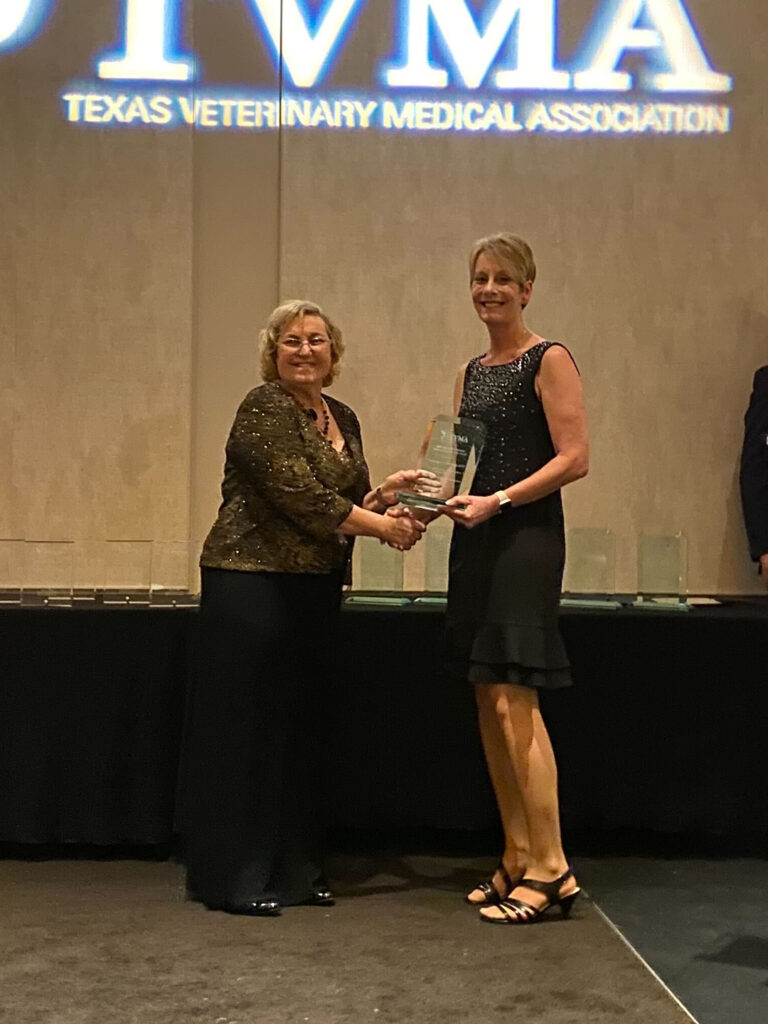
TVMA Immediate Past President Dr. Tamra Walthall and Wertman
Two members of the Texas A&M University College of Veterinary Medicine & Biomedical Sciences (VMBS) were among seven recipients honored with awards during the 2023 Texas Veterinary Medical Association (TVMA) Annual Conference & Expo.
“The TVMA Awards represent a special moment in the year when colleagues seek to honor their own profession. These awards represent so very many impacted people and animals that have been extraordinarily cared for,” said Troy Alexander, TVMA executive director.
Wertman, who joined the VMBS staff in 2011, has worked within the veterinary medicine field for 35 years, with duties ranging from being an animal care specialist in the U.S. Army to a technician specializing in equine internal medicine at Texas A&M.
Wertman now supervises a team of full-time equine technicians and part-time student assistants in the LATH.
“She is the glue that keeps the team going,” said one of Wertman’s nominators. “I can’t possibly think of a more deserving person for this award.”
As the TVMA’s Licensed Veterinary Technician of the Year, she was recognized for her outstanding professional performance, including distinctive contributions to advancing the standards of technical practice, involvement in community life outside veterinary medicine, education of animal owners about the care and welfare of animals, and contributions to refining techniques.
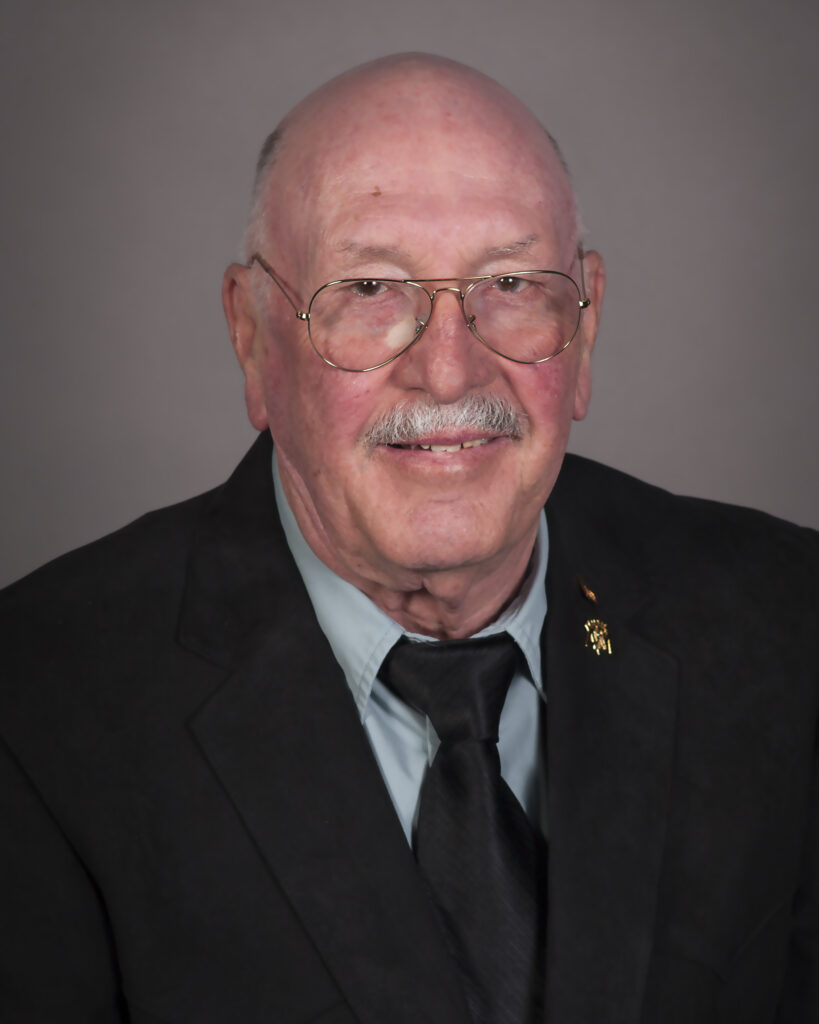
With the Distinguished Veterinary Career Achievement Award, Bailey was recognized and celebrated for his outstanding achievements attained over his almost 60-year career in veterinary medicine.
Bailey
Bailey’s veterinary medicine career began in the U.S. Army in 1963, when he joined the Veterinary Corps. While with the Veterinary Corps, he became director of the U.S. Army Research Institute of Environmental Medicine in Natick, Massachusetts, serving in the role from 1968-1970.
Afterward, Bailey moved into the Army Reserves and took a position teaching veterinary medicine at Texas A&M. Now a senior professor, Bailey has been teaching for the past 53 years.
“(It was) so impactful seeing the large number of veterinarians trained by Dr. Bailey,” said TVMA President Dr. Jodi Long, adding that Bailey received a standing ovation upon being awarded the Distinguished Career Achievement Award. “He is a very influential teacher.”
“His decades of service to Texas A&M students are unequaled,” agreed Dr. Rosemary Lindsey, a veterinarian specializing in canine and feline care in Fort Worth. “He’s a mentor and friend to all.”
The Distinguished Career Achievement Award recognizes a veterinarian for their cumulative record of accomplishments, recognitions, and professional contributions made; continued strong involvement in organized veterinary medicine at the local, state, or national levels; and the degree to which the award nominee has aided in educating or informing the public about veterinary medicine over the course of their career.
Wertman and Bailey received their awards during the TVMA 2023 Awards and Installation Banquet on March 4.
###
For more information about the Texas A&M College of Veterinary Medicine & Biomedical Sciences, please visit our website at vetmed.tamu.edu or join us on Facebook, Instagram, and Twitter.
Contact Information: Jennifer Gauntt, Director of VMBS Communications, Texas A&M College of Veterinary Medicine & Biomedical Sciences, jgauntt@cvm.tamu.edu,979-862-4216
A new publication explains the novel science behind the first molecular therapeutic for the rare neurogenetic disorder to advance into clinical development.
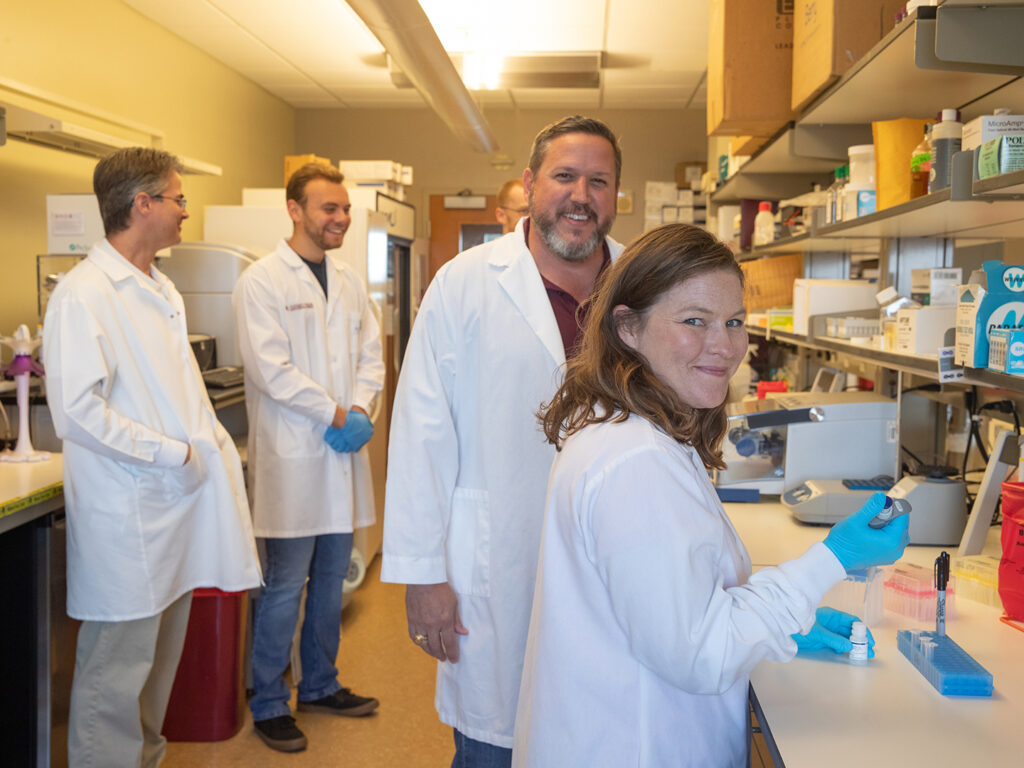
Dindot Lab team members and publication co-authors Dr. Johnathan Ballard (Texas A&M Institute for Genomic Medicine); Luke Myers and Tom Jepp (biomedical sciences doctoral students); Dr. Scott Dindot; and Dr. Sarah Christian (research scientist).
Researchers at Texas A&M University have developed the first molecular therapeutic for Angelman syndrome to advance into clinical development.
In a new article, published today in Science Translational Medicine, Dr. Scott Dindot, an associate professor and EDGES Fellow in the Texas A&M School of Veterinary Medicine & Biomedical Sciences’ (VMBS) Department of Veterinary Pathobiology, and his team share the process through which they developed this novel therapeutic candidate, also known as 4.4.PS.L, or GTX-102. Dindot is also the executive director of molecular genetics at Ultragenyx, which is leading the development of GTX-102.
Angelman syndrome (AS) is a devastating, rare neurogenetic disorder that affects approximately 1 in 15,000 live births per year; the disorder is triggered by a loss of function of the maternal UBE3A gene in the brain, causing developmental delay, absent speech, movement or balance disorder, and seizures.
There are no approved therapies for AS, and the current standard of care is focused on behavioral therapy and controlling specific symptoms, specifically the seizures that often affect patients with AS.
In healthy individuals, the copy of the UBE3A gene inherited from the mother is expressed in the brain and the copy of the UBE3A gene inherited from the father is turned off by another gene, called the UBE3A antisense (UBE3A-AS) transcript. Individuals living with AS have mutations that affect the expression or function of the maternal copy of UBE3A and, as a result, they lack the UBE3A protein in their brain. Dindot and his team began their research looking for a way to prevent the silencing of the paternal UBE3A gene and reactivate expression of the deficient protein.
In their research, Dindot and his team used different genomic approaches to understand how the UBE3A-AS transcript is regulated in the brain. Their work uncovered a previously unknown region in UBE3A-AS that they believe represents the ancestral origin of the gene in mammals. They also believe this region plays a key role in regulating the expression of UBE3A-AS.
“Parts of this region have remained unchanged for over 30 million years,” Dindot said. “The UBE3A-AS transcript is an incredibly complex gene. What it is and how it is regulated has been debated for years.”
The team then developed antisense oligonucleotides (ASOs) — small synthetic molecules comprising DNA and RNA — to target the conserved region in the UBE3A-AS transcript. ASO drugs work by binding to a target RNA and cutting it, causing the gene to stop making the RNA.
The team found that ASOs targeting the conserved region effectively turned off UBE3A-AS, which, in turn, reactivated the expression of the paternal UBE3A allele. The studies show that the ASOs reactivated the expression of the paternal UBE3A allele and increased UBE3A protein in cultured neurons from individuals with AS.
As a result of this research, Dindot developed the lead compound referred to as GTX-102, which is now in clinical development.
“We used a novel approach to designing the ASOs, targeting a very specific part of a gene rather than just giving a drug to treat a symptom,” Dindot said. “In theory, this treatment goes after the heart of the condition.”
Interim data from a phase 1/2 clinical trial of GTX-102 in the United States, United Kingdom, and Canada have previously indicated that the compound has demonstrated “meaningful improvement” in pediatric patients afflicted with AS.
“Moving forward, our research and findings not only offer promise for AS but also provide a path forward for developing ASO therapies for other genetic disorders,” Dindot said.
###
For more information about the Texas A&M College of Veterinary Medicine & Biomedical Sciences, please visit our website at vetmed.tamu.edu or join us on Facebook, Instagram, and Twitter.
Contact Information: Jennifer Gauntt, Director of VMBS Communications, Texas A&M College of Veterinary Medicine & Biomedical Sciences, jgauntt@cvm.tamu.edu,979-862-4216
Spring’s warmer weather signals the time for more outdoor adventures, especially for dogs who tend to be curious while outside. It also signals a time when owners should begin thinking about protecting their dogs from outdoor dangers by vaccinating them.
Dr. Lori Teller, a clinical associate professor at the Texas A&M School of Veterinary Medicine & Biomedical Sciences, says there are vaccines that dogs require regardless of going outside.
These include vaccines against parvovirus — a viral disease that causes vomiting, bloody diarrhea, and the shedding of the intestinal tract lining — and distemper — a viral disease that can lead to disorders that affect the nervous system and sometimes even death.
“Parvovirus and distemper can be vaccinated against with one vaccine that also includes protection against canine adenovirus, which is a cause of hepatitis in dogs,” Teller said. “When parvovirus is caught early enough, veterinarians can potentially save the dog’s life, but it can be challenging and expensive to treat. This is definitely an instance where an ounce of prevention is better than a pound of cure.”
Teller explained that vaccinations against parvovirus, distemper, and adenovirus should initially be given by veterinarians when puppies are 6-8 weeks old, followed by boosters until they are 16-20 weeks old. For animals adopted as adults, Teller recommends owners visit their veterinarians as soon as possible so that their dog can receive any missing vaccinations.
Additionally, dogs should be vaccinated against rabies, which is mandated by law, and receive preventives to protect against diseases spread by fleas, ticks, and mosquitoes.
“Rabies is almost always fatal, and dogs can contract it from wildlife, such as bats, raccoons, skunks, and coyotes,” Teller said. “Also, keep your pets on year-round preventives that kill fleas and ticks and prevent the development of heartworm disease. Heartworms are spread by mosquitoes, so have your pet tested for heartworms every 12 months.”
There also are activity-dependent diseases that owners should consider vaccinating their dogs against this spring.
For pets who spend any time outside, Teller advises owners to vaccinate them against leptospirosis, a bacterial disease that can lead to liver and kidney failure.
“Leptospira is a bacteria that is spread in the urine of mice, rats, raccoons, deer, and many other animals that inhabit urban, suburban, and rural areas,” Teller said. “The bacteria can live a long time in dirt, as well as in lakes and ponds, so dogs across Texas, whether those that live in the middle of a city or that wander open fields, are susceptible to the disease.”
Teller also recommends certain vaccinations for dogs who travel with their owners.
“Owners traveling with their dogs to areas where ticks carrying Lyme disease are common may want to vaccinate against this disease,” Teller said. “Also, owners who take their dogs to areas where rattlesnakes are common should talk to their veterinarian about the rattlesnake vaccine, which can lessen the impacts of rattlesnake venom and may lead to a better chance of recovery.”
Teller explained that vaccines for Lyme disease and rattlesnake venom are initially given as a series followed by annual boosters.
If owners place their furry companions in doggy day care or visit dog parks, Teller suggests vaccinating their dogs against parainfluenza and the bacteria Bordetella, which are leading causes of kennel cough, a common respiratory infection that is rarely fatal but frequently makes dogs sick.
“It’s a good idea for dogs to be vaccinated against kennel cough if they go to areas where dogs congregate,” Teller said. “Kennel cough vaccinations should ideally be given a week before the dog will board or visit a dog park and then repeated yearly.”
Finally, Teller recommends owners discuss with their veterinarian their dog’s need for a flu vaccine given the recent outbreaks of canine influenza, a respiratory virus, around Texas and the rest of the country.
Ultimately, Teller encourages owners to discuss their pet’s age, current health status, and lifestyle with their veterinarian to determine what vaccinations a pet needs, as vaccinating pets appropriately can protect both pets and their owners.
“Some of the diseases that we vaccinate our pets against are diseases that are also contagious to humans, such as rabies and leptospirosis,” Teller said. “So by protecting our pets, we are also protecting public health.”
Before you and your dog go on your next adventure, make sure to visit your veterinarian to determine the best vaccinations for your pet. Protecting your furry friend from illness can keep both of you healthy and ready for the next springtime activity.
###
For more information about the Texas A&M College of Veterinary Medicine & Biomedical Sciences, please visit our website at vetmed.tamu.edu or join us on Facebook, Instagram, and Twitter.
Contact Information: Jennifer Gauntt, Director of VMBS Communications, Texas A&M College of Veterinary Medicine & Biomedical Sciences, jgauntt@cvm.tamu.edu,979-862-4216
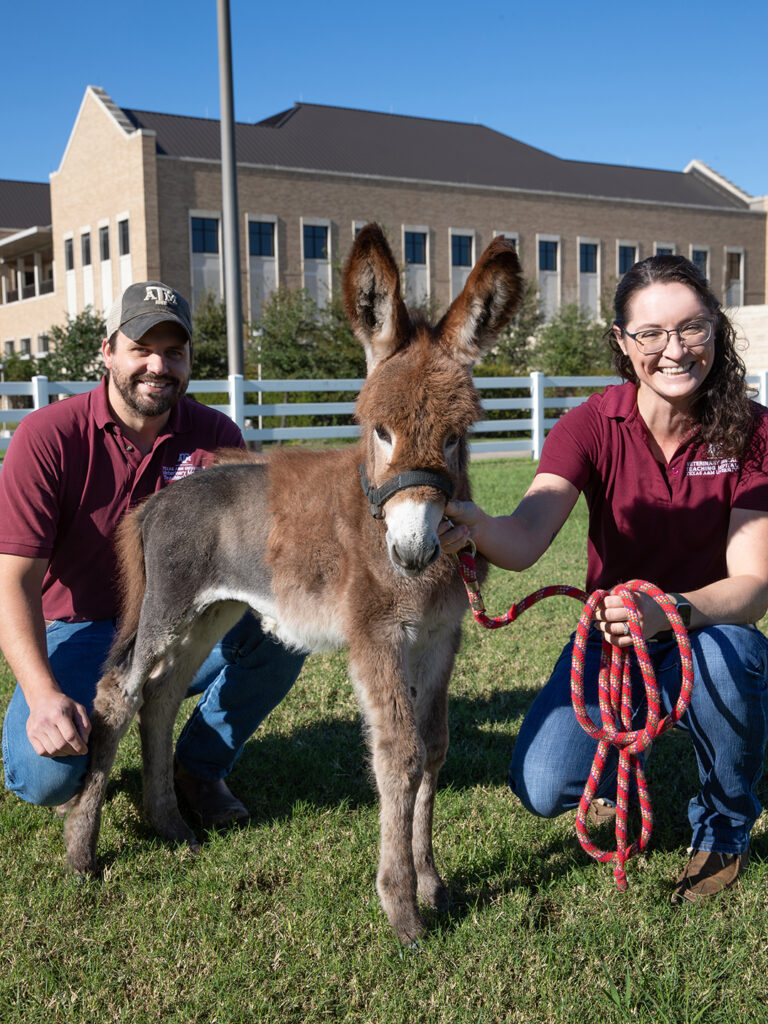
Large animal surgery resident Dr. Heath Manning, Tink (post-surgery), and Dr. Kati Glass
Throughout most of history, horses and other large animals with broken legs were considered a lost cause with no way to come back from such a devastating injury. At the Texas A&M School of Veterinary Medicine & Biomedical Sciences (VMBS), however, broken legs have been fixed in a variety of species thanks to a team of veterinary specialists and innovative surgical techniques and implants.
One recent example is Tink, a standard donkey whose leg was broken when he was only 2 weeks old.
Tink was born at the Blue Moon Sanctuary, a non-profit organization in Georgetown that is home to approximately 120 animals, the majority of which are donkeys.
“About six years ago, I met my first donkey and I just thought they were the most incredible animals,” said Anna Eby, the sanctuary’s owner. “It’s just my personality to need to fix ‘all the things,’ so I started a nonprofit and began rescuing donkeys.”
Tink was inexplicably rejected by his mother soon after birth, so Eby stepped up to hand-raise the foal and soon formed a strong bond with him.
One day soon after, while Eby was feeding some of the other animals, Tink wandered too close to an adult donkey and was kicked. Eby could tell that his leg was most likely broken and rushed the 30-pound foal to her local veterinarian, who recommended that she take him to Texas A&M for treatment.
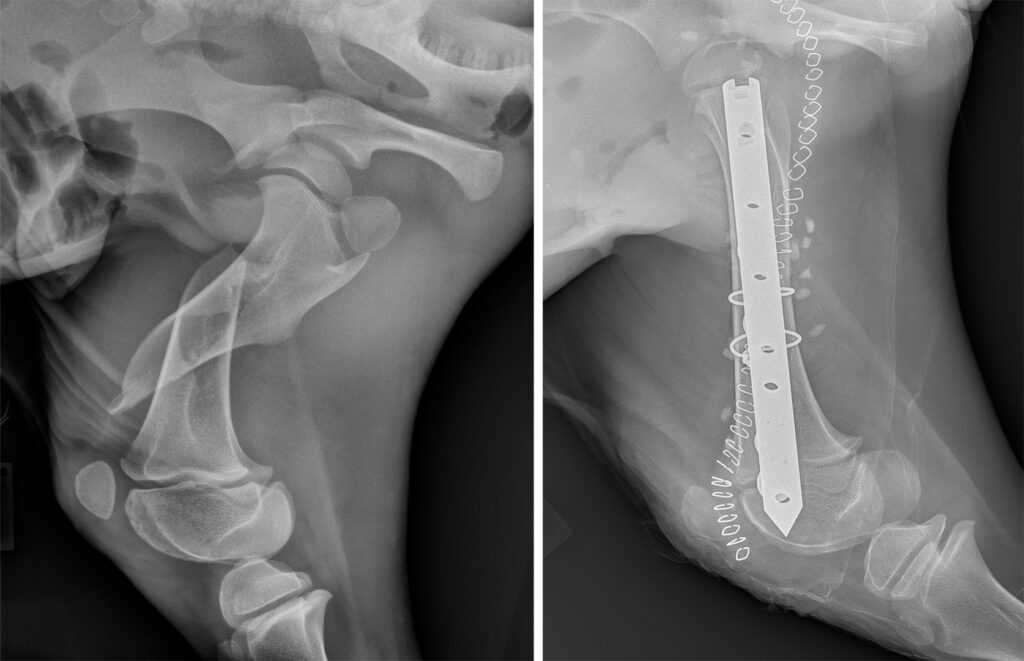
Tink’s radiographs showed a long, spiraling fracture of the femur bone in his right hind leg.
Tink went to surgery soon after he arrived at the LATH that night. His procedure began shortly after midnight and finished just before 4 a.m.
Watkins and Glass decided that Tink was a candidate for the use of the intramedullary, interlocking nail implant specifically designed by Watkins for use in fractures of the humerus and femur. This same implant has been used successfully to repair fractures in foals and calves up to 500 pounds, and even in an adult polar bear.
Radiographs of Tink’s leg, pre-surgery (left) and post-surgery (right)
“Tink was quite a small patient for us,” said Glass, a VMBS clinical associate professor in large animal surgery. “Fortunately, the interlocking nail fit perfectly, and just hours after surgery, he was already standing on his leg. We were really happy to see that.”
Tink stayed at the LATH to recover for a little over three weeks, during which time he more than doubled in weight and returned to his “happy foal antics,” according to Glass.
“Young animals tend to heal and form new bone really quickly when we can get the broken pieces back into position and stabilize them with appropriate implants,” Glass said. “Their bone just forms around the implant as they grow.”
Once Tink returned home to Georgetown, he spent several months recovering at a friend’s barn before eventually returning to Blue Moon Sanctuary.
“He’s just been spoiled to death. He doesn’t quite know how to be a donkey because he’s had so much human interaction,” Eby said. “But he’s very interested in his new donkey friends. In fact, he’s kind of a chick magnet.
“His injury was unfortunate, but it couldn’t have turned out better, thanks to Texas A&M,” she said. “My vet told me that there’s literally nowhere else in the world that could have done this procedure for him. I think that’s pretty incredible.”
Today, now that Tink is fully grown, you would never know that he had suffered a broken leg as a foal.
“A lot of people have heard and may even say that if a horse breaks its leg, you can’t fix it. Many times, however, there are options,” Glass said. “While we can’t fix all broken bones yet, we are constantly improving our knowledge, techniques, and implants. Thankfully, because of this, and an owner committed to his care, that old adage was not true for this donkey. It has been exciting to watch Tink grow into a donkey who you’d never know had this issue as a foal.”
###
For more information about the Texas A&M College of Veterinary Medicine & Biomedical Sciences, please visit our website at vetmed.tamu.edu or join us on Facebook, Instagram, and Twitter.
Contact Information: Jennifer Gauntt, Director of VMBS Communications, Texas A&M College of Veterinary Medicine & Biomedical Sciences, jgauntt@cvm.tamu.edu,979-862-4216
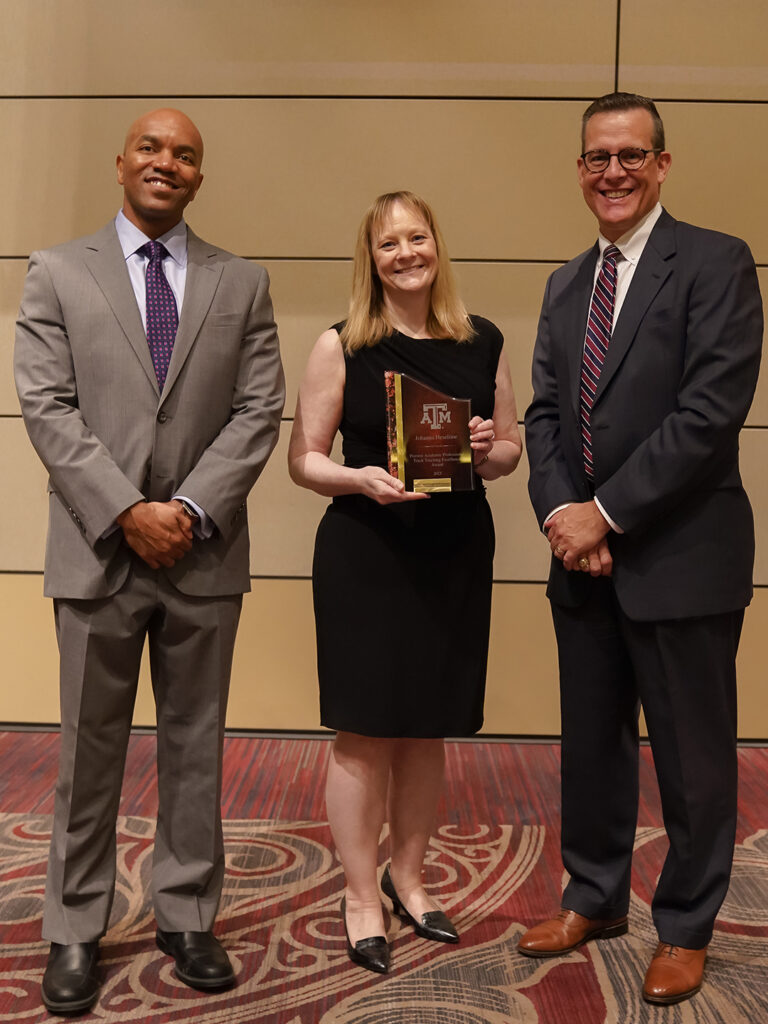
Michael Johnson, interim associate provost for faculty success and interim associate vice president for faculty affairs; Dr. Johanna Heseltine; and Timothy P. Scott, vice provost for student success Photo by James Blevins, Texas A&M Academic Success Center & University Writing Center
The award encourages, recognizes, and rewards faculty who provide students with meaningful learning experiences, who embrace effective teaching approaches, and who value student-centered learning. Heseltine contributes to seven pre-clinical courses for Doctor of Veterinary Medicine (DVM) students and teaches in the clinical environment in the Texas A&M School of Veterinary Medicine & Biomedical Sciences (VMBS).
Her outstanding teaching efforts yield outstanding veterinary work performed by Aggie veterinarians across the country.
Heseltine was nominated by Dr. Jonathan Levine, VSCS department head, professor, and Helen McWhorter Chair.
“Much of Dr. Heseltine’s teaching occurs in the clinical environment, where she directly instructs DVM students in the art of medicine,” Levine explained. “That instruction involves modeling clinical excellence, actively discussing medical reasoning and decision-making, and providing students with feedback on often-subtle clinical skills such as palpation and auscultation. These interactions are essential to generating practice-ready veterinarians.”
Heseltine’s teaching includes lectures, hands-on skills labs, critical-thinking sessions, and small-group discussions.
“Dr. Heseltine is a wonderful clinician,” one of Heseltine’s students said in a recent course evaluation. “She encourages independent thought and critical thinking during rounds. She respects students’ time. She gives students professional advice and recognizes the goals of each student and tailors feedback appropriately.”
Associate Dean for Professional Programs Dr. Karen Cornell said Heseltine’s commitment to supporting Aggies in their veterinary education extends beyond the classroom.
“She also serves as a one-on-one mentor for eight veterinary students who wish to focus on small animal practice,” Cornell explained. “She is well-respected by the students and sought after for advice and mentorship. Dr. Heseltine also mentors graduate veterinarians who are in a clinical residency training program. She has also presented her pedagogical research at national meetings, including the Veterinary Educators Collaborative.”
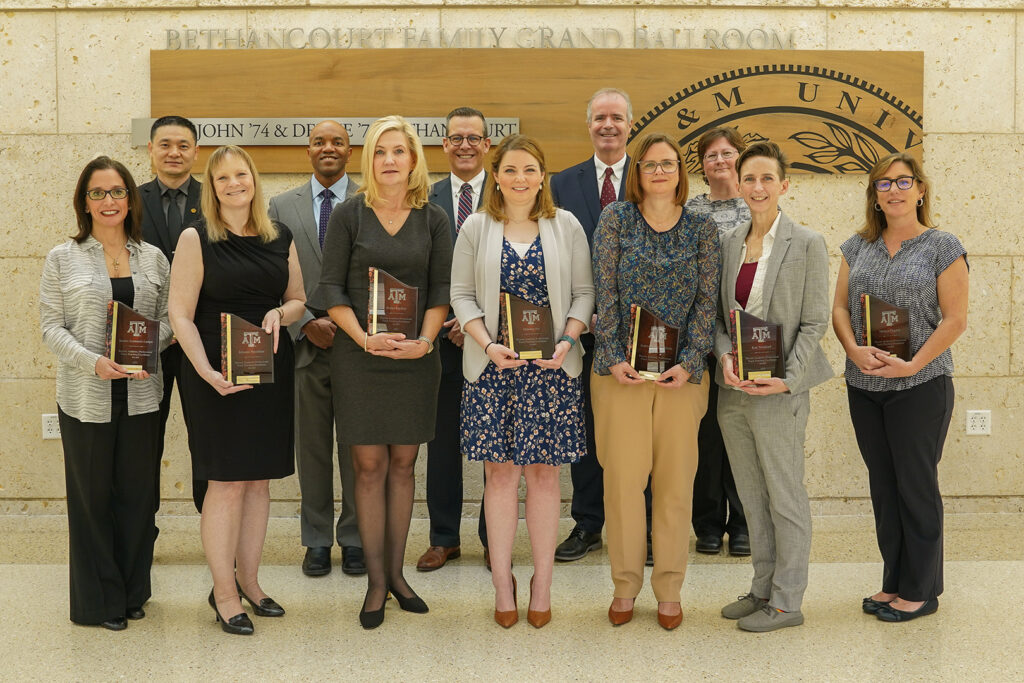
The 2023 Provost Academic Professional Track Faculty Teaching Excellence Award winners Photo by James Blevins, Texas A&M Academic Success Center & University Writing Center
Heseltine sets a high bar for clinical teaching in the Texas A&M Veterinary Medicine Teaching Hospital, according to Dr. Katie McCool, who met Heseltine when she served on the VMBS faculty from 2018-2022.
“In the teaching hospital, Dr. Heseltine’s daily student rounds, frequently cited as the most impactful portion of their clinical rotation, use case-based material generated from authentic, real-world patients,” McCool said. “Using these cases, Dr. Heseltine empowers students to apply their knowledge of medicine to real-life scenarios. During these discussions, Dr. Heseltine also guides students in navigating the unique career challenges associated with veterinary practice, including challenges related to hospital staffing, the role of owner finances in case management, and client communication.”
Heseltine is one of 10 faculty members at Texas A&M to receive the Provost Academic Professional Track Faculty Teaching Excellence Award in 2023. Each recipient receives $5,000, thanks to the generosity of the Marie M. and James H. Galloway Foundation, to support teaching innovations and teaching-related projects and activities. Recipients hold this award title for life.
###
For more information about the Texas A&M College of Veterinary Medicine & Biomedical Sciences, please visit our website at vetmed.tamu.edu or join us on Facebook, Instagram, and Twitter.
Contact Information: Jennifer Gauntt, Director of VMBS Communications, Texas A&M College of Veterinary Medicine & Biomedical Sciences, jgauntt@cvm.tamu.edu,979-862-4216
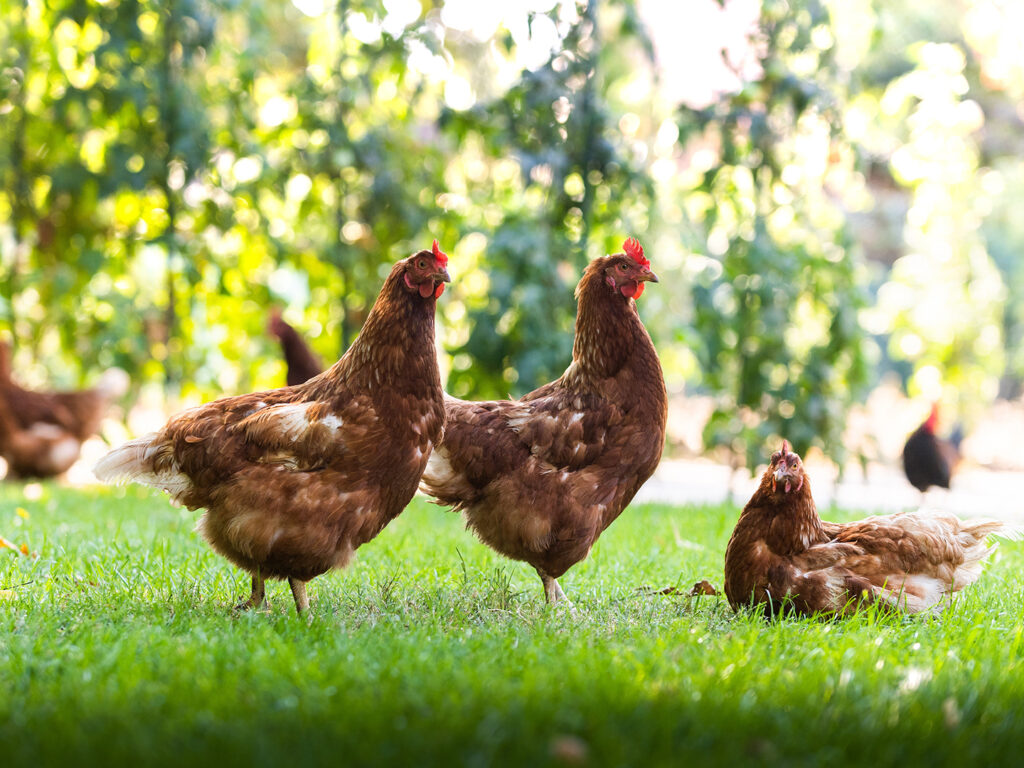
Dr. Isabelle Louge, a clinical assistant professor at the Texas A&M School of Veterinary Medicine & Biomedical Sciences, encourages owners to first contact their veterinarian after bringing home their chickens to discuss resources for maintaining flock health.
“Because there is a shortage of veterinarians who are willing to see poultry in backyard flock scenarios, it is important to reach out to clinics before you have a problem to ensure that you can find reliable information and help with managing the health of your flock,” Louge said.
Among the most basic considerations to keeping flocks healthy, backyard chickens should always have clean water and a nutritional diet, according to Louge.
“Water and its container should be checked daily to ensure that they are clean,” Louge said. “Containers should also be cleaned out, disinfected fully, and rinsed out thoroughly at least twice a week to prevent bacteria buildup that can make your birds sick.”
For a nutritional diet, Louge advises owners to match the correct feed with a chicken’s life stage. This will depend on if you are raising a flock of laying birds, or chickens that lay eggs; broilers, or chickens raised for meat production; or a combination of the two.
“Chicks require specially formulated diets before they are transitioned to a layer feed, for layers, or a finishing diet, for broilers,” Louge said. “We are very fortunate to have many commercially available, well-balanced chicken feeds, which should be fed as per label directions and be the main source of the chicken’s food.”
Owners can also feed their chickens treats, such as mealworms or chicken scratch, but Louge specified that treats should make up less than 10% of a chicken’s diet. Additionally, Louge encourages owners to be cautious when feeding chickens table scraps because moldy and spoiled food can make them sick.
In addition, owners should avoid foods that are poisonous for chickens, including avocados, dried beans, uncooked potatoes, tomato plants, salty foods, onions, pits of stone fruits like peaches, and rhubarb.
Louge recommends owners also provide laying birds with extra calcium, which is needed to make eggshells and can be found in free-choice crushed oyster shells or commercial calcium supplements made for laying hens.
Finally, new flock owners should be aware of common injuries caused by other chickens or predators that enter the coop, such as snakes, raccoons, and coyotes, and understand how to address those injuries.
“As basic first aid for wounds no deeper than the skin, owners should clean the surface of the wound with warm water and dilute iodine or betadine,” Louge explained. “Owners should also separate any injured birds until they fully heal to prevent flock mates from pecking at the wound and making it far worse.”
Louge suggests placing the injured chicken in a small-sized see-through cage in the coop to keep them with their flock while they recover but also to prevent bullying from other chickens. This can prevent bullying when the healed chicken re-enters the flock as well.
But if the wound appears deeper than the skin or the wounded chicken seems sick, Louge advises owners to seek veterinary help as soon as possible to determine the best treatment plan. Sick chickens tend to hold their head low, appear fluffed out, are lethargic, have no appetite, lose weight, and limp.
In addition to looking out for the birds’ health, it is also essential that owners protect their own health when caring for their chickens, which carry salmonella, a bacterial infection that can cause humans to experience diarrhea, fever, and stomach pains.
“It is very important for human caretakers to always wear gloves when cleaning out a chicken coop, avoid breathing in any dust produced by the birds or found in the coop, and wash your hands thoroughly after handling chickens or chicken products like eggs,” Louge said.
Since chickens carry diseases that can make humans very ill, Louge recommends supervising children when interacting with chickens and discourages kissing chickens and touching faces after handling chickens.
To raise a healthy backyard chicken flock, you should follow good chicken management that can protect the health of your flock and you as a chicken caretaker, leading your chickens to have egg-ceptionally healthy lives.
Pet Talk is a service of the College of Veterinary Medicine & Biomedical Sciences, Texas A&M University. Stories can be viewed on the web at vetmed.tamu.edu/news/pet-talk. Suggestions for future topics may be directed to vmbs-editor@tamu.edu.
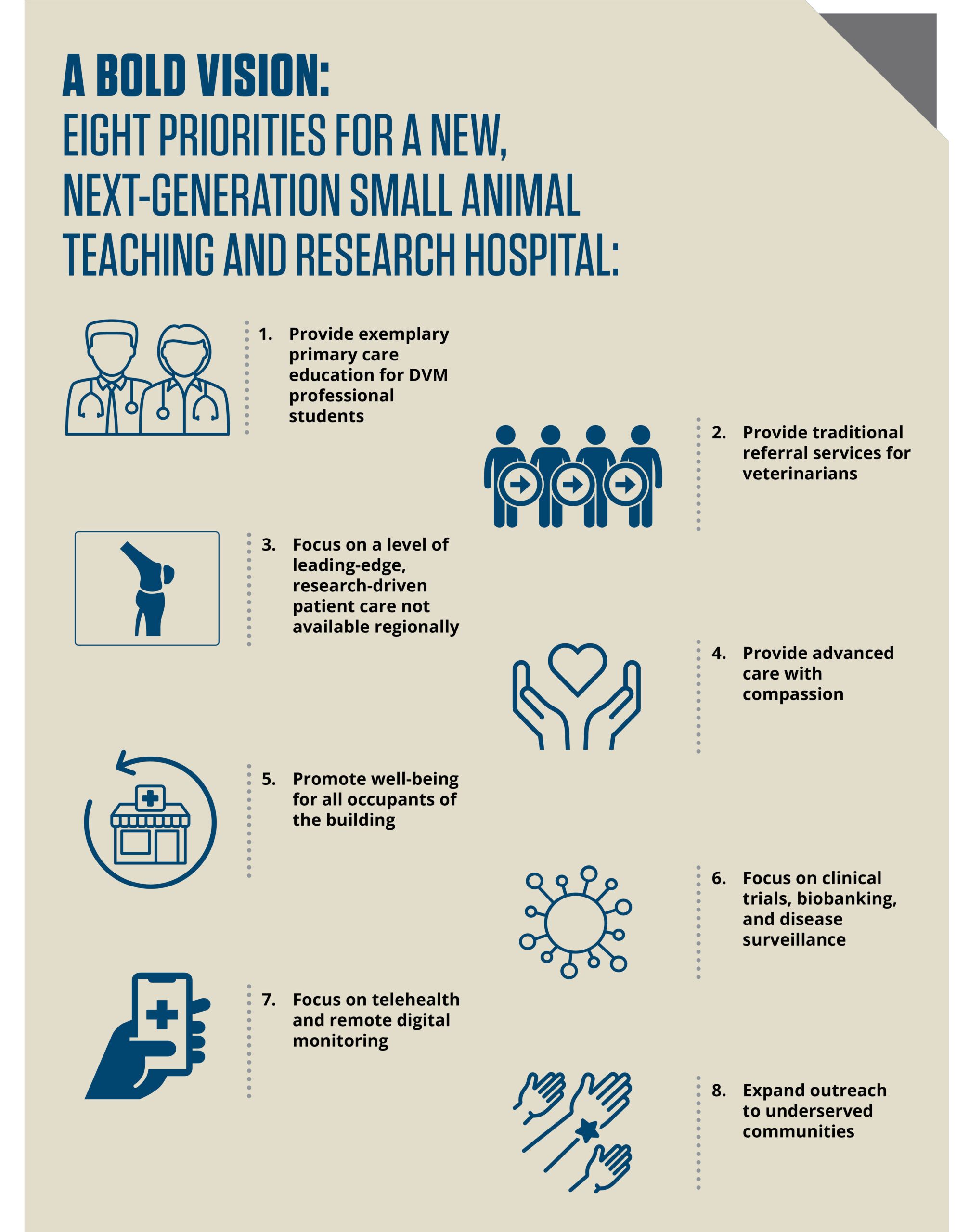
What may seem like years in the making, the VMBS’ dream of a new, next-generation small animal teaching and research hospital has built momentum under Dr. John August, the Carl B. King Dean of Veterinary Medicine, and has quickly gained support from Texas A&M University President Dr. M. Katherine Banks.
“By having important conversations with the right stakeholders and administrators, Dean August has led these people who’ve been dreaming about a new small animal teaching and research hospital to develop it and run with it,” Levine said.
During her 2022 State of the University address, Banks referenced a new veterinary teaching and research hospital as a priority for the university, adding that the aspiration for this hospital is for it to be the best in the world.
“This hospital will provide hands-on educational workspace for veterinary students and a state-of-the-art laboratory for animal health and translational research,” she said during the address. “Faculty members in the vet school will partner with colleagues across the university to develop innovative diagnostic and therapeutic strategies.”
With several key milestones reached, the VMBS has forged ahead with developing a vision for a next-generation teaching and research hospital that builds on the school’s 100-plus years of excellence in teaching, service, and research, while keeping at heart Texas A&M’s core, land-grant mission and, above all, the university’s focus on student success.
A Solid Foundation
Among the reasons VMBS faculty, staff, students, and administrators have dreamed of a new small animal teaching and research hospital is that this facility is more than just a building—it’s a symbol of what could be, of boundless opportunities and possibilities.
It’s a dream that is driven by the interconnection between student success, leading-edge patient care, and clinical trials.
“Our vision is building upon strengths we already have,” Levine said. “The beautiful thing about it is that a lot of the pieces are here.”
“Our faculty, our students, and our staff—we can’t underscore the staff piece—are so passionate about what they do; their love for animals and the human-animal bond shines through,” said Dr. Stacy Eckman, associate dean for hospital operations.
“Clients see the rapport you build in the hospital, the expertise, and the passion when they walk in the door; they leave feeling like somebody deeply cared about them. It’s hard to put into words, but it’s a shared love for something; whether it’s healing the dog or the dog itself, it’s a shared passion.”
“The fact is that people do remarkable work in our Small Animal Teaching Hospital (SATH),” August said. “That’s the quandary (in needing a new teaching and research hospital)—the quality of work is amazing.”
That quality of work can be witnessed in many ways.
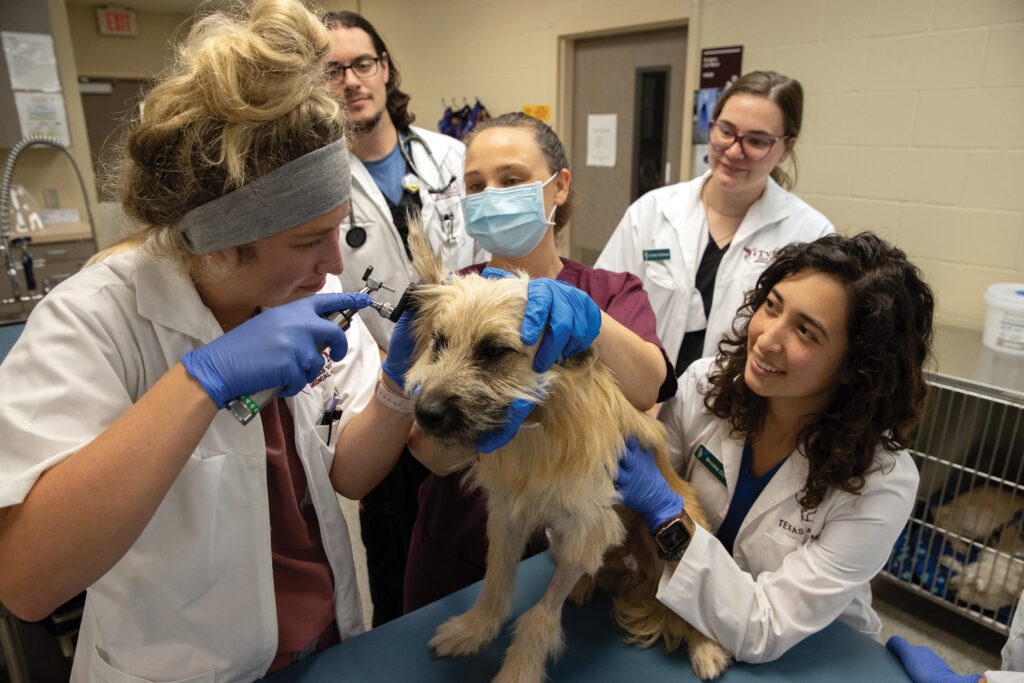
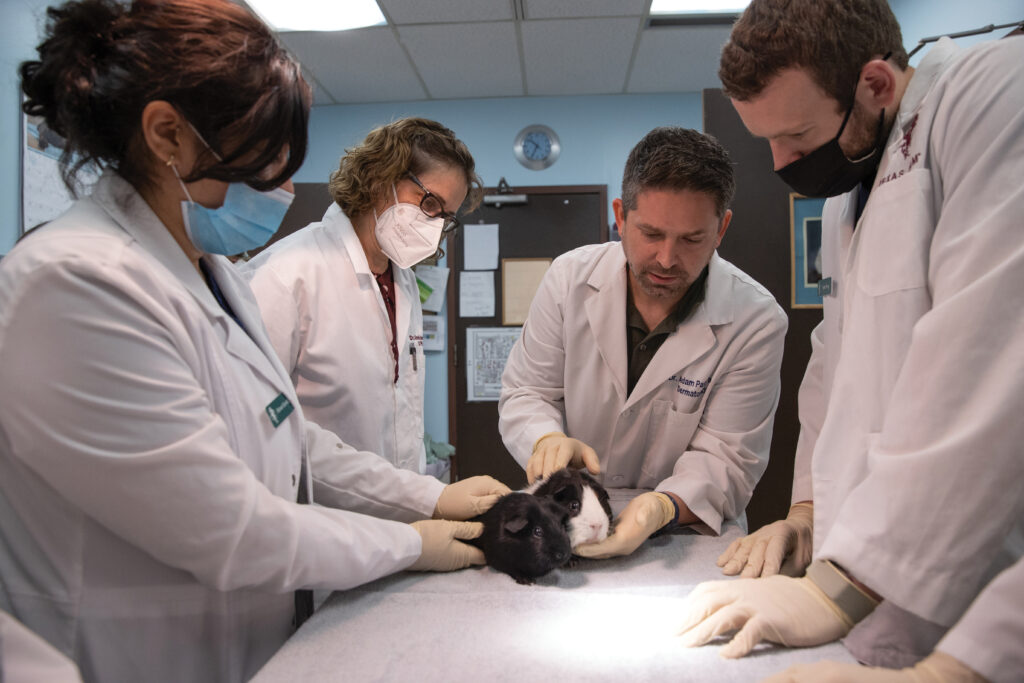
Dr. James Bilof with veterinary students
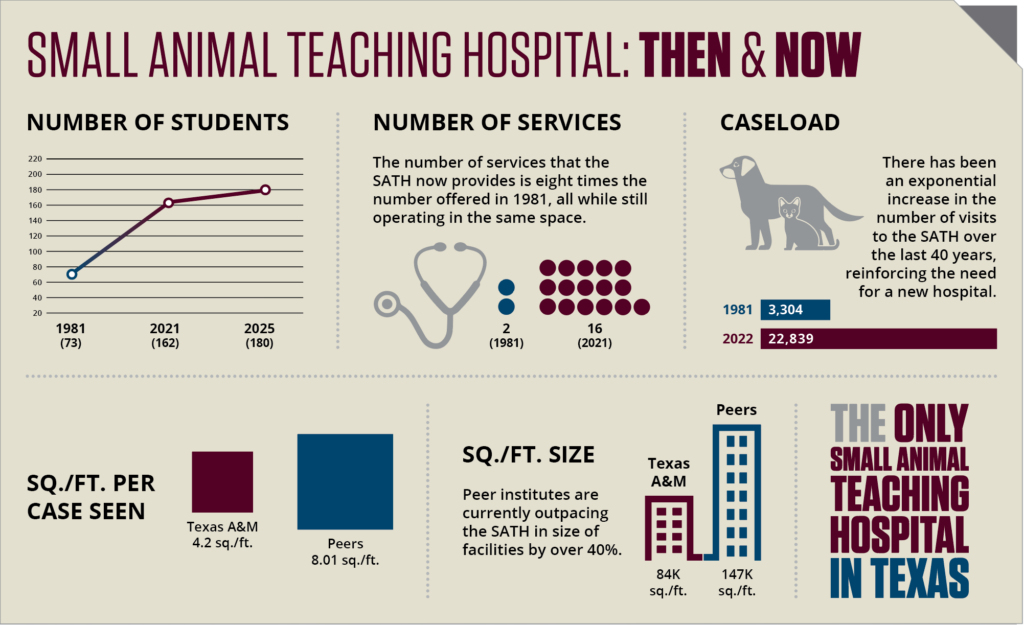
Chief among those are the exponential growth in caseload, which is more than six times higher than it was in 1981, when the current SATH was opened; the expansion of clinical research, with at least twice as many services offering clinical trials now compared to 10 years ago; and the increase in services themselves, from two in 1981 to 16 today.
All of these factors reflect the trust that clients have for SATH clinicians in caring for their beloved companion animals and the importance of the specialized care the SATH offers patients that is unavailable anywhere else.
Perhaps most importantly, these factors work together to ensure that VMBS students receive the exceptional education one expects from one of the most elite Doctor of Veterinary Medicine (DVM) programs in the country.
“It’s really all about the students. The teaching hospital is the pinnacle of their learning, and we have the only veterinary medical teaching hospital in Texas,” Eckman said. “We do an exceptional job of teaching clinical medicine.
“We gather a diverse caseload at the tertiary-care level, and while a lot of the cases are not necessarily things that students are going to be seeing in private practice, the exposure they get to a lot of different scenarios gives them the opportunity to practice everything all at once,” she said. “That is really critical when teaching students.”
A Bold Vision For The Future
Capitalizing on that good work and synergy means weighing how the SATH can both better serve Texas’ citizens and animals, as well as the students who begin their careers as Aggie veterinarians within the hospital’s walls—while also looking to the future.
“There’s this tremendous opportunity to do so much more,” Levine said. “We continue to innovate in the clinic with our interventional radiology, with our minimally invasive surgeries, with some procedures you can’t get anywhere else in the state and the U.S. This is about doing more of that; it’s about access.”
Programs like the VSCS’ Underserved Communities Internship—created to broaden the SATH’s reach across the state—and the Roach Family Student Community Outreach Surgical Program—which allows students to gain more surgical experience while offering free procedures for the pets of low-income Brazos Valley residents—are good examples of ways a new teaching hospital can combine education and patient care while looking to the future.
“Dean August has been particularly good about reminding us about the importance of the external impact we have through our students, through serving our state, and through innovating,” Levine said. “Where we see gaps, we’ve got to fill them. We must be thinking of big ideas; we should be working on a few each year that build on top of one another.”
Part of that impact, too, comes from research and clinical trials, which offer students insight into non-clinical veterinary career paths and showcase how research can offer real hope to animal owners, while also supporting the advancement of medicine that impacts animals and human beings.
For August, this combination of ideas prominently places the VMBS within Banks’ vision of a Texas A&M that stands at the forefront of medical and technological innovation.
“If we look at the Small Animal Teaching Hospital as a research-intensive tertiary care center, we can aspire to become a teaching and research hospital comparable to MD Anderson,” he said. “Nobody worries that MD Anderson is a research-driven hospital. You go there to be part of a clinical trial. You go there because it is the best in the world. You go there because it is cutting-edge. You go there because of the high level of compassionate care. People understand that’s the role A&M should have in the care of companion animals.”
Likewise, with other health- and medical-focused schools, colleges, and departments at Texas A&M, there is an abundance of mutually beneficial opportunities to collaborate on topics like medical devices and issues that directly impact both animals and human beings.
“We have an opportunity to look at what role a small animal teaching and research hospital should have within our research-intensive, land-grant institution that focuses on the life sciences, as Texas A&M University does,” August said.
“Since the Small Animal Teaching Hospital has opened, the number of referral hospitals in Texas and in the nation has exploded; we no longer need to view ourselves as just a referral hospital,” he said. “We have a very unique opportunity to collaborate with others at our university in those disciplines who share our interest in animal and human health and to develop a model for a small animal teaching and research hospital that is quite different from everything else that has been developed nationwide in the last decade.”
As Texas’ human and animal populations grow and projected spending within the pet industry nationwide swells to $250-300 billion by 2029, it will be more important than ever to have a flexible space where students can excel, clinicians can continue to provide leading-edge patient care, and basic and clinical scientists can come together to unravel some of life’s most pressing medical mysteries—while still being conscious that these increased needs will require more and more people to achieve these goals.
“Even though we are a tertiary care hospital, we want to keep looking for opportunities to impact the whole state,” Levine said.
Cramped Spaces
Dr. Annie Newell-Fugate and Dr. Adam Patterson with fourth-year veterinary students
Eckman graduated from Texas A&M’s veterinary school in 2001, 20 years after the current SATH building opened. As a faculty member and now associate dean, Eckman says that a lot has changed at the SATH, but there’s one thing that hasn’t.
“The hospital is the same hospital,” she said. “That’s important because our faculty and staffing have grown exponentially and our student numbers have grown considerably, but we’re in the same exact footprint.”
August shared a similar experience when he joined the VMBS as head of the of the Department of Small Animal Medicine and Surgery in 1986.
“In some ways, the building was already outdated when I came here, even though it was quite new at that time,” he said. “It was designed to provide more space but not necessarily designed for the future. So, today, we have a 40-year-old building that doesn’t reflect the quality of the work going on inside.”
While those in the SATH are doing tremendous work, the current facility ranks at the bottom in nearly all criteria compared to peer institutions; the VMBS’ nationally ranked curriculum and exceptional patient care are being accomplished in cramped spaces that present both challenges in managing increasing caseloads and potential safety and biosecurity challenges that impact the school’s aspirations in teaching, patient care, and research.
That the SATH continues to literally push its boundaries speaks to the resiliency of the faculty, staff, and students, according to Levine.
“Our faculty, our students, and our staff are very flexible; they meet challenges with a can-do attitude,” Levine said. “That’s a little bit cliché, but to be able to achieve what they’ve achieved in those spaces, hats off to them.”
But the limitations that faculty, staff, and students experience are sometimes more than just an inconvenience.
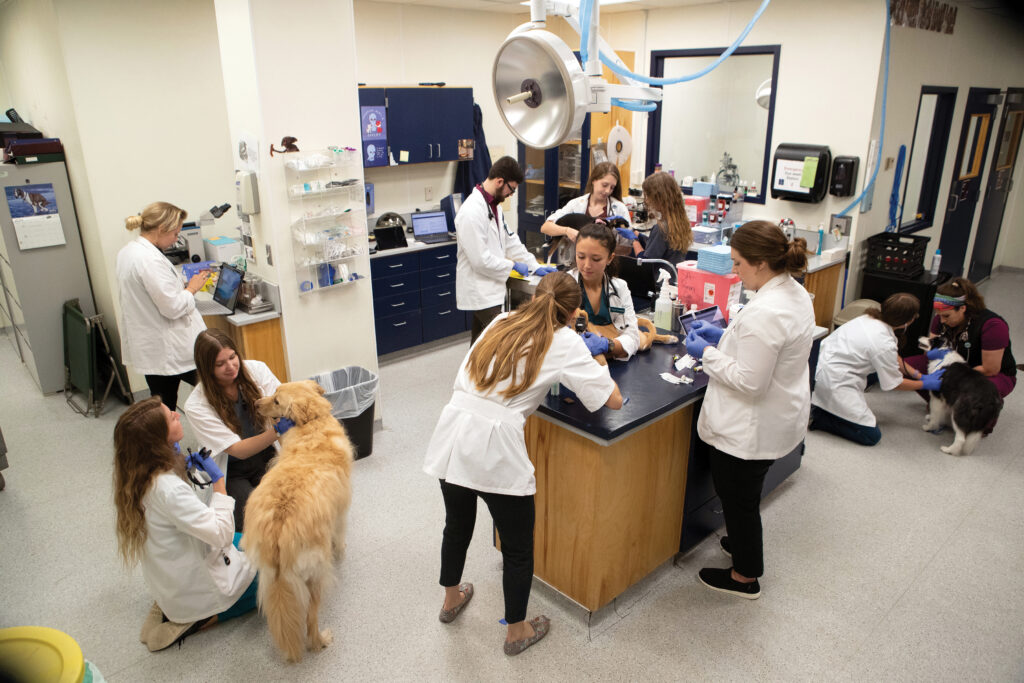
Students and faculty provide extraordinary care in an overcrowded SATH space.
“We do have to divert cases periodically—every seven to 14 days, and sometimes more frequently—because we don’t have enough room in our ICU; we try to limit that as much as we can and our ER, of course, is still open for emergencies,” Eckman said. “But if we only have so much space, we can only see so many cases; above all, we need to guarantee that we have adequate space and resources to ensure we are providing the highest quality care.”
Weighing the impact of an overcrowded hospital on students is especially important, because it can be directly related to student success.
“As a clinician, if I think about a caseload I had when there were 132 students, I need to increase my caseload so that the 180 students get the same learning opportunities,” Eckman said. “If we’re limited on how many cases we can bring in and where we can put them, we have to be creative about how we’re teaching students. And if we have to say no to cases wanting to come in because we don’t have the space for them, it’s a lost opportunity.”
The limitations the SATH experiences are compounded by the increase in technology that has occurred in medicine since the 1980s.
“In the 80s, our operating rooms weren’t built for all of the scope towers and monitors,” Eckman said. “By the time you add equipment, the room has shrunk considerably; we have just far exceeded our capacity.
“Our ability to teach is still awesome. Our patient care is awesome,” she said. “But we can’t build on that right now. We can’t see more patients. We can’t teach differently. We can’t do any more research. We can’t do any more innovative surgeries. We can’t do any more in our current footprint.”
Room To Grow
Morgan Martin
August sees the new small animal teaching and research hospital as having a unique opportunity to play a central role in the next phase of Texas A&M’s growth and stature.
“There was an attempt back in 2013 to expand the Small Animal Teaching Hospital. In the end, the finances weren’t there; they had to be put into the educational complex,” August said. “In many ways, it’s a godsend that we didn’t update or replace it 10 years ago, because it probably would’ve already been out of date.
“We have to make sure that the new hospital is designed in a way that we have flexibility over the next decades for handling the sickest, most complicated patients and not be faced with a situation where in five years we’re wishing our ICU was bigger,” he said.
“At the same time, we will need exceptional primary care space for client, patient, and student interaction, to provide adequate space for veterinary medical students to develop the foundational competencies needed before entering the profession with immediate confidence,” August continued.
Now that the project has support from Texas A&M’s president, the Texas A&M University System, and the Texas Legislature, the VMBS is looking ahead to the pieces that need to be completed before breaking ground—including submitting a program of requirements for approval by the Texas A&M System Board of Regents in February 2023, which will move the project into the engineering and architectural planning phases.
As the VMBS administrative and development teams work toward bringing the school’s dream to fruition, with the hopes of hosting a ribbon-cutting ceremony by 2026, the support of donors will be critical.
“This new teaching hospital has the potential to have tremendous impact not only within Texas A&M but outside as well. Institutions exist for the positive impact they have on society at large,” Levine said. “We’re going to be able to change not only the educational landscape for students preparing to enter the workforce, not only the pet health care landscape, but, also, there may be some real scientific innovation that comes along with it. So, I think it’s going to be amazing for donors as well.”
Join Texas A&M and the VMBS in laying the foundation for the next generation of exceptional student success, leading-edge patient care, and impactful research. Together, we can share the Aggie spirit with the world through the advancement of medicine that impacts animals and human beings. You can support the school’s mission through endowed funds for research, faculty, and student scholarships. Additionally, naming opportunities starting at $25,000 abound in the new facility, and spaces can be named in memory or honor of a special person or pet.
If you’d like to be part of pushing veterinary medicine to new heights at Texas A&M, contact Larry Walker ’97, the Assistant Vice President of Development at the Texas A&M Foundation, at lwalker@txamfoundation.com.
For more information about the Texas A&M College of Veterinary Medicine & Biomedical Sciences, please visit our website at vetmed.tamu.edu or join us on Facebook, Instagram, and Twitter.
Contact Information: Jennifer Gauntt, Director of VMBS Communications, Texas A&M College of Veterinary Medicine & Biomedical Sciences; jgauntt@cvm.tamu.edu; 979-862-4216
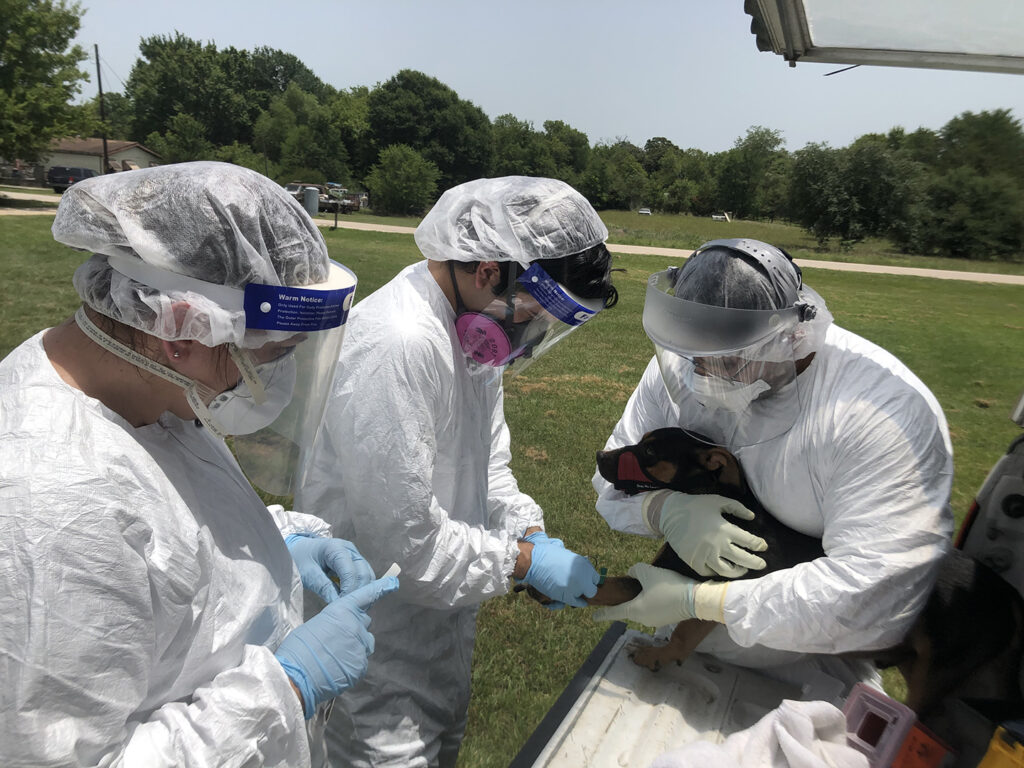
Members of Sarah Hamer’s COVID-19 & Pets Project traveled around the Brazos Valley to collect samples from pets that may have been exposed to the SARS-CoV-2 virus.
Nine Texas A&M University researchers made key contributions to the first national-scale COVID-19 animal surveillance study that analyzed companion animal COVID-19 data from across the United States. The study was led by the Centers for Disease Control and Prevention (CDC) and aimed to characterize the clinical and epidemiological features of COVID-19 in companion animals.
The unique, collaborative effort also included researchers from county health departments, state health departments, other universities, and national level labs.
Texas data, collected by Texas A&M researchers, contributed the greatest number of animal cases reported by any state to the project. The Texas A&M COVID-19 & Pets Project, which began in the summer of 2020, was partially funded by the CDC and proved instrumental in providing the Texas data.
“The COVID-19 & Pets Project at Texas A&M included active household pet sampling for two years,” Dr. Sarah Hamer, a veterinary epidemiologist at the Texas A&M School of Veterinary Medicine & Biomedical Sciences, explained.
Two other faculty members helped to guide the research, Dr. Rebecca Fischer, from the School of Public Health, who helped enable the researchers’ relationship with the county health department and access to human cases on campus, and Dr. Gabriel Hamer, from Texas A&M’s Department of Entomology (College of Agriculture and Life Sciences) who provided biosafety level 3 (BSL3) capacity and overall diagnostic support. Other Texas A&M contributors include postdoctoral researchers Dr. Italo Zecca and Dr. Christopher Roundy, Ph.D. student Ed Davila, DVM/Ph.D. student Rachel Busselman, and research associates Lisa Auckland and Dr. Wendy Tang.
Dogs and cats can and have become infected from their owners throughout the pandemic, but often experience mild, self-limiting illness with no strong evidence of onward transmission.
“We’ve detected more than 100 cases in cats and dogs in Texas. This high level is because we were actively looking for the cases rather than relying on passive surveillance,” Sarah said. “I don’t think there’s much difference between Texas and other states that would place our animals at a higher risk of COVID-19 infection. The increased caseload is simply a result of our active efforts to test companion animals living in households with confirmed cases of COVID-19 — often only a day or two after their owner tested positive — early and well into the pandemic.”
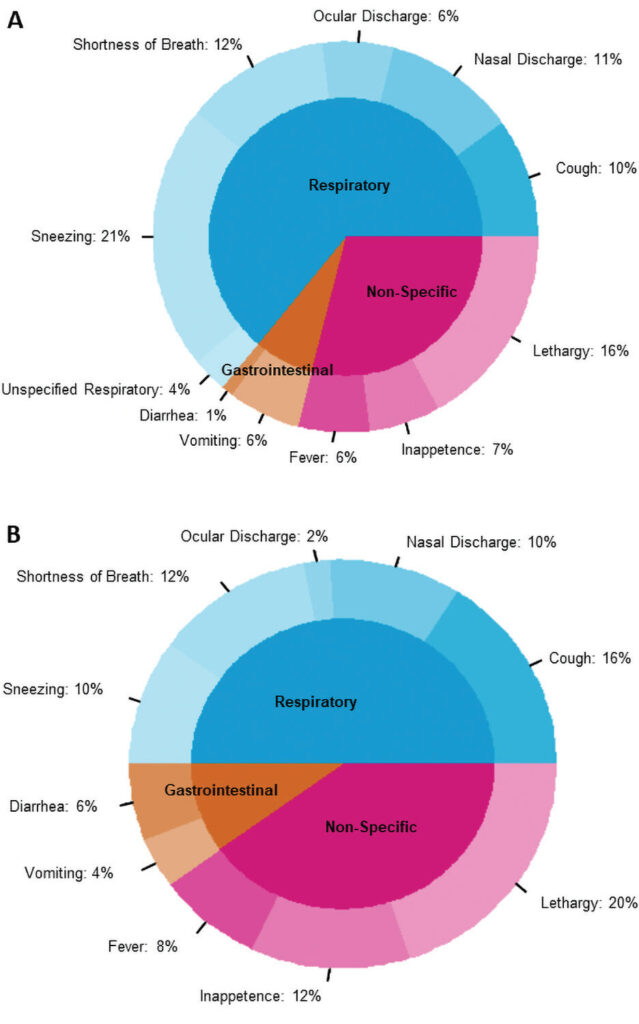
Clinical signs reported in cats (n = 55; A) and dogs (42; B). Of 97 animals with clinical signs, the proportion of each clinical sign being displayed is shown within each species. Since a given animal may display multiple clinical signs, percentages are calculated by number of signs displayed, not by individual animals.
The CDC report is the first study to summarize nationally compiled surveillance data on the epidemiologic and clinical characteristics of natural COVID-19 infection in companion animals.
“It’s not rare to find dogs and cats that have tested positive for this infection,” Sarah said. “They’re the animals that people have closest relationships with. Many pathogens — SARS-CoV-2 included — require close contact for transmission to occur, so living with our pets, and sharing our bedrooms and beds with them, especially when we are sick, can provide opportunities for transmission.”
The paper notes that 72% of animals identified through passive surveillance exhibited clinical signs, while only 27% of animals identified through active surveillance exhibited clinical signs. Clinical signs varied by species, with sneezing and lethargy being most common in cats, whereas lethargy and cough were most common in dogs.
It concludes that animals whose samples test positive for infection with SARS-CoV-2 are commonly exposed to people who have tested positive for the virus.
“[These data] provided strong evidence that people, most often owners, are the source of infection for their pets,” the CDC paper reads. “[These data also] supported guidance developed by federal One Health partners that includes recommendations that when people are sick or have a suspected COVID-19 infection, they should avoid contact with animals just like they would with other people and that they should wear a mask around both people and animals when ill with COVID-19.”
The research also concludes that more data is needed to determine the likelihood and frequency of pet-to-pet or pet-to-person transmission within households. Further, without continued One Health collaboration across multiple sectors to pursue more extensive surveillance, many SARS-CoV-2 infections in companion animals will remain undetected.
The opportunity to work on this collaborative project helped strengthen Texas A&M’s relationship with the CDC, particularly with the CDC One Health Office who deployed two CDC epidemiologists to work alongside the Texas A&M researchers.
Sarah said the study represents the power of collaboration across the country and that it will help her in ongoing COVID-19 research.
“There’s a lot to be learned about wildlife that may interact with people or pets, including mice and rats, raccoons, opossums, coyotes, as well as deer, and these are all animals that we’re sampling now,” Sarah shared. “It’s important to understand how COVID-19 is affecting these animals, because even though humans have new tools, treatments, and vaccines to combat the virus, these tools are not widely available for animals.
“In many cases, we showed infected animals didn’t seem to get sick from the virus. But we feel it is important to study these animal infections because different viral variants can have different health outcomes. Also, under the right circumstances, the virus might spill back from these animals into people, and start making people sick again,” she said.
Viruses that spill back might have mutations, some of which might help the virus evade therapeutics and vaccines.
Fischer said she agrees about the importance of their continued COVID-19 research efforts.
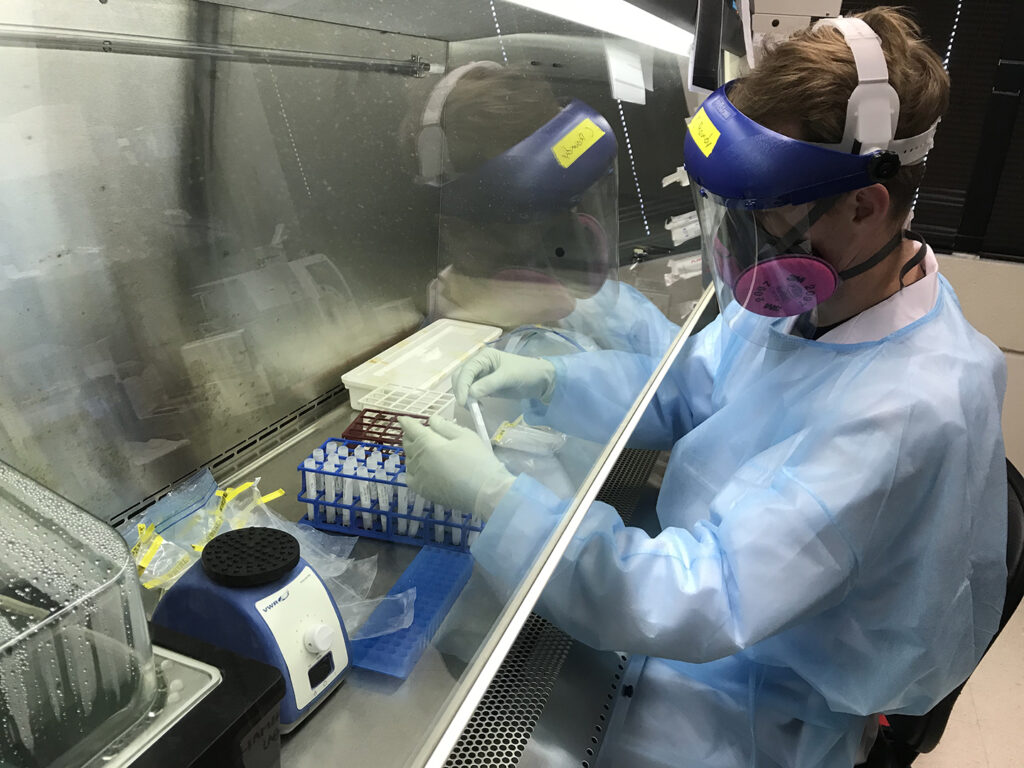
Swabs from the field are processed in the laboratory by postdoctoral associate Chris Roundy (MPH, PhD).
“It is so important for epidemiologists — in both the human and animal health domains — to work with each other, as well as with public health agencies and scientists in other fields, to learn ways to preserve and improve health across the board,” Fischer explained. “These transdisciplinary collaborations are critical, even more so when faced with the emergence of a new infectious disease that threatens the entire community. The pets study provides important evidence about how this particular virus moves about our homes, communities, and families — including our fur families — and offers yet more insight on how we can take small steps to help keep everyone safe and healthy.”
Gabriel said there are lessons to be learned from the COVID-19 pandemic experience.
“The COVID-19 pandemic is a good example of the need to repurpose equipment and facilities to address this new public health threat,” Gabriel added. “In our case, the high-throughput and high-containment diagnostic and research capacity working with mosquito-borne viruses allowed us to use the same equipment and facilities for testing animals for infection with or exposure to SARS-CoV-2. The ability to test animals for evidence of past exposure to SARS-CoV-2 required a BSL3 laboratory which was made possible thanks to existing partnerships with the Texas A&M Veterinary Medical Diagnostic Laboratory and the Texas A&M Global Health Research Complex.”
The collaborative efforts that made this research possible also provide important steppingstones in understanding COVID-19 and what the future of the infection may hold for animals and humans alike. Sarah said she is proud to work alongside the nine Texas A&M-affiliated researchers who contributed to the study.
###
For more information about the Texas A&M College of Veterinary Medicine & Biomedical Sciences, please visit our website at vetmed.tamu.edu or join us on Facebook, Instagram, and Twitter.
Contact Information: Jennifer Gauntt, Director of VMBS Communications, Texas A&M College of Veterinary Medicine & Biomedical Sciences, jgauntt@cvm.tamu.edu,979-862-4216
Additional data was released by the Texas A&M Superfund Center on March 9 and is available on Twitter.
Independent data collection by the Texas A&M Superfund Research Center and Carnegie Mellon University has corroborated the U.S. Environmental Protection Agency’s (EPA) findings on air quality in East Palestine, Ohio.
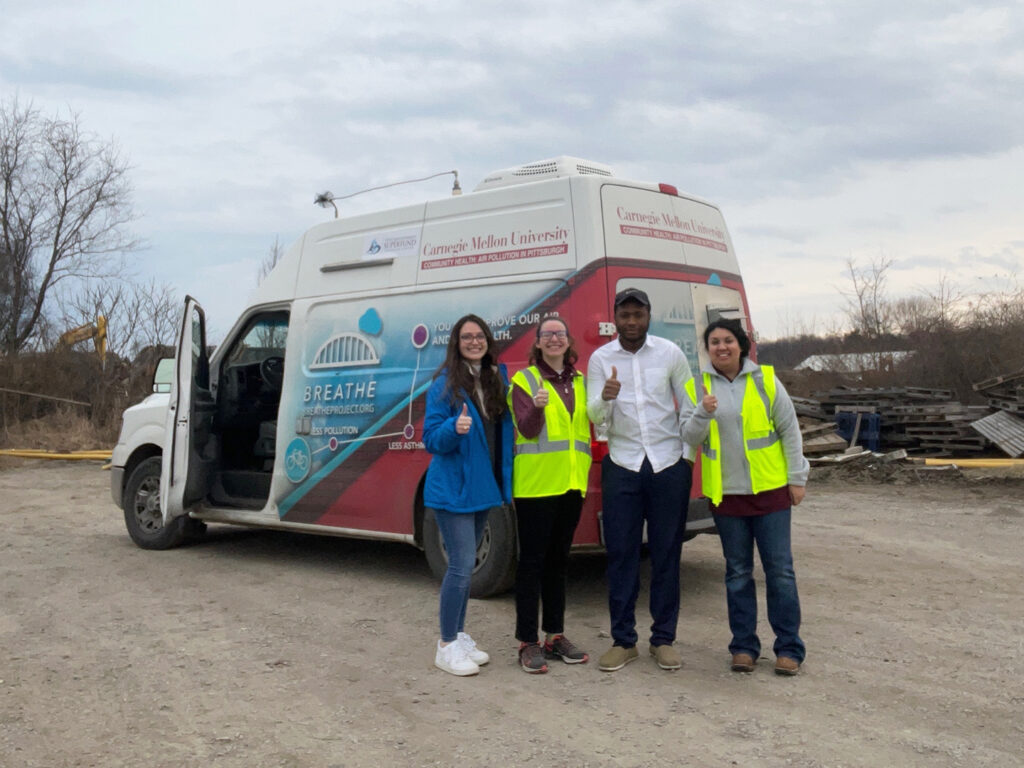
Researchers from the two universities, both partners in the Texas A&M Superfund Research Center, used Carnegie Mellon’s Center for Atmospheric Particle Studies Mobile Air Quality Lab to test for several pollutants on Feb. 20-21, less than three weeks after a Norfolk Southern freight train carrying hazardous materials derailed near the city.
Their data agreed with the EPA conclusions that concentrations of benzene, toluene, xylene, and vinyl chloride were below minimal risk levels for intermediate duration (15 days to 1 year) exposures, as set by the Agency for Toxic Substances and Disease Registry. Neither the EPA nor the independent researchers detected any hot spots for these chemicals, or areas where emissions from specific sources can expose local populations to elevated health risks.
They also confirmed levels of acrolein that varied greatly, both spatially and over time, and occasionally rose above safety thresholds for long-term health concerns.
Acrolein is a colorless liquid chemical that becomes vapor when heated and can cause lung damage when inhaled over a long period of time.
According to the corroborating data from the Texas A&M Superfund Center and Center for Atmospheric Particle Studies at Carnegie Mellon, acrolein levels in East Palestine ranged from five times lower to three times higher than levels in downtown Pittsburgh, which has levels consistent with most major U.S. cities. These levels are of note because East Palestine is in a rural area and would be expected to have lower concentrations.
“Going forward, there needs to be continued monitoring, not just for acrolein but also to figure out if there are other chemicals in the air that will be a concern,” said Dr. Weihsueh Chiu, a professor at the Texas A&M School of Veterinary Medicine & Biomedical Sciences and deputy director of the Superfund Center. “But I wouldn’t say that any of our data suggests an immediate safety hazard.”
As of right now, many of the long-term implications of the disaster are still unknown.
“The federal and state authorities are recognizing that they need to broaden the scope of their air quality measurements and to bring additional sensitive equipment,” said Dr. Ivan Rusyn, a University Professor of toxicology in the VMBS and director of the Superfund Center. “The EPA has given notice that this week, they’re deploying a mobile sampling laboratory that can do testing throughout town and the area, as opposed to the fixed monitors that they have been deploying and the handheld monitors that are not very sensitive. So, the overall response is trending in the right way.”
Providing an objective corroboration of the EPA’s data is especially important in East Palestine, where many residents are struggling to trust the government’s conclusions.
“Our colleagues at both the state and federal EPA have tremendous expertise in this area, but they could have done a little better of a job communicating exactly what ‘safe’ means in terms of duration of exposure and types of chemicals and mixture,” Rusyn said. “One additional reason to continue testing is for communication purposes, to really reassure the residents and explain to them where the levels after the disaster are as compared to a baseline.”
How involved the Superfund and Carnegie Mellon researchers will be in additional testing will depend on their ability to conduct testing without interfering with the EPA’s work.
“If we can help with additional sampling, we will,” Rusyn continued. “What we’ve done in the past, both at Carnegie Mellon and here at Texas A&M, is provide additional measurements over time, weeks and month after, to understand whether the levels after the disaster were abnormal or were just within the range. Unless you have data after the disaster, you really do not know whether you’re measuring spikes or you’re measuring background.”
In addition to Rusyn and Chiu, the other researchers involved in the data collection and review were Dr. Natalie Johnson, an associate professor at the Texas A&M School of Public Health, and Dr. Albert Presto, a research professor at Carnegie Mellon University. Graduate students Ruby Hernandez and Mariana Saitas and undergraduate research assistant Lyssa Losa participated in the air sampling campaign in East Palestine on Feb. 20-21.
Institutional support to the Superfund Center from the Texas A&M Division of Research was used to support sampling and data analysis.
###
For more information about the Texas A&M College of Veterinary Medicine & Biomedical Sciences, please visit our website at vetmed.tamu.edu or join us on Facebook, Instagram, and Twitter.
Contact Information: Jennifer Gauntt, Director of VMBS Communications, Texas A&M College of Veterinary Medicine & Biomedical Sciences, jgauntt@cvm.tamu.edu,979-862-4216
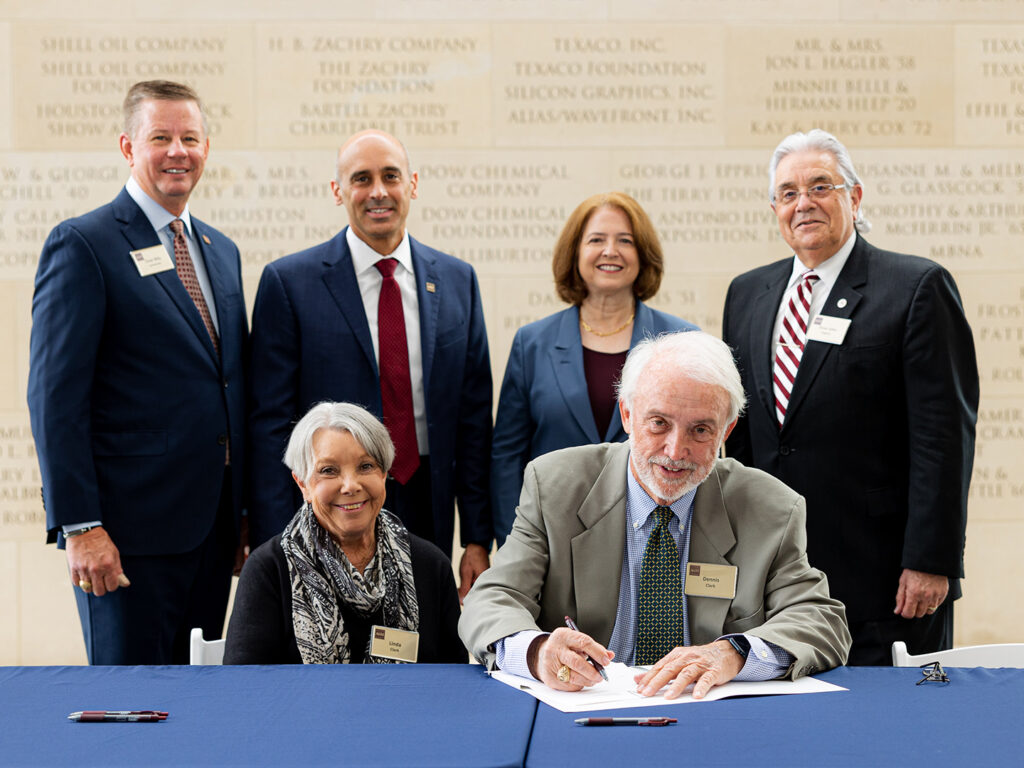
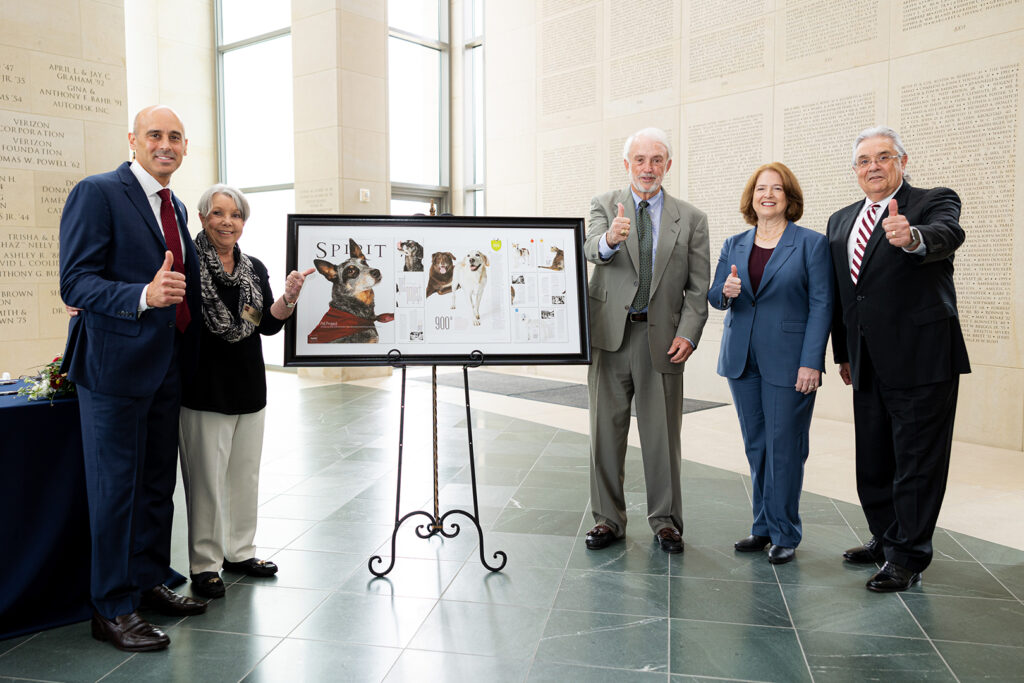
Front row: Linda and Dennis Clark Back row: William “Billy” Lemmons Jr., Tyson Voelkel, Dr. M. Katherine Banks, and Dr. John R. August
Inspired by their love of animals and passion for Aggieland, Linda and Dennis Clark ’68 ’71 have pledged a $20 million lead gift through the Texas A&M Foundation to support construction of a new Next-Generation Small Animal Teaching & Research Hospital at Texas A&M University. The cutting-edge facility will replace the current Small Animal Teaching Hospital and enable students, faculty and staff in the university’s College of Veterinary Medicine & Biomedical Sciences to further elevate its already world-renowned veterinary medicine program.
The couple hopes their gift will challenge and inspire others to support the construction project, which still requires a significant investment from private donors to reach fruition.
“The Clarks’ generosity is inspiring, and their lead gift will be truly transformational,” said Dr. M. Katherine Banks, Texas A&M University president. “This new hospital will provide hands-on educational workspaces for veterinary students and state-of-the-art laboratories for animal health and translational research, enabling our researchers, faculty and outstanding students to continue their work and provide the best animal care in the world.”
For the Clarks, the gift culminated from Linda and Dennis’ pride in Texas A&M, the couple’s passion for animals, the transformative experiences with animal care and research they have witnessed at the veterinary school, and the opportunity of a lifetime to provide future generations of Aggies with the resources to revolutionize their field.
The Need For New
While it was considered advanced and spacious when it opened in 1981, the current Small Animal Teaching Hospital has struggled to accommodate its ever-growing occupancy spurred by booming demand for veterinary medicine practitioners and a rise in caseloads. Increasingly complex procedures requiring more sophisticated equipment, training and staff have also pushed the hospital to its limits, making for crowded workspaces. Since its opening, the number of services the hospital offers has expanded from two to 19, while the annual caseload has increased from around 3,000 per year in 1981 to approximately 23,000 today.
“This university has an extraordinary veterinary school with talented people doing exciting research that will not only improve animal care but may also impact humans down the road. This gift was a big decision for us, and it ultimately came from us asking ourselves, ‘How can we facilitate what’s going on and help make it be the best it can be?’”
Linda Clark
Still, thanks to its talented students, faculty and staff, the school has established itself among the best in the country, ranking fourth in the nation according to U.S. News and World Report. As a specialty care center and referral hospital, the teaching hospital’s clinicians have seen patients from all 50 states, Puerto Rico, Canada and Mexico since 2010.
Dr. John August, the Carl B. King Dean of Veterinary Medicine, looks forward to the new facility’s ability to better facilitate outstanding educational experiences, exceptional patient care that supports the human-animal bond, and clinical trials that bring scientists together from across Texas A&M and around the world to solve medical mysteries that benefit both animals and human beings.
“Our primary goal is to provide exemplary companion animal primary care education for our veterinary students,” he said. “At the same time, we aspire to become a research-intensive tertiary-care center that is recognized as the best in the world, a place people come to because it is cutting-edge and because of the high level of compassionate care. The Clarks understand that’s the role Texas A&M should have in the care of companion animals, and we are so grateful for their generosity.”
The new, next-generation teaching hospital will match the abilities of the passionate faculty and staff within its walls by radically expanding in size, updating technological features, devoting space to house future advanced research equipment and offering welcoming spaces for its clientele. In addition to private dollars, the project has received funding from the Texas Legislature and Texas’ Permanent University Fund.
“Updating this facility has been a university goal for some time,” said Tyson Voelkel ’98, president and CEO of the Texas A&M Foundation. “But it needed investment from outstanding former students and philanthropic partners like the Clarks, who were willing to make this monumental gift and build a brighter future for the university. They have seen what this school and its people are capable of, and they know that Aggies will fully utilize this new teaching hospital to push their field forward.”
Aggies Through And Through
Dennis graduated from Texas A&M in 1968 with a bachelor’s degree in political science and earned a master’s in management from the university in 1971. He was a member of the Corps of Cadets and was commissioned into the U.S. Army. After his active duty, he began a career in the restaurant industry, during which he met Linda. In 1986, the couple founded Encore Restaurants, eventually becoming franchise owners of 39 Sonic Drive-In locations throughout the Dallas-Fort Worth area. During this same period, they also developed a successful commercial real estate development business focusing on restaurant, retail and office projects.
“Coming to Texas A&M was a watershed event in my life,” Dennis said. “It taught me about personal discipline, leadership and taking pride in what I did. My experience in the Corps of Cadets was life-changing, and many of the relationships I made during that time continue today. Linda and I are deeply involved in this university’s academic and athletic programs because Texas A&M is part of who we are.”
Before their gift to support the new teaching hospital, the Clarks generously contributed to the 2015 Kyle Field Redevelopment campaign, named the Football Performance Nutrition addition to the Davis Player Development Center and created two endowed faculty chairs in the veterinary school.
In 2013, Sonic presented the couple with the Troy Smith Award, the company’s most prestigious accolade for franchisee owners. The Clarks have since sold all but three of their franchise locations, but Dennis says they have no retirement plans for now. “I enjoy the relationships and challenges that come with being involved in our business,” he said. “I just can’t imagine not having something to do every day.”
Animal House
“Our primary goal is to provide exemplary companion animal primary care education for our veterinary students. At the same time, we aspire to become a research-intensive tertiary-care center that is recognized as the best in the world, a place people come to because it is cutting-edge and because of the high level of compassionate care.”
Dr. John R. August
“Animals have always been an integral part of our lives,” Linda said. “We consider ours to be part of our family.” At their ranch in Argyle, Texas, the couple owns four dogs (having owned as many as eight at a time), 43 horses and a cat. “Linda has tolerated the large number of bird dogs that live in the house with us—they’re family. And I’ve tolerated her cats, so it’s always been a cooperative environment,” Dennis joked.
As longtime clients of the veterinary school, the couple has experienced Texas A&M veterinarians’ outstanding quality of care firsthand. Two of their dogs, Labrador retrievers Molly and Cadbury, underwent tibial plateau leveling osteotomy surgery—canine knee replacements—at the current Small Animal Teaching Hospital. The surgeon, Dr. Brian Saunders ’98 ’01 ’05, holds one of the two faculty chairs the Clarks endowed through the school.
“We’ve just been so impressed by Dr. Saunders and the rest of the faculty we’ve interacted with,” Dennis said. “He told us about some of his work on the regeneration of bone tissue through stem cells and his collaboration with bioengineering researchers at Texas A&M, and it was just amazing.” Their conversations with Saunders also highlighted the need for a new facility, as it became apparent the researcher’s team could do even more with an updated space.
“This university has an extraordinary veterinary school with talented people doing exciting research that will not only improve animal care but may also impact humans down the road,” Linda said. “This gift was a big decision for us, and it ultimately came from us asking ourselves, ‘How can we facilitate what’s going on and help make it be the best it can be?’”
A History Of Leadership
Beyond the tangible benefit of providing a massive overhaul to the veterinary school’s facilities, the couple sees their gift as a continuation of the university’s heritage. “Agriculture has always been an important part of Texas A&M’s origins as a land-grant college,” Dennis explained. “Our veterinary school plays a great role in agriculture through caring for animals and maintaining the state’s livestock industry.”
The state will need Texas A&M’s leadership more and more as its human and animal populations grow in the coming decades. And with 70% of U.S. households owning at least one companion animal, the demand for veterinary care isn’t going away anytime soon. Now more than ever, the state, nation and world need clinicians and researchers who can care for animals, educate future practitioners, and seek solutions to lingering medical mysteries affecting humans and their furry companions alike. Thanks to the Clarks, those veterinary innovators will soon have a fitting home in Aggieland.
Naming opportunities starting at $25,000 abound in the new facility, and spaces can be named in memory or honor of a special person or pet. If you’d like to be part of pushing veterinary medicine to new heights at Texas A&M, please contact:
Larry Walker Assistant Vice President of Development Texas A&M Foundation 979.458.4032 lwalker@txamfoundation.com
For more information about the Texas A&M College of Veterinary Medicine & Biomedical Sciences, please visit our website at vetmed.tamu.edu or join us on Facebook, Instagram, and Twitter.
Contact Information: Jennifer Gauntt, Director of VMBS Communications, Texas A&M College of Veterinary Medicine & Biomedical Sciences, jgauntt@cvm.tamu.edu,979-862-4216