
Backyard Chickens Part 1: Preparing To Buy Healthy Birds

Rooster and hens

After egg prices hit record highs in late 2022 and early 2023, having a flock of backyard chickens to provide a personal supply of eggs can be tempting.

Dr. Isabelle Louge, a clinical assistant professor at the Texas A&M School of Veterinary Medicine & Biomedical Sciences, offers tips for designing coops and researching hatcheries before bringing chickens home and keeping them healthy and happy.

First, Louge suggests that owners prepare a spacious coop with fencing to prevent overcrowding and predation, which is the act of one animal killing another for food.

“Overcrowding can lead to disease, aggression, and even deadly injury among the chickens,” Louge said. “Additionally, poor fencing and housing can lead to predation; a single mink could come in through a hole barely larger than half an inch and kill an entire flock at once.”

The coop should have at least 3 square feet per standard heritage breed chicken such as Barred rock or Australorp, according to Louge. Smaller breeds need at least 2 square feet per bird, while giant breeds need 4 or 5 square feet per bird.

Providing ample space within the coop makes it easier for owners to clean as well, which is necessary to keep chickens healthy.

“The buildup of droppings leads to poor air quality and increased rates of respiratory and gastrointestinal diseases,” Louge said. “Owners should clear out the coop frequently, at least every two days.”

Louge explained that combining a deep bedded pack system with appropriate ventilation, or the movement of fresh air in a closed space, can reduce how often a coop requires cleaning. A deep bedded pack system is created by turning over the soiled bedding repeatedly and adding a new layer of bedding to allow the droppings to decompose.

This ventilation is necessary to maintain healthy chickens, according to Louge.

“The best ventilation systems circulate air at the level of the bird’s heads when they are roosting and standing on the floor,” Louge said. “This will help keep the air fresh, prevent harmful gas buildup produced by droppings, and help keep the birds cool when it is hot out.”

For owners who buy layers, or hens suited for regularly laying eggs, Louge advises owners to provide at least one nest box per four birds with nesting materials such as straw or shredded paper.

Once owners are prepared to house their chickens, they should research the best place to buy chicks or pullets, female chickens under a year old who have not started to lay eggs.

Louge encourages prospective bird owners to buy chickens from commercial hatcheries that vaccinate for Marek’s disease, a common and highly contagious disease among chickens. There is no cure or treatment for the disease, so prevention is critical.

“Chickens can only be vaccinated in the egg or at 1 day of age, since vaccinating later in life does not ensure protection,” Louge explained.

Some hatcheries also are certified to protect chickens from other dangerous diseases.

“The best sources for chicks and pullets are hatcheries that are National Poultry Improvement Plan certified for, at minimum, Salmonella pullorum and, ideally, monitored or certified for mycoplasma and avian influenza,” Louge said.

Salmonella pullorum, a bacterial disease, and mycoplasma, a chronic respiratory disease, are infectious among chickens, but Louge points out that avian influenza is an important problem in chickens.

“All chicken keepers should contact a veterinarian if they notice respiratory issues in their flock or if they have multiple birds that die in a short period of time,” Louge said.

Louge also recommends owners familiarize themselves with tips from the United States Department of Agriculture on recognizing and preventing avian influenza.

Before joining the family, backyard chickens should be healthy in a comfortable environment designed with their needs in mind. Once they are at ease in their new home, they’ll become egg-cellent additions to the family.

Pet Talk is a service of the College of Veterinary Medicine & Biomedical Sciences, Texas A&M University. Stories can be viewed on the web at vetmed.tamu.edu/news/pet-talk. Suggestions for future topics may be directed to vmbs-editor@tamu.edu.
Texas A&M Students Host Inaugural Veterinary Education Day

A child in surgical gear "operates" on a stuffed animal
Stuffed-animal surgery. Photo by Laura McKenzie, Texas A&M University Division of Marketing & Communications

A group of Texas A&M Veterinary Medicine & Biomedical Sciences (VMBS) students recently hosted the school’s first Veterinary Education Day, a high-energy, education-driven event during which approximately 200 elementary-aged children from underrepresented populations in Bryan-College Station (BCS) experienced hands-on learning opportunities and explored the field of veterinary medicine. 

Organized and hosted by VMBS Doctor of Veterinary Medicine (DVM) students, the first VetEd Day, on Feb. 25, featured a teddy bear hospital station, which provided a hands-on introduction to surgical practice through an adult-supervised stuffed-animal surgery experience; a special reading of “What’s a Real Doctor?” by Dr. Cherice Roth, a 2013 DVM graduate and the author of the picture book, which was also signed and given to each child; a reptile room, which was popular with the VetEd Day participants; presentations on animal care and guide dog interactions; and photos with Texas A&M’s mascot, Reveille. 

Gregory Johnson brought his two daughters to VetEd Day and said they had a blast while exploring the field of veterinary medicine. 

“This is important because it gives our kids an opportunity to be able to explore their potential,” Johnson explained. “There are some who don’t know veterinary medicine is a possible career and this gives them time to say, ‘Hey, you know what, this has awakened something within me and I want to become a veterinarian.’ So this is a great opportunity and experience. 

“Kids like my daughters get to explore and define their potential on the inside of them at events like this,” he said. “It awakens some of them and inspires them in their education and future careers.” 

As a student-led event, VetEd Day was entirely planned and implemented by a committee of 16 student leaders who desired to host an outreach event for underserved children in the BCS community who otherwise might not be exposed to veterinary medicine, according to Hannah Lam and Kathleen Gartner, who are third-year DVM students and co-directors of Veterinary Education Day.

A young girl holding a looking at a white snake
Reptile room. Photo by Laura McKenzie, Texas A&M University Division of Marketing & Communications

“It’s really important when you’re young to dream big and find new passions,” Gartner said. “If you can start that passion early, that can help give children the intrinsic motivation to continue with that passion. It’s super valuable, and I don’t think that’s something that anyone can take away from them.”

The VMBS students who hosted the event partnered with The REACH Project, a nonprofit organization that aims to give back to Texas A&M’s “essential Aggies,” the contract and service workers on Texas A&M’s campus. 

“Opportunities like these are truly transformational; many times, these children have never been to the Texas A&M campus and have no idea what it means to be a veterinarian,” said Max Gerall ‘18, the founder of REACH. “When someone grows up in a neighborhood where everyone has a service job, the youth in those neighborhoods seldom learn about any other forms of work. This was a chance to help expand their horizons and to further include them in our Aggie Family.” 

Likewise, Gartner said it was important to the DVM students to give back to the families of the people who prepare their cafeteria meals, clean their classrooms, and maintain the facilities in which they become veterinarians. Texas A&M’s essential Aggies maintain nearly 5,000 acres, feed almost 68,00 students campuswide, and clean more than 200 buildings on a daily basis.

“They pour so much into the school and a lot of times they are the unsung heroes of our community,” Gartner said. “It can be easy to walk by the cafeteria or the bathroom and take the work that happens within them for granted. Those workers often go unnoticed. It’s really important to make them feel seen and appreciated. It’s also important to make sure they feel a sense of community, because they play such important roles in making our community the place we know and love.”

The inaugural Veterinary Education Day was supported by more than 130 student volunteers, along with key faculty and staff members who contributed to the outreach program’s success. 

“The veterinary students, faculty, and staff who volunteered to work the event were genuinely excited about the opportunity to connect with people and to serve,” Lam said. “Selfless service is one of the core values at Texas A&M, and I think we’re all pretty passionate about it in the veterinary community. Our profession thrives when we get to work with the local community and see the value of what we do from a different perspective.”

###

For more information about the Texas A&M College of Veterinary Medicine & Biomedical Sciences, please visit our website at vetmed.tamu.edu or join us on FacebookInstagram, and Twitter.

Contact Information: Jennifer Gauntt, Director of VMBS Communications, Texas A&M College of Veterinary Medicine & Biomedical Sciences, jgauntt@cvm.tamu.edu, 979-862-4216

Texas A&M University Spotlights Immunology Research At Inaugural Symposium

Aerial view of the Texas A&M University campus

Four units at Texas A&M University recently came together to host a symposium highlighting research projects occurring across the state and beyond in the vast field of immunology. 

The inaugural Texas Symposium on Critical Topics in Immunology took place on Feb. 17-18 and was co-sponsored by the university’s Hagler Institute for Advanced Study, School of Medicine, School of Veterinary Medicine & Biomedical Sciences, and Division of Research.  

The event featured keynote presentations by world-renowned leaders in the field. Researchers and trainees in attendance discussed the role of the immune system in emerging infectious and inflammatory diseases including cancer, neurodegeneration, and cardiovascular disorders. 

The symposium included six keynote speaker sessions, various other presentations, an awards ceremony, and networking events. The two-day event also included 43 research posters covering projects occurring across 23 institutions, representing eight states and three countries.  

Nearly 50 trainees from across Texas presented their findings and competed for more than $5,000 in awards. 

“The School of Veterinary Medicine & Biomedical Sciences is very proud to be part of the first Symposium on Critical Topics in Immunology,” said Dr. John R. August, the Carl B. King Dean of Veterinary Medicine at Texas A&M University. “It was an excellent opportunity to learn about new developments in the field of immunology and the importance of the immune system as a first form of defense against disease. The keynote speakers were most impressive.” 

After a brief welcome by August, the opening keynote was delivered by Dr. Florencia McAllister, from The University of Texas MD Anderson Cancer Center’s Department of Clinical Cancer Prevention. 

The international cohort of keynote speakers also included:  

  • Dr. Stefan H.E. Kaufmann, a faculty fellow at the Hagler Institute and director emeritus of the Max Planck Institute for Infection Biology and Max Planck Institute for Multidisciplinary Sciences in Germany
  • Dr. Peter Hotez, a faculty fellow at the Hagler Institute and dean of the National School of Tropical Medicine at the Baylor College of Medicine 
  • Dr. Alan Sher, a National Institutes of Health Distinguished Investigator from the National Institute of Allergy and Infectious Diseases’ Laboratory of Parasitic Diseases 
  • Dr. Vamsee Mallajosyula, a research scientist at Stanford University’s Institute for Immunity, Transplantation, and Immunology 
  • Dr. Nan Yan, a professor and vice chair of the Department of Immunology at the UT Southwestern Medical Center 

“The first Texas Symposium on Critical Topics in Immunology was a terrific sharing of the latest ideas and data from many of the most pressing areas of research in host defense,” said Dr. Michael Criscitiello, the VMBS’ associate dean for Research & Graduate Studies. “Exemplary keynotes were delivered by leaders from Stanford to the NIH, UT Southwestern to UTMB-Galveston, but none were more riveting than those from our own Hagler fellows, Stefan Kaufmann and Peter Hotez.” 

The symposium was centered around four major themes: Vaccine and Therapeutic Approaches to Infectious Diseases; Immune Response to Pathogens/Host-Pathogen Interaction; Systems Immunology; and Inflammatory Diseases, including Cancer. It was held at the Texas A&M Hotel and Conference Center in College Station.

###

For more information about the Texas A&M College of Veterinary Medicine & Biomedical Sciences, please visit our website at vetmed.tamu.edu or join us on FacebookInstagram, and Twitter.

Contact Information: Jennifer Gauntt, Director of VMBS Communications, Texas A&M College of Veterinary Medicine & Biomedical Sciences, jgauntt@cvm.tamu.edu, 979-862-4216

Finding The Right Approach To Socializing Cats

A calico cat rubbing on the legs of a person wearing jeans

Whether they are a purring housecat or a prowling neighborhood cat, felines react differently to new experiences depending on how they were socialized. Owners can choose to increase their cat’s comfort level in new experiences but should first consider different socialization strategies.

Dr. Stacy Eckman, a clinical associate professor and the associate dean of hospital operations for the Texas A&M School of Veterinary Medicine & Biomedical Sciences’ Veterinary Medical Teaching Hospital, advises owners to adjust how they socialize their cat because each cat will respond differently to a specific approach.

“Just like some humans are introverts or extroverts, cats have different personalities also, so how owners socialize cats depends on the individual cat more than anything else,” Eckman explained.

The key to successful socialization experiences is for owners to gradually expose their cat to new environments, sounds, and situations to determine what works best for them. This will ensure a more positive experience for cats and owners alike.

One of the best ways to socialize cats, according to Eckman, is to allow cats to explore indoor and outdoor spaces; listen to common noises such as vacuums, cars, and dogs barking; and experience small gatherings with a variety of people, animals, and objects.

“Owners should watch their cat’s responses to make sure they feel safe and not overwhelmed,” Eckman said. “If their cat responds negatively to socializing, owners should slow down or stop.”

Eckman encourages owners to visit their veterinarian to help identify their cat’s body language when relaxed. Once they’ve identified this, owners should pay attention to their cat’s body language to determine their comfort level with different socialization methods and adjust the method if needed.

For example, an owner can socialize their cat by bringing them in direct contact with a new person or animal, but their cat may respond negatively. An alternative to this method of socializing is for the owner to present their cat with the new person’s or animal’s scent.

“Offer smells of the particular human or animal that the cat is socializing with by rubbing a towel on the new human or pet and presenting it to the cat,” Eckman explained. “The cat can then grow accustomed to their presence by scent first.”

Eckman also suggested placing cats in a separated space as a way for cats to grow accustomed to new animals without being in direct contact with them.

“Owners should create a barrier that their cat cannot get through such as closing the door to a room,” Eckman said. “Make sure the cat has all the essentials – food, water, and a litterbox.”

While the same socialization approaches can be used regardless of age, Eckman pointed out that kittens will accept these conditions easier compared to cats who grew up without being socialized properly.

“The best socialization period is when they are young kittens, up to 12 weeks old,” Eckman said. “If they are not exposed at younger ages, they become more fearful rather than accepting of new environments, sounds, and situations.”

In the end, each cat may be comfortable staying at a certain socialization level, whether they enjoy being around other people or prefer quiet solitude. When presenting them with new experiences, ensure your cat is comfortable and happy above all, and they might reward you with a loving purr.

Pet Talk is a service of the College of Veterinary Medicine & Biomedical Sciences, Texas A&M University. Stories can be viewed on the web at vetmed.tamu.edu/news/pet-talk. Suggestions for future topics may be directed to vmbs-editor@tamu.edu.
Exercise Has A Direct Role In Fighting Breast Cancer, Finds Texas A&M Study

People walking, running, and biking along a path
Davis recommends completing 30 minutes a day of moderate intensity exercise for at least five days a week in order to promote the release of the factors from muscle. Photo by Don DeBold, Flickr

While it is generally accepted that exercise can benefit a person’s overall health, a recently published paper has found a direct link between muscle contraction and a reduction in breast cancer.

In the paper, published in the journal Frontiers in Physiology, a team of Texas A&M researchers concludes that a currently unspecified factor released during exercise suppresses signaling within breast cancer cells, which reduces tumor growth and can even kill the cancerous cells.

“For this study, we took a deeper look into the relationship between people who exercise more and have less of a risk of cancer; previously, it was believed that there wasn’t anything mechanistically linked. Rather, it was just the general benefits seen in your body because of a healthy lifestyle.” said Dr. Amanda Davis, first author on the paper and a clinical assistant professor at the Texas A&M School of Veterinary Medicine & Biomedical Sciences (VMBS). “These data are exciting because they show that during muscle contraction, the muscle is actually releasing some factors that kill, or at least decrease the growth of, neoplastic (abnormal, often cancerous) cells.”

The researchers also found that the factors inherently reside in muscle and are released into the bloodstream no matter what a person’s usual activity level is or how developed their muscles are.

“Our results suggest that whether you consistently exercise or you just get up and walk when you’re not used to working out, these factors are still being released from the muscle,” Davis said. “Even simple forms of muscle contraction, whether it be going on a walk or getting up to dance to your favorite song, may play a role in fighting breast cancer.

“The big message is to get up and move,” she continued. “You don’t have to be an Olympic-level athlete for these beneficial effects to occur during muscle contraction; being physically fit doesn’t make you more likely to release this substance.”

Digging Into The Details

To measure the level of factors released by exercised muscle, Davis trained rats to complete a moderate intensity exercise program consistent with the American College of Sports Medicine’s recommendations for people.

“They ran on treadmills for five weeks and we gradually increased the incline,” she said.

Although Davis’ team could not identify an exact minimum muscle contraction time necessary for the effect, they did note that the longer the contraction session lasted, the more factors were released.

Based upon the study results, her general advice for promoting the release of the factors is to follow the protocols recommended by the American College of Sports Medicine—namely, 30 minutes a day of moderate intensity exercise for at least five days a week. This could include brisk walking, dancing, or biking, according to the American Heart Association.

Regular exercise could not only lead to disrupted communication in the cancerous cells to stop their growth, but the factors released by exercise may also play a role in preventing breast cancer’s development in the first place.

“The decreased risk of breast cancer with exercise comes from the idea that if you have pre-neoplastic cells and you’re exercising a lot and slowing their growth, maybe those precancerous cells can be destroyed by the body before they start taking over,” Davis said.

Expanding The Results

“The big message is to get up and move. You don’t have to be an Olympic-level athlete for these beneficial effects to occur during muscle contraction; being physically fit doesn’t make you more likely to release this substance.”

Dr. Amanda Davis

Further studies are being conducted to determine the exact identity of the factors being released by muscle. Davis suggests that they could be peptides called myokines released by muscle fibers, and researchers currently in the Department of Kinesiology at Texas A&M are looking into the possibility of the factors being microRNAs or other novel molecules.  

Because Davis’ research also found that the presence of albumin was necessary for the beneficial effects of exercise to occur, she believes that whatever the factors are, they are carried through the blood by albumin, a common carrier protein produced in the liver.

Davis recognizes additional research is needed to clarify if resistance exercise, like lifting weights, has the same effect as aerobic exercise. Activating larger muscle groups, as seen in resistance exercise, may lead to an increased stimulatory effect, she said.

Davis’ work focused on the luminal A line of breast cancer, the most common type that makes up approximately 60% of breast cancer cases. She saw similar, but more varied, effects with other types of breast cancer and with different cell lines.

While the beneficial effects of exercise are also strongly correlated with decreased risk of prostate and colon cancers, there is still much work to be done in identifying which cancers and their subtypes will respond best to exercise.

“These are definitely exciting data we have concerning exercise and breast cancer,” Davis said. “However, exercise is not a 100% guarantee. Further research in this area will help to identify why some people who work out regularly are still diagnosed with cancer.

“There have been many different signaling pathways indicated in cancer development,” she continued. “Therefore, more studies concerning what pathways are influenced by exercise will be needed to determine which types of cancers would benefit from exercise and which types would not.”

In addition, there are many other confounding factors that impact a person’s risk of getting cancer, like smoking, age, genetics, and other comorbidities.

###

For more information about the Texas A&M College of Veterinary Medicine & Biomedical Sciences, please visit our website at vetmed.tamu.edu or join us on FacebookInstagram, and Twitter.

Contact Information: Jennifer Gauntt, Director of VMBS Communications, Texas A&M College of Veterinary Medicine & Biomedical Sciences, jgauntt@cvm.tamu.edu, 979-862-4216

Texas A&M University: Serving The Texas Panhandle Through Veterinary Education, Research, & Outreach

The VERO building

In 2009, Texas A&M University and West Texas A&M University (WT) embarked on a journey to expand veterinary medical education, research, and outreach to residents of the Texas Panhandle and High Plains Region.

Out of that partnership emerged the Veterinary Education, Research, & Outreach (VERO) initiative, and with the generous support of the Texas A&M University System and the Texas Legislature, in September 2020, the Texas A&M College of Veterinary Medicine & Biomedical Sciences (VMBS) opened the VERO Building on the WT campus.

VERO marked a milestone moment for the VMBS; it was the culmination and tangible representation of a decade of hard work that included the WT Paul Engler College of Agriculture & Natural Sciences, which housed several VMBS professors who had worked to establish VERO.

It was also the next step in bringing to fruition new opportunities that are critical to Texas A&M’s land-grant mission—those of education, mentorship, relationship-building, research, and collaboration with rural practices and the industries that are vital to both Texas’ economy and the world’s food supply. These are the E, the R, and the O of VERO.

Veterinary Education

Veterinary student practicing listening to a cattle heartbeat

At VERO’s inception, two VMBS faculty members initiated the Food Animal Production & Rural Practice Tour and the Food Animal & Rural Practice Summer Internship Program. These programs aim to stimulate interest and train veterinary students in the skills needed to provide veterinary medical services to rural communities and agricultural production.

Since then, VERO has grown immensely—with 17 faculty members now engaged in education—and the educational opportunities also have expanded.

Increasing the number of Doctor of Veterinary Medicine (DVM) graduates pursuing large animal and mixed animal medicine is critical as VERO continues to advance Texas’ thriving livestock and food animal industries and to support rural communities in need of veterinary practitioners.

The DVM 2+2 program at VERO and fourth-year clinical rotations are two recently launched VMBS programs that are working to achieve those goals; both have the potential to directly impact the residents of the Texas Panhandle and High Plains.   

The DVM 2+2 program allows 18 Aggie veterinary students to spend the first two years of their veterinary education at VERO before heading to College Station for their third and fourth/clinical years.

DVM students at VERO receive the same nationally ranked veterinary medical education as the students who complete the first two years of the program in College Station, with the bonus of smaller class sizes and a low student-to-faculty ratio. 

The VMBS has welcomed two classes of 2+2 students, advancing Texas A&M’s veterinary medicine program to become the largest in the country.

Fourth-year clinical rotations at VERO also allow DVM students from both Canyon and College Station to participate in two-week rotations in the following areas: feedlots, dairies, rural practices, and cow-calf operations. These rotations include partnerships with the Panhandle-based veterinary profession and the livestock industries.

Since 2020, almost 70 Aggie veterinary students have completed a clinical rotation through VERO, giving them hands-on experience working in rural communities and connecting them with potential future employers in the Texas Panhandle and High Plains.

Veterinary Research

Woman conducting research in a lab

Identifying and solving problems that challenge food animal industries and the veterinary profession require a team effort, which is why VERO researchers are working in partnership with veterinary practitioners, animal scientists across the country, and the livestock industries to address issues that will make a significant difference in animal health and welfare.

Within just three years, VERO’s research team has successfully developed a research program that is productive, impactful, and collaborative.  

VERO researchers—including four faculty members who have primary assignments related to food animal research—are being supported by $5.8 million in active research funding received from federal and industry sponsors and, since 2019, have published 68 peer-reviewed research papers.

Because Canyon is located within one of the world’s most important cattle production regions, VERO researchers and their many partners work to address critically important measures for sustainably promoting the efficiency and profitability of modern agriculture systems to feed a growing worldwide population.

These include working to better understand factors that impact antimicrobial drug resistance in animals, to assure a safe food supply, and Bovine Respiratory Disease (BRD). A problem that is critical to Texas agriculture and the state at large, BRD accounts for more than half of all feedlot deaths and costs the beef cattle industry more than a billion dollars annually.

Combined with fully equipped, state-of-the-art laboratories at the VERO Building, these resources support the VMBS’ fundamental obligation to better serve one of Texas’ biggest industries and cattle producers across the state and around the world.

Veterinary Outreach

VERO faculty and students inspecting feed

Everyone affiliated with VERO describes it as a true partnership; VERO’s partnerships extend far beyond our important partnership with WT to include Canyon and surrounding communities, which play a critical part in our educational and research efforts.  

Recruitment is key to VERO’s success and VERO outreach is key to recruitment.  

As a VMBS-WT joint-appointed faculty member, Dr. Dan Posey leads efforts in student recruitment and advisement and has actively recruited students with rural backgrounds, including students from 4H and FFA programs throughout the Texas Panhandle and Texas High Plains.

In collaboration with WT faculty, his efforts have increased the number of students seeking WT’s pre-veterinary specialization degree to more than 300 students, making it the largest undergraduate advisory program at WT.

While WT’s pre-veterinary specialization has almost tripled, increasing the number of WT applicants to veterinary schools, it is also hoped that the active VERO research program will recruit additional WT graduate students.    

Bright Beginnings

The VMBS is proud of VERO’s strides in service of the Texas Panhandle and High Plains.  

With the support of WT, VERO has enhanced the VMBS’ ability to better fulfill Texas A&M’s missions and support both the state agriculture industry and the young people of Texas.

###

For more information about the Texas A&M College of Veterinary Medicine & Biomedical Sciences, please visit our website at vetmed.tamu.edu or join us on FacebookInstagram, and Twitter.

Contact Information: Jennifer Gauntt, Director of VMBS Communications, Texas A&M College of Veterinary Medicine & Biomedical Sciences, jgauntt@cvm.tamu.edu, 979-862-4216

Understanding And Resolving Lower UTIs In Cats and Dogs

Cute dog and cat on green grass

For pets with urinary tract infections (UTIs), an everyday task like peeing can be uncomfortable and possibly painful. Since UTIs are common in cats and dogs, owners should understand the cause and symptoms of UTIs as well as how to resolve them with veterinary guidance.

Dr. Johanna Heseltine, a clinical associate professor at the Texas A&M School of Veterinary Medicine & Biomedical Sciences, explains that most UTIs are caused by bacteria entering the bladder through the urethra, two organs that form the lower urinary tract.

Signs that their pet is experiencing symptoms of a lower UTI include “straining to urinate; urinating small amounts frequently; urinating in inappropriate places, such as outside the litter box for cats; and sometimes passing blood in the urine,” Heseltine said.

Male and female animals experience similar signs of UTIs, but Heseltine says that females are more susceptible because they have shorter and wider urethras than males, which makes it easier for bacteria to enter back into the bladder.

Regardless of your pet’s sex, the path to testing and treating UTIs depends on the number of times your companion has had an infection.

For a dog’s or cat’s first UTI, veterinarians may complete a urinalysis, a common test that uses a urine sample to diagnose infections, before setting a treatment course.

“It is likely that a urinalysis will be used to determine if there is a UTI and if antibiotics are needed,” Heseltine explained. “In this situation, an antibiotic might be given without additional testing.”

On the other hand, veterinarians may decide more testing is required before providing the best treatment option for your pet. Two of these tests include a urine culture test to determine the specific bacteria causing the UTI and an antibiotic susceptibility test to identify which antibiotic will stop the growth of the bacteria.

Urine cultures and antibiotic susceptibility tests are especially important for pets who have been treated with an antibiotic before or have had multiple UTIs because these tests allow veterinarians to be more accurate when recommending the best antibiotic, according to Heseltine.

Heseltine pointed out that veterinarians also practice antimicrobial stewardship to ensure that the infection is resolved using the correct antibiotic with the right dosage.

“The term antimicrobial stewardship refers to optimizing the use of antibiotics to appropriately treat bacterial infections while avoiding unnecessary antibiotic use that can result in antibiotic resistance,” Heseltine said.

Owners can also practice antimicrobial stewardship by following their veterinarian’s recommendations regarding testing and whether antibiotics are needed.

If a pet continues to have UTIs frequently or does not respond to antibiotics, Heseltine said there may be a different medical issue present, such as an immune system problem or structural damage in the urinary tract.

“Dogs and cats can get occasional urinary tract infections without an identifiable underlying cause,” Heseltine said. “However, if they have recurrent UTIs, a veterinarian should evaluate them for a medical cause that predisposes them to infections.”

For example, young adult cats can develop a syndrome called feline idiopathic cystitis, which causes inflammation and the signs of a UTI without an infection.

“The signs of FIC resolve on their own within a week, so if an antibiotic is prescribed unnecessarily, it can seem like the antibiotics are the cause of the improvement when in fact, it is just the episode of FIC resolving on its own,” Heseltine explained.

If you see your furry companion peeing abnormally, visit the veterinarian to determine if an infection is the culprit. Having UTIs treated, or allowing an FIC episode to run its course, will help your pet get back into their happy groove sooner.

Pet Talk is a service of the College of Veterinary Medicine & Biomedical Sciences, Texas A&M University. Stories can be viewed on the web at vetmed.tamu.edu/news/pet-talk. Suggestions for future topics may be directed to vmbs-editor@tamu.edu.
VMBS Technician Appointed To TVMA Board Of Directors As Only LVT Representative

Mandy Zachgo headshot
Mandy Zachgo

Mandy Zachgo, a licensed veterinary technician supervisor in the Texas A&M School of Veterinary Medicine & Biomedical Sciences, was recently appointed to the Texas Veterinary Medical Association’s (TVMA) Board of Directors as the representative for licensed veterinary technicians (LVTs).

The TVMA Board of Directors includes 26 Doctors of Veterinary Medicine (DVMs) who represent 19 districts in Texas and just one LVT who is responsible for representing LVTs across the entire state.

Zachgo will be the second person to hold the LVT representative position on the TVMA board when she begins her duties in March.

“I was voted in by my peers state-wide, whereas for the DVM seats, DVMs in each district vote for their representative,” Zachgo said. “So it’s a big ask, but I’m very excited for the opportunity and am really honored to be the voice of all licensed vet techs in Texas.”

The position was added to the TVMA board in 2017 as demand for LVTs increased, ensuring LVTs could speak on matters that impact their education and work.

“TVMA makes big legislative decisions on the advancement of veterinary medicine, and licensed vet techs need to have a voice in those decisions,” Zachgo explained. “We’ve gained momentum in the last two years on what licensed vet techs can do based on their education and who can call themselves a vet tech, but there’s still this push to allow licensed technicians to do more to help the veterinary staff.”

During her three-year appointment, Zachgo plans to focus on LVT title protection and the improvement of technician utilization by providing DVMs knowledge about licensed technician education, encouraging them to hire technicians, and motivating them to utilize current technicians better.

“There’s a shortage of veterinarians and technicians, but the shortage for technicians is likely because of utilization issues, since there is no shortage of vet tech schools,” Zachgo said. “We need to empower DVMs to understand why it’s important to have licensed vet techs on their staff and how it can benefit them. If licensed vet techs are utilized properly in clinics, they can be valuable assets to the team.”

Zachgo also plans to advocate for LVTs and encourage LVT participation in state and national veterinary organizations through her position as a faculty member for the veterinary technician program at Blinn College.

“There are about 222 LVT members in TVMA versus about 2,200 licensed in the state,” Zachgo said. “We have a lot of work to do to get more LVT members to make up that difference and a focus of mine is getting more involvement from the technicians.”

###

For more information about the Texas A&M College of Veterinary Medicine & Biomedical Sciences, please visit our website at vetmed.tamu.edu or join us on FacebookInstagram, and Twitter.

Contact Information: Jennifer Gauntt, Director of VMBS Communications, Texas A&M College of Veterinary Medicine & Biomedical Sciences, jgauntt@cvm.tamu.edu, 979-862-4216

Texas A&M Veterinarians Diagnose, Repair Rare Condition In DVM Student’s Yorkshire Terrier

Veterinary student in a maroon jacket holding a small yorkie
Danielle Villa and Axel

Danielle and Axel Villa’s relationship began with love at first sight. 

Danielle was visiting a park in her hometown of San Antonio that was hosting an expo for dogs. When she came across a litter of 10 Yorkshire Terrier puppies, the runt of the litter caught her eye. She noticed he was alone in a corner and picked him up. 

The two have been inseparable ever since. 

Now, 14 years later, Danielle is a fourth-year Doctor of Veterinary Medicine (DVM) student at the Texas A&M School of Veterinary Medicine & Biomedical Sciences (VMBS). 

Axel, her loving companion, has helped Danielle through the transition from her undergraduate studies to veterinary school and through the COVID-19 pandemic. So when Axel started having trouble urinating, it was Danielle’s turn to be there for him. 

“We started with a Primary Care (Service) visit to the Texas A&M Veterinary Medical Teaching Hospital (VMTH),” Danielle shared. “I thought he might have a common urinary tract infection (UTI) because he’s an old man who suddenly needed to use the bathroom more often with very little coming out each time. 

“Primary Care took great care of him. They ran some tests, discussed the results with me, and presented treatment options,” she said. “I chose to do some antibiotic treatment, because it seemed to be a UTI.”

After two weeks of antibiotic treatment, however, Axel’s symptoms were worse than before, which meant he did not have a UTI. 

Axel was then referred to the VMTH Internal Medicine team, which continued to search for the cause of his pain. They conducted an ultrasound to check for blockages in the tubes that carry urine from the kidneys to the bladder but didn’t find one. 

The case was then referred to Dr. Audrey Cook, a professor in the Department of Small Animal Clinical Sciences who specializes in internal medicine and is assigned to the Interventional Radiology and Endoscopy Service. She ordered another test. 

“I was most worried because of his age about a tumor in his prostate or urethra,” Cook explained. “We did a contrast study, in which we put radiodense liquid into the urethra to see if there is a narrowing or blockage. 

“To our amazement, we found that his bladder was essentially falling backwards into his pelvis, which then put a major kink in his urethra. It was dramatic but explained everything that his owner had described,” Cook said. “So, the more he tried to pee, the more he pushed his bladder backwards and the more he blocked off the flow.”

Cook explained that Axel’s diagnosis was tricky from the start, in part because his condition is rare. 

Veterinary student wearing maroon holding a small yorkie up in the air and smiling at him

“I have only seen this condition once before, that time in an older female yorkie, so it wasn’t really on my radar for Axel,” Cook shared. “Because the bladder slipped back and then forward, his signs weren’t consistent, which was confusing, and our ultrasound didn’t give us any hint of what was going on. He’s one of those cases in which you just have to keep an open mind and find creative ways to define the problem. We sort of have a step-by-step approach to dogs that can’t urinate, so the contrast study was the next logical thing to do for him.”

Axel’s diagnosis revealed a need for surgery. 

“The diagnosis was hard, but the surgery was simple,” said Dr. Kelley Thieman, the Nancy & Michael Shaw ‘68 Chair in Small Animal Clinical Sciences, who led Axel’s surgical team. “We just pulled his bladder forward and tacked it to his body wall so that it stayed forward instead of sliding backwards and kinking off his urethra like a garden hose.”

Thieman sent Axel home with postoperative care instructions, and by that evening, Axel was already back to normal.

“I don’t think I had cried that hard in a long time,” Danielle shared. “It was such a relief to see him chipper and energetic again after a month of going through pain and not being able to sleep. 

“Dr. Cook, Dr. Thieman, and the rest of the VMTH’s Primary Care and Internal Medicine teams took really good care of him,” she said. “I’m glad they were all there to work together and figure out what was wrong with him, even though it was a very uncommon thing.”

Danielle began pursuing her DVM degree as a way of paying forward the exceptional care her pets have received from their veterinarians throughout her life. She said Axel’s health care journey and the help he received from her mentors in the VMTH reinforced that desire. 

“In veterinary medicine, you’re healing animals and working with their owners every day,” she explained. “When my pets have been sick, I’ve had veterinarians who were able to address my concerns and make me feel like my family member is safe in their care. I want to be able to do the same thing for people. I do my work both for the animals and for their family members, because their family members love them and they’re the ones taking care of them at the end of the day.”

As Danielle begins wrapping up her vet school experience, with only a few months until graduation, she said she looks forward to soon being able to offer to her clients and patients the same quality and compassionate care Axel received from some of her teachers and mentors and that she is grateful to them for helping Axel return to his happy, healthy self.

###

For more information about the Texas A&M College of Veterinary Medicine & Biomedical Sciences, please visit our website at vetmed.tamu.edu or join us on FacebookInstagram, and Twitter.

Contact Information: Jennifer Gauntt, Director of VMBS Communications, Texas A&M College of Veterinary Medicine & Biomedical Sciences, jgauntt@cvm.tamu.edu, 979-862-4216

Exploring Treatment Options For Osteochondrosis

A black dog running through water

In both veterinary and human medicine, artificial joint replacements have become more common as technology has advanced. Animals may receive an artificial joint for a variety of reasons, one of which is osteochondrosis.

Dr. Brian Saunders, a veterinary orthopedic surgeon and associate professor at the Texas A&M School of Veterinary Medicine & Biomedical Sciences, discusses this condition and its treatment options, including joint replacement surgery.

Osteochondrosis (OC) is a developmental skeletal disorder in which improper cartilage development leads to abnormally thick areas of cartilage. This thickened cartilage is predisposed to weakening and can develop fissures or cracks, or even break off to float freely within joints.

“We see OC most commonly in the shoulder of dogs, but we also see it in other locations such as the knee, the elbow, and the ankle,” Saunders said. “This problem is not limited to our canine patients; it occurs in a variety of species.”

Although any joint can be affected by OC, patients do not necessarily experience pain from the condition in all of those joints. Clinical signs of pain are most often seen when substantial pieces, or “flaps,” of cartilage have dislodged from the weight-bearing surface of the joint.

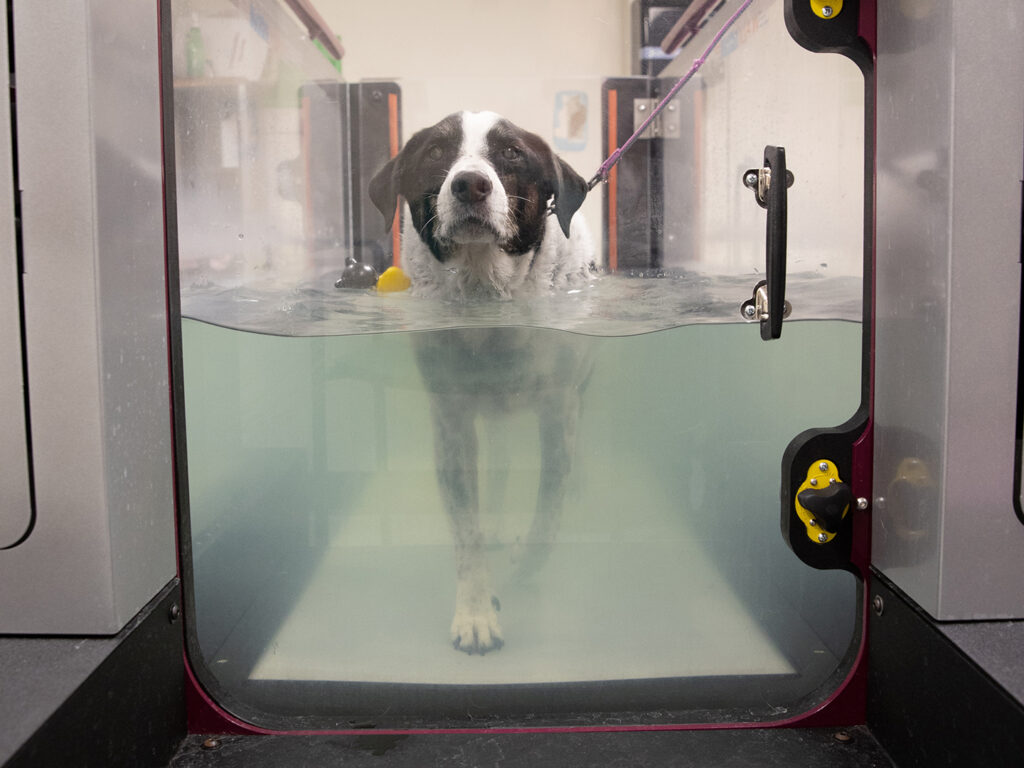
Many cases of OC can be treated with a minimally invasive arthroscopic surgery, followed by rest, rehabilitation, and, if needed, follow up medications. If the dog’s activity is reduced for a period of time, a form of cartilage called “fibrocartilage” can form to cover the affected area of the joint. 

In cases of extreme damage, however, another option is to replace the joint with an artificial implant.

While hip replacements have become relatively common in veterinary medicine, joint replacements more commonly affected by OC are less frequent and carry more risk.

“A lot of dogs with problems in these joints have already undergone surgeries and, in many of these cases, there is a documented or suspected infection at some point along the way,” Saunders said. “When there has been an infection in a joint, even if the infection is clinically resolved, there’s a high likelihood that a joint replacement implant will become infected, even if advanced measures are taken in surgery to prevent infection of the implants.”

However, for younger dogs with OC or those that have not undergone numerous previous surgeries, joint replacement can be a viable option for treatment. Saunders’ team in the Texas A&M Small Animal Teaching Hospital’s Orthopedics Service performs dozens of joint replacements each year — including elbow, knee, and ankle replacements.

One factor for owners to consider is the lengthy and intensive recovery period.

“The main commitments for the client are the finances, the exercise restrictions, and the need to bring the dog back for multiple rechecks after surgery,” Saunders said. “It’s a pretty intensive postoperative recovery, including leash walks only for three months, no off-leash activity indoors or outdoors, two to four medications for several weeks after surgery, and a fair amount of physical therapy.”

But after getting through the recovery, dogs that have undergone a successful joint replacement will have no limits to their activity. Even better, they will no longer be in pain from OC.

Saunders highly recommends that owners of dogs with OC speak to a veterinarian who has specialized in orthopedics to learn more about all treatment options.

Every dog deserves to live without pain, and through treatments that range from medications and minimally invasive arthroscopic surgery to joint replacement surgery, owners have the opportunity to advocate for their animal to make that happen.

Pet Talk is a service of the College of Veterinary Medicine & Biomedical Sciences, Texas A&M University. Stories can be viewed on the web at vetmed.tamu.edu/news/pet-talk. Suggestions for future topics may be directed to vmbs-editor@tamu.edu.